Entebbe to Jinja and Ziwa Rhino Sanctuary
In his 1908 book “My African Journey,” Winston Churchill called Uganda “the pearl of Africa” to honor the natural diversity and beauty of its flora and fauna. Much has changed in the ensuing nearly 120 years, but the national parks in the country maintain at least some of the beauty and diversity the British statesman saw. The parks that are government supported and reserves that are privately financed are trying to reestablish much of the wildlife that once roamed throughout the region before wars and poaching decimated their numbers. I was fortunate to visit two of the major National Parks, a couple of National Forests, and the Ziwa Rhino Sanctuary, that is successfully bringing white rhinos back to the region along with an excursion to the mouth of the Nile at Lake Victoria.
I arrived in Entebbe after a short flight from Kilimanjaro Airport in Northern Tanzania late at night, so I couldn’t see how the plane landed right by Lake Victoria. Arriving at the hotel, I was finally able to get a decent internet connection to apply for the entry visa for my return to Kenya. Just for information’s sake: the multi-country East Africa visa must be obtained from the first country one visits and Uganda’s is the only website from which this is possible. As I was entering Kenya first, I had to get the ETA on their website. The website does not offer multi-entry permits, one has to get a single entry and then another single if one is returning for a flight back home. (& fyi: Return flights are often less expensive than two single ones.) As I wasn’t able to connect to the internet in Tanzania with a strong enough signal to get anything done, I was fairly desperate to make sure that I put in the application before going away from the city and a strong power source. The Kenyans say they may need up to 72 hours to process the applications, so it is imperative to have the forms in to them well in advance of the arrival date. It was after midnight when I was finally able to click the web application on its way to the appropriate office.
My guide/driver Richard was waiting for me promptly at 7:15 to start the week’s adventures. The first day included three official experiences: a visit to the Sezibwa Falls, a walk in the Mbira Forest, and a boat ride to the mouth of the Nile at Jinja. The drive, the unofficial experience, started where I could see the lake, then went immediately inland. The city traffic was typically bad, even at that early hour on a Saturday, but we soon came to a stretch of a toll road that seemed like heaven as we could drive without having to worry about passing trucks or motorcycles on the otherwise two-lane national roads. Unfortunately, the toll road doesn’t extend very far, and we were soon back on the two lane ‘highway’. As I later learned, outside of the few tarred national roads, which are often pock-marked with large and small potholes and speedbumps with three to four rises, the roads are packed dirt, which unevenly erode during the rains and with use. The washboard effect I experienced in Kenya and Tanzania continued here, with the added attraction of fairly deep holes in the middle and at the sides of the roads. I was told the roads are nicknamed ‘the African massage’, but they weren’t like any massage I’ve ever had. There is also almost no directional signage, which makes self-drive trips into a nightmare and are not to be recommended. I was glad I chose to book with Davsafaris and have a driver/guide for the tour.
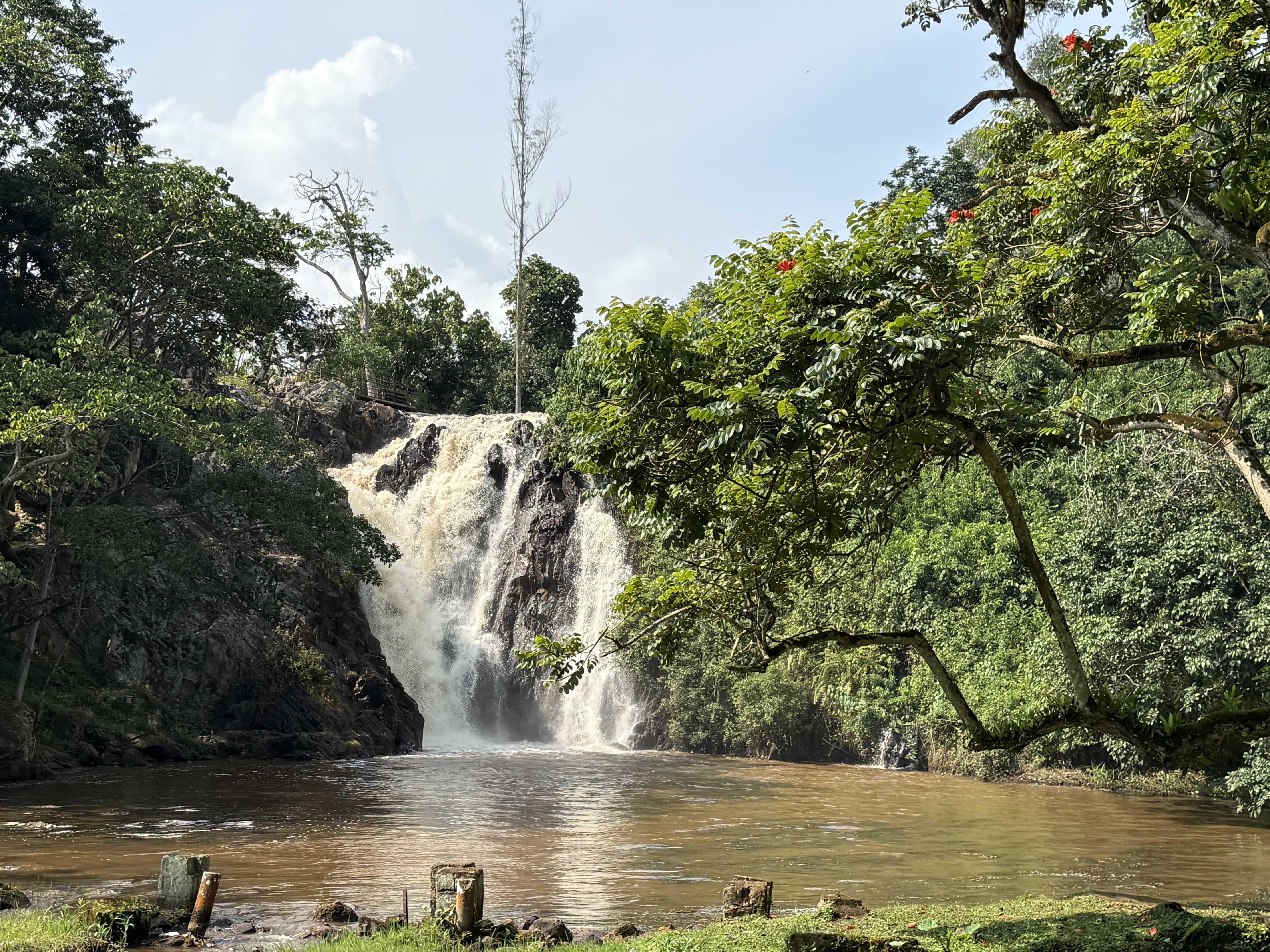
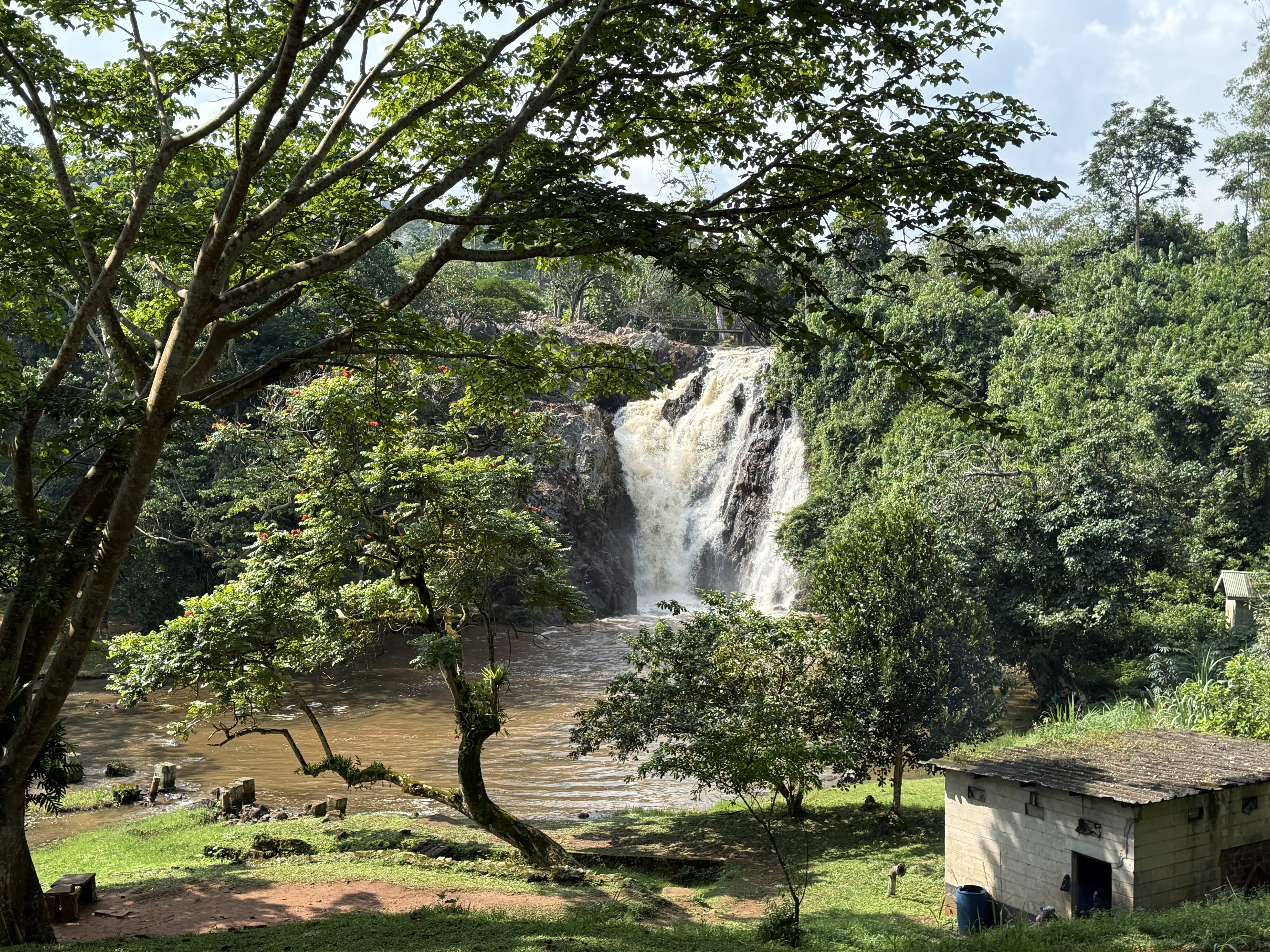
The first stop was at the Sezibwa Falls, which is a sacred site for the local Baganda peoples. There are worship and healing sites around the Falls for Christians – both Catholic and Protestant – as well as for the indigenous tradition. The Baganda, who are members of the Baganda Kingdom and speak the Luganda language, have a legend about the Falls. There are two twins, Wasswa the elder and Kato the younger, making the Falls a twin due to a split in the middle. They call the river the ‘One That Cannot Be Stopped’ as it cascades over the cliff-face.
The Baganda Kingdom is one of many in Uganda. There are four major ones, and many minor ones, each with their own language and traditions. The Kings have control over their people in social and cultural affairs, but not in political ones. That sphere of life is left to local, regional and the central governments. Throughout the week, we came across campaign parades and placards for local and regional elections. There were many women depicted on the posters; most of them were for the women’s representative positions. Women have their own governmental offices for which they campaign in addition to running for general positions. There are 54 different tribes in Uganda and most, but not all, belong to one of the kingdoms. There are also four major regions in the country that are identified both by language and geography. The Nilotic speaking peoples live in the East and Central regions and the Bantu speaking language groups live in the West and Southern regions. The languages are so different that they are not mutually understandable, hence the official language of the country is English.
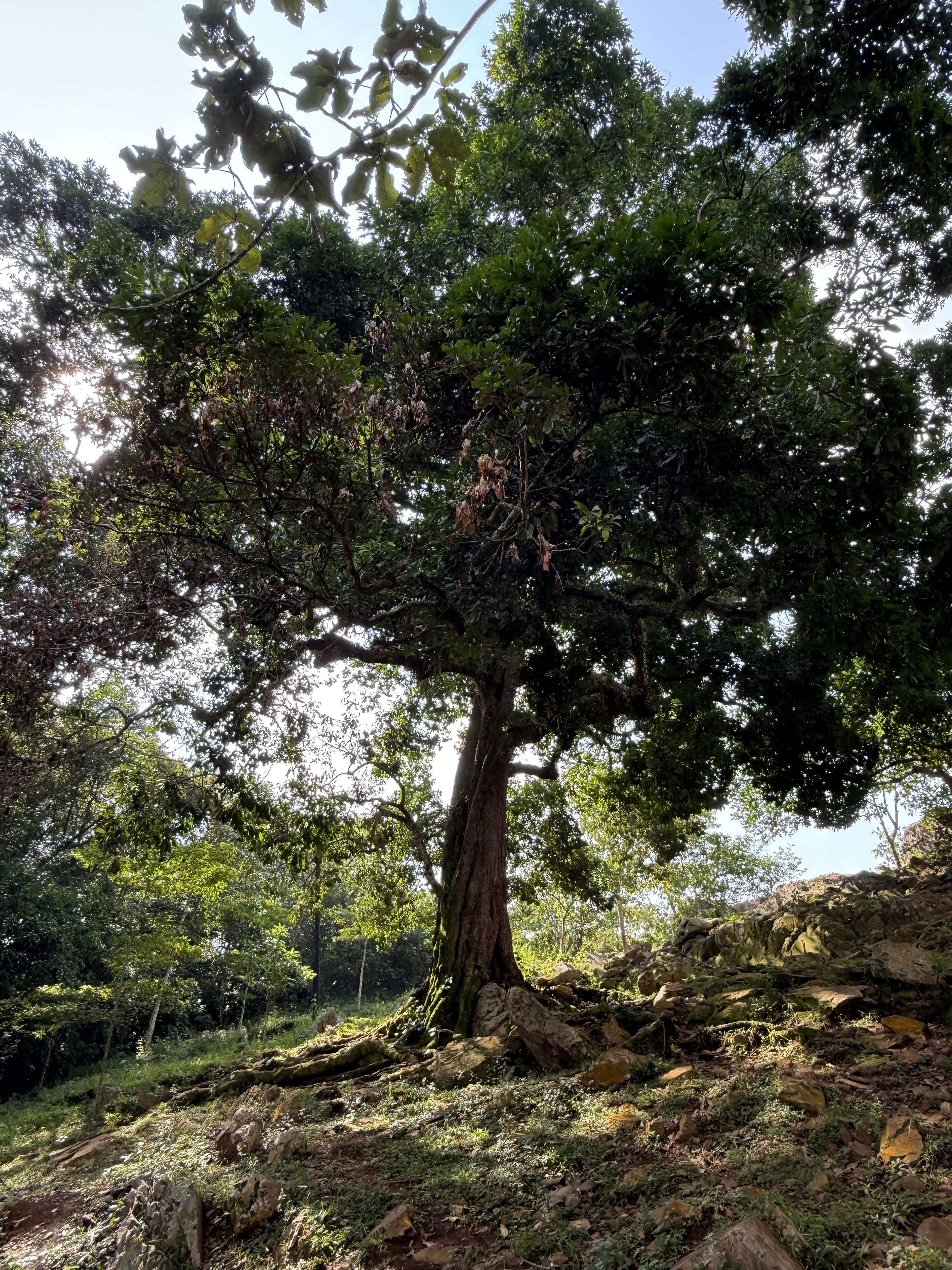
The local guide described the site, the legend and some of the medicinal trees on the short walk to the Falls and then up the short rocky path to the top. He pointed out the healing and worship sites and explained that there is a difference between traditional healers, which are not as common as they once were, and herbalists, who are quite common. The herbalists know the fauna in the area and can identify what is best for a particular ailment. The guide, for example, pointed out an African frame tulip tree with red blossoms that was good for stomach pains. The herbalist knows how to prepare each plant and what part of the plant to use for various illnesses. He also showed me a tree that was used against malaria, which is prevalent in the region.
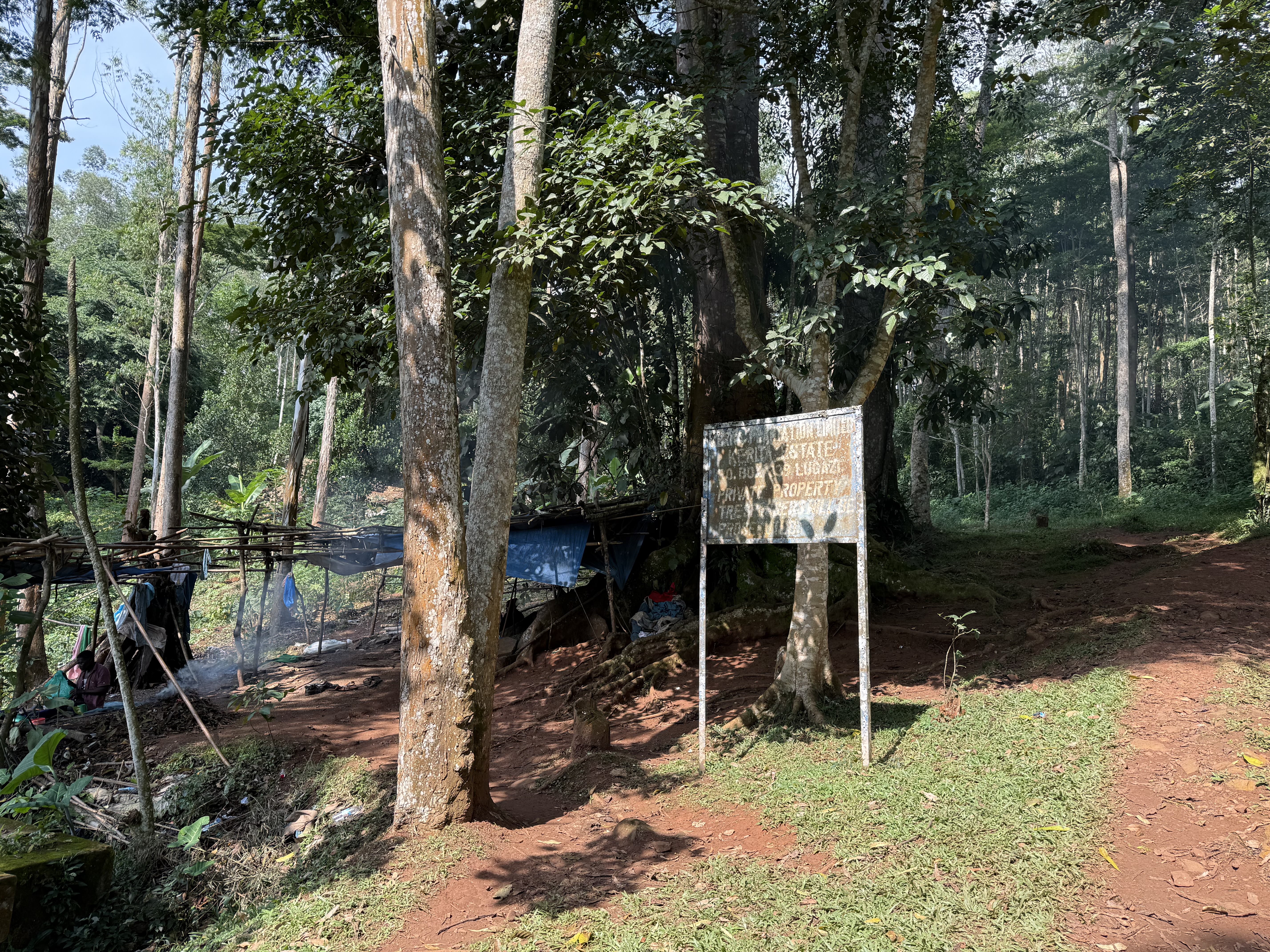
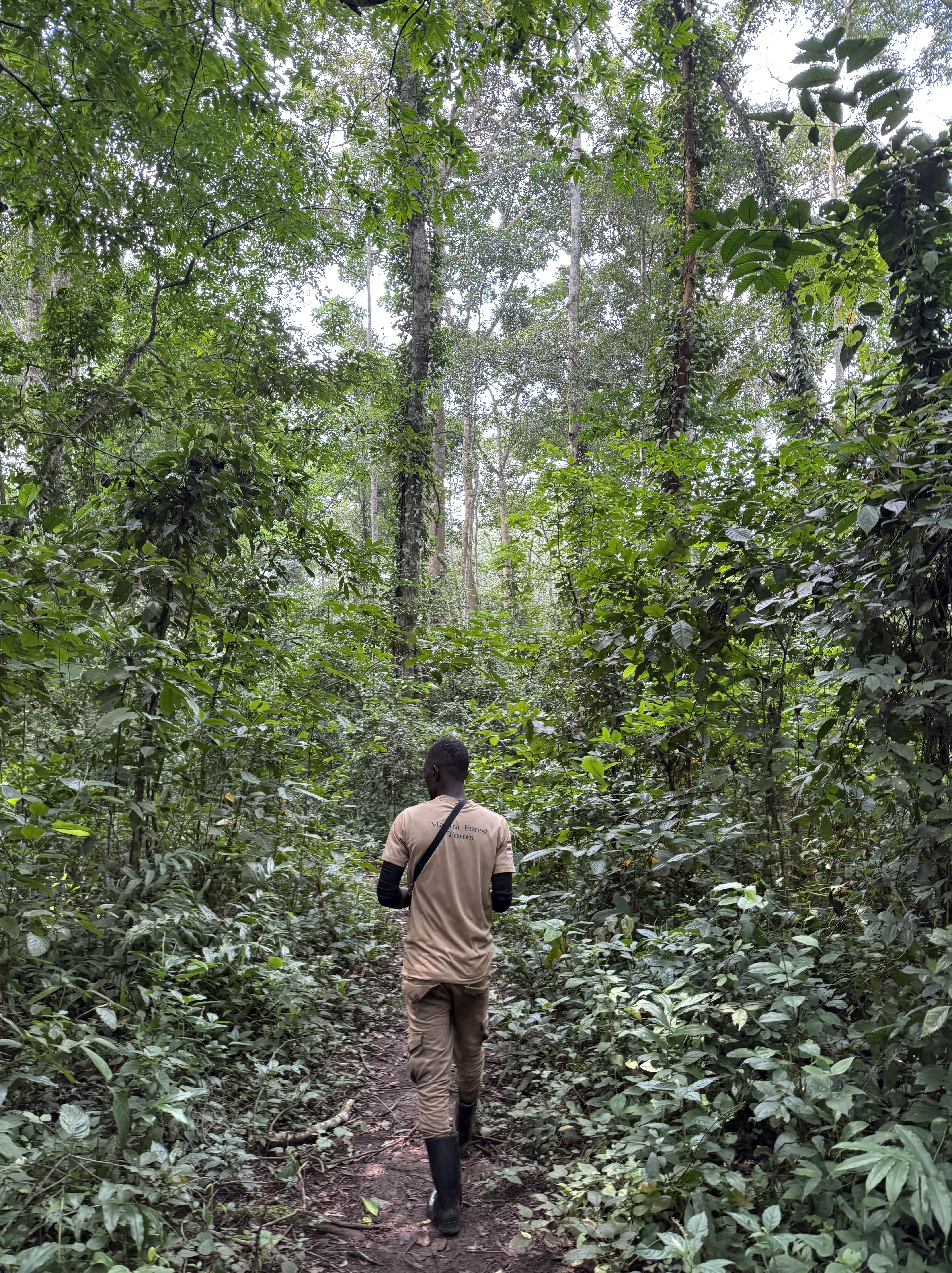
The next stop was at the Mbira Forest Reserve, where I had a different local guide show me some of their medicinal trees and plants as well as those that provided food for the animals in the forest. In Mbira, the largest forest reserve in the country with over 300 sq km, there are 243 identified tree species, 318 different bird species and 23 small mammal species. There aren’t any large animals, making it a perfect recreation area for ziplining, nature walks and small animal viewing. There are two kinds of guided walks available, a short one of about 5 km and a longer three plus hour hike. As we were pressed for time, we needed to get to Jinja and the boat by 1pm, I went on the shorter walk. It was delightful to be in the dense equatorial rainforest and hear the sounds of the breeze in the trees, the birds and insects until the blaring of a megaphone from the campaigning just outside the Forest’s boundaries disturbed the peace.
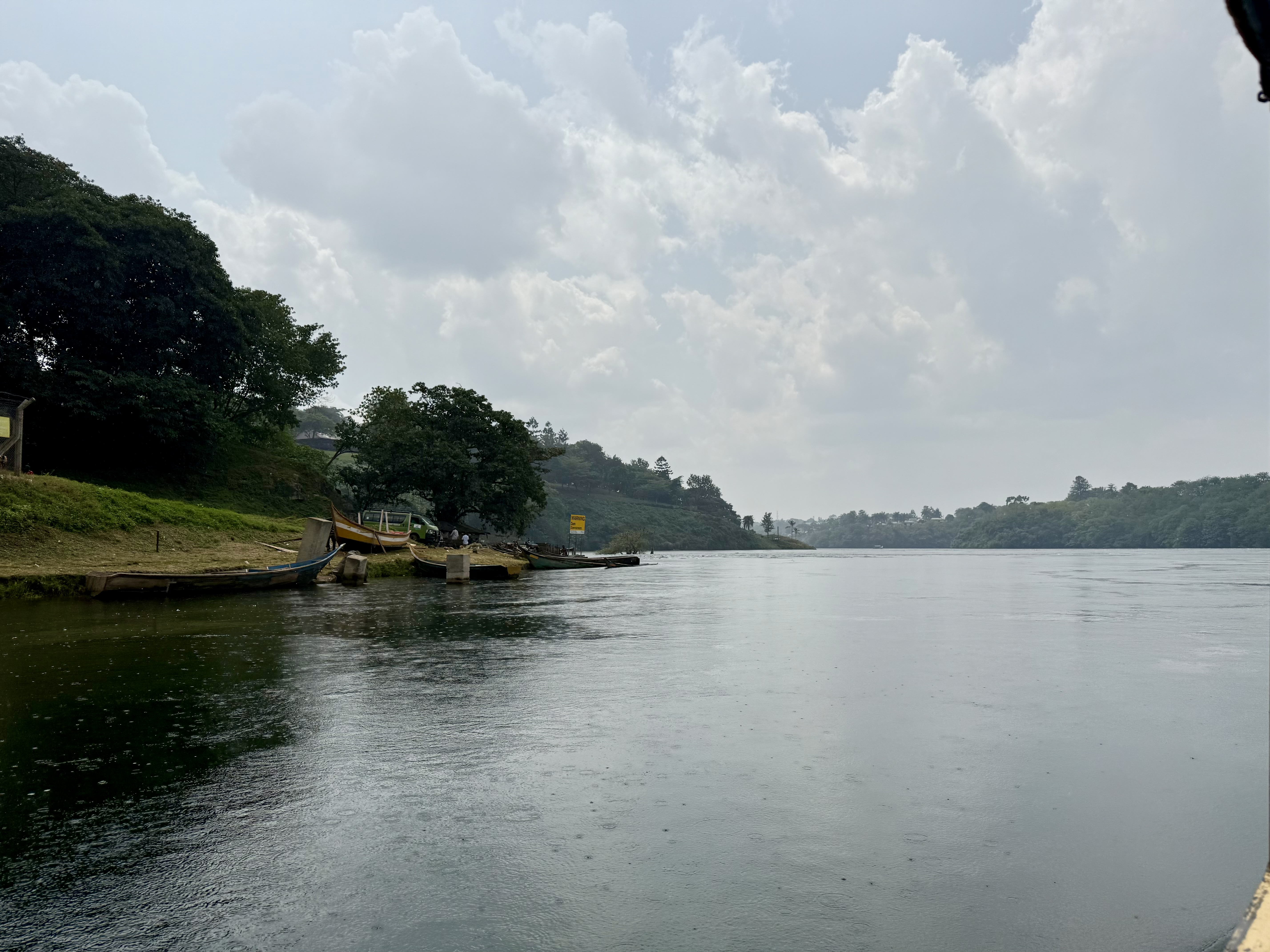
From Mbira it is still well over an hour to the boat dock for the mouth of the Nile cruise, which was the final excursion for the day. The rain started as I embarked, but the open canoe had a canopy, and the rain remained more of a drizzle than a downpour. The boat was driven by a local captain accompanied by a local wildlife guide. The cruise took about an hour as it went into Lake Victoria and back to where the spot where John Hanning Speke in the early 1860s claimed the Nile originated. The guide explained about the lake and the source of the river and pointed out a great variety of birds in the trees on the shoreline cliffs and on the rocks on small islands at the source. Lake Victoria’s borders lie to 51% in Tanzania, 6% in Kenya and the rest in Uganda. The guide insisted that it is the largest freshwater lake in the world, with Lake Superior in second place, but various websites tell a different story with the US/Canadian lake in first place. It is, however, the largest tropical lake and lies between the Eastern and Western Rift Valleys. (largest.org) The lake’s area consists of 69,484 sq km (26,828 sq mi), with a coastline of over 3,220 km (2,000 miles). Its waters house over 200 species of fish, with Tilapia being the most important. (Britannica.org) According to the guide, the lake is 83 meters deep.
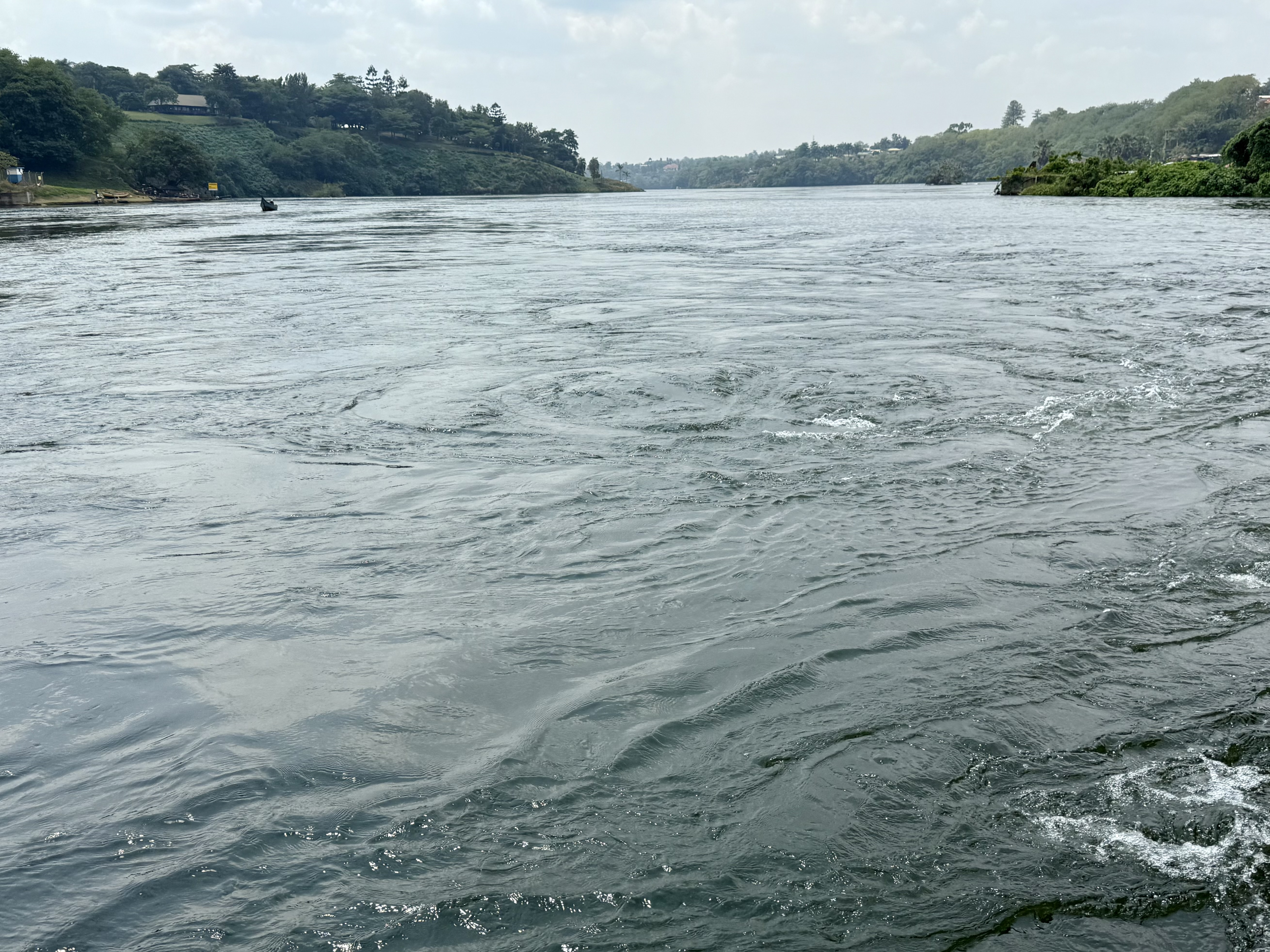
Speke described fountains at the point where the river starts to flow north to the Mediterranean Sea, but they no longer exist. When the first of the Nile dams was built, the flow of the river changed and what is now visible are some bubbling swirling eddies, but no fountains.
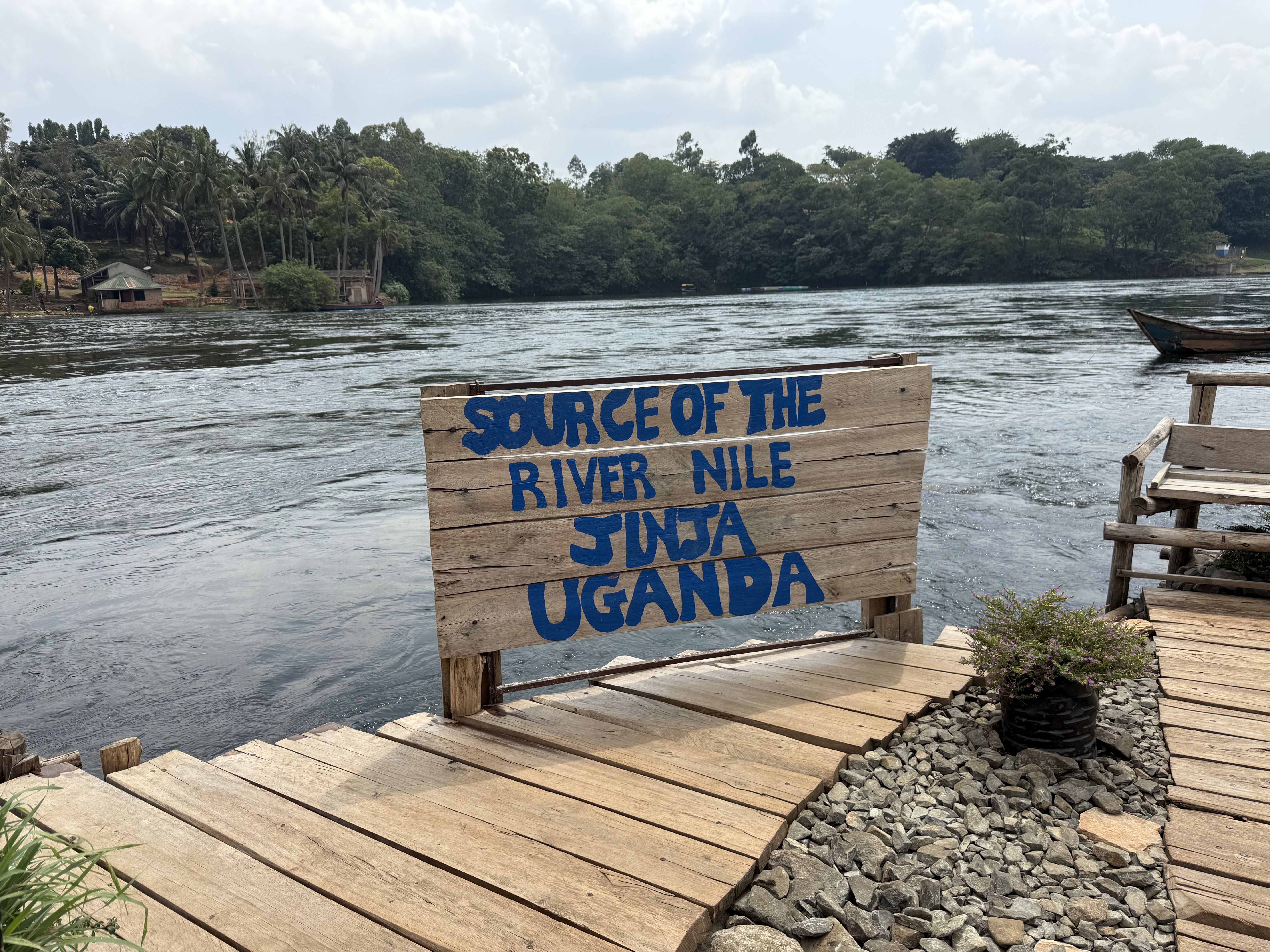
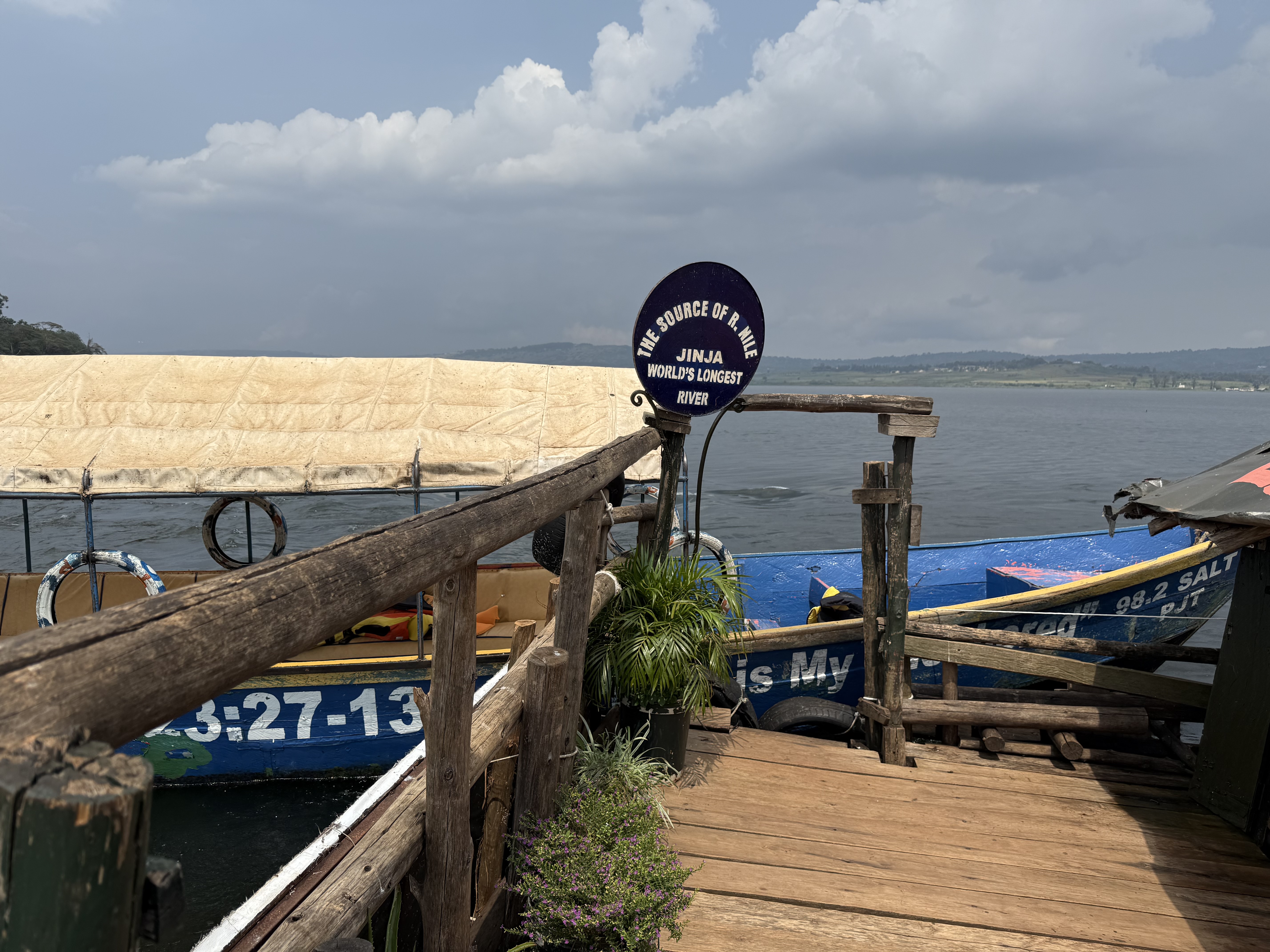
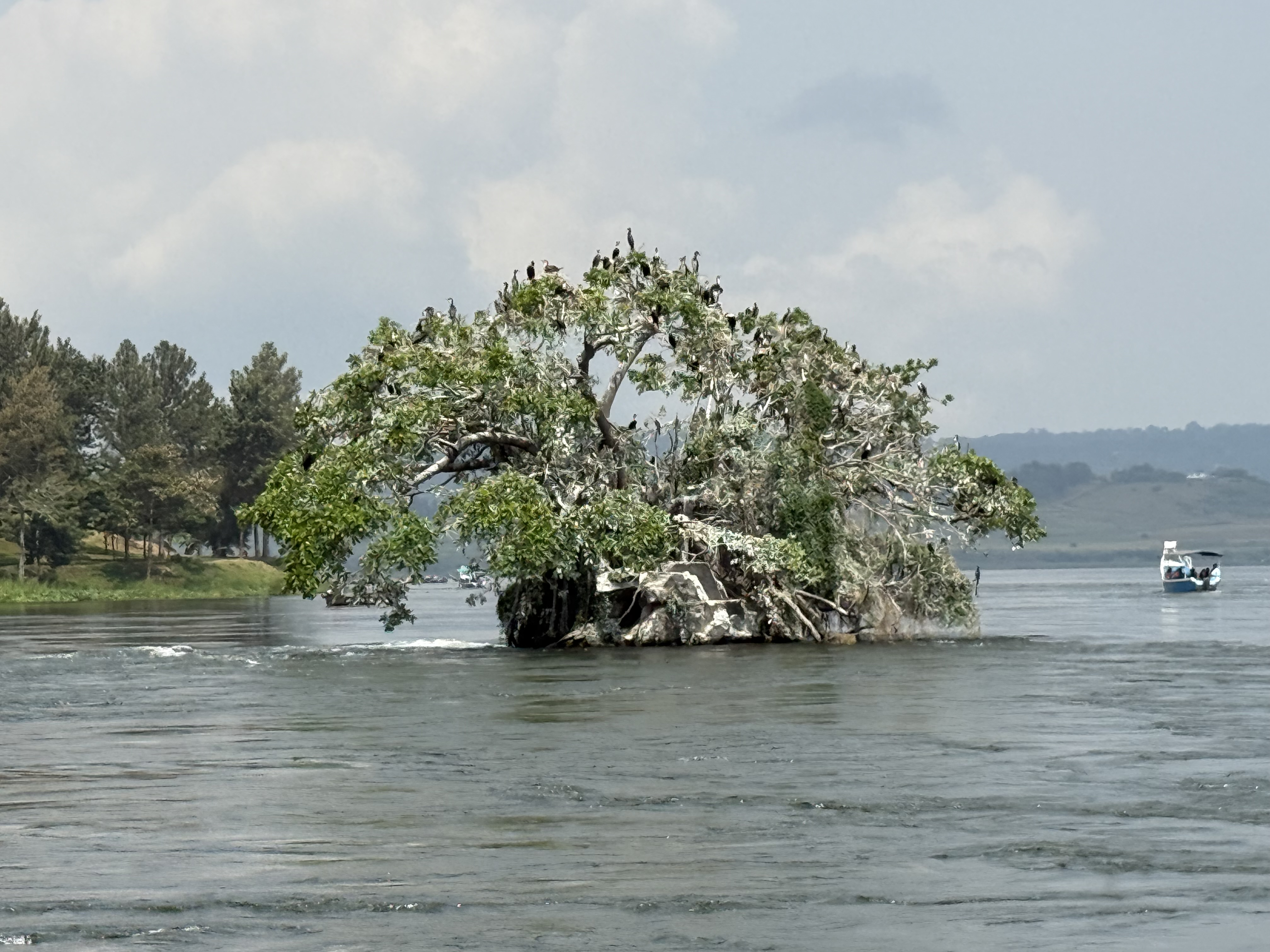
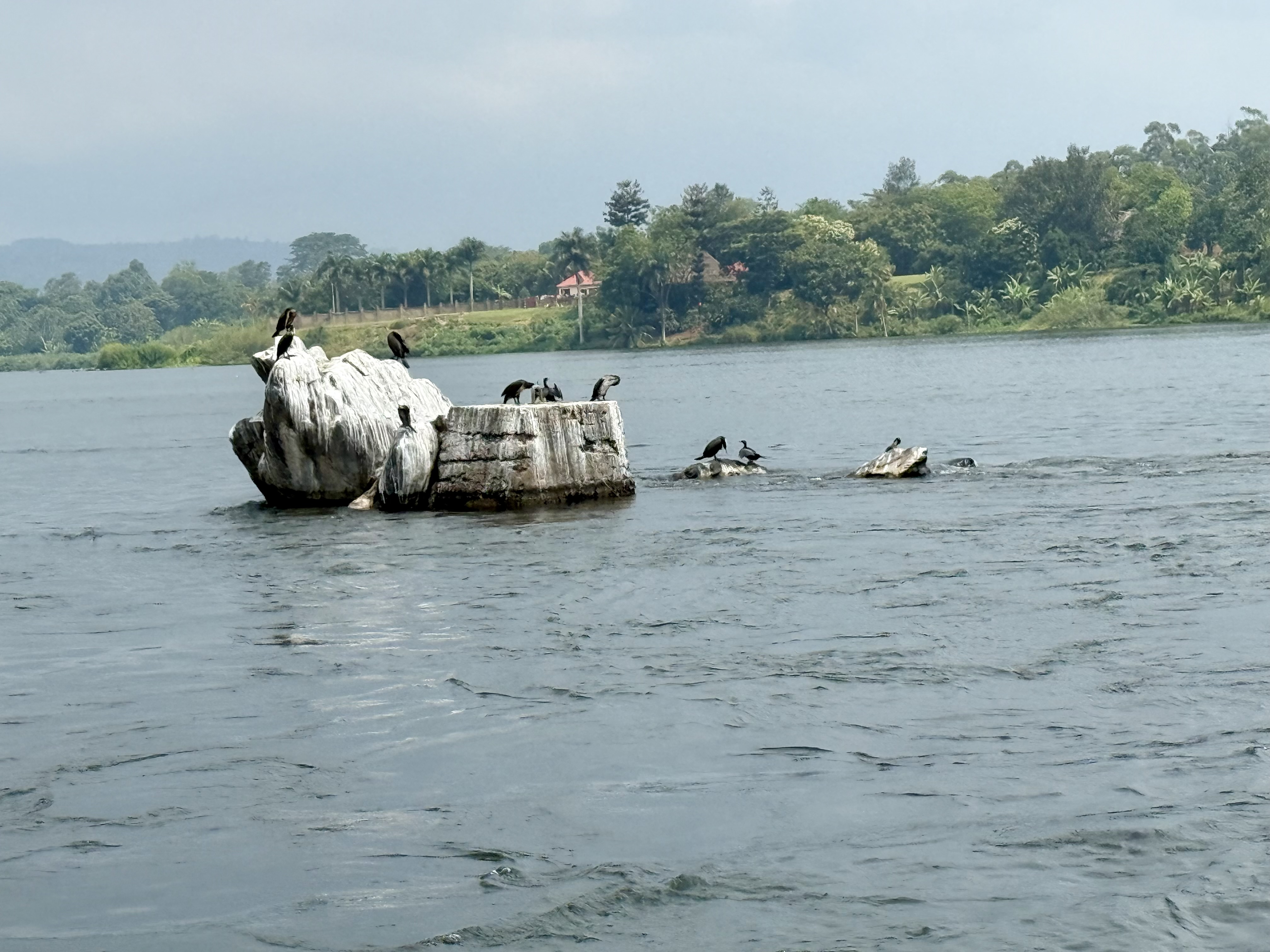
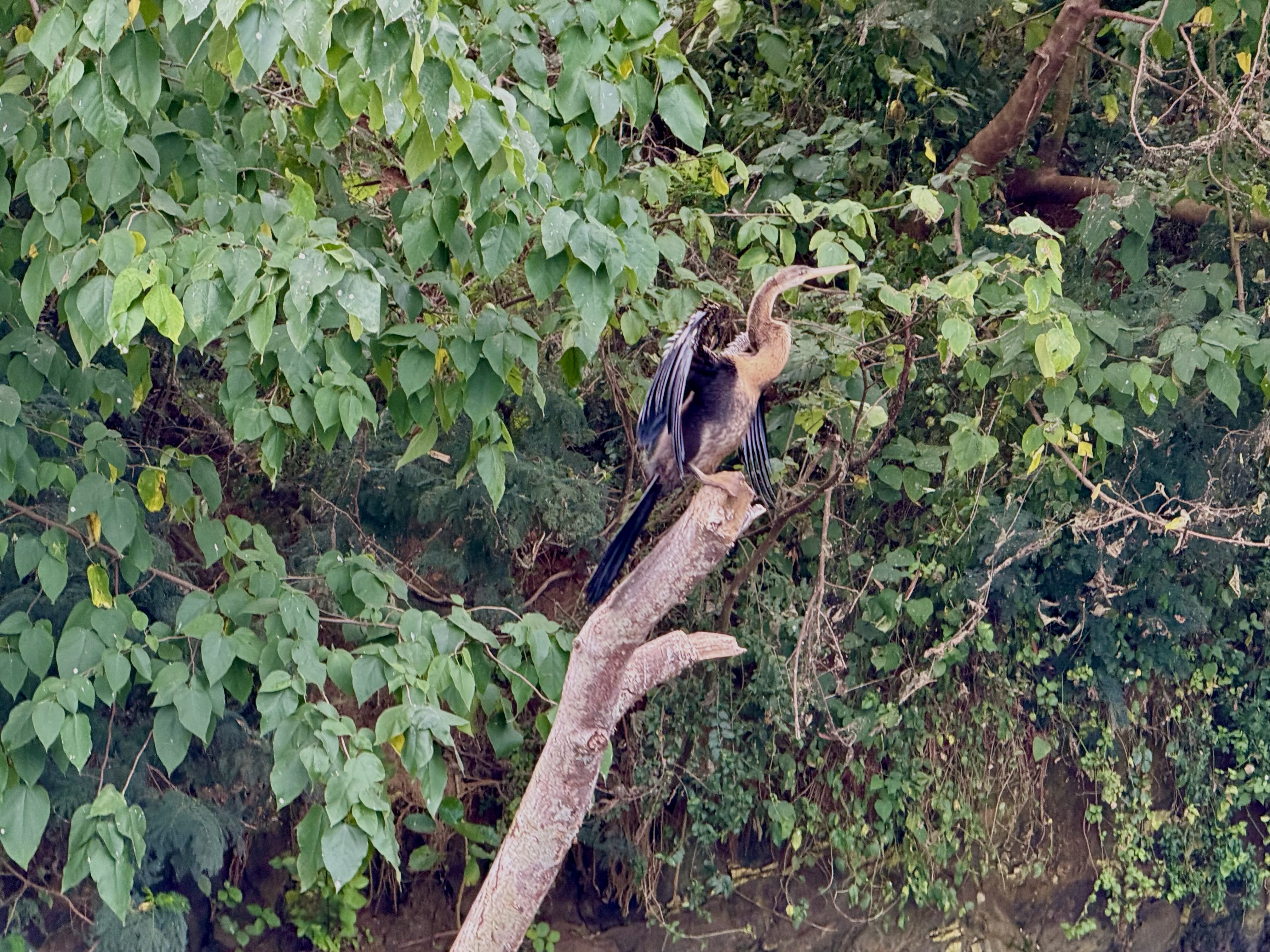
It used to take the water four months to make the transit to the sea, but given the dams, supposedly it now takes seven. The exact spot where the measurement of the Nile takes place is a rock in the middle of the water on which a multitude of anhingas sit with their wings outstretched to dry. The exact length of the Nile is subject to considerable speculation. livescience.com lists the length at 6,853 km (4,258 mi) while the guide mentioned 6,670 km (4,050mi). Some say its source is at the origin of its largest feeder river, the Kagera, but this too is debatable. On its way to the Mediterranean Sea it passes through Tanzania, Uganda, Rwanda, Burundi (which insists it has the source, but which seems to be a tributary rather than the official origin), the DRC, Kenya, Ethiopia (where the Blue Nile originates at Lake Tana. I wrote about this in a separate blog a few years ago – https://journals.worldnomads.com/krodin and scroll to Ethiopia), Eritrea, South Sudan, Sudan (where the Blue and White Niles join in Khartoum) and finally exit in Egypt. (I also wrote a blog on the same website about my Egyptian Nile cruise). In Lake Victoria at the quasi-official origin, there is a floating dock with a souvenir shop and signs stating that this is the place. The folks in the floating shop were not happy with me as I didn’t have any money and couldn’t purchase anything. I purposely leave my money with the van and driver/guide on excursions for precisely this reason. I find there is simply no need to buy stuff everywhere. Yes, the people need the income from the tourists, but that is what generous tipping the guides and staff at the hotels and restaurants does as they are providing a useful service.
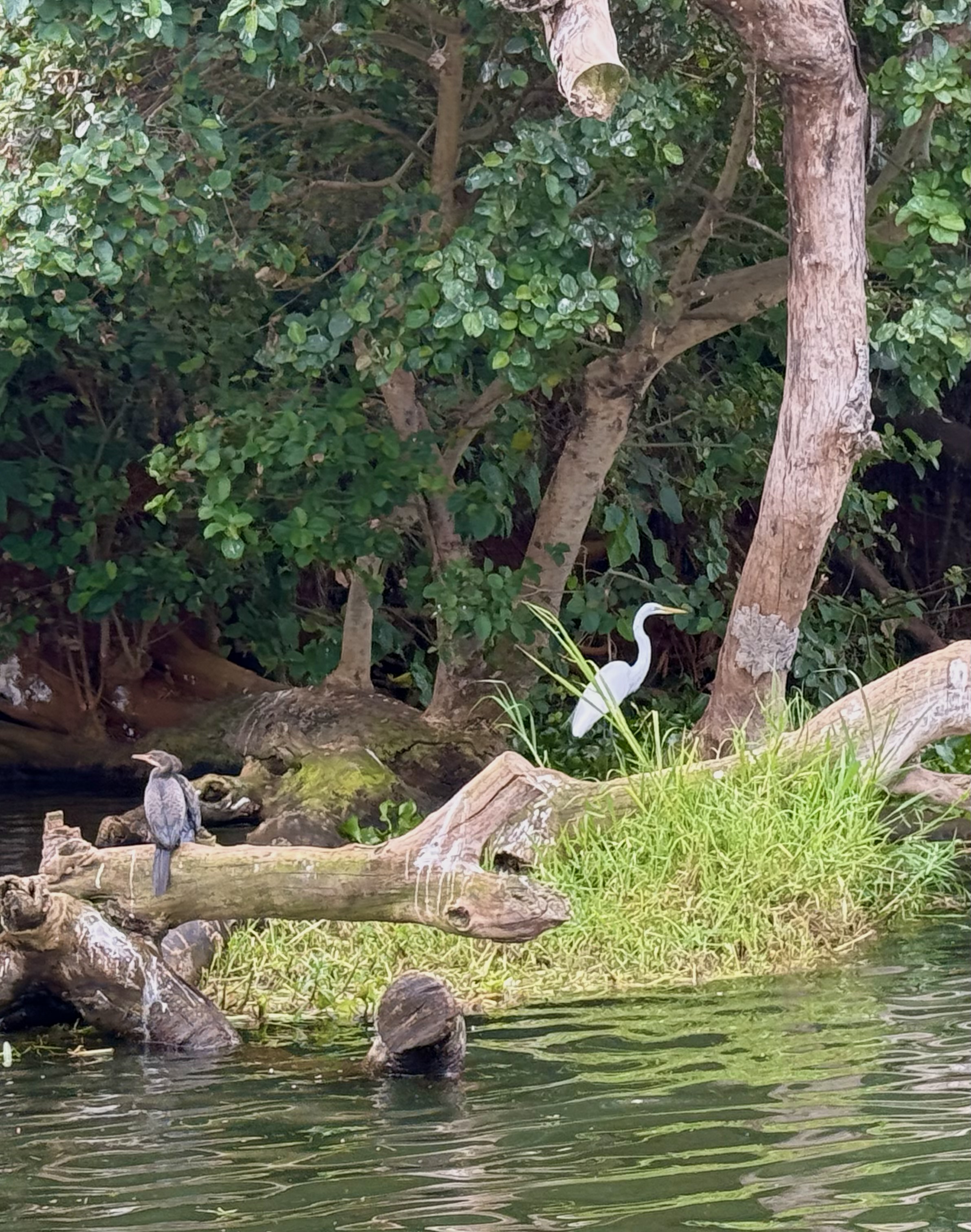
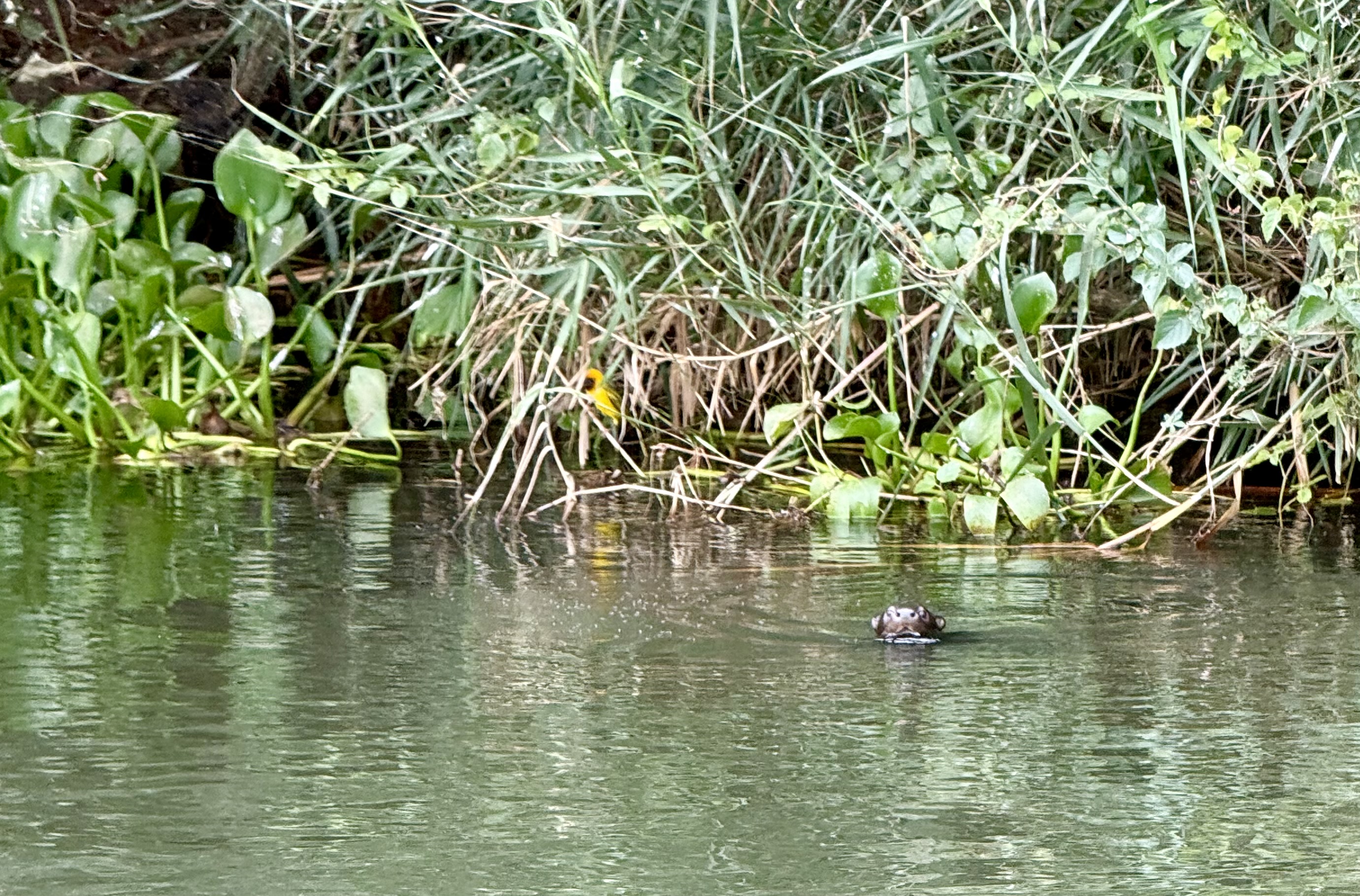
The wildlife guide and captain did get sizable tips as they were good. The guide pointed out Malachite Kingfishers, African Snakebirds, African Eagles, Goliath Heron, Small Heron, Pied Kingfisher (of which there were a large number), storks and many other bird species in the thick green brush on the shoreline as well as some of the larger birds on the rocks in the middle of the water.
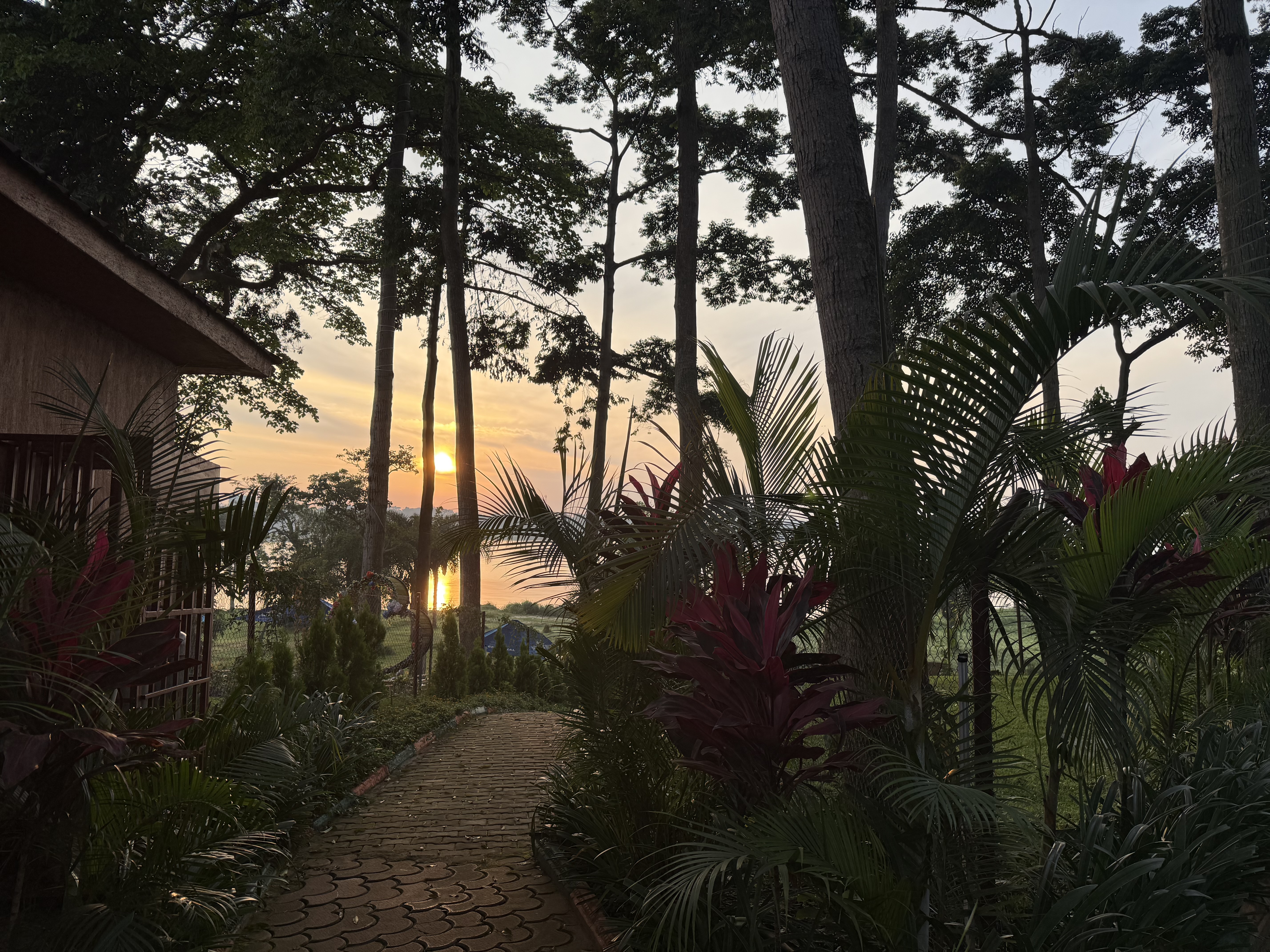
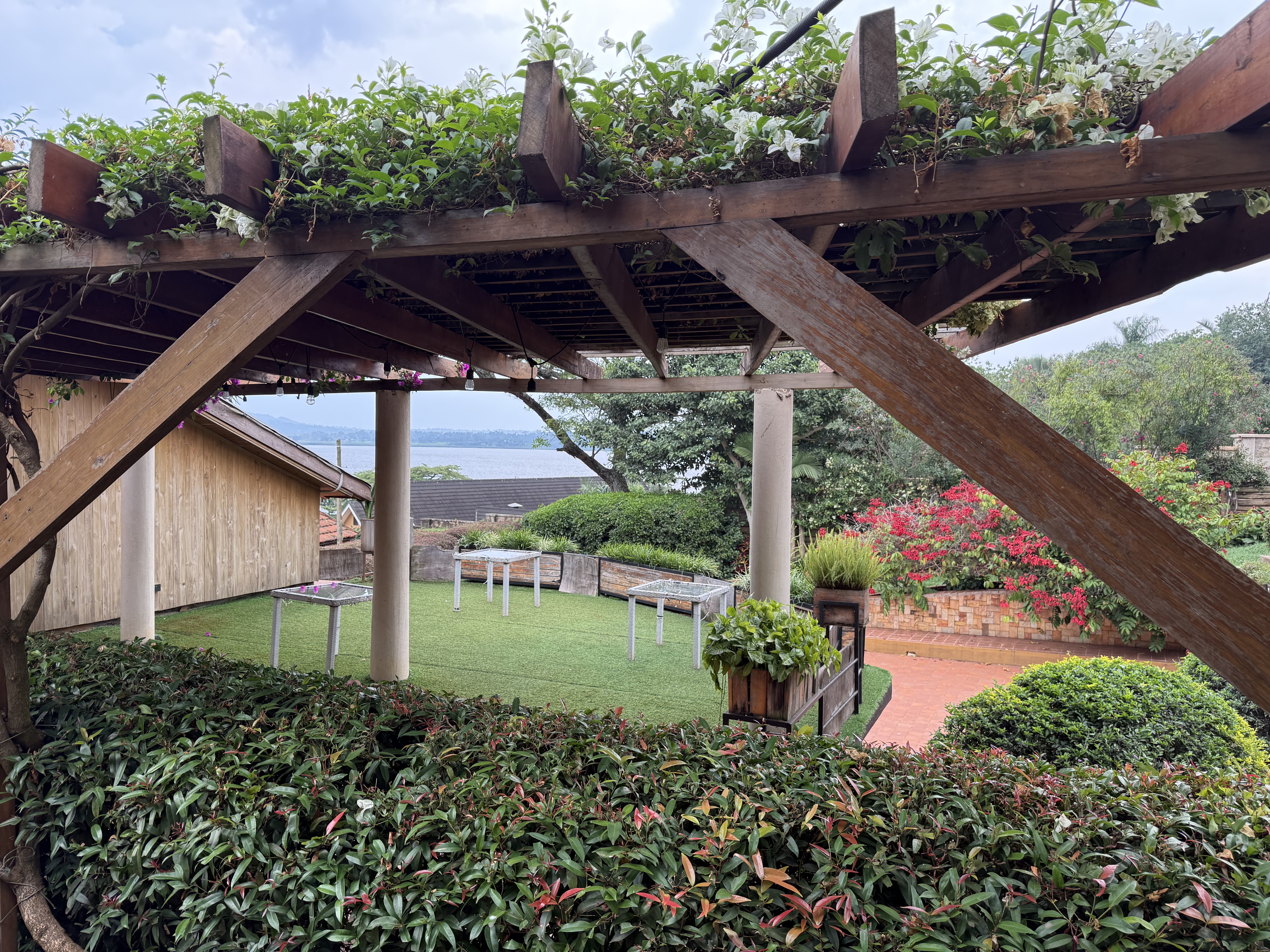
As I was alone on the cruise, they dropped me off right by the path to the hotel I was staying at. The view from the room at the Nile View Hotel in Jinja was exactly what the name implied but framed by canopies of multi-hued flowers. And the internet worked!
The next morning, we drove on the backroads, cutting across the country from Jinja to the main road north heading to Murchison Falls National Park. The journey on these backroads, which Richard had not been on before, took the best part of four hours of jiggling, jumping, and swaying on the car seat, before we got to the paved street. What it did do, however, was give me an opportunity to see a part of the rural regions of the country I would otherwise have missed. The land on either side of the road has either small villages, where vendors have wooden or tin stalls selling fruits, vegetables, and household items, or agricultural fields. We passed through banana, sugar cane, tea, and coffee plantations and small plots growing pineapple (the most delicious ones I’ve ever tasted), watermelon, tomatoes, potatoes, sweet potatoes, beans, greens, cucumbers, carrots, cauliflower, and lots of red onions.
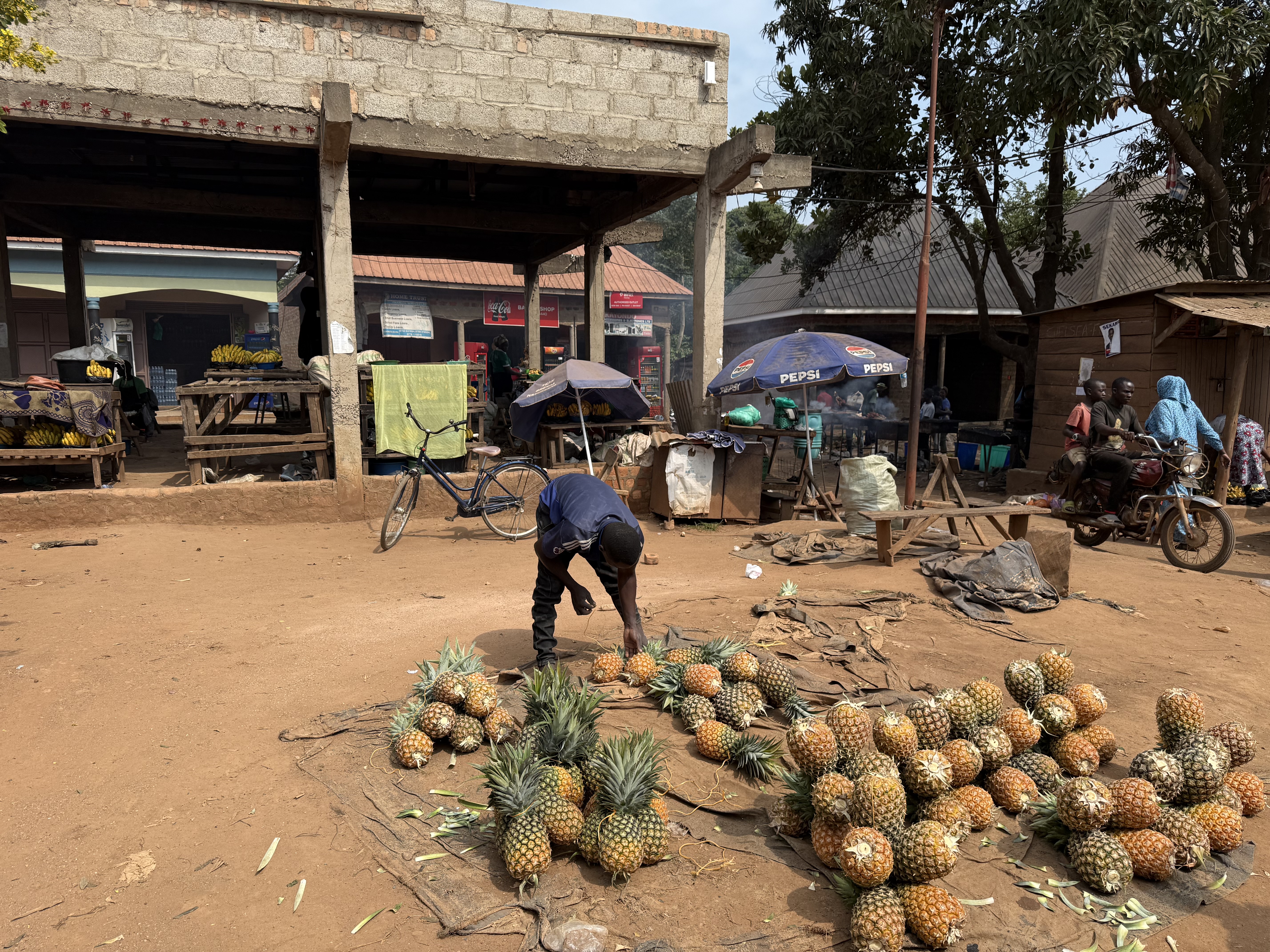
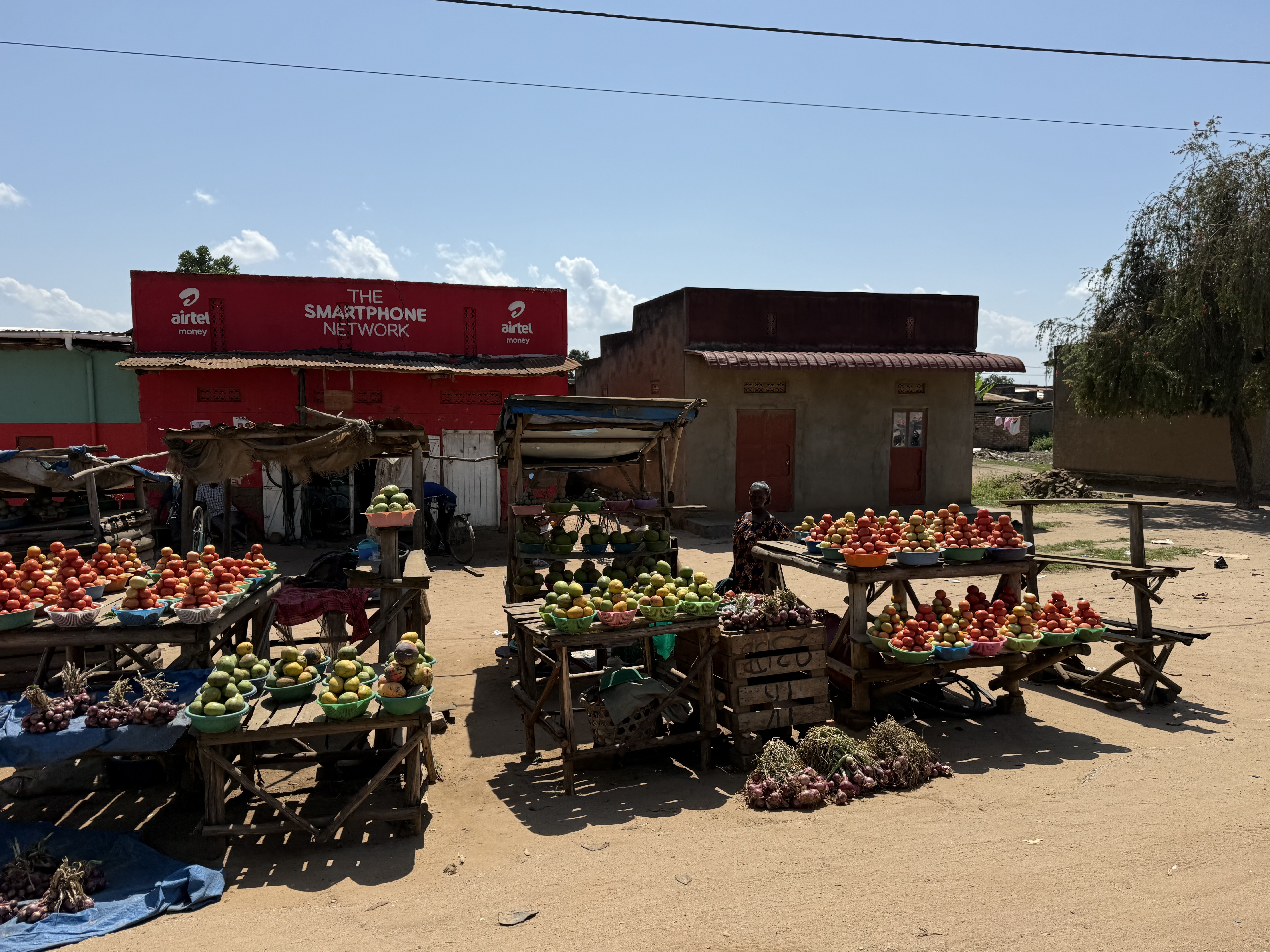
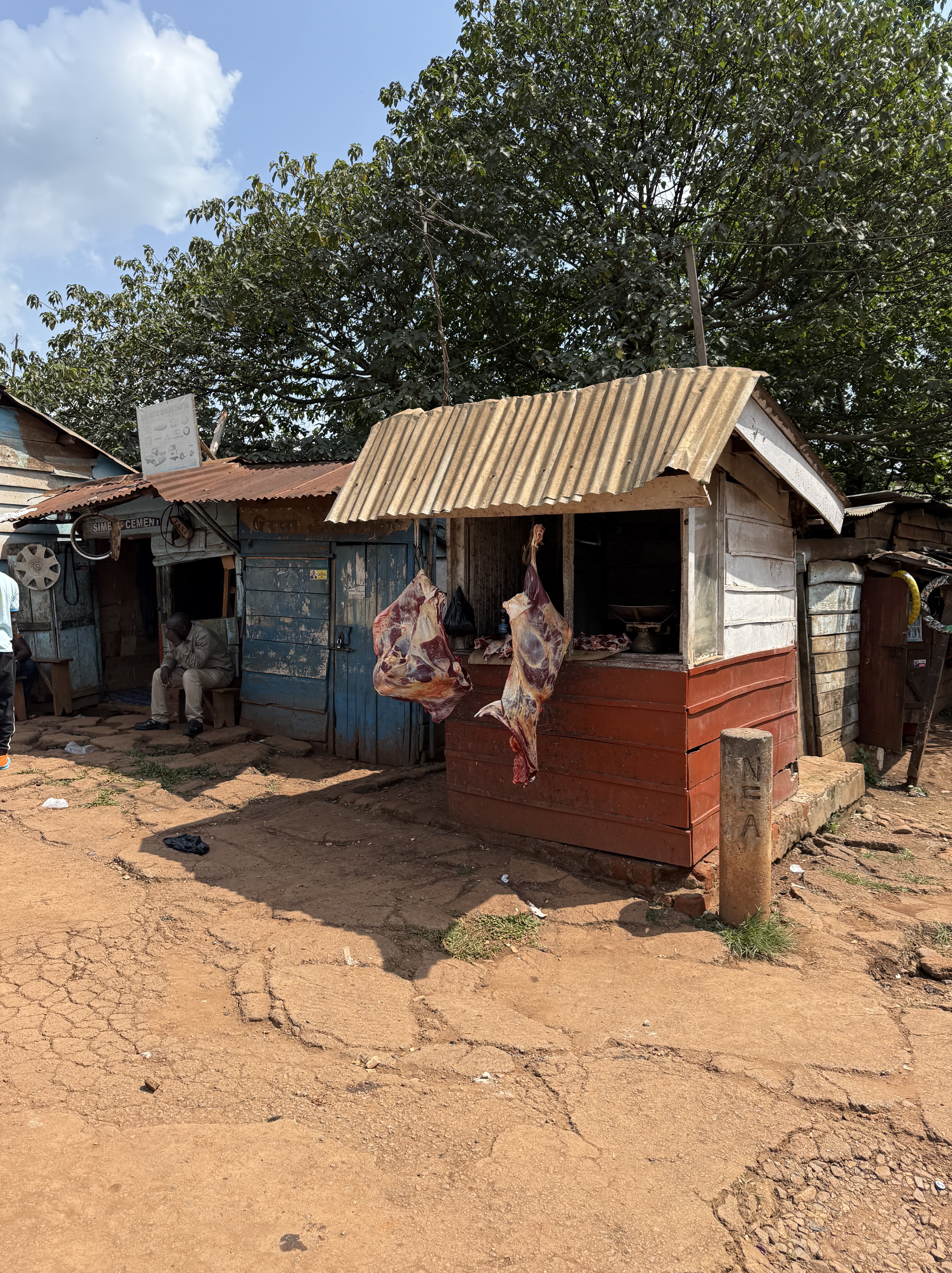
When I remarked on the variety, Richard, who is probably in his 20s, mentioned that growing up they never bought food other than once in a while a piece of meat, which might be beef, goat or chicken. In restaurants, where they also never ate, pork was also available, but this didn’t seem common. They grew everything that they needed. Buying food in a store just wasn’t done. The architecture of the houses varied along the way; some were traditional circular mudbrick bomas with thatched roofs, others were square or rectangular bomas with thatched roofs, while many were rectangular concrete brick structures with tin or modern roofs. Many of the houses near the main roads were like small villas and quite elegant in contrast to those near the backroads. There does appear to be a fairly great economic disparity based on where one lives.
While traversing the region, I noticed that there were a number of new mosques that had either just been built or were in the process of being built. Most of the churches seem to have been around awhile, with just a few new ones under construction. 7th Day Adventists had sites throughout the region. Richard explained that both Christians and Muslims live harmoniously together in the villages. Schools include religious schools – Catholic, Protestant and Muslim – as well as public and private schools. Kids with different colored uniforms, based on where they attend, were walking to and from school while we passed by. Some walk many kilometers each way as in the rural regions there aren’t many, if any, school vans/busses. When a family has sufficient economic resources, they will send their children to one or the other private school as they are reputed to be much better than the public ones. Richard was the product of a rigorous Catholic education, and this was evident in his use of language as well as the thoughtfulness and logical approach to his explanations of what we were seeing and experiencing. No education, however, could prepare one for driving in an environment where the motorcycles and bicycles dodge trucks and cars in a completely haphazard manner on ground that suddenly falls away or is pushed upward for a huge earthen speedbump. Knowing how dangerous driving is, it is no wonder that many trucks and cars have a psalm number or Allah Akbar written on the back or on their windshield.
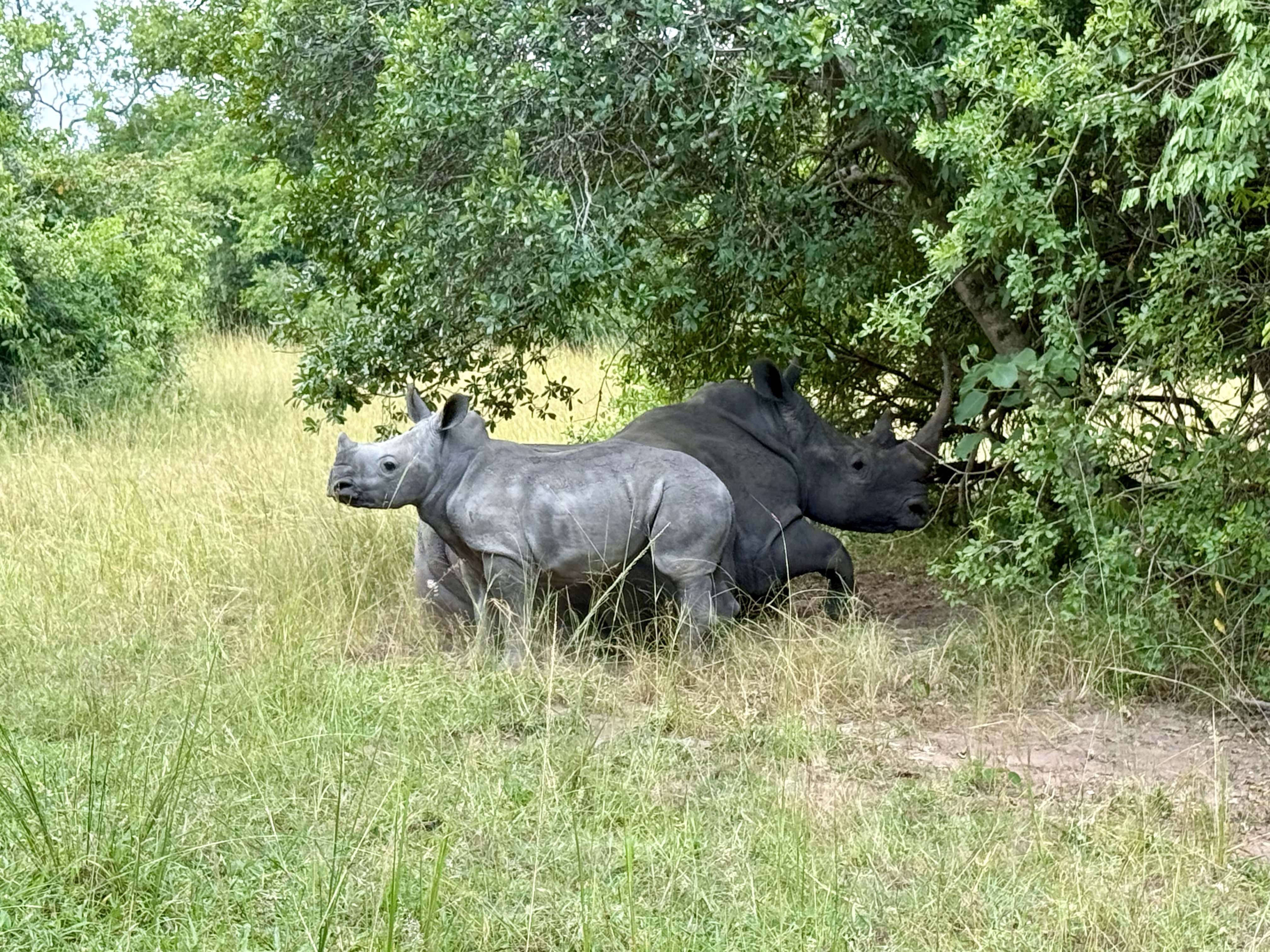
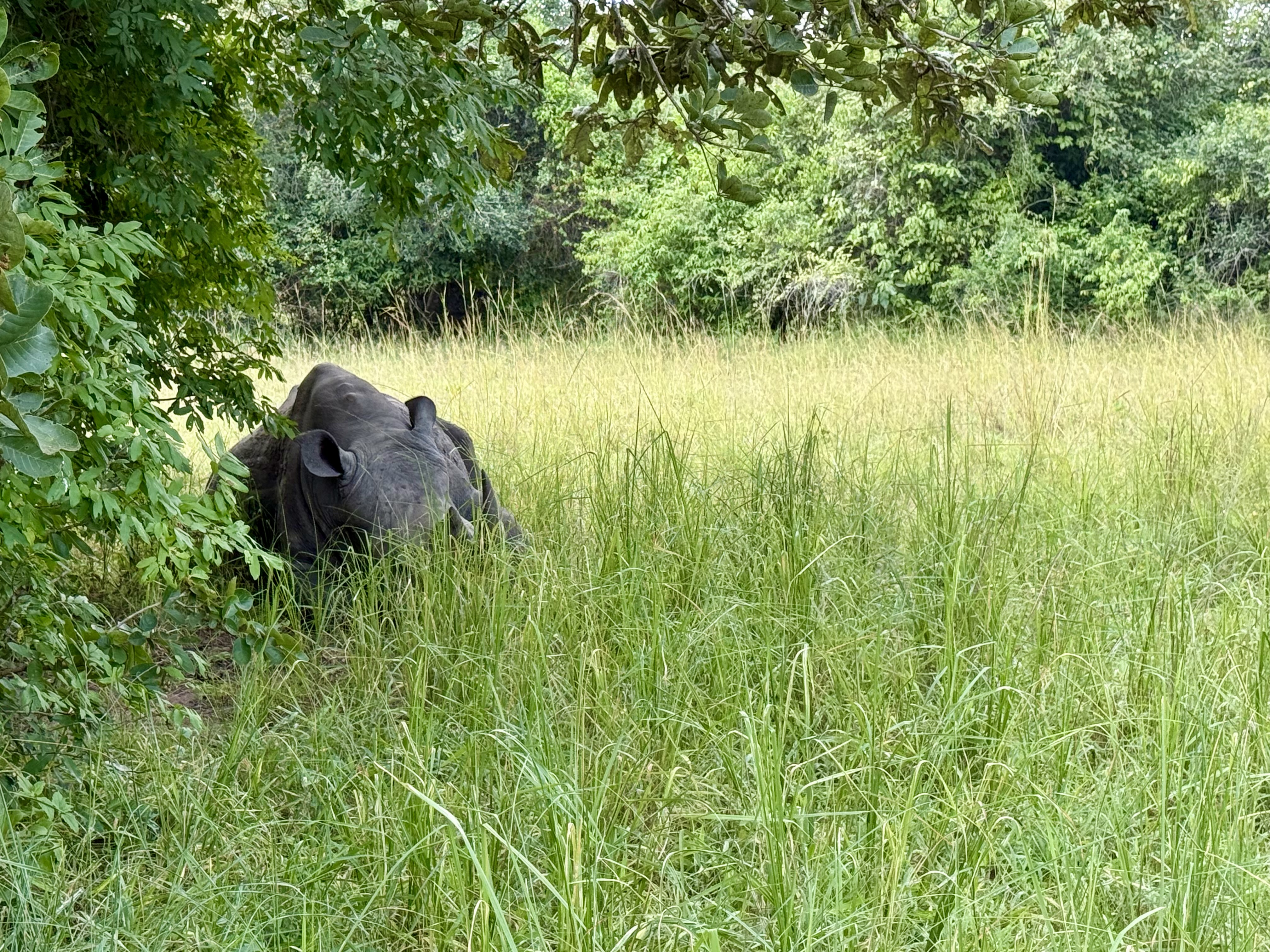
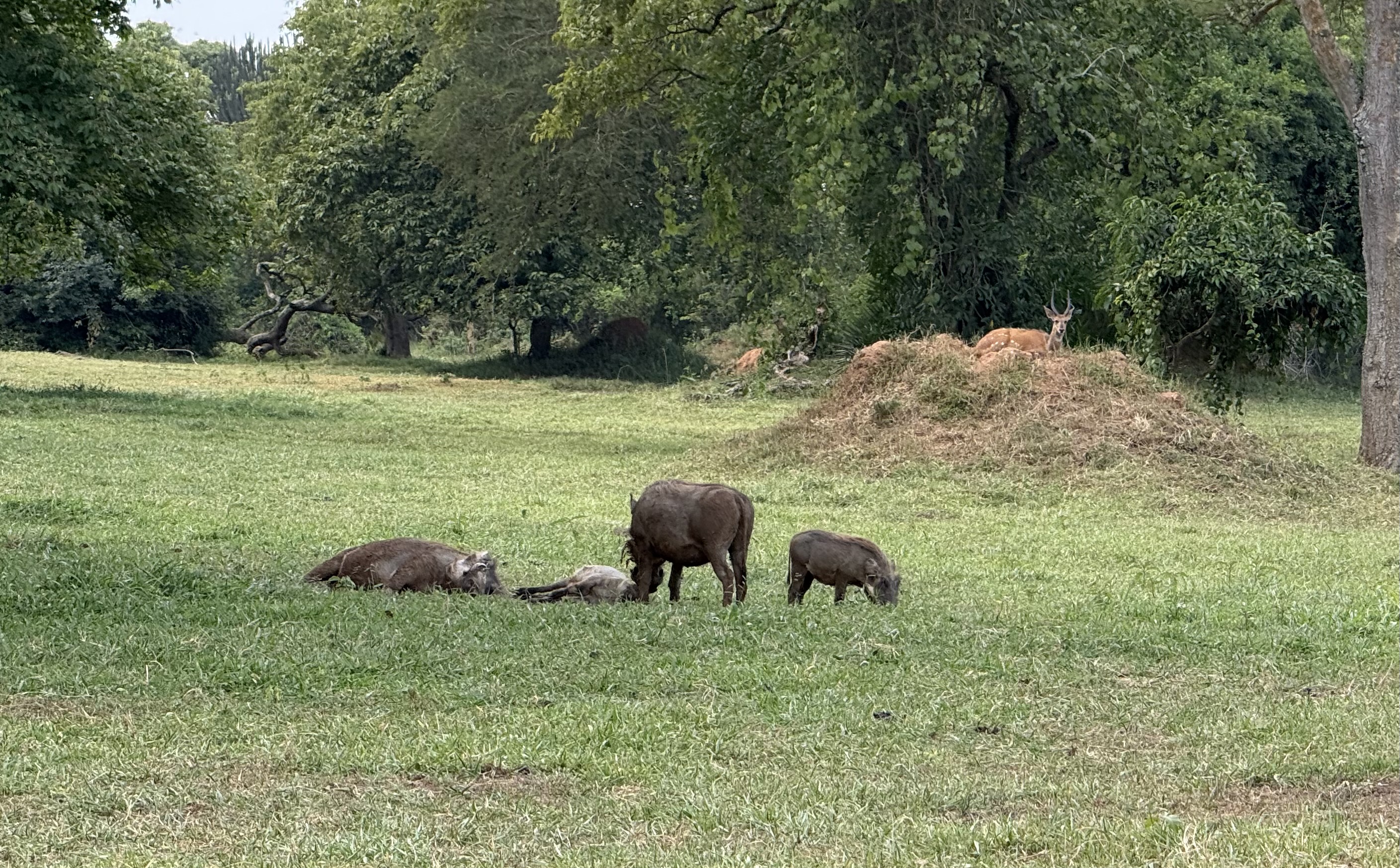
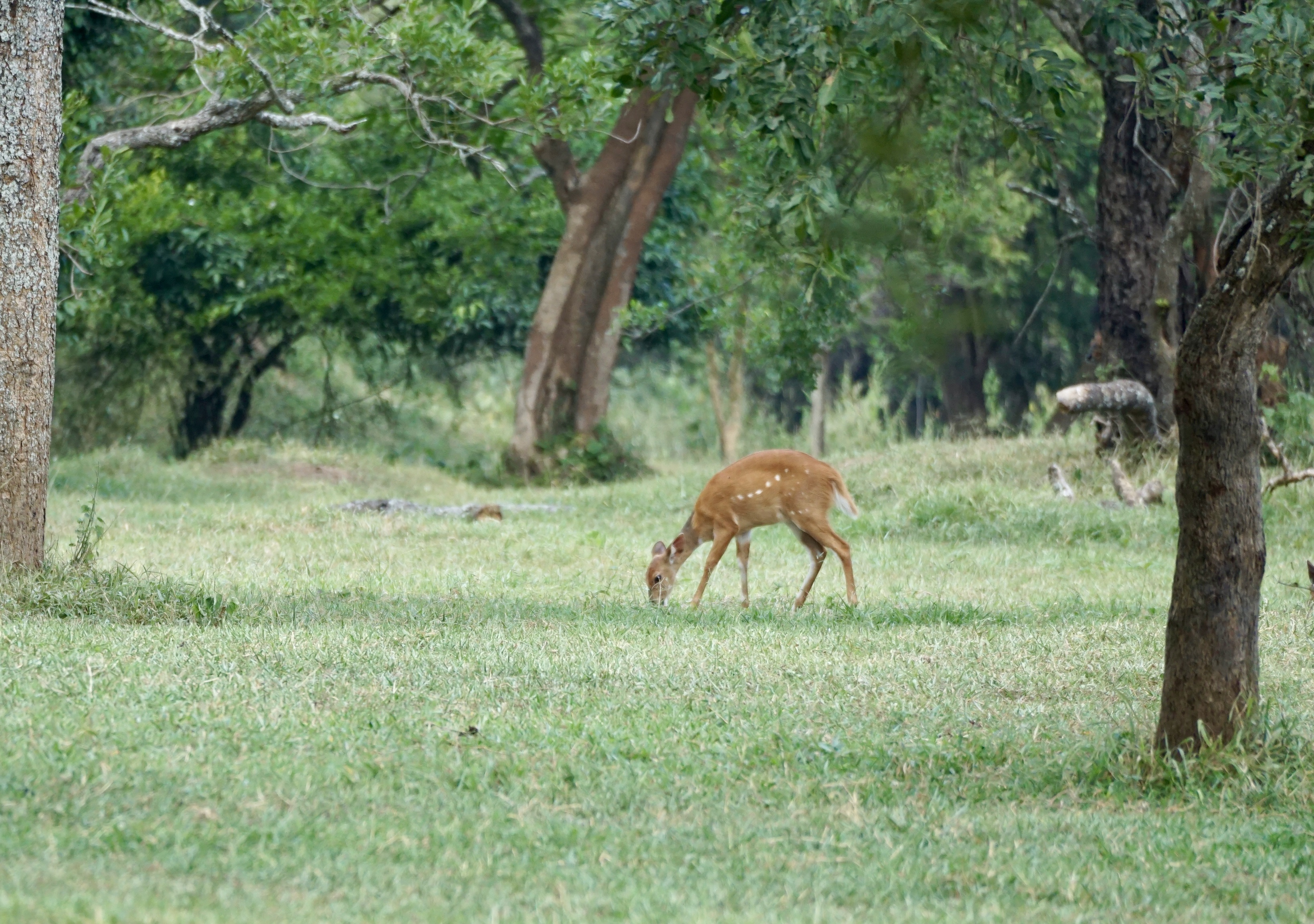
I was thrilled when we finally made it to the asphalted road and from there it was only about another hour and a half to the Ziwa Rhino Sanctuary, which to me was one of the main highlights of this portion of my trip. Rhinos, both black and white, were poached to extinction in Uganda by the early 1980s, and this sanctuary made it its mission to bring the White Rhino back. In 2005, they started with six individuals, two from Disney Animal Kingdom in Florida and four from Solio Ranch in Kenya and from them there are now more than 60. (Various internet sites list 22-32, but the pictures on the wall at the Sanctuary have all of the animals listed by name and date and that is the figure I use.) They are currently at the point in the breeding program that they plan on re-introducing a few into Murchison Falls National Park next year. The Sanctuary allows visitors, accompanied by a ranger/guide, to go on a short walk through the fields to look for rhinos. We only had to walk about five minutes to come across a small family consisting of two sleepy teenagers, one tired male, and a mommy being kept awake by a very inquisitive youngster. They were less than the required 10 m away while both Richard and I kept our iPhones clicking away. The baby was sooo cute and mommy was vigilant that he not come too near us. The Sanctuary is home to many other mammal species as well, including bushbucks and warthogs who were hanging out in the large field next to the restaurant.


 omegoodyssey