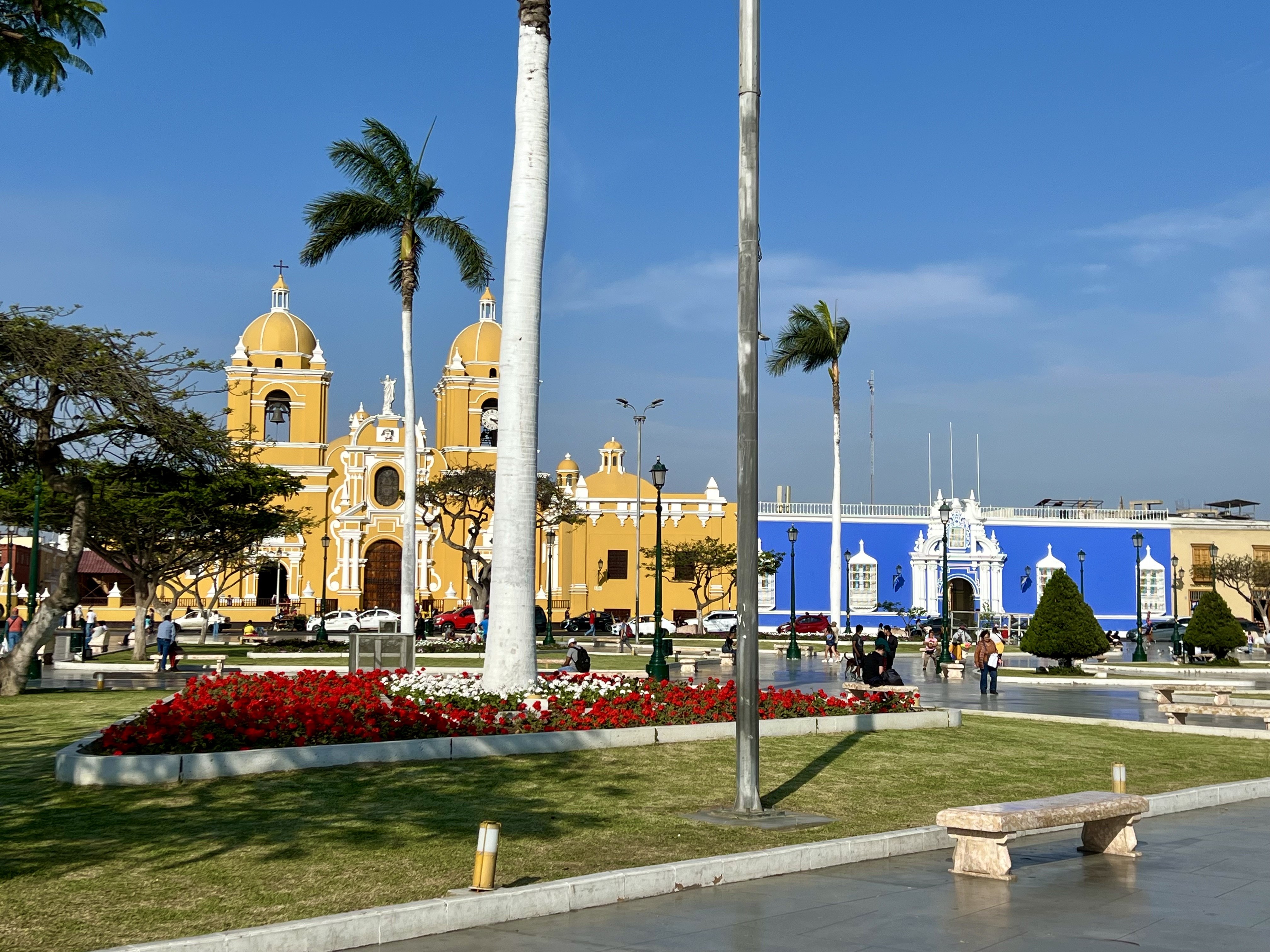
One of my major goals for this trip was to get to Chan Chan and Túcume to see the archeological excavations there and to learn a bit about these pre-Incan civilizations. I had also read that the beaches in northern Peru were spectacular, and as this was going to be the last chance to get to the Pacific for a while, I wanted to make sure I visited at least a couple of them. In this sense, my experiences in northern Peru were successful. I saw what I had intended to, what I didn’t expect was my reactions to them. I’m normally accepting of other worldviews, but when they promote violence and denigrate women, that’s where my understanding stops. This is unfortunately what I found with some of the pre-Incan cultures stretching from Trujillo northwards. The Moche are the most famous, they are the ones who built the Huacas del Sol and de la Luna, followed by their successors in the current province of La Liberdad, the Chimus, who built Chan Chan.
As elsewhere in Peru, there is evidence of ancient cultures in this region stretching back to around 5,000 BCE. The Chavin culture, which I mentioned in the Huaraz blog, had a distinct influence on the development of later northern coastal cultures as it did with those stretching southwards toward the current Bolivian border, where the Chavin met with the Tiwanaku peoples. The balancing of positive and negative elements from Chavin and from Tiwanaku, however, were lost by the time the Moche culture developed, ca. 2-8thC CE. Most cultures, even today, are concerned with territorial (or economic) conquest and the Moche and Chimu were certainly no different. It was interesting when I was speaking with the taxi drivers about pre-Incan civilizations in the area, they only knew the Moche and Chimu, everything that happened prior to the Moche didn’t exist for them. And there were a number of important cultures in between, including the Cupisnique, Salinar and Virú, all of which have artifacts in the local museums. These two major cultures, however, left large visible citadels that are constant reminders of their presence and influence. The Moche are the best studied and popularized of the northern Peruvian cultures. Their sites at Huaca del Sol and Huaca de la Luna lie just south of Trujillo and are major tourist locations. Guides lead groups, and one is only allowed in a group, throughout the day around and through the Huaca de la Luna site. All that remains of Huaca del Sol is the large pyramid shape, the insides are closed off, so while one can see the site from Huaca de la Luna, one isn’t allowed near it. The Moche god, Dios de las Montañas, otherwise known as the Decapitator god, lived in the temple, but this was only accessible to the upper priestly echelons, not the common people. They were only allowed to look at the temple from the outside; the only other people allowed inside were those who were to be sacrificed. As the names of the Huacas suggest the cult worshipped the sun and moon, but they were not anthropomorphized as in other cultures, instead they were neutered forces; their main god was the decapitator, whose name stems from the way plant, animal, and human sacrificial offerings of blood were offered to him.
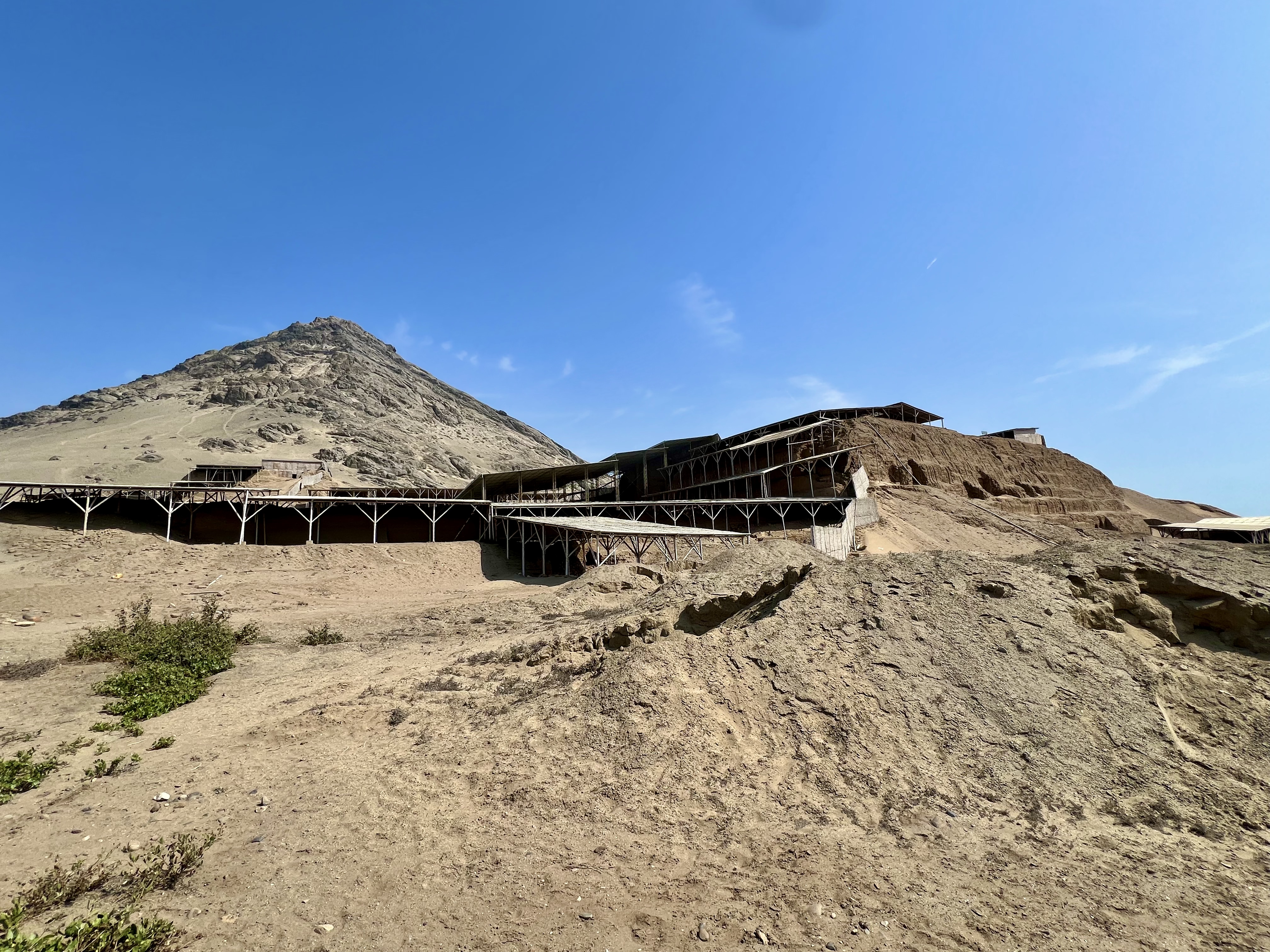
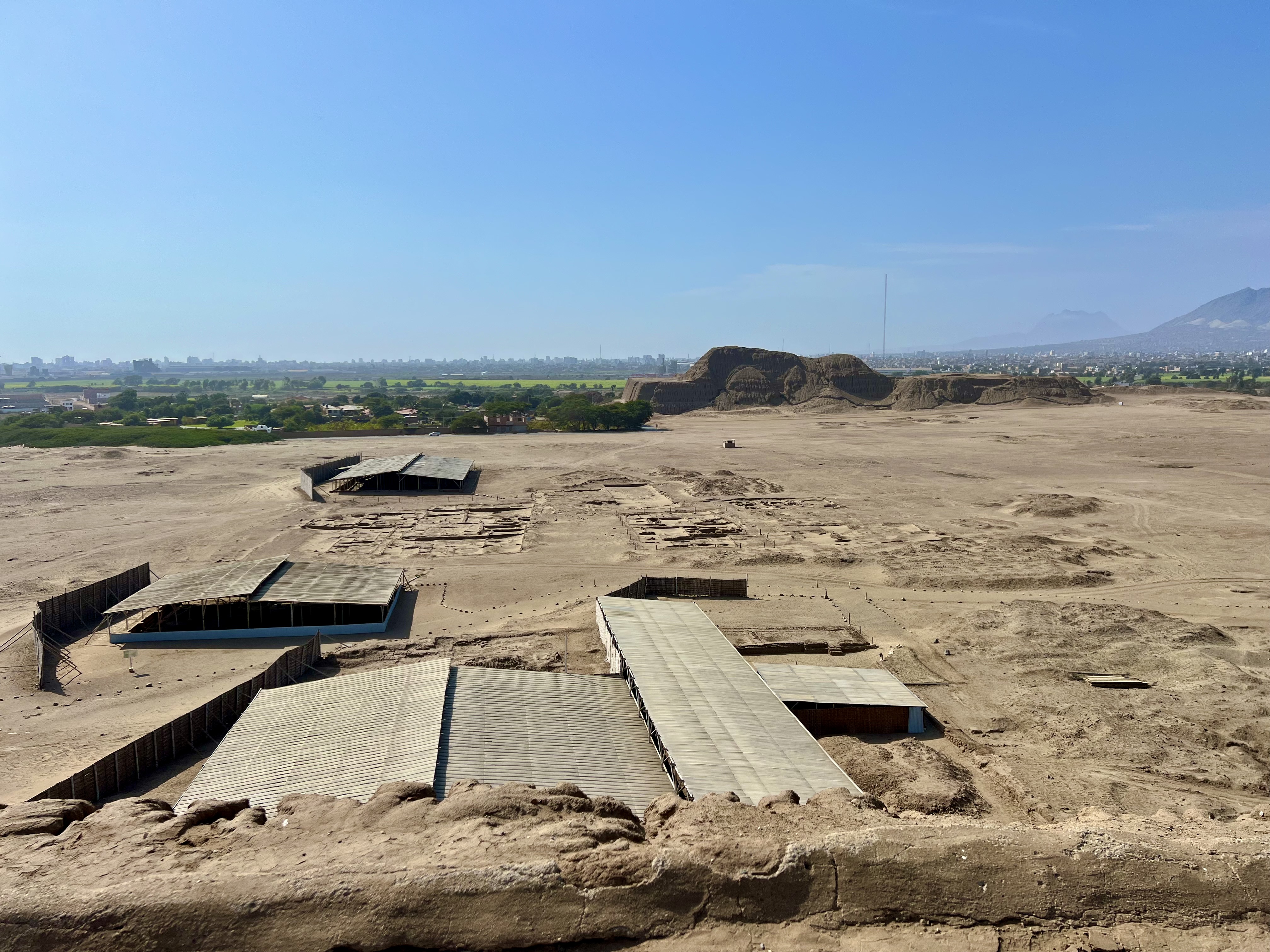
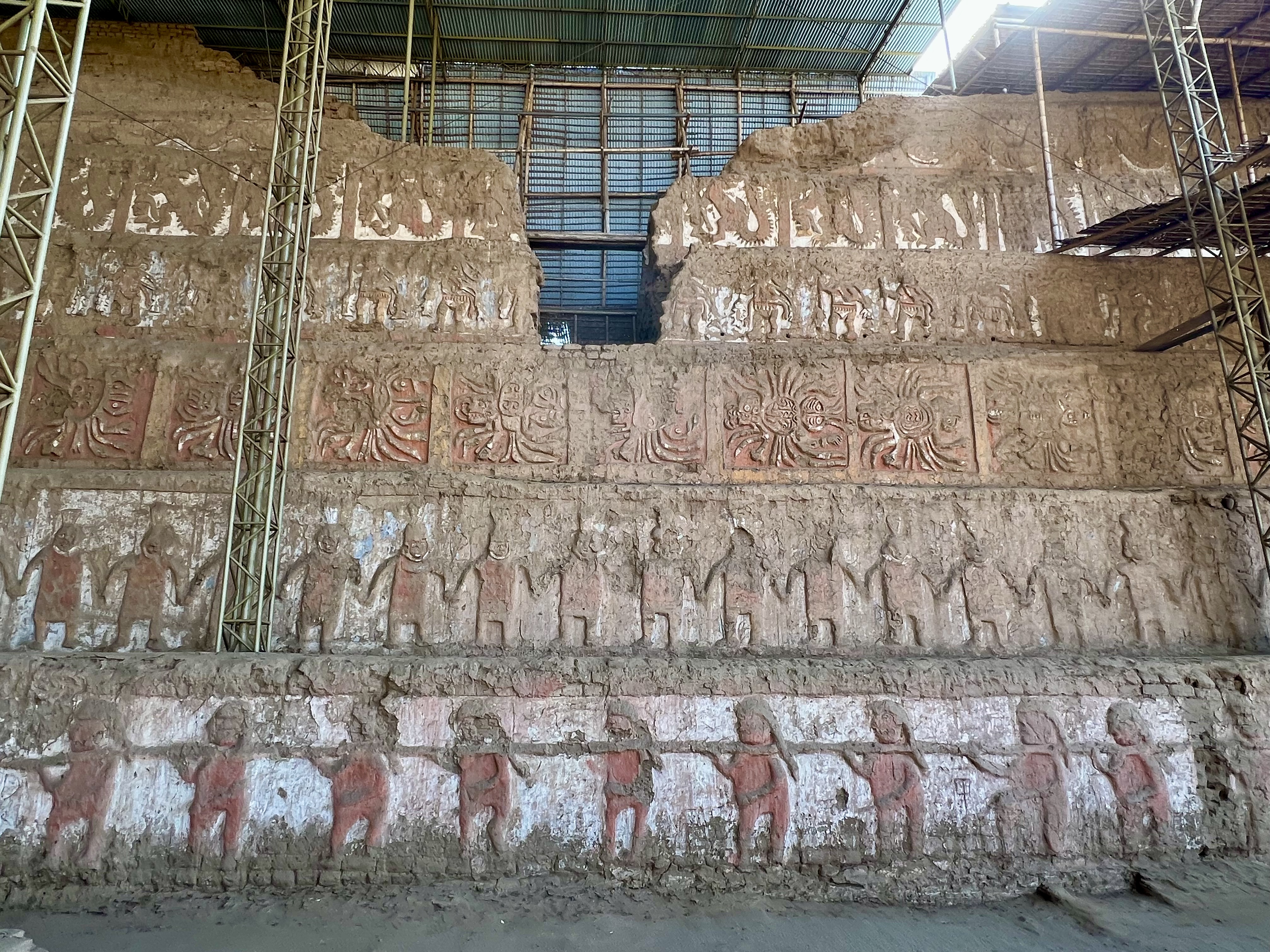
When I asked about any female deities, I was told by the guides at the official sites, that there were no female deities in the Moche culture. The taxi drivers, however, said that the Dame de Cao was a goddess. She was actually a ruler who was divinized, and not an original Moche deity. Her tomb in the El Brujo complex north of Trujillo, follows the same basic layout and high relief mural designs as are found in the Huaca de la Luna. The walls were covered with horizontal designs; the lower levels have linked lines of naked men heading towards being sacrificed and the Moche warriors with their weapons. In the middle are images of the Dios de las Montañas, and above him various other animal hybrid deities, including snakes and vultures. There were no steps inside the Huacas, but rather wide ramps leading from one level to another. There are five major levels in the Huacas south of the city. Instead of destroying the previous level/administration, the new administration built on top of the old as a means of showing continuity with change. The artistic designs, however, didn’t change much. In the Huaca at El Brujo, where the Dame de Cao’s tomb was found, there appeared to be one less level, but I could well be mistaken on that. The general design of the Huaca remained the same, but by the Dame’s tomb there were a few new avian-looking images. Besides all the gold and artifacts that were found in her tomb, the one aspect of her discovery that is unique is that she had tattoos of Moche deities all over her skeletal extremities. In no other tomb, even of the rulers in other northern sites, were tattoos found on the bones.
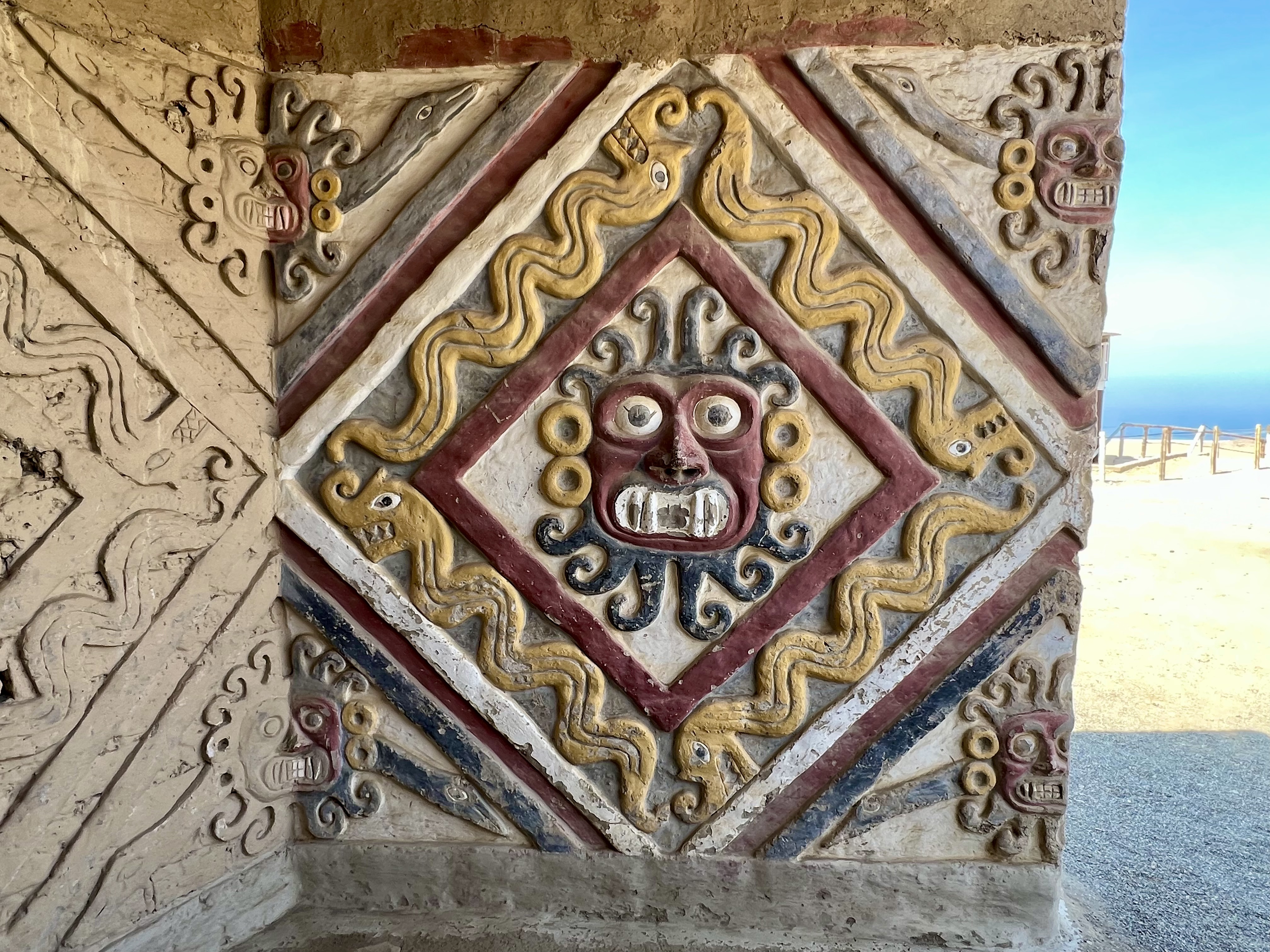
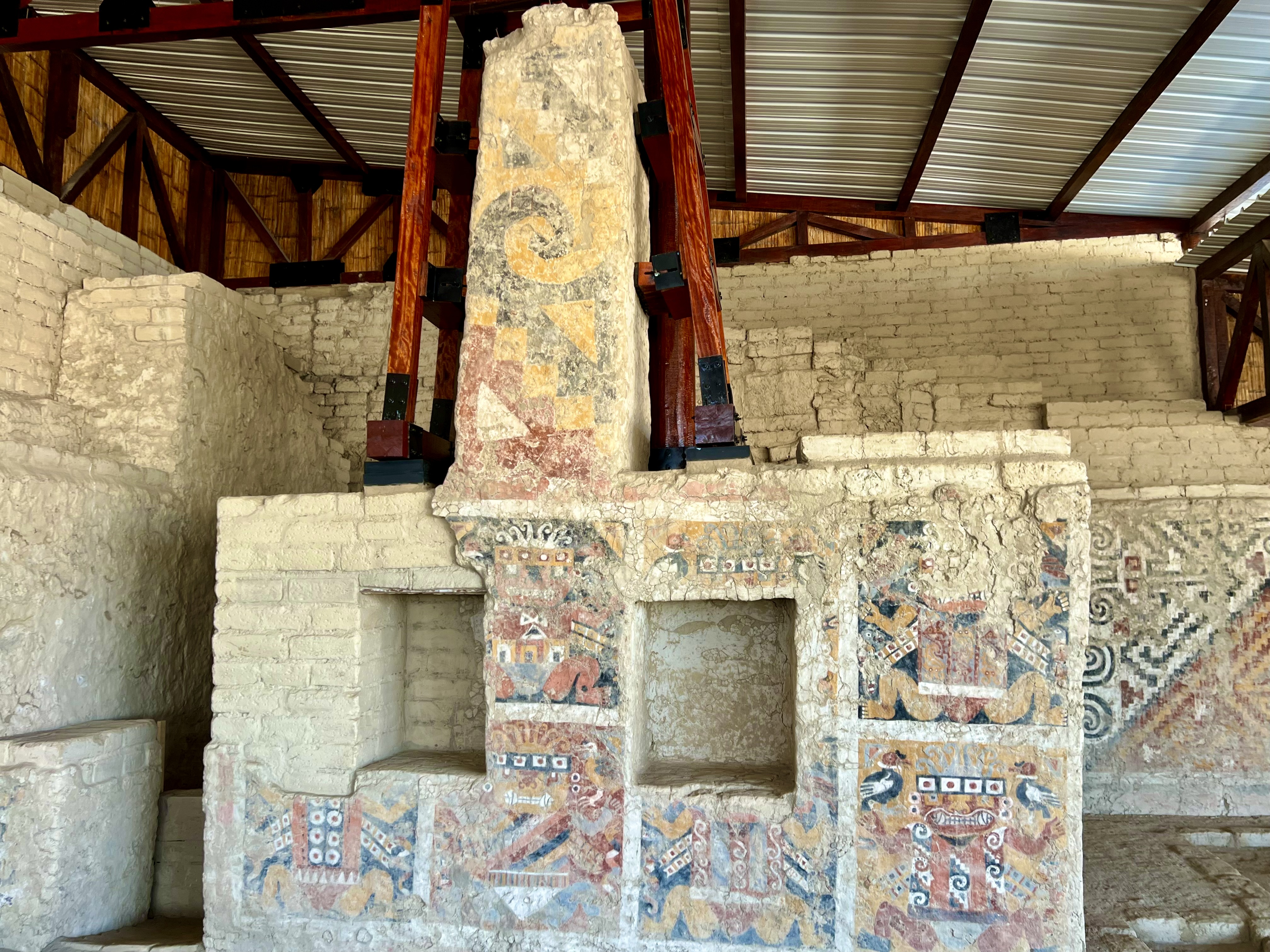
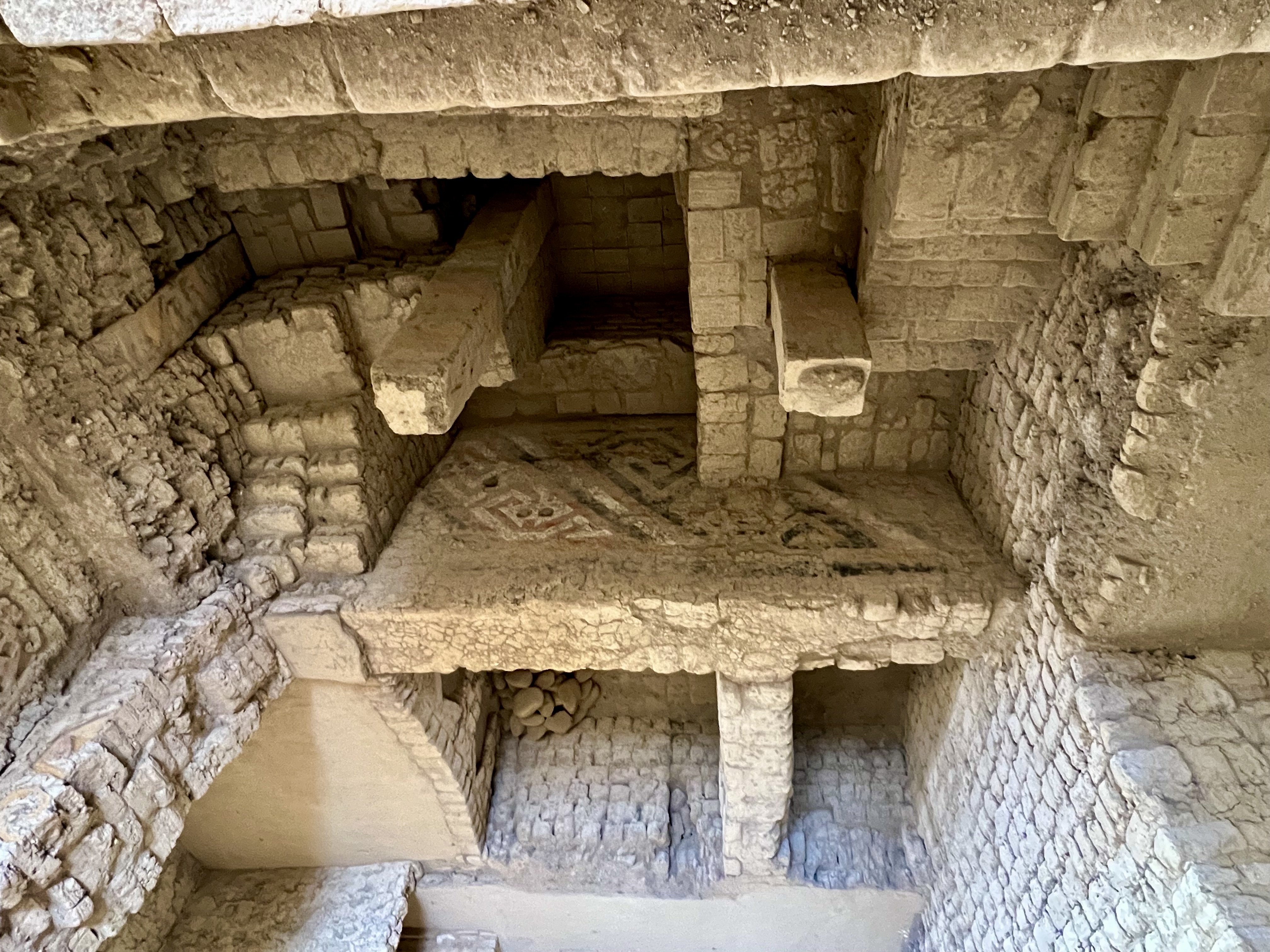
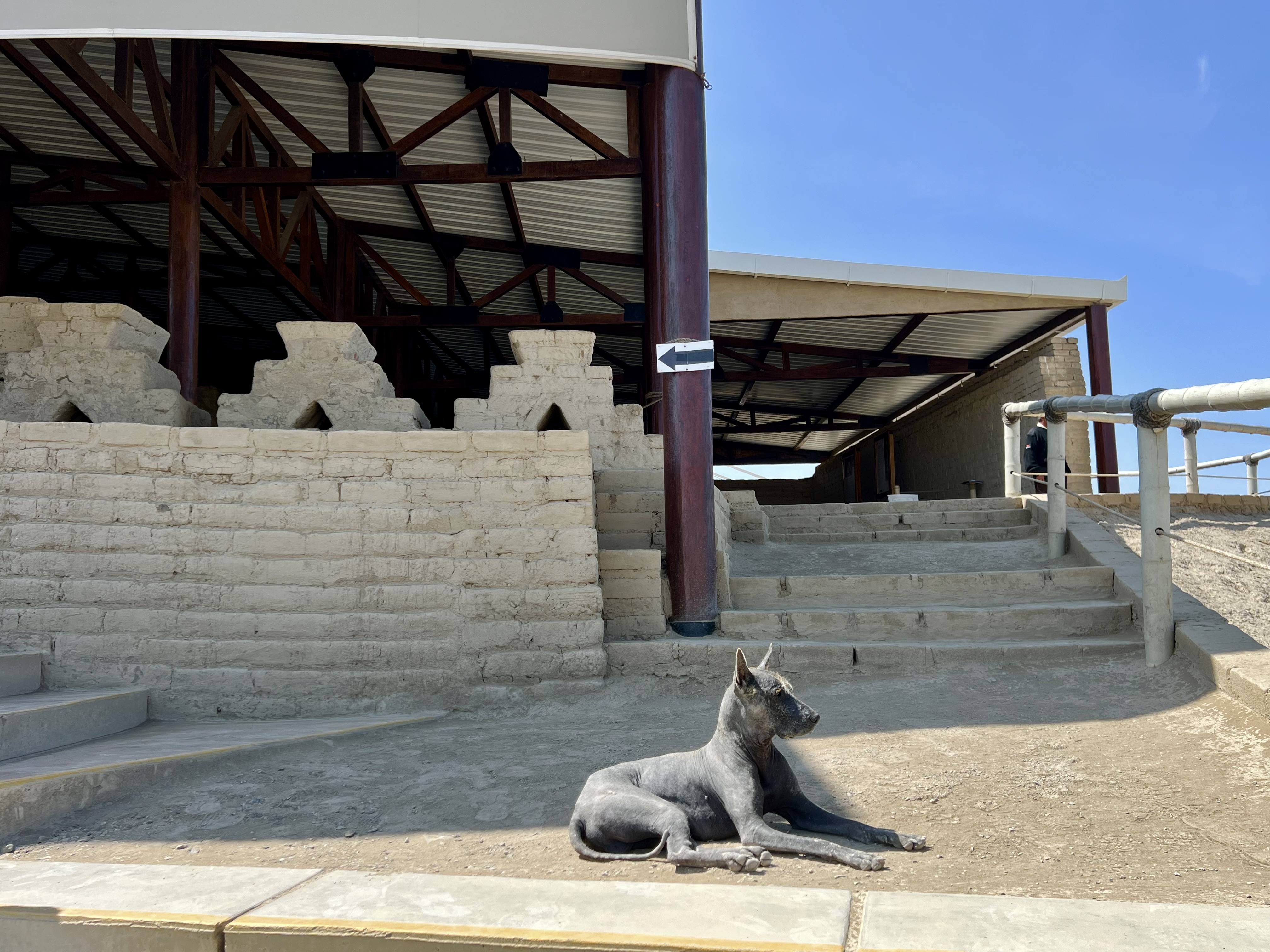
The El Brujo site gets its name from the fact that this area, directly on the coast, is and has been for a very long time, a meeting place for curanderos and shaman. Here, as in Chiclayo and Puira in the far north, shaman practice both white and black magic.
There are two ways to get from Trujillo to El Brujo and the Dame de Cao, one along the highway and the other along the coast. My taxi took me along the coast where I could see where the totora (reeds) used for making the famous ‘caballos de totora” (local boats) grow. The reeds grow out of the moist sand, and it looked like most of it had been harvested as we drove by. After the rather barren totora section, came sugarcane fields that covered the horizon. Throughout the drive were also sections of unfinished housing with ‘propriedad privada’ scribbled on the walls. There were also signs warning people not to purchase the property from fraudsters. The driver said that these walls, and that is all they were, were supposed to be condominium units. This amazed me as there is absolutely no fresh water anywhere near this region. It is all very dry sand dunes.
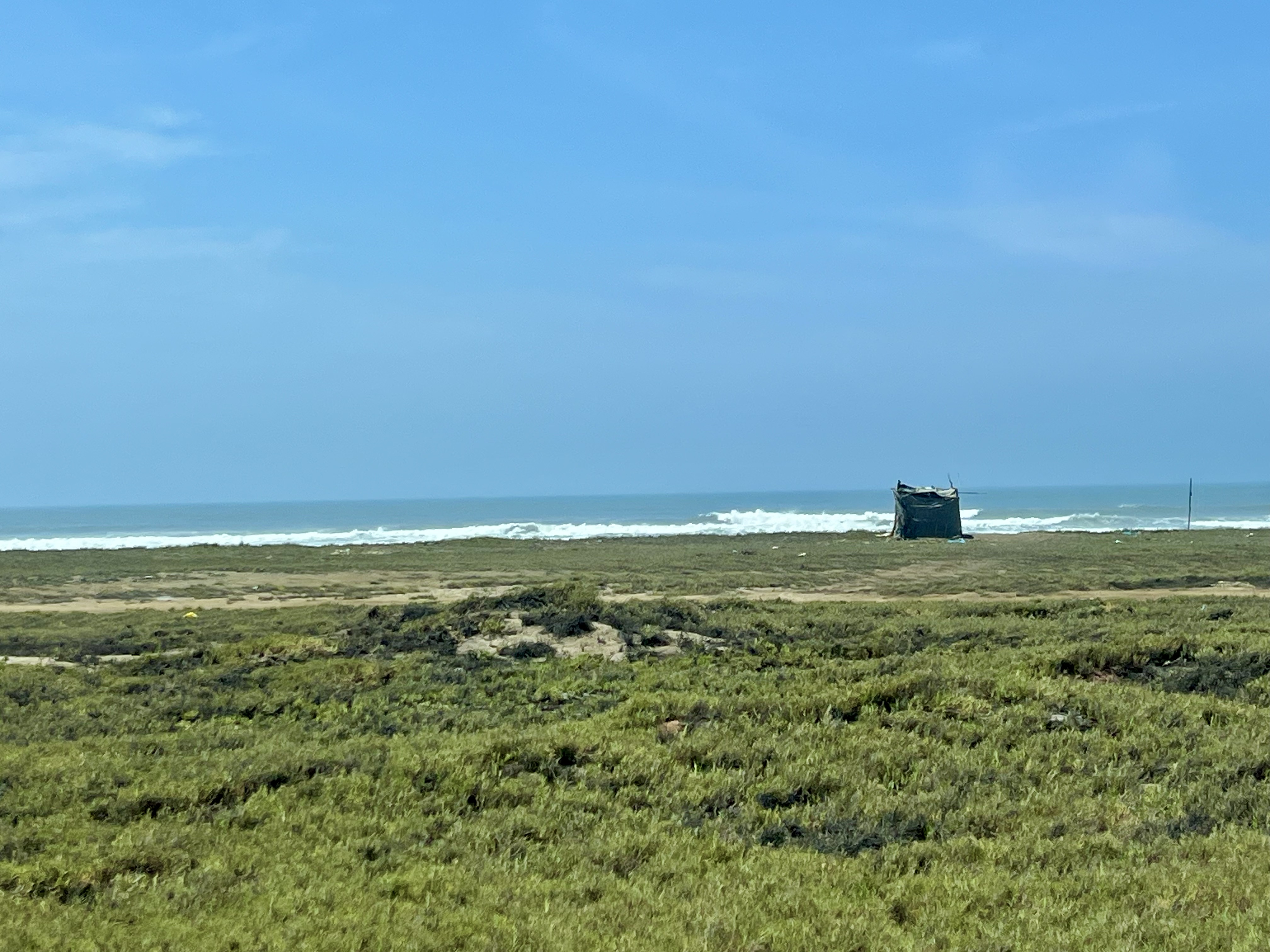
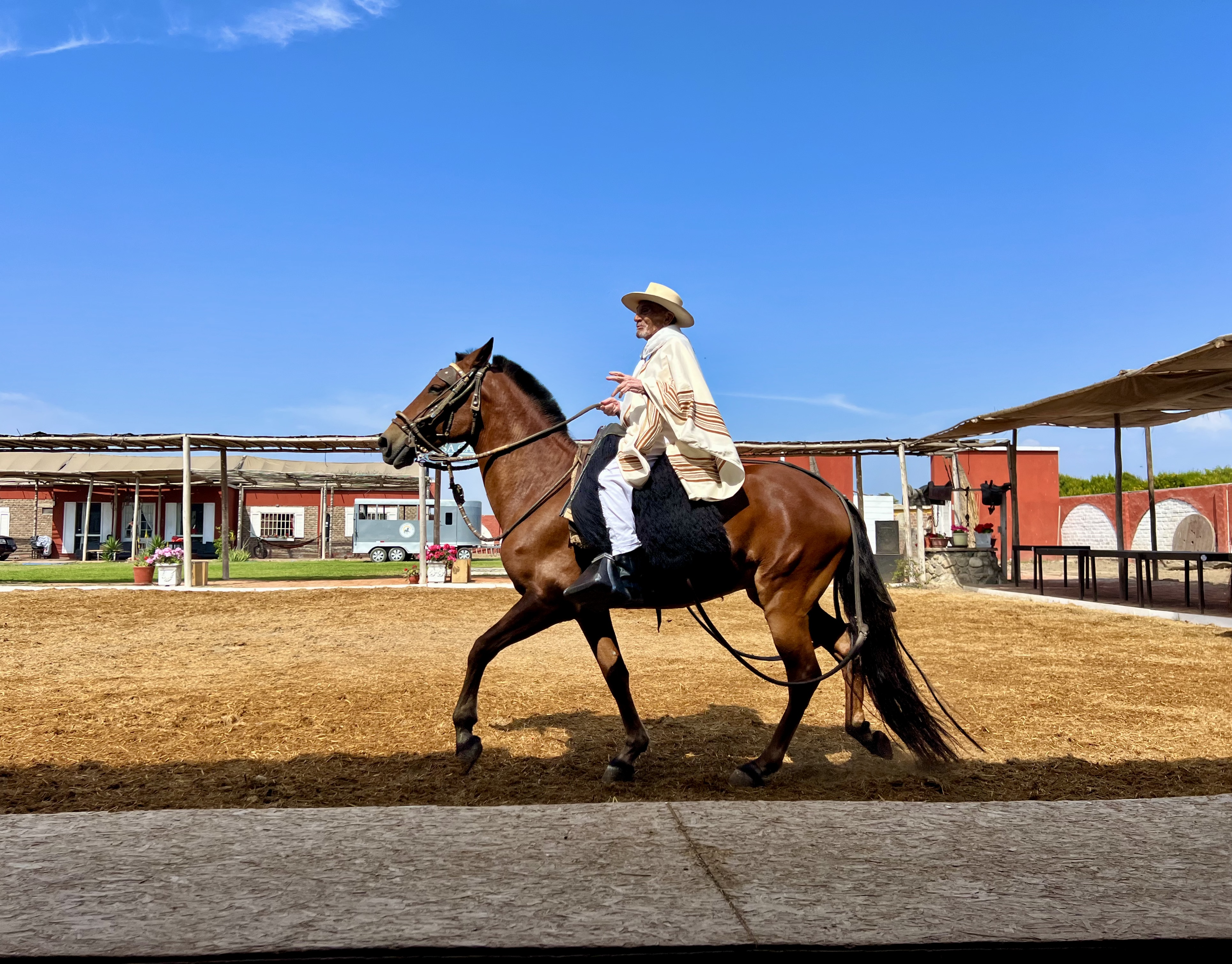
After the morning trip to El Brujo, I took an afternoon group tour to the other three major tourist attractions in the area: the Paso de Caballo, Chan Chan, and the beach at Huanchaco. The Paso showcases Peruvian horses with a particular gait. The gait seems to be a mixture of Tennessee Walker and Saddlebred. The most amazing part of the show for me was the 88 yr. old, who was still riding and showing. He gives hope to those of us who are increasingly aging.
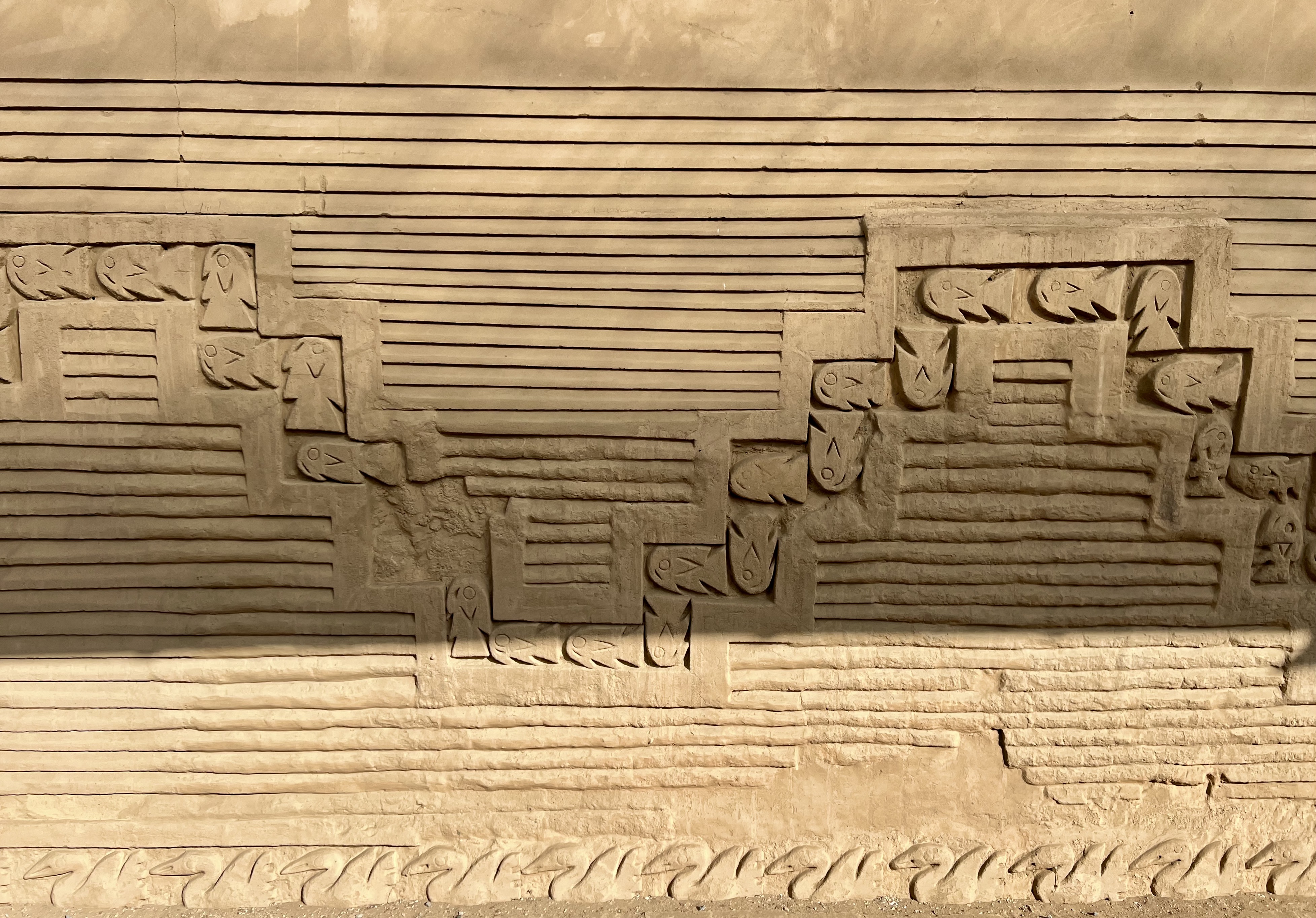
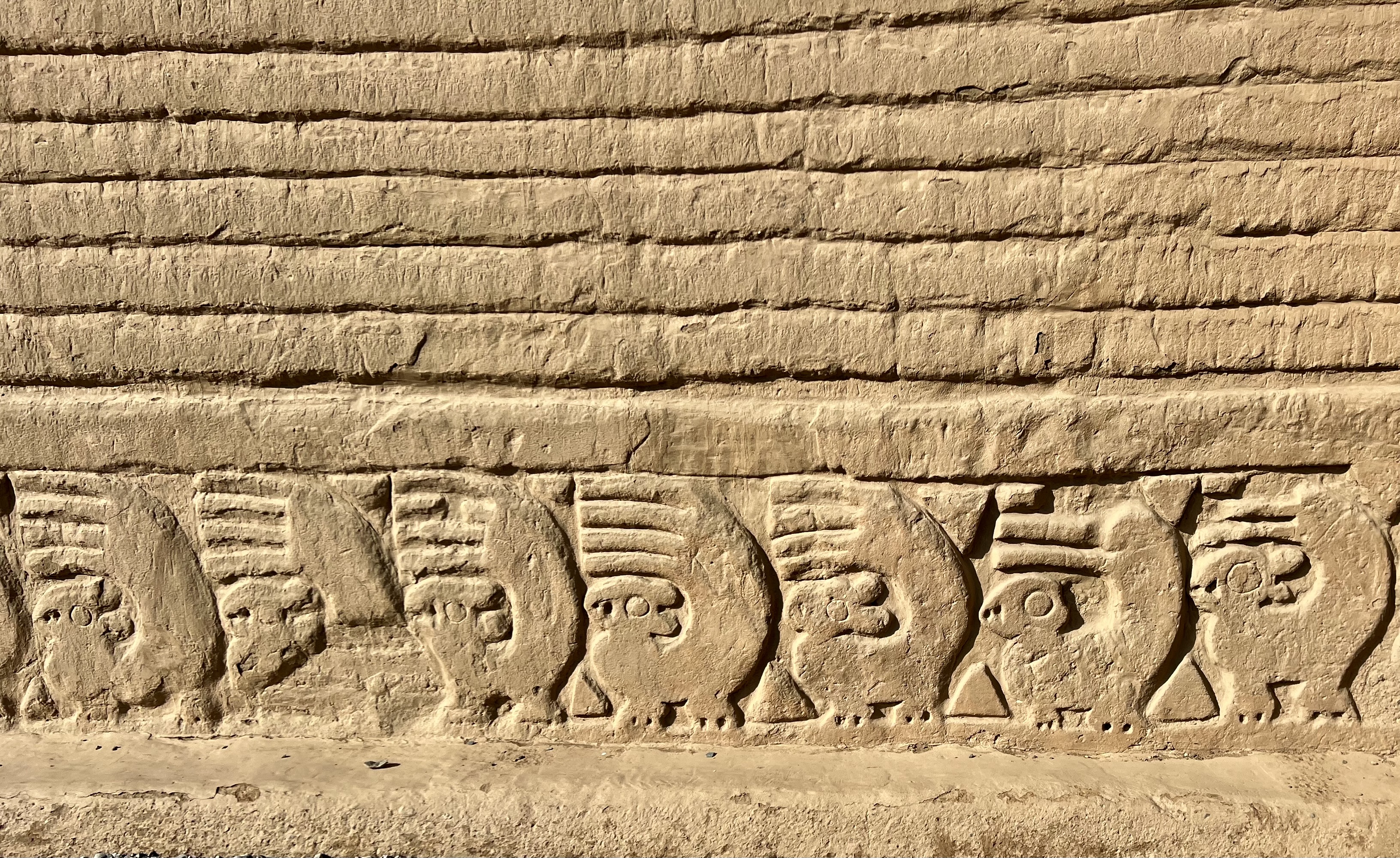
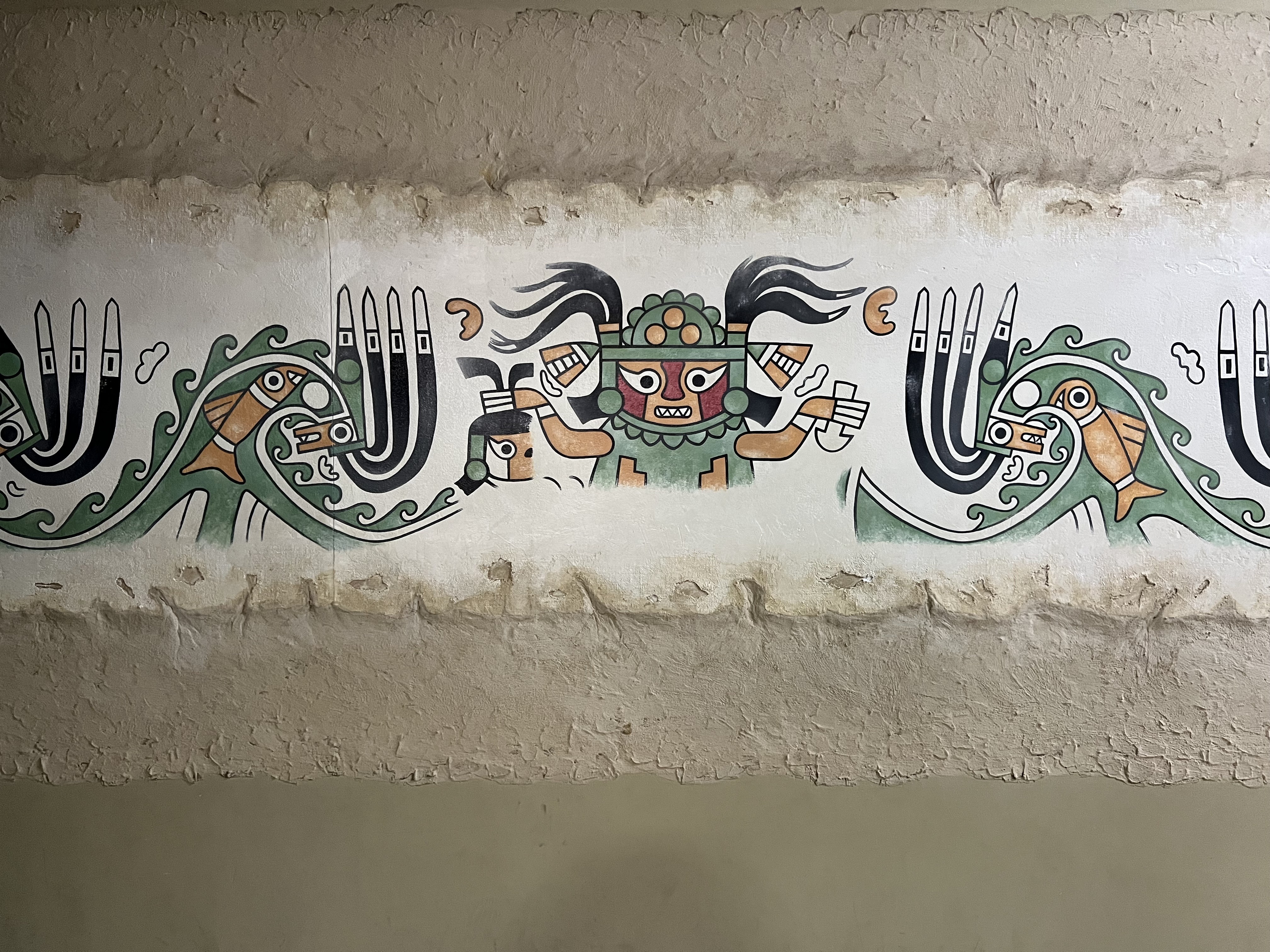
My mistake in booking this tour, was to have so little time in Chan Chan. The site is simply huge and in just a couple of hours, one cannot do it justice. Chan Chan was built by the Chimus who conquered the Moche after they had undergone internal strife perhaps brought about by the effects of a lengthy drought. The Chimus ruled the region from around 900 to 1420 when they were conquered by the Incas. The Chimus developed an impressive and extensive hydraulic system with canals coming from the mountains to the coastline, thereby helping to offset the devastation to agriculture and access to fresh water from long dry spells. The one section of Chan Chan that we were able to visit had high reliefs, much like the earlier Moche, but the designs were completely different. Most were geometrical, with occasional birds, fish and lines for serpents/waves/water.
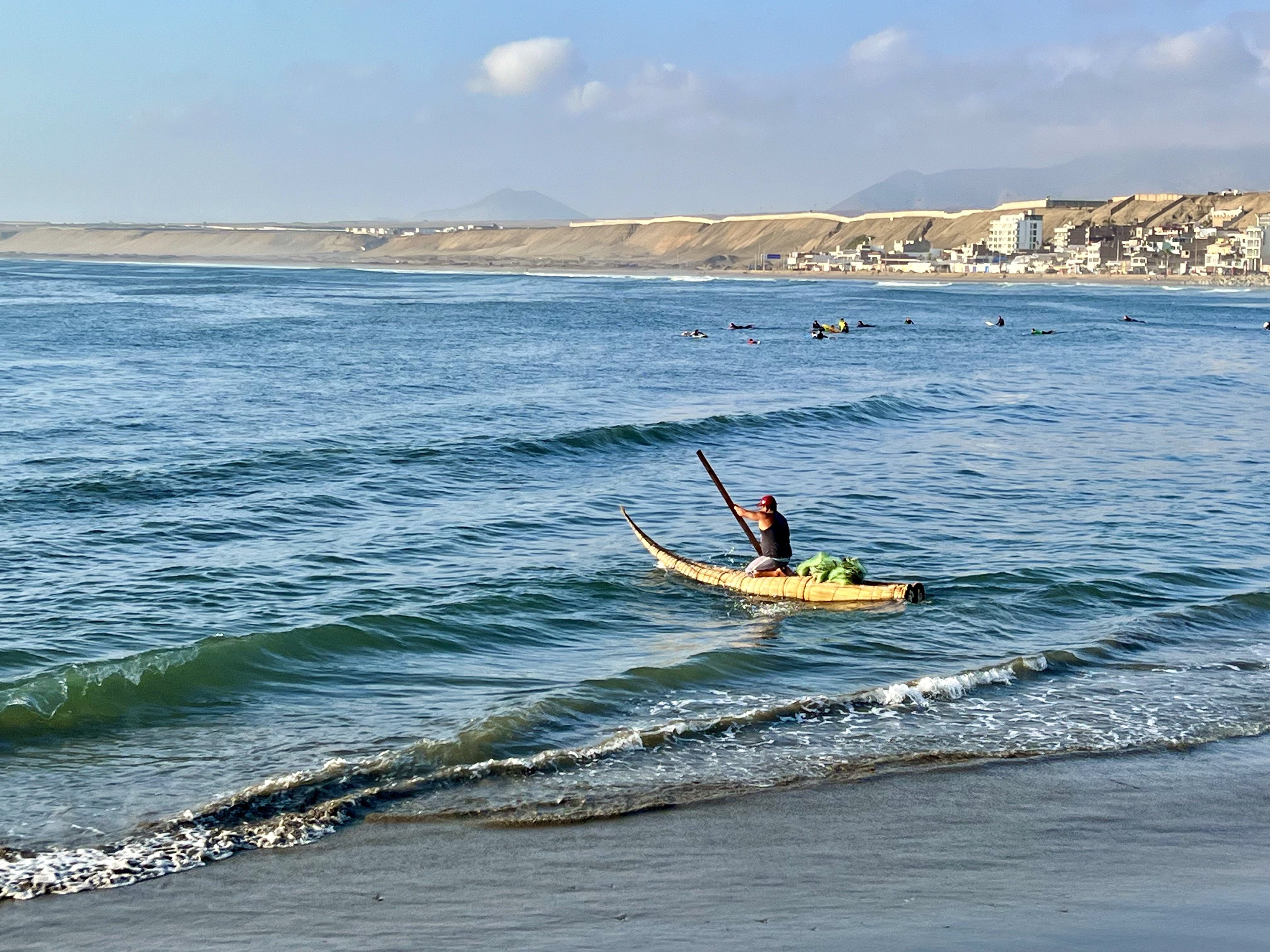
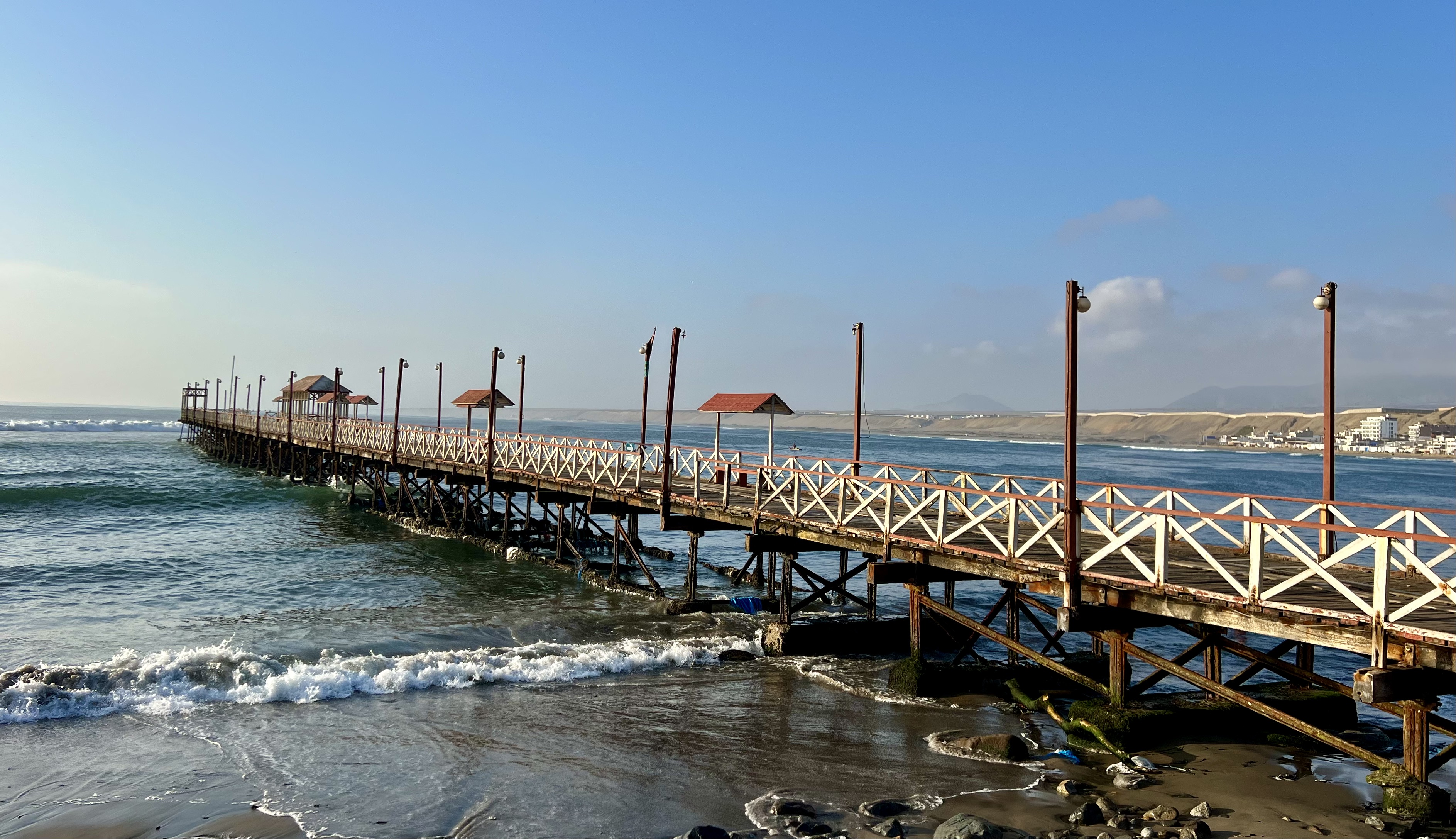
Both the Dame de Cao and Chan Chan sites are directly on the beach. The nearest most famous beach from Trujillo is Huanchaco, which has a large pier that is no longer used for trade but for beachgoers. Huanchaco is also famous for the “Caballos de Totoras” the reed boats, similar to the one Thor Heyerdahl built and sailed to prove that migration across the sea from Asia to South America was possible well before Christ.
The following day, I took a taxi to Chiclayo making stops along the way. I chose this method, even though it was much more expensive than the bus, as the tour through Chan Chan with the group didn’t give me the time I wanted at the site, and there were three places I wanted to visit before arriving at the hotel: Huaca de Rajada, the Bruning Museum, and Tumbas Realas de Sipán. All three museums were outstanding.
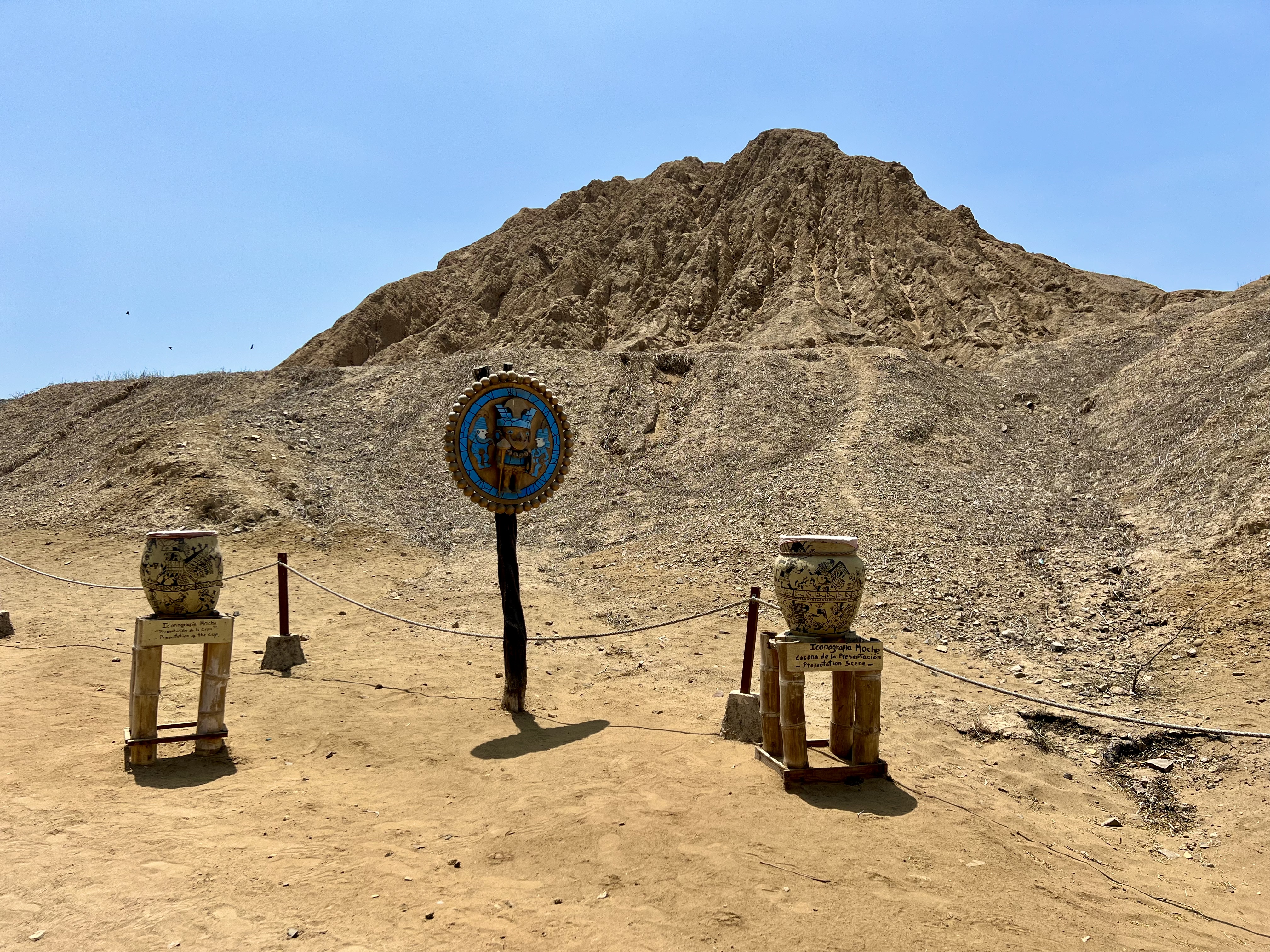
The museum at the Huaca de Rajada is set across the street from the actual tombs of the Señor de Sipán in the sacred mountains. The Lords of Sipán were the governing force in the region for the Moche. The tombs, which were discovered in 1987, were filled with gold artifacts along with pottery, weapons and bones of companion women.
Both the Bruning and nearby Tumbas Realas are in downtown Lambayeque. Hans Heinrich Bruning, a German from Hamburg, lived for about 50 years in Peru and collected artifacts from all over, but especially from area around Lambayeque. Before he left to return to Hamburg, he donated his collection to the Peruvian government. The museum now also includes finds from the tomb of the Lord of Sipán. The majority of the artifacts are from the Chavin, Lambayeque, Vicús, Moche, and Incan cultures. There are informative plaques throughout the museum putting the artifacts in chronological, cultural as well as material (metal, wood, pottery etc.) perspective.
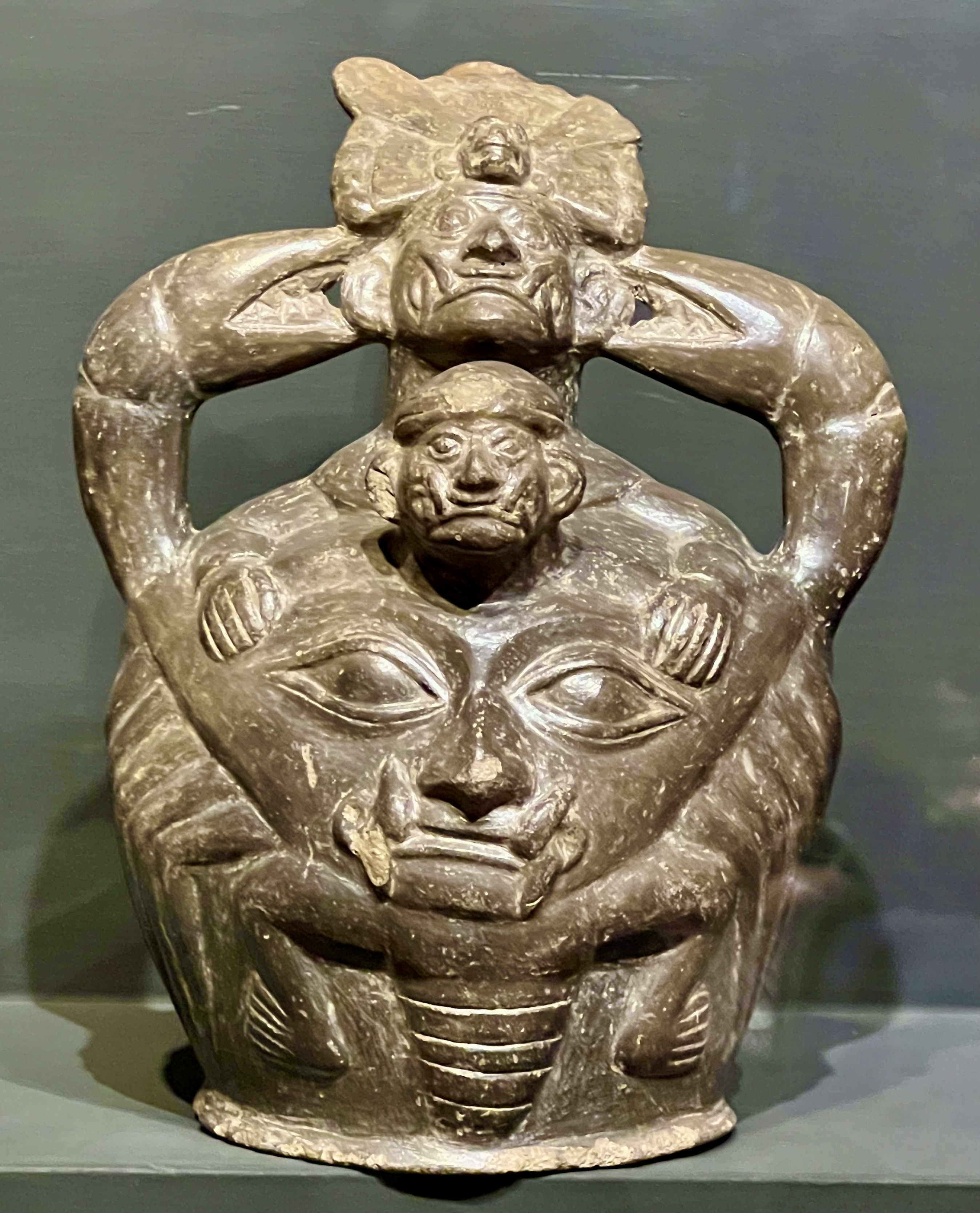
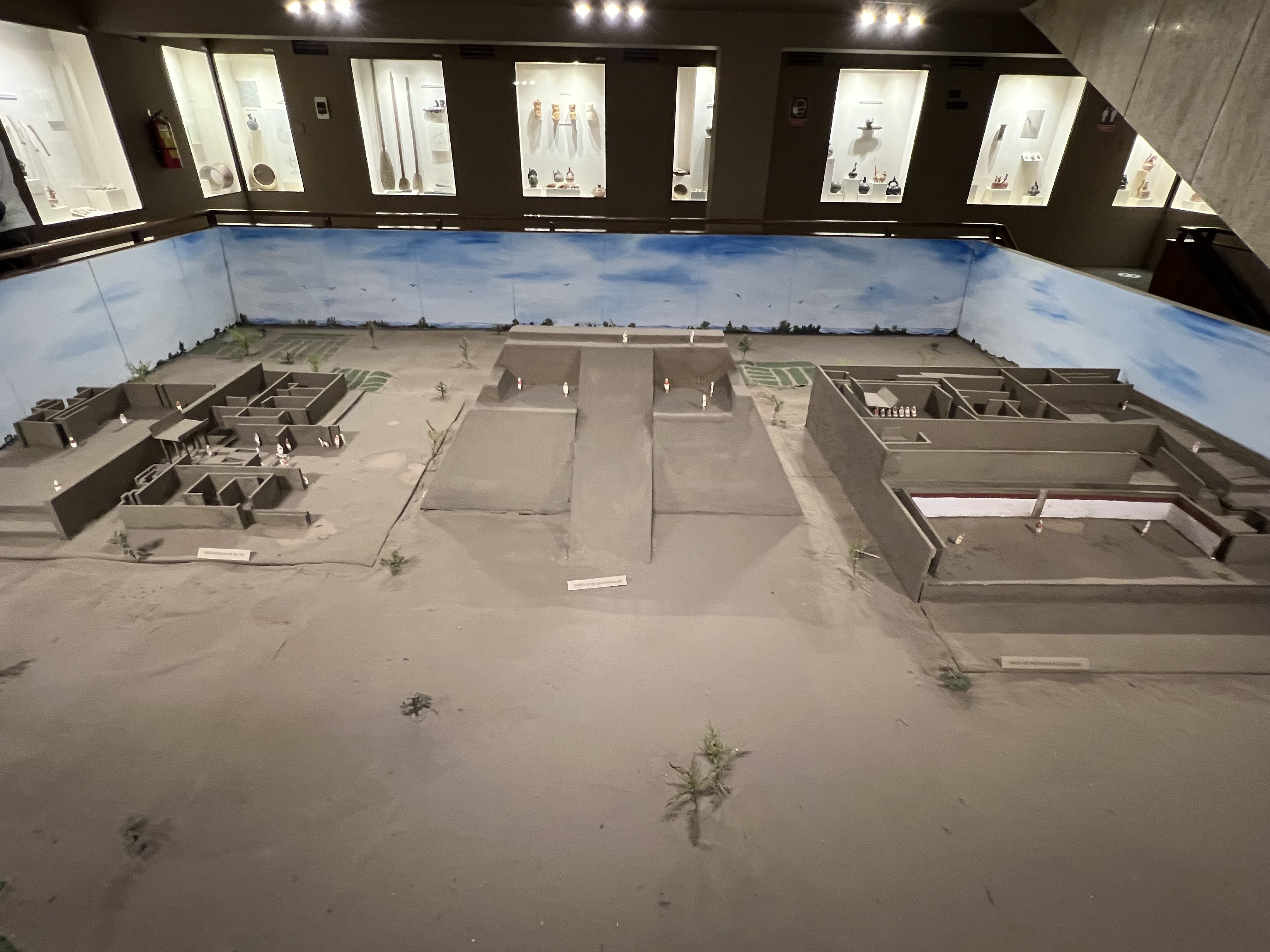
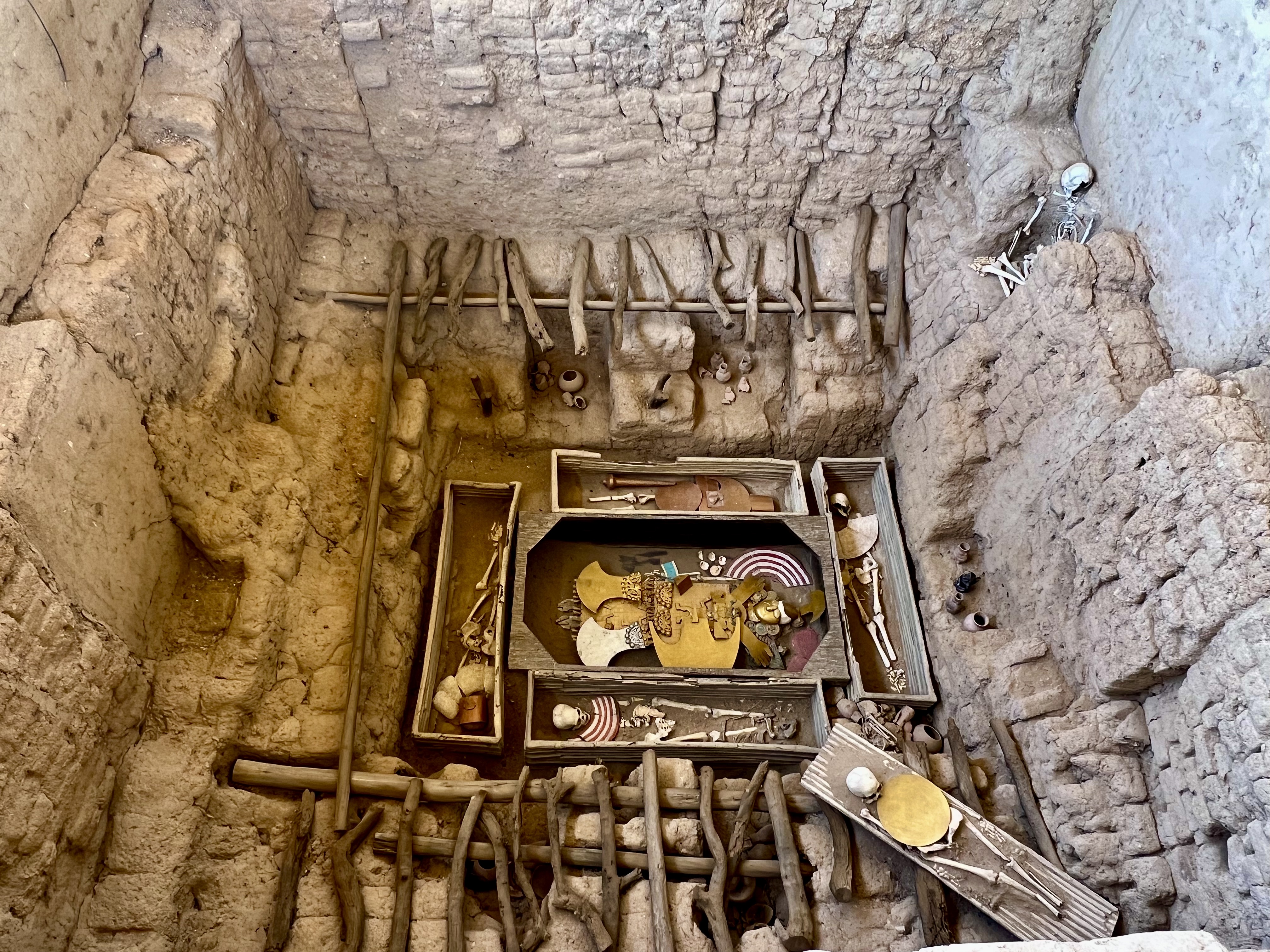
The Tumbas Reales de Sipán house the majority of the artifacts found at the Huaca de Rajada site. They also have recreated the tombs so that visitors can see what the tombs and mummies looked like when they were discovered. The museum is beautifully designed and through visual recreations provides views into the daily life of the extremely hierarchical Moche culture. As I side note, I just want to mention that the only pottery images (and these were the only ones) I saw of women in Moche culture in any of the museums I was at throughout Peru, were of women as servants or with a hole for the vagina. Other erotic images, for example those in the Lorca Museum in Lima, portrayed women in subservient positions. This is quite a contrast to the erotic images on temples in SE Asia, where there is obvious joy in the act of loving. It was clear from the lack of any positive kind of image, that other than the Dame de Cao, who was a ruler, and there were supposedly other women rulers, that women in general had little place in the culture. That they could be rulers, probably had more to do with hereditary and familial position coupled with prowess in the battlefield than with their gender.

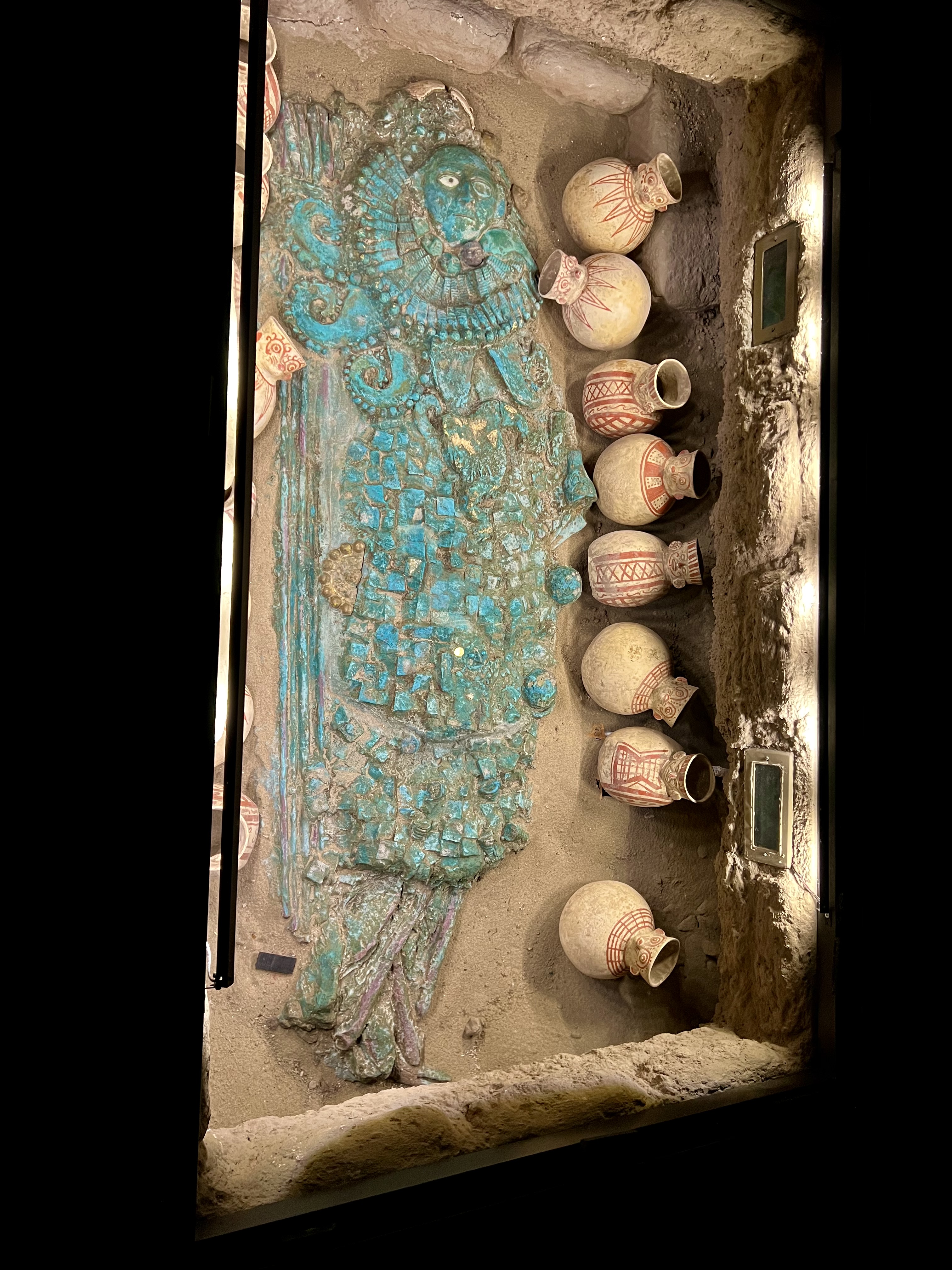
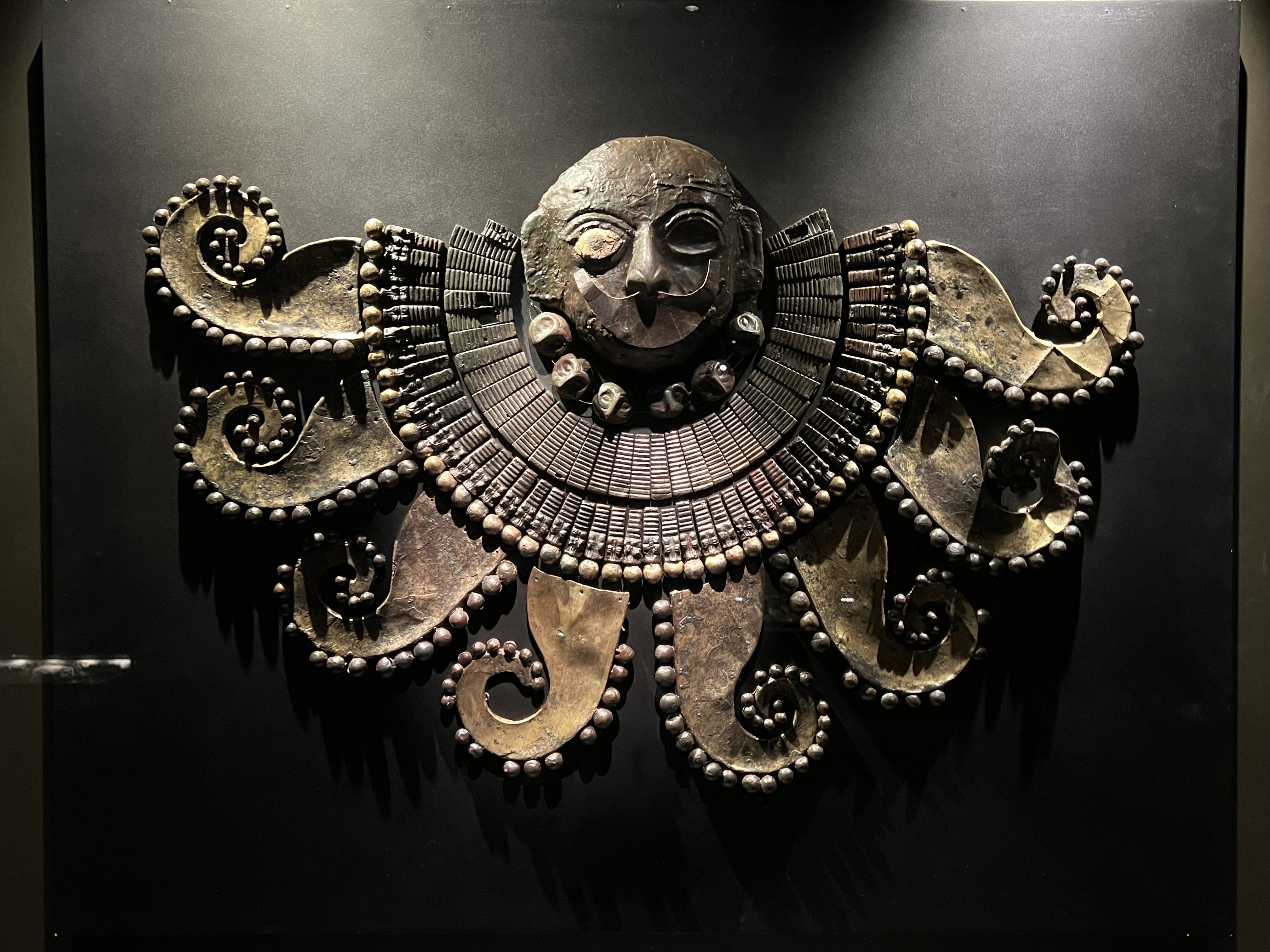
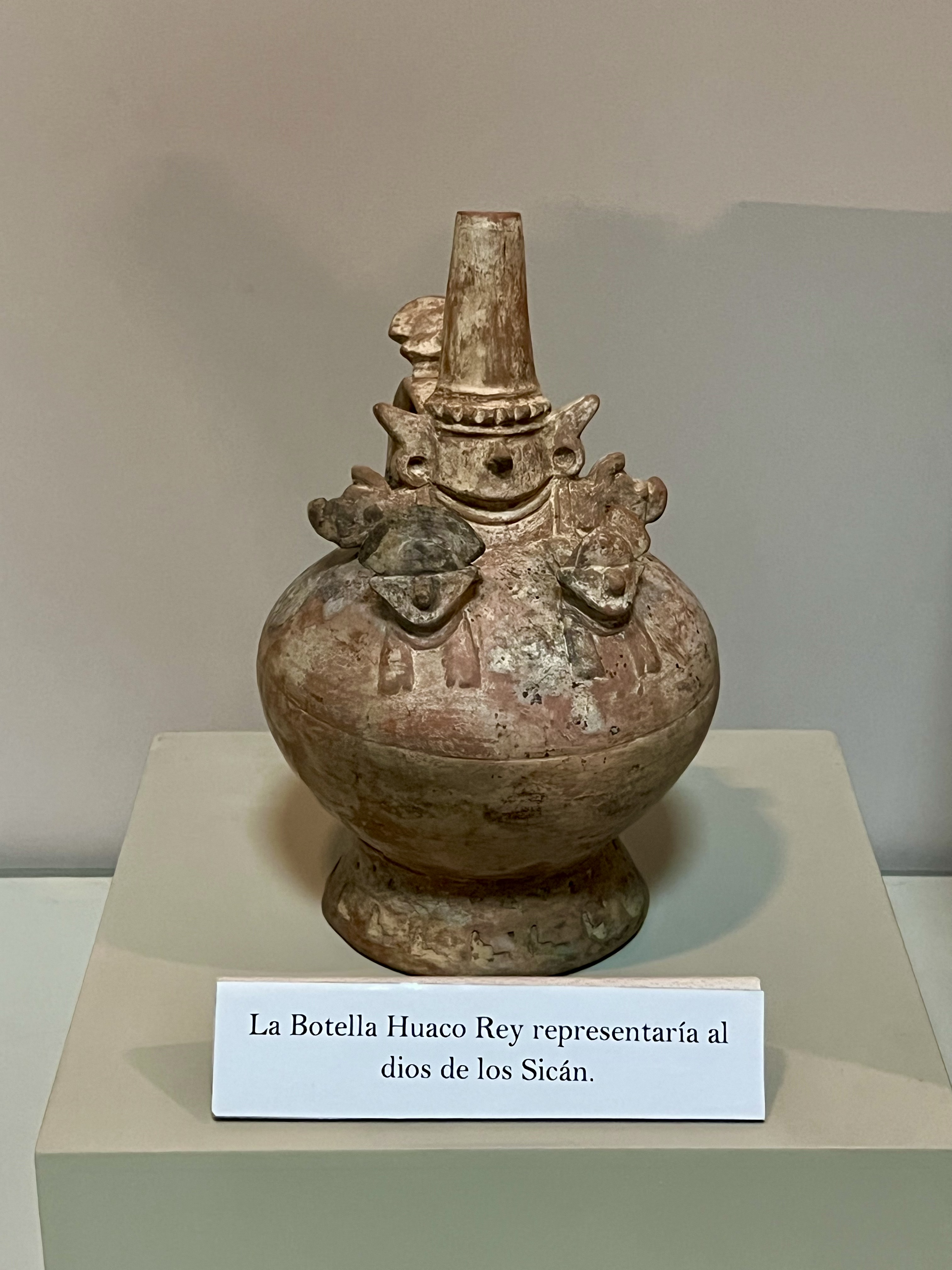
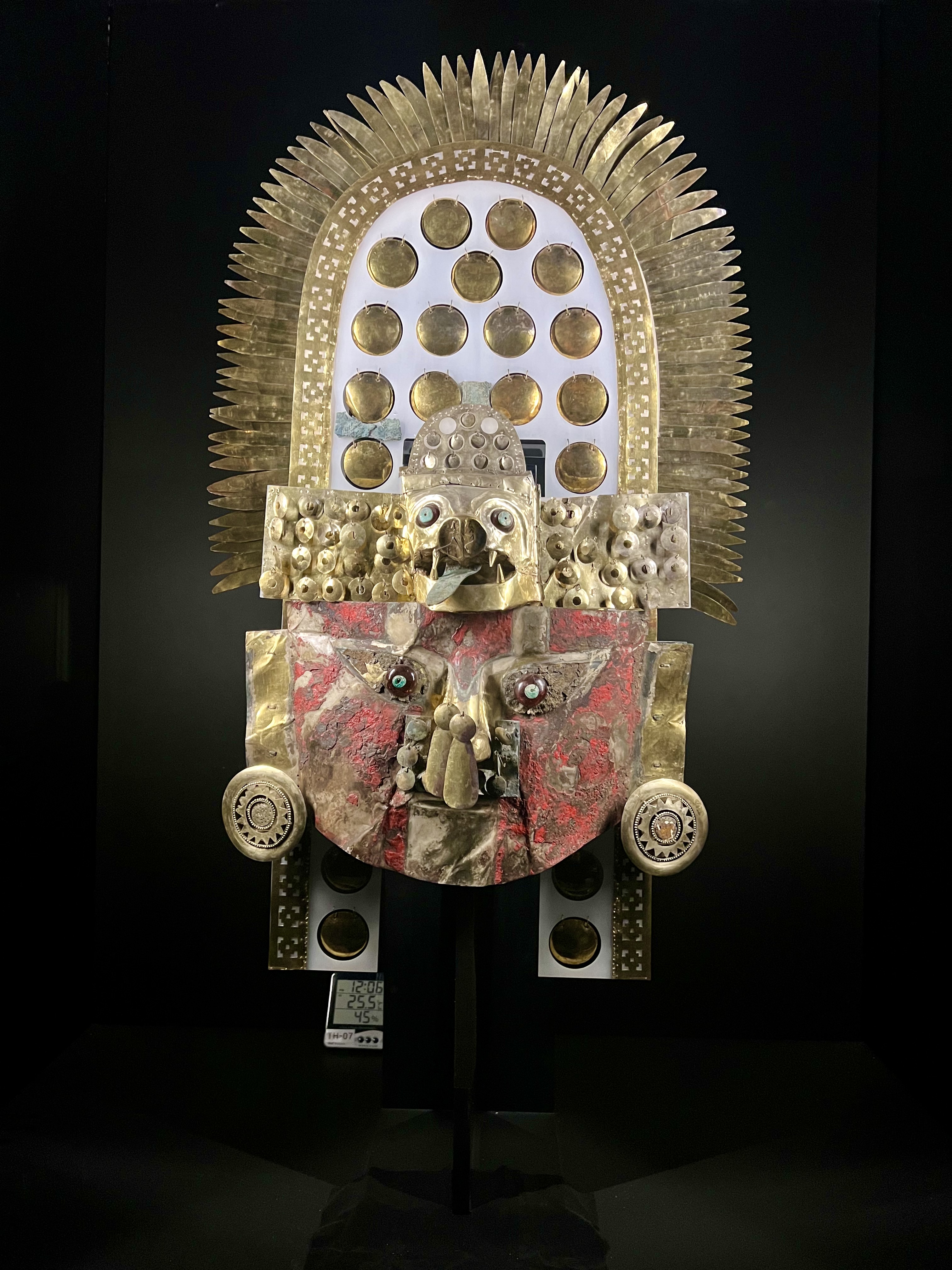
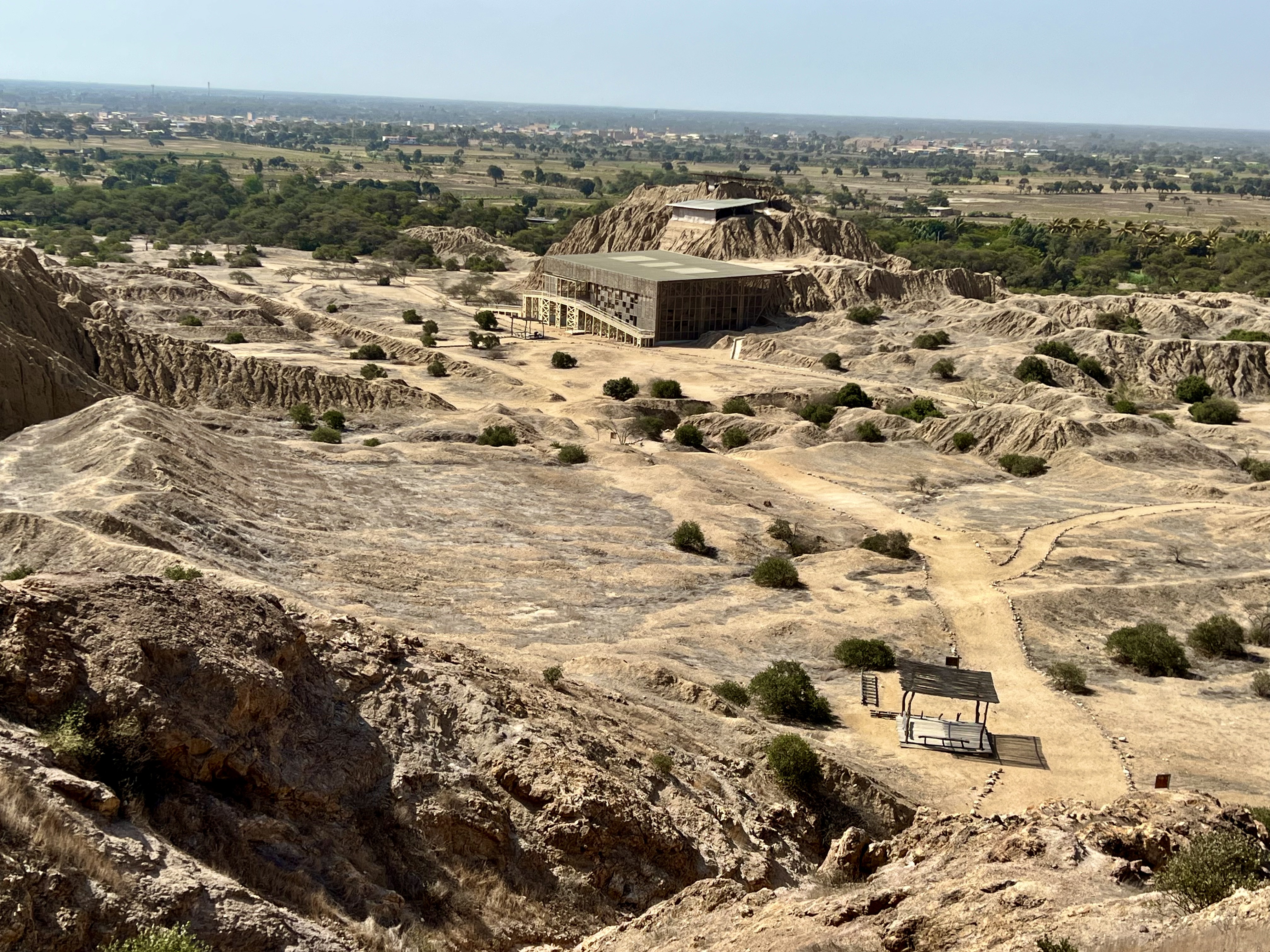
The following day, I switched cultures to learn a bit about the Sícán/Lambayeque culture. The first stop was at the National Museum of Sicán about 40 minutes outside of Chiclayo, which gave a good overview of how this culture differed from the Moche. They even had a female creation deity. The Sicán culture went through three artistic phases during its existence from ca. 700 with the fall of the Moche in the area to 1100 with the rise of the Chimu. From the museum, we drove about 50 minutes to Túcume and the site of the 24 Sicán pyramid tombs. There is another explanatory museum at the site and designated walks through the barren desert hillscapes.
The last stop of the day was back at the beach, this time in Pimentel, which is known for both its pier and for surfing.
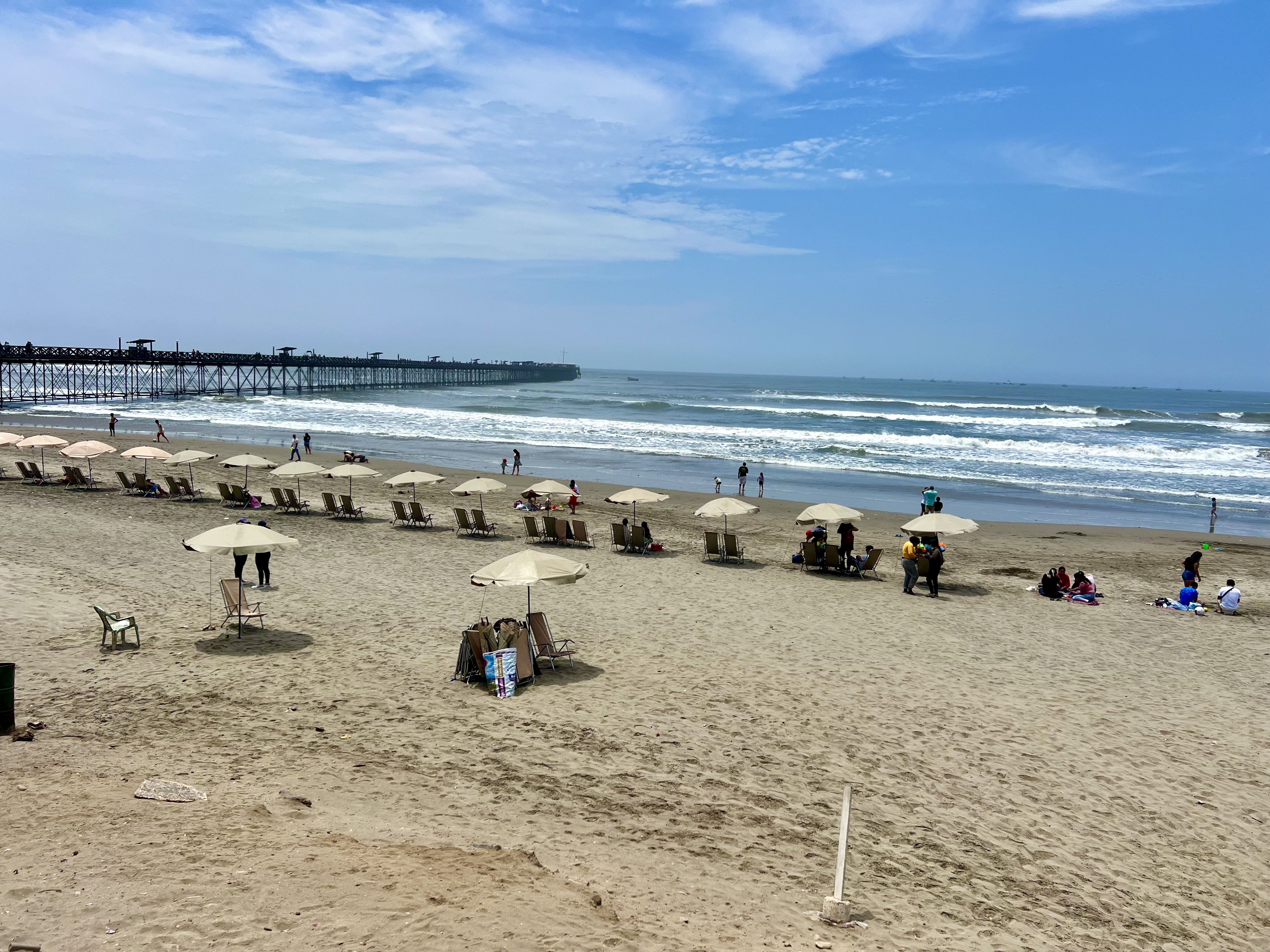
My goal was to see these sites and I’m glad I did, but I have no desire to return to northern coastal Peru. I found the beaches dirty, and the waters appeared to me polluted. The tombs were interesting, but especially the Moche culture projected such a violent negative energy, which was what I also felt from the arid sands throughout the region. Chiclayo as a town was unnerving, and I didn’t even go to the Witches’ Market as I was uncomfortable throughout the area. I do believe that there are negative forces, and I try to avoid them whenever possible. For me the mountains are a place of refuge, and my next stop was back to the Andes and Lake Titicaca.

 omegoodyssey