In Puno I booked a two-day, one night tour to Arequipa via Colca Canyon. The international internet sites were all asking about US $165 for the trip, but the local travel agent in Puno only charged the equivalent of US $67. I wasn’t sure what kind of transportation or hotel I was going to get for that price, but it was going to get me from point A to point B. As it worked out, other than being dropped off in Arequipa in the middle of town when I’d been promised that the van would take me directly to the hotel, all went well. This excursion is very touristy, but the varied scenery makes the trip worthwhile. (Even though as canyons go, the Grand Canyon is far more stunning than Colca.)
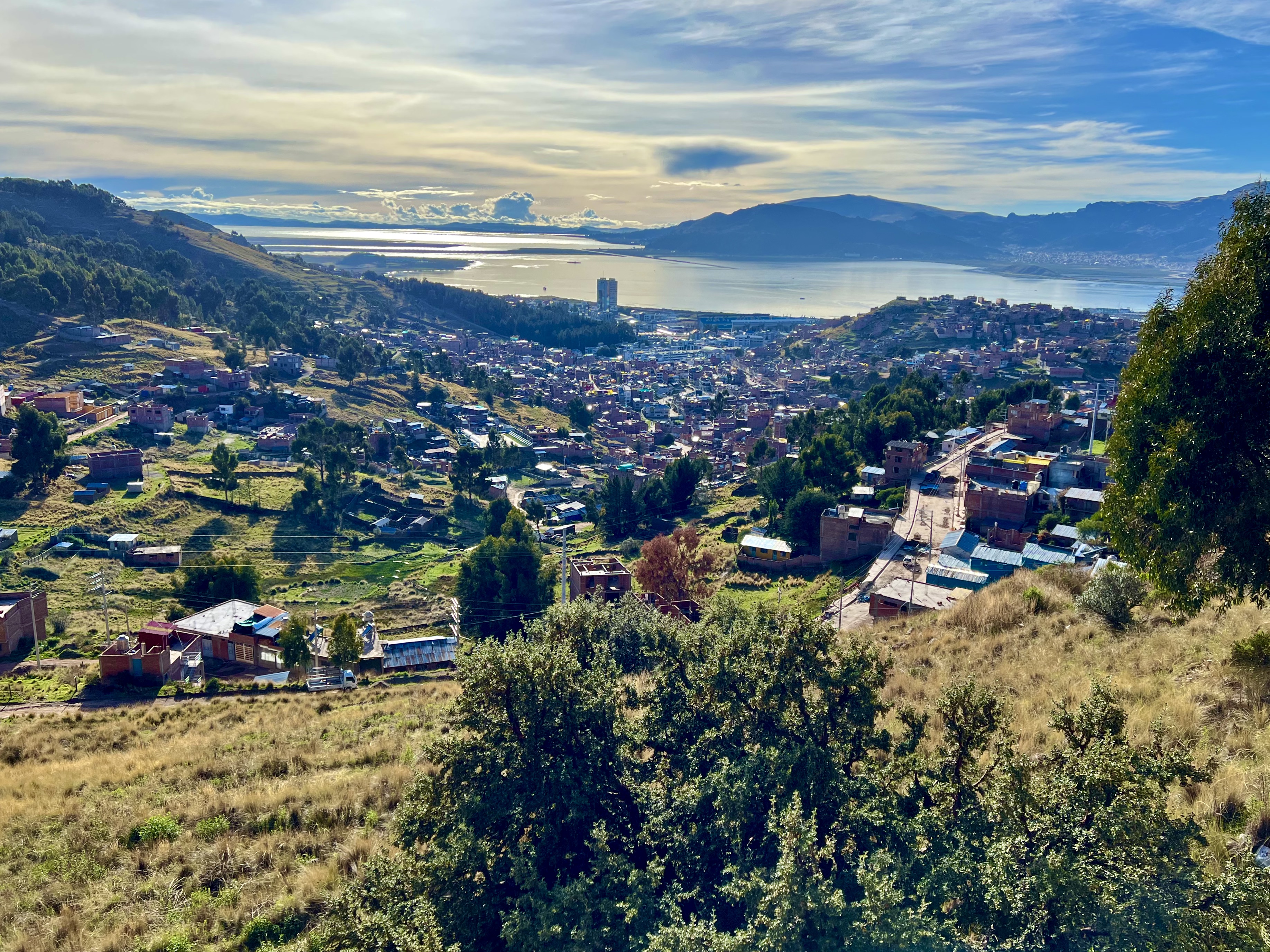
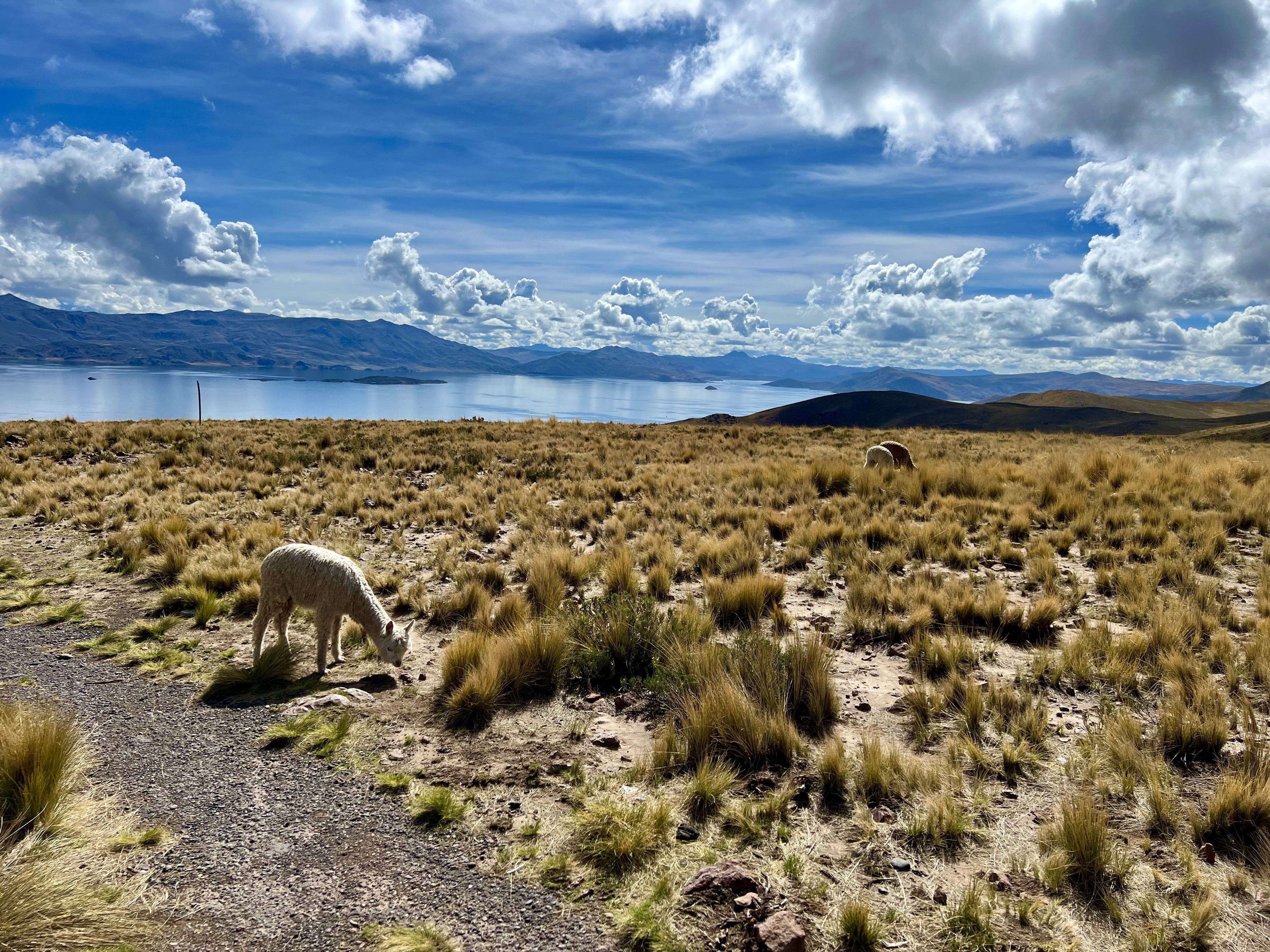
The van left early, about 6:15. I had been told that I didn’t need to worry about a seat assignment as the van had places for over 20 people, and there were only a few on the tour. When we left Puno, the van only had two couples, one from Spain and the other from Lima, and one young man from France who was traveling on his own. We all had enough space to put our luggage and backpacks on the empty seats. The first stop was at an overlook right after Puno where we could see the city and the northern section of the lake. From there we had about a two-hour drive through the Altiplano with short golden grasses before we came to the next stop, Lagunillas, with flamingos on one side of the road and alpacas on the plateau above the lake on the other. It is the highest lake in the region at 4,413m. The flamingos shared the water with black Andean ducks and the alpacas the plateau with tourists at the coffeeshop. Coffee came in two forms, Nescafe from a package for 1 Sole and a real brewed Peruvian coffee for 10 Soles. We all splurged for real caffeine.

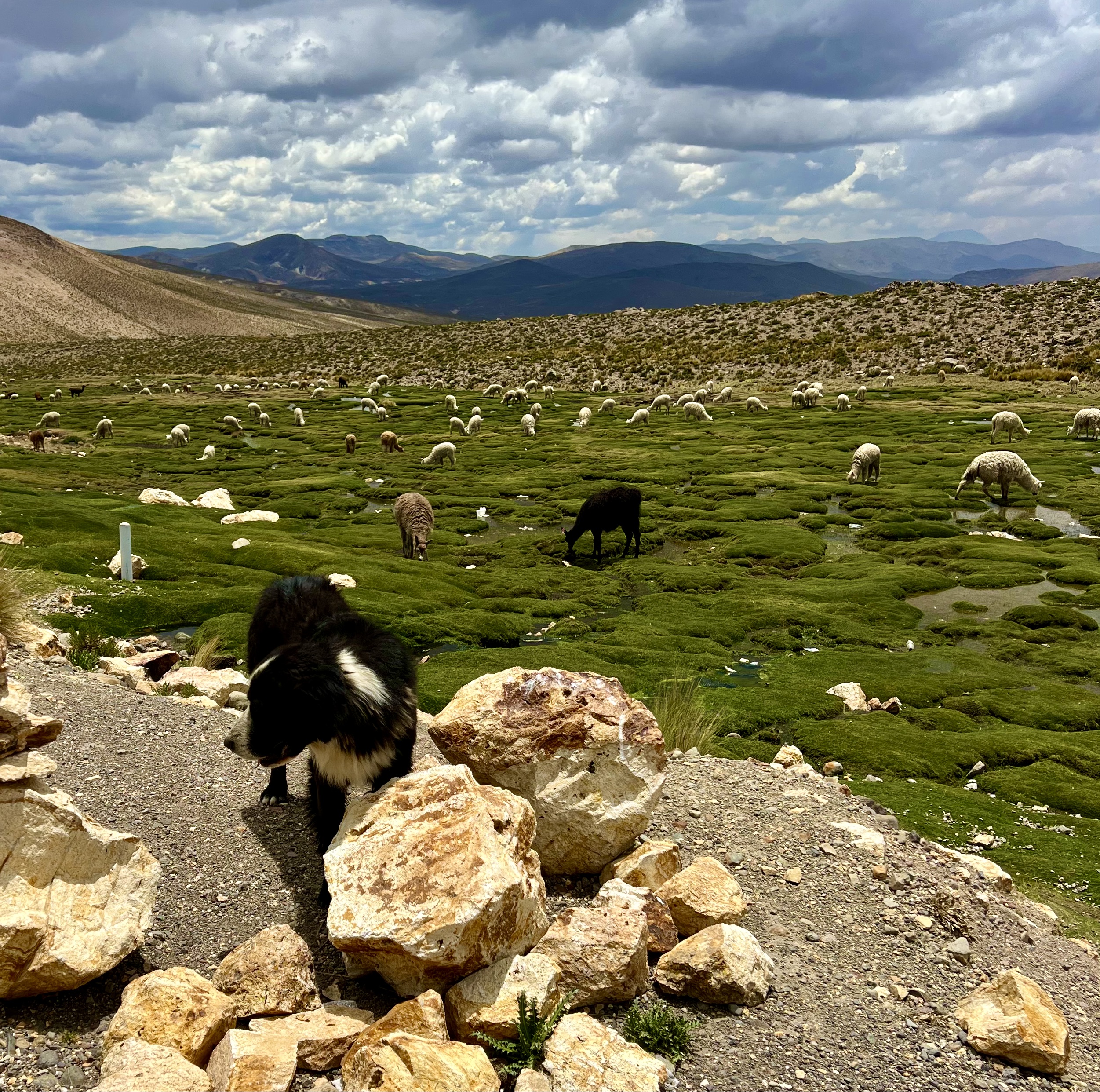
After a short break, we were back in the van driving through varied landscapes where the vegetation became increasingly scarce, except for a couple of wetland areas with natural springs. At these places, herds of alpacas and llamas grazed overseen by a shepherd and his sheepdog.
Along the way, especially throughout the Pampa Cañahuas and the Natural Reserve Salinas and Aguada Blanca, we could see wild alpacas, llamas and vicunas.
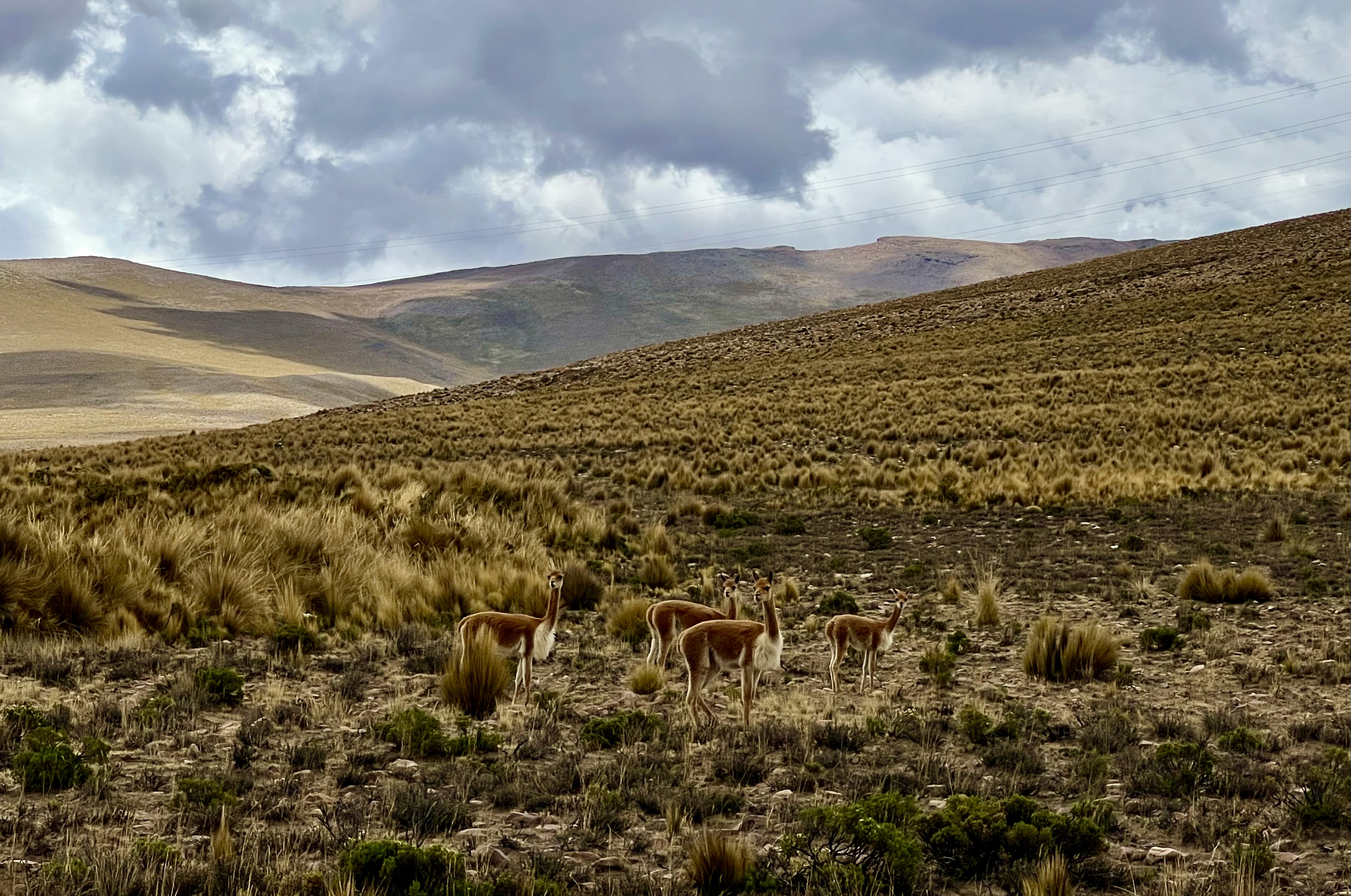
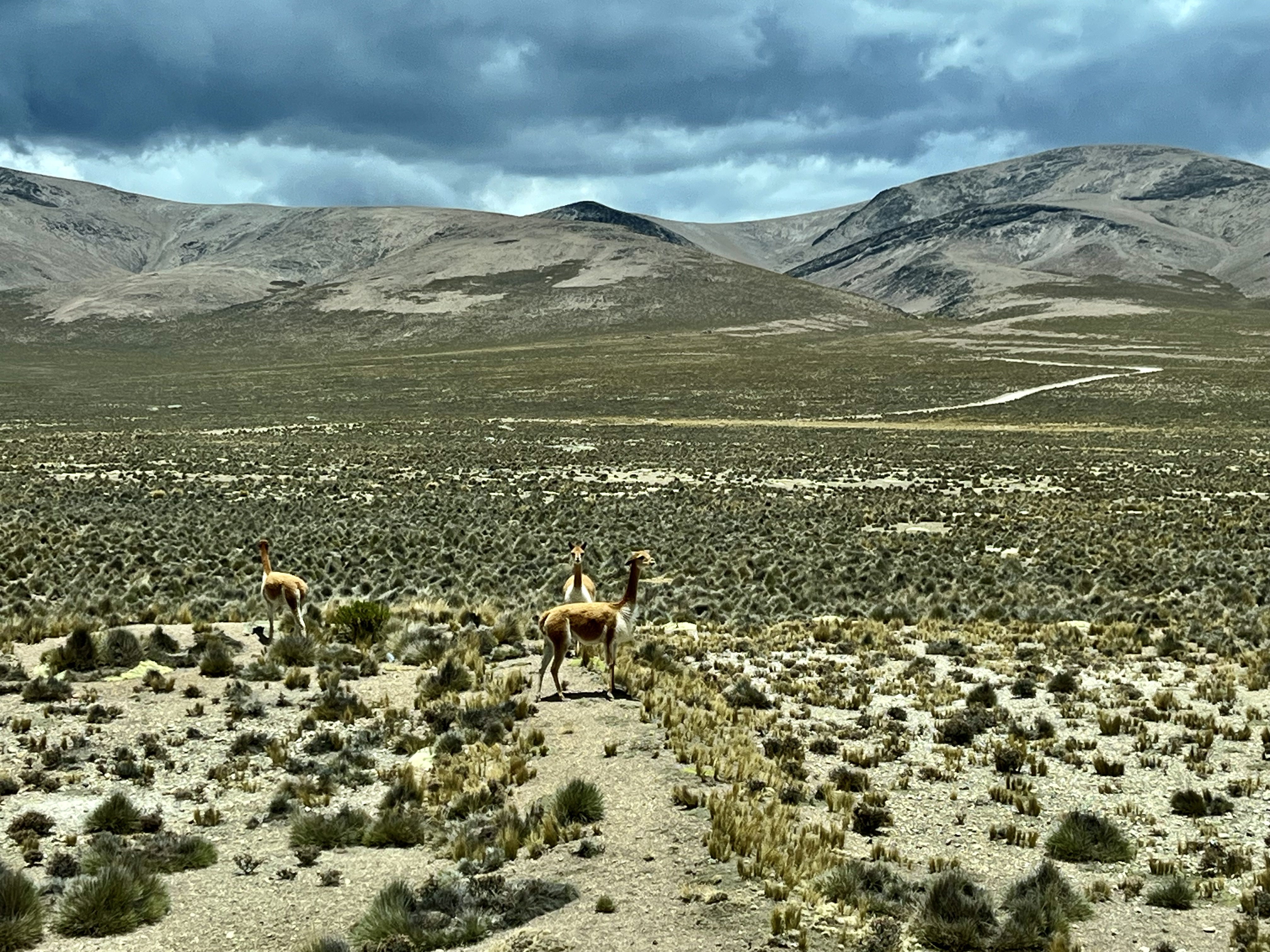
The higher we climbed the more vicunas we saw. In the middle of the Reserve, we stopped at another coffee/artisan’s shop, where the young Frenchman & I were told that we needed to change buses as the van we were on wasn’t going to the hotel we were scheduled to stay in overnight. This came as a shock to both of us, especially as the van we were transferred to was full and we had to squeeze in. What was doubly unfortunate about the change was that the first guide, Guido, was excellent. He told stories about legends and explained about the history of the peoples of the plateau. The new guide didn’t provide much background information, just did his job making sure everyone got off and on the van at the appointed time. The stop here did provide a good view of some of the volcanoes in the region.
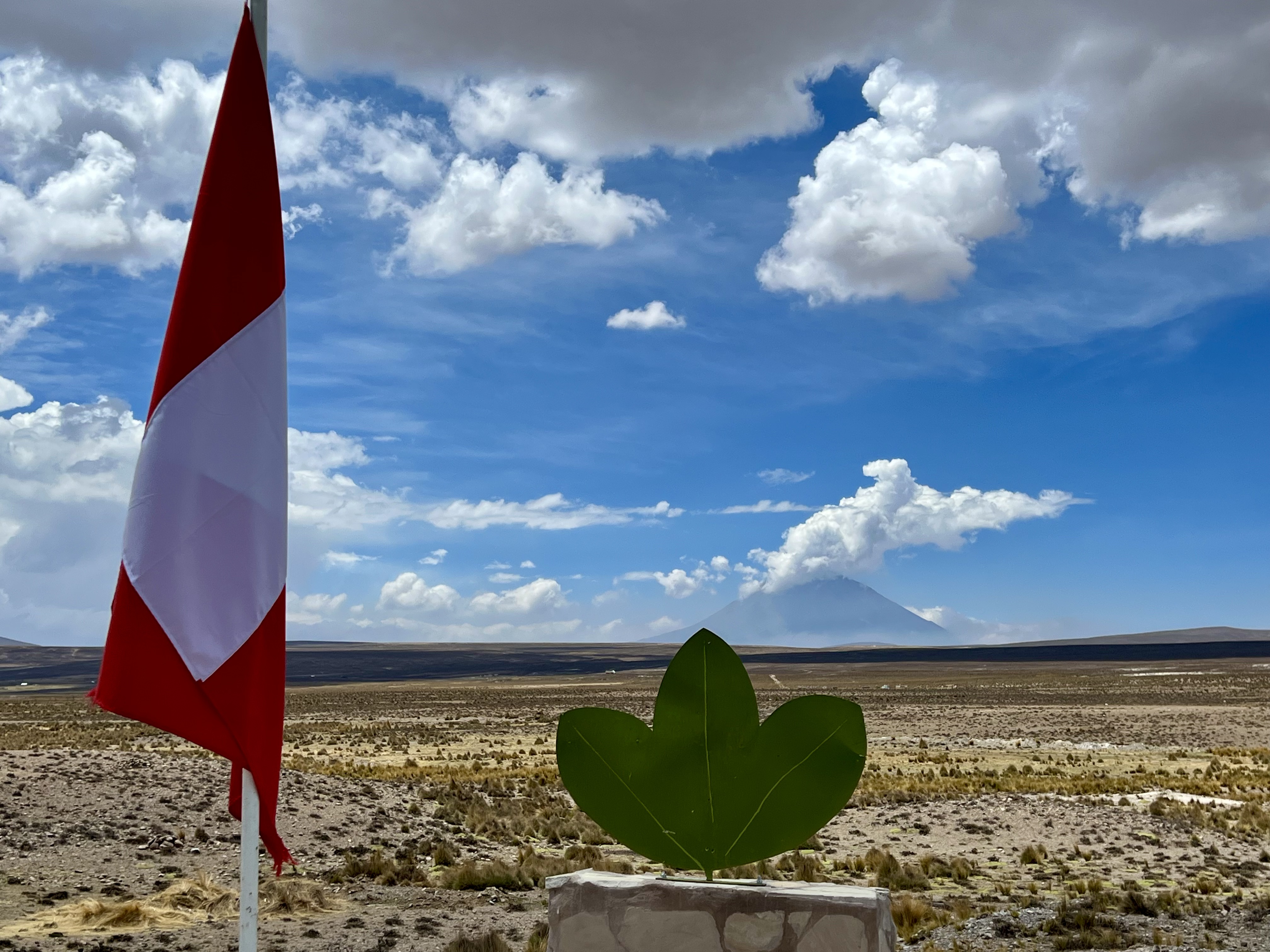
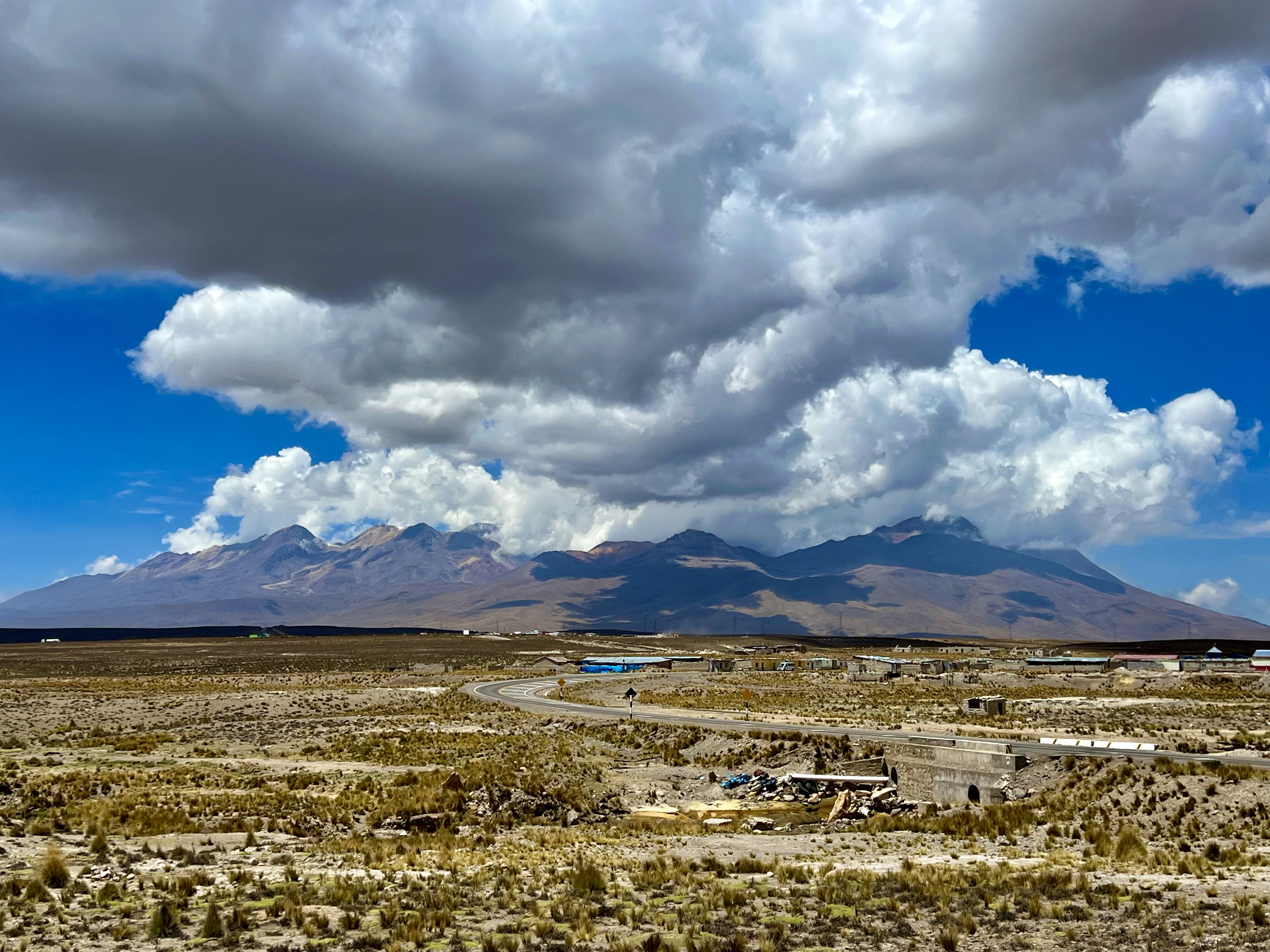
Now squashed in, we continued to go ever higher, to just under 5,000m, where there was a barren plateau filled with stone offerings to the mountain gods.

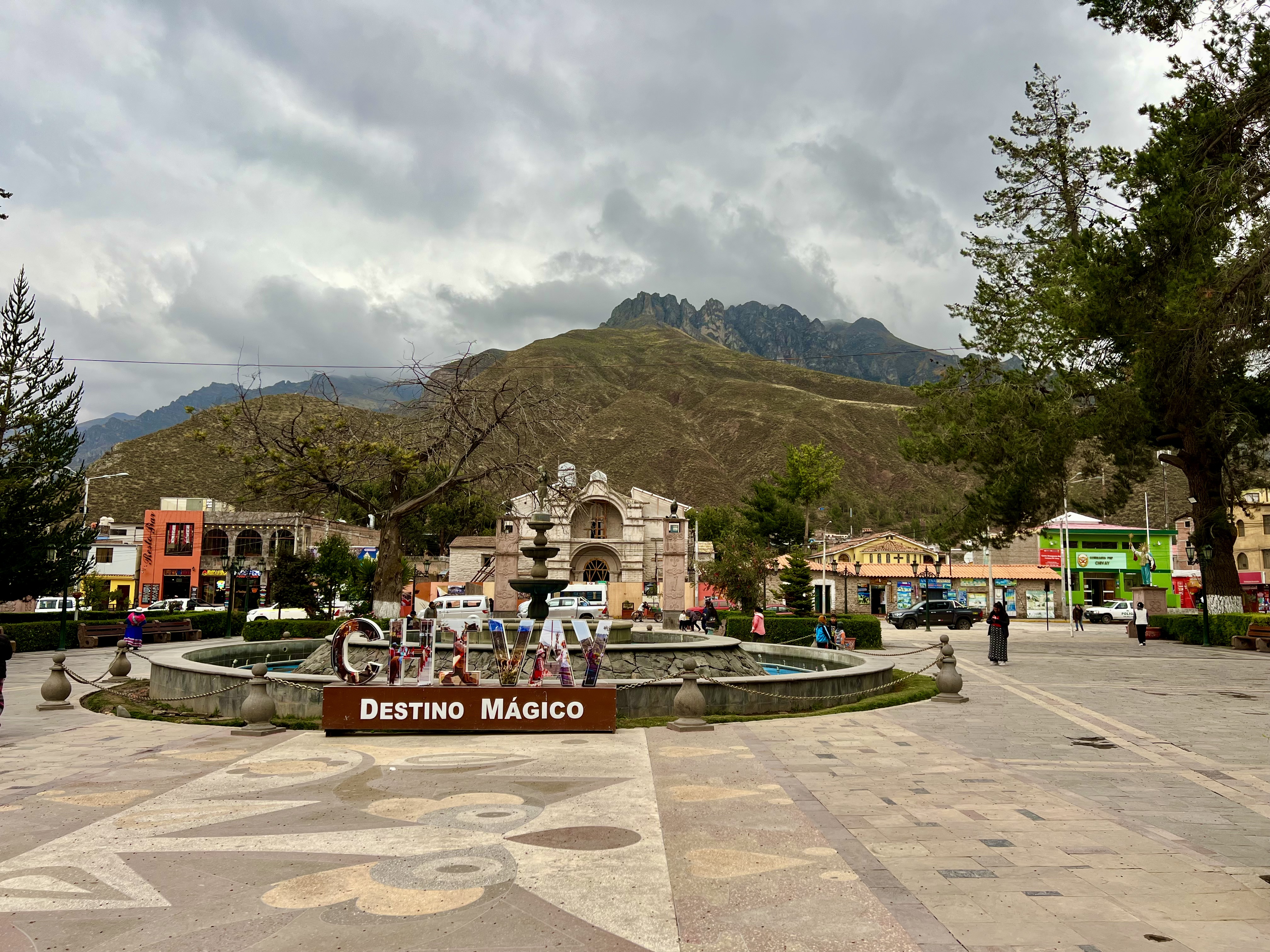
On a clear day, we would have been able to see the volcanoes, but when we were there they were unfortunately covered in clouds. From this height, we headed down to lower altitudes to finally arrive at Chivay, where we were spending the night. The passengers were in three different accommodations, and ours was the last one. When we arrived, we were informed there was no hot water or electricity. The new guide and the driver, then tried to find appropriate accommodations for us. We couldn’t stay where the others were as they were paying more. I was willing to pay extra, but that wasn’t acceptable. We did get rooms in a very basic but clean hostel. The Frenchman and another couple then left for the hot springs, but two sisters from Huaraz and I decided to stay in town and explore the area. Chivay is a small mountain town, but it is the commercial hub for the region between Puno and Arequipa. It has a market that caters towards locals rather than tourists, which was a pleasant change. The coffee shops around the main square seemed to cater to both tourists and locals as the one I went to just had locals in it. In the evening there was a folklore show at the restaurant we were taken to. It included traditional Chivay dances and songs. It was definitely a show for tourists and the food was overpriced, nonetheless it was interesting to see.
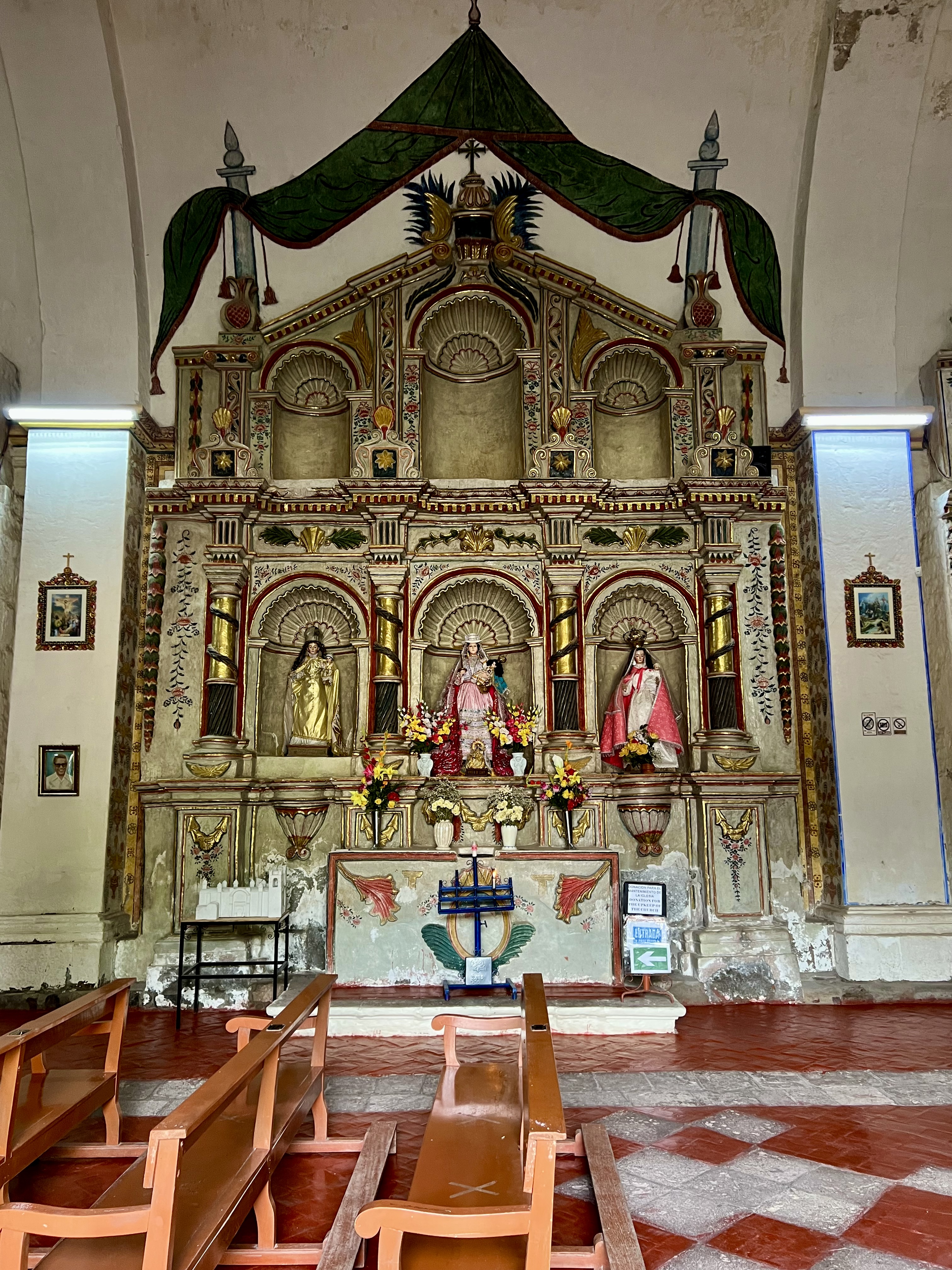
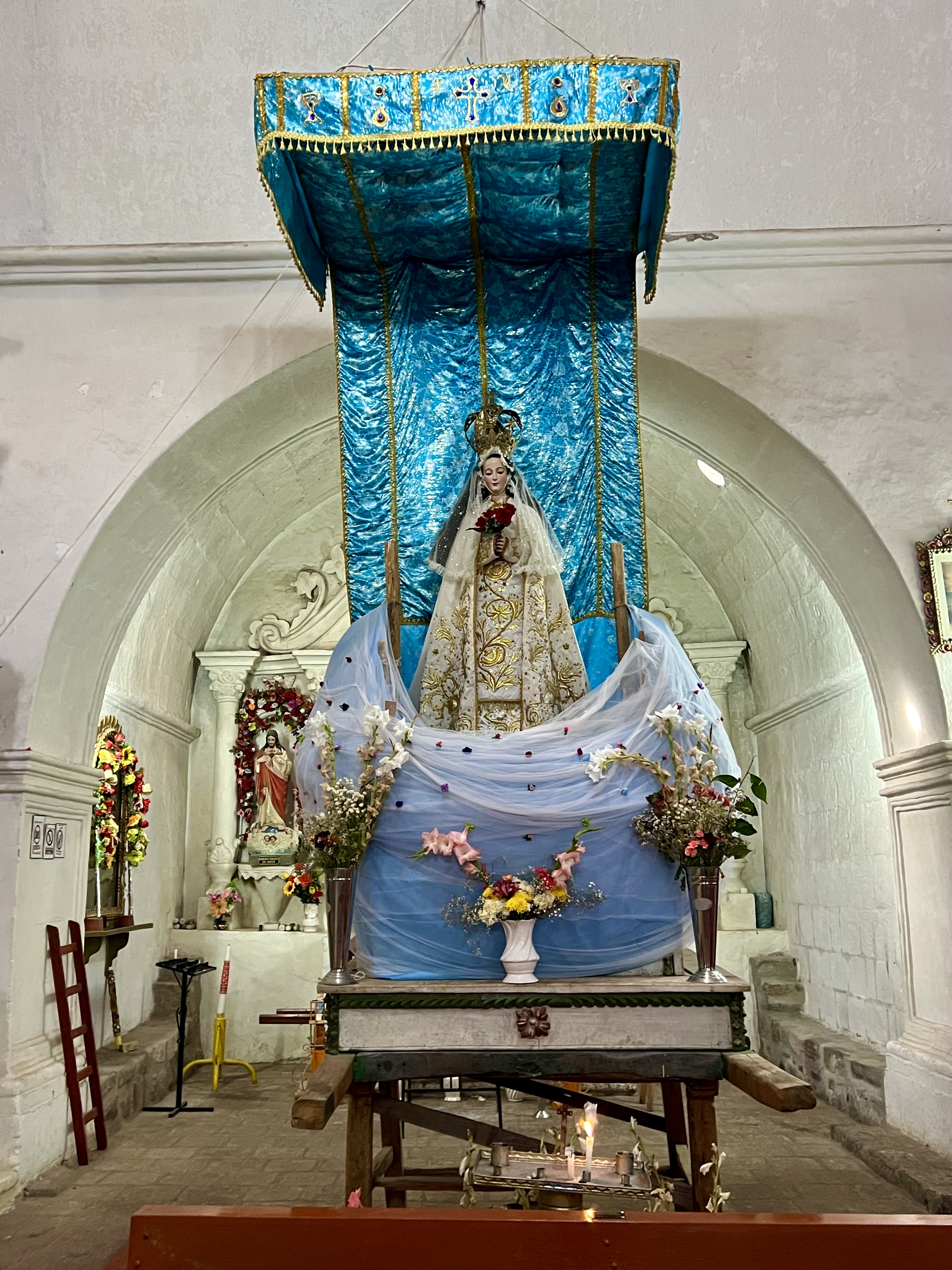
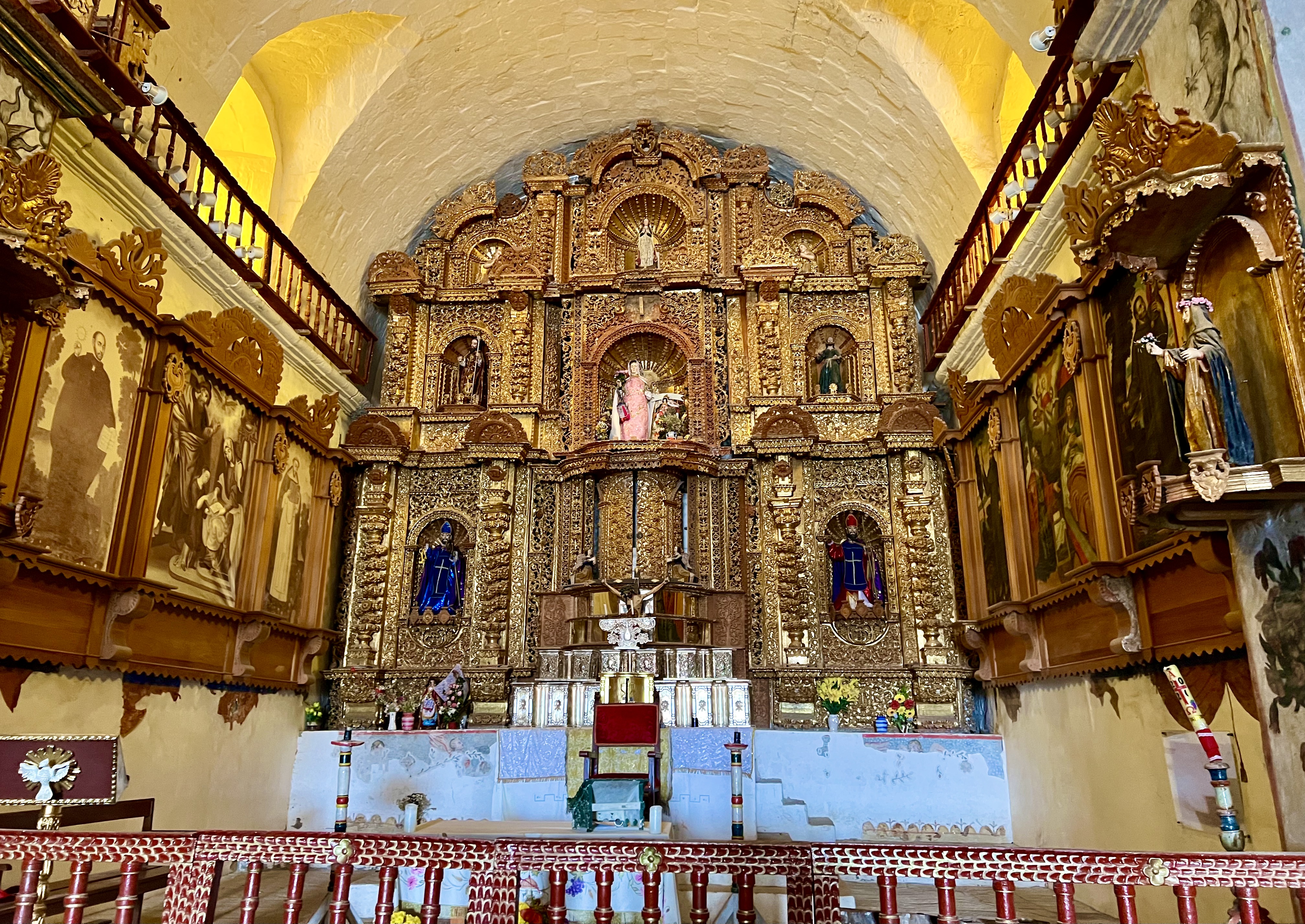
The next morning, we left at 6:30 to head towards Colca Canyon. As with the day before, there were a number of stops before arriving at the Canyon. The first was at the town of Yanque. When we arrived, there were dancers in traditional dress performing around the fountain in the main square. All around the square were artisan stalls. The Immaculata Church is one of the oldest in the Arequipa region and dates from the early Colonial period. There were quite a few altars in the church and most of them had various statues of the Virgin in her many roles. The altars were beautiful in their simplicity. There was also a cart with a tall statue of Maria waiting to be carried around town for an upcoming celebration, or perhaps for the one on Dec. 8th that had just passed. I didn’t find out which.


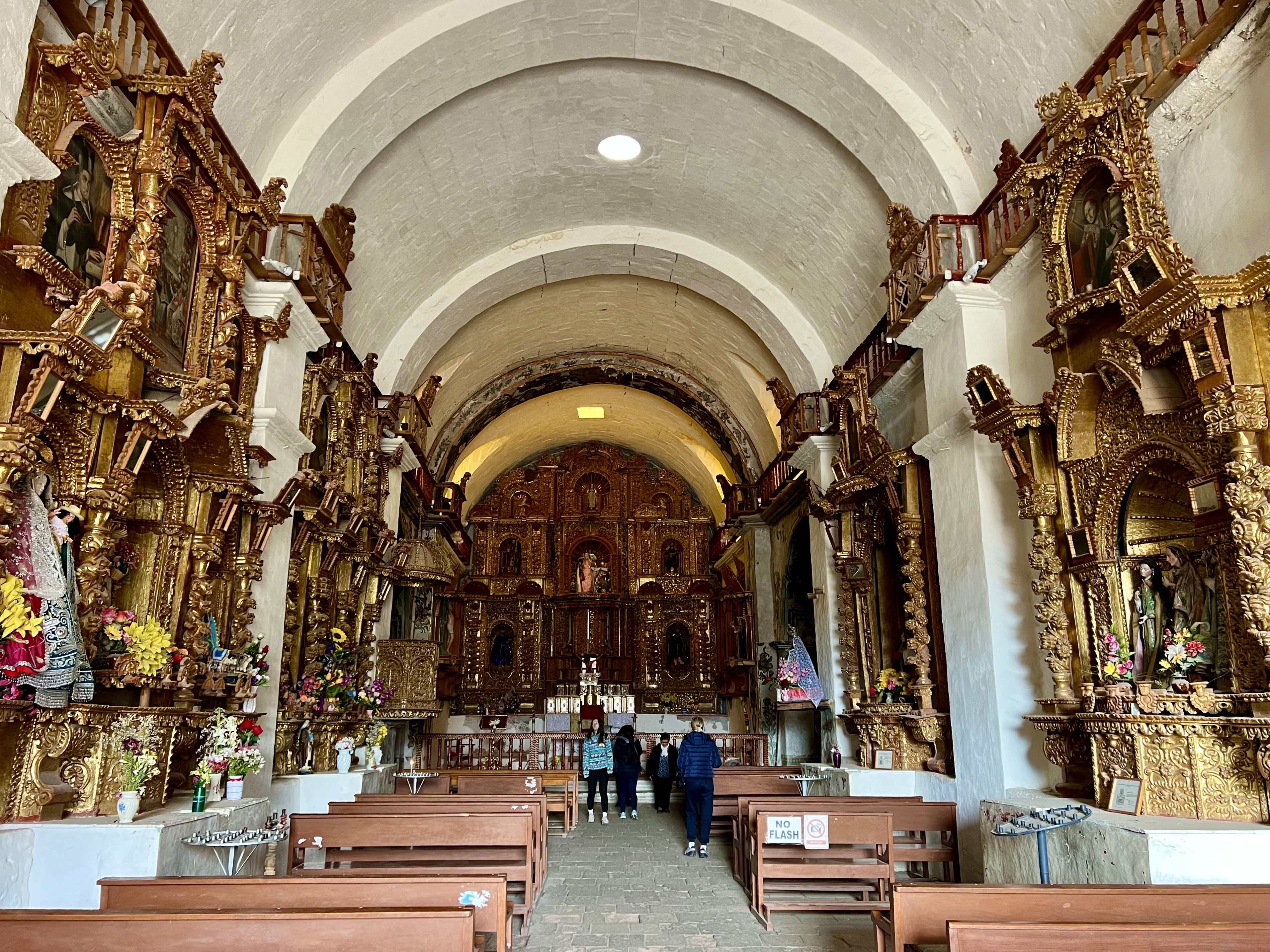
Our next stop was in Maca and St. Anna’s of Maca church is also from the early Colonial period, except this church has the typical Peruvian excessively gaudy gold plated images on the main and side altars. The main square has brightly colored statues above well-kept gardens and is again surrounded by artisan’s stalls. If there had been any question, it was clear that on the excursion from Puno to Colca souvenir shopping is expected; there is almost no way to avoid the stalls, almost all of which sell the same basic things, i.e., socks, gloves, scarves, sweaters etc. made from alpaca and llama wool.

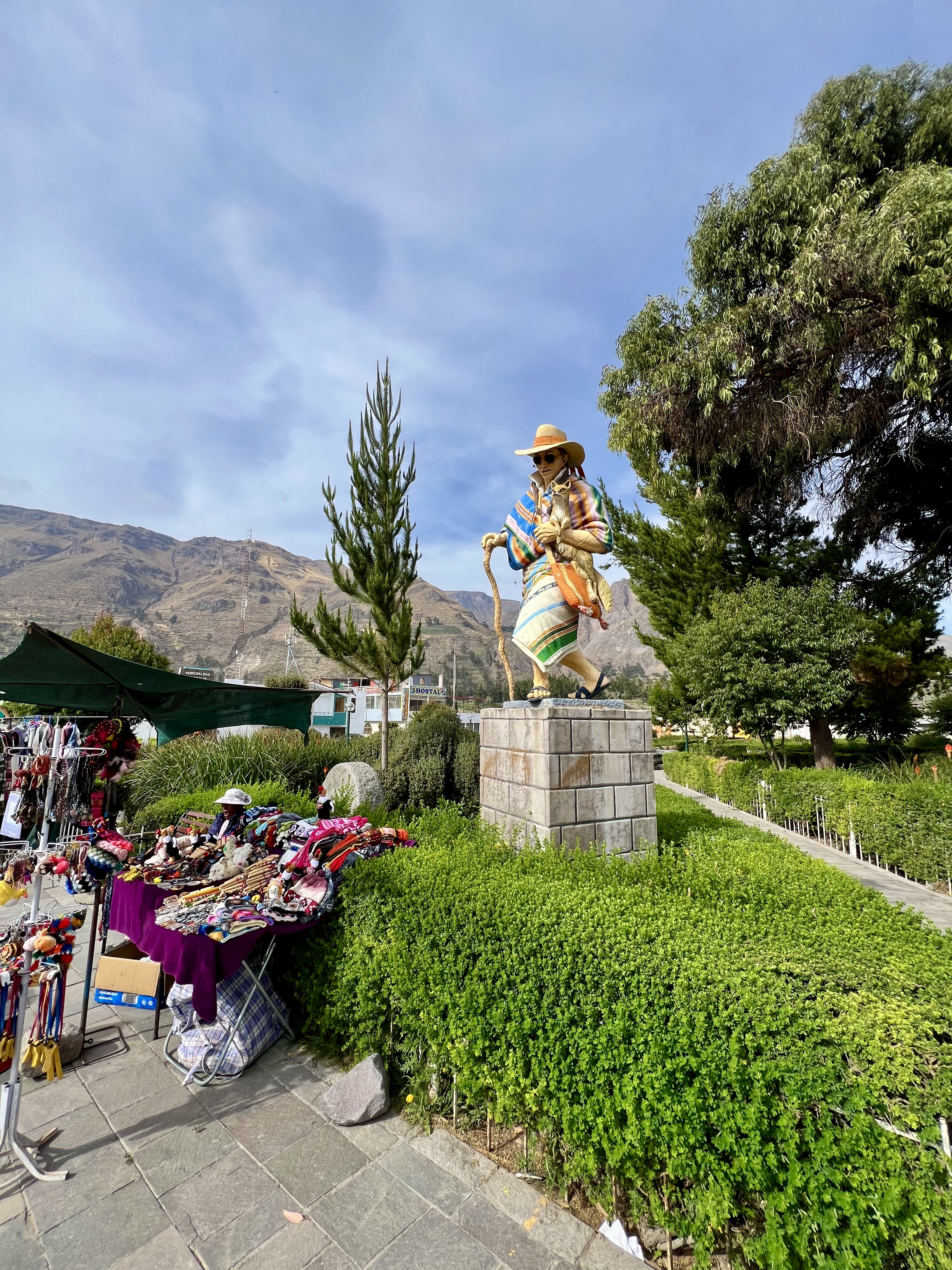
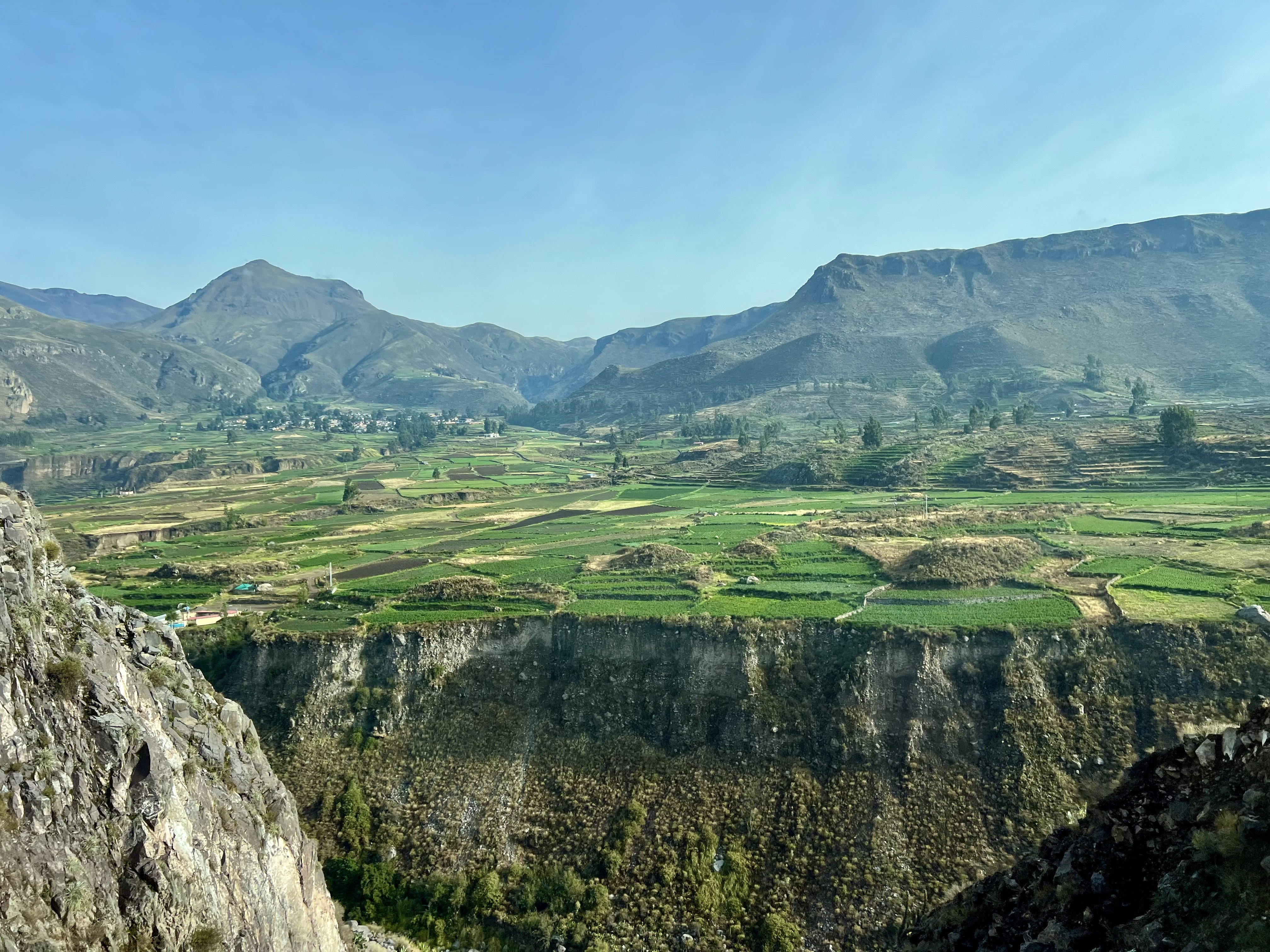
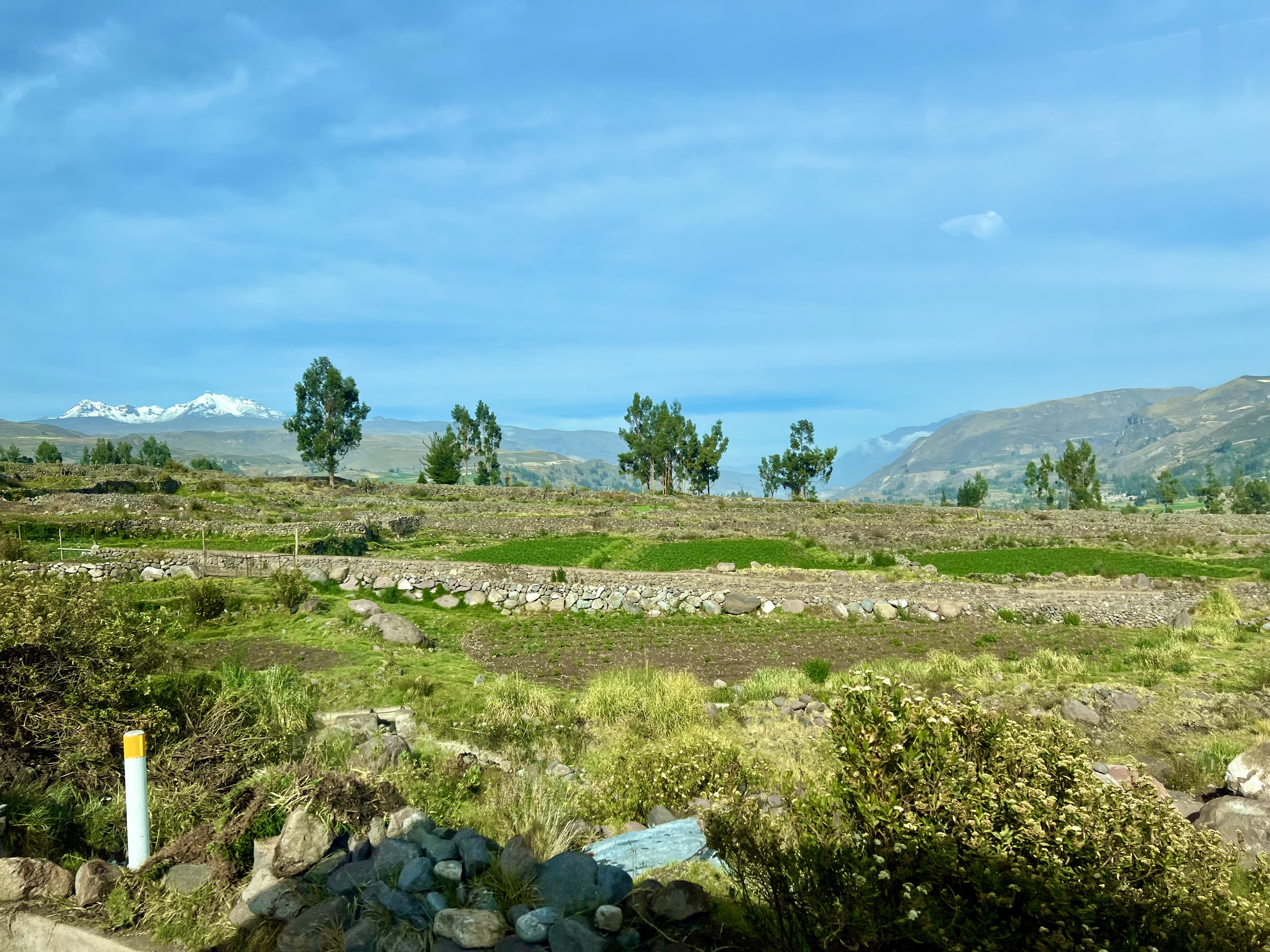
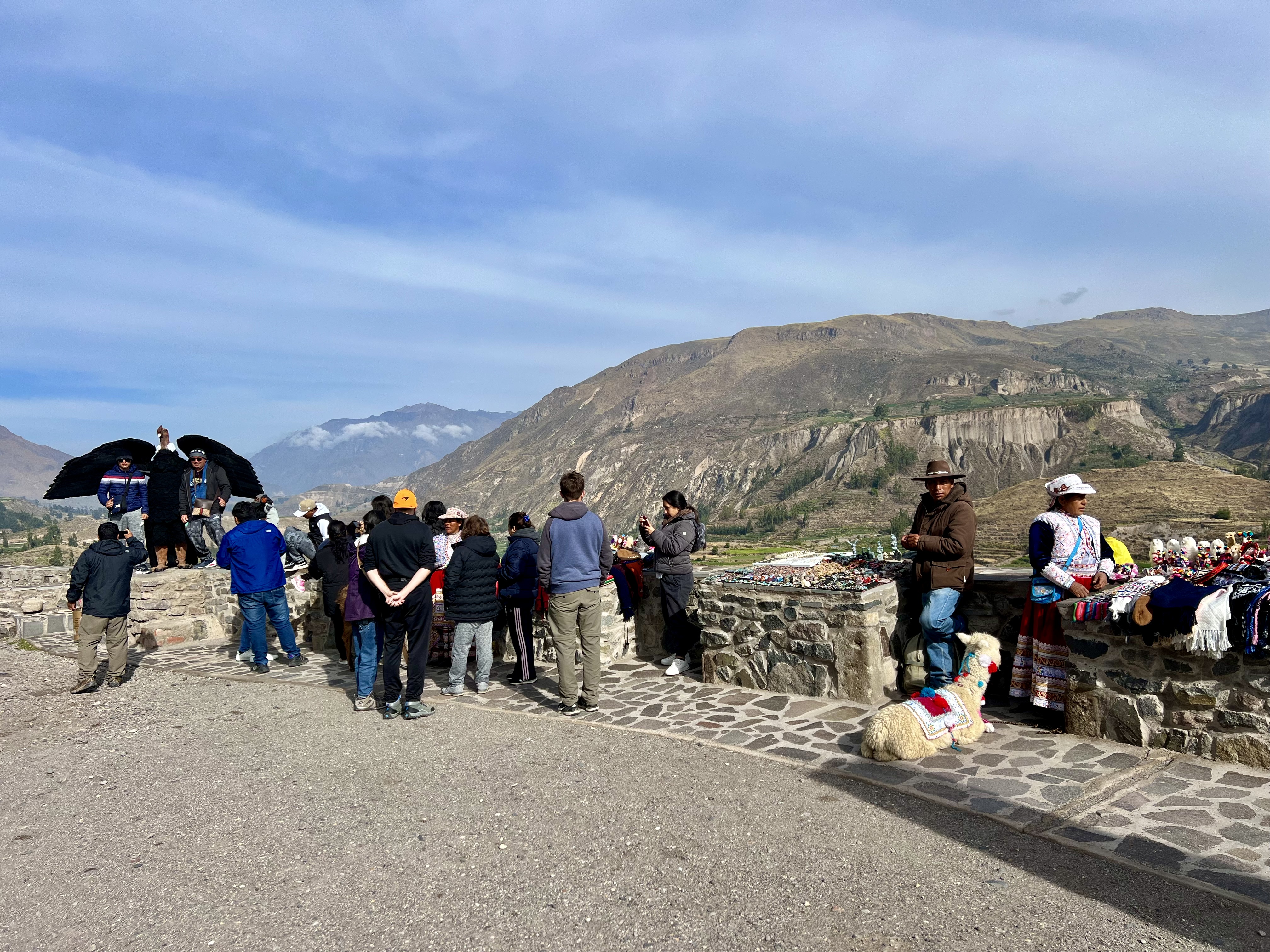
From Maca we drove through lush green agricultural fields with plots designated by rock walls. We stopped at a couple of overlooks, again with vendors, but now with people in condor suits as well as with women and their baby alpacas. Photographs with the human condor and baby alpaca are the way the people involved earn an income.
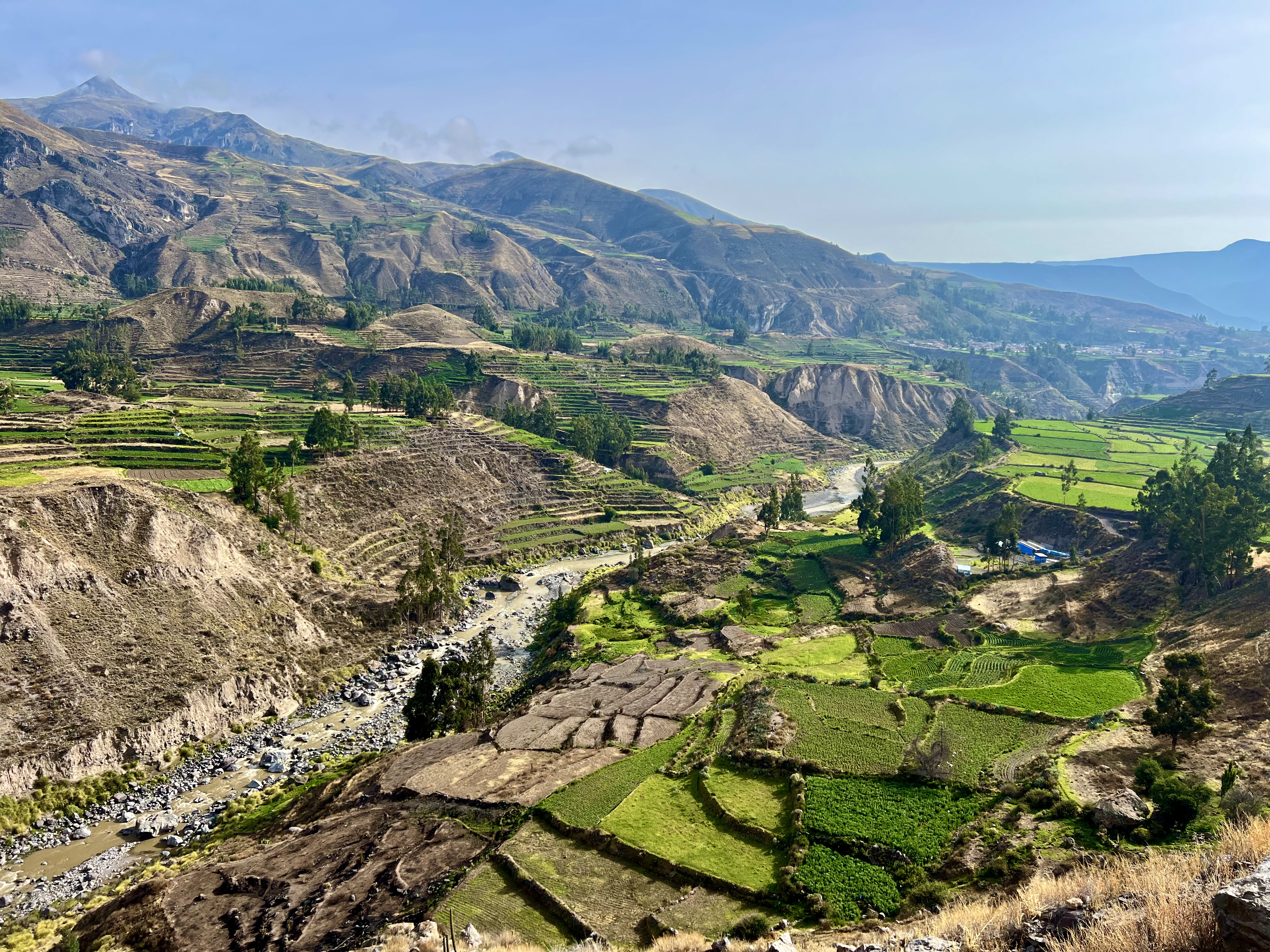

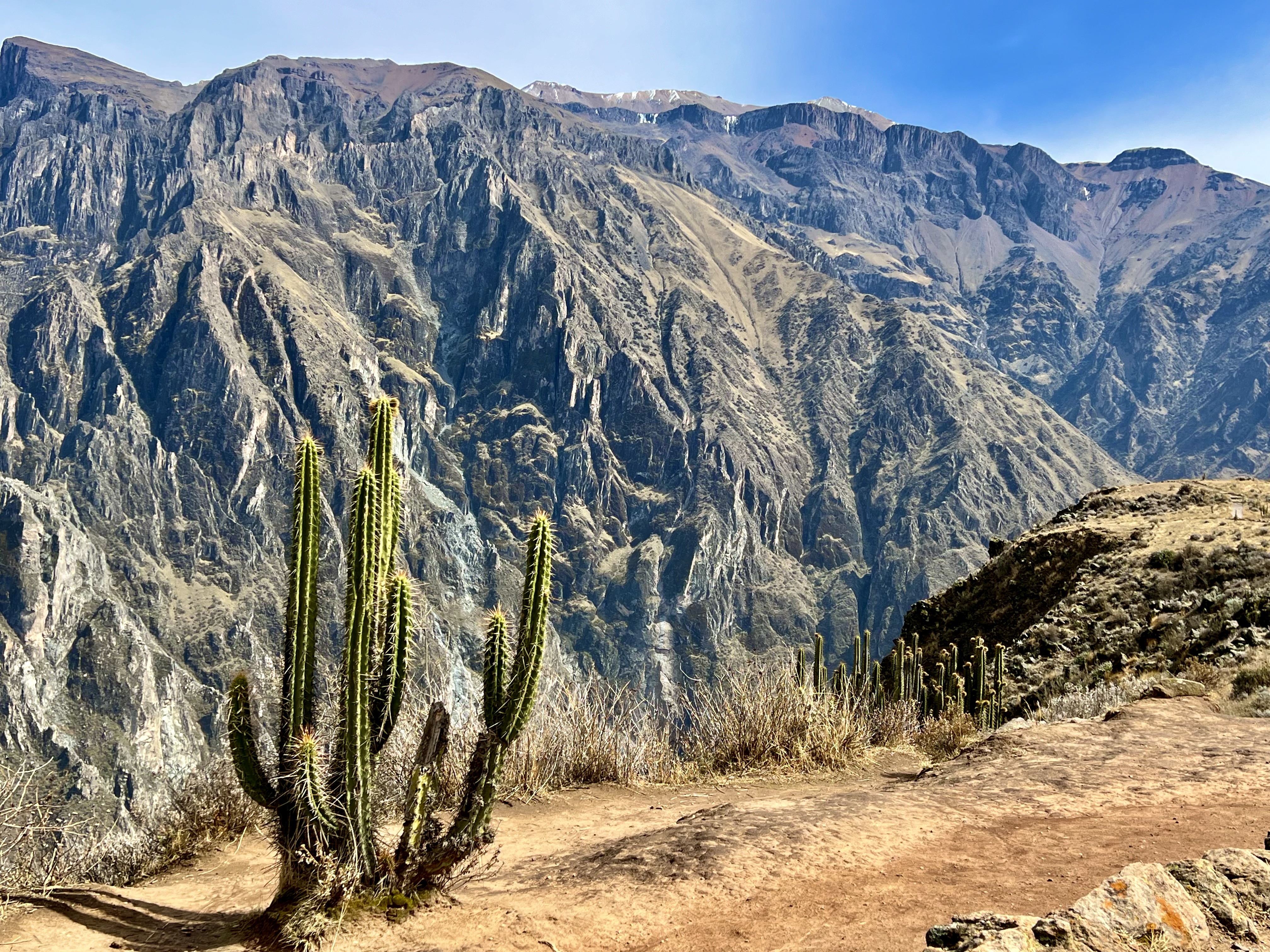
Around 9:30 we arrived the beginning of a short trail along with side of the canyon. The views with cacti and the dark jagged cliffsides were impressive. I did manage to escape the crowd for a few minutes by walking along the canyon in the other direction to an overlook that I had for myself. At this spot, all was quiet except for the songbirds and wind. It was a wonderful moment.
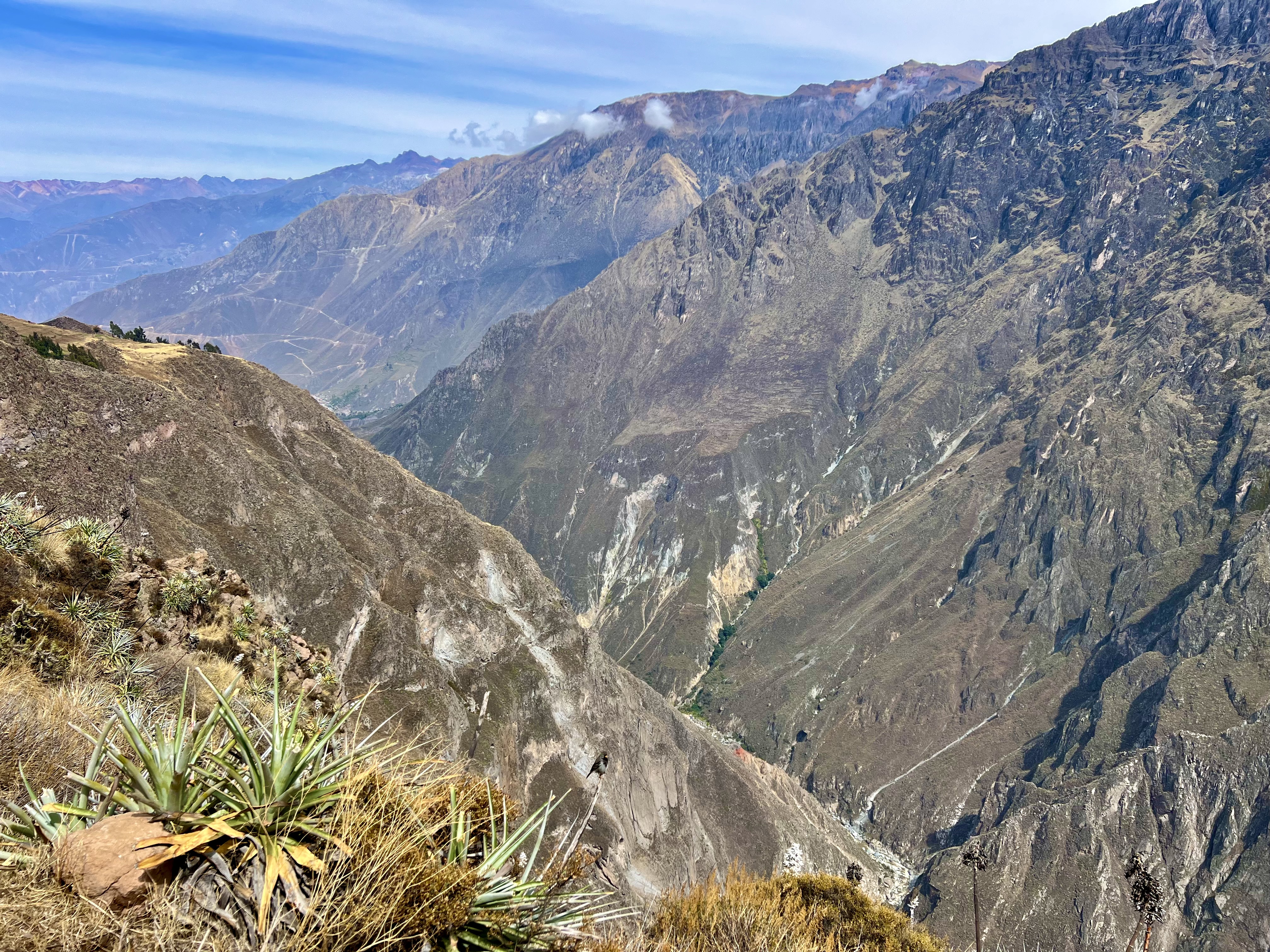

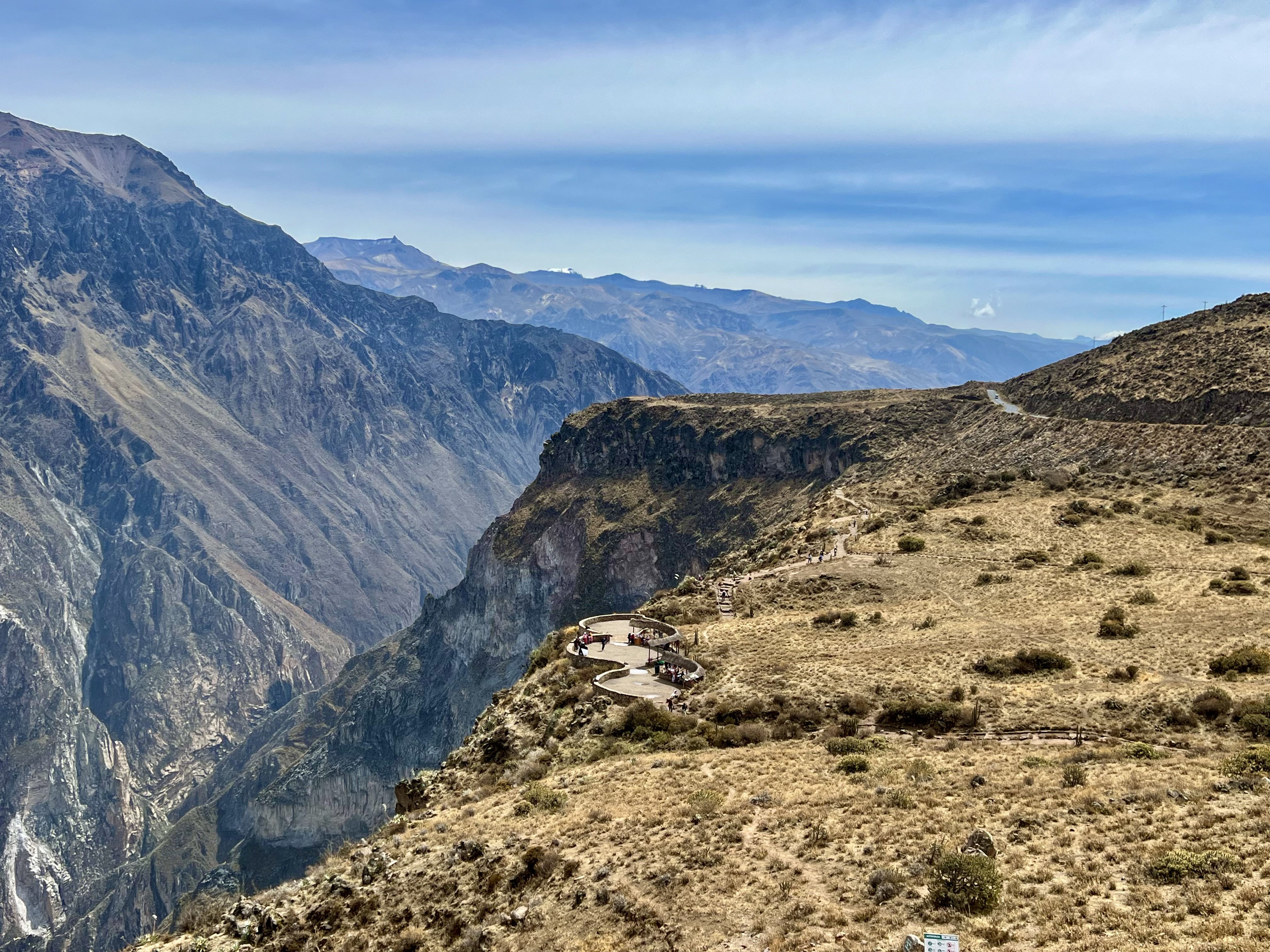

The Canyon is known for its condors, and I did see two, but they were too high in the sky to get a picture. After about 45 minutes we were back in the van returning to Chivay for lunch, before continuing on to Arequipa. There was only one stop on the way to Chivay, and that was to an overlook for the multicolored lagunas and a hut that sold Colca Sours, a cacti version of Pisco Sour.
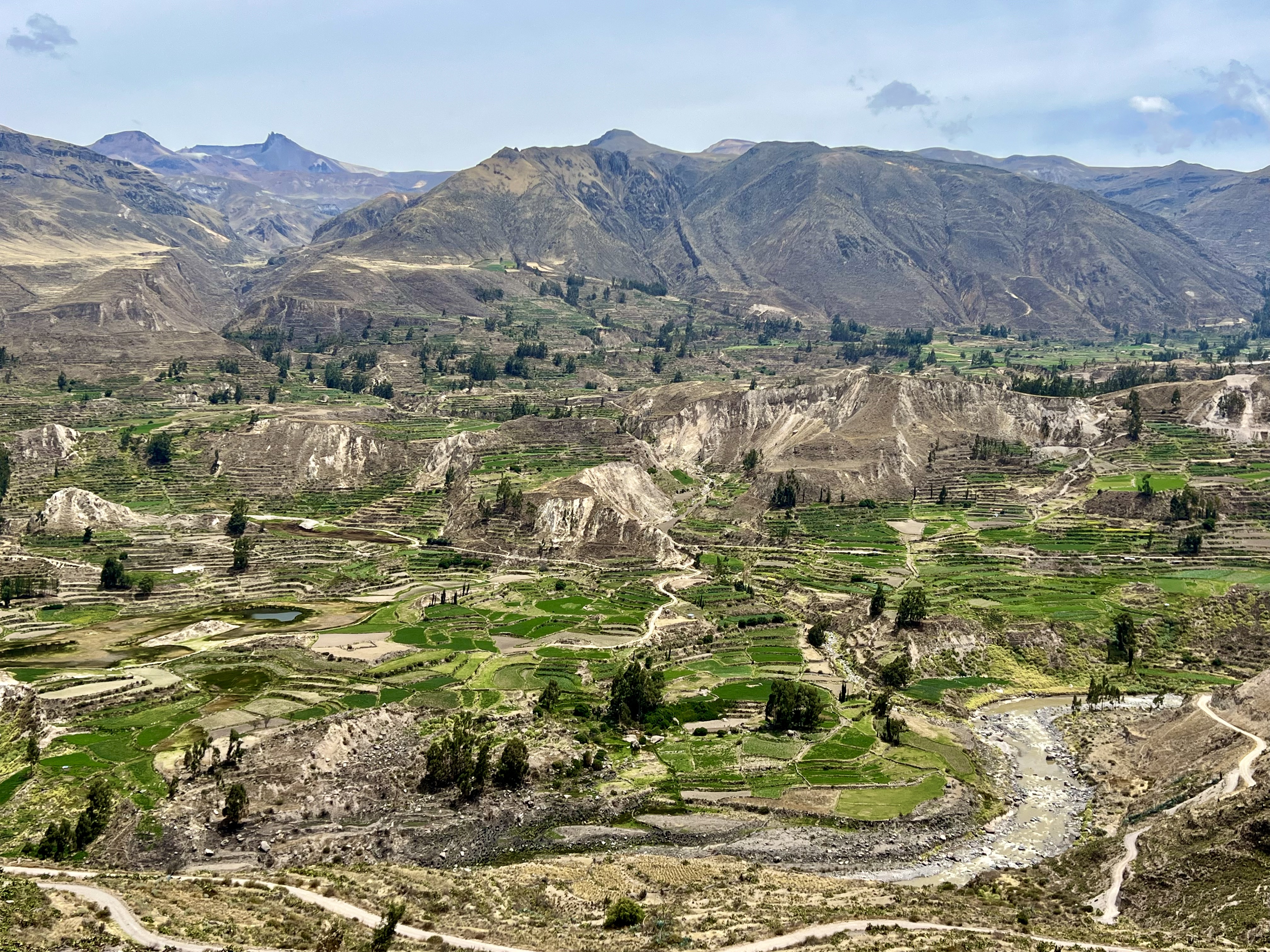
We arrived about 4:30pm in Arequipa and as I mentioned in the beginning, the van let us out in the middle of town. My phone and computer had been hacked sometime close to when I arrived Puno, so I didn’t have any connectivity to locate the hotel. The guide did help with finding the place on Google Maps and then told me how to walk there. This was not the most pleasant experience as I had to cross almost the entire historical center dragging both the hand and normally checked luggage through the crowds. Obviously, I did make it and am glad that Eddie Bauer makes stable duffels.
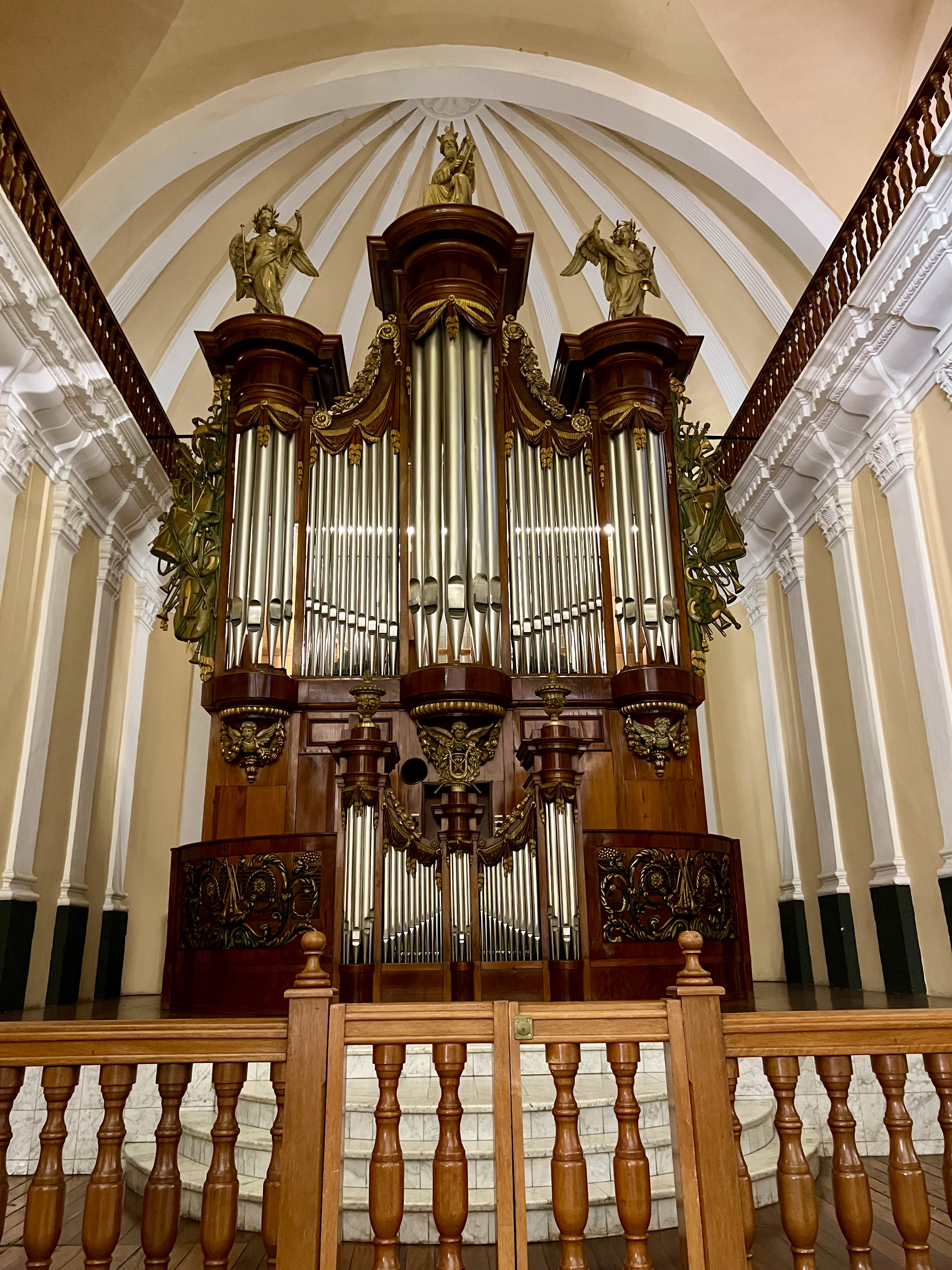
Everyone I had spoken with in Cusco had said that Arequipa is a fabulous city. Given all the hype, I wasn’t sure what to expect. To my surprise, they were right. The White City, (it is called that as the buildings in the historical center are made from white volcanic stone) is lively, friendly, and more or less clean. After checking in, I went for a walk around Plaza de Armas and went into a few of the churches. The Cathedral was closed, but I was able to get in the following day on a tour including the Cathedral Museum and view from the belltower. They don’t let people into the Cathedral other than with a tour unless one is going to mass. The Cathedral was constructed in 1848 after a series of earthquakes damaged the earlier structures on the site. Arequipa didn’t have a Cathedral until this one was consecrated. Some of the statues inside the Church are from the earlier destroyed churches. The region is earthquake prone, and the city is surrounded by volcanoes. During the tour, we went up to the bell towers and could see all around the region, at least as far as the clouds over the mountains would let us. There was another quake in 2001 which damaged one of the belltowers that collapsed on part of the large organ. The damaged pipes were replaced by a firm in Belgium. The organ has over 1,000 pipes and there are only three people who can play it. It is only used for high mass.
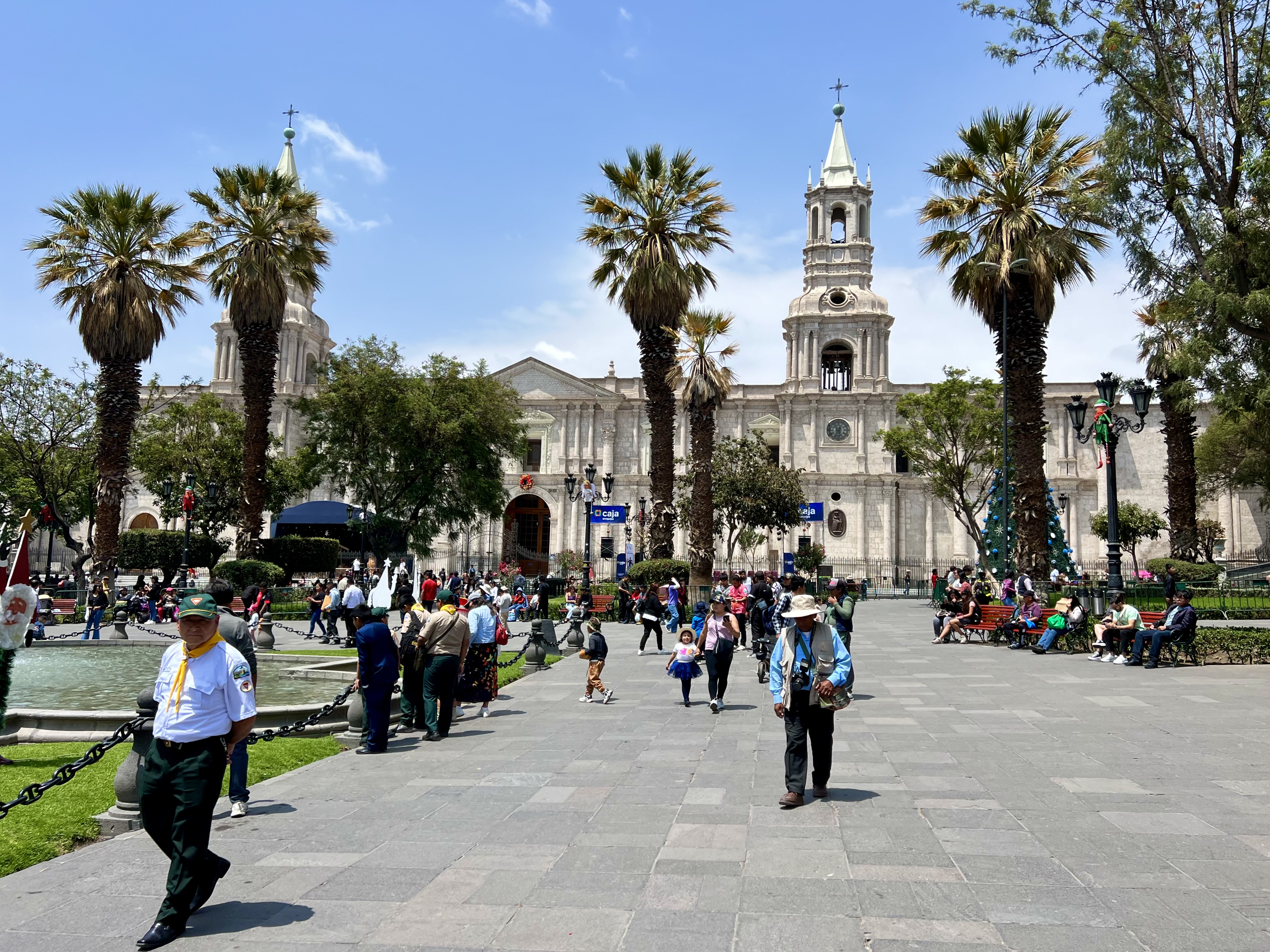
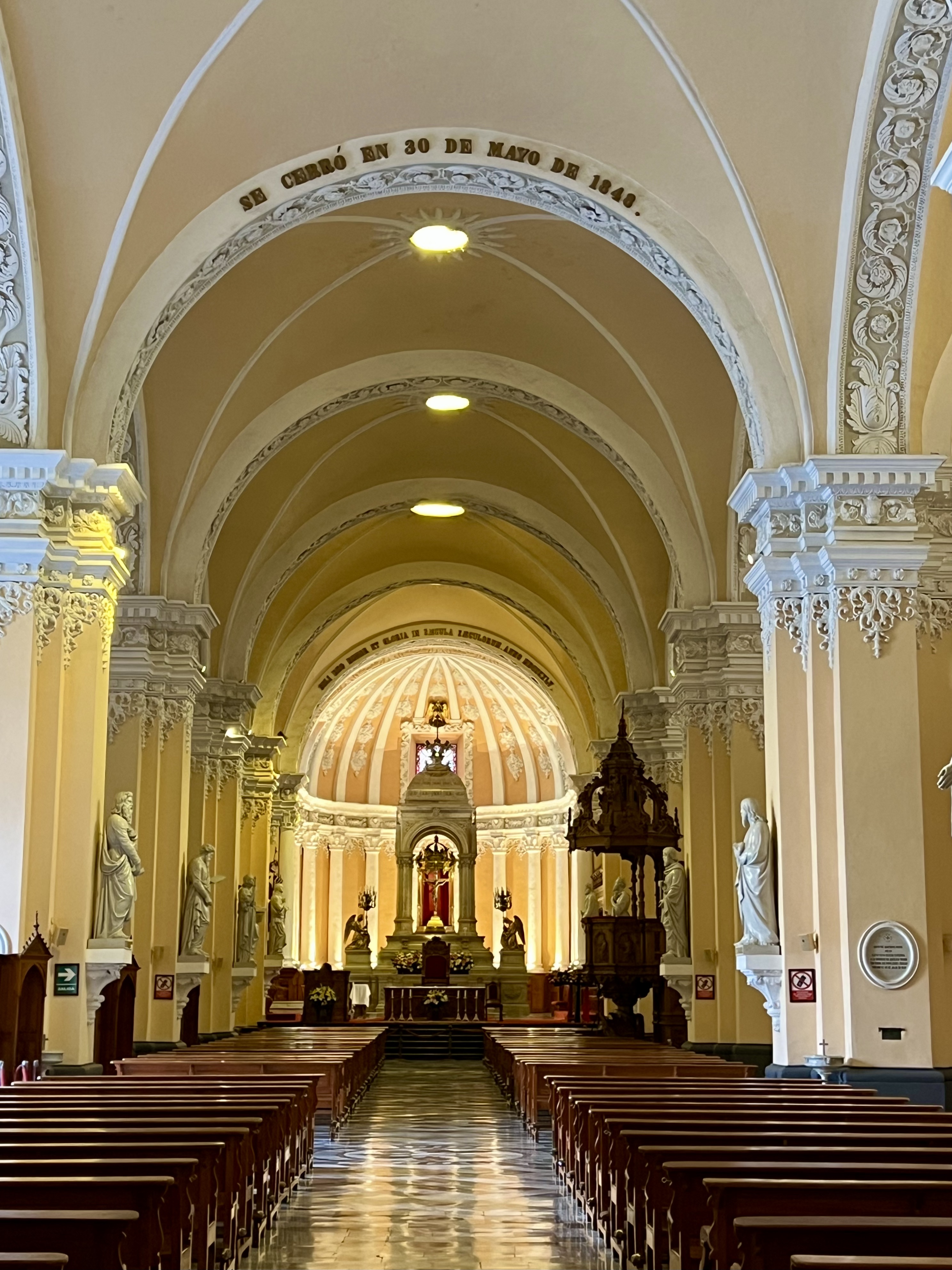
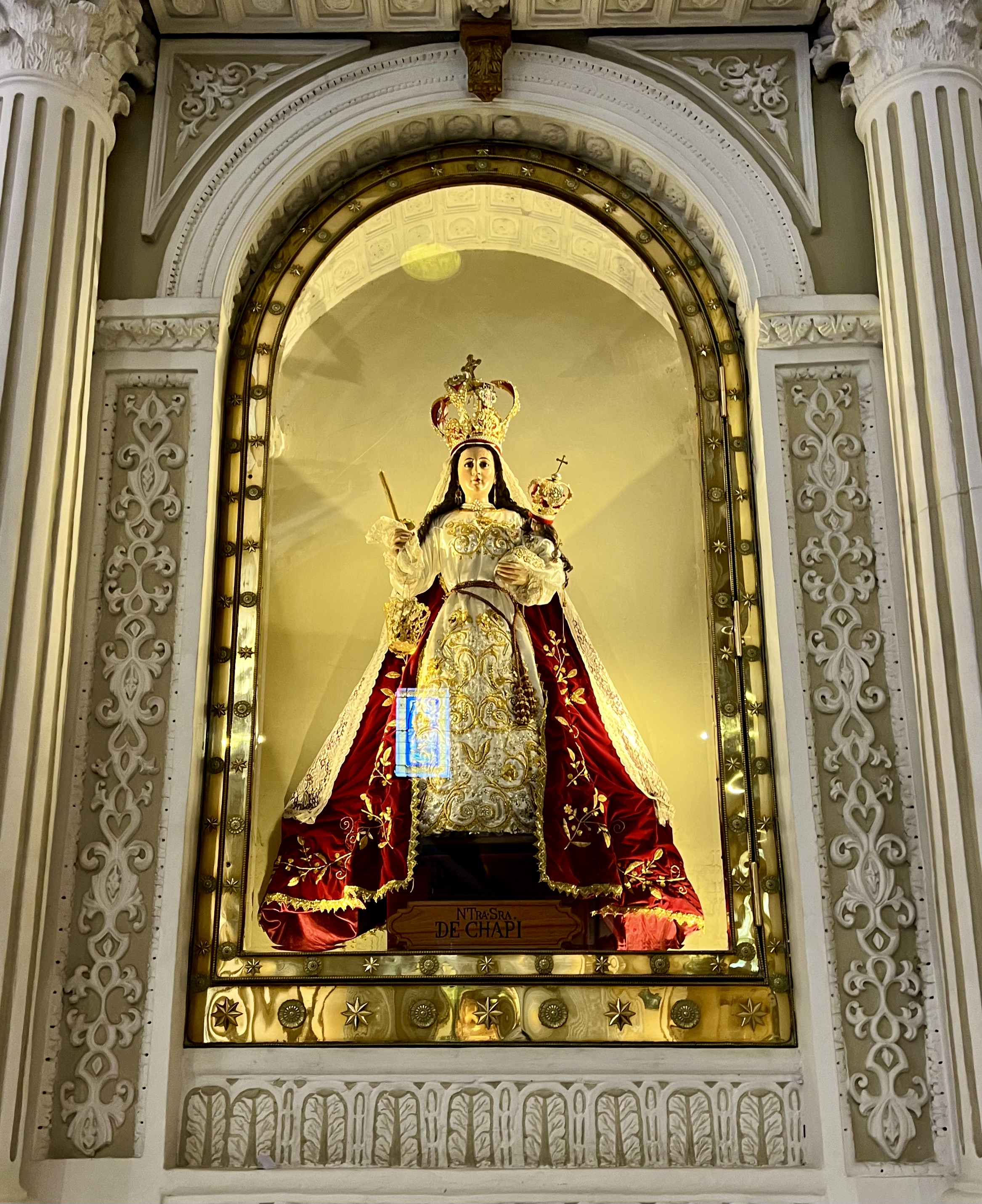
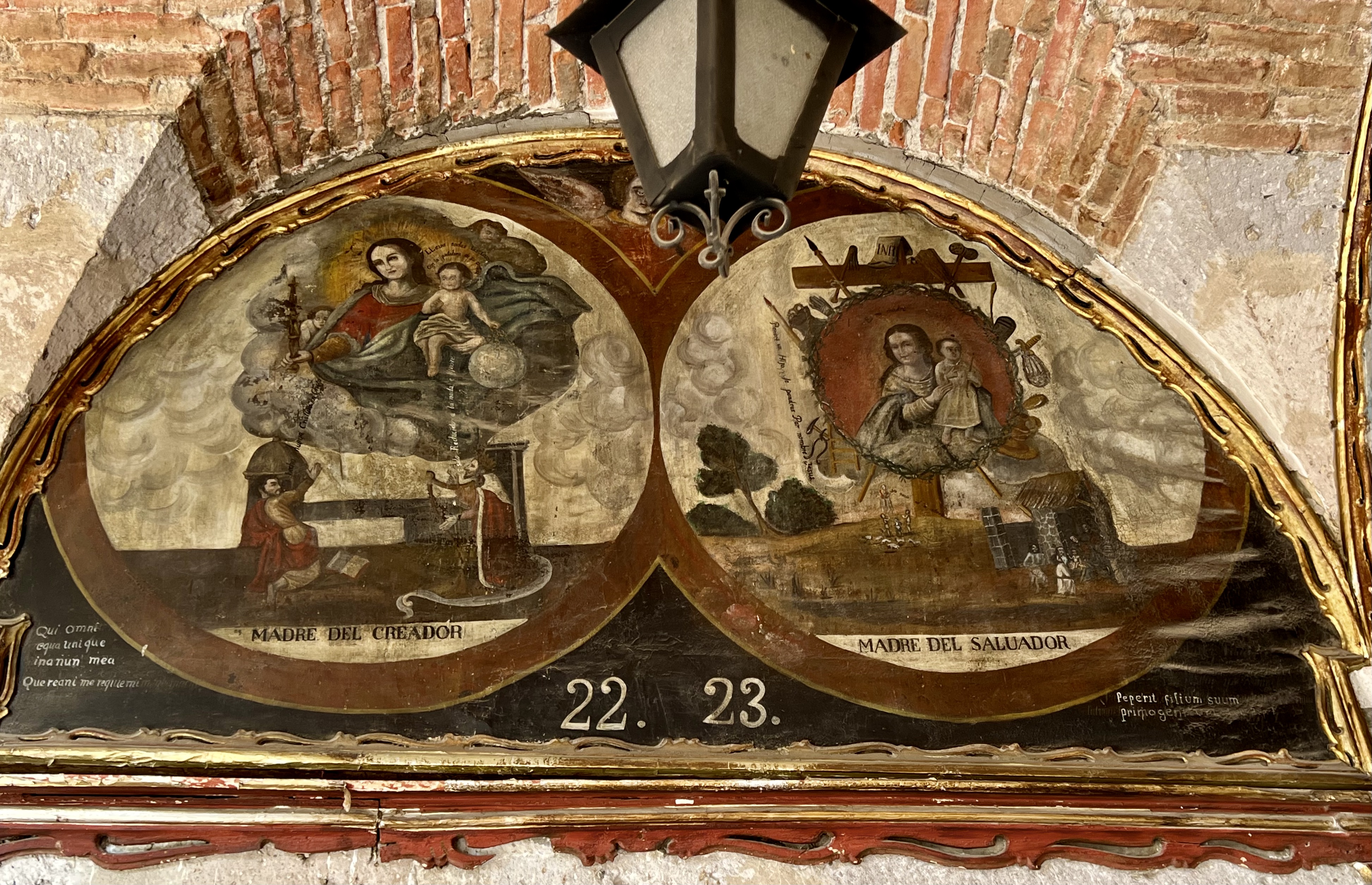
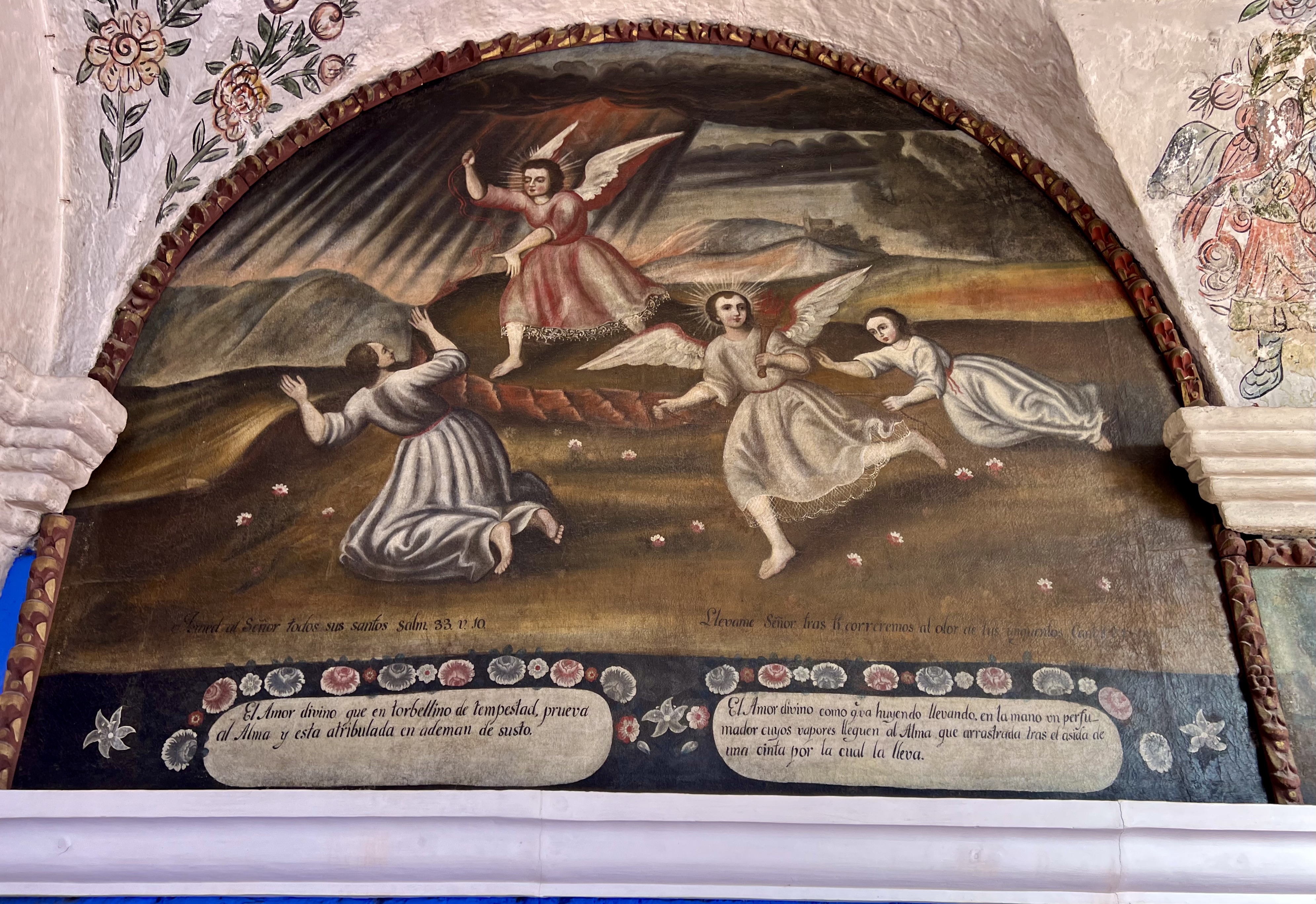
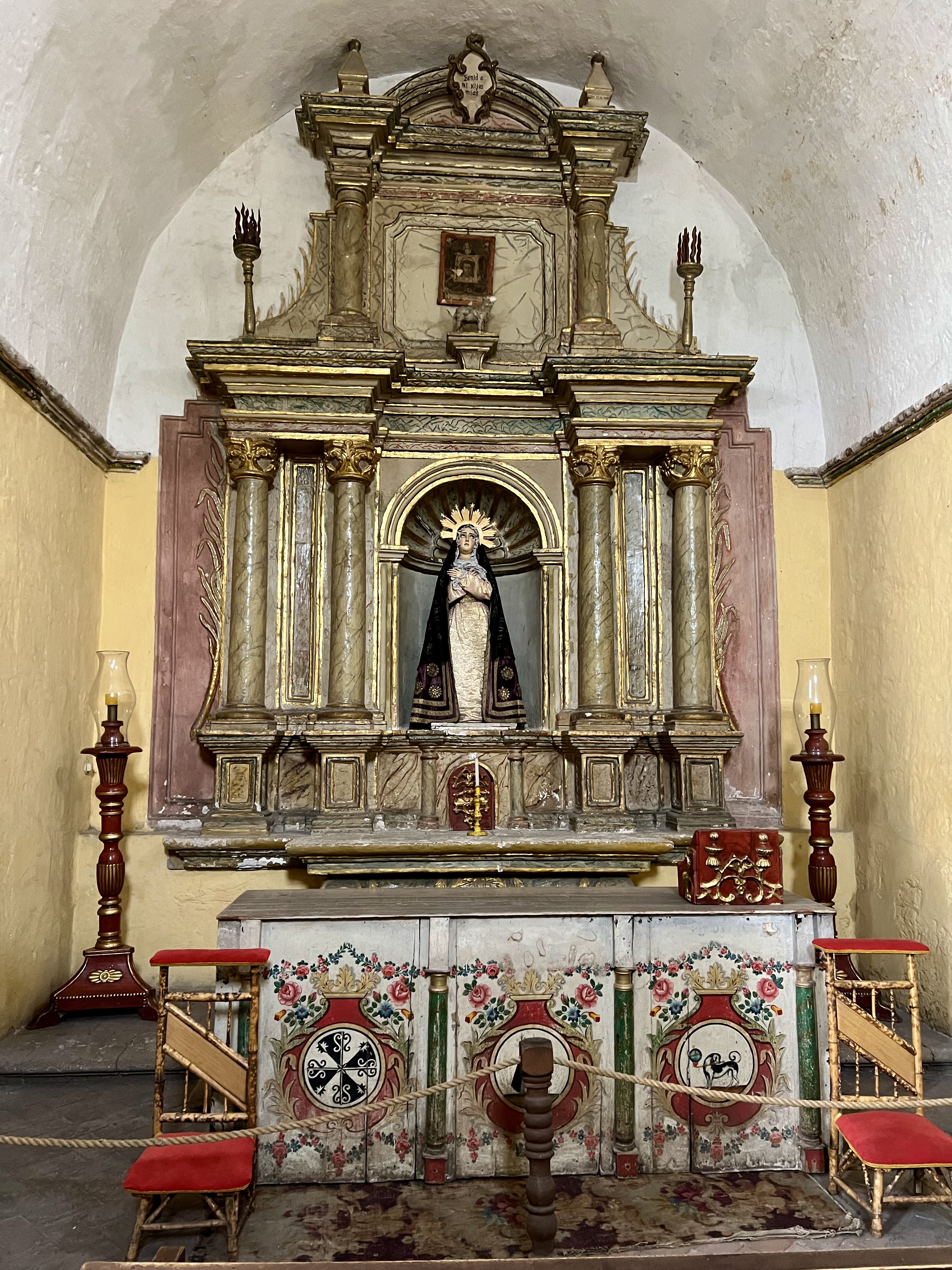
Prior to going to the Cathedral and on the museum tour, I needed to take care of my technological problems. As Arequipa is a large metropolis, it also has computer and cell phone repair shops, and I was luckily able to finally get both the MacAir and iPhone fixed. The iPhone repair shop was near the Monastery of Santa Catalina, which is one of the main tourist attractions in the city. The Monastery is a town in itself and is a quiet oasis in the middle of the city.


The last stop of the day was at the Archeological Museum. Unfortunately, they did not allow photography. This museum is dedicated to the finds of the child mummies discovered in 1996 on Mt. Amparo at over 6,000m. It houses Juanita, the main frozen child, as well as the artifacts from her and the other children’s burial sites. Juanita is not a real mummy as she still has all her organs intact, she is simply frozen. The Incas used child sacrificial offerings to the Apus, the mountain gods, when there were times of stress. The four children, three girls and one boy, all between 12-14 years old, appear to have been sacrificed at the same time. Juanita’s gravesite had the most elaborate offerings, so it is suspected that she was the leading sacrificial offer. All of the children, here as well as at other sites, show indications that they were drugged prior to death and that death came from a blow to the right side of the head when they were probably unconscious. In contrast to the Moche human sacrificial offerings, the bodies were left intact and in a fetal position. The children were worshipped as minor deities after death as the Inca believed in life after death. I looked on YouTube to see if I could link a decent description of the Mt. Amparo site, but was unable to find one that aptly portrays the museum’s collection. The videos I found dealt with other sites, but a few did reference a feather headdress that was similar to the one Juanita was found with. As with the Cathedral, one is only allowed in the museum on a tour. In this case, it makes sense as the guide’s explanations are helpful in placing the funerary objects in a cultural context.
Arequipa was perfect place to end my tour of Peru. I started and ended with the Incas and the Colonial influence of the Catholic Church. In between, I was able to discover pre-Incan cultures, many that influenced the Incas and subsequently the rural syncretic traditions today. Arequipa is also perhaps the prettiest city, along with historic Cusco, in the country. I feel very fortunate to have been able to explore all three major regions: the Peruvian coast, the Sierra and the Selva with their unique histories and cultures. Peru is a fascinating country with a rich and varied history. The oldest civilizations in the Americas are found in modern day Peru. Their evolution and eventual destruction can offer insights into the effects of climatic and political change coupled with migratory patterns that are similar to what the world is now facing. Peruvian history has much to teach us not just about the past, but also about the present and future.

 omegoodyssey