Medellin Day Trips – all in the province of Antioquia
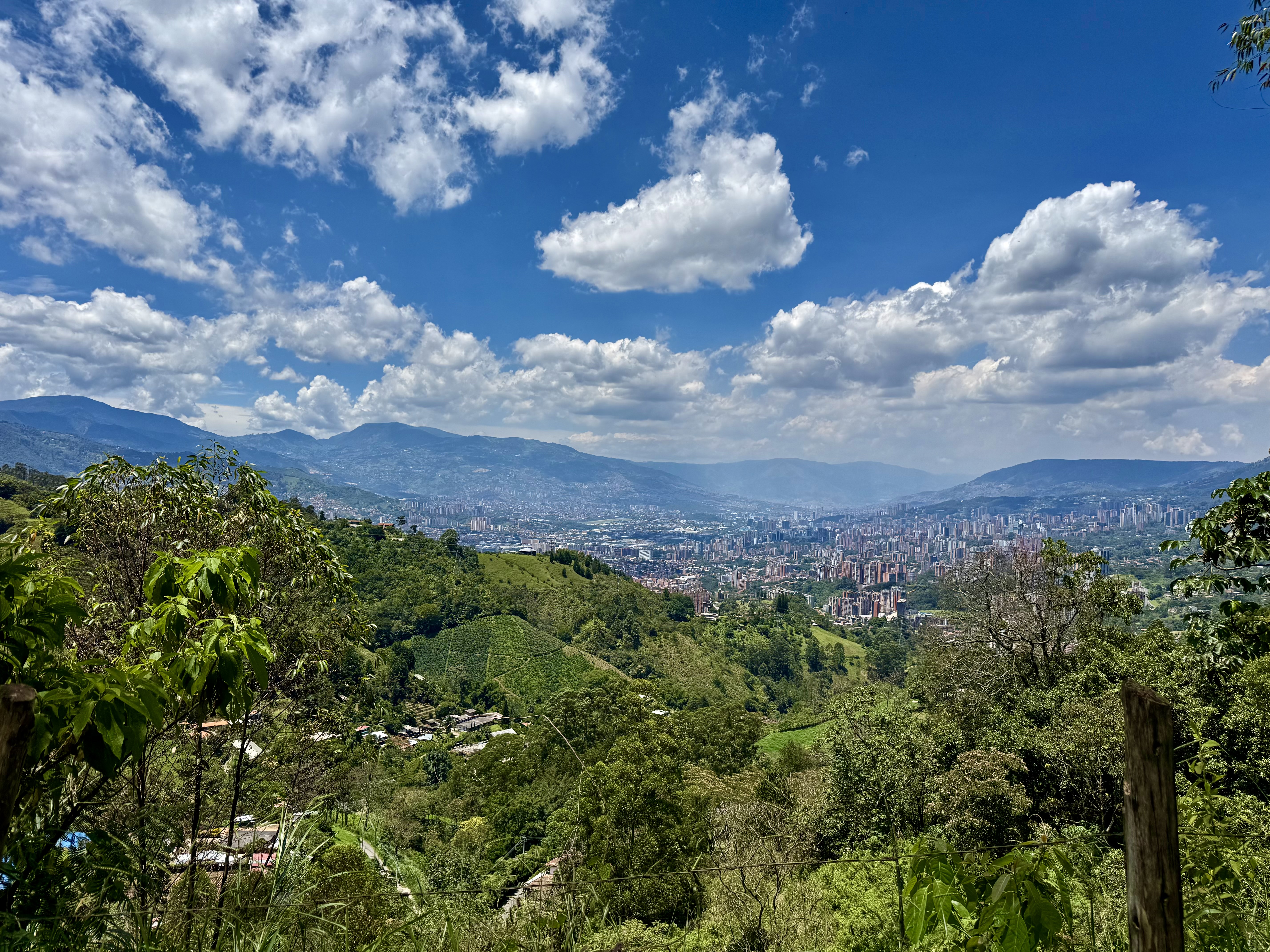
Day Tour 1 – Guatapé Region
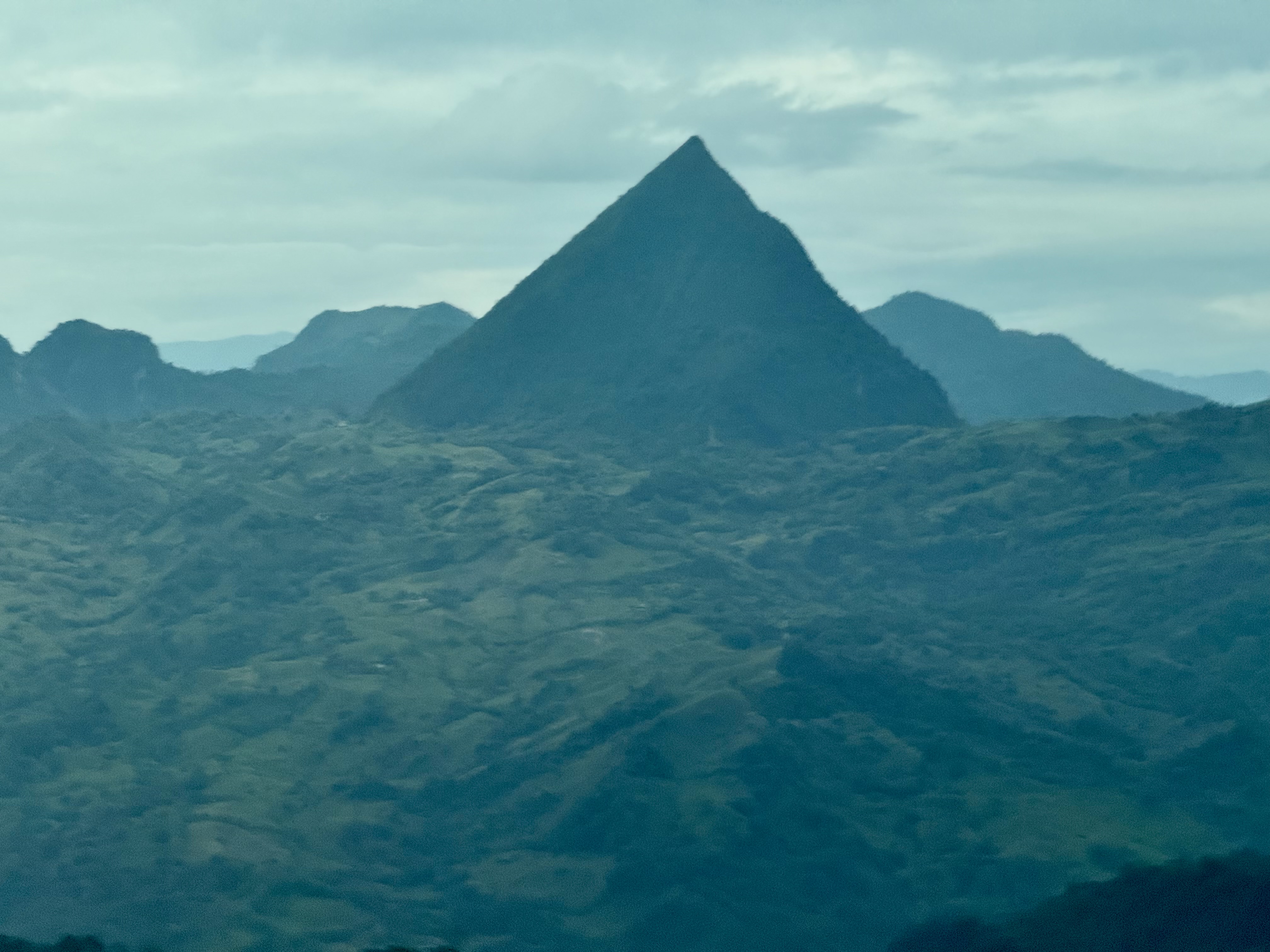
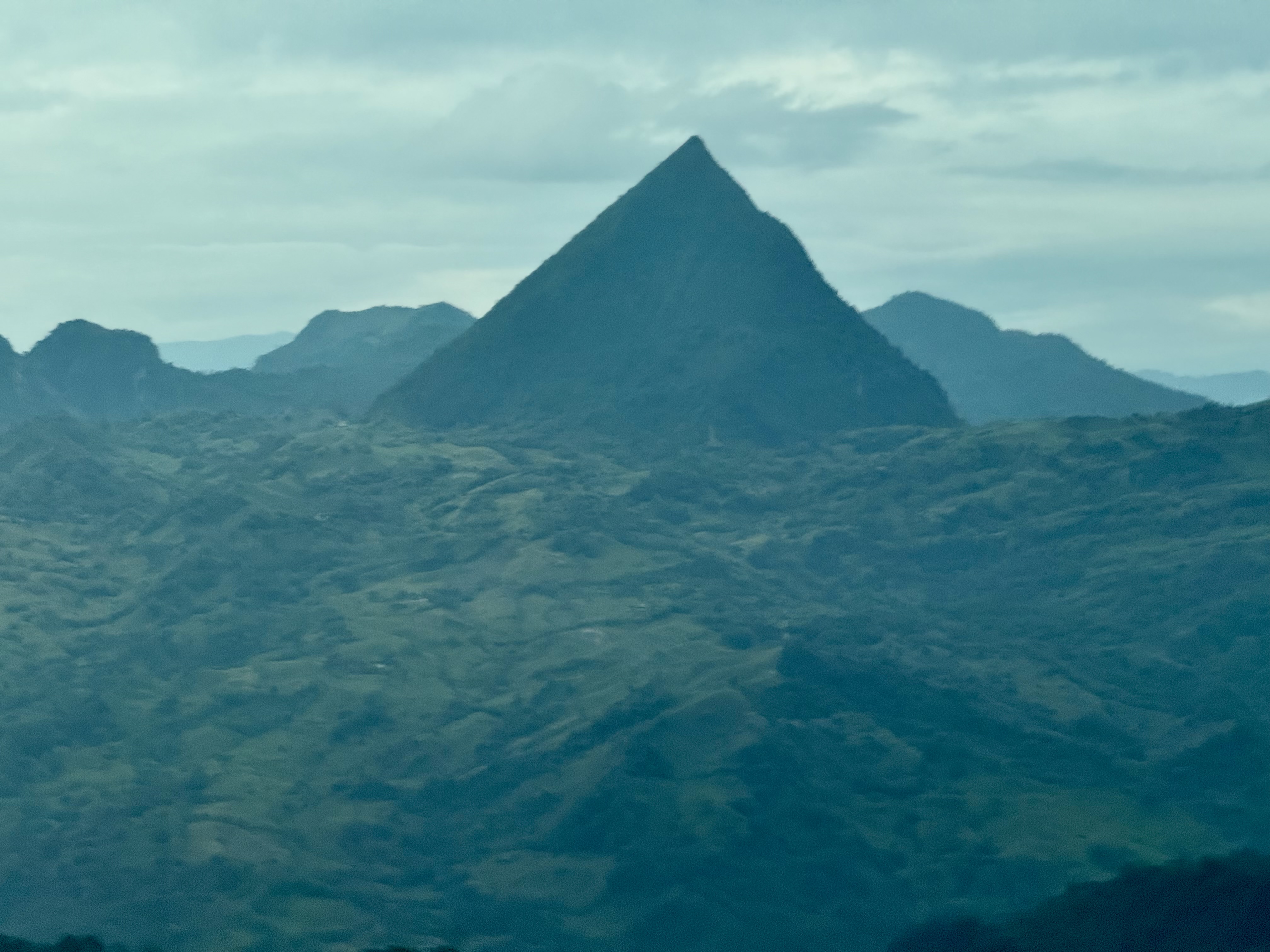
The first tour was to Guatapé. A big white bus arrived at the guesthouse at 7am and I was surprised at how large it was. After we had picked everyone up, though, it was completely full. It took a little over two hours before we made our first stop, which was for breakfast. It was a typical Columbian meal of scrambled eggs, rice, a tortilla and a small roll. They also served coffee with milk, which was what I was looking forward to. Antioquia is known for its coffee. On the way, we passed Cerro Tusa, which is said to be the tallest natural pyramid on earth. I could only get a bad photo through the bus window in the early morning light.
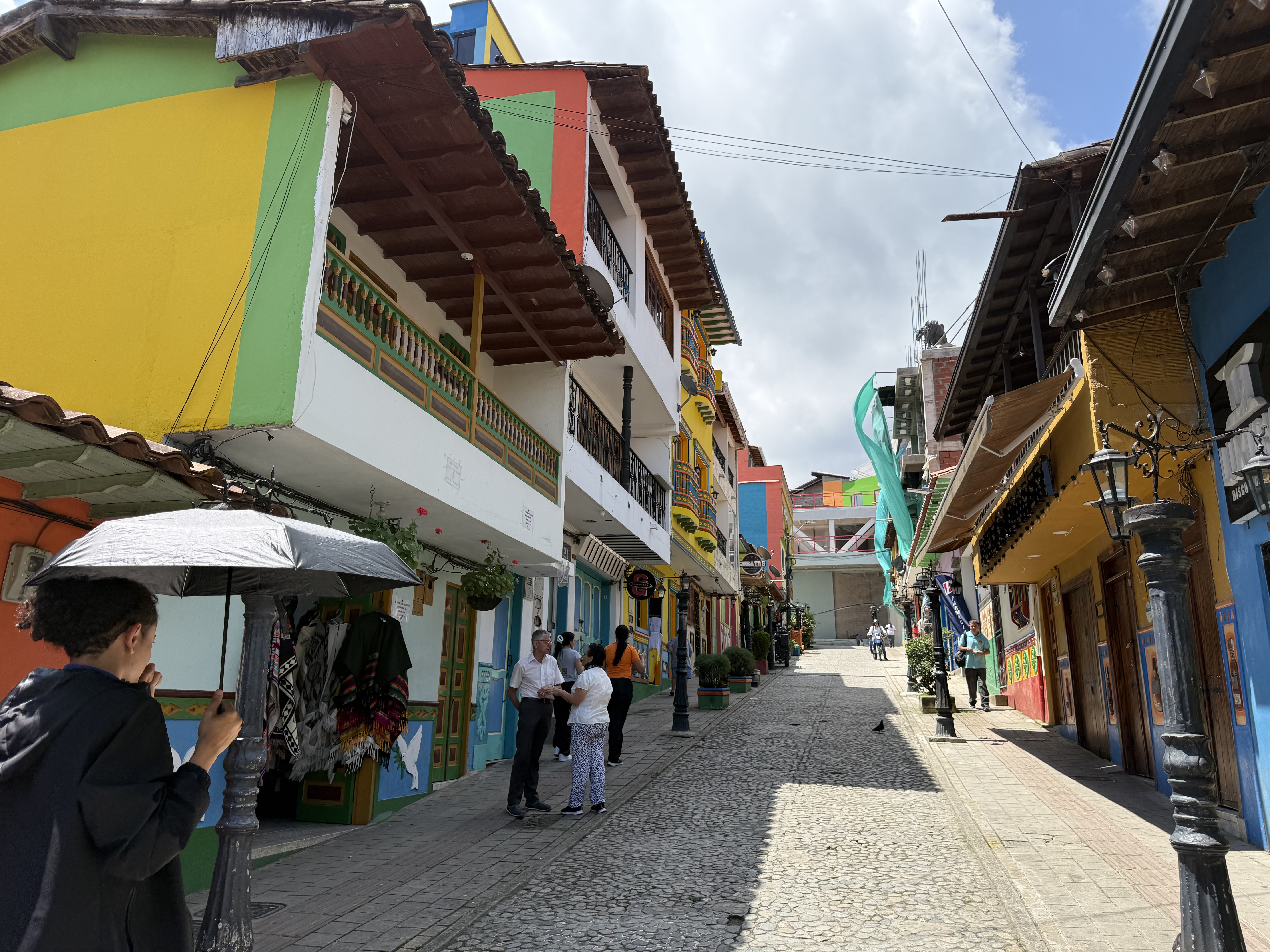
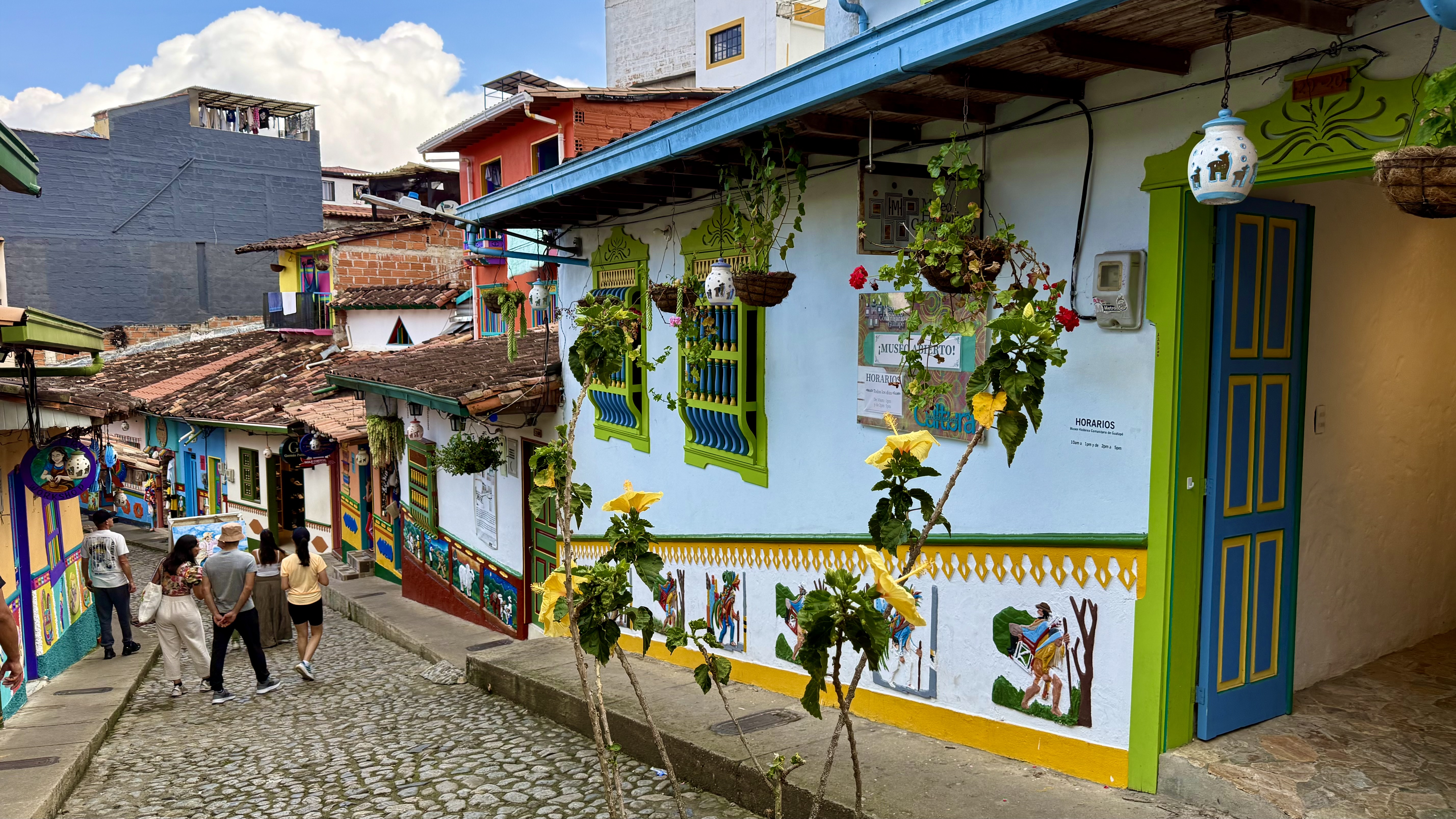
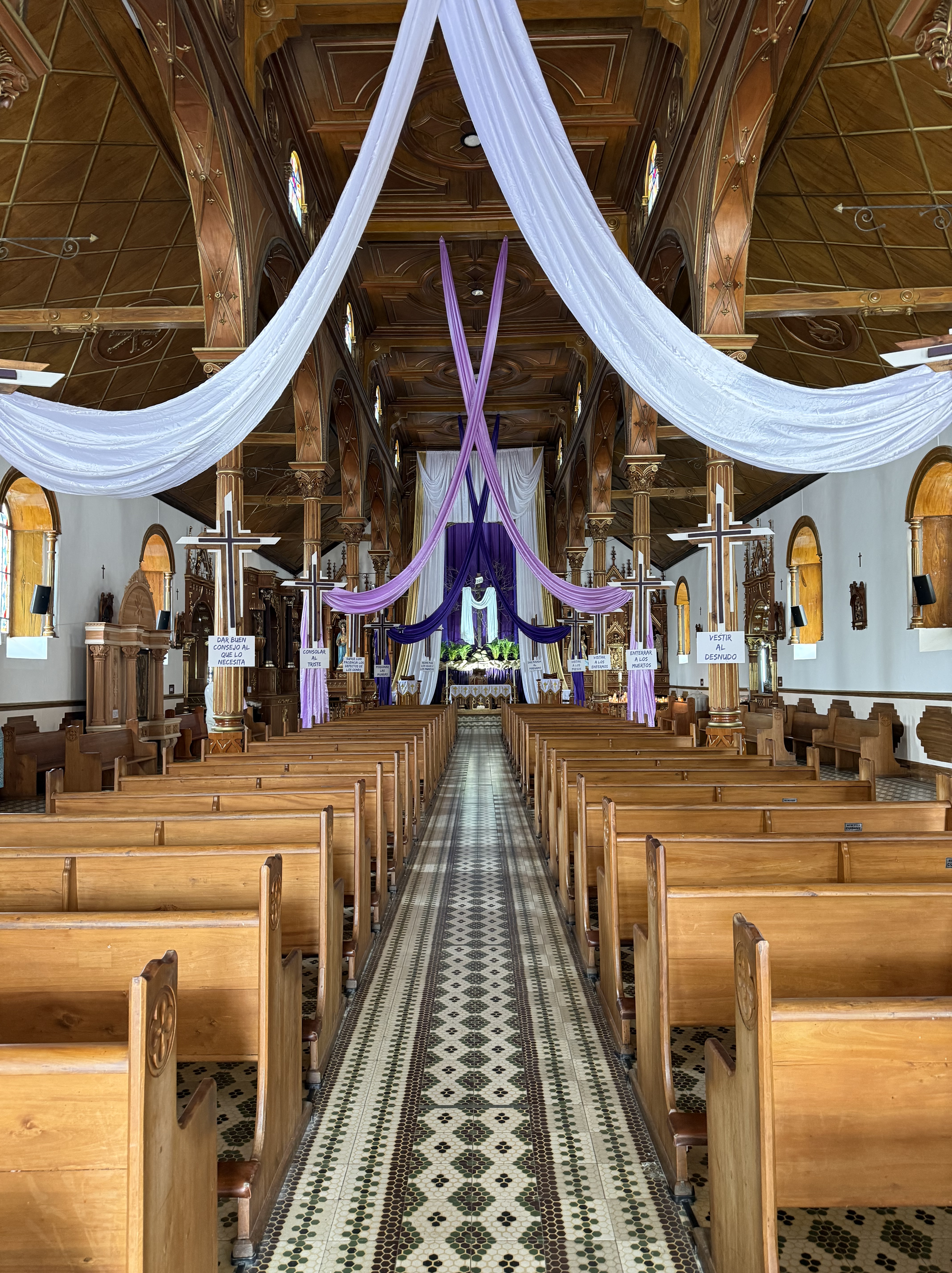
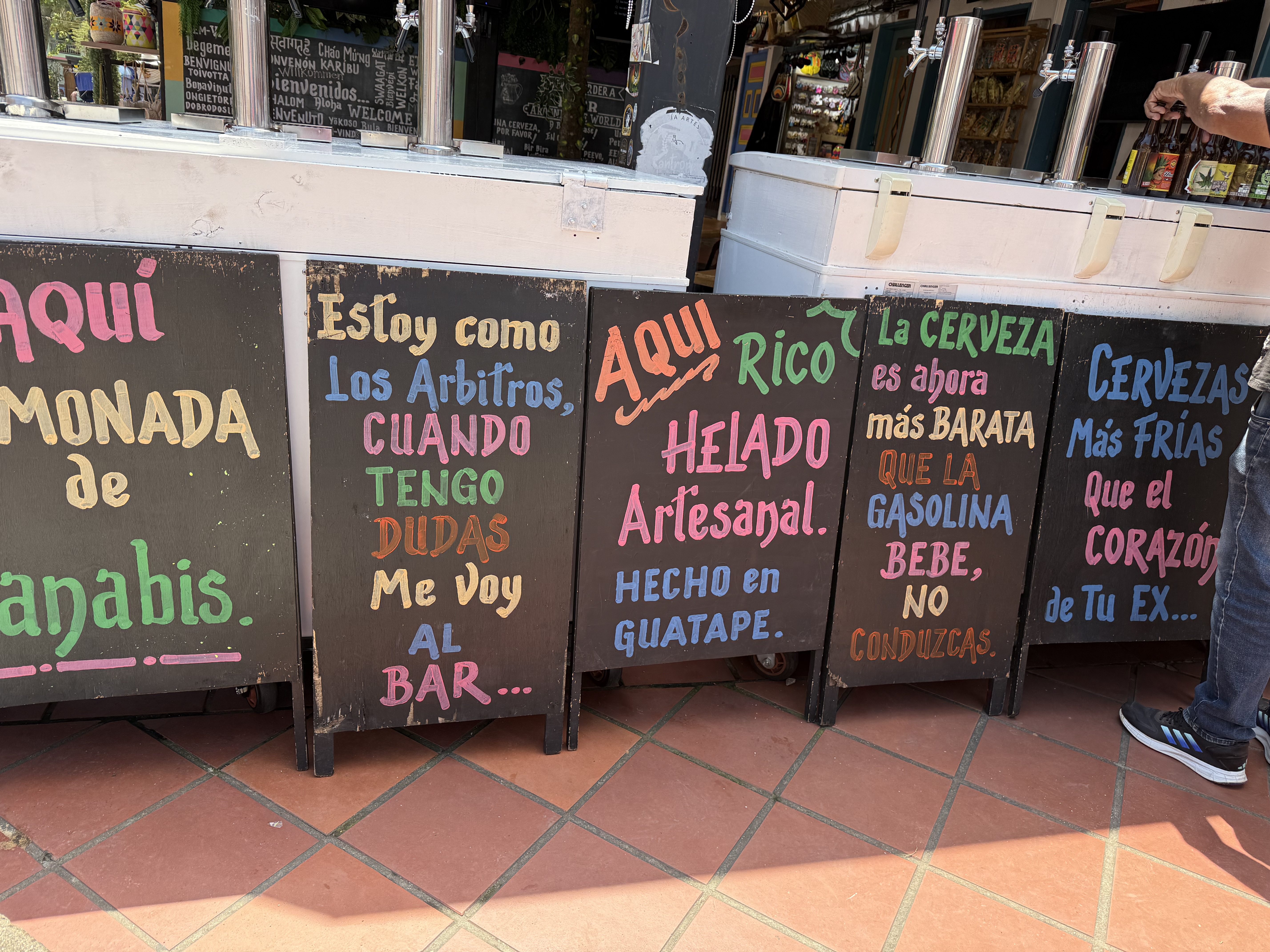
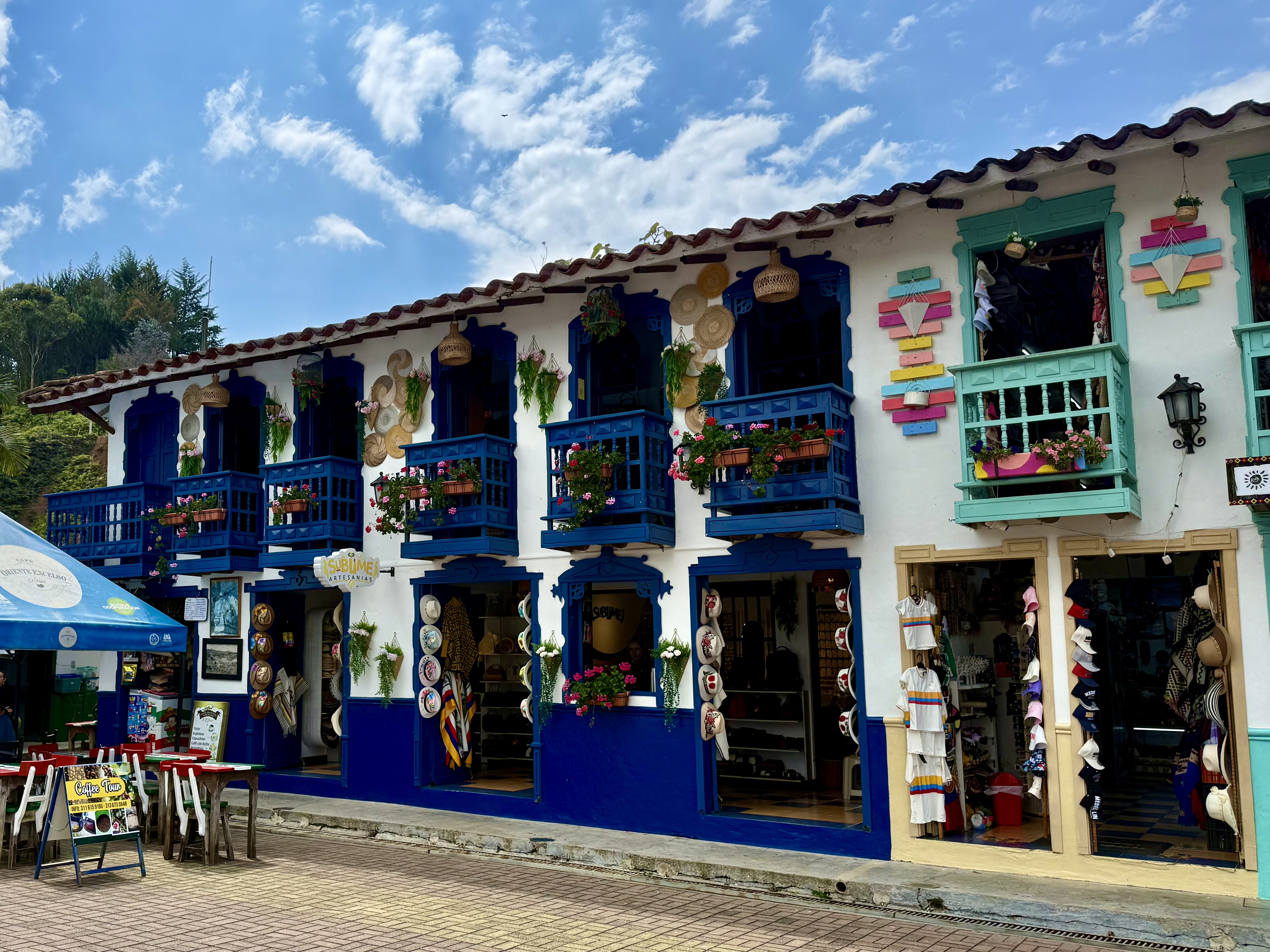
After that we stopped in Guatapé town, which is a colorful very touristy village. The people who live and work here have painted and sculpted reliefs on the bottom of the houses and shops that relate to the work that is done by the inhabitants. Some of these are true works of art. Even though it is a tourist town, it was delightful. We sampled some local coffee and had a coco tea, which I hadn’t had since Peru. There are a number of humorous signs, some selling cannabis beer and others that simply want to entice visitors to drink. On the other end of the spectrum, the church was decked out in preparation for Holy Week with purple banners. The symbol of the town is the lamb, for the Lamb of Christ, and is portrayed on the base of the fountain in the main square as well as in many other places throughout the village.
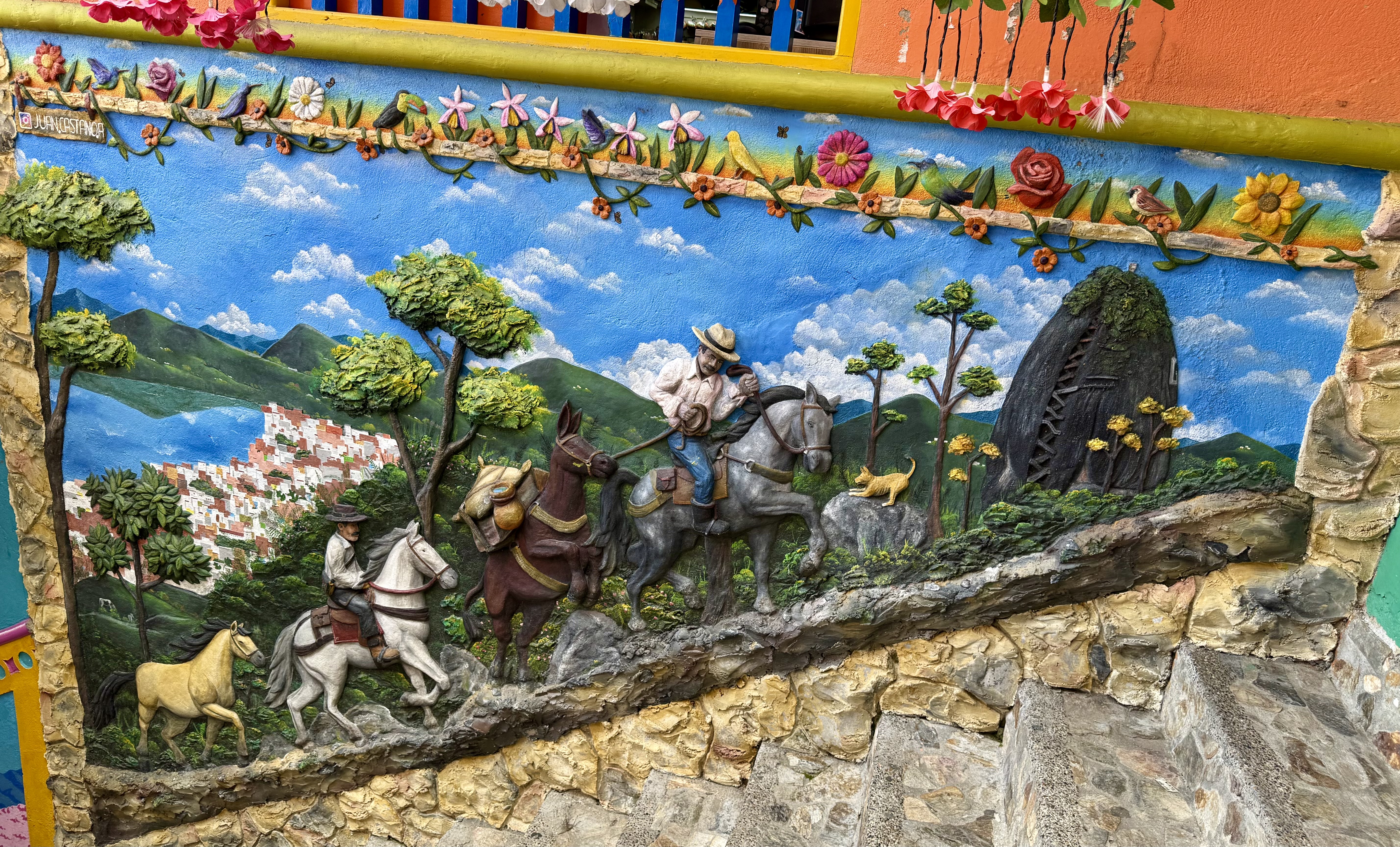
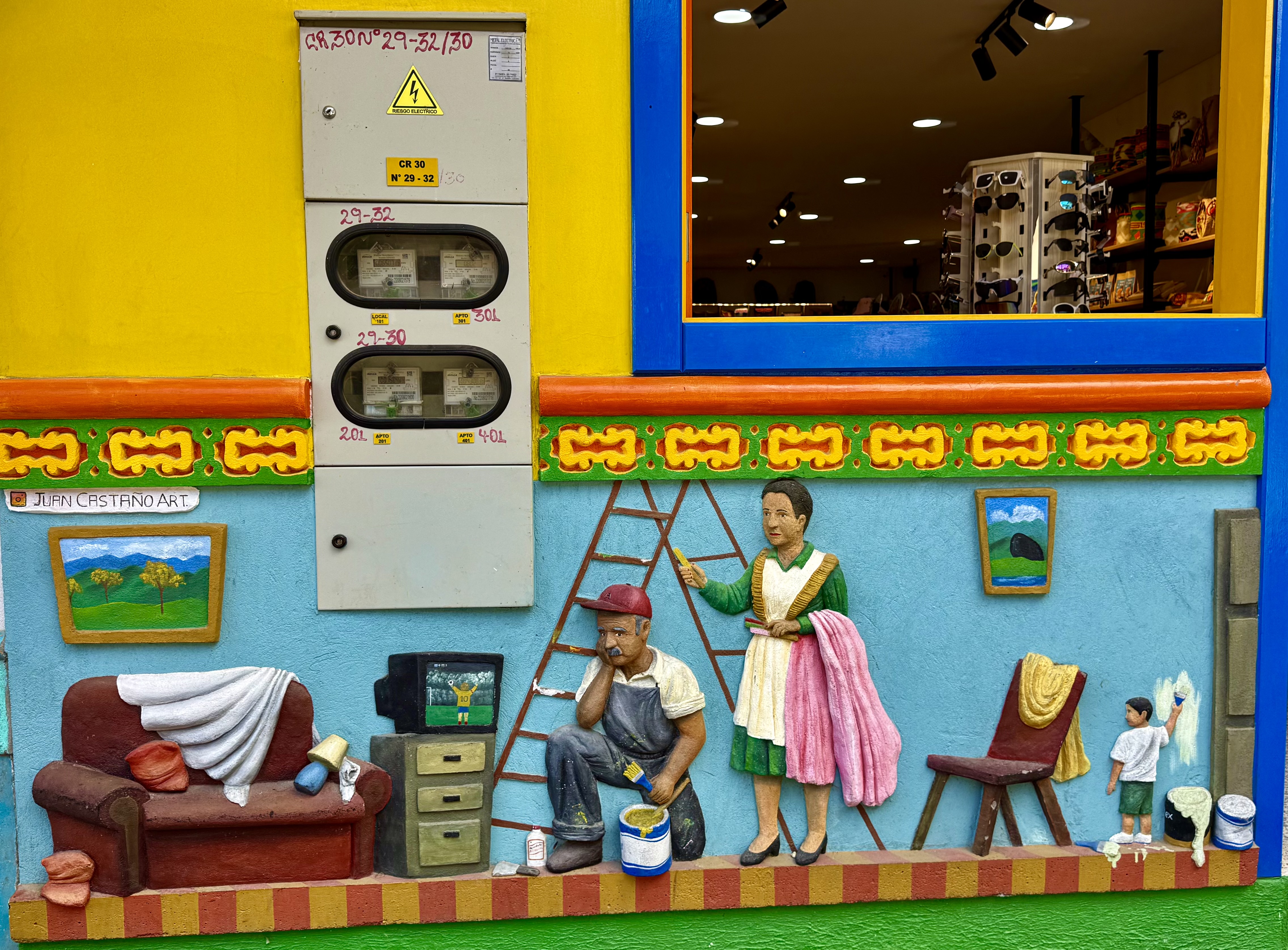
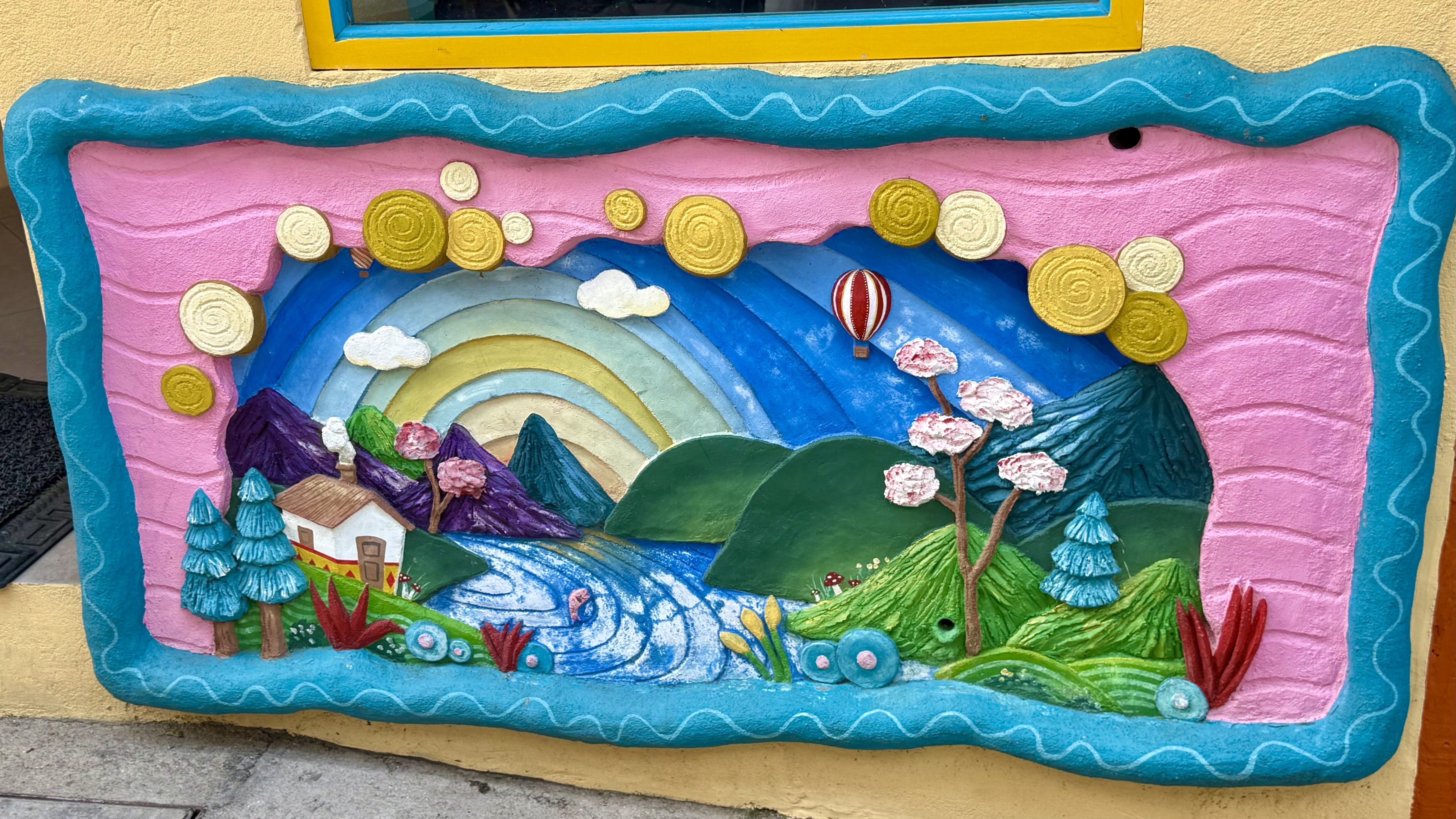
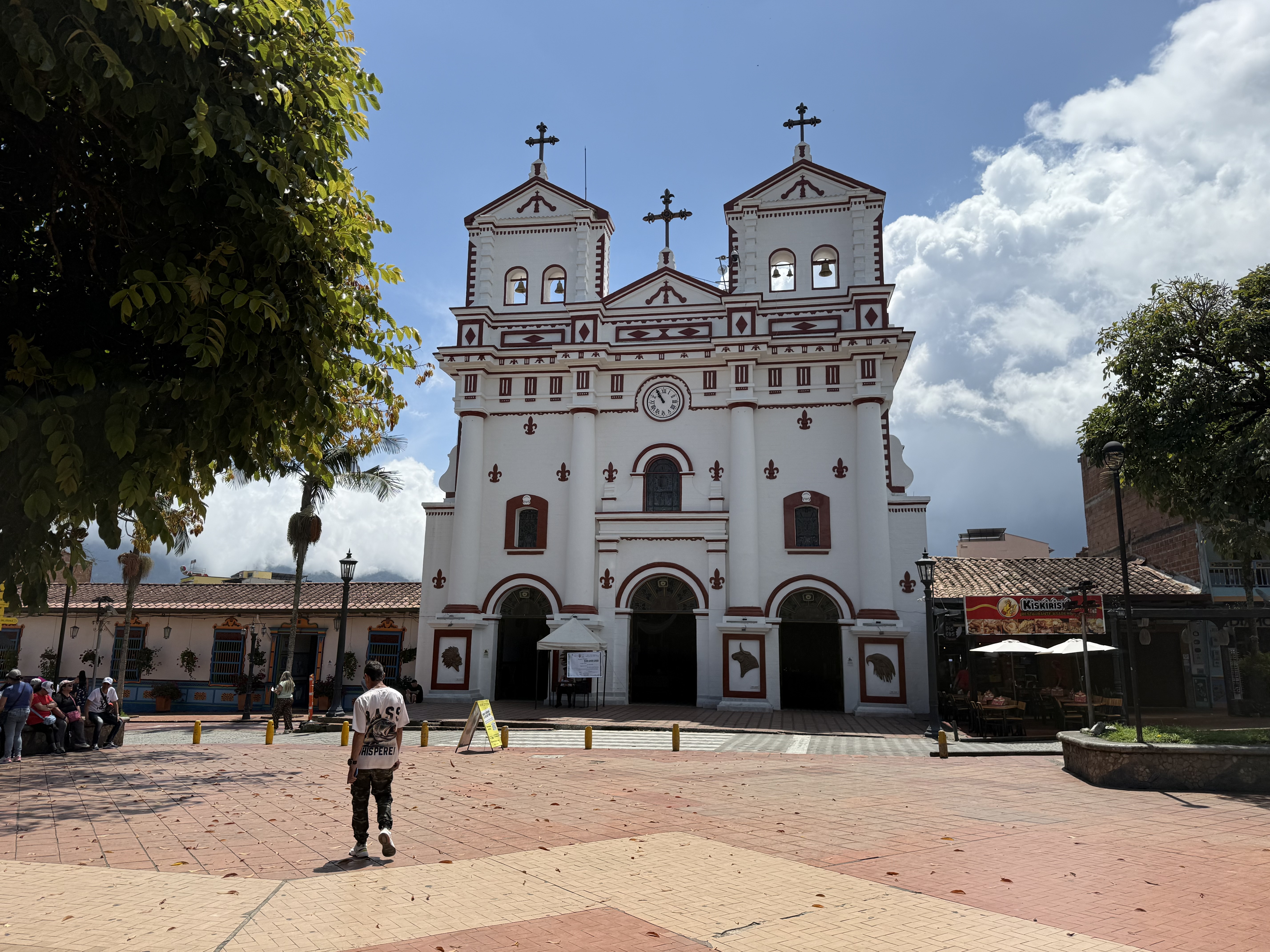
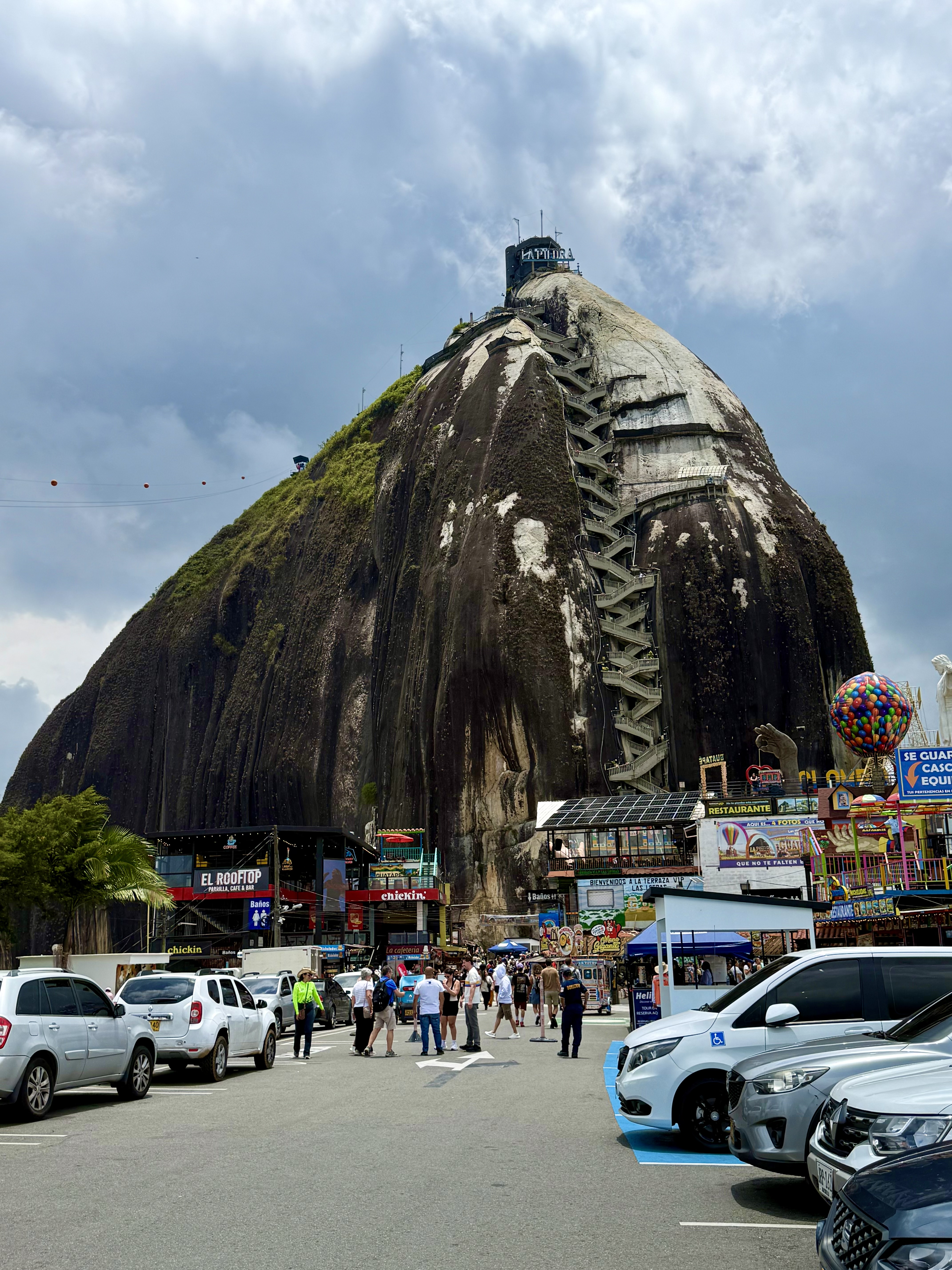
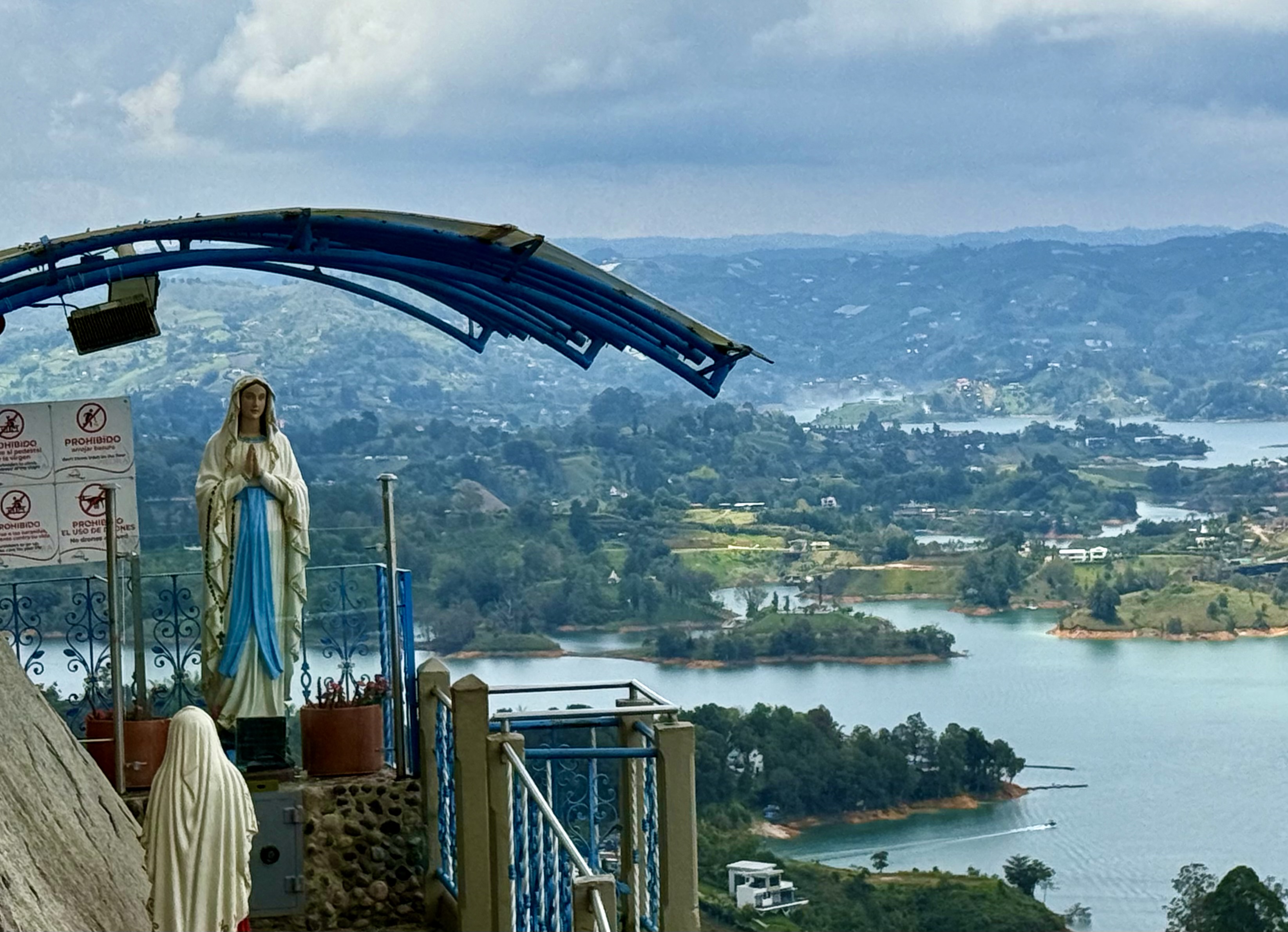
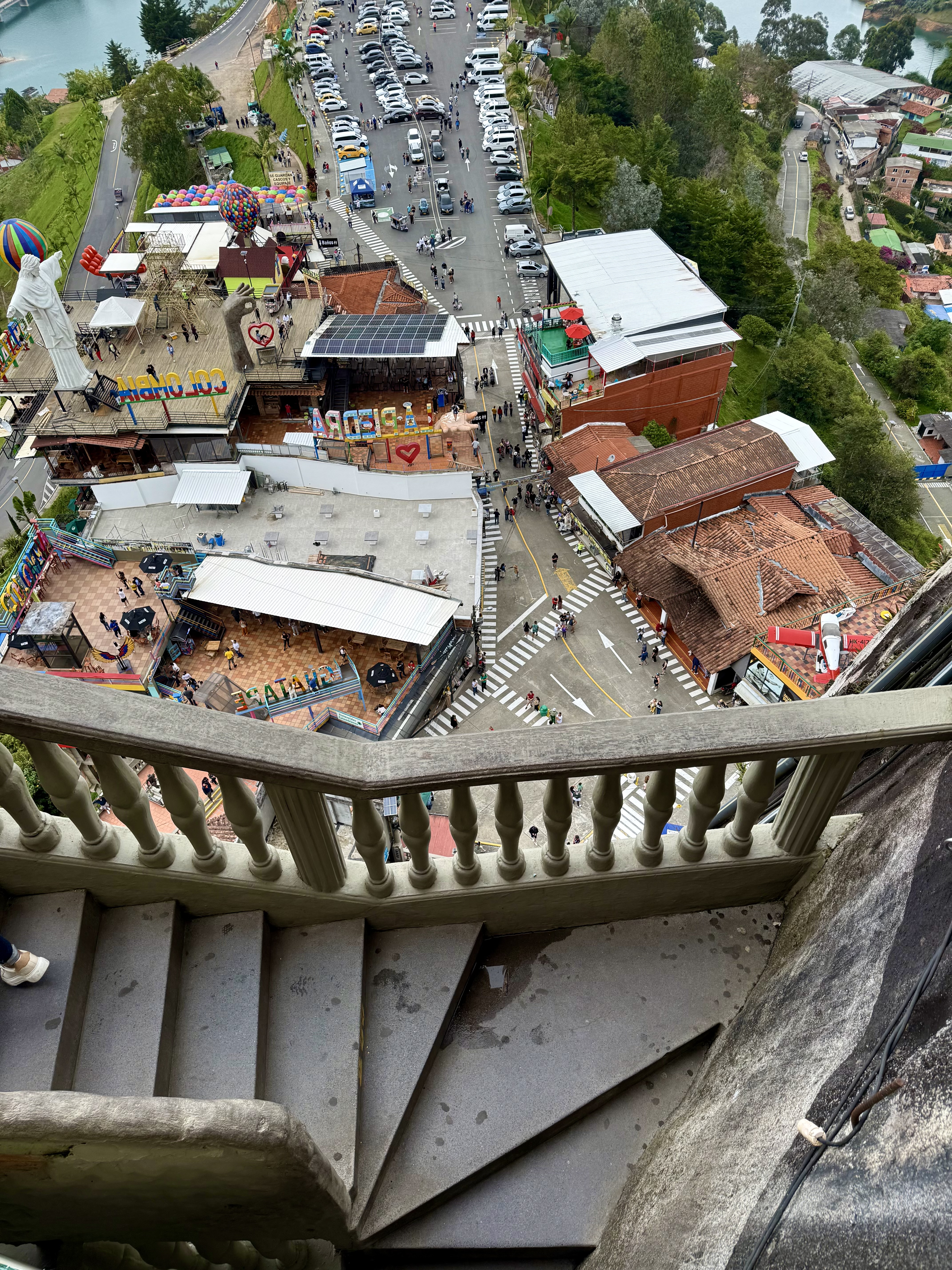
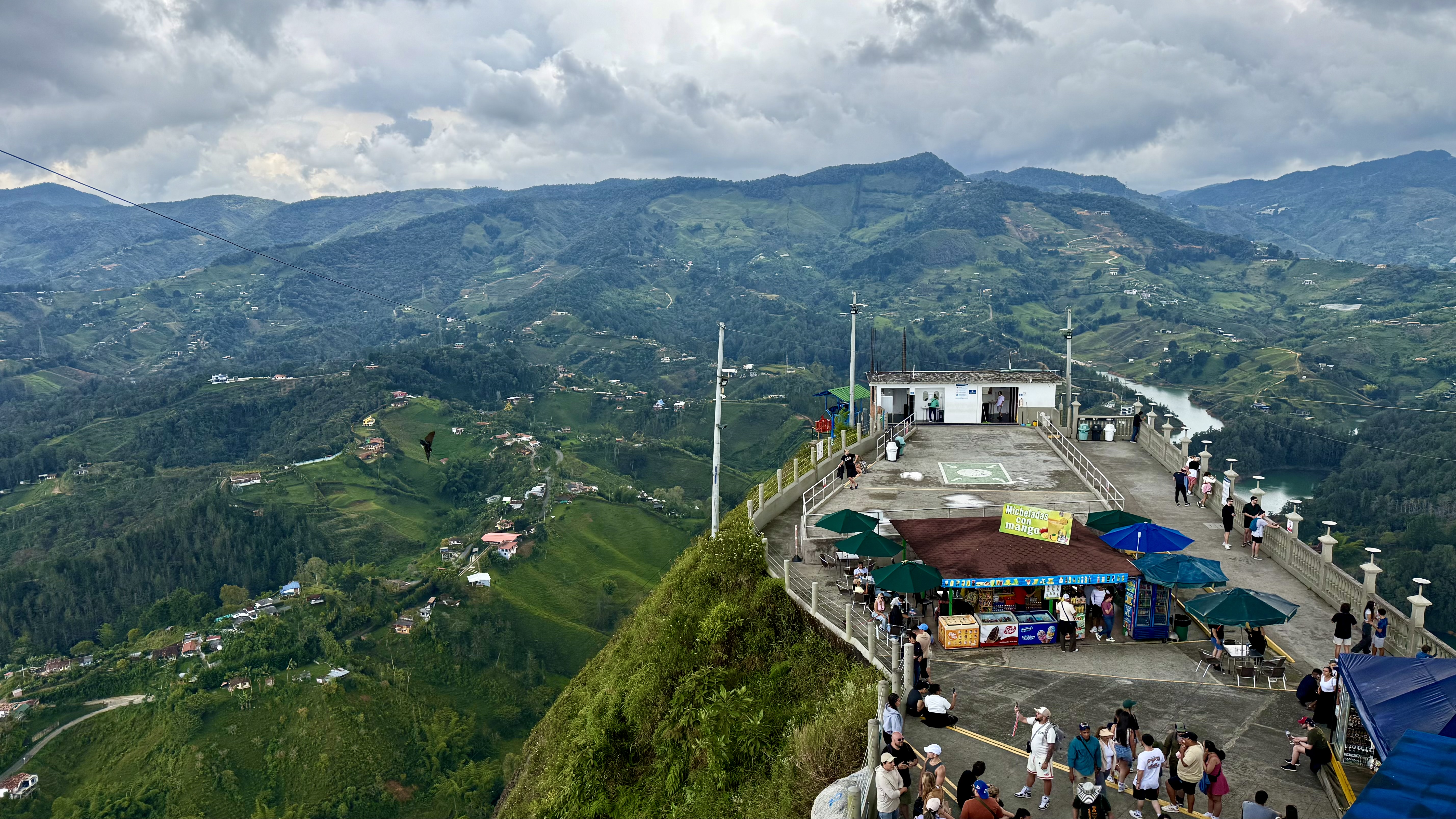
From Guatepé it is a five-minute drive to la Piedra del Peñol. This massive rock has 721 steps to the top and is the main reason for the tour. Steps zigzag steeply up a split in the rockface and it challenges those who want to climb up. It takes around 15- 20 minutes, depending on how many people are stopped ahead of one. I confess, I must be out of shape as I did have to stop to catch my breath a couple of times. The part that one sees is only a fraction of the mountain itself, which is buried beneath the ground, much the way a volcano is. The Piedra is private property and does not belong to the government. It is owned by the heirs of the first men who climbed the rock together in the 1950s in search of pirate treasure. They didn’t find anything the pirates left but have made a goldmine out of tourism. The view from the top is spectacular. One can see the entire reservoir as it winds among islands and farmlands with the hills and mountains in the background. Back on the plaza where the stairs start is a platform with a tall Jesus statue. Halfway up the stairs there is a smaller one of the Virgin.
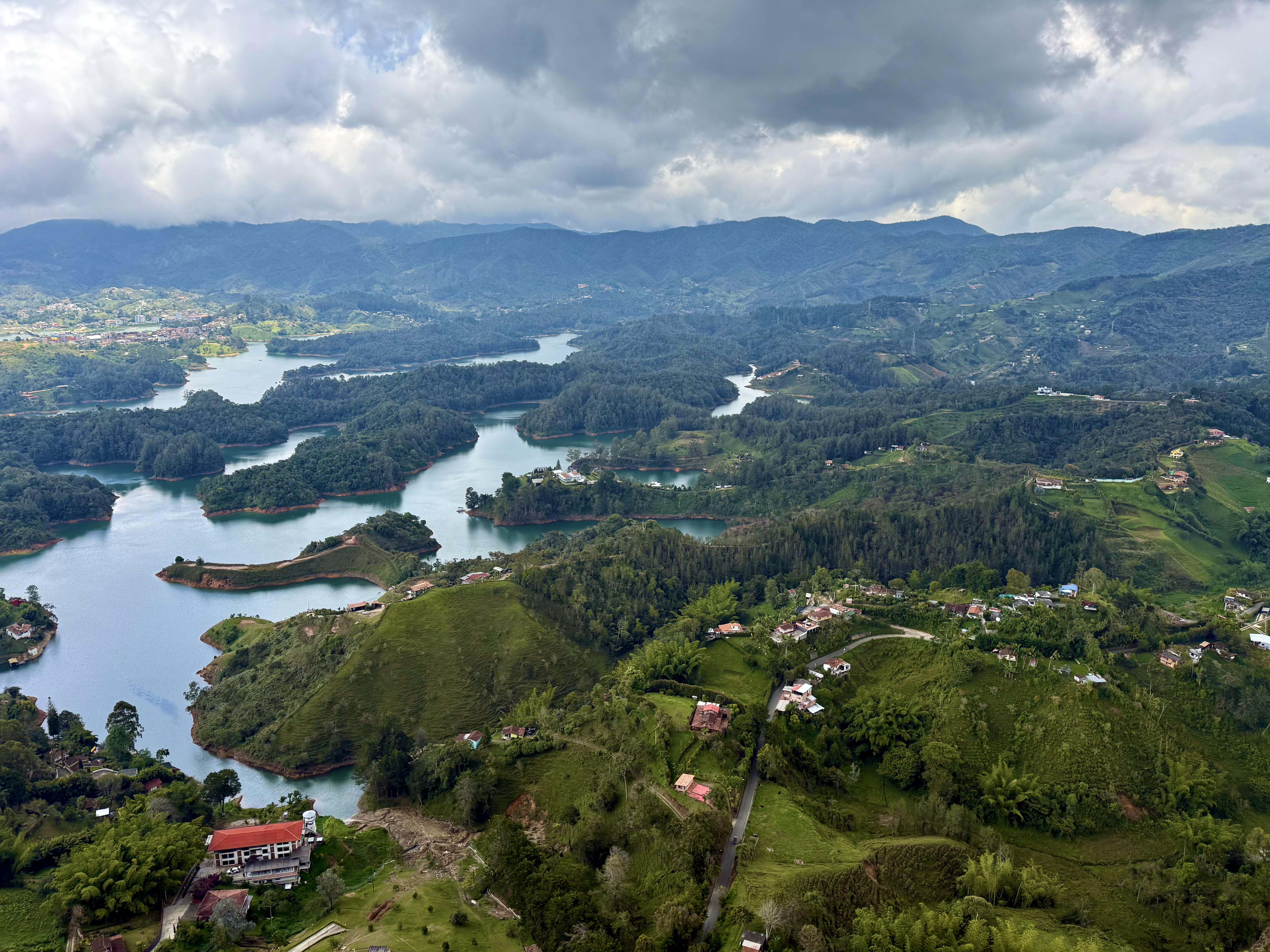
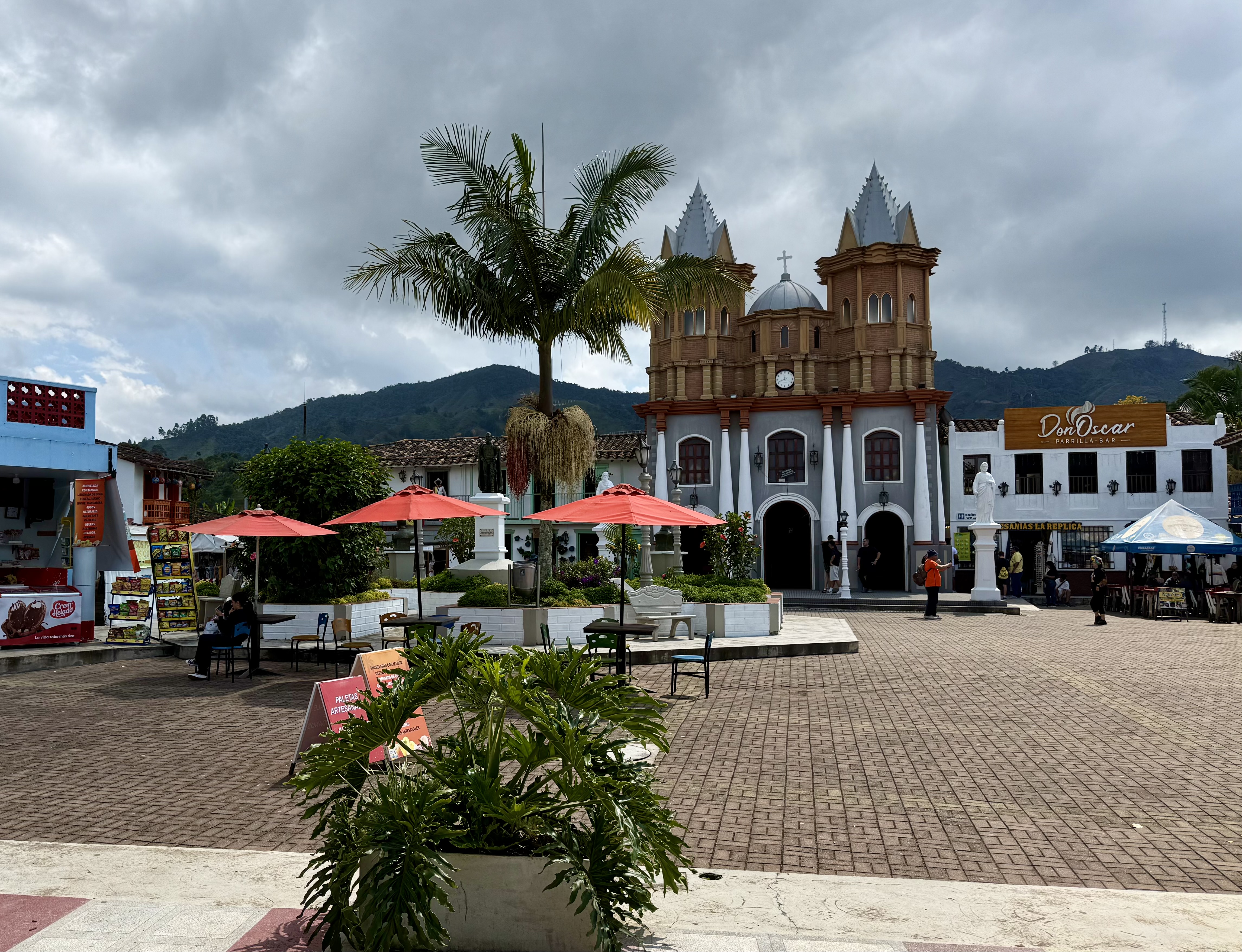
After the exercise, we drove to the replica of Old Peñol, which was flooded in the 1960s to make the reservoir for hydro power. The people who were displaced moved some of their doors and frames to the new location on a hilltop from where they could see their former settlement. While some of the couples were compensated for their homes, those who were single were not. Hydro power from the reservoir now supplies electricity to a large swath of Columbia.
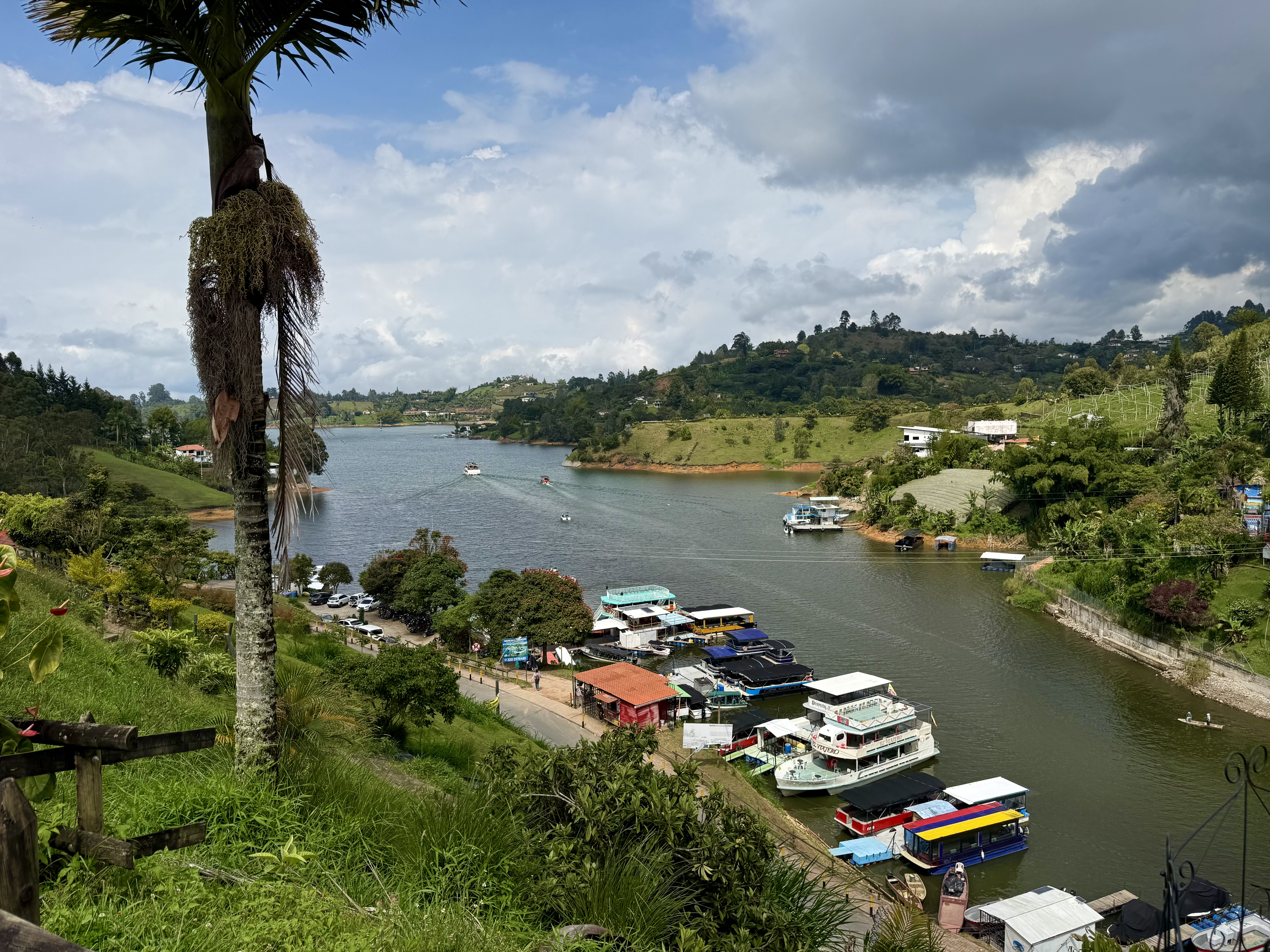
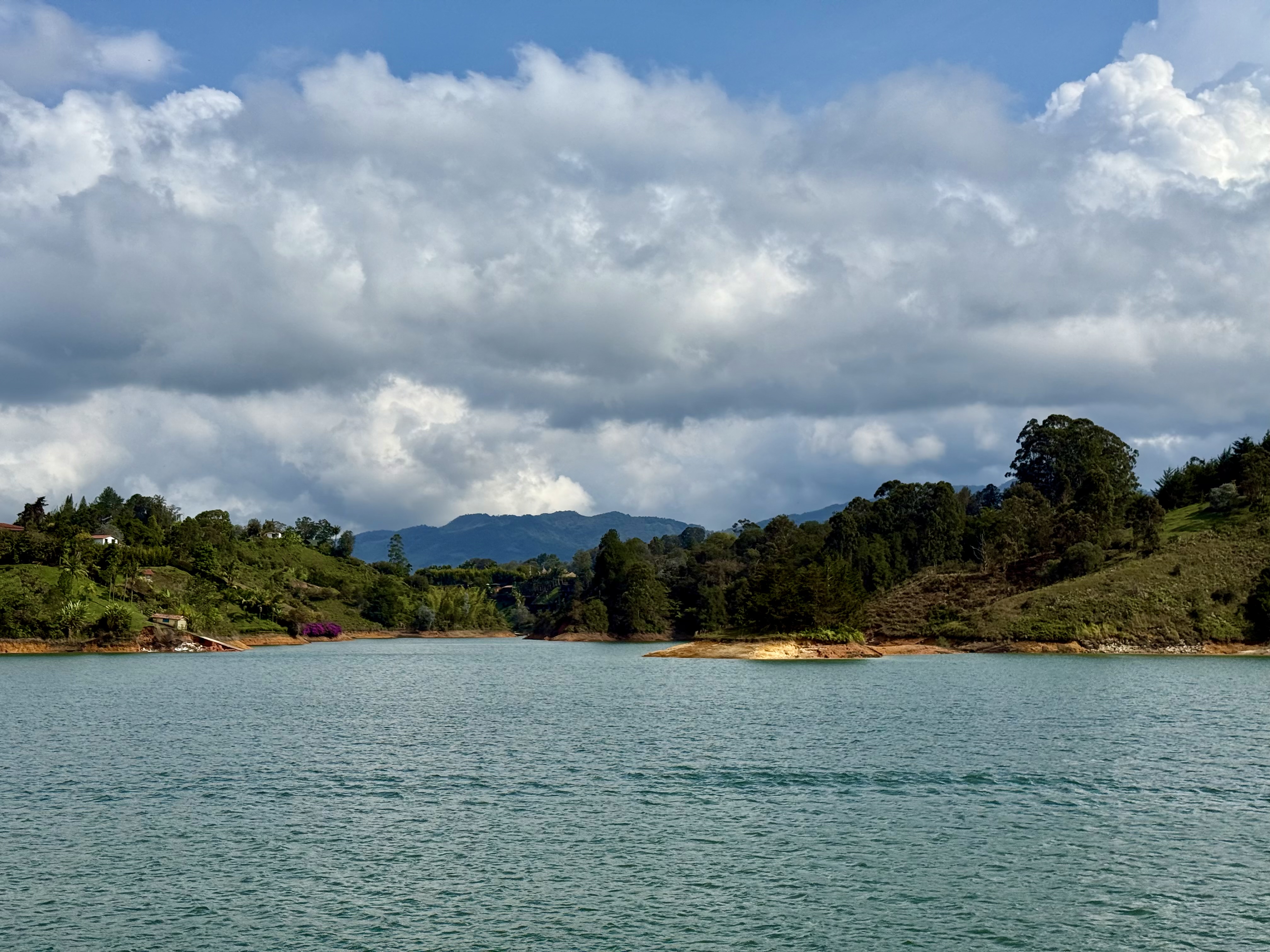
We then walked down the hill to a boat that took us on a 45-minute tour of a small section of the lake. On the way we passed by one of Pablo Escobar’s former villas; this one was bombed in the 1990s by a rival gang, whose name, according to the guide, translates into ‘those who were persecuted by Escobar’. On the top of the rise above his villa are the remnants of his former stable. He must have had quite a few horses here by the size of the structure. Today, the houses around the lake/reservoir are owned by wealthy Medellínos or other well-heeled locals. The architecture on some of them is stunning. Electric boating, kayaks and paddle boards are allowed, but swimming is not due to the currents created by the mix of different water sources flowing into the reservoir, not the least of which is the Rio Negro. A bridge marks the entry of the river into the reservoir. In Brazil, the Rio Negro flows directly into the Amazon; when the two meet their distinct colors flow side by side for more than six kilometers.
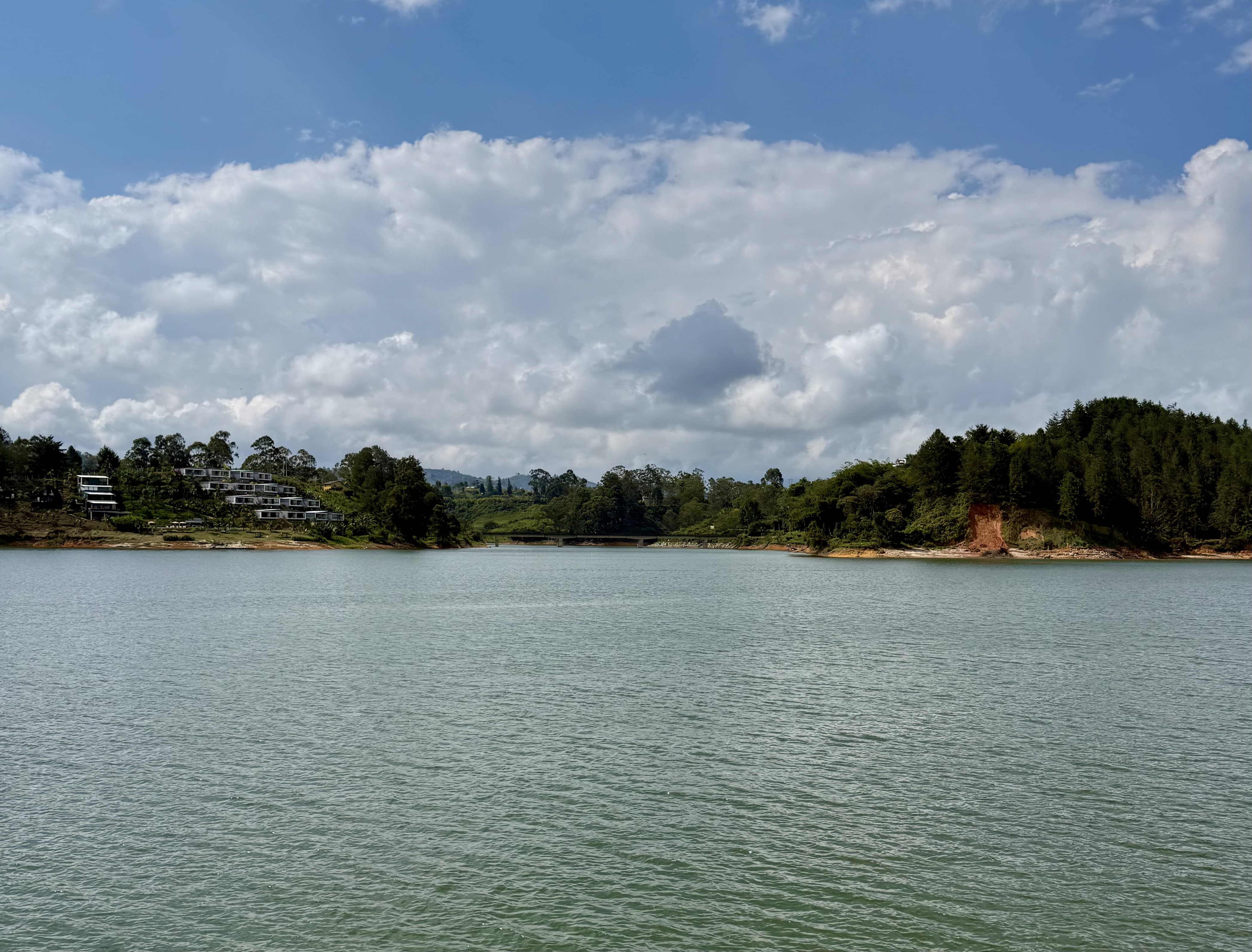
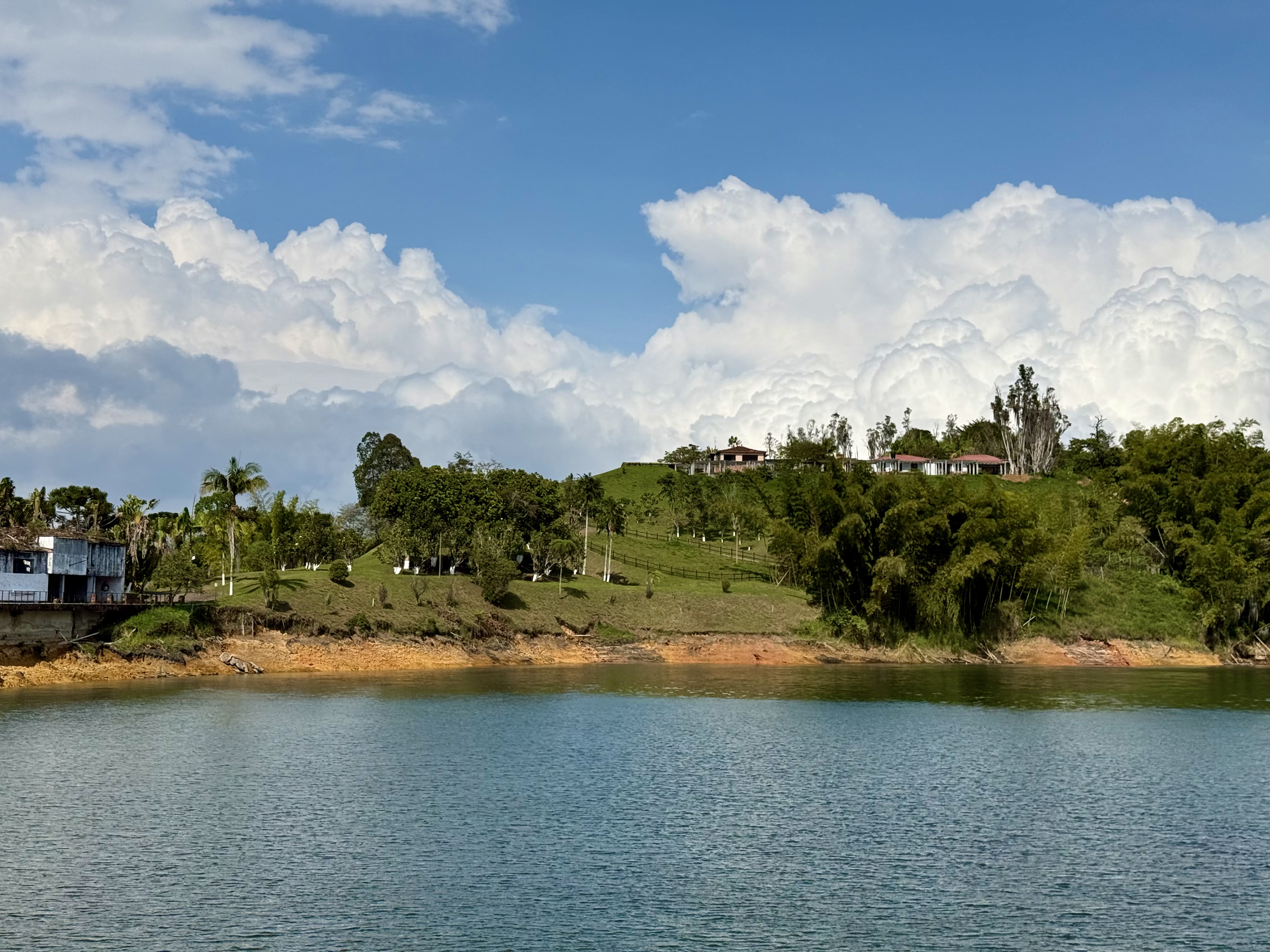
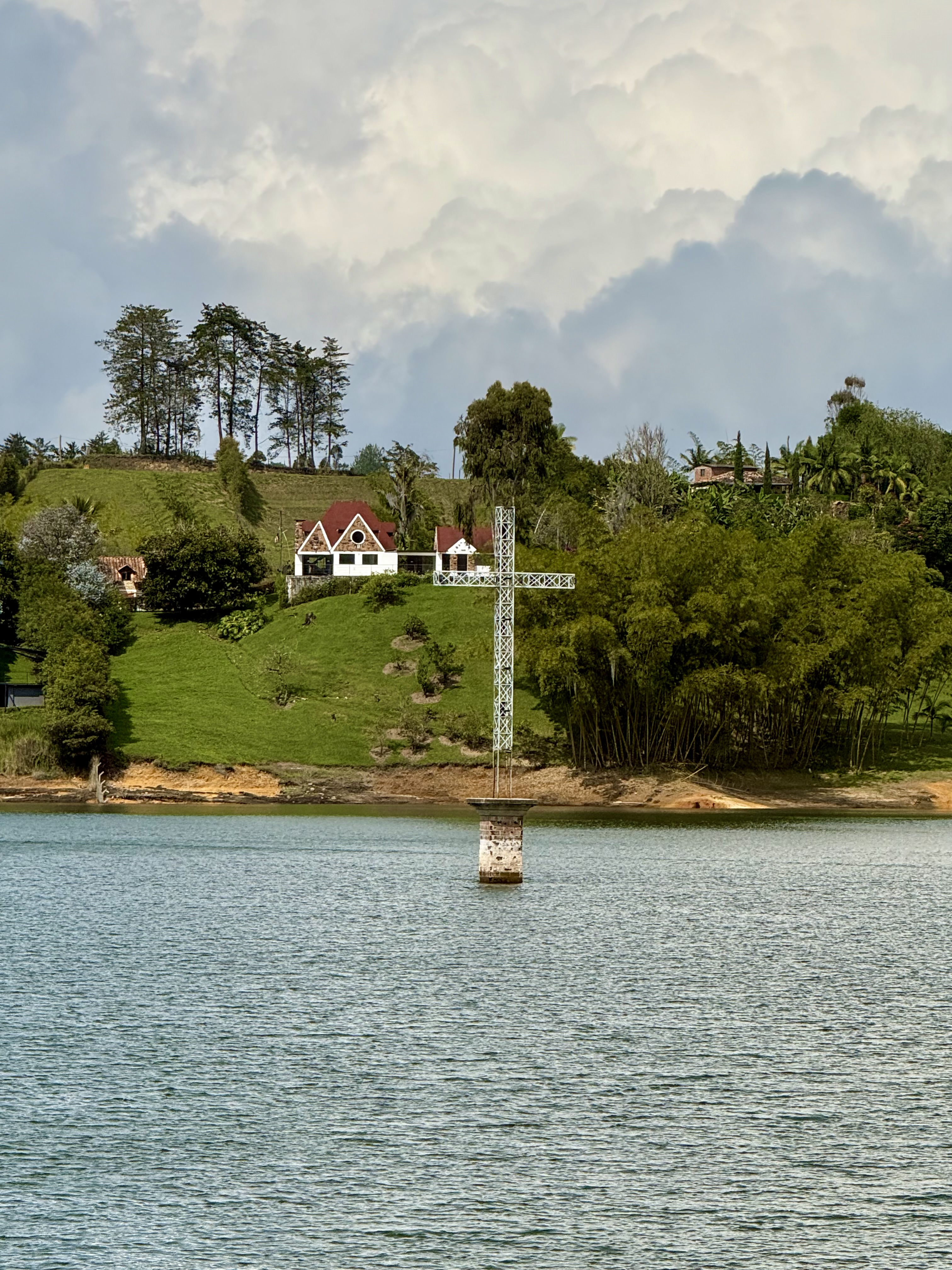
The reservoir seemed like it was not at full capacity as it had a red clay bathtub ring on the shoreline, so I asked about the depth. It turns out the water level is down, but not nearly as much as during a drought in the late 1960s early 1970s, when it was almost dry. At that point, the locals placed a large cross on the site where the former church stood before it was destroyed. The changing depths reminded me of Lake Powell on the border between Arizona and Utah, which is also a man-made reservoir; the water level there is in danger of sinking below the recoverable for the power plant.
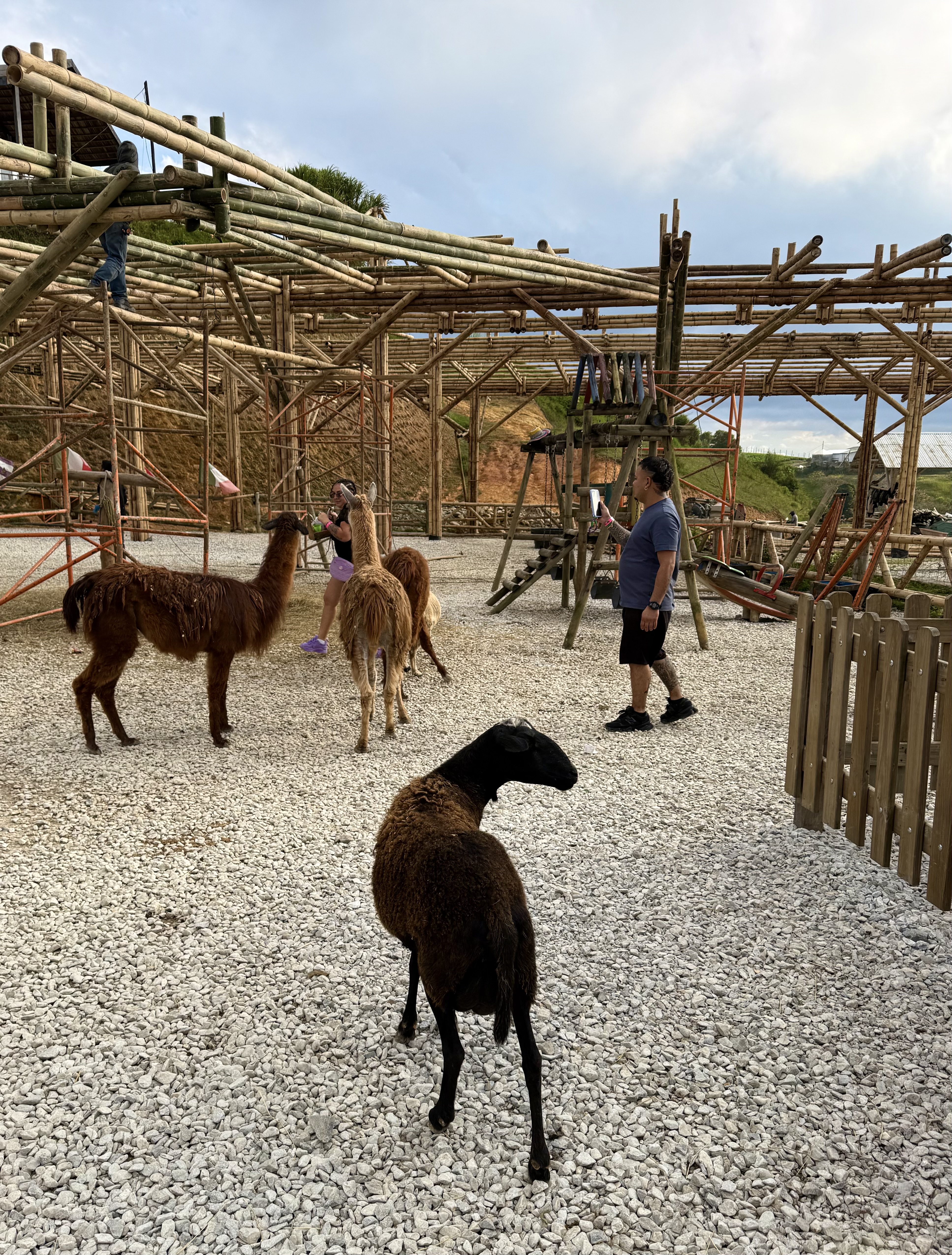
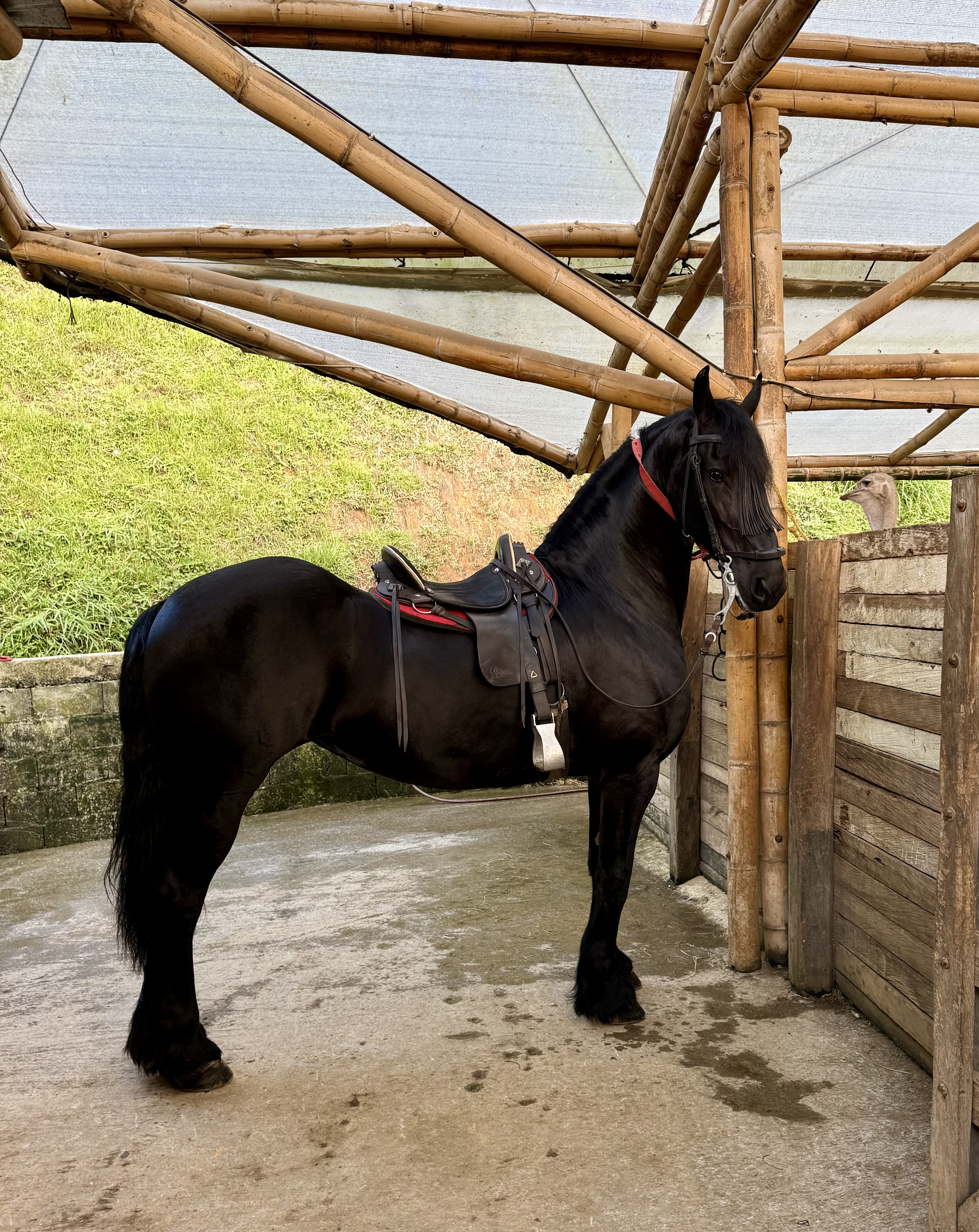
After the boat tour, we stopped for lunch at the same place we had breakfast. On the menu was a chicken filet served with rice, beans and some lettuce. Before heading back to Medellín, we had one more stop at “El Alto del Chocho.” Here goats, sheep and llamas roam freely in the yard waiting to be fed by the tourists. In the back there are stalls with horses, ponies, more sheep, and goats. While I was there a black horse was drenched with sweat as he was performing a pseudo-dressage movement between a passage and piaffe on a long stretch of concrete in front of the restaurant area. The flowing high movement was beautiful, but the animal was clearly stressed out. I saw him again a few minutes later and he was being led on a lead while someone who obviously did not know how to ride was in the saddle. He was a beautiful horse; I hope he is well taken care of and not just used as a money-making gimmick.
The trip back seemed long, probably because we were all tired. I arrived back at the guesthouse at 7:30pm. It was a very good day trip.
Day Tour 2 Waterfall in Sabaneta, Chorro de Las Campanas, near Itagűí
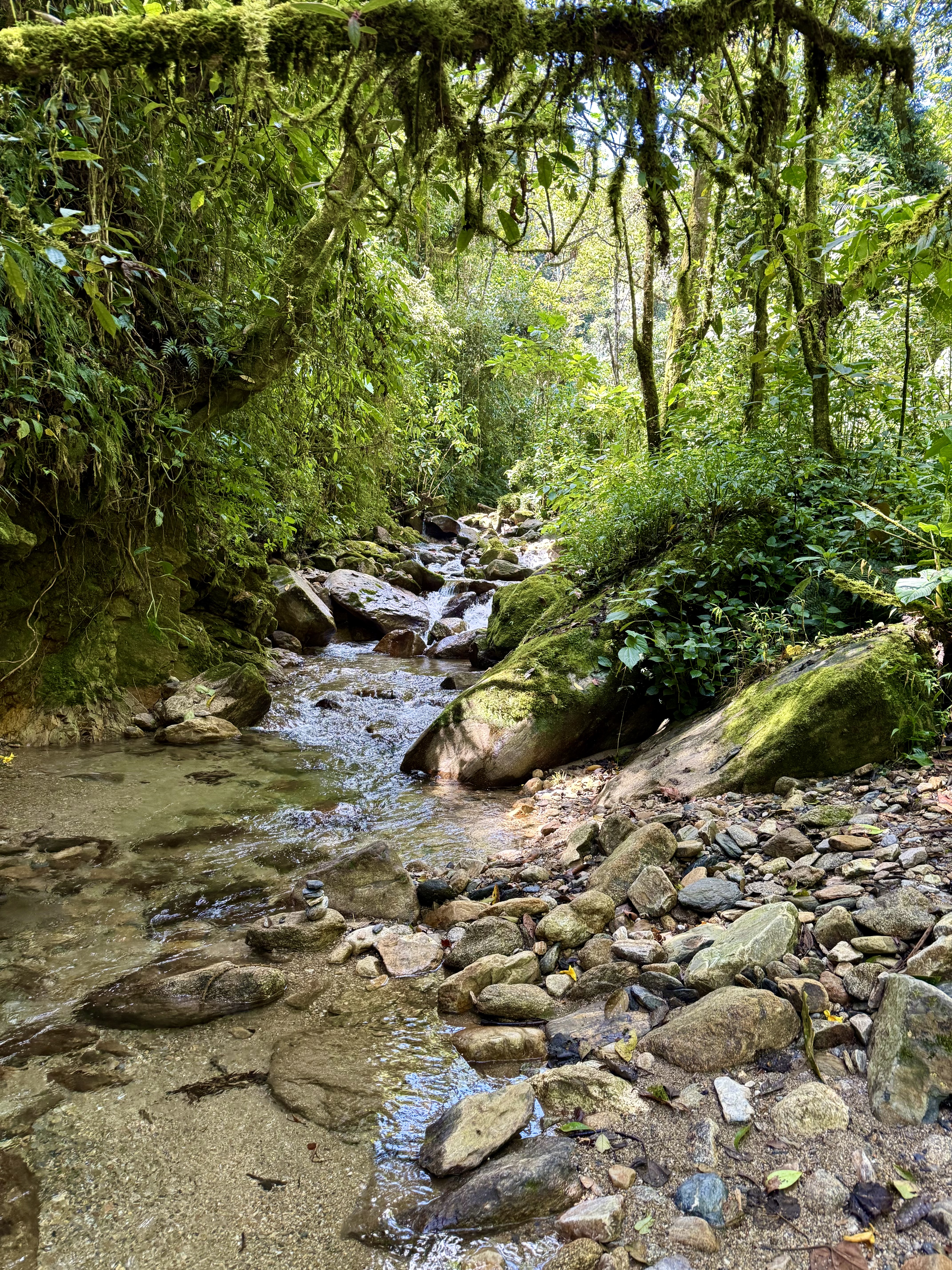
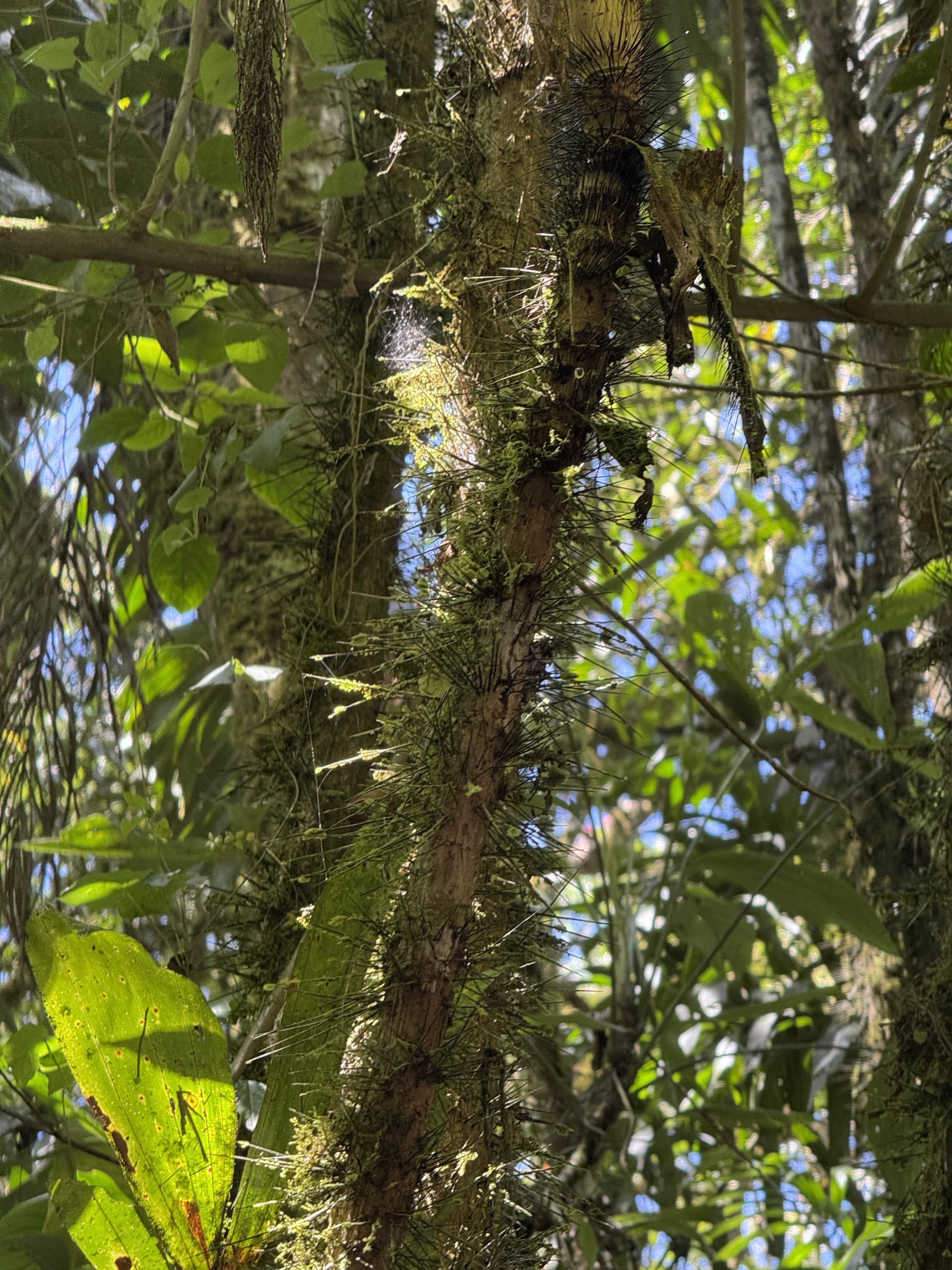
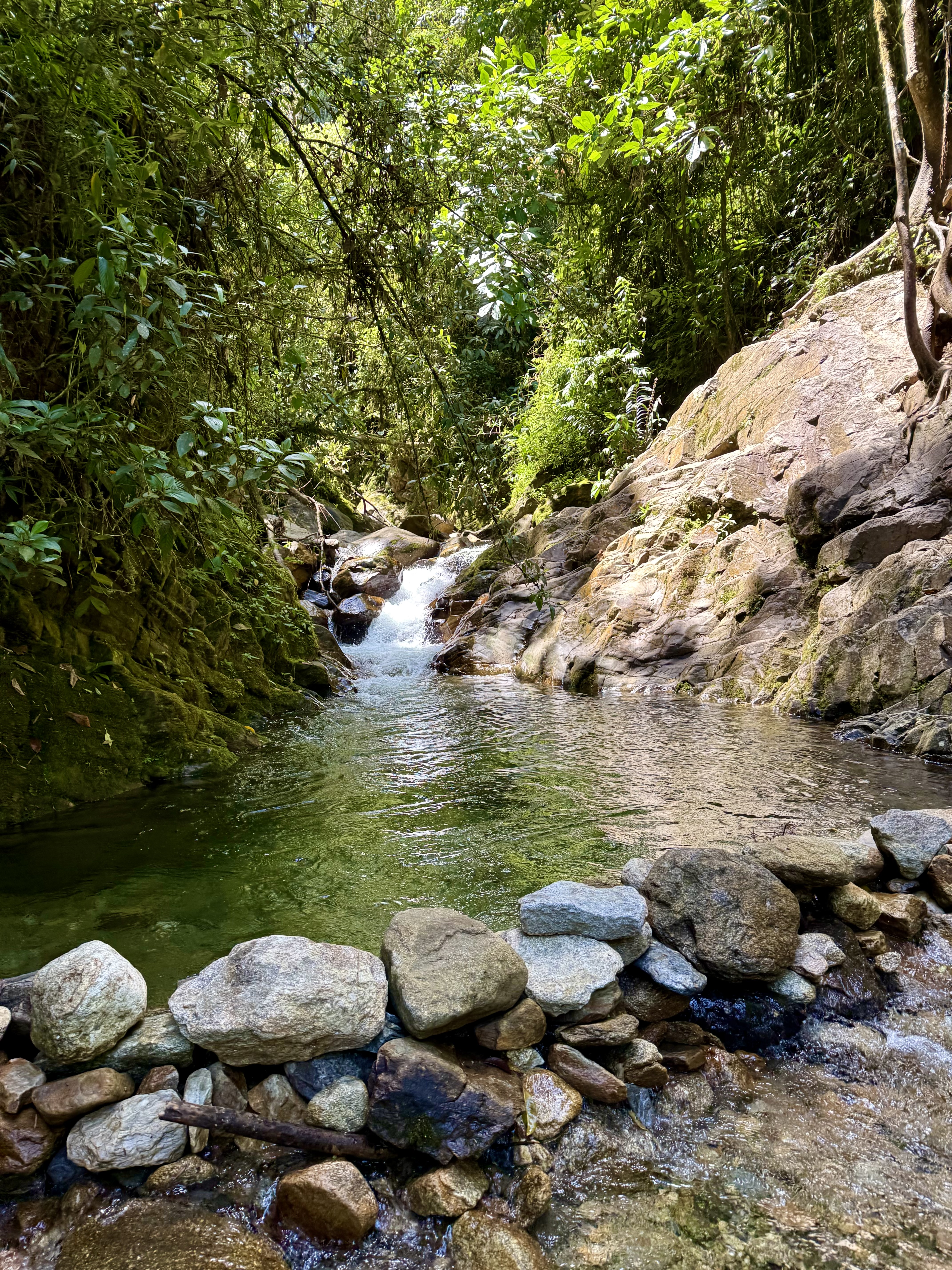
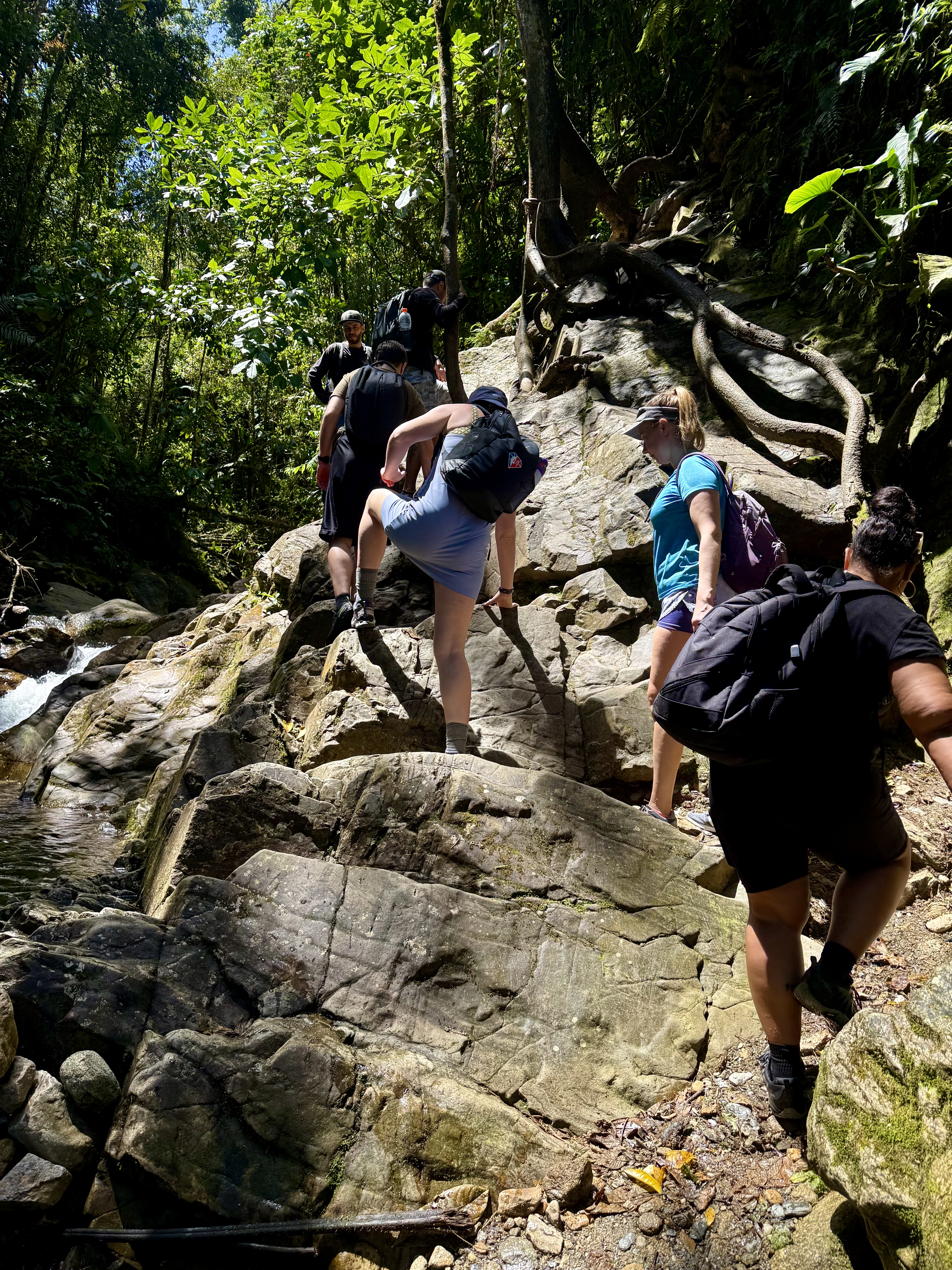
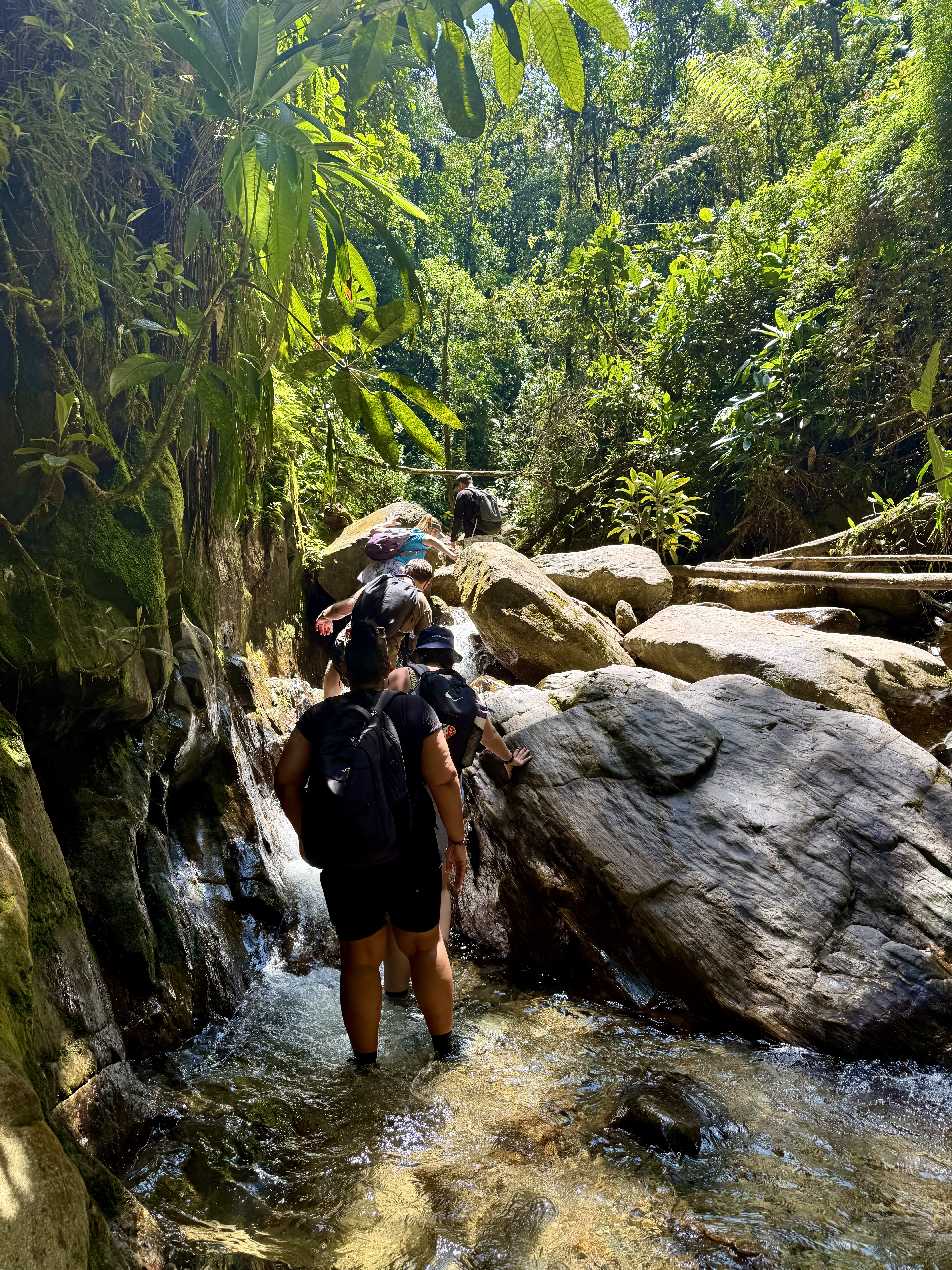
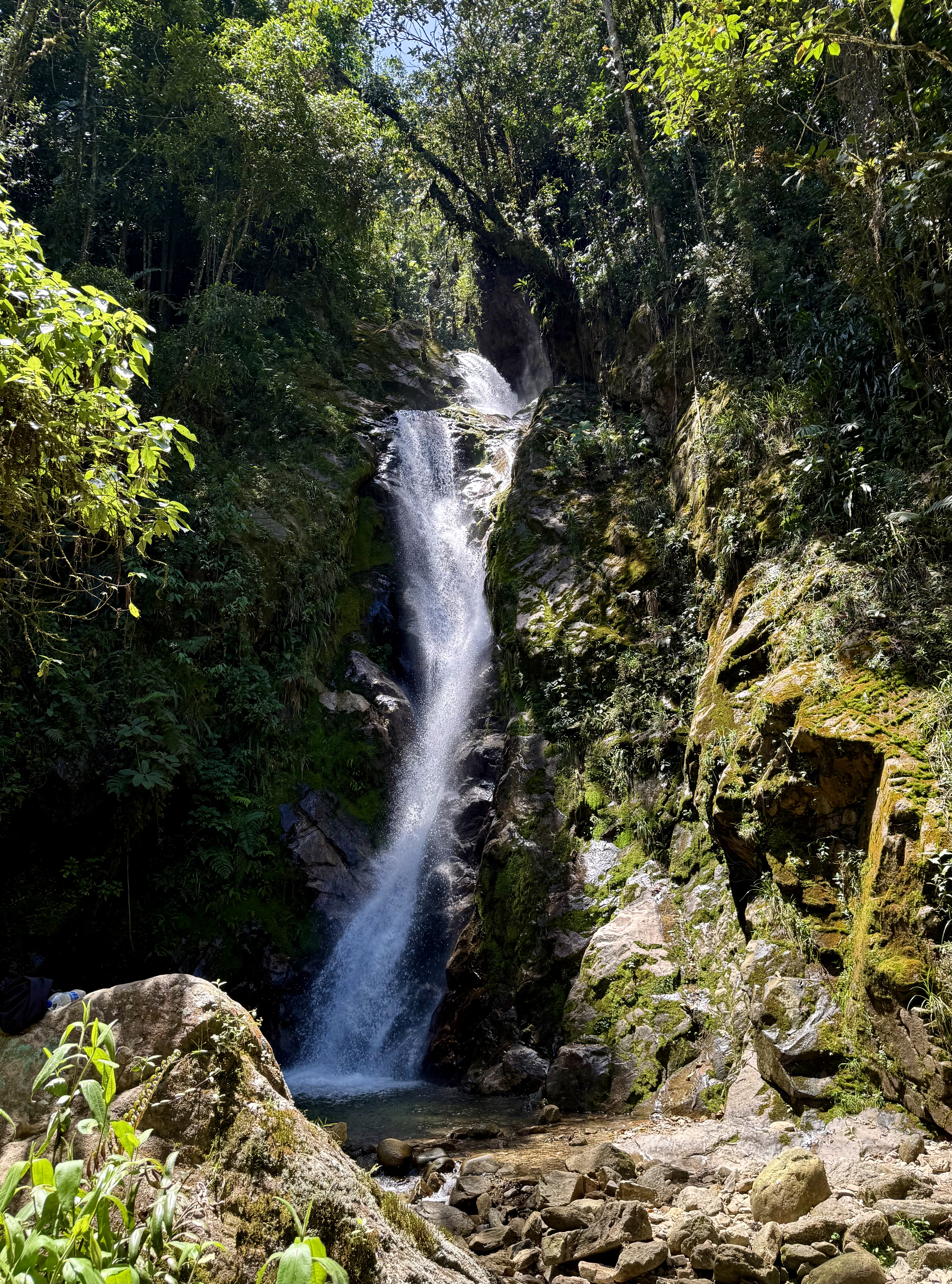
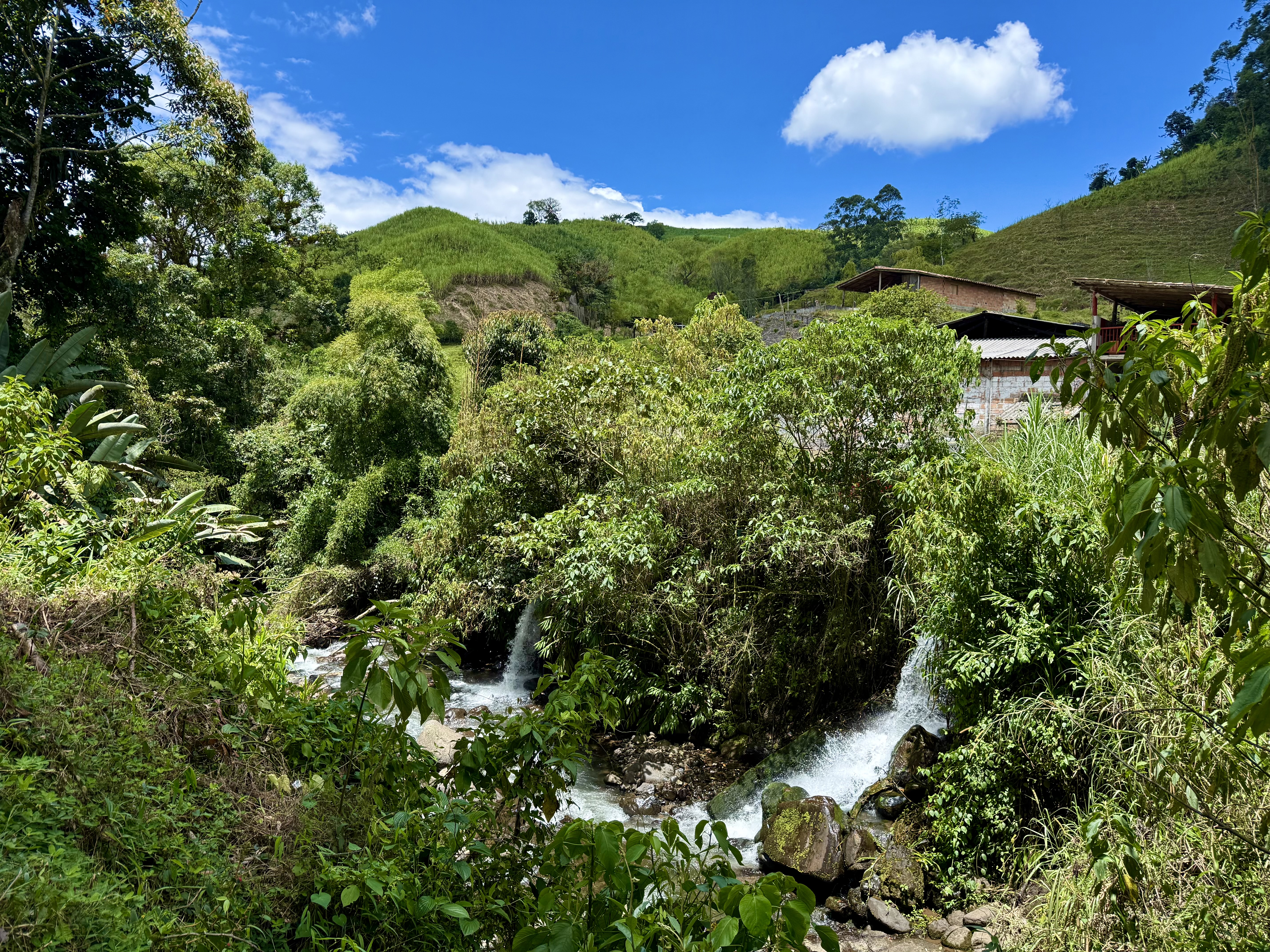
The meeting point for the tour was just a few minutes’ walk from where I was staying in El Poblado, a tourist section of Medellín. The group of five people, including me, met about 9am. The others were from NYC and Quebec, so the tour was conducted in English. We drove for a little over a half hour up into the mountains surrounding the city, and I was once again glad I was not responsible for driving on the steep narrow windy mountain roads. Along the way, we picked up the second guide, Eduardo, who apparently lives in a nearby mountain village. As with the waterfall hike in El Salvador, there is a guide in the front and one in the back. We finally stopped at a finca, where I was able to rent a pair of rubber boots. Sebastian, the first guide, warned us that we would be crossing streams with water up to our knees, and as I didn’t want to get my hiking shoes soaked, I was glad that the goulashes were available, as was a walking stick. We headed out from the finca on a flat path for a few hundred meters, before coming to a series of stairs. Along the way, Sebastian stopped at a plaque explaining that the trail we were on has been used for over 2,500 years and to explain some of the vegetation we were encountering, including the trees whose leaves or seeds have psychedelic properties. After descending a few hundred stairs, we came to the real beginning of the rainforest trail. From here to the waterfall took about an hour and we did crisscross the stream innumerable times. The sides were covered with various sized boulders, some of which were very slippery, and I was glad I had the walking stick for added balance. At times, I also needed Eduardo’s helping hand to get up and not slip. At one place a rope was tied to a tree, and we had to scramble up some steep boulders; it wasn’t nearly as bad as the climb in El Salvador, but still a bit of a challenge. When we got to the waterfall another group was just leaving. It is customary to sit under the falling water for at least seven seconds, and if one is really a masochist, seven minutes. The water is freezing! I cheated and just did a Pachamama ritual as we were in her midst. We stayed at the waterfall for about a half hour before returning the same way to the finca. The tour ended back where we started about 1:30pm. It wasn’t a long tour, but it was absolutely delightful. The rainforest around Medellín is magnificent, as are the views of the city from the mountains!
Day Tour 3 Hispania, Andes & Jardin: Three Churches in the middle of the SE coffee growing region.
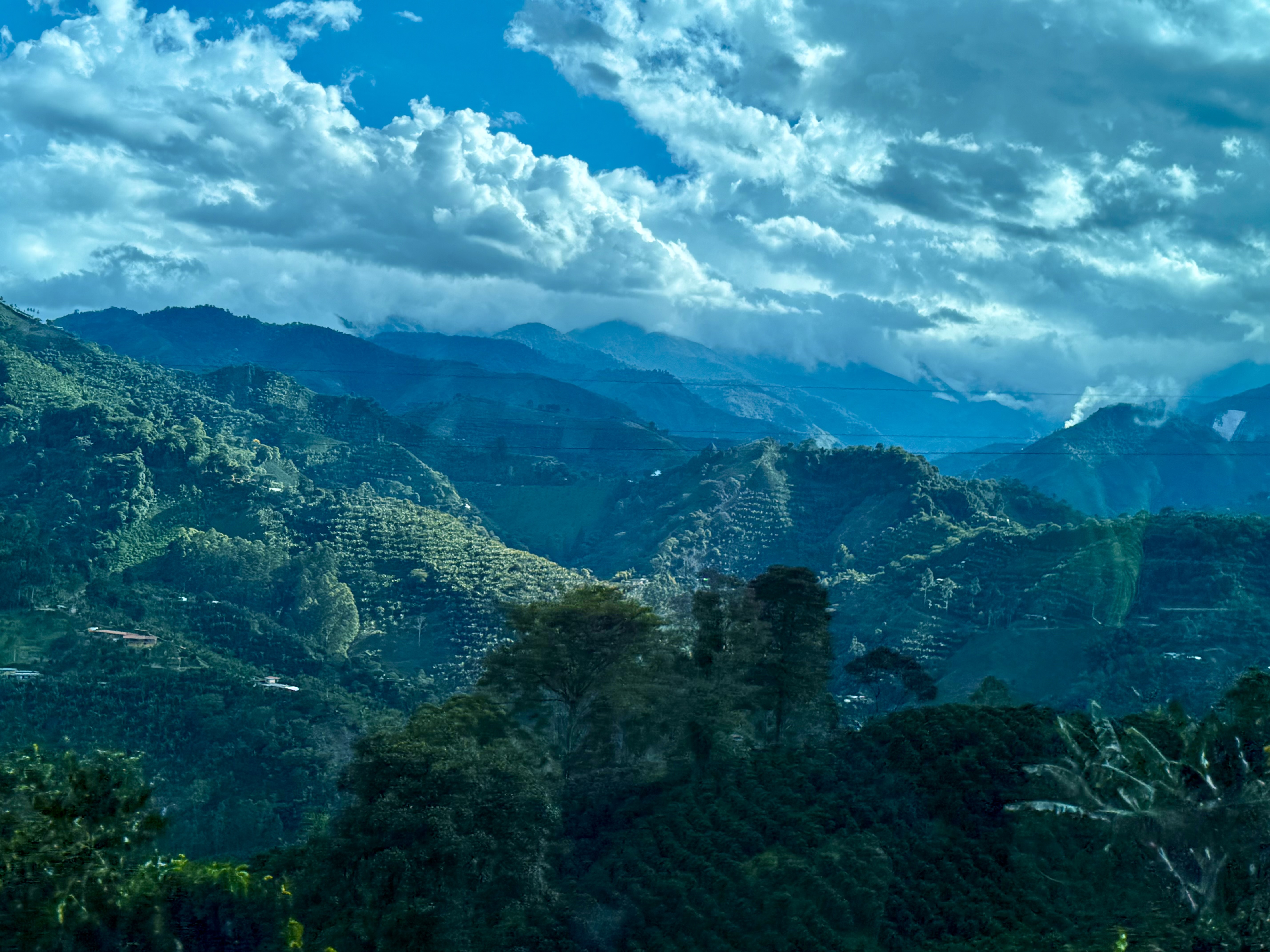
The Get Your Guide site said that the meeting point was at the Estado metro station at 5am. This was far from my hotel, so I had to take an Uber to get there. When the bus left the station, the driver and guide stopped at five other pick-up points, one of which was a 10-minute walk from my hotel. I guess it would have been wiser to email the guide to ask about other pick-up places. We finally left Medellin for the over two-hour drive to the first of the villages we were going to visit about 6:30. Along the way we stopped at a place for breakfast, which was not included in the tour, and passed by Cerro Tusa, which is the world’s largest natural pyramid. I was only able to get a photo through the glass windows of the bus.
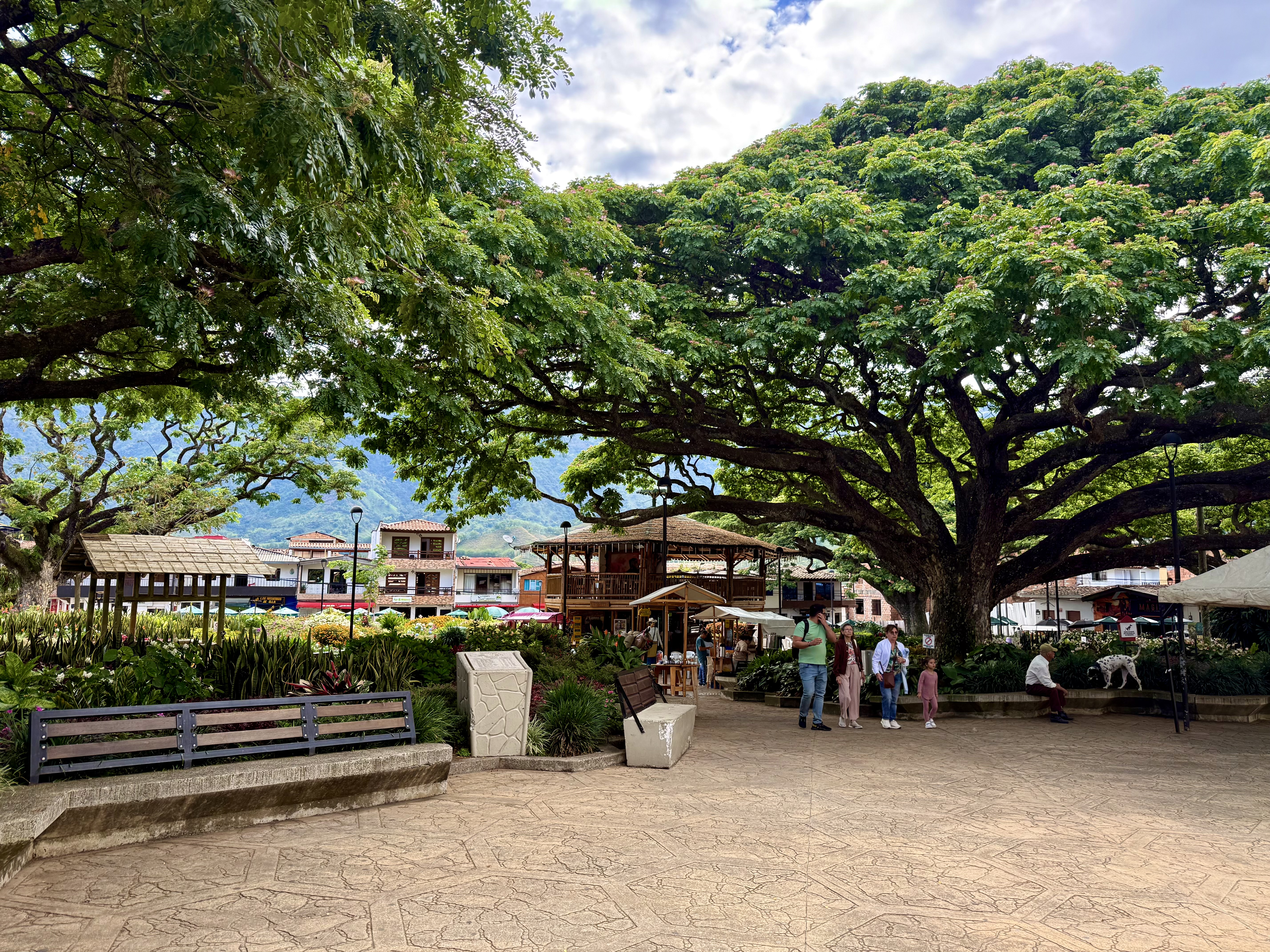
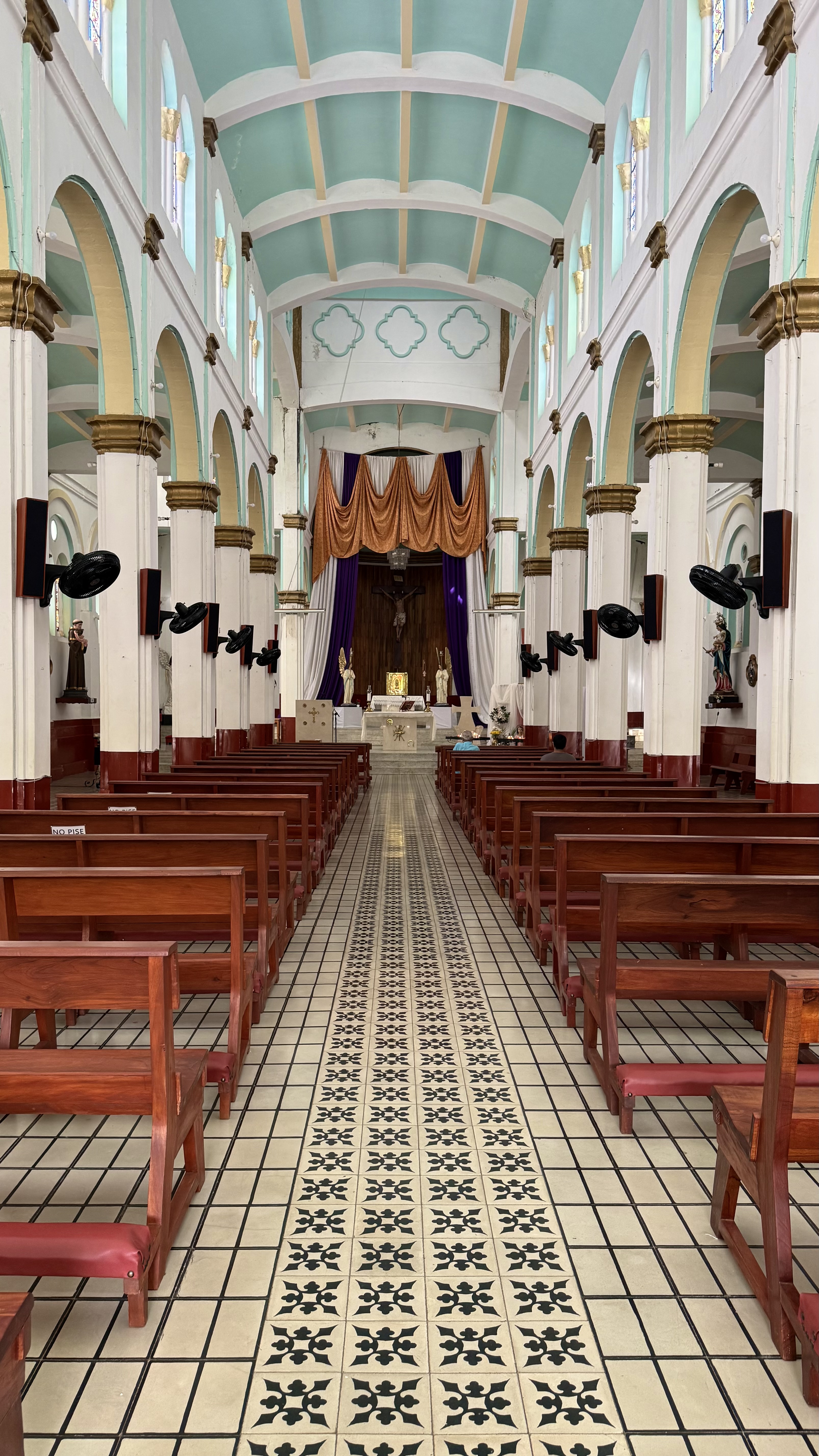
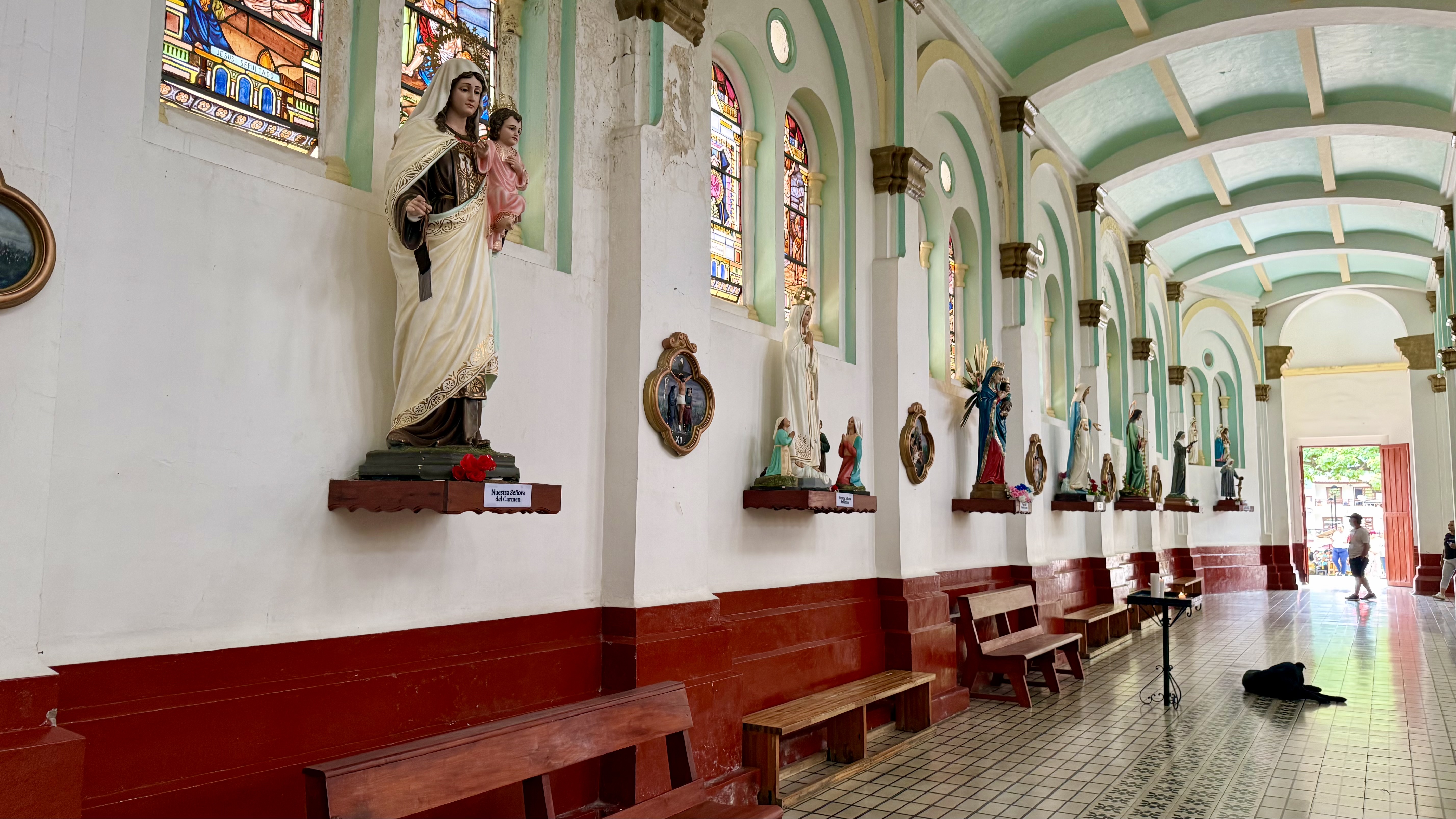
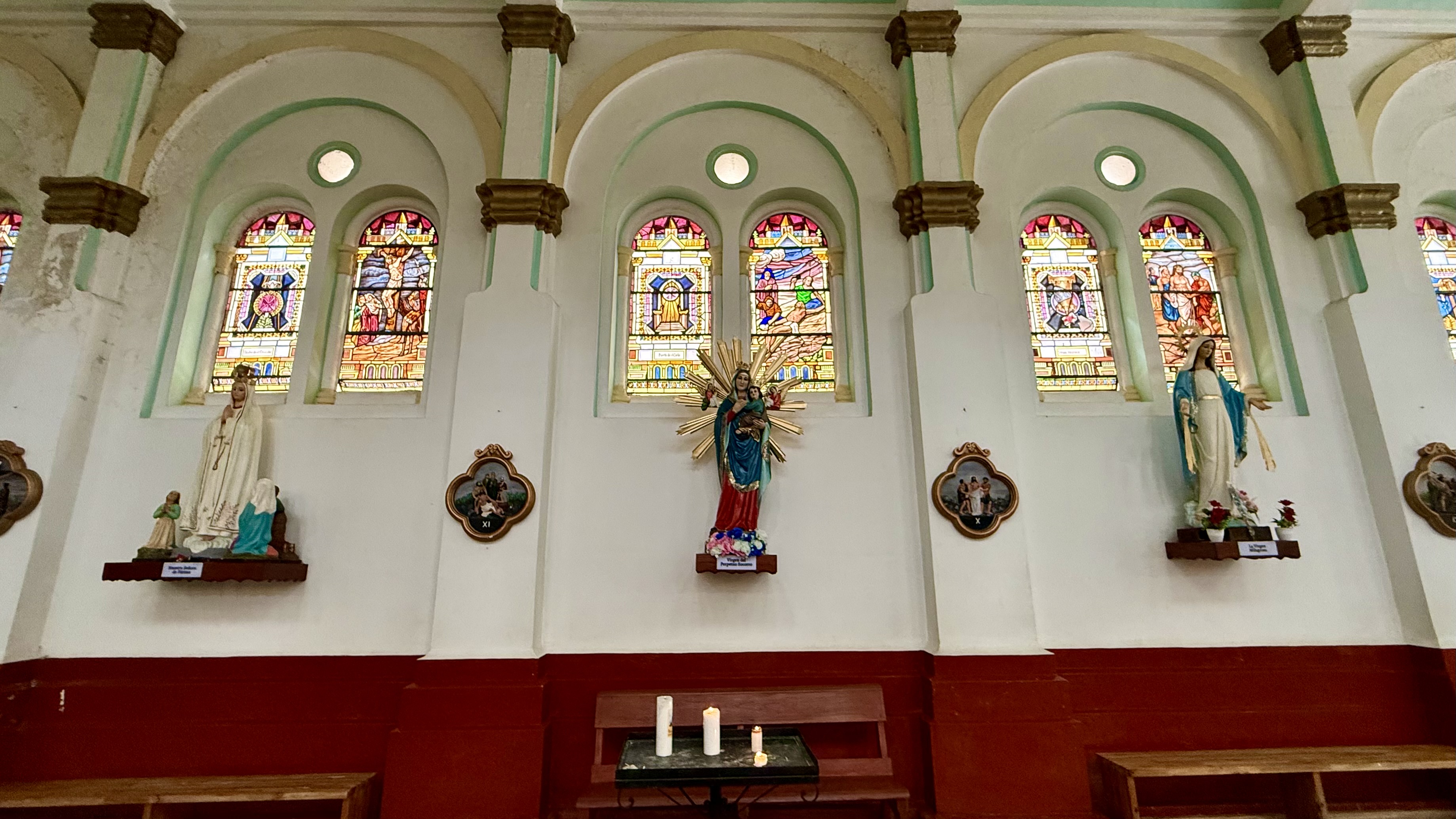
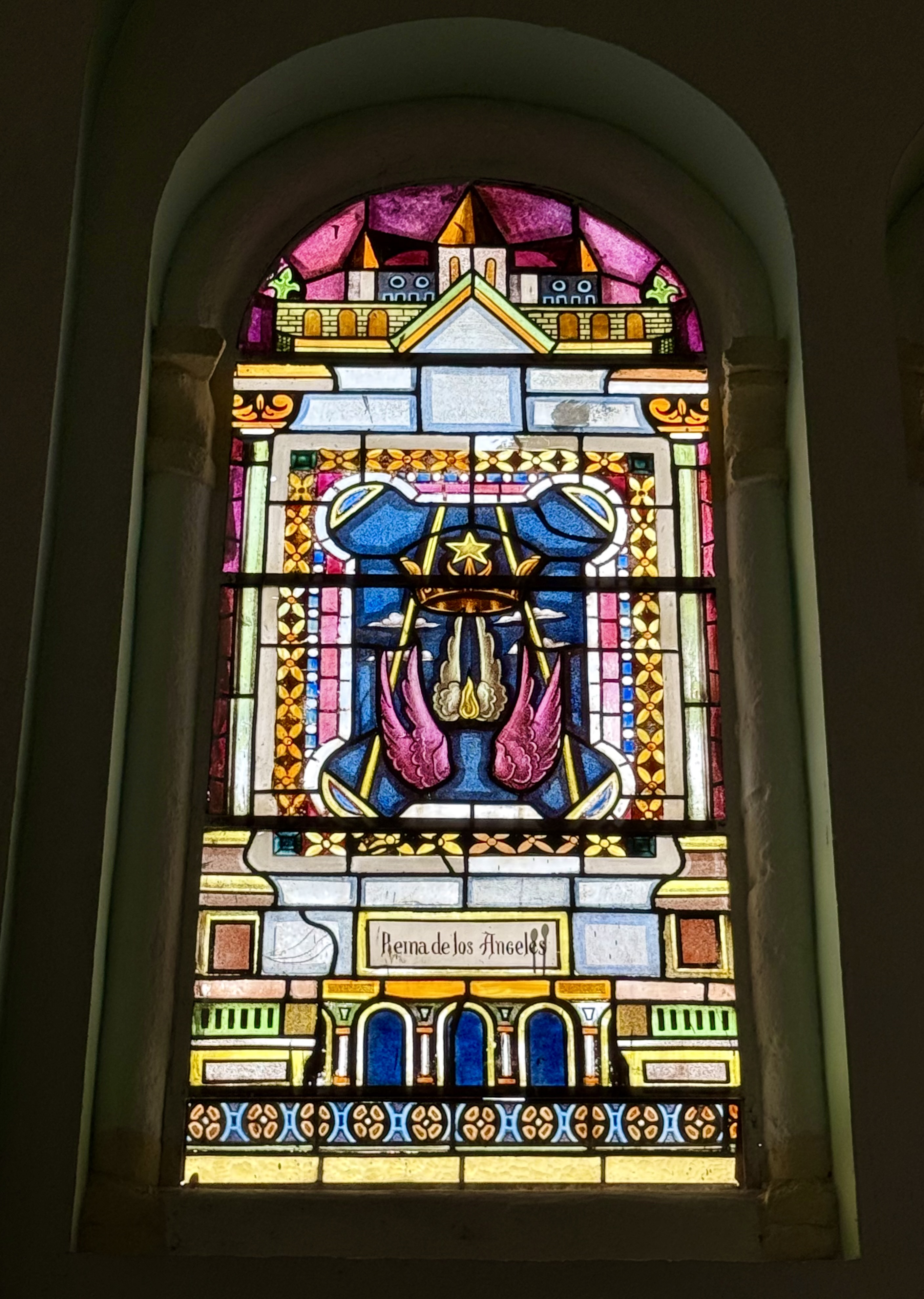
Our first official stop was in Hispania, a small traditional village situated at about 1000 m in altitude and with about 5,000 inhabitants. There were two highlights in Hispania, the first is the Parque Principal, which is the square in front of the second, the church. The Parque has six flower bed sections with large old trees. There are walking paths between the sections and a traditional wooden two-story rotunda selling drinks and snacks in the middle. The church, the Iglesia Nuestra Señora de las Mercedes was constructed in 1931. The structure is fairly typical of the region, but what stands out in this church are the stained-glass windows and sculptures of Maria and the saints. When one enters, the right side of the building is lined with sculptures of Maria in her various identities, from that of protector to divine grace. Above the sculptures are the stained-glass windows, mostly in pairs with one window dedicated to symbols relating to the Virgin and the other to the Christ narrative. On the other side, there are sculptures of the saints and apostles, with similar windows above. The stained-glass windows are true works of art.
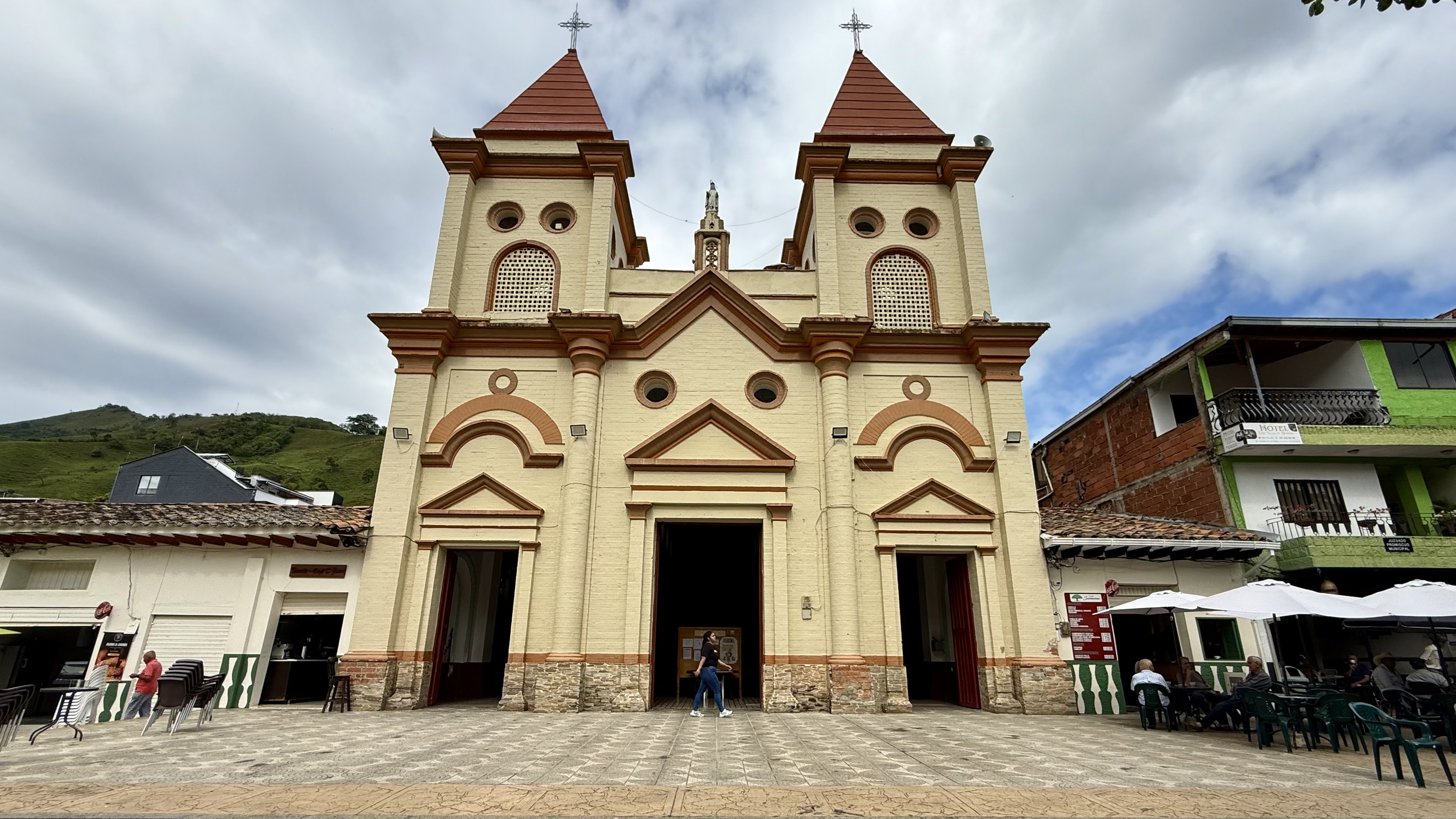
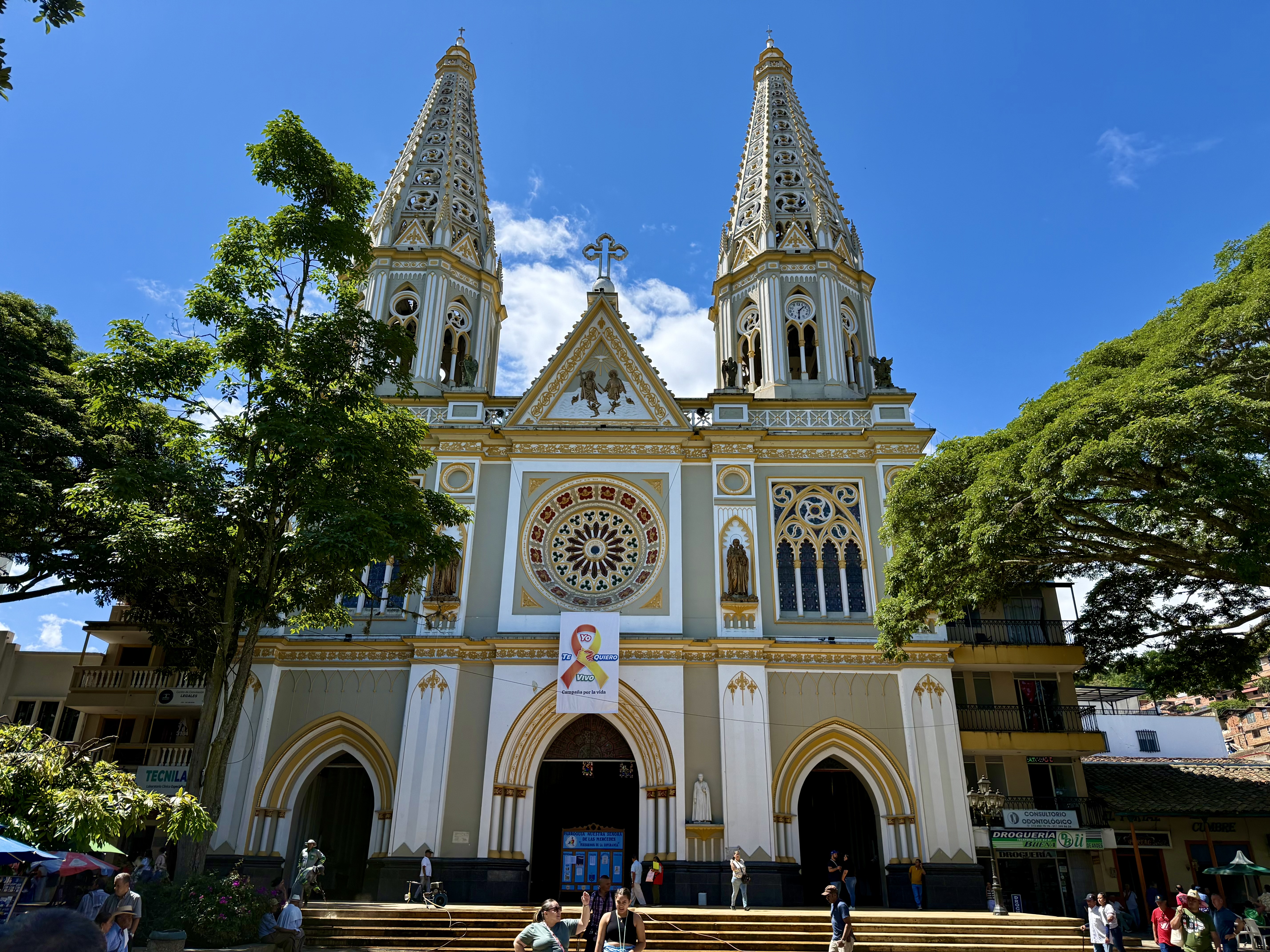
From Hispania, we continued on to the somewhat larger town of Andes, which is at 1360 m. The town was founded by Pedro Antonio Restrepo Escobar (I have no idea if there is any relation to the much later Pablo) in the mid-1800s. At that time, the village was named San Juan de los Andes, but the name has since been shortened. It is now one of the National Colombian Heritage sites. The church, which Pedro Escobar founded in 1853, was destroyed and rebuilt in 1922 with two unique towers. While I was visiting, a baptism was just starting. The Plaza Mayor, in front of the Iglesia Nuestra Señora de las Mercedes, (yes, the same name as that in Hispania) is considered one of the most beautiful in the country. It is a lively commercial center. On some of the side streets, shops sell indigenous crafts from people living in the area. To get to the main square, we drove from the lower town to a place where the bus could stop and walked through a long-covered passageway across a gulley to the upper town. On the way, we passed the local bus stop with colorfully painted local busses that are unique to this town and are also on the National Heritage listing. The local busses reminded me of similar ones in India and Nepal.
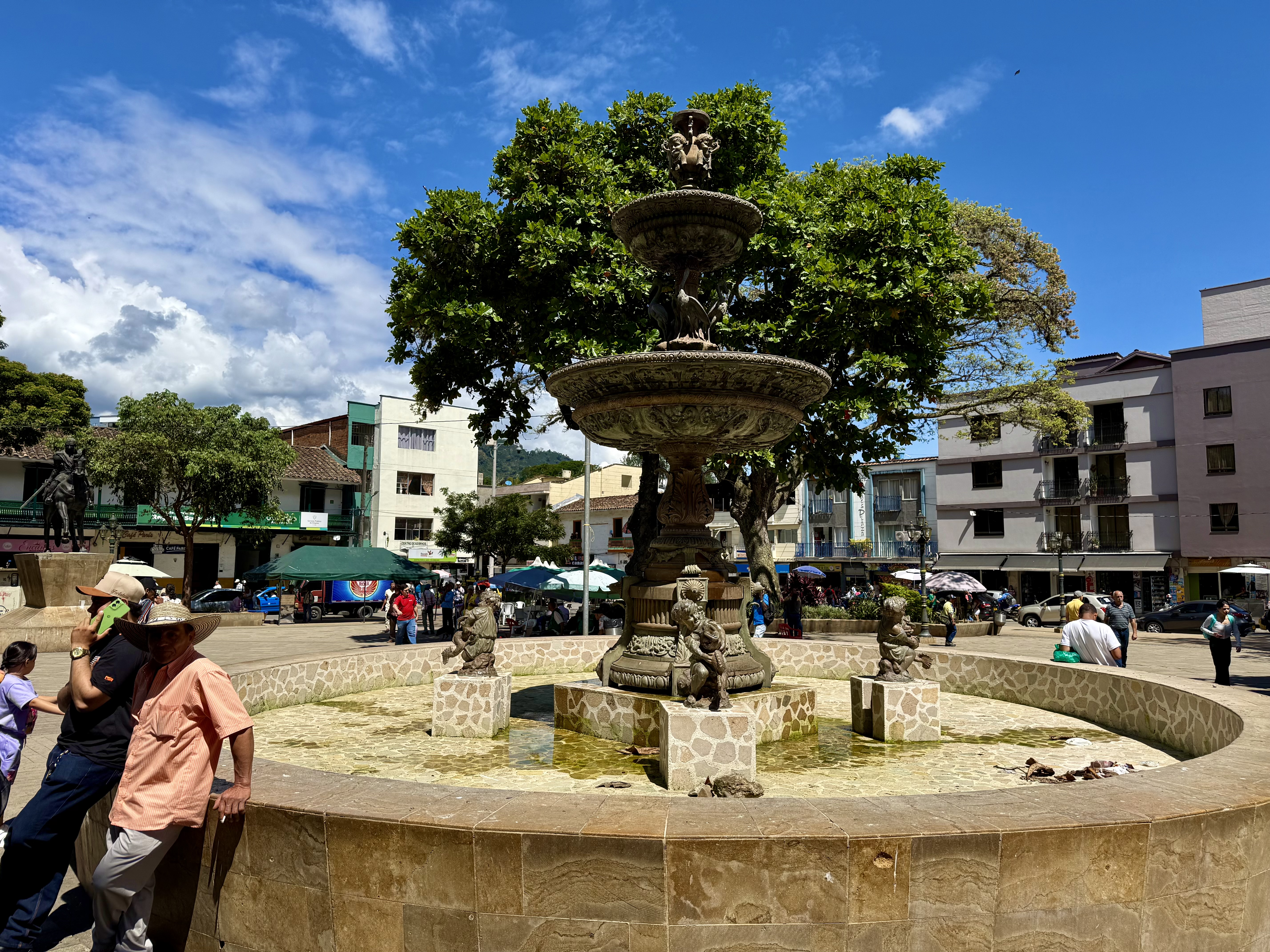
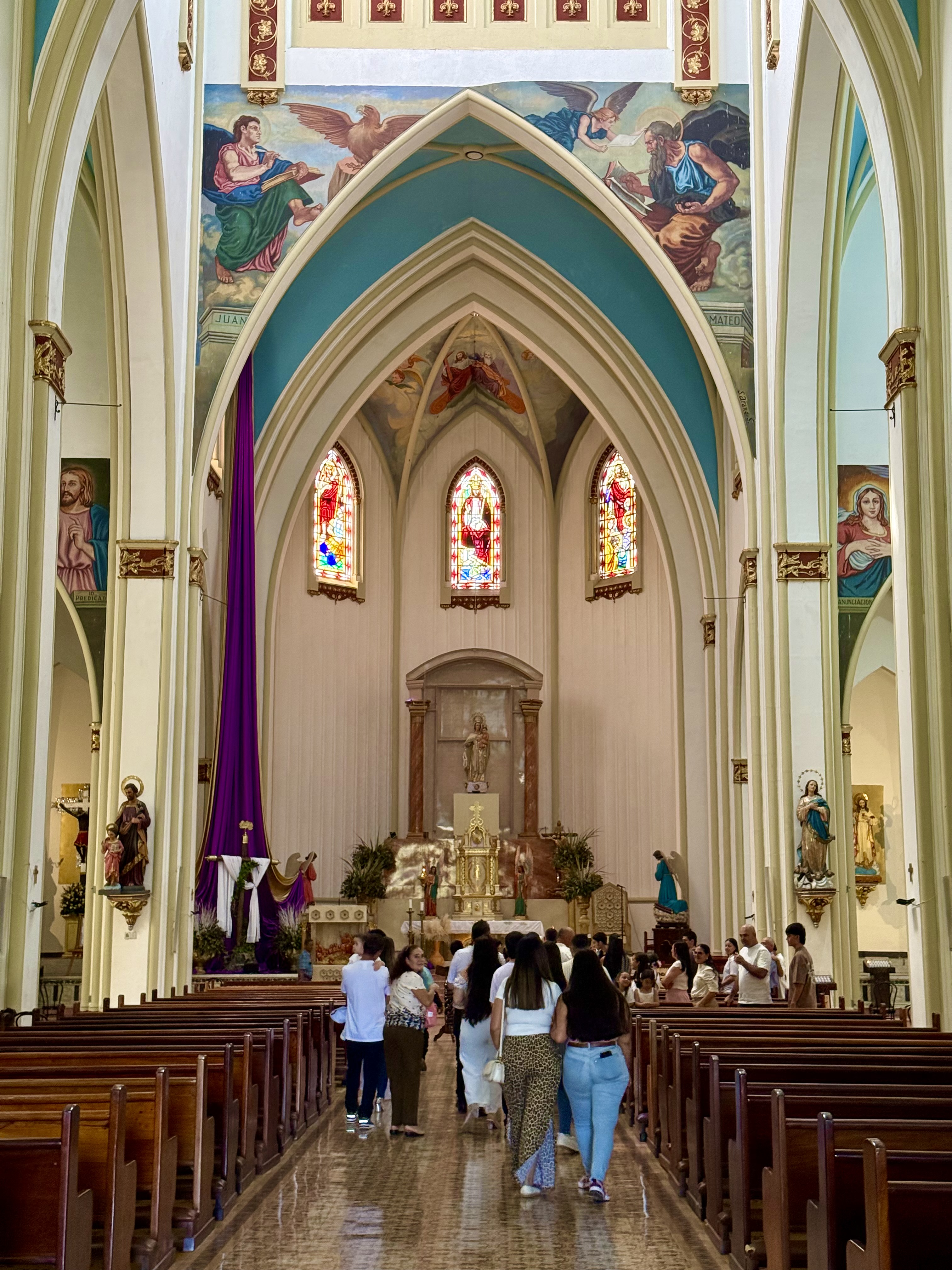
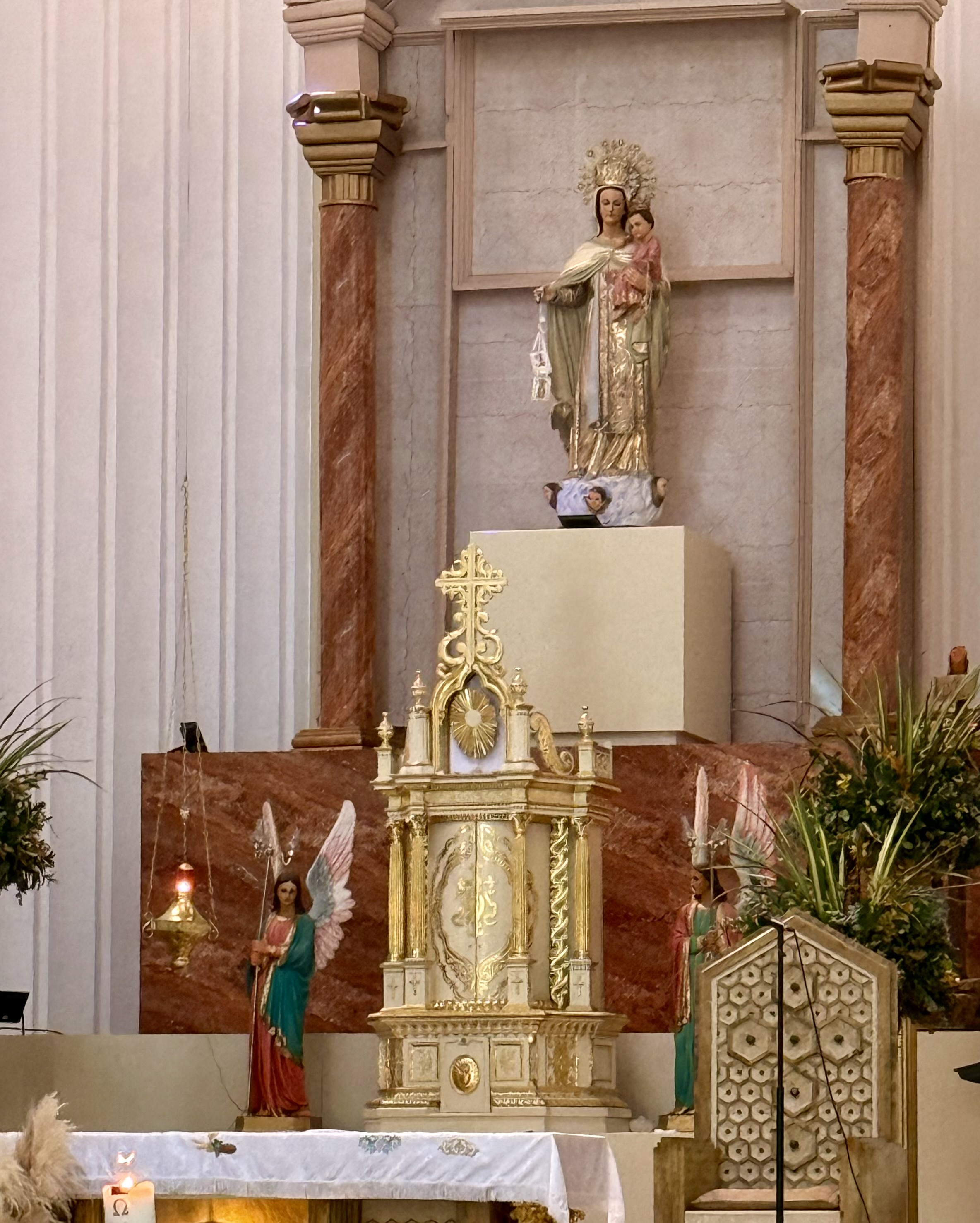
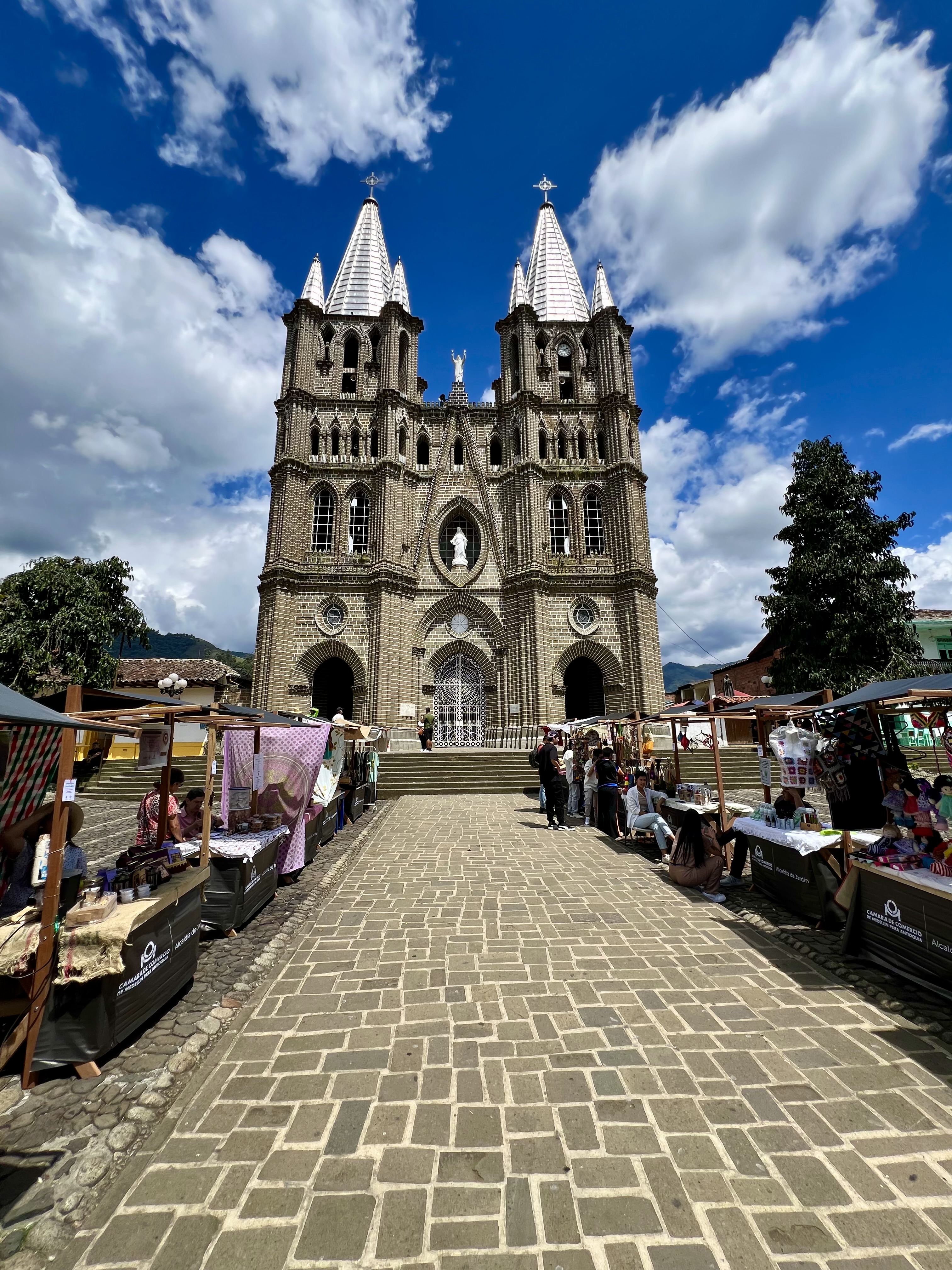
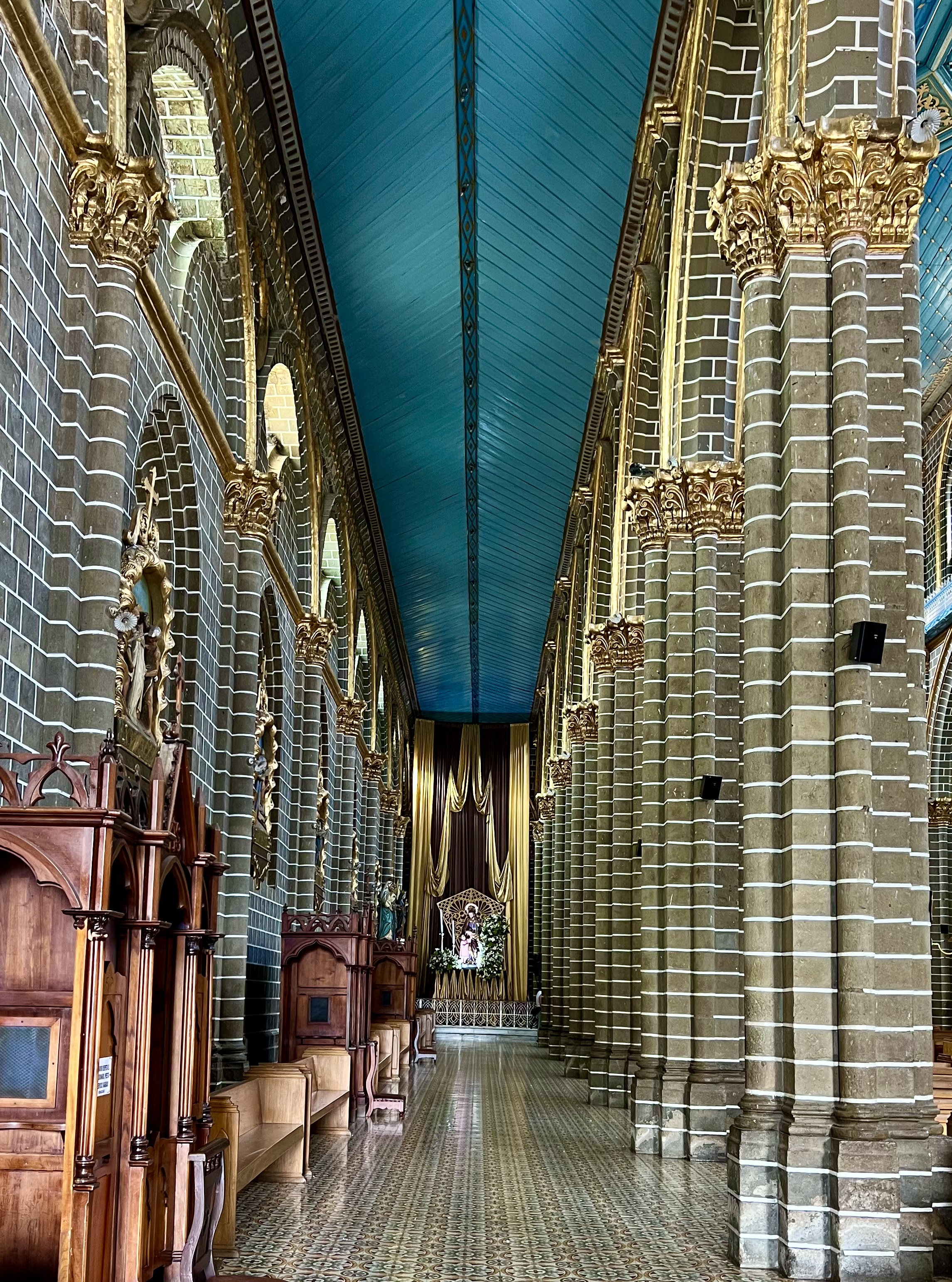
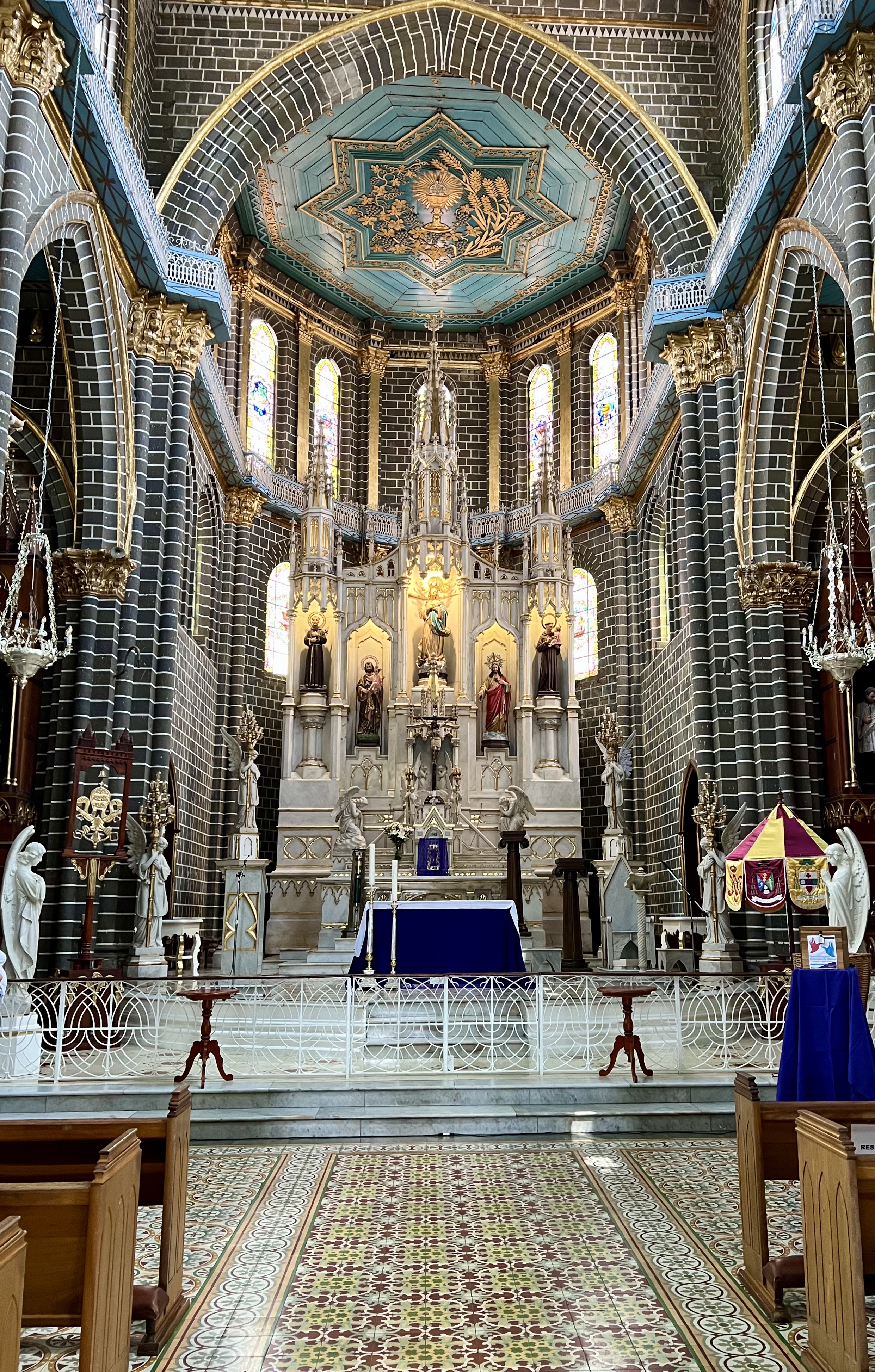
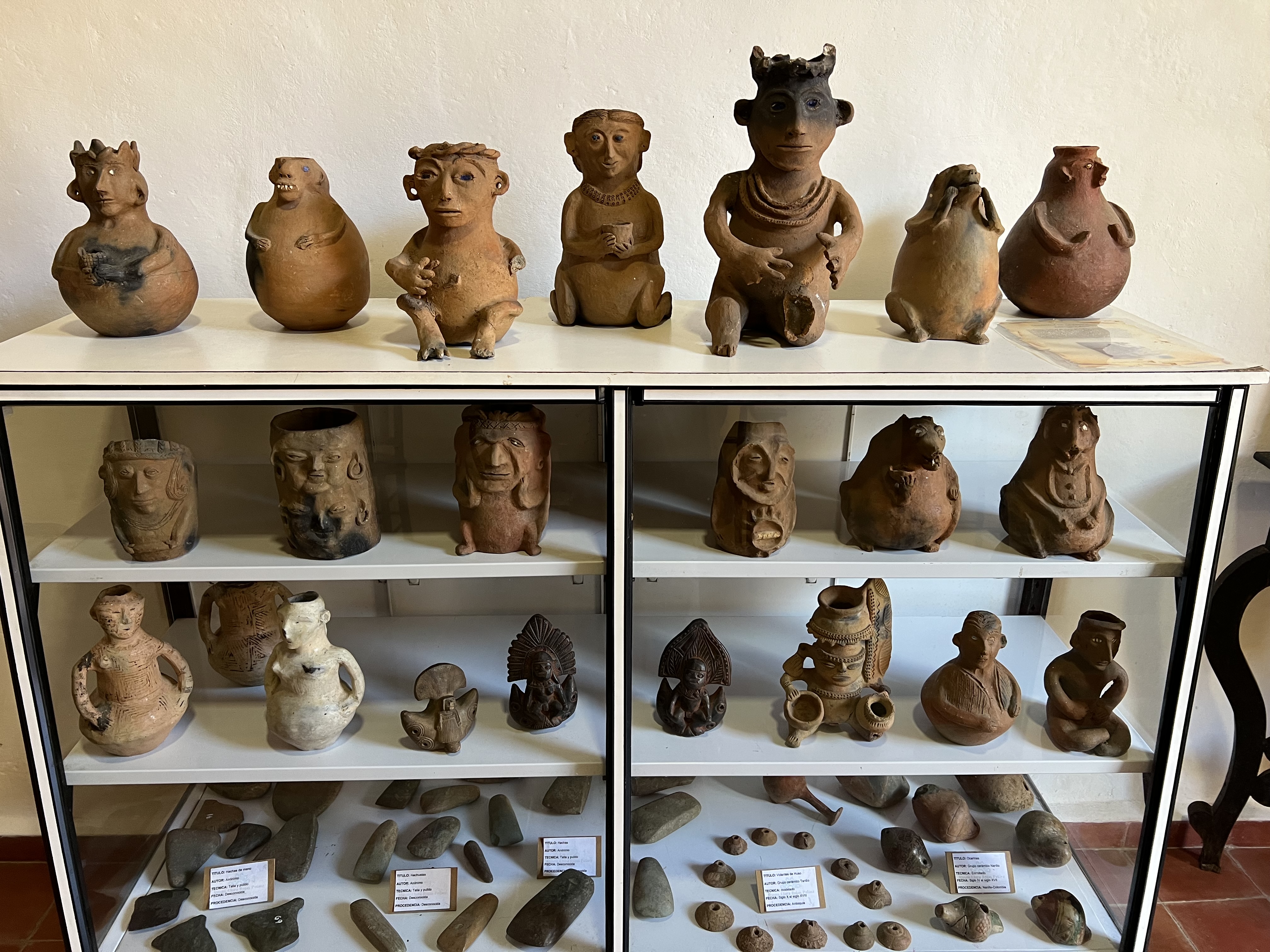
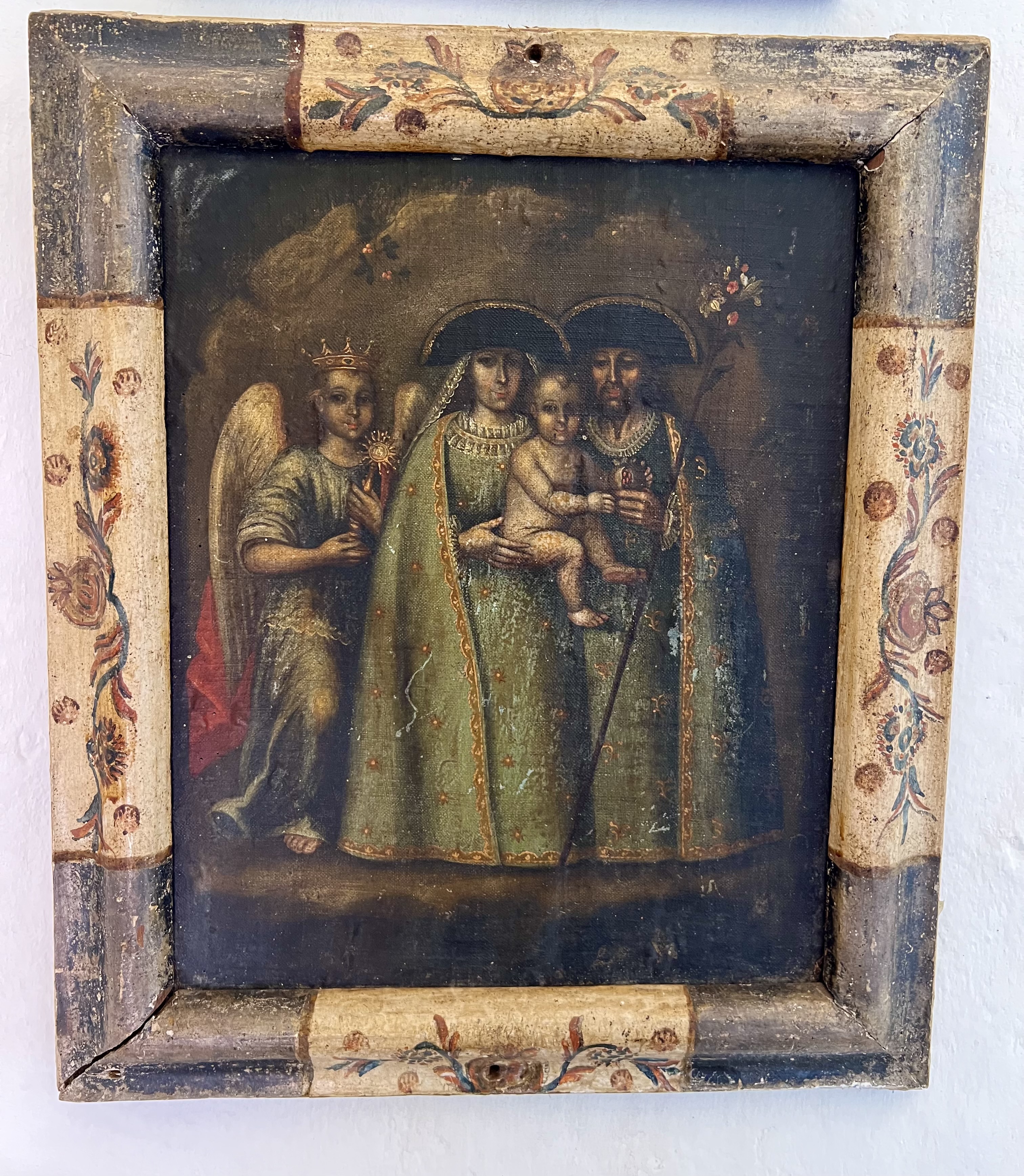
The last village stop of the day was in Jardin, which is considered to be one of the most beautiful villages in the country. It too is on the National Heritage registry because many of the houses have retained their original character. They are brightly painted with flowers hanging in baskets from the balconies and on the sides of the houses. The wooden windows are lined with horizontal wooden strips that let both light and views in exposing the interior. Jardin is the largest of the towns we visited with around 15,000 inhabitants. It is the center of the coffee production for the region. As with many places in this part of the world, the Plaza Mayor is dedicated to El Liberador, Simon Bolivar, and his statue is on prominent display not too far from the large fountain in the middle, which used to be the water source for the town, when it was still a village. The site of the town and surrounding area has been inhabited by indigenous peoples well prior to the Spanish conquest and their artwork is still valued, and sold, in the square and shops. On the side of the Plaza kitty corner from the Basilica, is the museum in the Casa de Cultura, which has both indigenous and more contemporary art on display. The church, which was built in a quasi-neo-Gothic style between 1918-1942 was raised to minor basilica standing in 1980. The Basílica de la Unmaculada Concepción is quite large. What is most striking about the structure, however, is that it is made from cut stones from local mountains as penance for the parishioners’ sins. The church was designed by Giovanni Buscaglione and is a very impressive – if austere – structure. One has to wonder what sins in this small town could be committed to warrant such a large building. There is a novel waiting to be written about this place.
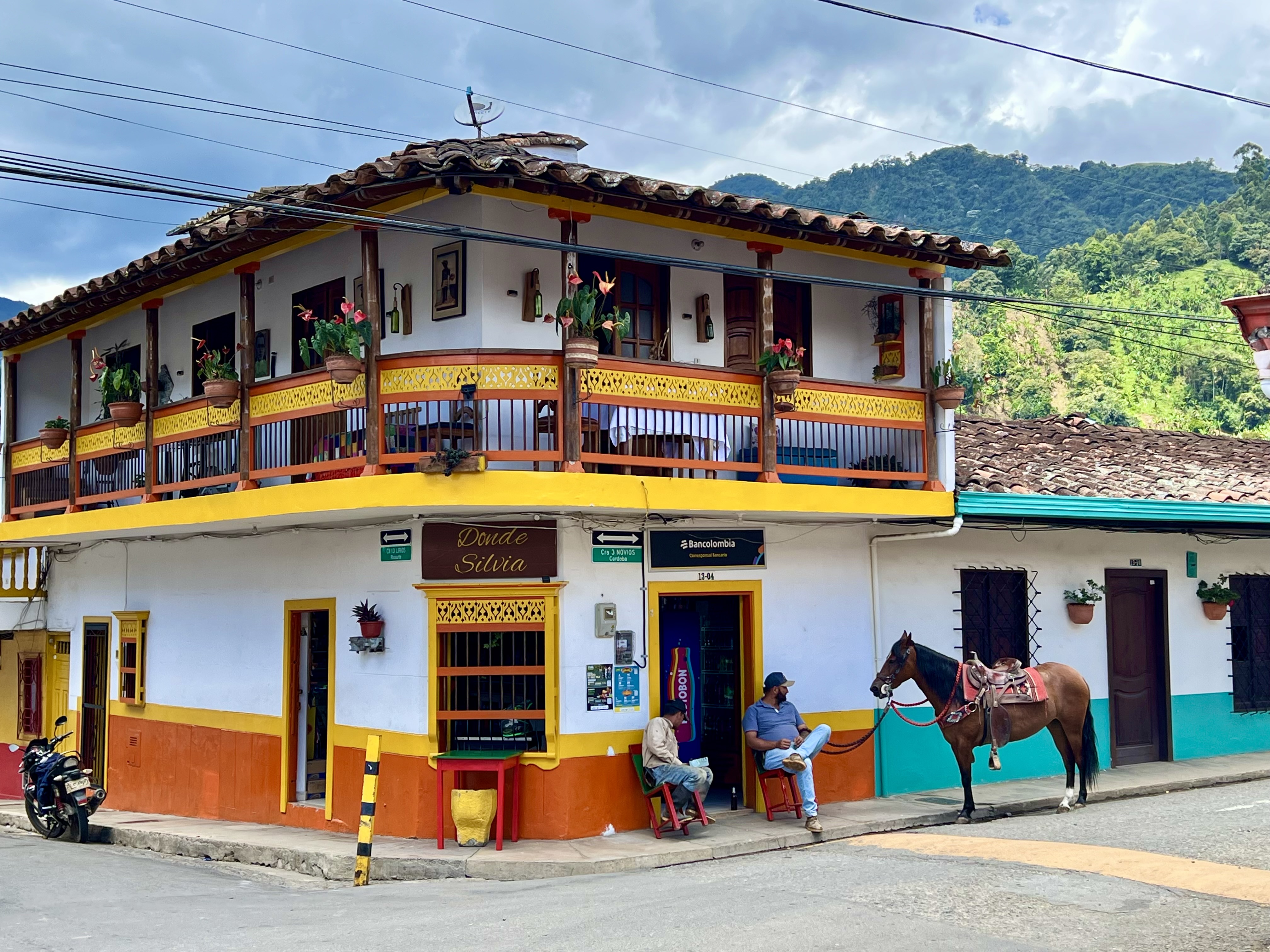
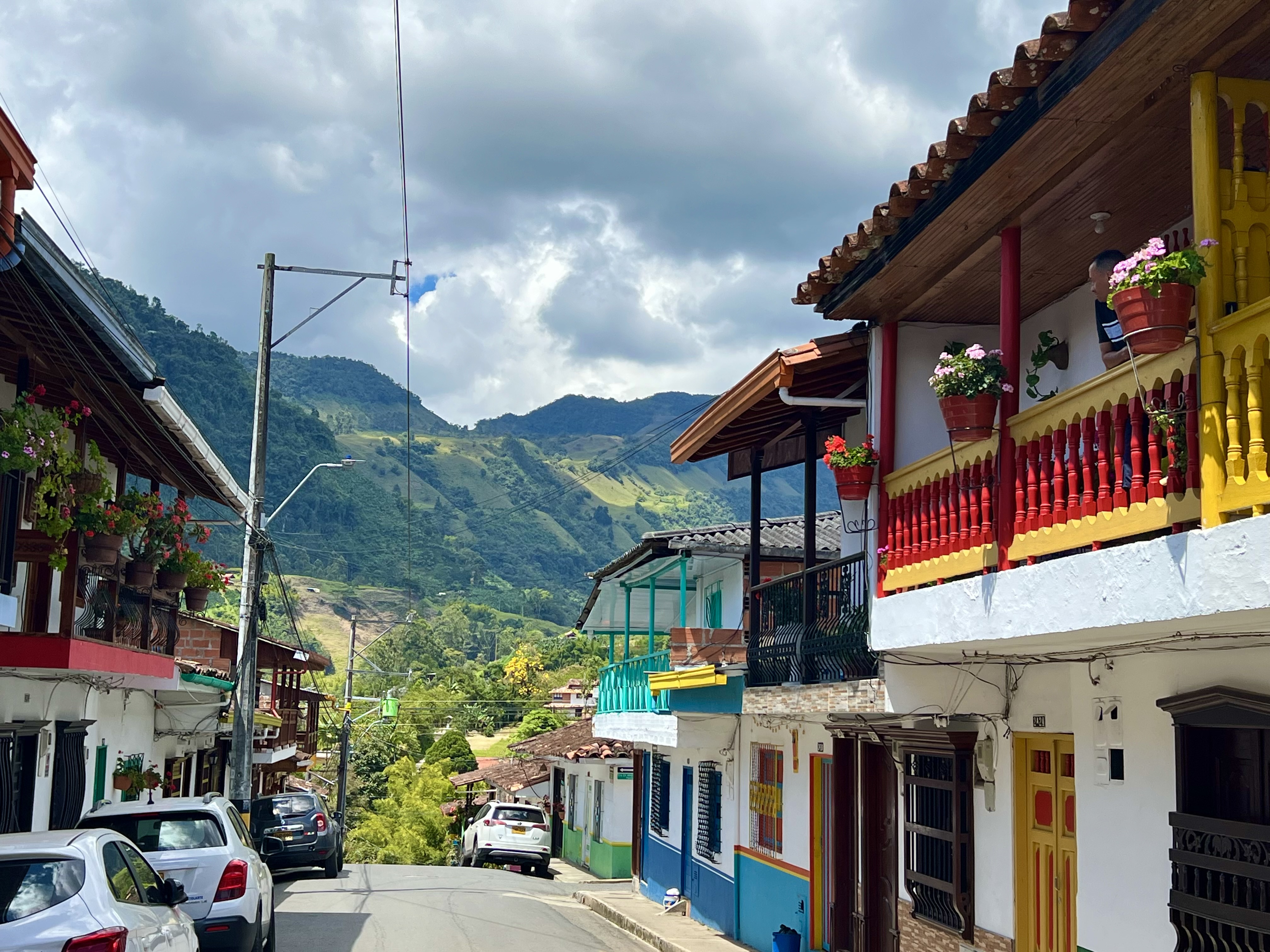
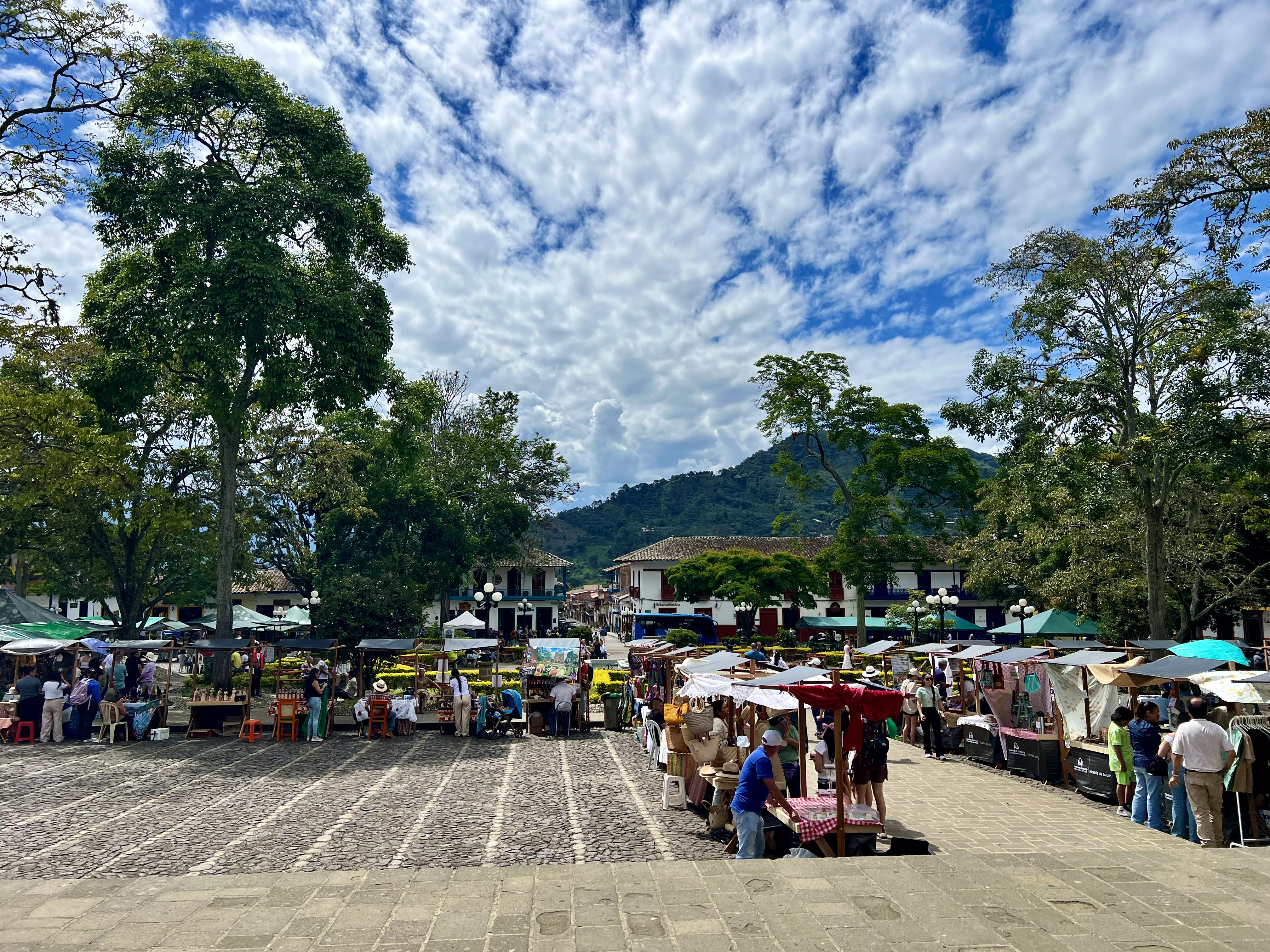
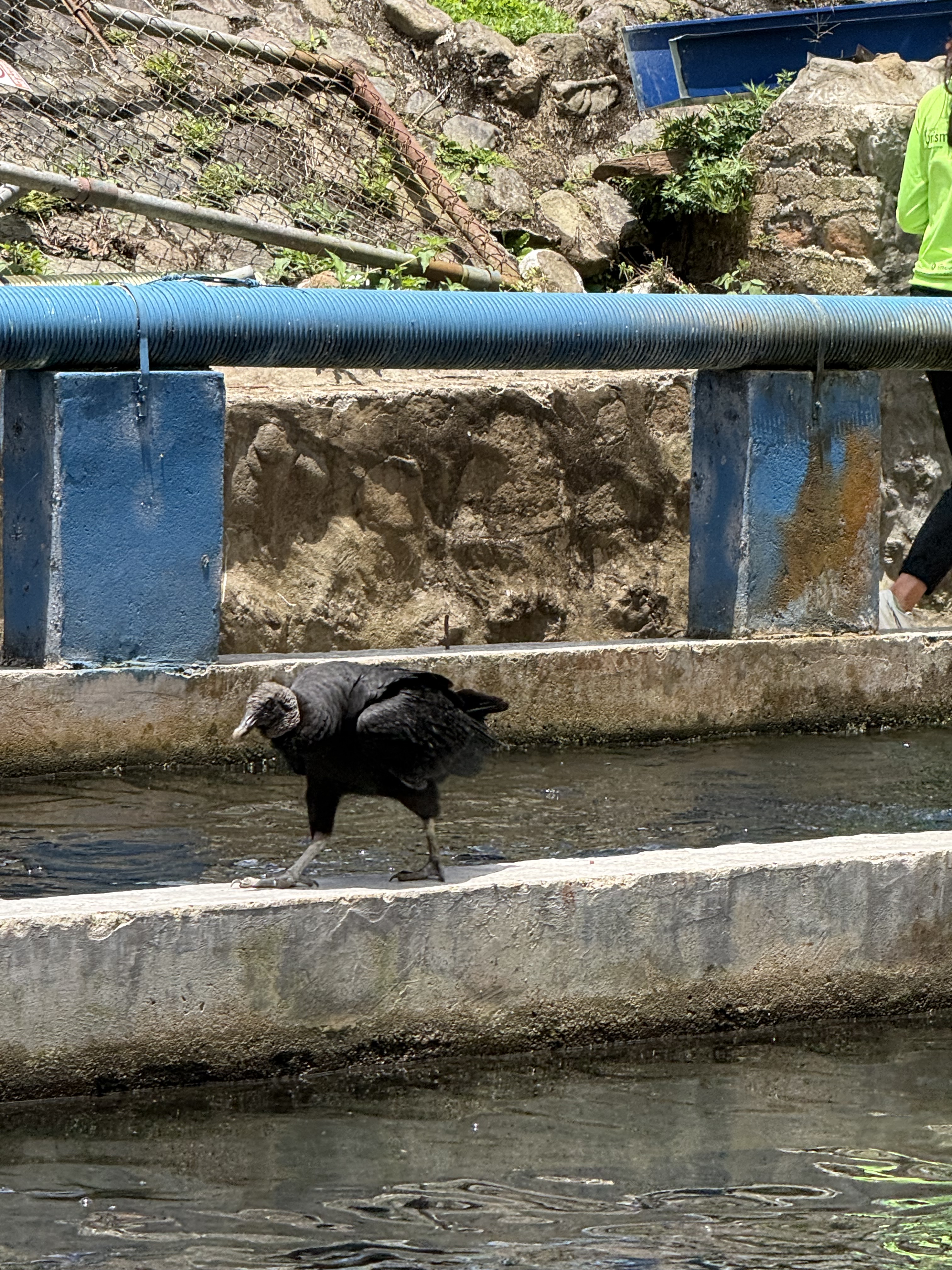
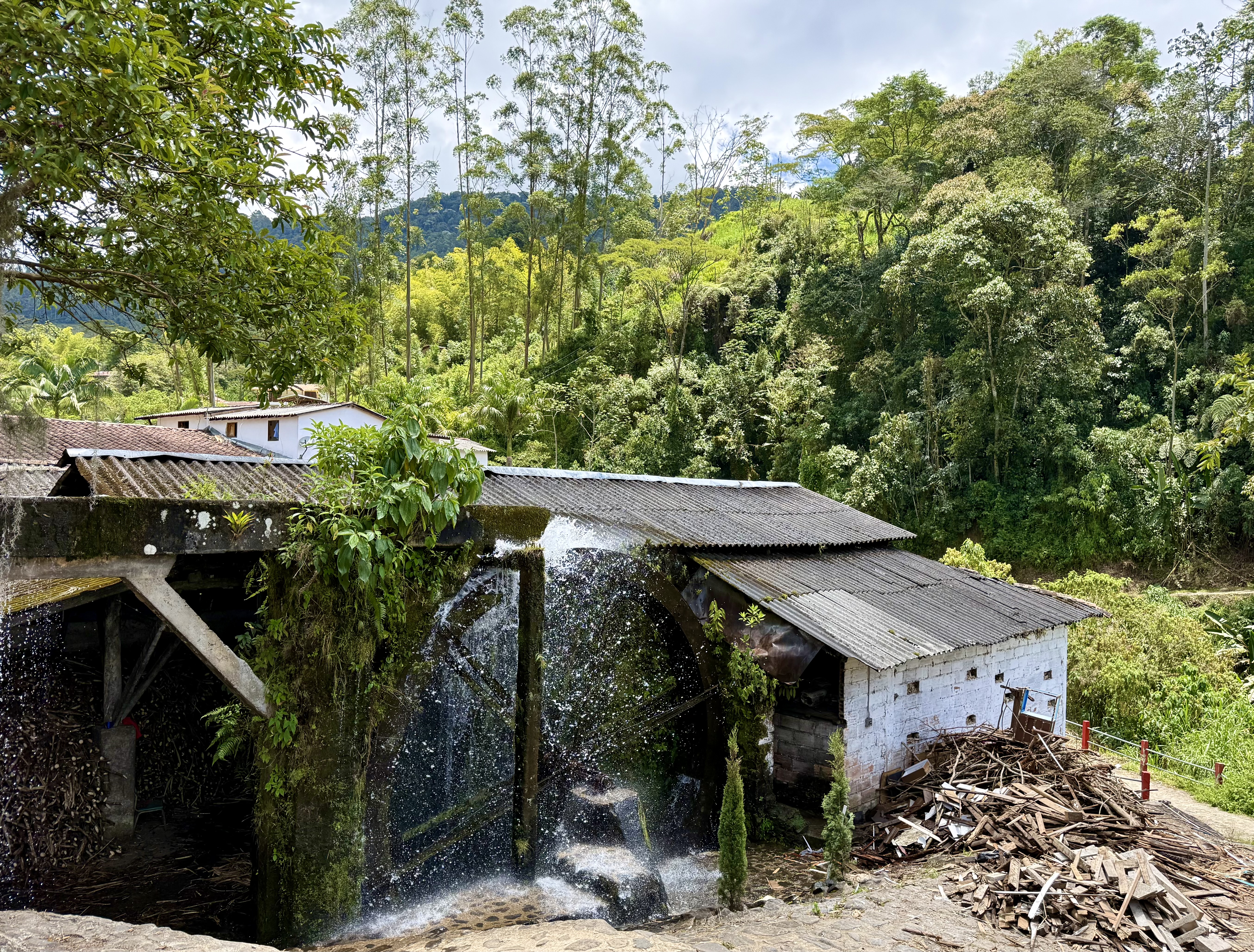
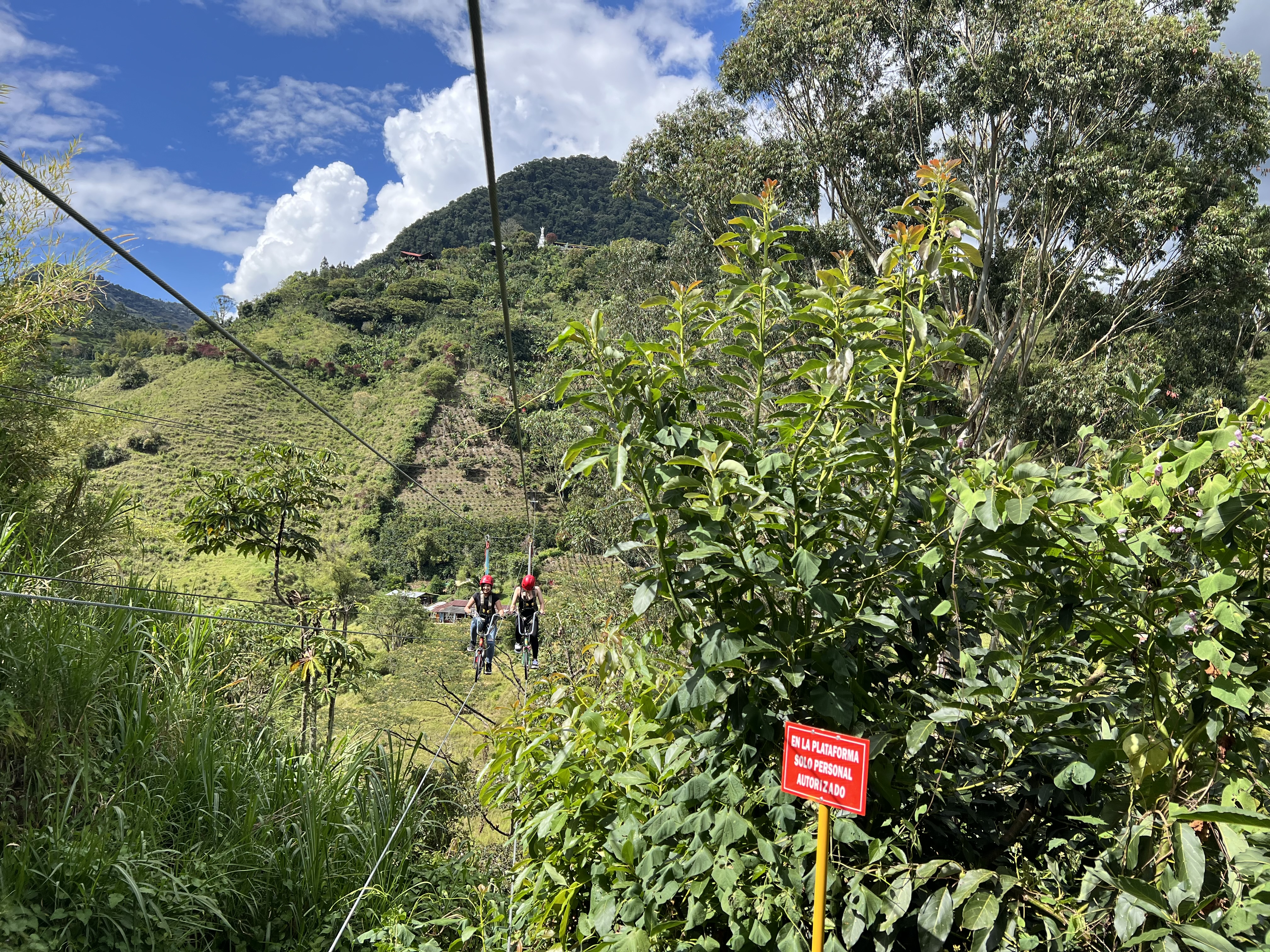
Before we stopped in the center of Jardin, we had lunch (included in the tour) at a trout farm, where I saw a vulture right by the fish tanks waiting for his opportunity. The trout farm had an ancient water wheel that kept the water in the tanks fresh. Nearby was a stream with a couple of small waterfalls flowing down the hillside. In town, we stopped at a place selling sweets, and they gave each of the tour participants a coconut rice pudding dish to taste. After the sweet, we had some free time to walk around, which was when I went to the museum, found a zipline site for people to slide or bike across, and people watched in the plaza. It seemed every third man had a cowboy hat on. Even if Jardin is a tourist mecca for Antioquia, it is still the commercial hub for coffee and plantains.
Contrary to most other people, who liked Jardin the most, I found the small village of Hispania to be my favorite. Both the square with its impressive trees and gardens and the church with the magnificent stained-glass windows above the line of Marian statues lent a sacred feeling to the place different from the commercialism of the other two towns.
The three-day tours outside of Medellín were fascinating. Each was very different and each brought me to a part of Antioquia and Columbia that I would otherwise not have been able to experience. I did all three through the Get Your Guide app.
 omegoodyssey