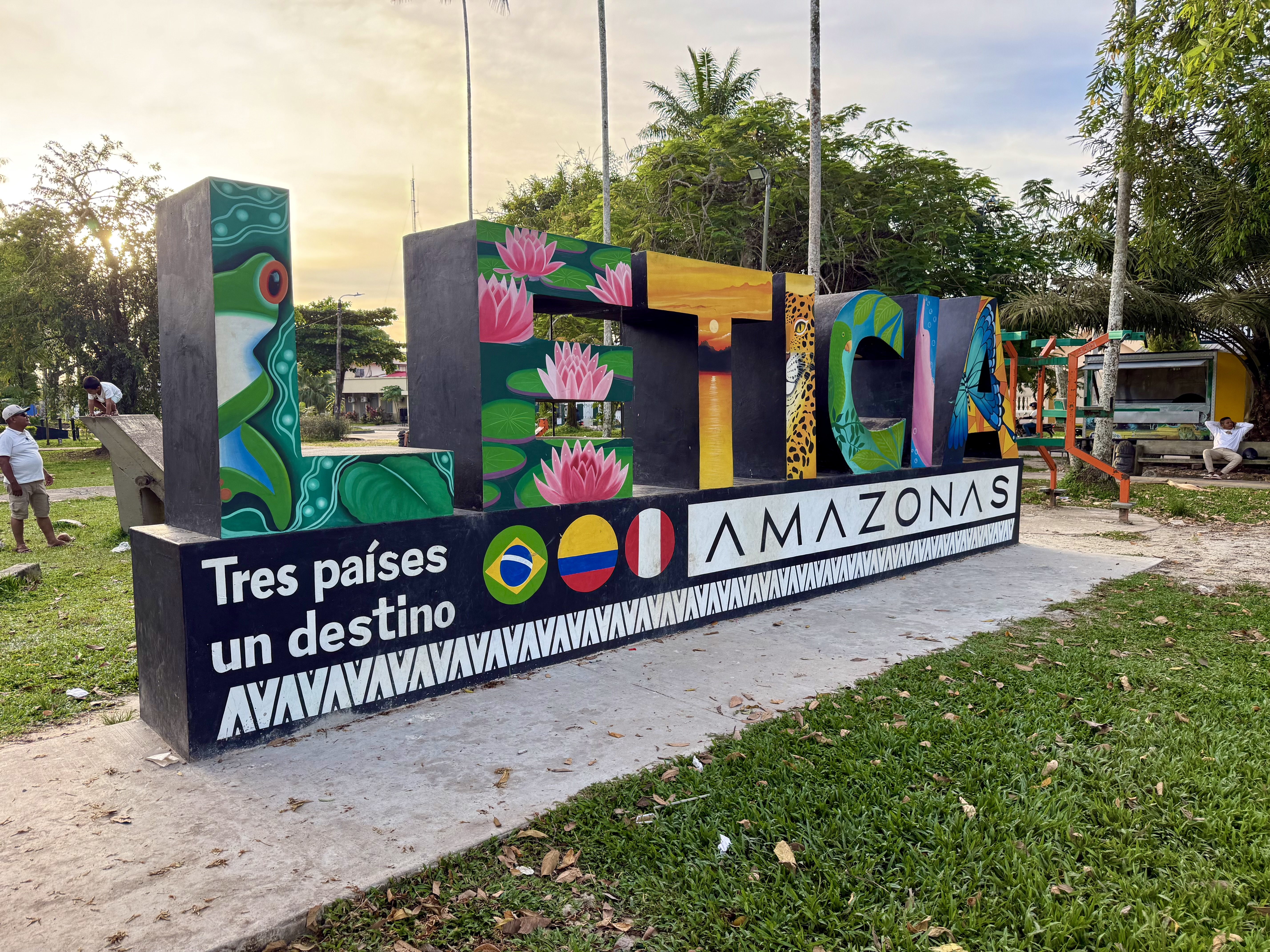
A Few Days in the Leticia Region of Bracope
I have always been fascinated by the Amazon River. Even as a young preschooler, I dreamt of the dense flooded rainforest. When I finally got to the Brazilian Amazon a few years ago, I was deeply disappointed by the lack of wildlife and extensive farming around Manaus. During a subsequent trip two years ago to a tributary in Peru, I was pleased to find that the forest and wildlife seemed to be intact. As I was still curious about the situation upriver from Manaus, I used the time in Columbia this year to visit Leticia, a two-hour flight from Bogota. Leticia is the central port for the three-border region, locally called Bracope, for Brazil, Columbia and Peru that share the Amazon River here.
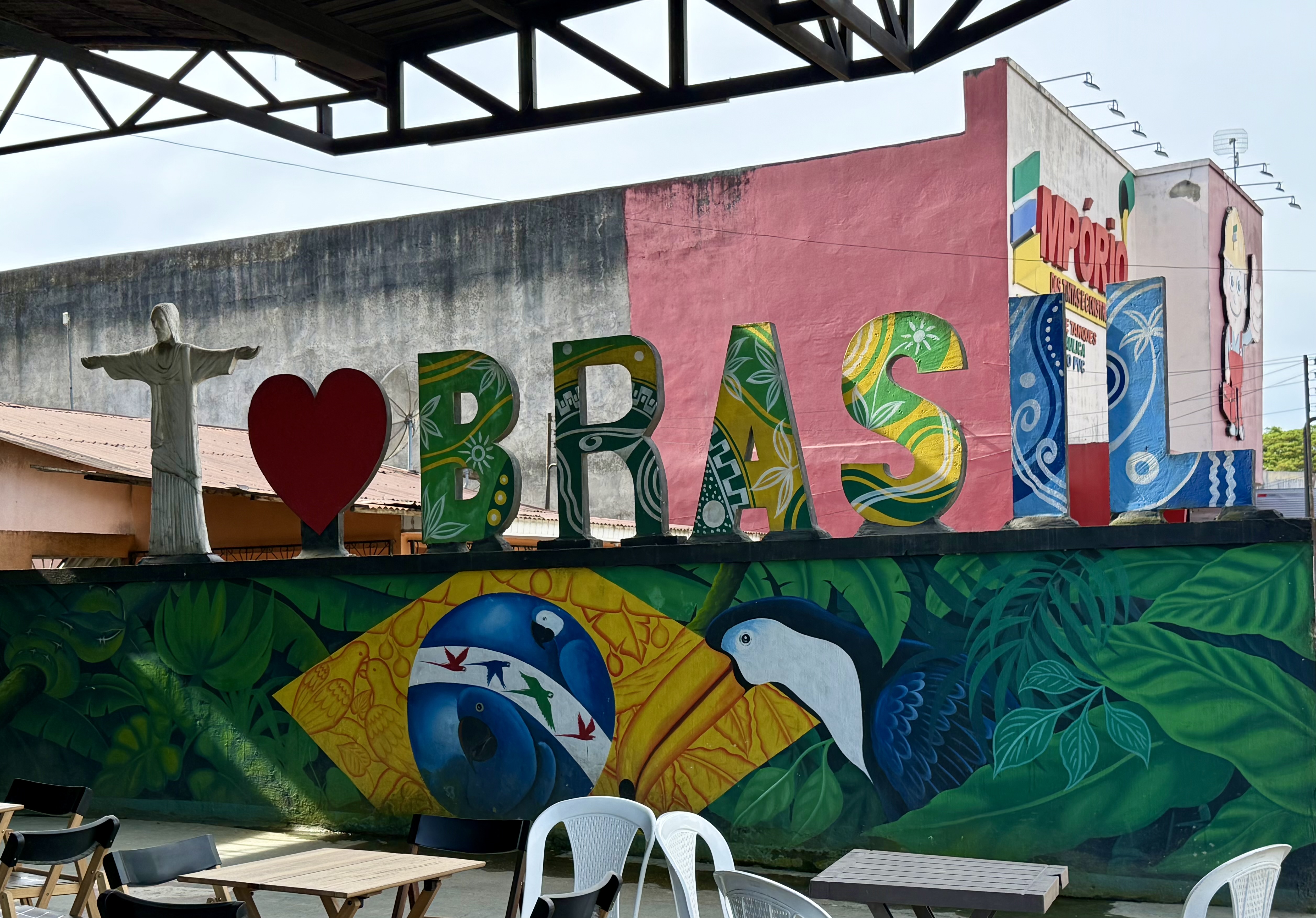
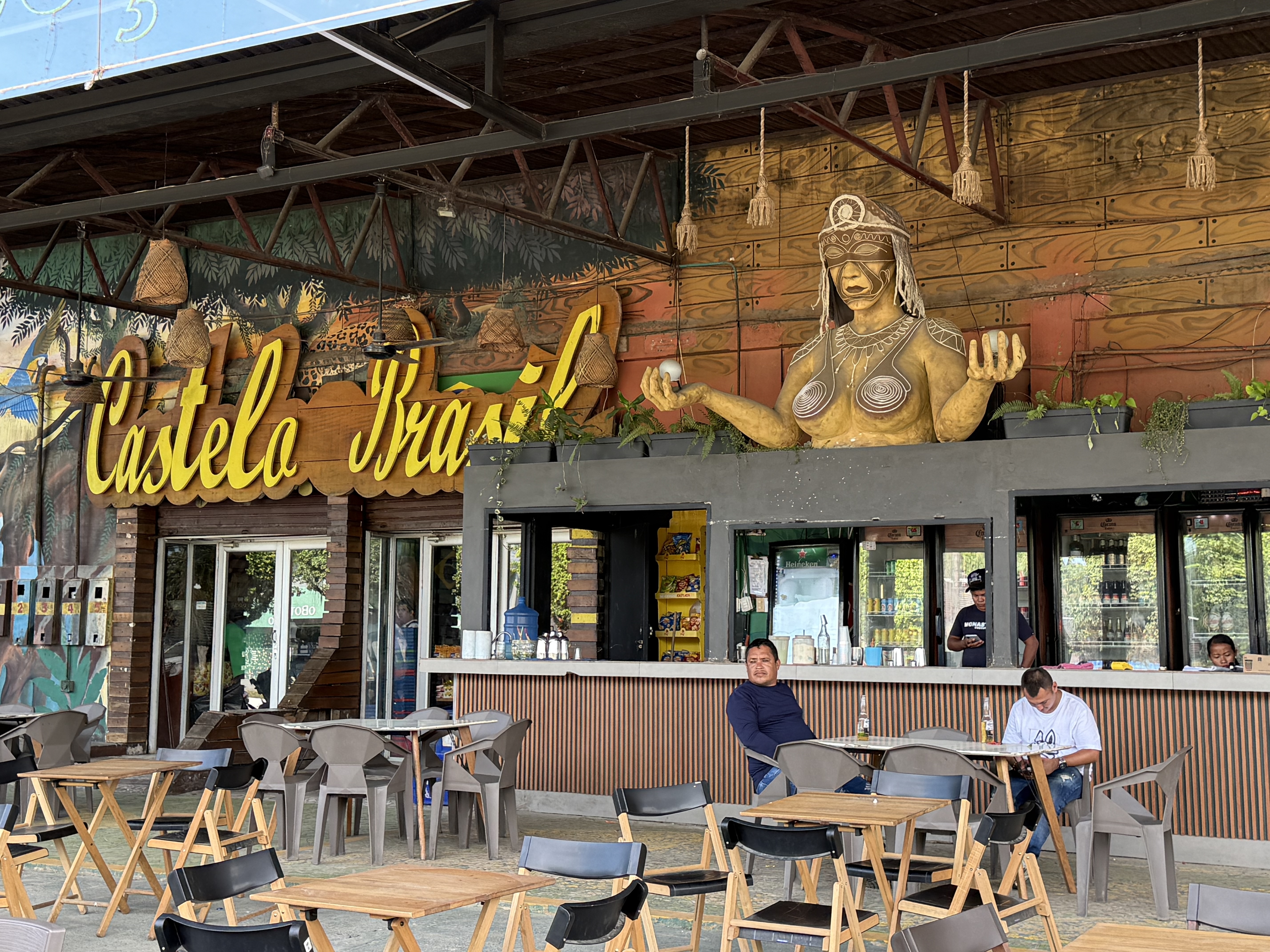
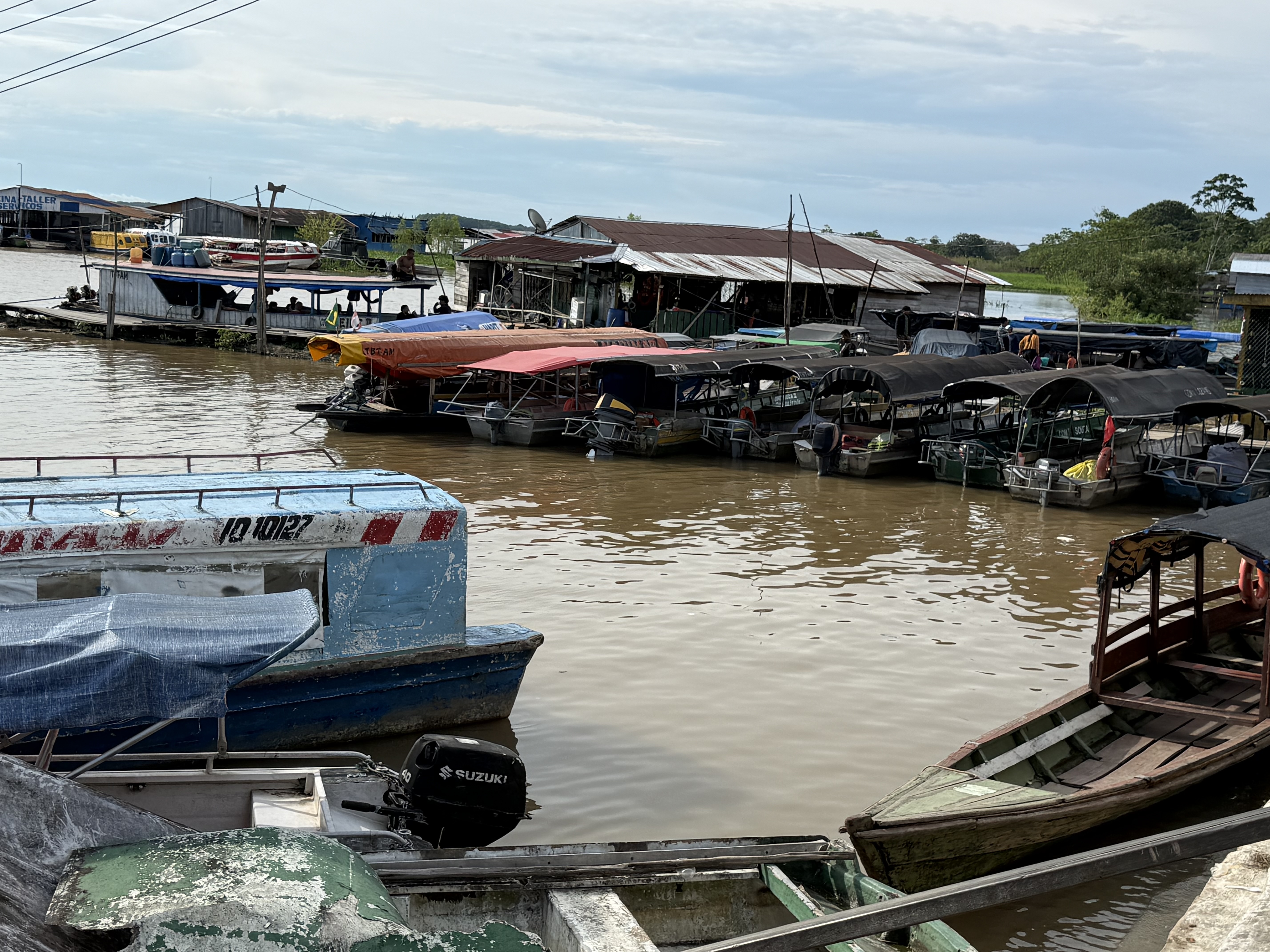
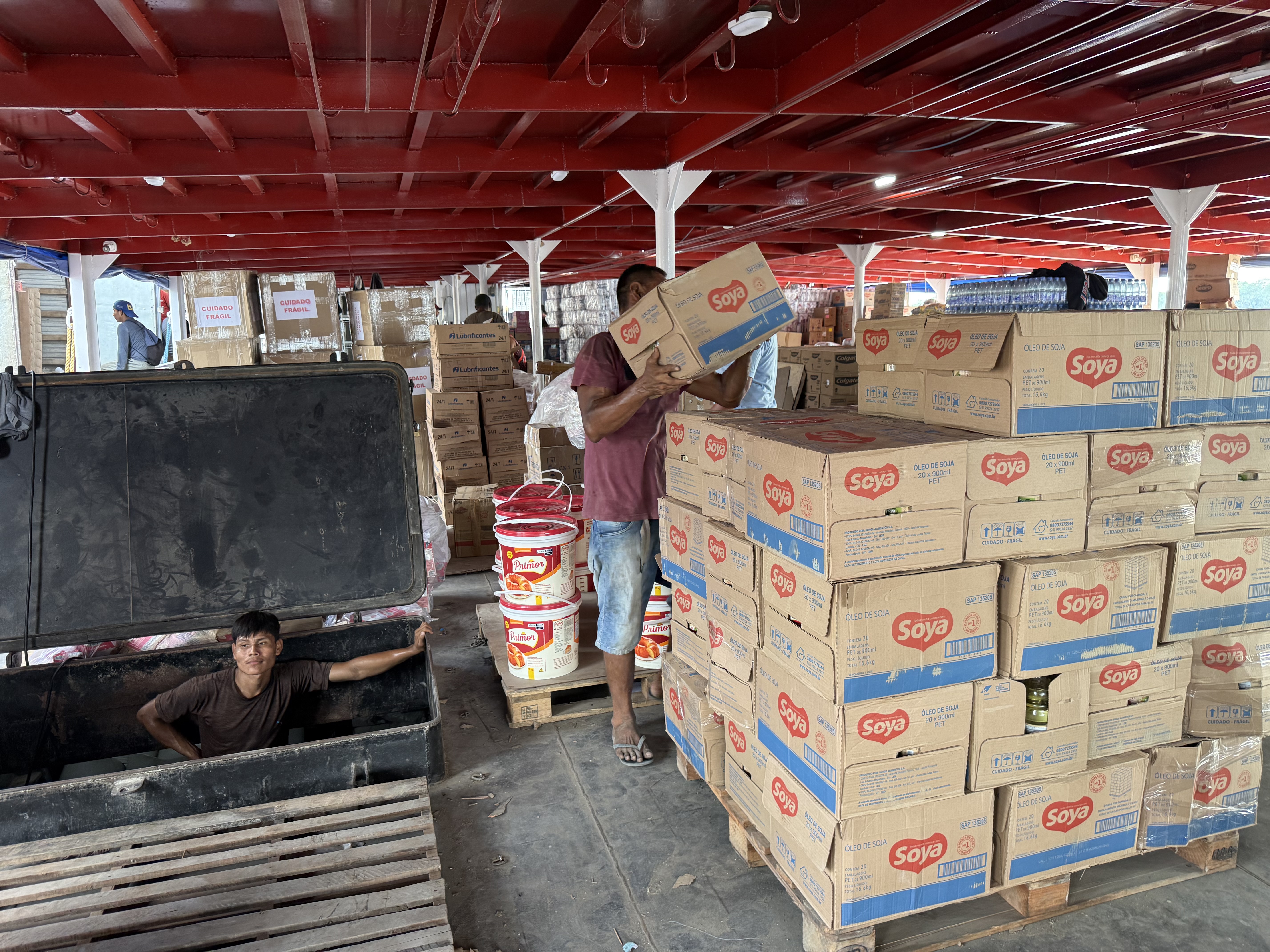
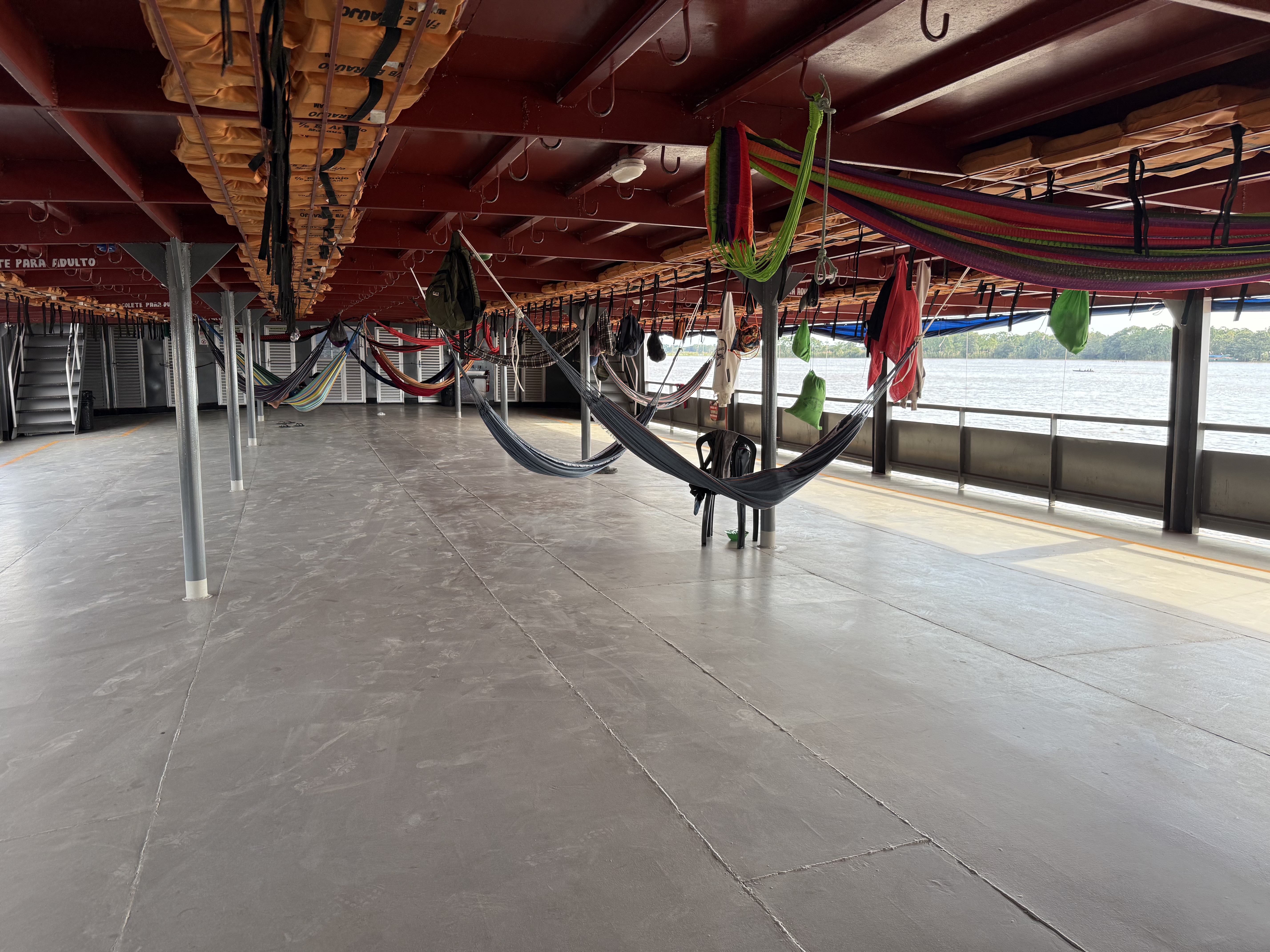
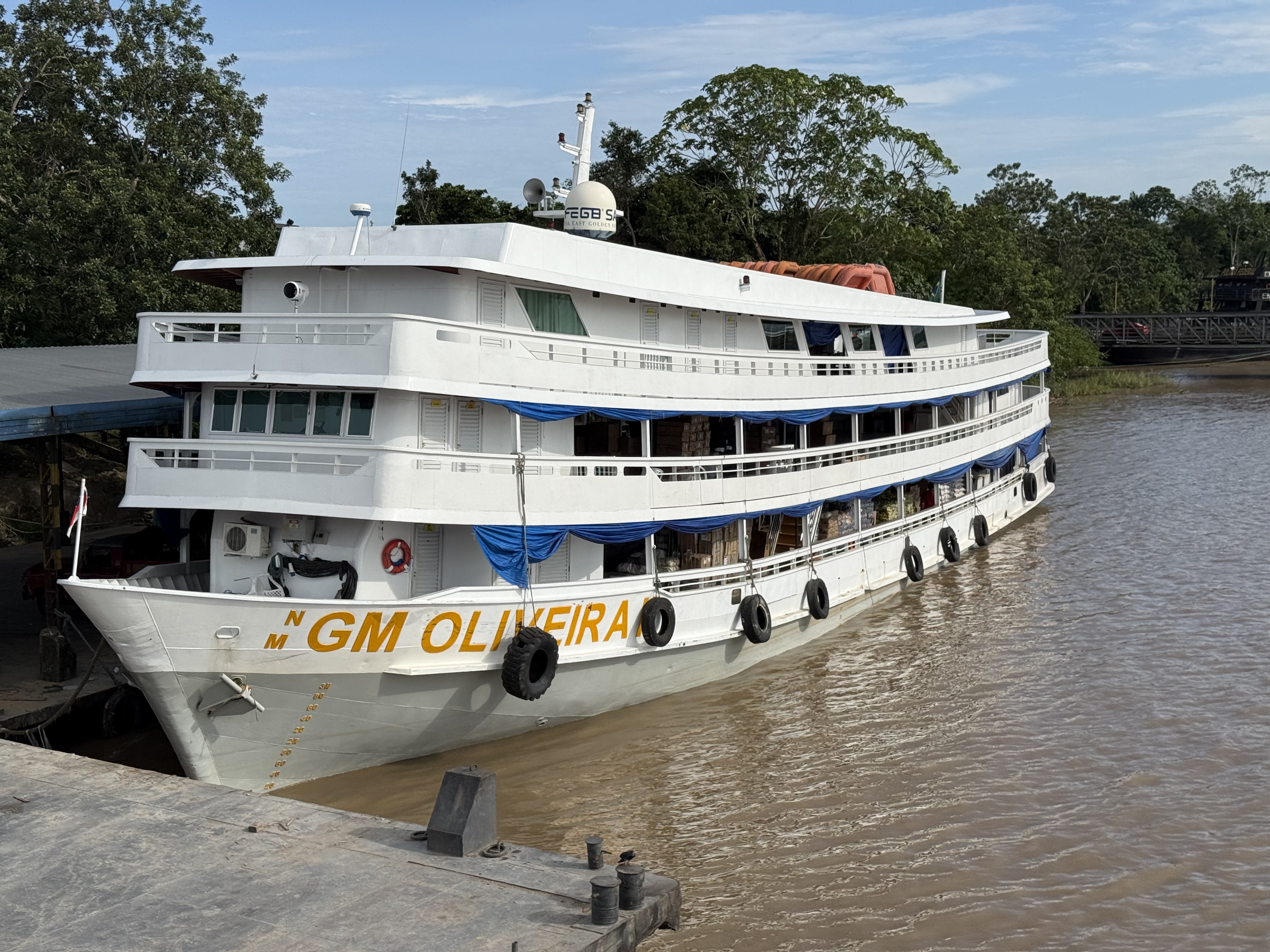
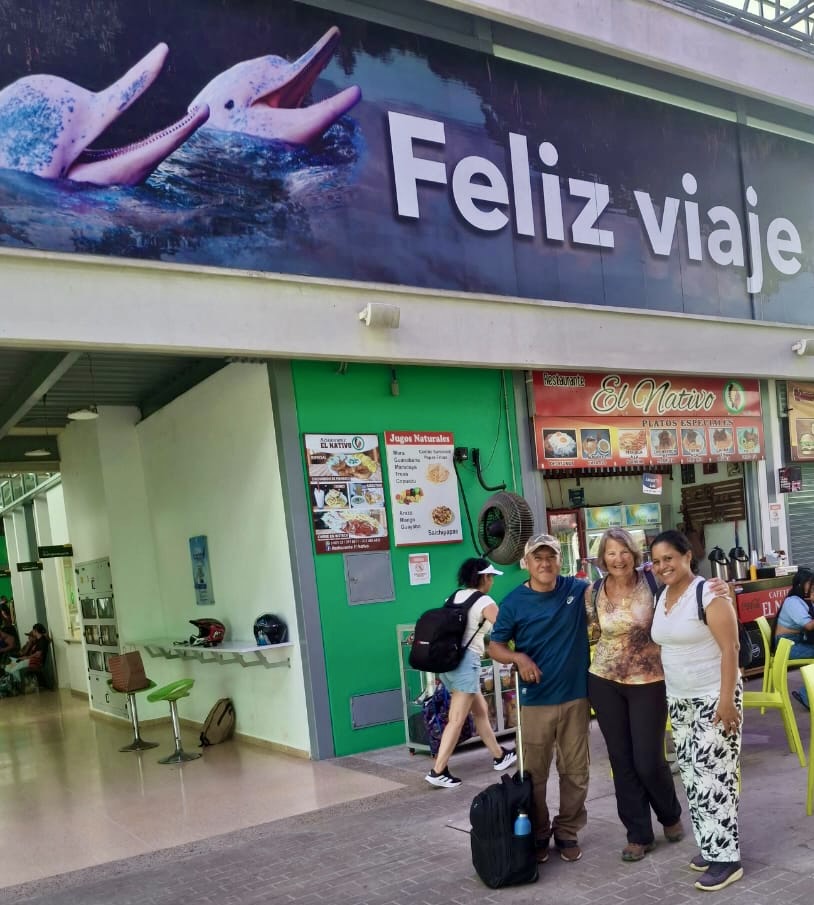
When I first arrived at Casa Amazilia where I was staying, the owner, Maricela, asked me if I had made any plans for the afternoon. I hadn’t as I thought I’d just walk into town, which was supposed to be about 20-25 minutes away. Casa Amazilia borders a wetland near the airport at the edge of town. She suggested a tuktuk city tour and immediately set me up with a good driver guide. As Leticia’s central area is just a few blocks between Parque Orellana and Parque Santander, we headed almost directly from Columbia to Tabatinga, Brazil. There are no border crossings or controls, just a sign indicating that one has crossed over to a different language, currency, and customs. I arrived on a Catholic holiday, so the shops and museums were closed in Leticia, but everything was open in Tabatinga. Apparently, locals use the border for purchasing goods that are cheaper in each country, much the way we do in border towns in Austria or the way it used to be on border towns between Mexico and the U.S. Tabatinga’s port is a hub for the boats traveling the Amazon to and from Manaus, and I was lucky to be able to board one to see what it was like. The ground/water level is used for transporting products of all kinds, from food to electronics to whatever is needed. The upper floor is strung with hammocks for passengers. There are other fancier boats with personal cabins for passengers, but this one was a typical transport vessel as were the others in port. Smaller speedboats and canoes were also docked by the side for local transport to the Peruvian islands across the channel and/or upriver to many of the indigenous communities in the region. There are twenty-two indigenous villages in the area. Many are from the Ticuna tribe, but not nearly all of them. Each speaks its own language and has their own customs. The children go to elementary school in their or neighboring villages, but for secondary school they may have to go to a boarding school. It doesn’t seem to make any difference which country the school is in, just the distance from the home village.
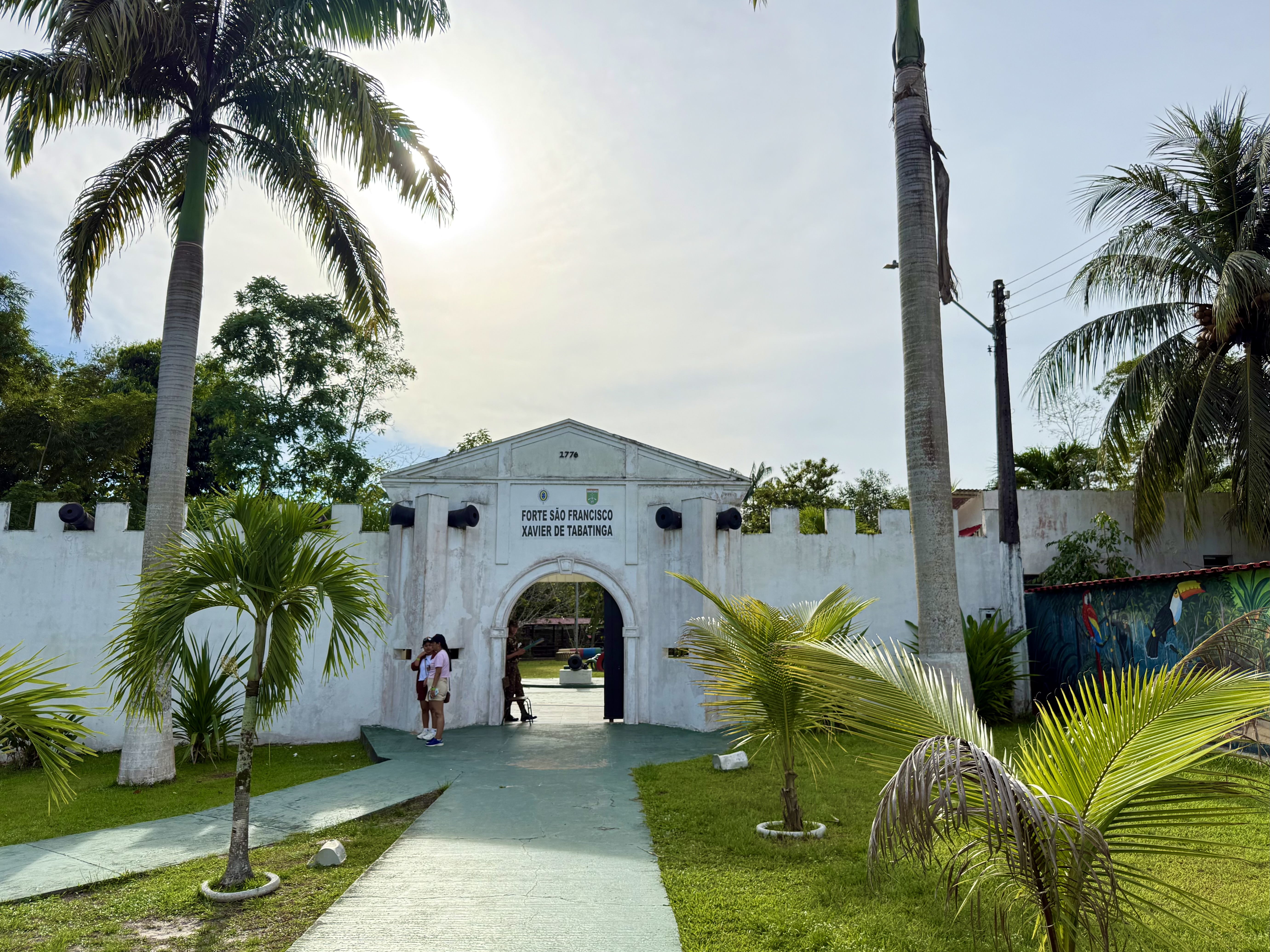
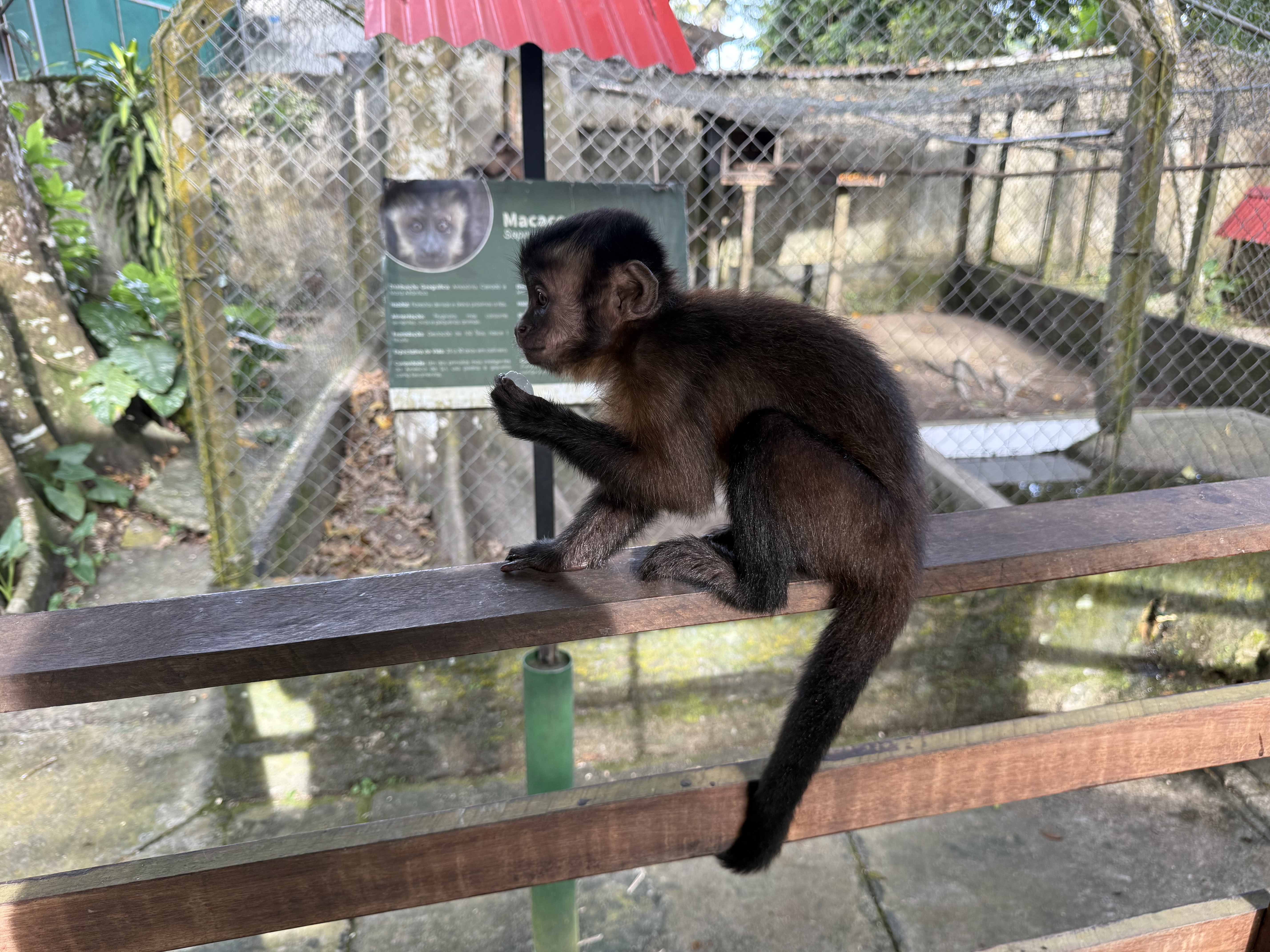
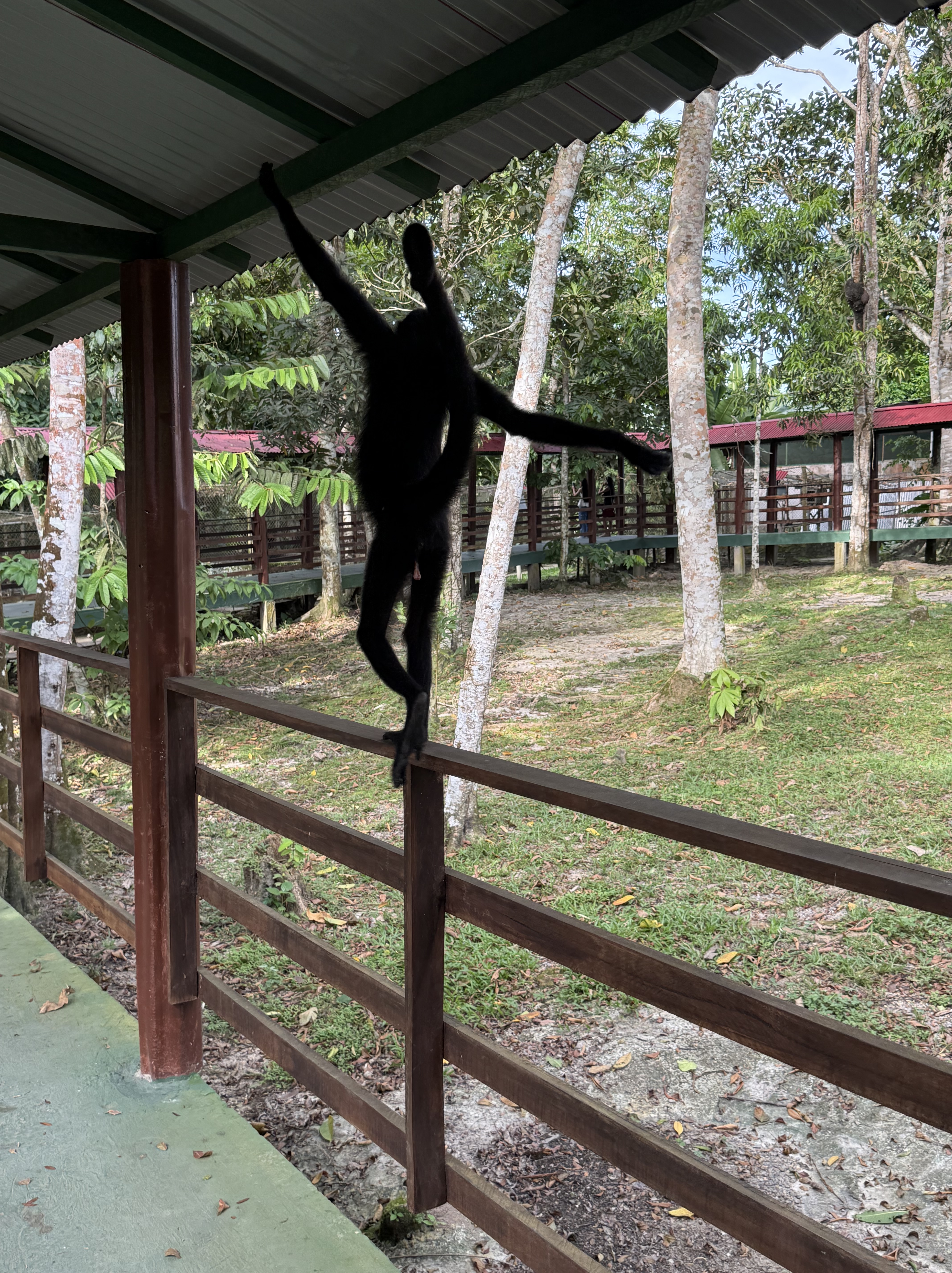
From the port we stopped by Fort Saõ Francisco which has a small rescue zoo. A yellow and blue macaw greeted me at the entrance. He was unable to fly, which is why he was here. As I walked around a spider monkey and a black faced capuchin casually meandered by me on a railing, completely free from any constraints. The larger animals in pens, a tapir and a jaguar, had been born and kept in captivity and couldn’t be released into the wild as they lacked the skills to survive.
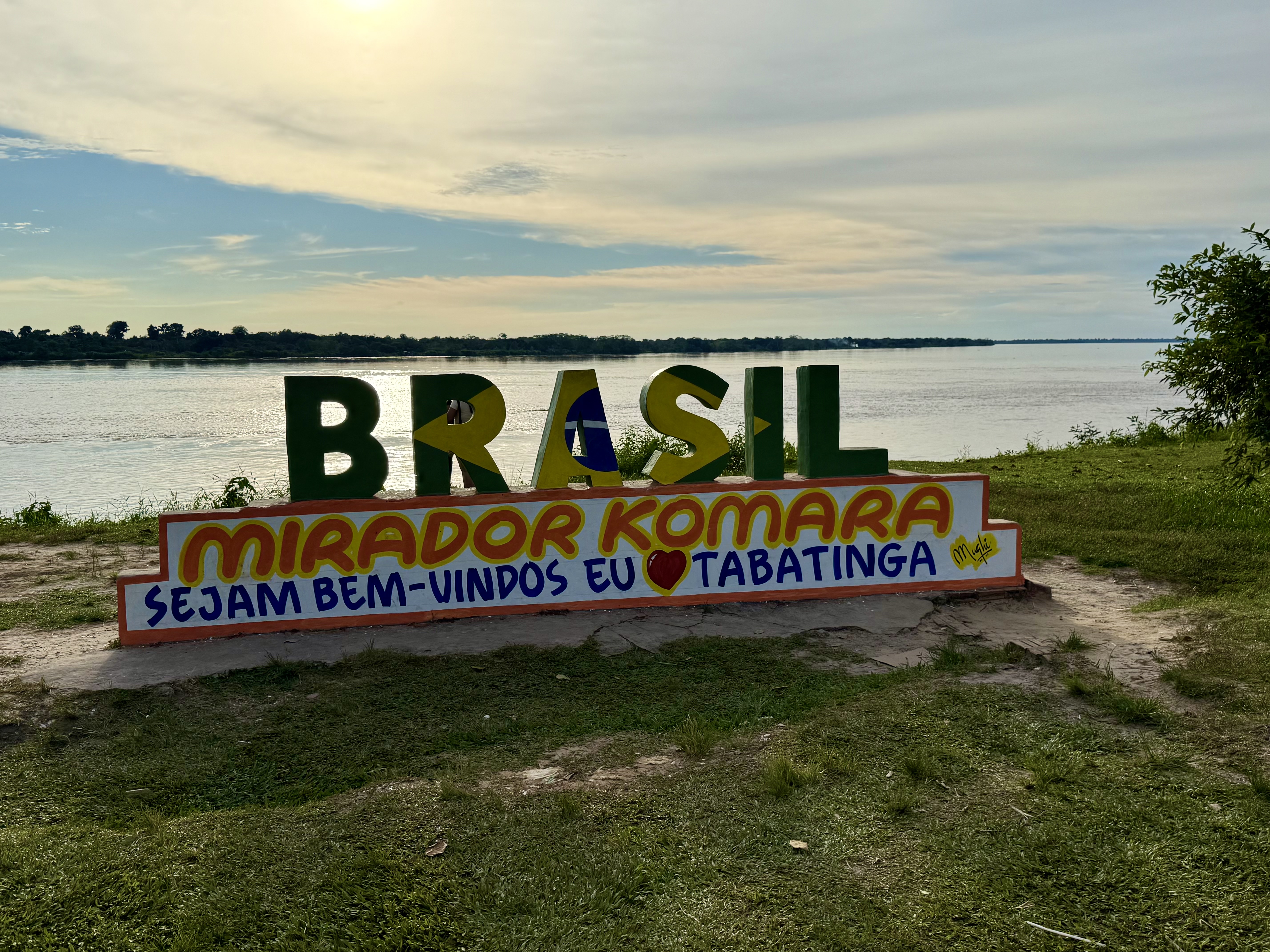
Before heading back to Columbia, we stopped at a lookout point from where we could see Santa Rosa Island which belongs to Peru.
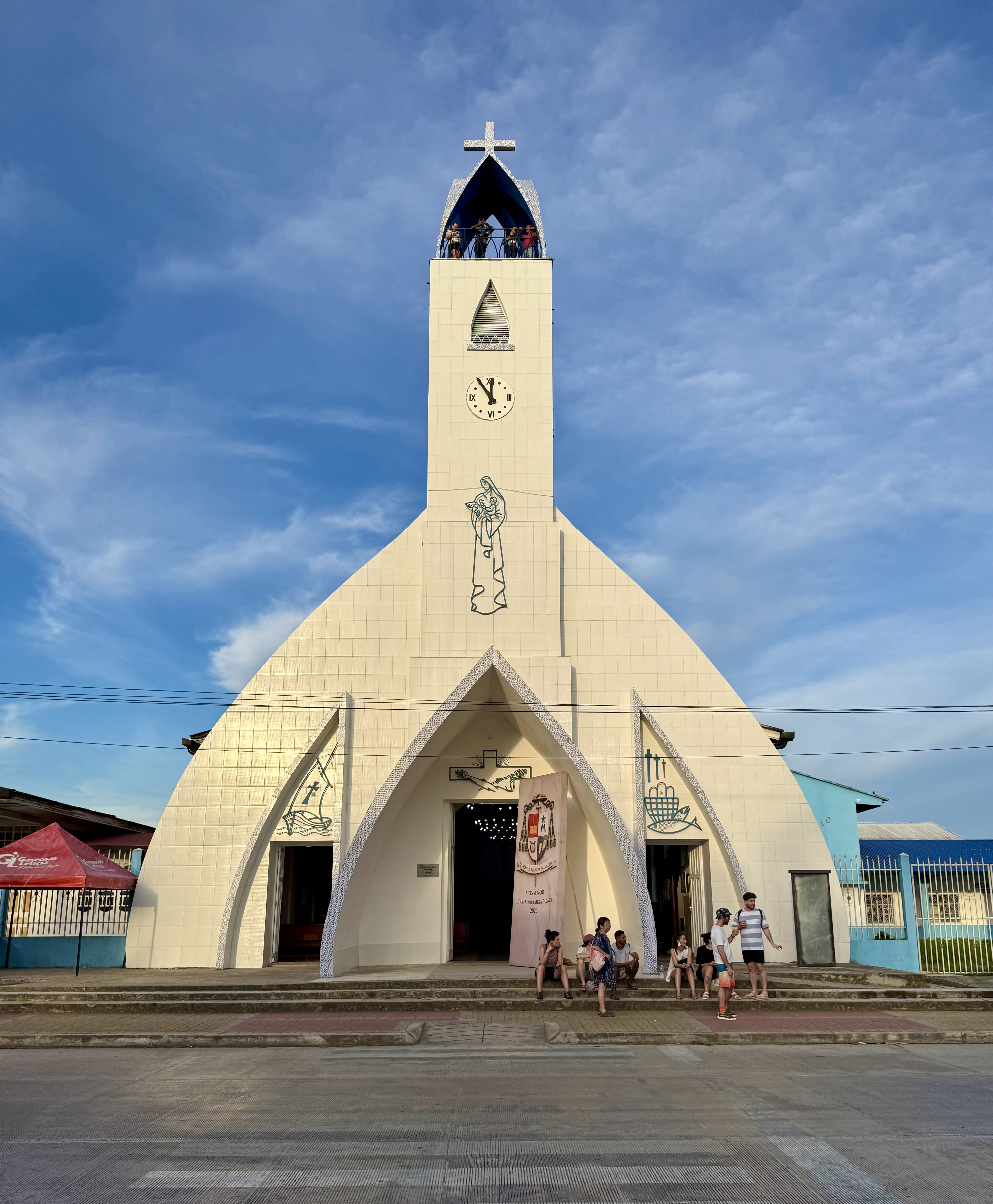
Parque Santander is famous for its lorikeet evening show. Hundreds of these little green and white birds descend on the park every evening between 5:30-6pm. The belltower of Church of Our Lady of Peace in front of the Parque offers a wonderful lookout point. The birds offer an amazing sight, and the sounds are almost deafening.
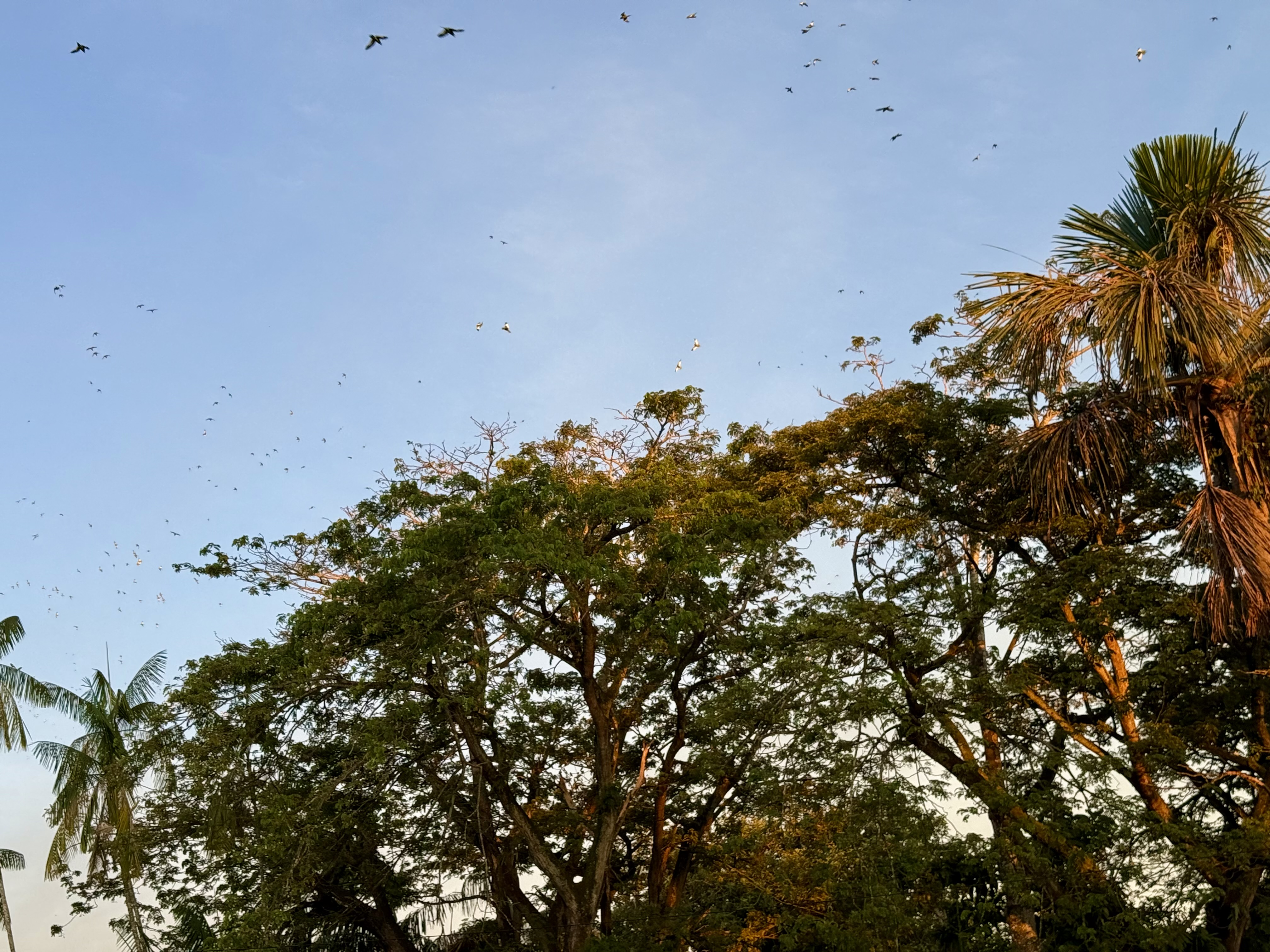
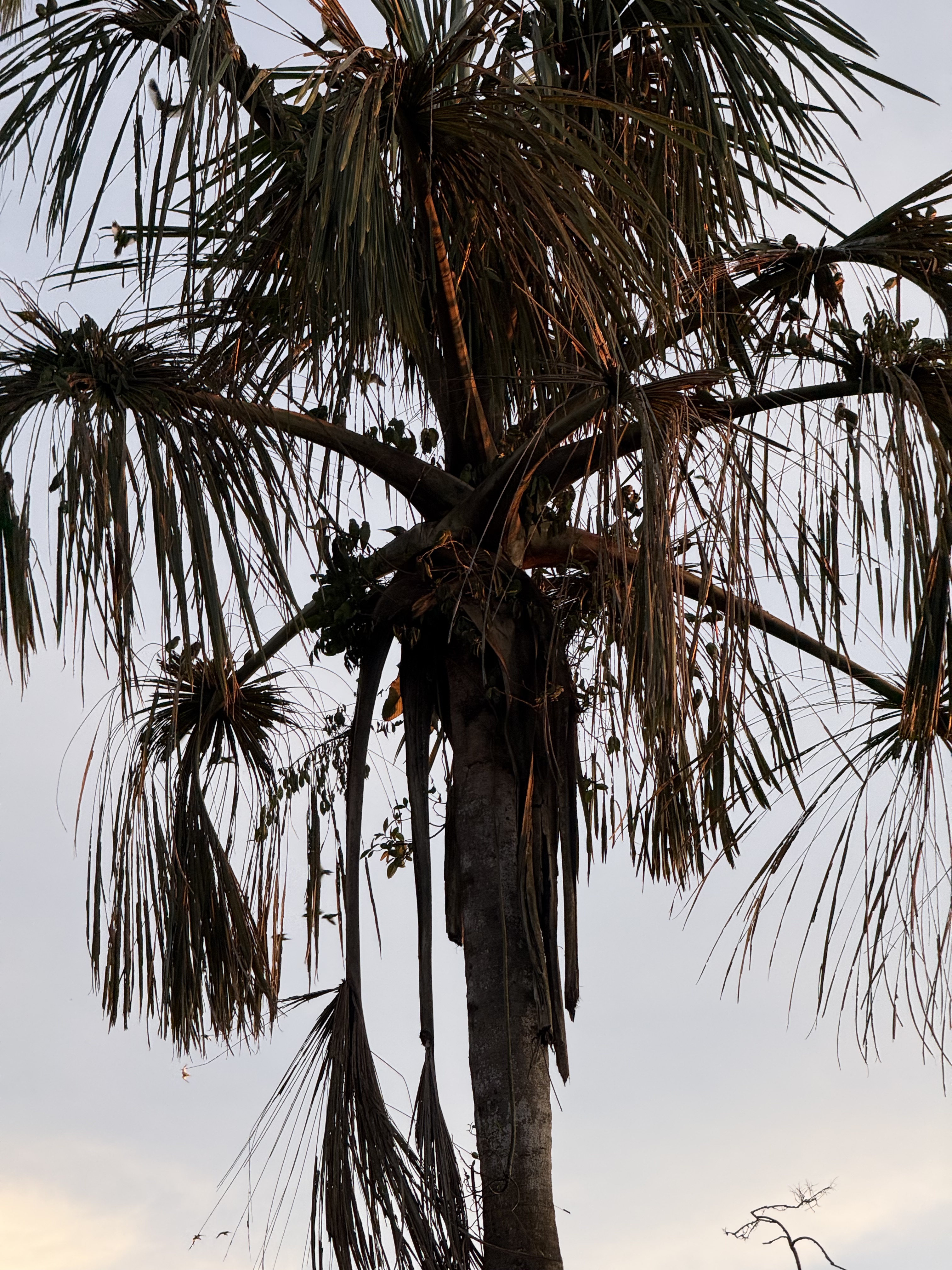
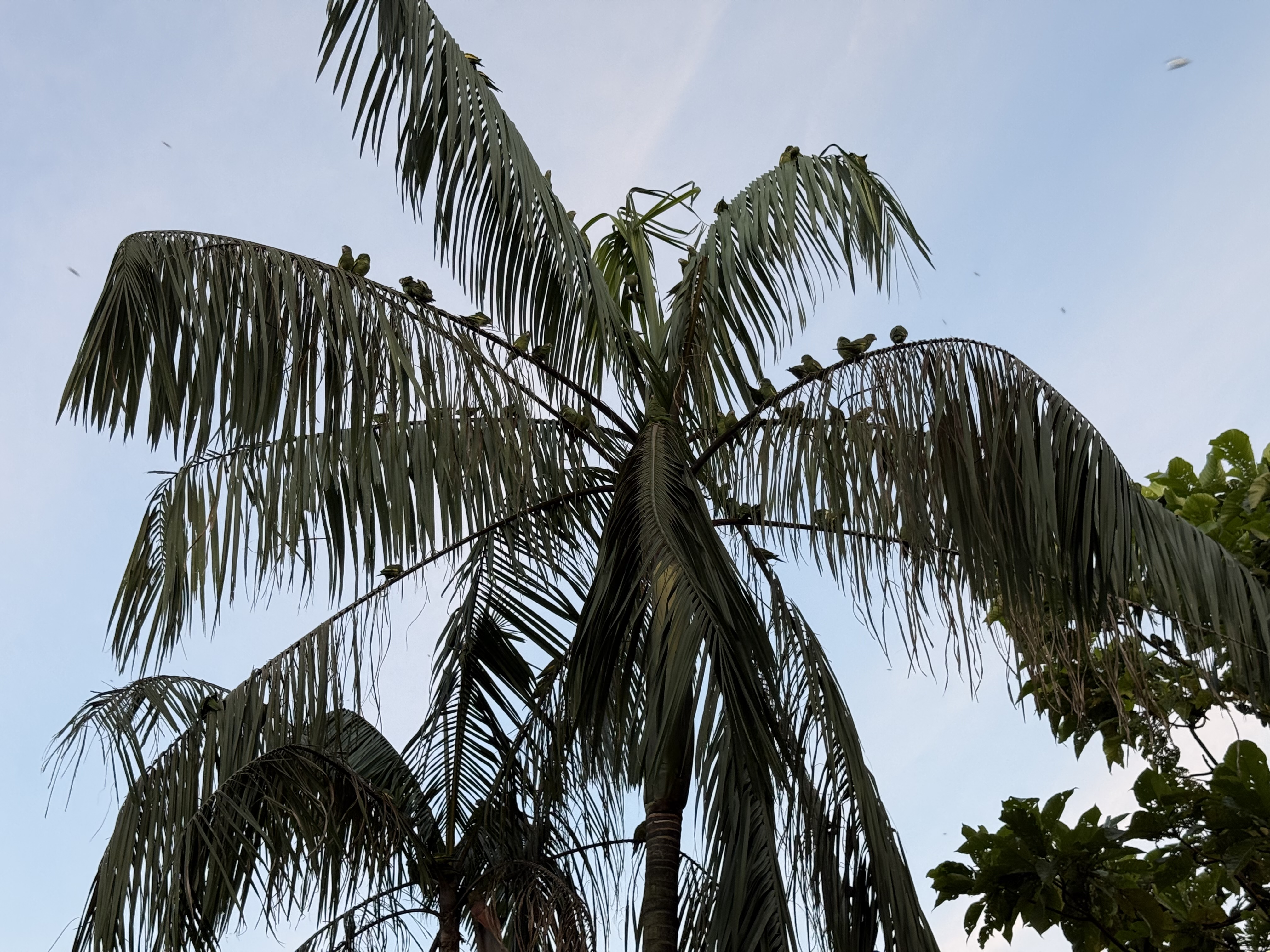
After nature’s performance, I walked back in the dark to Casa Amazilia. The walkways are uneven and although one gets a sense of the local community, it isn’t a particularly pleasant jaunt. The next morning, I was being picked up at 6:30 for a three-day tour to Puerto Nariño, which is described in a separate blog. When I returned to Leticia on Thursday evening, I was met by Elvis from Wirapuru Tours. He was going to be my guide for the next three days. We had previously arranged which excursions I wanted to do as he gave me suggestions from which I could choose. The first one was to a local indigenous family to see how they live. This isn’t a tourist site, but a working living family in the middle of the rainforest. When Elvis arrived, he was accompanied by his wife, Xeni, a truly wonderful woman, who complemented Elvis’ encyclopedic knowledge of plants and birds which her shamanic wisdom. She insists that she isn’t a shaman herself, but both of them have studied with local healers and shaman, and she has an innate sense of healing, perhaps because she is also a masseuse with a tremendous understanding of the medicinal properties of the plants in the region.
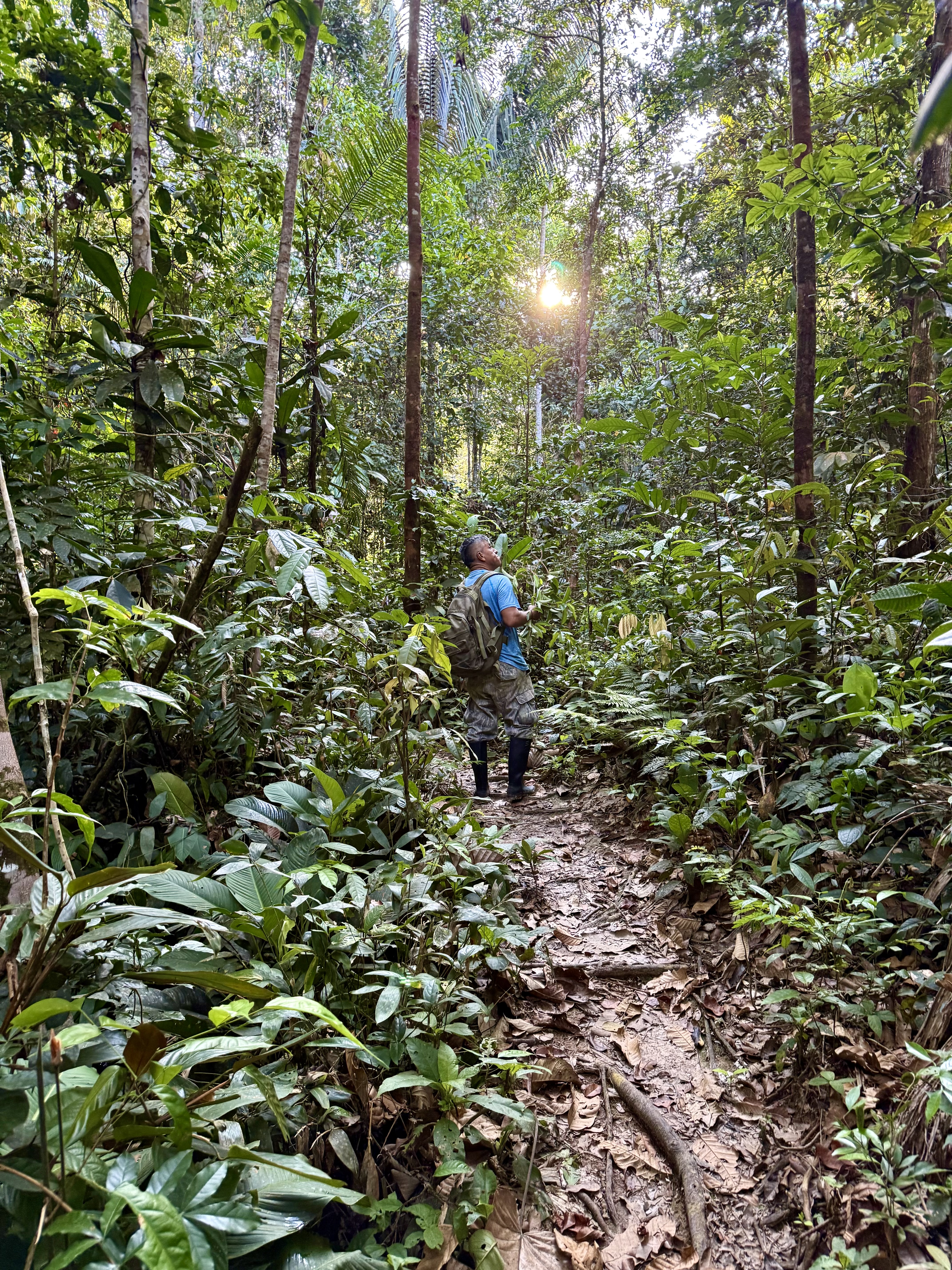
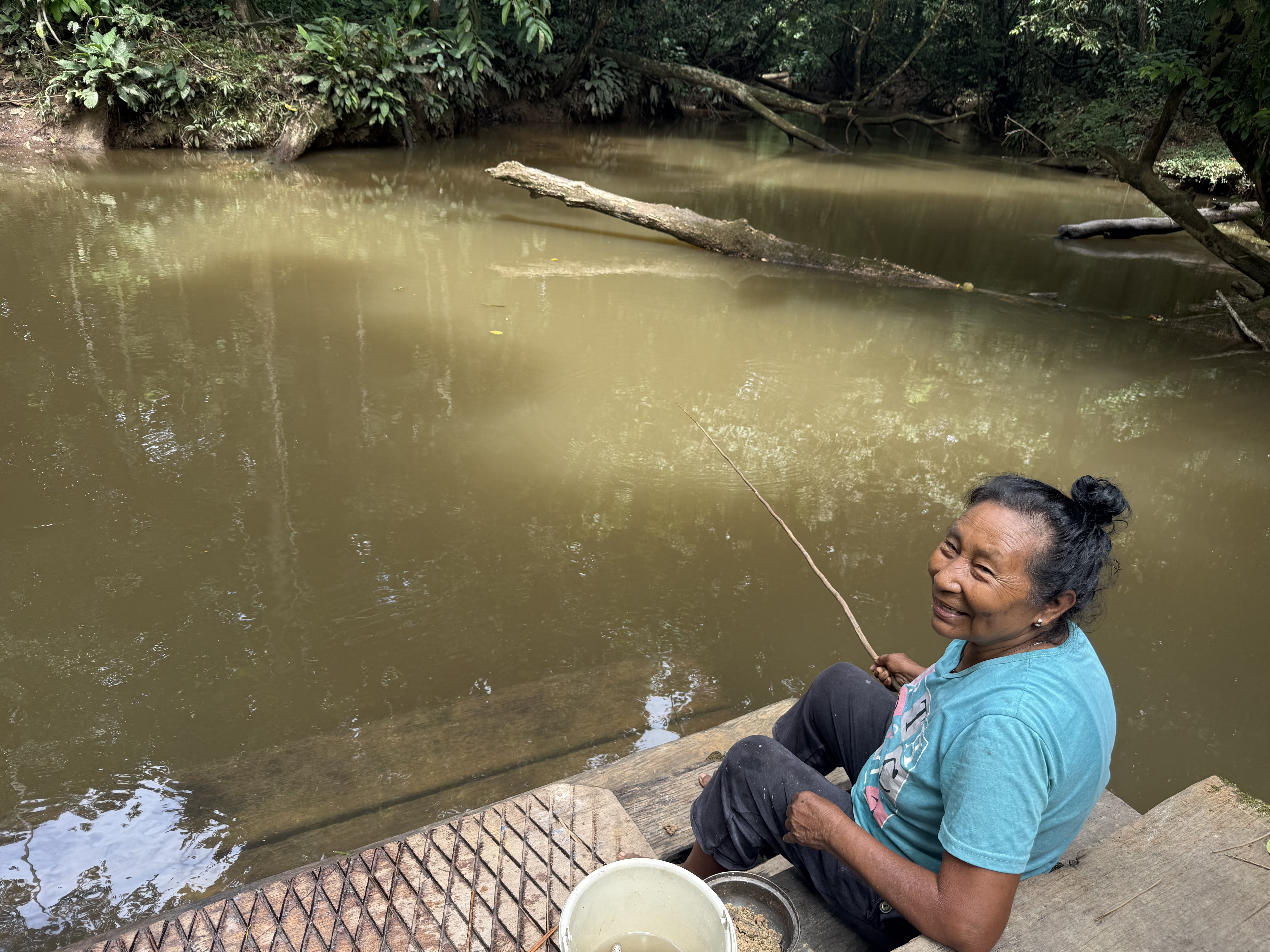
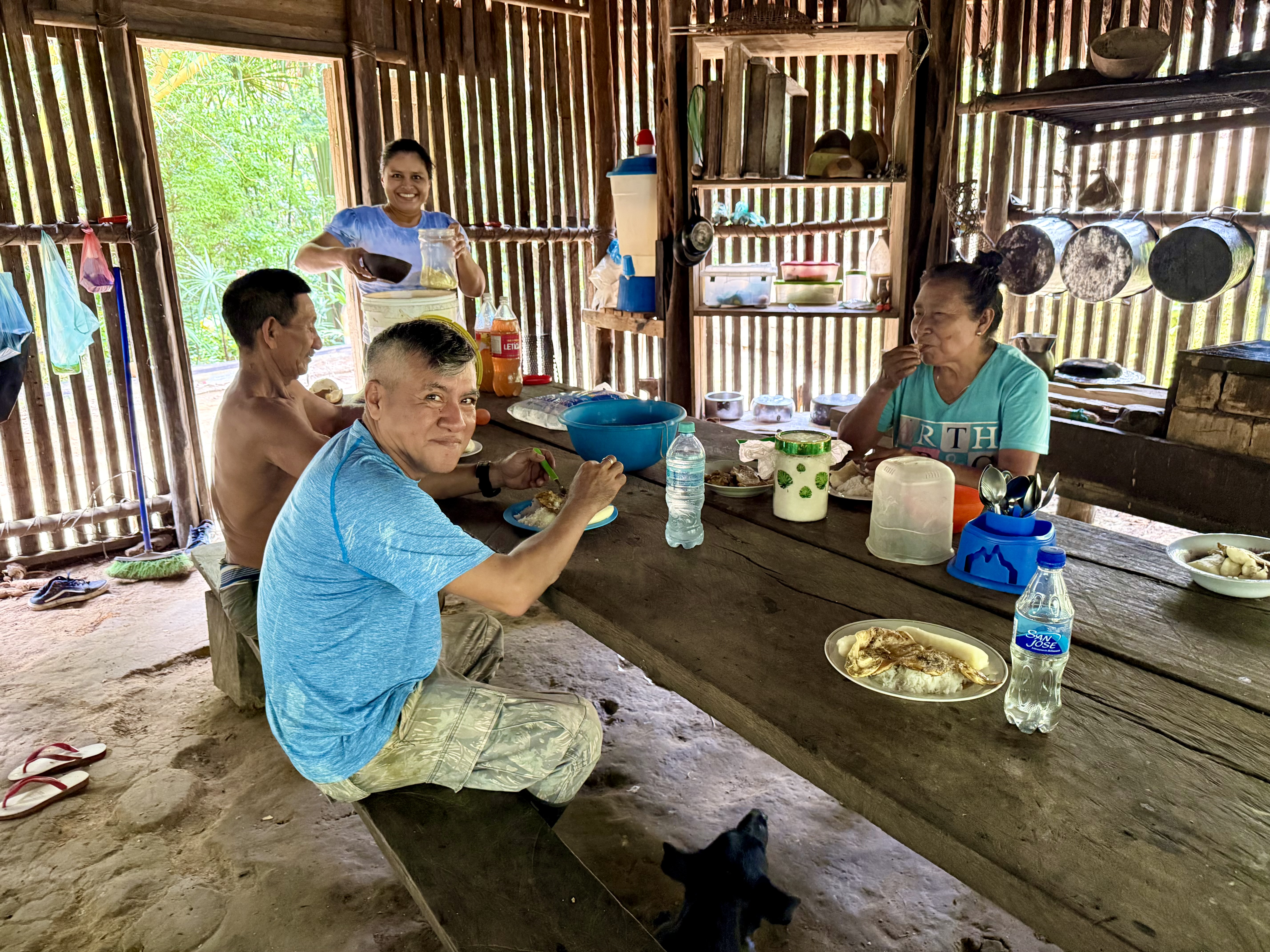
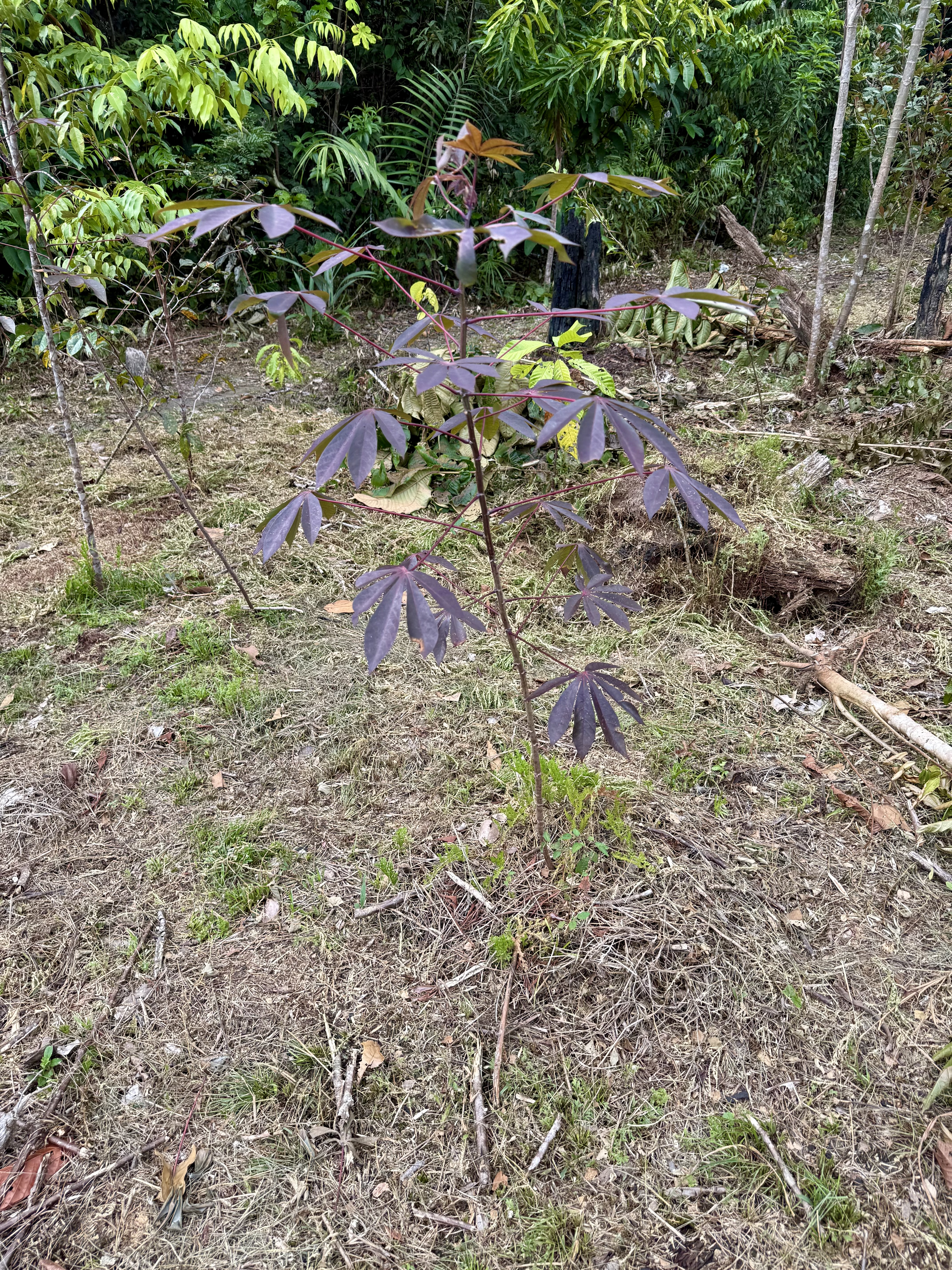
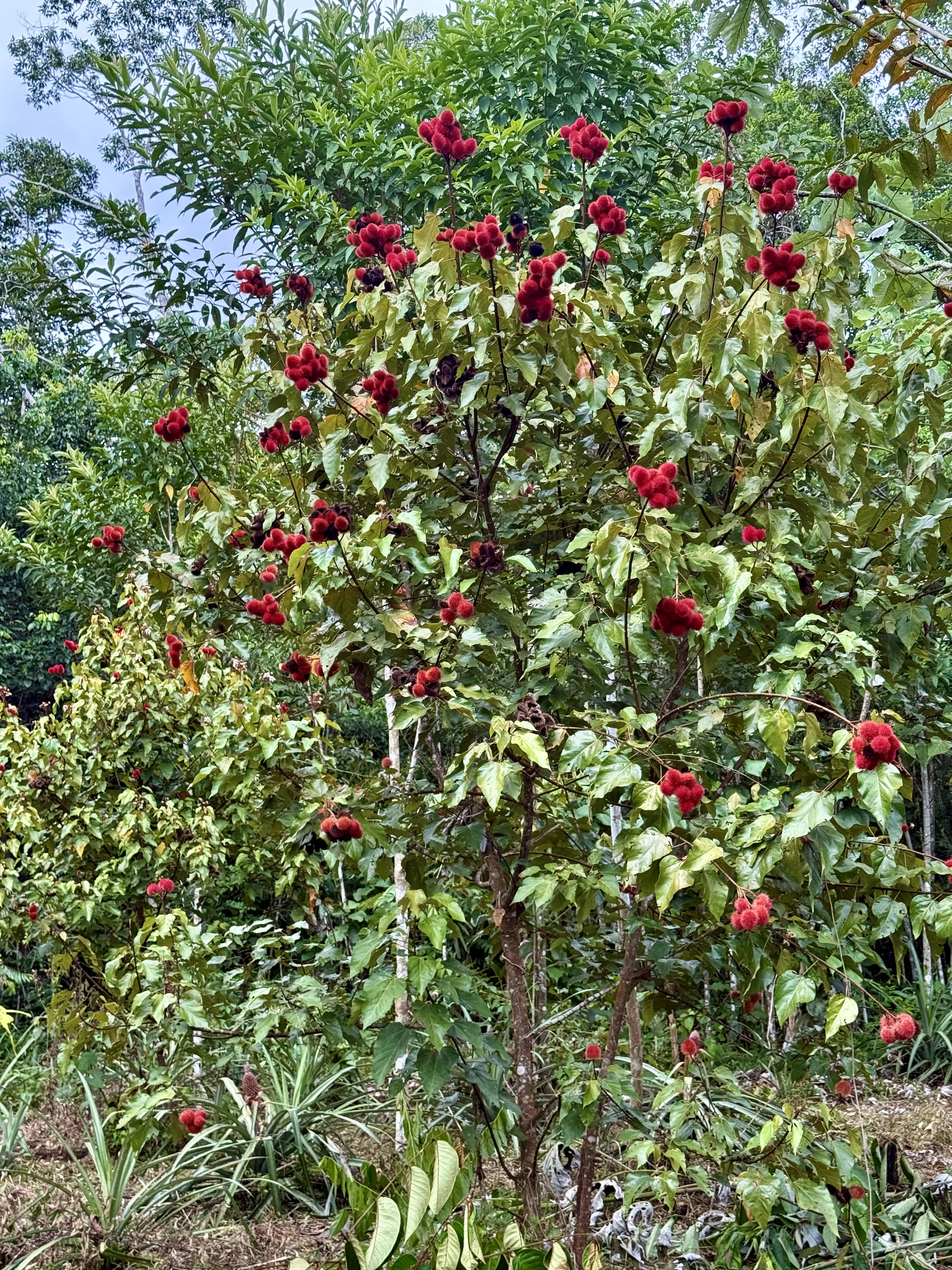
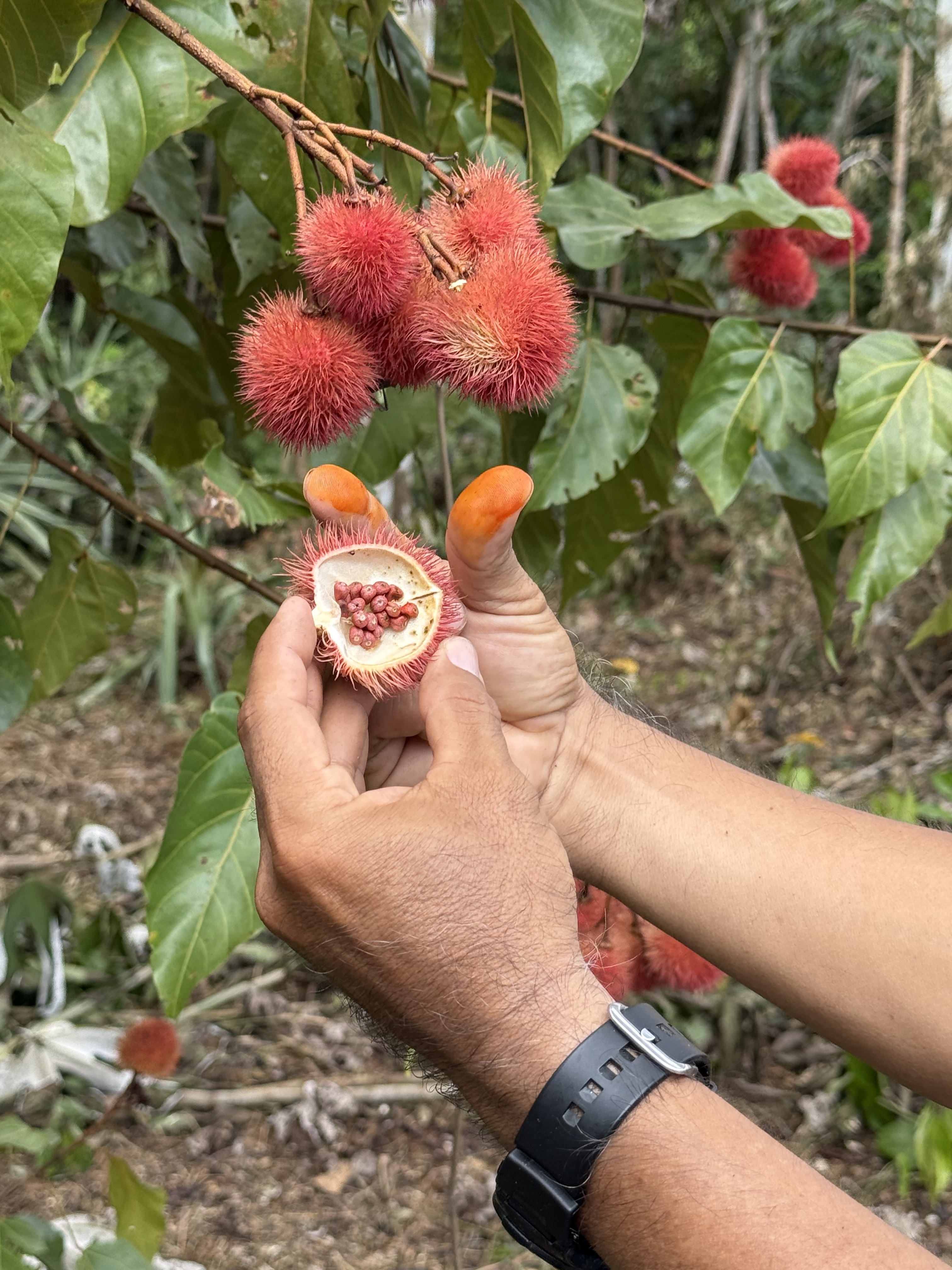
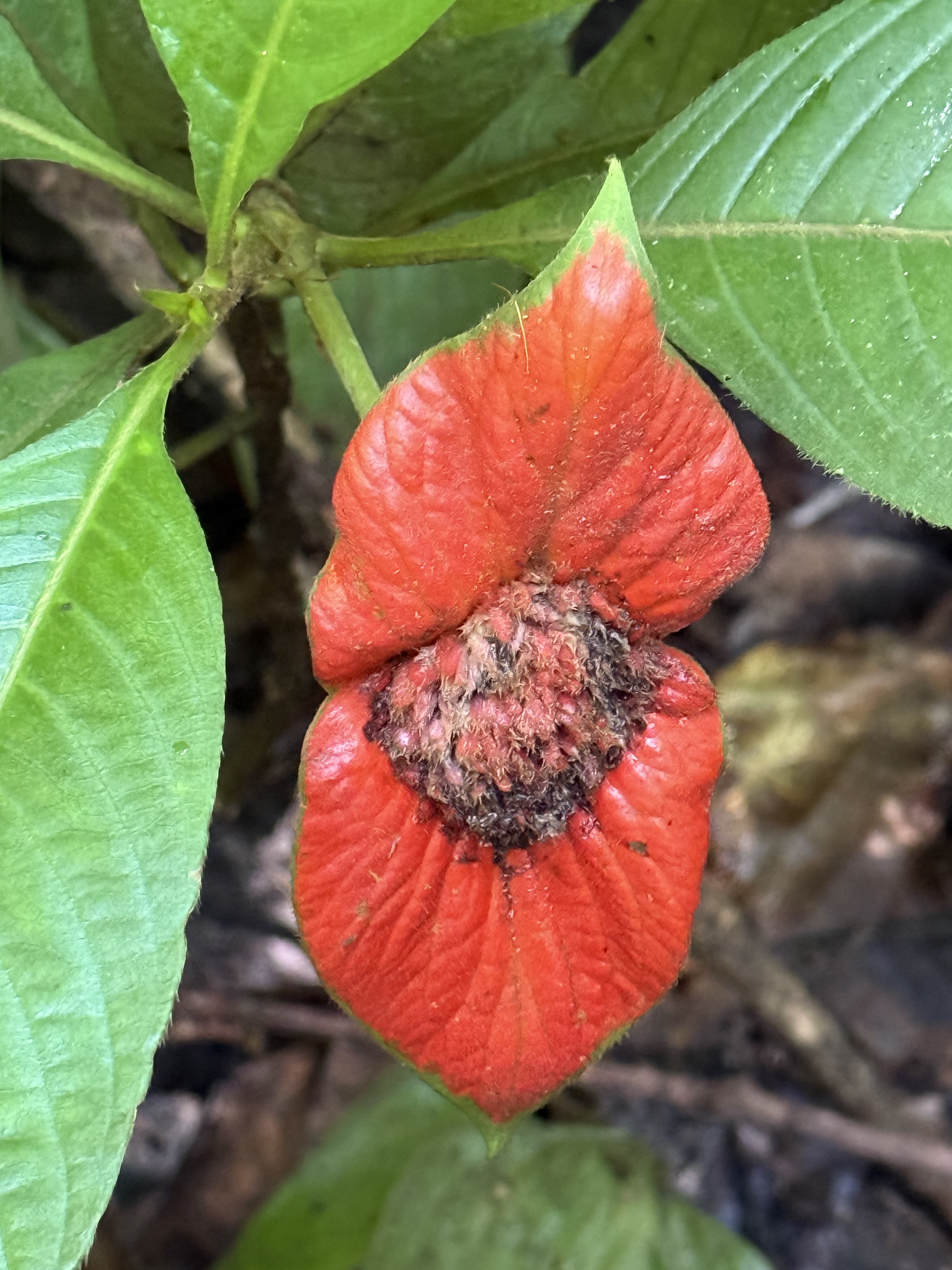
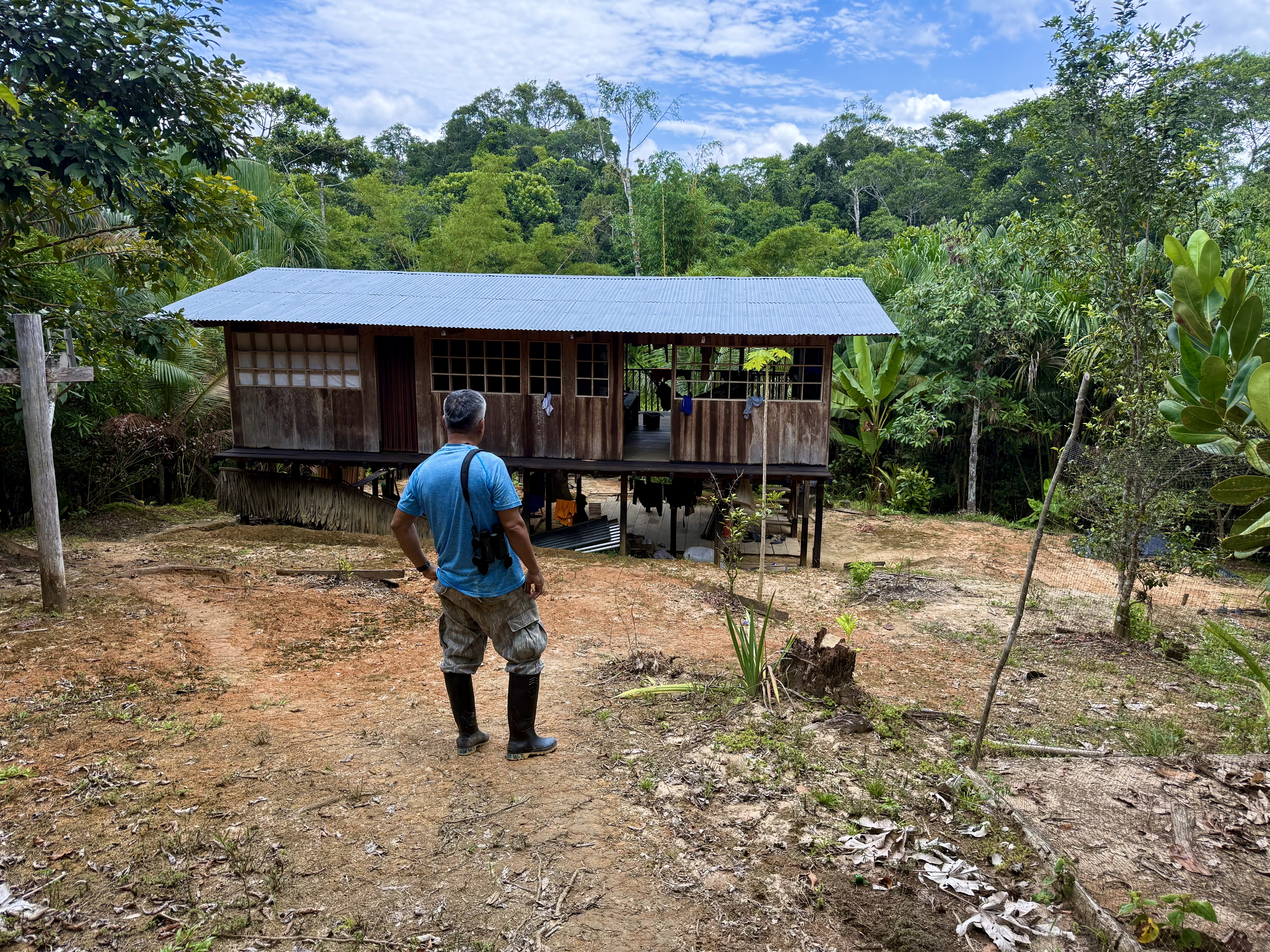
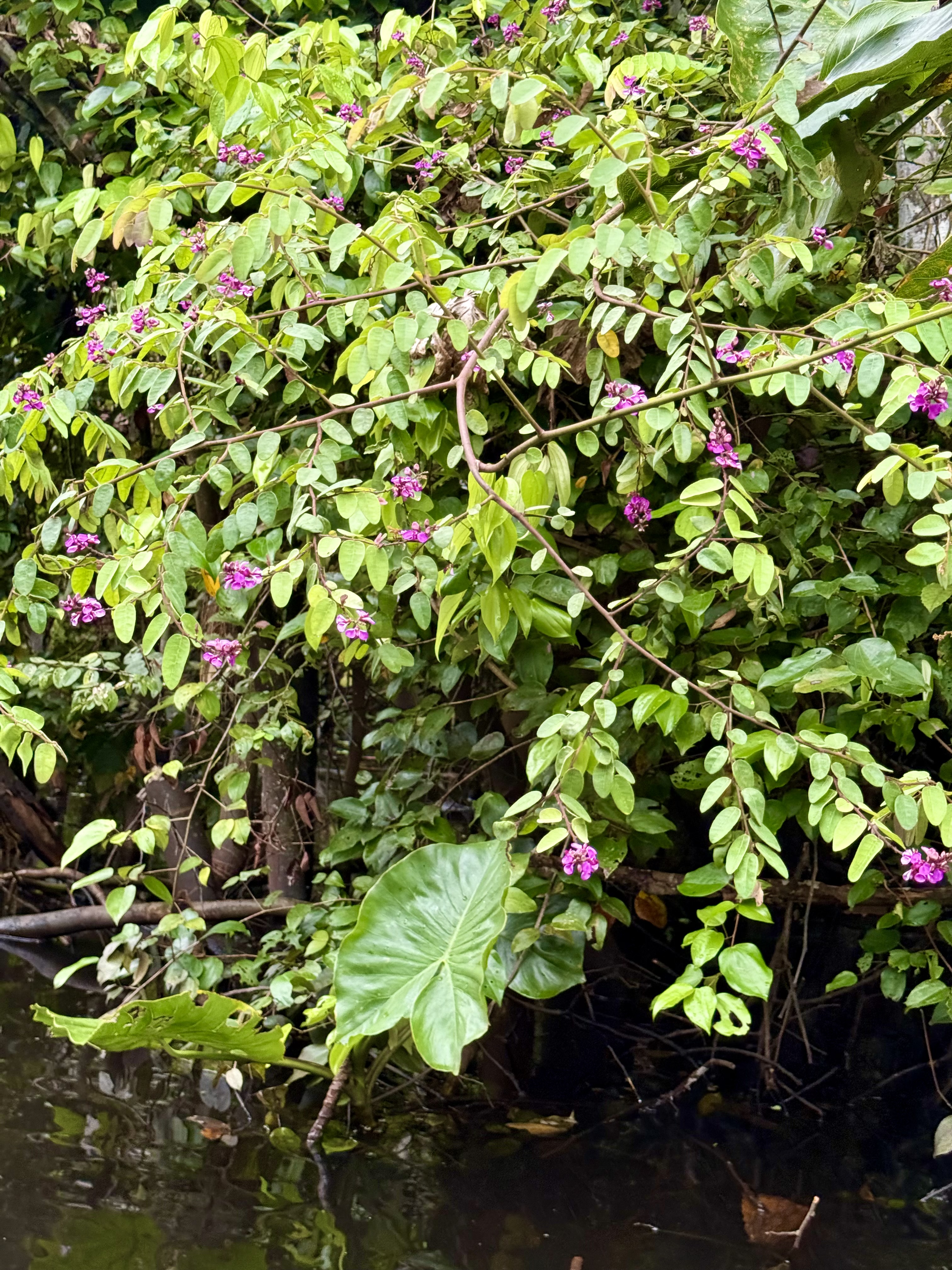
The three of us took a taxi for about an hour to a drop-off point where a ladder allowed for climbing over a fence into the forest. Elvis had lent me a pair of rubber boots for the walk, as the tour agency for Puerto Nariño had done, as it is often very muddy on the trails in the rainforest. Afterall, it does rain frequently. This trail, in contrast to the one from El Paraíso near Puerto Nariño, was flat and the log bridges over the streams all had bamboo railings. They make quite a difference by providing a sense of security on the slippery wood. The narrow trail partially followed a clear shallow stream, with sunlight playing through the canopy on to the sandy bottom of the waterway. Birdsong and insect chirping accompanied us, and we saw a few monkeys, a Geoffery Monk Saki, and a group of squirrel monkeys along the way. When we arrived, Mamashasha, the grandmother, was fishing from her pier on a bend in the river. She caught nine fish while I was there, but a few jumped out of her bucket back into the river. She just laughed when they did. After she was done fishing, we went to the kitchen where lunch was going to be prepared. Xeni did the cooking following Mamashasha’s directions. Xeni had brought chicken from a store in town as I don’t eat much fish, and we all ate that along with yucca and rice and plantains, a typical Columbian meal. While they were cooking, Elvis took me on a tour of the family’s garden. He mentioned the medicinal qualities of each plant and the local uses. There were a few endemic plants in the garden with very special uses against cancer or gastritis, the endemic cassava or achiote tree for example. I was amazed at how similar the uses were to the plants, often somewhat different, I saw in Puerto Jiminez, Costa Rica. Elvis also mentioned one caution that I found particularly interesting, which was how a plant’s use of the color red means that it isn’t to be touched or ingested by either local animals or humans as red indicates a toxic quality. This apparently is also true for the tail of the pirarucu fish. The rest of the plant, however, once grown can be used, the bark of the acai tree, for example, is used to combat malaria. The red seeds from the achiote are used for lipstick as well as for medicinal purposes. Some of the local names indicate what properties the plant or flower has, another example is the Blood Woman’s Kiss, which is toxic or the Huevos del Toro, (Bulls’ Testicles) a root that is supposed to have aphrodisiac qualities. Each plant has unique traits that can either harm or heal depending on usage. The interdependence of life, all life, is vividly apparent in this garden and rainforest.
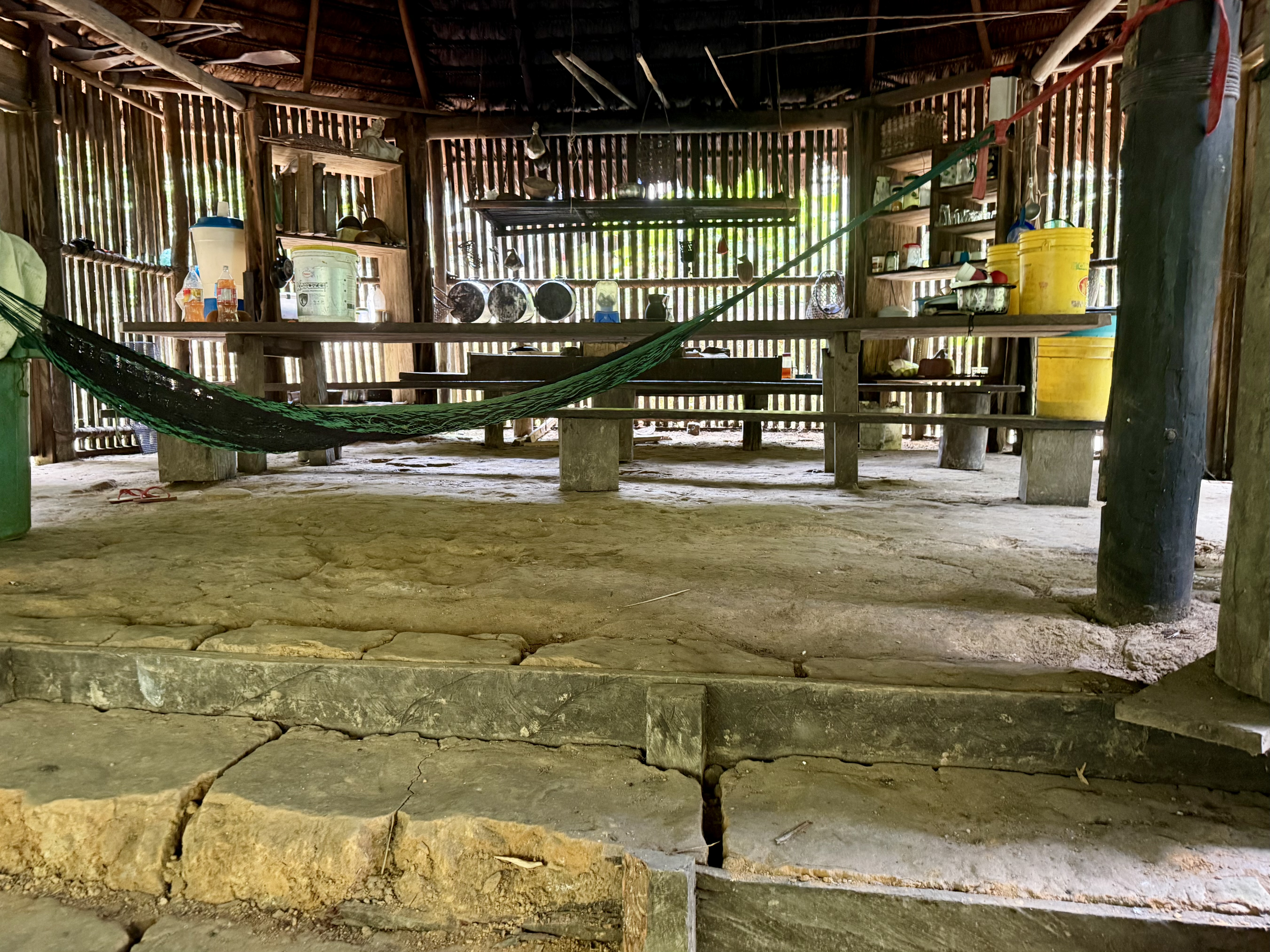
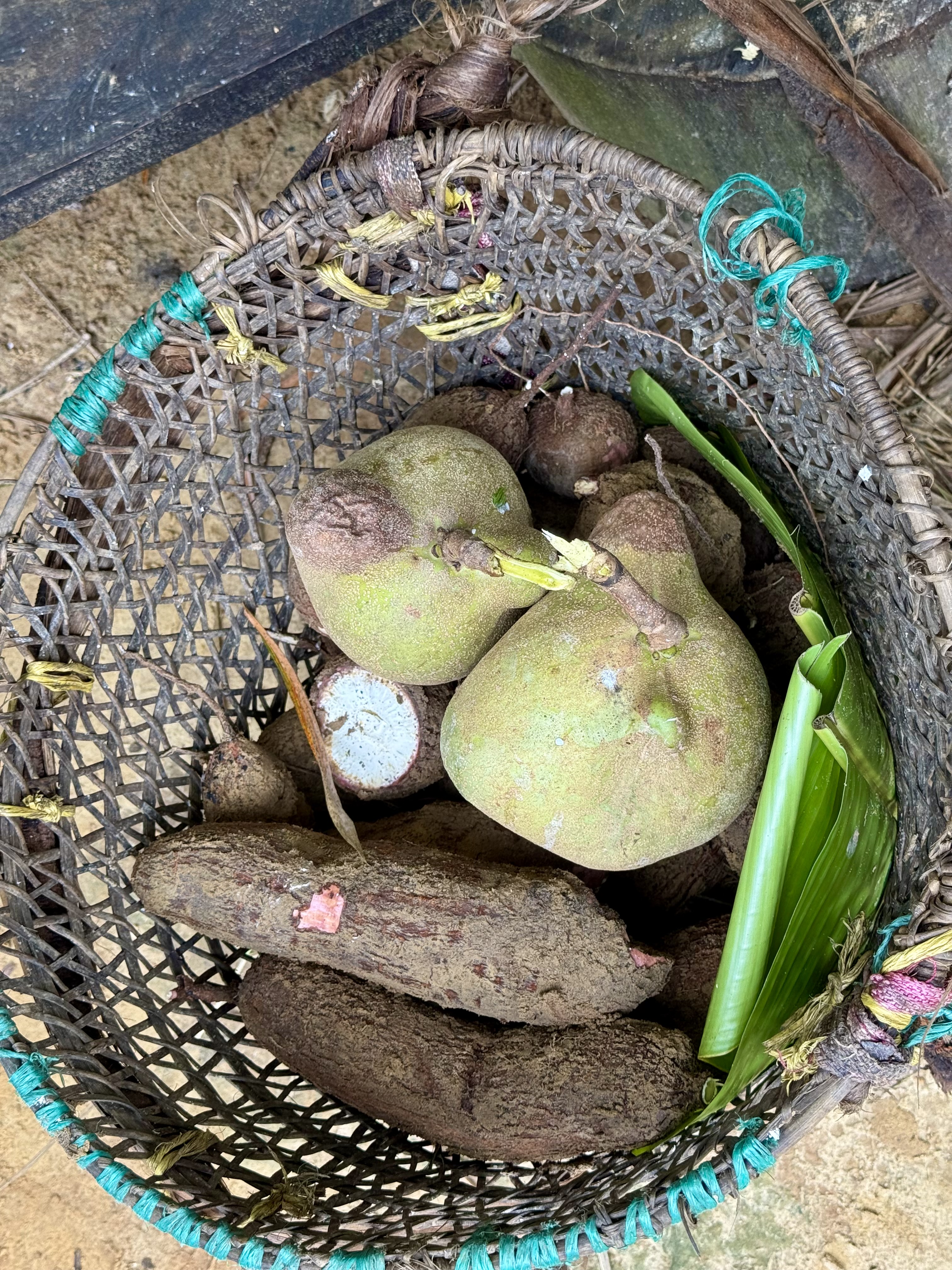
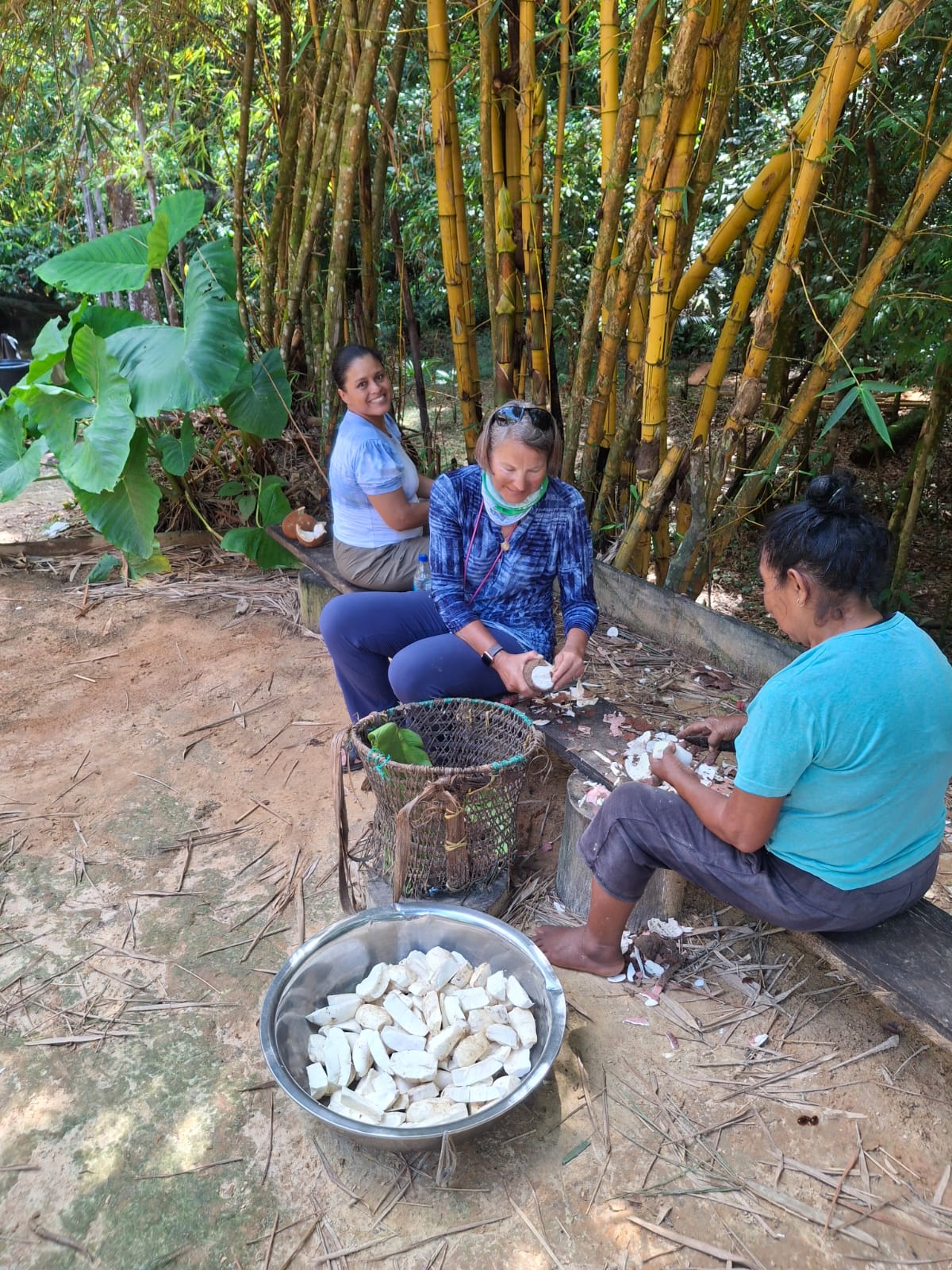
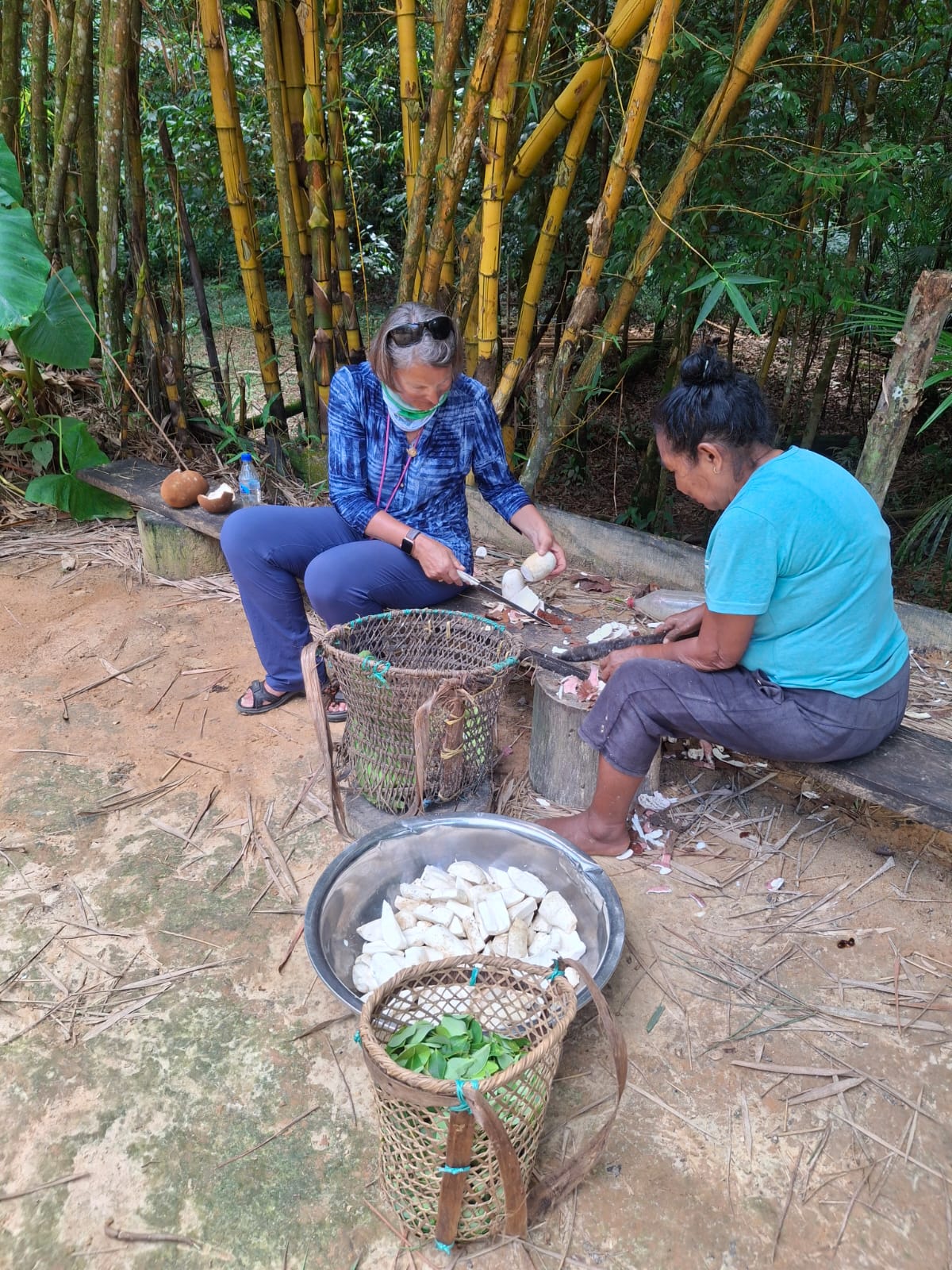
After lunch, grandfather, Arcesio pijachi, started to prepare a coca leaf powder used for ceremonies while Mamashasha prepared a yucca based alcoholic beverage. I tried to help Mamashasha by peeling and slicing the yucca plants and was clearly inept at it. My first mistake was to try to cut the root diagonally rather than horizontally. Once that error was cleared up the process was much easier. Once the sliced yucca has been cleaned, it is boiled over the open fire pit in a big pot, after it is the consistency of a moist potato, the water is drained and the yucca is mashed, as for mashed potatoes, once it is creamy, some water and sugar cane are added and then the consistency is allowed to set for at least 4-5 days for the fermentation to take place.
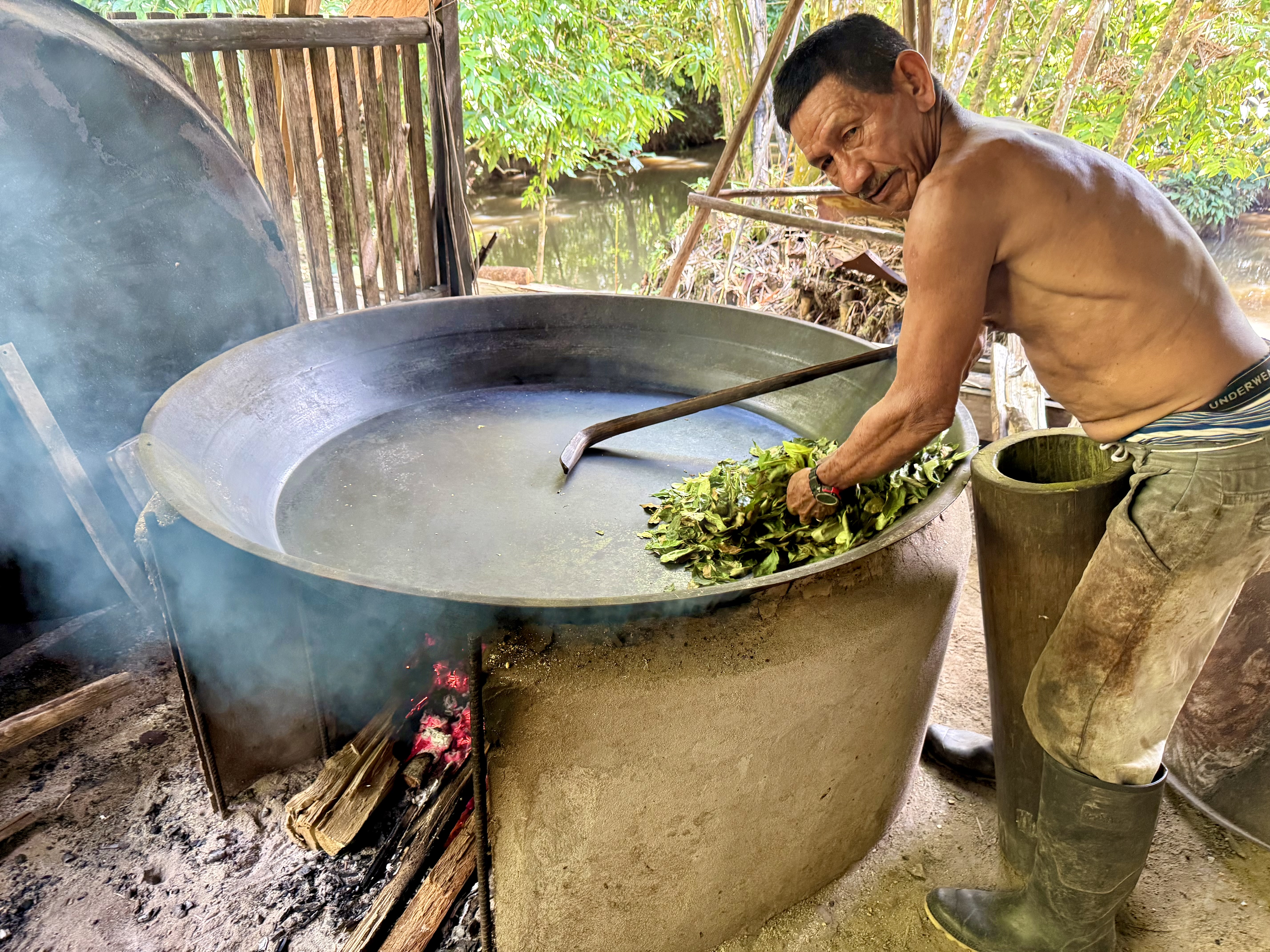
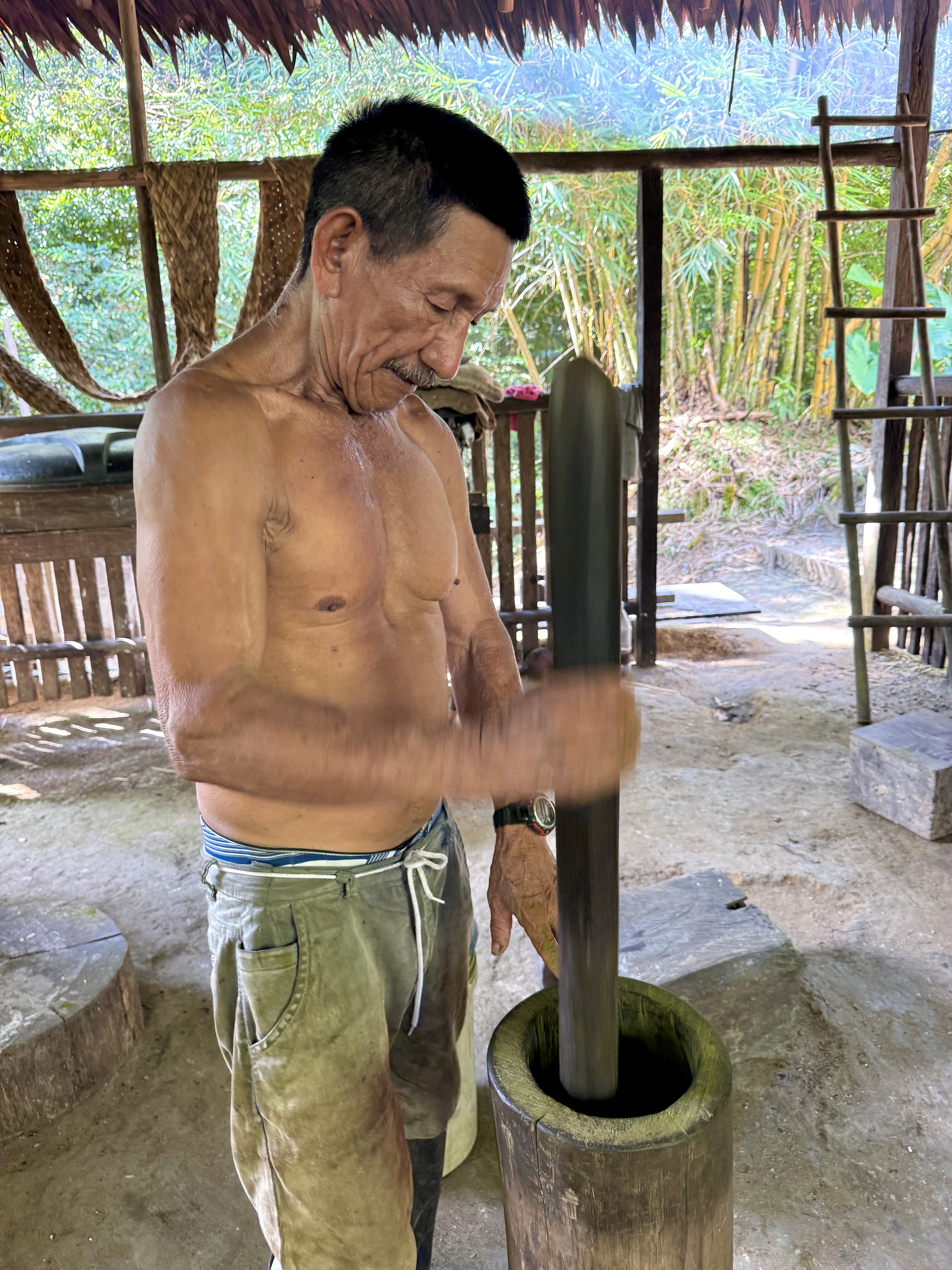
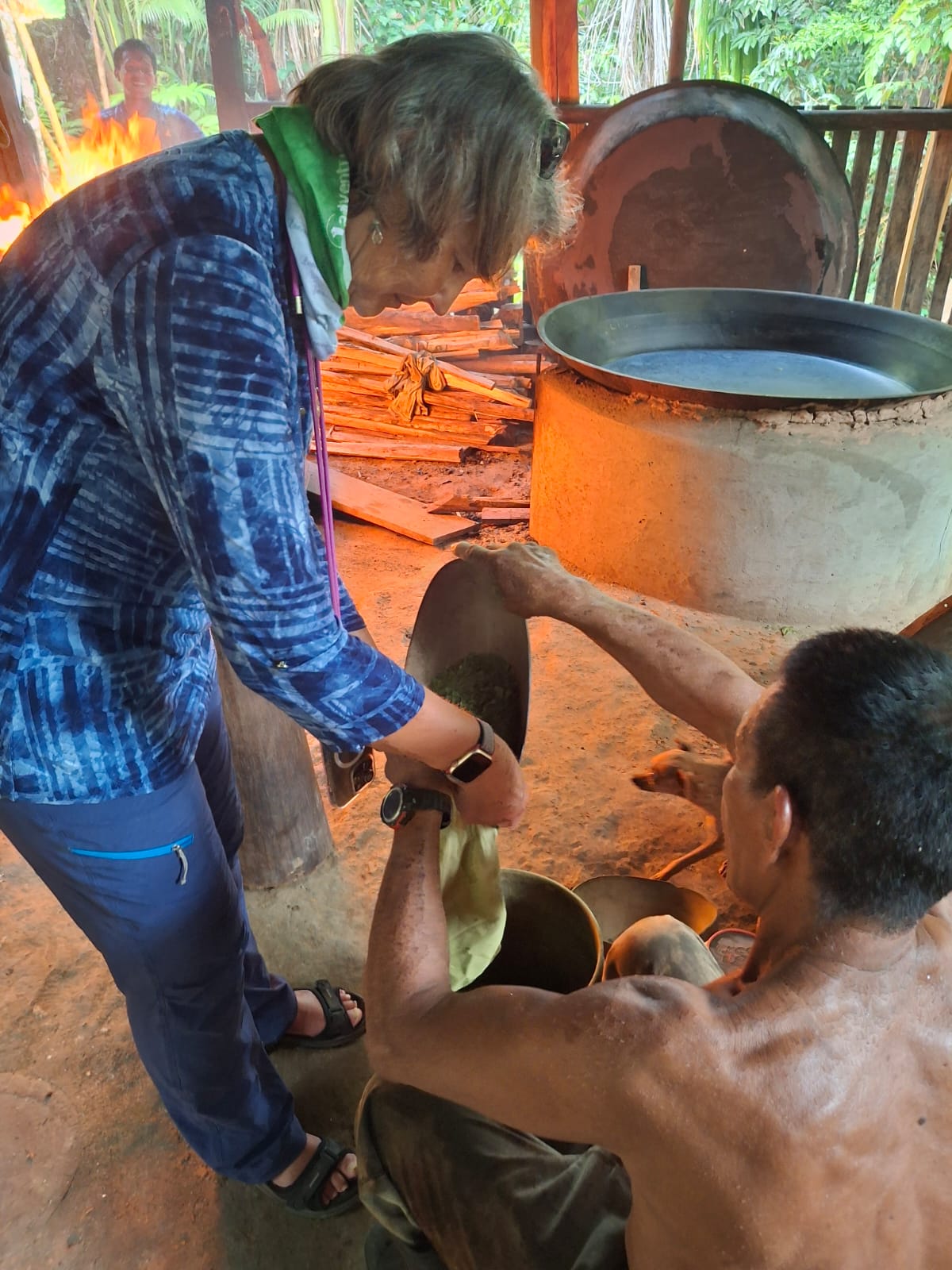
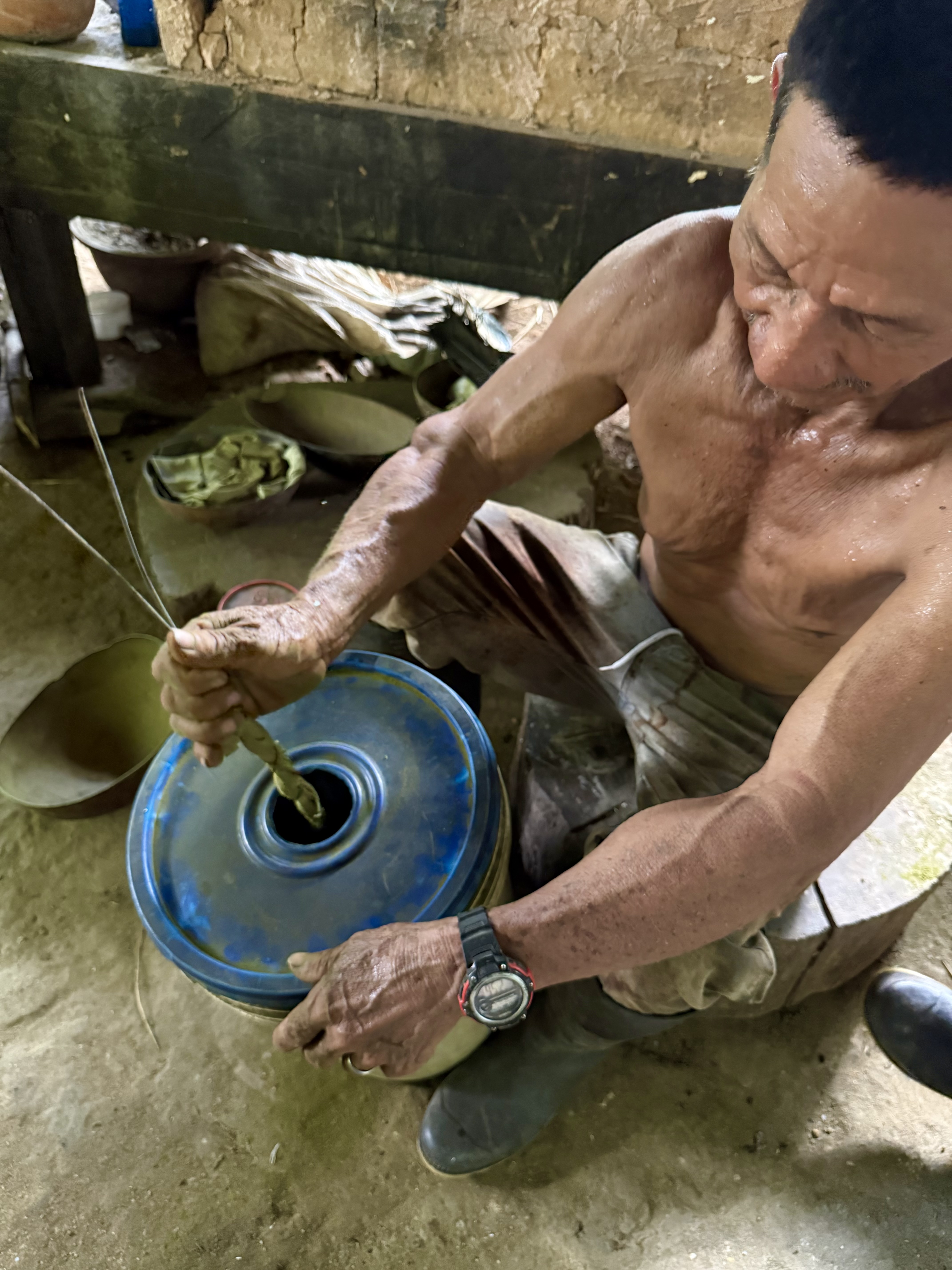
While Mamashasha and Xeni were working on the alcoholic beverage, Arcesio was roasting coca leaves in large, rimmed pans. The coca leaves here are larger than the ones in the Andes and have two more pronounced veins indicating somewhat different properties. Once the leaves were toasted, he put them into a hollowed-out log that he pounded the way one used to pound milk to make butter. When there were no more crackling sounds and dust from the leaves came up to the top of the log, he poured the powder into a medium sized bowl and mixed in roasted cercopia leaves. Once the two types of plants had been hand-mixed, he transferred the contents to a bowl with a spout from which to pour the consistency into a large plastic tub and mash it with a wire blender. This process was repeated three times before the coca/cercopia mix was acceptable for use. The powder is said to enhance knowledge through dreams. By placing a spoonful of the powder in one side of the mouth, wetting it with saliva, and letting it disintegrate on its own, and by not talking, the herbal effects are ingested. In this way, the indigenous people of the region can communicate with each other basically telepathically as well as with the plants and animals in the region. It isn’t a hallucinogenic nor does it have the psychedelic qualities of ayahuasca, which is also used frequently in the region, but has more mild mind opening properties.
It was a fascinating day with this couple and their family. They were so very kind, welcoming and willingly shared their knowledge of the forest with a complete stranger. I was sorry to leave their little bit of peace within the forest.
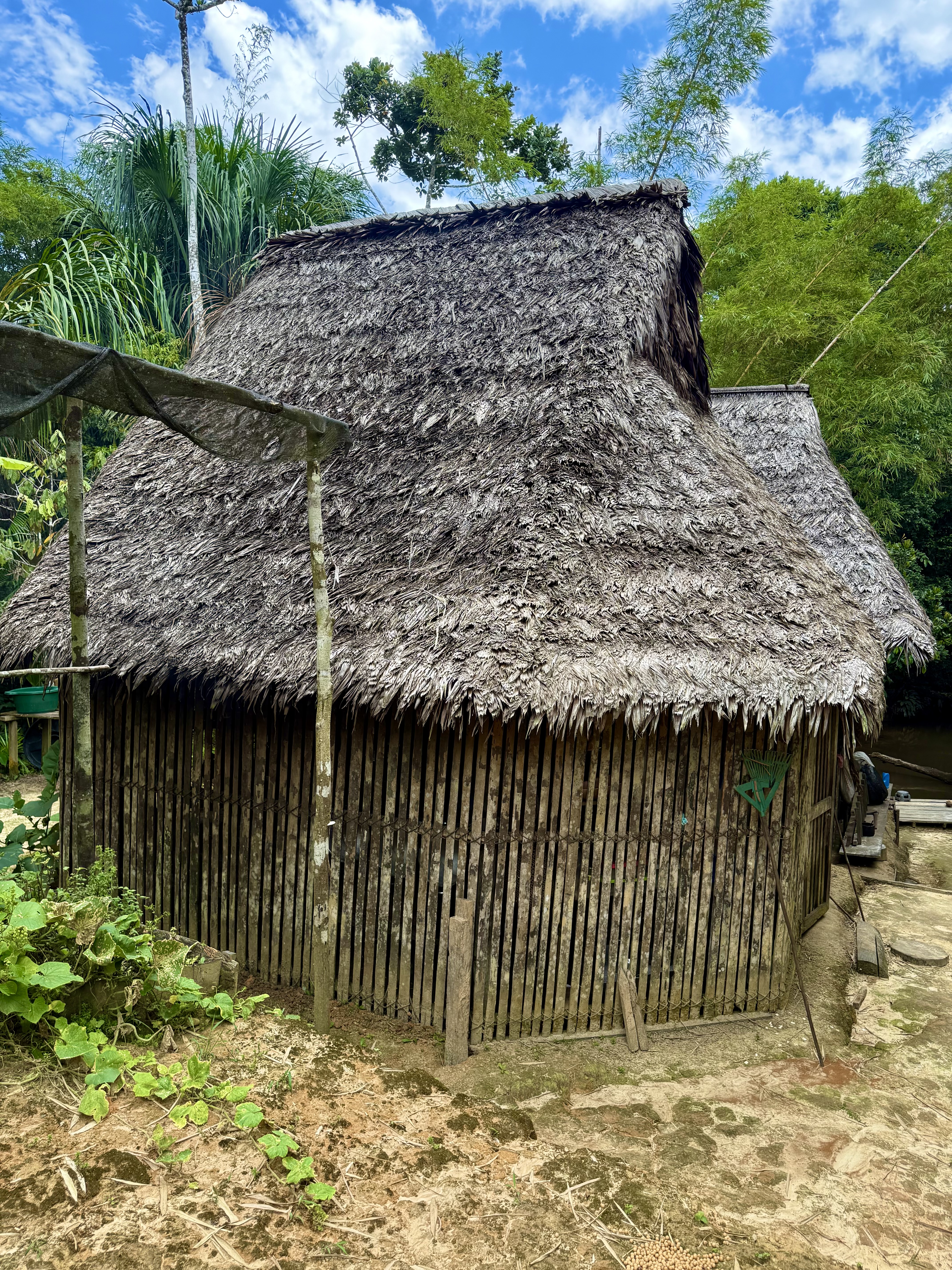
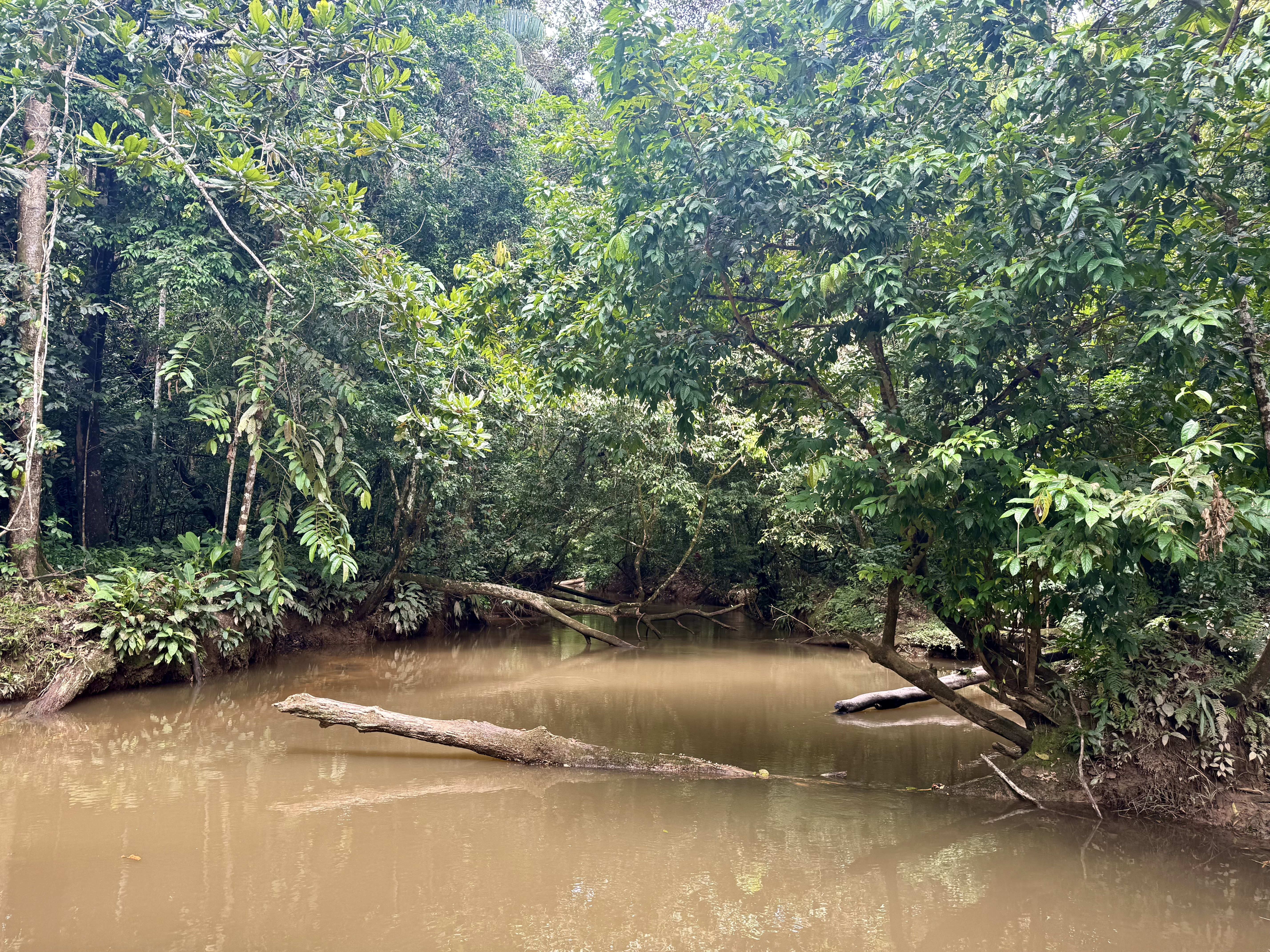
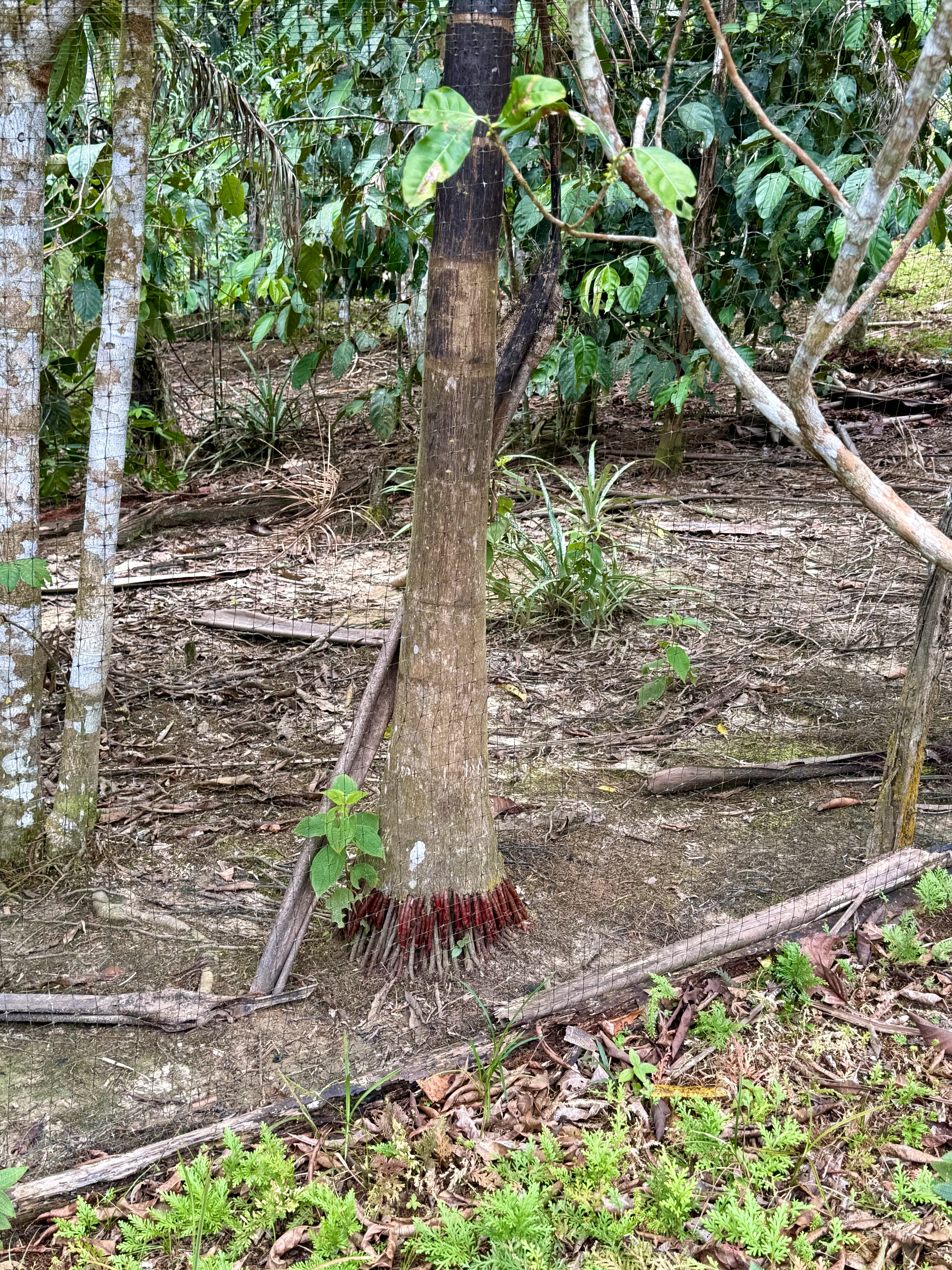
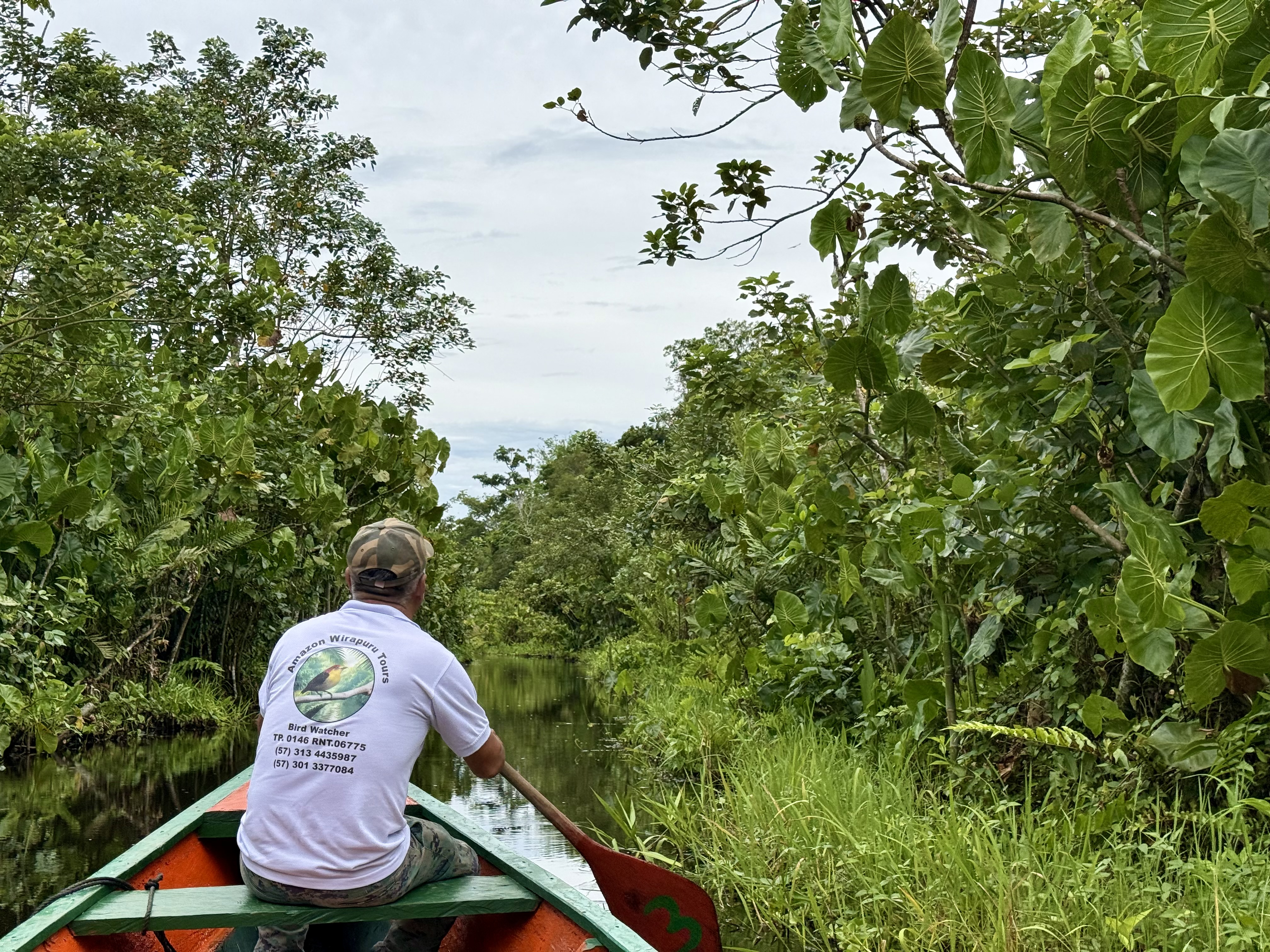
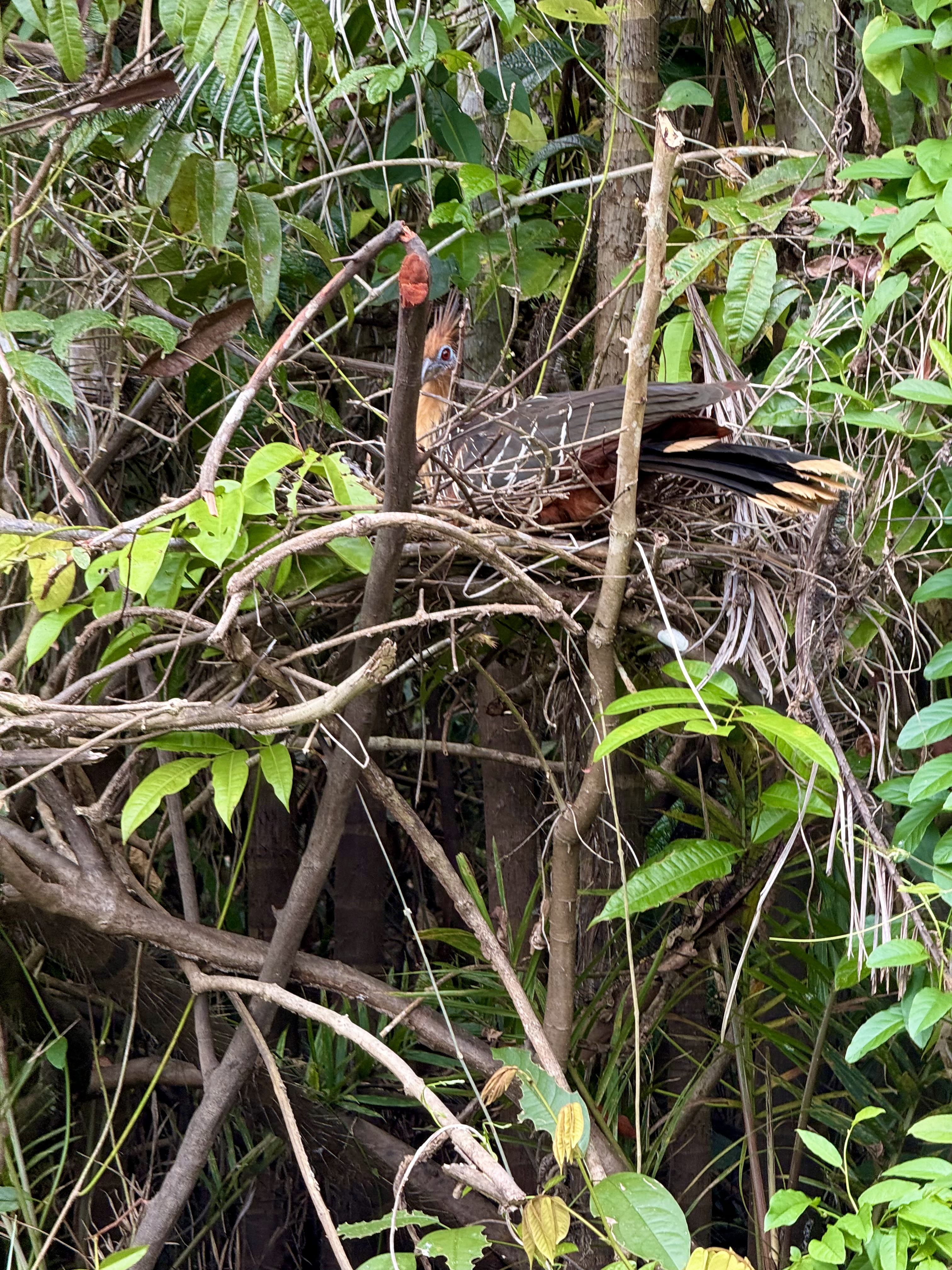
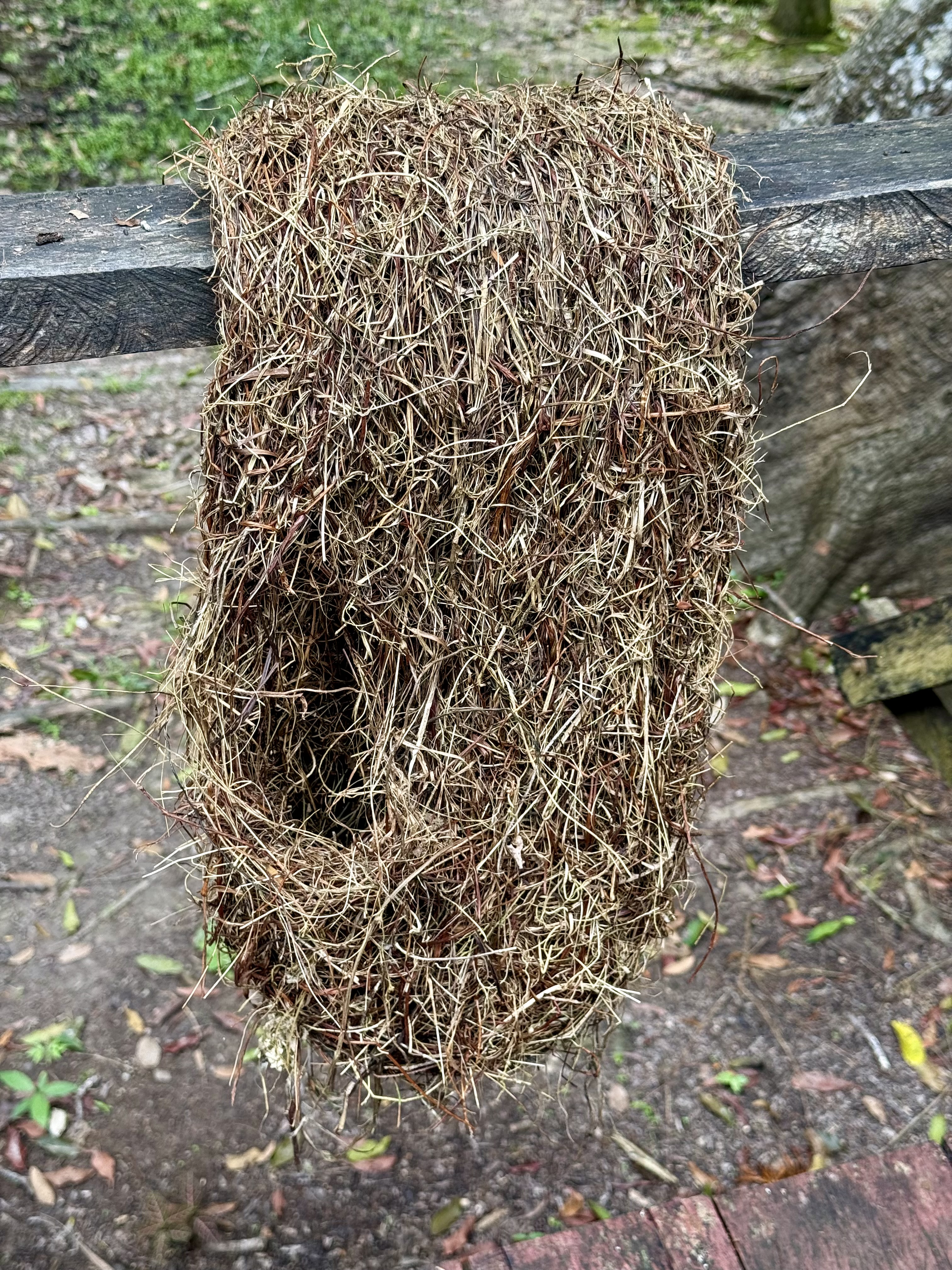
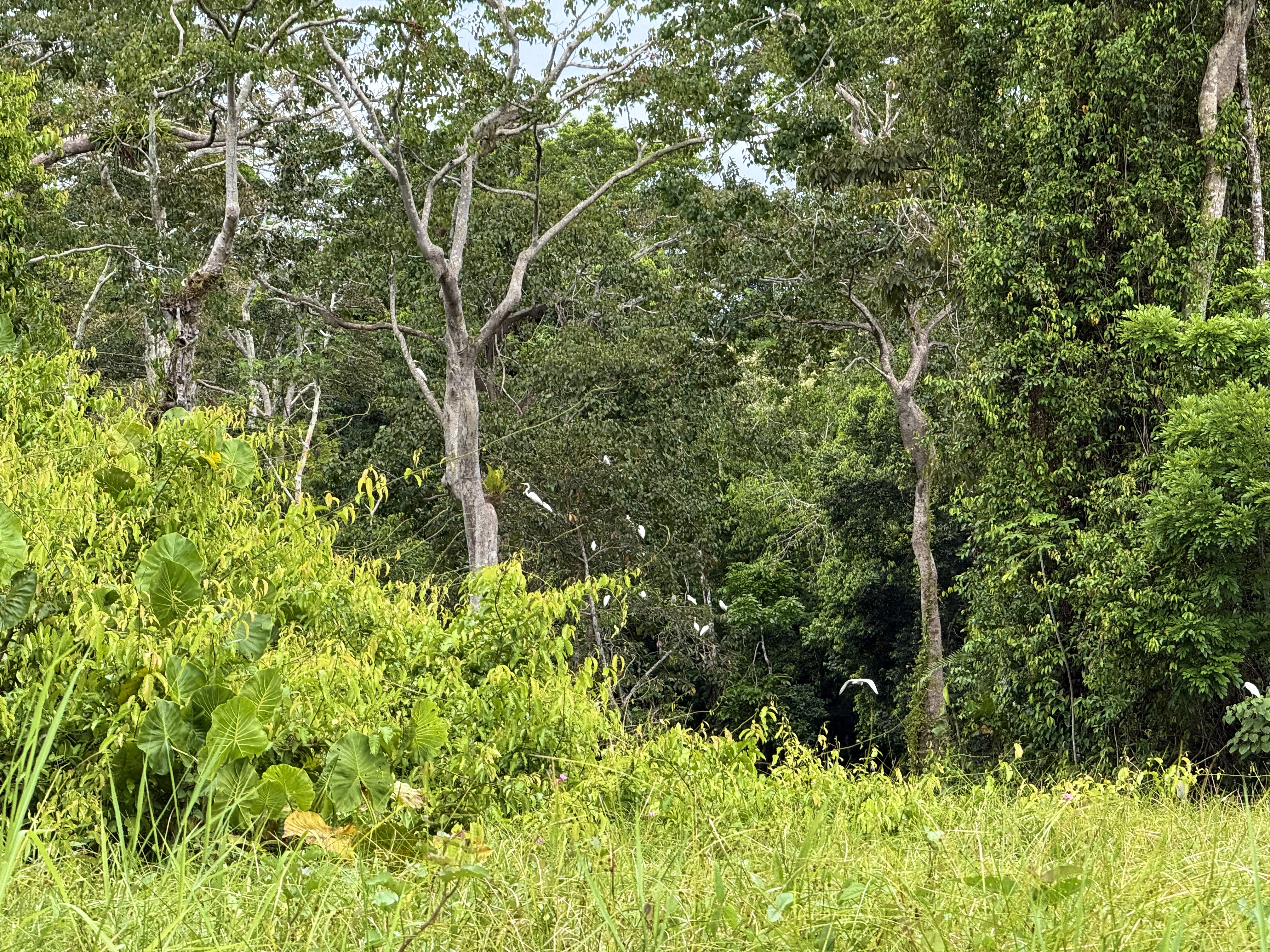
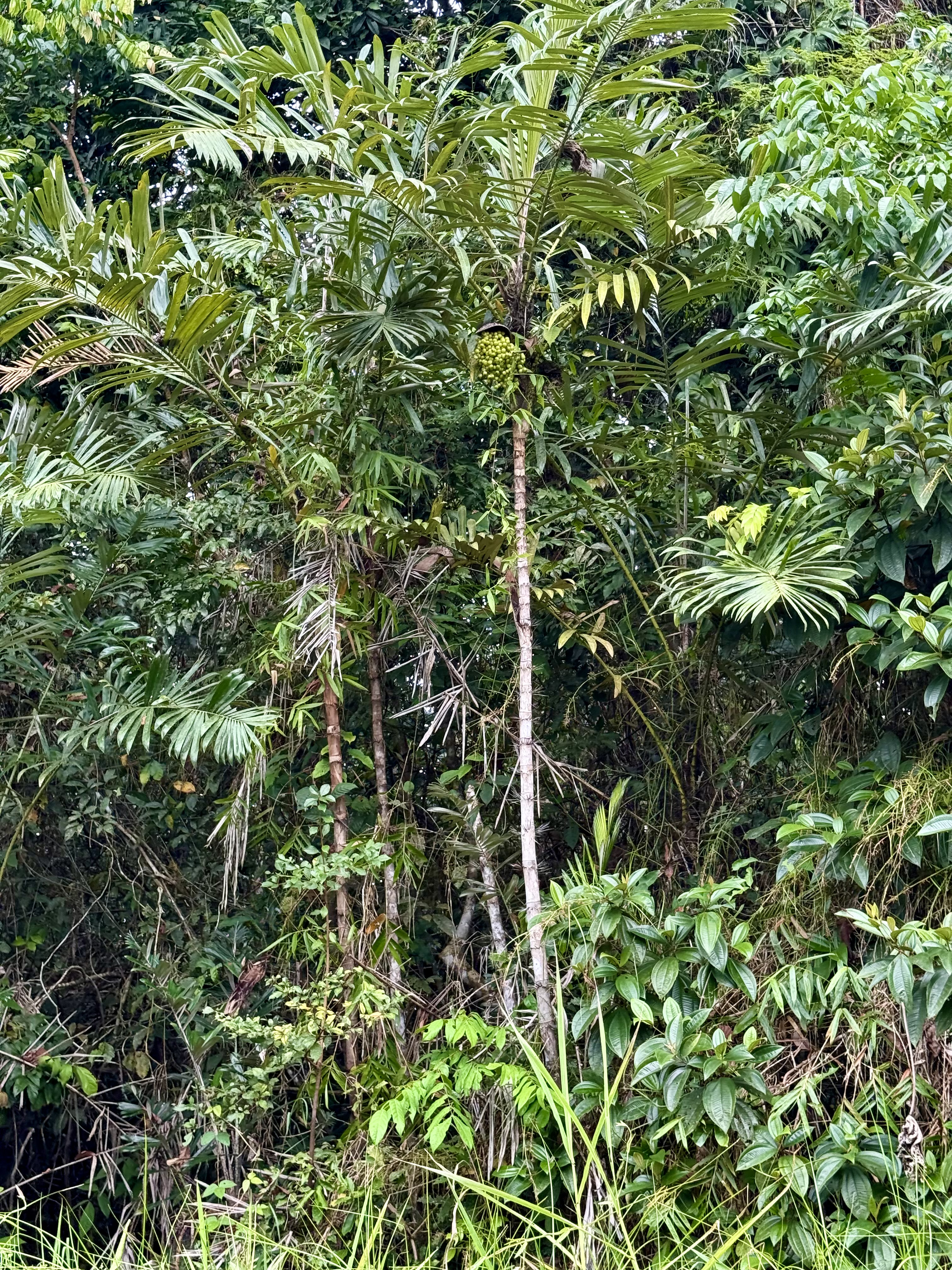
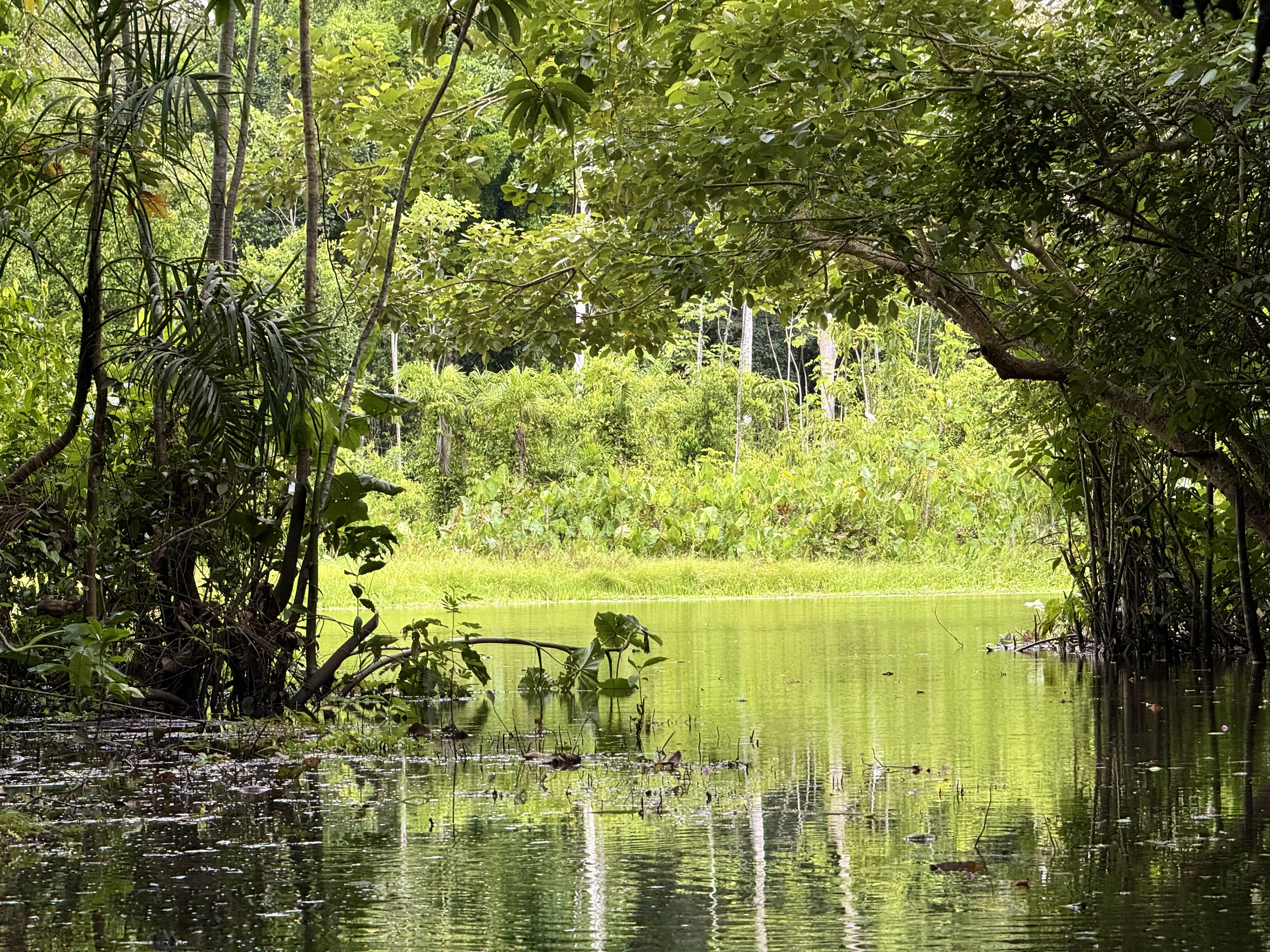
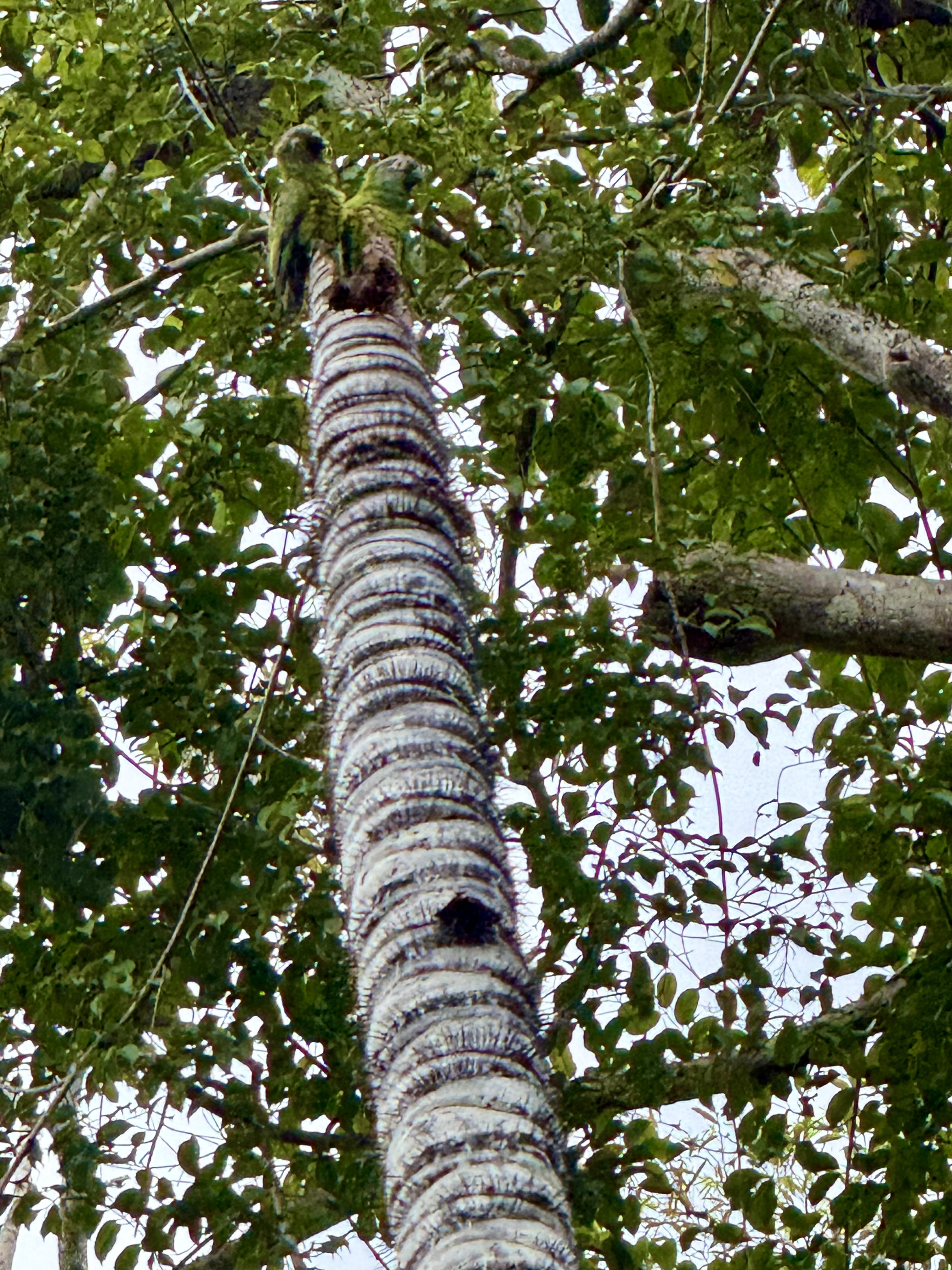
The following day, Elvis and Xeni took me on a speedboat ride to Peru and then on a canoe through waterlogged pathways in Reserva Marasha, where we had lunch at the lodge. During the canoe ride, we saw a few Hoatzins, an ancient type of bird that some say is the descendant of dinosaurs. Its nest is flat with just a few sticks, not at all like the complicated hanging nests of oropendolas, that are quite common in the area. The majority of the bird life on this day, however, were the white and snowy egrets that blanketed some of the trees. During the quiet and very peaceful canoe trips, Elvis explained the flora as we passed by. One palm tree I found especially interesting was covered in spikes, which was the tree’s way of protecting its fruit from predators. The natural spikes looked just like the metal ones I placed on the rainspouts at home to keep the marten from getting near the chimney and into the house. Same principle, different tools for different locations.
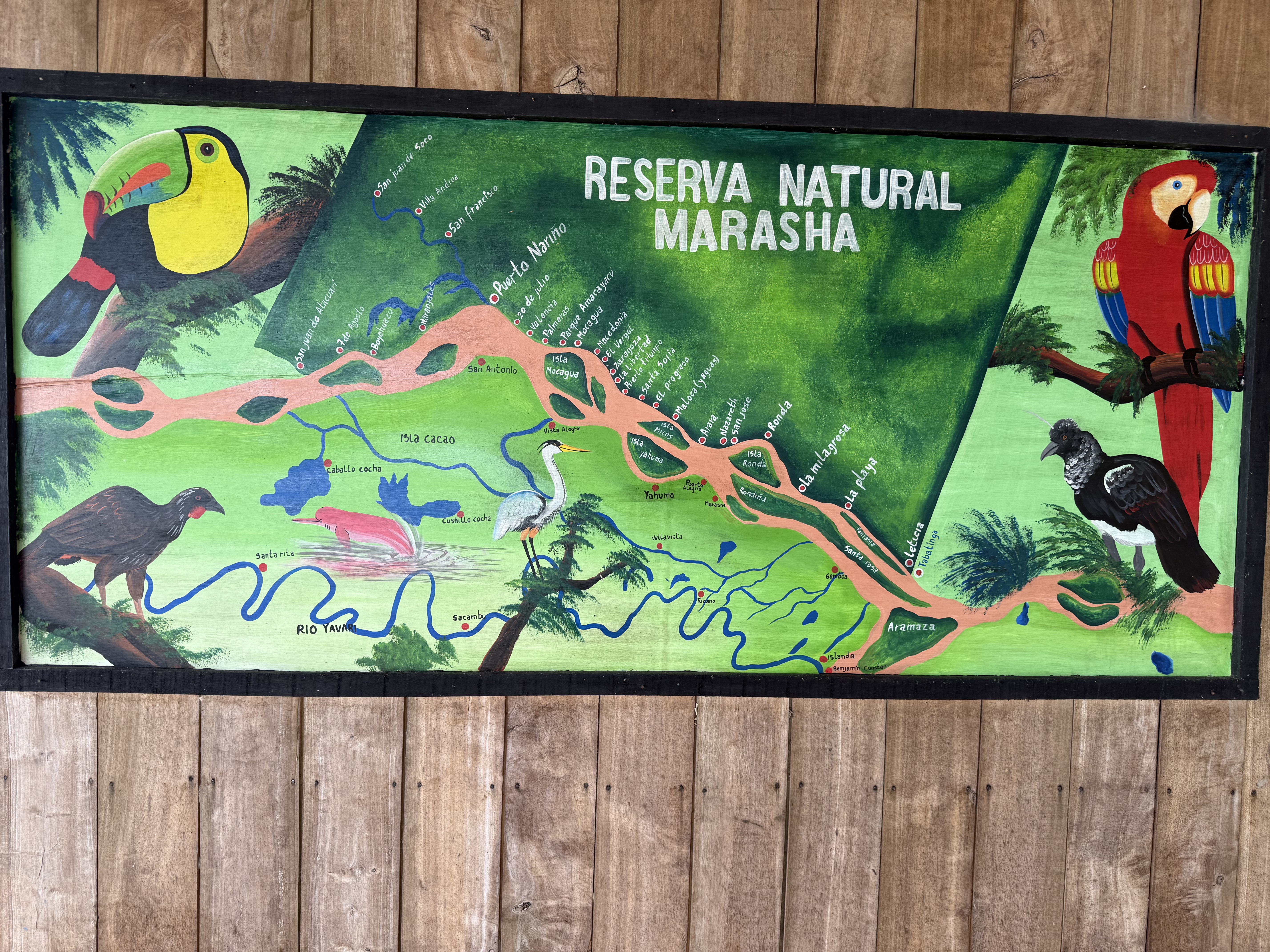
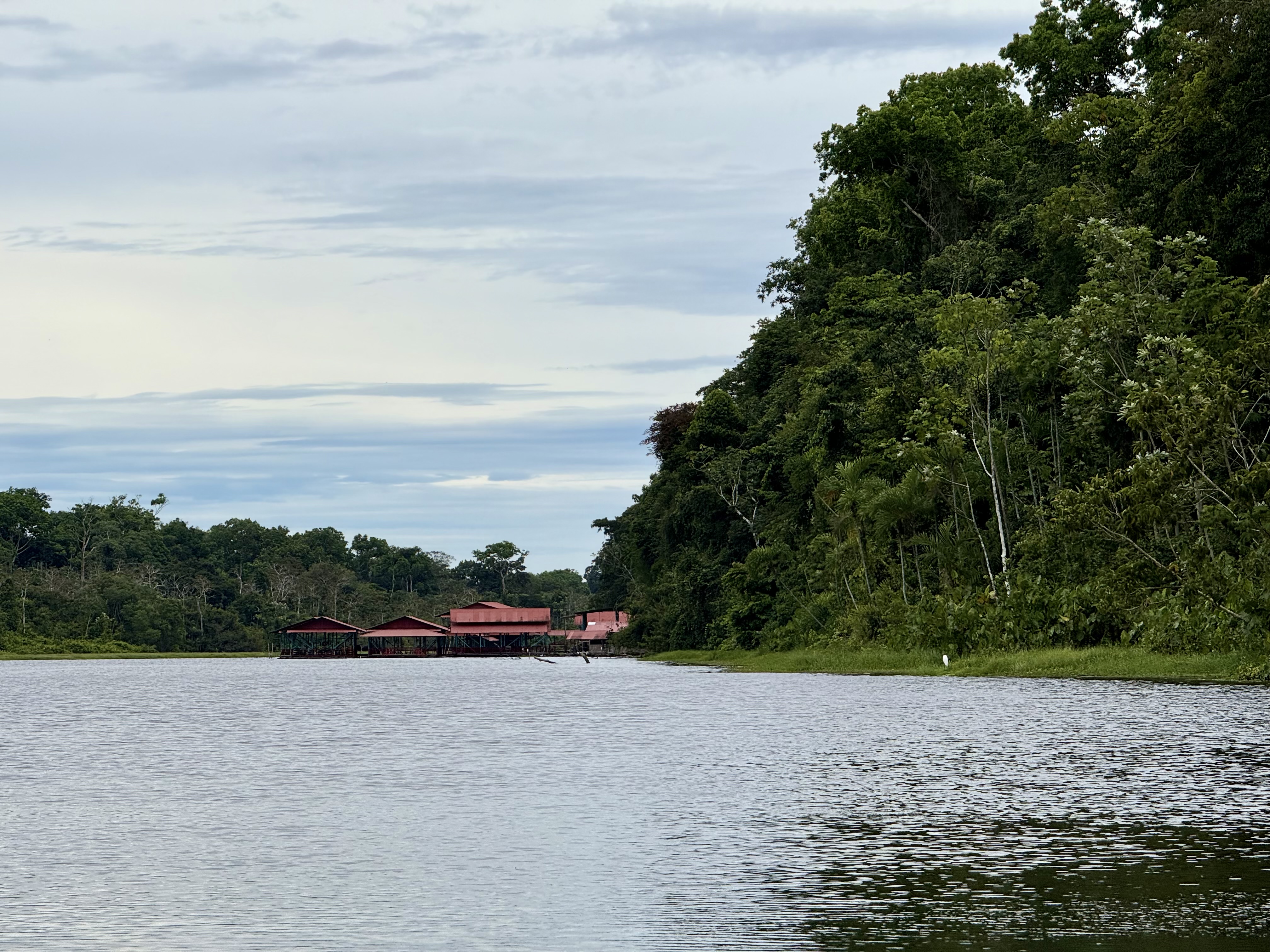
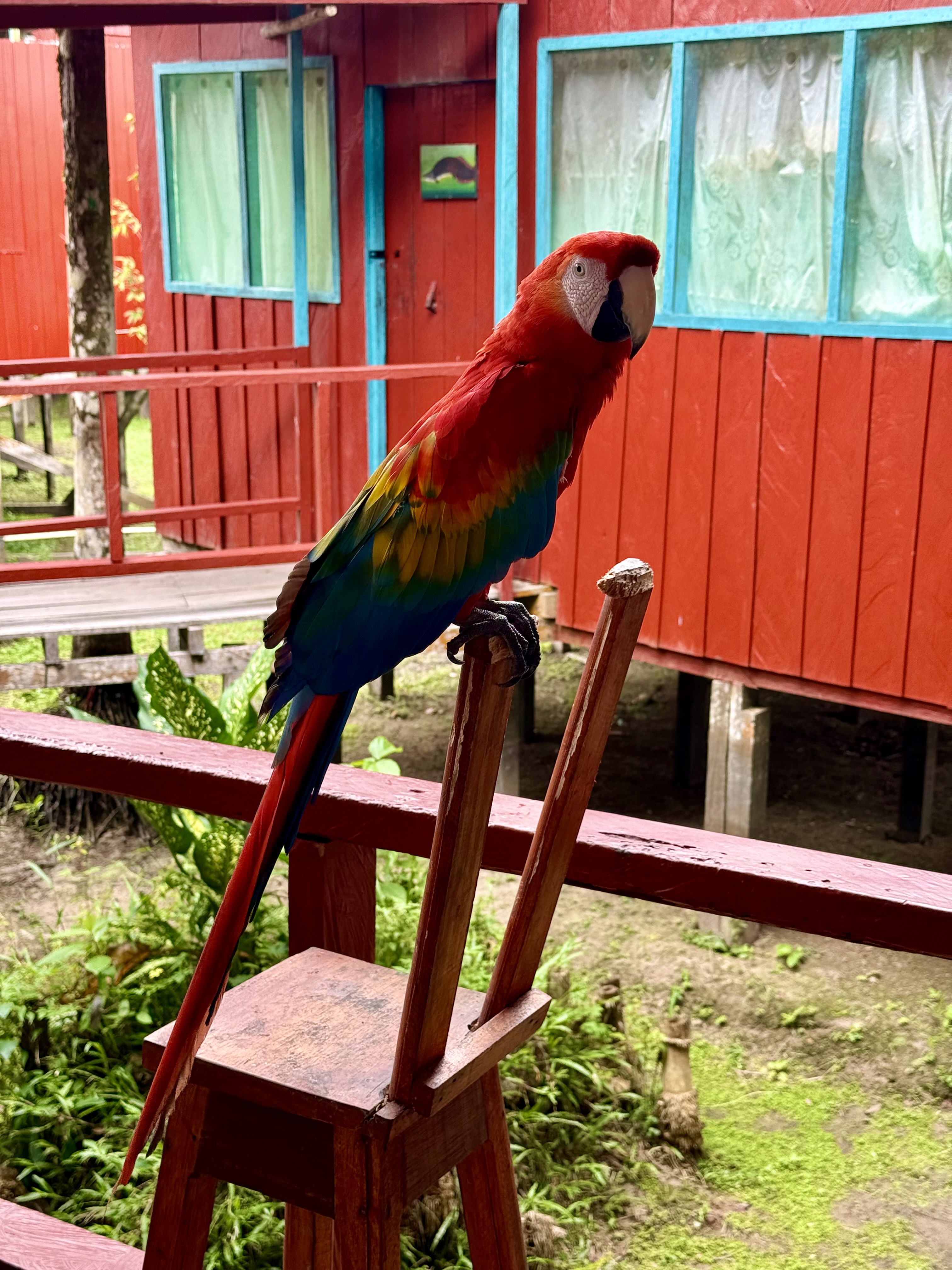
At the lodge, Pepe, a scarlet macaw, was the star attraction. He clearly had a preference for some of the staff over others and would try to peck at two of the girls bringing food from the kitchen to the dining hall. With others, including me, he was willing to more positively interact.
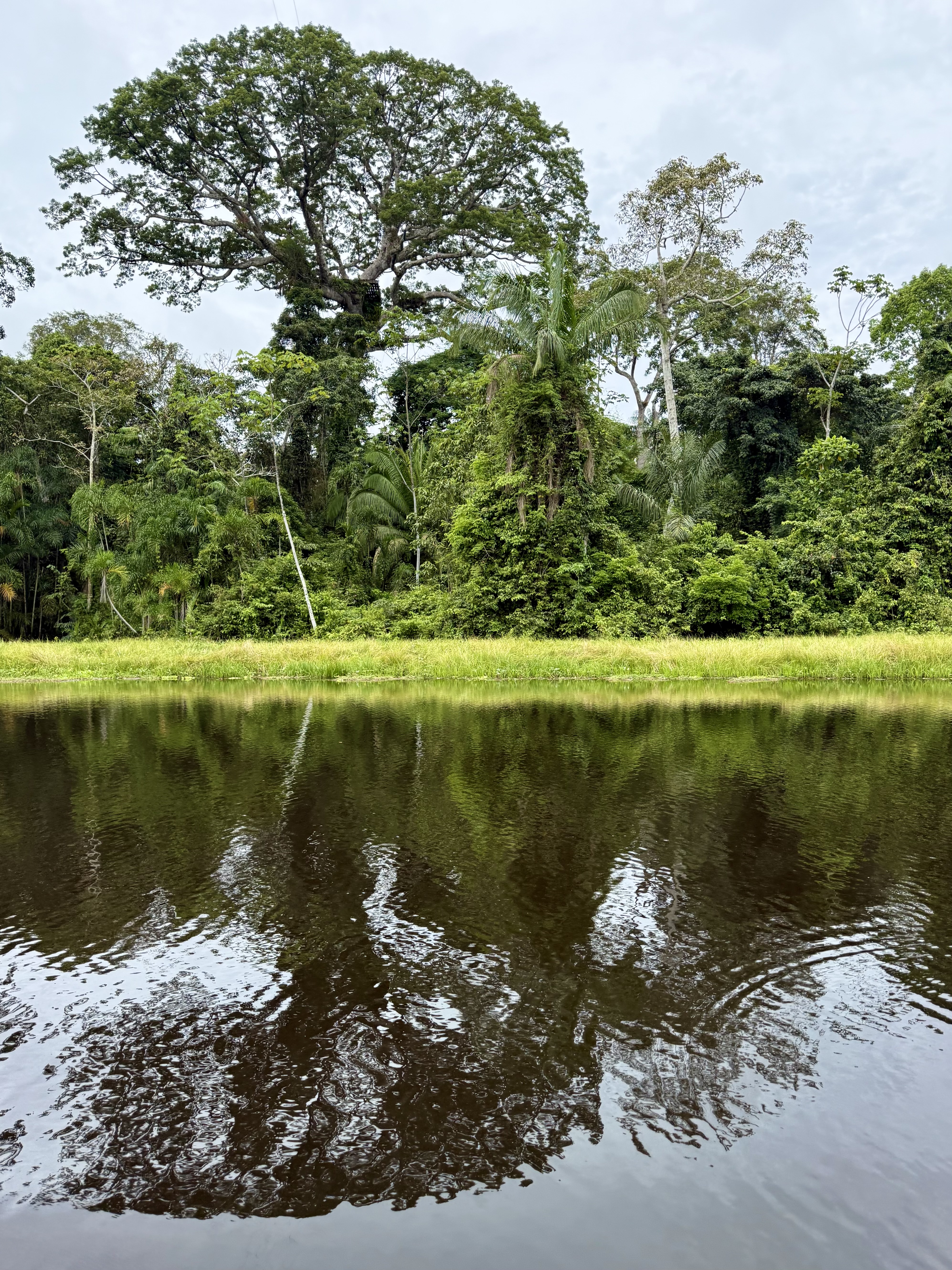
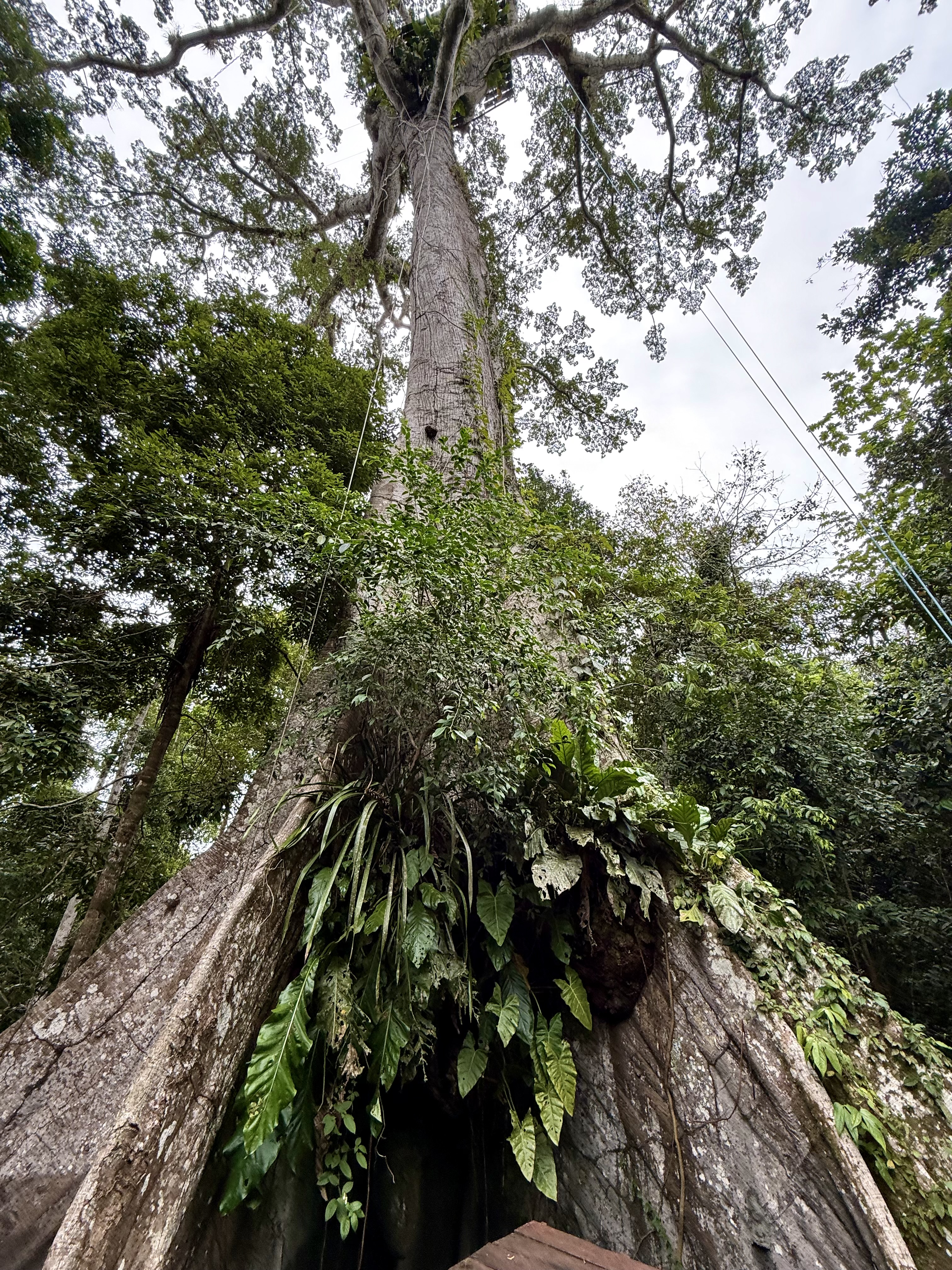
After lunch, we visited a 500-year-old ceiba (kapok) tree. These are mystical mythical trees from various Central and South American cultures. The legend of the tree in Reserva Marasha differed only slightly from the legend of the supposedly 1,000-year- old sacred ceiba tree in El Paraíso. The Marasha tree was, unfortunately, somewhat misused for ziplining. A platform was constructed near the canopy for tourists to zipline across the lake. I had the feeling the tree wasn’t at all happy about this but simply put up with human foibles. The commercial use of this ceiba was in direct contrast to the sacred value of the other.
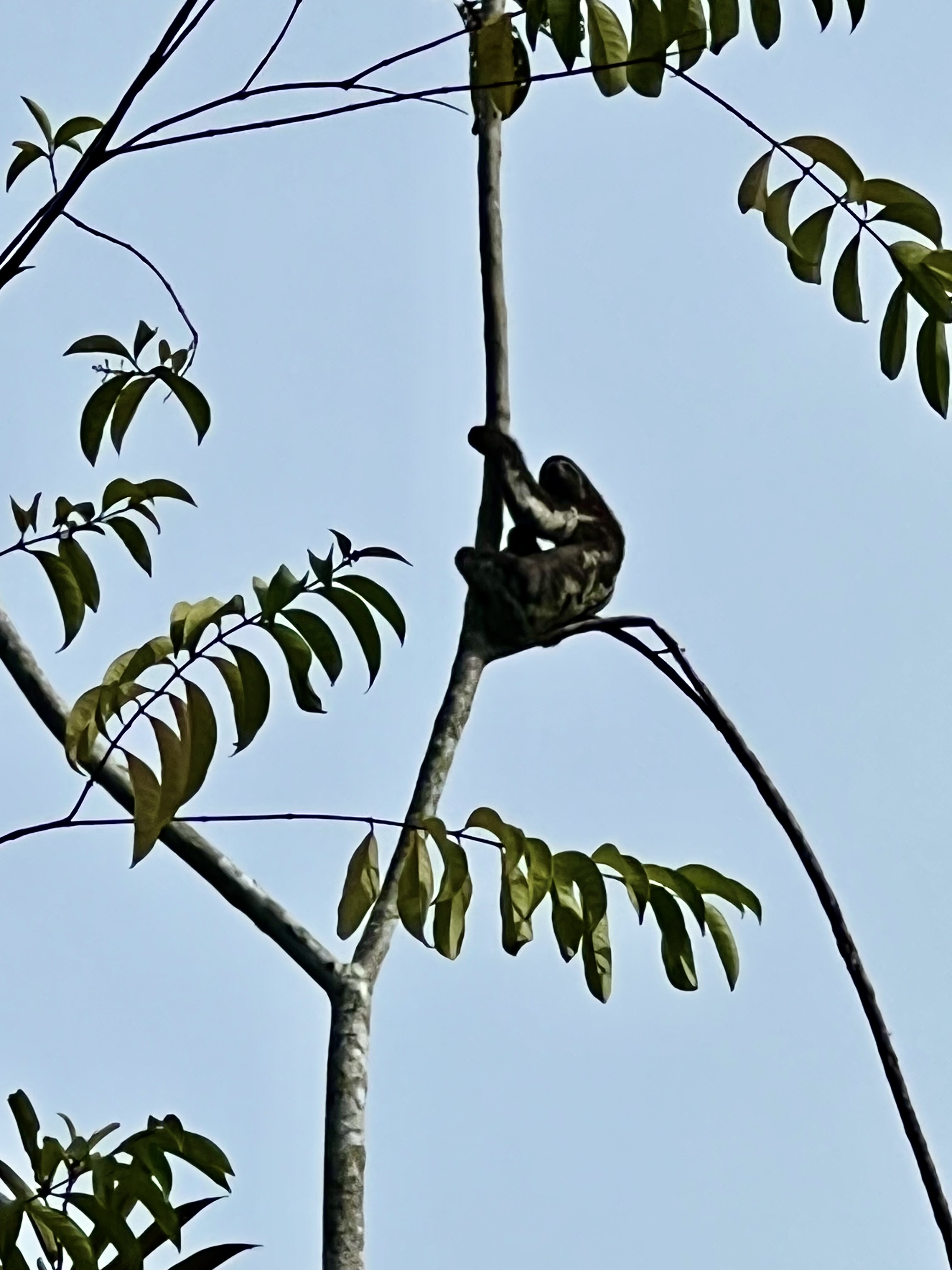
We stopped briefly at the lodge before the return canoe trip and saw both a snowy egret and a strike on the railings by the dock. On the way back, we saw more squirrel monkeys and finally a sloth. The photo didn’t come out well, but the figure is still somewhat recognizable.
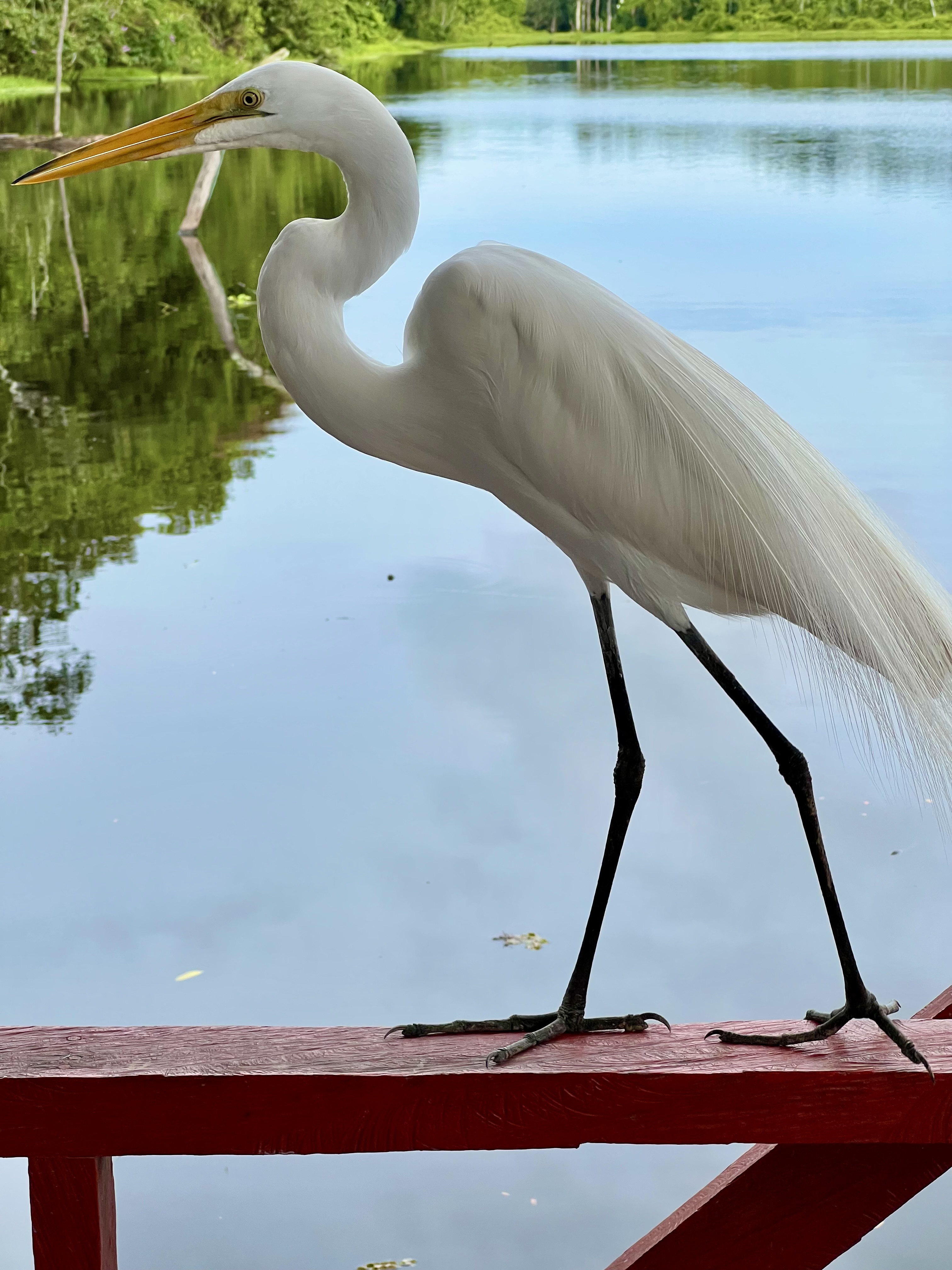
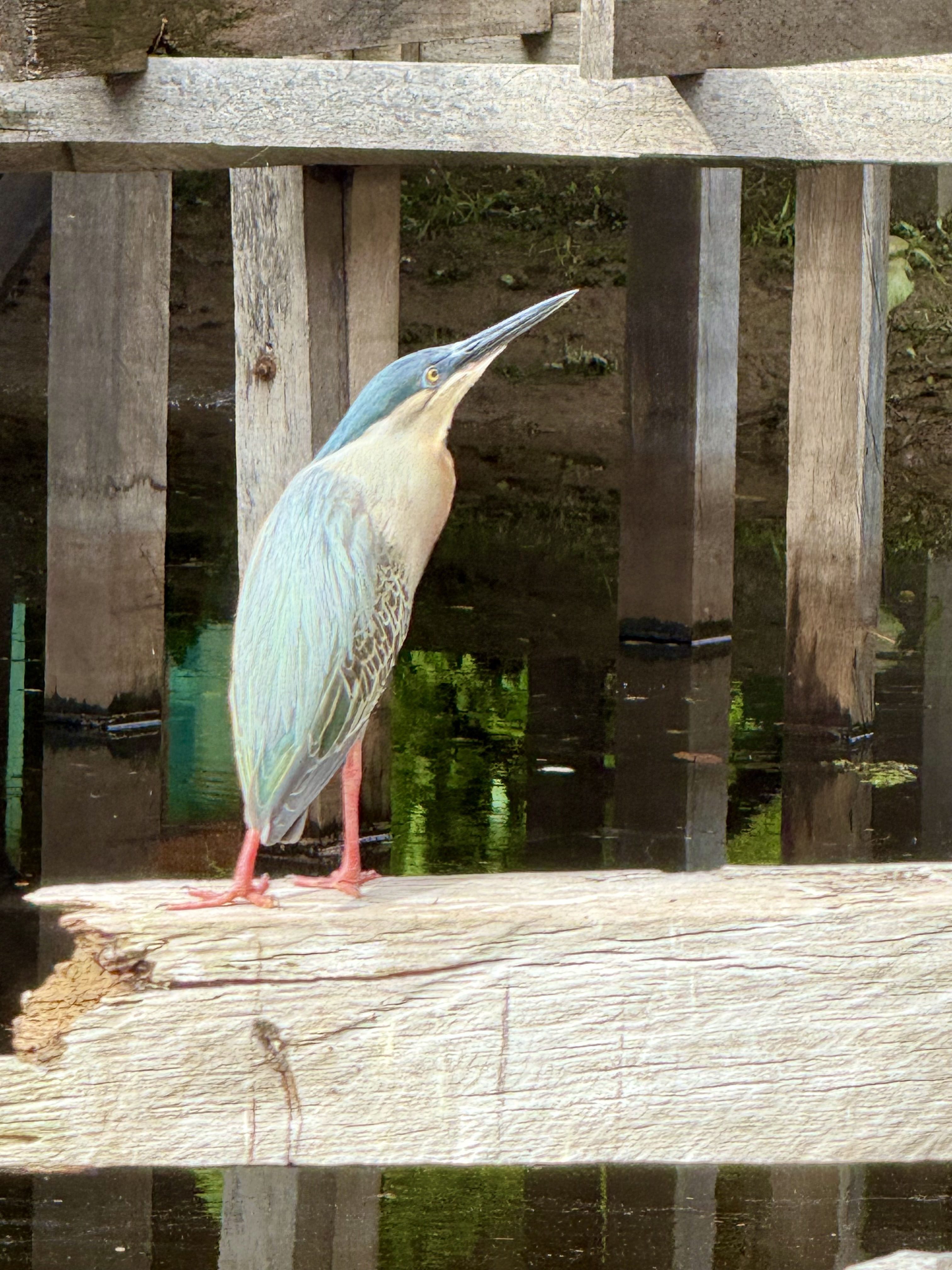
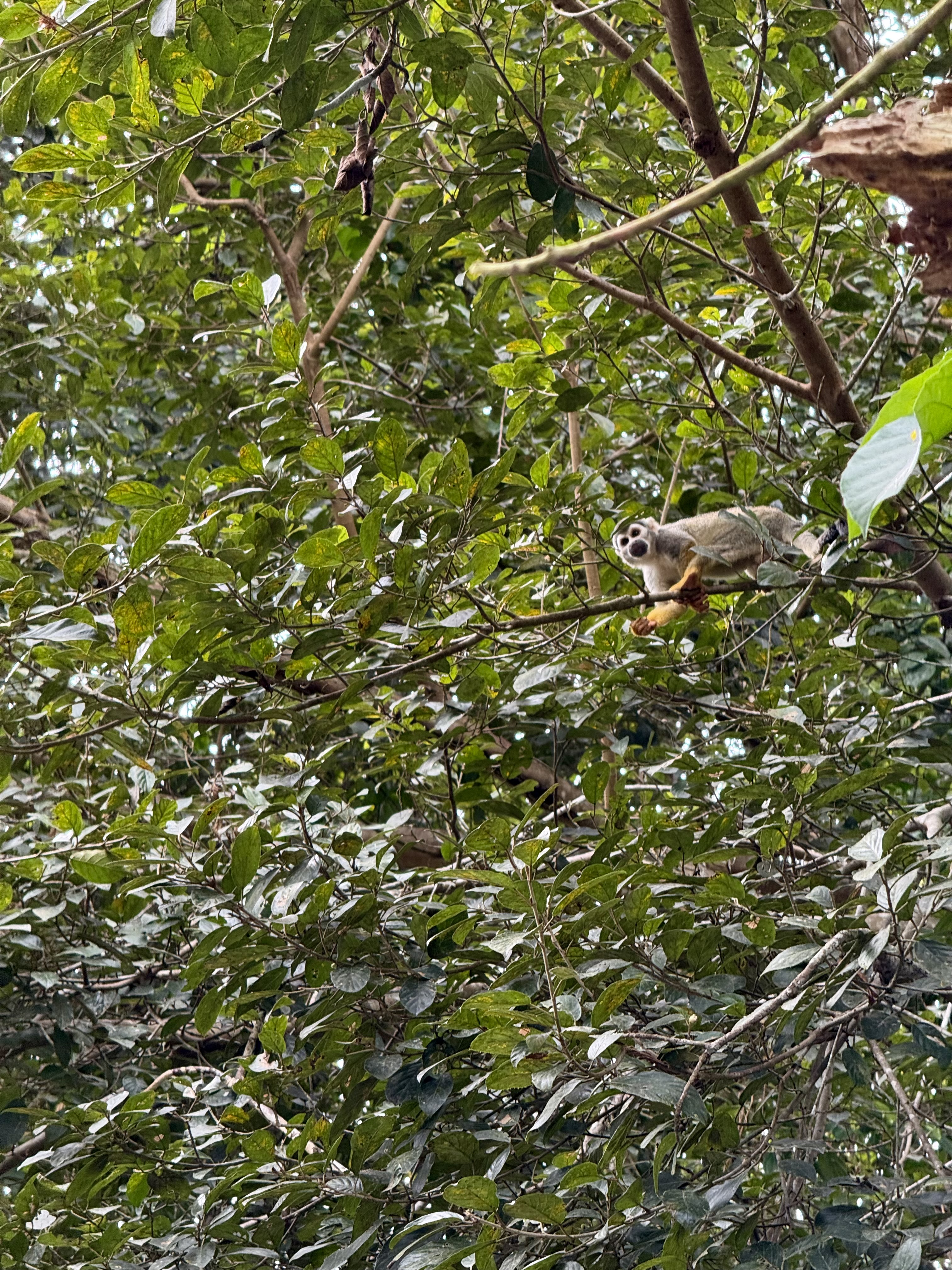
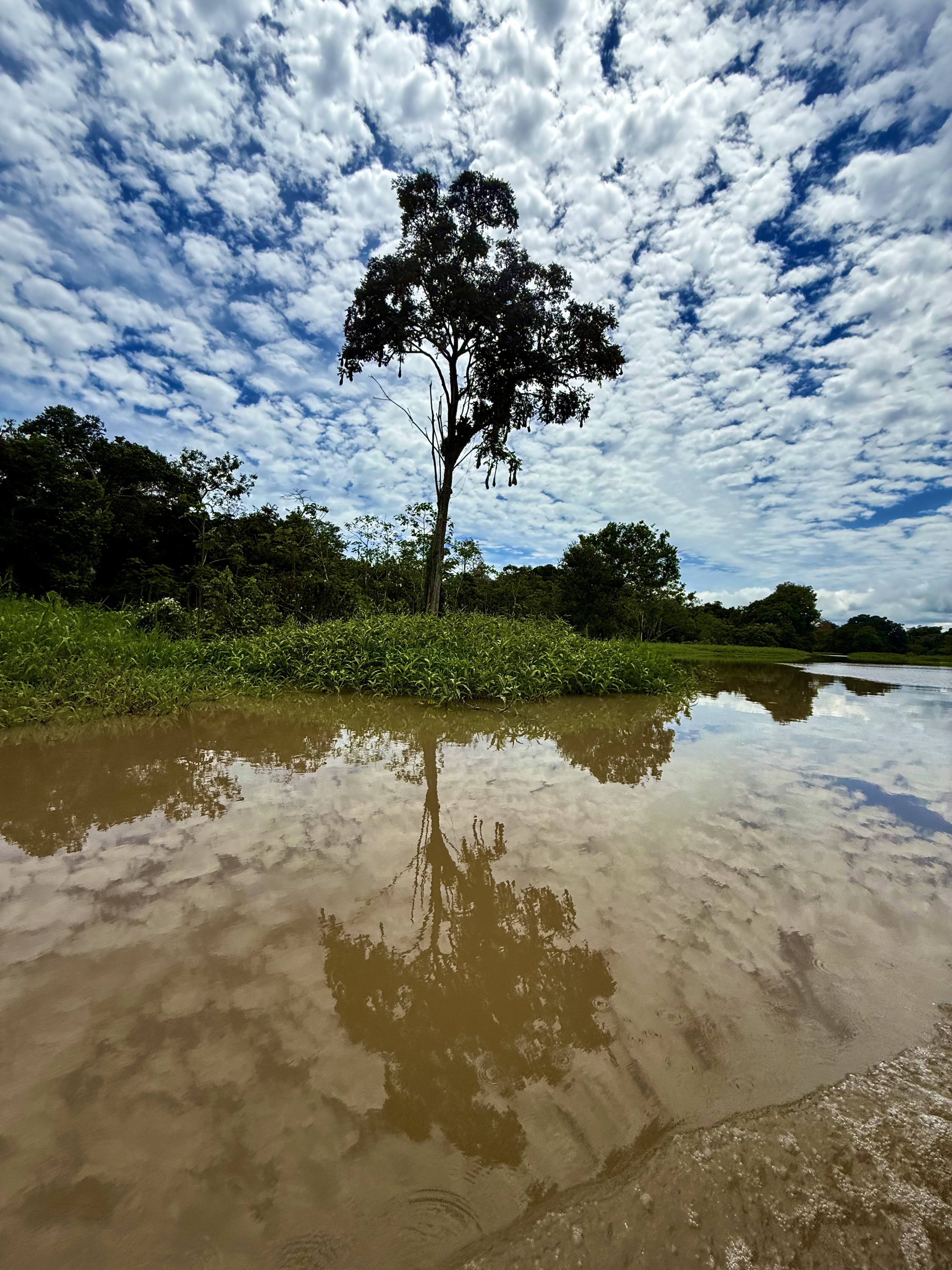
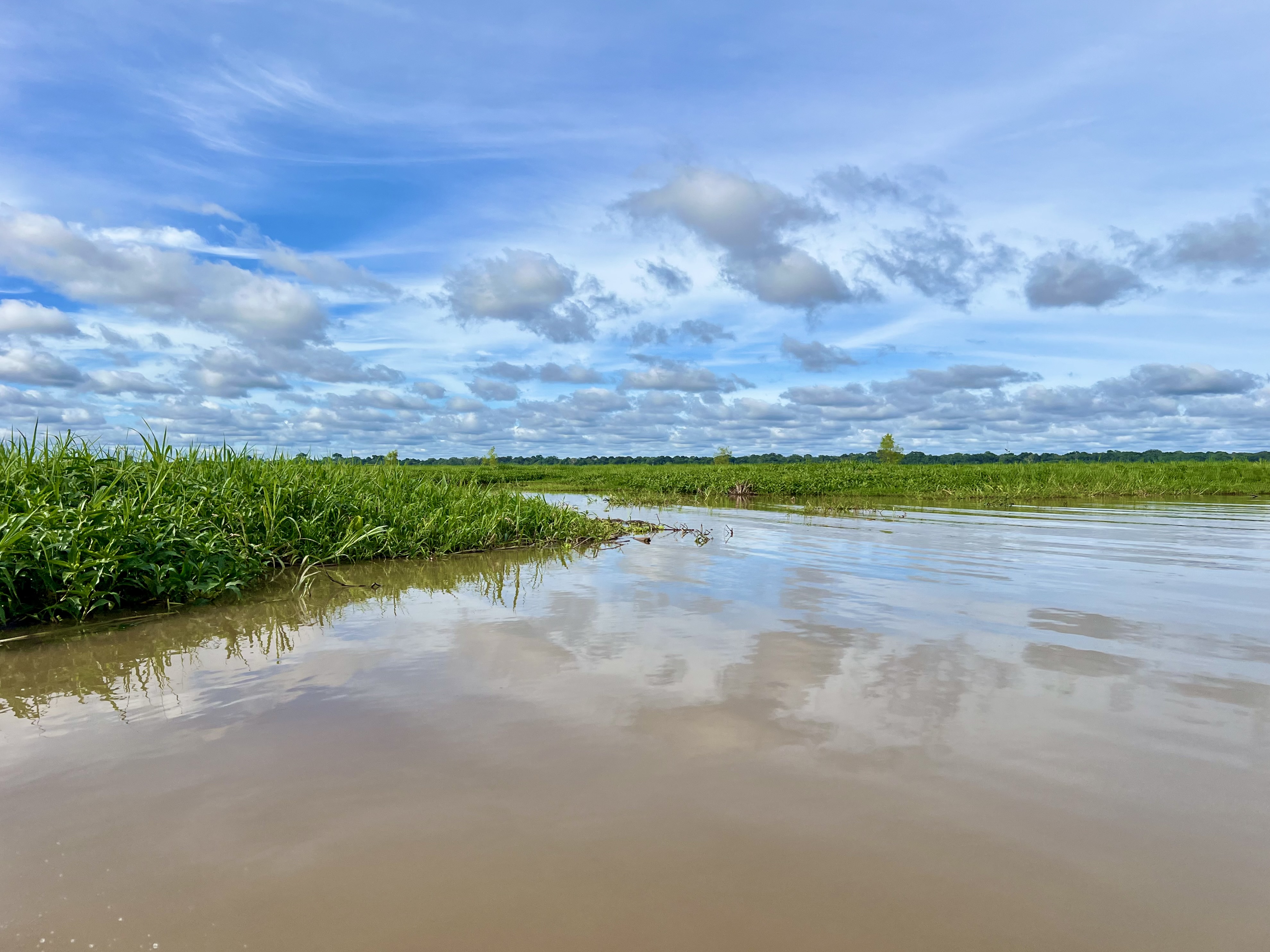
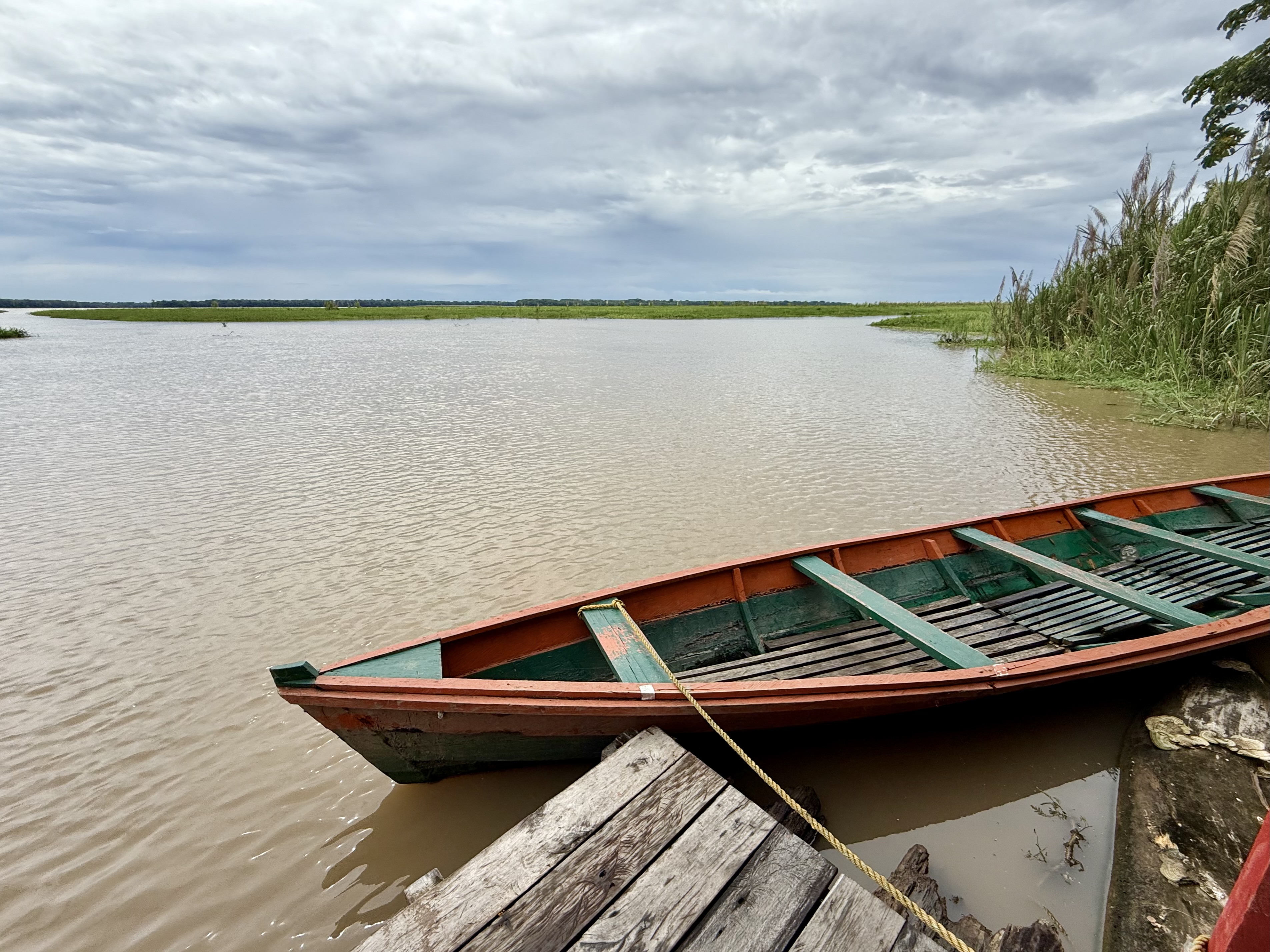
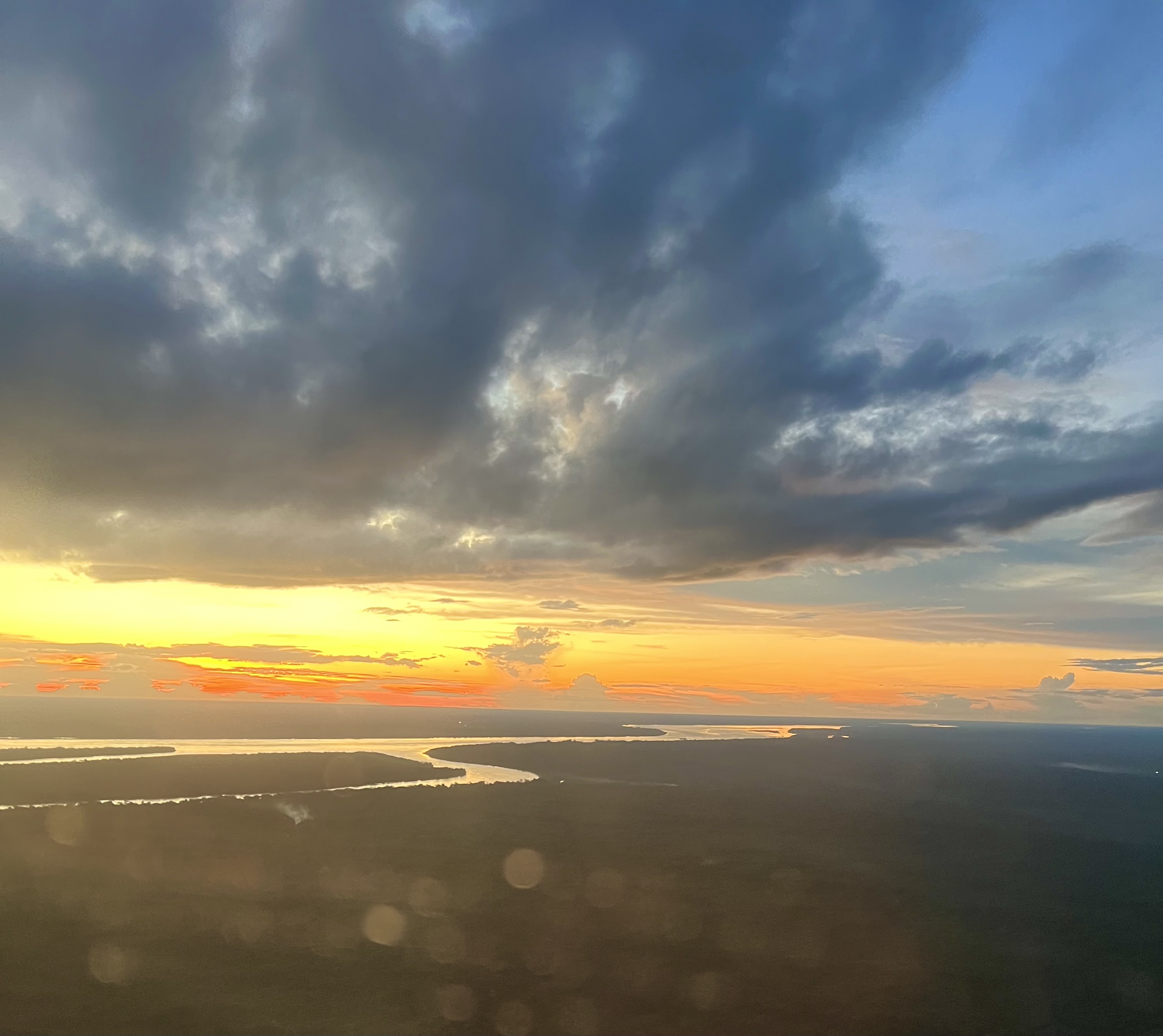
The trip to Reserva Marasha reminded me of the diversity of landscapes in the Amazon and how one reacts physically to each one. The swamp-like inundated rainforest canoe channel was filled with venomous wildlife, that I luckily didn’t see, but could still sense in the area, including boa constrictors, anacondas, caimans, mosquitos, as well as dragonflies, butterflies, small and medium sized birds, monkeys and sloths. The terrestrial rainforest has many of the same fauna but is even more dense and humid. The lake, on the other hand, provided a more open view with more breathing room. The most expansive, however, was when we returned to the main part of the Amazon, where the view of the sky, earth and water coming together creates an almost mystical experience.
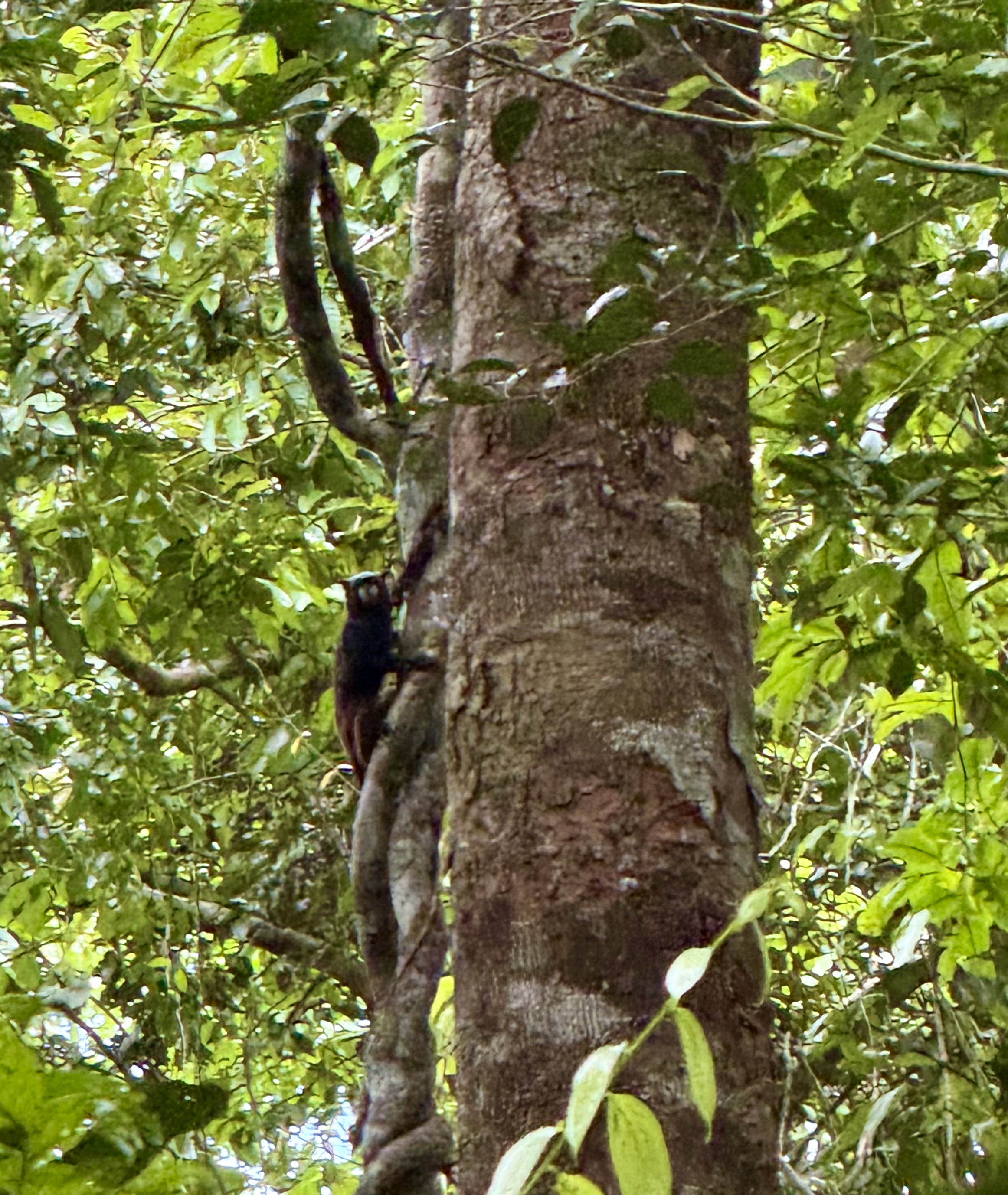
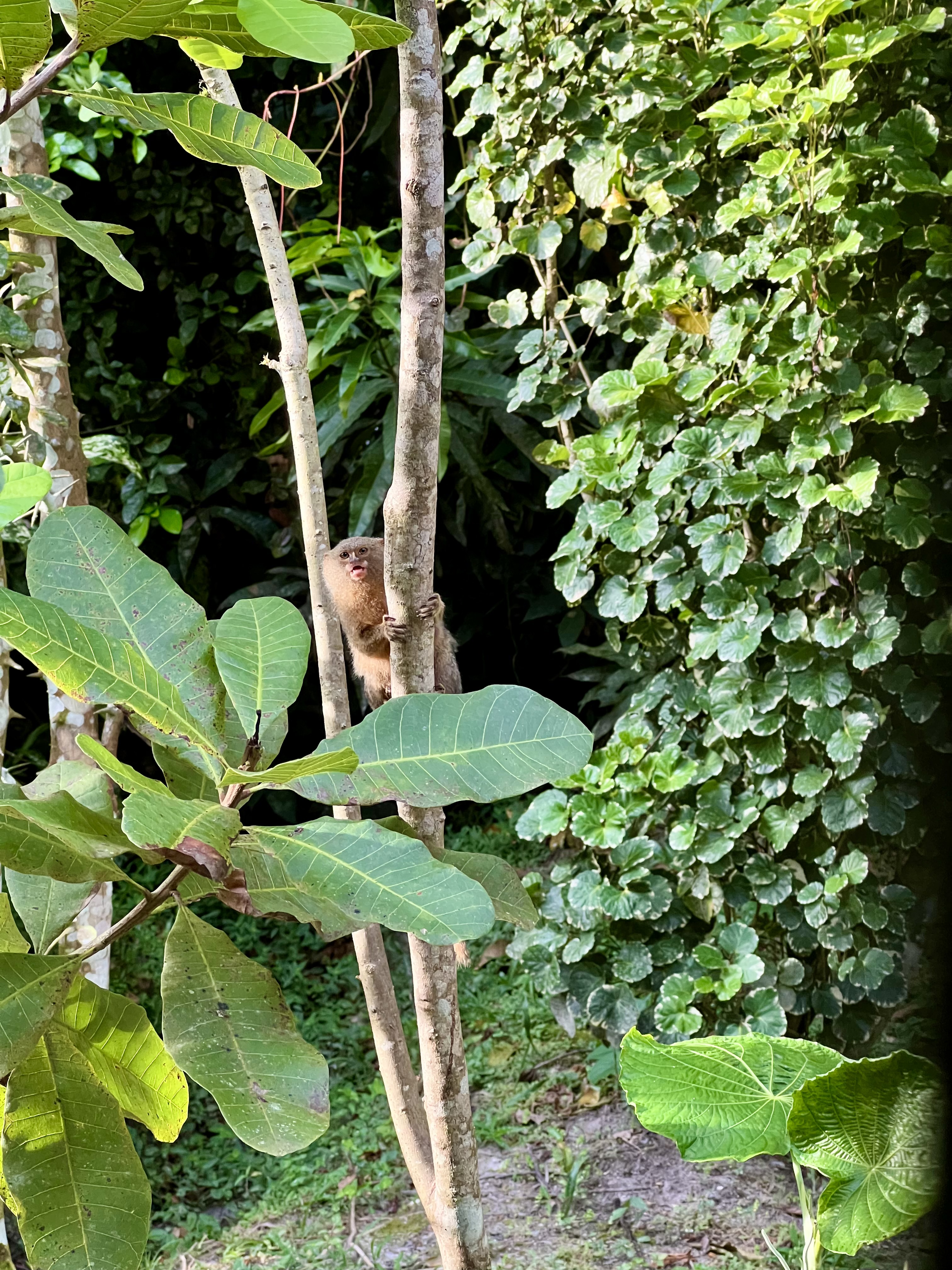
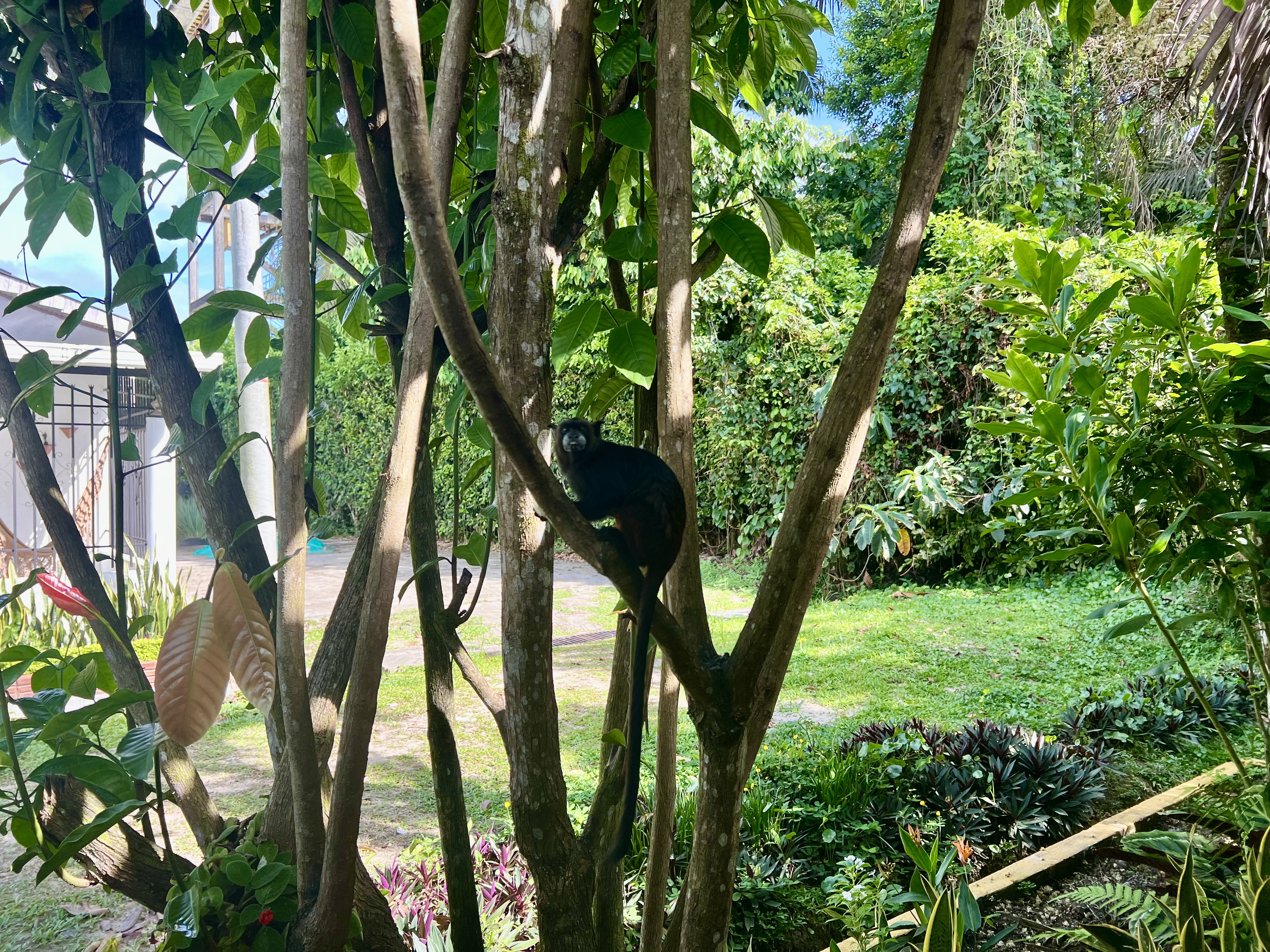
That evening at Casa Amazilia I was fortunate enough to see both a few tamarins and marmosets that come to a tree by Maricela’s garden. They are shy animals but did pose for a few photos.
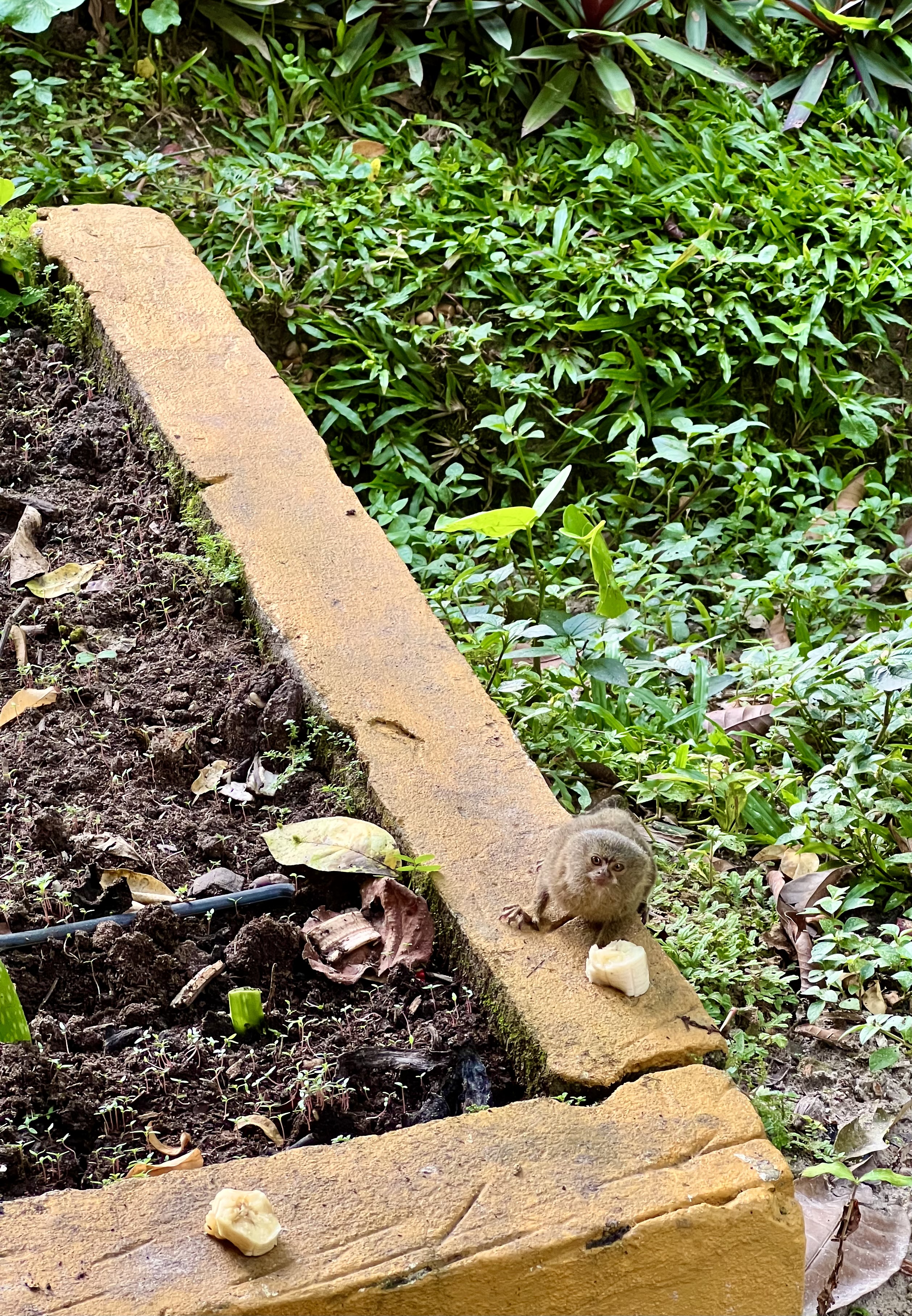
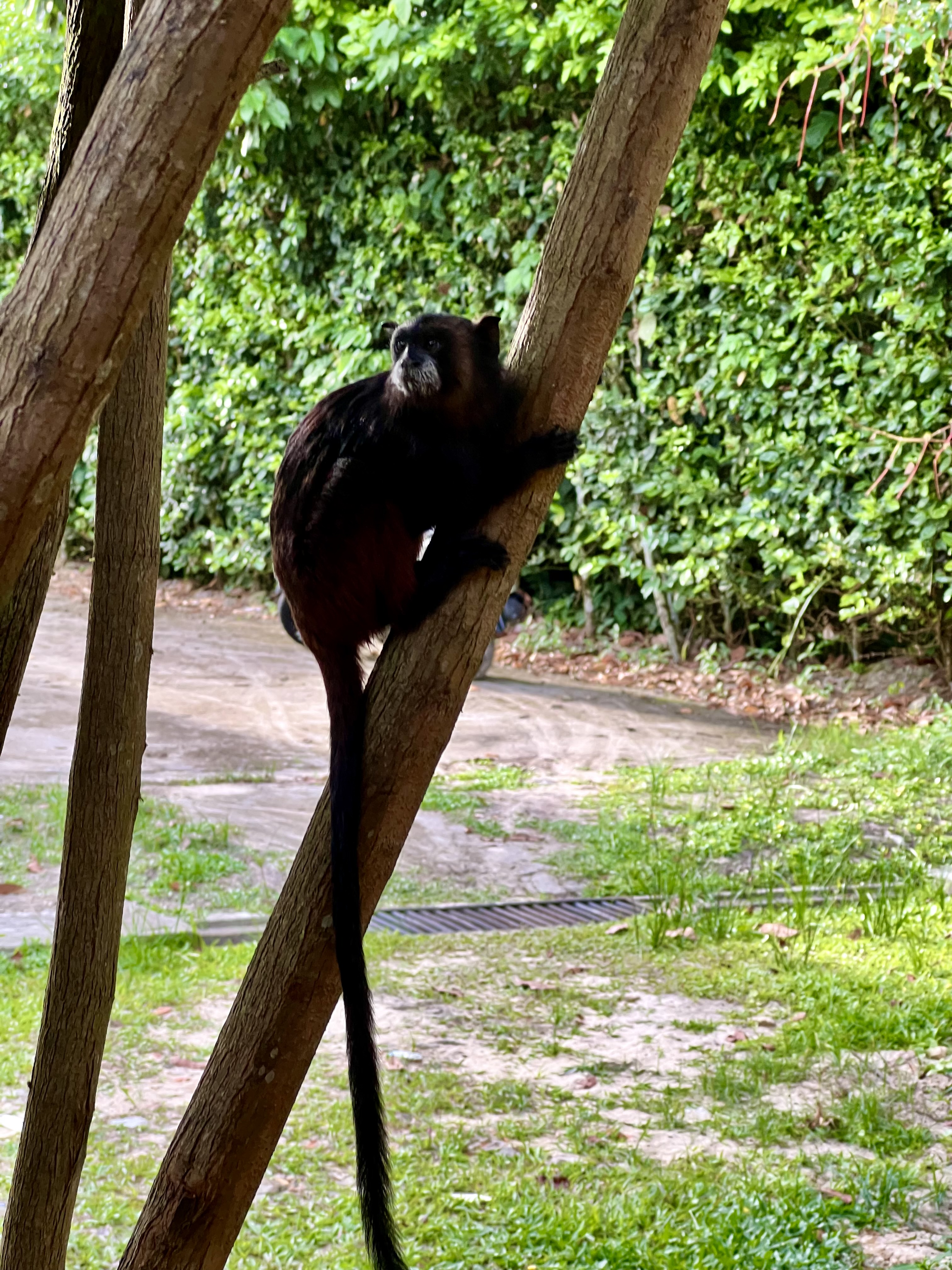
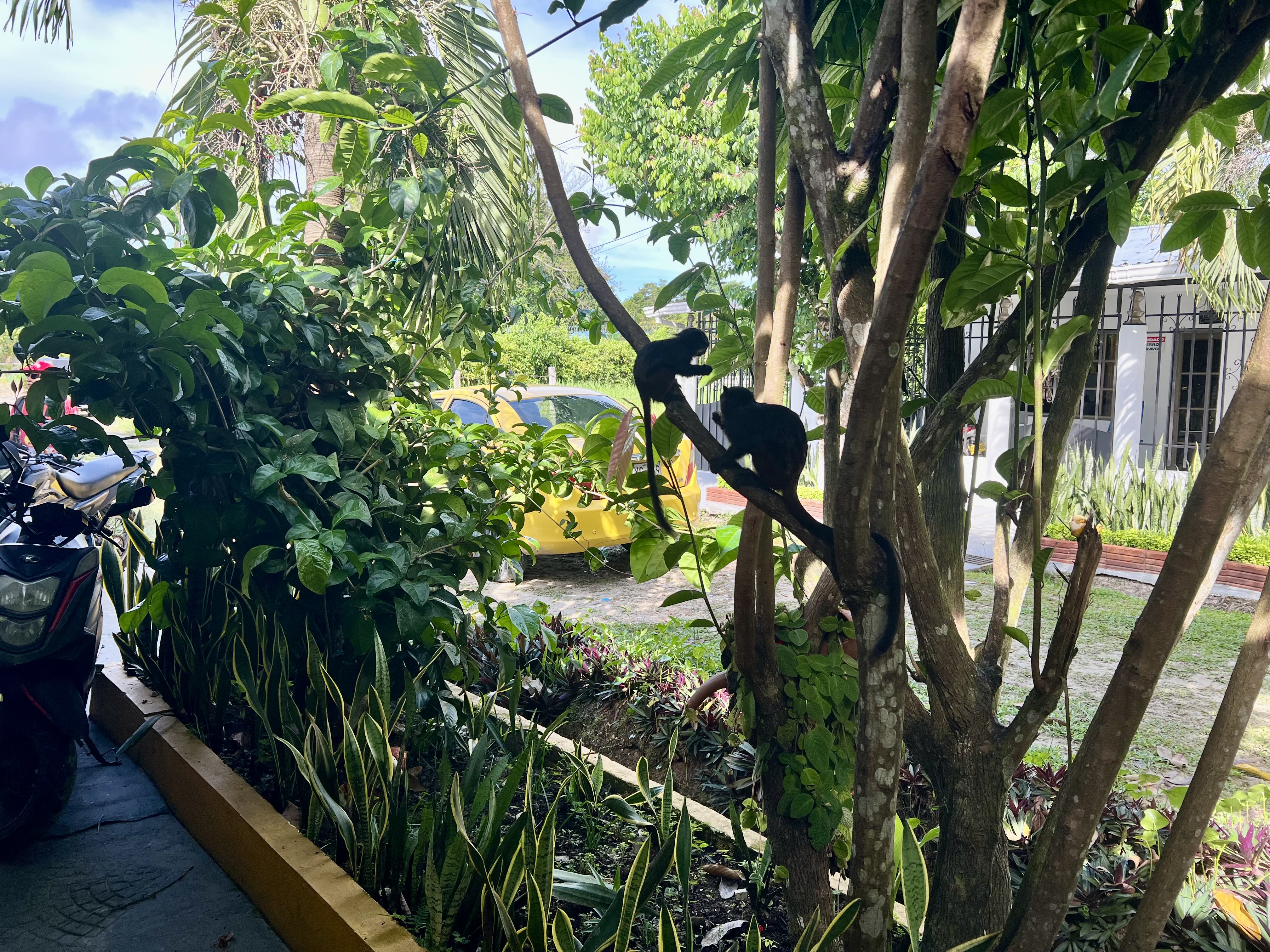
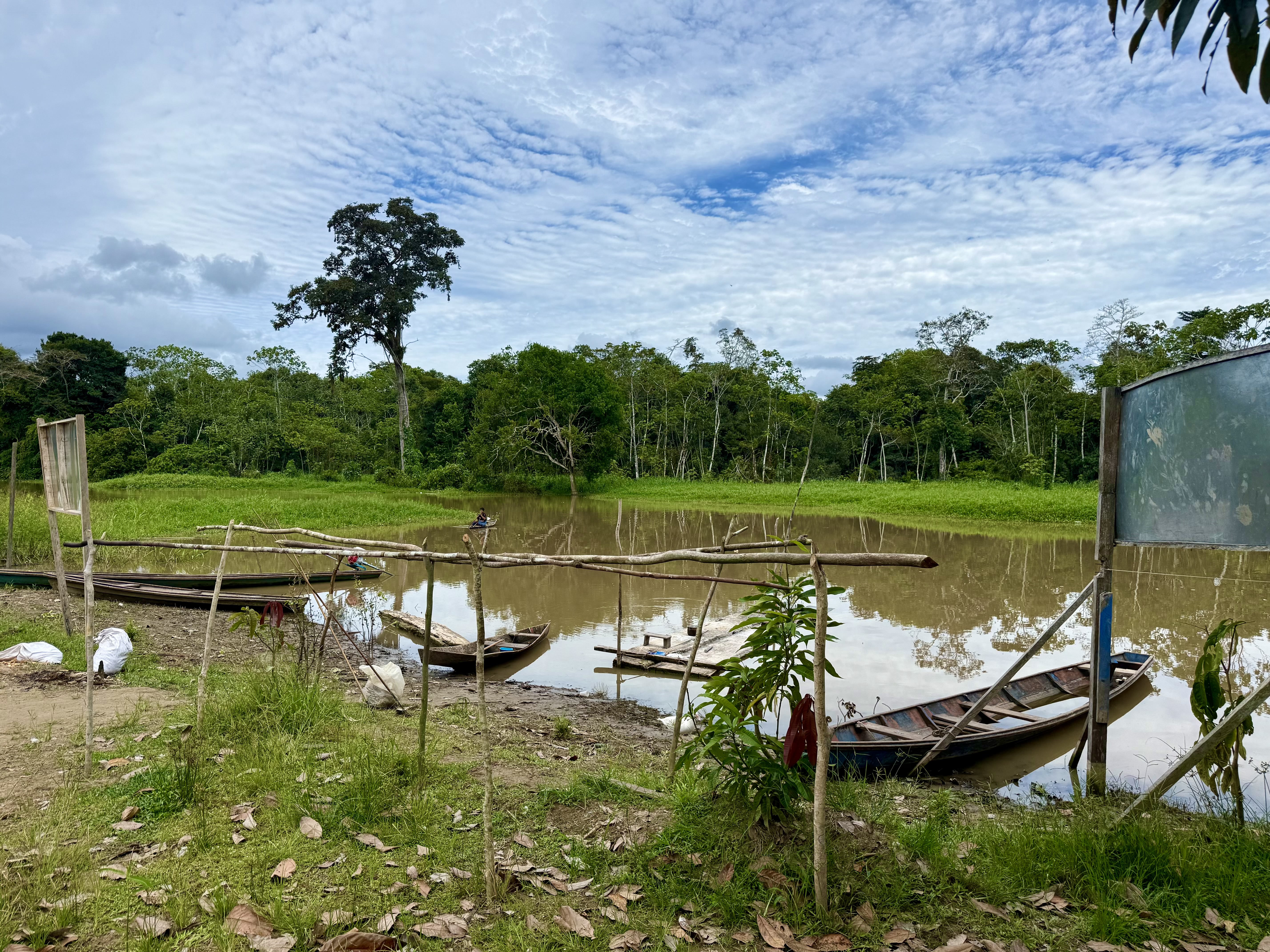
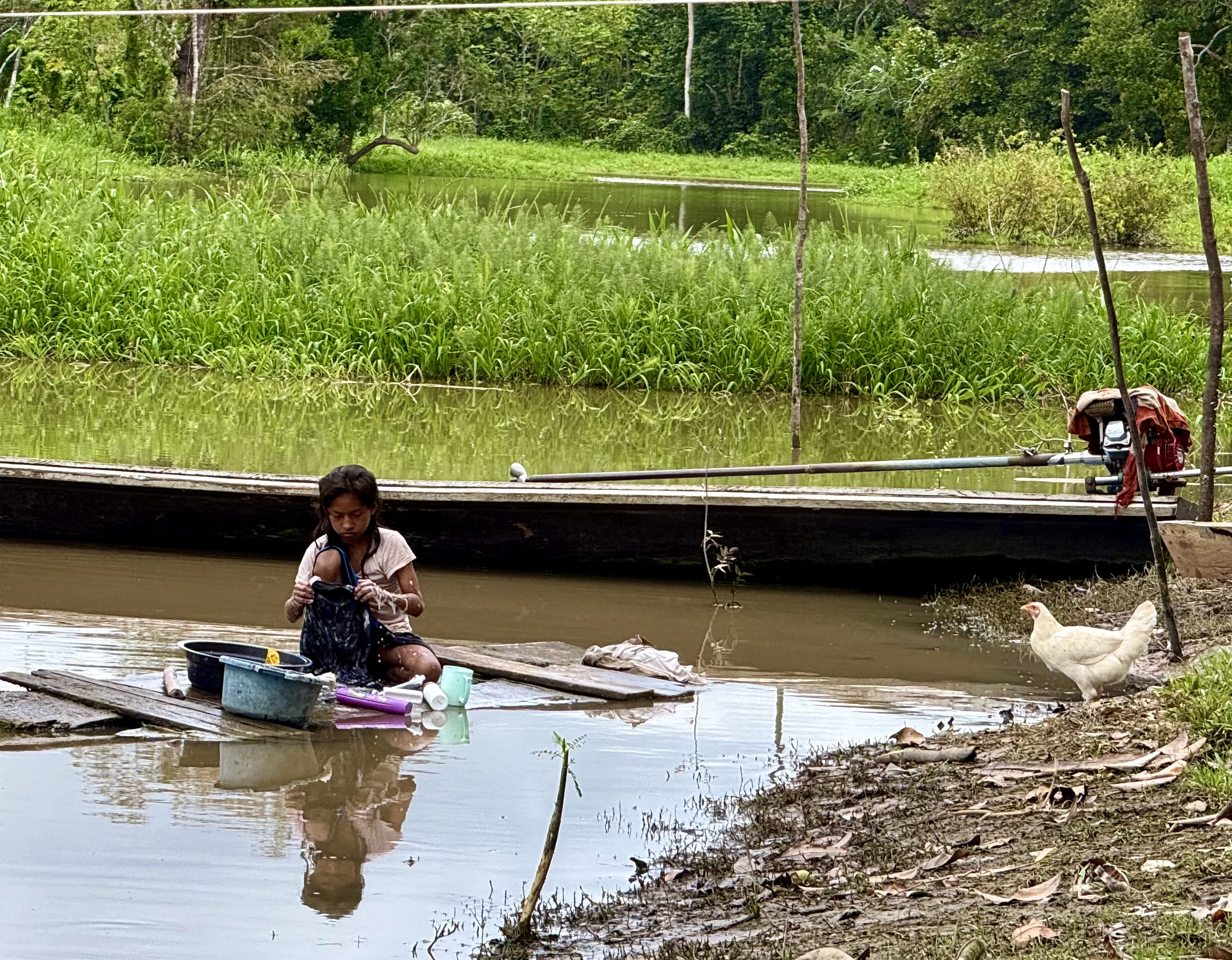
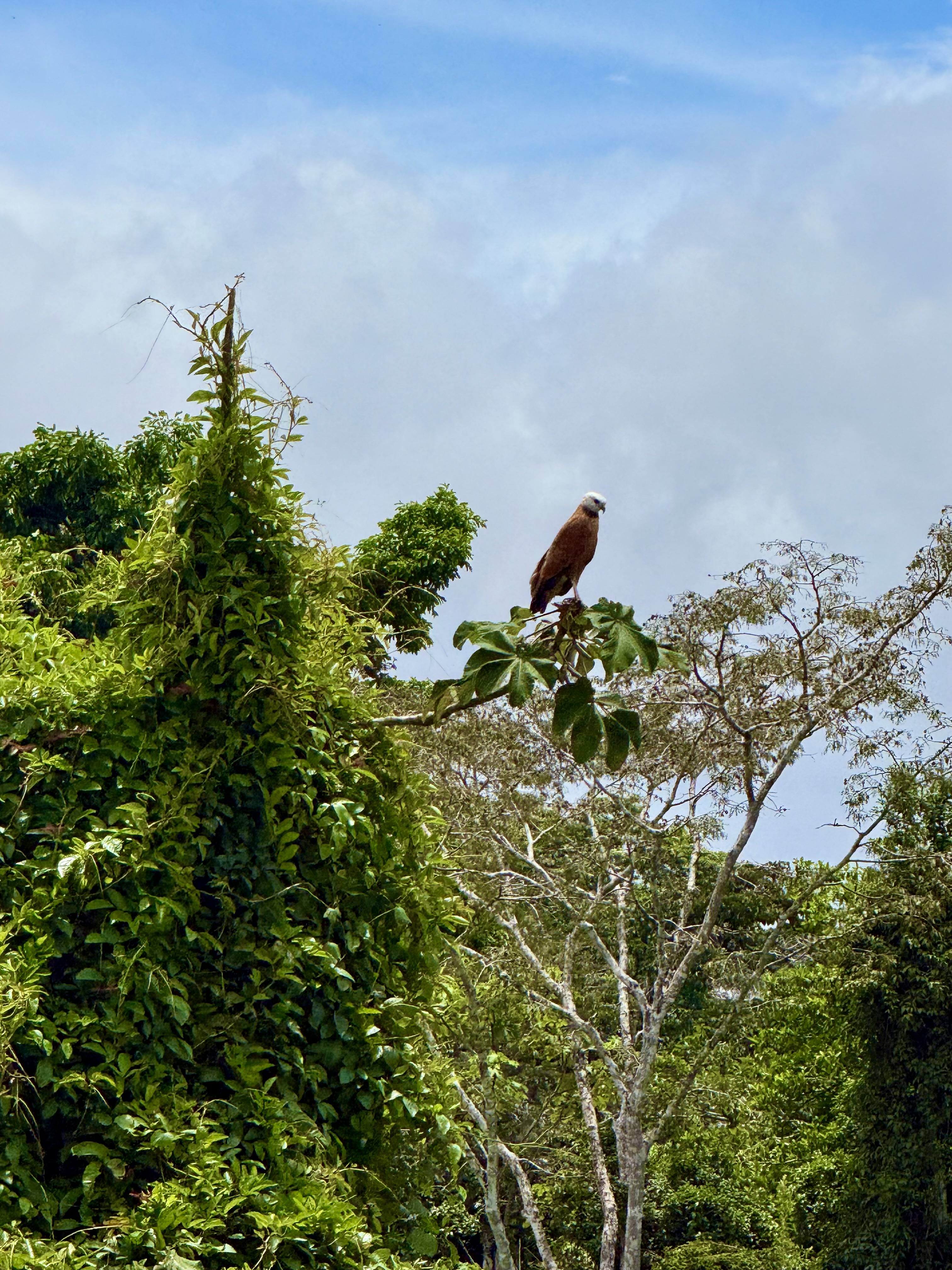
The following day, my last day in the Amazon region, Elvis, Xeni, and I took a speedboat trip to Gamboa Reserve in Peru to try to see some sloths. Unfortunately, we weren’t lucky with them but did see more squirrel monkeys and a white-faced hawk. On the way we also caught a glimpse of a grey dolphin. The indigenous village of Gamboa is fairly large and very traditional. There is a school, a store, and at least two evangelical churches. It was interesting to watch the boys in fishing canoes and a young girl washing clothes in the river. Here I was clearly an observer, not like with the family on the first day, where I was allowed to be a participant in the daily activities.
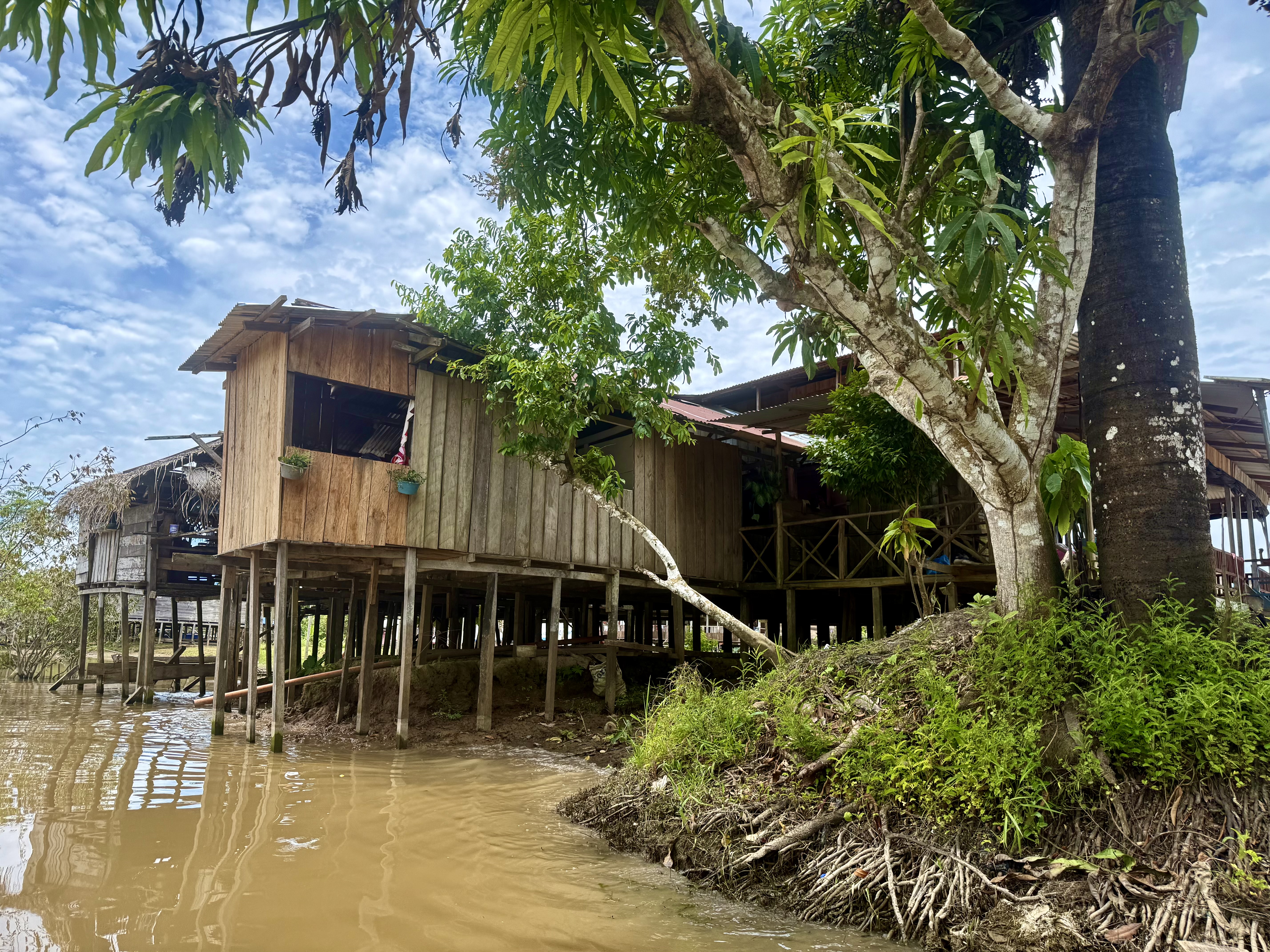
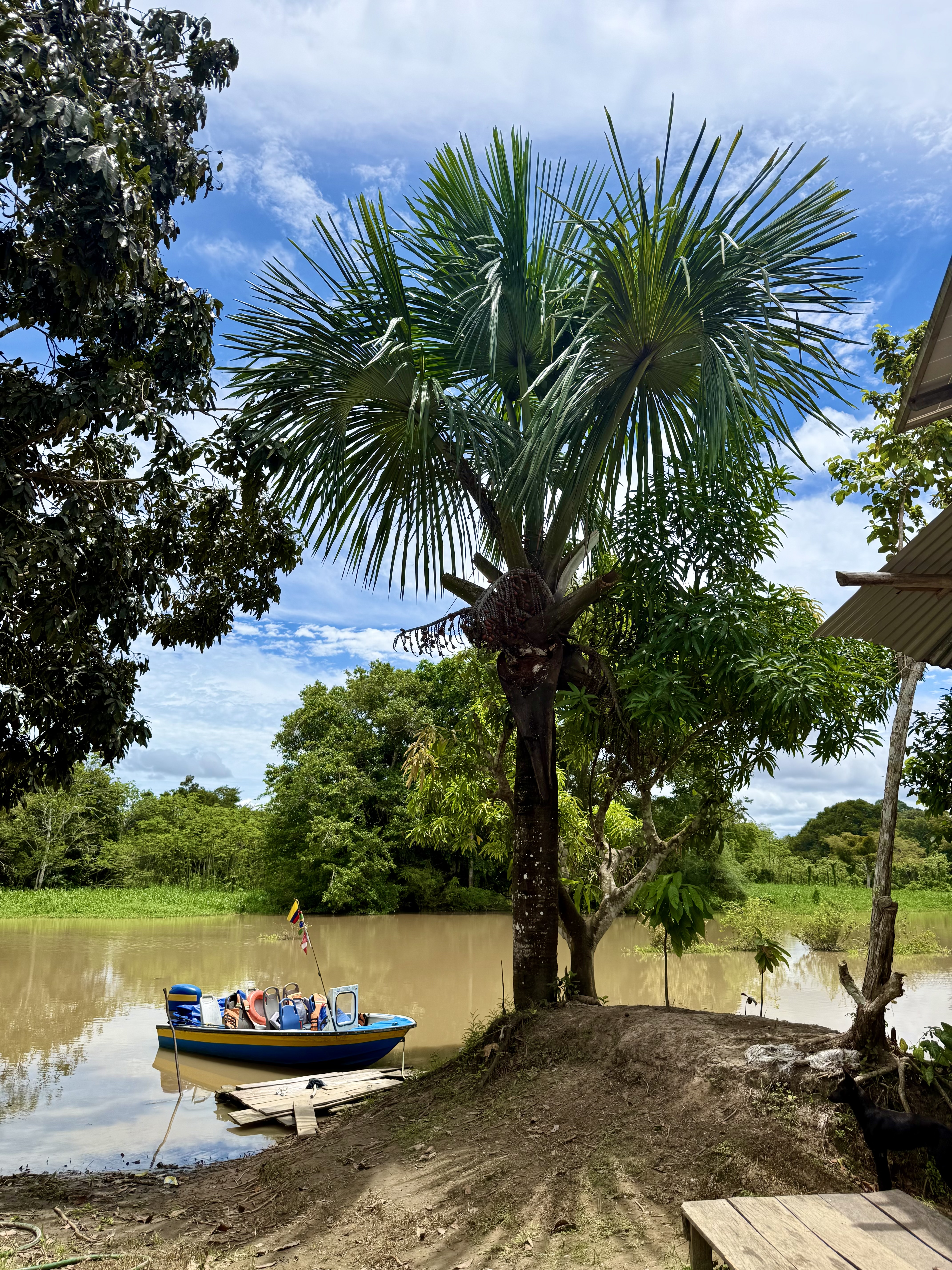
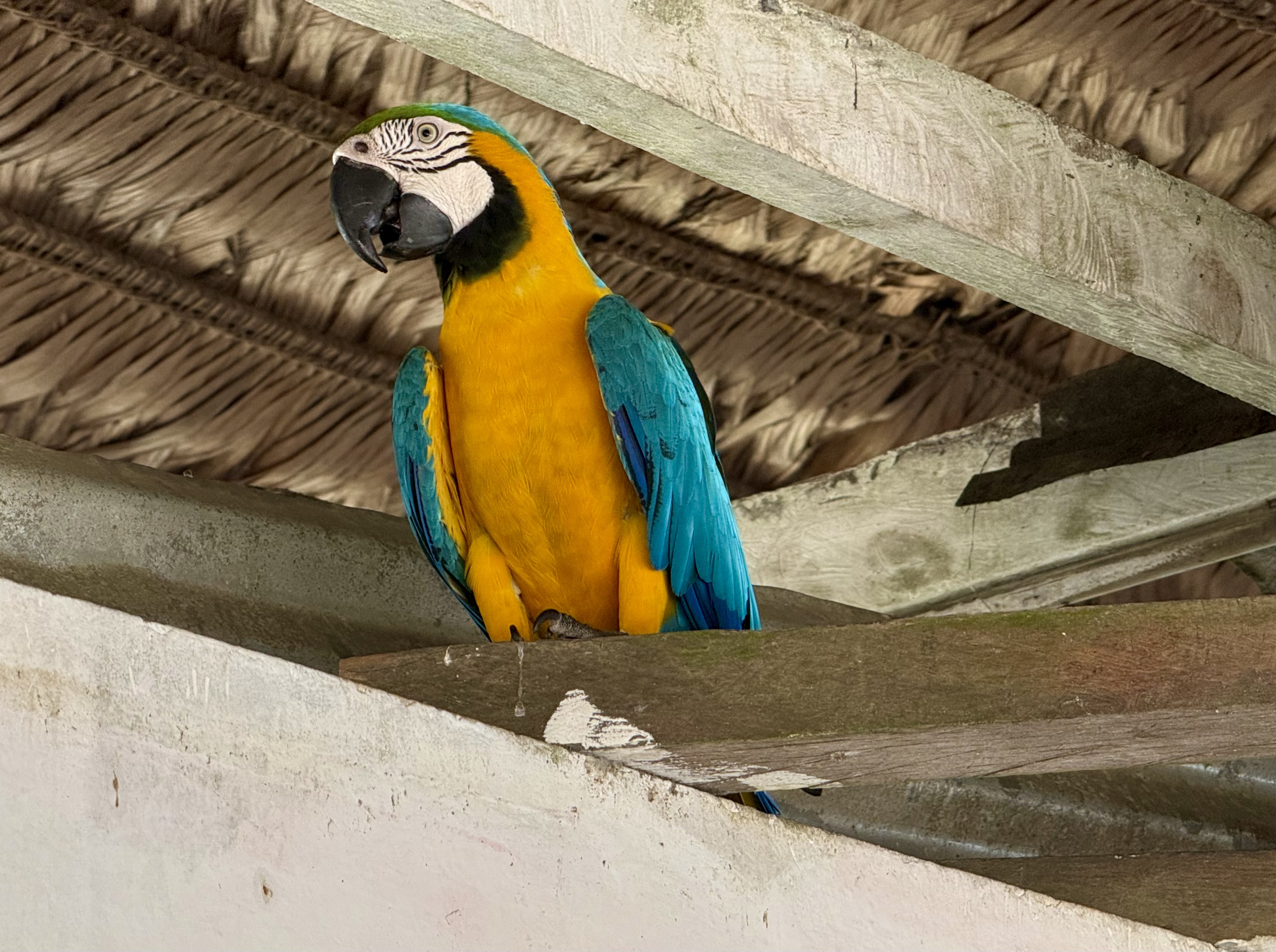
Our final lunch in Peru on Santa Rosa Island included Chicha Morada, a drink made from purple corn, that I drank a lot of during my earlier trips to Peru and can’t get elsewhere. Instead of Pepe, the scarlet macaw, here an unnamed blue and yellow macaw kept watch from the rafters.
It was time to return to Casa Amazilia and gather my luggage for the flight to Bogota. When we arrived at the Casa, the tamarin and marmosets greeted me as a farewell gesture.
The rainforest here offers many lessons. Depending on intent and sentiment, it can either protect or harm. The indigenous people have mostly adapted to modern ways while keeping their languages and customs intact. Drug production and trafficking remain a problem that all three countries are collaboratively actively work to combat. It is difficult to find the production sites in the dense jungle environment, although even as recently as two months ago a depot was jointly destroyed. Police and the militia from the three countries are in constant contact with one another.
I can’t thank Maricela, Elvis and Xeni enough for making my time in the Leticia region of the Amazon so amazing. The rainforest here is intact and full of wildlife. Jaguar tracks could be found behind Mamashasha’s place, Elvis saw anacondas and boa constrictors not too long ago, and even if I didn’t see many sloths, they are here as well as six different species of monkeys. The visits to the indigenous communities were very different from the typical tourist experiences I had in Manaus and much more authentic. Elvis and Xeni became friends during our short time together, and I sincerely hope we will see each other again in person and not just through WhatsApp.
 omegoodyssey