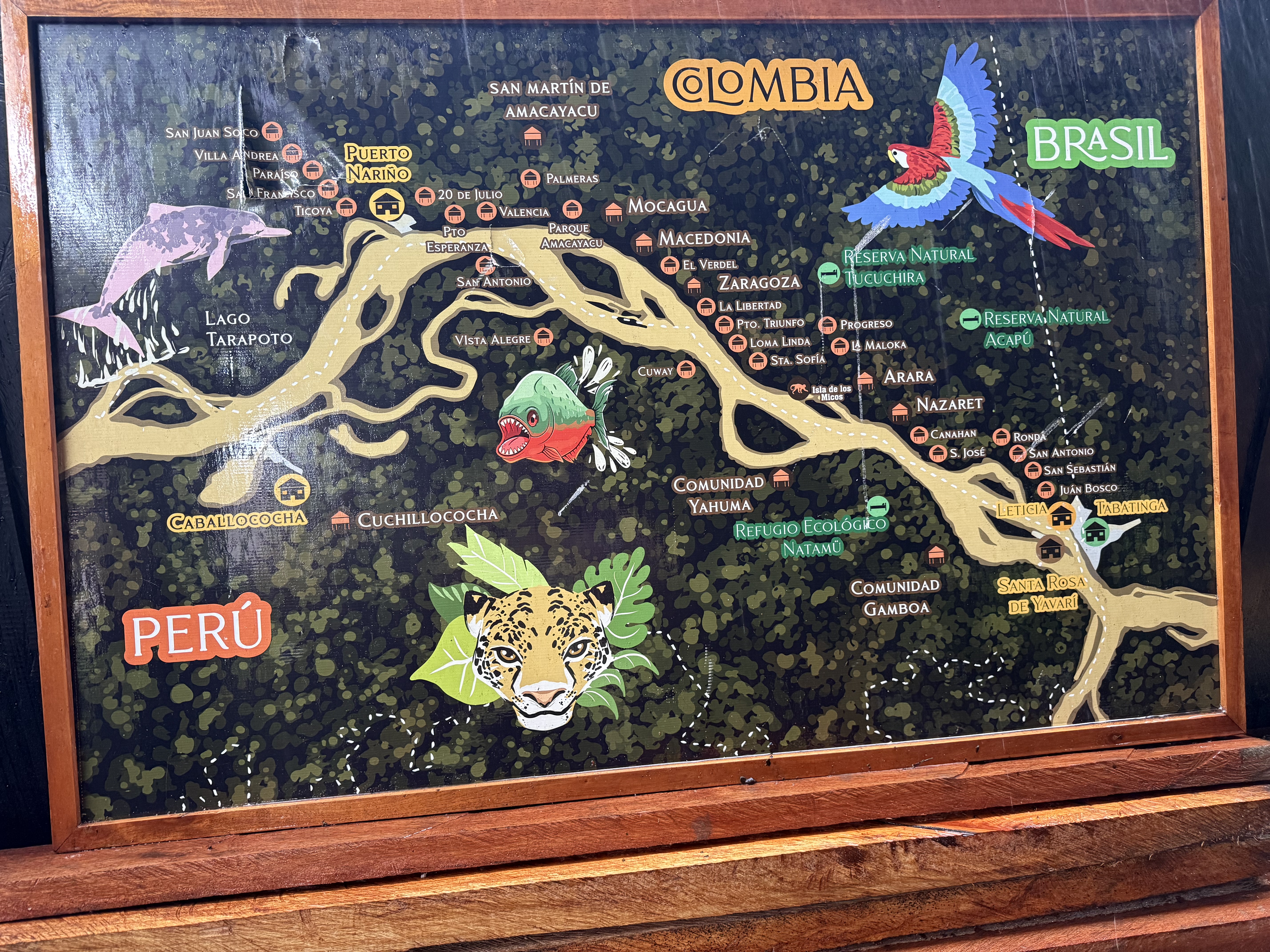
A Three Day Tour to Puerto Nariño
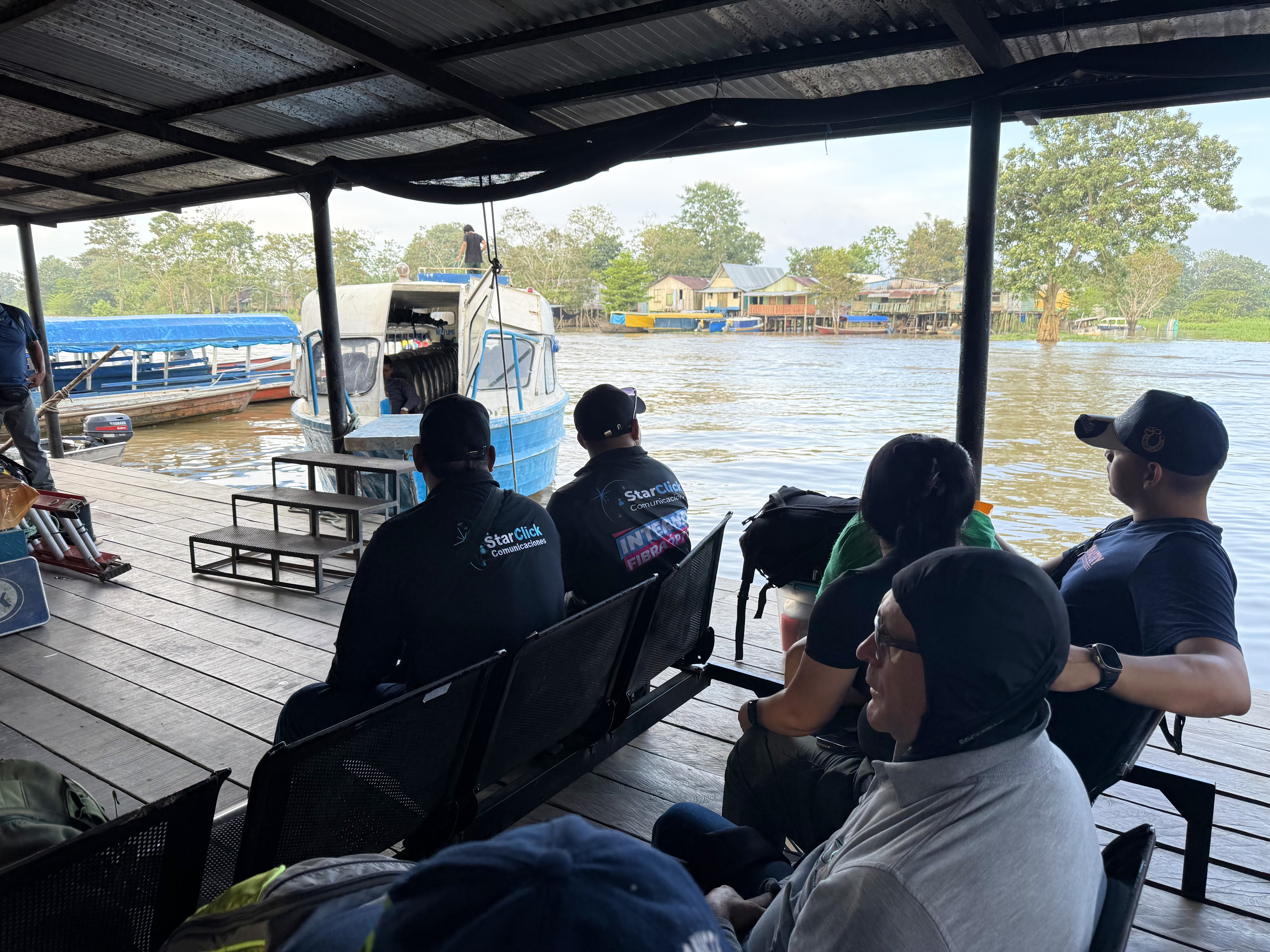
When I was planning this trip, I knew I wanted to come back to the Amazon. The Get Your Guide app offered listings for 2–4-day trips to Puerto Nariño, and I chose one for three days two nights. The listing said that rubber boots and rain ponchos would be provided, and I was happy that they were. The boots were especially appreciated on the muddy trails. The tour started with a 6:30am pick up to make the 7am public transportation boat. The process for registering and boarding was impressive. Boarding was assigned by the stop to get off or on. Registration was mandatory as the boat was completely full. There was a small waiting area on the dock that was filled with workers, families, and tourists. The dock is in a small inlet channel off the main river, which makes the water calmer and easier for getting on and off the boats. The three-hour passage stopped at many places along the way to let people embark and disembark.
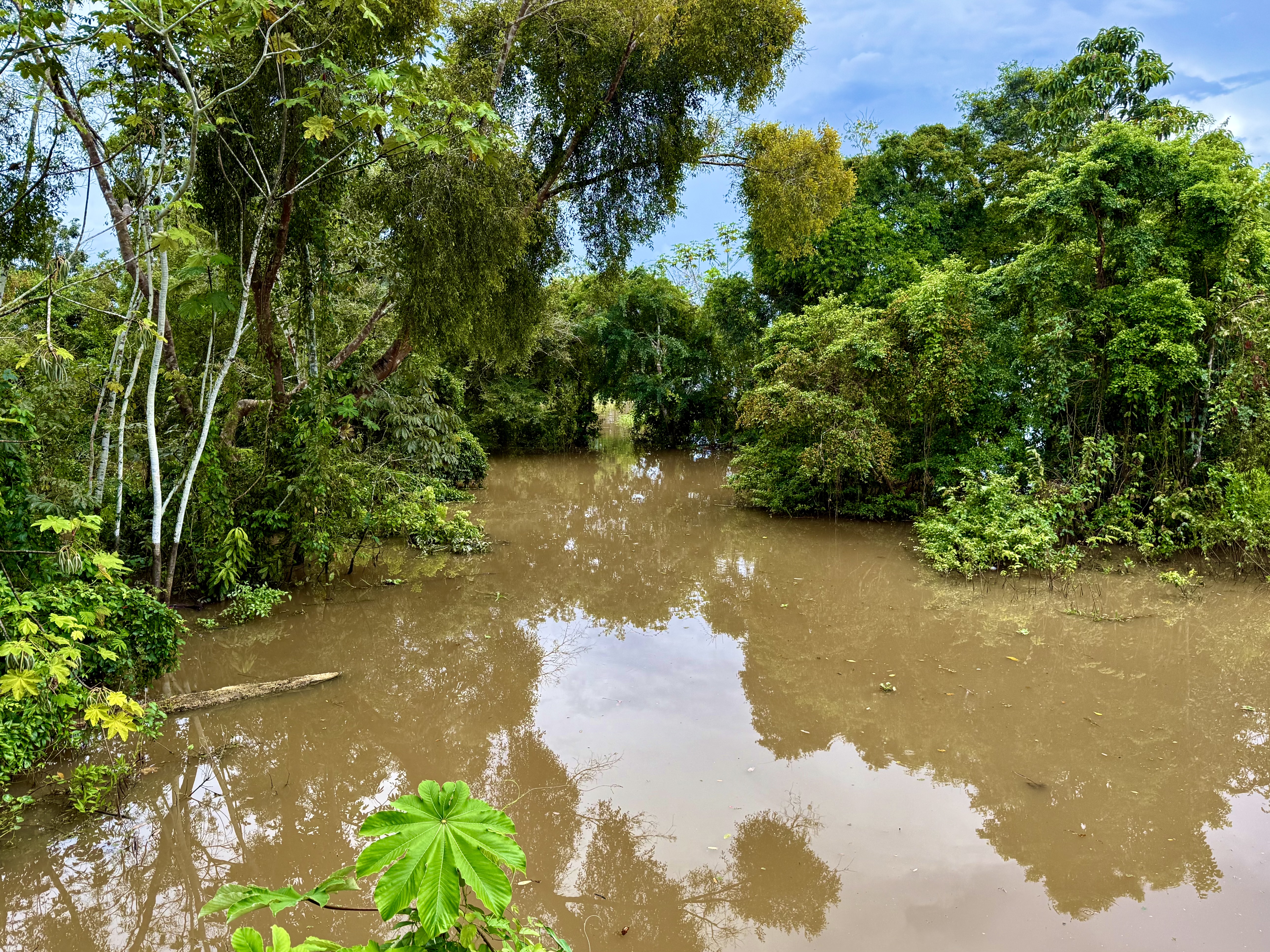
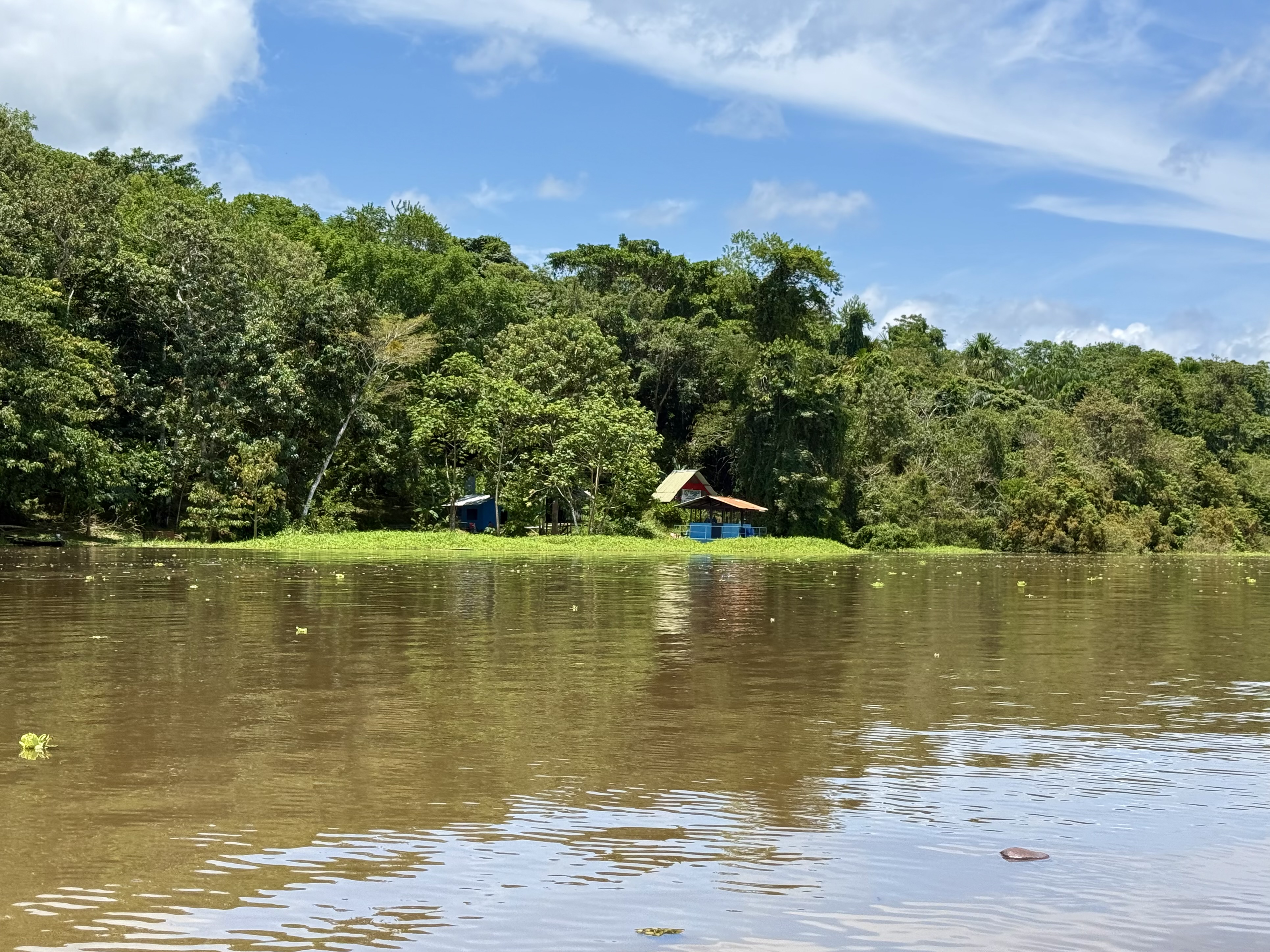
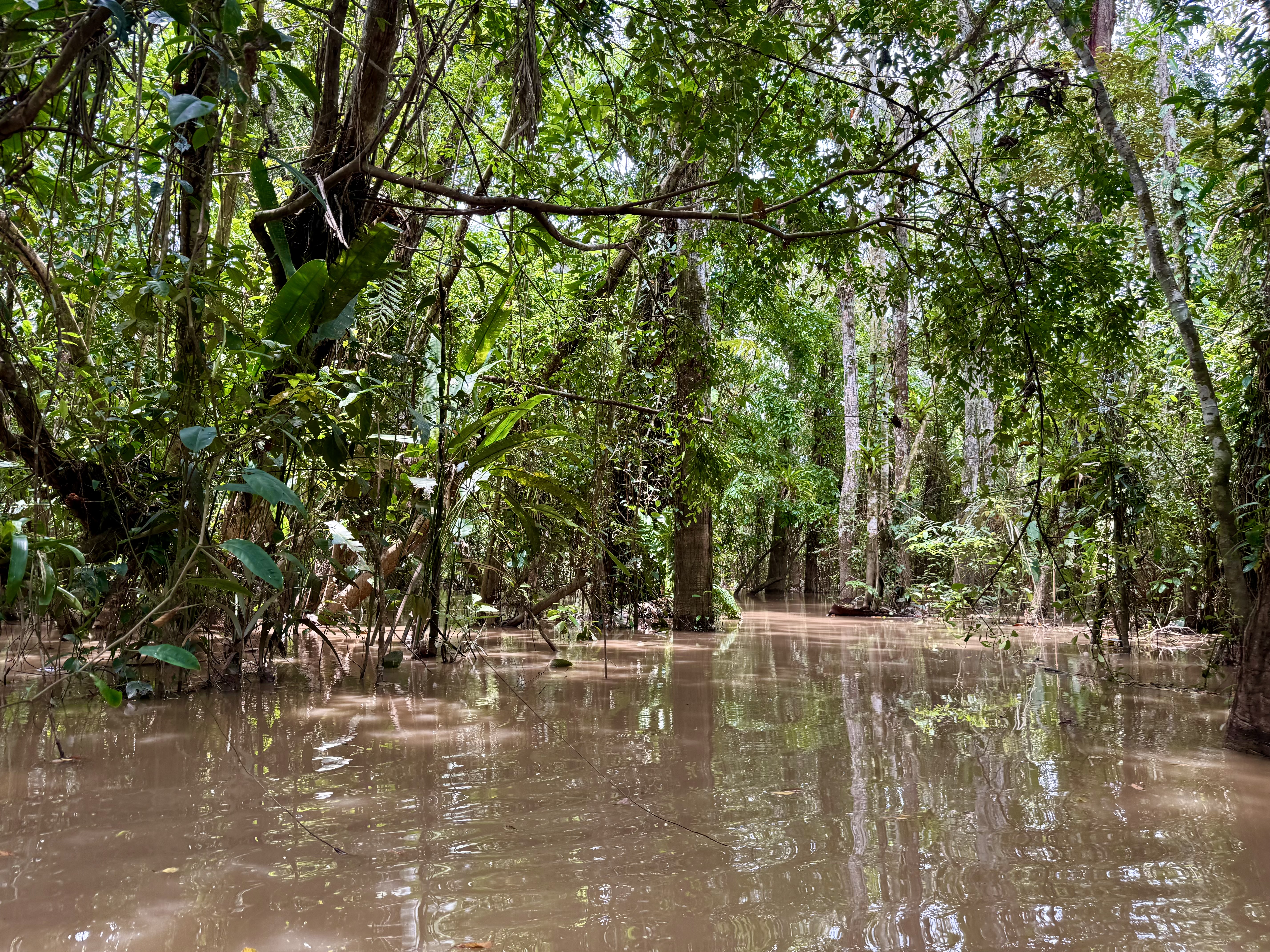
I was met by a guide, Pedro, and an interpreter, Damien, which I hadn’t expected as I wanted to do the tour in Spanish. I later learned that a Greek pair would be joining me and they had booked the translator. Almost as soon as I left the public boat, I was whisked into a kayak for a tour of a flooded area nearby and a small lake, Lago Tarapoto. The kayaks were able to quietly negotiate the changing vegetation with the rising and falling water levels. The flooded areas at the beginning of the rainy season, which is when I was there, are only about a meter or so deep, but they can get up to fourteen meters covering most of the bushes that are present during the dry season. I was lucky to see a bit of both. White bark on the trees indicates how high the water rises under normal conditions. Strangler figs of various sizes were abundant in the swampy areas and macaw squawking along with cicada humming were often the only sounds other than the kayak paddles. It was a perfectly serene introduction to this part of the rainforest. When we entered Lago Tarapoto, we came across two pink dolphins that fled soon after we saw them. Not far from the Puerto Nariño dock there was a small shack with blue fencing where an engine motor was making a lot of racket. It turns out this was the water filtration system for the town, and the motor was working to make potable water. The kayak excursion was over a little after noon, when it was time for a buffet lunch. Pedro disappeared as soon as we docked, but Damien accompanied me until I mentioned I wanted to go back to the hostel for a shower as my clothes were sticking to me with the intense heat and almost oppressive humidity.
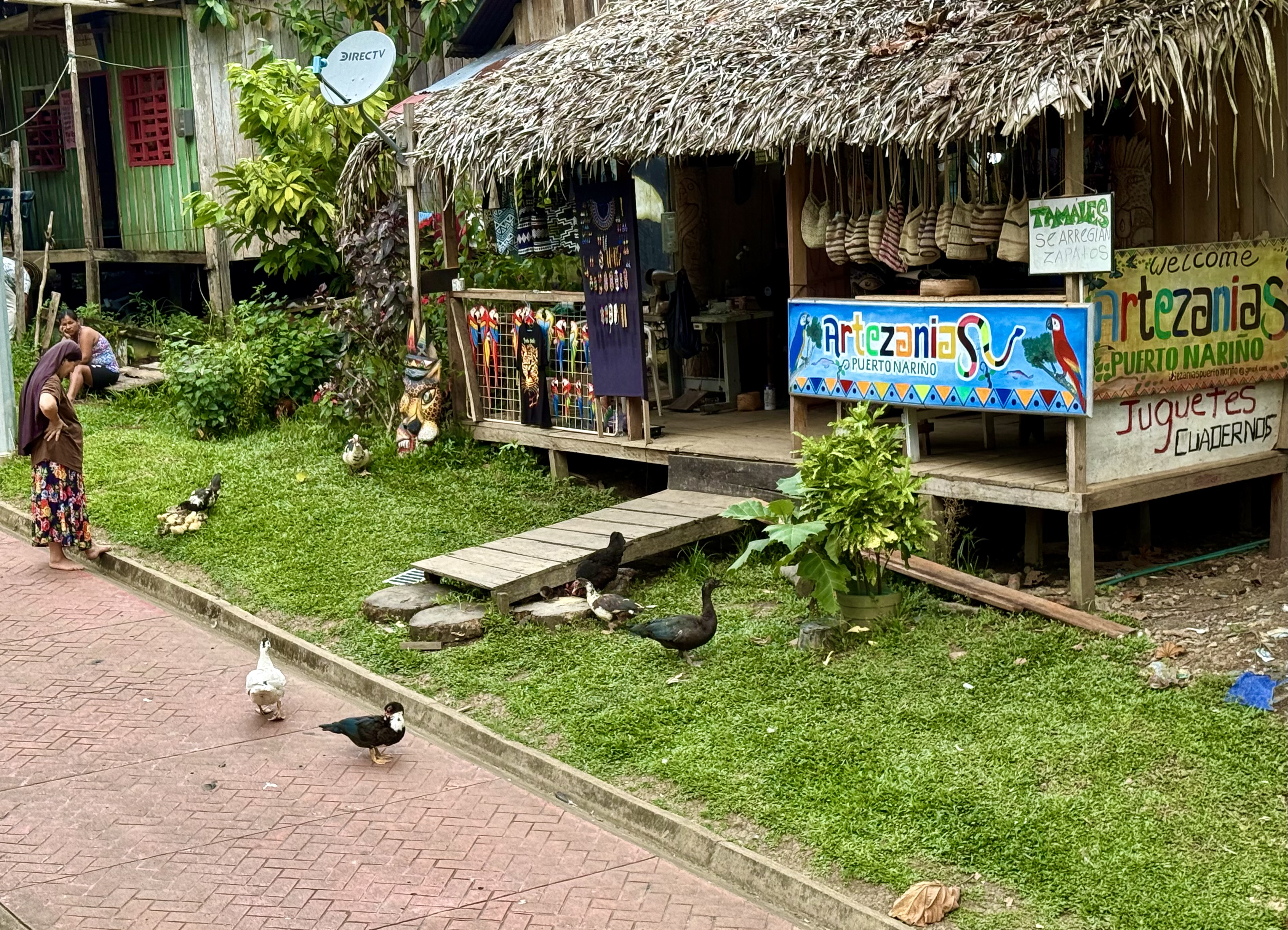
On the way back to the hostel, I saw a man at a small wooden table working on shoes. The front part of my Ecco sandals had ripped, so I asked him if he could repair them, and he said he could as soon as he was finished with the shoes he was working on. After my much needed shower, I brought my sandals to him. He worked for a good two hours, taking a piece of material from his bits and pieces collection that almost perfectly matched my sandals, cutting it to size, then shaving the edges for a perfect fit, then cutting into the rubber to ferret out the old cloth so that the new could go in. It was actual physical labor and not easy, yet he was an absolute master of his craft with his ancient tools. At the end, he said it would be 10,000 COP, which is about US $2,70. I didn’t have change for a 50,000 note, so that is what I gave him. He was shocked and a bit embarrassed, but I reminded him that Ecco sandals are very expensive, and he saved me from having to get new ones. For me the exchange was also a reminder of the difference between those who work for the tourists and are out for maximum advantage and those who work for locals who value their work as part of the community.
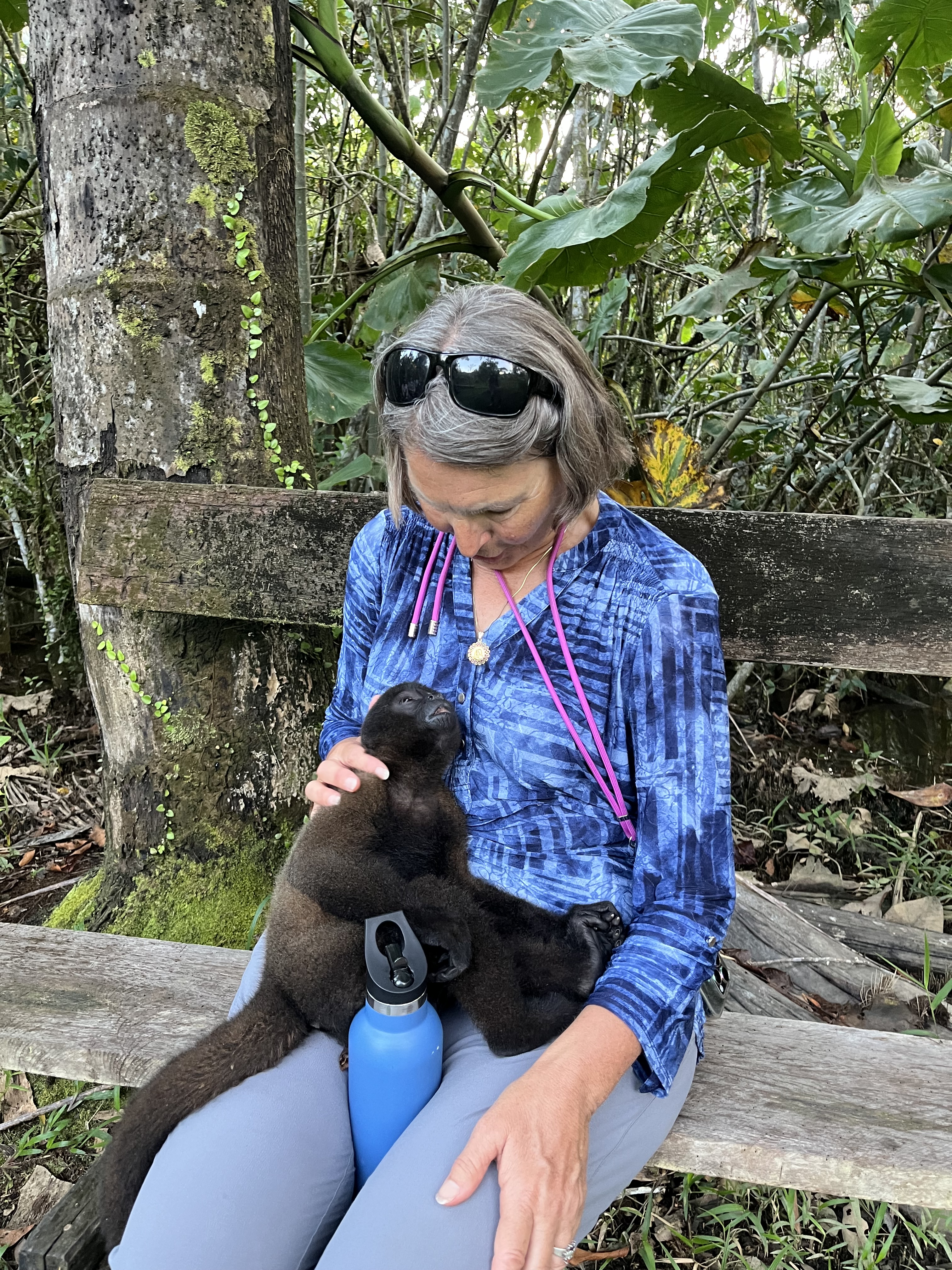
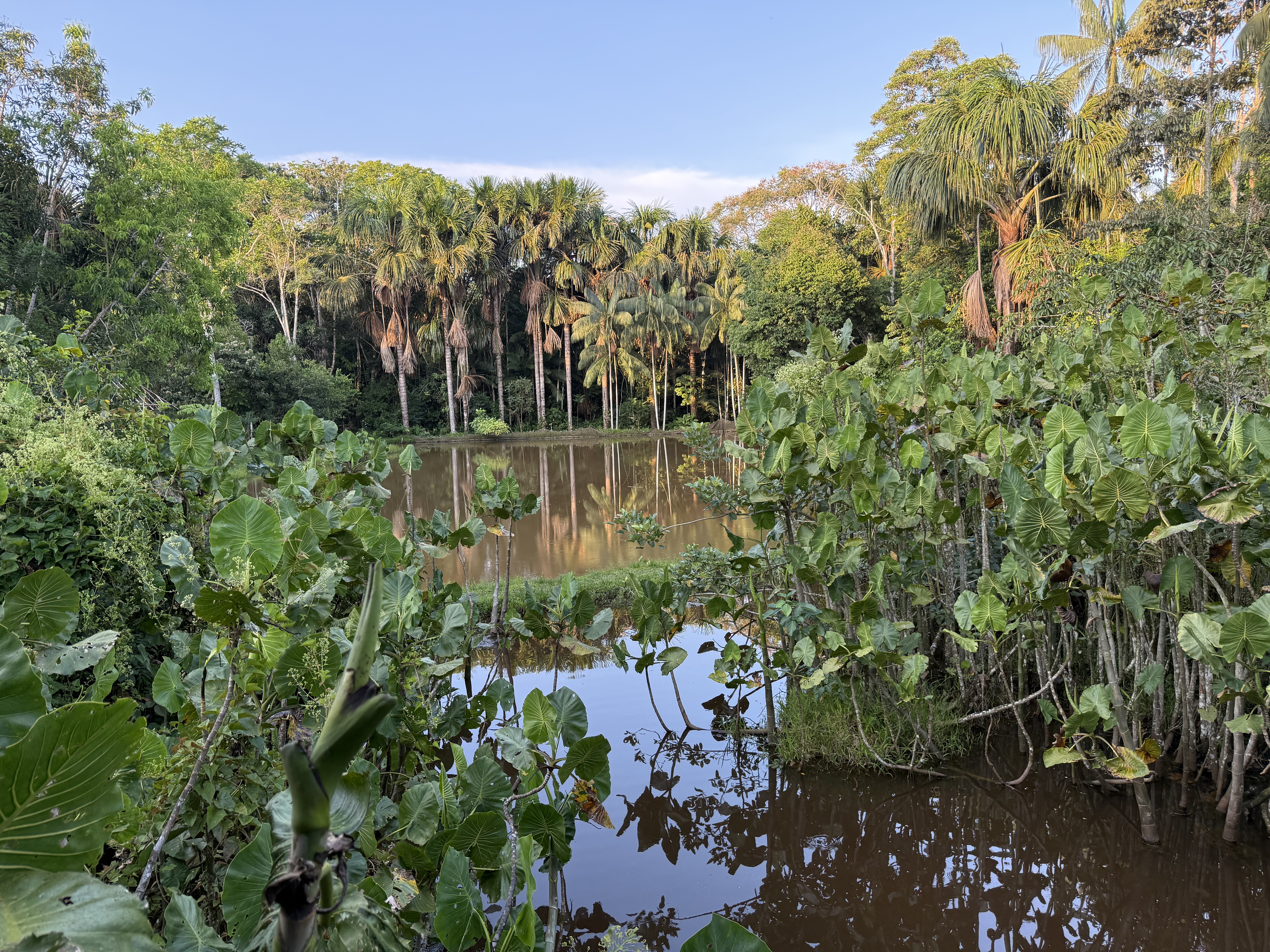
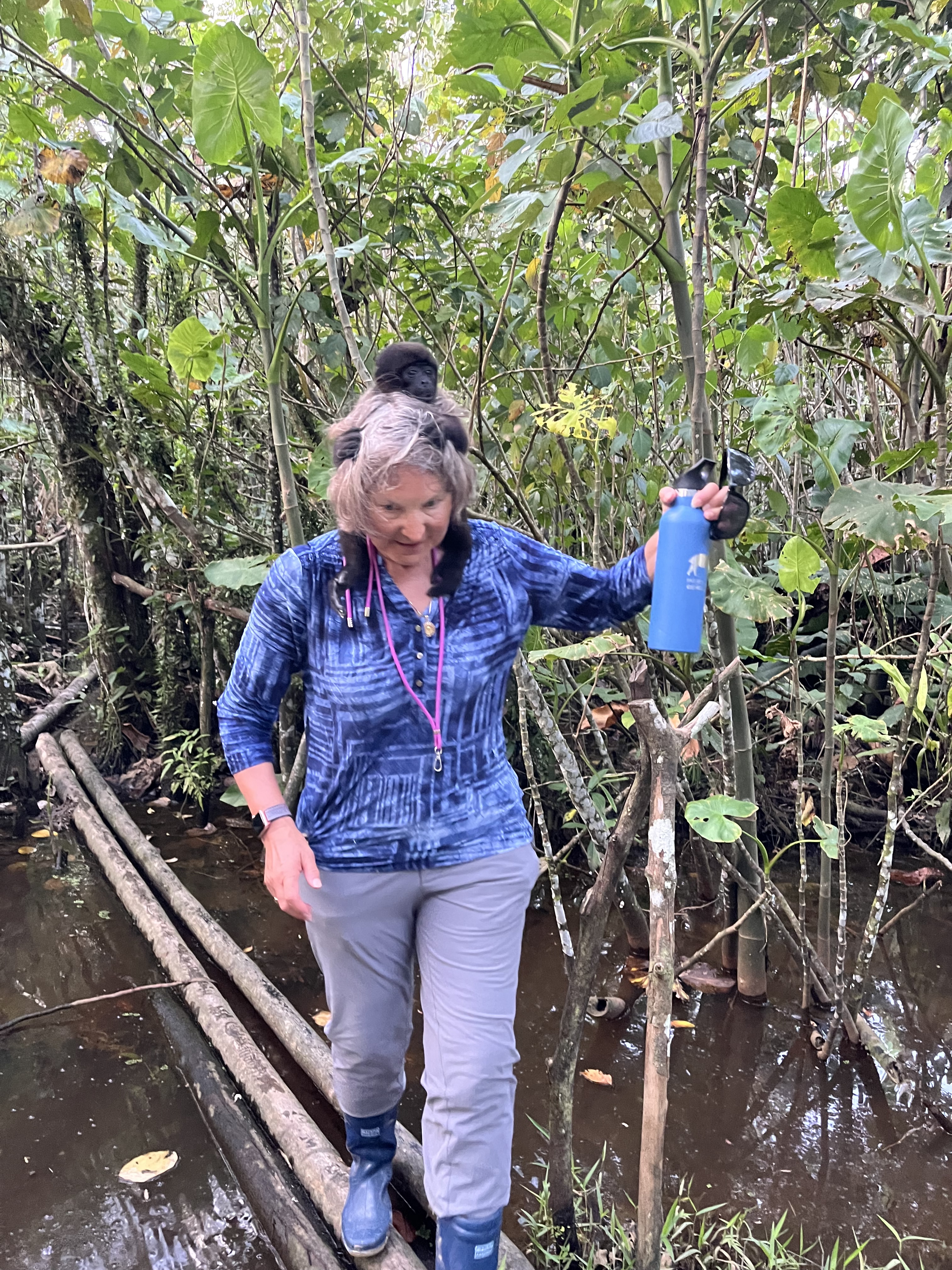
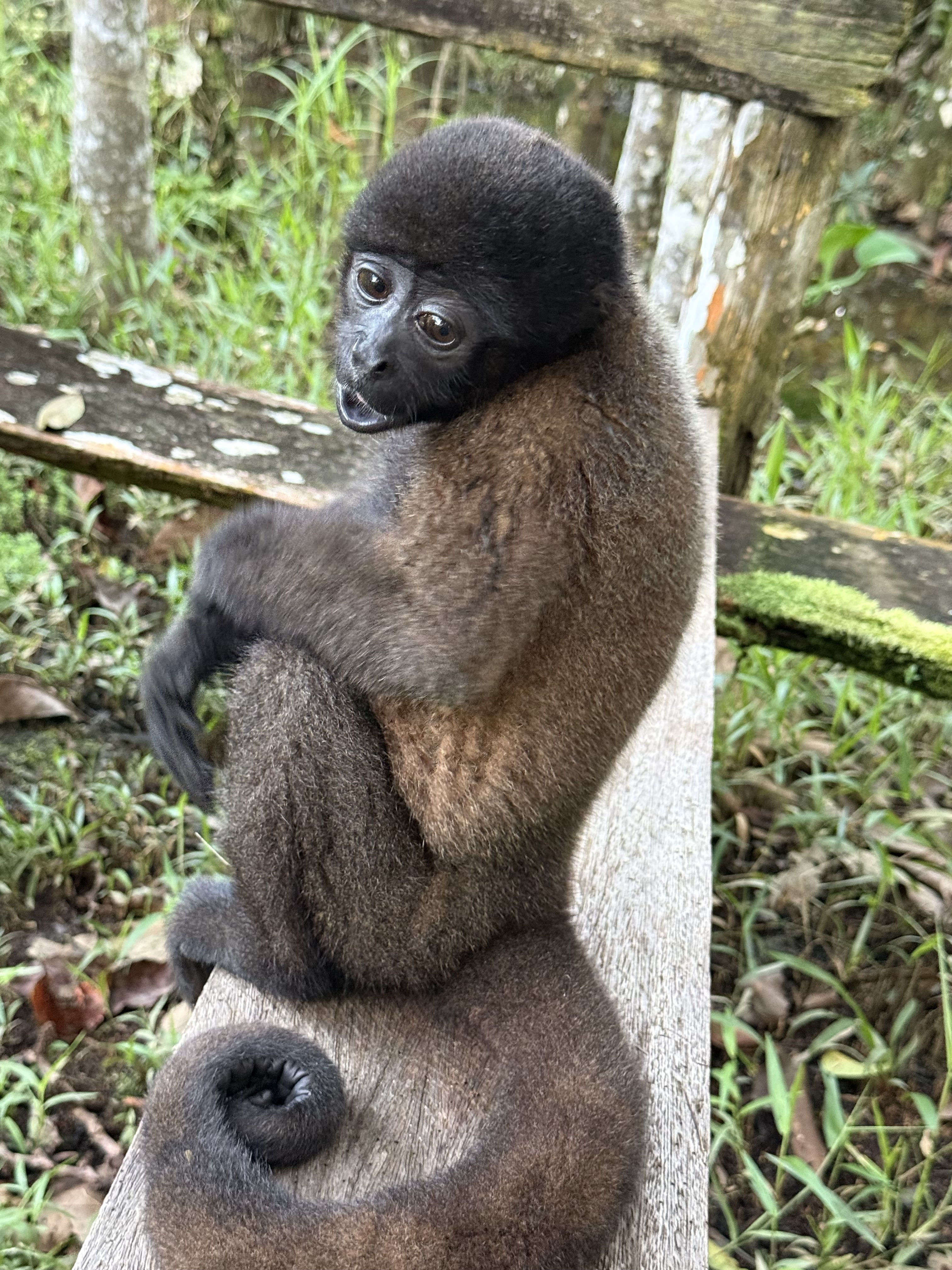
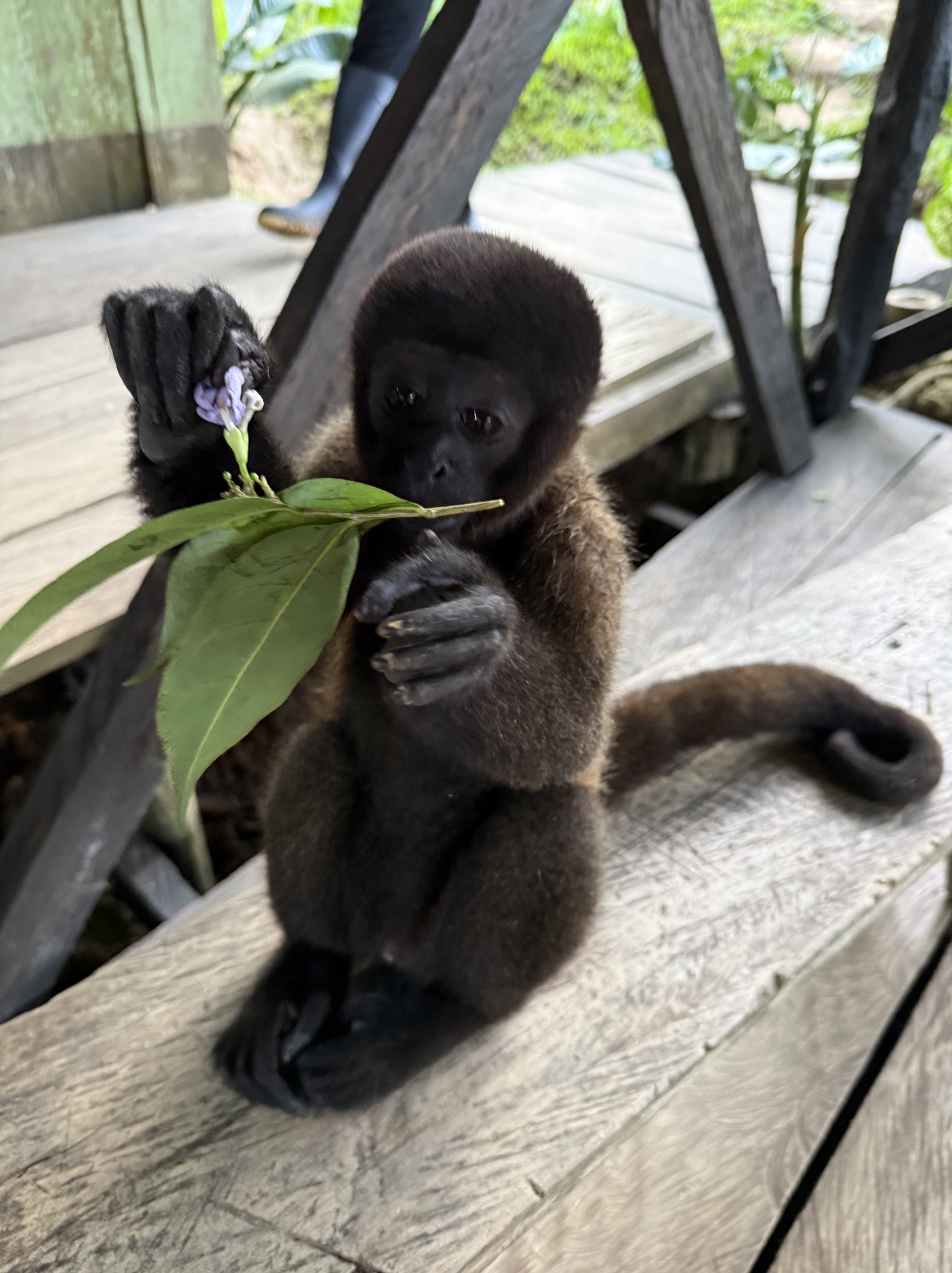
At four pm., I met the Greeks who were going to be with me for the remainder of the tour. They were cousins who often travel together. He lives in Madrid and his Spanish is fluent; she lives in Ioannina of the Grecian northwest coast and doesn’t speak any Spanish, but Felipe was perfectly capable of translating for her. Once we all had our rubber boots on, we headed across town to a trail that led to a nature reserve. On the way, we passed by yellow and black poisonous frogs and cute squirrel monkeys. A tan dog of indiscriminate origin tagged along. On the sign indicating the beginning of the Wochine Reserve was a notice that dogs were not allowed. Obviously, our four-legged friend couldn’t read and just proceeded ahead. As with all of the reserves, there is a registration area. Playing on the wooden panels used for seating was a baby wooly monkey. I gave her a flower that I’d found on the trail, and she happily played with it for about 30 seconds before getting bored. Instead, she climbed onto my lap and curled up as if to go to sleep. That didn’t last long either; she looked at me, so I held out my hand, and she climbed onto my head. She stayed there while the entire group, including dog, walked to and around the reserve’s ponds with pirarucu fish crossing watery parts on wooden poles. She only dismounted when we came back to the registration area. Apparently, she is an orphan and was rescued by the indigenous family that watches over the reserve. She was a monkey but acted like a human baby.
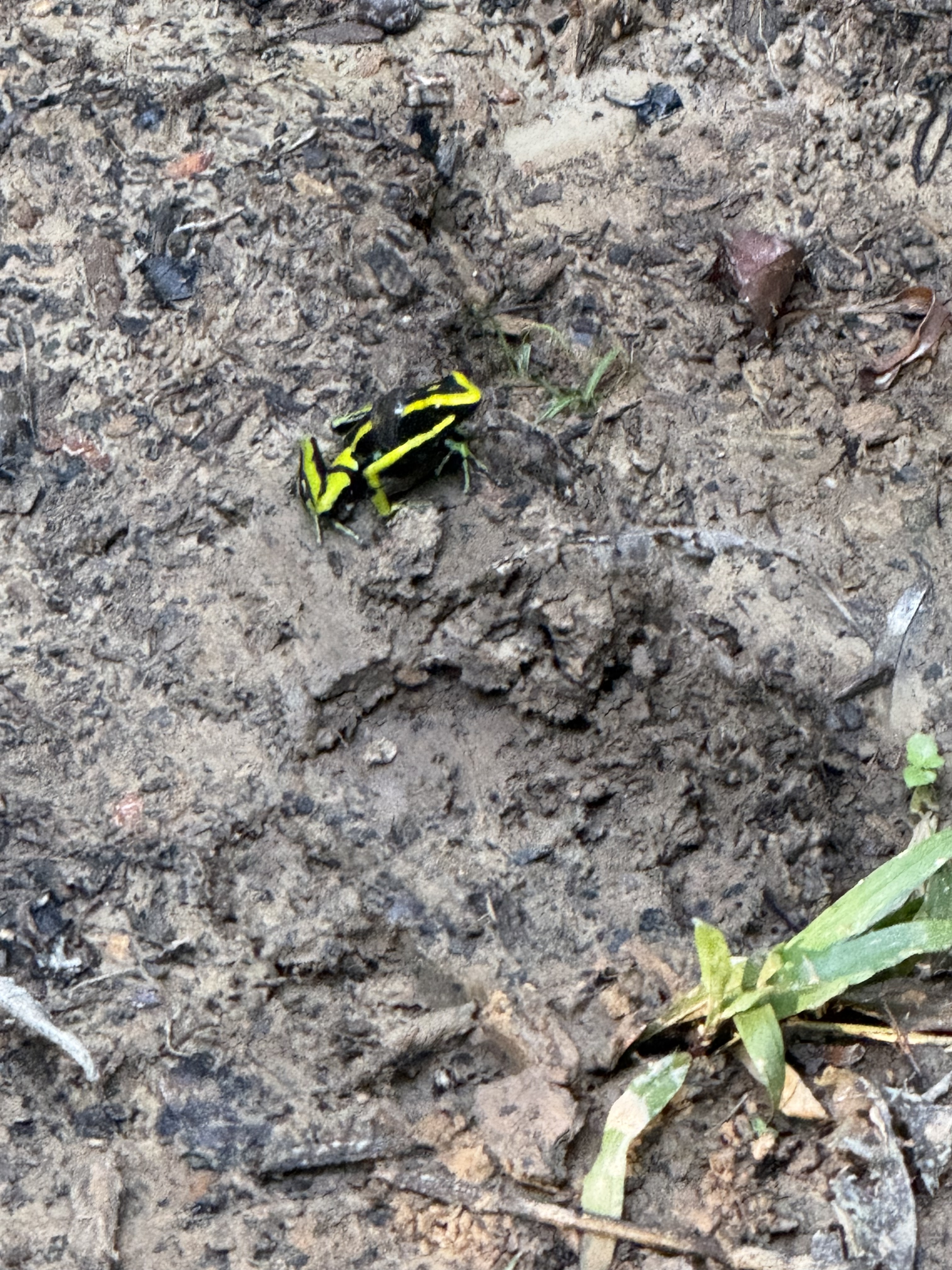
The walk back was in the dark, i.e., a night walk. Pedro pointed out large tarantulas, a hawklike owl, and three more yellow and black frogs. We got back in time for dinner, which was included in the tour.
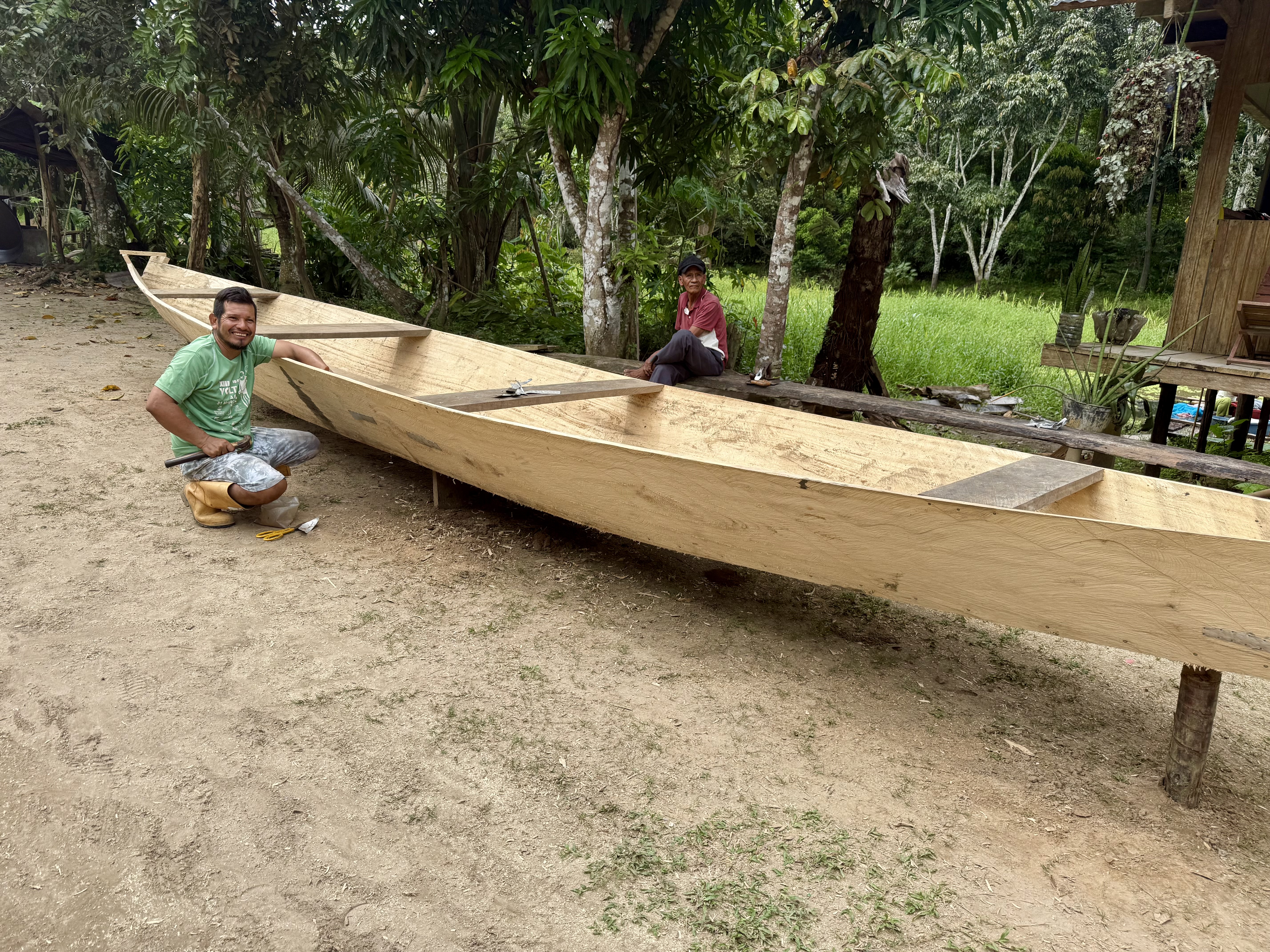
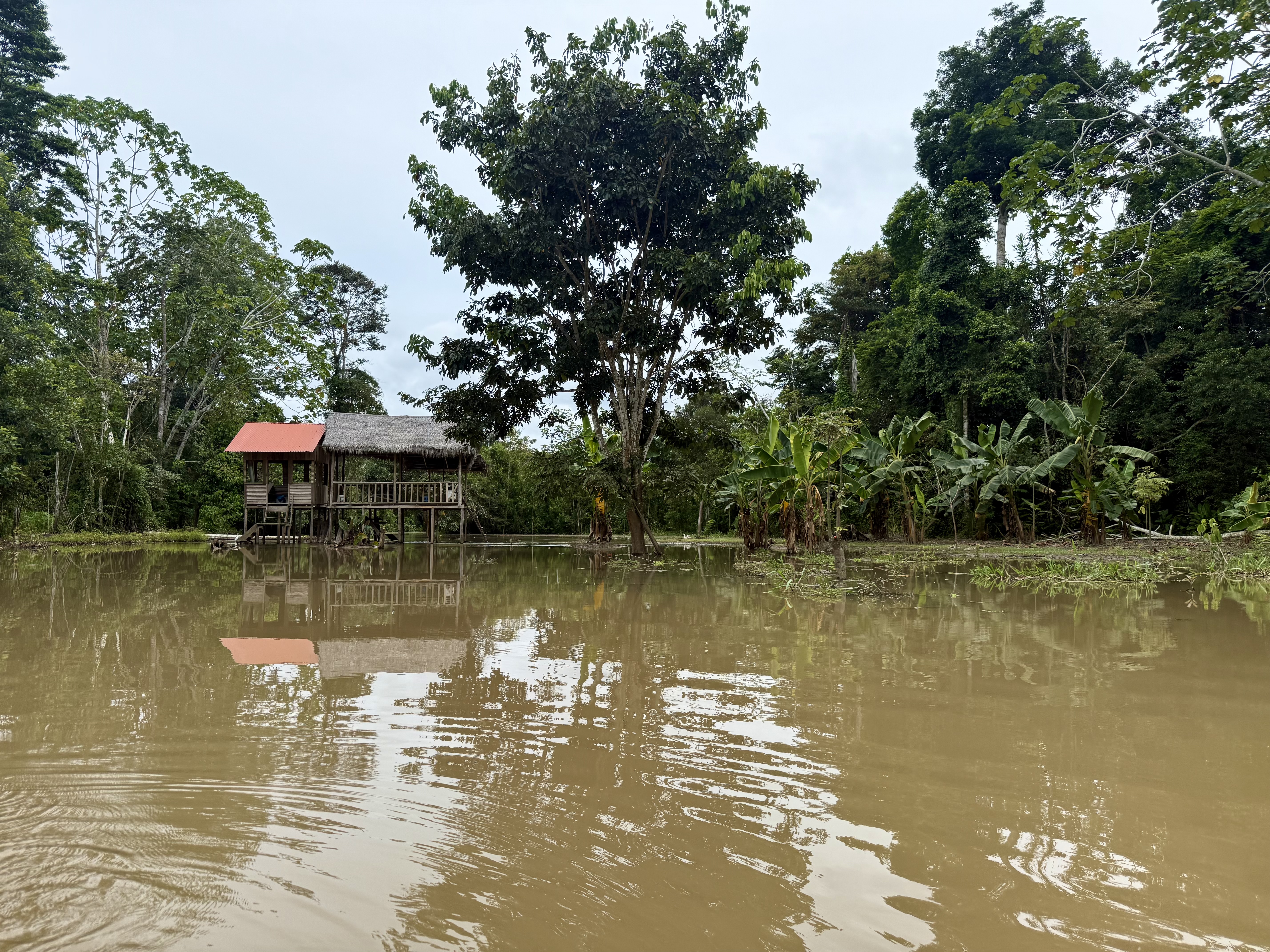
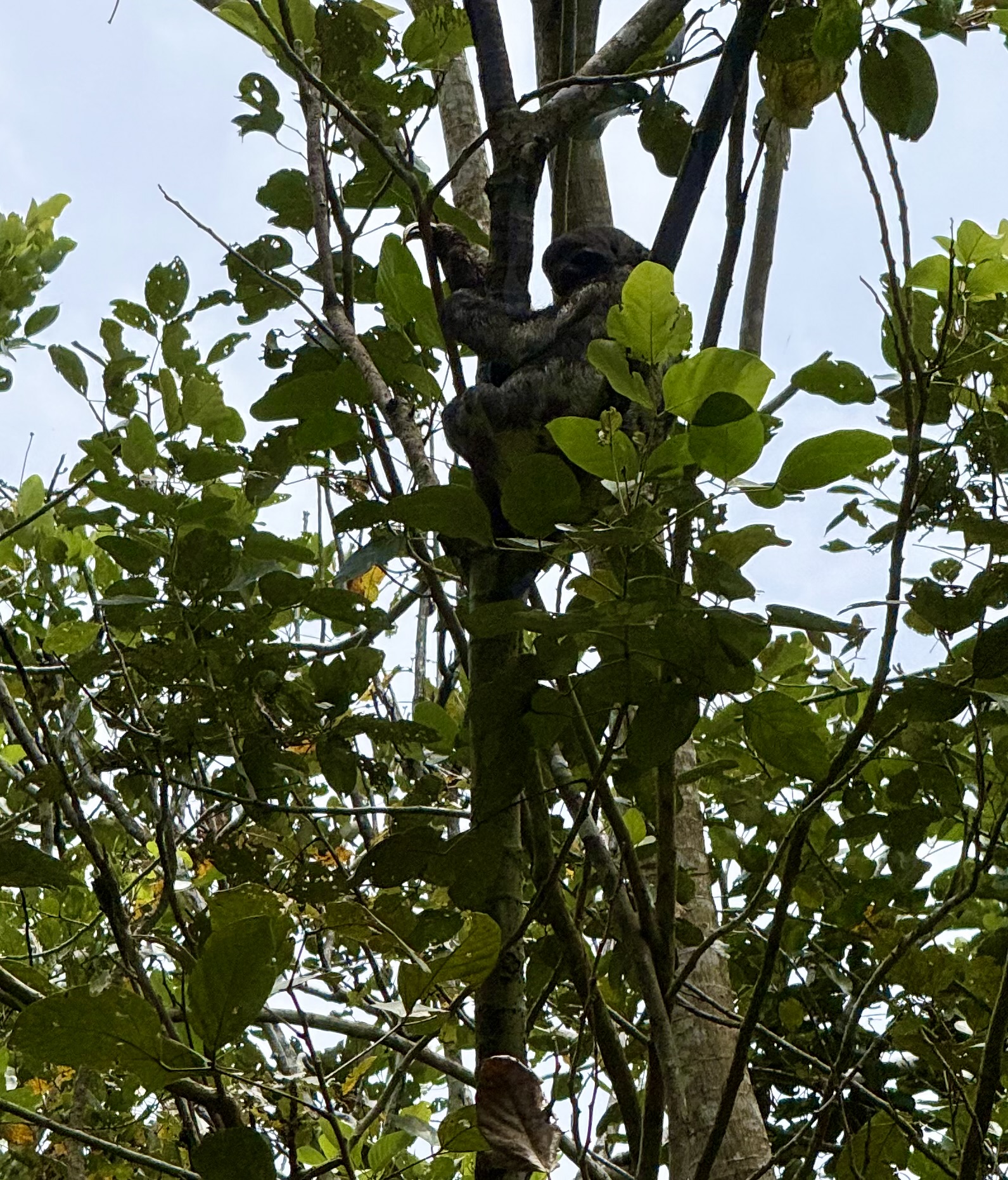
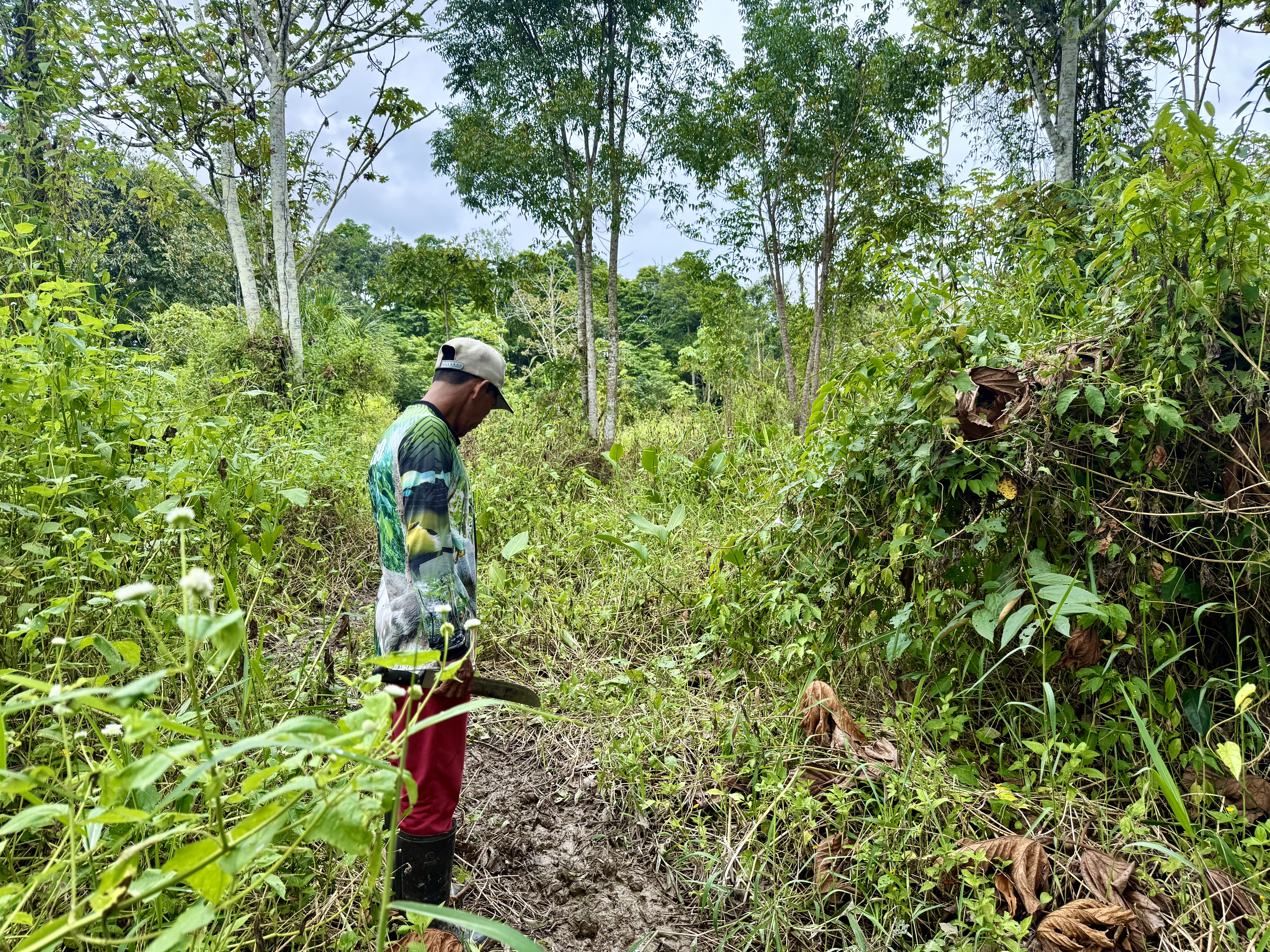
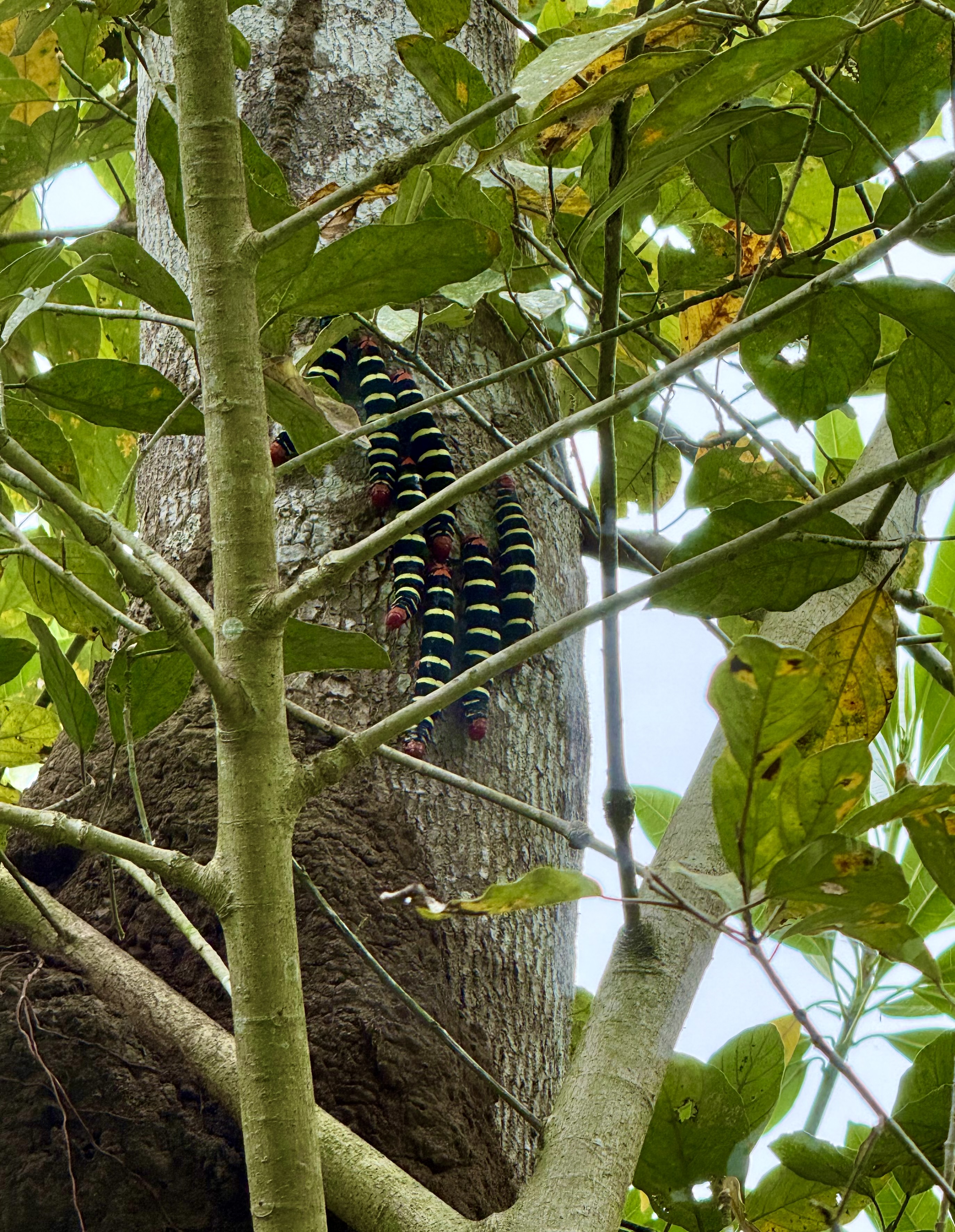
The next morning, we crossed the Amazon to Peru’s San Antonio de Cacao for boat trip and walk looking for sloths. In the village were two men in the process of making a new boat. They used local wood and the resin from local trees to seal the seams. We started our journey in a canoe, where we passed houses built on stilts to accommodate the changing water levels. When it was possible to walk, we got on the muddy paths trying to detect either the two or three toed sloths that live in a region. It was very difficult to find them as they were there but hidden in the thick leaves. While we were searching for the tree dwellers, the local guide spotted capybara tracks in the mud. The large rodents had apparently meandered on the path the previous evening but were now nowhere to be seen. Near where the canoes were beached was a tree with a few Frangipani hornworms. These black with neon yellow striped creatures not really worms but are actually caterpillars on their way to morphing into moths.
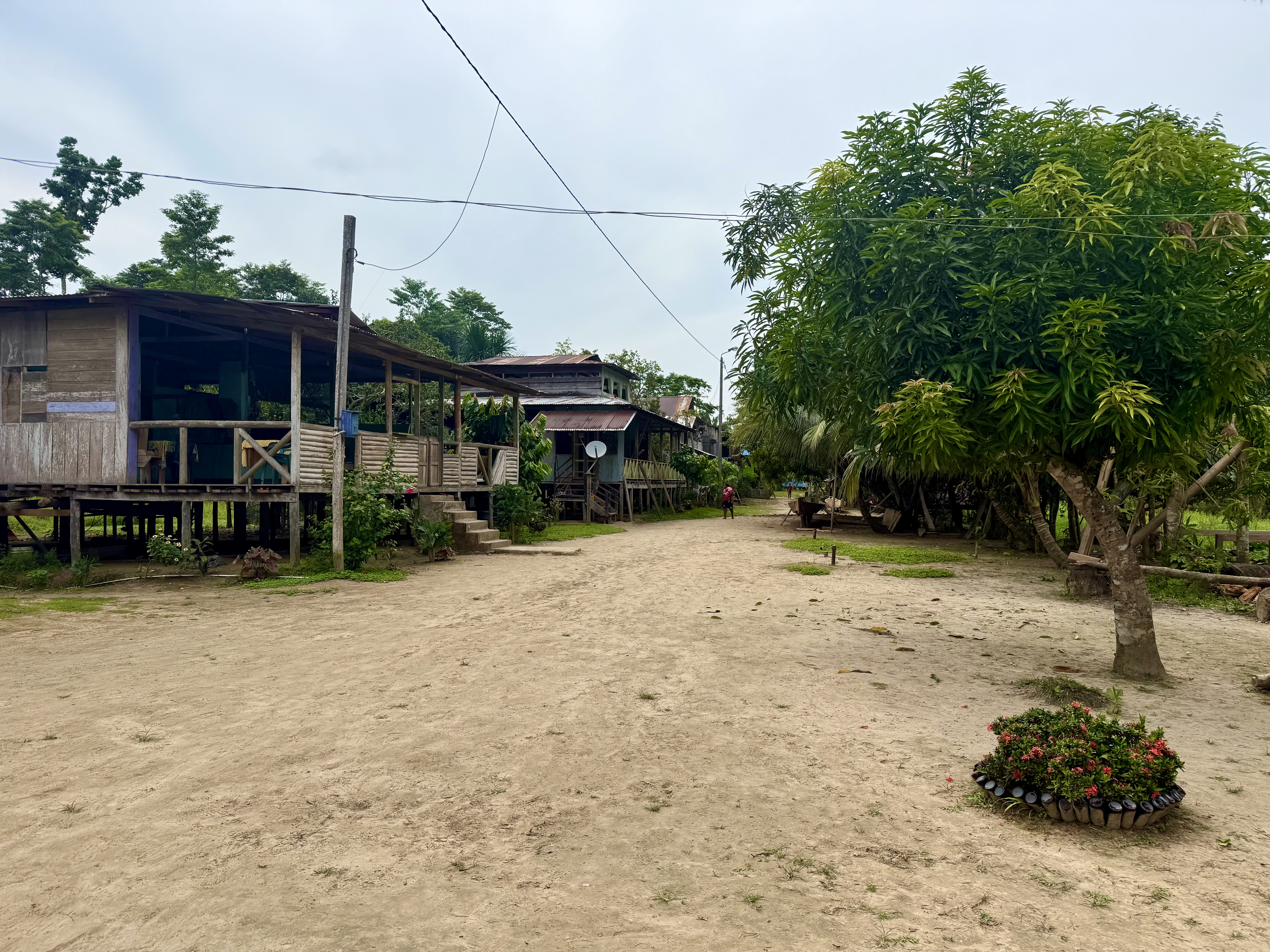
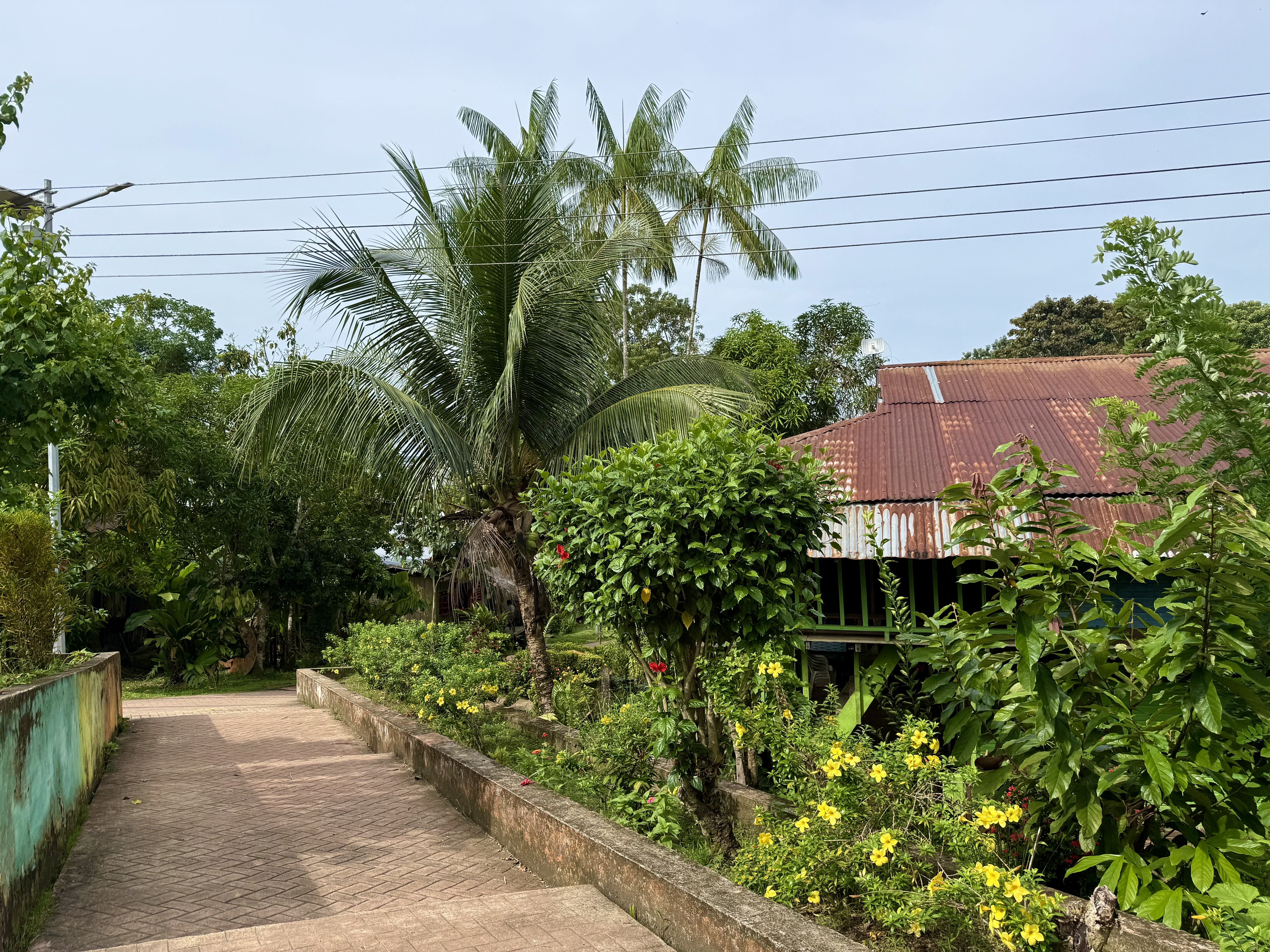
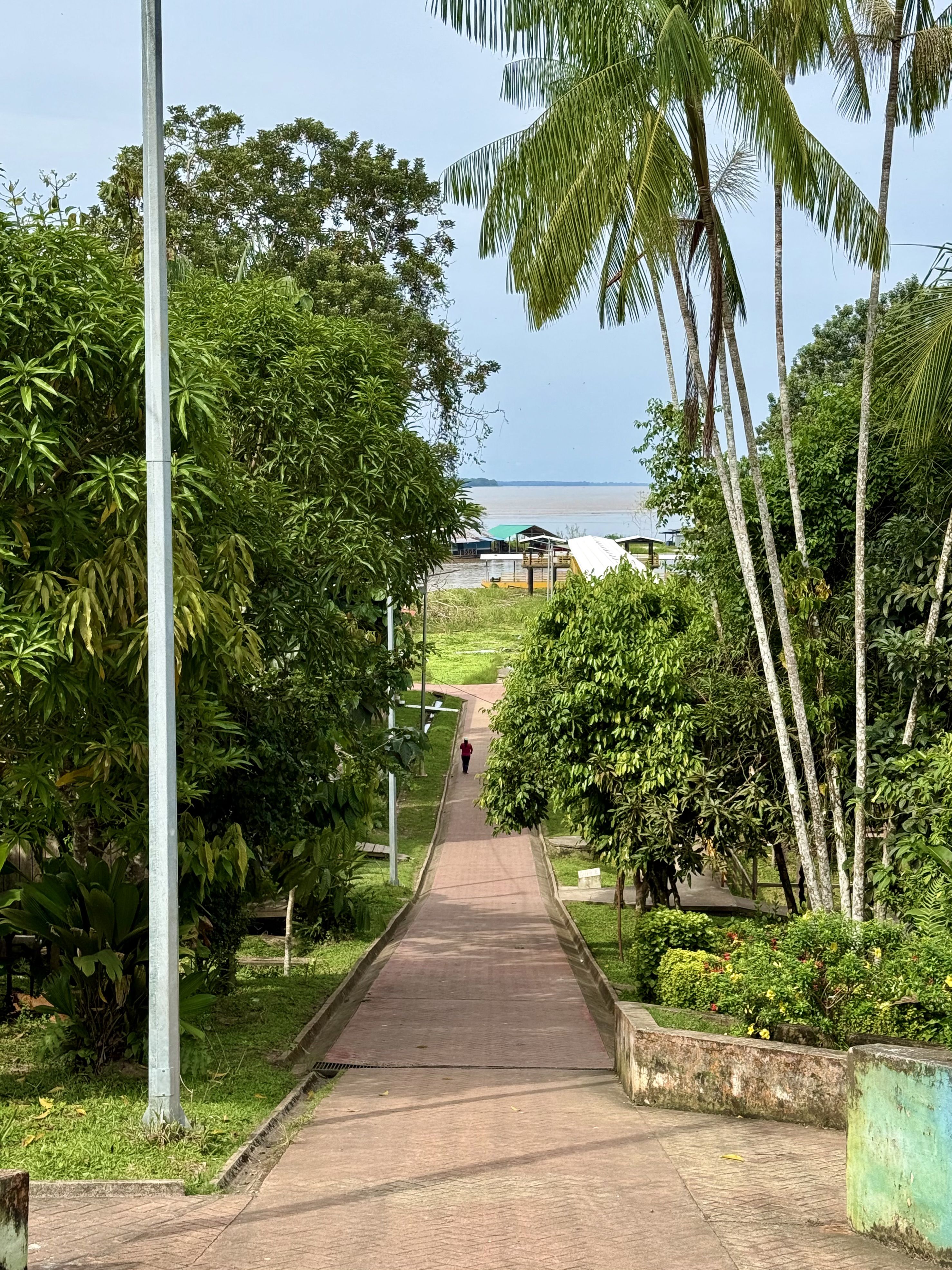
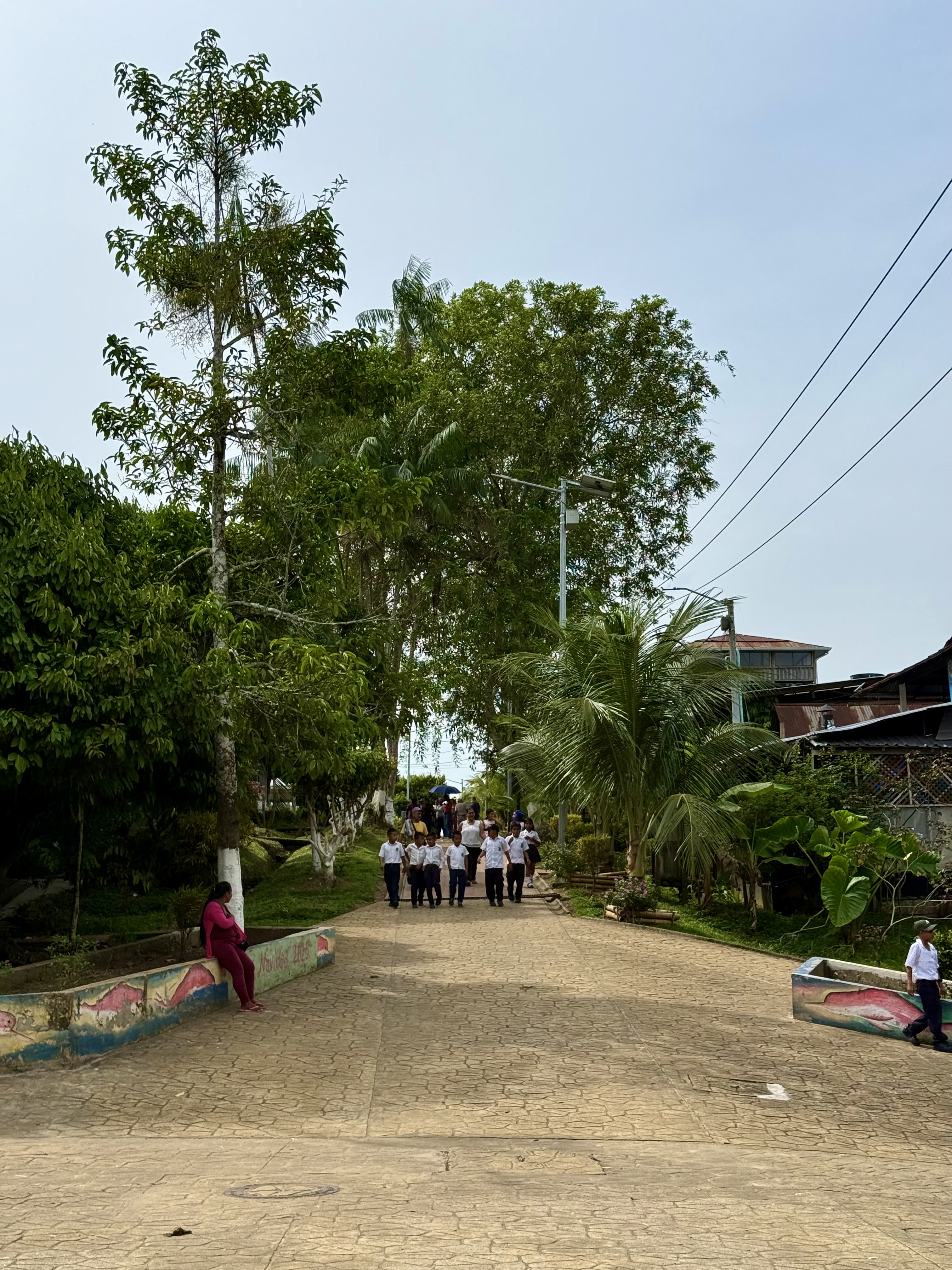
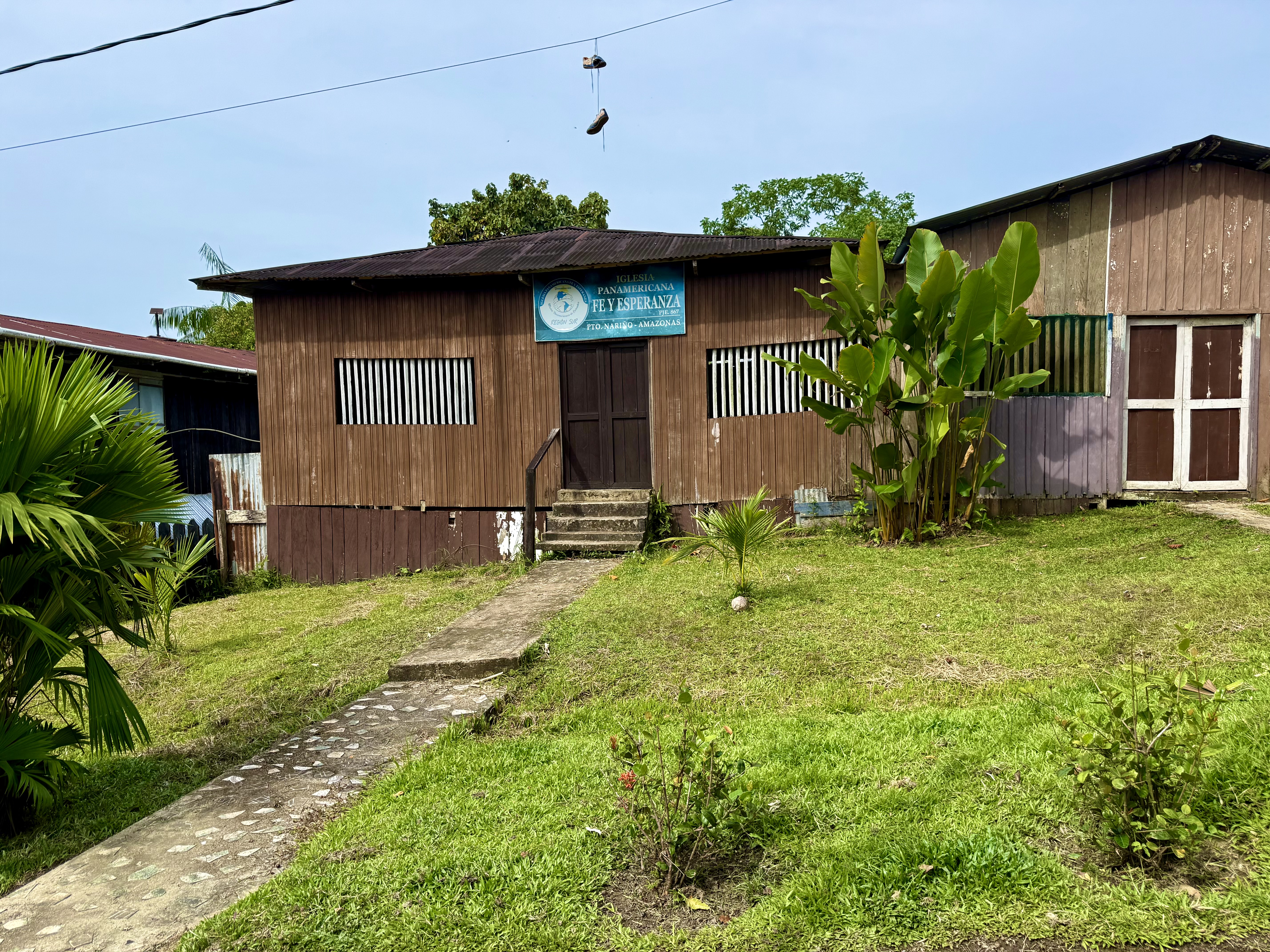
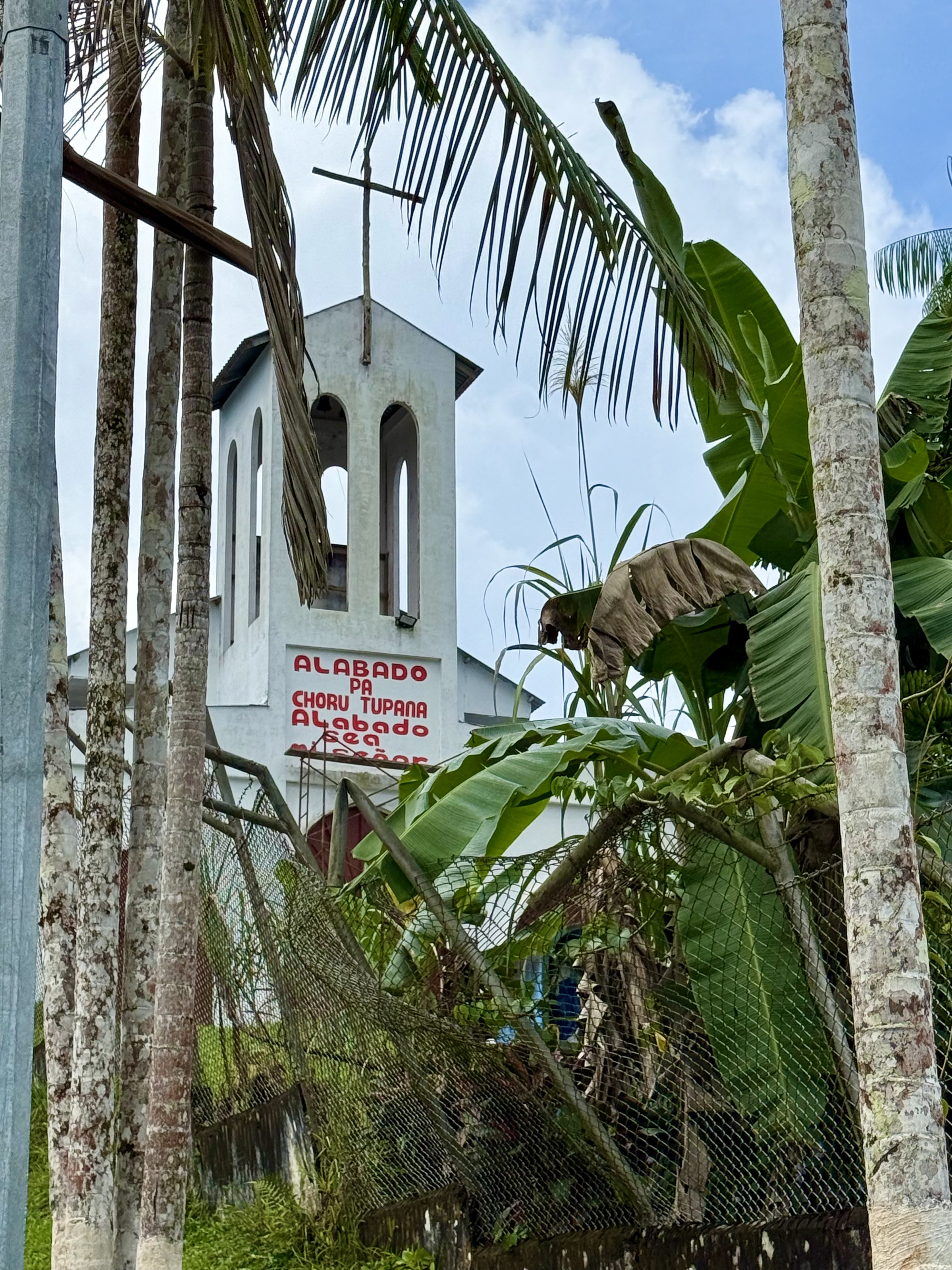
We had a few hours between lunch and the next activity, so after the needed noon cold shower (there is no hot water anywhere in the region), I walked through the village. The streets were paved eight years ago making getting around much easier as the mud must be awful in the height of the rainy season. There is a plan to connect all twenty-two indigenous villages on the Columbian side with paved paths, but the construction stopped when the funds suddenly disappeared. Electricity didn’t come to Puerto Nariño until 2014 and the internet only during Covid. Covid had a rather devasting effect on the region. The virus came from Manaus costing many people their lives. Religion seems to play a significant part in the lives of the Ticuna people, who are the tribe that live in Puerto Nariño. There are buildings on almost every street representing an evangelical Christian order in addition to the more conventional Catholic Church. The name on the church is in Gita, the Ticuna language. Schoolchildren learn Spanish, Portuguese, English and their local language in school. They also help out keeping the area clean as once a month the police and the children jointly go along the paths picking up trash. Flowers and statues are placed on crosswalks to enhance the appearance of the town. The difference between well-kept Puerto Nariño and larger messy Leticia is palpable.
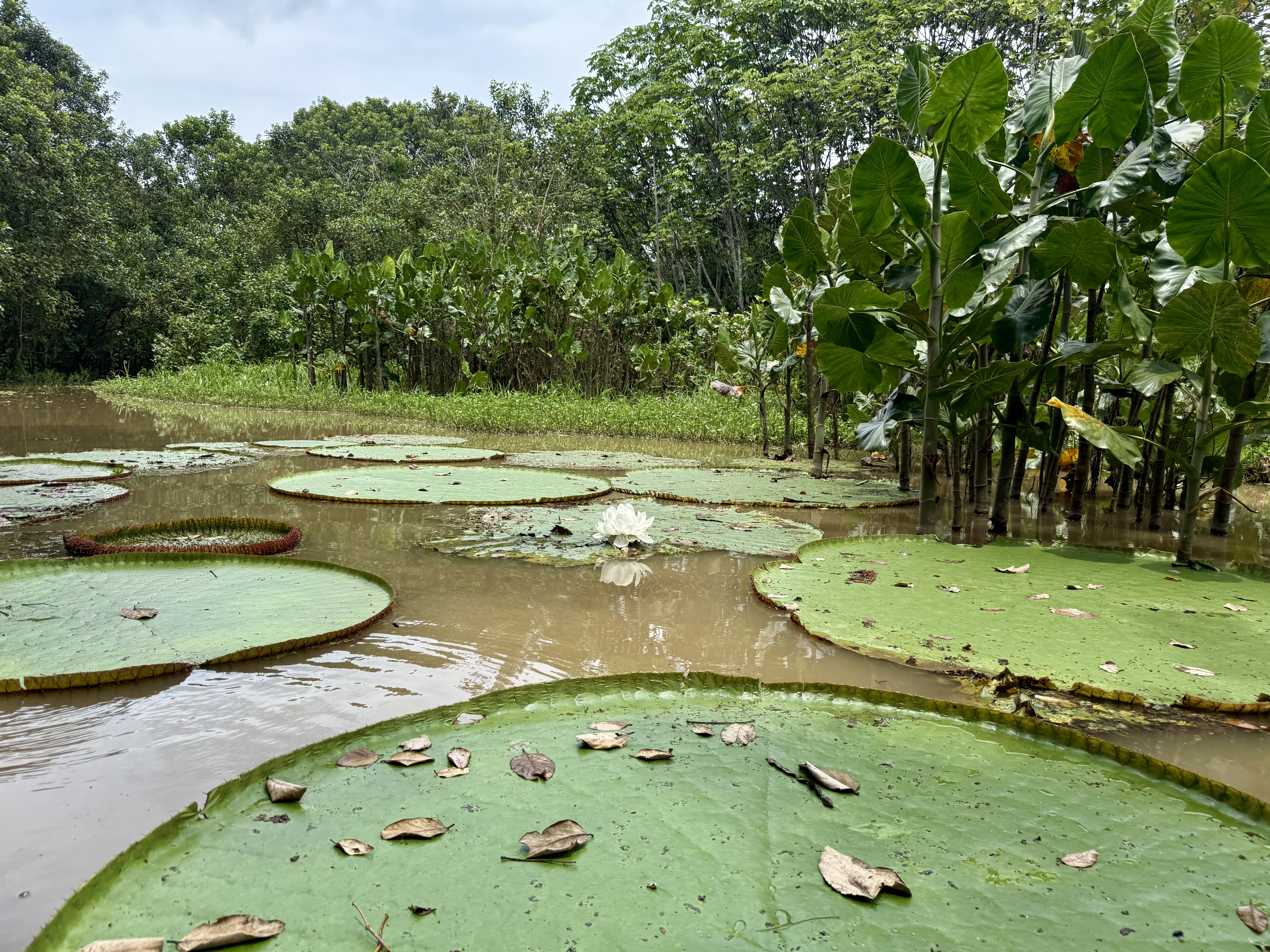
The afternoon activity started with a speedboat ride, this time further up the coast to Lake Victoria (ok, not the one in Africa & Gamboa is not the one in Panama, etc.). This lake is named after the water lily that grows in abundance in its midst. The Victoria amazonica is a giant waterlily whose rimmed plates can grow to three meters in diameter and hold up to 75kilos. The undersides of the plants have spikes to protect it from aquatic predators; the flowers only bloom at night and only for 48 hours. They are highly unusual in that they change sexes once they interact with a particular kind of beetle. The pods are all connected to a central stem like branches on a tree.
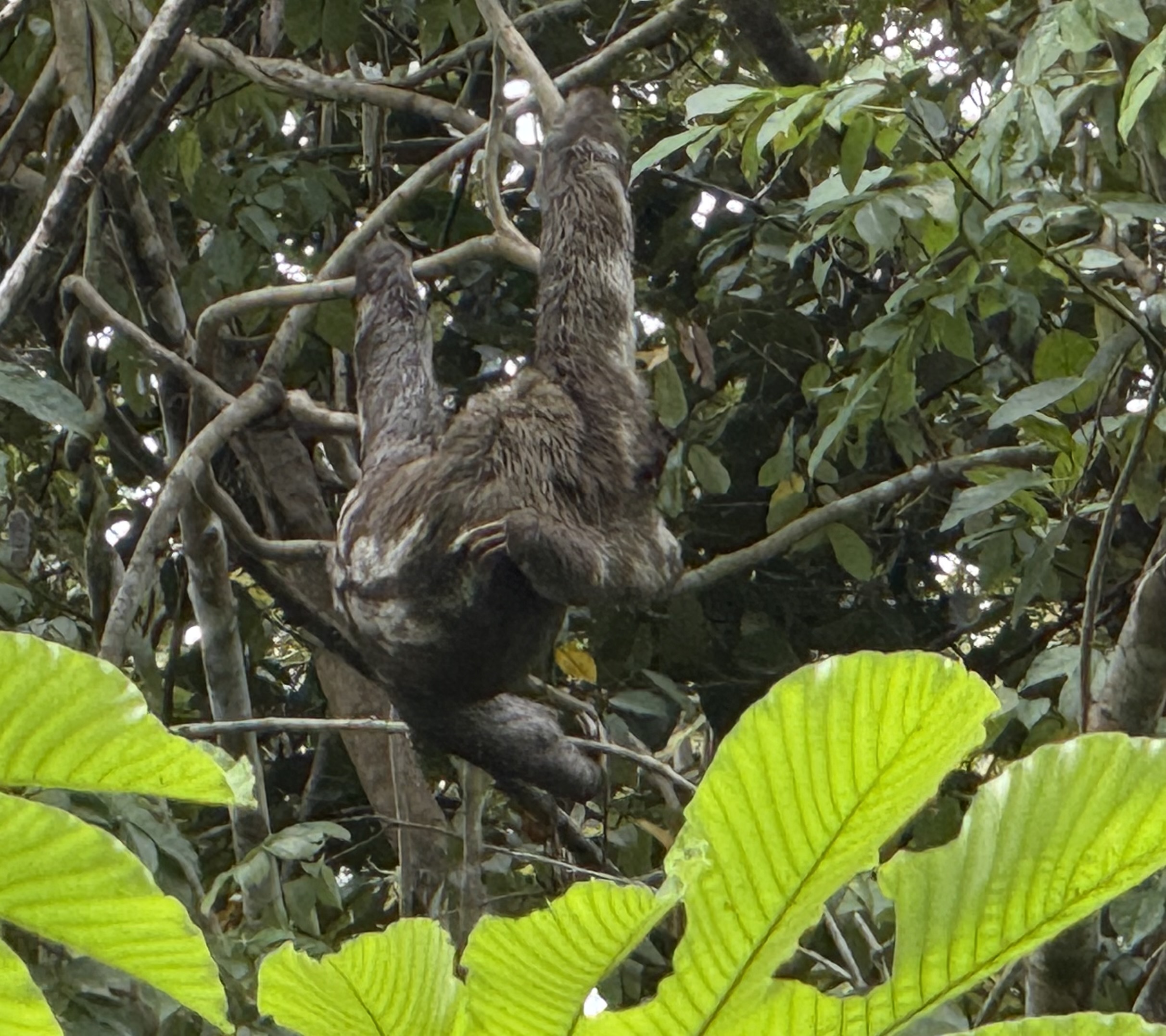
Passing through the lake to another inundated area, we found another sloth hanging in a tree. Sloths are wonderful creatures. The three-toed are the ones with the masked face which makes them look like they are smiling. They eat two kinds of plants, from the cecropia they love the flower and the leaves, and from punga tree the addictive flower. They don’t eat the leaves of the punga. They are notoriously slow and only come down from the trees to copulate and once a week to defecate. For that they dig a hole like a toilet. Their refuse in turn creates more of the kinds of plants they need to survive. Sloths are really nature’s recycling masters.
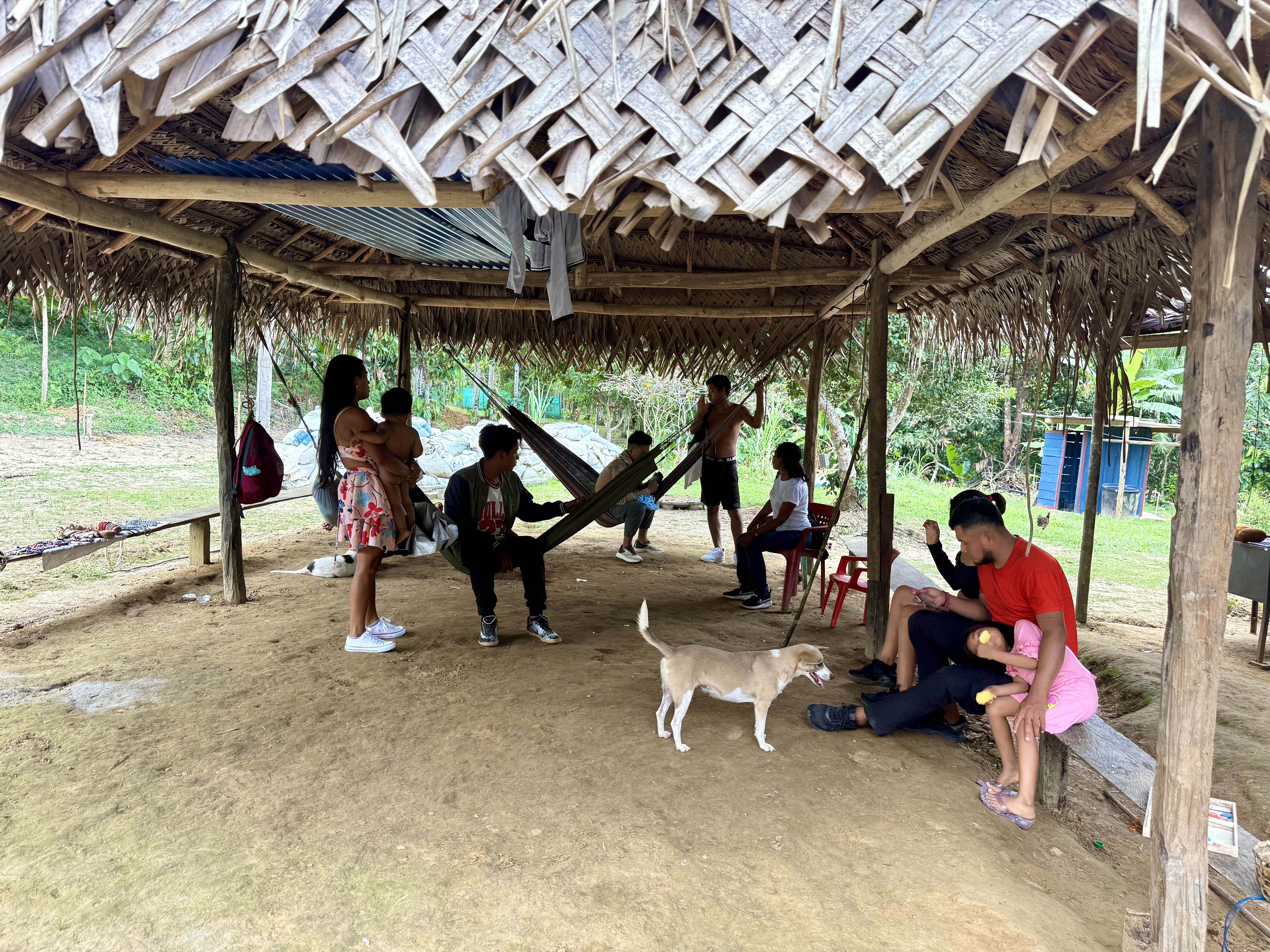
The main purpose of the afternoon was to visit the sacred ceiba tree of the Ticuna people in El Paraíso village. This tree is supposed to be 1,000 years old. Regardless of whether this is true or not, the tree has clearly lived for many centuries. It is the tallest and thickest tree in the area. It is sacred as it holds Mother Nature in its trunk. She demands respect and the people offer her tobacco and another smoking plant as offerings. If one forgets, or ignores her, they may find themselves in danger within the forest. The tree is associated with the people’s origin story; this story is also told by other tribes in the region with slight variations. In the beginning, the world was in darkness. Two brothers, Yo’i and Ipi lived along with animals in the tree’s roots but had no light, which they sensed they needed. Yo’i started to climb the tree, but couldn’t so they decided to cut it down so that they could see the sky. They cut and cut and cut, but the tree just wouldn’t fall. Finally, they realized an animal was needed to climb the tree to see what the problem was. A squirrel volunteered. He scrambled up to the canopy, where he saw a giant sloth asleep holding onto the sky. The only way the tree would fall, is if the sloth let go. The people and animals arranged for a colony of fire ants to climb the tree and attack the sloth. One legend says that they attacked the sloth’s eyes, another his armpits. In any case, he let go of the sky to deal with the pain and the ceiba tree fell. Its roots form the origin tributaries of the Amazon River while the canopy forms the delta. The sacred ceiba is the Amazon with mother nature in her midst. Today, both squirrels and ants climb the tree. Leaf-cutter ants bring their treasures back up to the canopy and their queen.
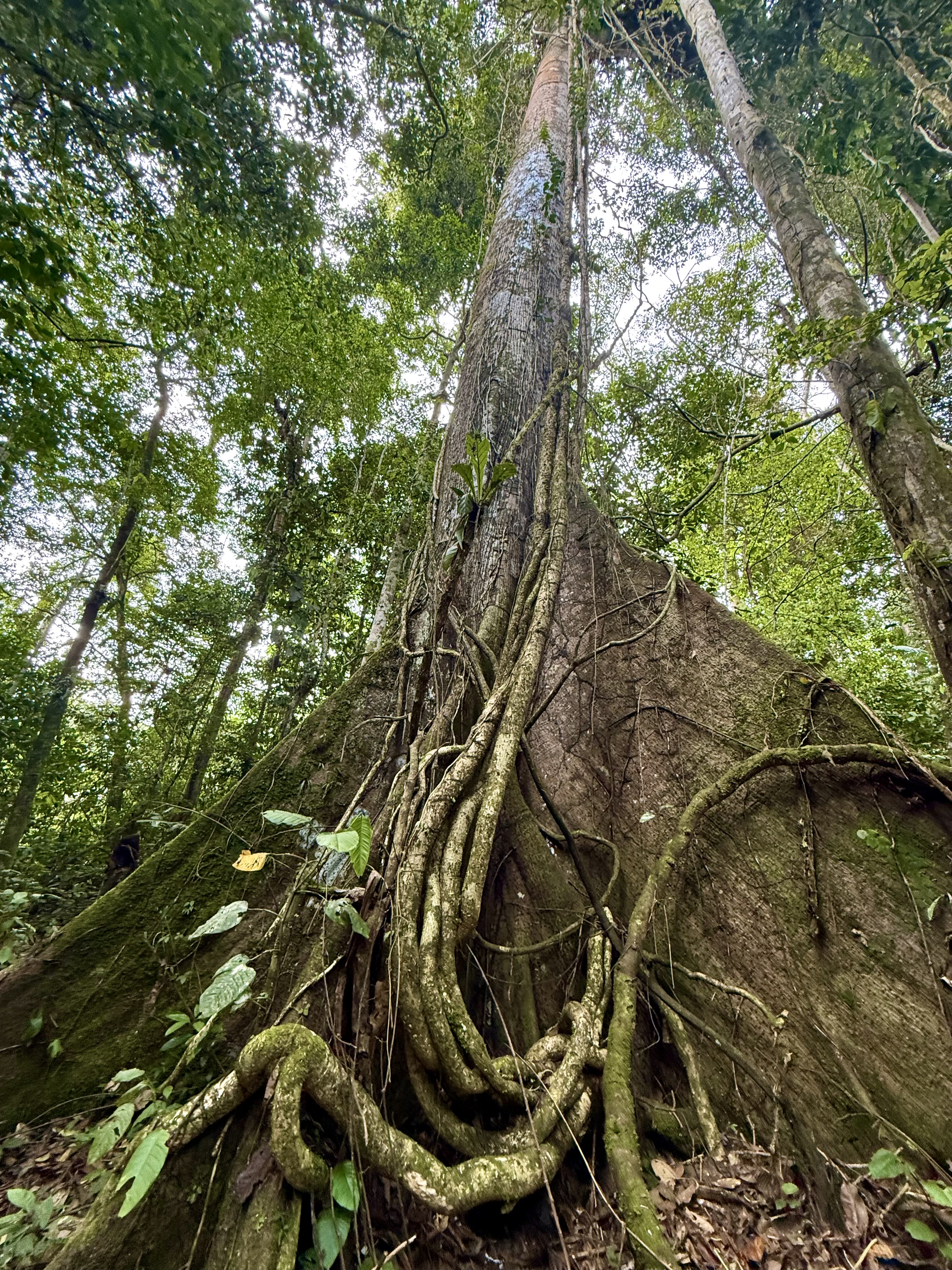
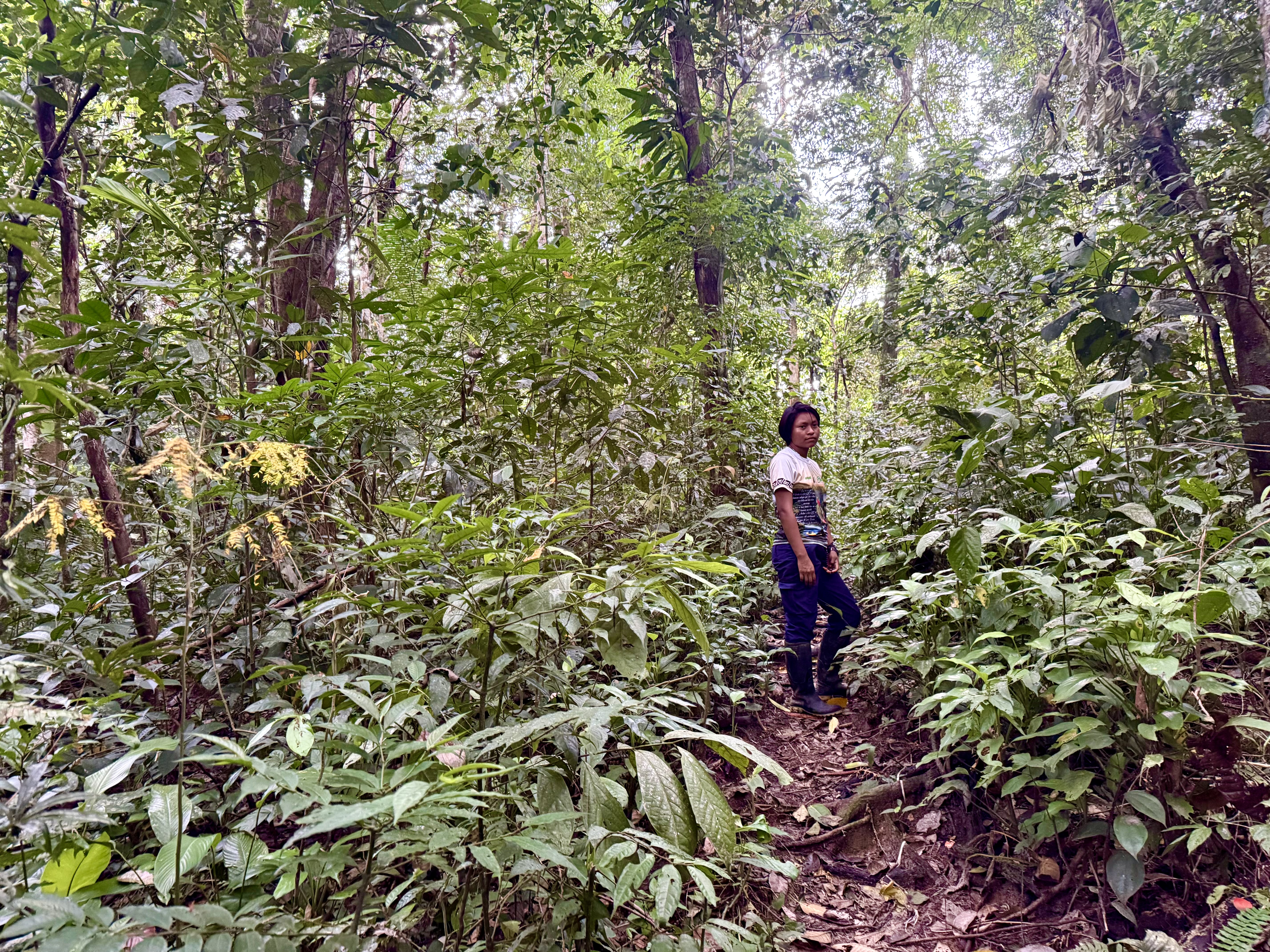
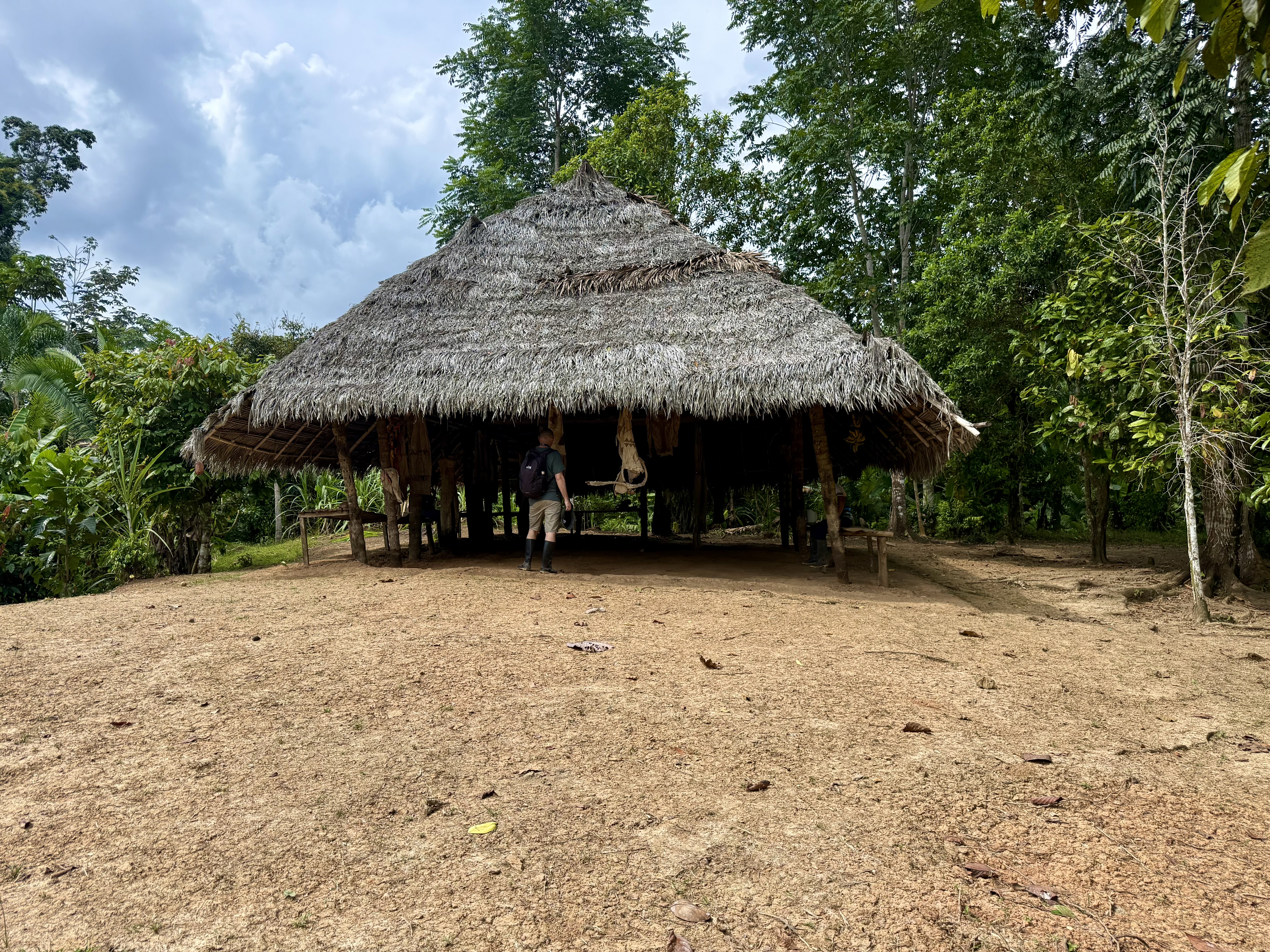
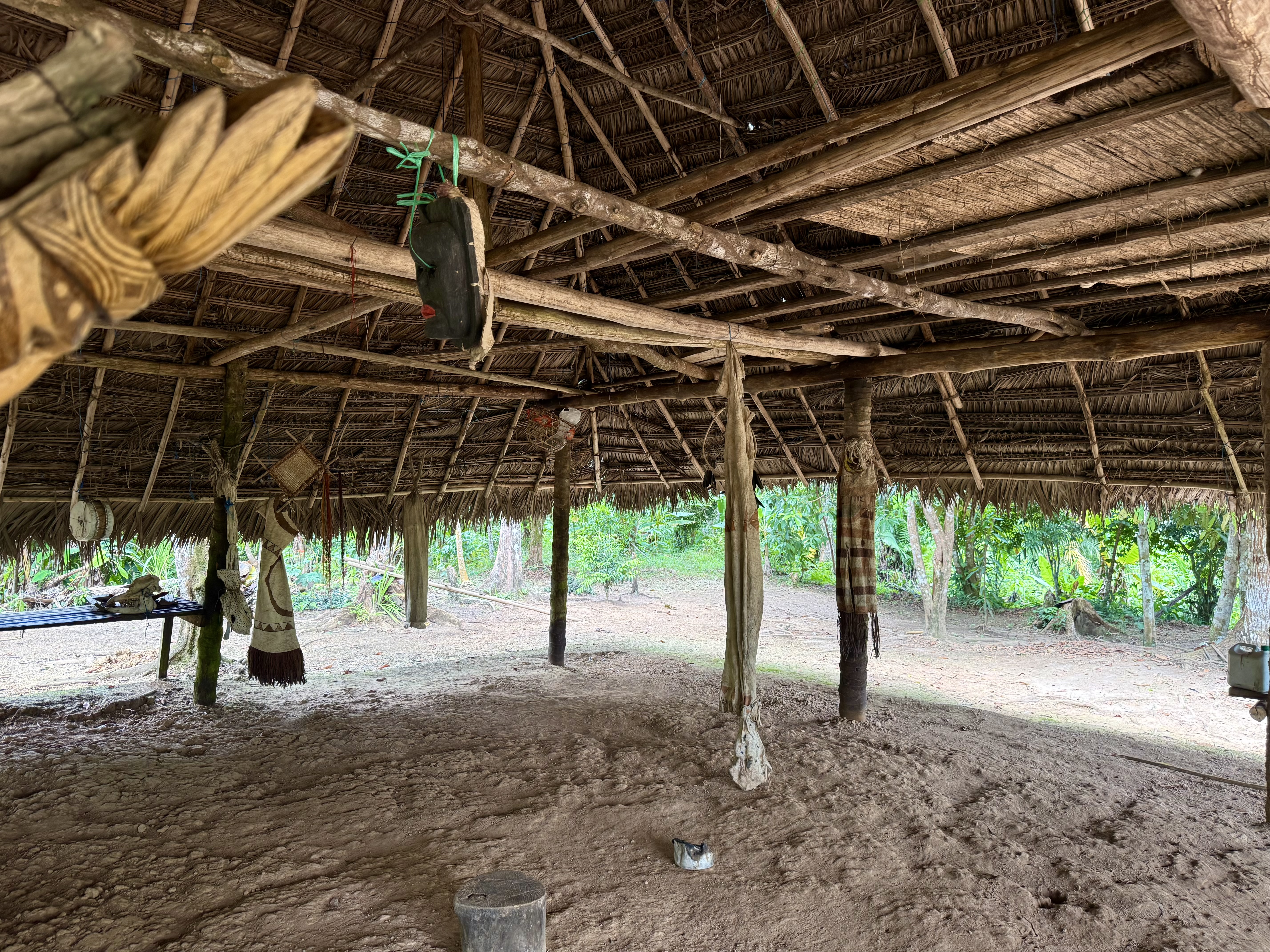
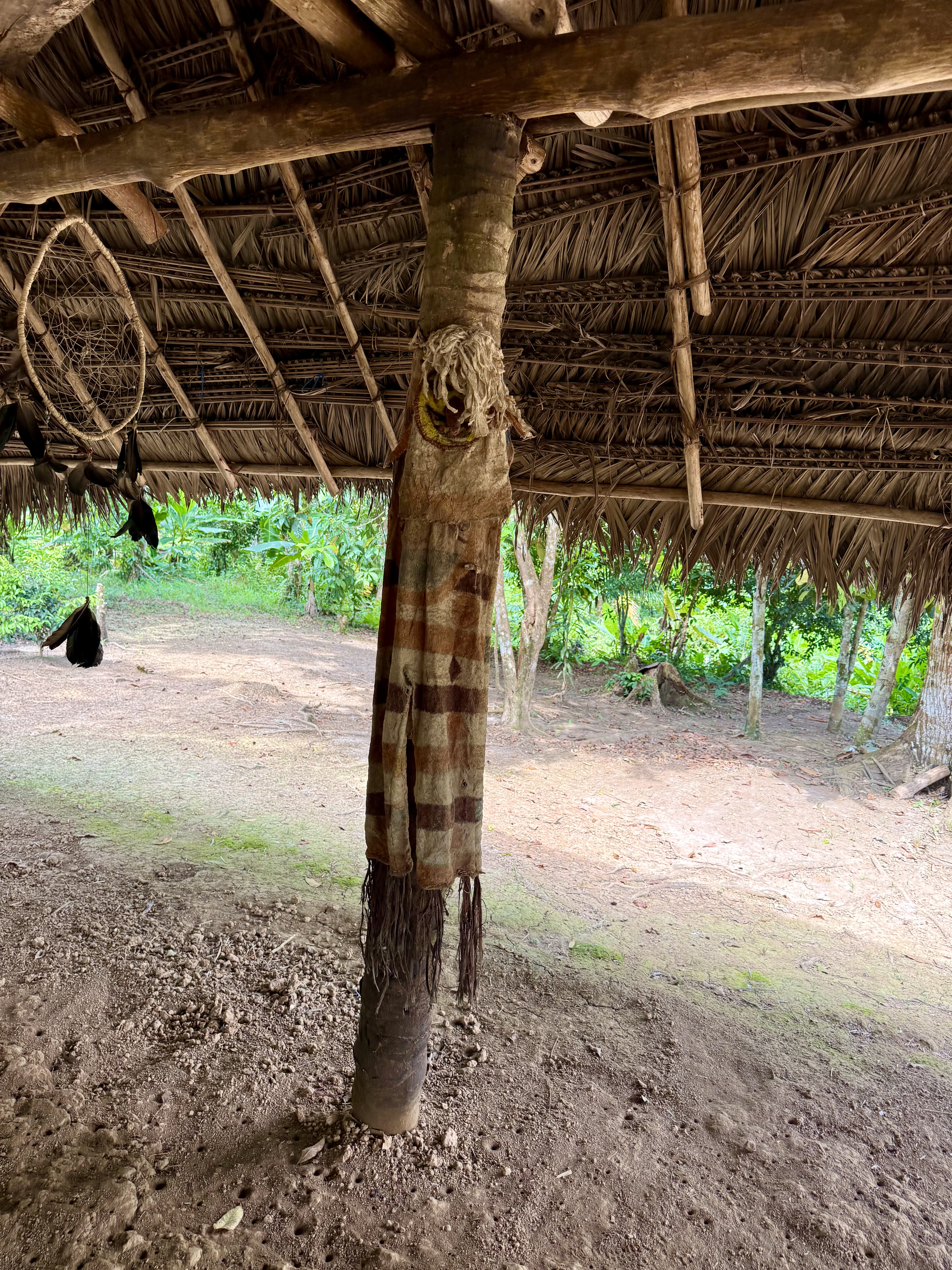
To get to the tree, we walked through a very muddy narrow path and crossed a few streams on either logs, which I could handle, or a single pole, which I didn’t trust. On that one, I slid down the muddy clay bank, crossed the small stream and then needed a hand up from the Greek gentlemen to get up the other side. Carmen, the teenaged tribal guide, led the walk and explained the purpose of a ceremonial Maloka, which is between the tree and the village. This is an open sided roofed structure that is only for girl’s initiation when they have their first menstruation. They have to stay within the structure for three weeks and can only see other females. There are cloth or hide costumes hanging from the poles holding up the roof that when worn represent animals, clans, and one especially for Mother Nature. They are worn during a ceremony to protect the young girl from harm. The spirit energy of these creatures should be strong enough to keep her safe.
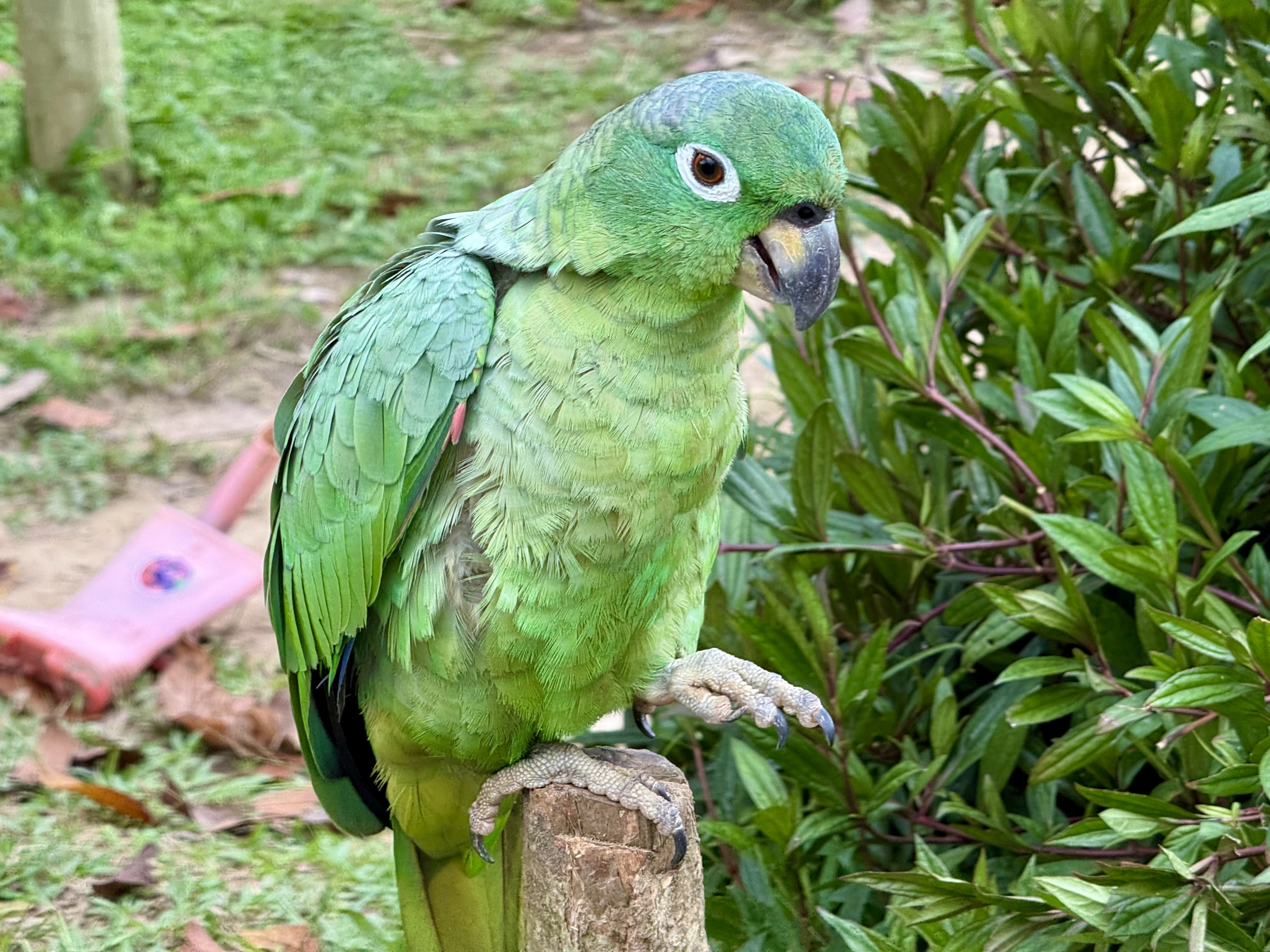
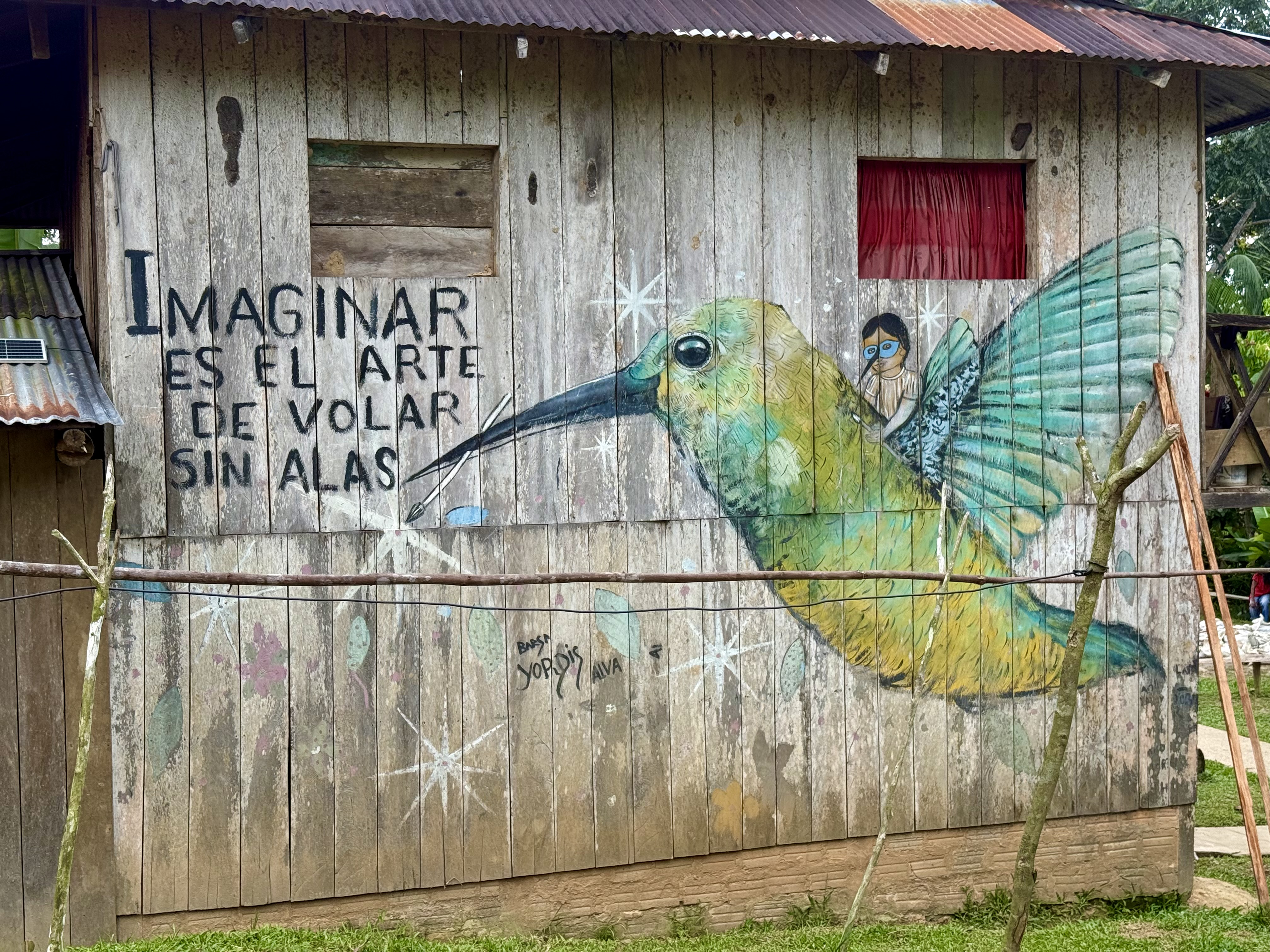
At the end of the hike near the meeting maloka a green parrot was waiting for us. He patiently interacted with me until everyone was ready to go down to the beach area for the boat ride back. Near the dock was a mural with a beautiful saying, “Imaginar es el arte de volar sin alas” (Imagination is the art of flying without wings), perhaps a somewhat better adaptation of Mohammed Ali’s saying, “No imagination, no wings.”
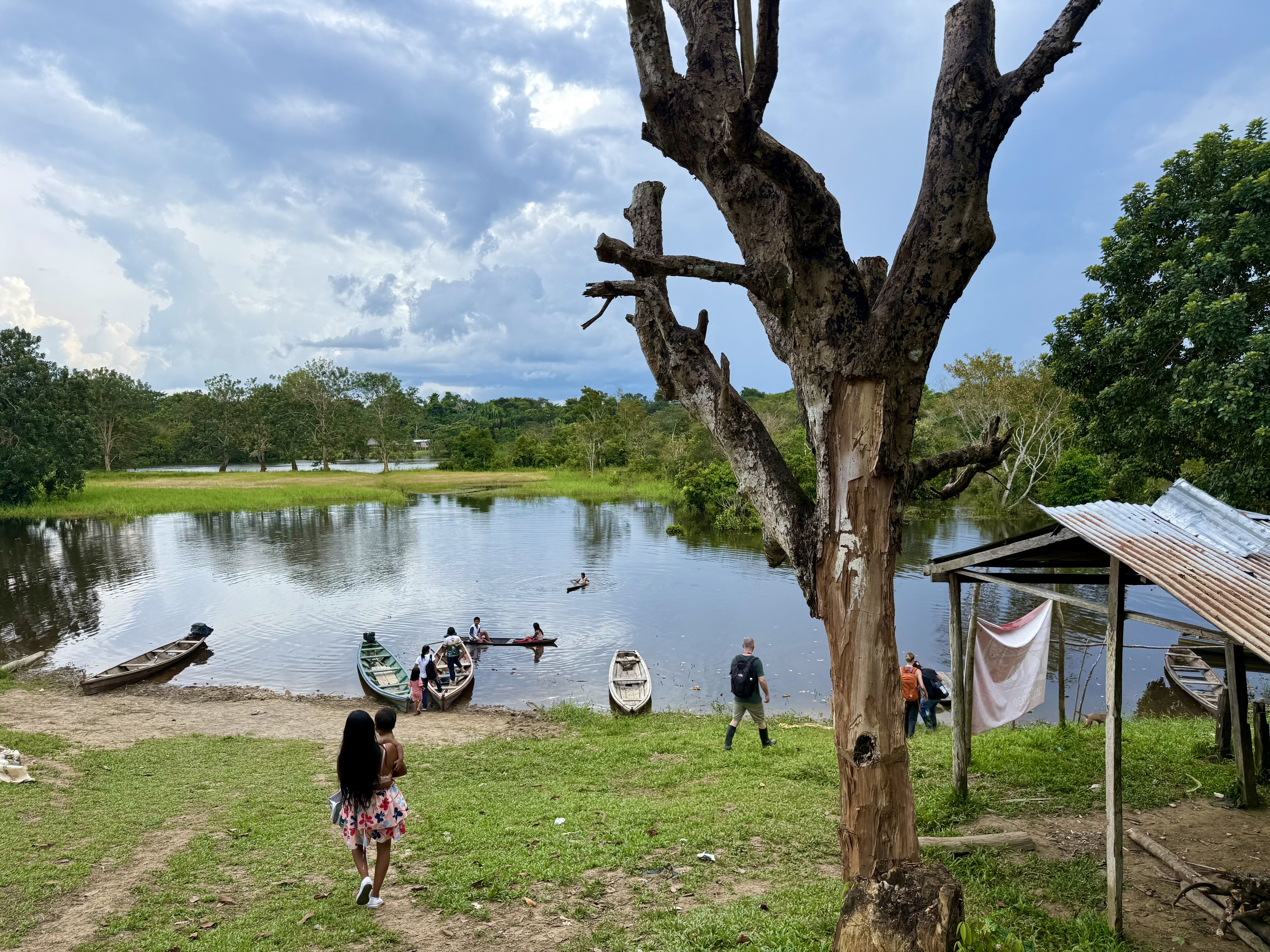
Our last morning was again on a speedboat this time through Lago Tarapoto and the inundated wetlands behind and around it looking for grey and pink dolphins. We did see a few, but they were too quick for photographs. Even the videos didn’t come out well. There are a number of local legends about the dolphins, most deal with dolphin – human transformations. One story says that the men in the tribes have to watch out that the dolphins don’t steal their women. A dolphin can morph into a human man to attract a woman, when he leads her to the water she drowns and he returns to his water bound figure.
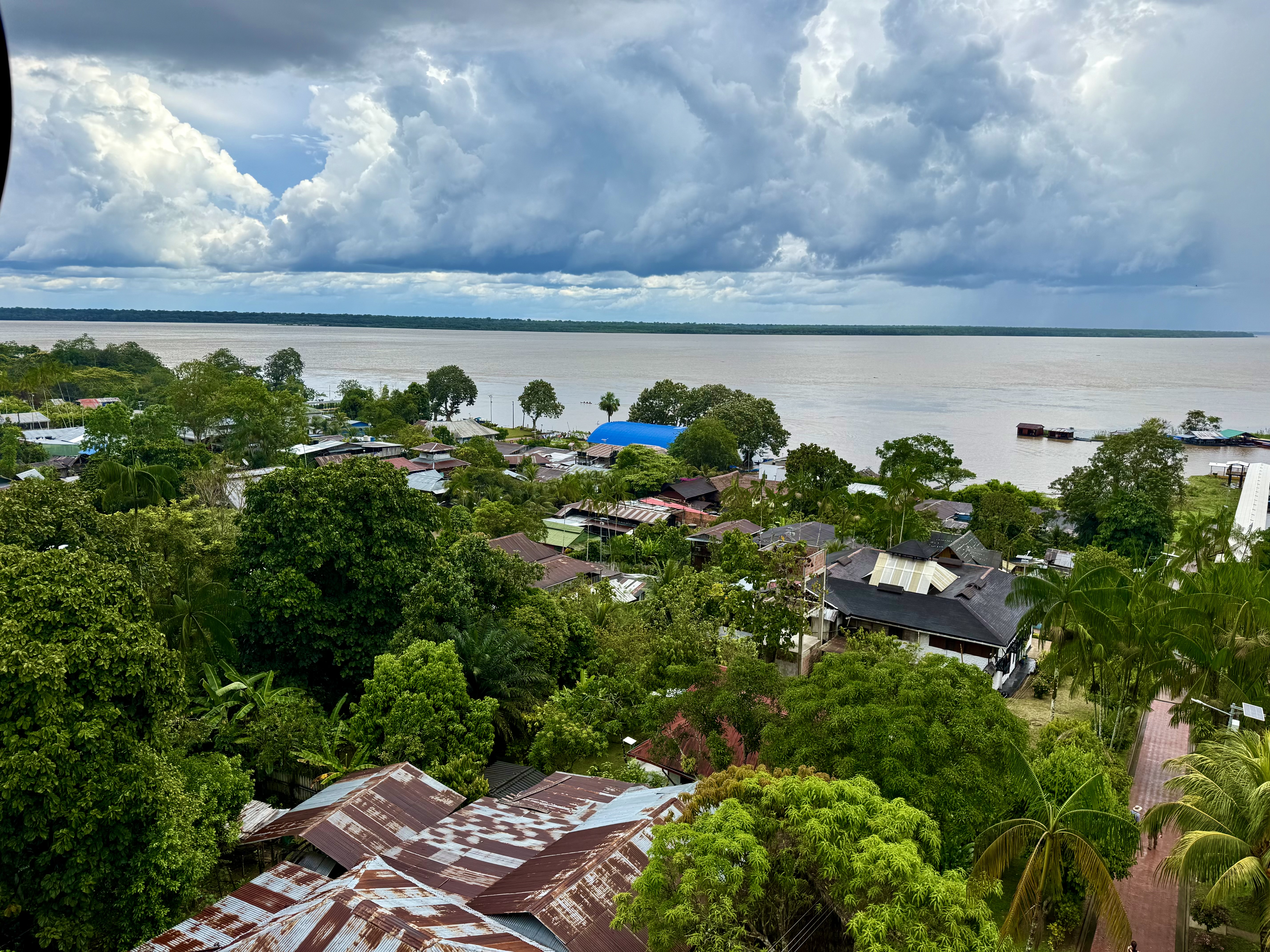
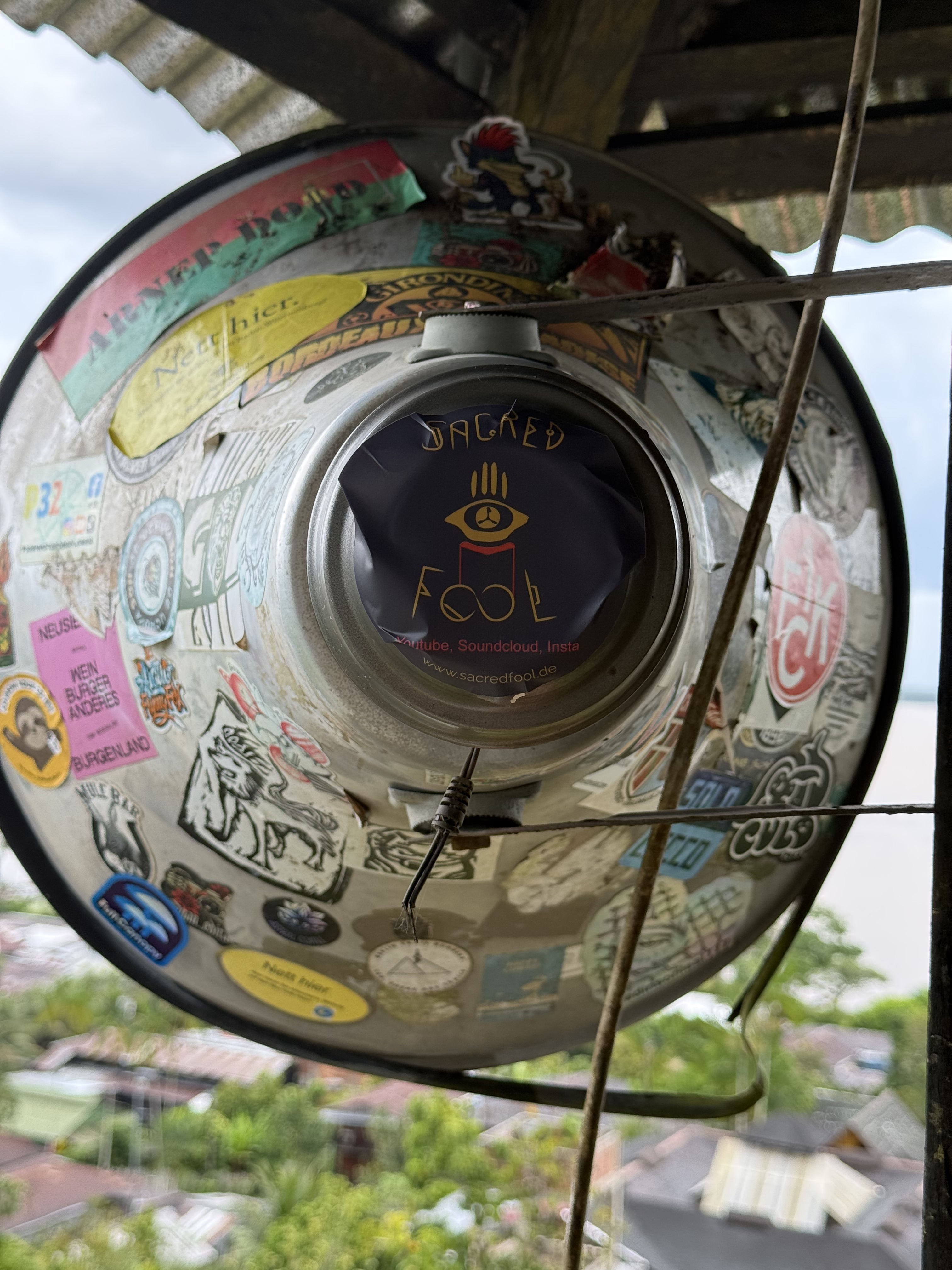
We were lucky with the weather. The downpour started when we were safely back at the restaurant for lunch. It was short-lived and we still had time on our own to walk around before the three-thirty public boat bus back to Leticia. I walked up a small incline to the village tower for the 360 view of the region. A loudspeaker was attached to one of the pillars, and tourists had put their stickers on the backside. One was even advertising a burger and wine place on the Neusiedlersee in Austria!
The loudspeaker isn’t the only way the locals get their public news. Church bells were ringing while we were at lunch and they weren’t announcing mass. Instead, they were alerting the villagers that a public punishment was going to take place the next day. It seems someone got caught stealing chickens. The punishment for this is to be tied to a tree filled with fire ants for ten minutes. For repeat offenders, wasps are used. It is expected that the community participate in watching the punishment as a deterrent. A shaman is available on site to mitigate the toxins once the criminal has been released from the trunk. Without the shaman’s help, the toxins could easily kill the person. In this region, only men are shaman, although women can be natural healers.
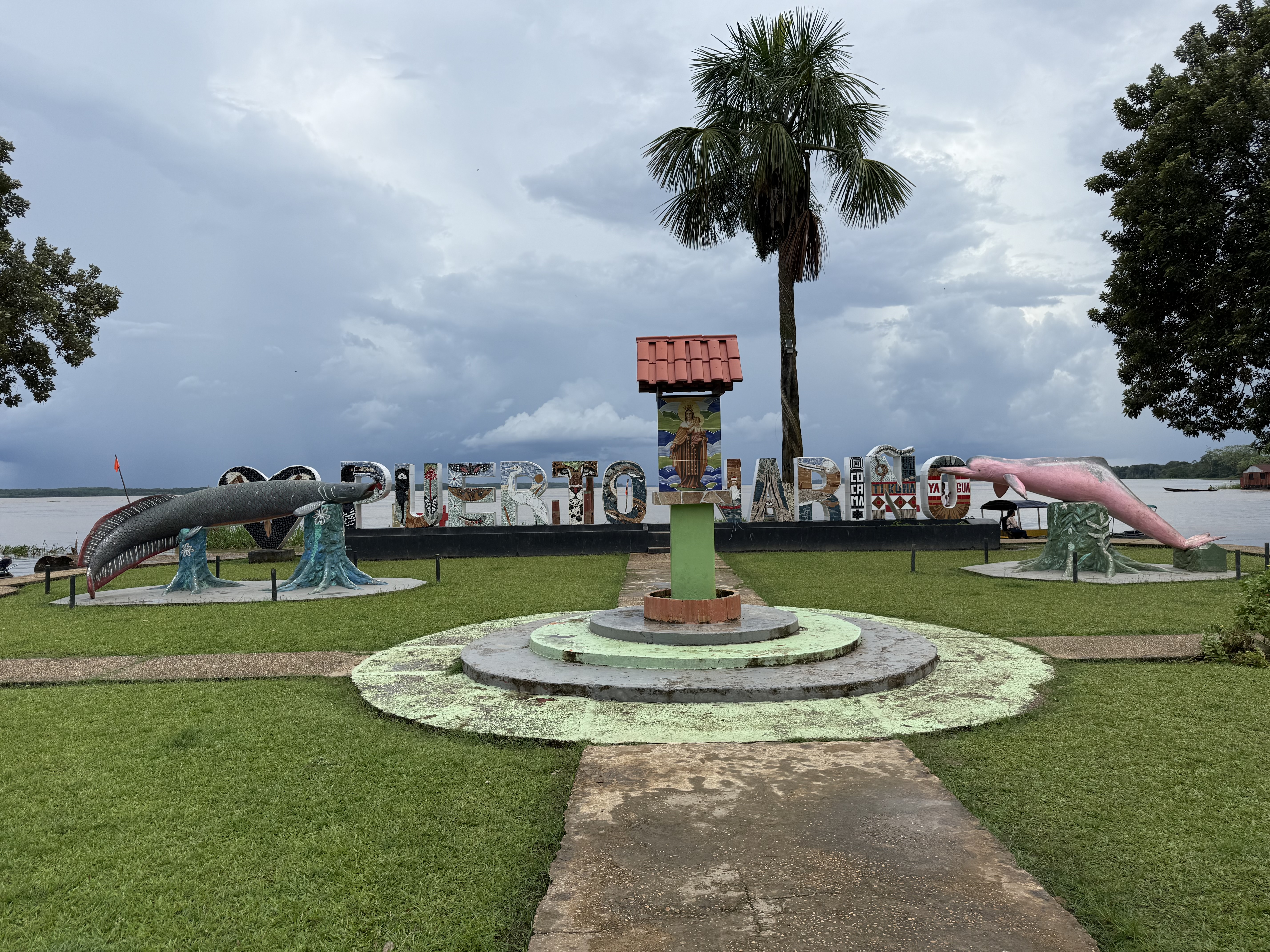
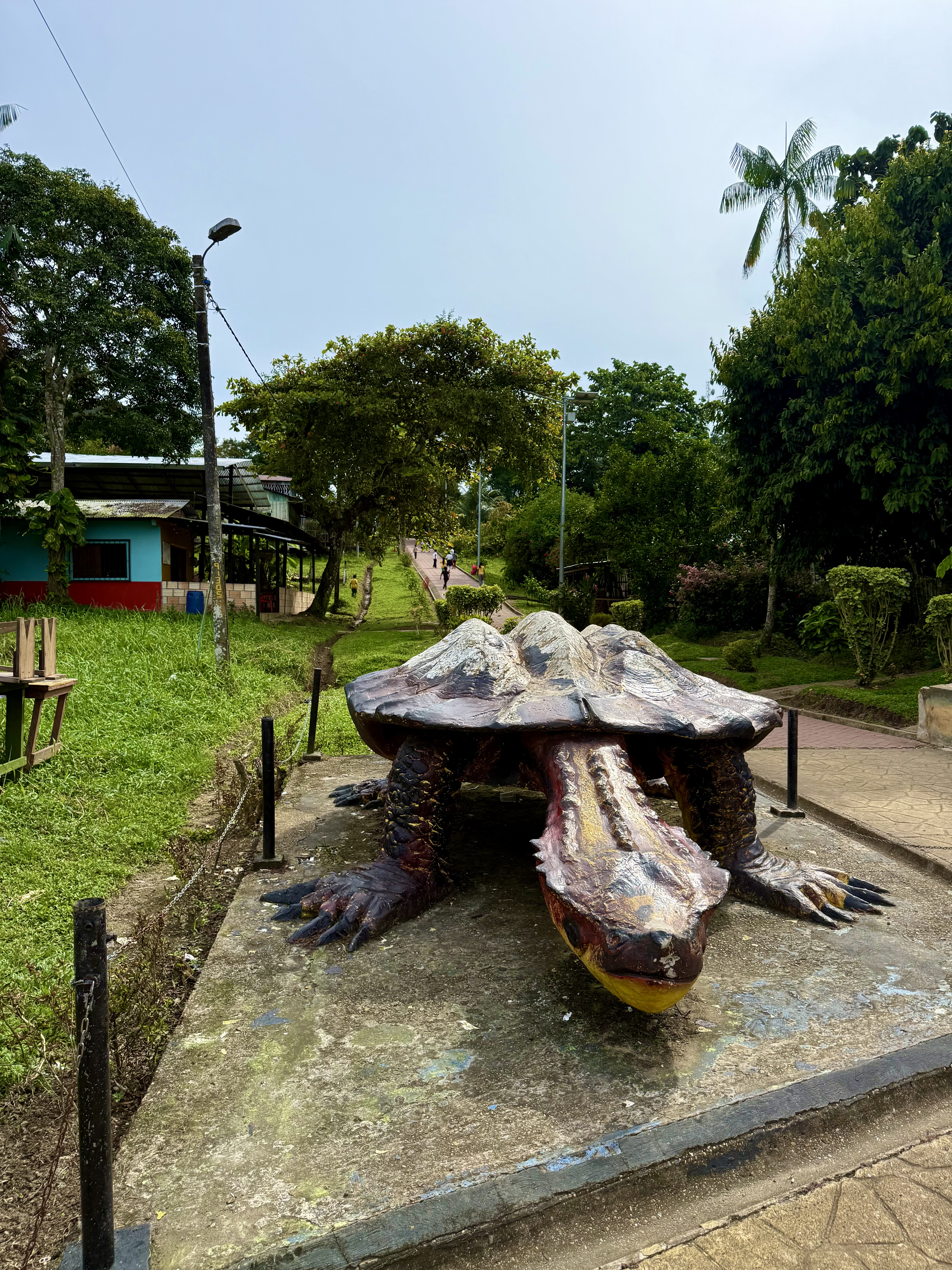
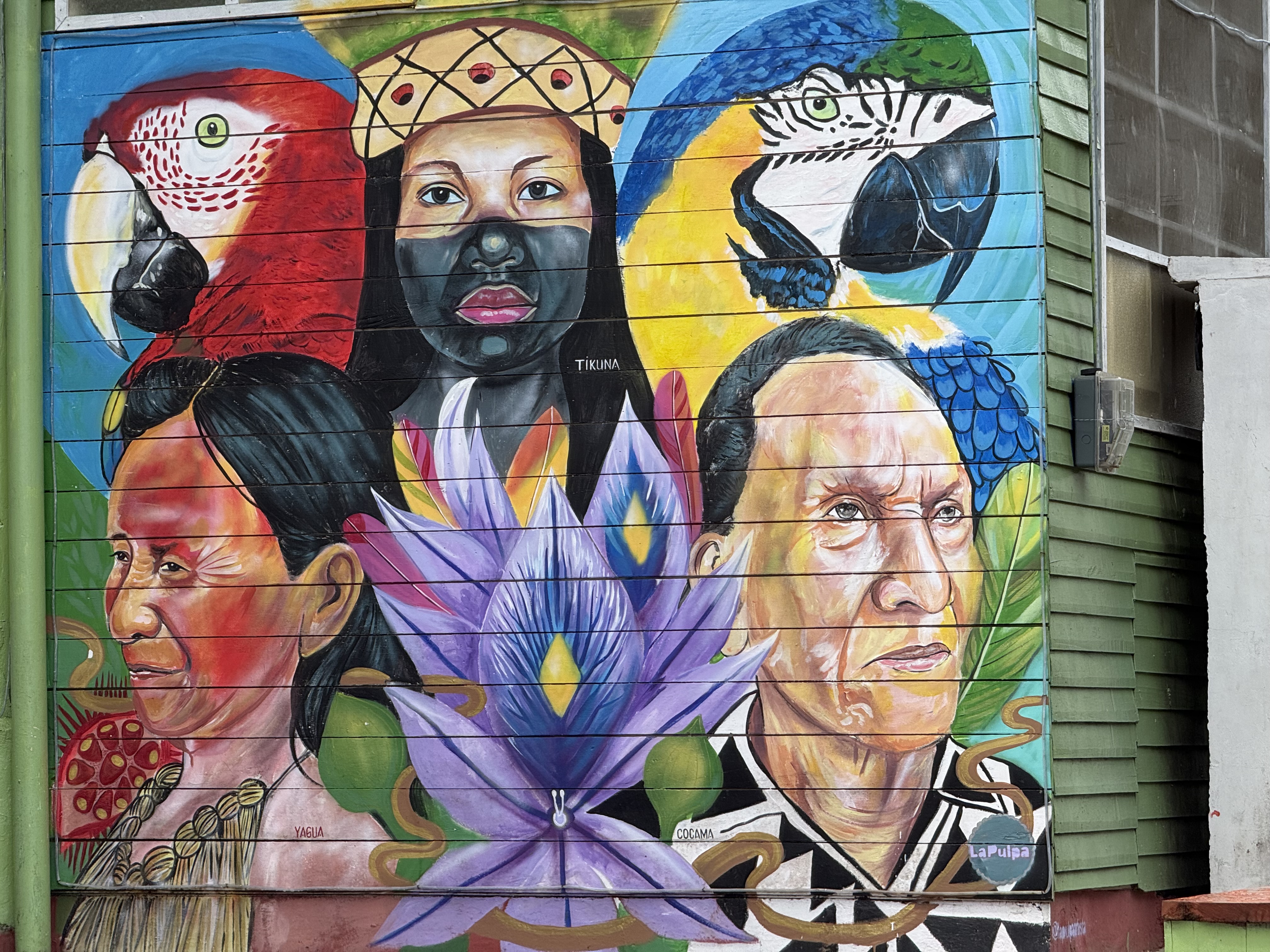
A final tour of the town led me to the park where the I love Puerto Nariño sign is and the city hall across from the park. The city hall has a beautifully painted mural.
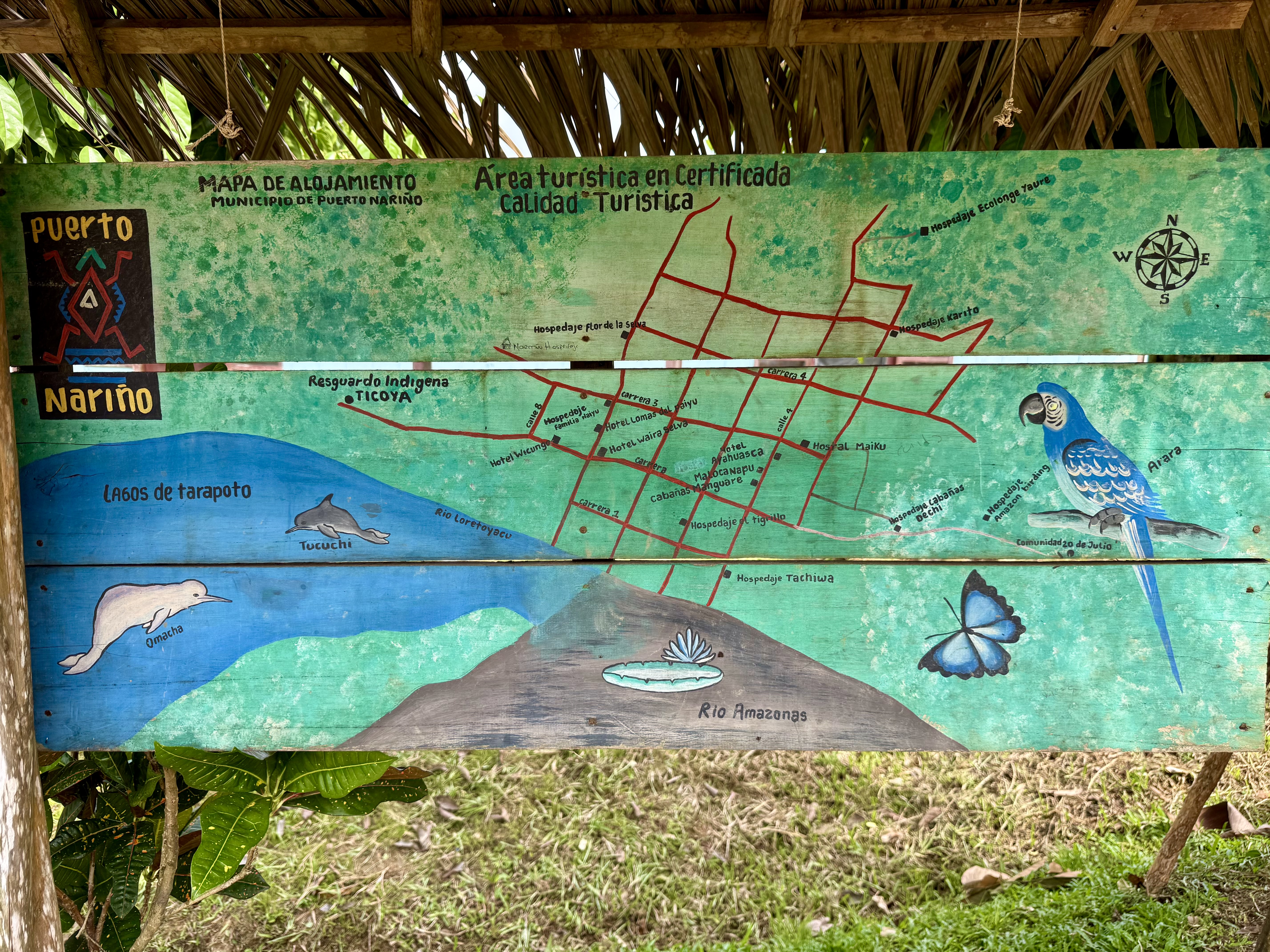
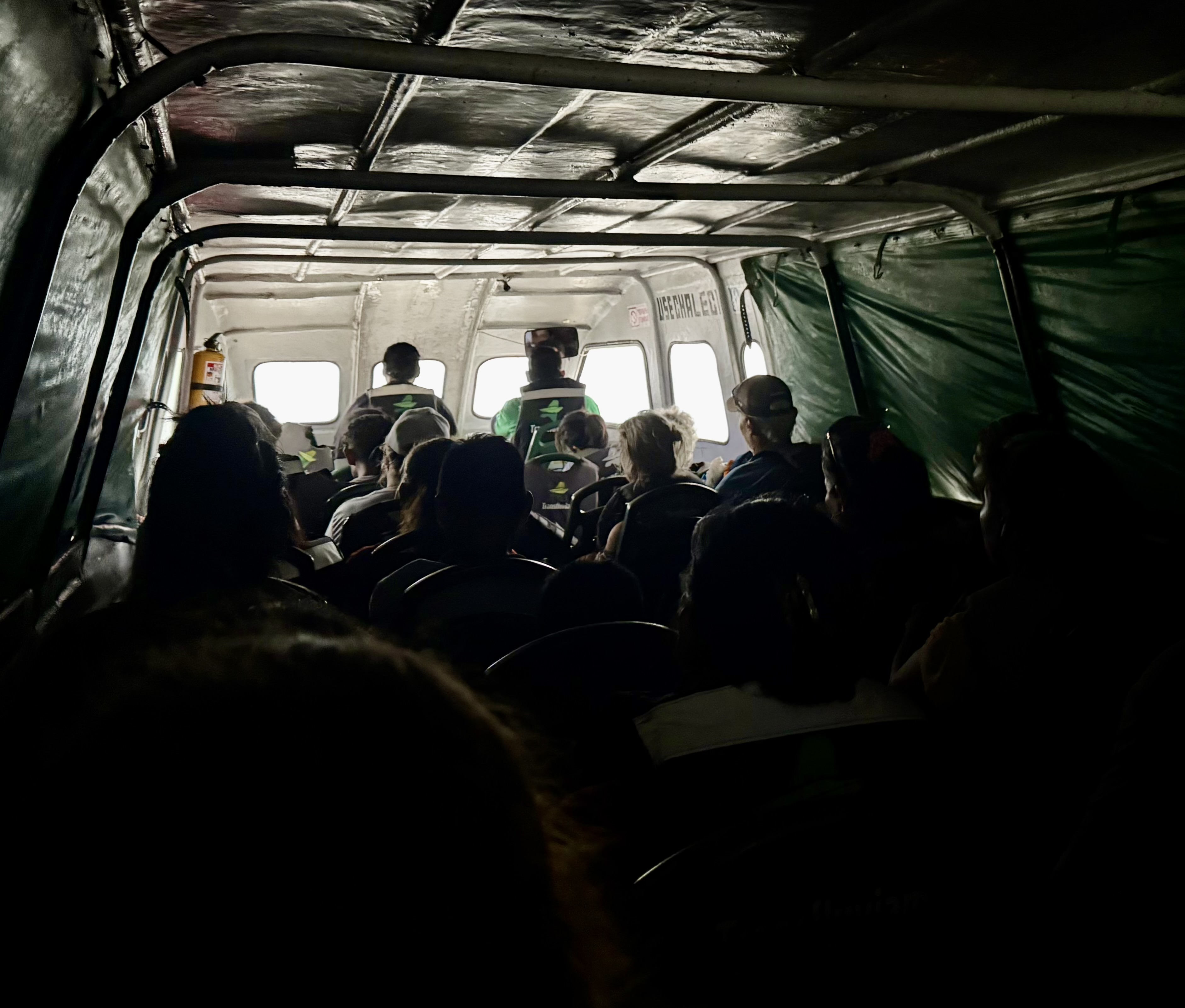
The boat didn’t seem to be full when we boarded, but it soon made many stops along the way until it was again completely full. Once everyone was on board, the sky opened up and the downpour began in earnest. Tarps were unfolded to protect the passengers, but the poor captain had a real problem seeing. This was dangerous, as I learned later on when one of the other speedboats I was on suddenly hit a log and my face crashed into the hard plastic seat in front of me. Luckily, my cheekbone was only bruised and not broken. If the public boat hit a log, many more people could have gotten hurt. As it was, the storm broke shortly before we docked back in Leticia and all was well.
The days in Puerto Nariño were filled with adventures: kayaking on the Amazon, hikes in wetlands looking for sloths, speedboat and canoe rides through flooded rainforests, muddy hikes in nature reserves, and the experience of sacred tree with living nature spirit. I will never forget taking a baby wooly monkey on my head for a walk. Puerto Nariño is a pleasant village to walk around, and the people are genuinely friendly. The shoemaker was a master of his craft. It was a good three days, albeit very hot, humid and sticky. I cannot recommend the guide, however, nor were the Greeks going to do so, as we were all a bit disappointed in him. Damien tried to make up for the difference and was the one who explained the legends to us.
The next portion of my Amazon adventure was with Wirapuru Tours, and I can wholeheartedly recommend them.
–
 omegoodyssey