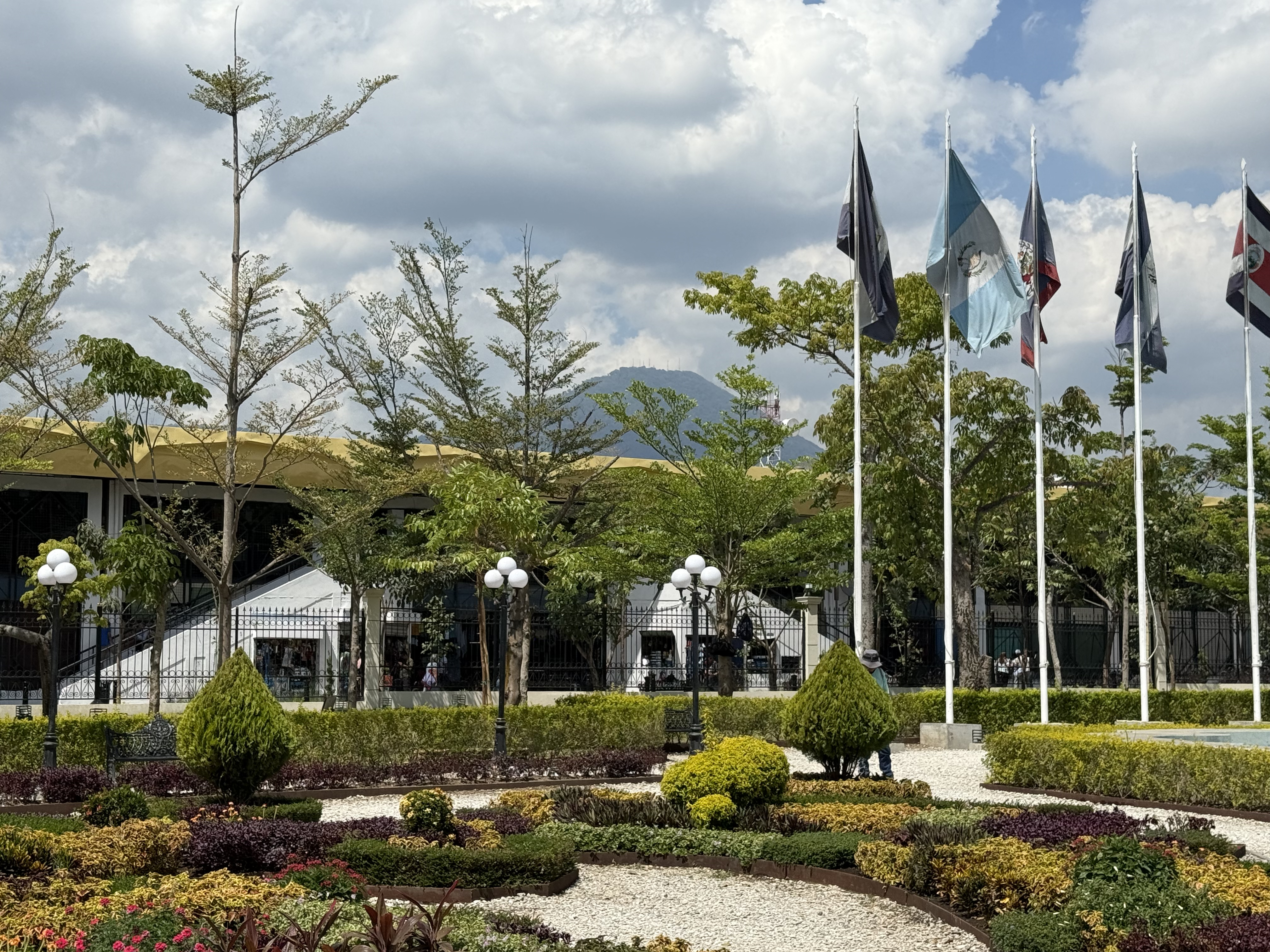
The first thing I noticed was how hot and humid it was in El Salvador. Coming from snow in Vienna to tropical temperatures was a shock to the system, but a welcome one as after days of snow and ice, I was ready for some warmer weather. The El Salvador international airport is about an hour, when traffic is good, from San Salvador. The traffic, however, is usually blocked up. The country’s previous slogan of “The 45 Minute Country” indicating that it would take 45 minutes to get to most places within the nation, is now passé. The government is widening the highway towards Santa Ana, but at the moment this just means that the bottleneck due to the construction leads to more standstills. One of the first things I learned here is that one needs lots of patience with the traffic as well as in restaurants. On the other hand, I found the people to be incredibly friendly. Everyone I met was happy to talk, offer suggestions on where to go, and generally help with getting around. They were all very pleased that the previous crime era is gone, and people are now safe in their homes and neighborhoods. I found the country to be very safe.
My first morning in the city, I took an Uber from my B&B in the suburbs into the historic center. I had planned on going into a tourist information agency to get a map as I prefer to save the battery power Google Maps eats, but there wasn’t one. Instead, there are pillars around the historic center with QR codes that lead to texts explaining the history of the city and indicating a few walking tours. There are a number of very lively squares and markets in the historic center, although the buildings themselves are only from the early 20th C. The older structures were destroyed by volcanic eruptions over the years, but the Salvadorians continually rebuilt. There are between 22 and 36 active volcanoes in tiny El Salvador (depending on which reference material one uses) and according to the government 224 volcanoes in total, including the dormant and extinct ones. A number of volcanoes shoot up directly from the center of town and have very steep inclines. Given the precarious nature of the natural world in the region, it is no wonder that religion remains a mainstay in the society, even though this too seems to be changing. Catholic churches are a fixture in the center, as is the National Palace and the National Theater. All of these structures have been rebuilt or remodeled after having suffered from either earthquakes or volcanoes.
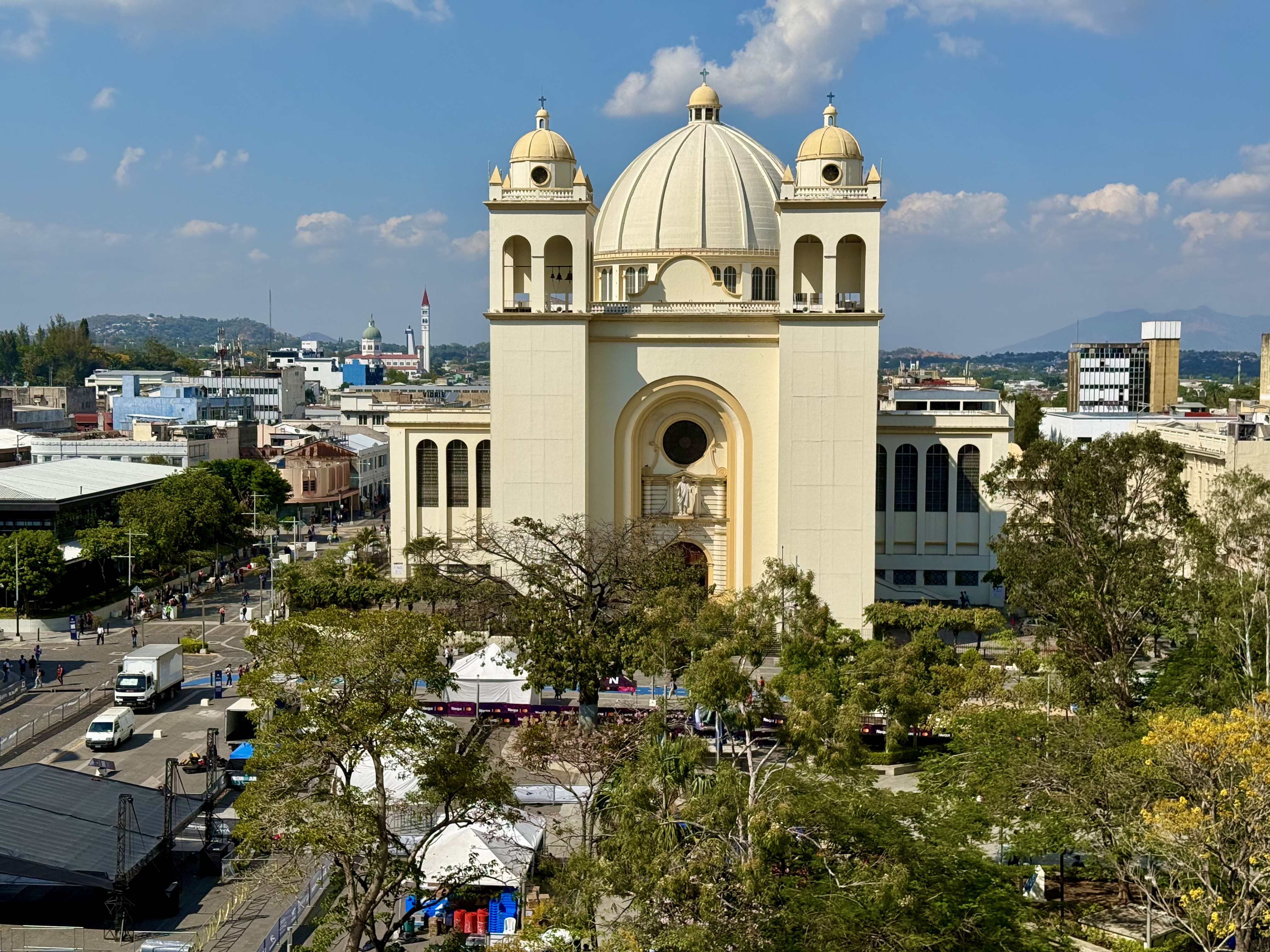
The Metropolitan Cathedral was rebuilt in 1915 and is mix of reminiscent Baroque and modern architecture. It is the resting place of Bishop Oscar Romero, a local hero, who was assassinated in the church in 1980 by the military. At his funeral another forty-four people were shot. This appears to have been at the beginning of the Civil War. Large rectangular modern paintings of Jesus, Mary, and a few saints hang beside the main altar. Photography was not allowed, so I, unfortunately, cannot show them.
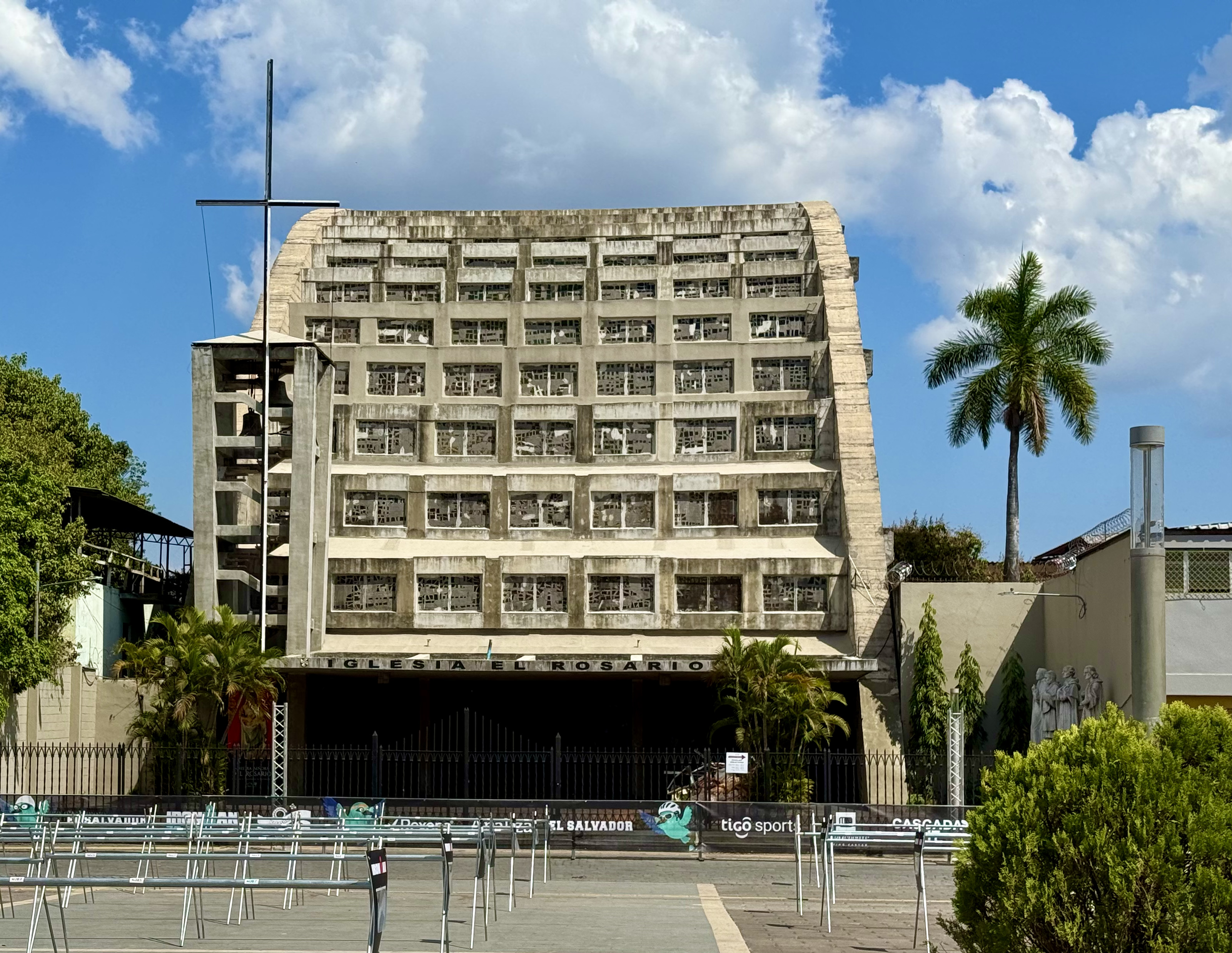
Another church, the Rosario, which was constructed in the early 1950s, looks like a rolodex file.
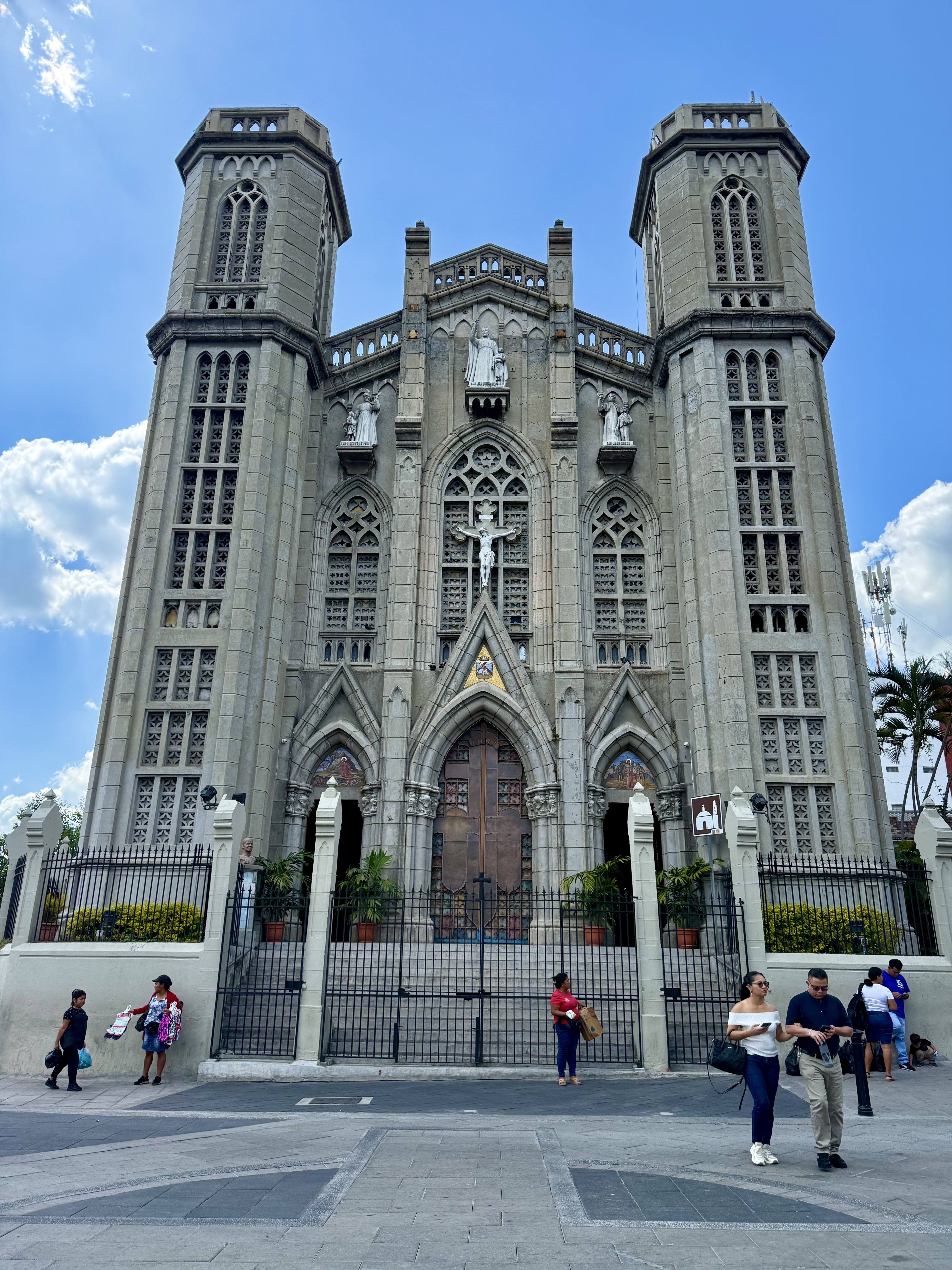
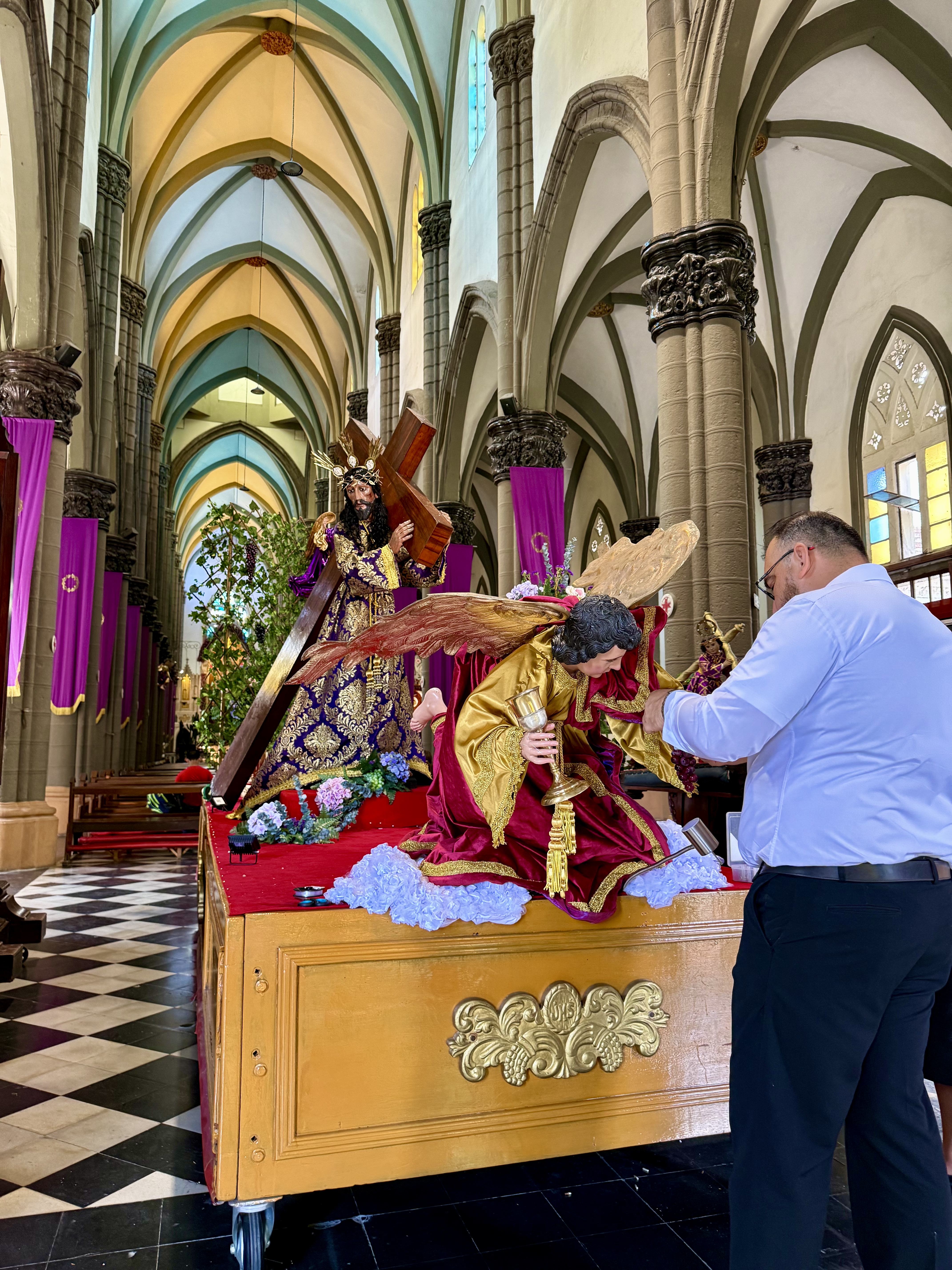
The main Easter processional church is El Calvario, which has a Neogothic façade. It was first constructed 1661, was rebuilt, then destroyed, then rebuilt again; the current building is from 1951. While I was there, a couple were working on putting the final touches to a float for the Passion festival with Jesus carrying the cross led by an angel. The wooden sculptures were beautiful.
Besides the religious buildings there are three secular structures that are worth mentioning. The first is the National Palace, which was constructed in 1905. It is a mix of styles, mostly Neoclassical and Renaissance Revival. The Palace is open to the public and ½ hour tours are available. The main assembly rooms are named for colors (red, yellow, pink and blue) or for the figures on the walls (jaguars). Off the red room, is a balcony from where the current President gave his speech in 2024.
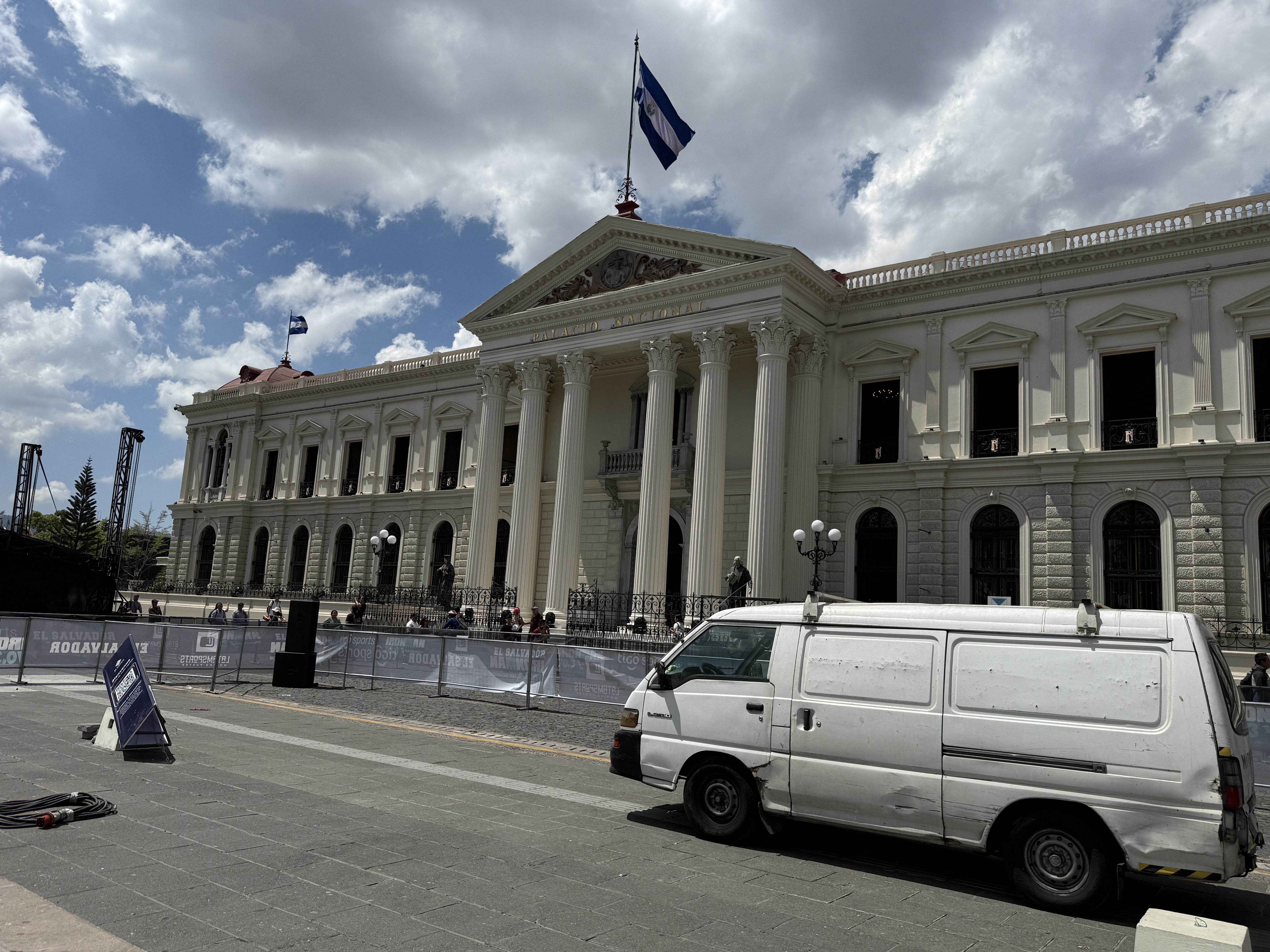
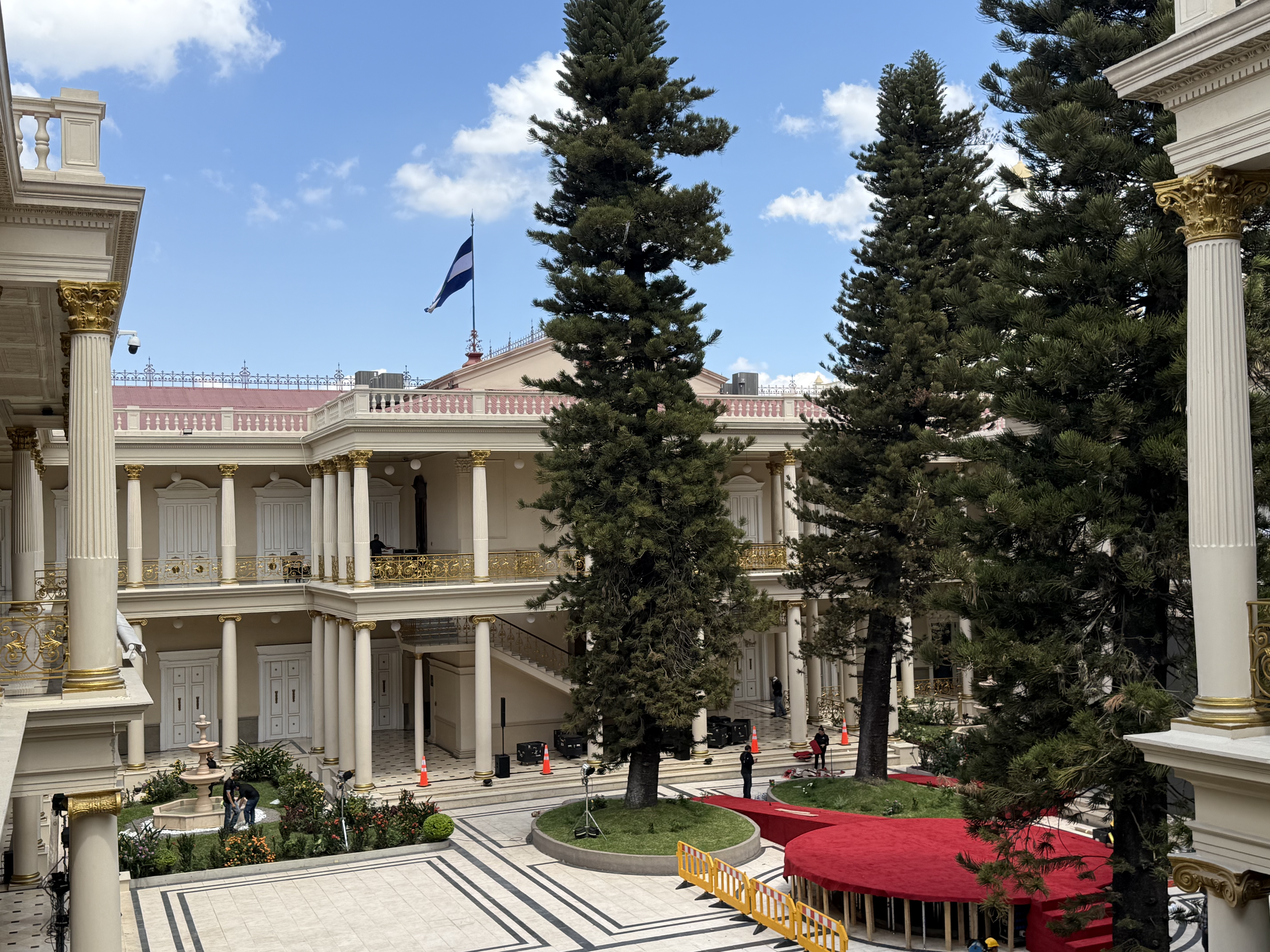

While I was there, the square outside and throughout the Palace grounds were undergoing preparations for a music festival/event and speaker boxes were scattered all over the area. It was going to be a very loud event.
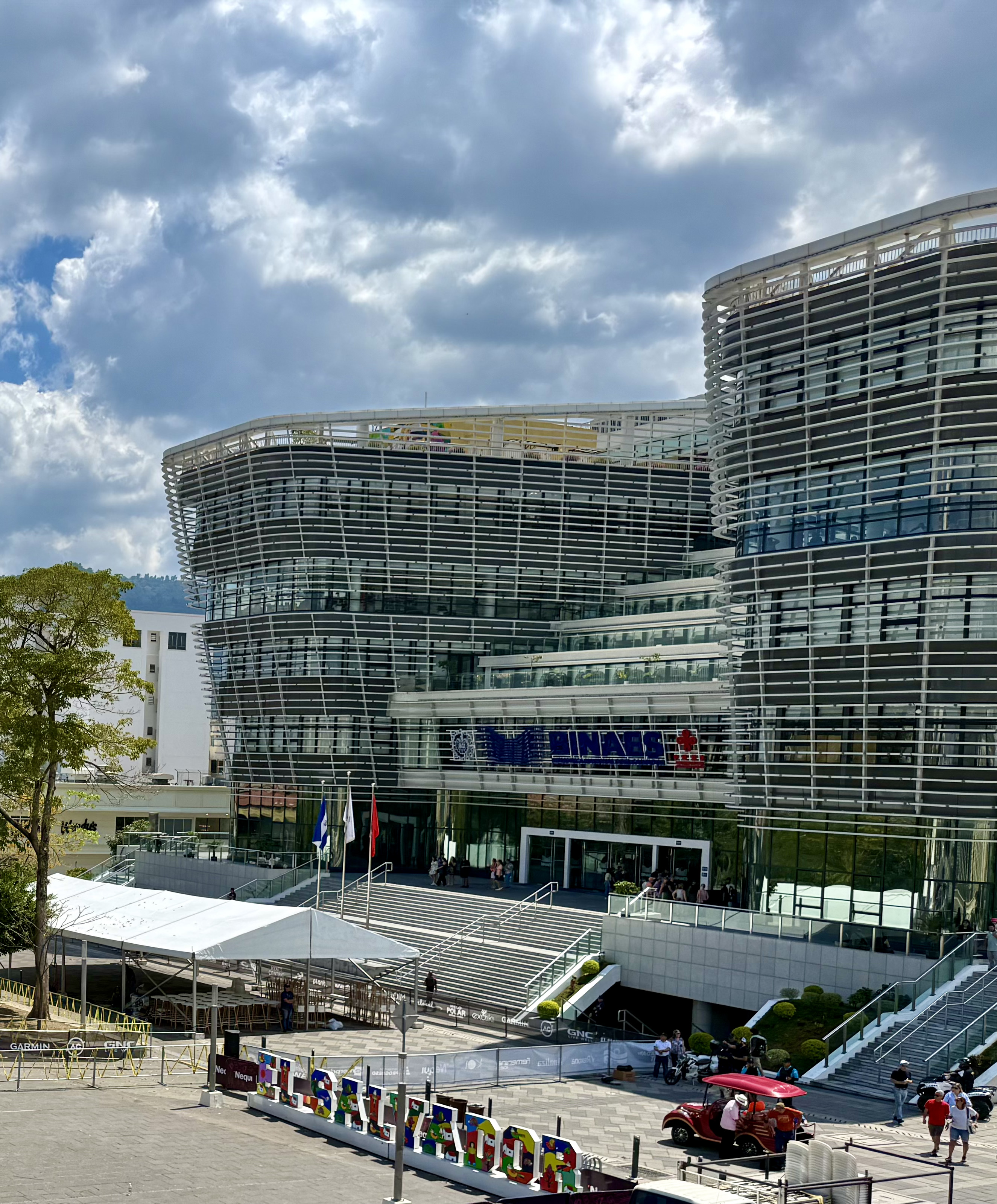
Kitty corner from the Palace is the ultra-modern six story library, which was inaugurated in November 2023. It is a remarkable building with public computers and research areas on the sixth floor, and infant to elementary school play areas on the 1st floor, which is the main entrance. The way the building is laid out and its central location appeared to me to indicate that there is a dedicated interest from the government in the education of their citizens.
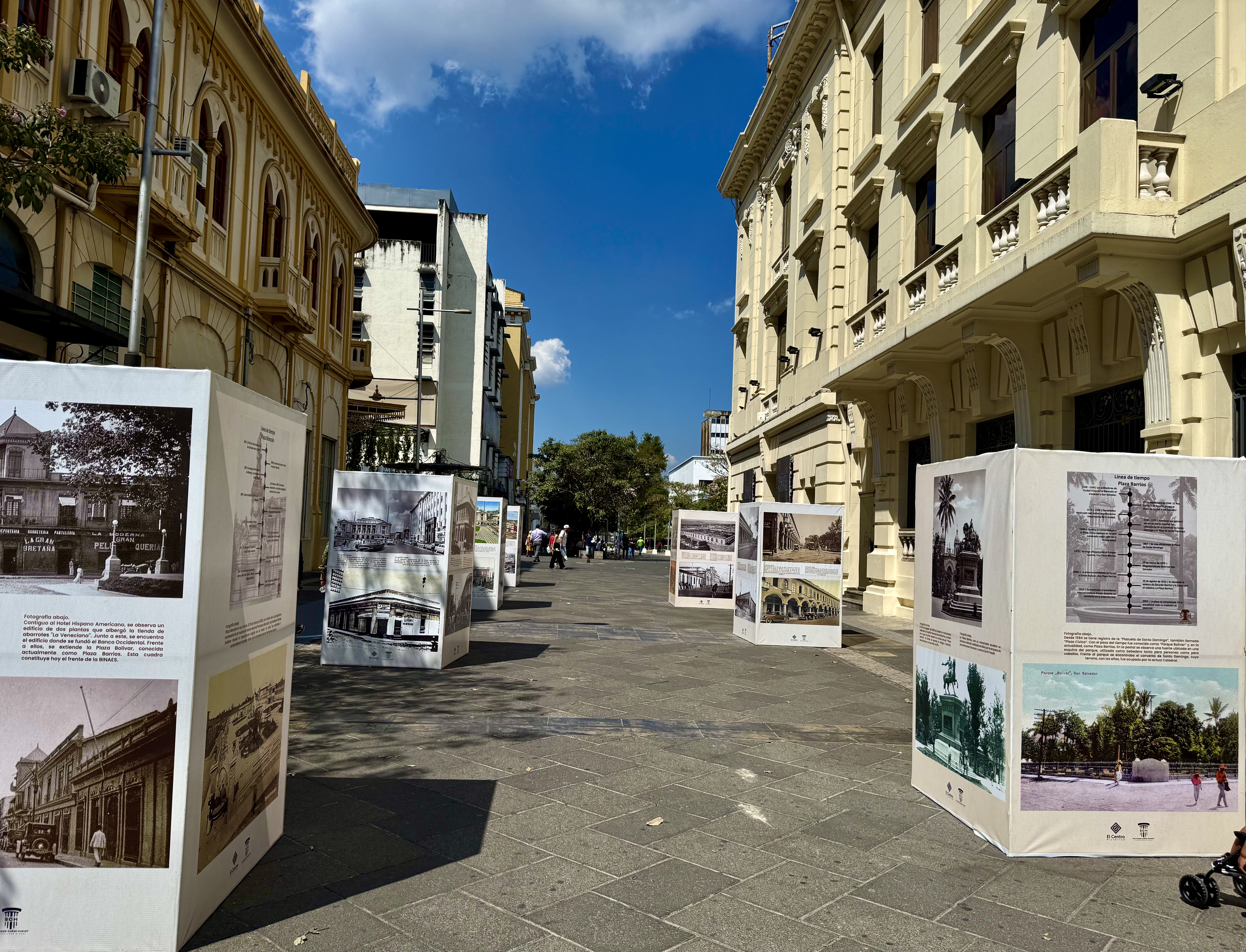
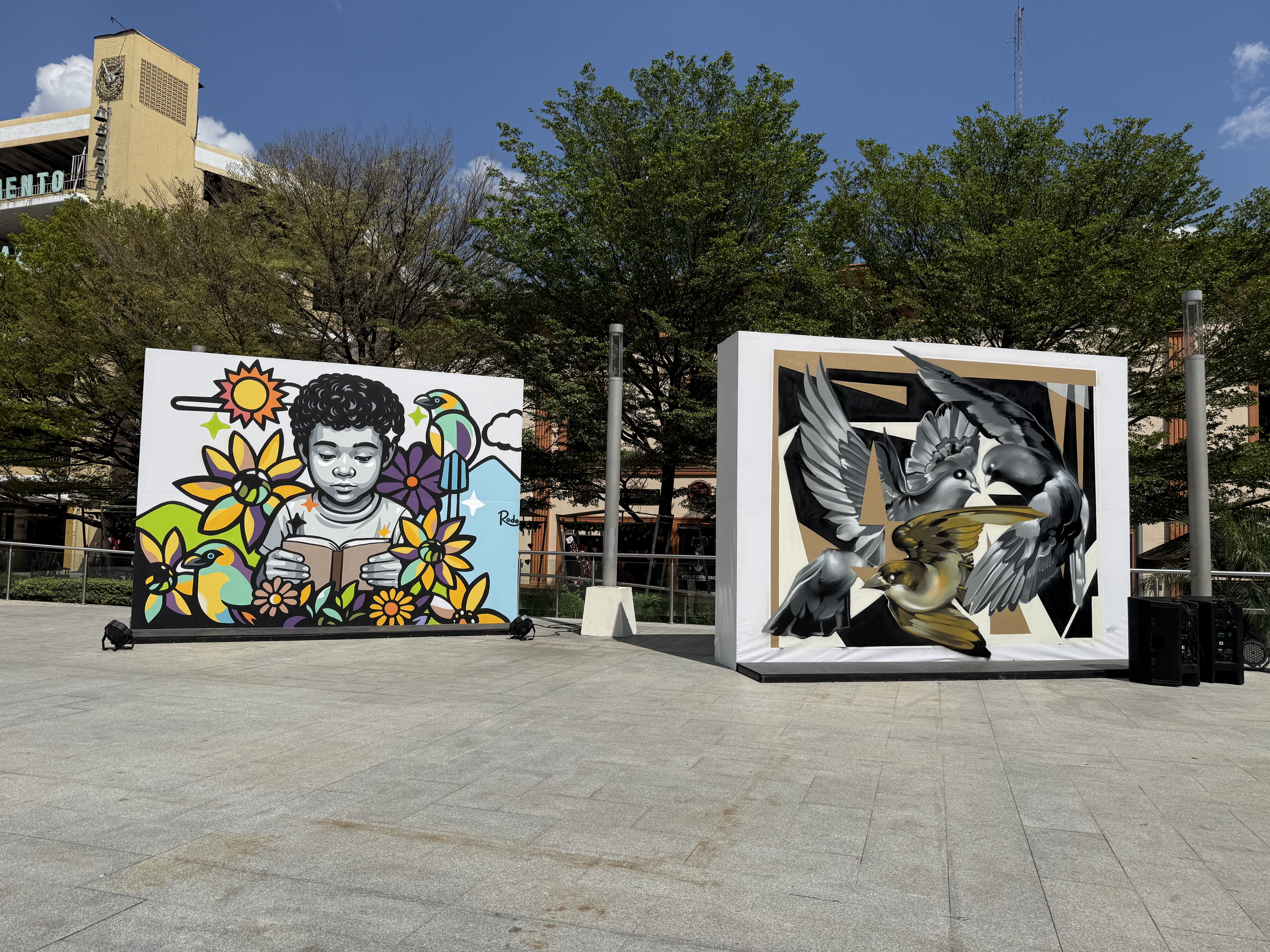
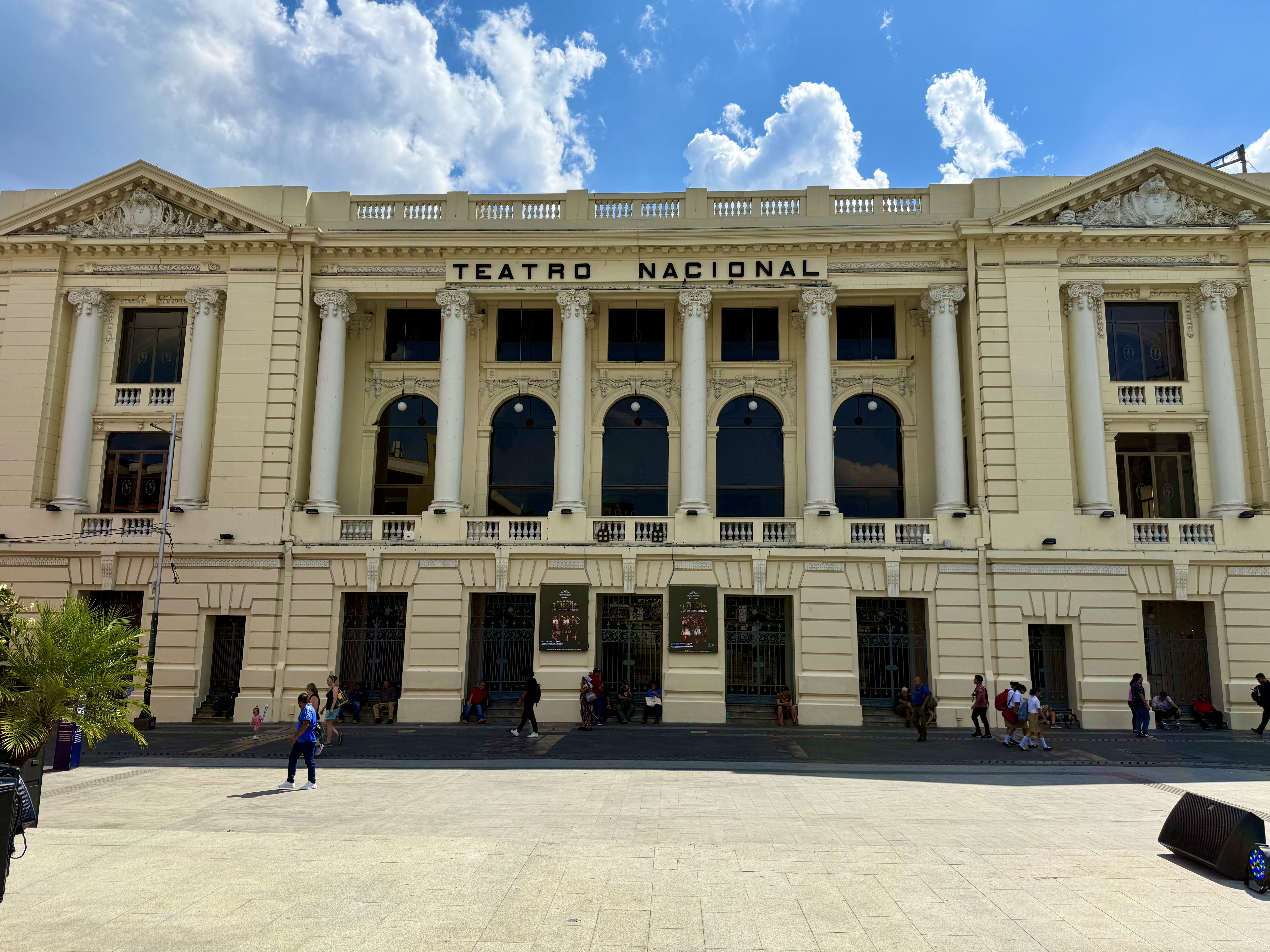
Almost next door to the library and across the square from the National Palace is the Center Coffeehouse which serves traditional pastries as well as yogurt with fruit and a very good coffee. Coffee is one of El Salvador’s main exports along with cocoa and sugarcane. Down the street from the coffeeshop is the National Theater, which is the oldest in Central America. It was built in 1917 by French architect and Italian interior designer. The Rococo and Art Nouveau theater seats 650 people. On the square in front of the Theater large murals were on display, and on the street to the Theatre stood a series of informational posters explaining the history of the Cathedral, Palace, Theater and district.
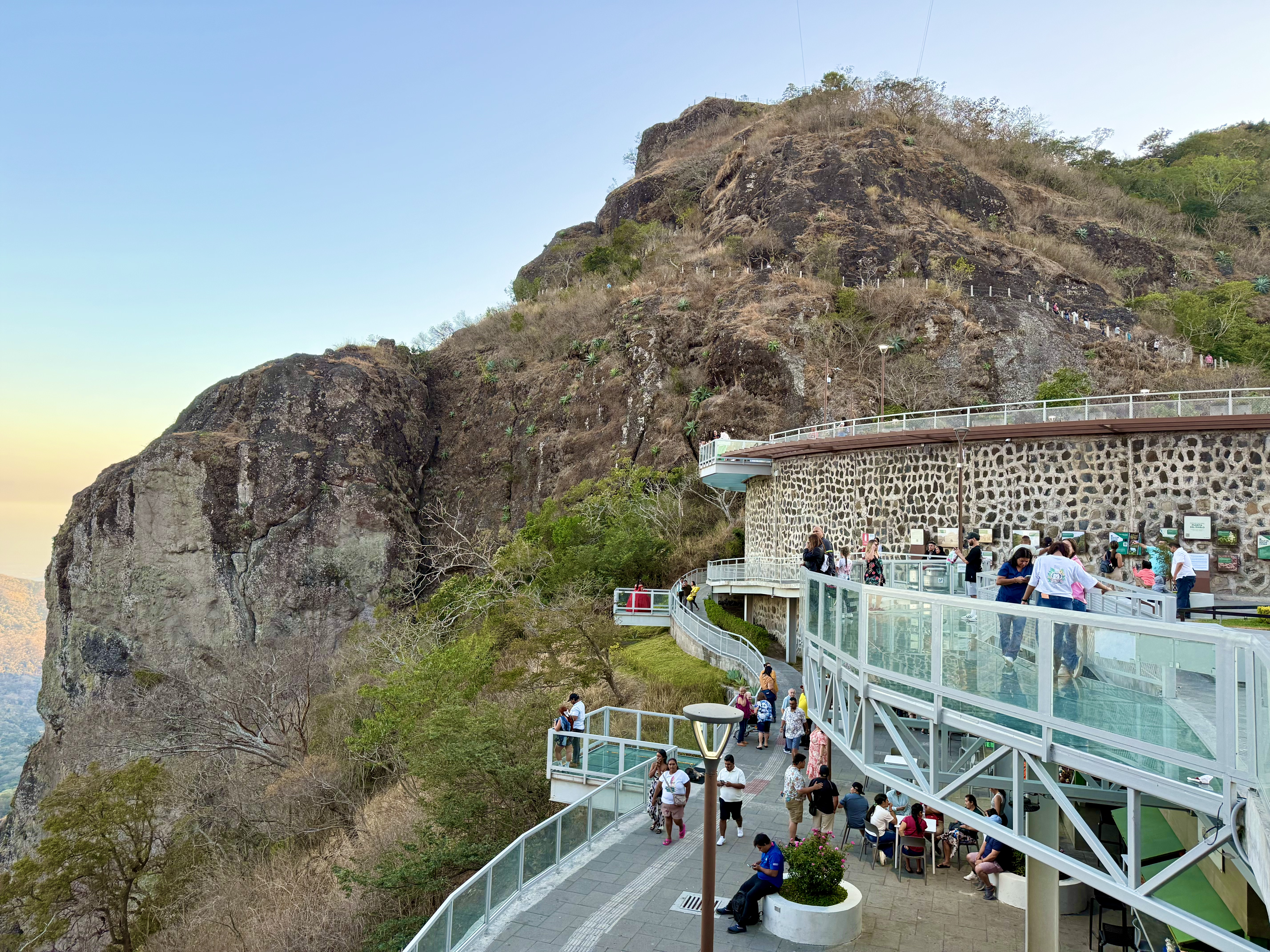
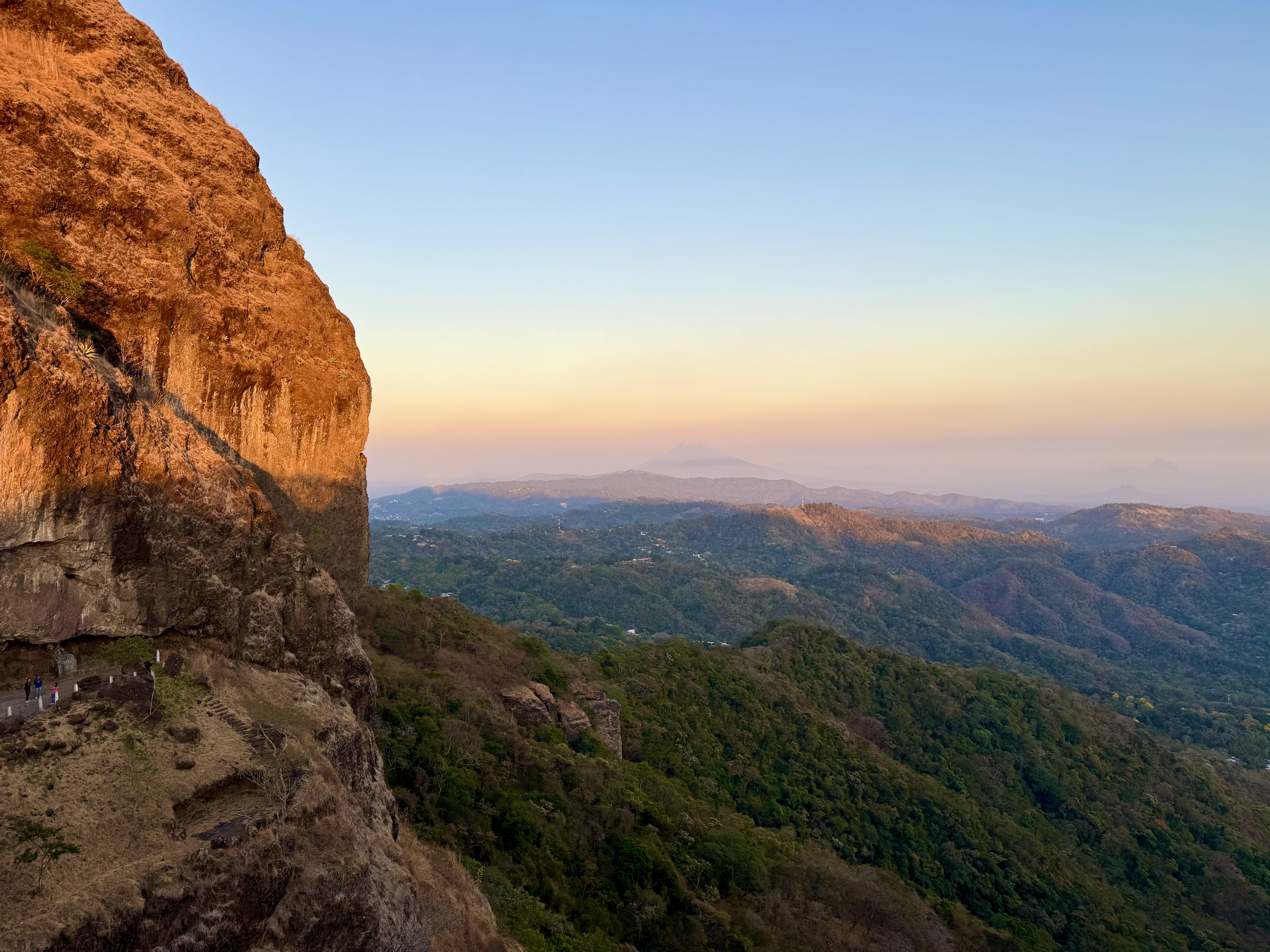
After walking around the center for a while, I met an old friend in the library, and we took an Uber up to Puerta del Diablo, which is a viewpoint on a hillside outside of the city. We arrived too late to do the climb to the top; the gate closes at 5:30pm, but we were able to do the other smaller hill on the opposite side of the plaza and to the cave. The view is fabulous and the food in the food court was excellent. A plaque near the entrance to the gate explains the story of the site: “There are various legends surrounding the history of the Puerta del Diablo site. One recounts that the property was privately owned by the Renderos family, which gave rise to the name of the area Planes de Renderos. The daughter of the Renderos family, Maria de la Paz, was courted by the devil himself, and the family decided to hunt him down. One night after calling upon young Maria de la Paz, the devil found himself cornered by his would-be captors. He broke through the rocky outcrop to escape through the middle of the peak. Since then, the site has been known as Puerta del Diablo due to the curious shape of the two elevated peaks on either side of the crevice.”
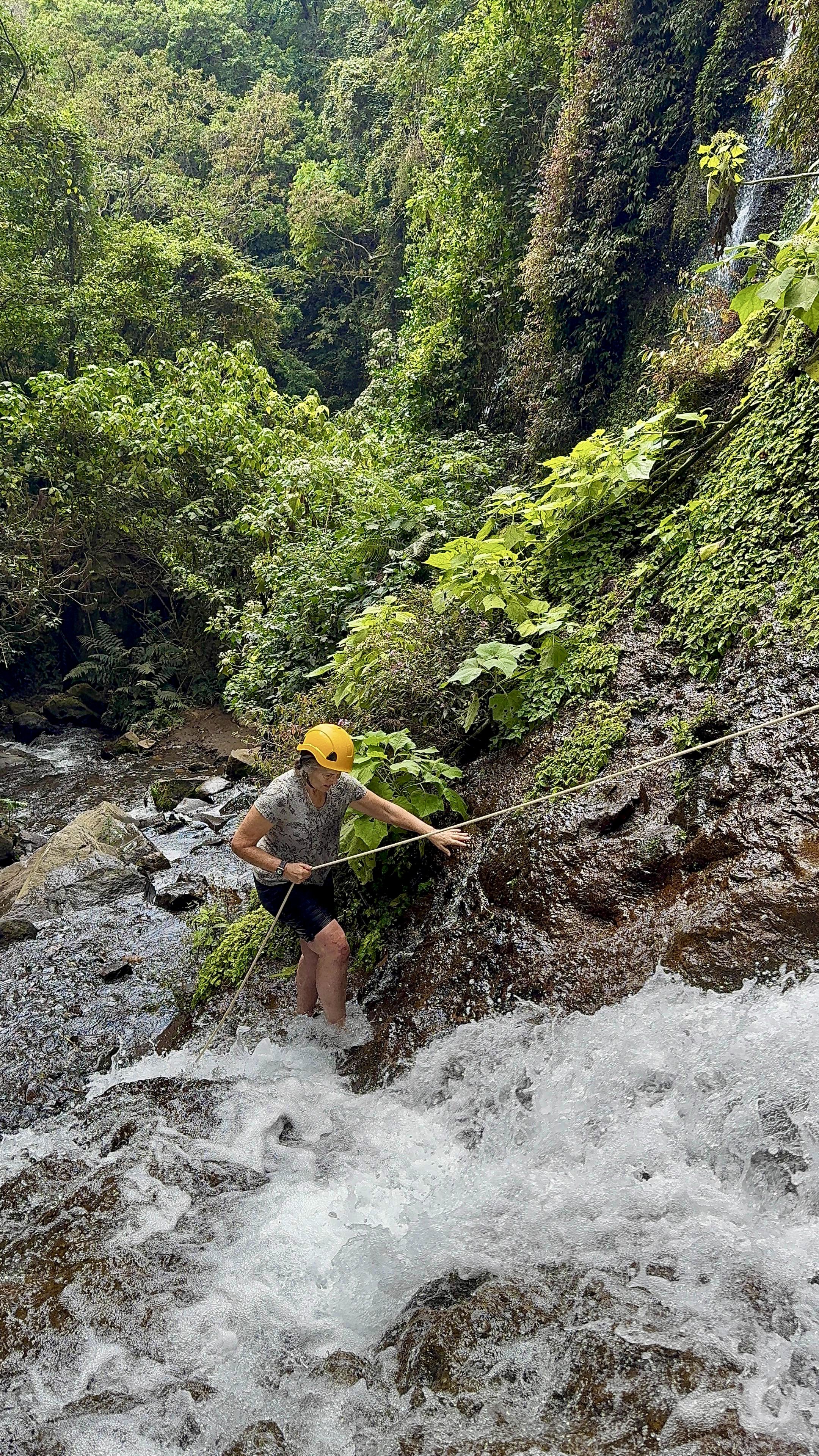
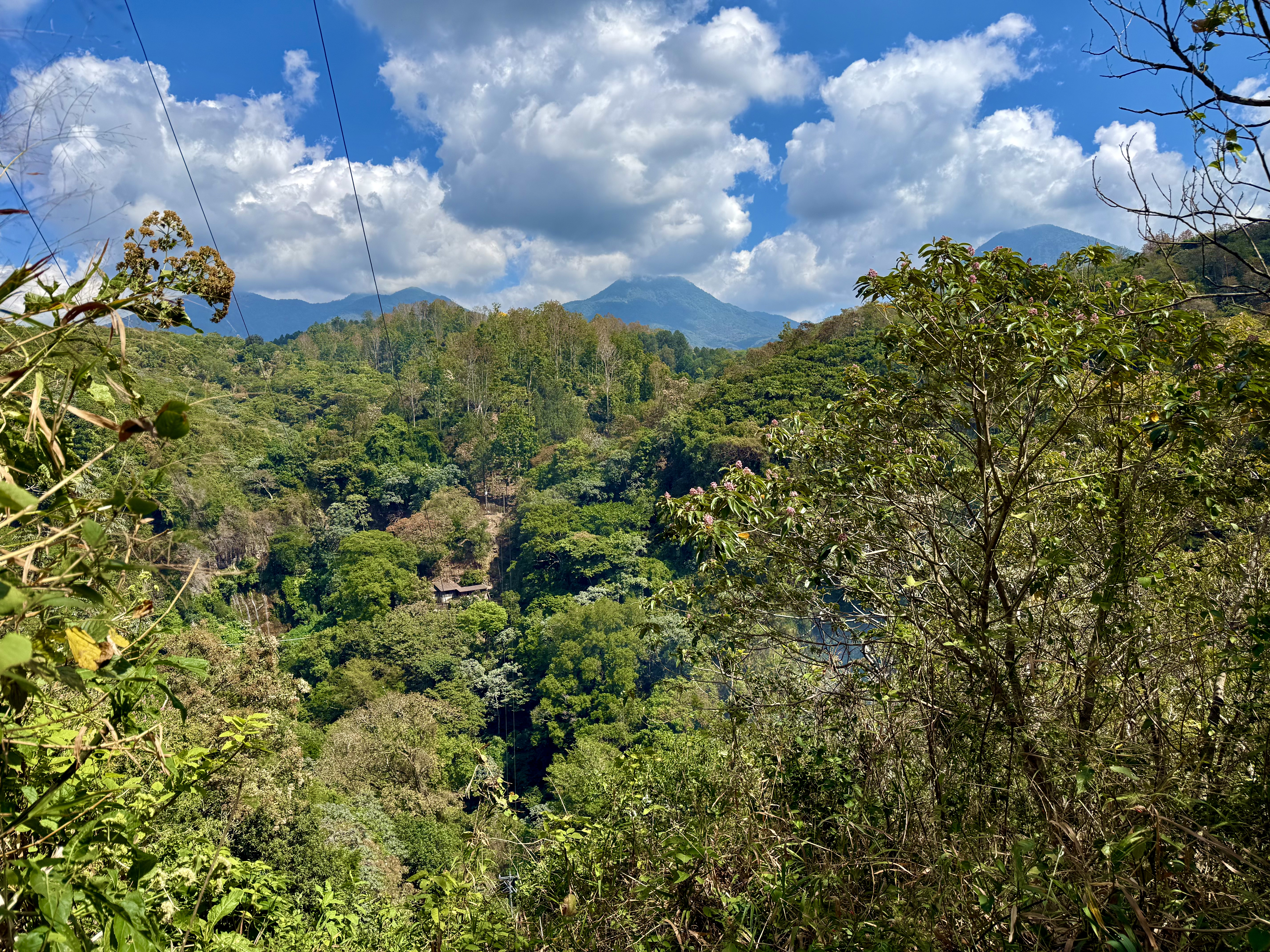
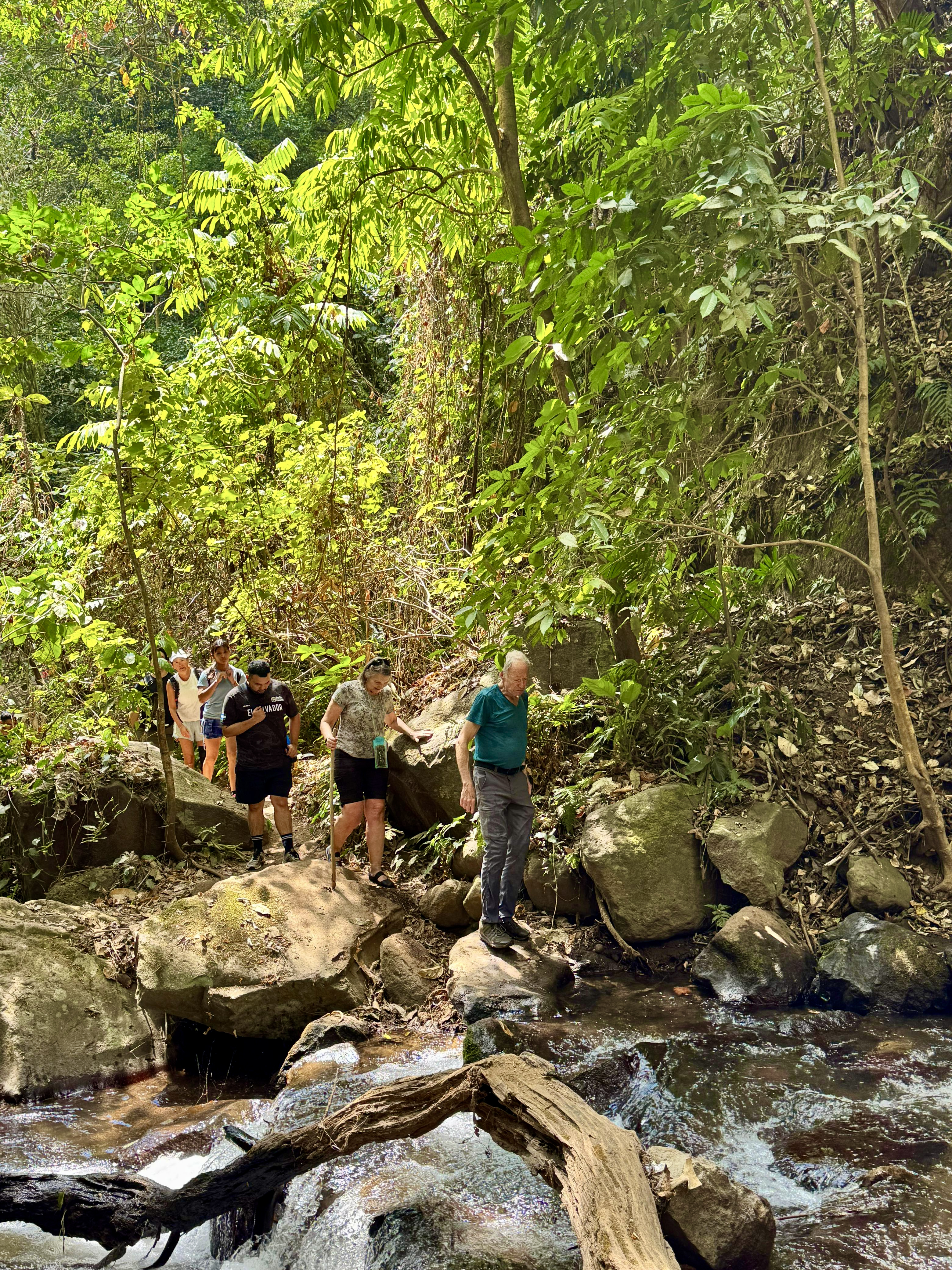
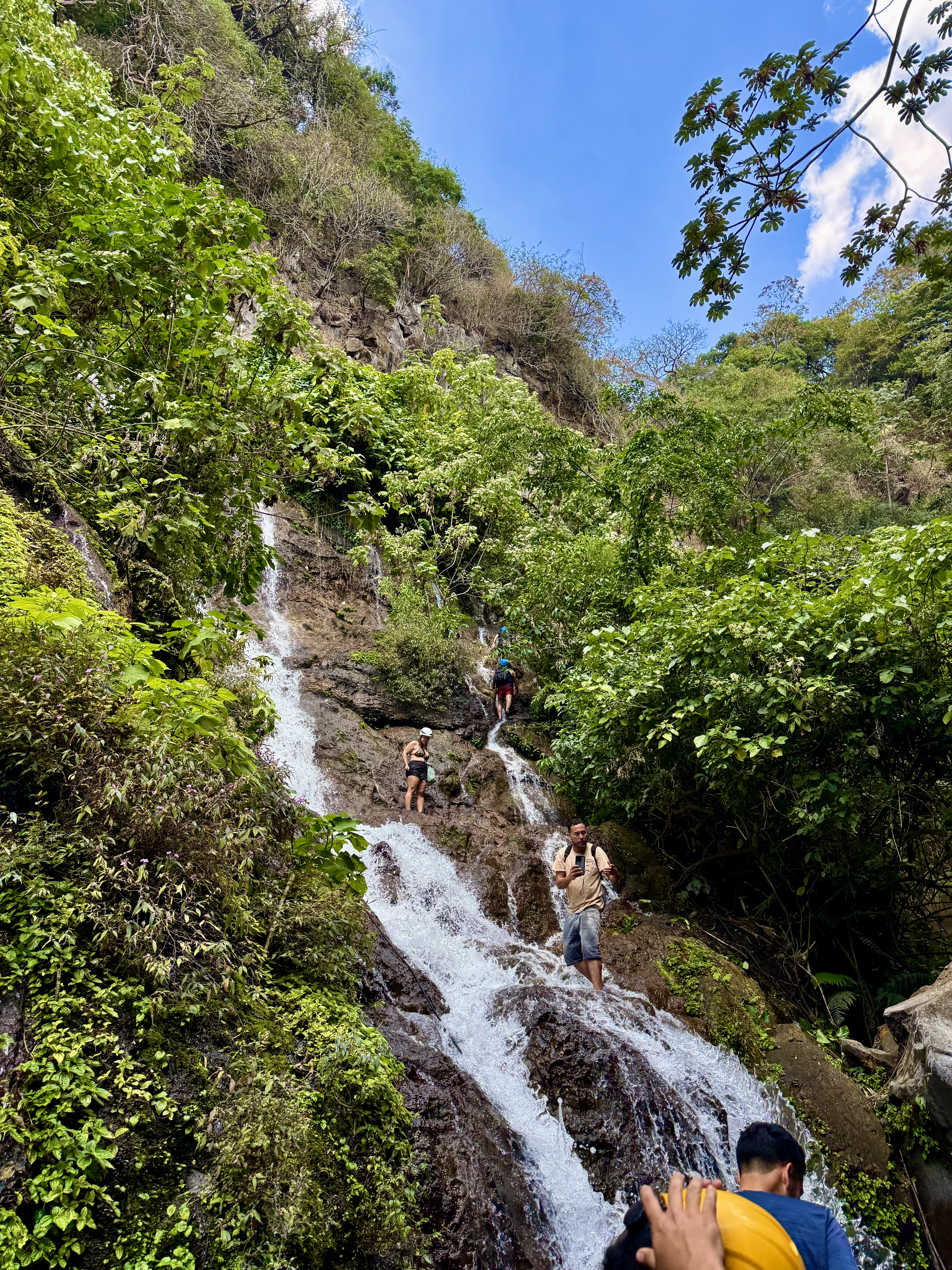
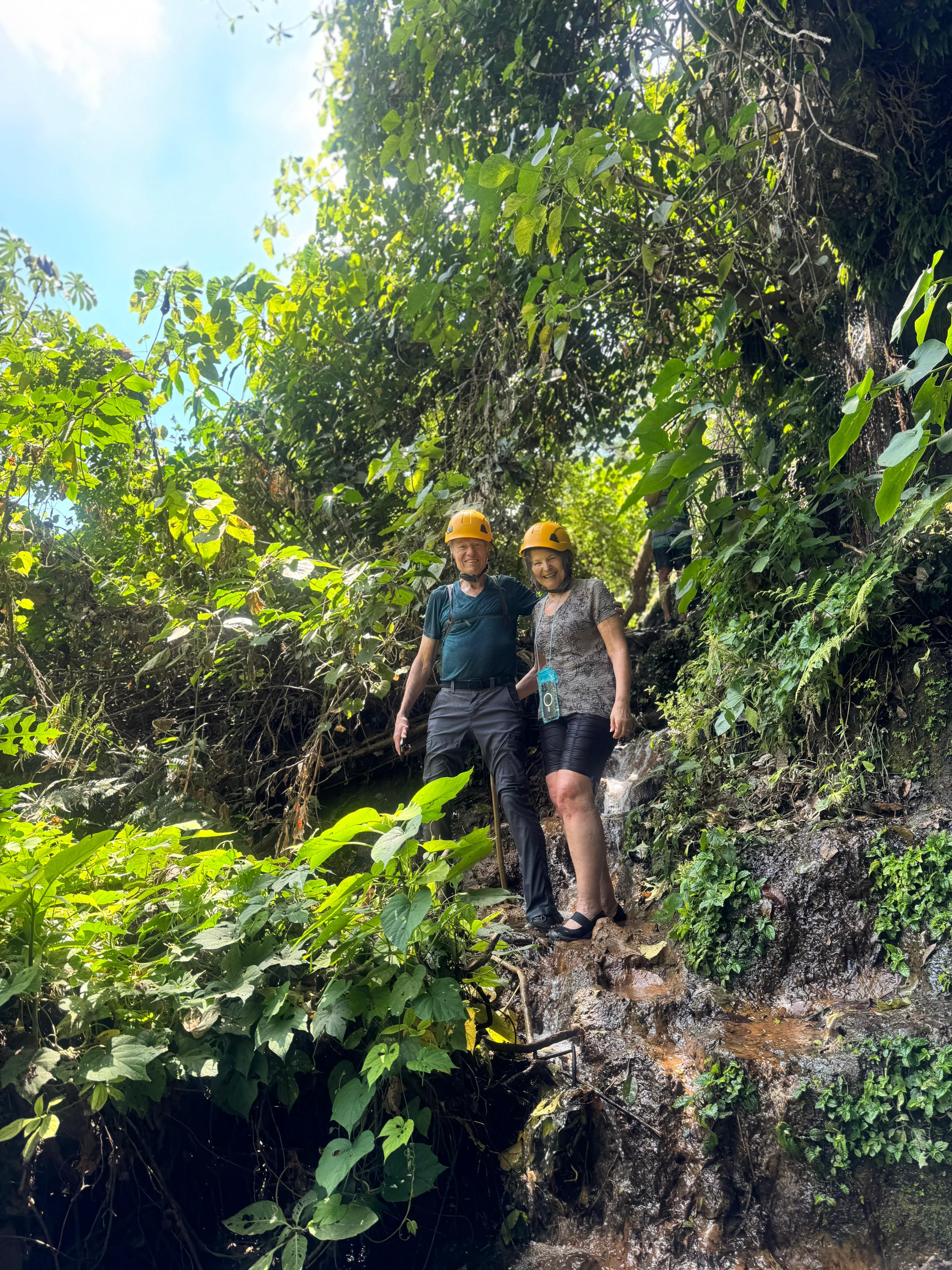
The next day, we booked an excursion to the Juayua waterfalls. The advertisement for the excursion said it would be a mild hike to seven waterfalls – it didn’t say anything about having to scale number five to get to the remaining two! I saw the cliff and thought my heart would stop. As there was no going back, I had to crawl up with the water crashing over me as I tried to find foot and hand holds in the rock. Lots of other people had done this before me, but they were considerably younger with good knees and hips! With the help of the guides, I did make it up, drenched but nonetheless successful. It was wonderful being in a rainforest again, and the streams we crossed were warmer than anticipated, even though standing under the waterfall was like having a cold shower.
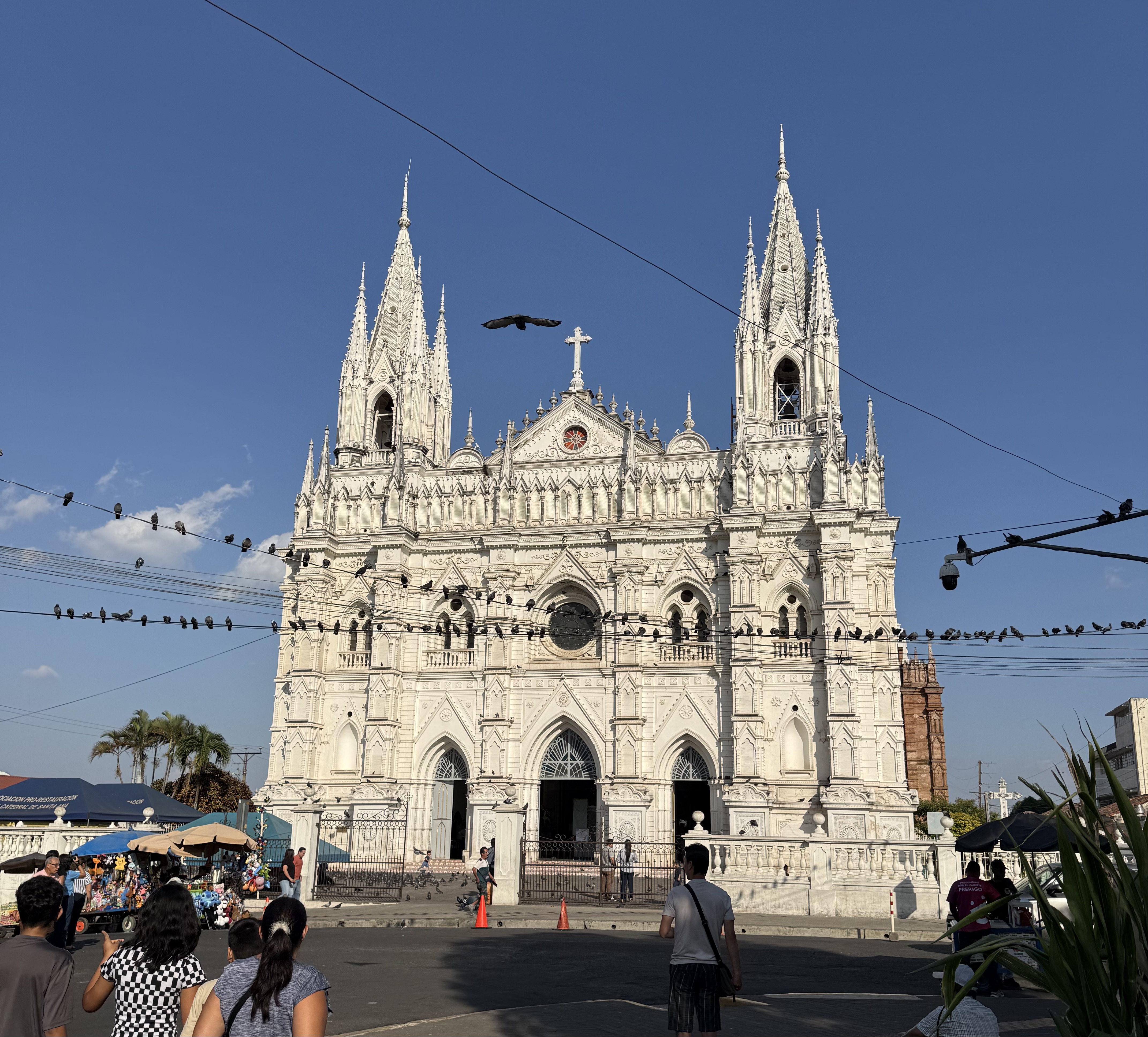
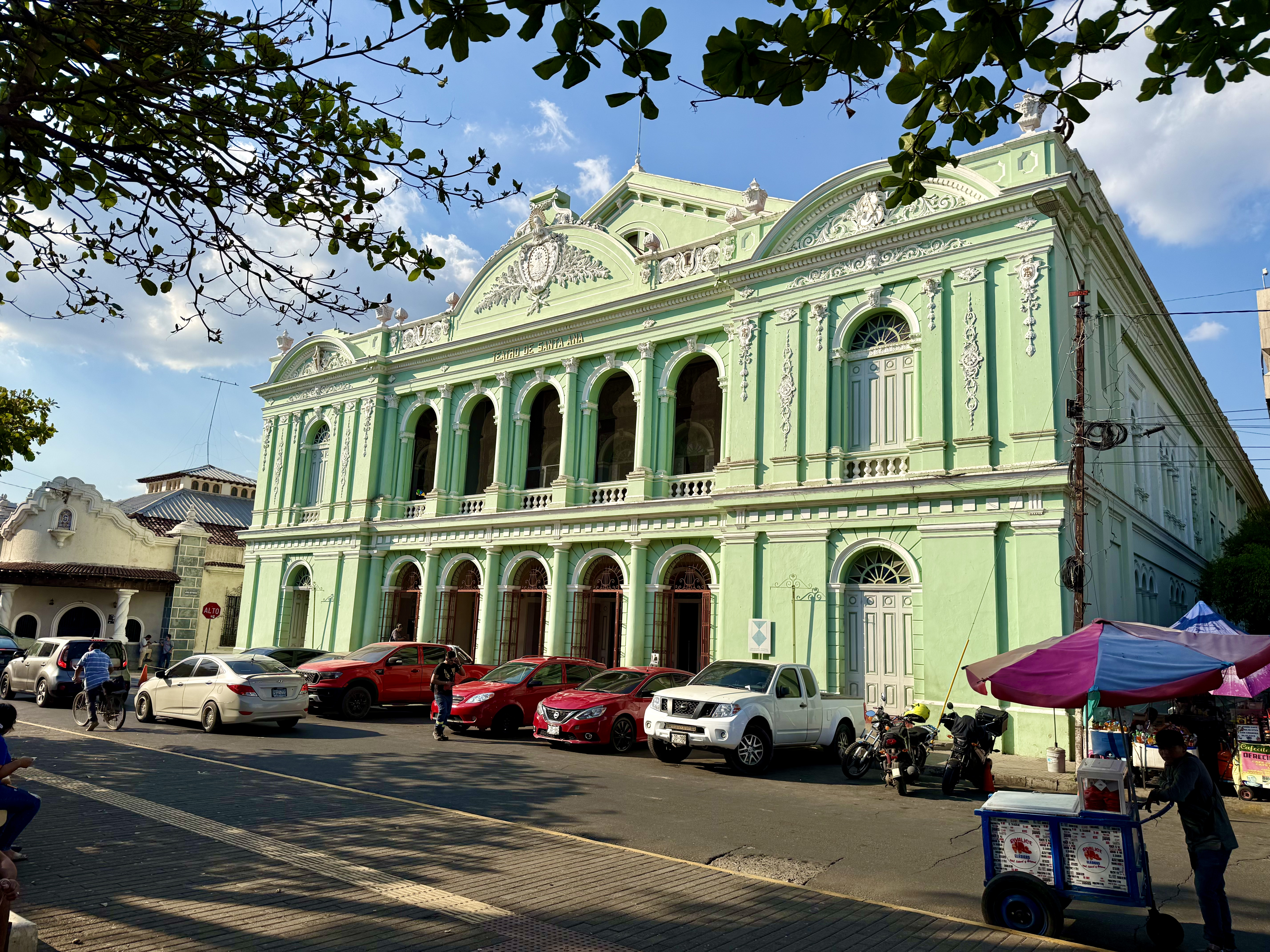
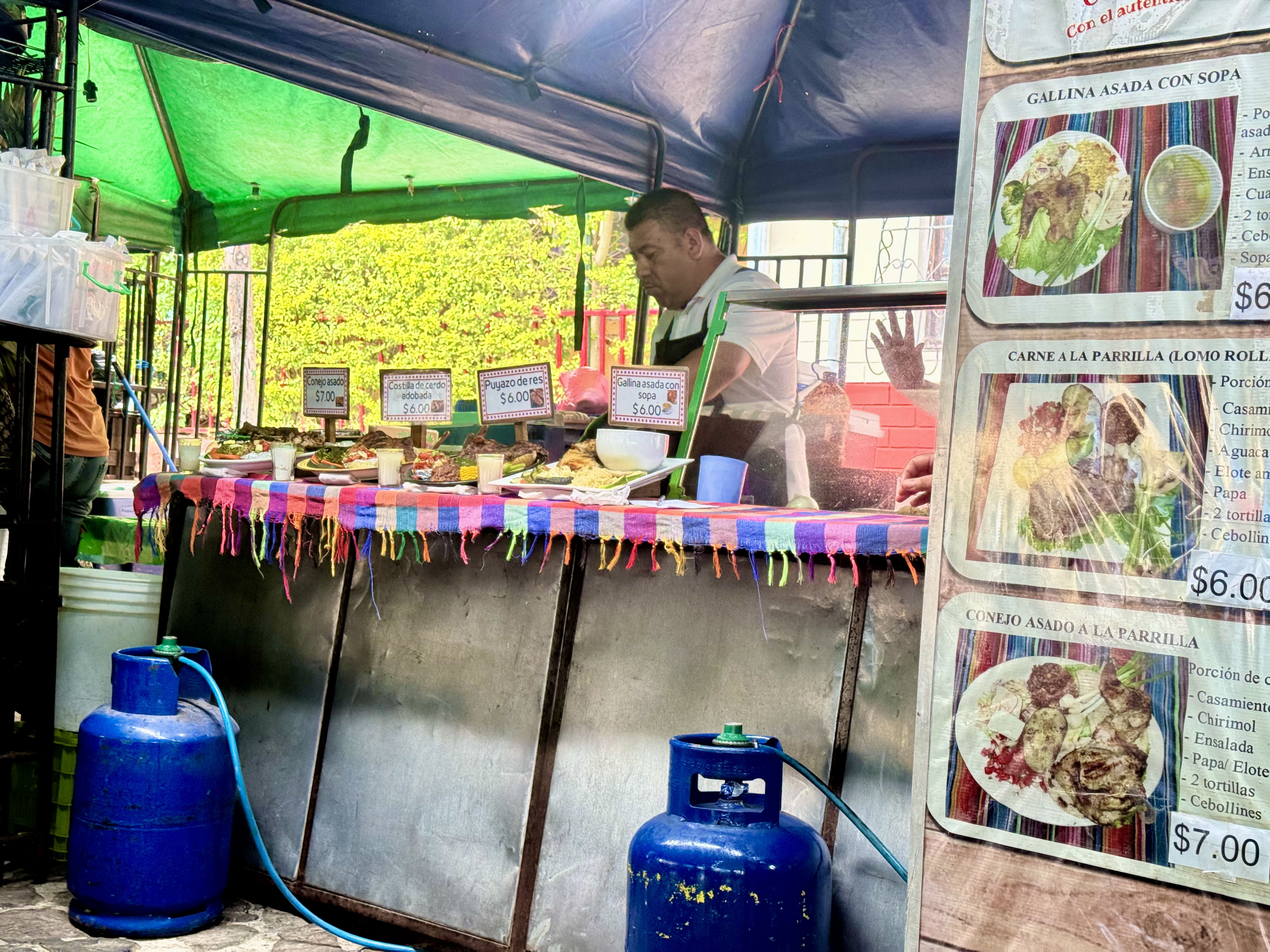
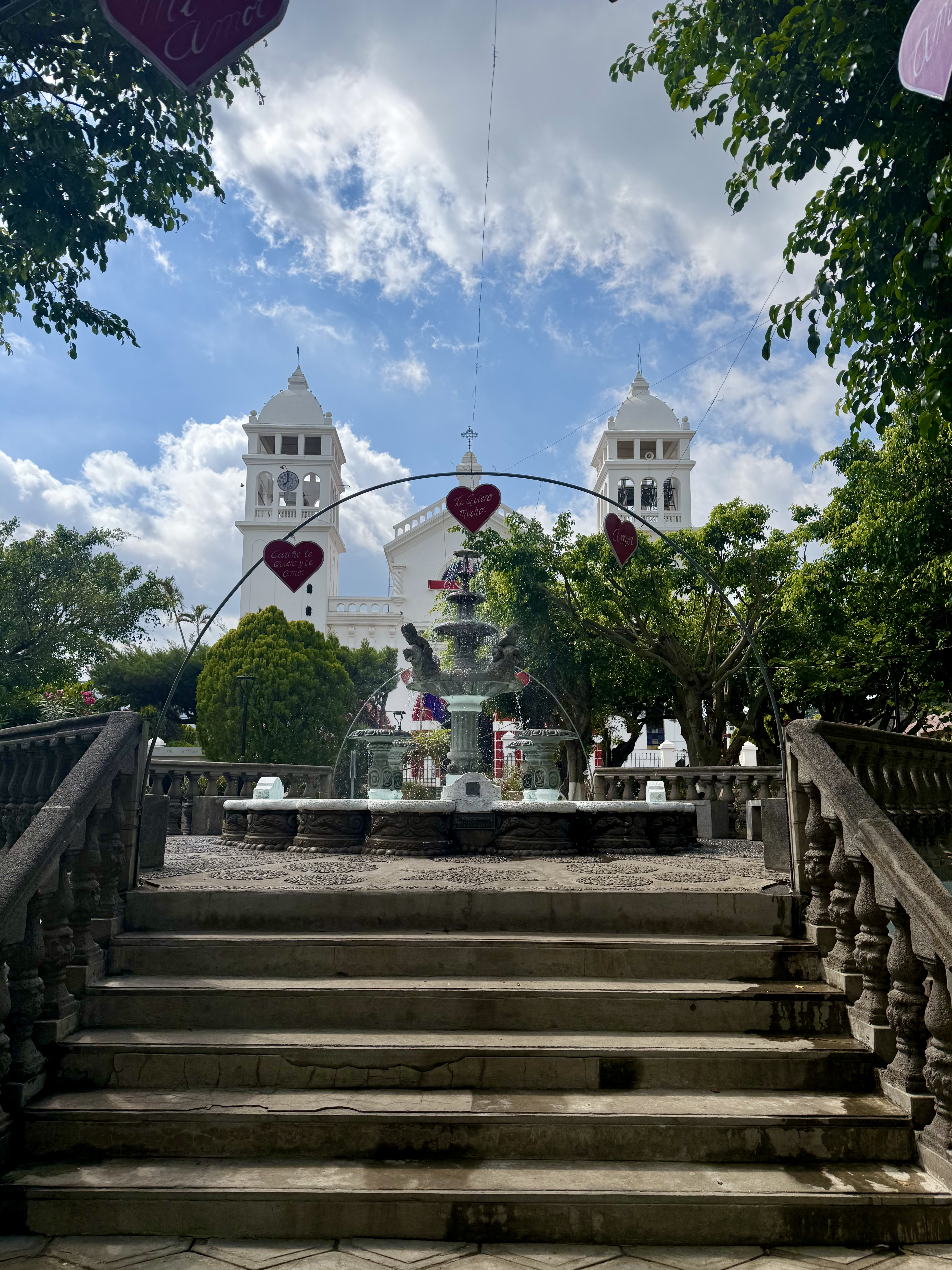
The excursion had a couple of unexpected benefits. On the way, we needed to pick up another passenger in Santa Ana, which meant that we had to drive all the way there and back to Juayua, but this at least gave me the opportunity to get a couple of photos of the Church and Theater in that city, which I otherwise would have missed. We also stopped in Juayua town for lunch at the outdoor stall market, where most of the very extensive meals were $6. The center square of the town was filled with remaining valentine artifacts. The church is called the “Templo del Señor de Juayua and was constructed in 1957. Juayua is one of the towns on the Ruta de las Flores, which is one of the main tourist attractions in the country, and another one I would not otherwise have been able to see.
The last day, Paul, Rebecca- Paul’s wife who had joined us, and I went on a private excursion first to the “Pompeii of the Americas” Joya de Cerén, then to Cerro Verde, the volcano, and finally to Lago Coatepeque.
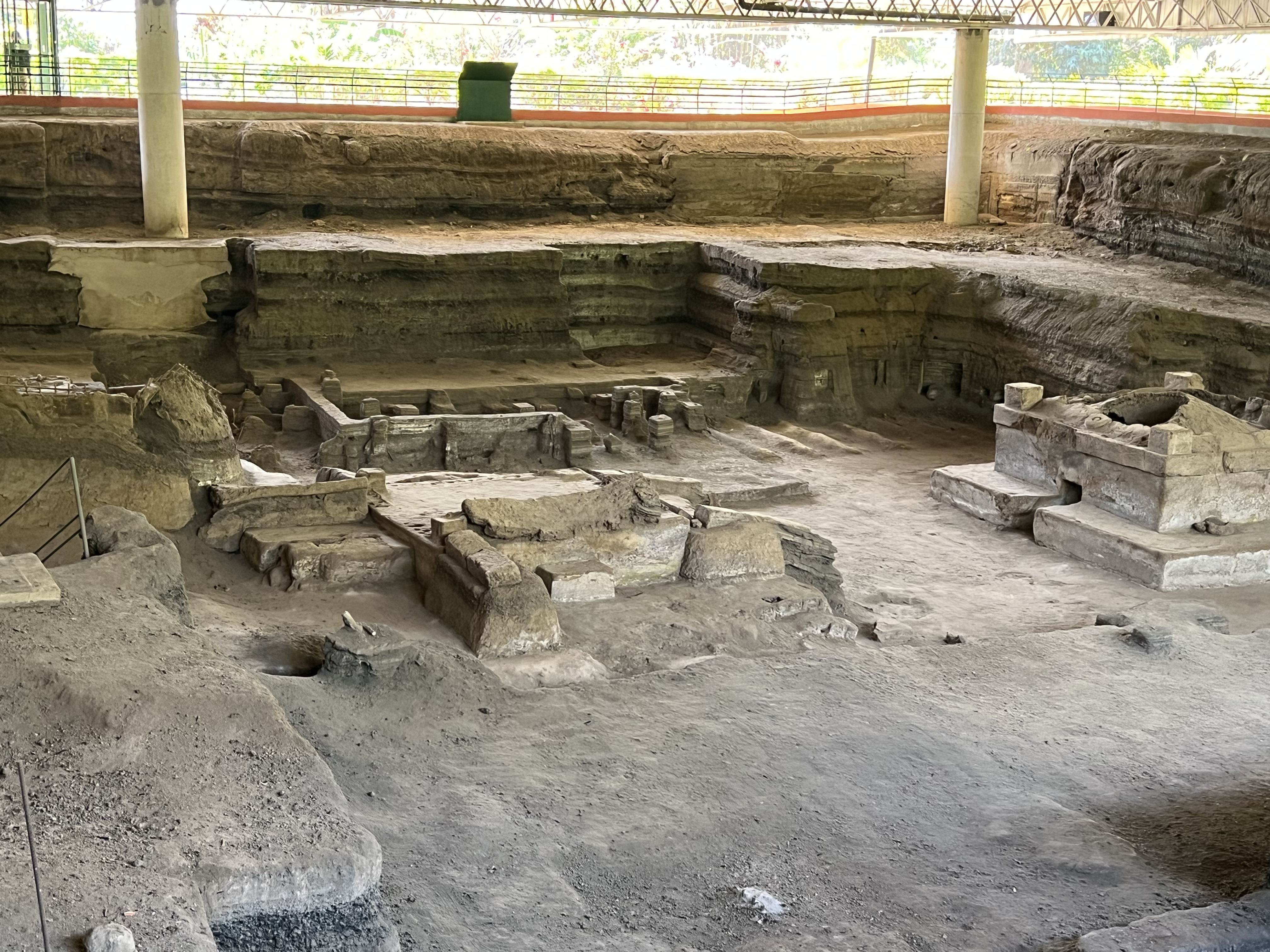
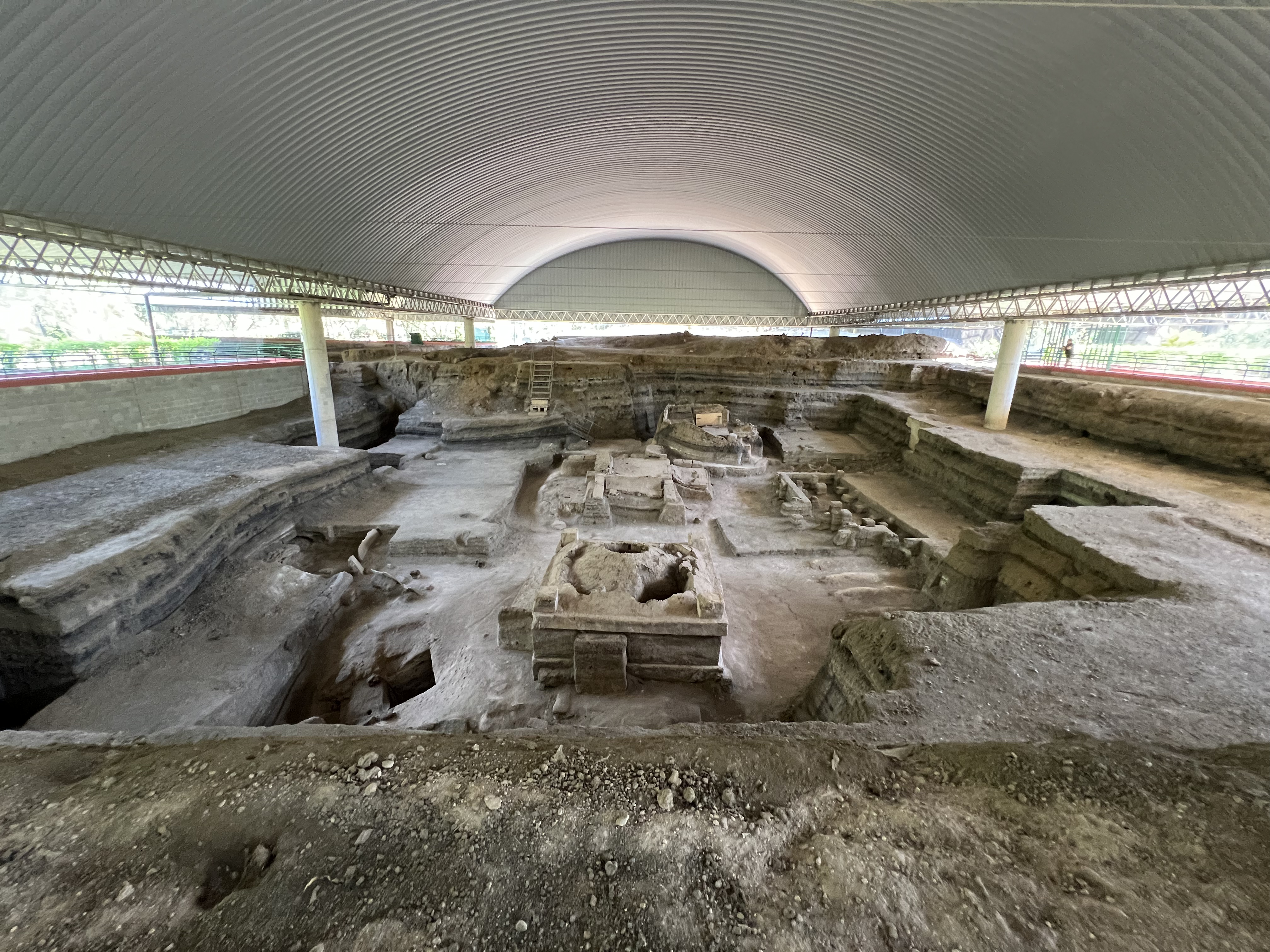
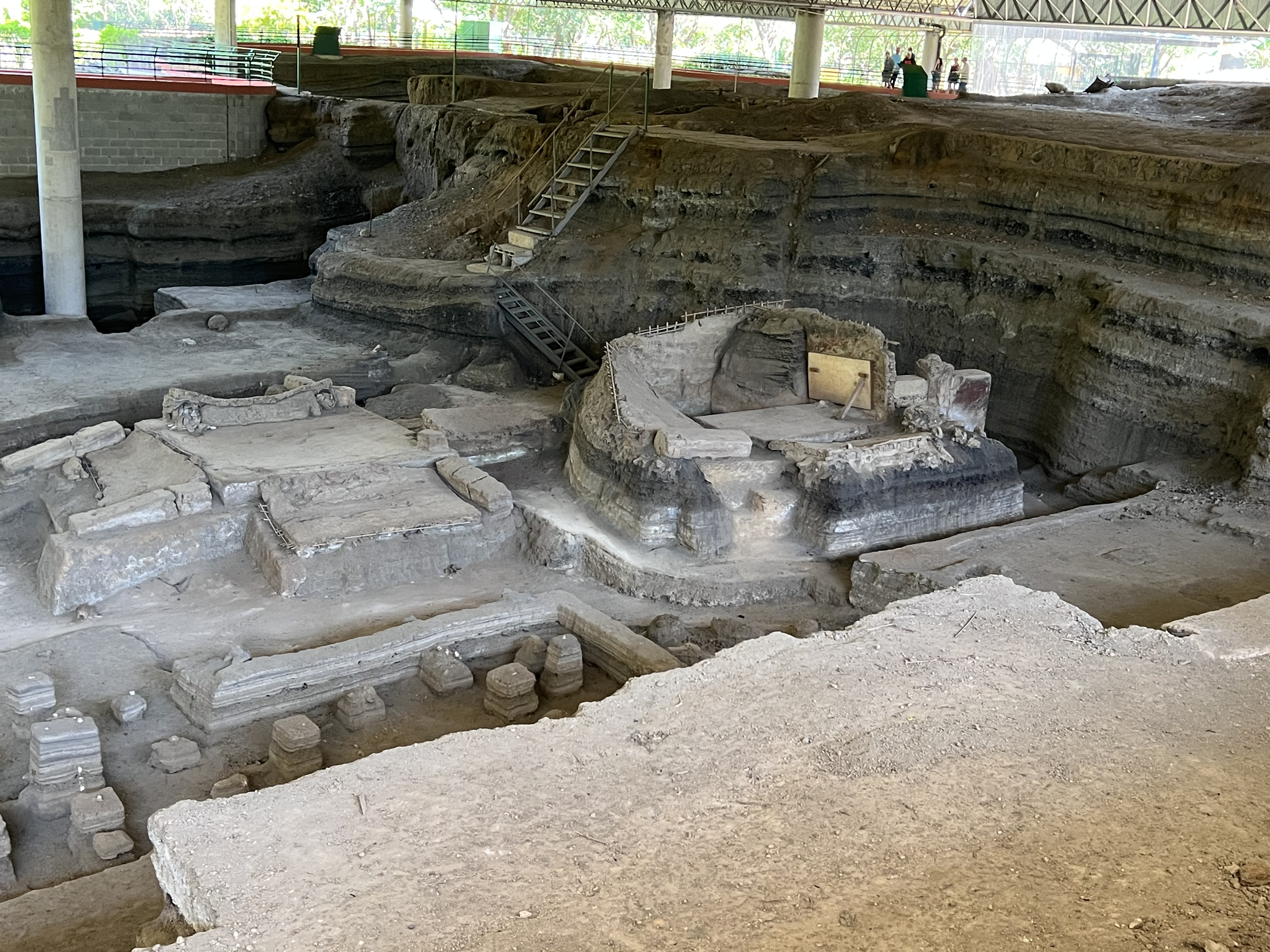
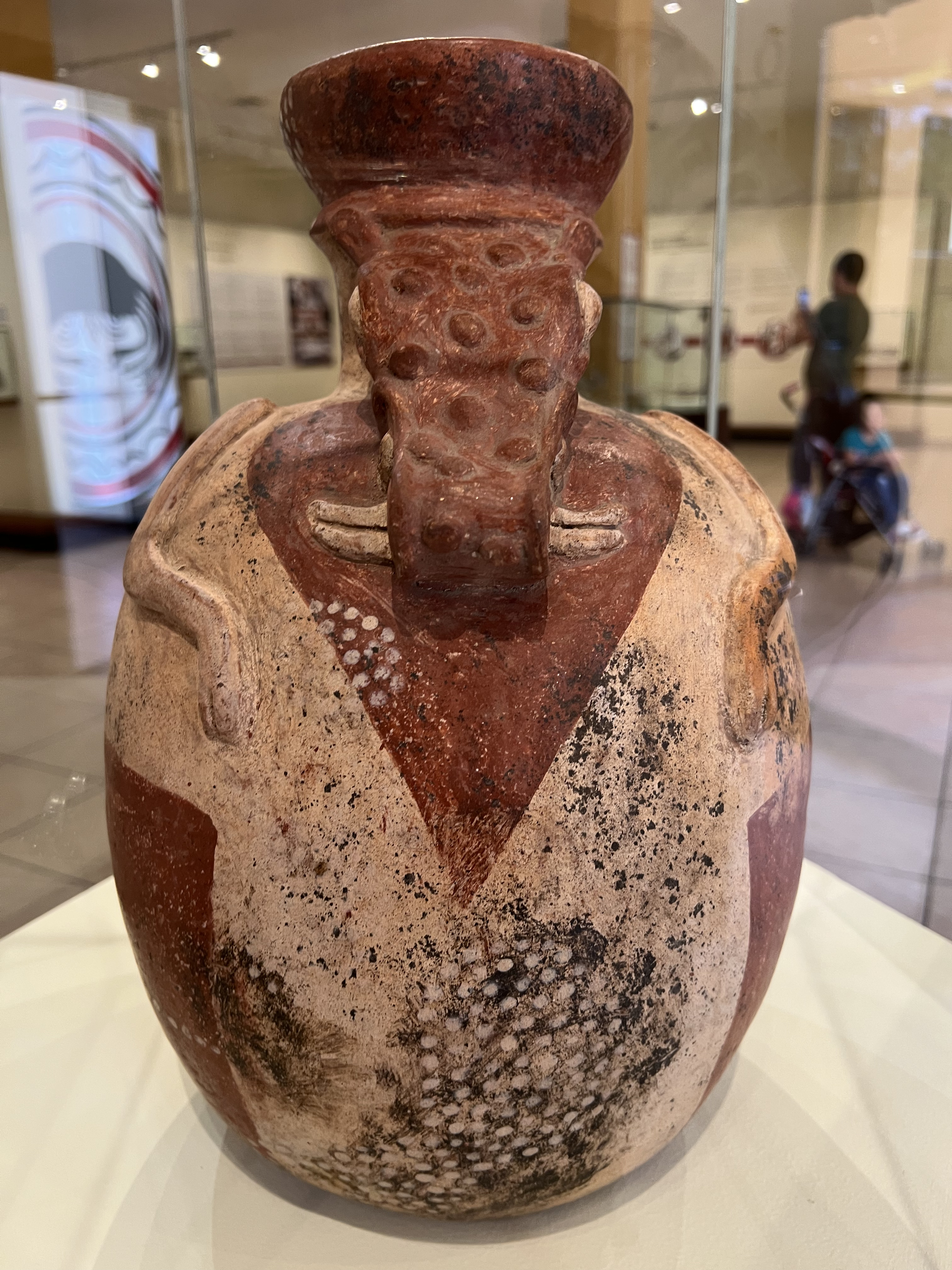
Joya de Cerén is the only UNESCO site in El Salvador. The site is fairly small, it takes about an hour to view the entire site and museum. It houses the remains of a few residential structures from the Classical Mayan Period, ca. 650 AD, that were covered in 14 layers of volcanic ash. While only a couple of family sites have been uncovered, they demonstrate that each family had at least three buildings: a kitchen, a storage unit and a bedroom. No evidence of a lavatory has been found, but there was a communal sauna, which was probably used for purification and health reasons. A community structure with two rooms, as well as a shaman’s house and ritual sanctuary have also been uncovered. The on-site museum houses the ancient Mayan ceramic works that were found here as well as in neighboring areas. This was a fascinating site, very different from the other Mayan ruins that I have seen. There were no pyramids, but rather local houses and a community center. To date no human remains have been found, which seems to indicate that the people were warned of the pending disaster in time to get away, probably by an earthquake. It was also remarkable to see how archeologists had dug through the 14 layers of ash to find the structures. The site was located by accident. When the government wanted to build a silo to store grain, the backhoe toppled the roof on one of the bedrooms. The work on the silo stopped and the archeologists took over.
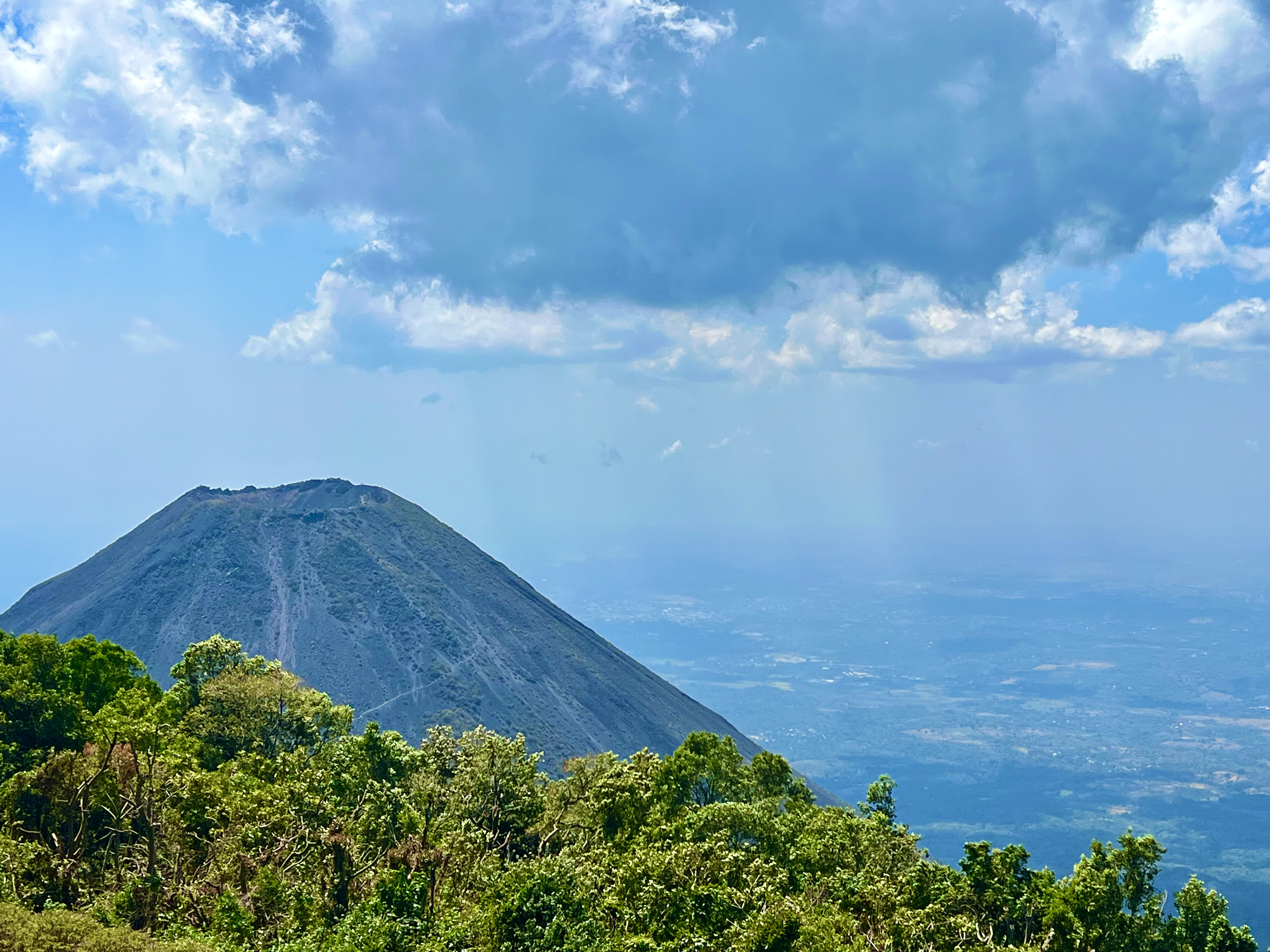
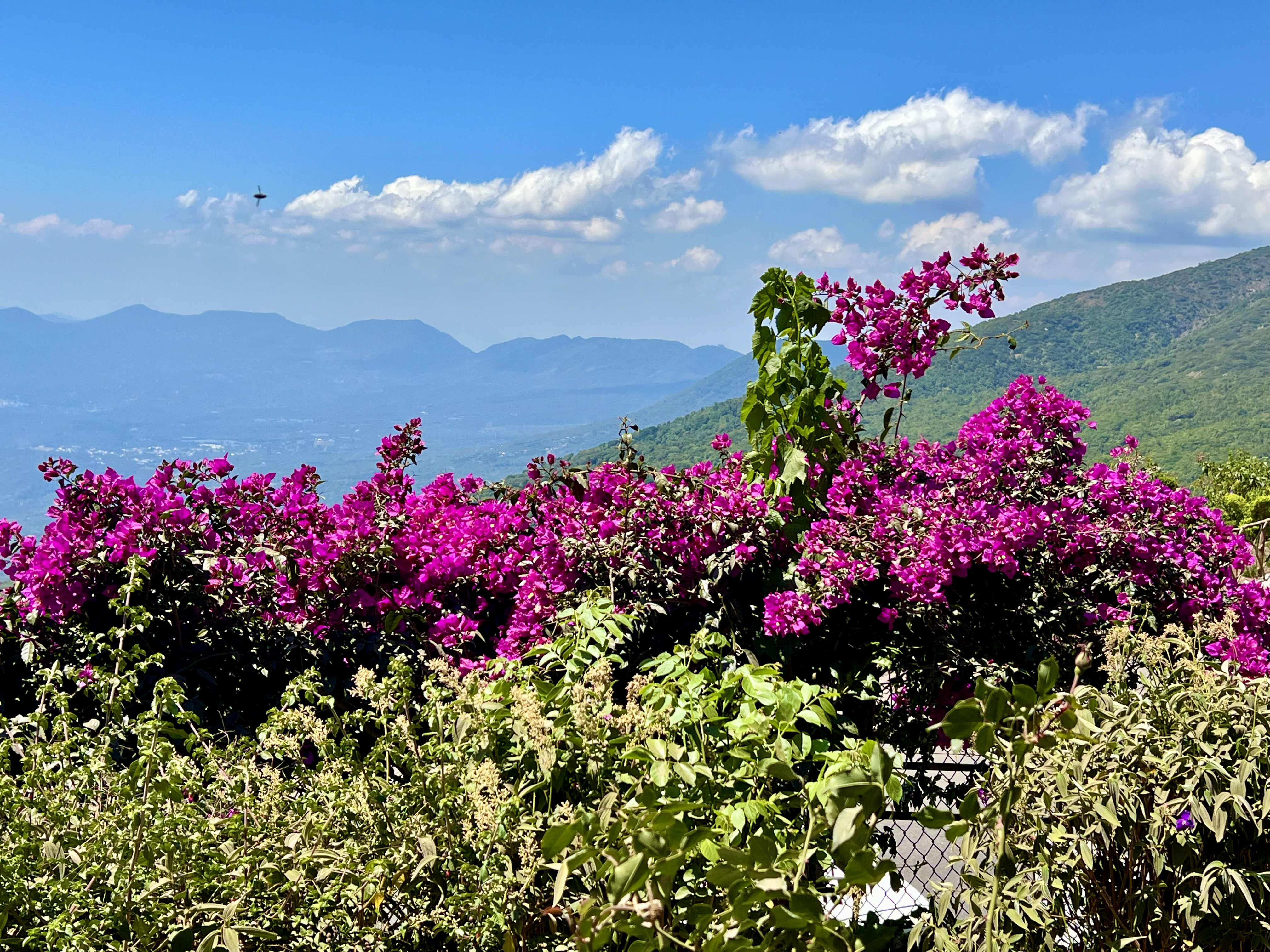
There is a road that goes all the way up to Cerro Verde, a viewpoint on the San Salvador volcano, from where one looks across the entire valley, surrounded by numerous active and inactive volcanoes. The Volcan de Izalco is off to the left and is impressive with its open cone at the summit. This volcano was one of the longest active volcanoes ever recorded, it spewed flames for 196 years, culminating in 1966, which could be seen from the ocean. Sailors called it the Pacific Lighthouse, because when they could see it, they knew they were close to port. On the right side is Santa Ana volcano, which is one of the most popular ones to hike. There is a maze lined with orchids above the parking lot, but unfortunately none were in bloom when I was there.
From the volcano, we headed down to Lake Coatepeque, which is named for its serpent shape. The lake is supposed to also be a crater from an ancient volcano. It is quite large and is a haven for water sports. As it was very windy there was only one sailboat out on the water, but lots of jet skiers and a few intrepid swimmers. We had lunch by the lake being blasted with very loud El Salvadorian pop music, that both young and old were singing along with.
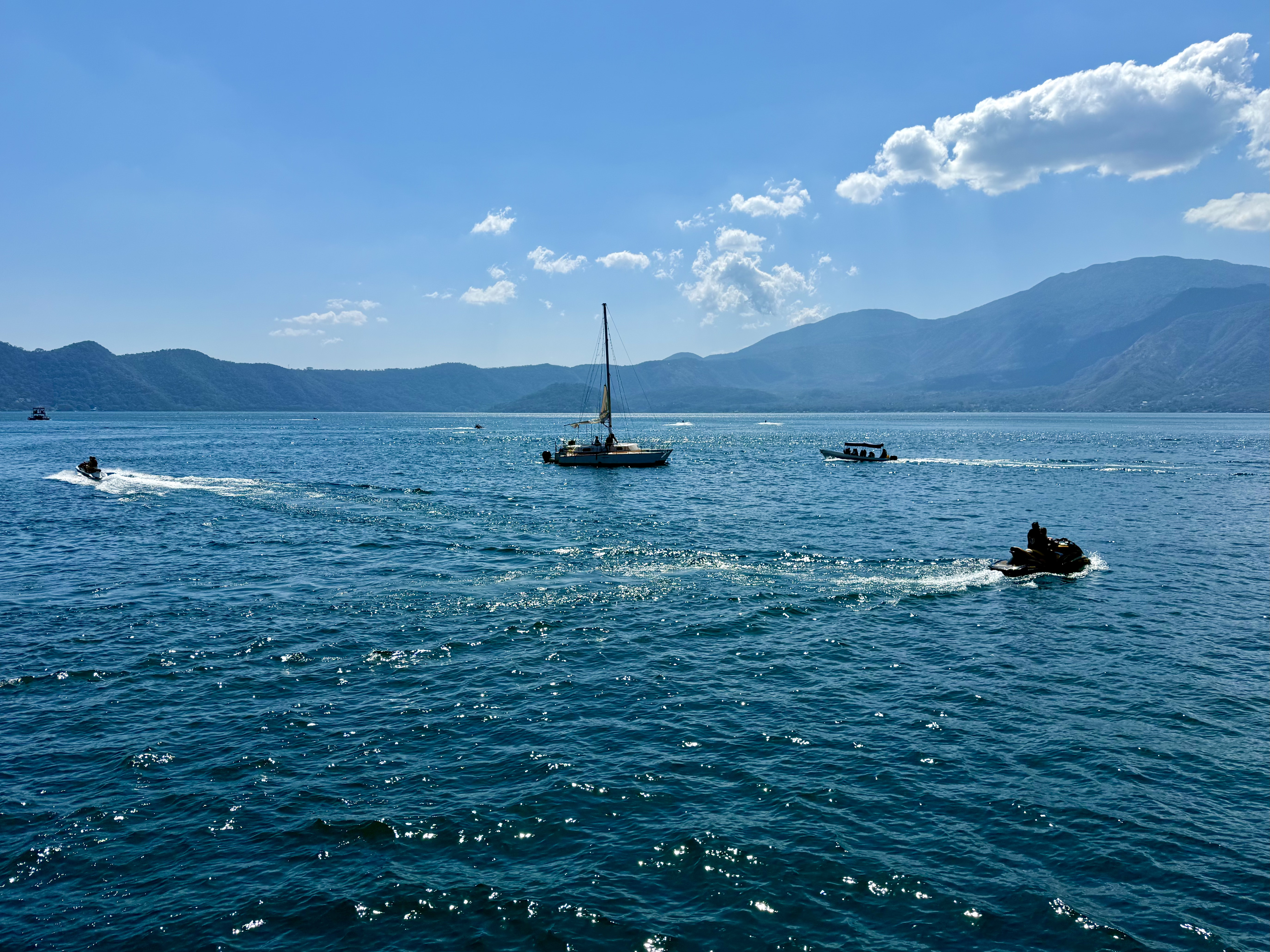
After lunch, I walked down the road around the lake a bit, it isn’t possible to walk along the shoreline because it is all private property, past a few shop stalls selling junk food, to where a new black box hotel on the hill above was. I needed to return from there to meet the others on time for the trip back to San Salvador, but while I was walking a gentleman in a large car with a child in the backseat, stopped and asked me if I needed a lift or help. I found that to be very kind and typical of the Salvadorians I had met during my brief stay in their country.
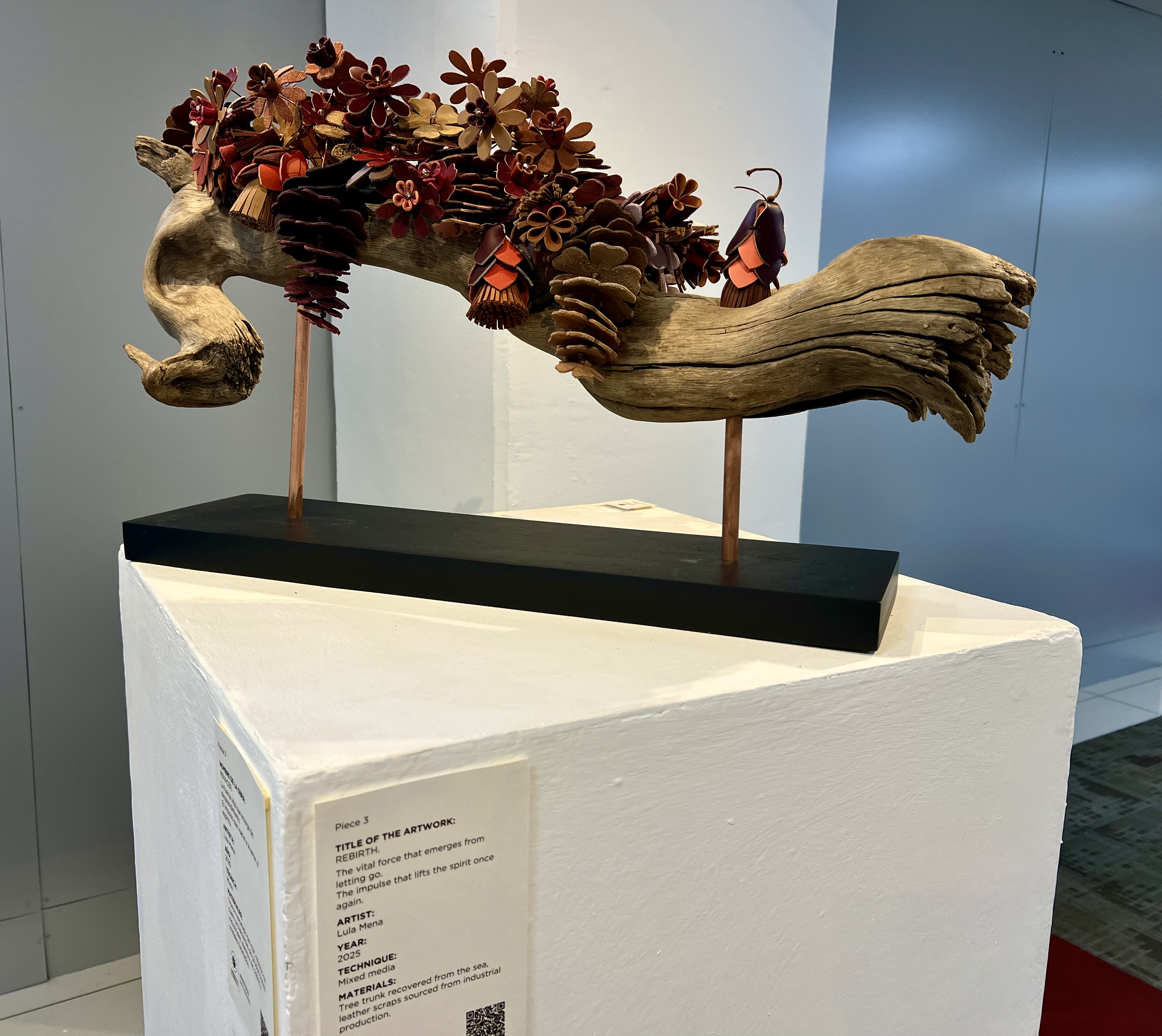
At the airport there was gallery displaying work by a local artist who uses driftwood as her main medium. The pieces and their messages were inspiring and an indication of how the country is evolving. It was a good few days and a wonderful introduction to the people and country of El Salvador.
 omegoodyssey