A few days in the Cordillera Blanca
I was unsure whether or not to chance the weather in the Cordillera Blanca as it is the rainy season, and I don’t like hiking when I’m getting wet. In the end, I decided to try my luck and am very glad I did. I booked a 5 day/5night package through Mony Tours, a company that I found through youtube videos on the sites I wanted to see. It is geared towards Peruvian tourists and not foreigners, which is what I wanted as the guides just spoke Spanish. Some of them incredibly rapidly, especially Hugo on the Chavin de Huantar tour! On the whole, the guides were good, Hugo was excellent, and the drivers on the windy steep gravel roads amazing. Once again, I was very glad someone else was behind the wheel. The mountains in the Cordillera are incredibly steep, but Mony Tours and most of the other innumerable tour agencies in Huaraz, the capital of Ancash and the center for trekking/hiking in the region, offer options for shorter more moderate hikes. Those are the ones I did as I didn’t want to chance altitude sickness or a twisted ankle while boulder hopping to either Laguna Parón or Laguna 69.
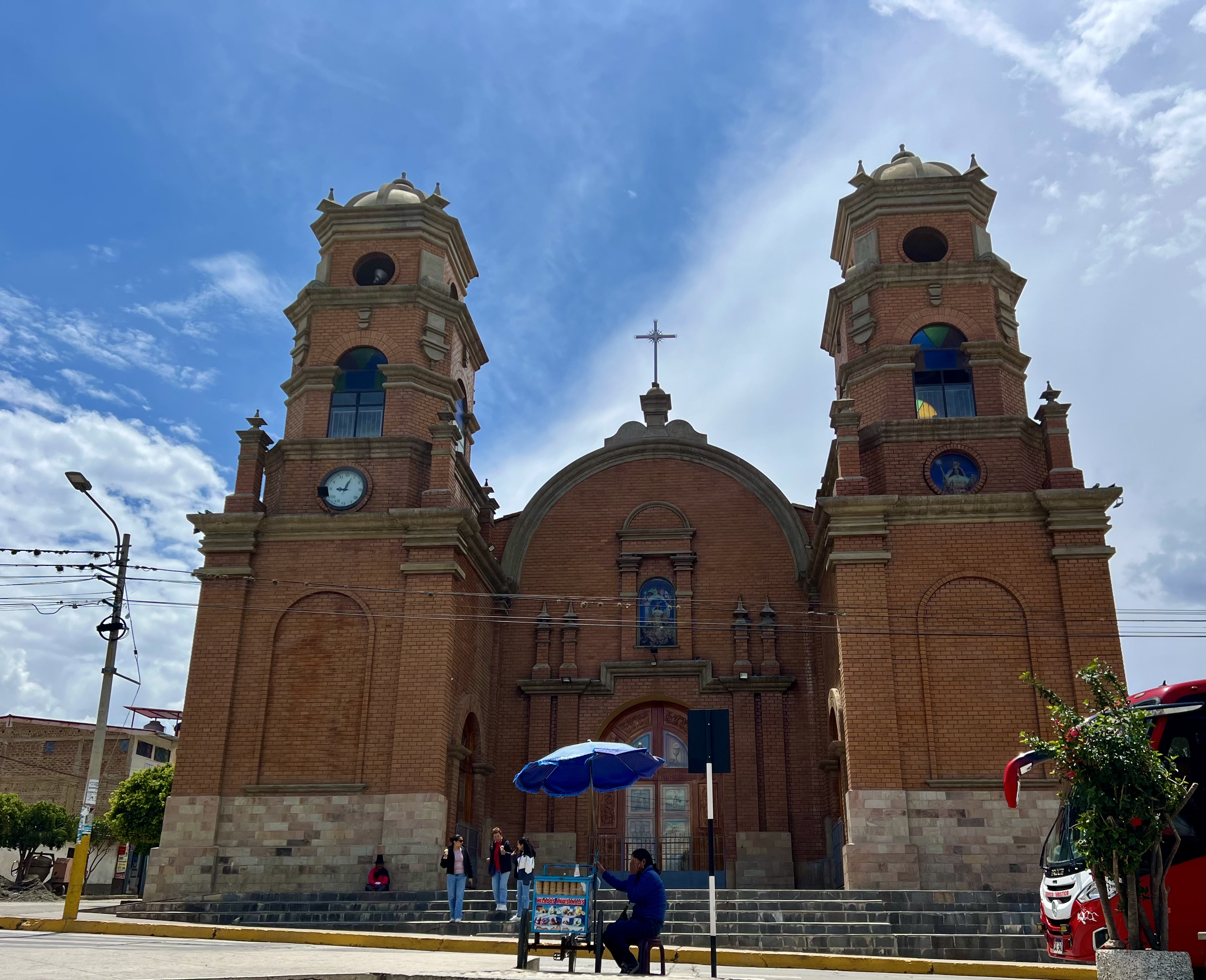
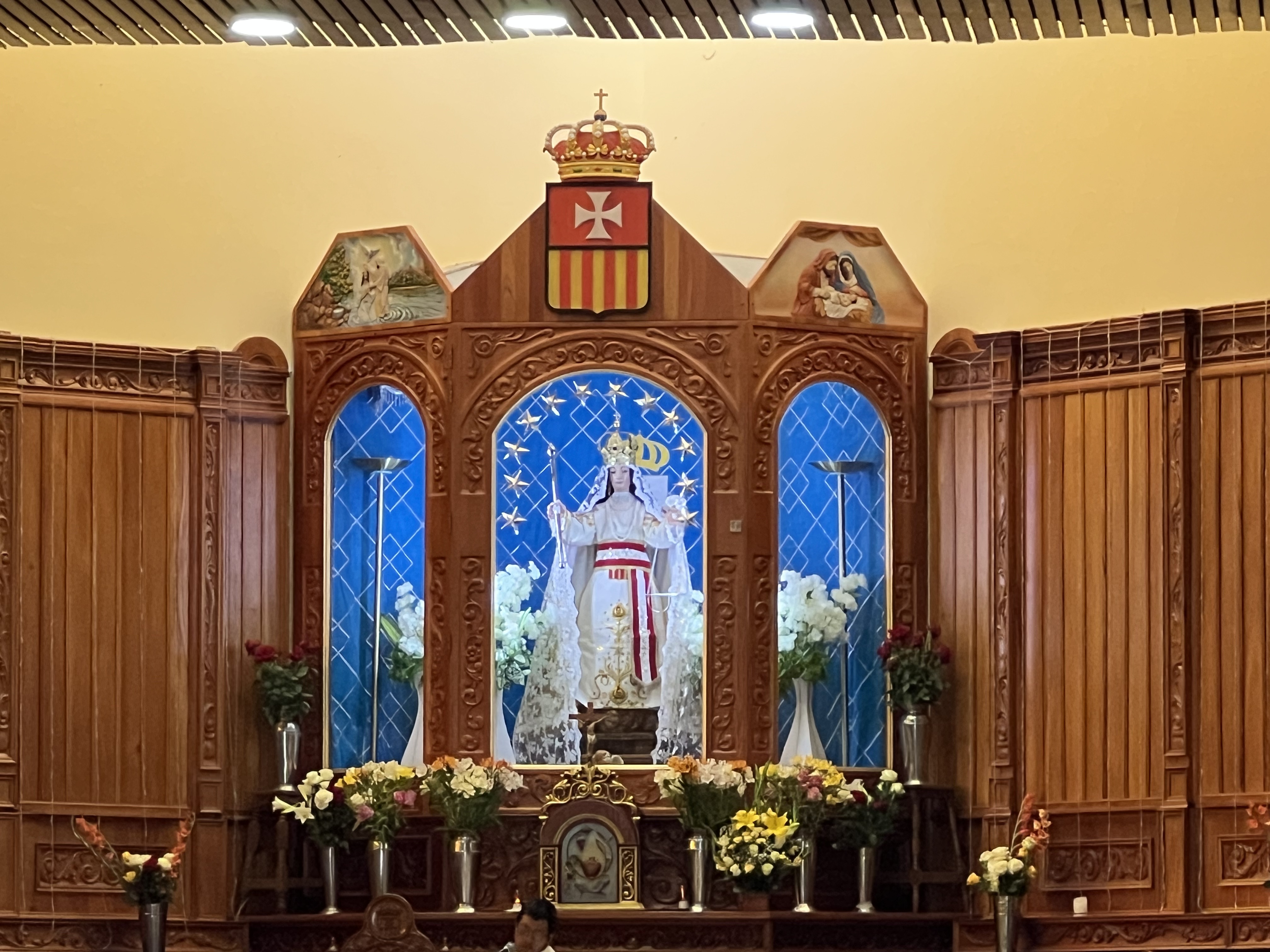
The first day in the package was a general acclimatizing day, we only went up to about 3,850 m, and that was mostly with the van. From Huaraz we first stopped at Carhuaz, a town about an hour north of Huaraz which is famous for their ice cream and for the annual Santa Semana procession of the Virgin of Mercedes or Mama Mece. The church is relatively new as it was destroyed by a dynamite attack in 2004, but the statue of the Virgin has been part of the community for a long time. I wasn’t able to find out much about her origin, but she is considered to be a miracle working figure.
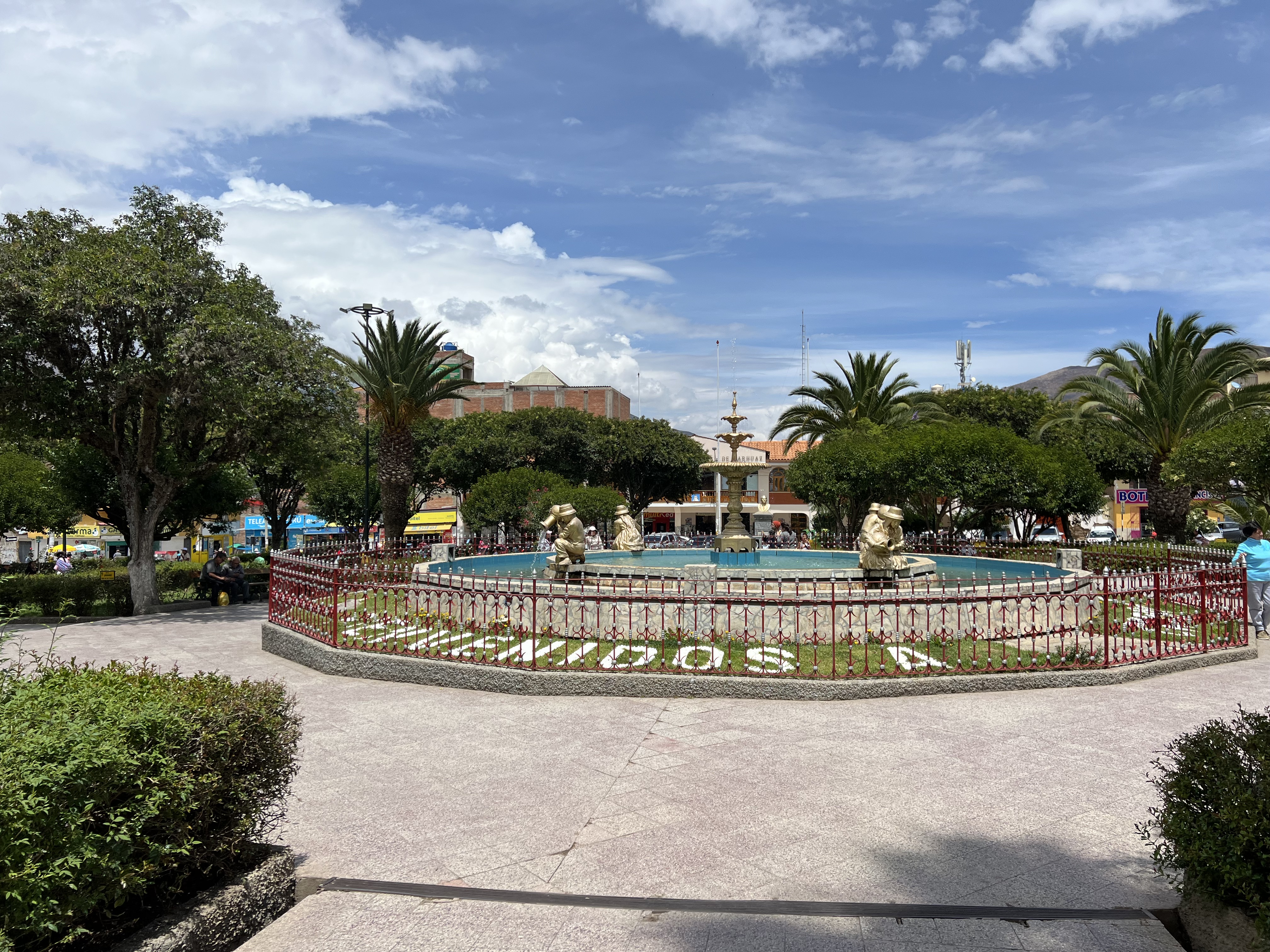
Carhuaz lies in the middle of the Callejón de Huaylas, the valley that is fed by the Santa River as well as the glaciers from the Cordillera Blanca and Cordilla Negra, the two mountain ranges on either side of the valley. The Blanca range is named for the snow-white glaciers, while the Negra doesn’t get much snow and the summits stay bare. The Blanca glaciers are, however, rapidly receding, so how long the name will apply is questionable. As elsewhere, the glaciers supply the waters for the rivers which provide for agriculture and human habitation. Once the glaciers are gone, the water supply will inevitably be dramatically diminished.
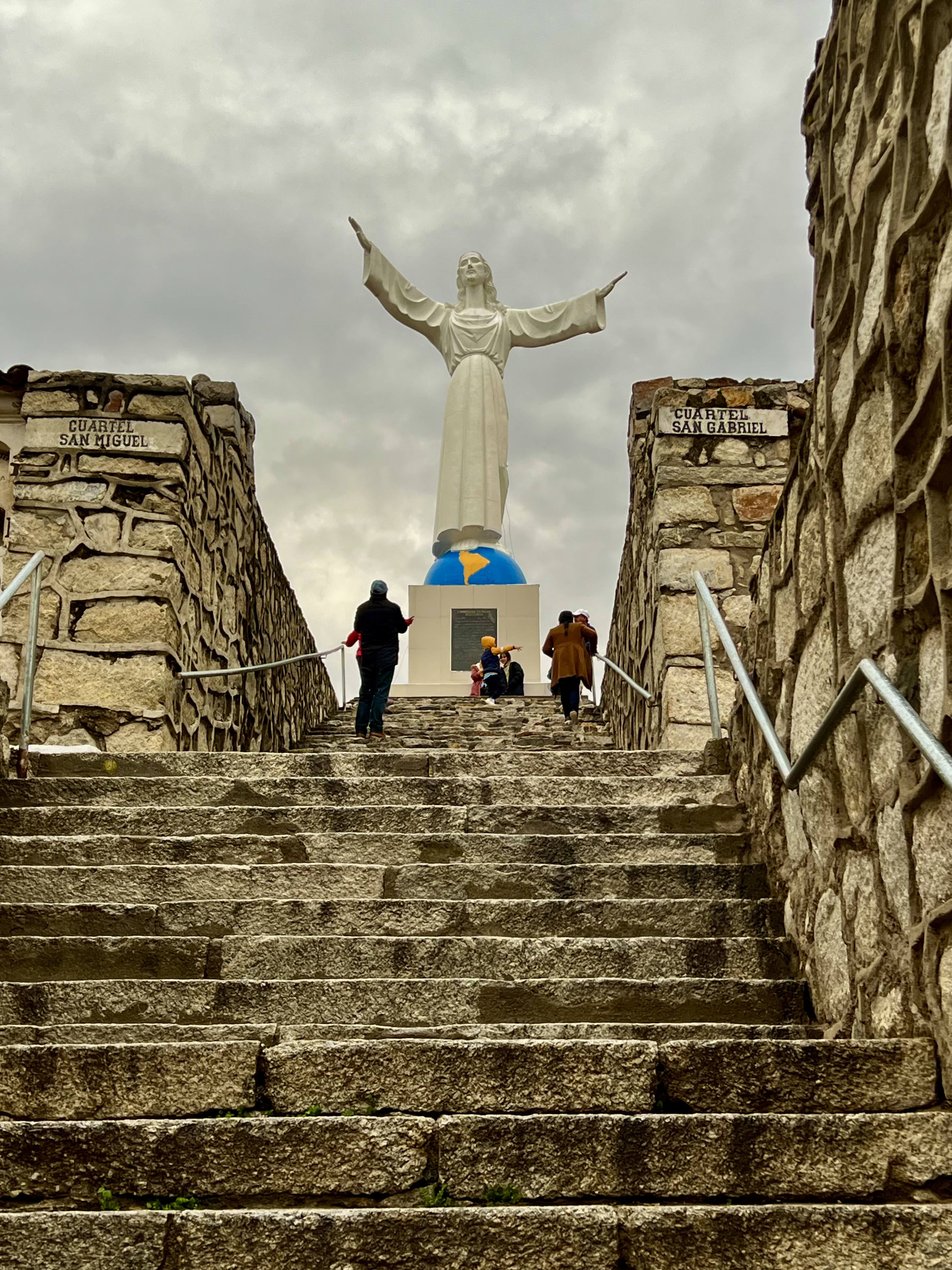
Pachamama, or Mother Nature, protects, sustains and destroys in the mountains as was visible at our next stop. From Carhuaz, we travelled to Yungay, a town that was wiped away by an earthquake and the resulting avalanche and mud slides in May 1970. The area we walked on was the dirt that covered the former city. There is a memorial shrine with an arms outstretched Jesus at the top of a series of platforms which are used as cemetery plots.

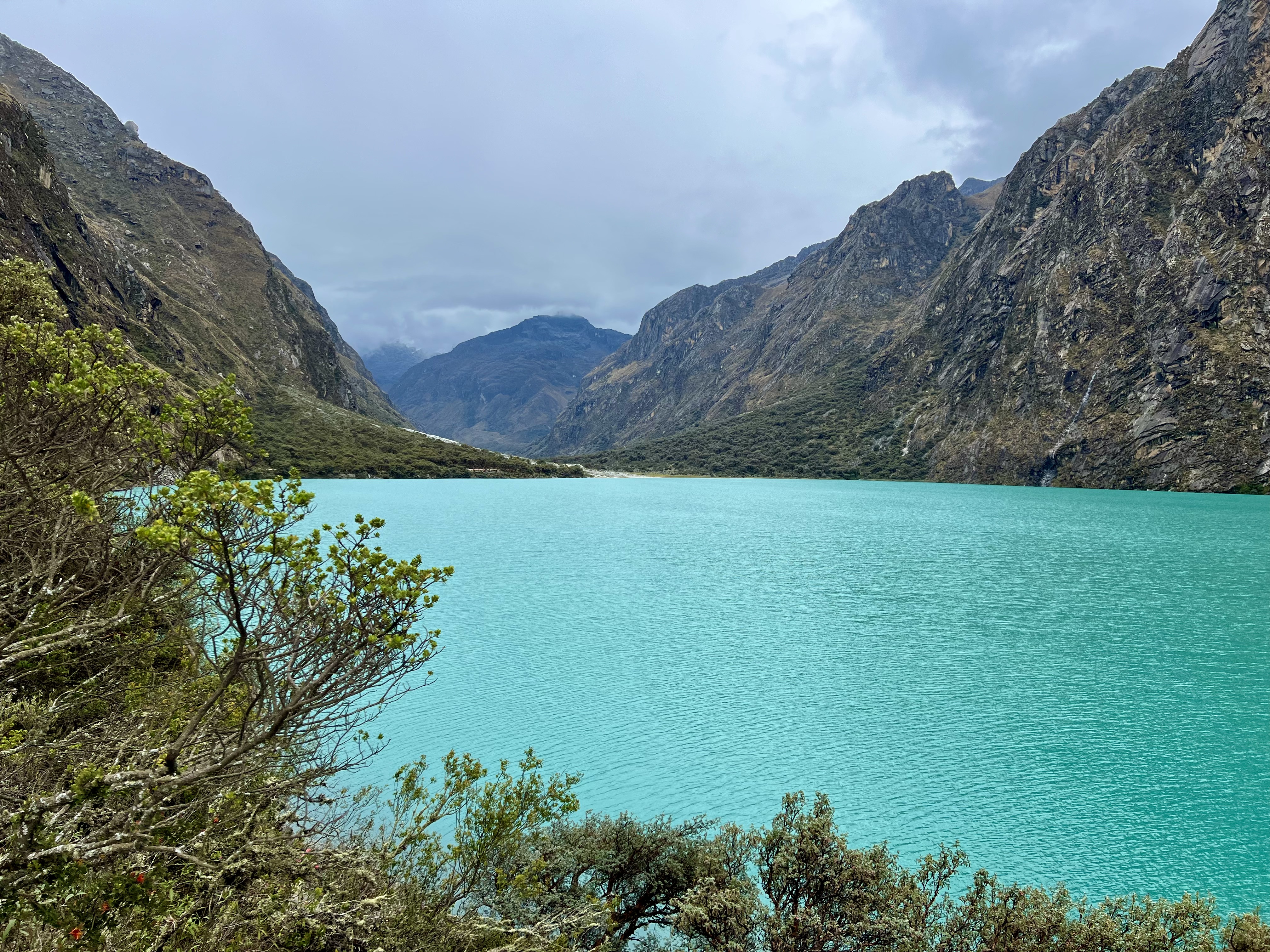
After leaving Yungay, we finally headed up into the mountains to Laguna LLanganuco. I have to say this was a bit of a disappointment as far as walking goes as the path didn’t go very far around the lake. When the weather is warmer, people rent boats and paddle around for a few minutes. Lake LLanganuco is located in Huascarán National Park, the oldest and largest in Peru. The park is home to a number of animals that I unfortunately did not see, including the Andean mountain bear, pumas and Andean foxes. There are also 33 archeological sites within the designated preserve. The entrance fee for foreigners is Soles 30 and is good for 10 days, which was good as I kept going in and out of the Park.


After the lake, the tour continued to an artisan’s shop in Taricá to watch how they make their pottery. The tour was an interesting introduction to the region, but didn’t offer much opportunity to hike or walk.
The following day was the tour to Chavin de Huantar, which was one of the main reasons I wanted to come to Huaraz. The Chavin culture was the leading civilization in the Americas from about 1200BC to 200BC, and Chavin de Huantar was its main center. Much of the Andean belief system stems from this ancient culture whose influence stretched from current day Ecuador to Bolivia. The Chavin culture bridged the Amazonian regions with the Andes and crossed over to the Pacific. The center was located on a natural pathway across the eco-systems, which led to spiritual influences from the coast to the Amazon. The deities that were worshipped included those represented by the serpent, eagle, owl, and puma. The former temple entrance has (its been reconstructed) a white and black side, i.e., the opposites of the Andean spiritual beliefs.
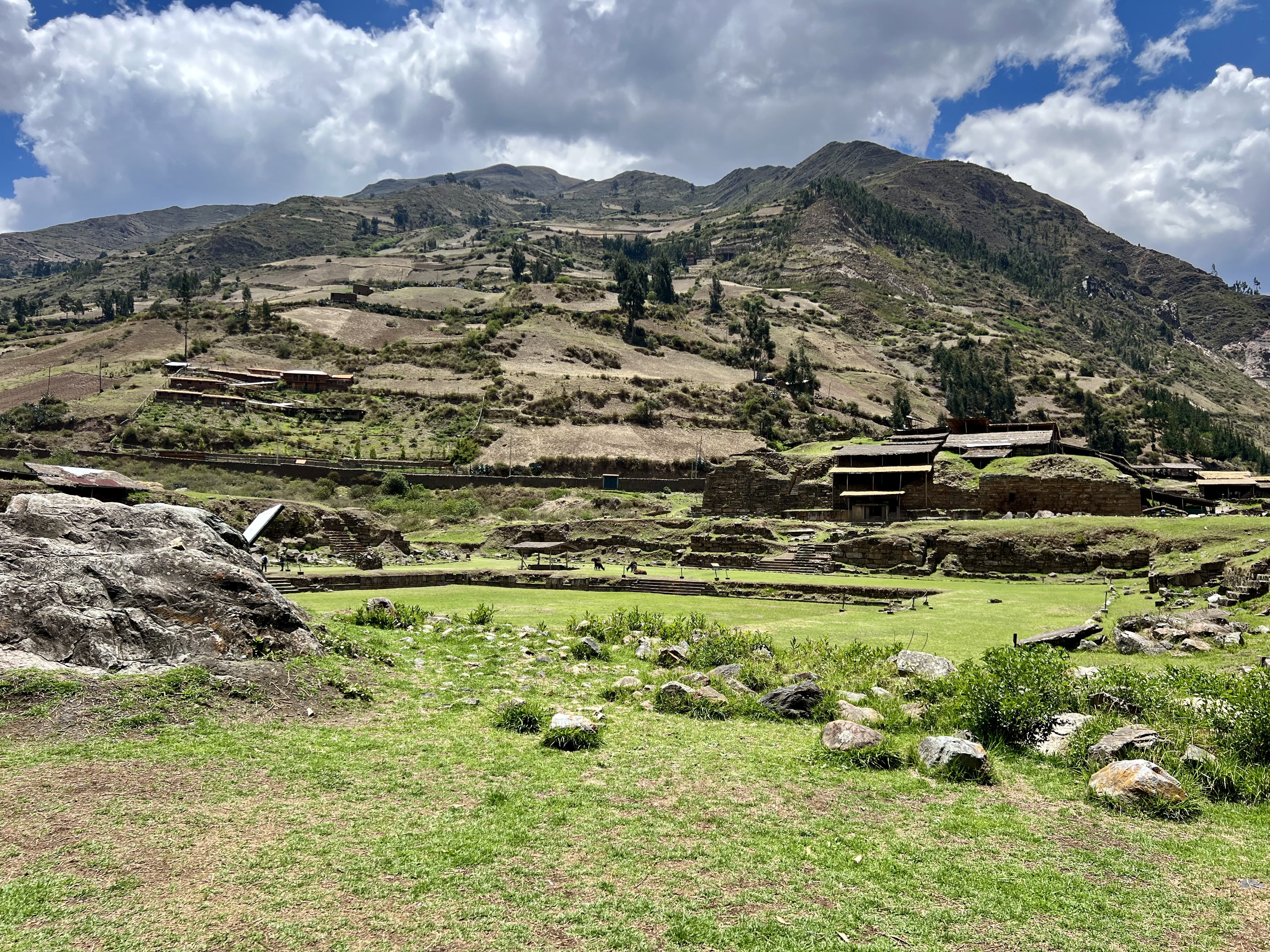
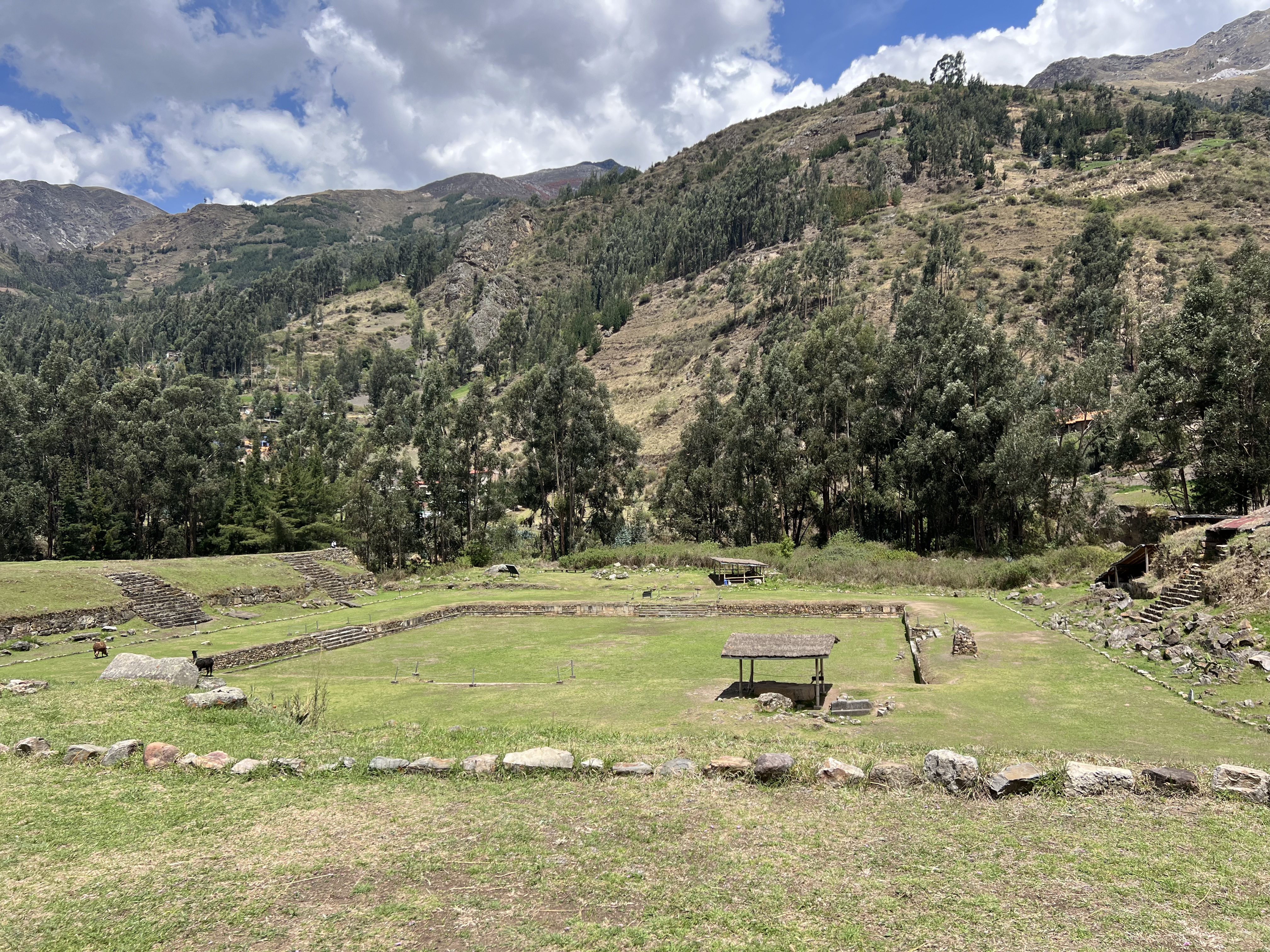
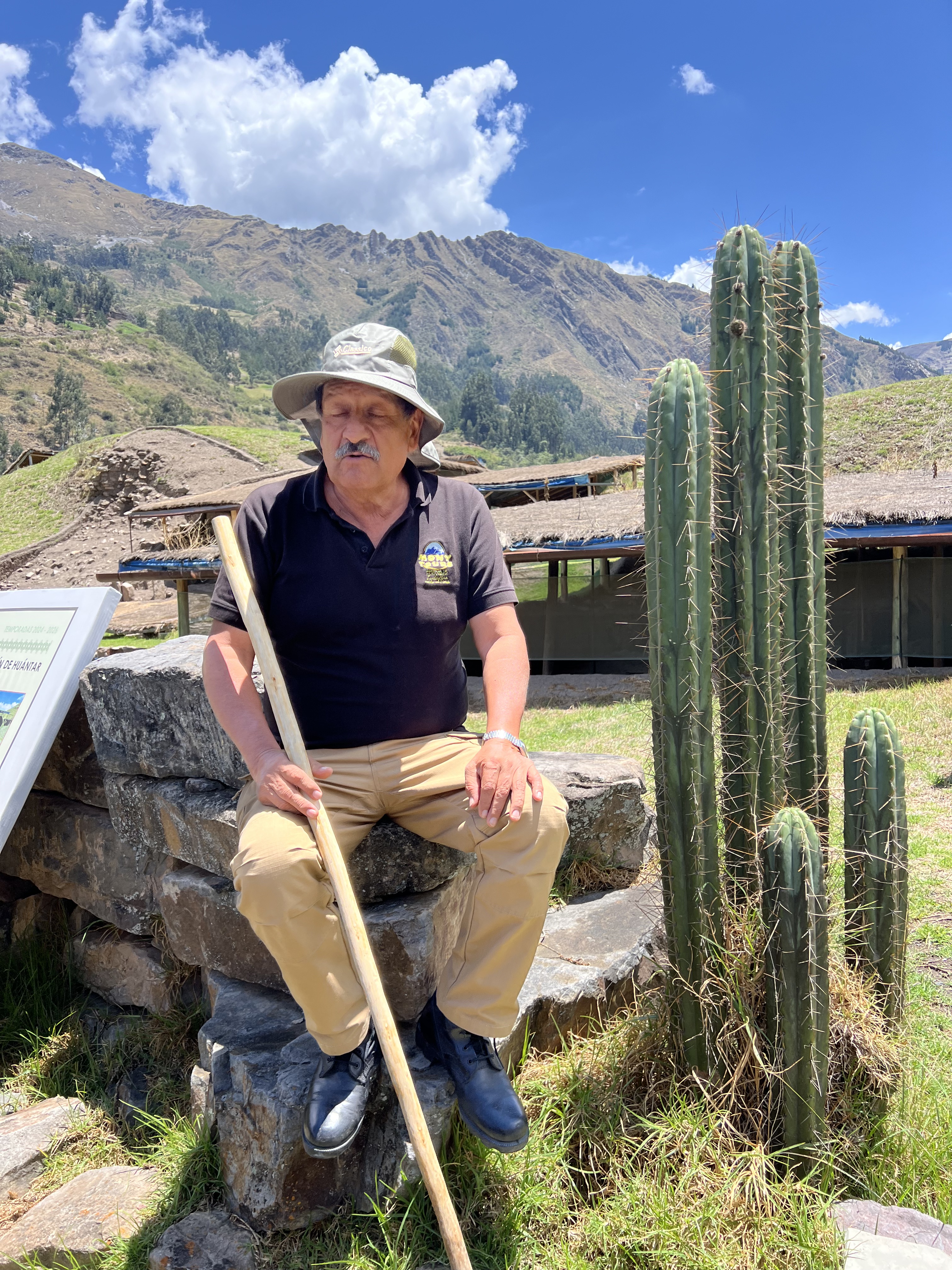
This site was fascinating. According to Hugo (in his ratatat Spanish), the site was destroyed by an earthquake in 200 BC, which is why the culture finally died out and the Huari (the same from Pikillacta) took over. The center was the religious hub with both male and female shaman, who used soaked and mashed San Pedro spines to connect with the spirits. The buildings were located around streams whose running waters created a sound system that heightened the visual effects from the psychedelic cactus as well as created a spiritual vibration that resonated throughout the magical-religious center. On the outside walls of one of the larger temples, keystones with faces were placed in mathematically precise distances from one another. The faces show the progression of the human shaman morphing into an animal or zoomorphic deity as part of the shamanic ritual to connect with the deity and become it. Underneath the main temple are a series of galleries, with what could be meditation rooms. The highlight of the galleries is the Lanzon, a large carved stele with figures of various deities. The Lanzon wasn’t allowed to be photographed. It is the only large stele of its kind in its original place in Peru.

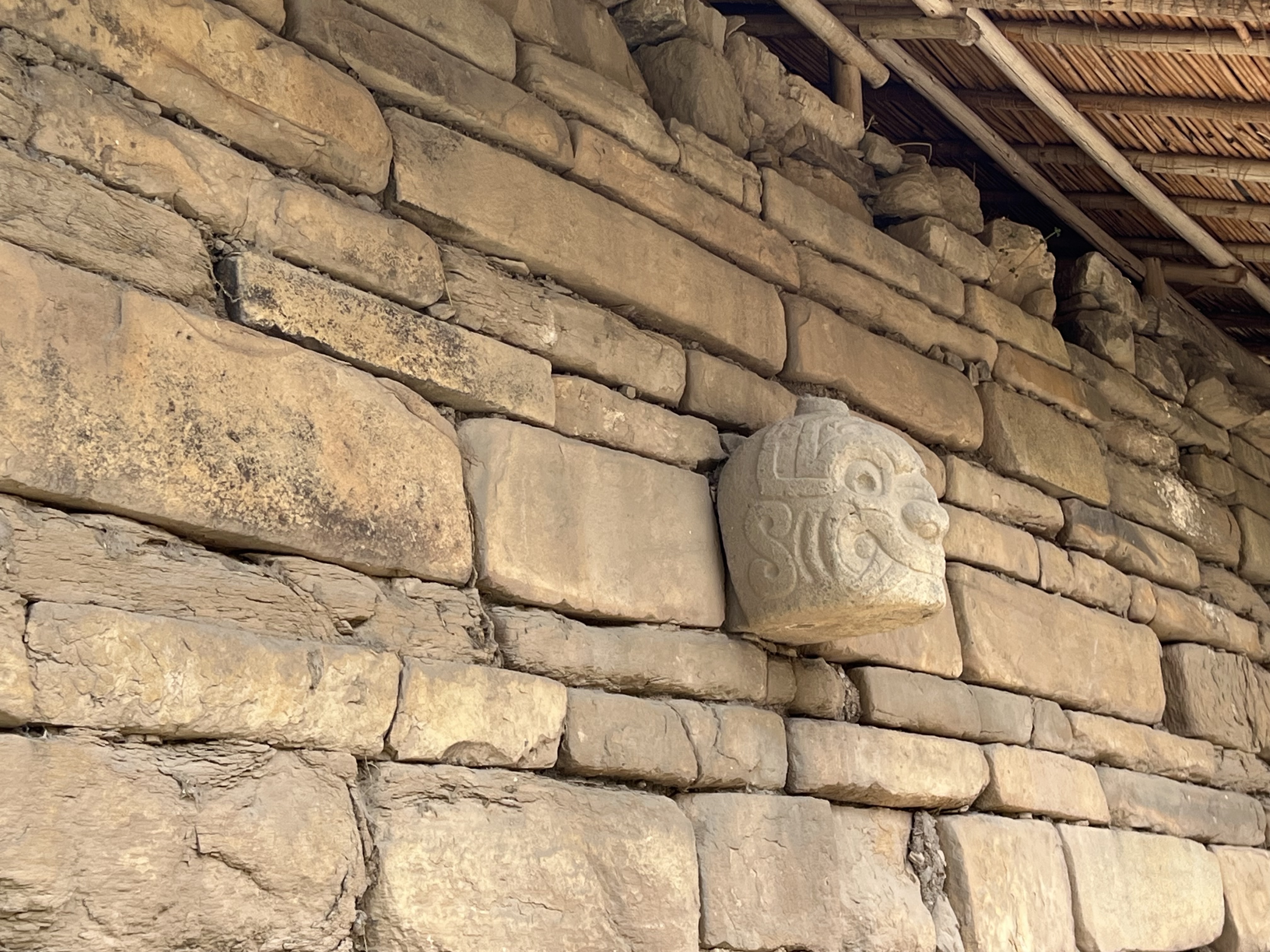
There is a museum in the town, which has more of the keystone figures as only one remains in its original place. It also has informative plaques and a large pottery section. Near the entrance, they have a special exhibit section and this time it was on influential women from each district of Peru. I was intrigued.
On the way to Chavin, we stopped at a lake by the road, the Laguna Querococha.
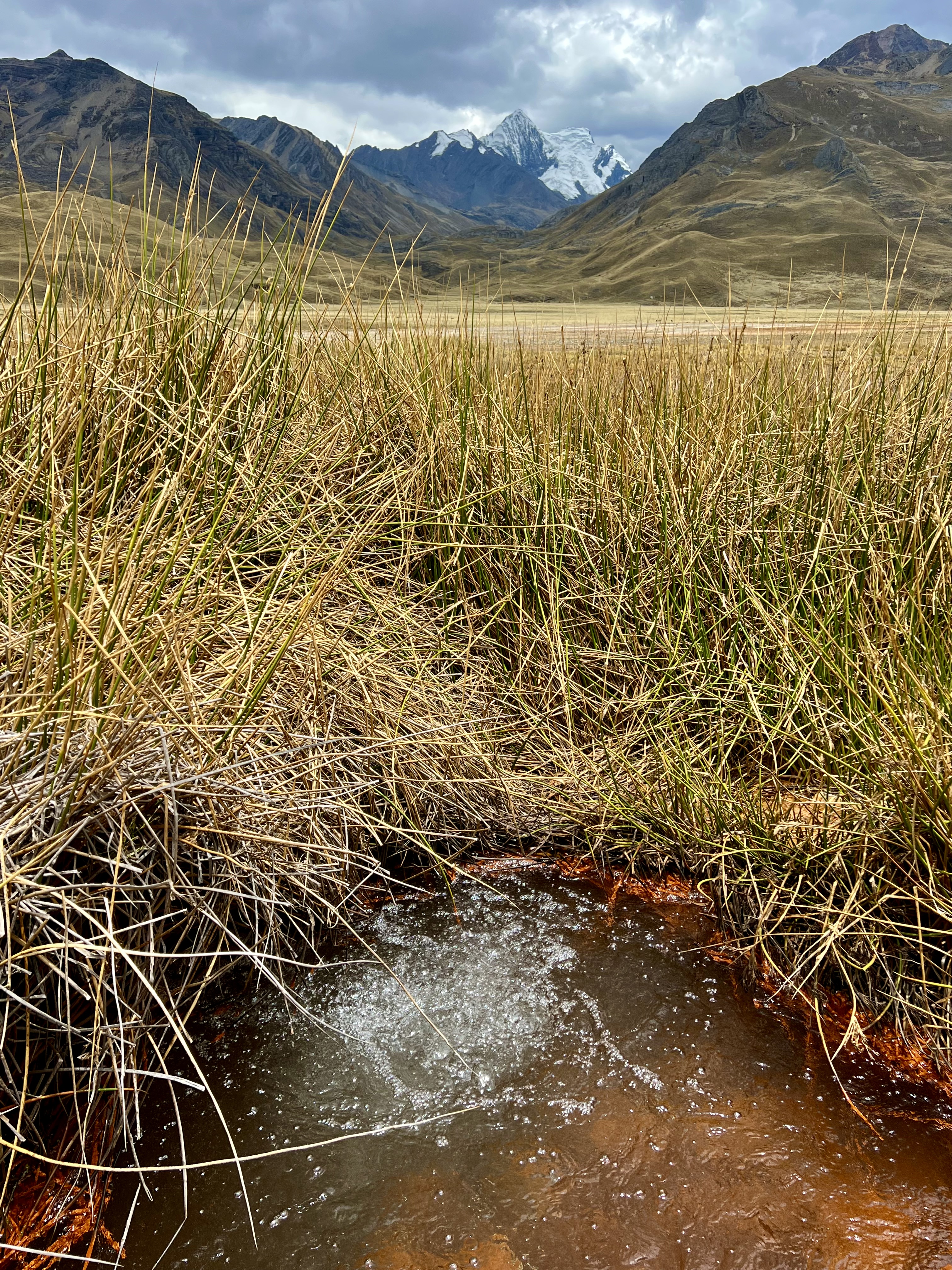
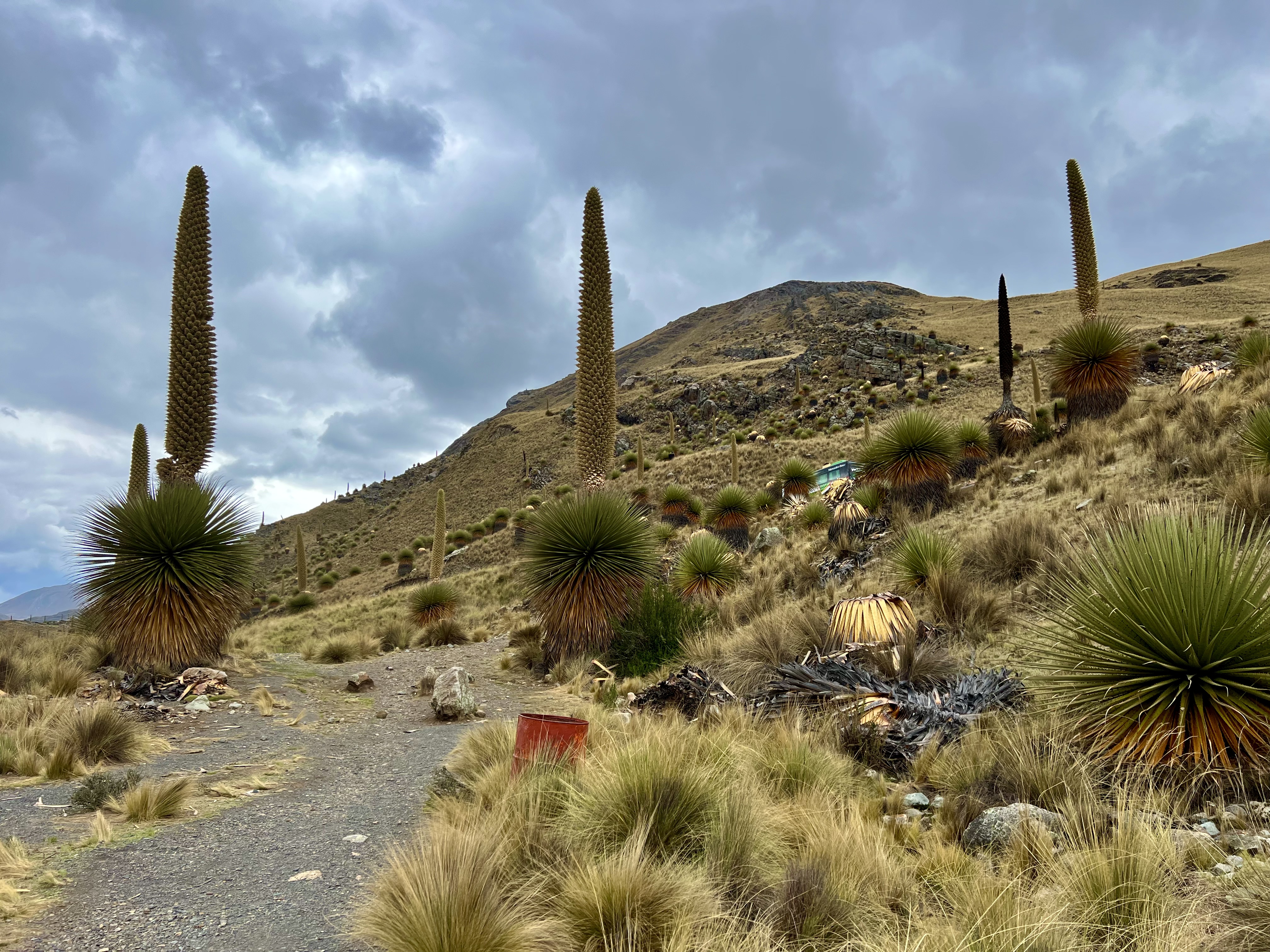
The next day, the tour went to Nevado Pastoruri, otherwise known as the Pastoruri Glacier, which is within the Huascarán National Park. This was a long van ride, but it was broken up by stops at las Aguas Gasificadas de Pumapampa, and Puyas Raimondi. The first is a small lagoon with bubbling water and the second a kind of cactus that only grows in this region; it has bromeliad flowers that grow up to 12m in height.
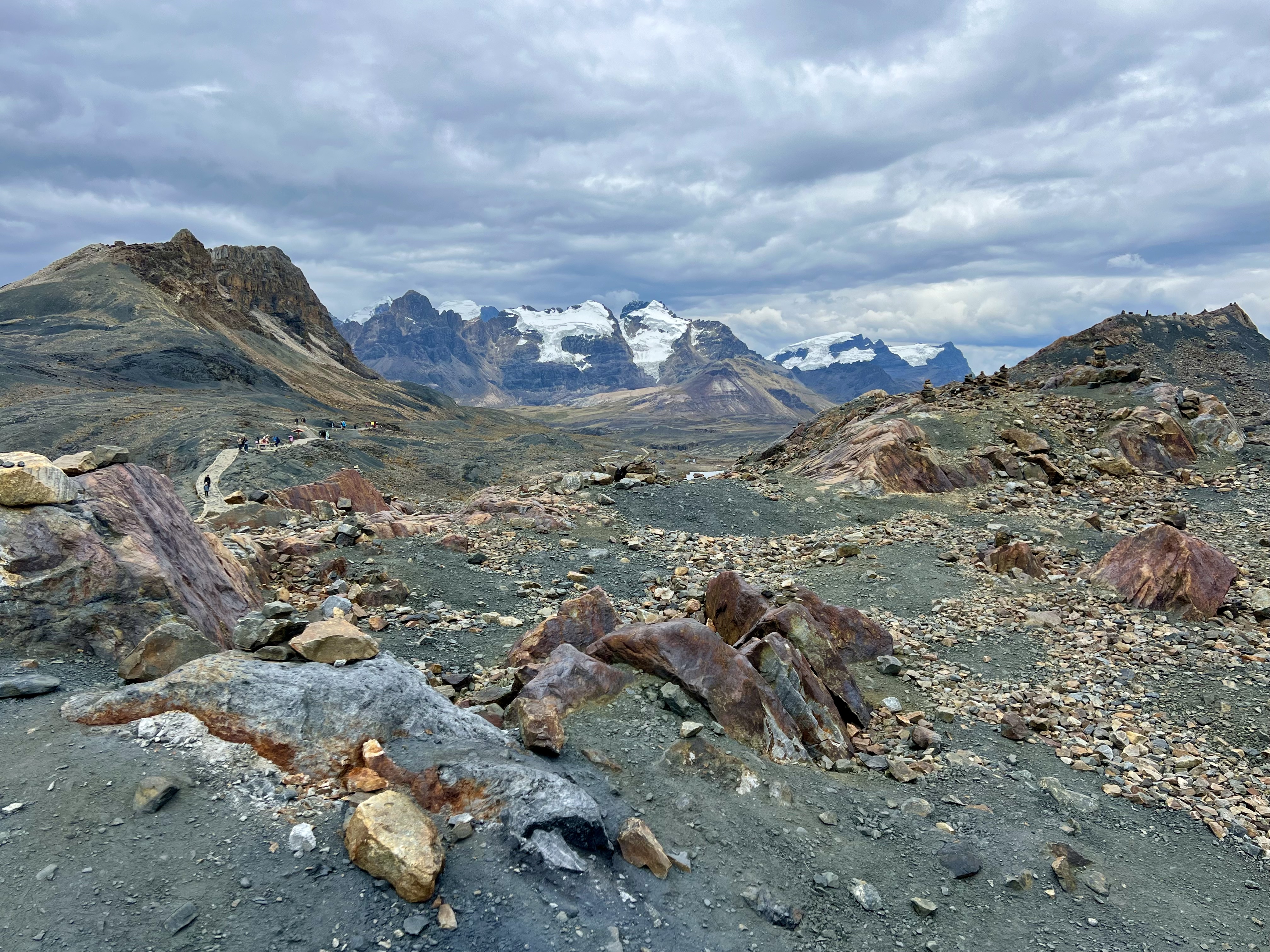
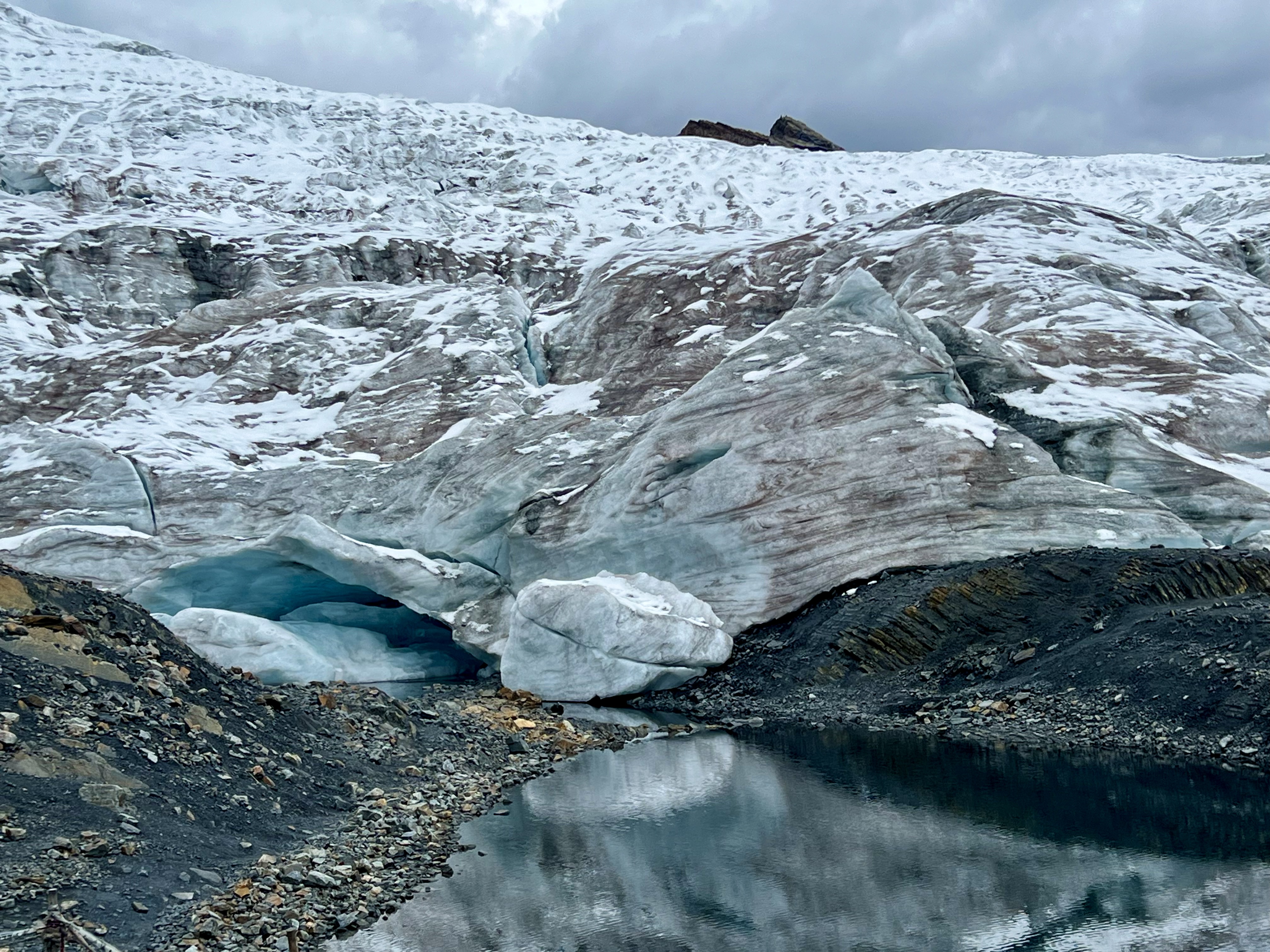
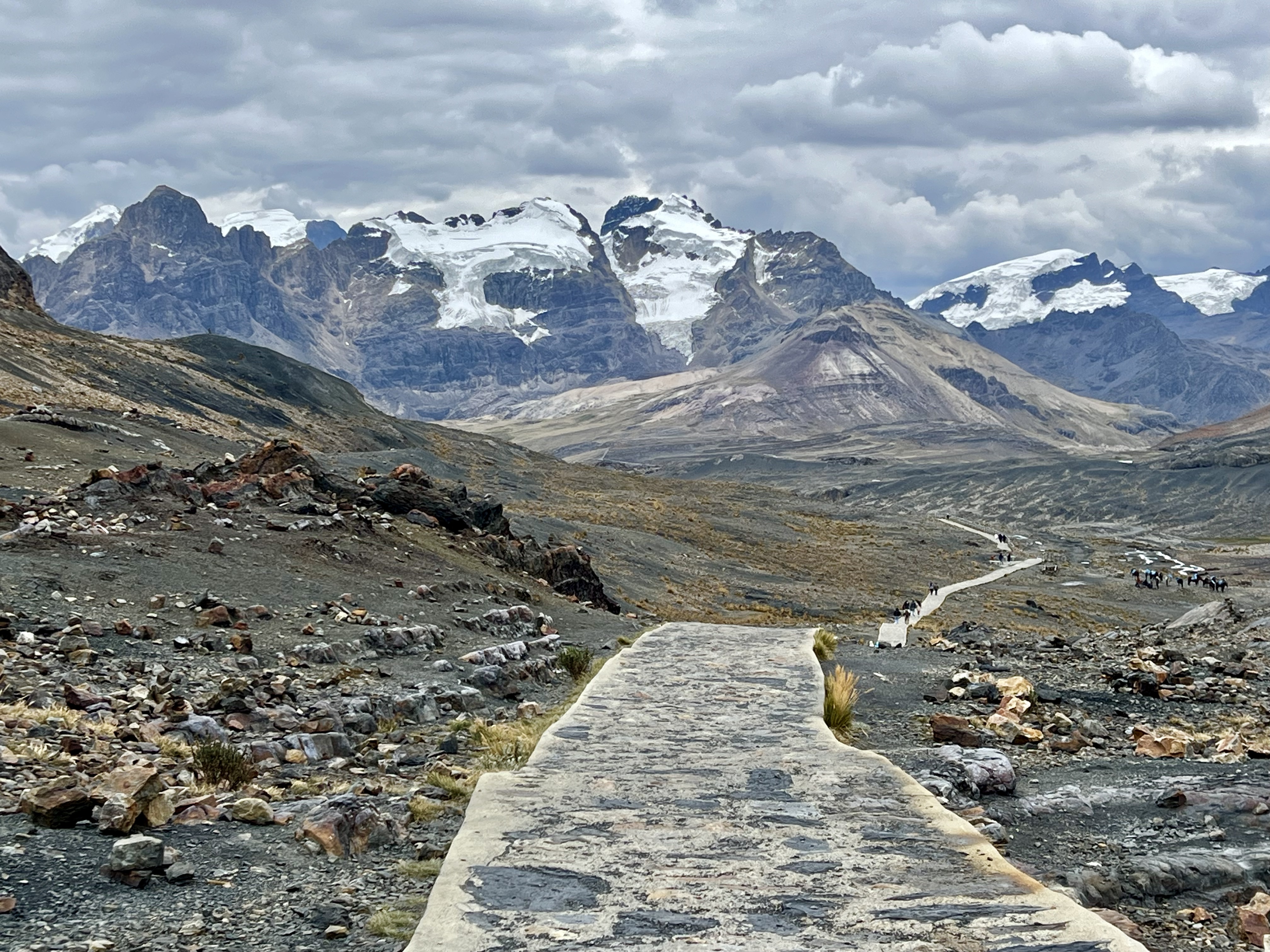
We arrived at the parking lot after innumerable hairpin turns which led to a few folks becoming mildly carsick. From the parking lot there is a long basically paved path that leads to the glacier. The path is fairly flat, but the altitude, ca. 5000m, takes one’s breath away. This glacier is very rapidly receding as is evident from the debris and scree around the pools of water at the bottom of the icesheet. The clouds covered many of the peaks in the surrounding area, but they did lift for a few pictures, and the views were spectacular. Word of warning, one of our group, a young girl, did get hit with altitude sickness and had trouble getting down, even after chewing coco leaves and drinking coco tea.

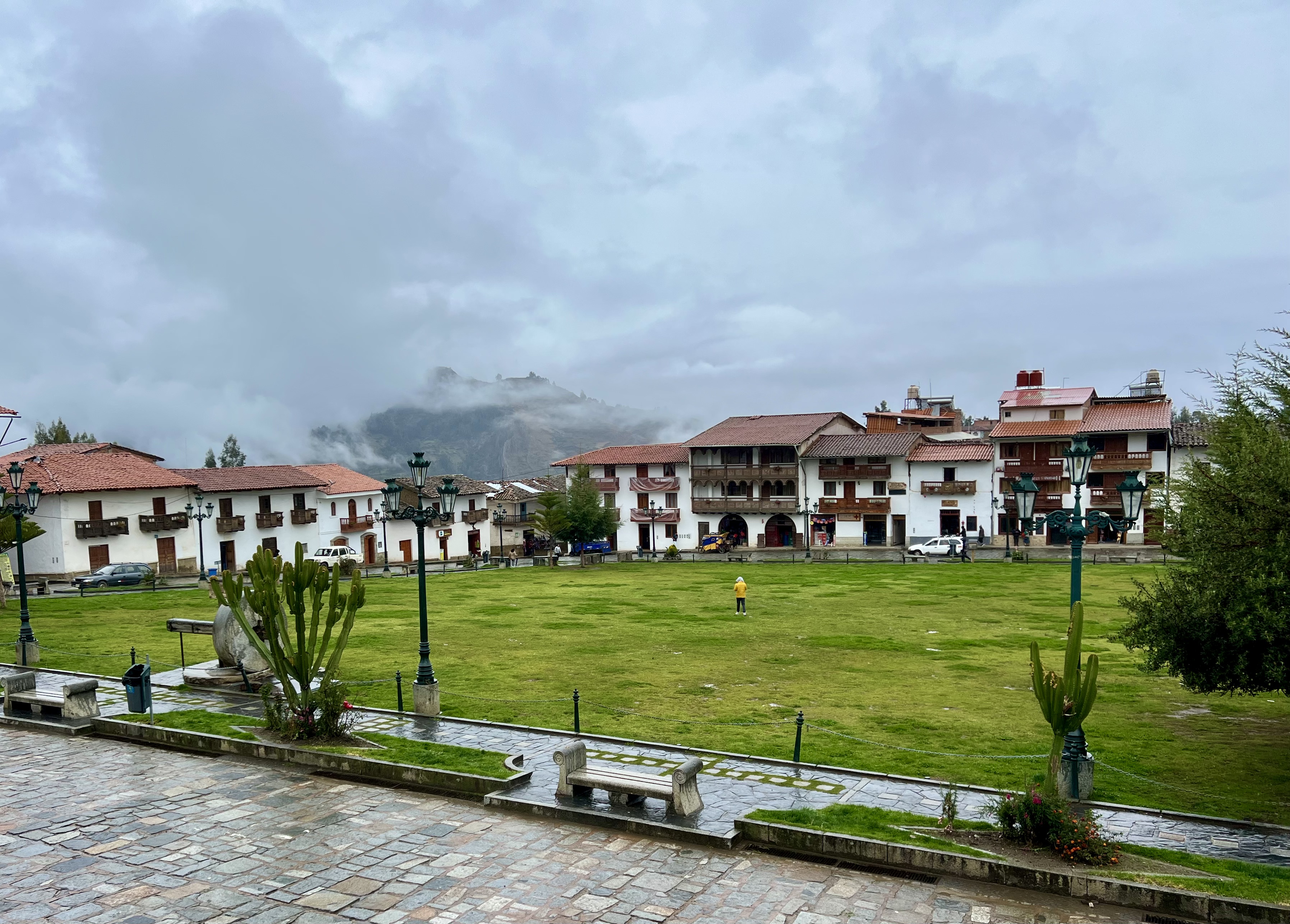
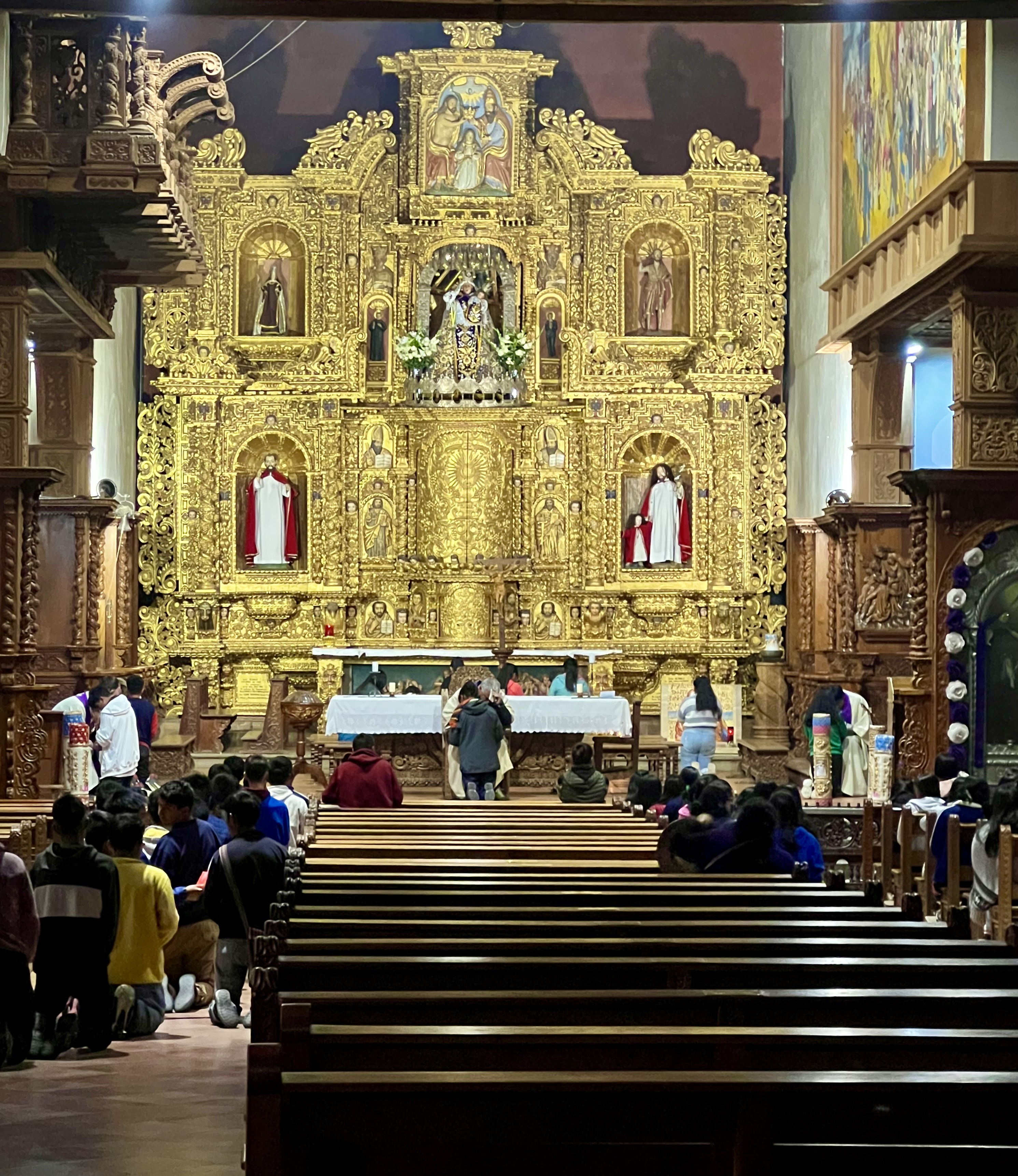
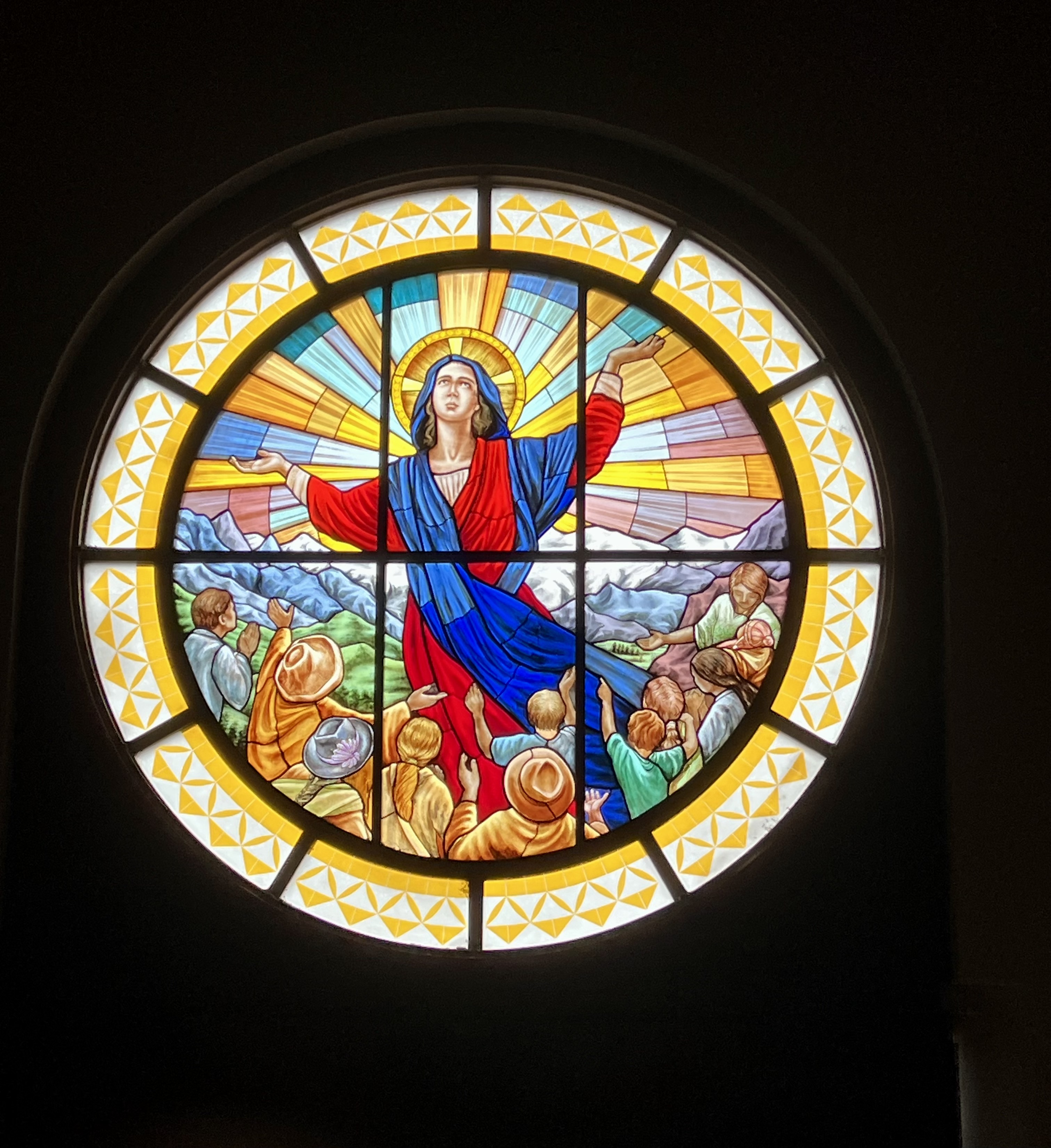
The following day, it was raining, and I didn’t want to hike in the rain, so I took a tour to Chacas, which is considered one of the best tourist towns in the world. Mass tourism luckily has not touched this place regardless of the designation. The town was founded in 1572 as San Martin de Chacas. The main festival is on August 15th for the Festividad de Mama Ashu, the Virgin of the Assumption. The church has an intricate baroque golden altar, and beautiful stained-glass windows. The windows stem from the Don Bosque artisan workshop.
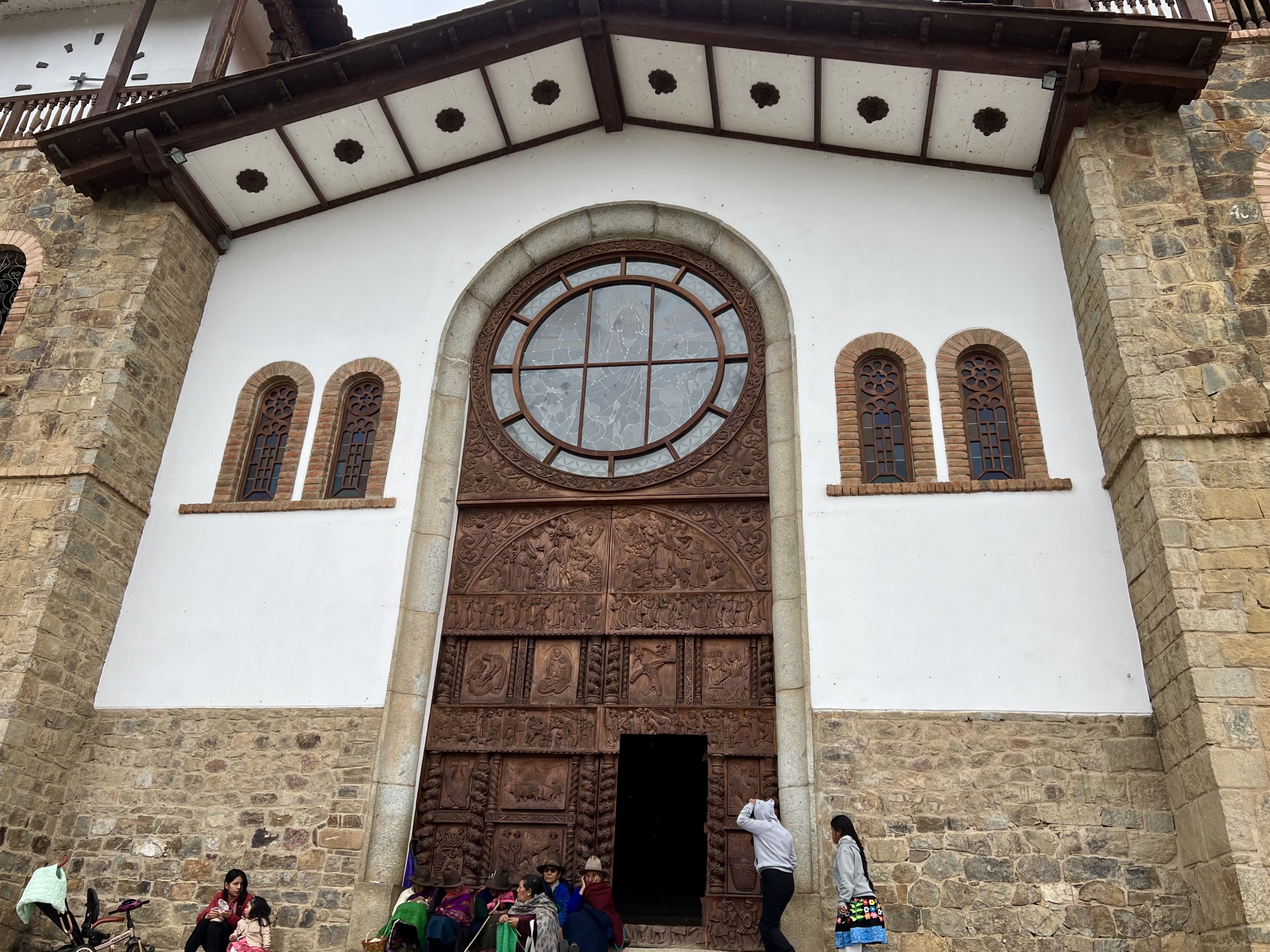
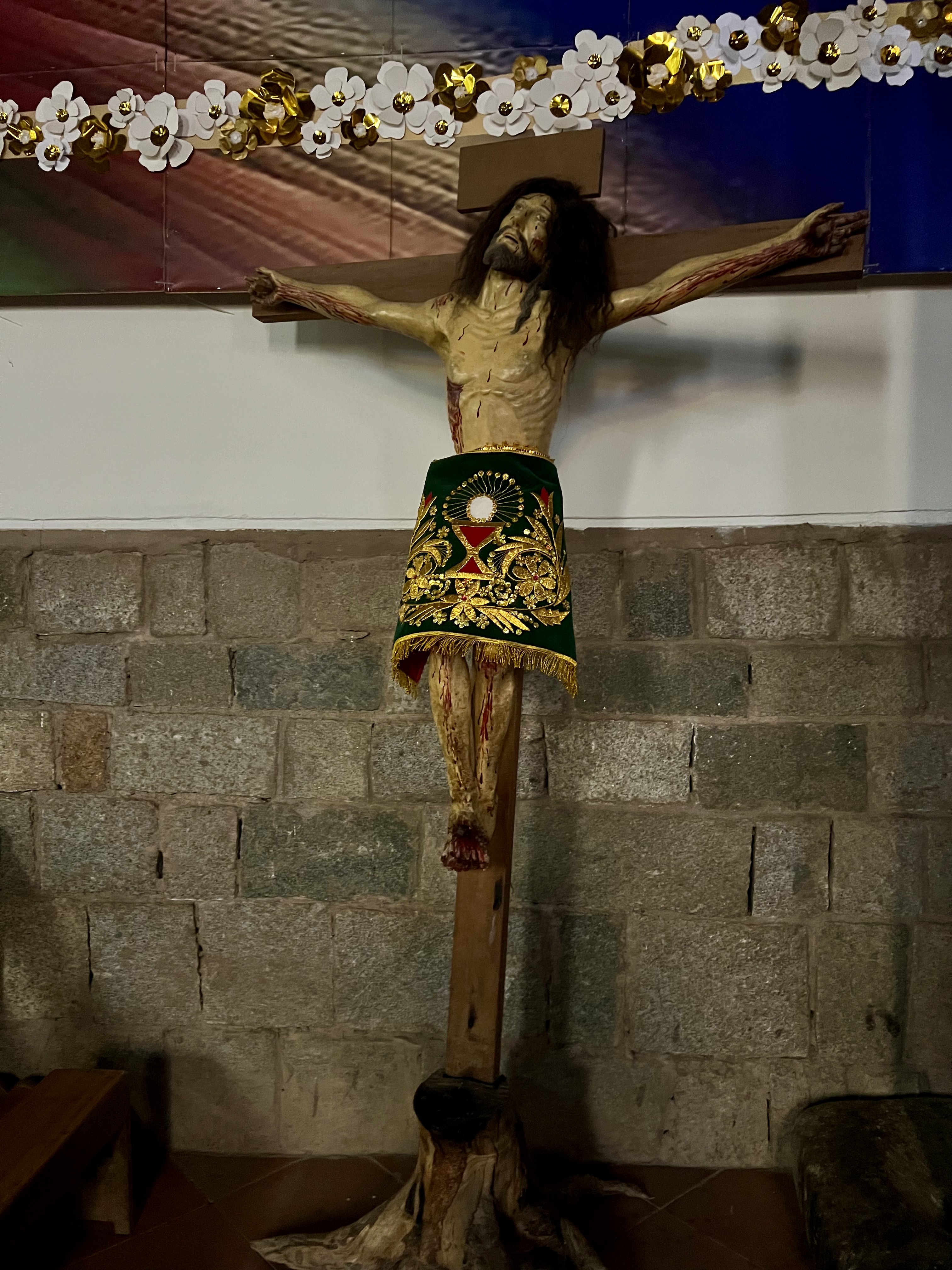
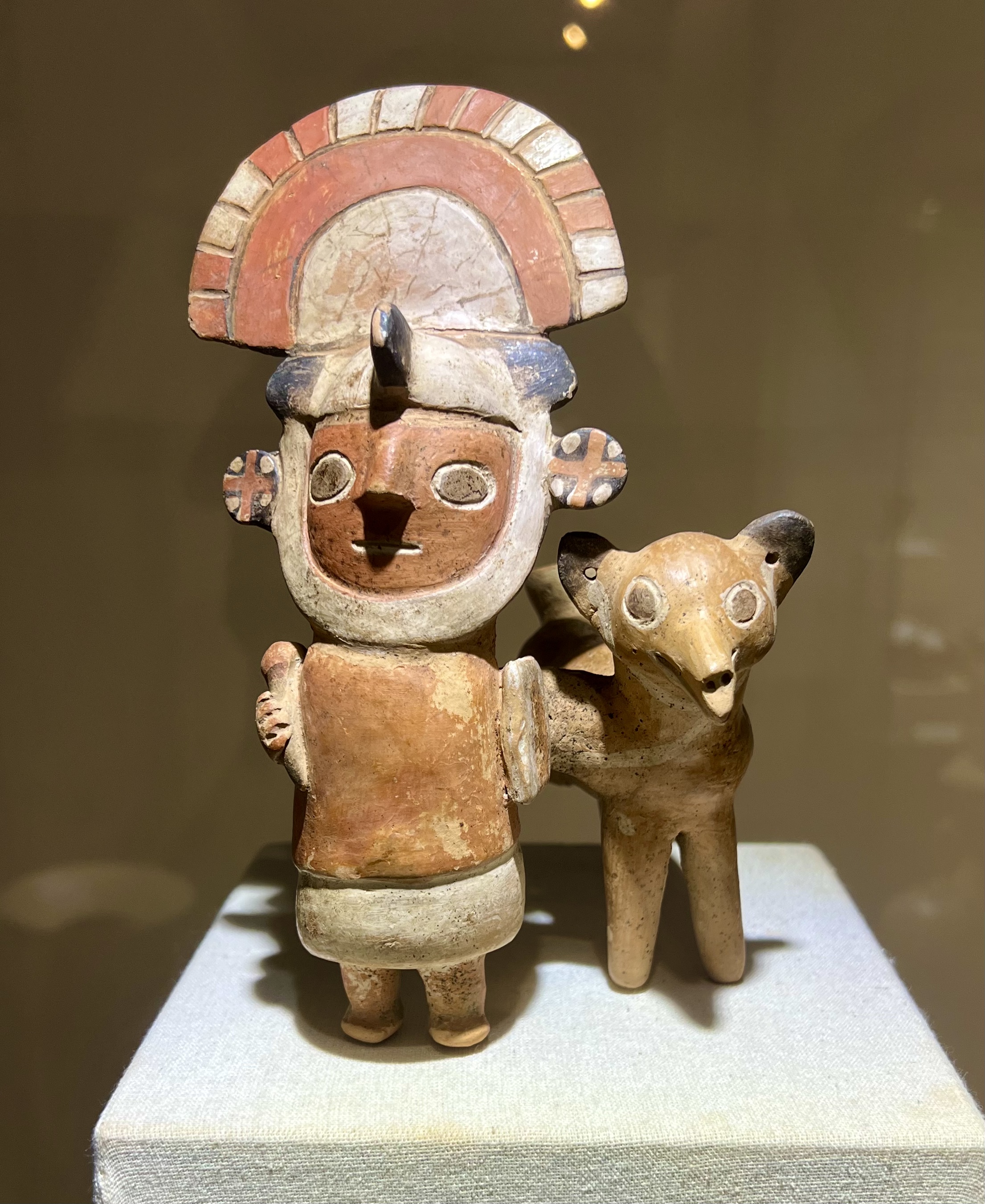
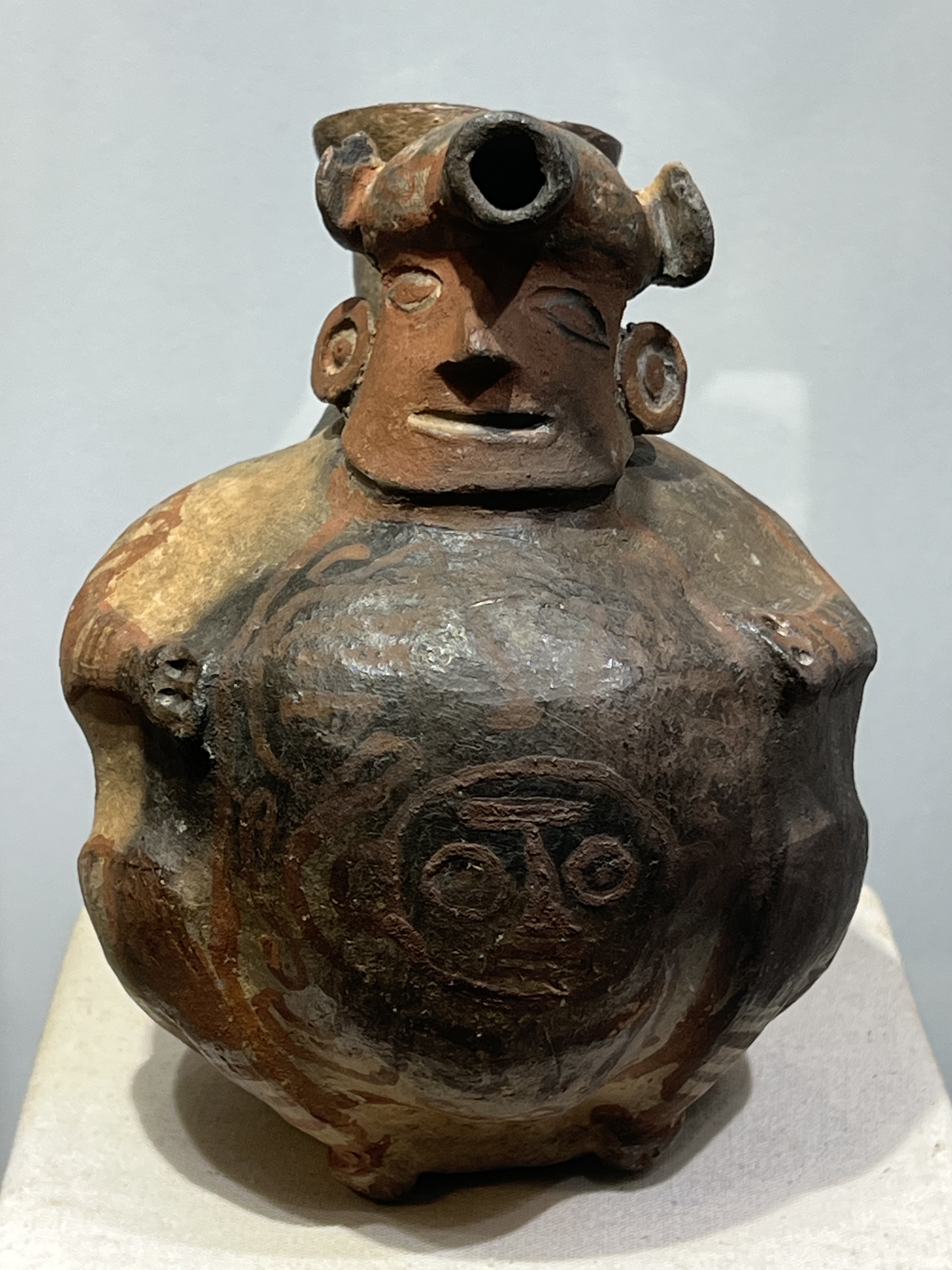
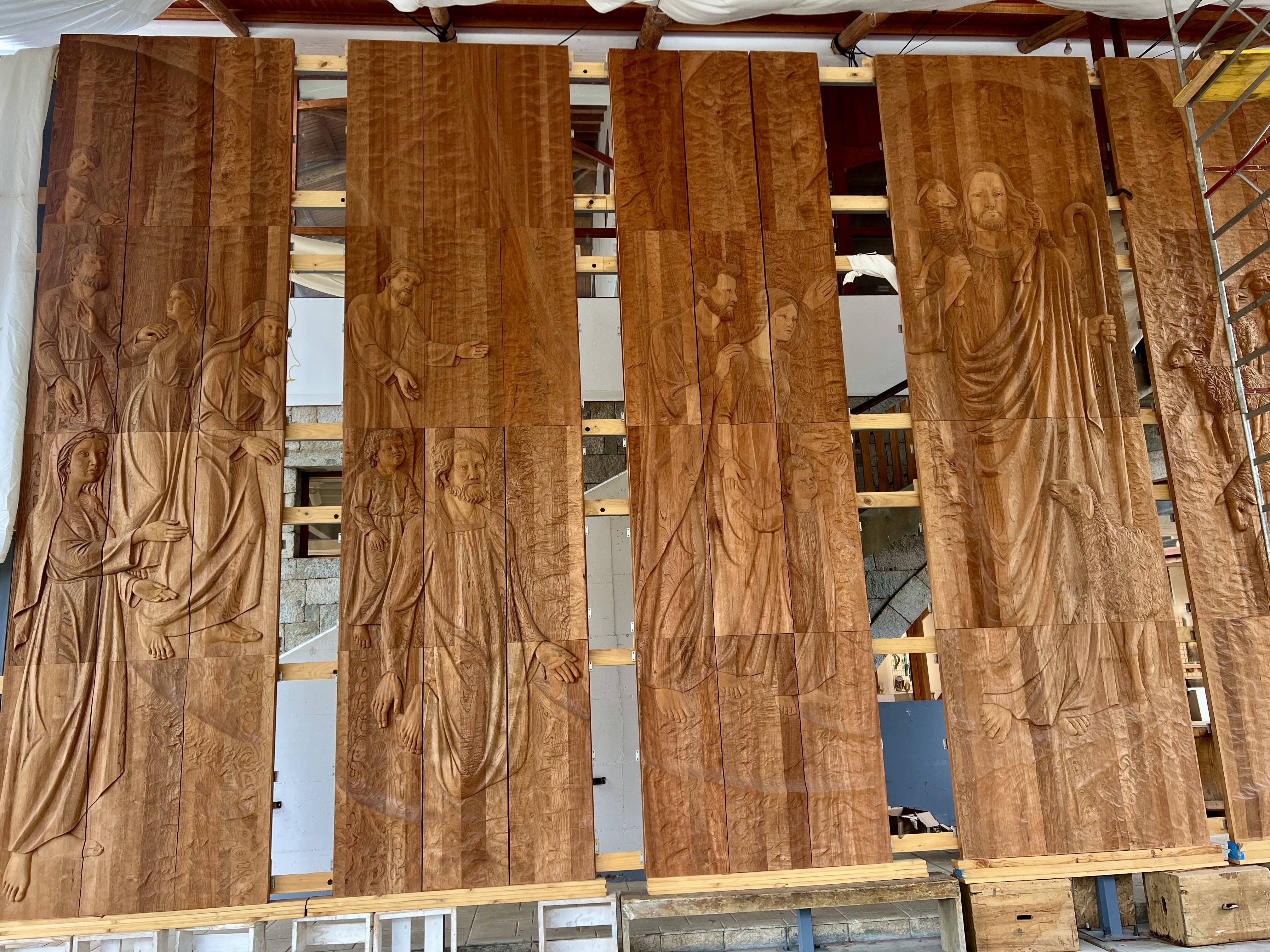
Underneath the church is a small but informative pre-Columbian museum. There was a nice section on the Recuay Culture that was prominent in the area when the Huari were in power and to whom they later succumbed. Don Bosque, an Italian priest who relocated to Chacas, started an orphanage and artisan’s workshop here and some of the woodwork has been exported worldwide as well as nationally. The doors in the Cusco cathedral come from this workshop.
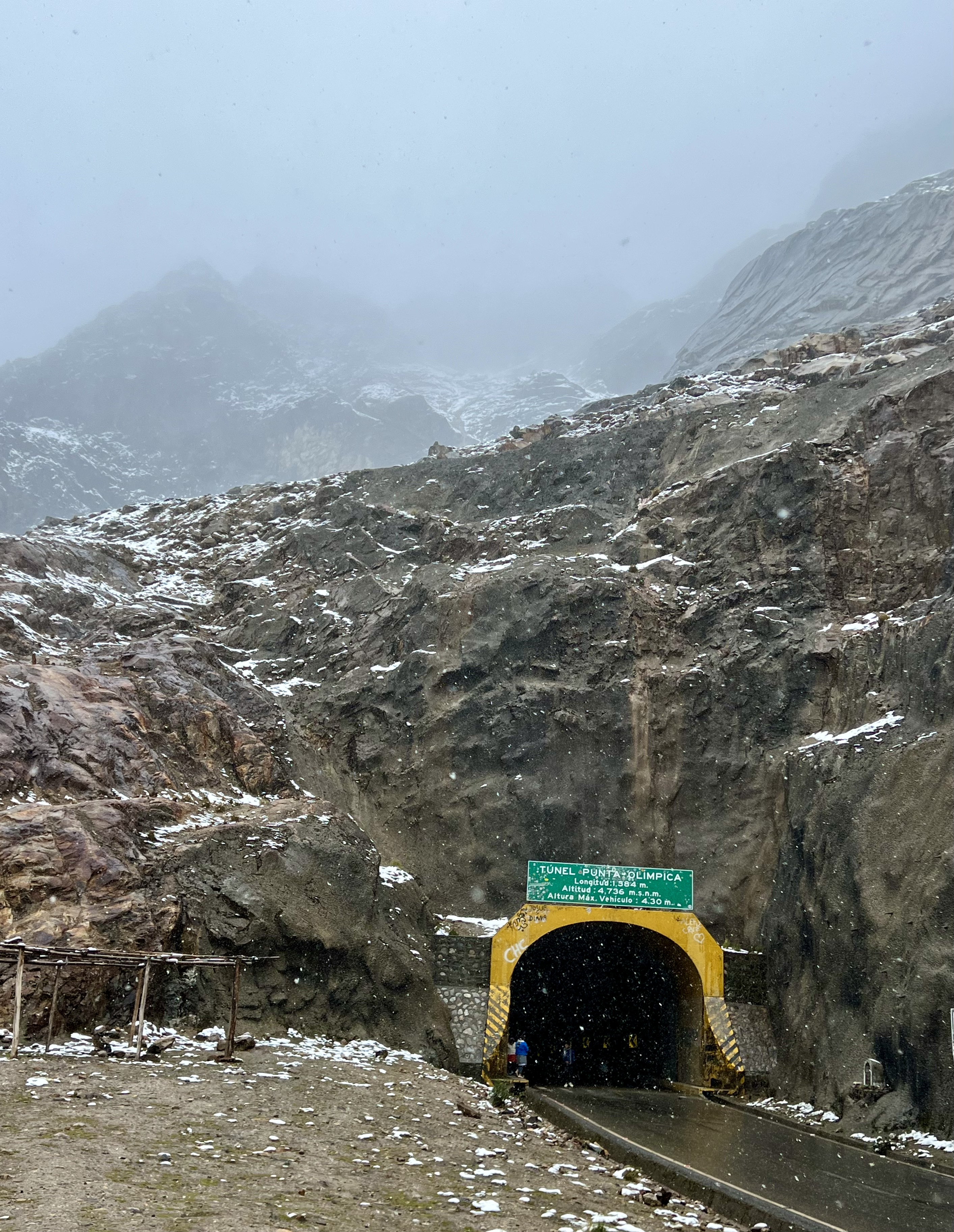
On the way to the town, we crossed through the highest tunnel in Peru at 4.700m, Punta Olímpica, in the snow and after the tunnel, we stopped to look at three lagoons. One of them, Laguna Concaraga, was incredibly beautiful with deep turquoise waters.It is the highest laguna in the National Park at 4,500m.
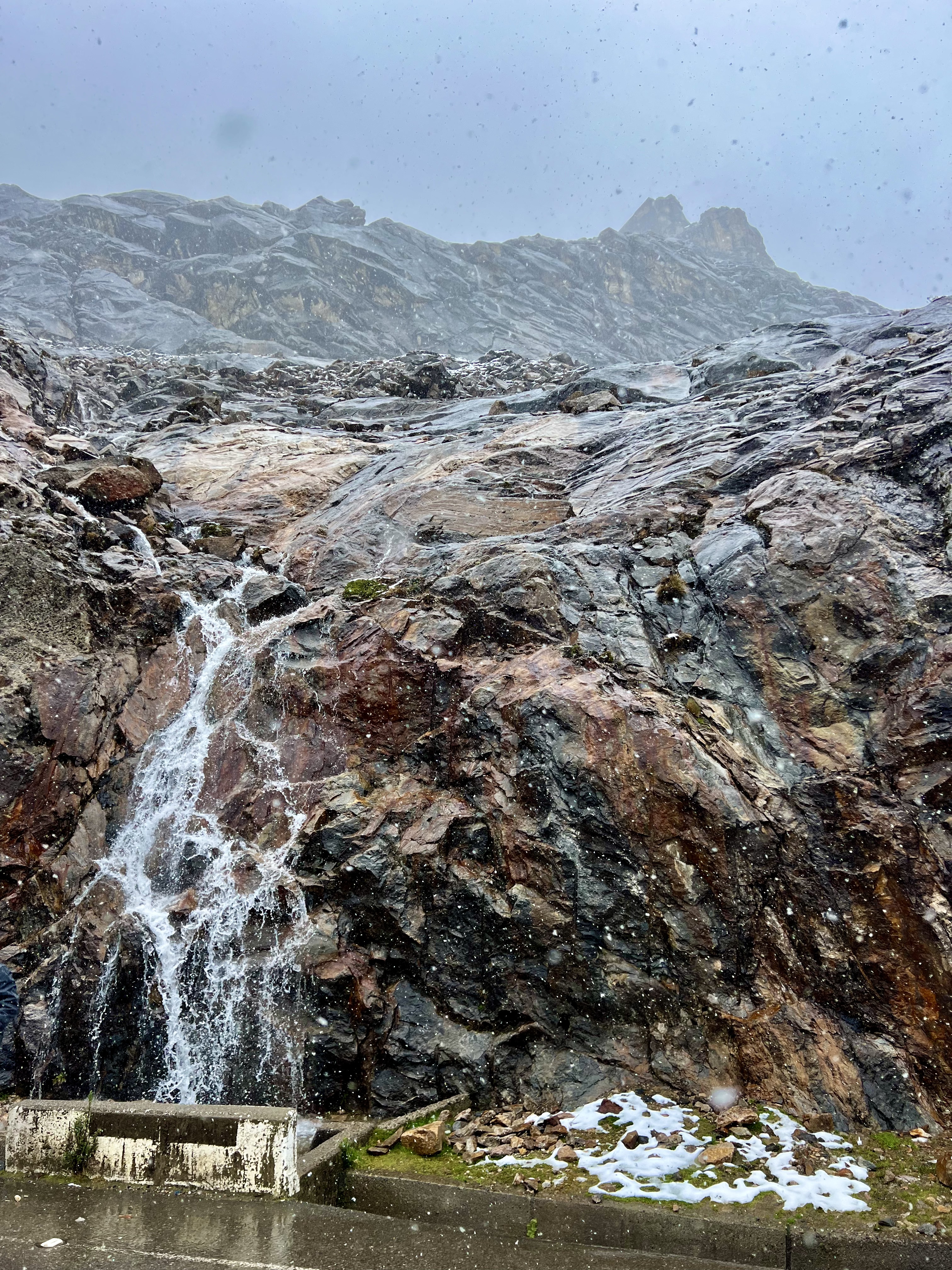
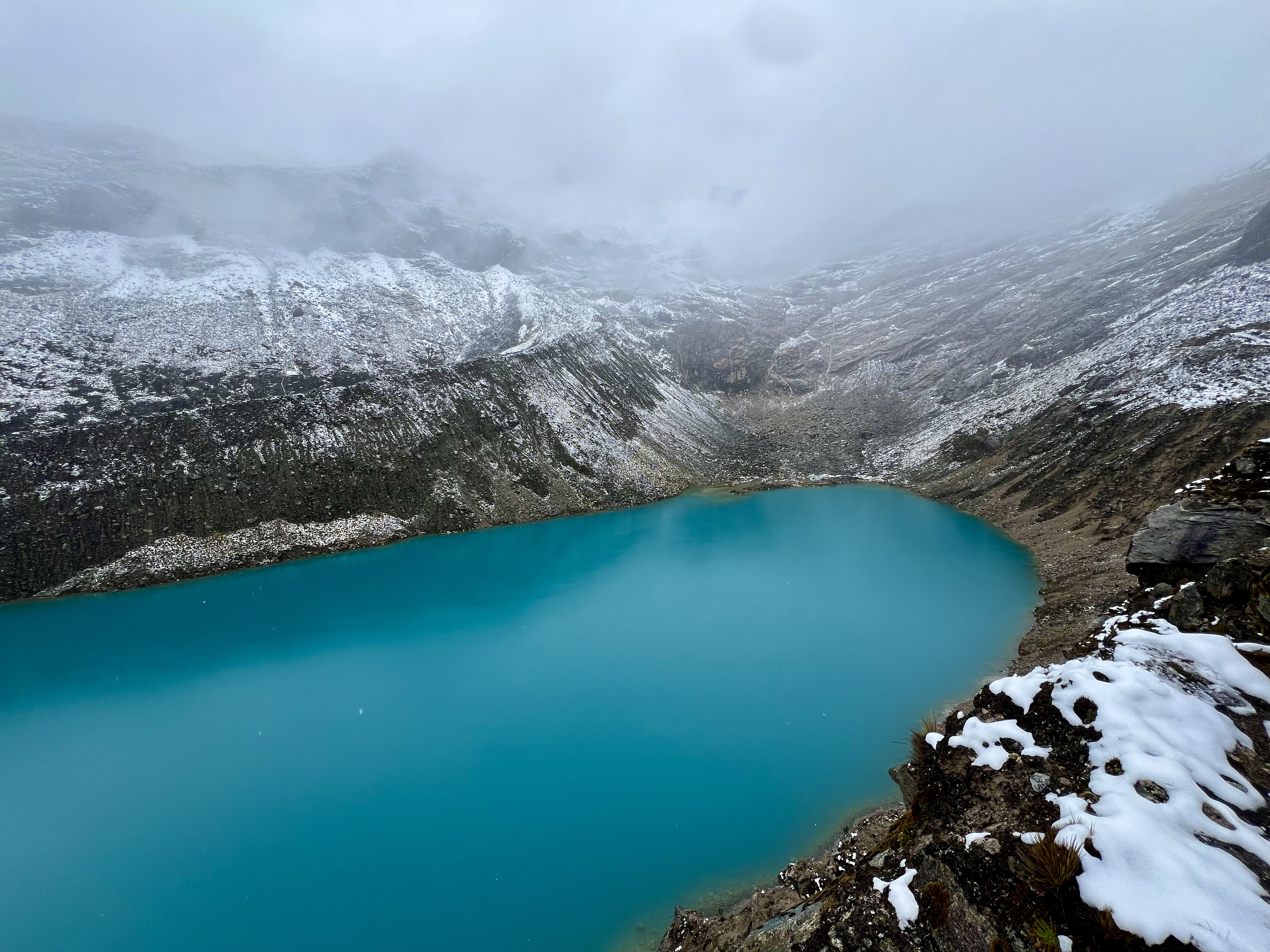
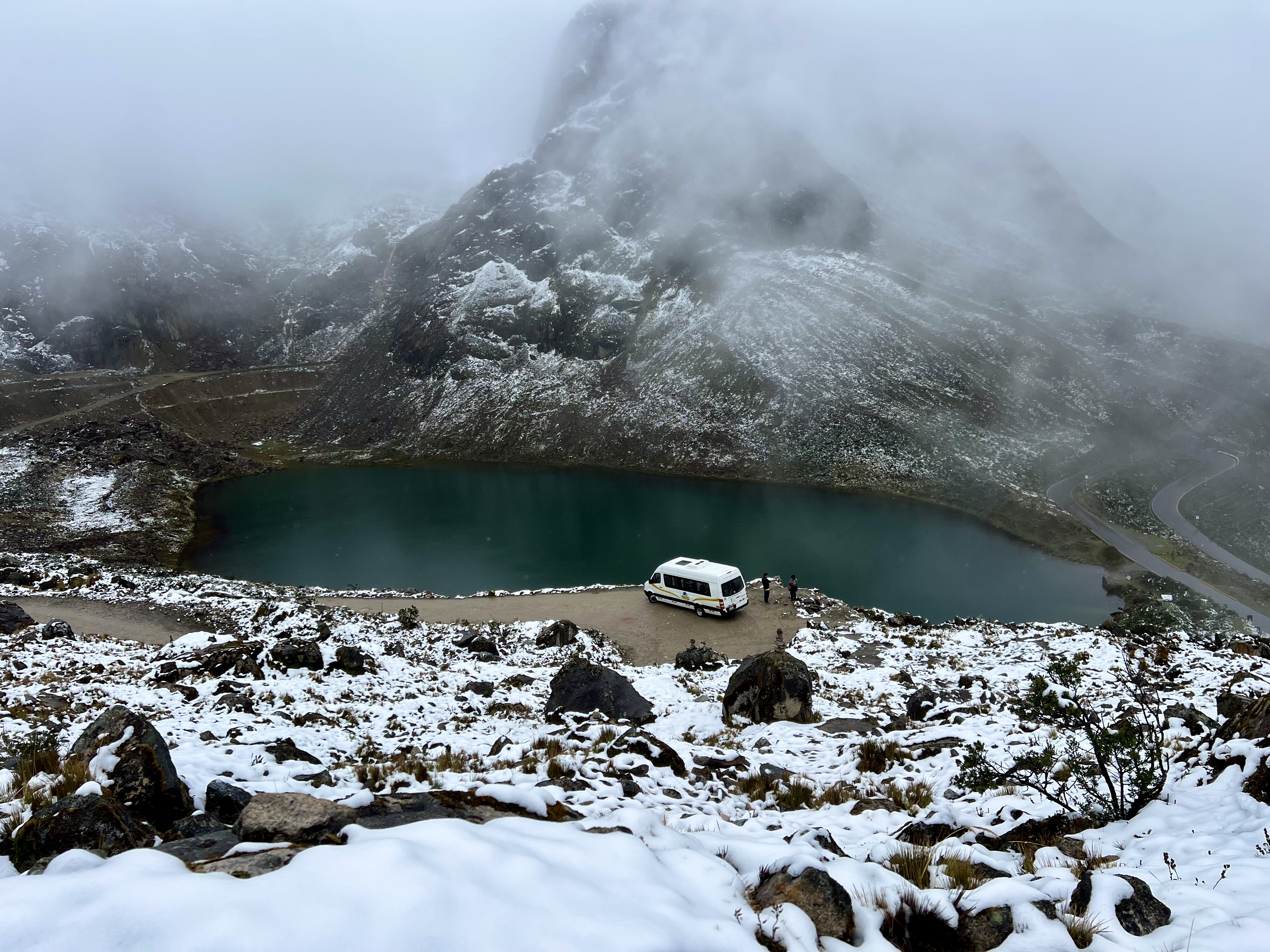
Unfortunately, the rain and snow clouds didn’t allow us to see any of the peaks surrounding the lagoons.
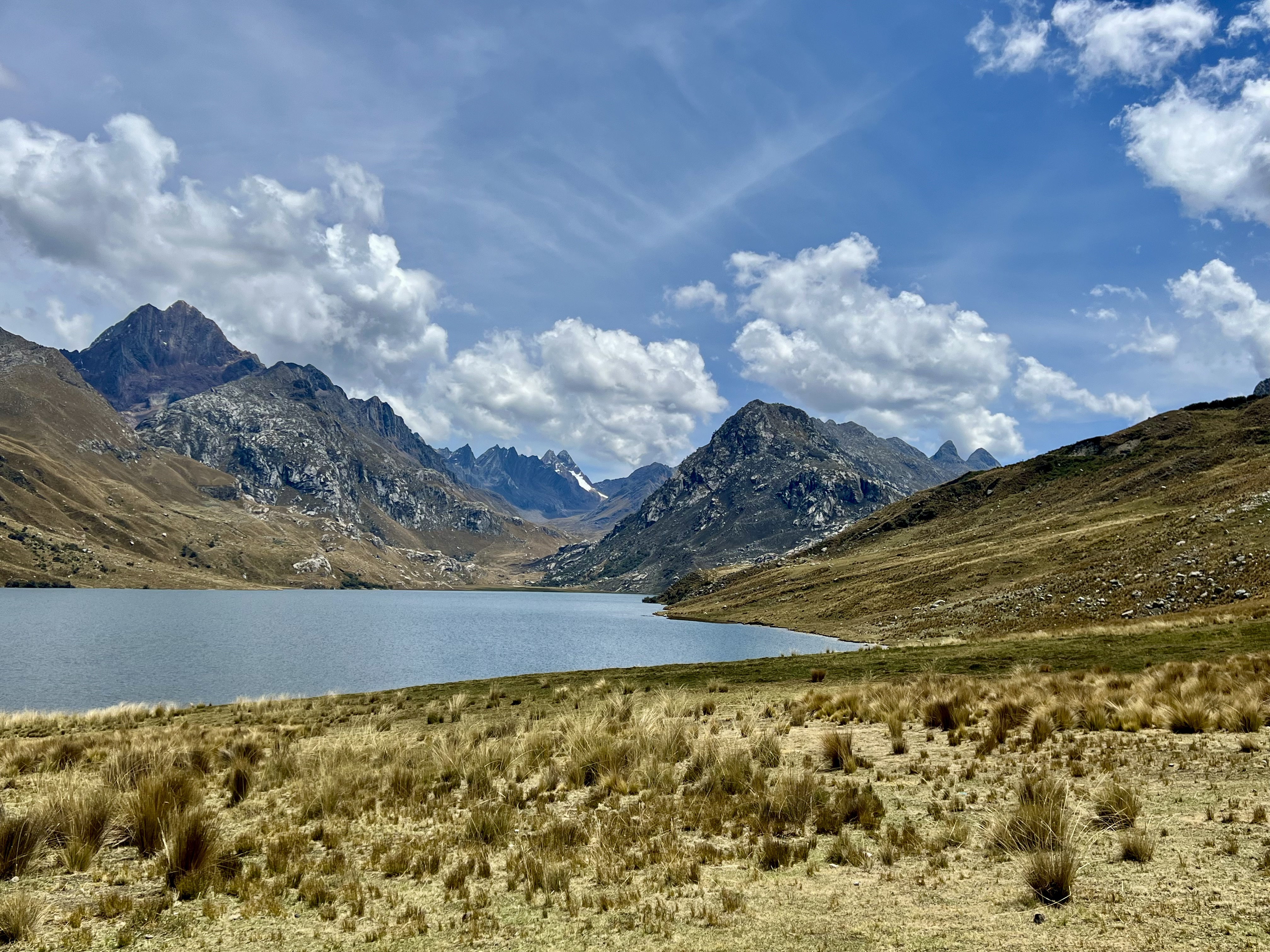
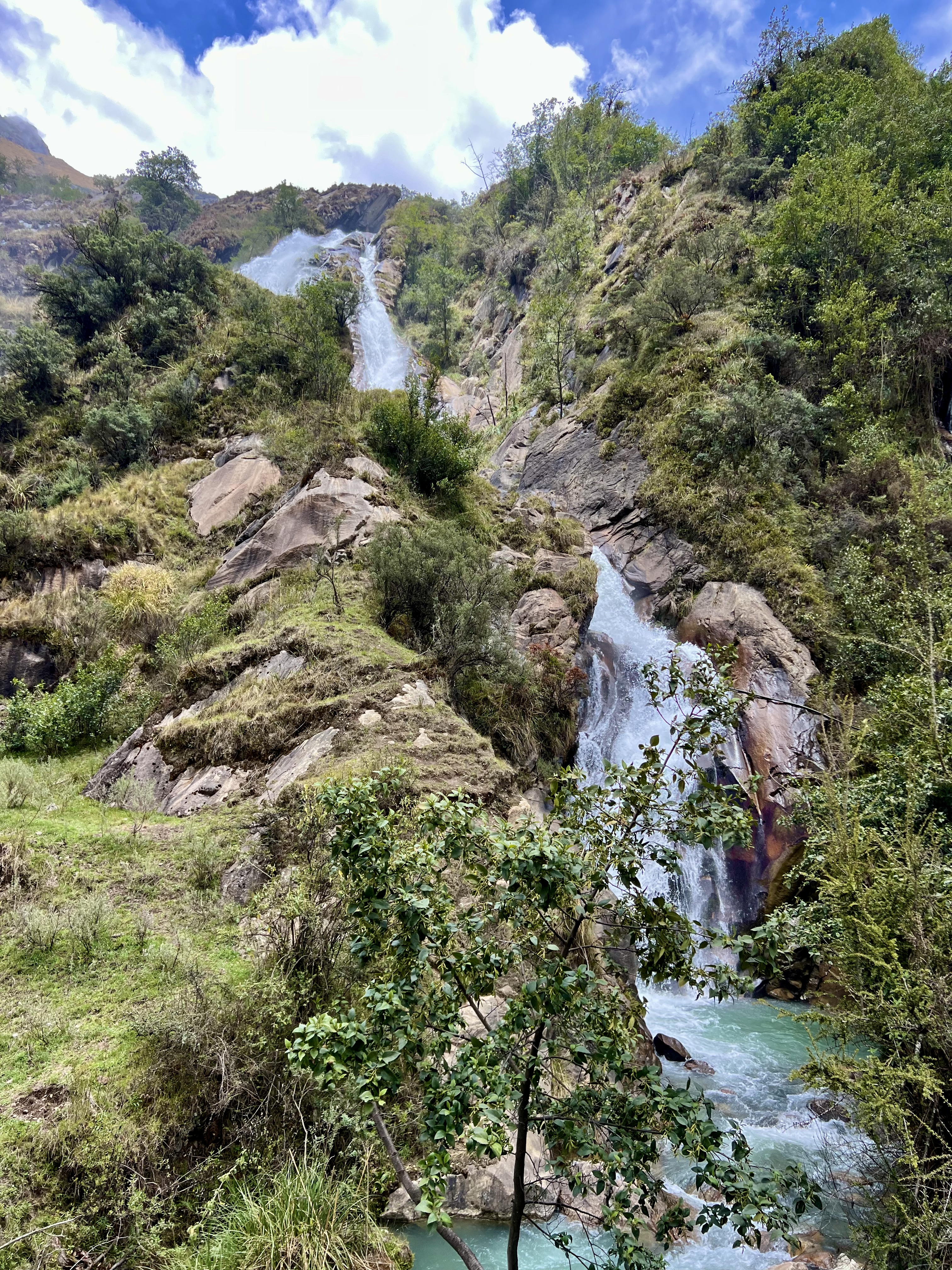
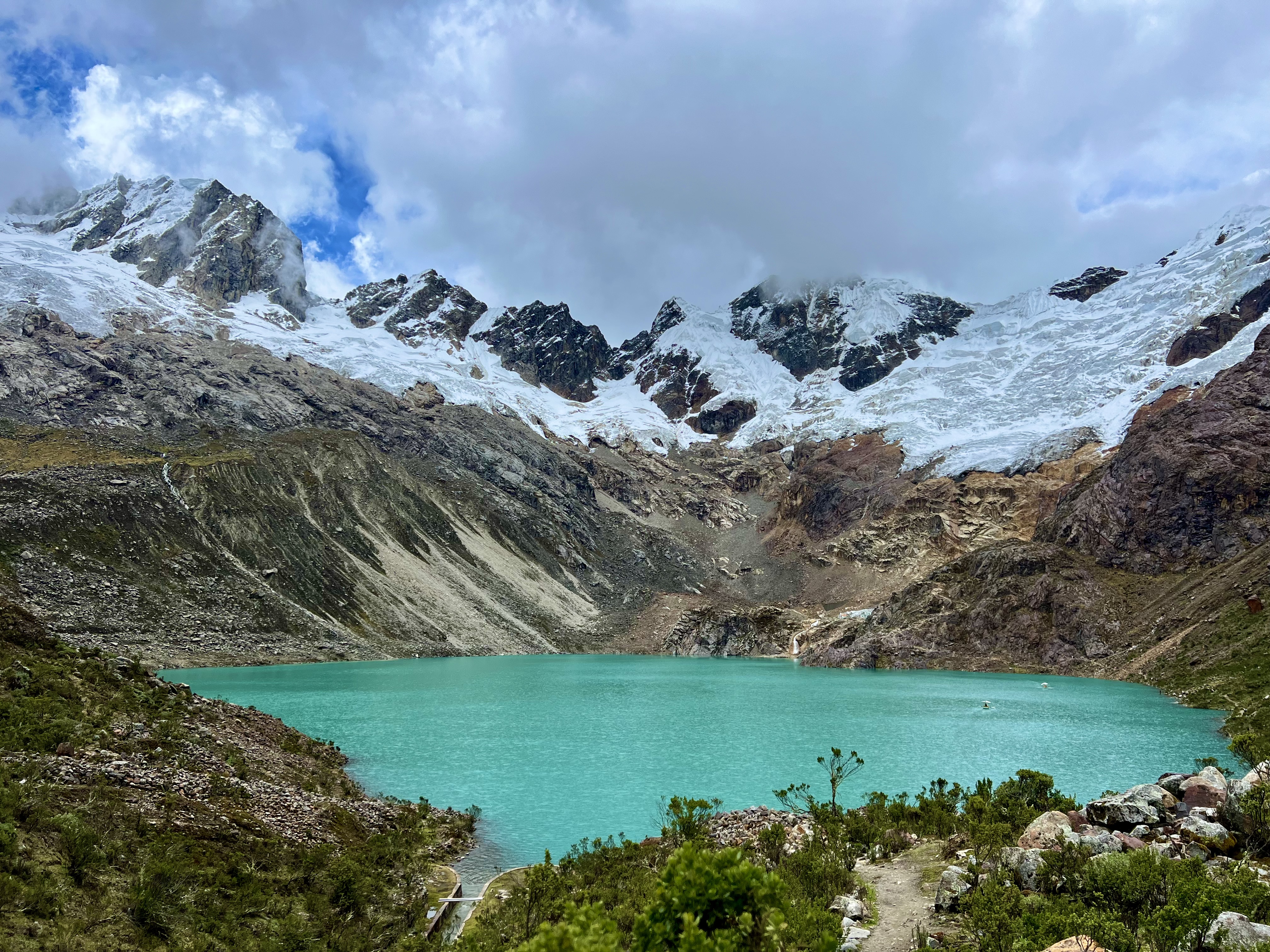
On my final day, I decided to take a tour to Laguna Rocotuyoc as the weather looked decent. This was a delightful day, and the skies cleared so that the glaciers were visible. These were the views I had hoped to see. Our first stop in the Park was at Catarata Paccharuri ; the waterfall was impressive as was the view from the plateau.
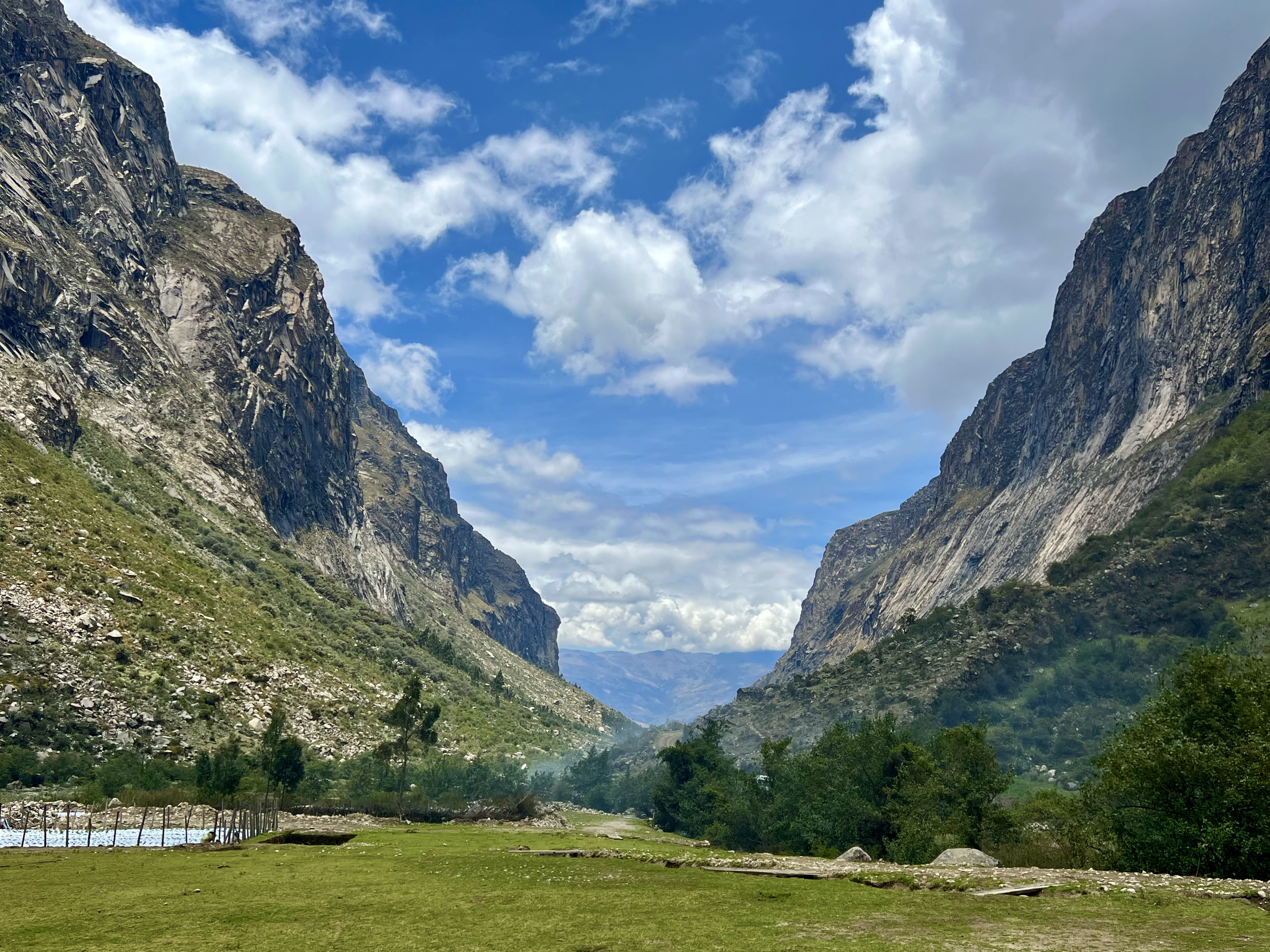
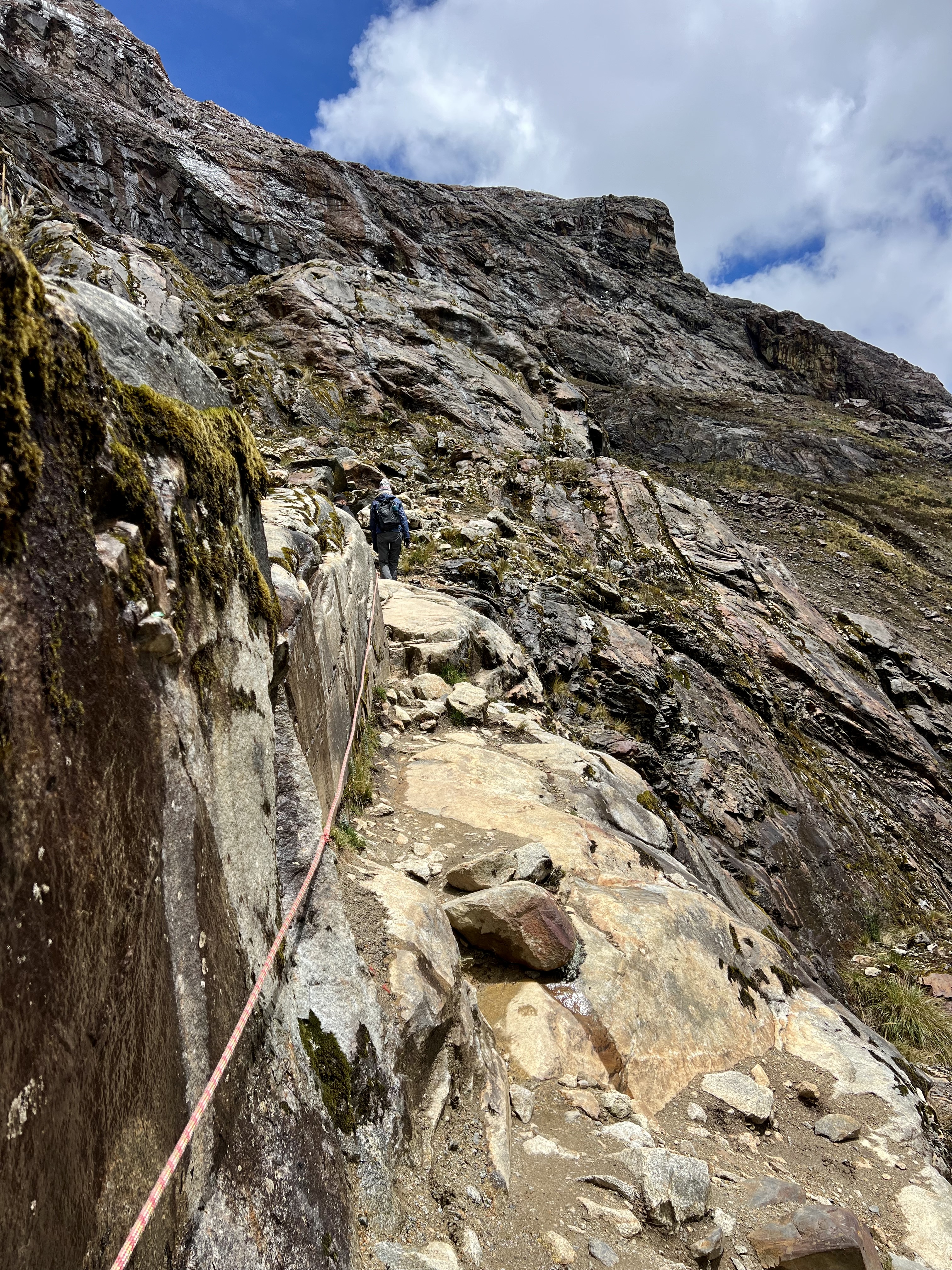
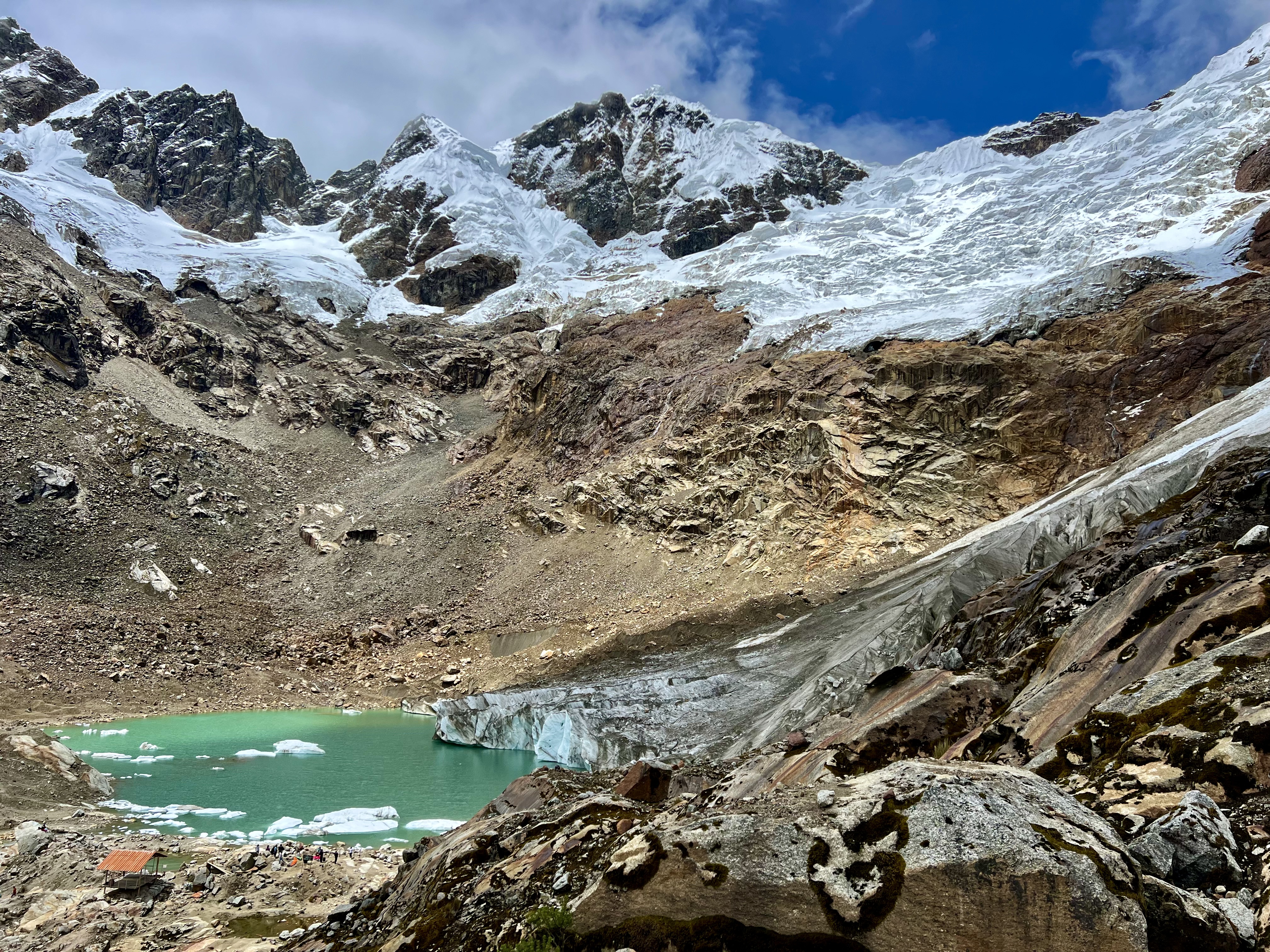
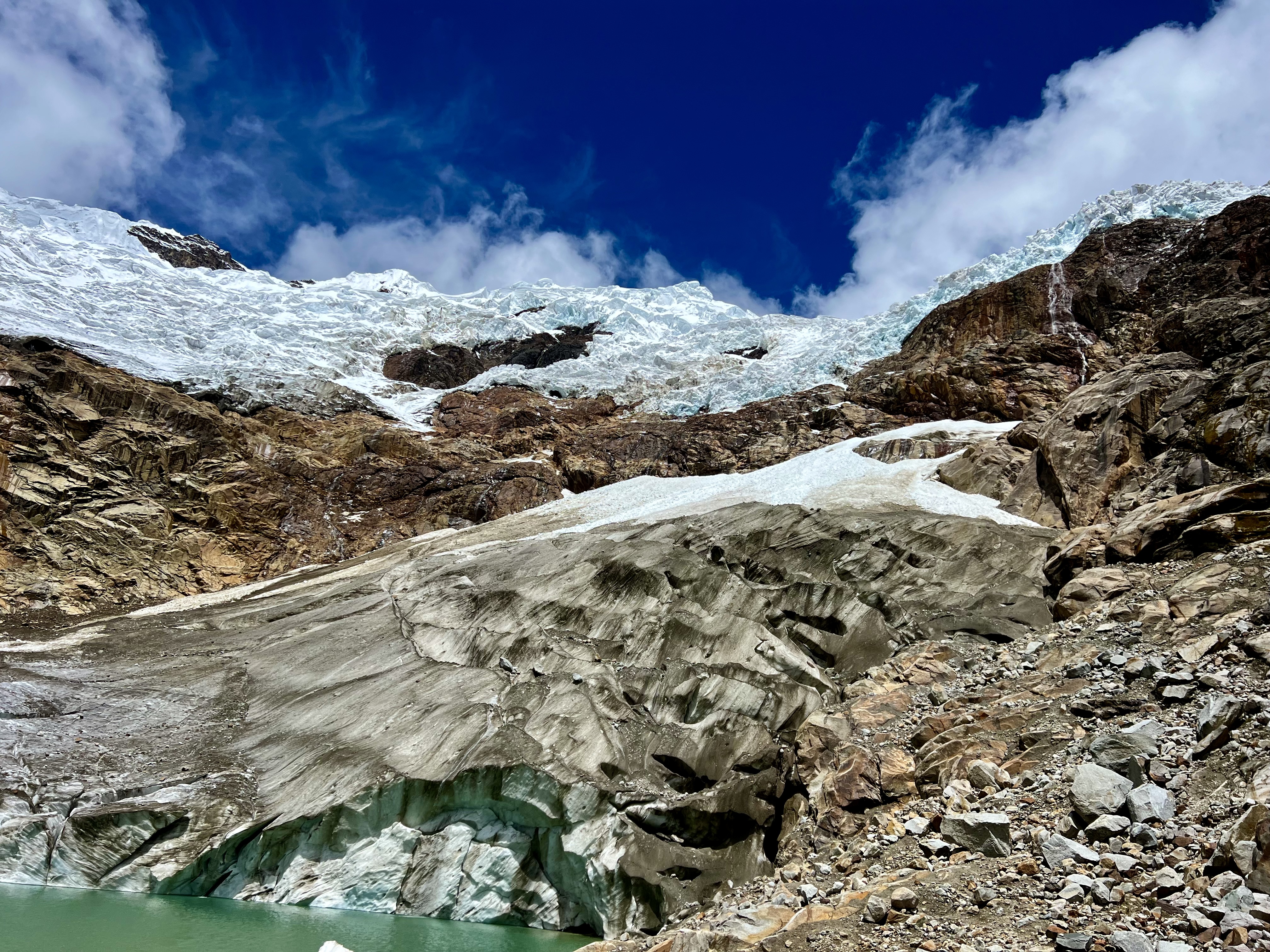
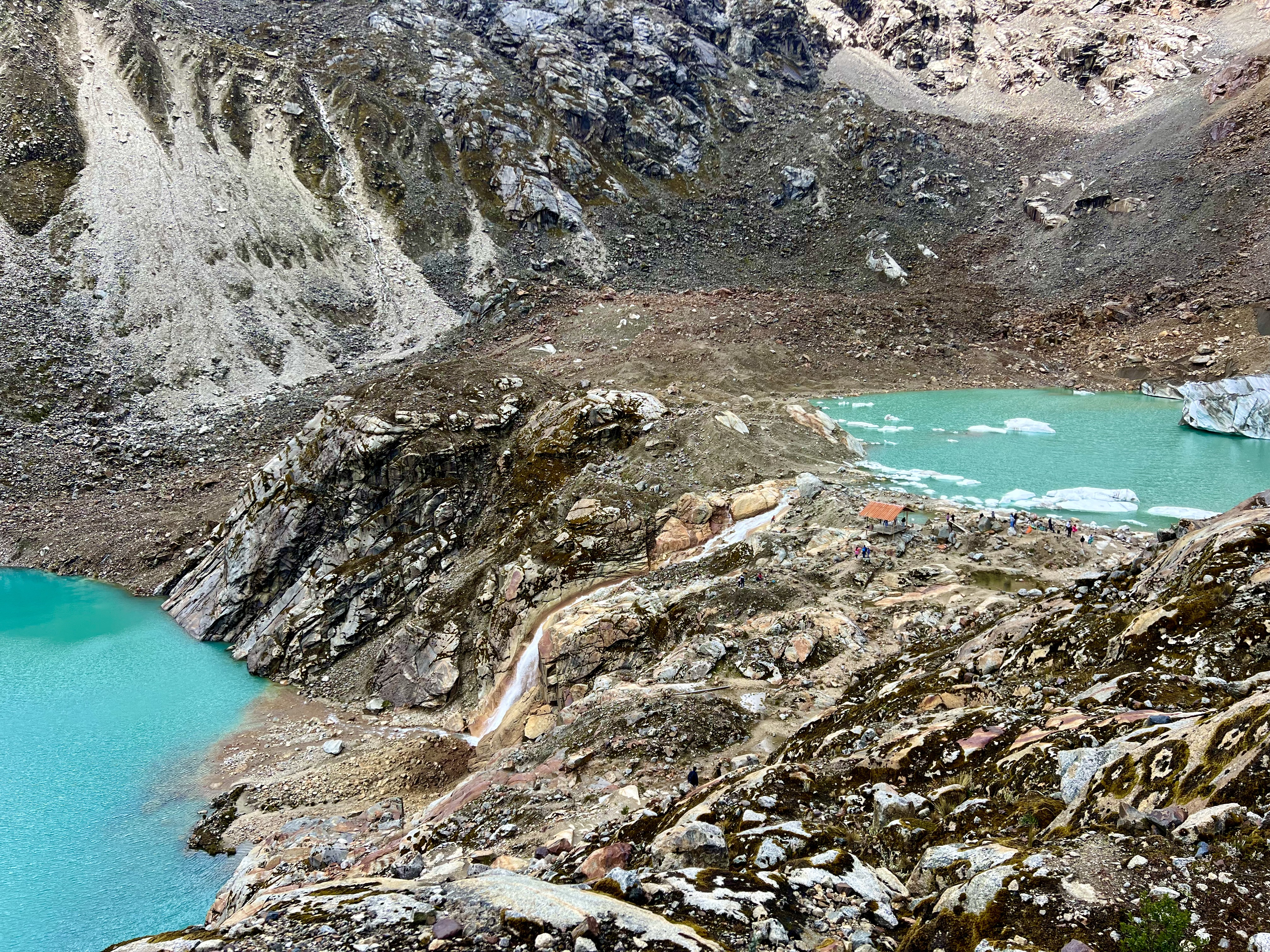
The van took us up to almost 4,500m where the laguna is and from there the path, a real one this time, winds around the side of the lake to its end. From there a short incline goes up the pass to the next lake, Laguna Congelada, or Frozen Lake, as there are ice sheets floating in the water at the bottom of the glacier. This tour was a perfect ending to a few fascinating days.

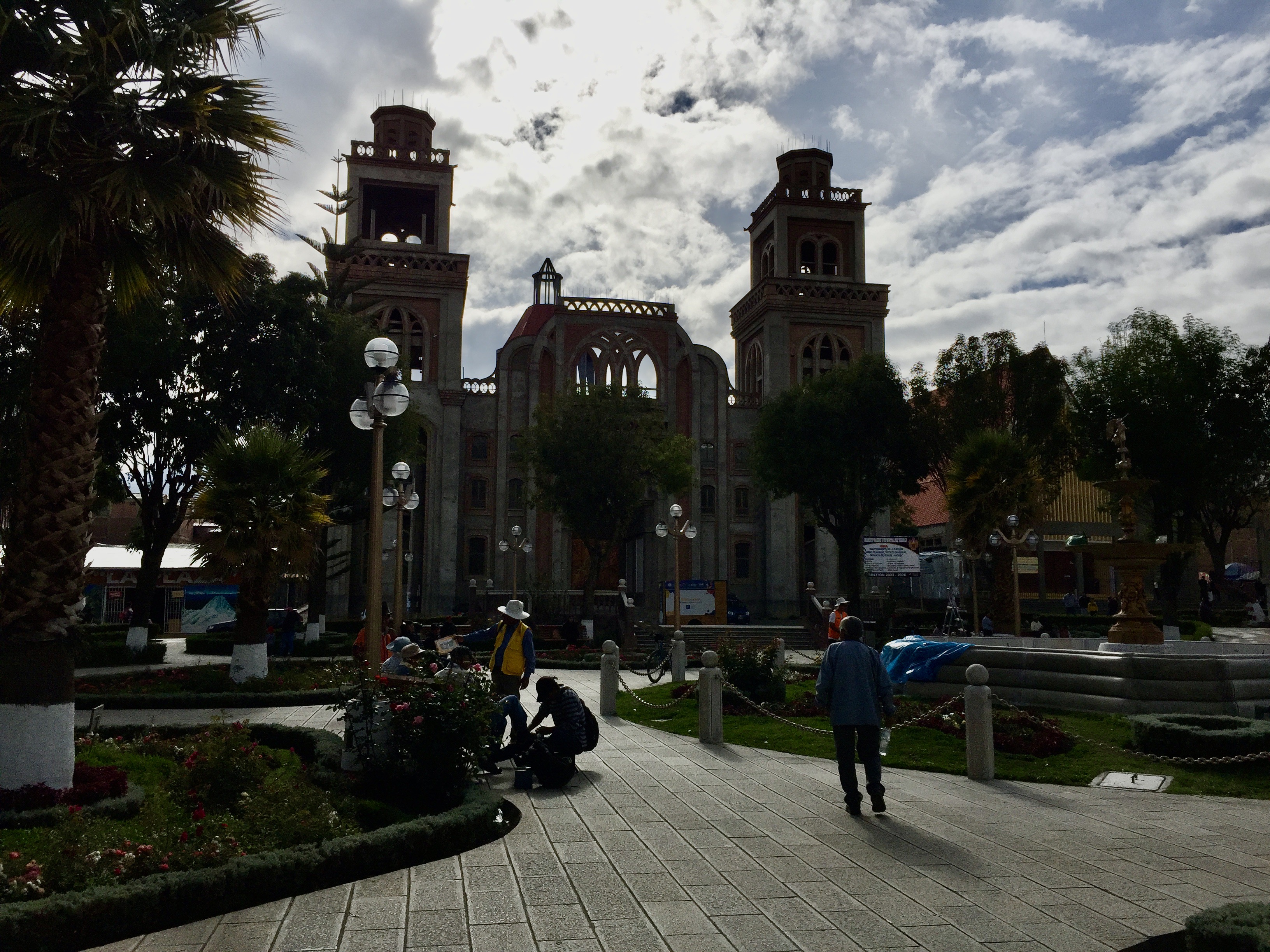
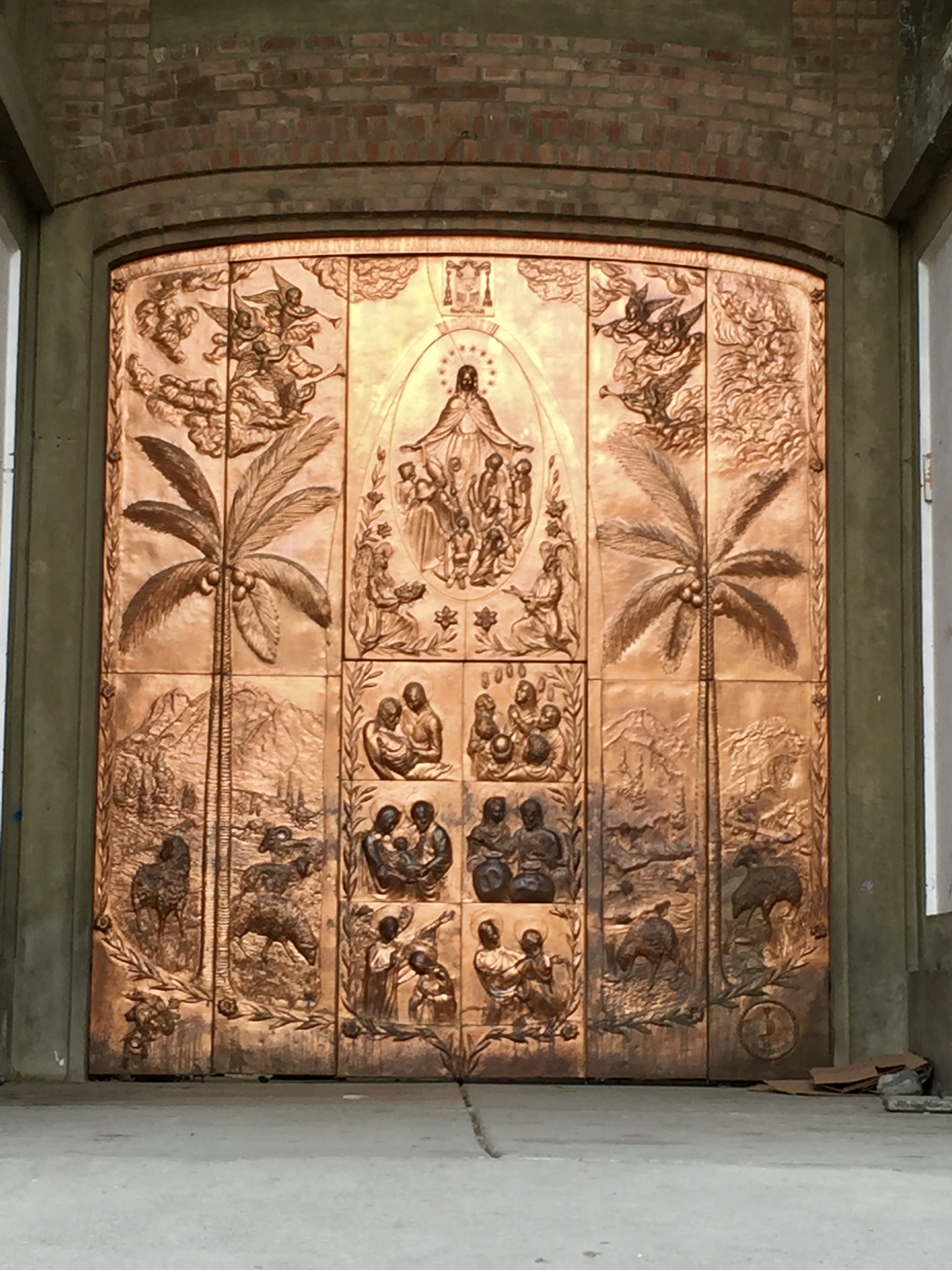
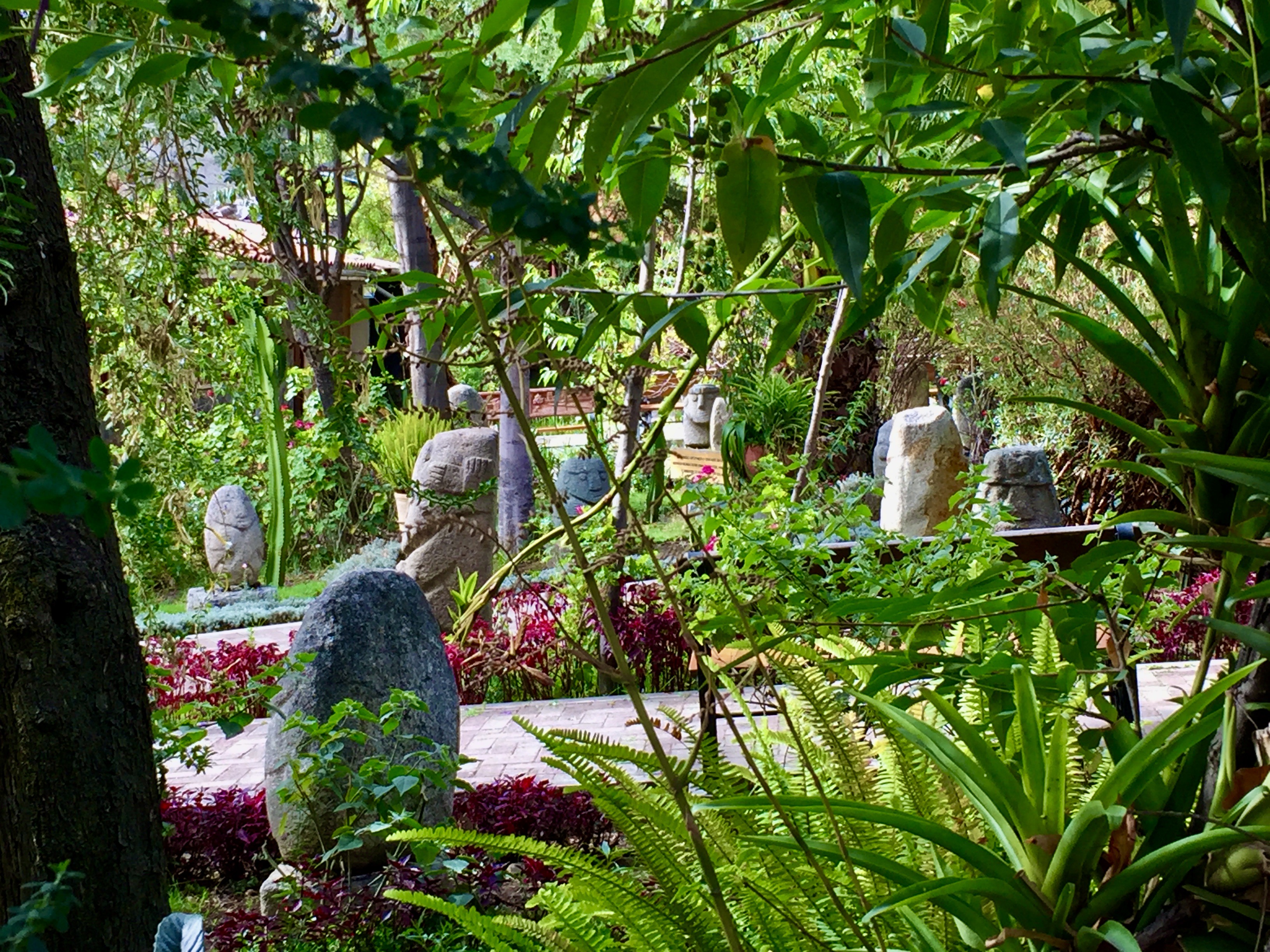
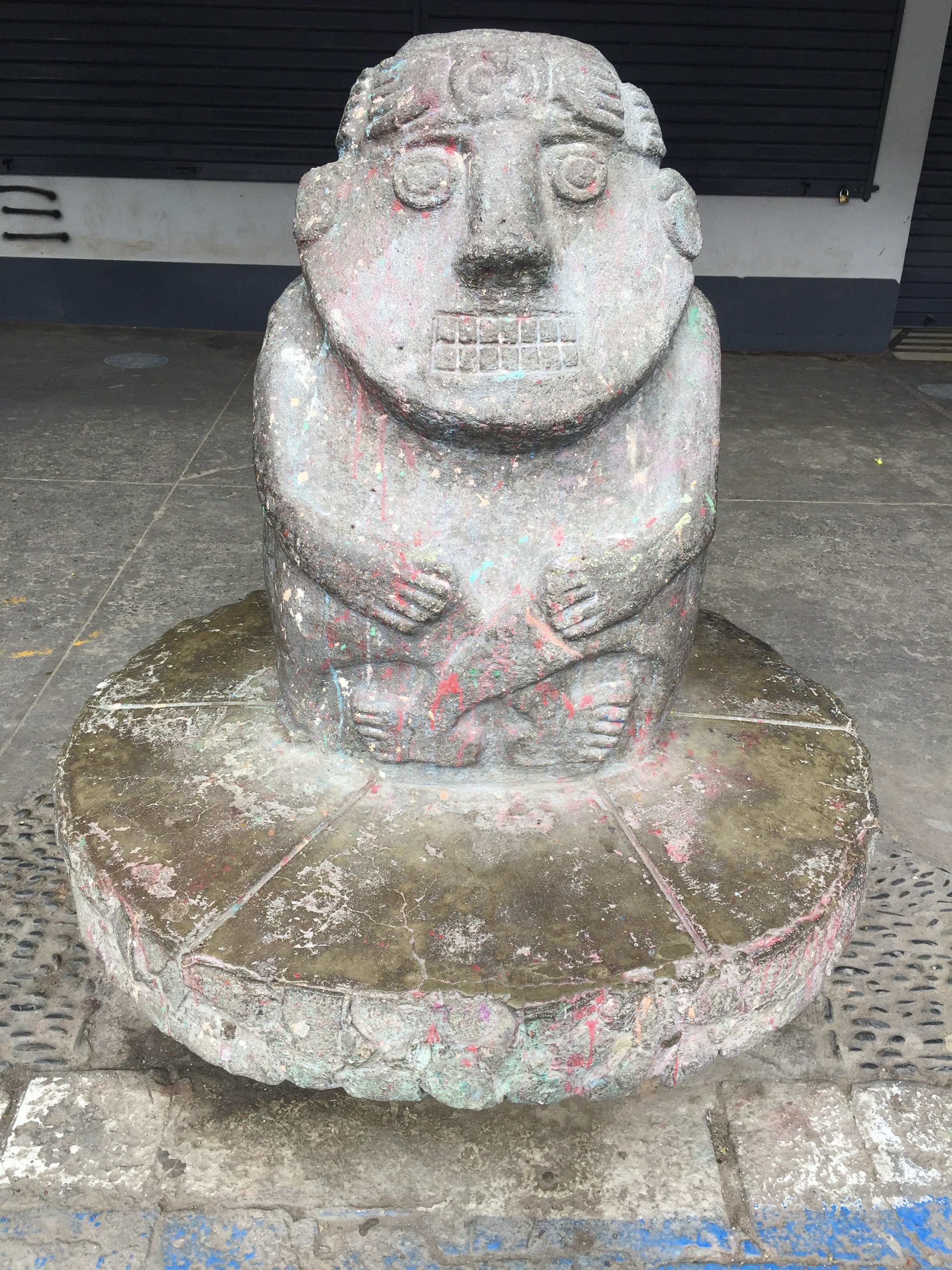
I never had time to get to the museum in Huaraz as it was closed before and after I got back from the tours, so I snuck a peak in the garden, which has a number of stone figures from the Recuay culture. On the main street, they have placed replicas to the figures as public artworks. The church at Plaza Major is closed, but I was able to get a photo of the magnificent doors.

My time in Huaraz and Huascarán National Park has come to an end. I’m very glad I came. Mony tours provided excellent service, good transportation and informative guides. Tomorrow it’s on to a very different habitat – Puerto Maldonado and the Madre de Dios River in the Amazon basin. Pachamama wears many kinds of clothes.
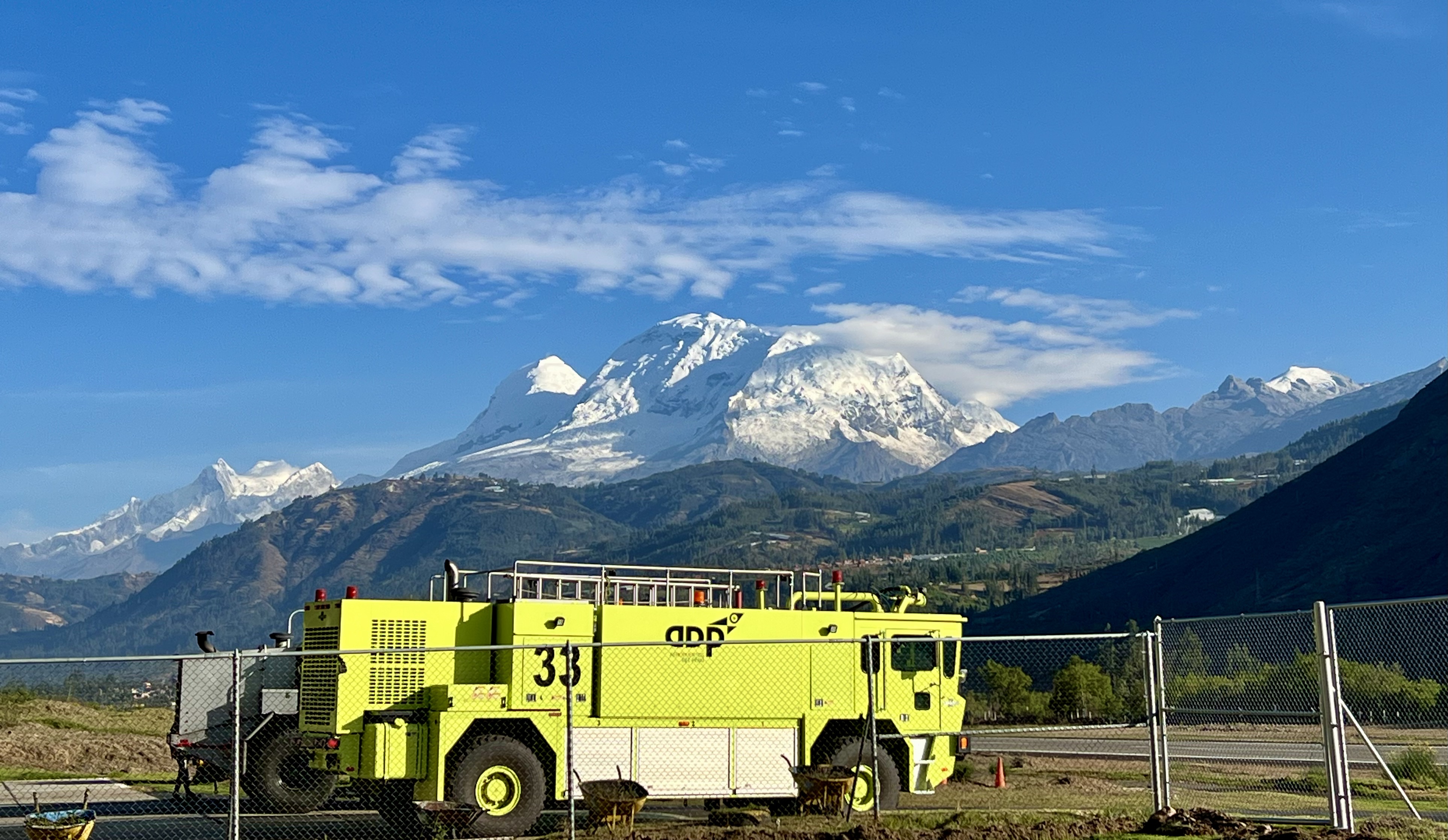
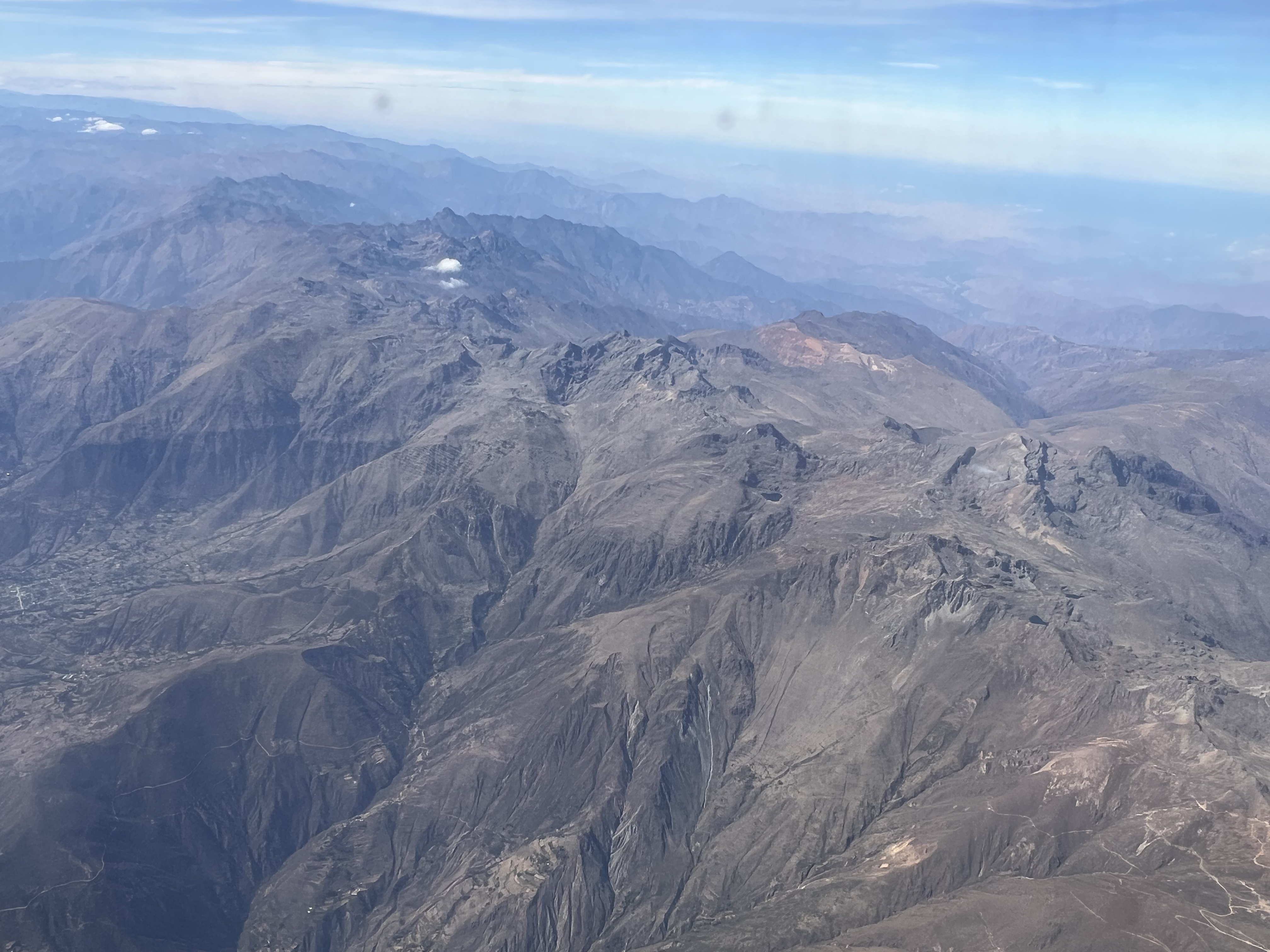
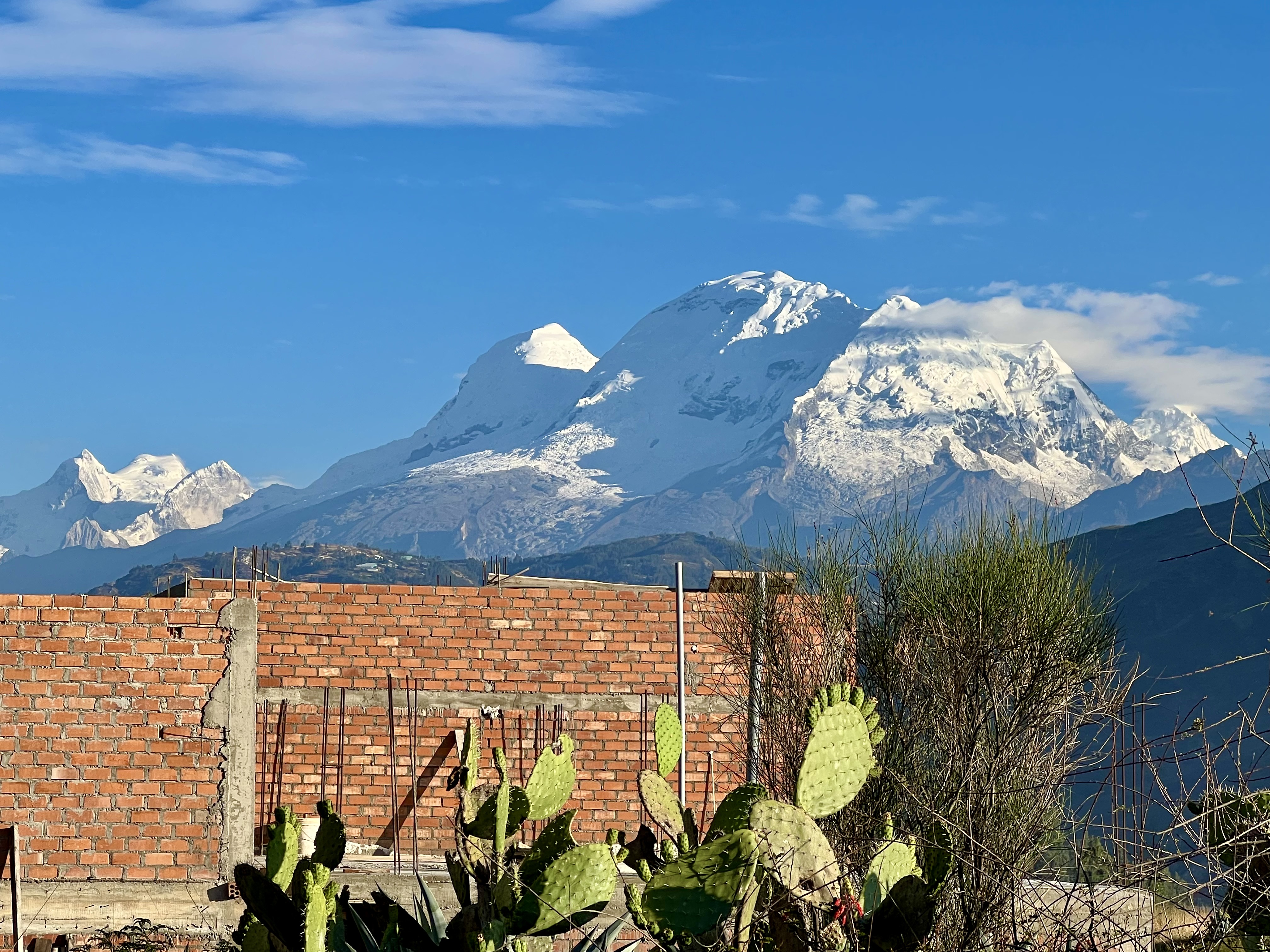
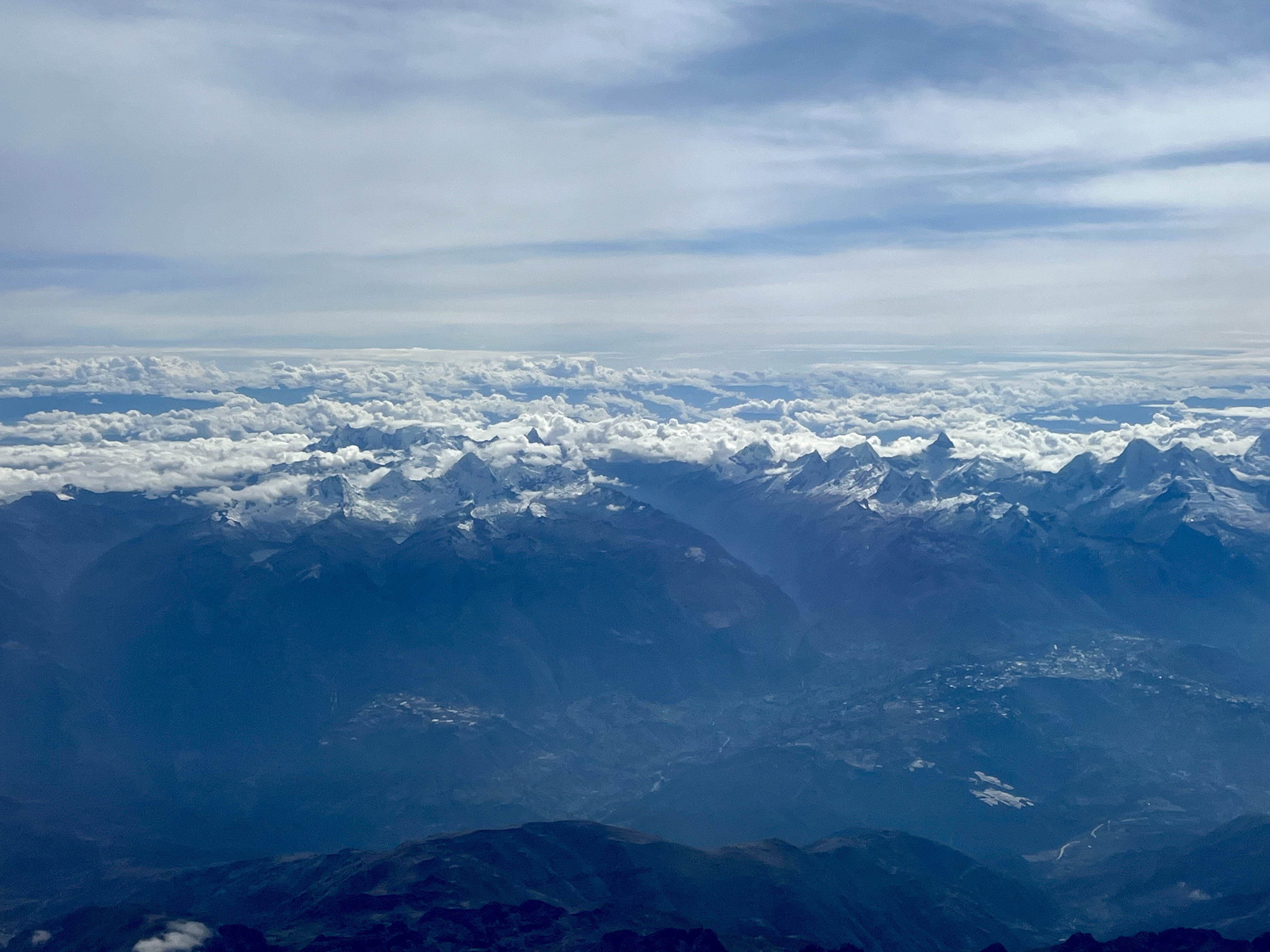
Epilogue: On the way to the airport, the sun came out, the skies cleared and Huascaran, the highest peak in Peru and the highest in the tropics, finally became visible. I was sitting on the wrong side of the plane to get photos of the Cordillera Blanca up close, but did get one that showed the valley with the two cordilleras on either side.
 omegoodyssey