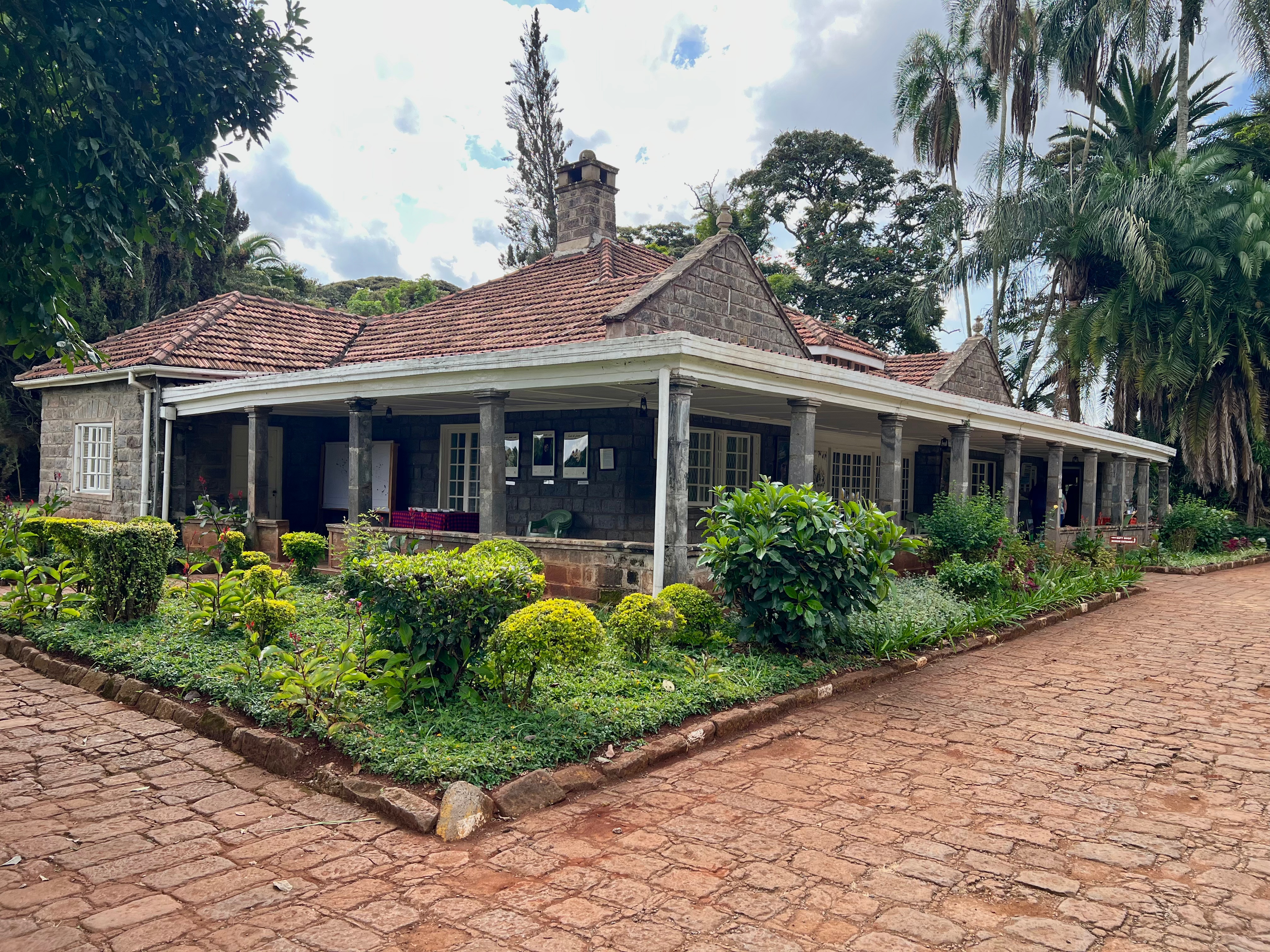
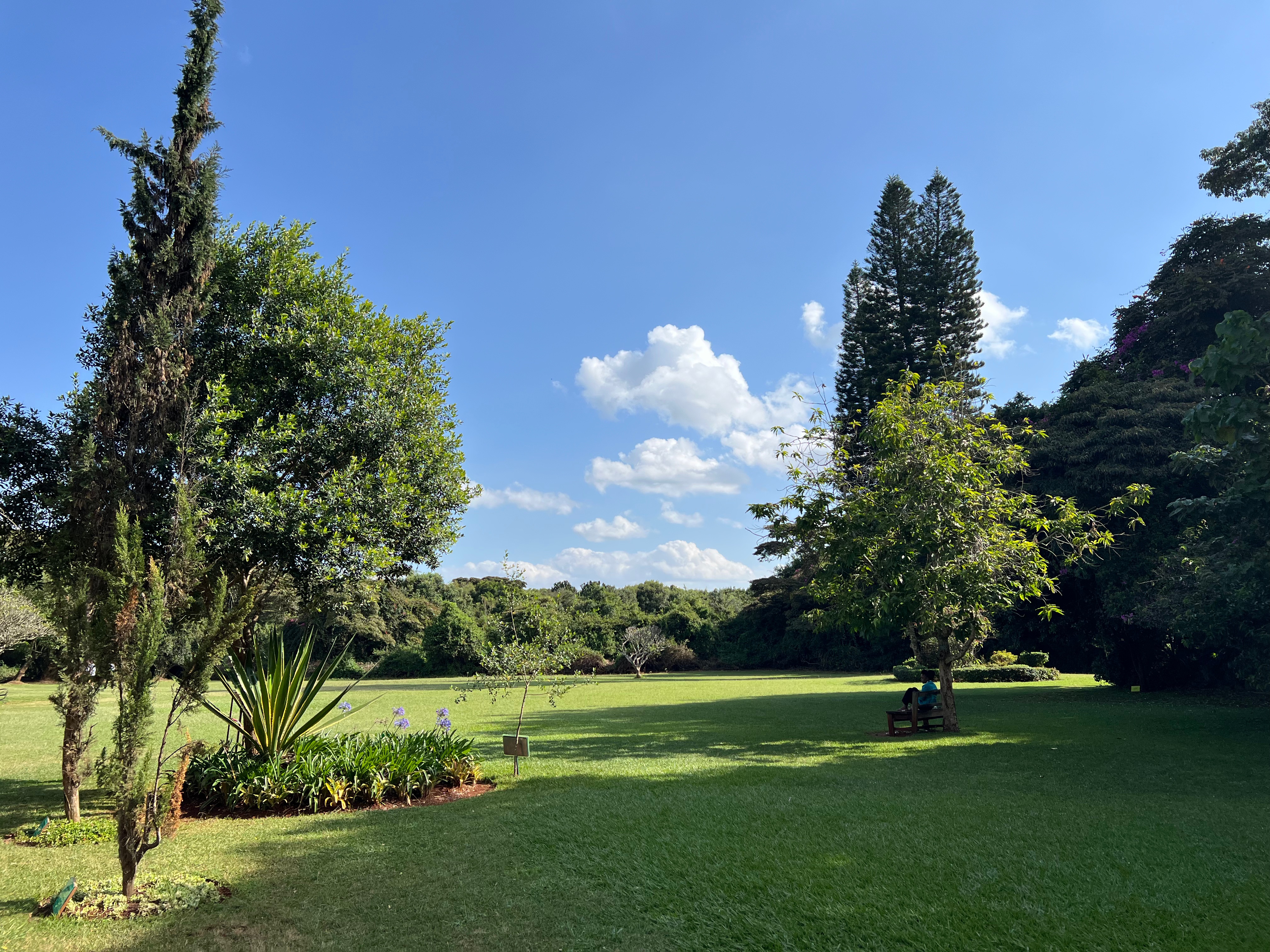
As a child I had a recurring dream. I lived in a one story house with a rock and wood façade and a red tile/brick driveway to the side. There was a large terrace in the front overlooking a large field filled with African wildlife surrounded by tall dense vegetation. At night, scary creatures would come out of the jungle to attack the wildlife, which I rescued by bringing them to the safety of the house and terrace. I had this dream off and on for years. When the Out of Africa film came out in 1985, I was shocked to see ‘my’ house. I have wanted to go to Nairobi to see if this really is the place of my dream since then. Now finally, after almost 70 years (the dreams started when I was three), I can definitively say that the Karen Blixen house is the place I repeatedly dreamed of. The difference between the images in my memory and what I saw on the ground were that now there is no slope. When I mentioned this to the museum guide, she told me that the grounds had been leveled out when they made the museum. Otherwise the house with the fireplace and bookcases is as I remembered/dreamed. The tour of the Karen Blixen Museum discusses her history and that of Denis Finch Hatten, much of which is similar to what was shown in the film. The entire section of Nairobi now called Karen was part of her farm and is named in her honor. The farm failed, and she left Africa feeling like a failure after having lost her family’s funds that they had invested in the coffee plantation, but time tells a different story. Her legacy of pursuing her goals in spite of tremendous odds has transformed the region and helped innumerable people. Her story proves that legacies are beyond the lifespan of a particular person and that personal failure during one period of one’s life does not necessarily mean long term or community failure. Hope does spring from mistakes, and her very successful career as a writer might not have developed to the extent it did if her plantation had flourished.
Almost adjacent to the former Blixen property is the Nairobi National Park. The park is about seven km outside the city limits and covers 117 sq km (45 sq mi). The British established the park in 1945, well before independence, and in hindsight it is very good they did as otherwise the natural encroachment that cities take would have destroyed the ecosystem and animal habitats. I took a Get Your Guide group tour to the National Park, the Sheldrick Elephant Orphanage and the Giraffe Center. There were five of us in the van, a young German from Stuttgart who had met his Kenyan girlfriend online and was visiting her for the first time – they made a very cute couple, a young man from Japan who had been traveling across Eurasia and Africa for the past 10 months and was about to head back home in a couple of days, a young woman from California who surprisingly is an alumna of Northern Arizona University, from where I am retired. Both of the latter two had quit their jobs in order to travel for months on end; a courageous undertaking in today’s market and absolutely the right thing to do as work will likely always be found, if not precisely what one imagines, but the images and memories from travel cannot be replaced.
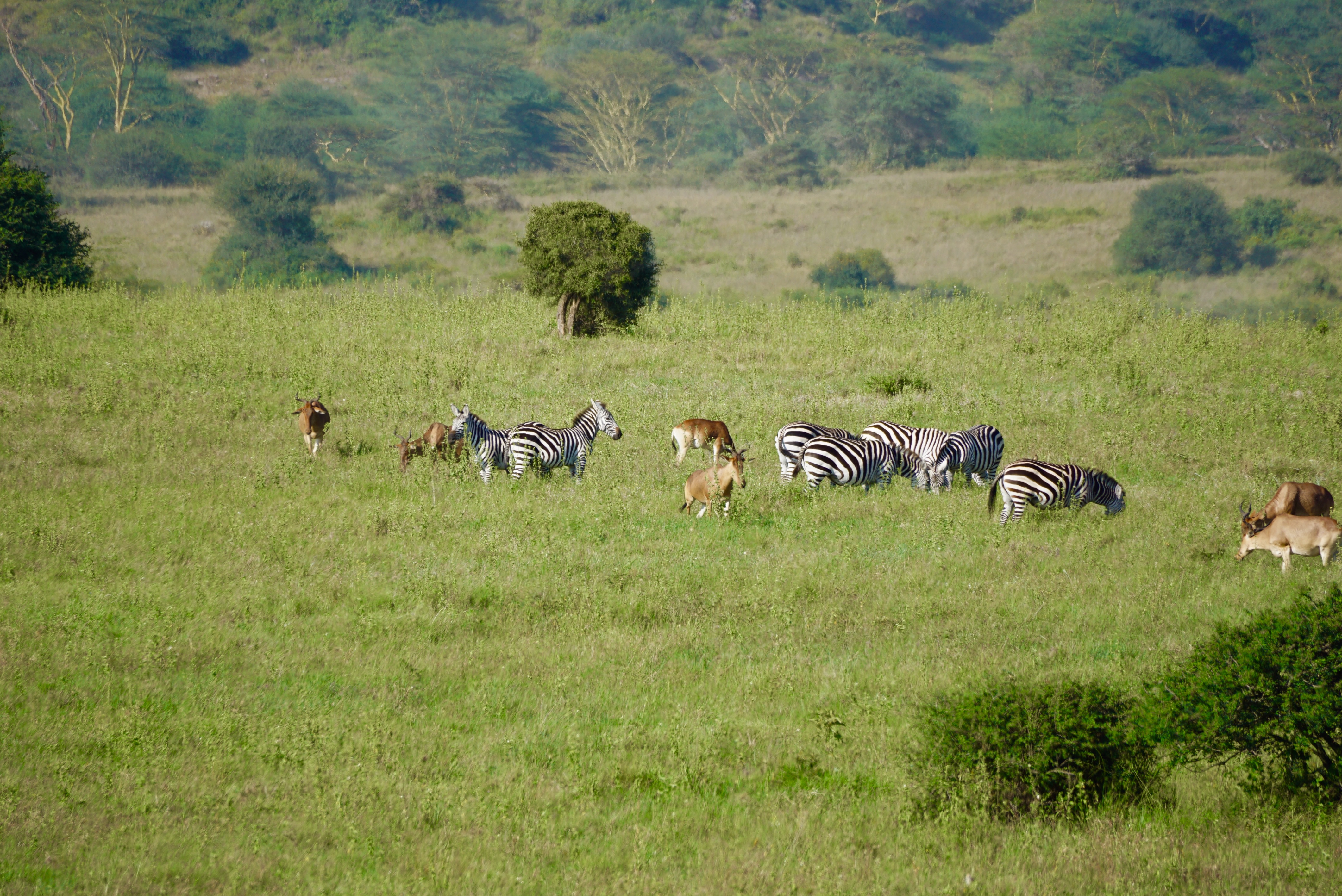
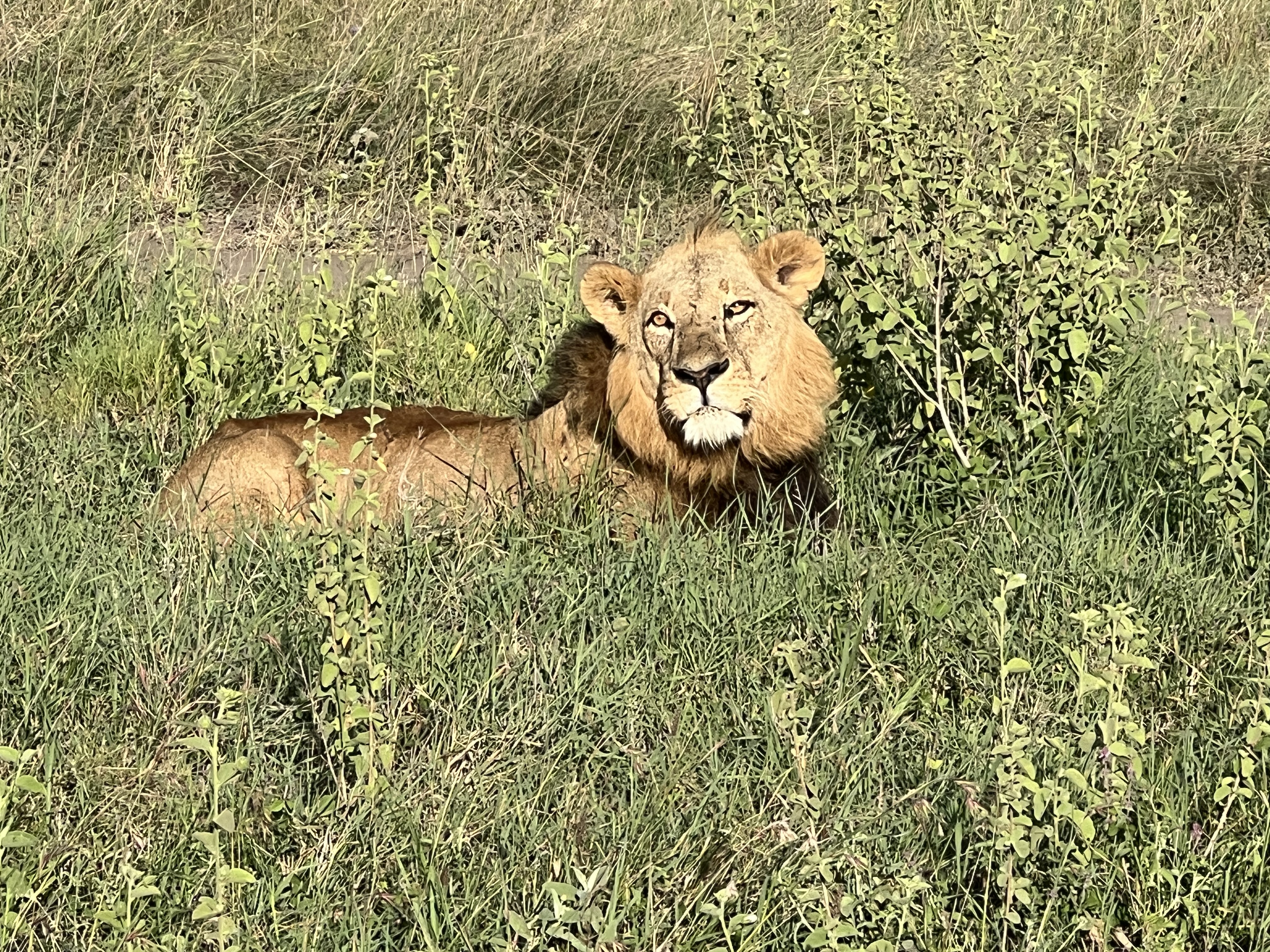
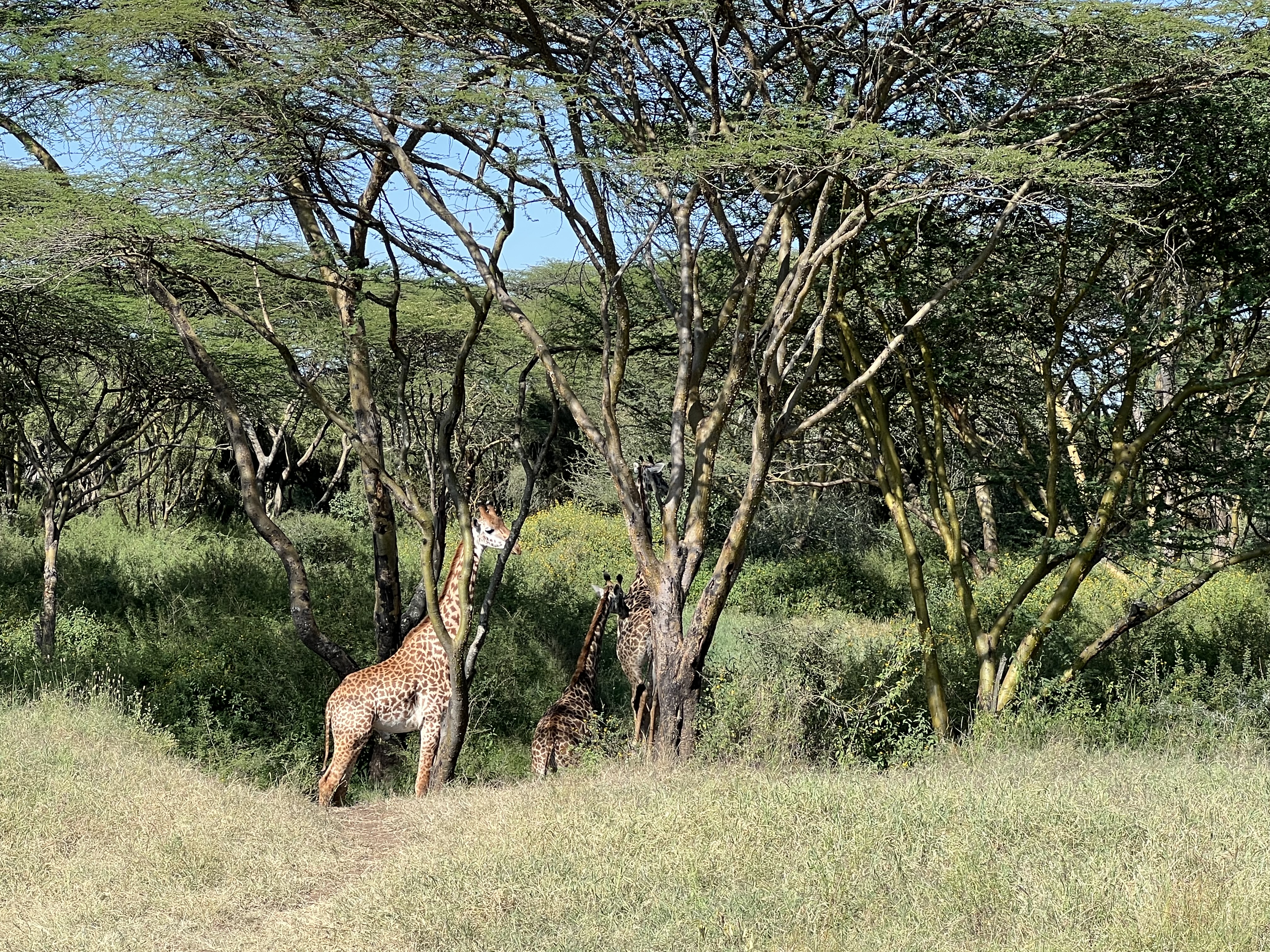
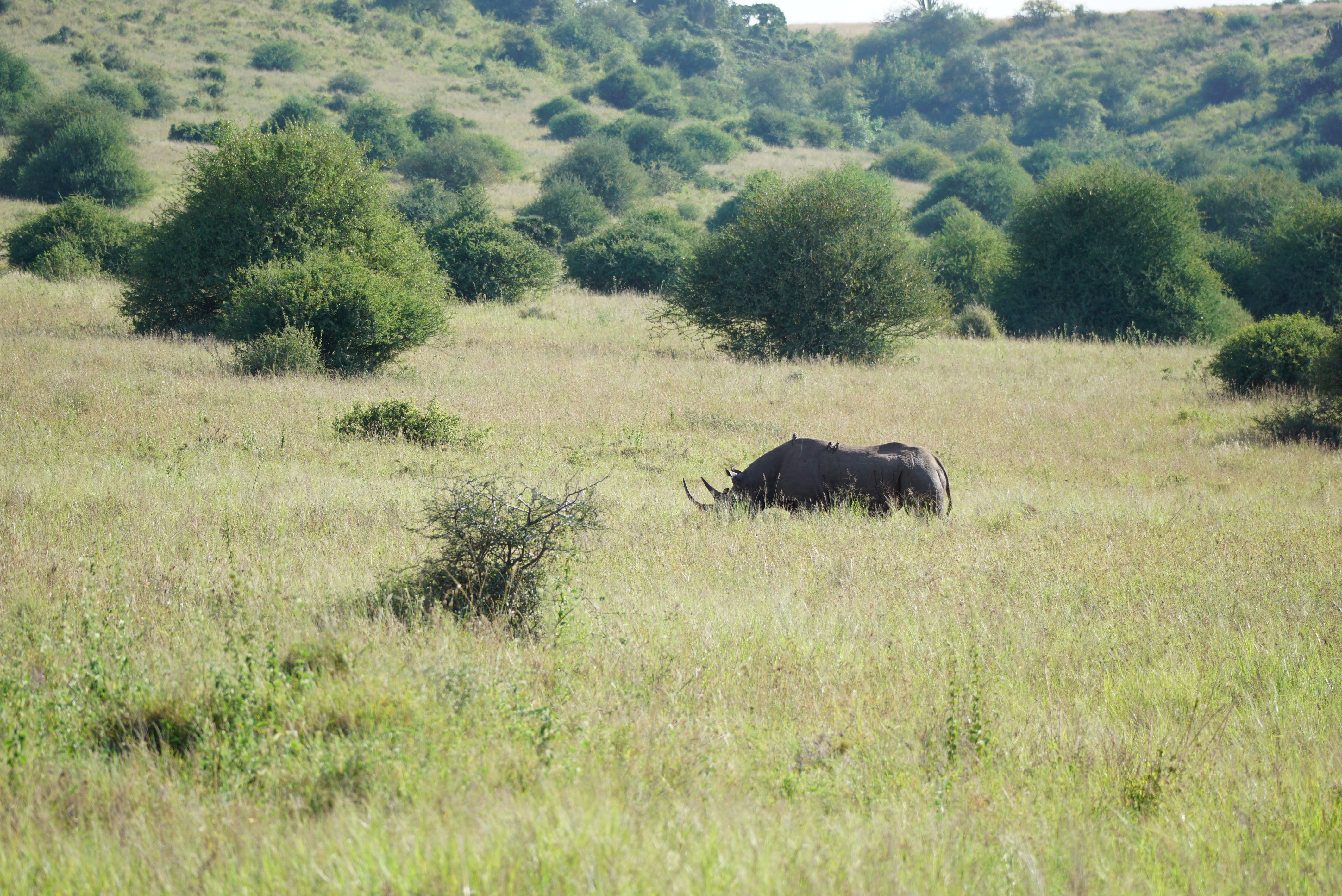
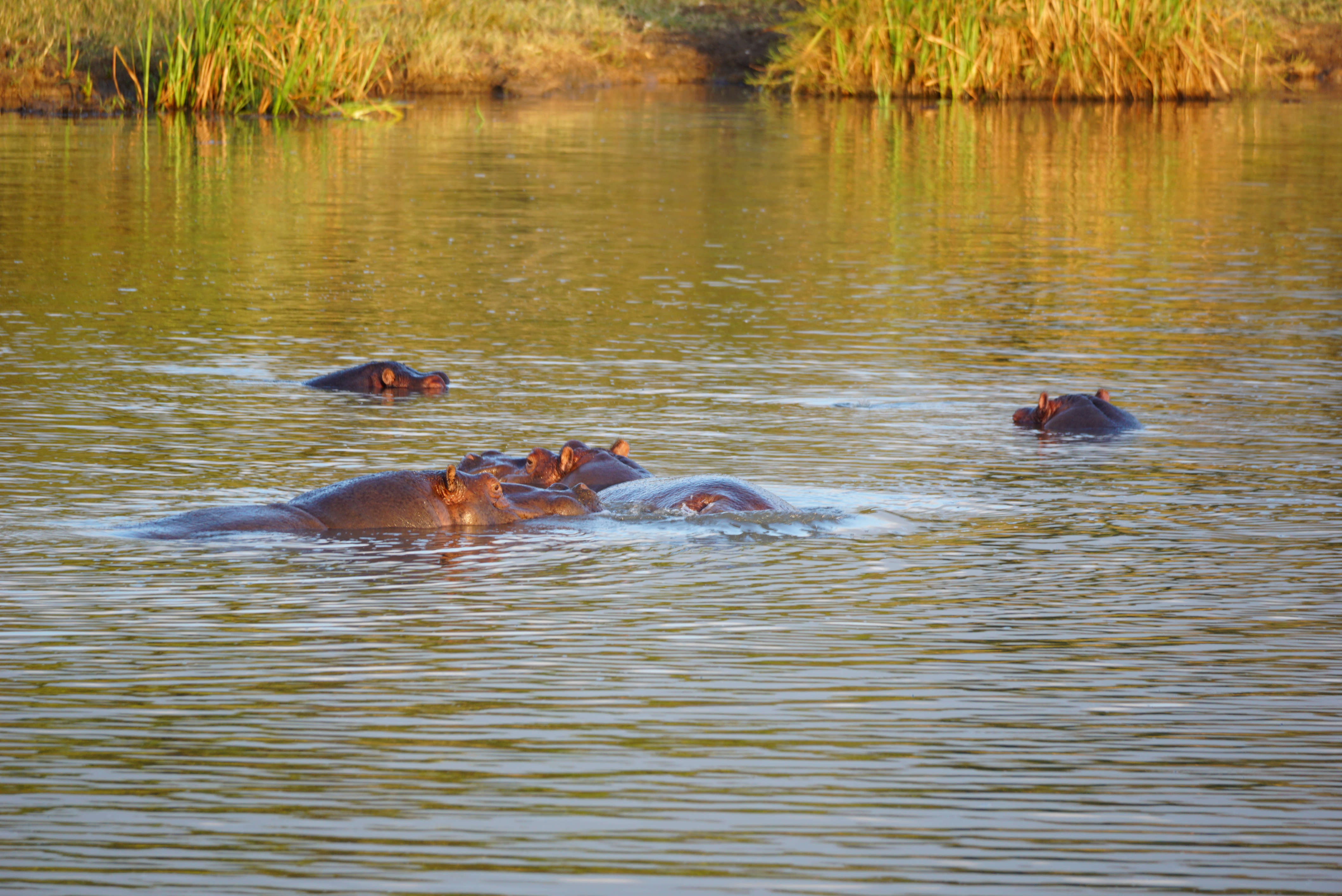
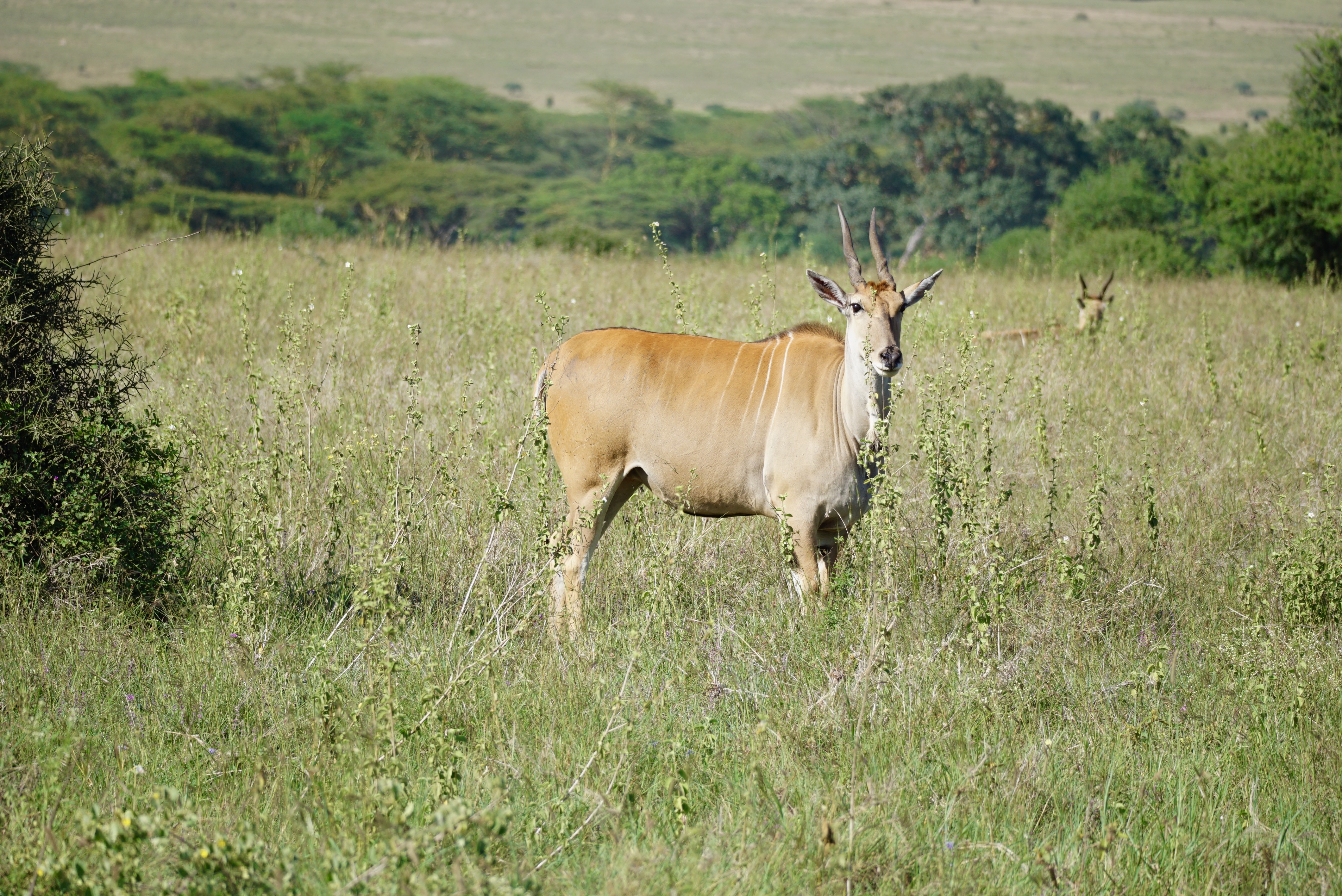
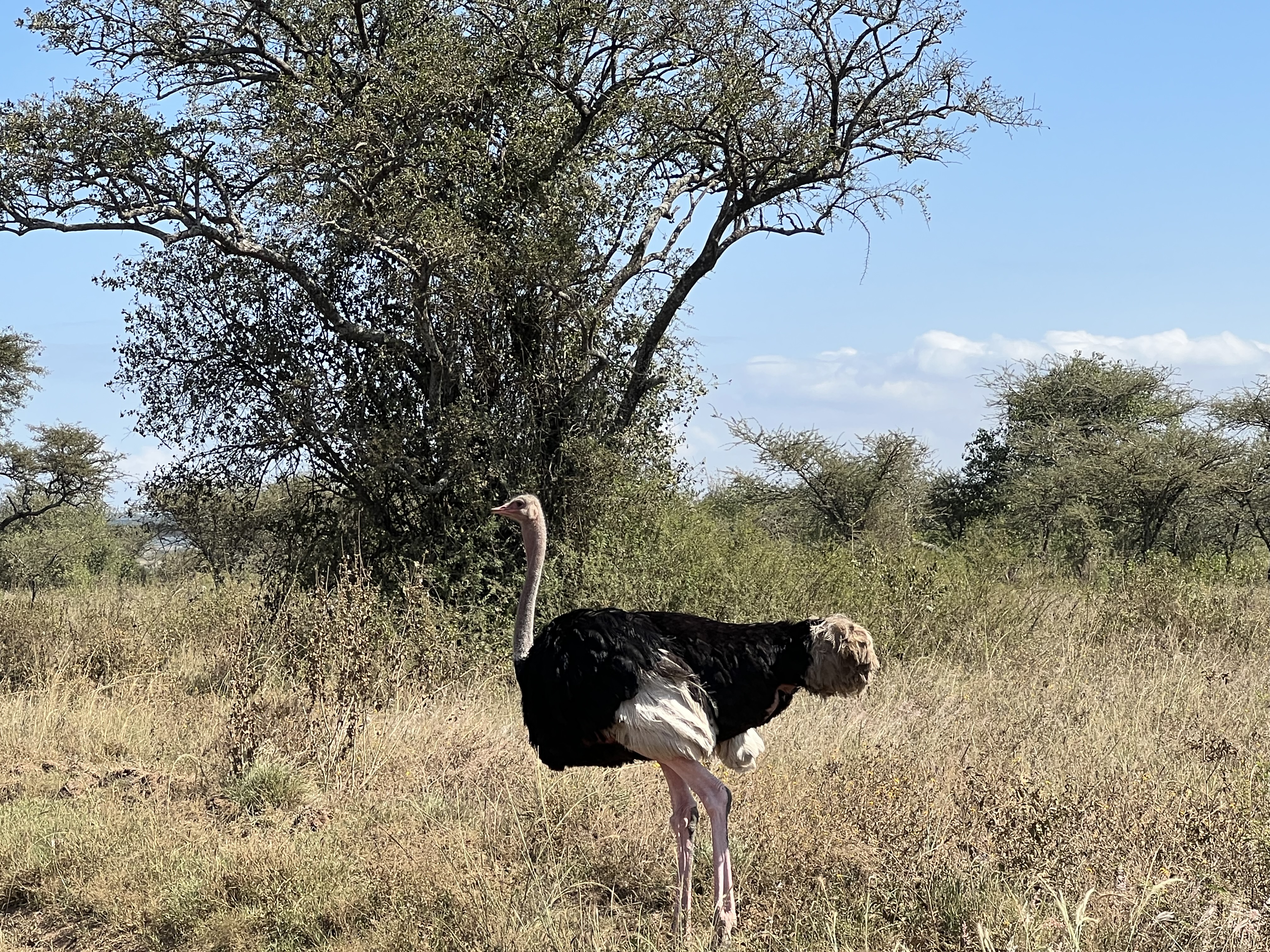
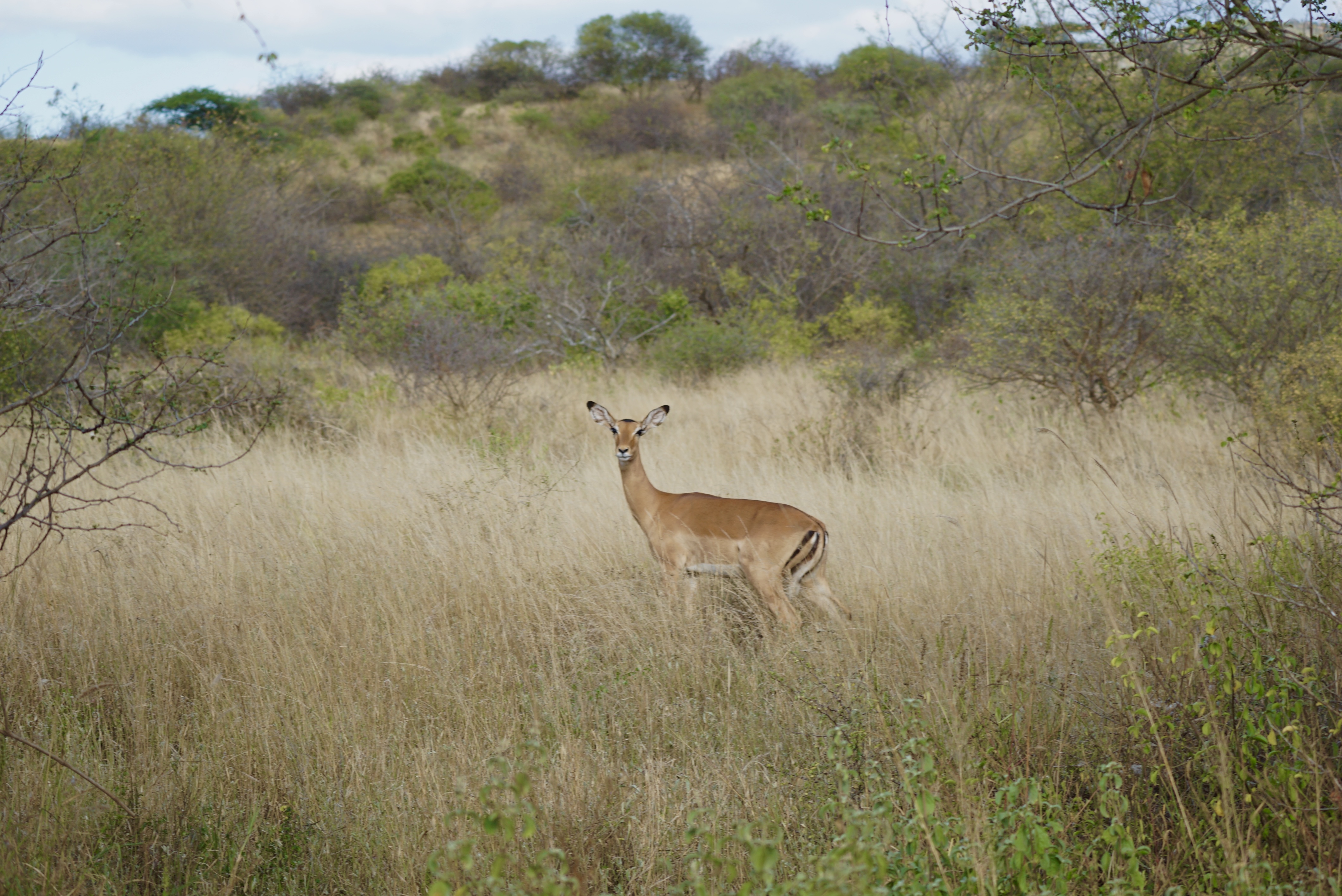
The animal life in Nairobi National Park was amazing. Even at the entrance, baboons were playing in the trees and a giraffe came meandering by. As we made our way into the interior we saw zebras, giraffes, elands, impalas, gazelles, ostriches, hippos, rhinos, crocodiles, rock hyraxes, and both male and female lions. Most of the animals were fairly far away, but the lions were lying right next to the tourist jeeps, completely unconcerned by the people in the vehicles who didn’t seem to disturb their sleep patterns at all. The giraffes also allowed us to get close, and at times I wasn’t sure who was contemplating whom. They were fairly intent in their staring at us.


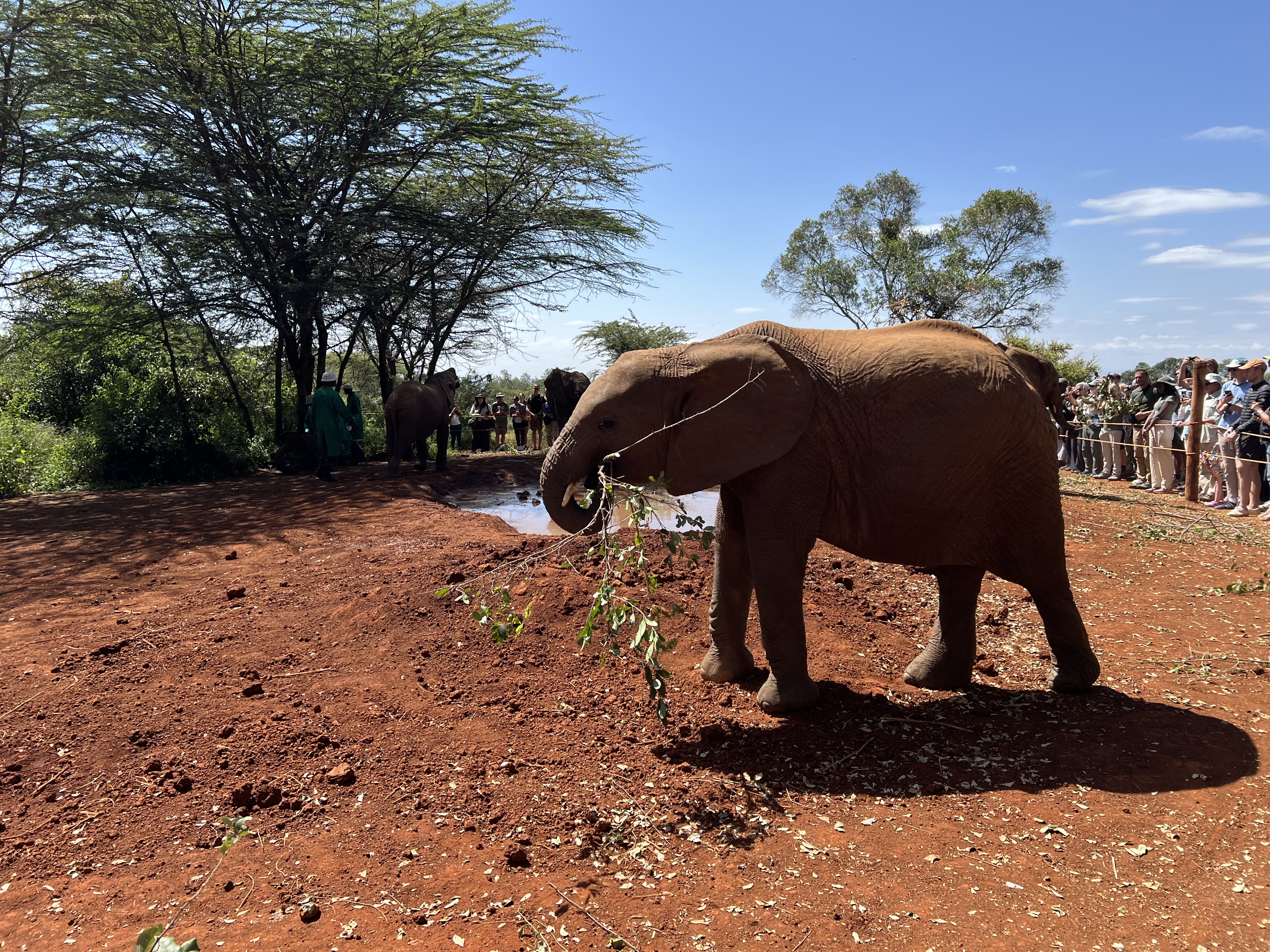
The Sheldrick Elephant Orphanage Trust has 13 babies under the age of three and a half. After that age, they send them to what amounts to a halfway station for them to become accustomed to life in the wild. Once they fail to return in the evening from the wild to the halfway station, they are considered to have been adopted by a family unit and are re-wilded. Some of the females do return on occasion to show their former keepers their offspring before heading back into the forest. We were told that at least 70 babies have been born to mothers who were taken in as orphans. The babies under two are bottle fed human baby formula as apparently that is what they can handle the best. Orphan elephants can be adopted on their website for $50 per year, and this covers funds for the elephant as well as the keeper. (sheldrickwildlifetrust.org )The keepers stay with the babies 24hrs per day because the babies need to be fed every three hours. The Orphanage also has two rhinos, one has been blind since birth and the other is partially paralyzed, so they would not survive in the wild. The Orphanage is only open between 11-12 and pre-registration is mandatory. It is absolutely worth visiting!

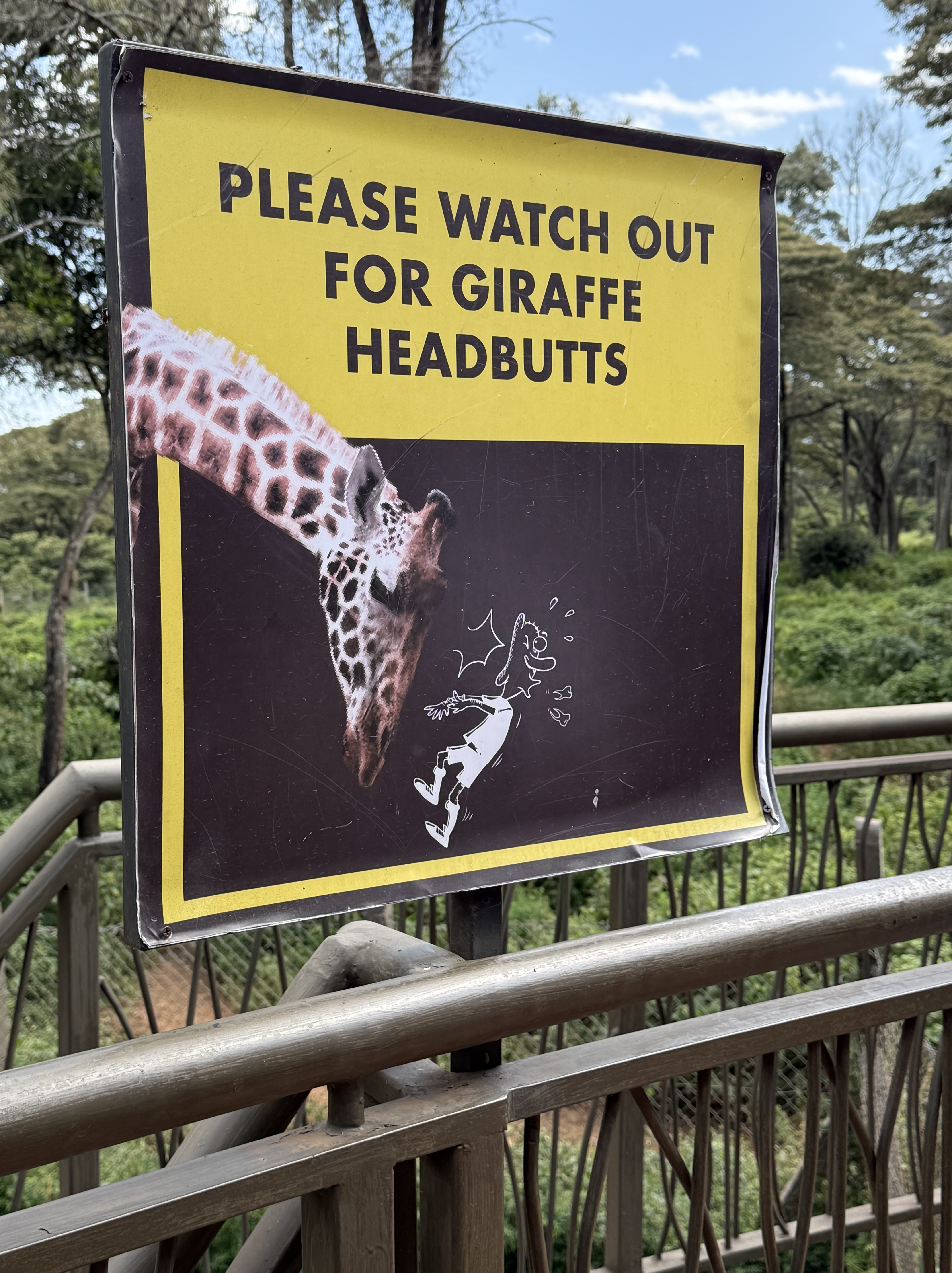
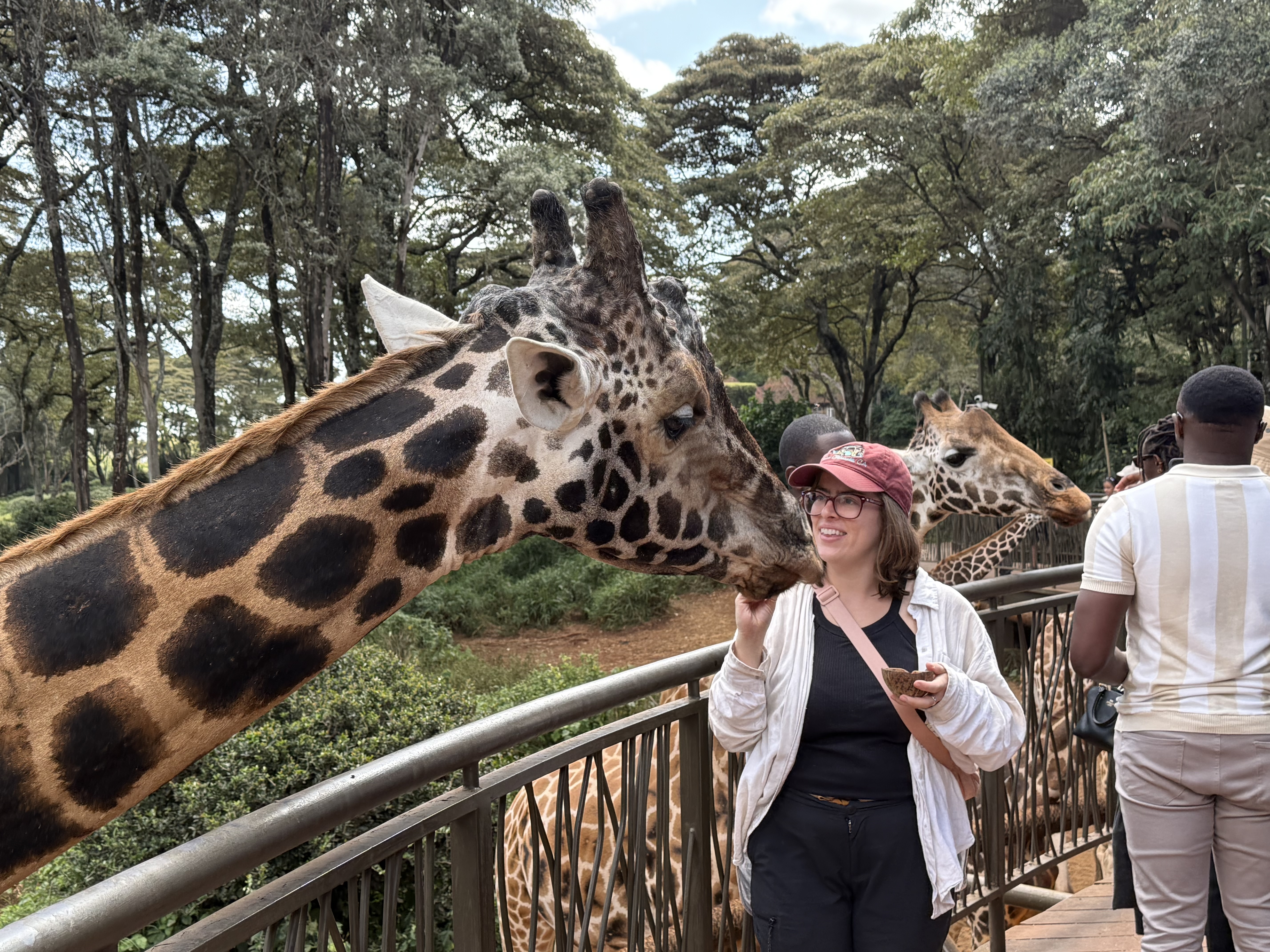
The Giraffe Center is a rescue and breeding center for Rothschild giraffes that were almost extinct by the 1980s. A couple opened the center by capturing two to start the breeding program. Since that time, the Rothschild giraffe population has grown from about 130 to well over a few thousand thanks to their efforts. The center is now run by the daughter of the original couple. There is a walkway around the education center where the giraffes come up to to be fed pellets that the visitors get at the entrance. Rather than laying the feed/pellets directly on the palm of the hand, the way one would feed a horse, the pellets are to be held by two fingers and gently placed on the long grey-black thick tongue of the giraffe. A sign warns that some of the giraffes will headbutt people to get more food. There are 10 giraffes at the center, including one that is just a little over a year old.
The next day, I got up early to start the official safari with Antonio Safaris. I chose them after an internet search suggested that Antonio is an excellent guide. He now has his own firm with a cadre of drivers. I met Antonio and he introduced me to my guide-driver Robert, and we promptly headed off to Tsavo National Park. Tsavo is the largest park in Kenya with a total of 22,812 sq km (almost 8808 sq mi). Tsavo East is the larger section with 13,747 sq km and is also the drier side. I chose to go to the somewhat smaller, but still very large Western section; we arrived about 12:30 at the Kilaguni Serena Lodge. When I was shown to my room, I was blown away. In front of the window were herds of zebras and oryx. When I went to the dining room, a herd of elephants was hanging out by some trees, a giraffe was walking by, a couple of buffalo were near the water while the baboons played in the water pools, and a group of wildebeests were lying in the shade under a few trees. In the lodge itself, geckos scampered on the railings and baboons played by the porches to the rooms. The view across the valley was spectacular. The red soil heightened the palette of striking colors with the green trees and blue sky.
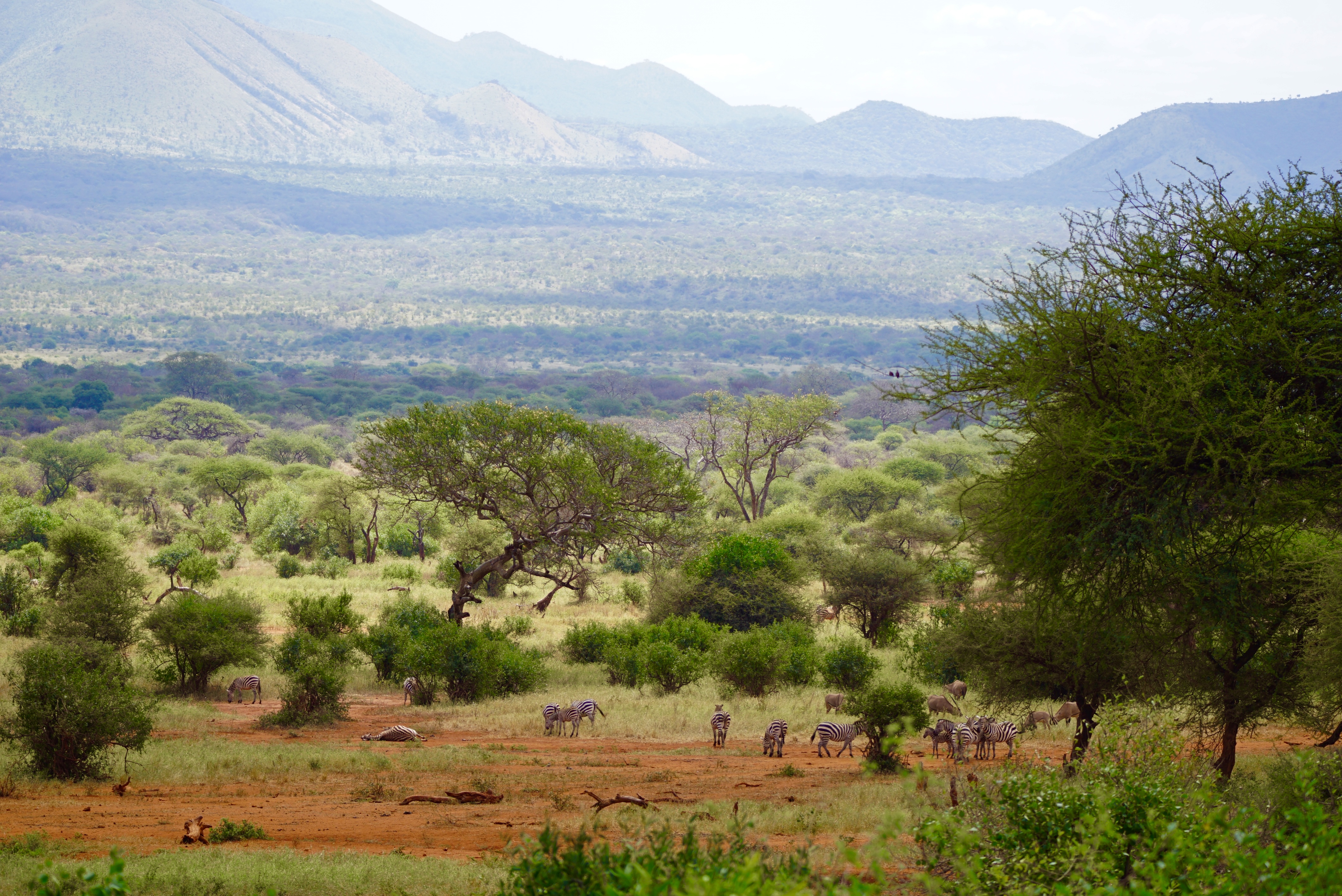

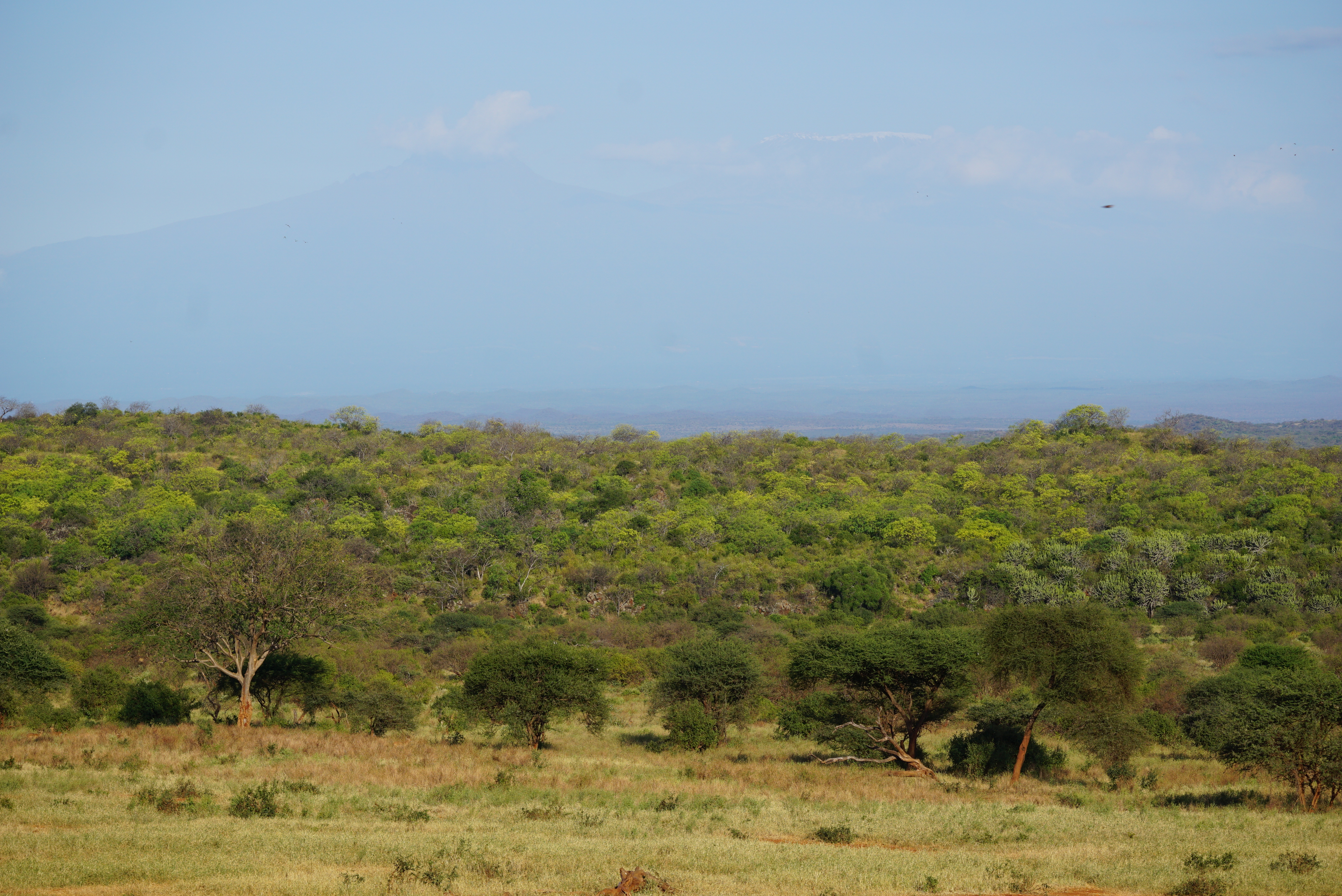
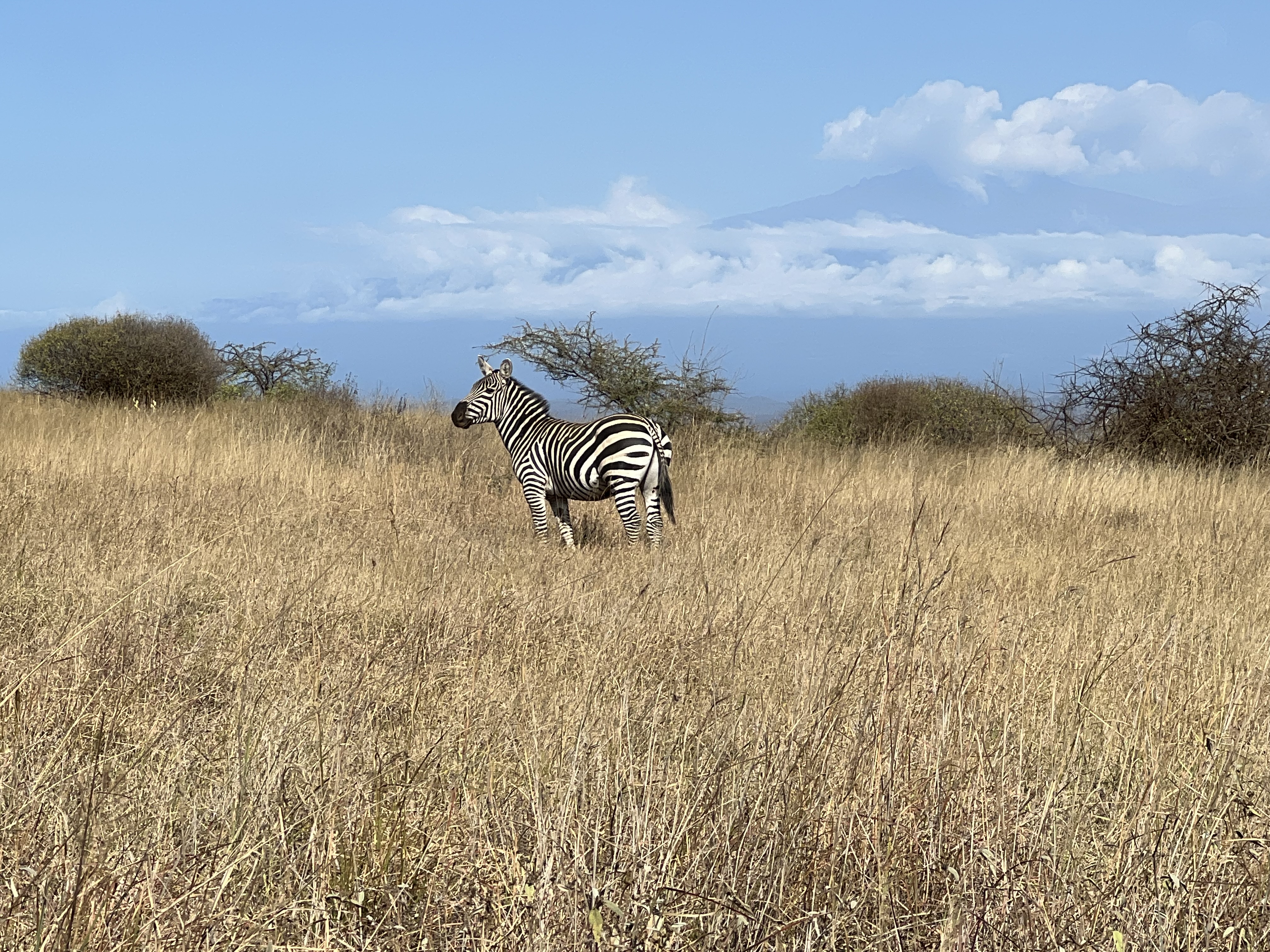
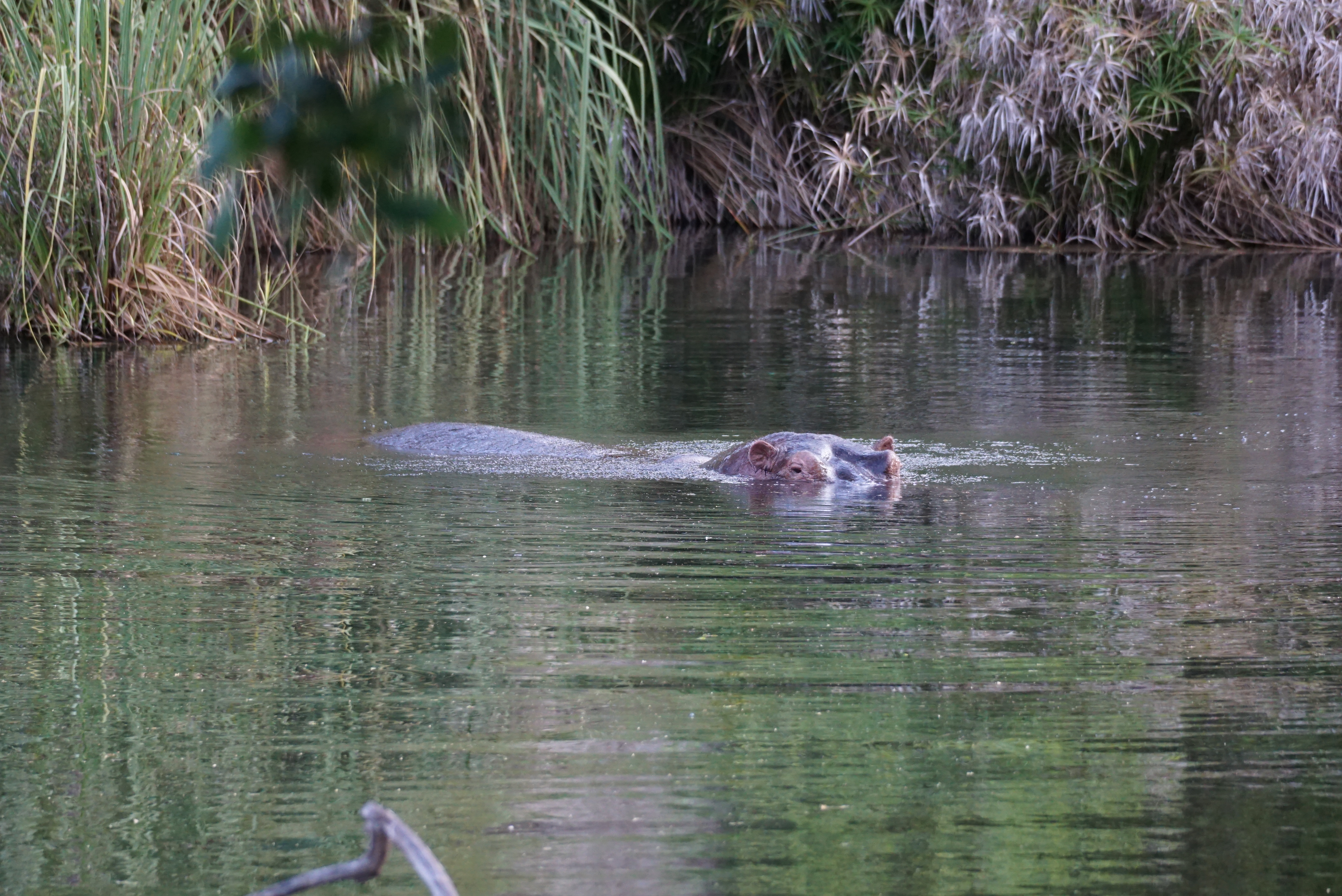
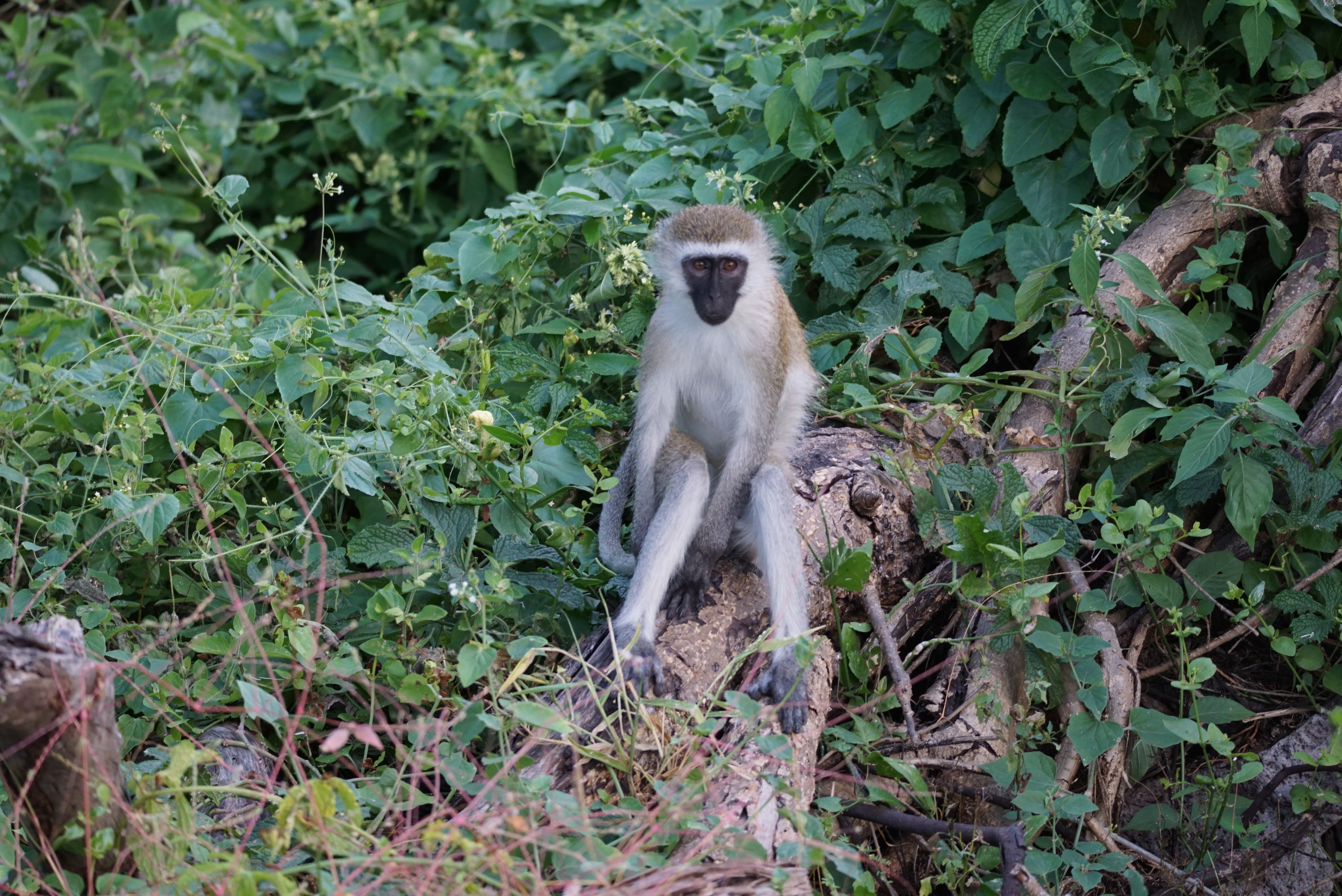
In the late afternoon, Robert took me on a trip to the Mzima Springs, where there were more crocodiles, hippos and both black and vervet monkeys than one could count, along with a few rock hyraxes. The bird life throughout the park was amazing, and ornithologists would have a fabulous time. The Springs provide water to the camps in the park and on to Mombasa. The water comes from underground springs as well as from Kilimanjaro, which is very faintly visible in the third and fourth photos above. The Springs are beautiful and there is a viewing platform that showcases the fish and underwater life in the pools. A hippo didn’t come by the platform while I was there, but I imagine it would be fascinating to view one swimming/walking by from below the waterline, as it was the fish alone were quite colorful.


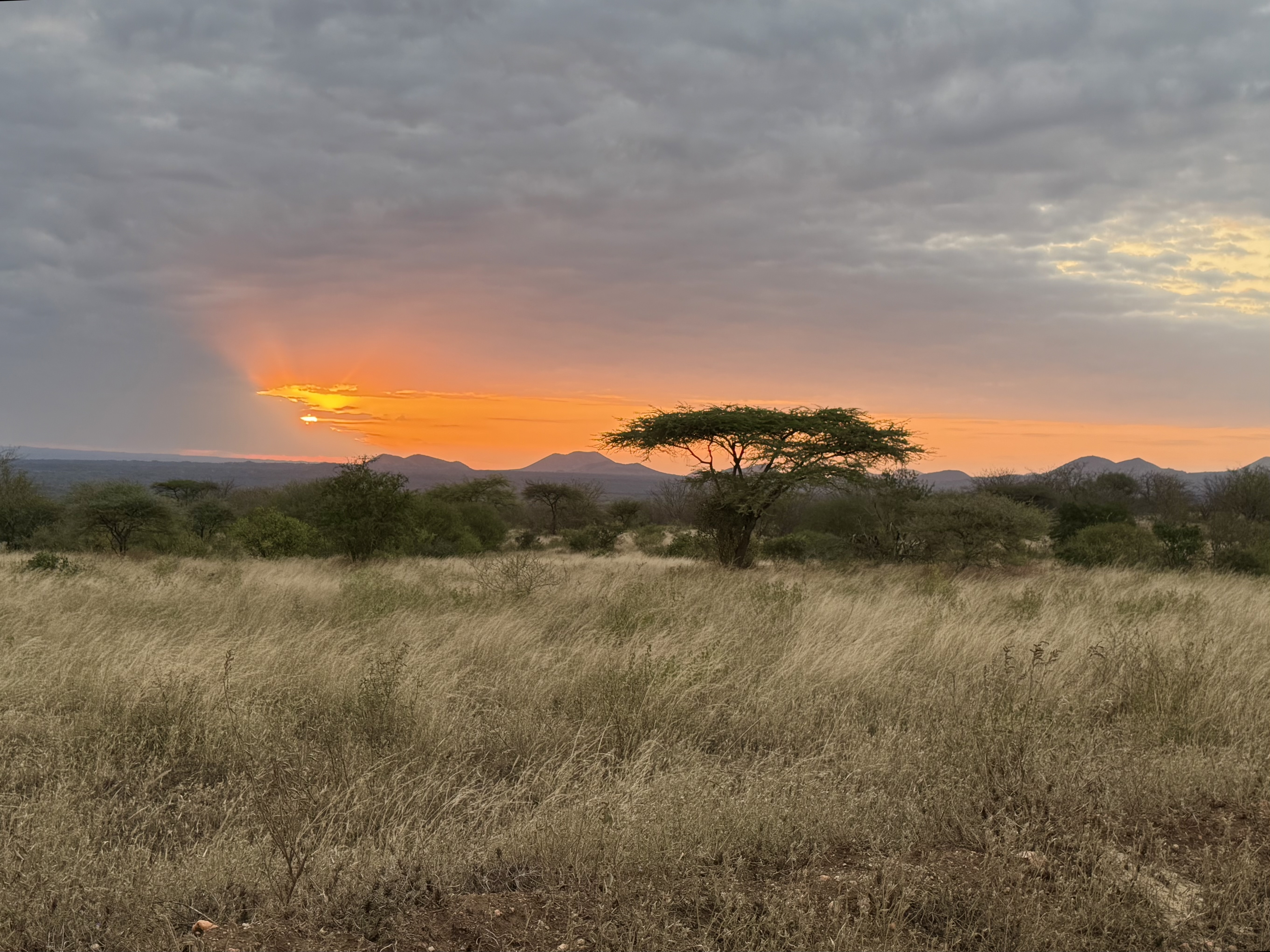
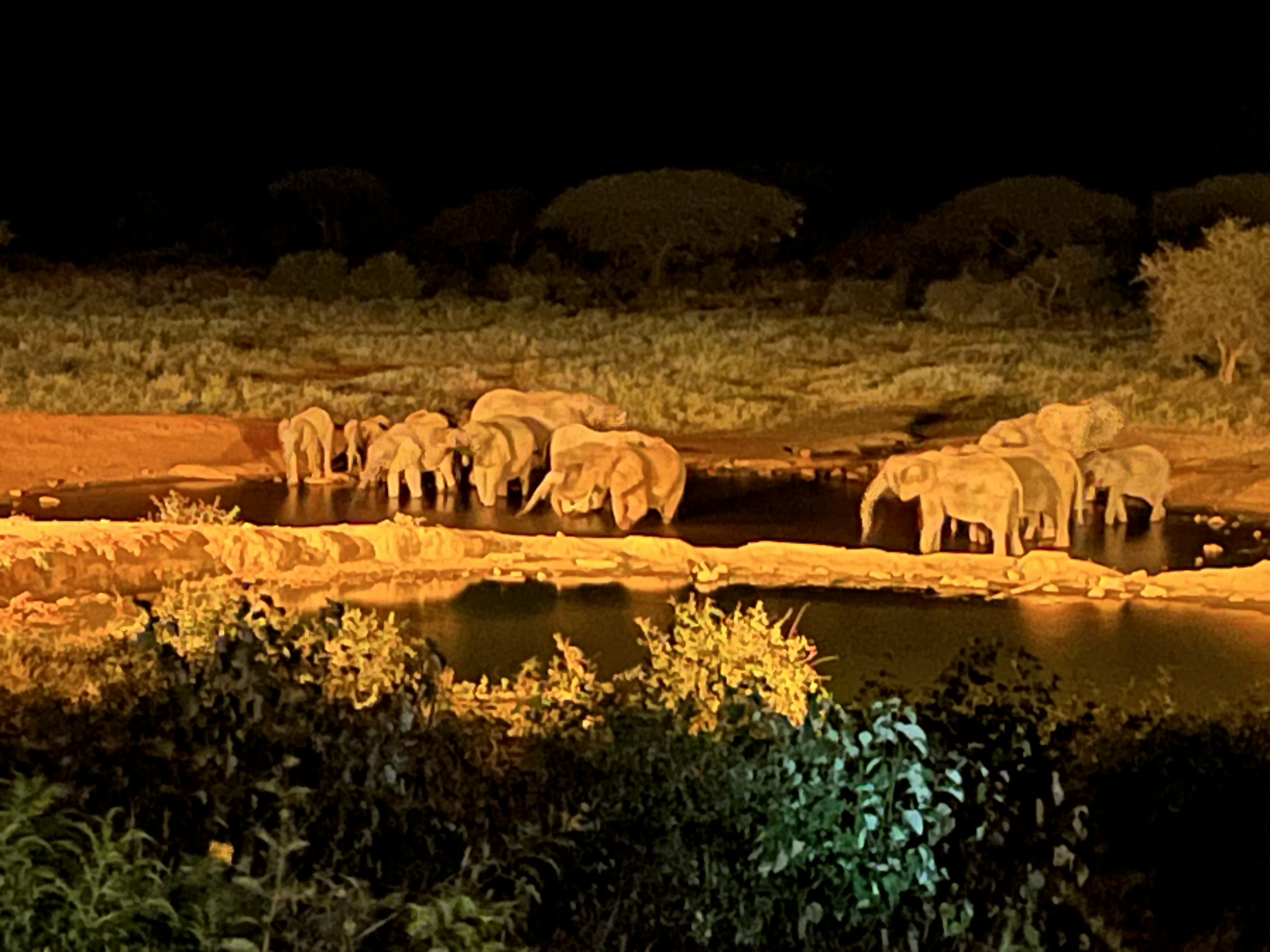
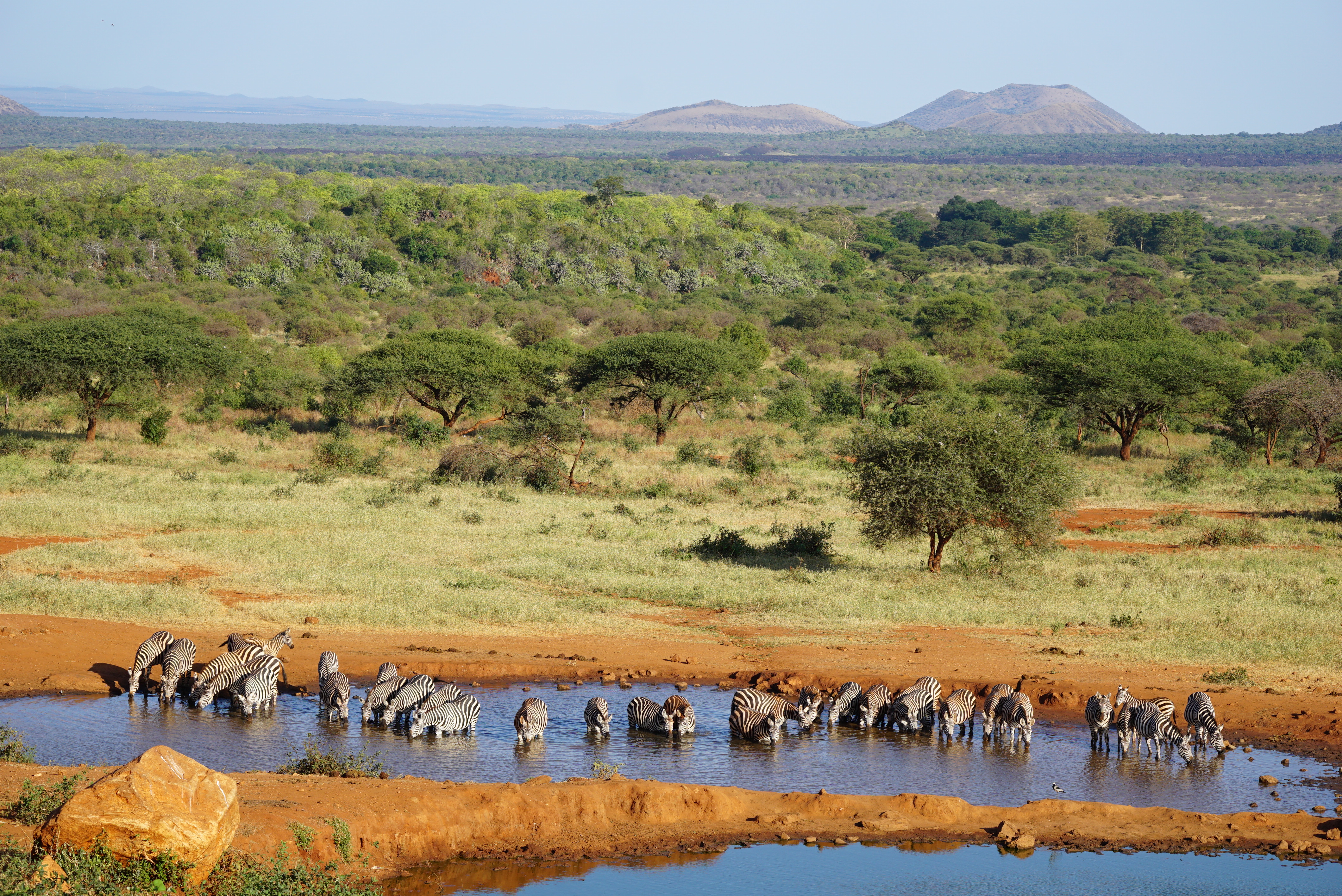
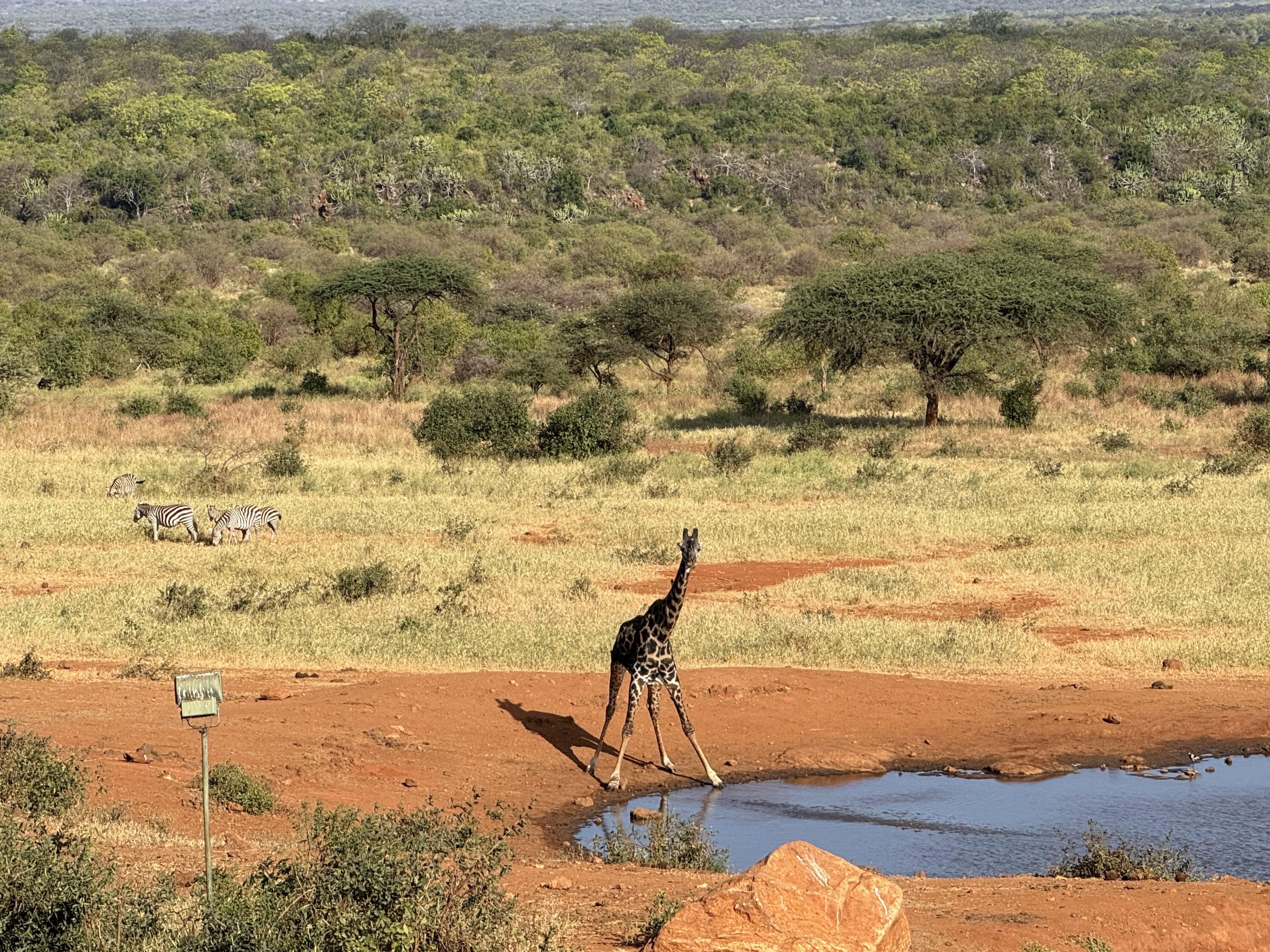
The evening had a special treat, as a herd of elephants came down to the water hole to drink and put on a show. They appeared the next morning as well, followed by a gaggle of quail, then two different herds of zebras, and a giraffe. They waited until the one group was finished before they made their way to the water. Tsavo has some very polite wildlife.

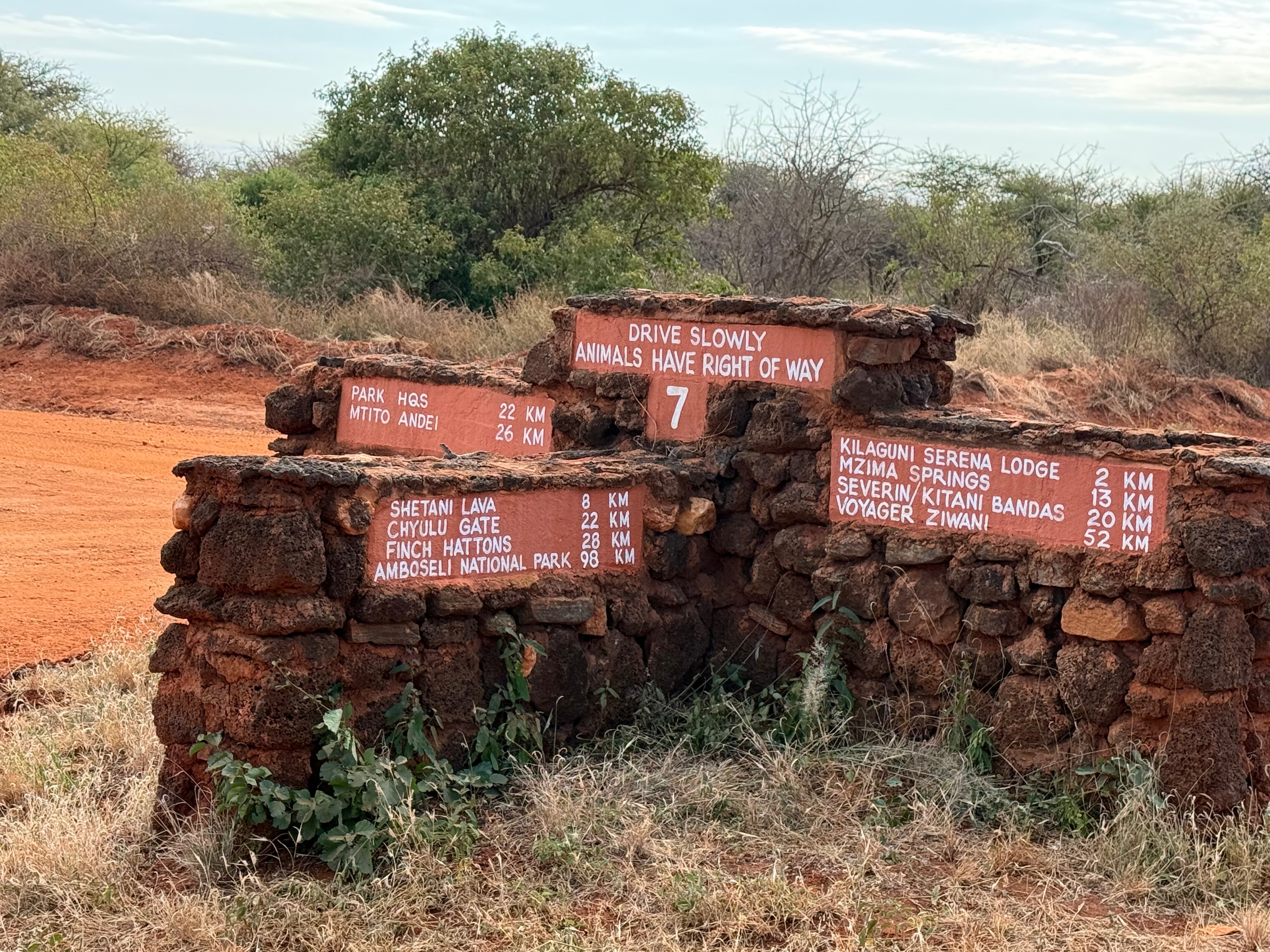
After breakfast and the watering hole show, we headed on to Amboseli National Park via the backroads, leaving Tsavo by the Chyulu Gate. The dirt path was very dusty and often a washboard, but the scenery was fascinating as it changed from the red soiled green hills filled with wildlife to barren white-grey earth with a few scrubby thorny grey acacias where a few wildebeests, an occasional waterbuck, a rabbit, and lots of Thomson and Grants gazelles tried to ferret out some sustenance .
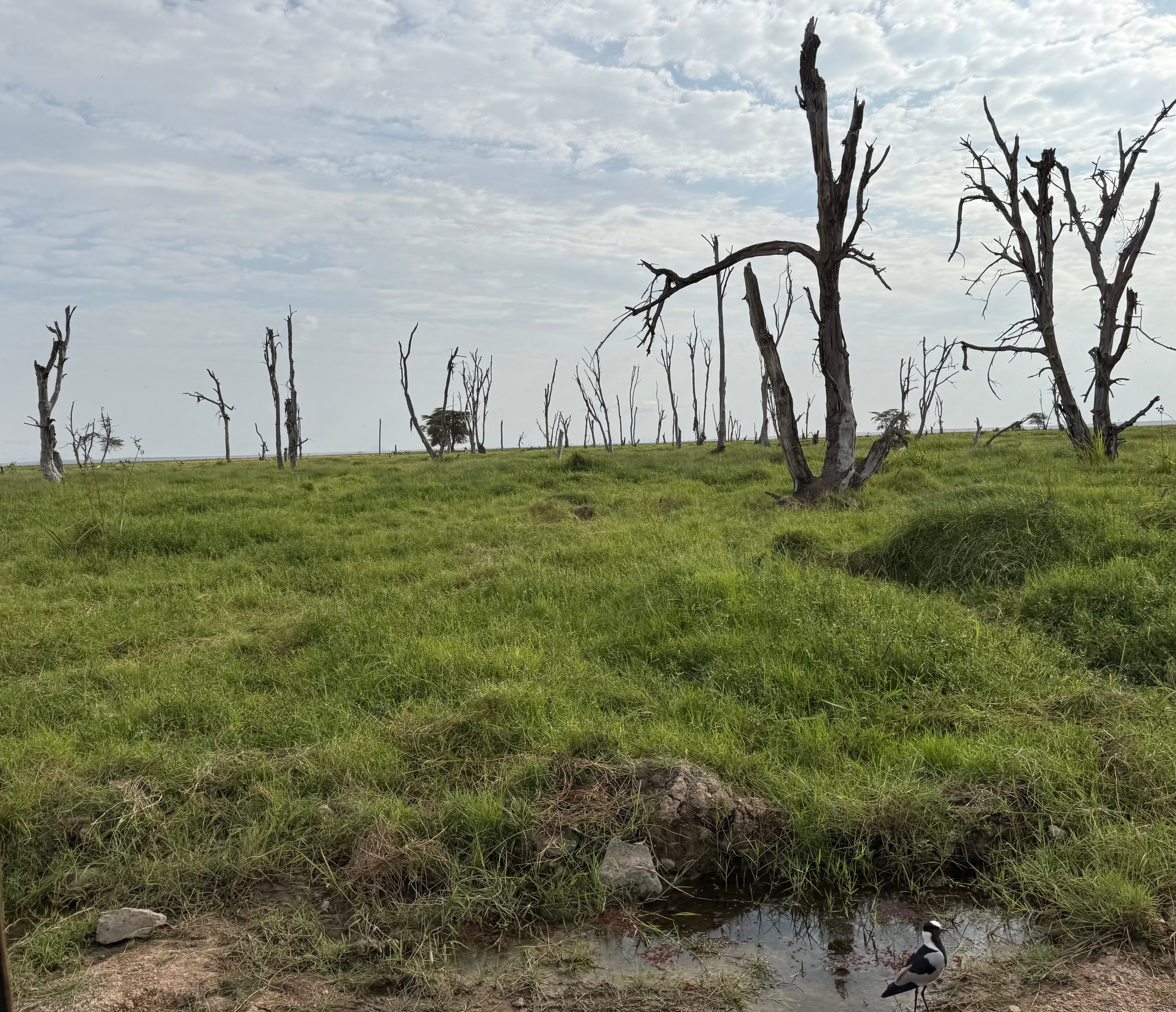
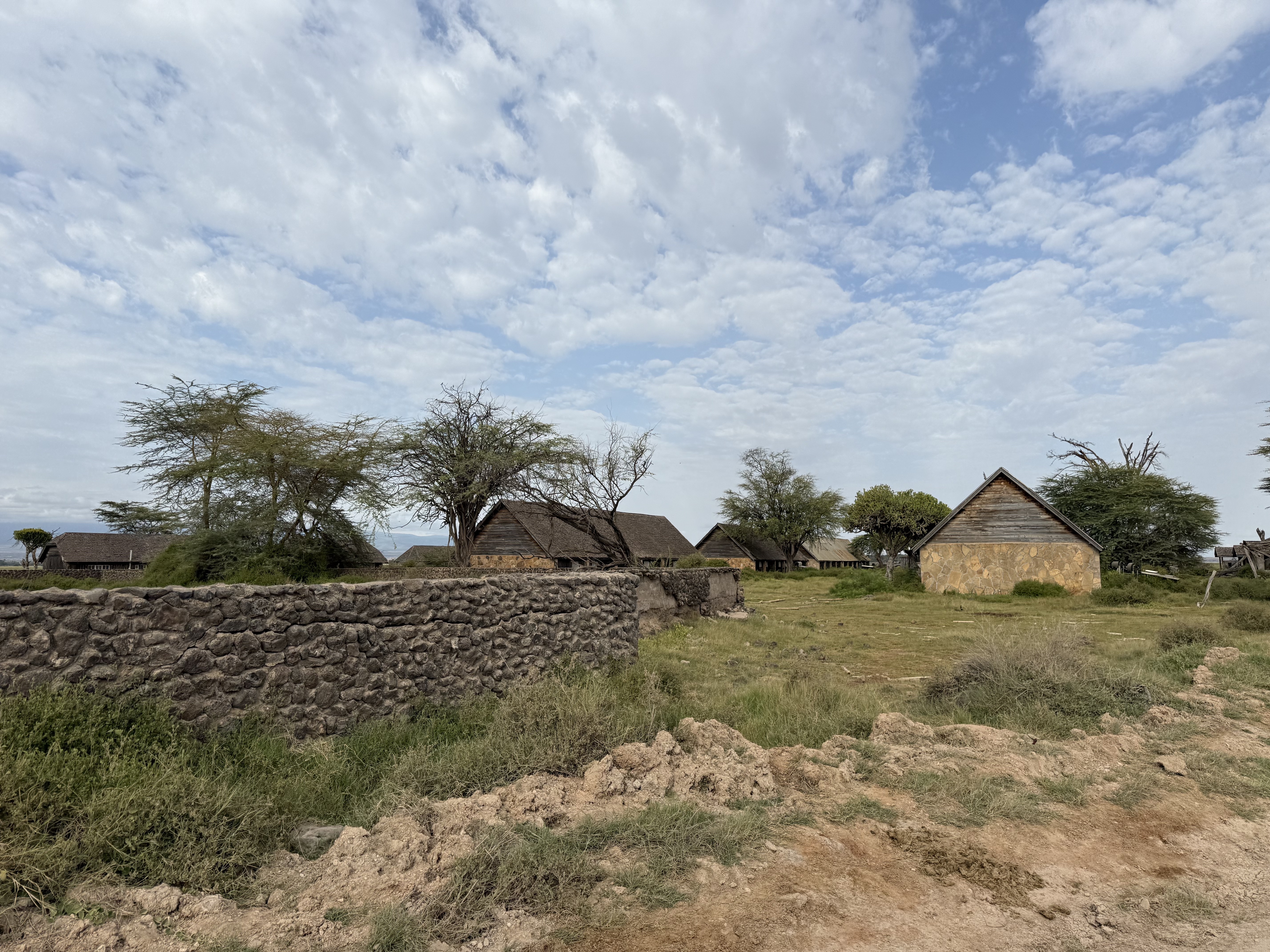
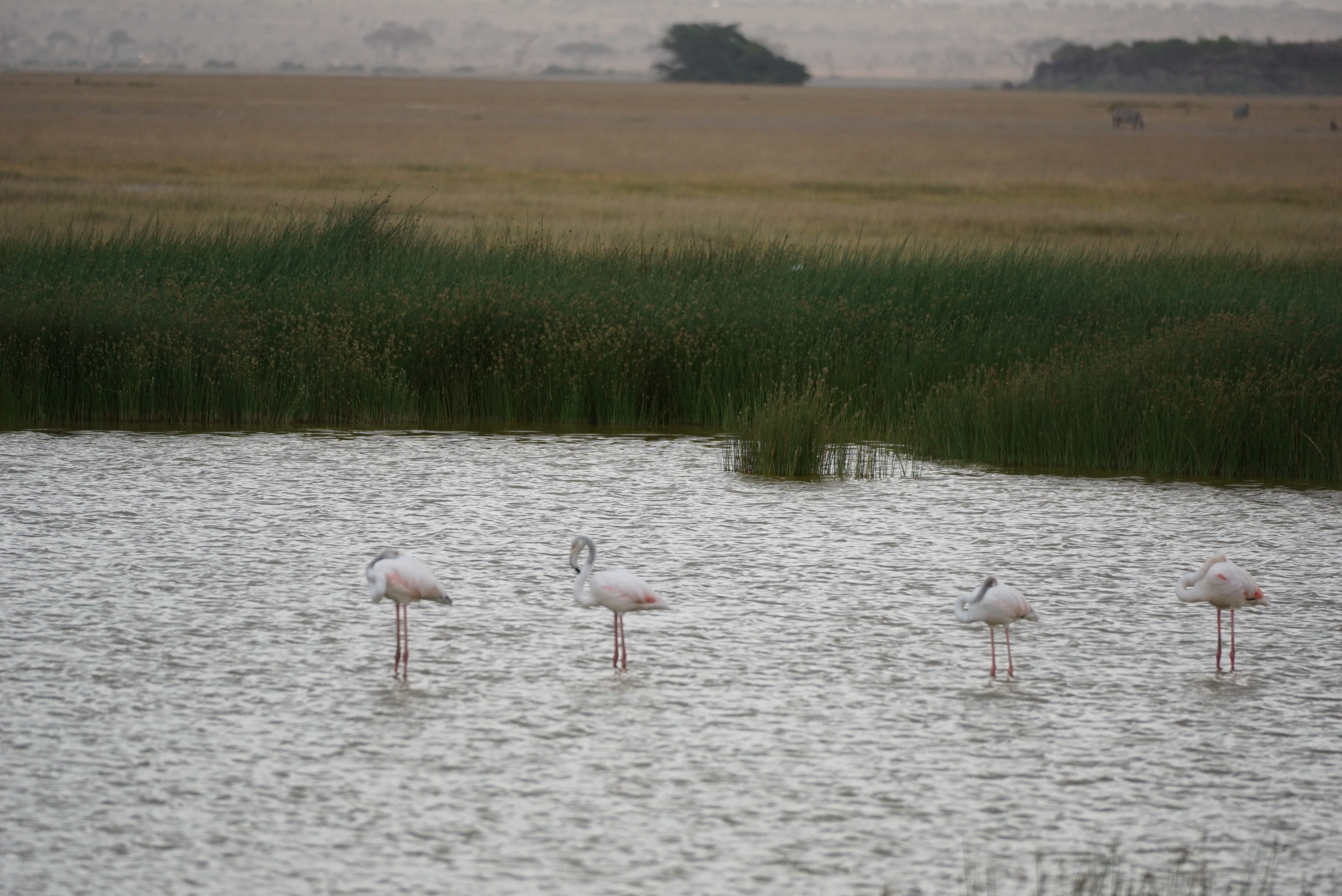
Amboseli is huge (392 sq km -151 sq. mi.), not quite so large as Tsavo West (9,065 sq. km.- 3500sq.mi), but still very big. The tracks through the park are incredibly dusty, which causes problems with the eyes and camera lenses, and one needs to be cautious with both. Given that the area is primarily dry savannah, it came as a surprise to find swampy areas and large lakes with flamingos and hippos. Somehow the water from these sources doesn’t seem to help moisture the soil 100m from the shoreline. The water is used to service Mombasa and all the hotels/resorts in the park. It seems the climatic patterns change here from severe drought to flooding on a fairly regular basis. We passed one crumbling resort that had been wiped out when the waters rose and everything got flooded. It was a sorry sight and a relatively recent occurrence. The power of changing nature is not to be underestimated.
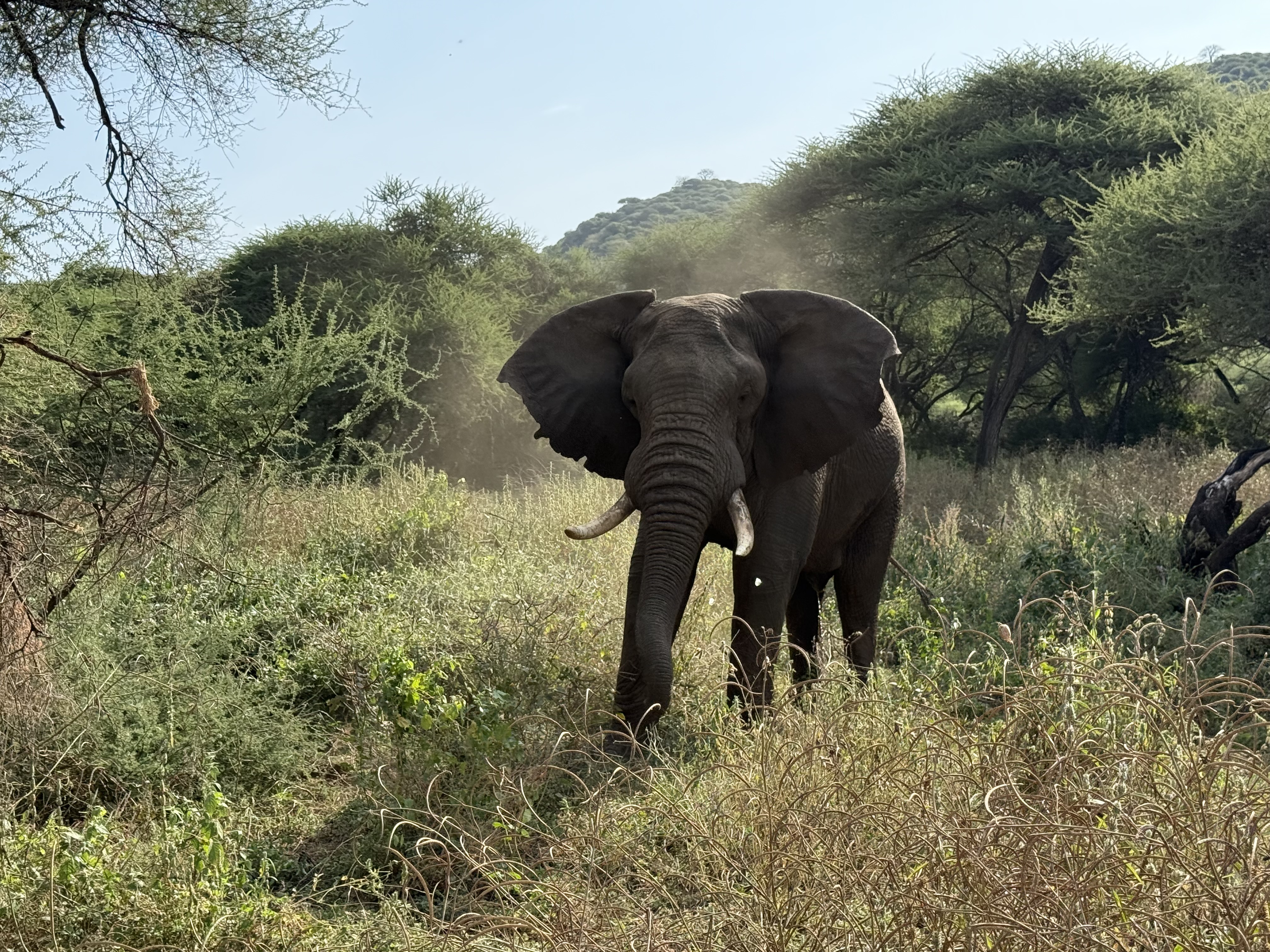
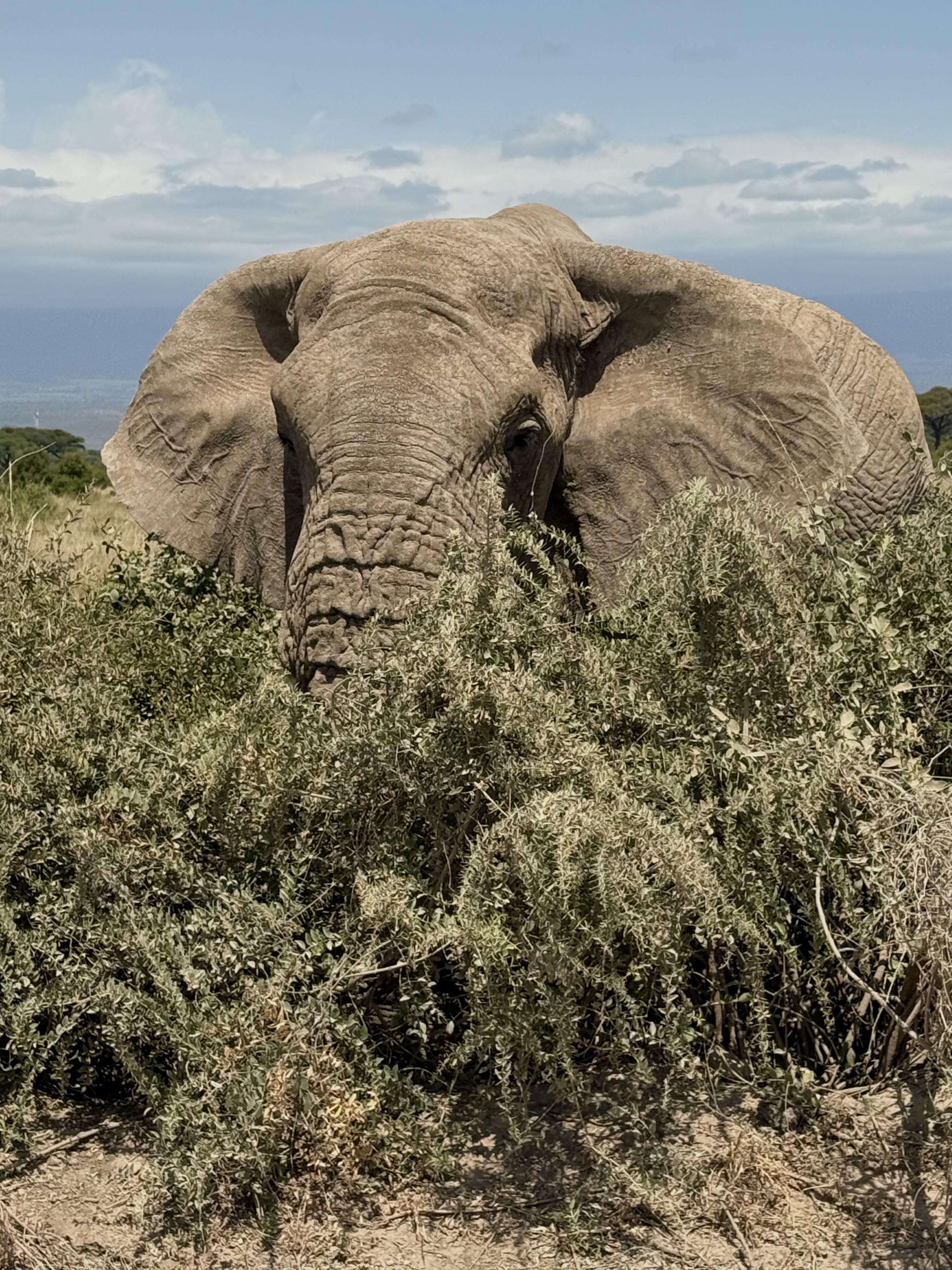
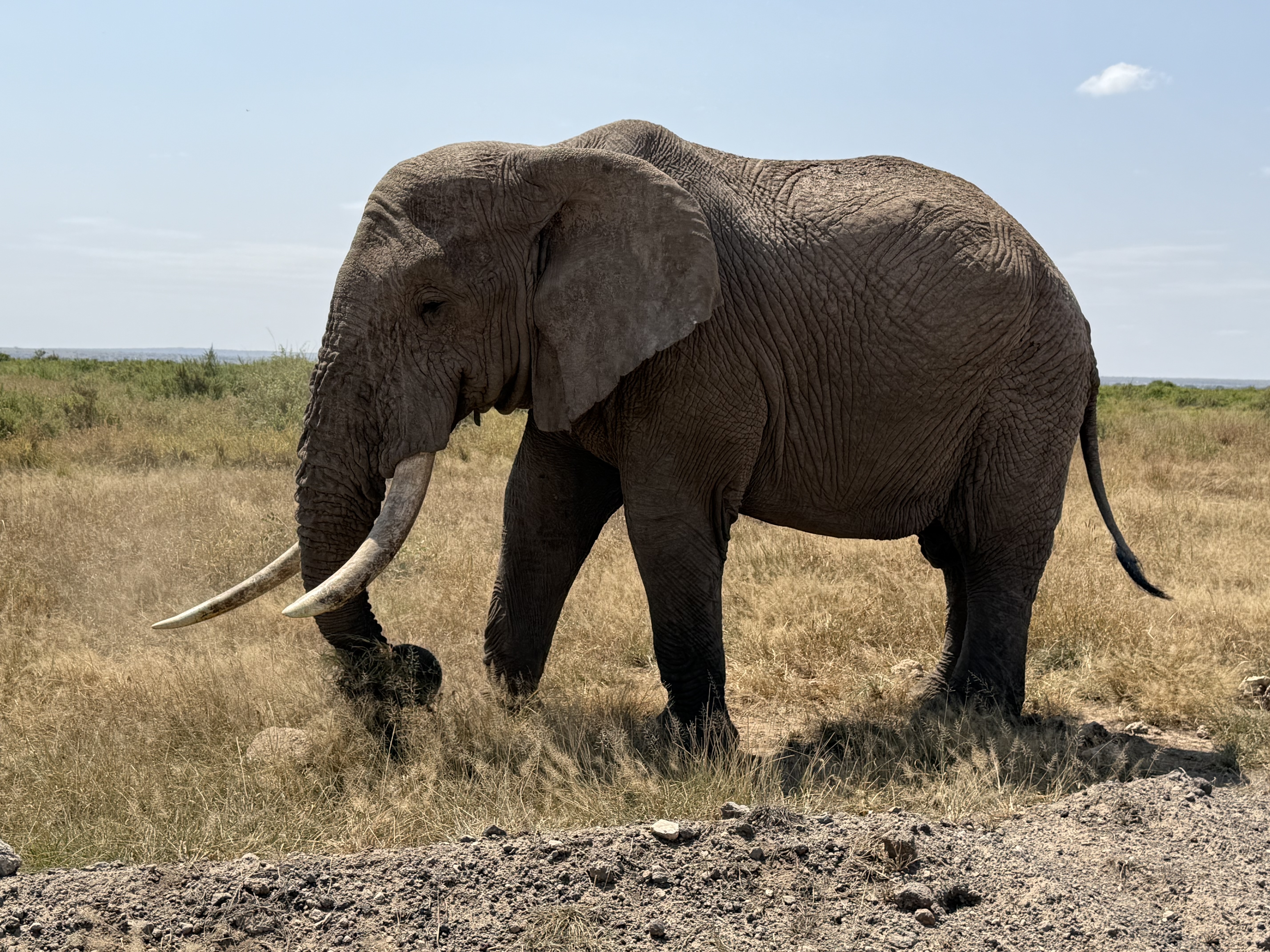
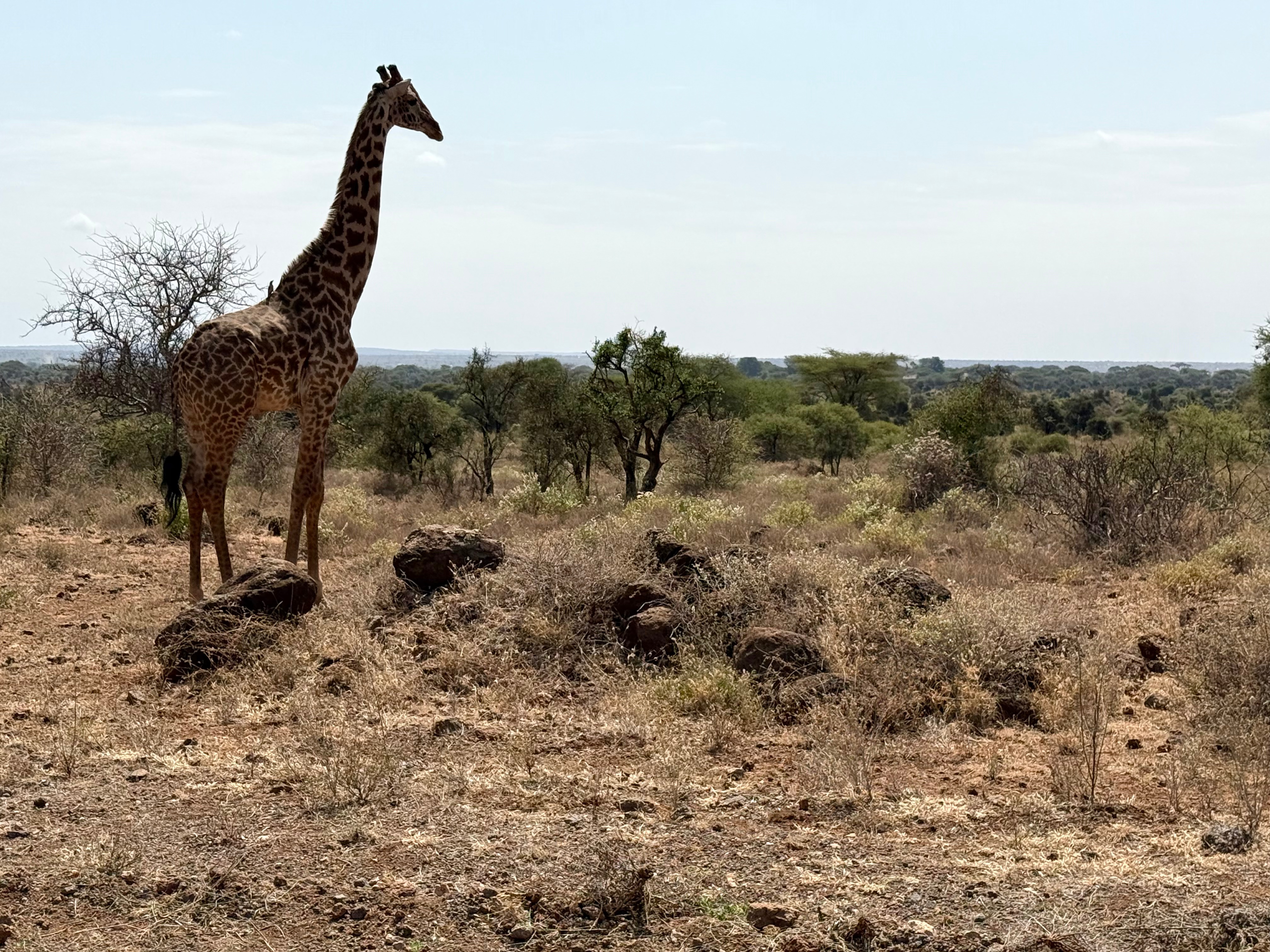
Near the entrance to Amboseli Park, we were greeting by the patriarch of the region, Craig, a 52 yr old bull elephant that put on quite a show for us. He came from the dense brush to cross the road and stopped by the side of the road, immediately in front of us, pawing the dusty ground with his very thick foot to unearth some scrubby grass. He took the grass in his truck and switched it back and forth to get rid of the dirt. Once the grass was somewhat free of debris he then ate it. He repeated the process a few times, which seemed to me to indicate that he wanted me to realize what he was doing and appreciate his cleansing initiative. Craig was a real showman! Soon thereafter, we came across a male Maasai Giraffe that decided to hold a staring contest with me. Amboseli’s wildlife was proving to be quite entertaining.
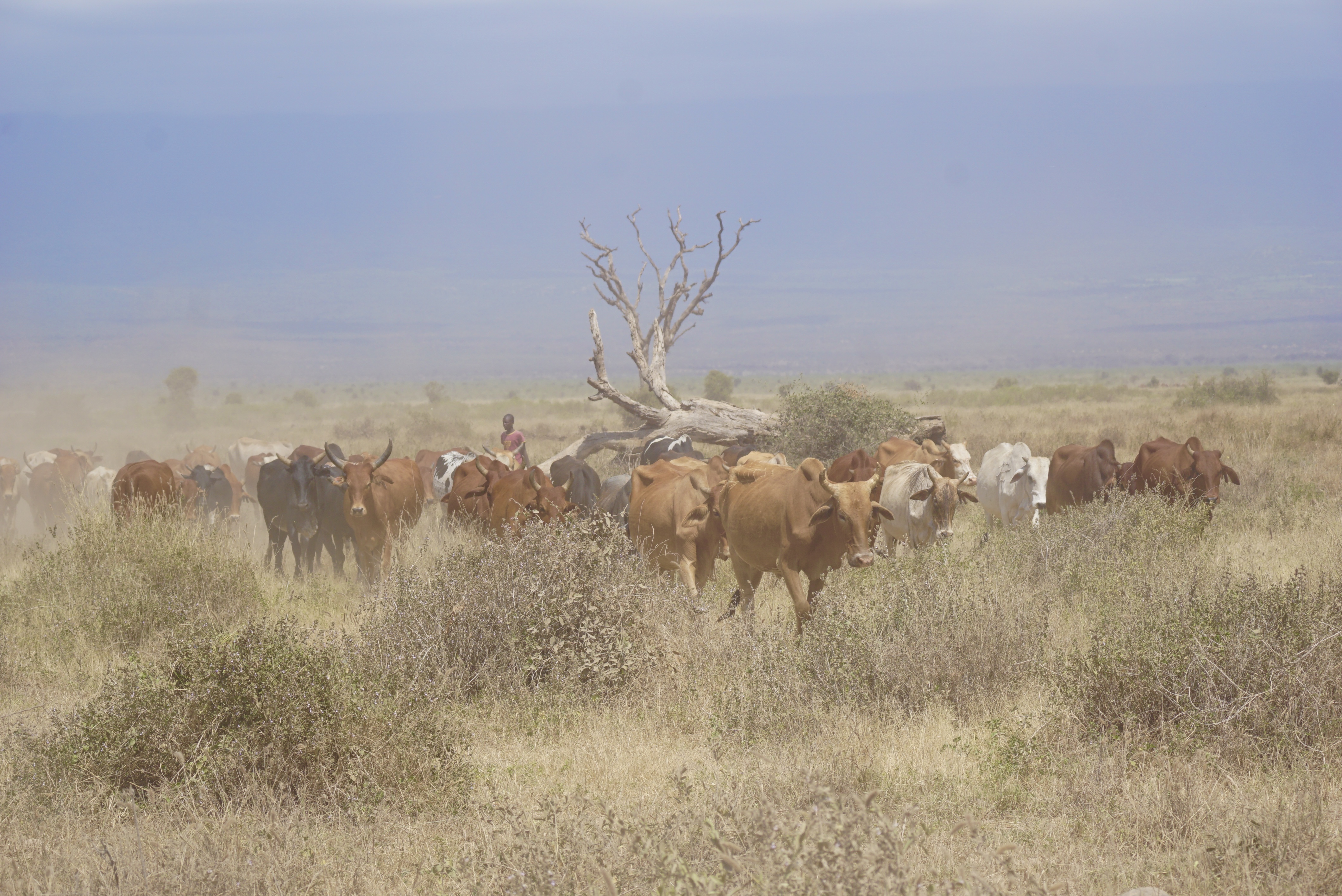
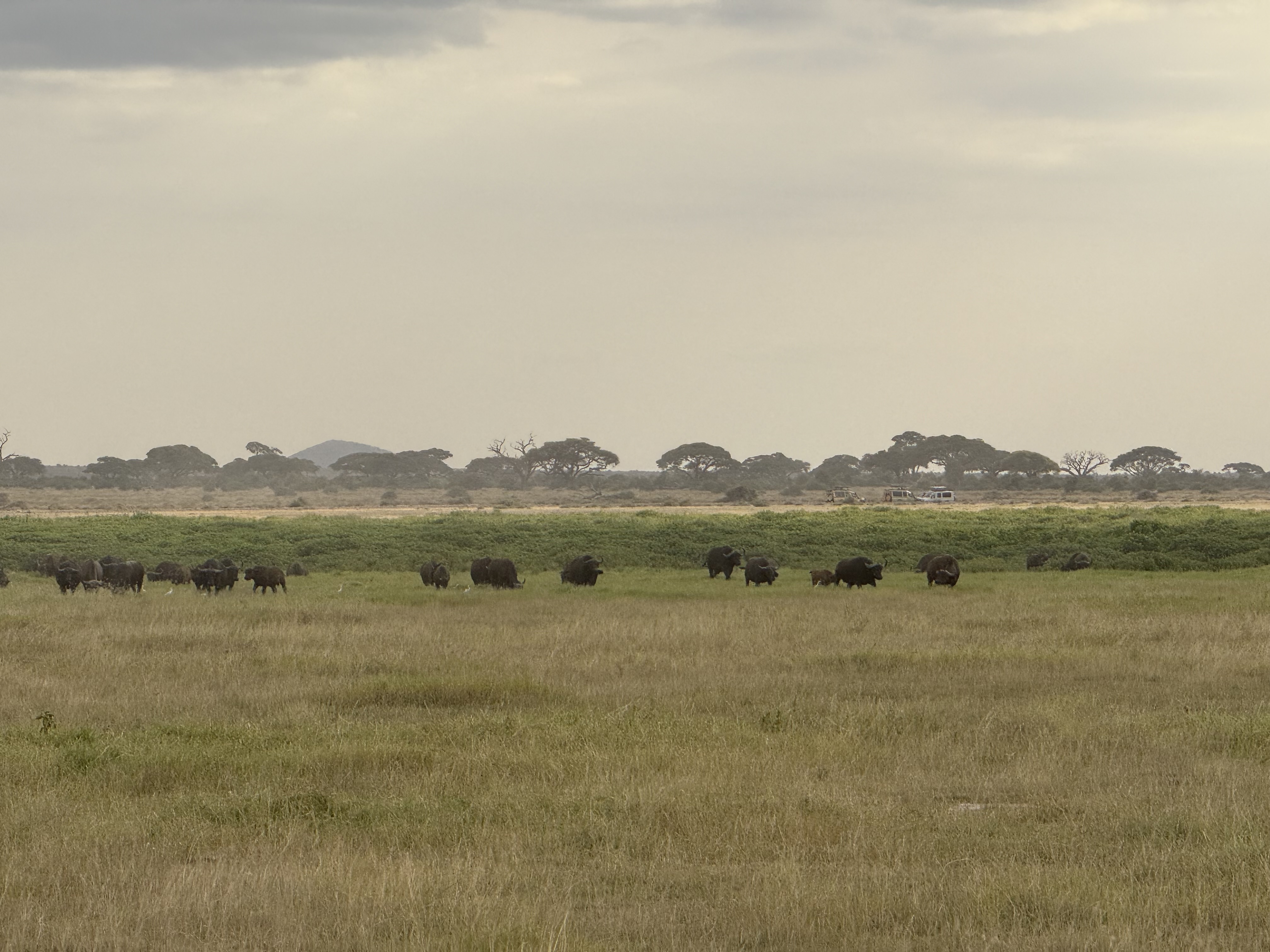
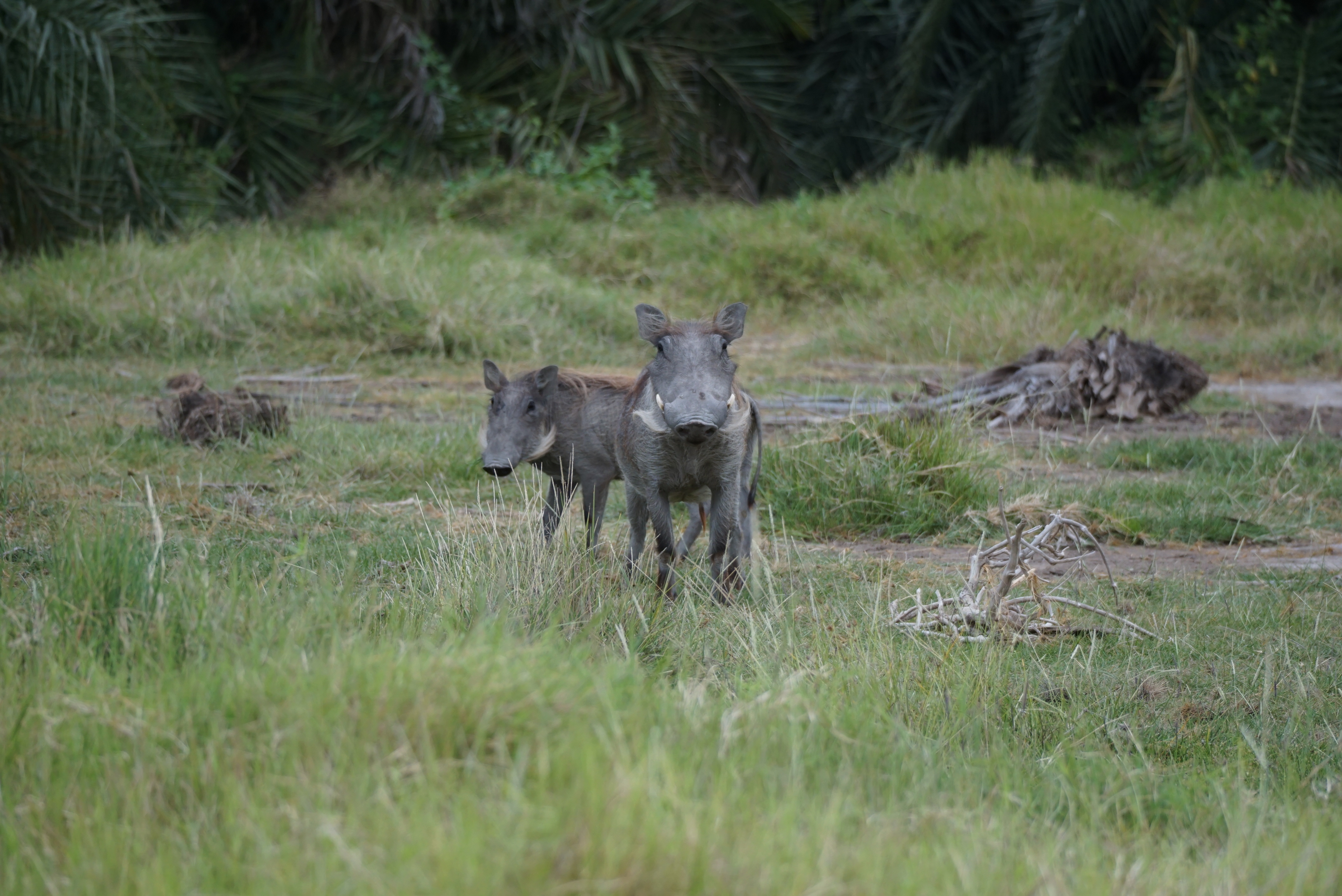
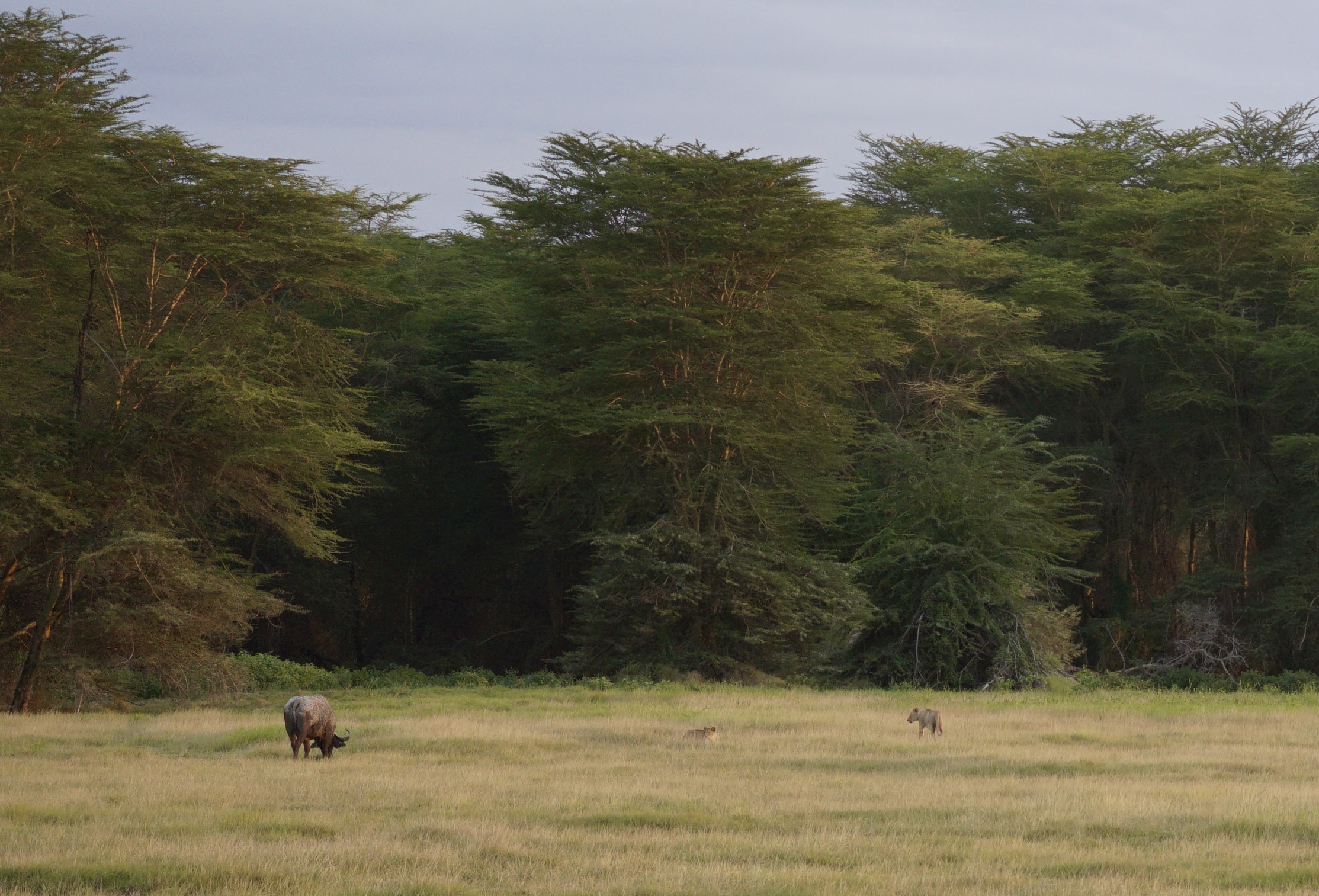
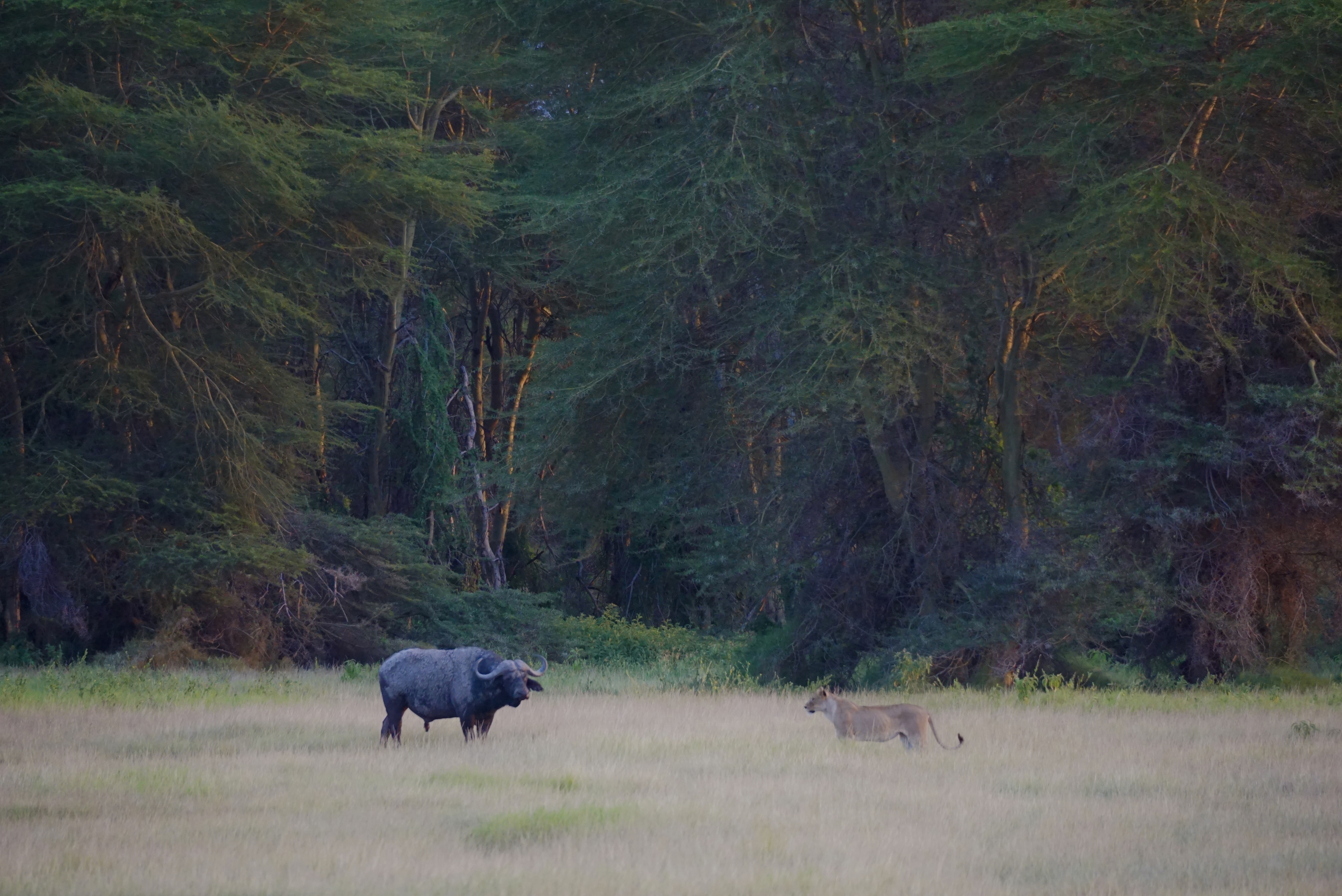
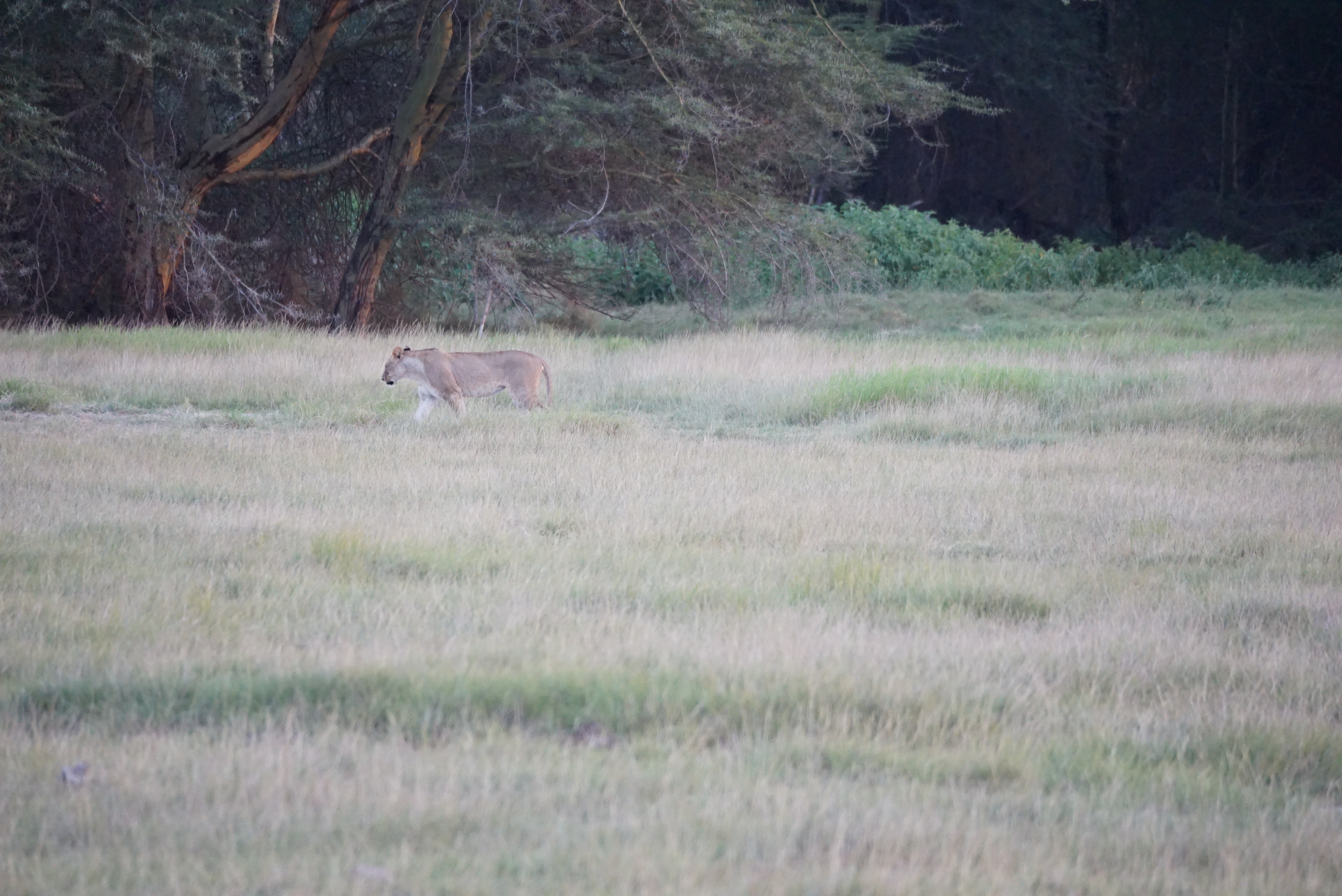
The afternoon excursion also held a few spectacular events. On the way to the daily crossing of the elephants, we came across Maasai moving their cattle from one side of the road to the other where there was more water. They have to come into the park as otherwise they wouldn’t have enough to drink. The scene could have been one from the Old Southwest of the U.S.. The main planned event, though, was the elephant migration; they travel from a drier section of the park to an area with better grasses each morning and return to the drier section at night. All the tour guides line up their vehicles on either side of the crosswalk so that their clients can get a front row seat to watch. The elephants merge with antelope, gazelles, zebra and wildebeests on the other side. A herd of buffalo stayed on the original side while we were there. From the elephant crossing we went searching for flamingos as I wasn’t going to get to Lake Nakuru, on the way we stopped to watch a few hippos playing with each other. After the lakes, we started to head back to the hotel as the sun was setting. Prior to getting there we saw a mamma warthog and child. Robert then asked a passing tourist jeep if the sleeping lions he’d heard about earlier (as well as sleeping cheetahs, which we didn’t see) had woken up. They had and were crouched near a group of trees contemplating attacking a big bull buffalo. There were six lions, five females and one male. The four to the left of the buffalo stayed sitting low in the grasses with just their heads occasionally popping up; two more active females were on the right side. The buffalo called their bluff and after a while the cats decided that the better course would be to leave empty clawed. There was a lone wildebeest not too far away, and Robert mentioned that this would be their actual meal. It was fascinating to watch the interactions between the two big five animals.



The Serena Lodge in Amboseli is beautiful and the food delicious as was the food at the Serena in Tsavo. The Amboseli Serena Lodge looks across a treed area where vervet monkeys play to the savannah with all the large wildlife. In Tsavo one looks directly at the waterholes where the animals come one after the other to drink. Amboseli’s view is one of a vast horizon – and that of Mt. Kilimanjaro when it is visible, which it wasn’t while I was there. Tsavo has a red soil valley with green grasses, trees and hills. The difference is striking. Both have an incredible abundance of fascinating wildlife.
The next morning it was time to leave Kenya and move on to Tanzania. Again, we took a back road to the border, which was a nerve-wrecking washboard. I was seriously concerned that the iPad would get ruined from the all the jarring. My watch registered over 8,000 steps & I doubt I’d gone much over a 100. The jeep track isn’t like a real road other than in width and is filled with meter high ruts in the deep sandy soil. As the middle of the road is nothing but a washboard, most vehicles dive down to the side to form a not quite so bad path, but then come even more dirt – rather than snow – moguls. The vegetation changed as we made our way through the last 22.5 km of the park; we left the treed oasis of the lodge to pass by a swampy area to lush golden fields filled with wildlife. Sometimes what appeared to be a few trees were instead elephants sauntering along in a line. Zebra herds were everywhere as were both types of gazelles. Wildebeests seem to be fairly lazy as they are mostly seen lying down. At the exit gate to the park, as at the entrance, Maasai women tried to corner me into purchasing their wares for exorbitant prices. When I laughed at what they were asking, they joined me in a moment of merriment. The Maasai appear to be persistent business people. I was hoping that the road after the gate would be better, but the change was negligible until the one stop exit-entry Namanga border, where a paved road started.

At the border it was time to part ways with Robert as Kenyan guides and cars aren’t allowed in Tanzania and vice versa. He was a good guide and a good tracker. I experienced a number of animal interactions that I wouldn’t have without his assistance. Having a good guide is essential to having a good and knowledgeable trip!

 omegoodyssey