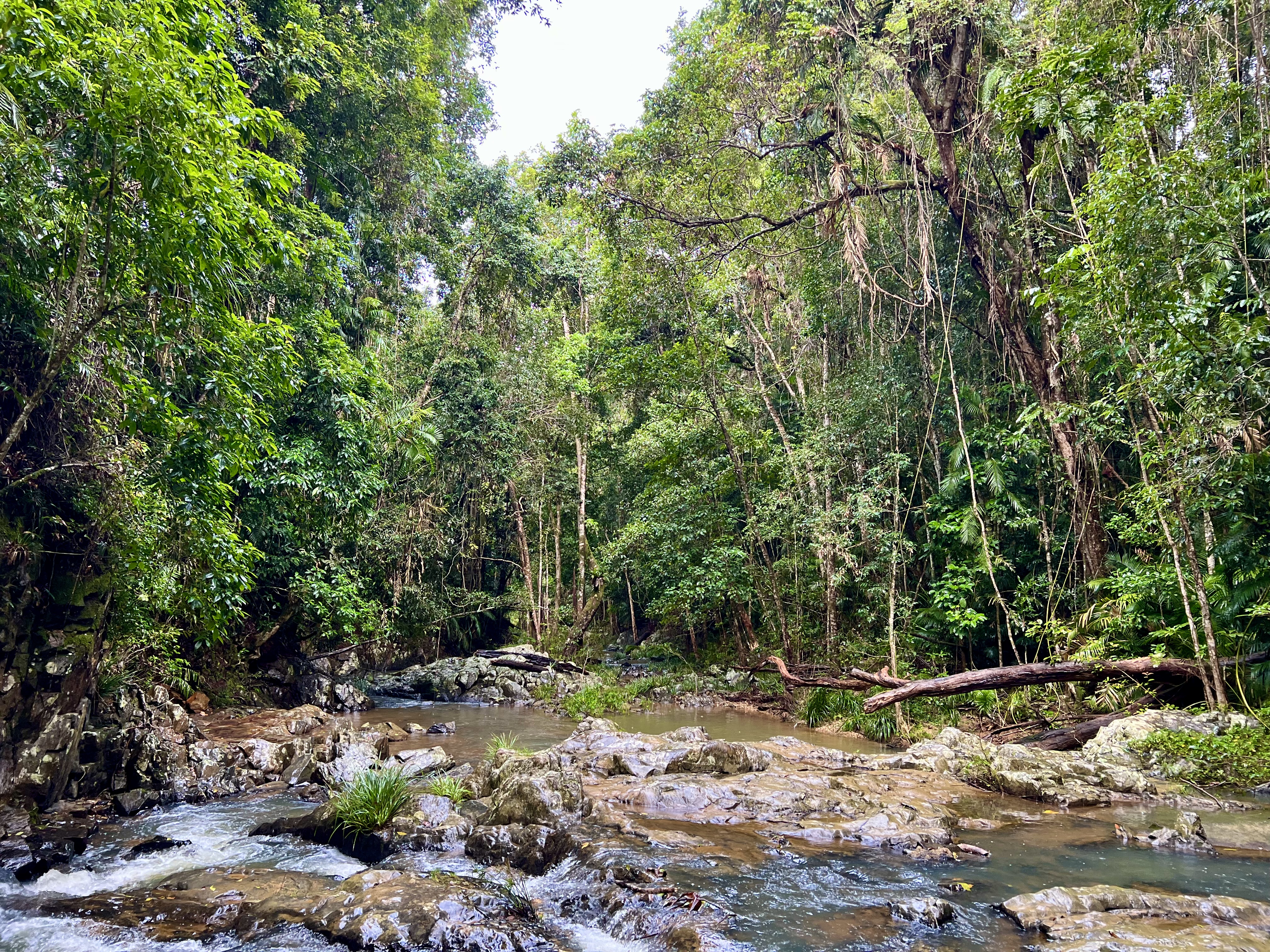
Riverwalk in Kuranda
The drive to Kuranda via the Northern Tablelands route, takes one back toward Mossman and through the sugar cane plantations that town is known for. From there the road slowly ascends up the hills to come to the plateau, passing through a number of different National Parks dedicated to savannah like landscapes and shallow lakes. My first stop was at Meeraba, as I had heard that there was a museum dedicated to coffee. Coffee Works is about 500 m off the main road, and it does indeed have a Coffee Museum, but it was closed when I was there. The coffee shop and the chocolate shop were open, though, and their cappuccino was excellent. My mother would have appreciated all the chocolates. The region has a number of coffee plantations and there are signs inviting one to visit them. As I had already had my caffeine intake, I drove on to Kuranda Village.
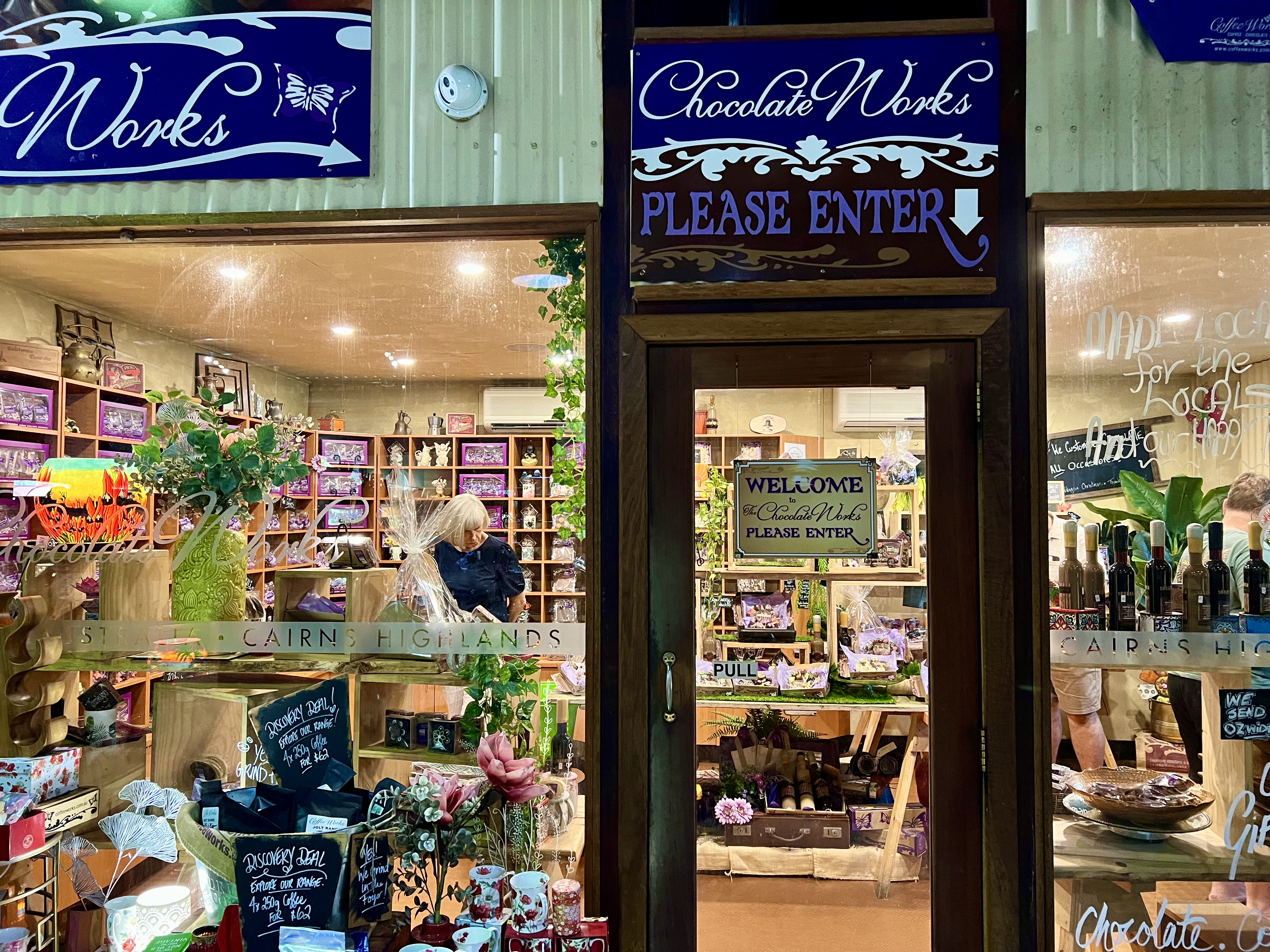
Chocolate Works at Coffee World
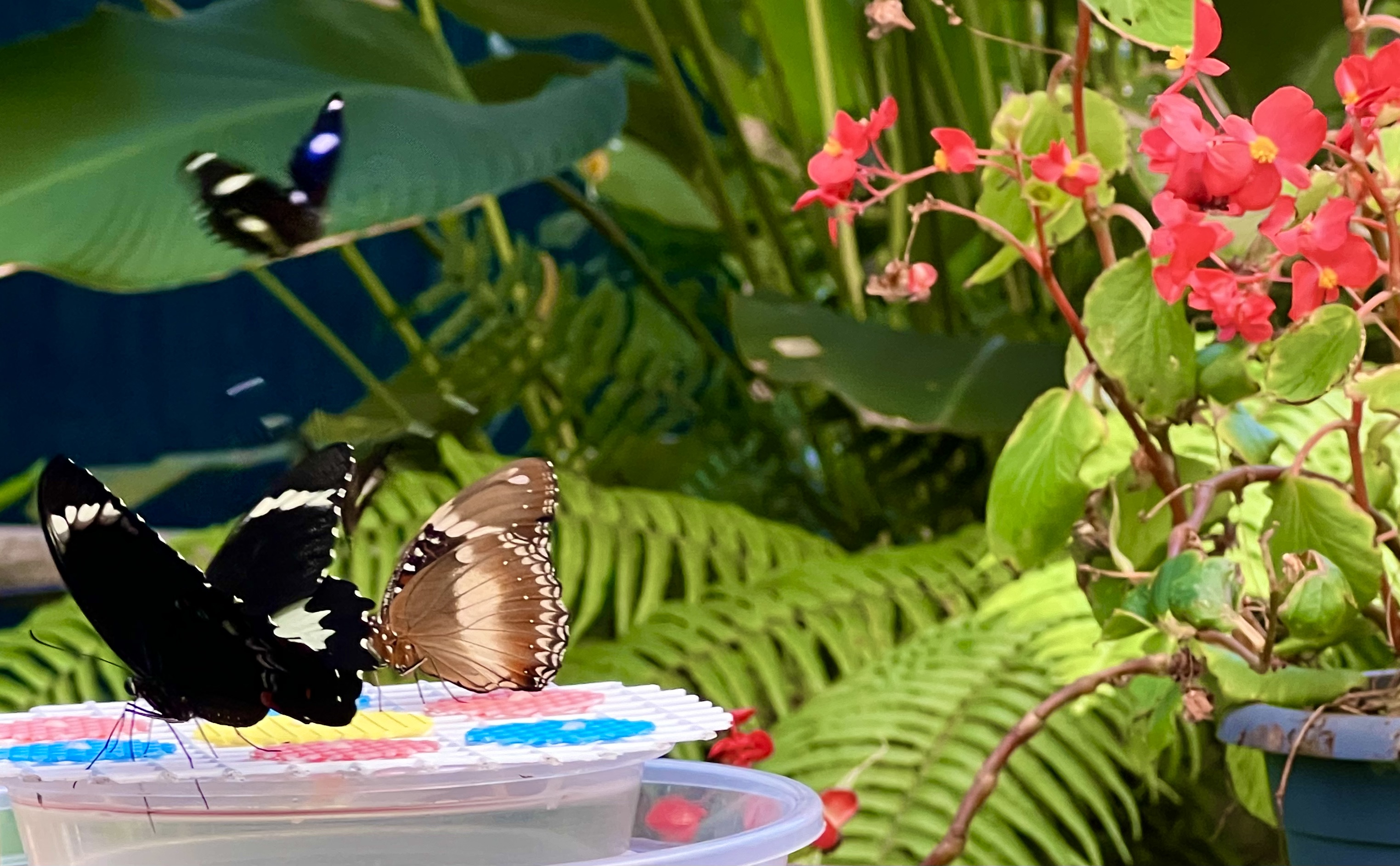
The original human inhabitants of Kuranda, which sits in the middle of the rainforest, were the Djabugay people, who still live in the area. Things changed for them in the 1890s when the railroad from Kuranda to Cairns was built allowing transportation from the Tablelands down to the coast. The rail line follows some of the ancient pathways, which are said to follow the Rainbow Serpent’s, the original creator of the land, path. The Barron River is said to have been forged by the Rainbow Serpent. Today, the village is a top tourist destination for those coming from Cairns. The old railway has been updated and a new Skyrail Rainforest Cableway (a gondola) traversing the Great Dividing Range in 7.5 km has been added. From Cairns one can take the Railway up and the Skyrail back down. Village life now revolves around the times of these modes of transportation, which means the place shuts down at 3:30pm, so that those who come by car are out of luck finding a place to eat in the evening. During the day, however, there are lots of activities and a few hikes to keep young and those not so chronologically youthful amused. In the center of town are some quasi-hippie markets, which border on a very nice rainforest walk. The circuit walk was still closed after the damage from the December cyclone, but the jungle walk and rainforest walk were clear. Near the Visitors Center there were three sites dedicated to wildlife: a butterfly sanctuary, a koala garden, and a large aviary. The butterfly sanctuary had plaques that told stories from different cultures about butterflies in the midst of the abundant vegetation and fluttering wings. Two that I particularly liked were:
An Irish Blessing:
May the wings of the butterfly kiss the sun,
And find your shoulder to alight on.
To bring you luck, happiness, and riches,
Today, tomorrow, and beyond.
& A Native American Indian legend (the tribe wasn’t specified):
If anyone desires a wish to come true, they must first capture a butterfly and whisper that wish to it.
As a butterfly can make no sound, the butterfly cannot reveal the wish to anyone but the Great Spirit who hears and sees all.
In gratitude for giving the butterfly freedom, the Great Spirit will always grant the wish.
So, according to legend, by making a wish and giving the butterfly its freedom, the wish will be taken to the heavens to be granted.
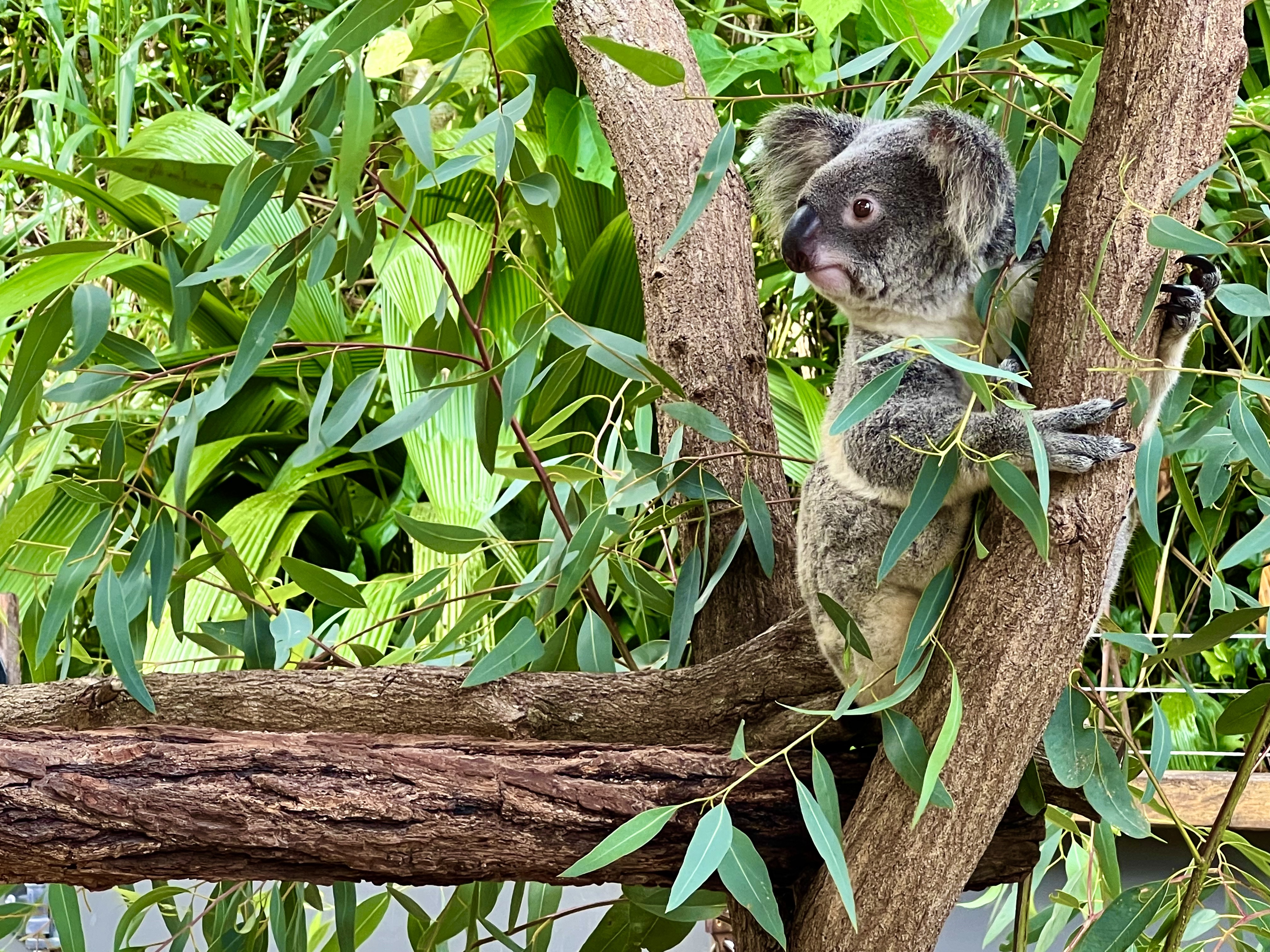
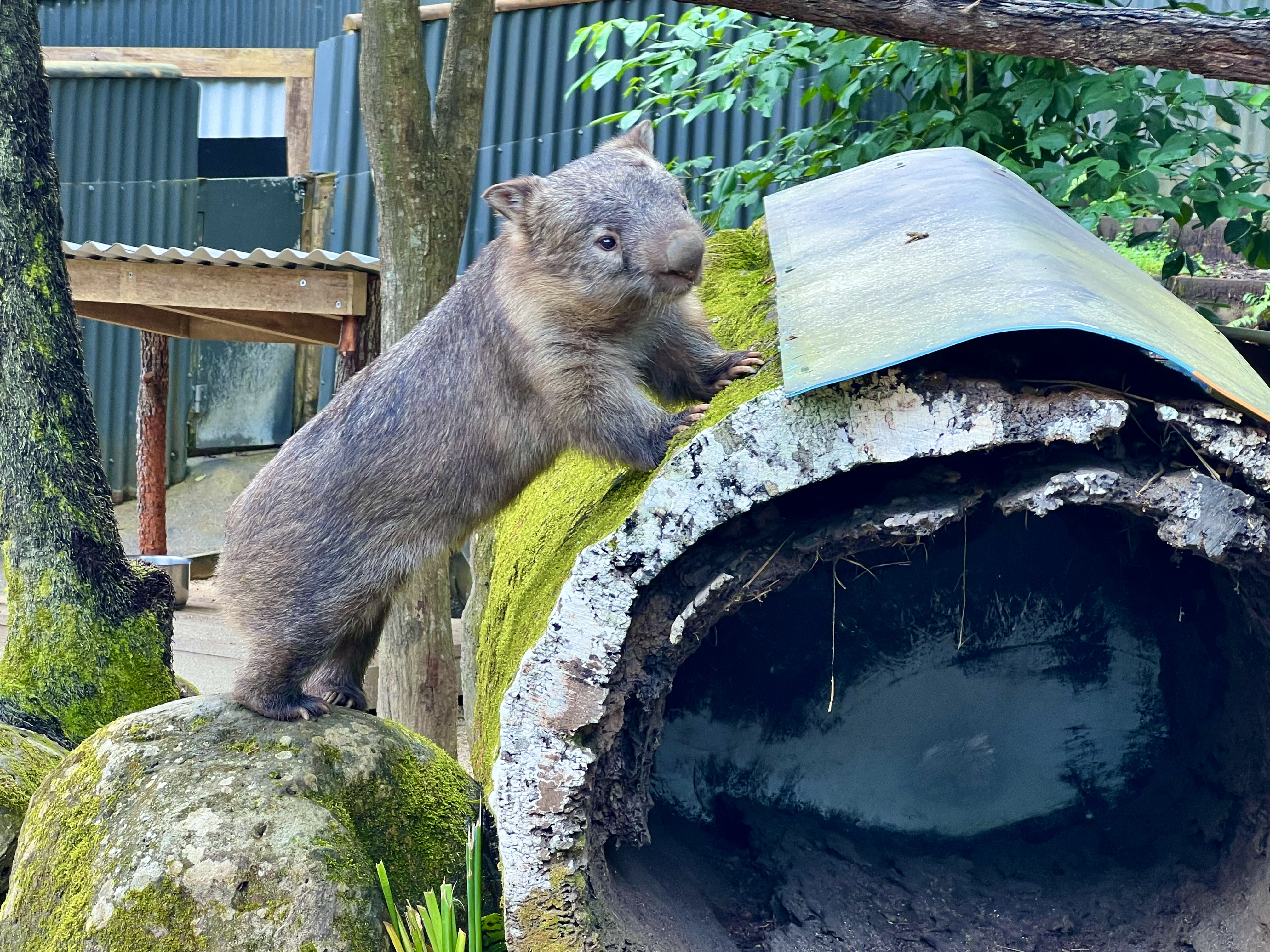
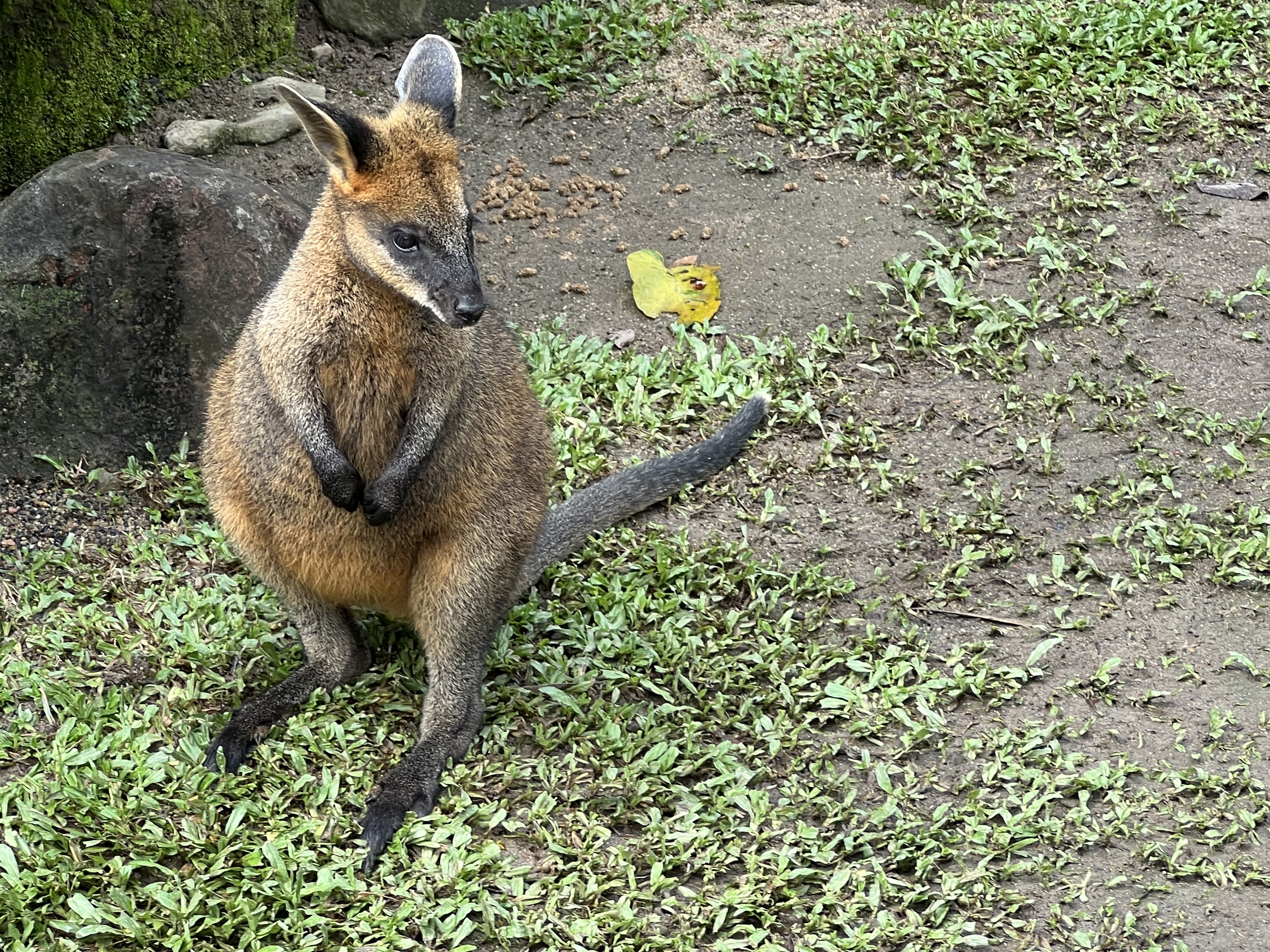
The Koala Garden had more than koalas. It was a mini-zoo, with fresh water crocodiles, water monitors, a reptile house, a very large wombat, a Tasmanian devil, and various marsupials. Food was available to feed the wallabies and kangaroos. So many people had done so, that the animals were not at all interested in any more from me.
The best part of the Kuranda Village experience was at Bird World. The birds flew freely in the large aviary, somewhat like a large circus tent, but netted rather than cloth. There were only a few areas where the birds were in cages, and that was for their as well as the visitors’ protection. The small finches were in one enclosure and the cassowary was in another. Cassowaries can be dangerous and can actually kill a person with their claws if they feel threatened. As it is a large flightless bird, the enclosure was protective – even if one must question why the bird has to be in the aviary to begin with, when its habitat is the rainforest surrounding the village. On the other hand, most people would never see one if it weren’t ‘on display’. The Yidinji people of Cairns have a story that relates how the Gindaja
(the Cassowary) traveled from the Atherton Tablelands to the coast. A plaque on the Esplanade in Cairns states: In Yidinji Storytime, Gindaja had large wings and could fly. He flew from Bunda Gindaja to the area now known as the Trinity Inlet. The landscape here was dominated by a large lake 10,00to 15,000 years ago. Gindaja was unsure of this new place. He accidentally flew into the lake and became stuck in the mud. Although he flapped and flapped his wings, he couldn’t free himself. He soon began to lose the feathers from his wings. By the time he eventually walked from the lake, he had no feathers left. And so, today, the Cassowary cannot fly. His remaining feathers are black from the mud in which his ancestor was stuck. He walks around lost, trying to find his way home – the land is very different on foot.
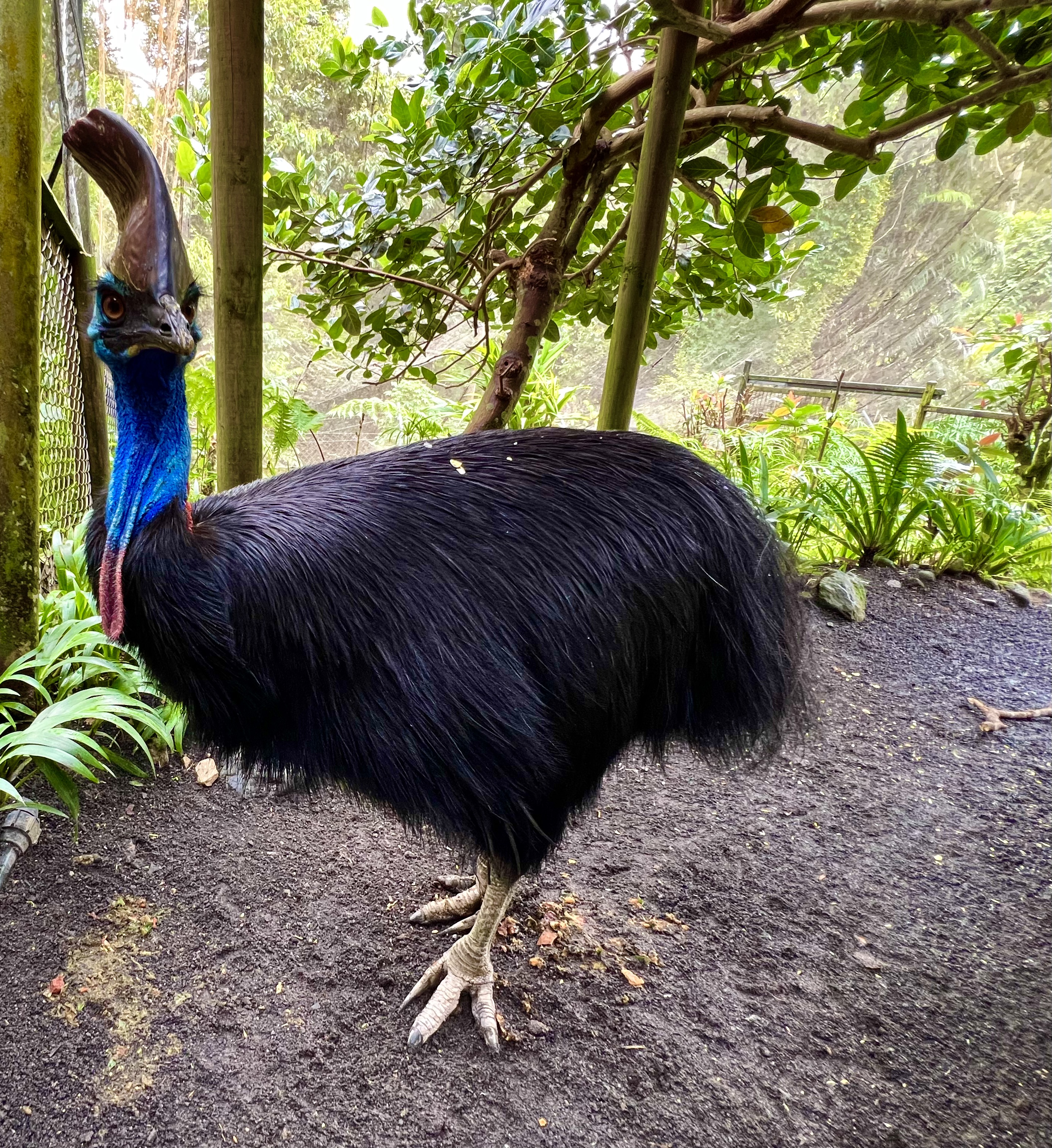
Cassowary
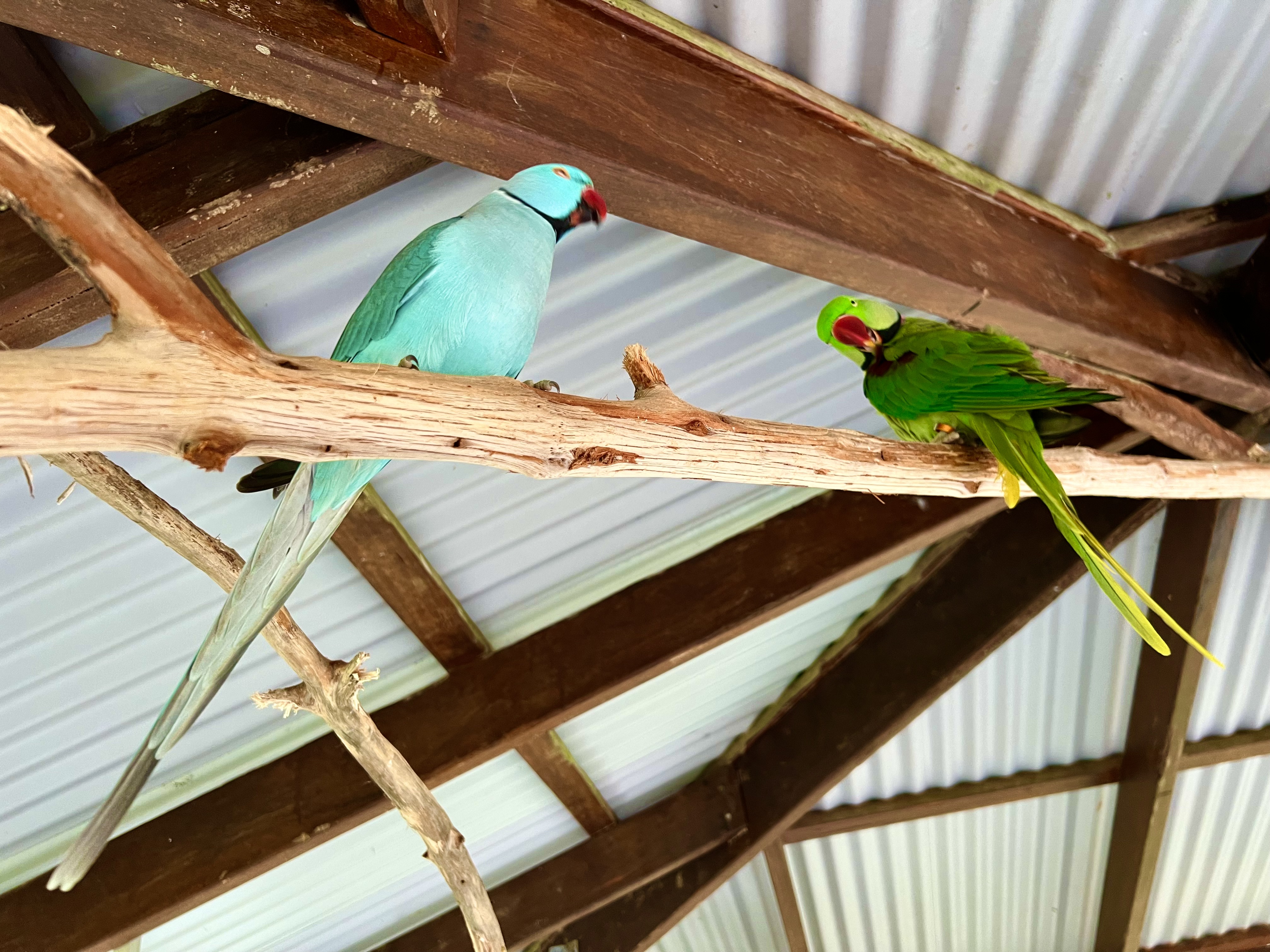
The birds in the enclosure seemed to be doing well in flight and on foot; they certainly put on a show for the visitors. They flew on people’s shoulders, interacted with those who came close, and appeared to have as much fun with us as we had with them. The lorikeets, parrots, and cockatoos were completely tame and hysterically funny. I’m posting a separate blog just on the antics in BirdWorld.
The following day, I visited ‘Reforestation ‘, which has an Army Duck excursion through a small section of the rainforest to a man-made lake, that was originally damed to supply water to a coffee plantation, another koala zoo-like section, and an indigenous cultural event. The Pamagirri Aboriginal Experience was completely different than the Ngadika Dreamtime Walk in Mossman Gorge. There were digeridoo, spear throwing, and boomerang tossing exhibitions along with a cultural dance. All done by men from various North Queensland tribes. I thought there would also be a Dreamtime walk, but as it turned out, the path was still damaged from the cyclone and there was no estimate as to when it would reopen.
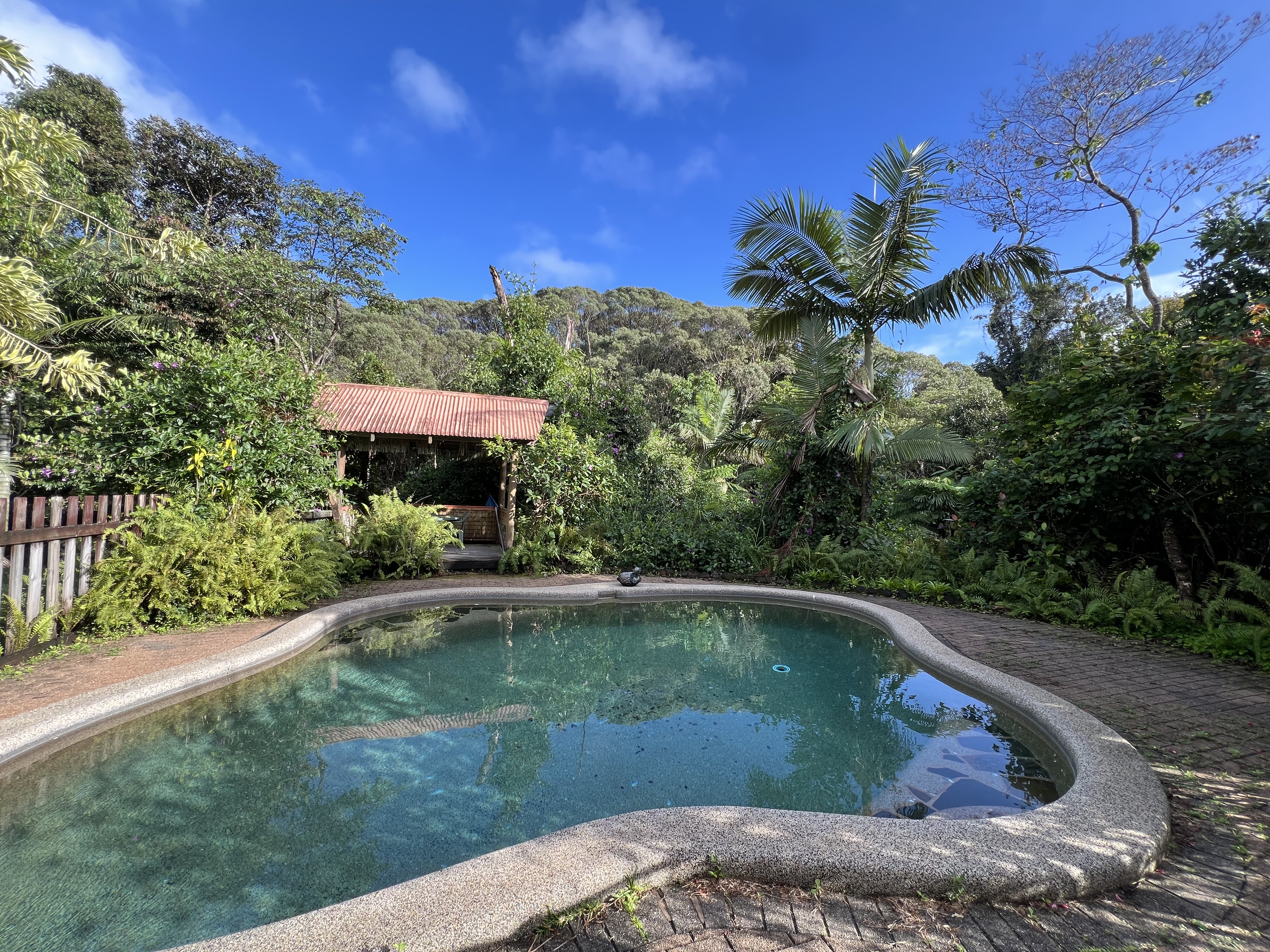
Studio in the Rainforest pool
In Kuranda, I stayed at “Studio in the Rainforest” and my hostess was a delight. She and her family had lived in Guinea for many decades and the studio was filled with Papua artworks. Her place really was in the middle of the rainforest. The driveway, which consisted of two narrowish concrete treads for car tires was windy, hilly, and at least 500 m long. The little MG I had rented had a wheelbase that didn’t fit the concrete, and I sunk in mud a couple of times both getting to the studio and then out again. The second night, I left the car on the road and walked down as I was concerned that I would scratch the sides of the rental car on the concrete and/or get completely stuck. That night there was more rain, and I heard a couple of trees crash down in the forest. Most of the rainforest trees have fairly shallow roots, so when the ground gets so soaked that it can’t contain the water any longer, the trees are liable to tip. As I heard the first one crash, I prayed it didn’t land on the car. Luckily, it didn’t. I got up in the morning to an amazing symphony of birdsong as the rain stopped for a few minutes. I didn’t see it, but when I went around the garden, I saw tree kangaroo scat, so I know it was there. This forest is full of life.
 omegoodyssey