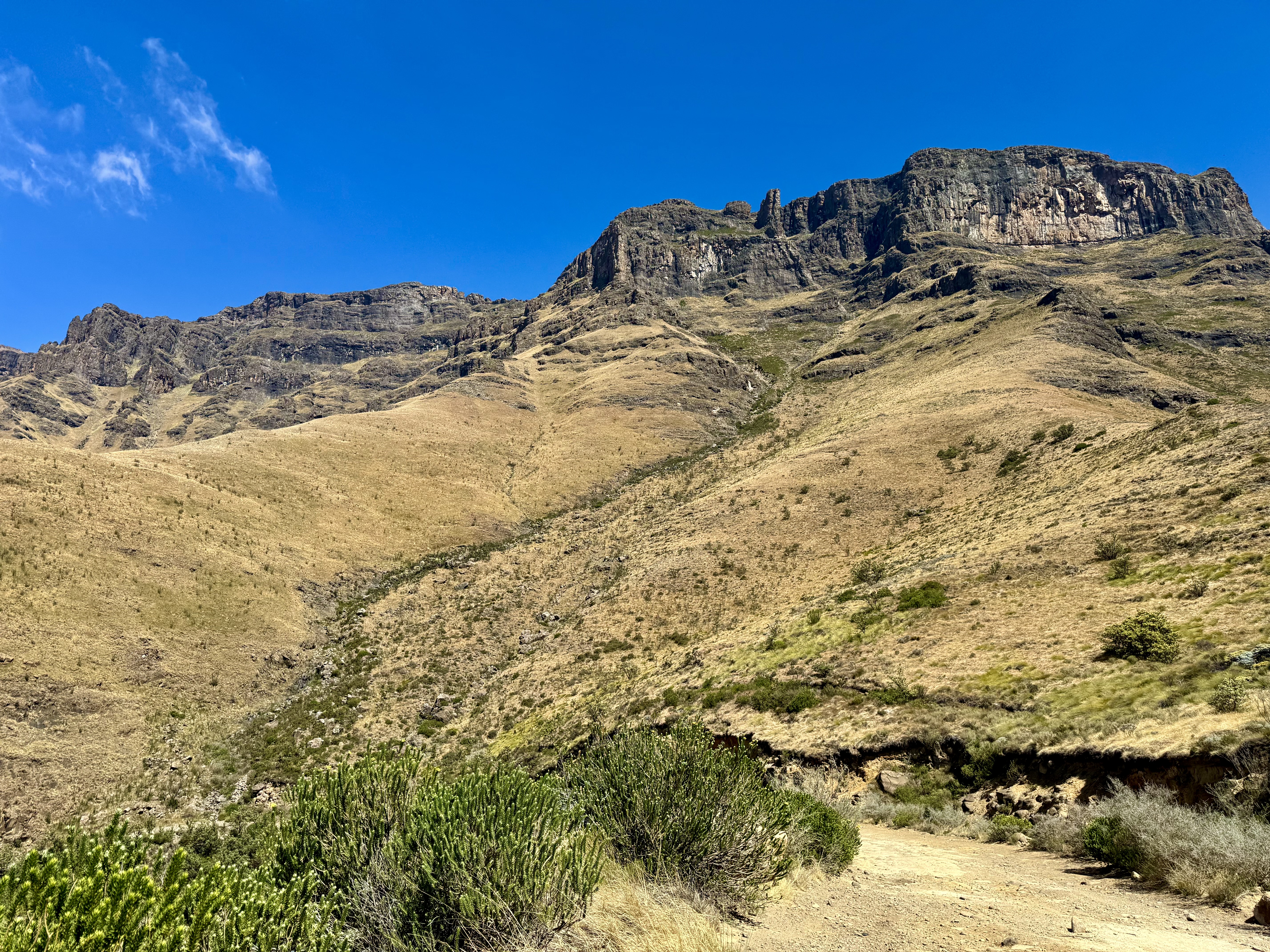
From St. Lucia it is about a six-hour drive to Himeville, from where the Sani Pass tour departs. The drive could be shorter, but, when I was there, construction sites and accidents brought traffic to an almost stand-still. The area right around Durban was definitely the worst. Himeville is about 5 km from Underberg. The local radio station, East Coast, advertised Underberg as a place to move to. Durban is overcrowded and, as elsewhere, there is migration away from the cities. The N3, one of the national highways and one with lots of construction, is being built out to accommodate more vehicles on the main Durban-Johannesburg route. The road from the N3 to Underberg is also being worked on and where it’s not, the potholes can eat a small car. Off to the sides of the road, one is in the heart of the Midlands and the short rolling hills form a backdrop to the acres and acres of farmland. It is also a very safe area, away from the crime of the cities making it a good rural destination for young families. Himeville has little to offer other than a few farms that function as guesthouses and some B & Bs, but it does have a small museum, which was closed when I was there. It is, however, the starting point for the Sani Pass tours to Lesotho.
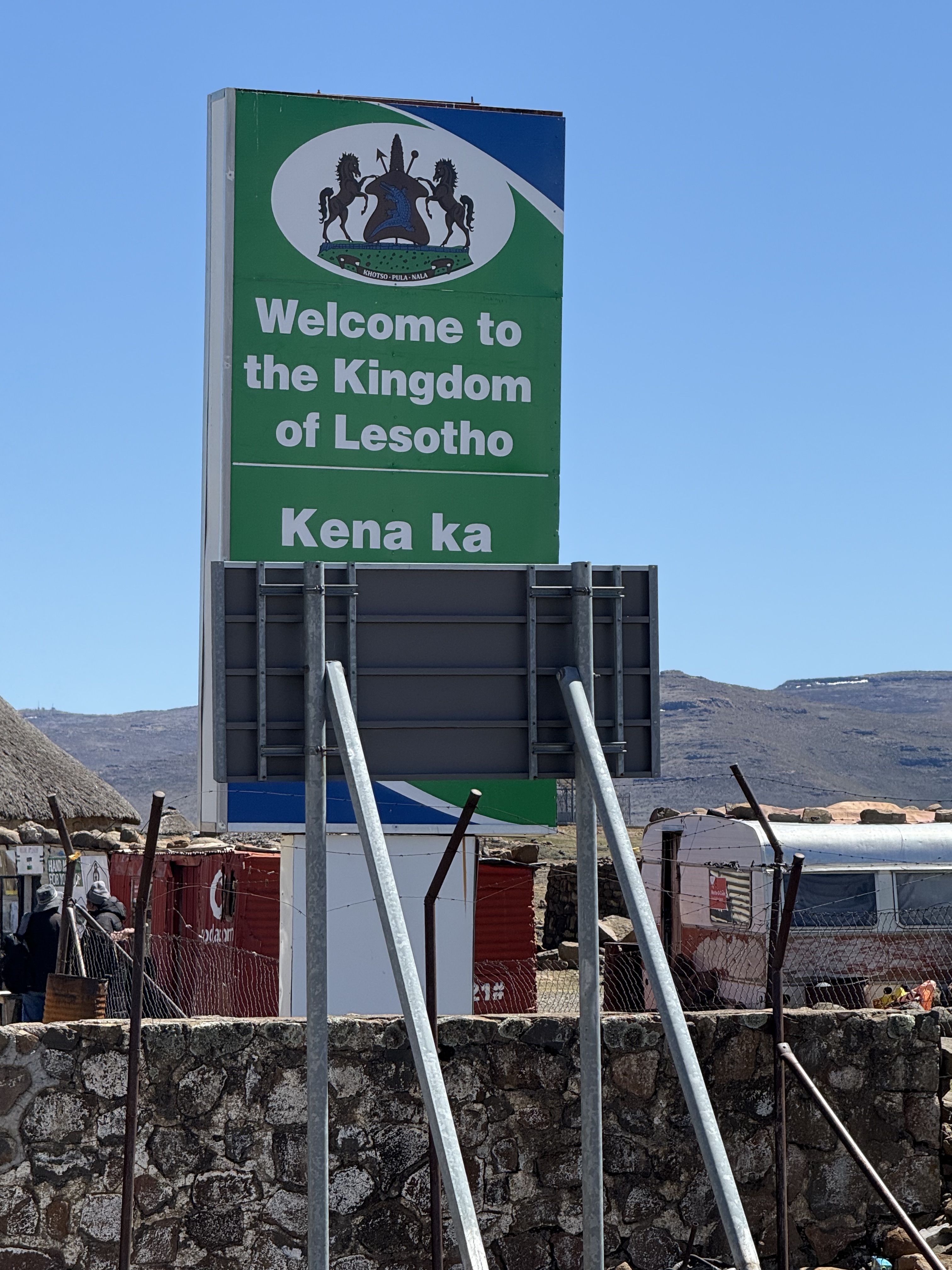
Lesotho is a small kingdom country completely encased with South Africa. Historically, Basutoland, as it was originally called, was founded by Moshoeshoe I in the 1820s when he banded together a series of tribes who were fleeing the Zulus. In 1884, the territory became British Crown Colony as the British protected them against the Boers, who were trying to encroach on their territory. The country gained independence from Britian in 1966. Today, the King is a descendant of Moshoeshoe I, but he has little legal power. That lies in the hands of the Congress and Prime Minister as it is a democratic country based an African tradition/British model. It is unfortunately, also a very poor country.
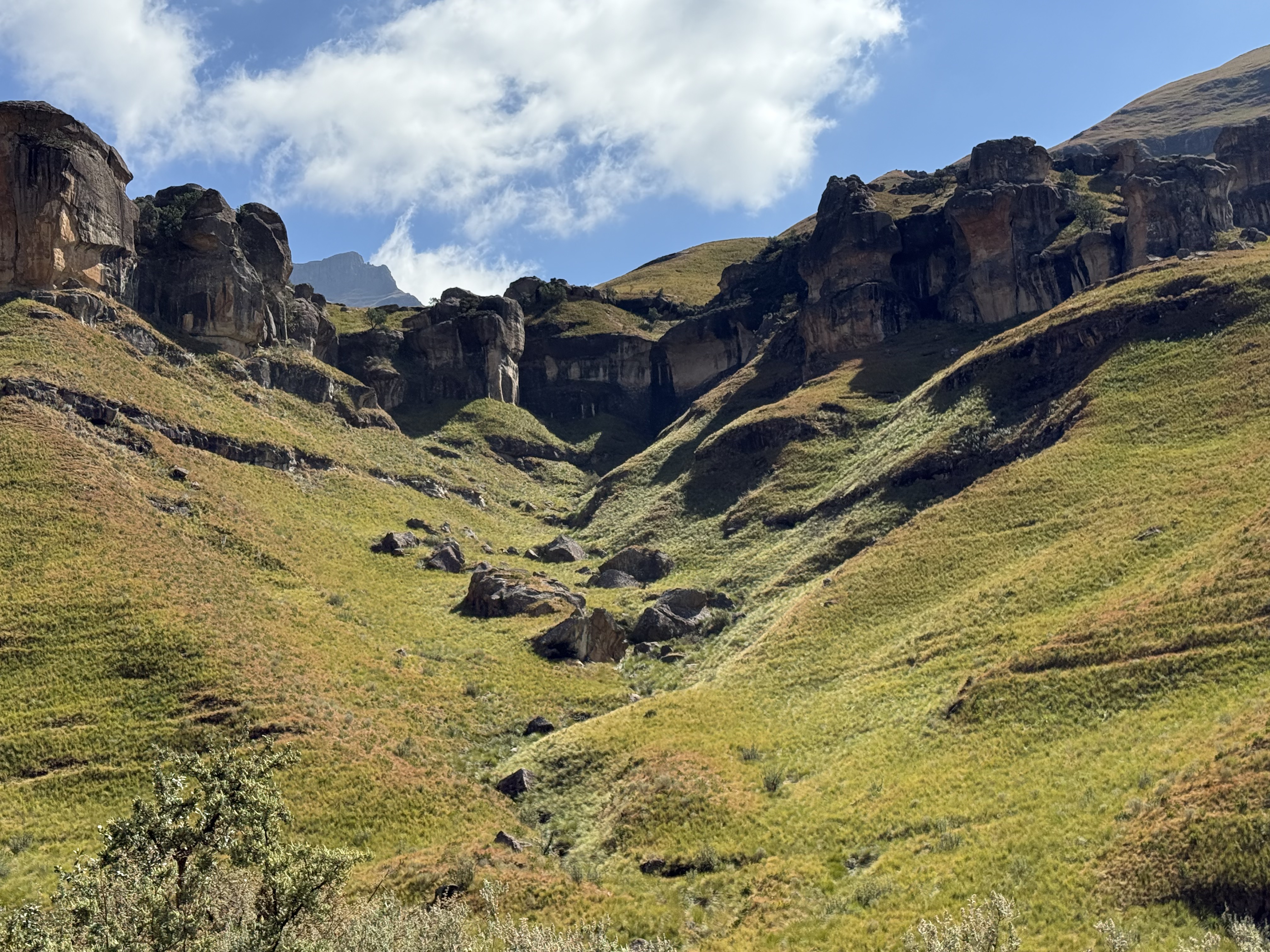
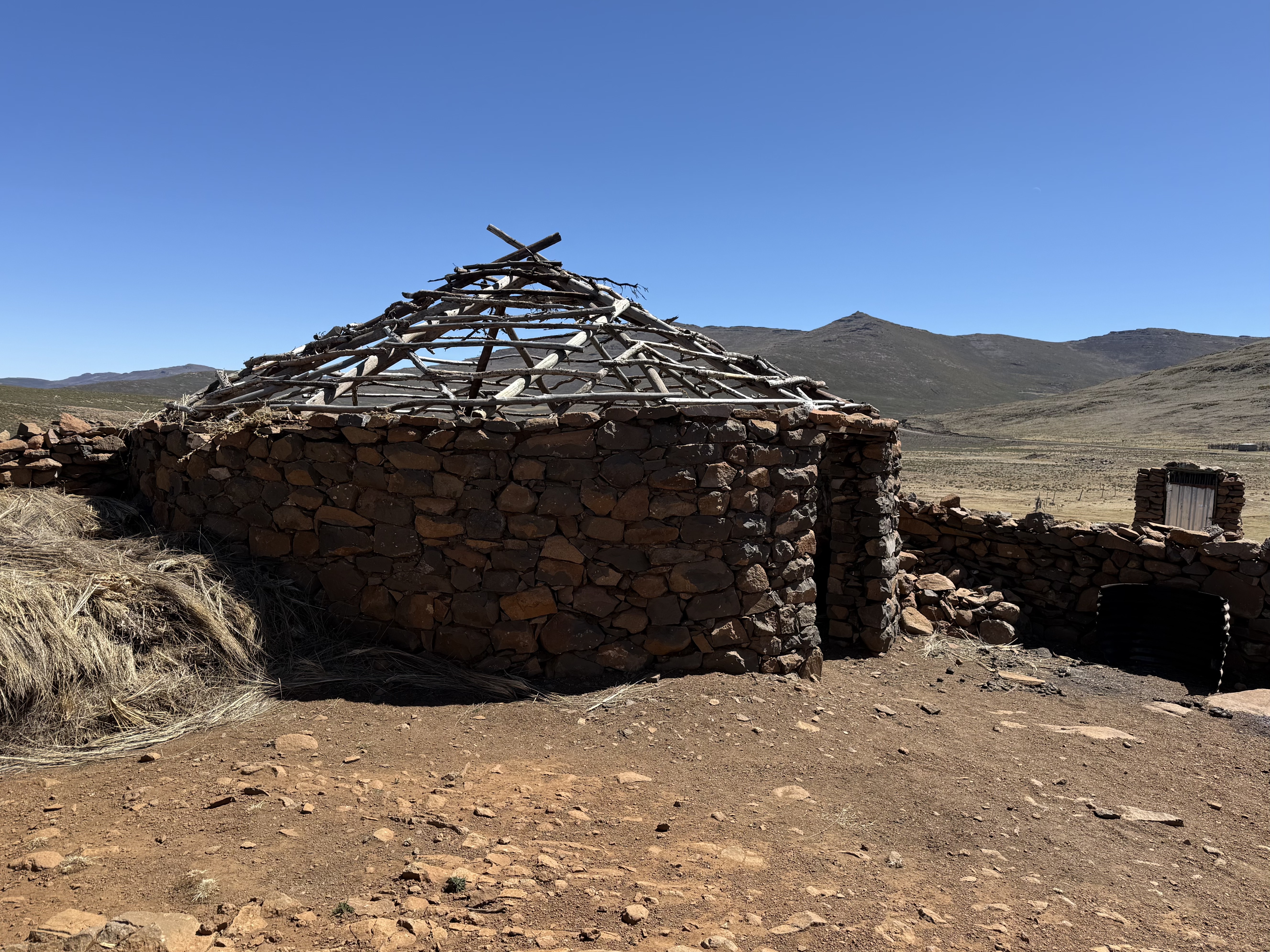
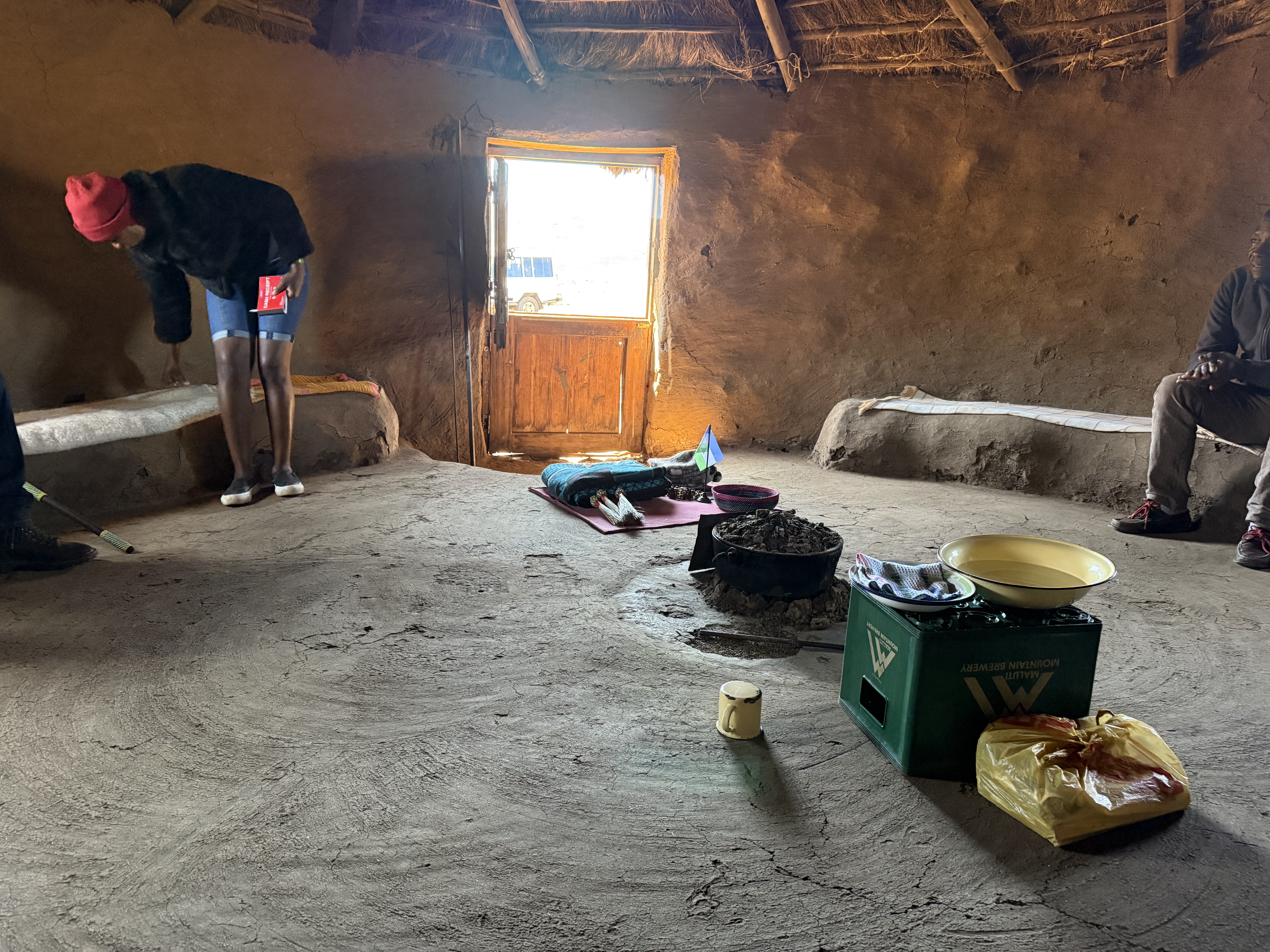
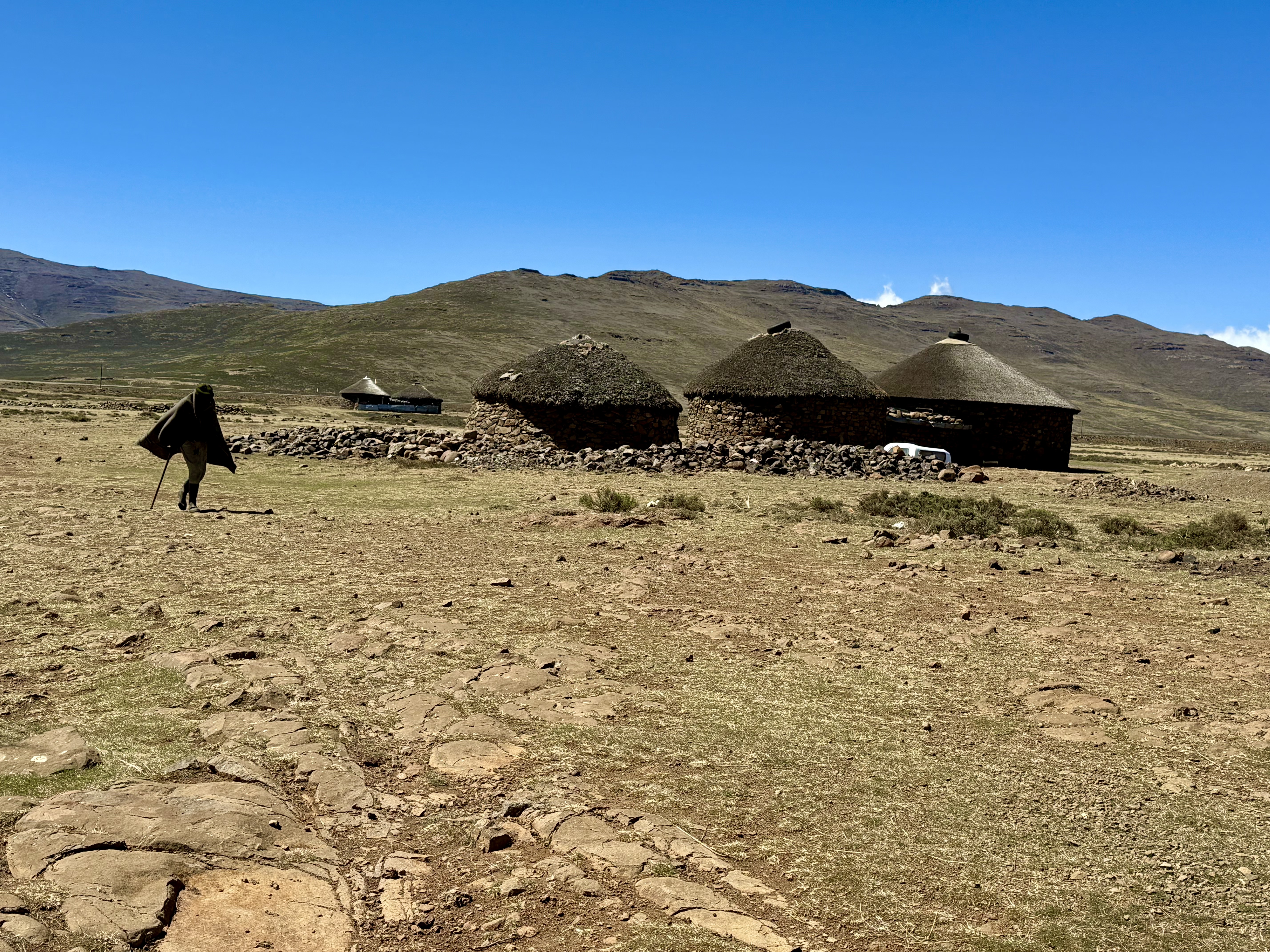
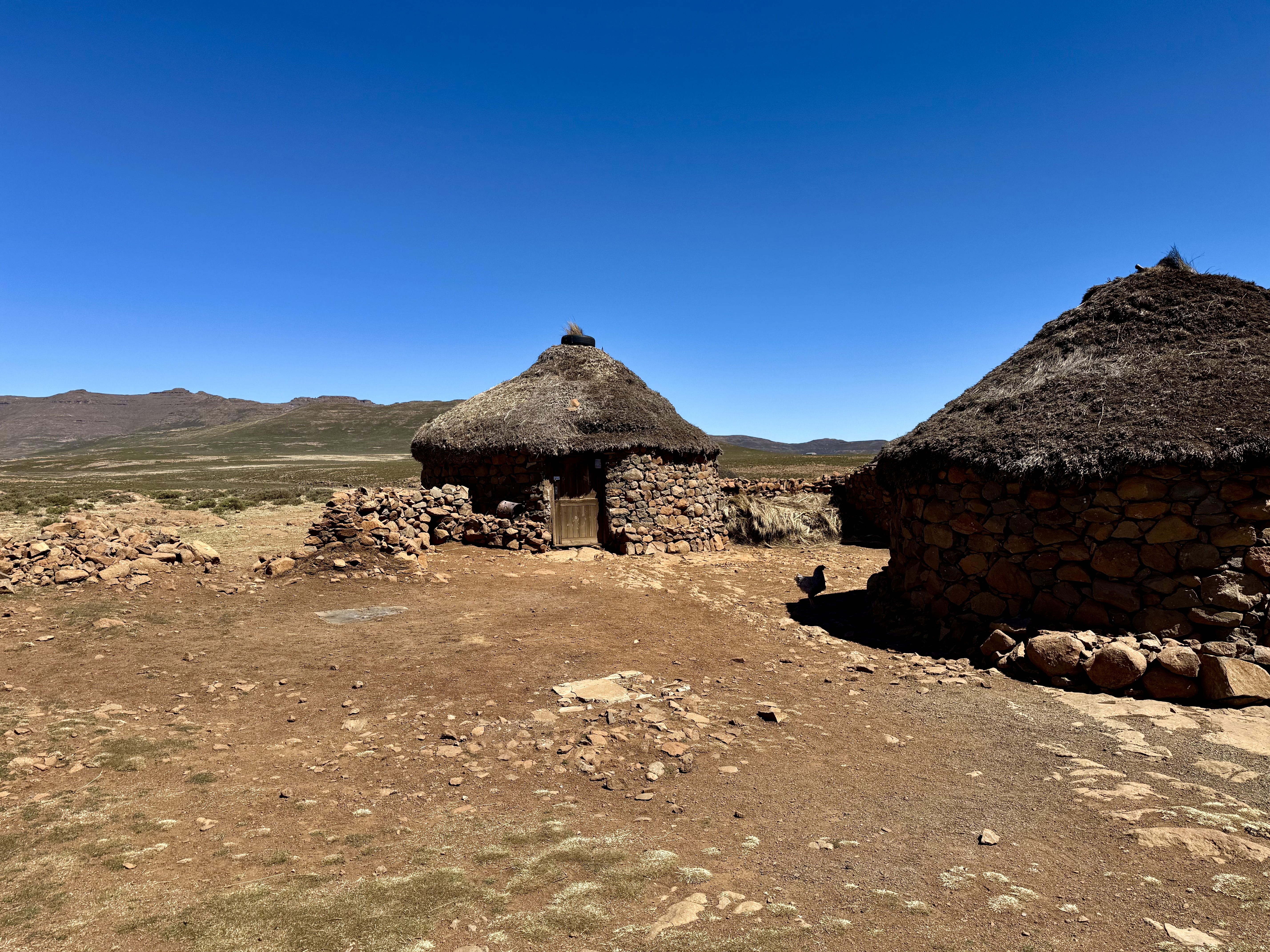
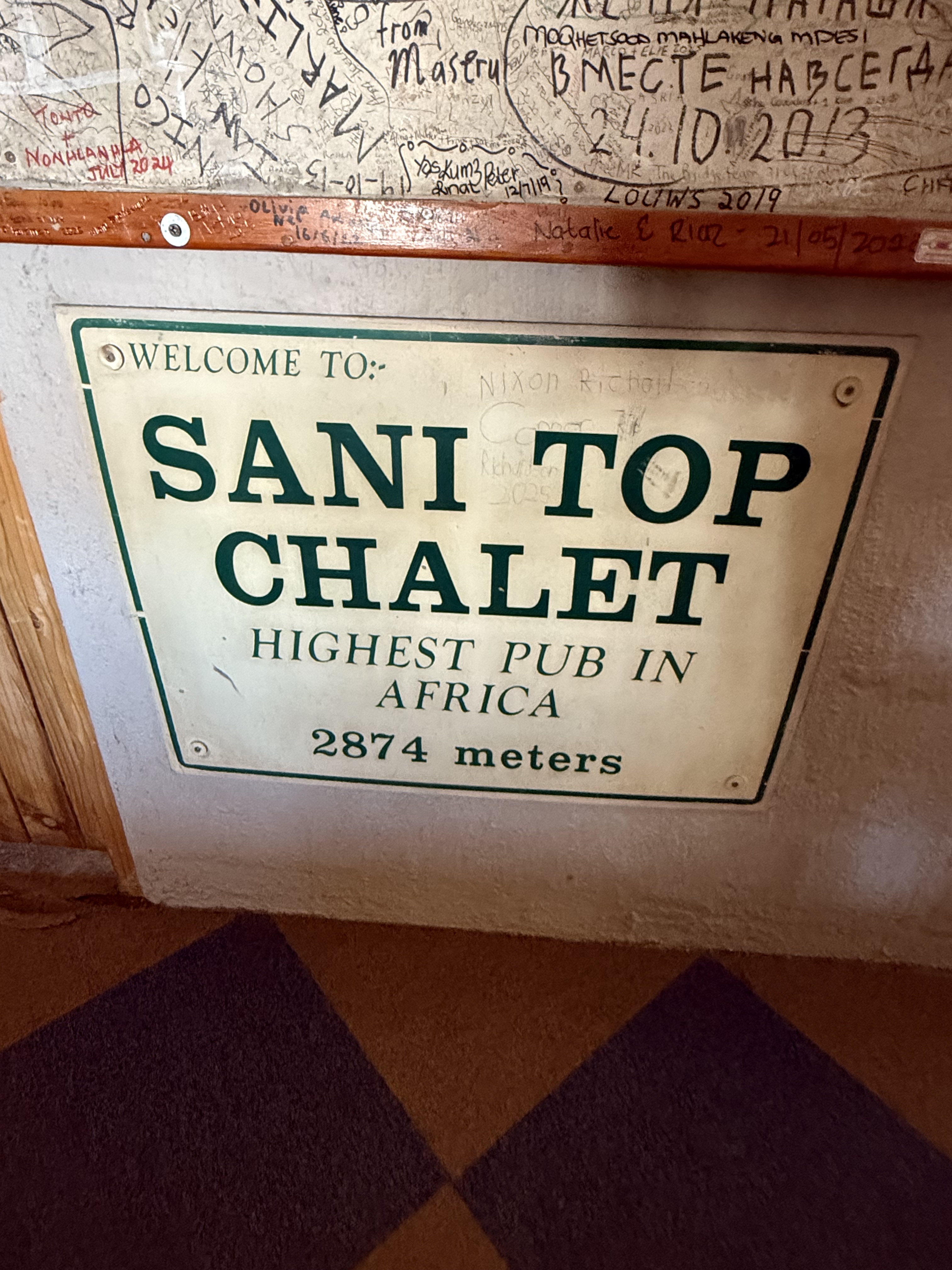
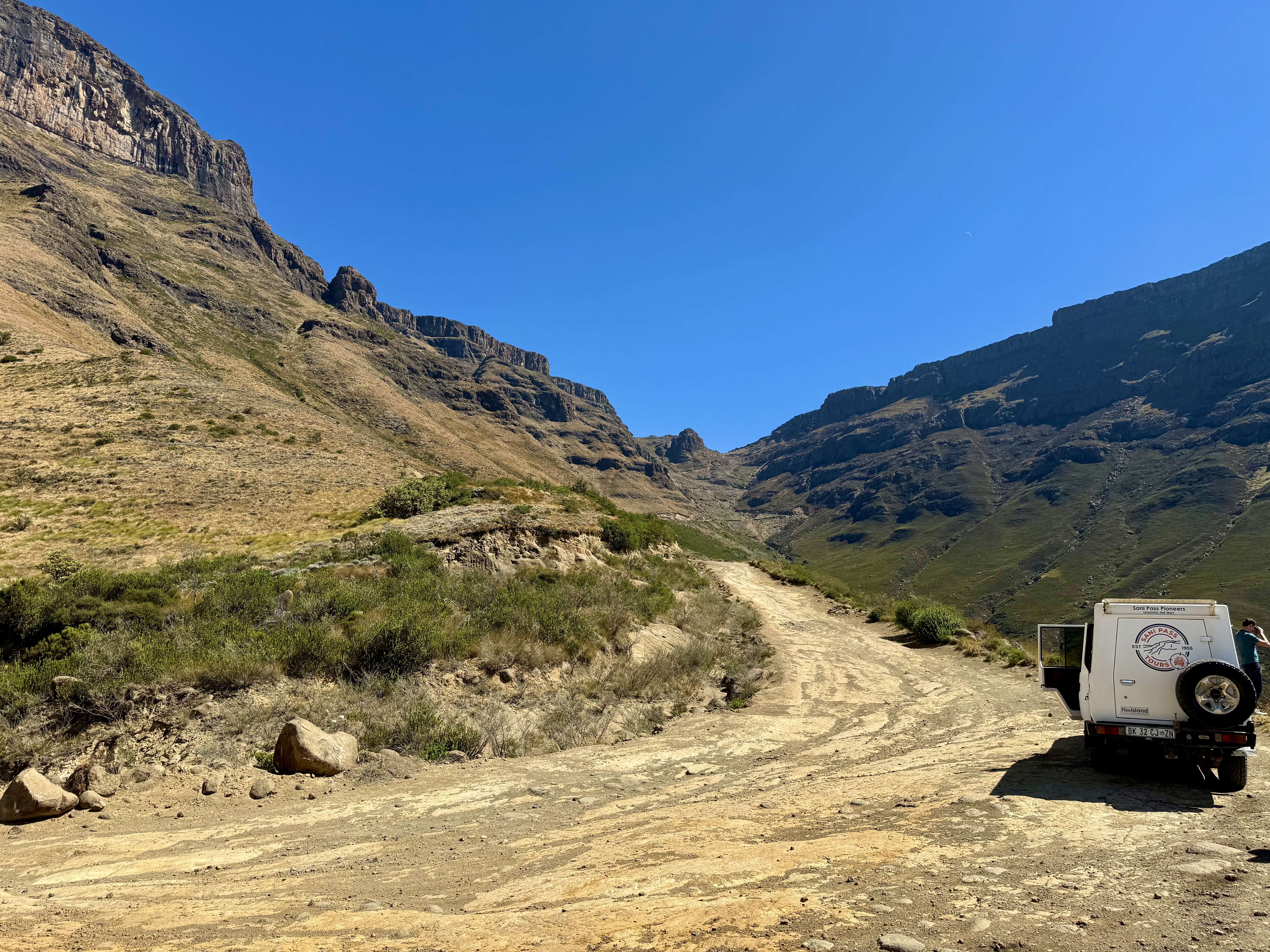
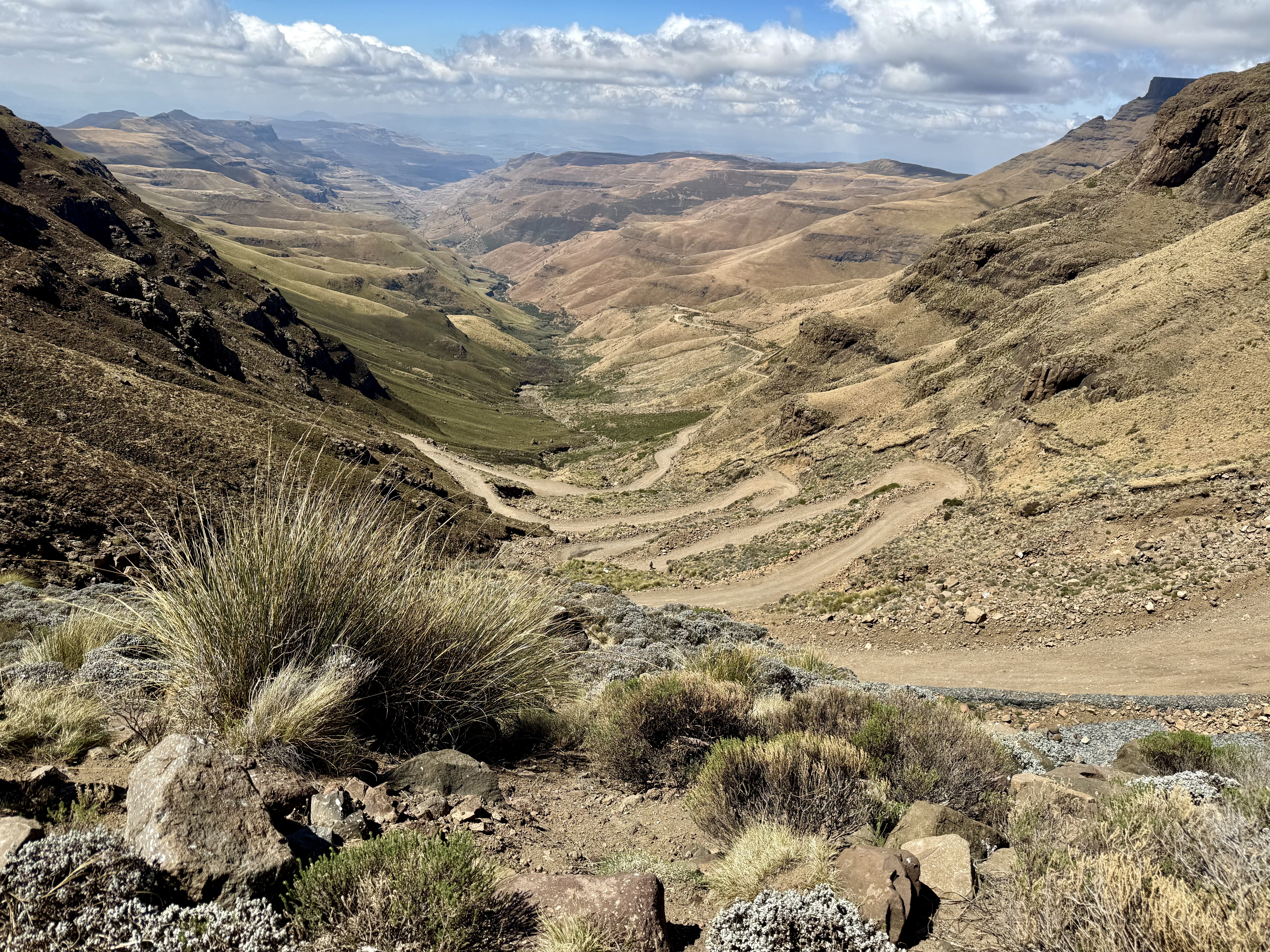
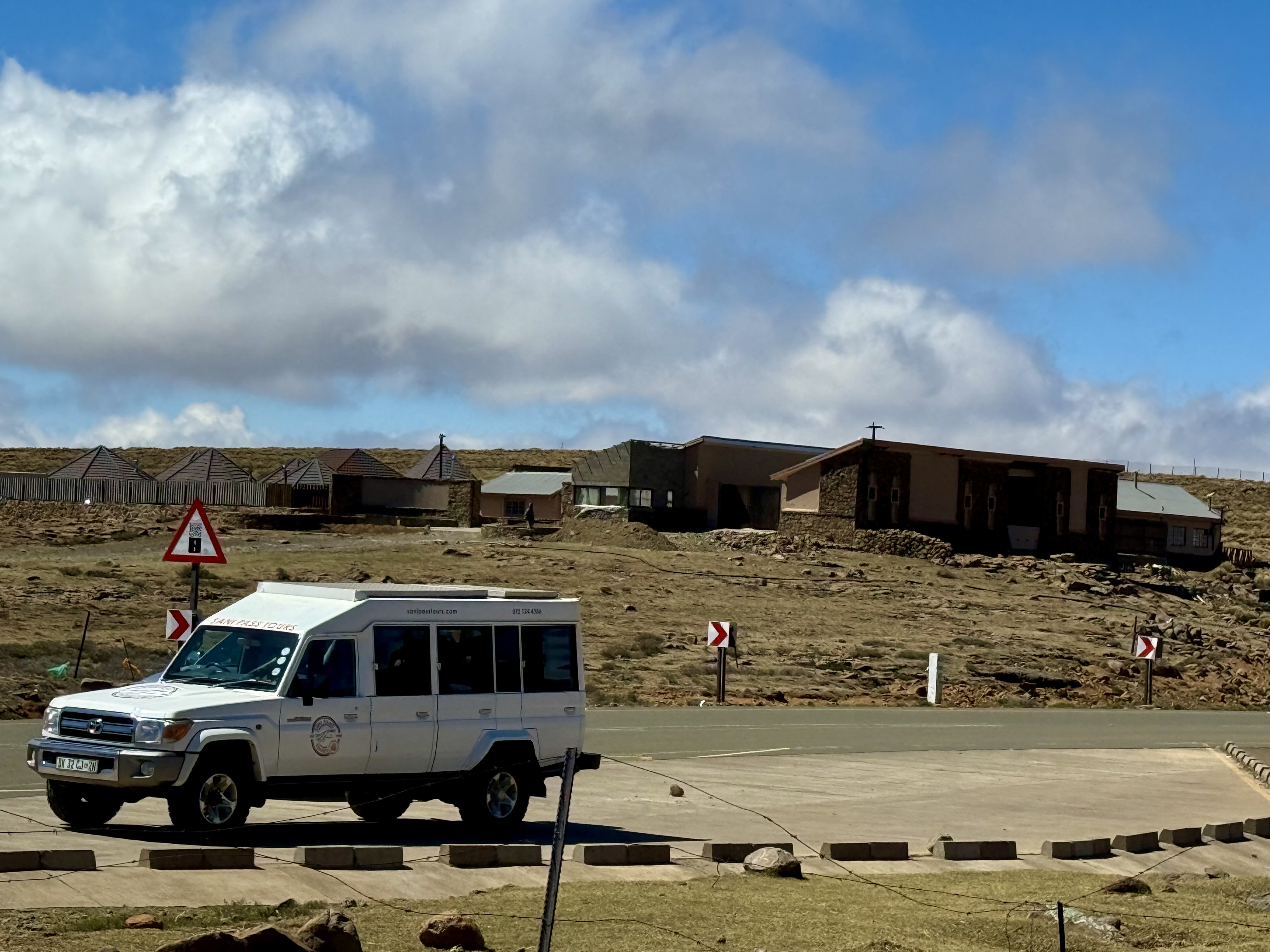
Lesotho is considered the highest independent country in the world, with 1,400m at its lowest level. Tibet would be higher, but as that country is now part of China, it doesn’t count as an independent country. Going over Sani Pass is the only way to access Lesotho from the east, and the road is only accessible by 4×4 by (an understandable) dictate from the South African government. There is a tarred road up to the South African customs control, then a miserable jeep track for 8 km of occasionally very tight switchbacks, up to the Lesotho border control, where a good tarred road continues into the interior of the country. The gravel track is on South African territory and there is supposed to be an initiative to pave all the way to Lesotho, but the guide didn’t have any idea when or if that would ever happen. On the way we spotted dassies, bushbucks, a baboon, and some vultures. At the top of the Pass, opposite the border control buildings is the highest pub in Africa. We had lunch there, after visiting a small village where a group of children and their mothers sang to us. There was also a presentation in one of the rondovals, traditional huts, on the lifestyle of the people living at the Pass and on the highlands. They are pastoralists with sheep and chickens – and stray dogs – as nothing will grow on the sparsely vegetated rocky ground. We saw one man on his way down the road to get a few twigs and branches for firewood. The huts are made from mud and cow manure, and heating is with cow manure and charcoal when they can get it from the lower lying cities and villages. The highlands are often hit by lightning and shepherds are particularly in danger when they strike. The huts now have a rubber tire near the top of the thatched roof, which seems to act as a deterrent to electrical charges. Down further into the lower lying areas, farmers still plow the rocky soil with wooden hand blades pulled by oxen. Life here continues as it has for thousands of years, other than even the women who sang to us had at least one cell phone.
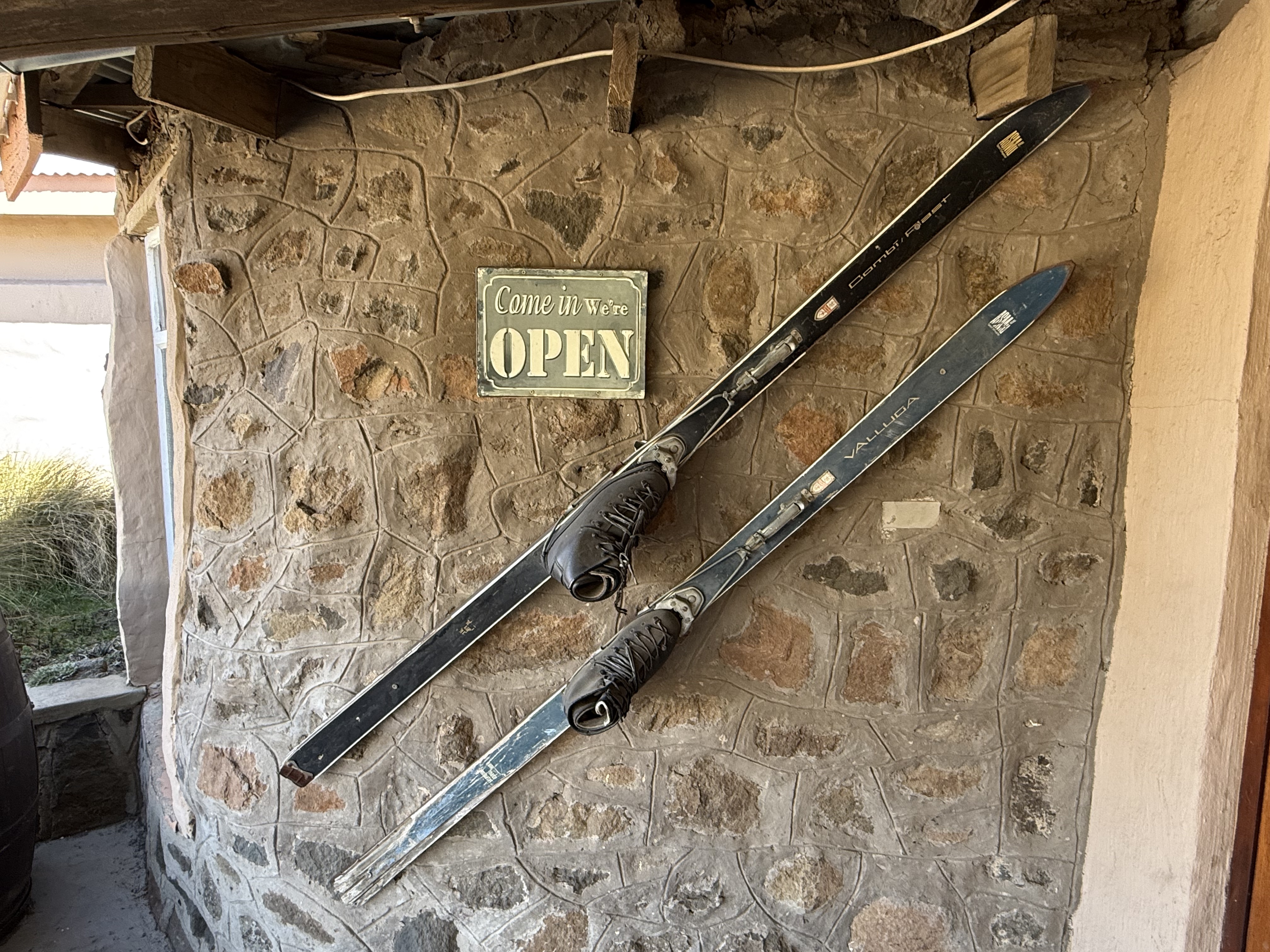
With this background, one can understand my surprise when we went into the highest pub in Africa to find old wooden skis with the old leather boots hanging on the outside walls. I remember learning on those things without edges and how the bootlaces would be covered in ice and impossible to untie. I am very happy for all the technological improvements in the ski industry! The skis introduced Afriski, a ski area further inland and higher. There are only two ski areas in Africa, and this is the only one in Lesotho, complete with T-Bar for a ski lift. The website is is worth looking at to get a sense of what they are up against. https://afriski.africa
Home
The day in Lesotho was educational. The two kingdoms bordering South Africa, Eswatini and Lesotho are dramatically different. The first has a king with ultimate control of all aspects of life and good relations with the United States. The second’s king has no legal power, similar to King Charles III, as the country has a democratic government. The first appears to be financially better off, the second dramatically poor. The cuts from USAID, especially that for Aids healthcare, has severely hurt the population in Lesotho. Meanwhile, the US is thinking about sending illegal immigrants to jails in Eswatini. The influence of foreign powers in Southern Africa clearly has not stopped since independence from Britian.

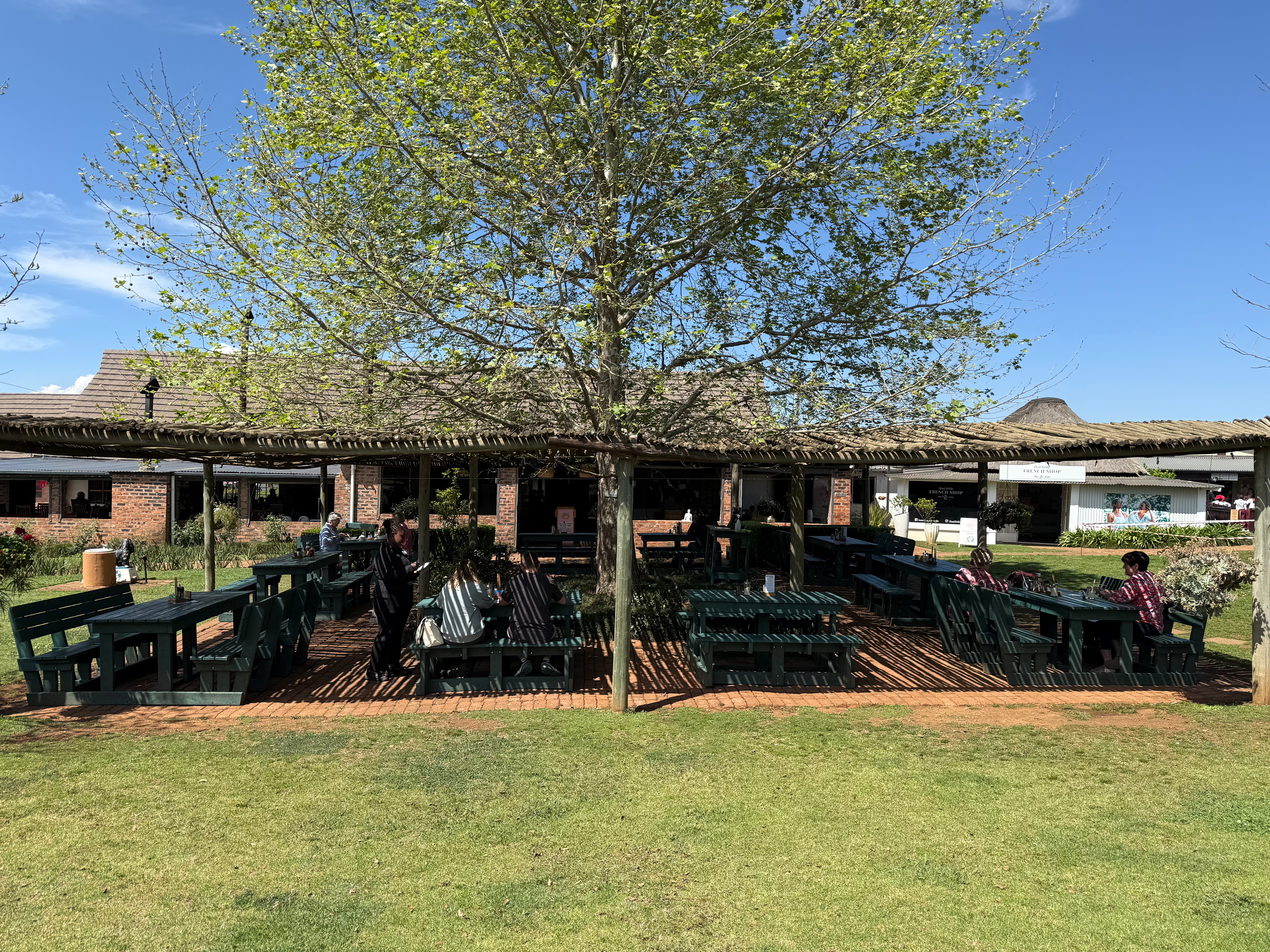
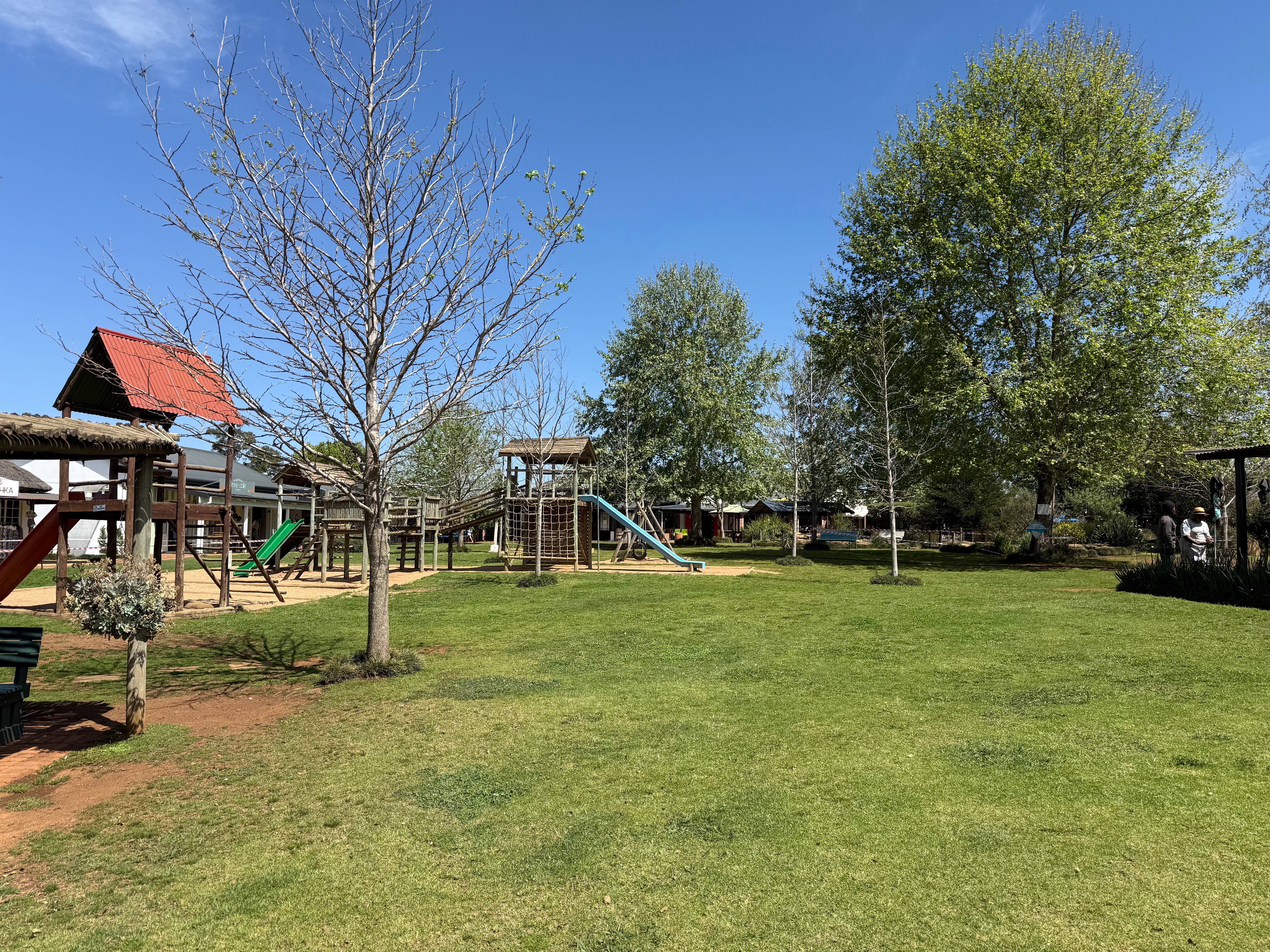
From Himeville, I drove to the Piggly Wiggly. The landscape in this region reminded me of rural Pennsylvania or Virginia, bucolic green rolling hills with farms as far as one could see. Colin and Natalie had told me about the Piggly Wiggly Coffee Shop and said that I must stop there. The coffee was good with quaint shops around the garden area and a zipline in front. It was a bit out of the way but provided an insight into a very different view of local life than I had seen up to this point. This coffee shop could have been anywhere in the middle of the East Coast of the U.S..
From the Piggly Wiggly, I made my way further north to the Nambiti Private Game Reserve where I was staying for the next three nights., which I will cover in a separate blog.
From Nambiti, I drove across fields and farmland through torn up road construction and huge potholes to Royal Natal National Park where I had planned on spending the night.
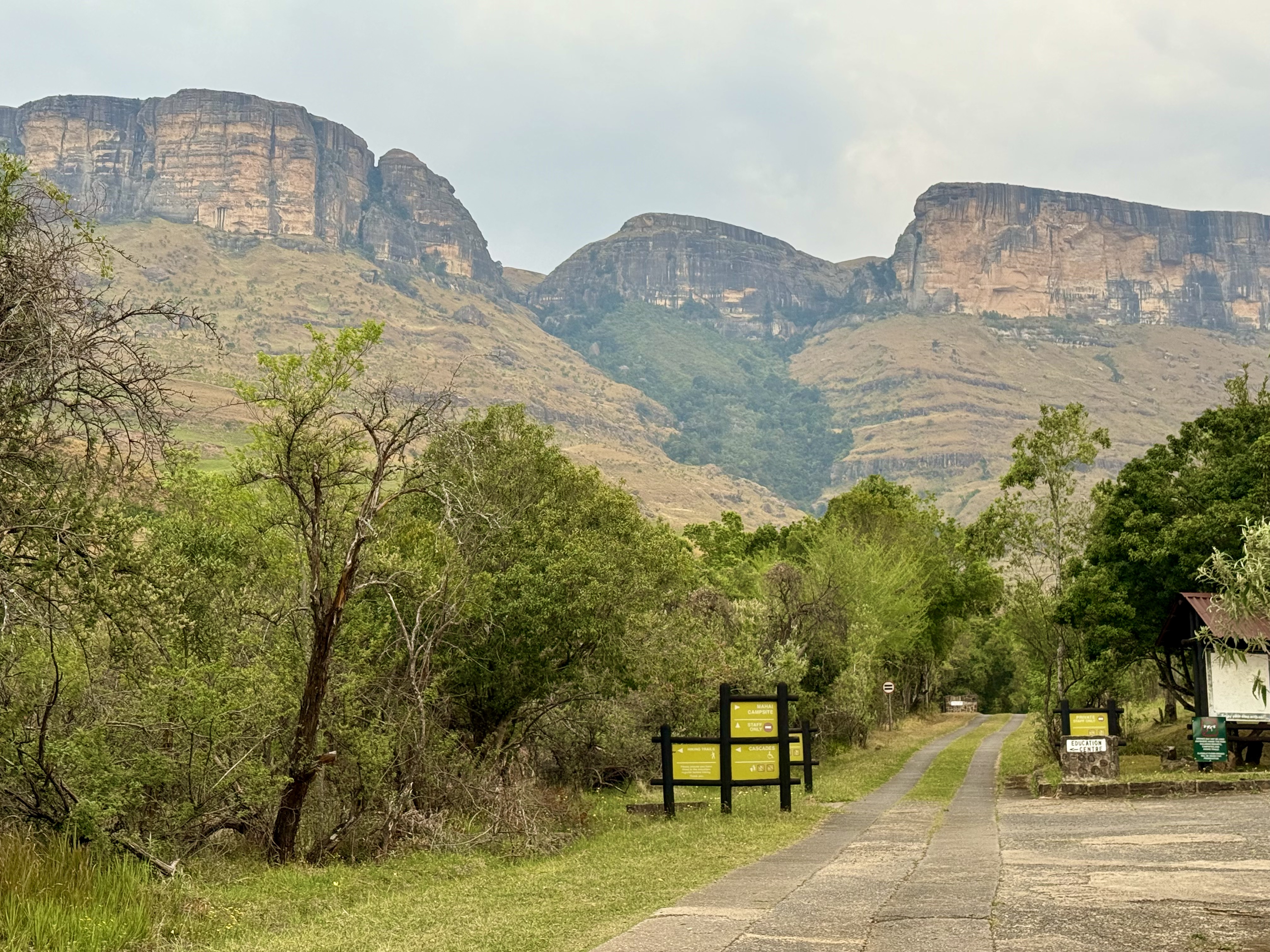
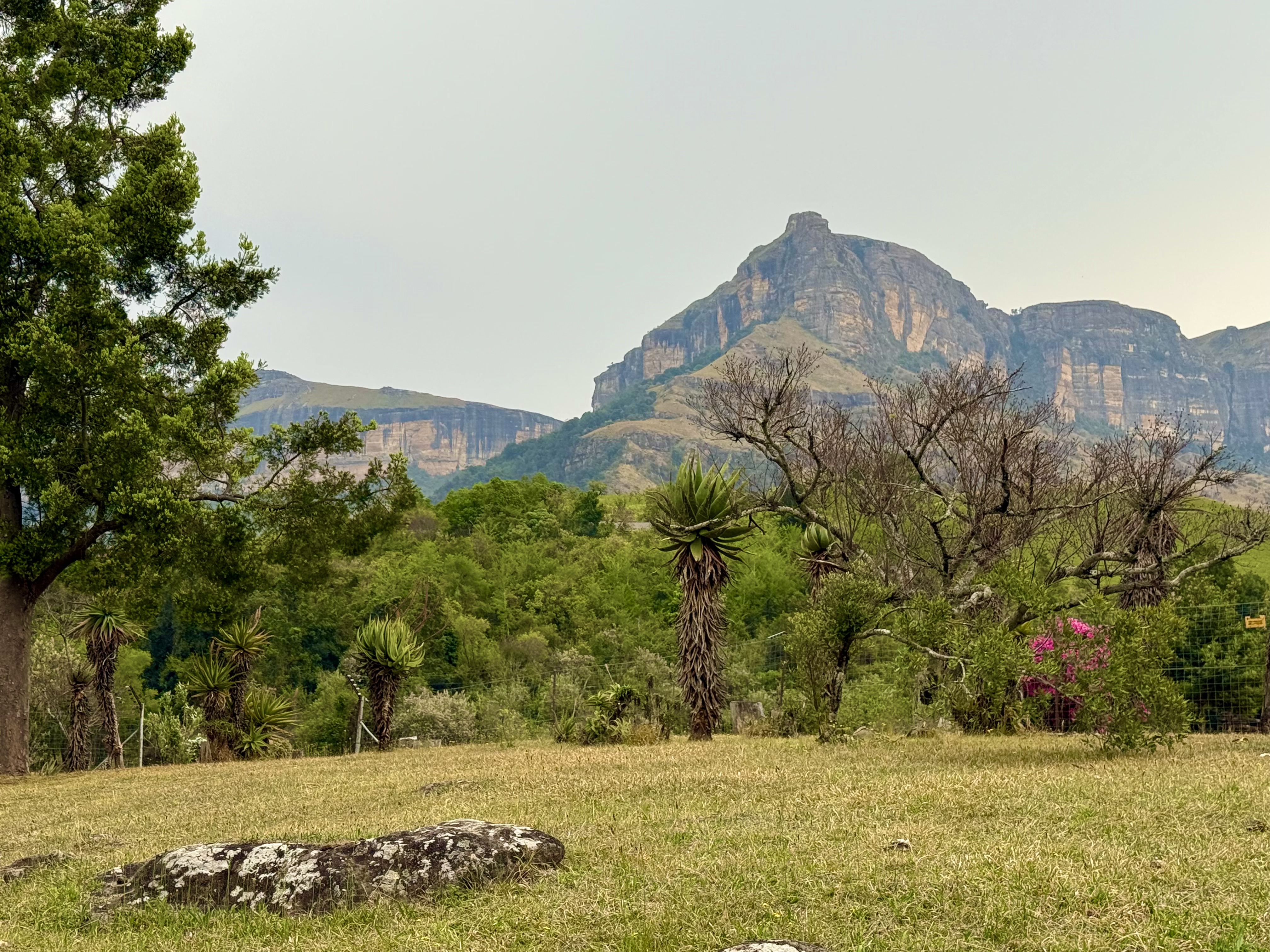
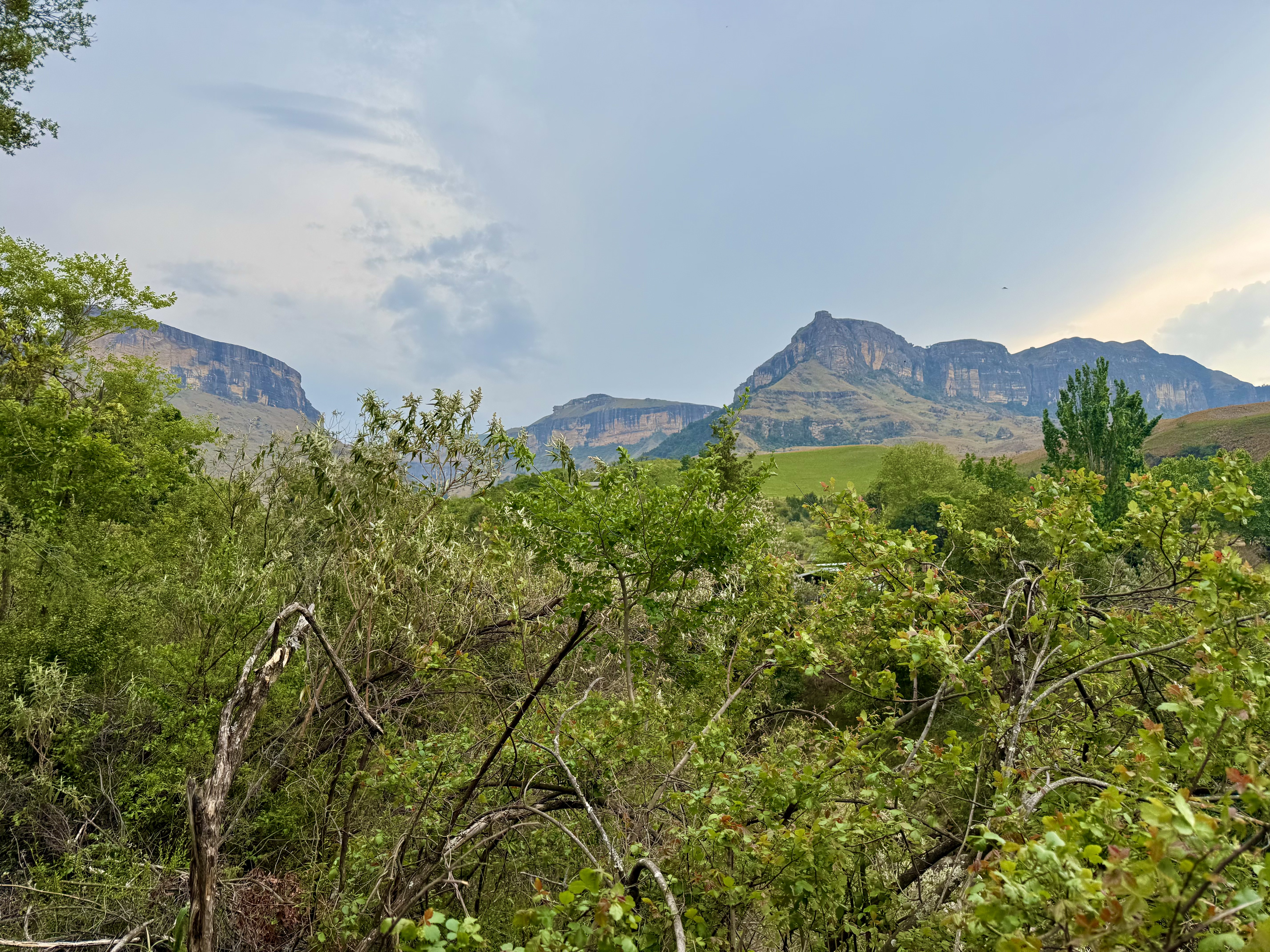
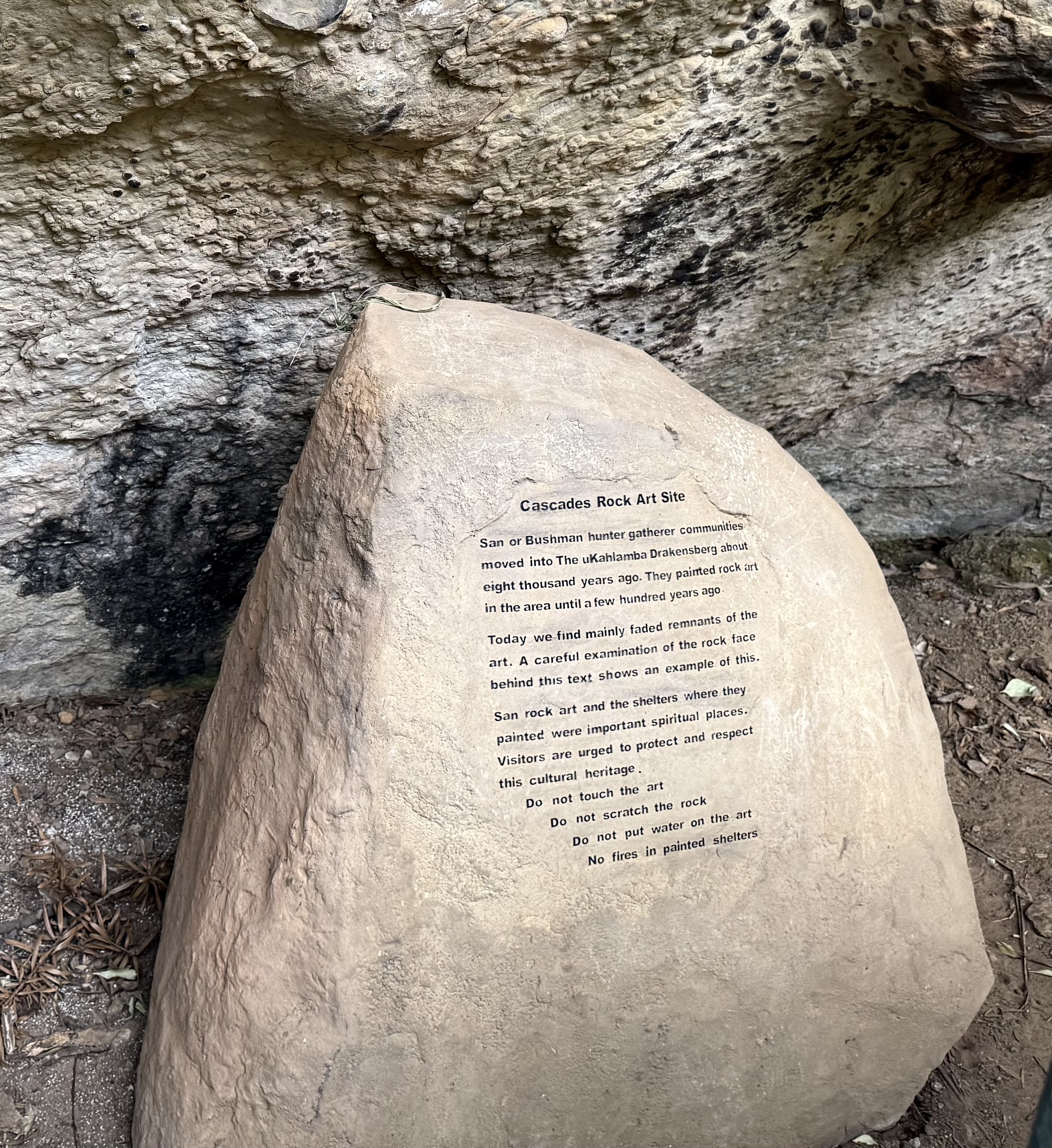
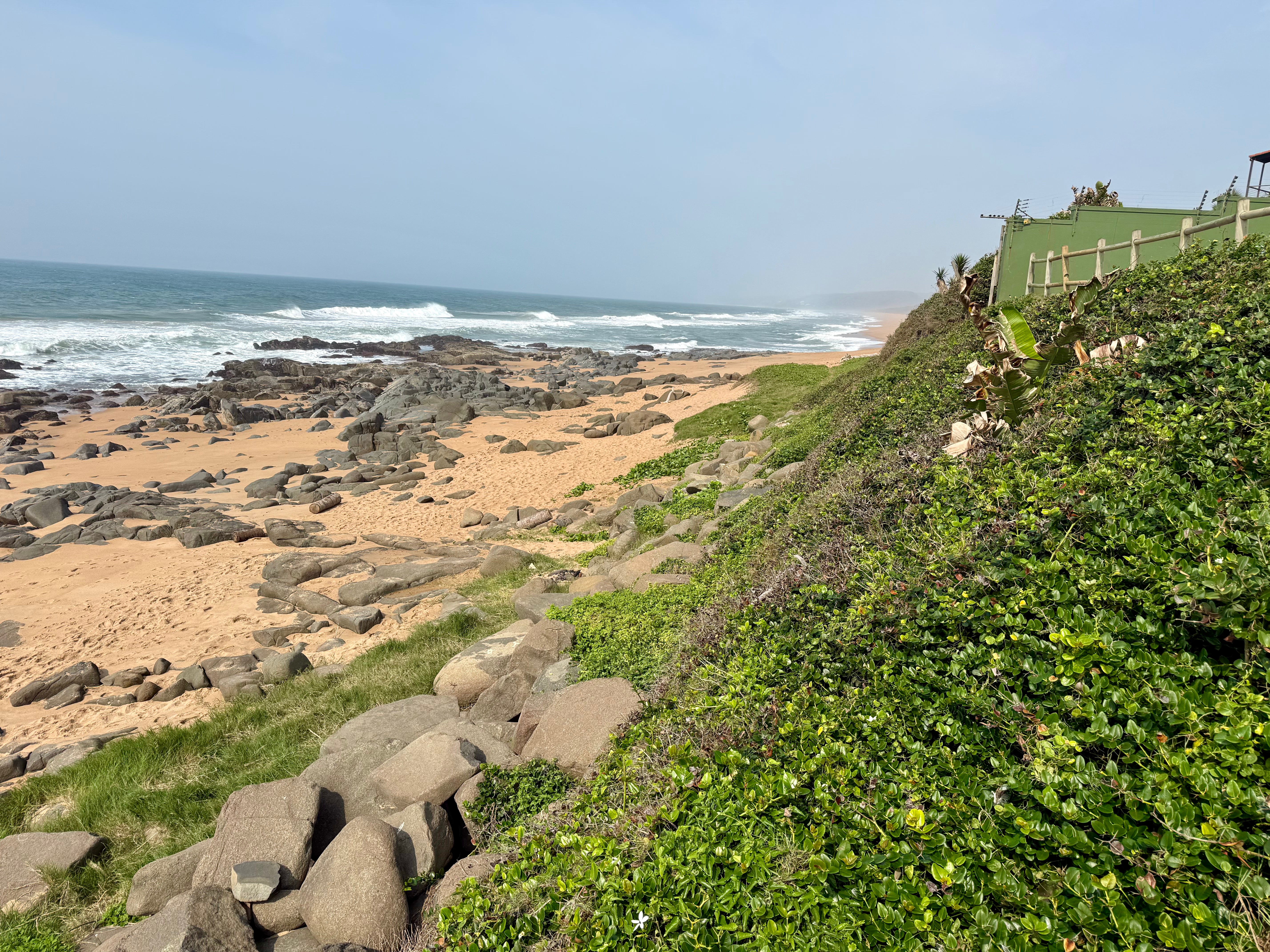
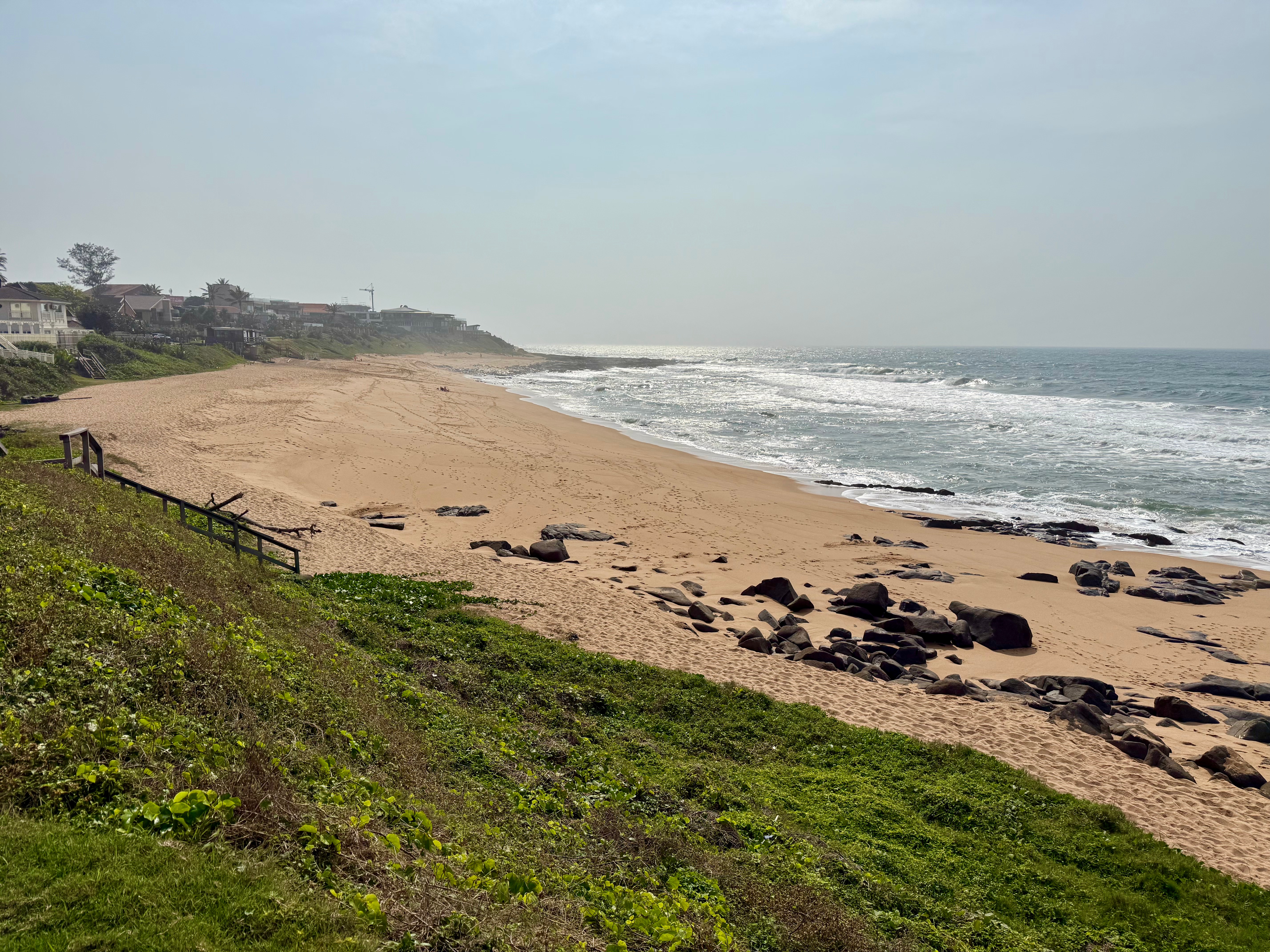
The Northern Drakensberg is a dramatic mountain range, but it was unfortunately covered in smog/smoke fog on the way. When I got there, the reservation was messed up from the central office, as it had been at Mpila, so I decided to just do a short walk and head back to the coast. It was a good thing that I made this spur of the moment decision, because just after I left the lightning storm hit and I wouldn’t have been able to hike further anyway. The traffic was also much lighter and better on Sunday afternoon than it would have been on a Monday when all the construction crews would be working. I ended up spending the night near the beach in Ballito listening to the waves roll onto the beach.
 omegoodyssey