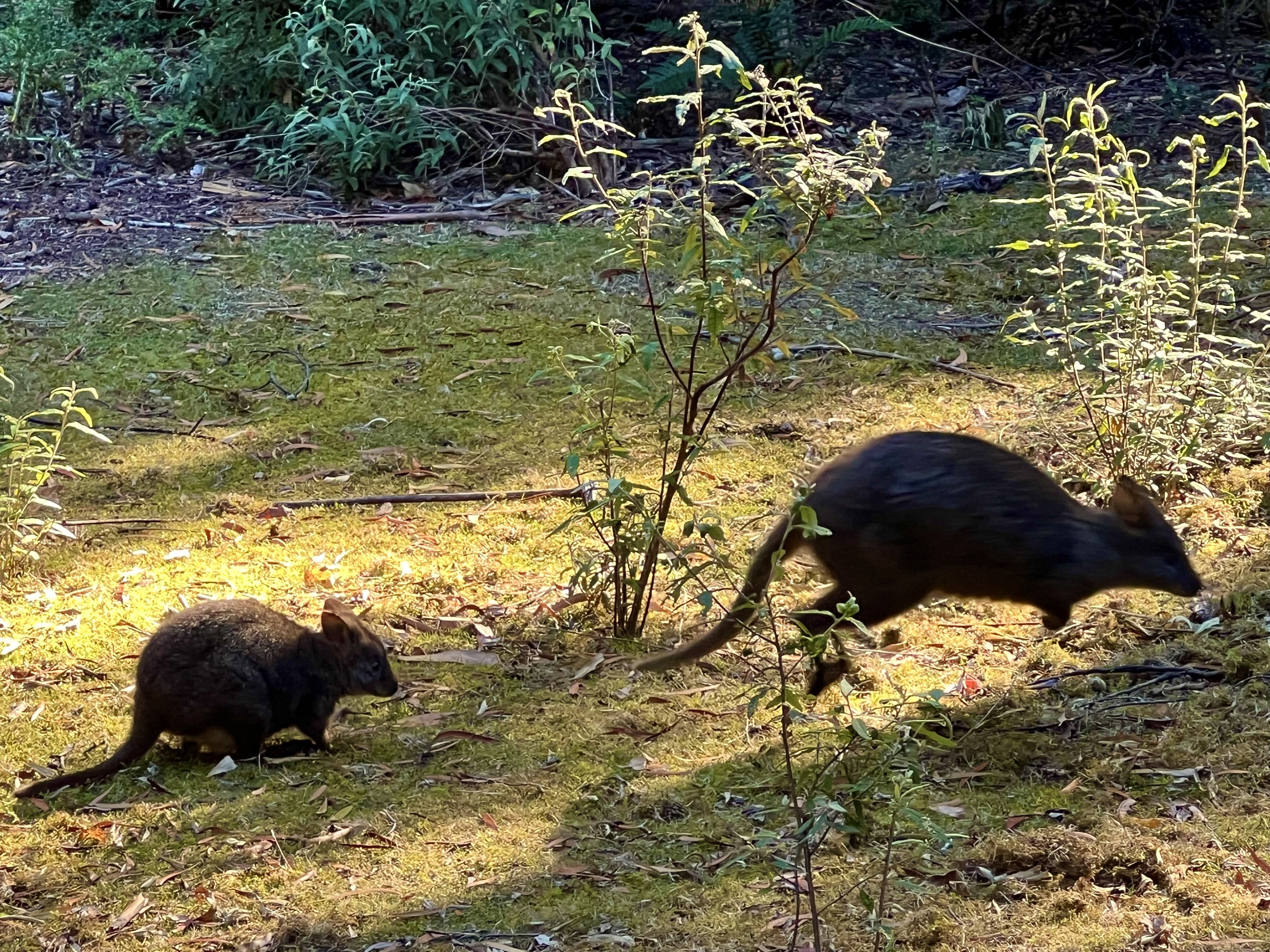
After a few hectic days in Kathmandu and Singapore, it was time to go back to nature and look for wildlife that I’d not previously been exposed to outside of zoos. I came to South Australia hoping to see a platypus, a Tasmanian devil, kangaroos, koalas, and lots of parrot family birds. My goal was to visit a few wildlife sanctuaries as well as look for the animals in some of the national parks. My first island stop was to Kangaroo Island, which was touted as the Galapagos of Australia. I can’t say how accurate that description is, but I can say the island is filled with kangaroos, wallabies, koalas, sea lions, fur seals, and birdlife.
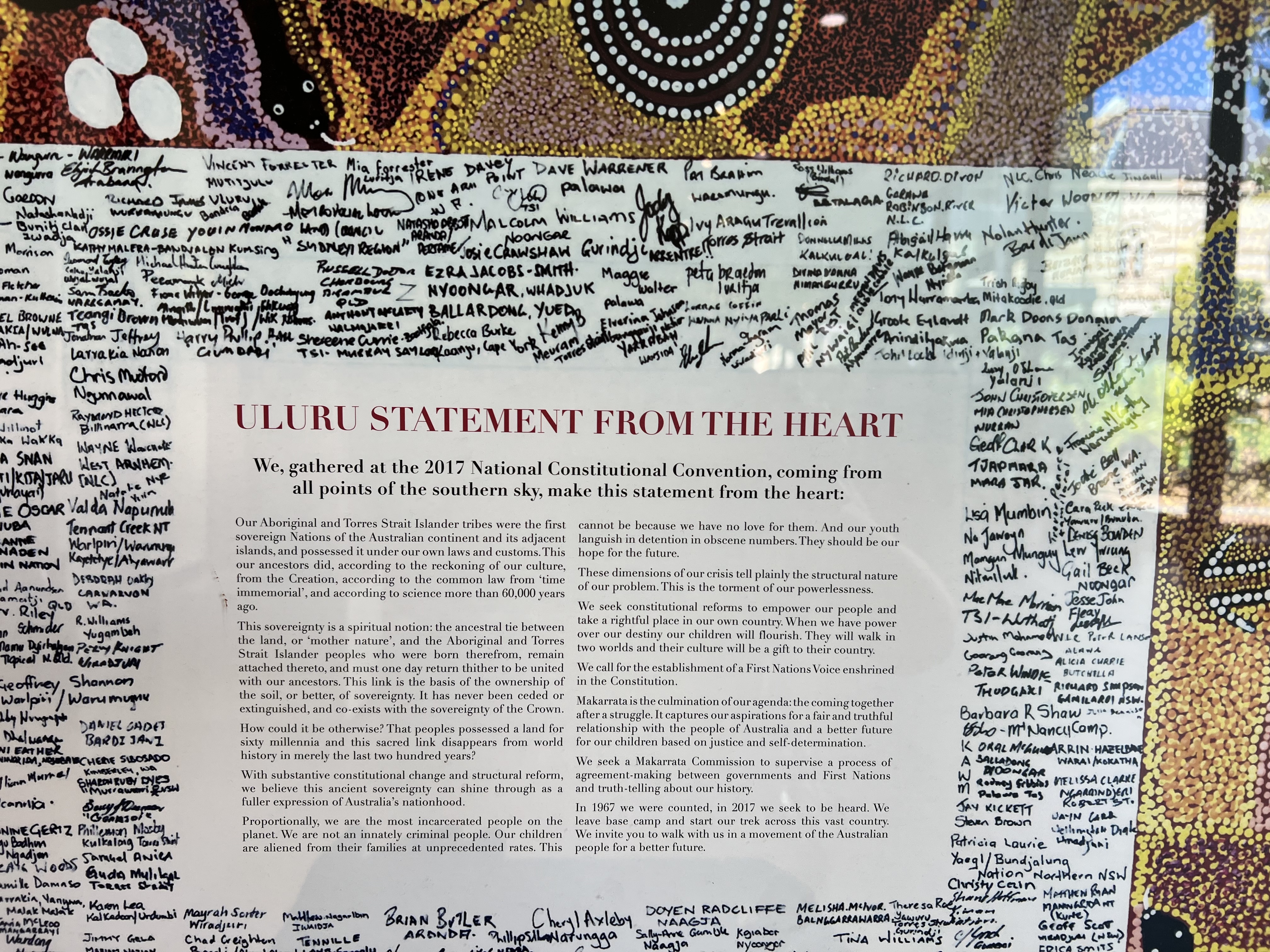
The ferry to Kangaroo Island from Cape Jervis is about two hours south of Adelaide. As I had a little over an hour before heading to the coast, I quickly headed over to the South Australian Museum, which has an extensive Aboriginal section that included ancient spears as well as modern artwork. There was a complete wall filled with bark paintings and another with school doors decorated with Songline stories in Aboriginal style. They were remarkable. There was also a copy of the original agreement with the Aboriginal peoples of the region. The posters at the entrance repeated what I had heard upon arrival in the Virgin Australia flight, that the staff and airline/museum honored the original inhabitants of the region past, present, and future. I later found the same statement repeated in all government buildings and in the national parks. It is unfortunate that the people they are honoring are still legally disadvantaged as they lost the recent referendum for a full voice concerning their own affairs in the nation’s government.

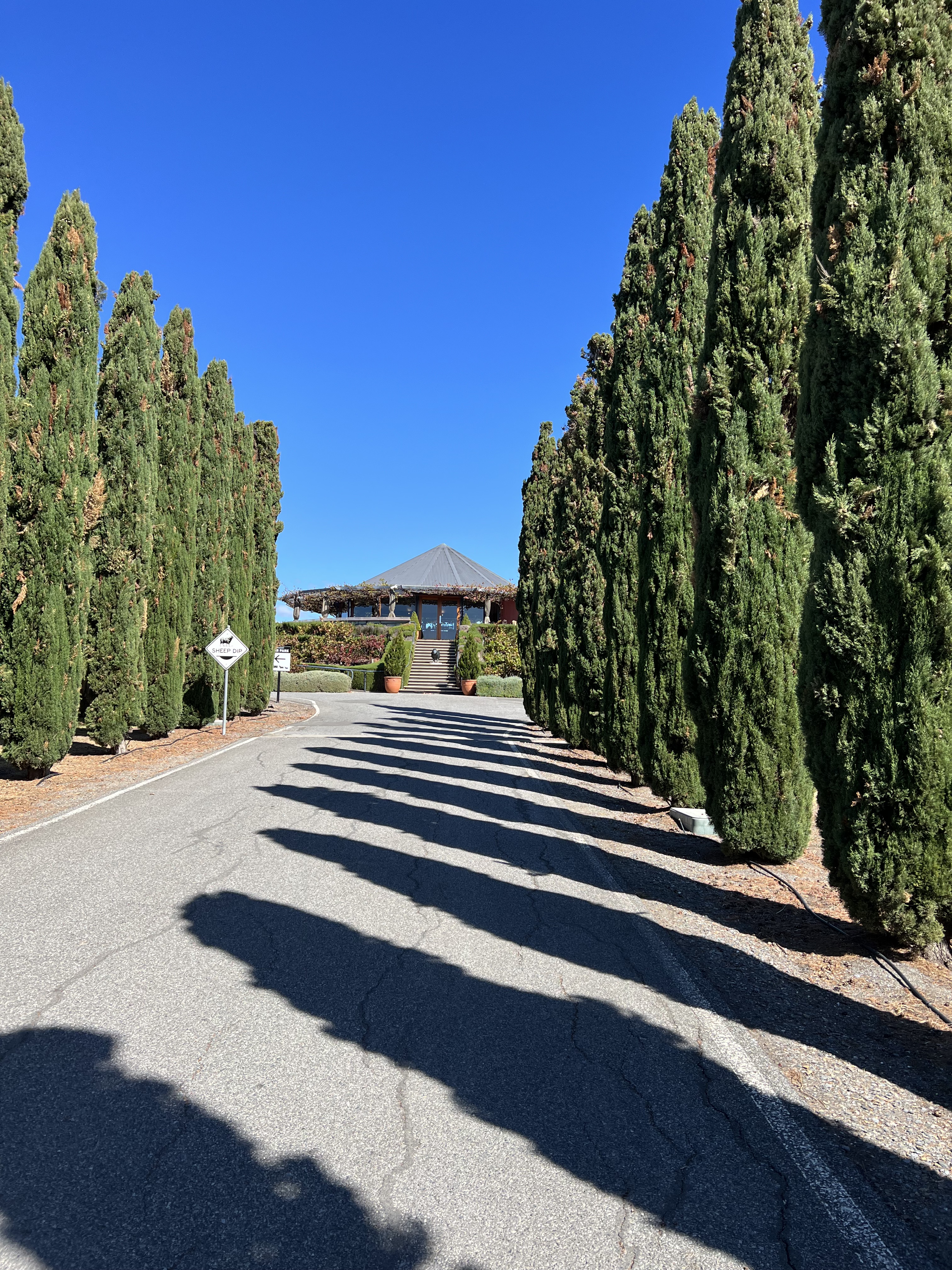
The ferry left at 9am the following day, so there was time to visit a vineyard in the afternoon. The McLaren Vale region around Adelaide is covered with wineries. A friend of mine and I visited Hugh Hamilton’s Black Sheep Farm, which is named for the grandson of the original owner who moved across the valley to start his own production, making him the black sheep of the family. The farm is now in the hands of the fifth generation. The wine tasting consisted of five different brands, some powerful reds, others milder, and a smooth white wine. (I have to say, though, that I prefer our Austrian and South Tyrolian wines to what I tasted in this region – sorry, Australia!)
From the wine tasting, we slowly made our way to the coast and the farmhouse where we were spending the night. The farmhouse came complete with sheep, cows, a deer that let itself be petted, and wild kangaroos on the hillsides behind that house. It was a wonderful introduction to the animal life in the area.
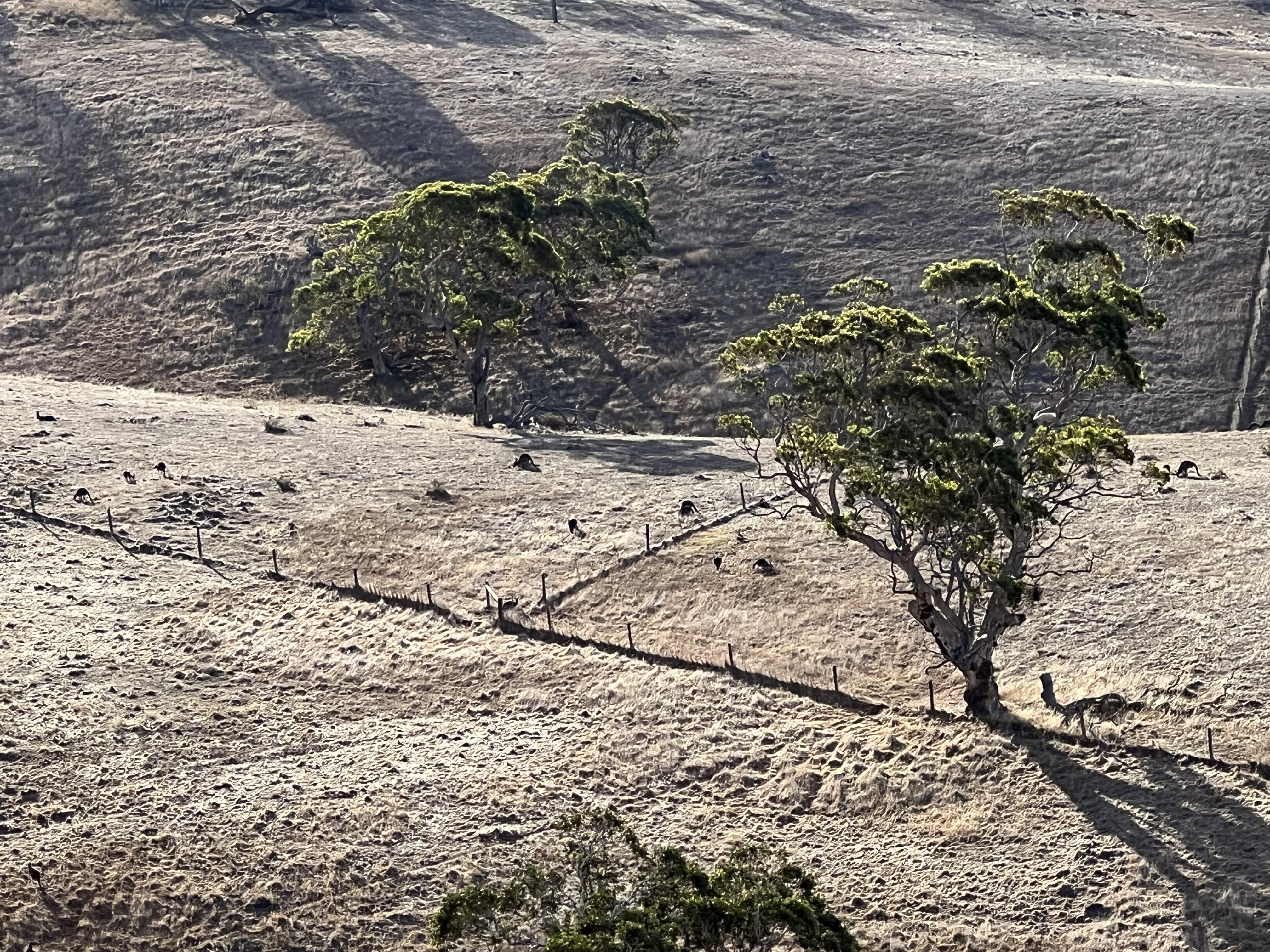
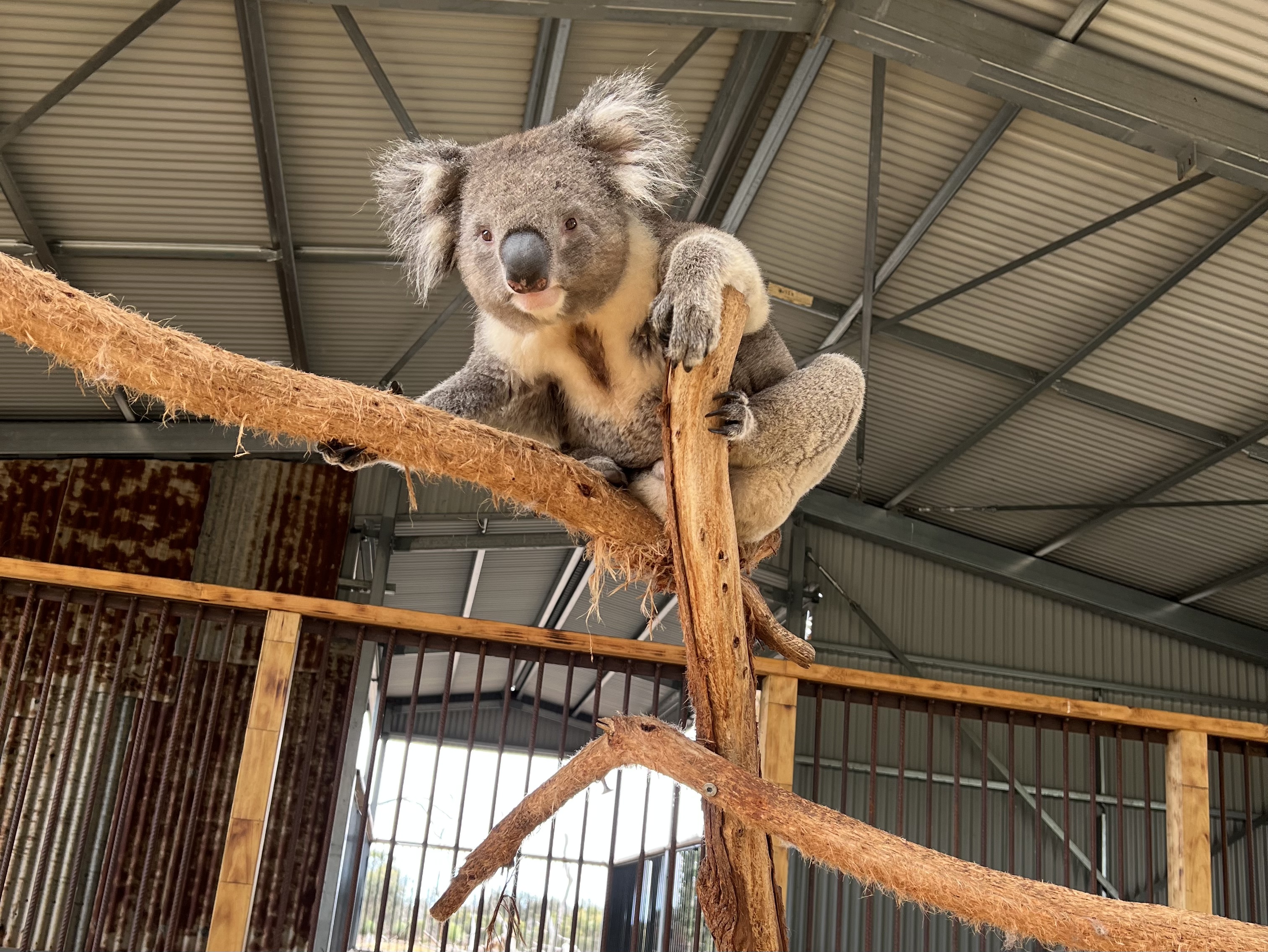
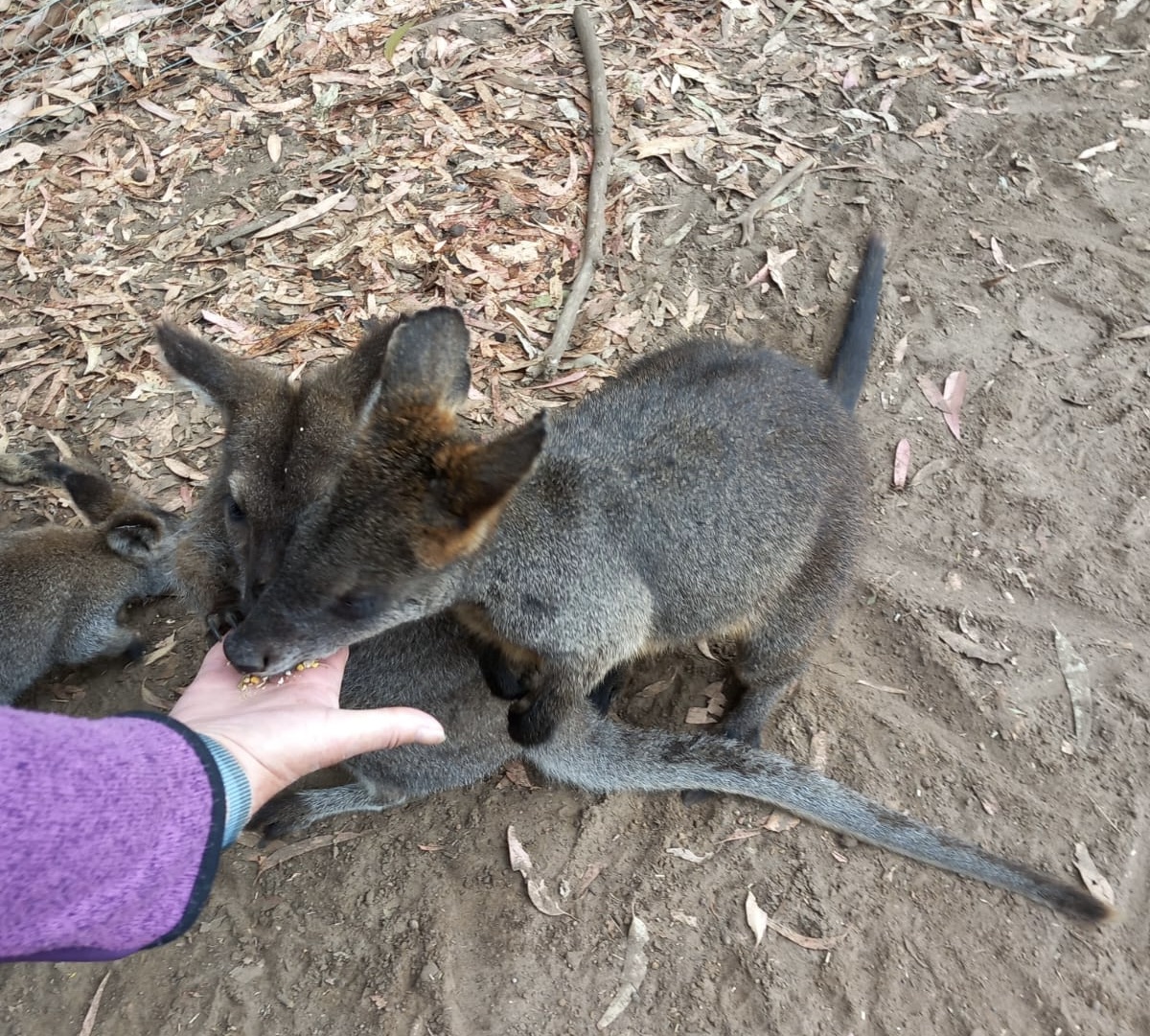
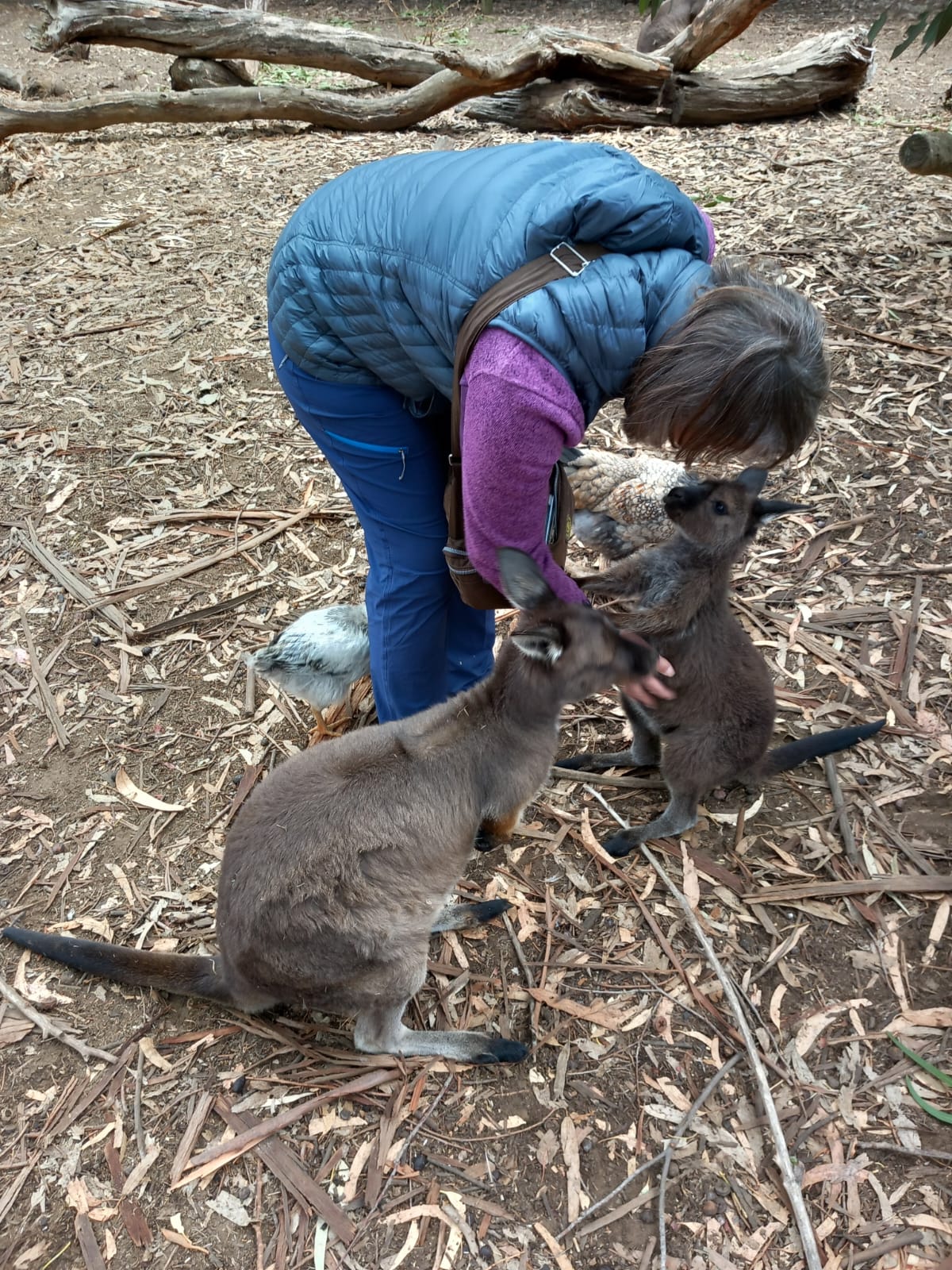
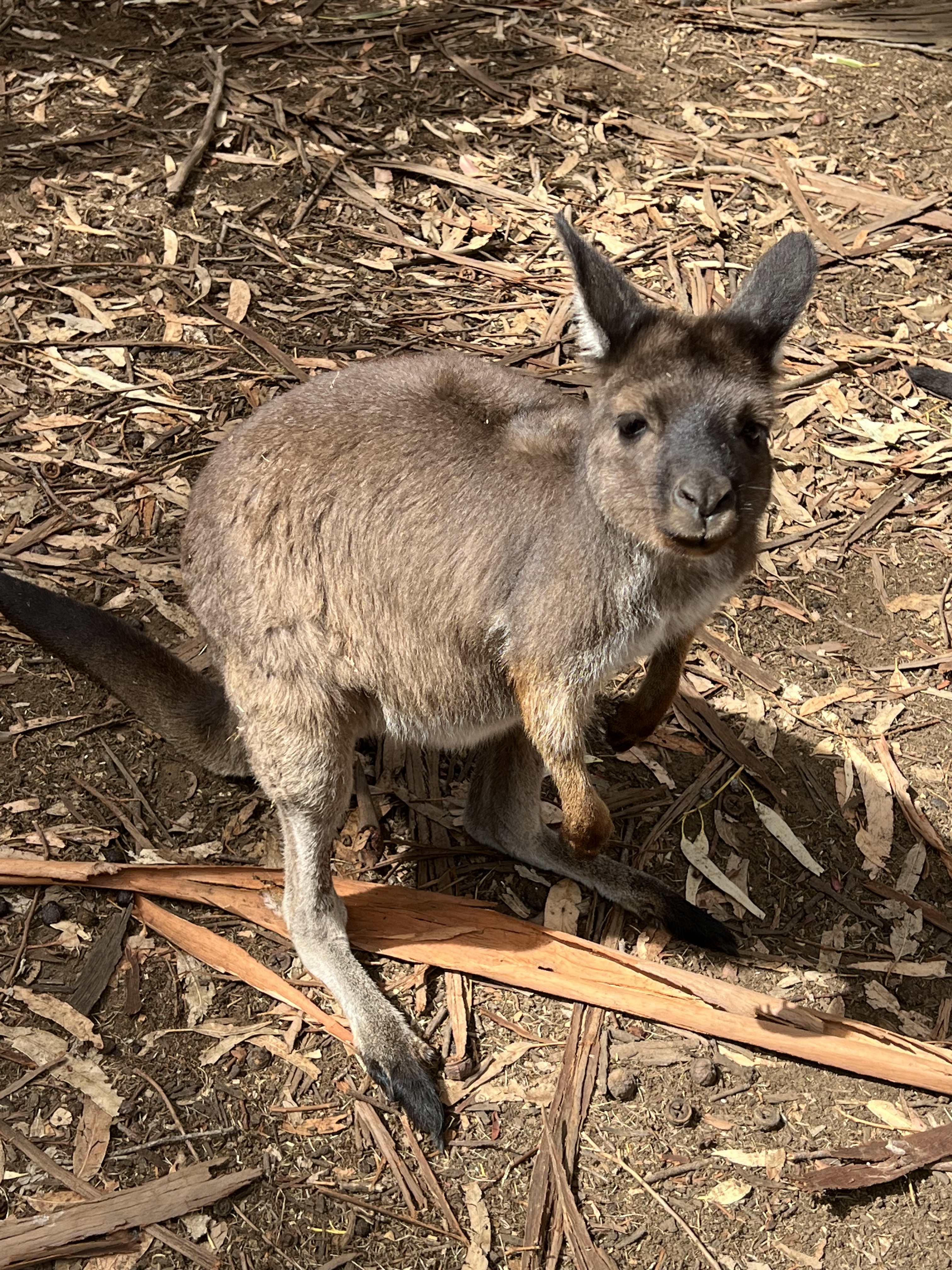
The ferry takes about an hour to Penneshaw, and from there the roads crisscross the island. As I thought it best to have an introduction to Australian critters before going through the national parks, the first stop was at Kangaroo Island Wildlife Park. A young woman who had been working at the park for a few years, gave an insightful overview of the behavior of some of the most common wild animals on the continent and the island. She gave detailed descriptions of koala, kangaroo, and wallaby behaviors as well as that of wombats, although they are not native to KI. The park was divided into pens of various sizes and had a few animals that are not from Australia, like meerkats, marmosets, and black capped capuchins, as well as native birds, reptiles, amphibians, and mammals. The best part of the park, aside from the talk, was being allowed to pet a very soft koala and hand feed both wallabies and kangaroos. Their tongues gently glide between one’s fingers to get the last grain after softly muzzling one’s palm for the feed. After they had eaten, they liked to be stroked on their chest and under their neck the way my dog, Nori, does. It was an incredible experience and one I will not forget.

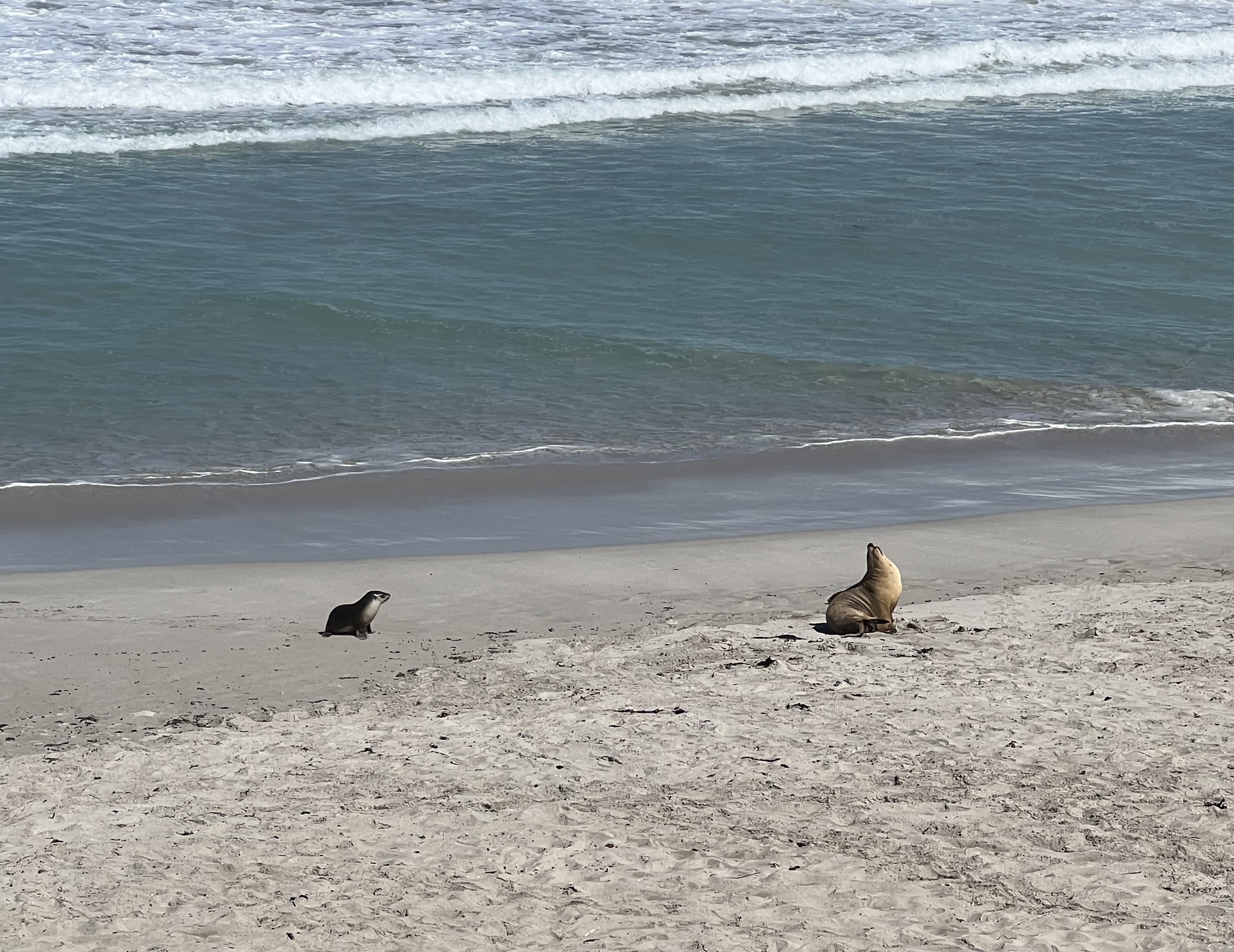
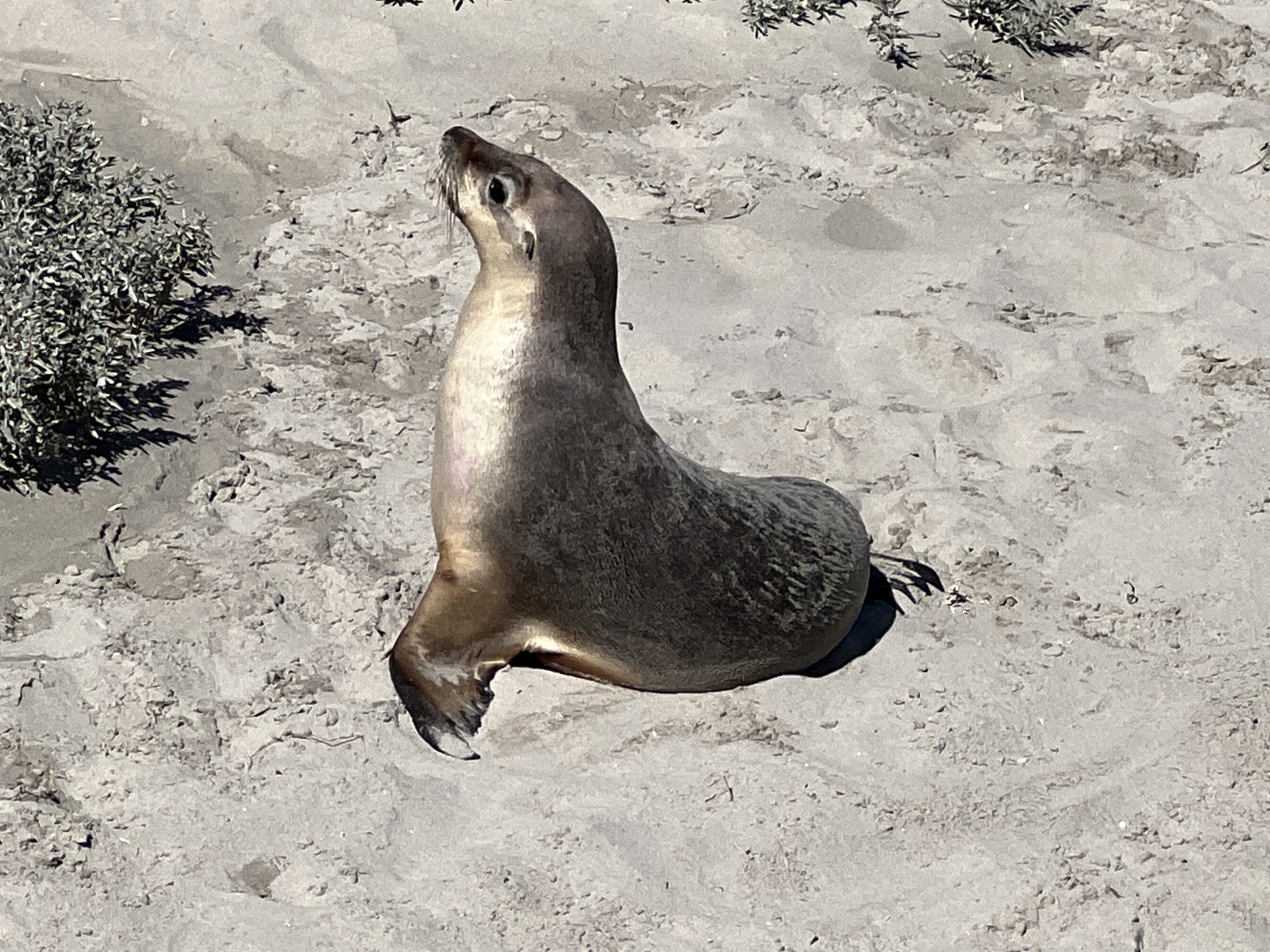
From the Wildlife Park it is about an hour to Seal Bay, the home of a colony of endangered Australian Sea Lions. There is a boardwalk leading to a series of viewing areas as one is not allowed on the beach with the animals unless one pays extra to go with a ranger. As it was, at least one seal came directly up to us, went underneath the platform, and started a conversation with me from the other side. Others were playing in the surf, mothers were overseeing and scolding their young, pups played together, and a couple of males waddled over to more shady areas for a rest. These sea lions put on quite a show. There was always something going on and they seemed to be happy. According to the signs, the sea lions leave for up to three days searching for food and then return to their home area. This stretch of beach and coastline was perfect for them, and the rangers made sure that people didn’t interfere with the animals’ normal routine unless the sea lion wanted human attention.
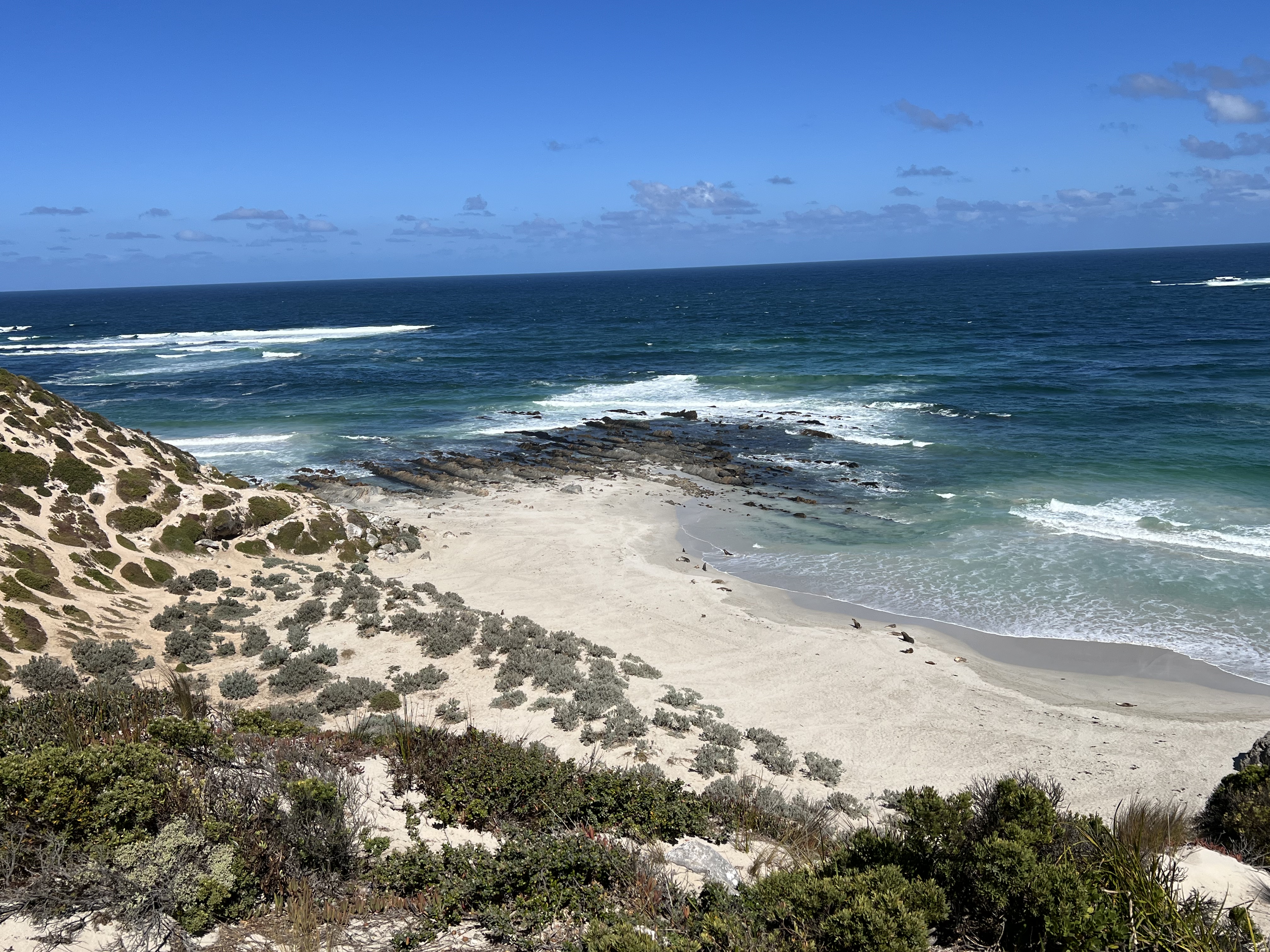
The following morning was spent in Flinders Chase National Park, where there is a colony of long-nosed fur seals at Admirals Arch. These seals are very different from the sea lions at Seal Bay. They are much more sedentary, other than a few playing in a pool amid the rocks they were all sleeping, and rather than hanging out and playing on a beach, the fur seals preferred rocky cliffs with crashing surf. The seal pups playing in the pool were entertaining, but nothing like the performances of the sea lions the day before.
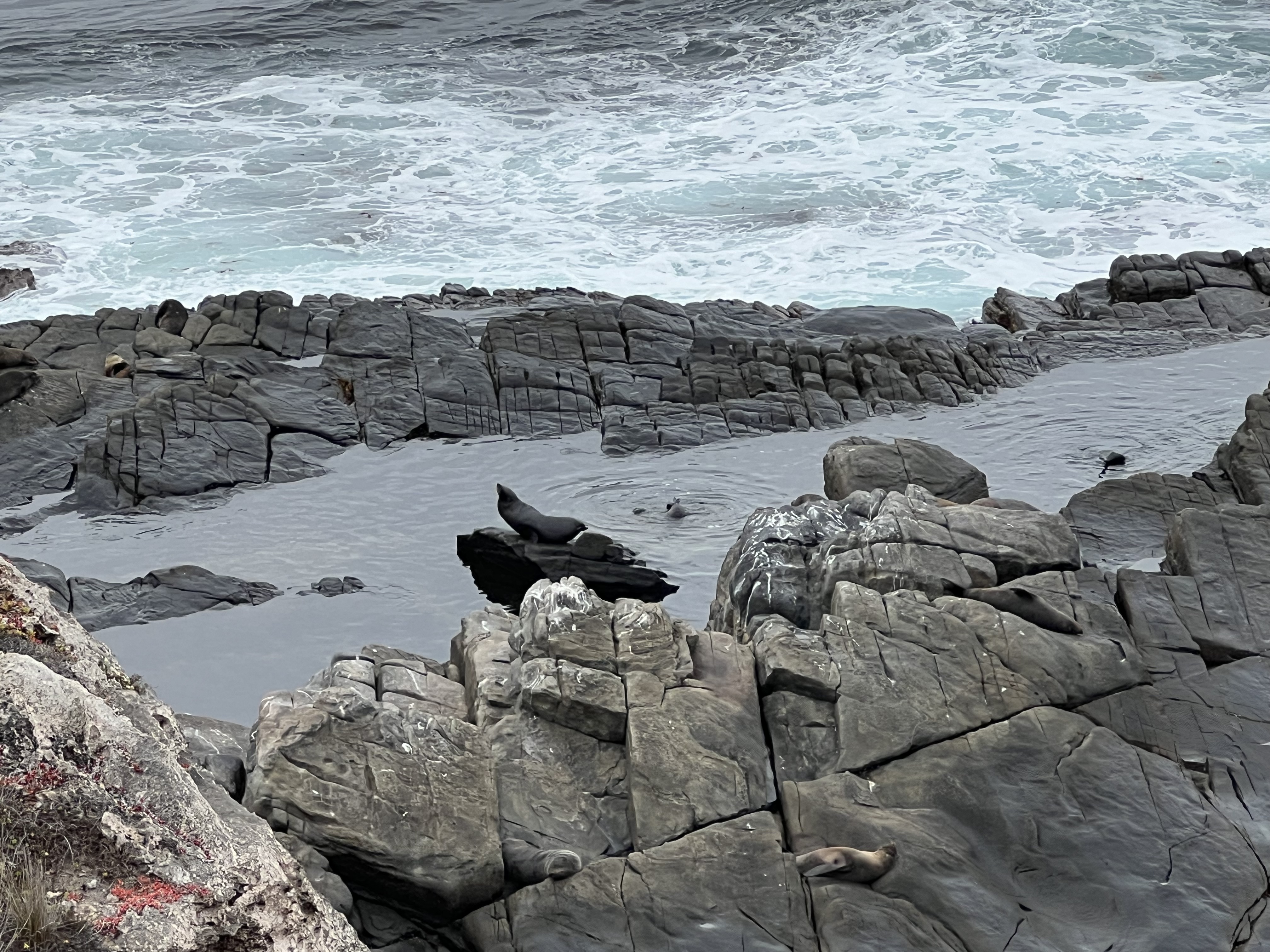
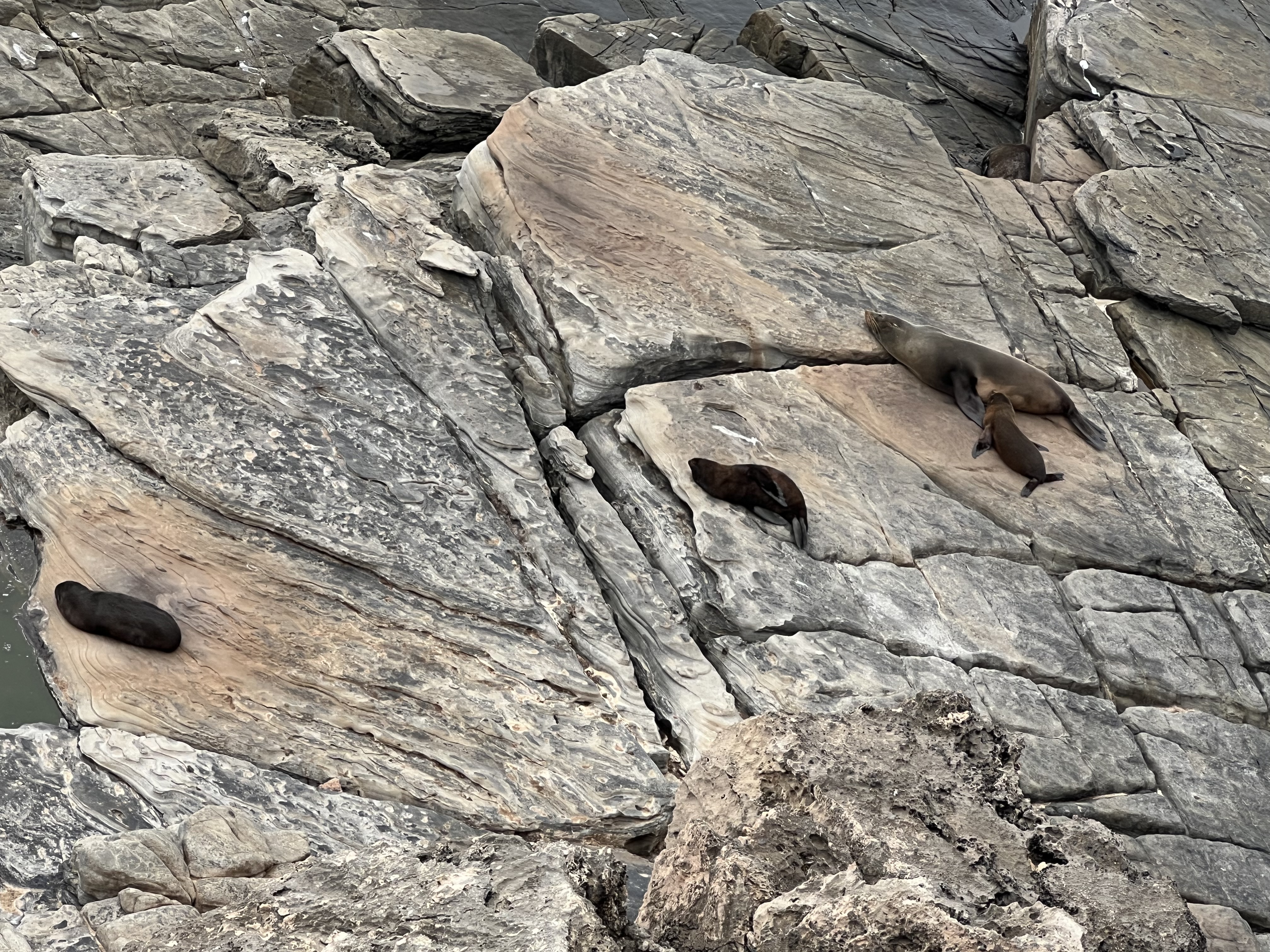
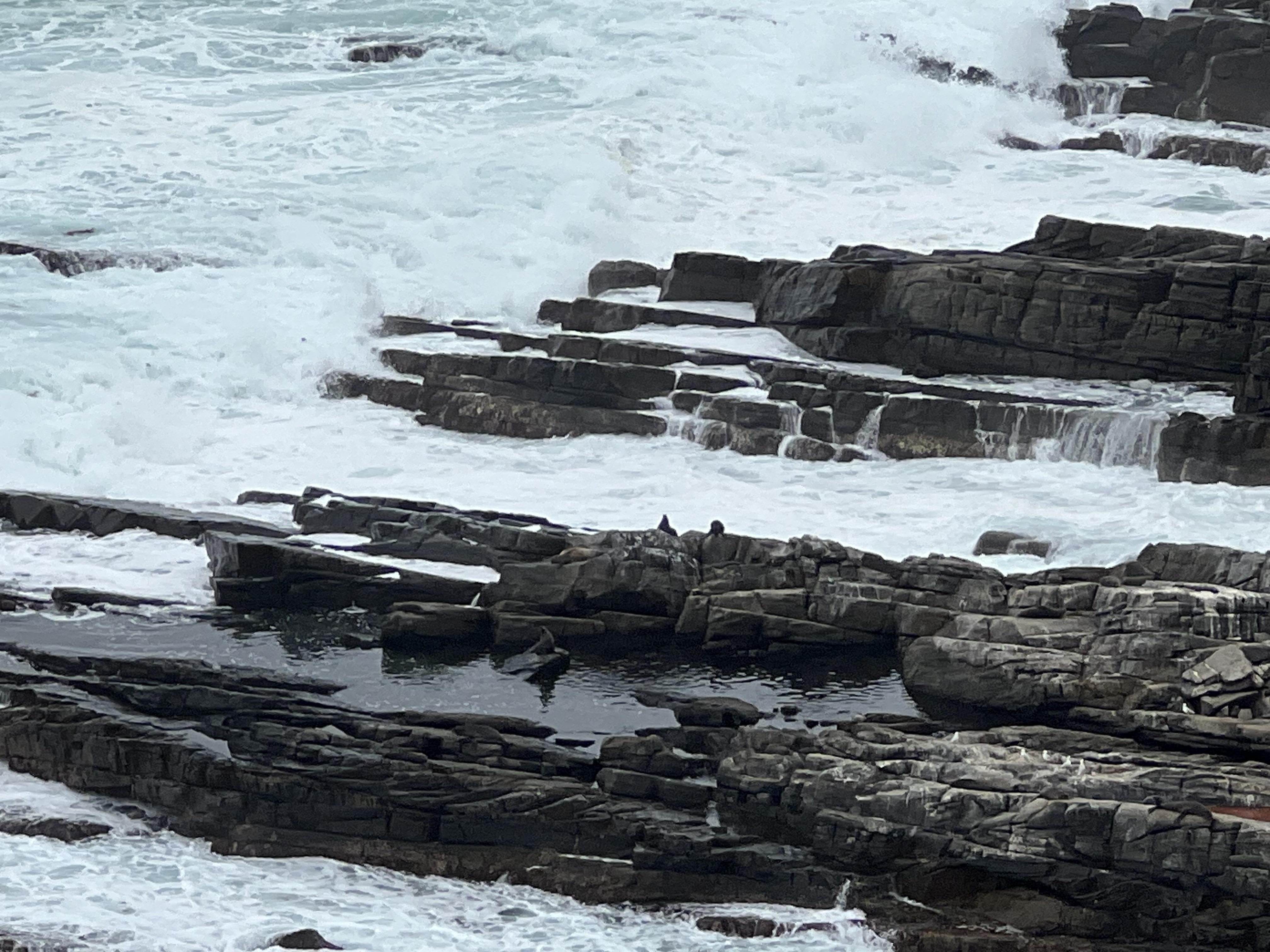
Flinders Chase is also home to a number of platypuses, and I was really hoping to see one. Unfortunately, that didn’t happen, instead of a platypus, a large black crayfish with some pretty impressive claws crawled out of the pool where the platypuses live. Regardless of the wildlife, the Rocky River trail is impressive as it winds through various habitats from forests to grasslands to more swampy areas and stretches that were burnt in the 2019-2020 wildfires that are now regenerating.
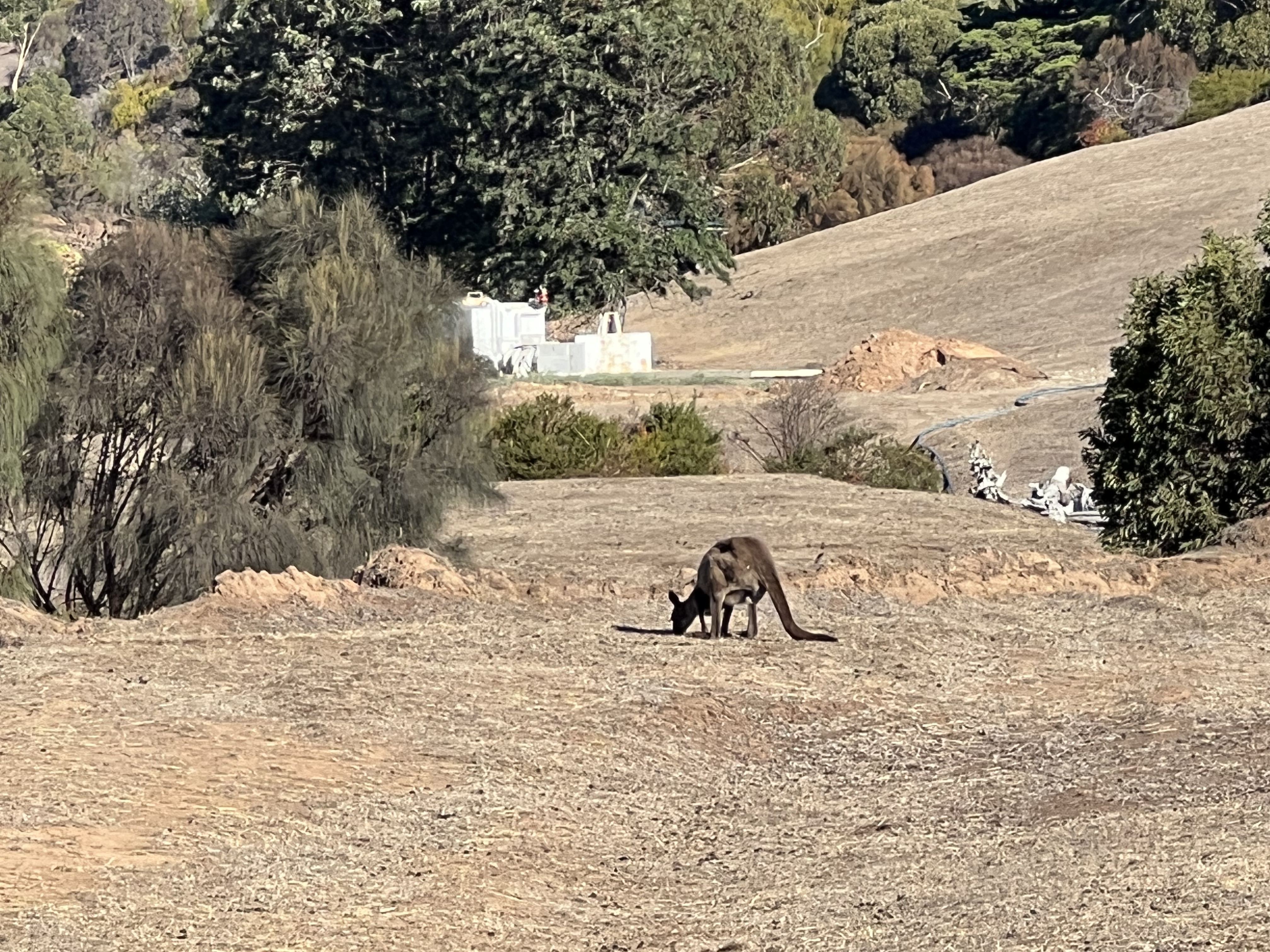
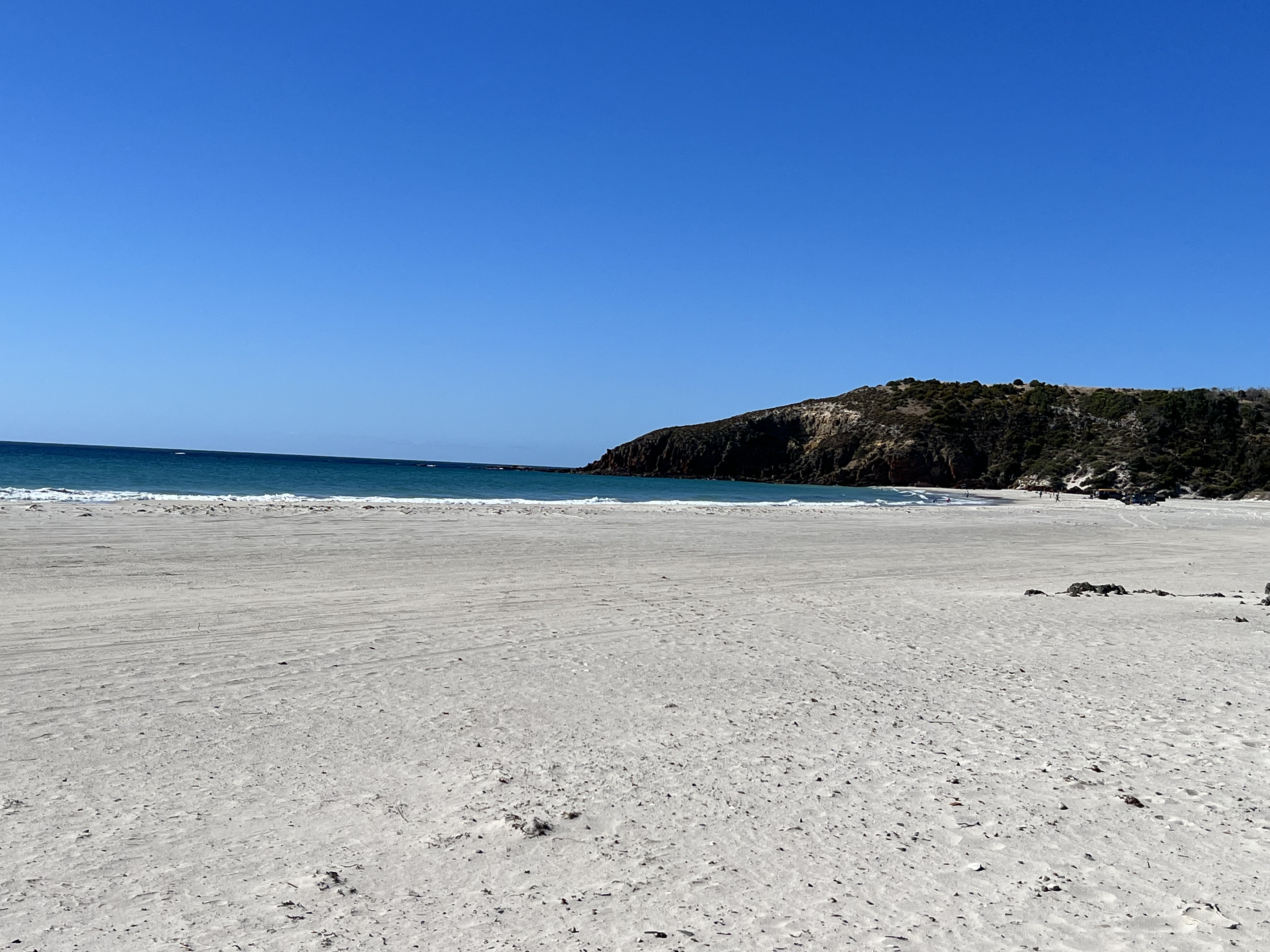
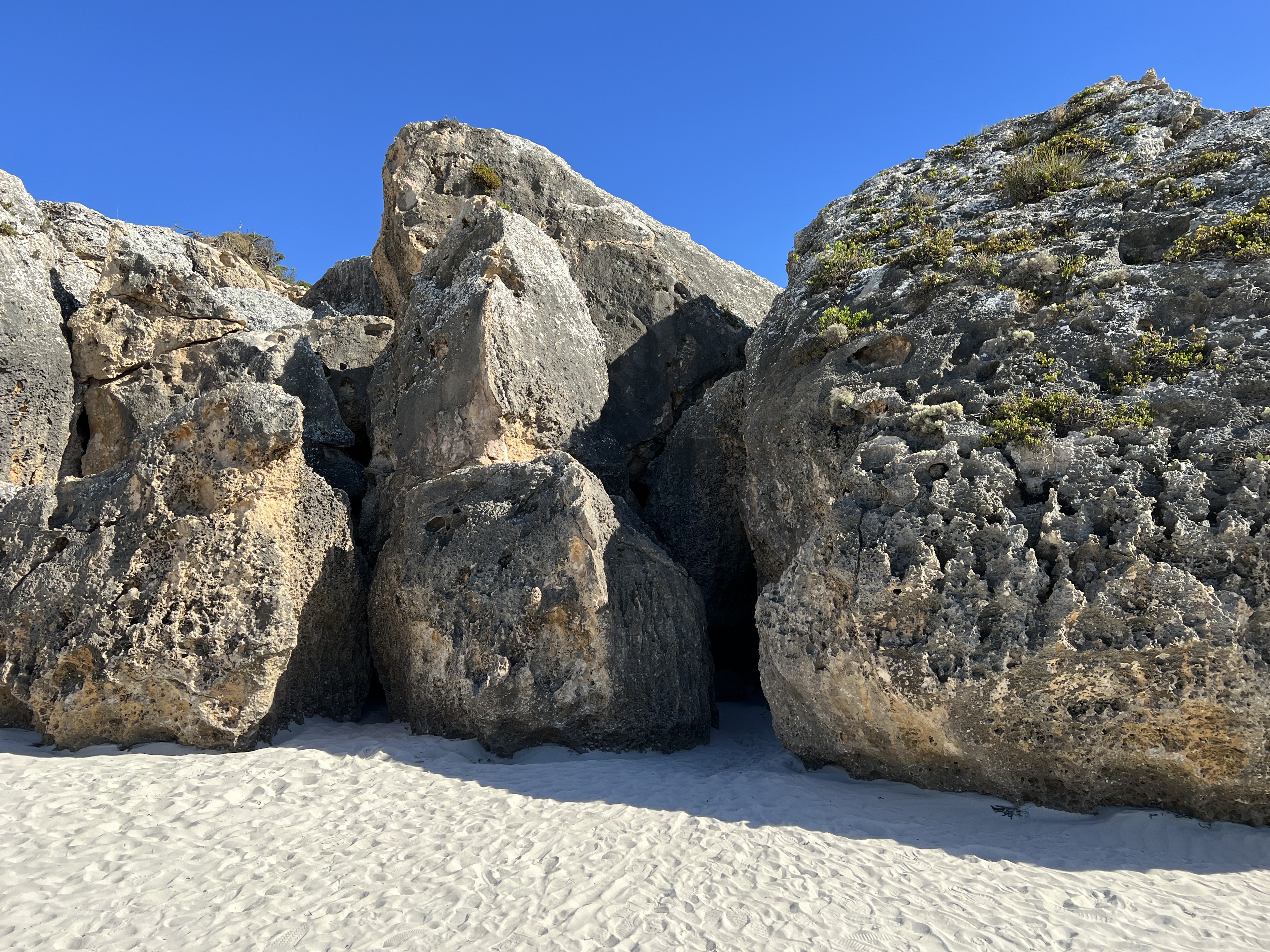
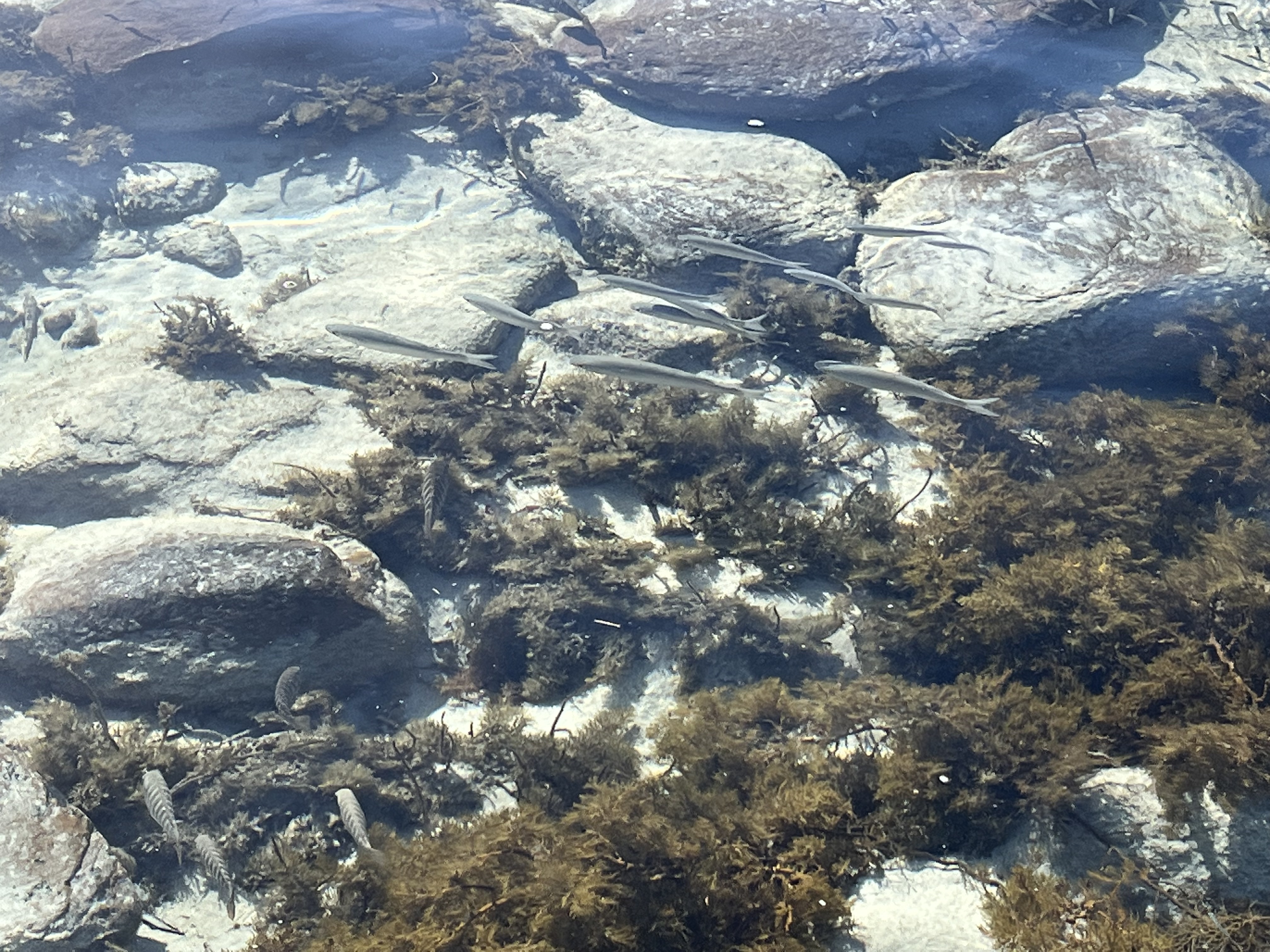
From Flinders Chase, we drove up to the northern coast of the island, first to Snelling Beach where there were a number of cars parked right on the beach, then on to Stokes Bay. Along the way, which were navigated via gravel roads, there were kangaroos, wallabies, and an occasional koala. A few were still alive, although, on the highways the majority one sees are roadkill. Driving here can be dangerous. Sheep and cattle farms are everywhere, and I couldn’t help but think of the previous sheep and cattle wars in the western in the U.S. with each vying for territory. Here the two must get along as the cattle graze right near the sheep. When we arrived at Stokes Bay, the beach didn’t look like anything special, although a kangaroo was there to greet us, but there was a sign that pointed through a rock wall so on we went. The path is narrow and windy but short and the beach on the other side is magnificent. The water is crystal clear and, even by just wading, fish can be seen in abundance.

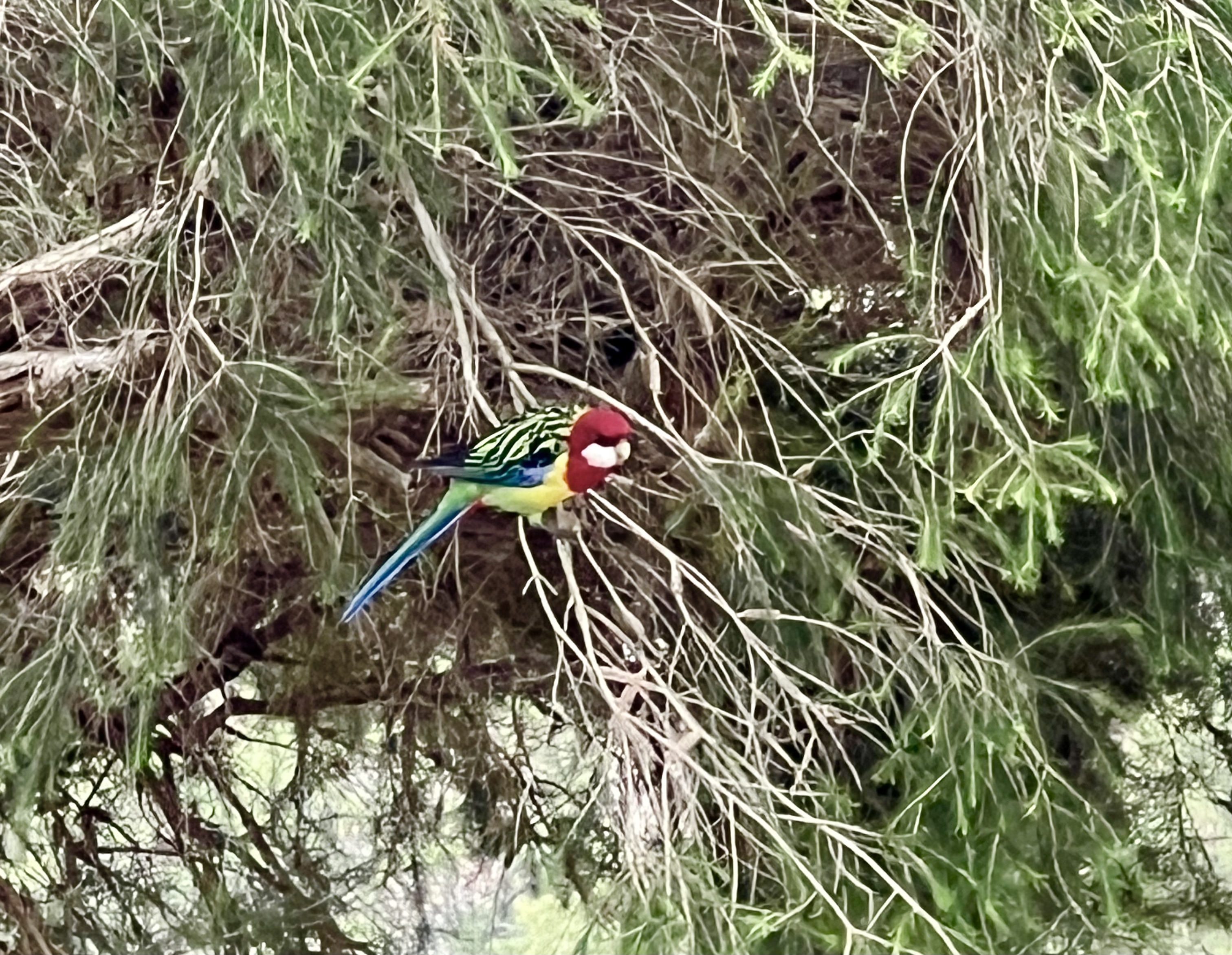
Back in Penneshaw, there is a nice sculpture trail and nearby a Penguin center, which offers penguin watches in the evening. Unfortunately, it wasn’t the right season, so instead of penguins, I saw cockatiels. The two days on Kangaroo Island were a good introduction, but it would have been better to have had at least four days to include Kingscote and local wineries.
From Kangaroo Island it was back to the airport in Adelaide and on to the next Australian island, Tasmania.
Tasmania is simply fabulous! I had hesitated to go because I had heard of the lousy weather and wind the island is famous for but am sooo very glad to have had the privilege of visiting this magnificent island state. We were incredibly lucky with the weather as it was sunny and mild all five days we were there, so the various eco-systems could be seen in full glory.
We spent the first night in Hobart as the flight got in in the early evening, and then headed out in the morning for Bonorong Wildlife Sanctuary.

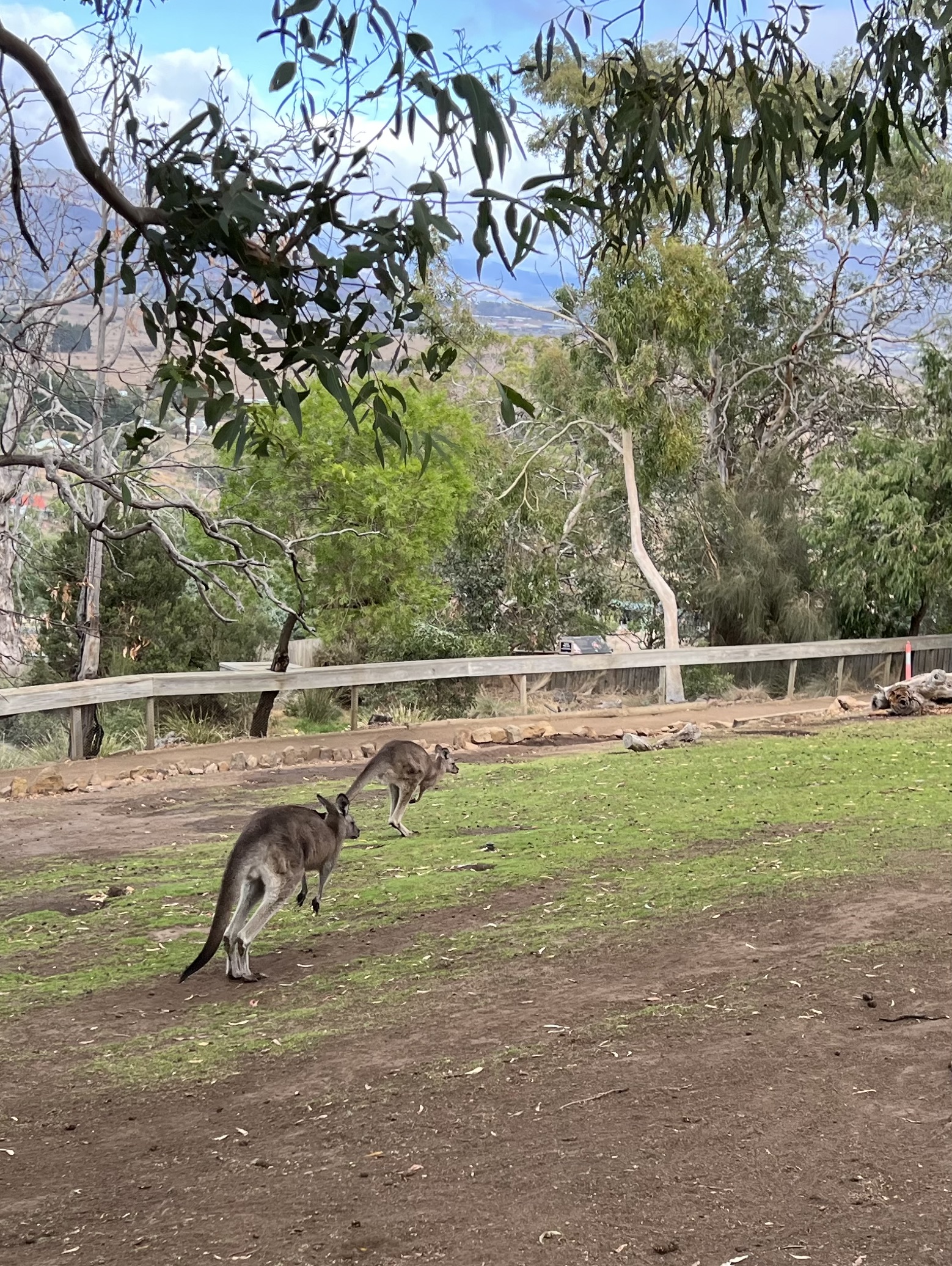
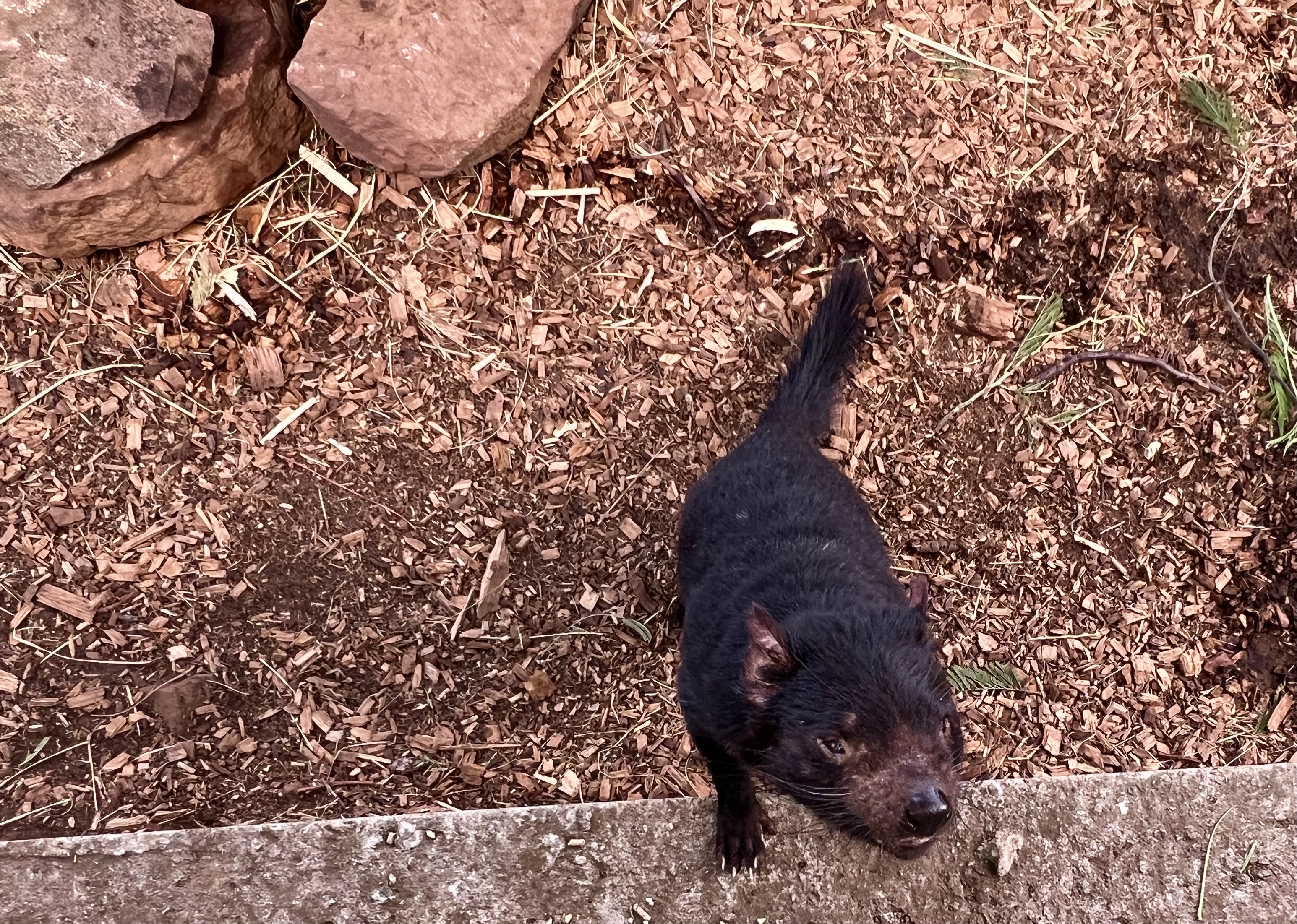
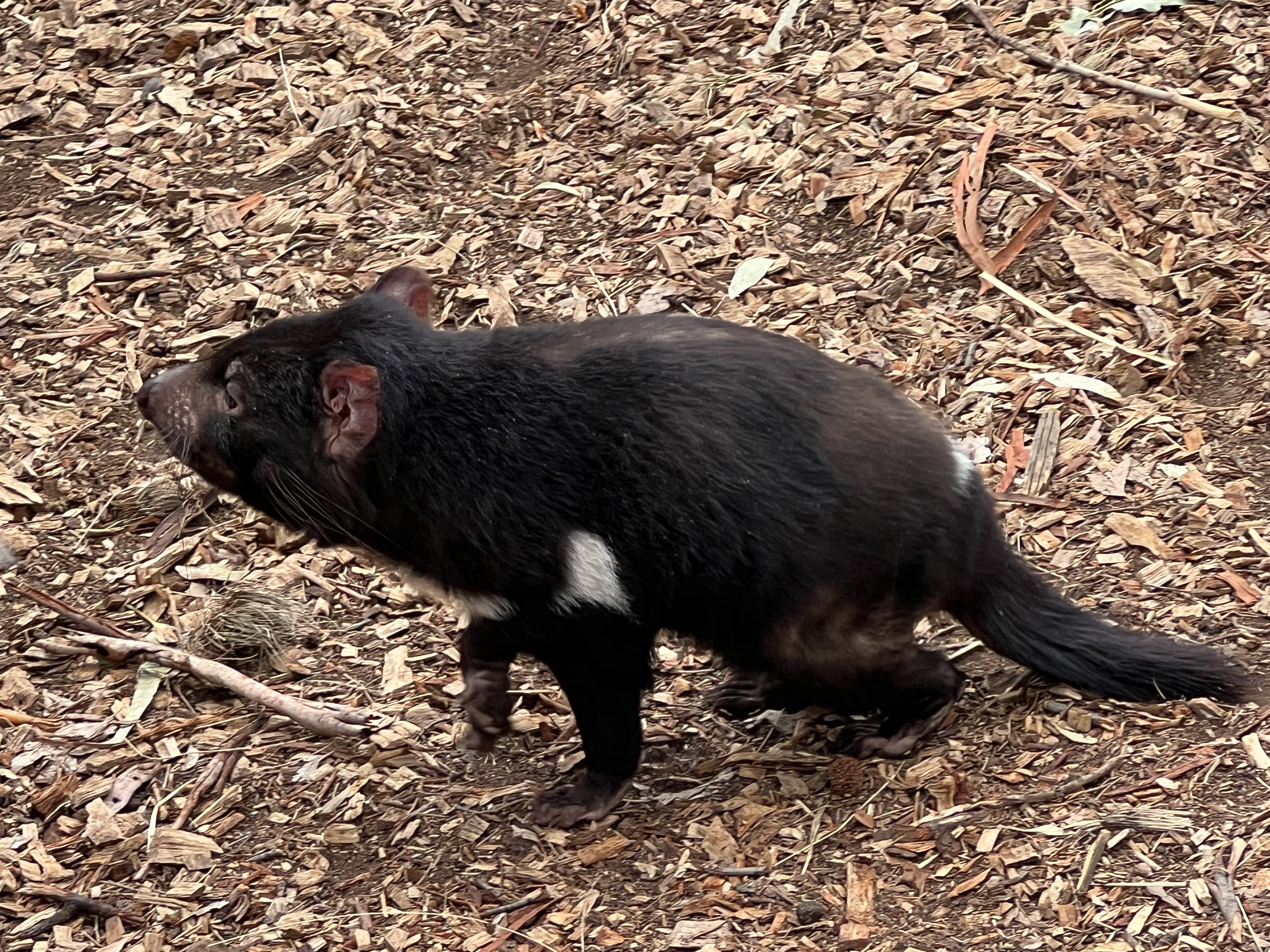
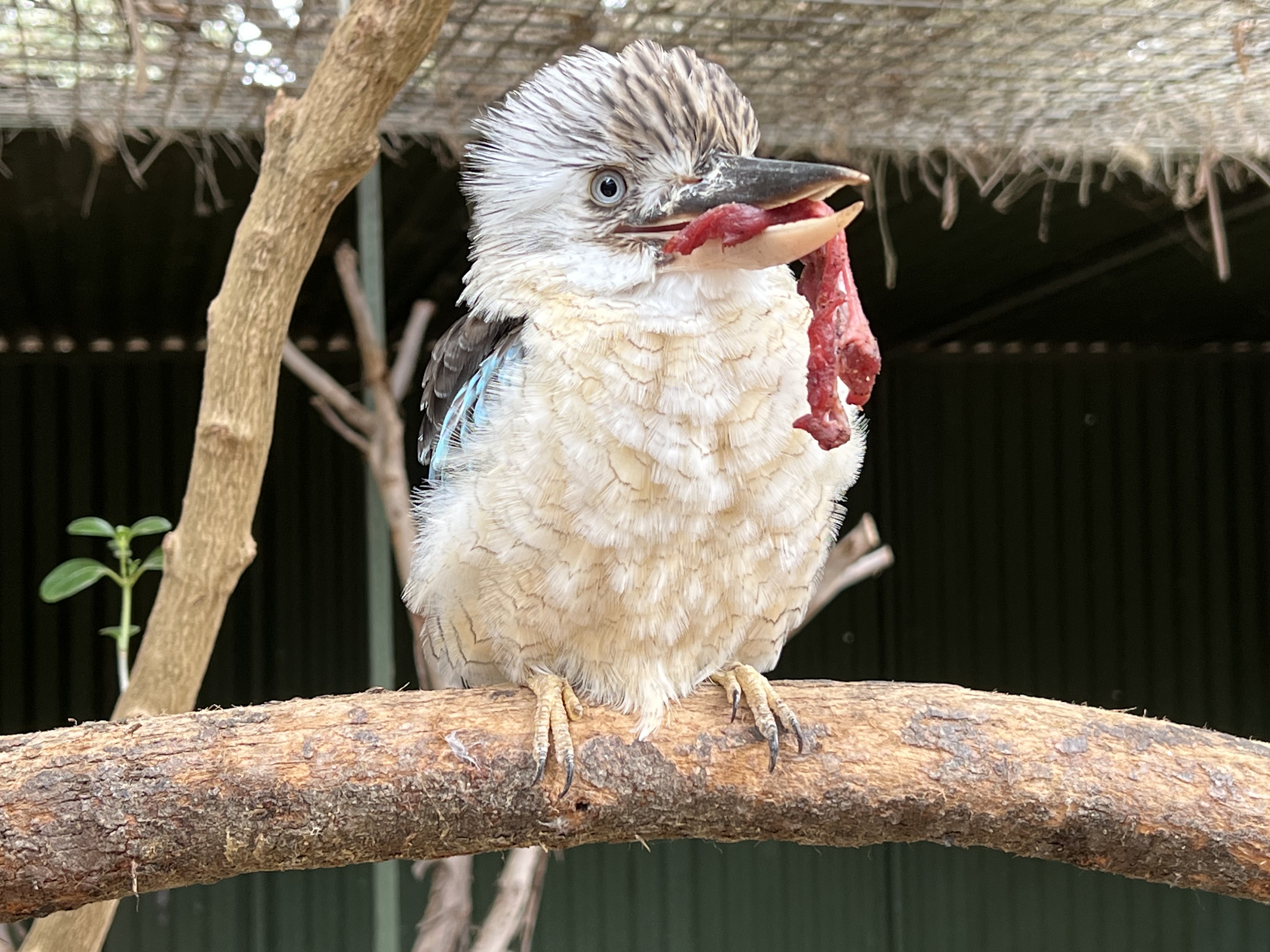
This rescue center is very different from the Wildlife Center on Kangaroo Island. It is primarily intended as a rescue shelter complete with animal hospital rather than simply a place for tourists. The wallabies and kangaroos have free access to the entire site and could theoretically hop over the fence, but they are so well fed by the staff and tourists that they really have no incentive to leave. The other animals are in open pens, but they are large and provide the habitat that is appropriate to the animal. There are only native Tasmanian animals in the sanctuary. This is also one of the few places that specializes in providing support to the Tasmanian devil. They are threatened with a vicious facial cancer that is devastating the remaining population and the sanctuary is working to ensure survival of the species. This is important not simply for altruistic diversity goals, but also because the milk of the Tasmanian devil is known to provide an antidote to contagious viral diseases. One of the other rescue animals, whose story intrigued me, was Fred the red-tailed black cockatoo. His owner was old and before he passed away, he willed Fred to the sanctuary as he knew he would be well taken care of. Fred is now 110 years old (yes, that is correct!) and lives in his own private aviary as he doesn’t like to socialize with other birds but will interact with passersby. On his 100th birthday there was a major celebration which included members of the regional government coming to pay their respects to this long living bird. I think this says just as much about the sanctuary as it does about Fred.
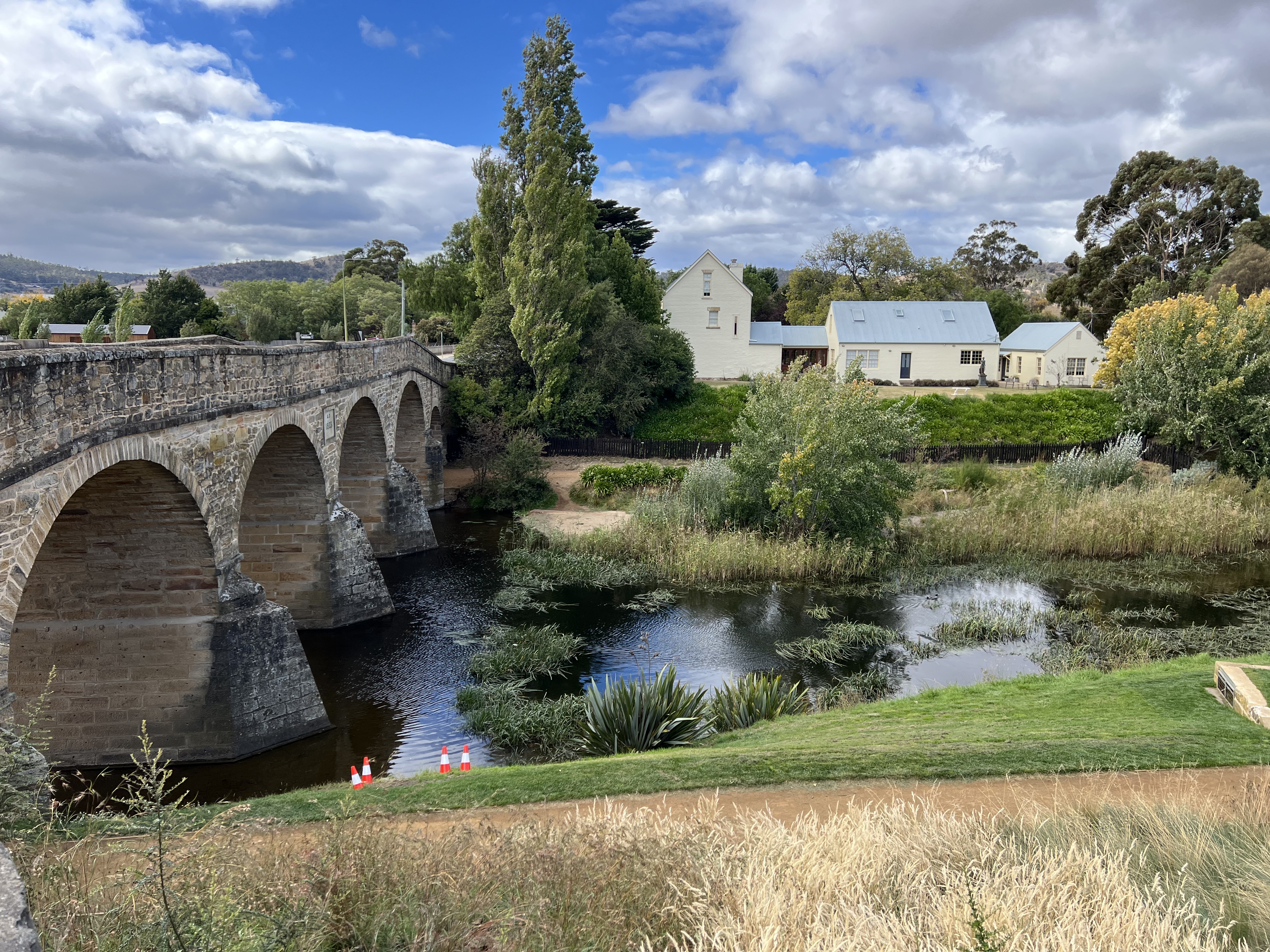
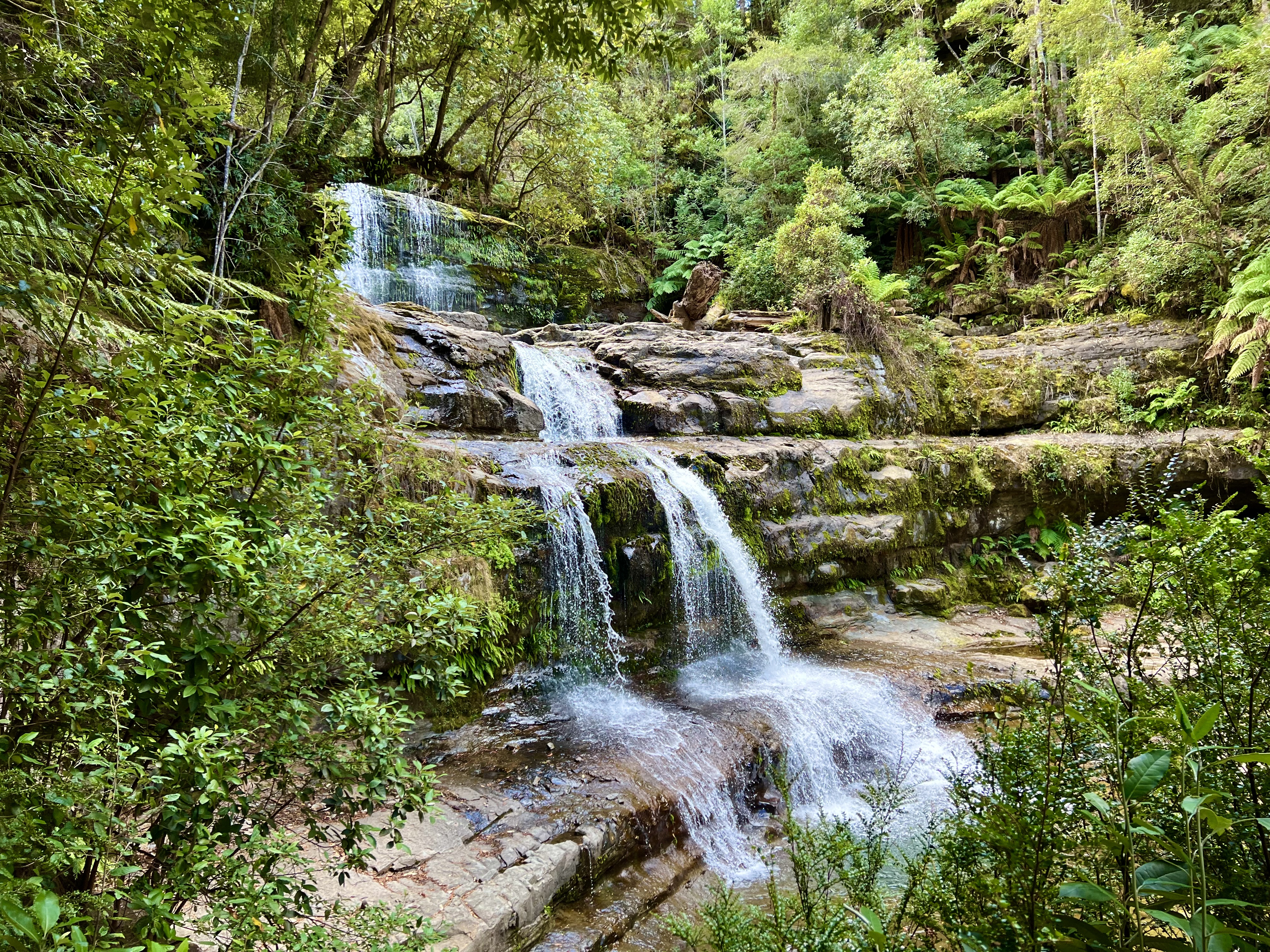
After a phenomenal morning at Bonorong, we headed over to Richmond, which was touted to be an artist’s colony. It was a quaint little village with the oldest bridge in Australia. There are a couple of good English styled tea houses in town, and we had to try at least one. From there we headed north to Liffey Falls. The walk to the waterfalls takes about 25 minutes through a dense rainforest with humungous ferns. The falls are pretty, but the walk through the forest is really the best part of the interlude.
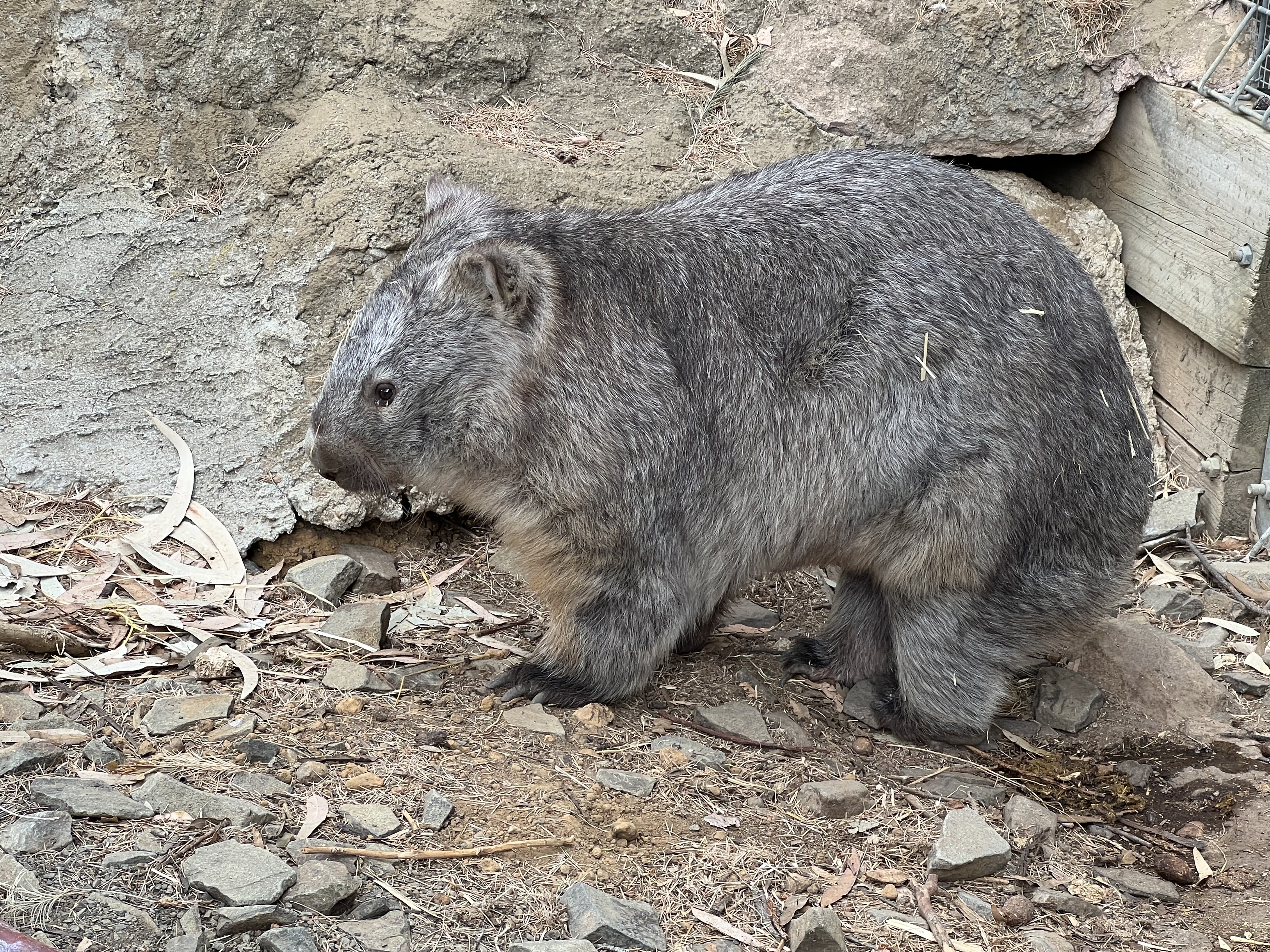
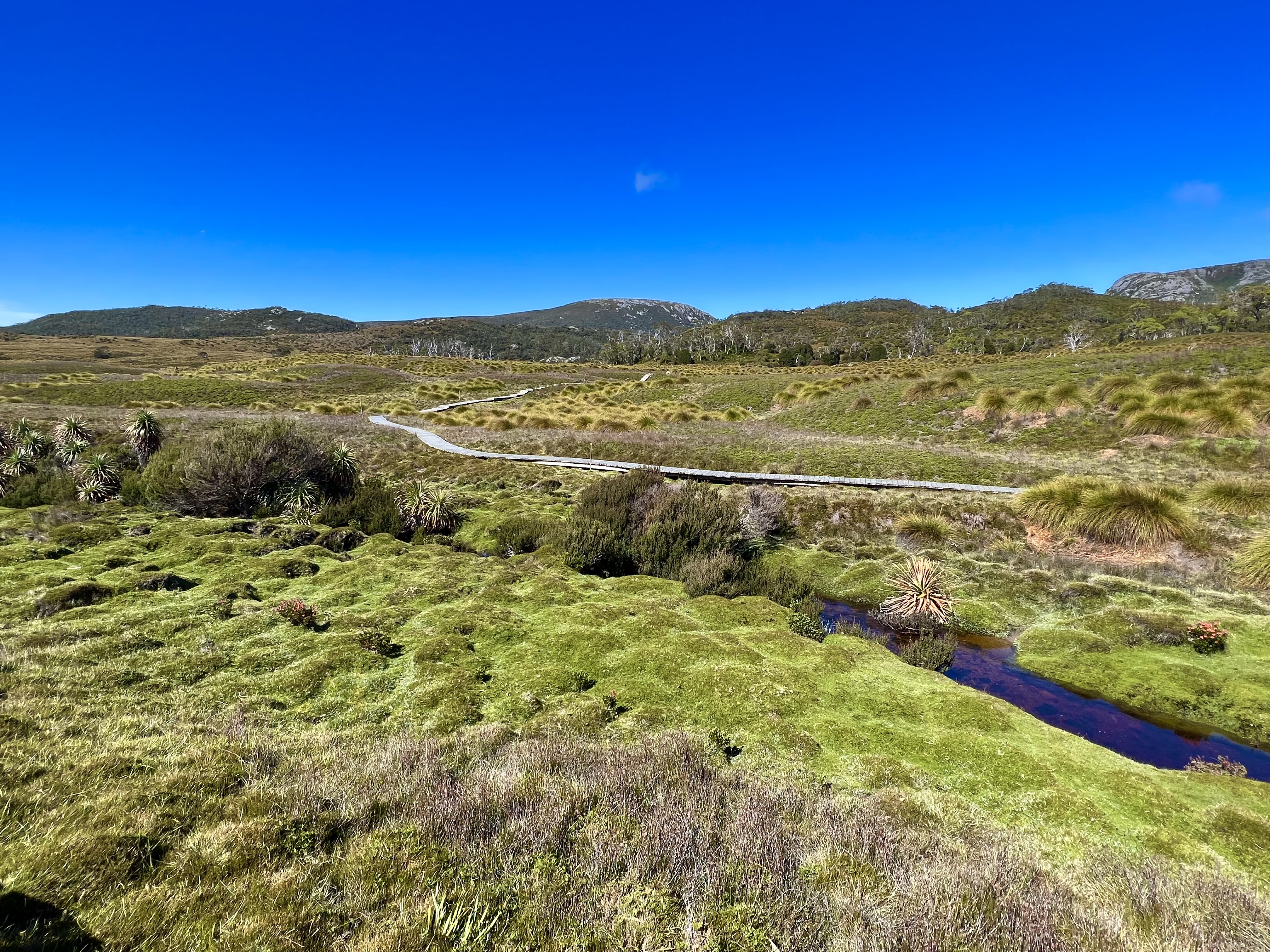
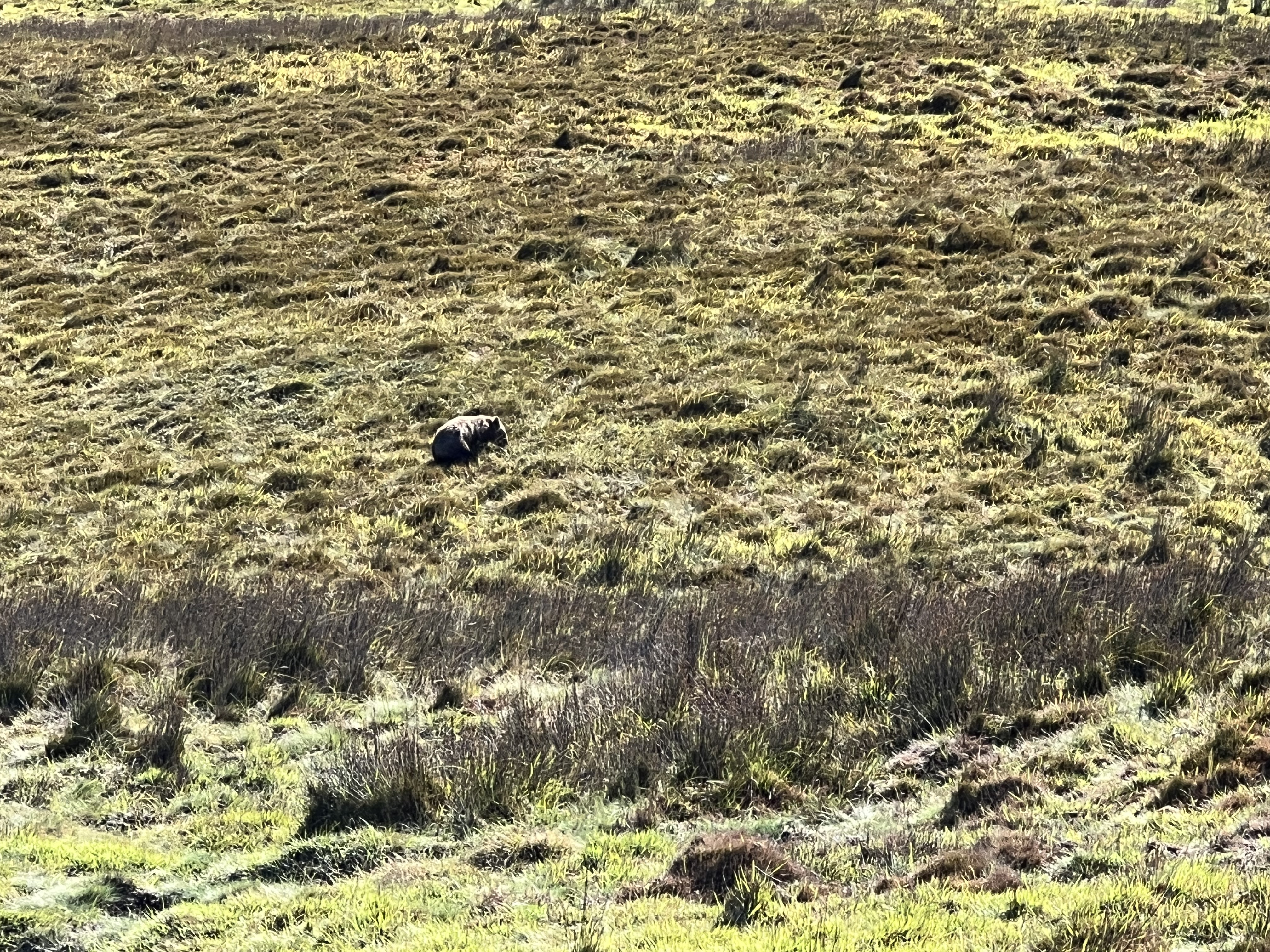
We spent the night in Deloraine as it is at the cross-roads for excursions to the north, west and east. The Meander River runs through town and the Empire Hotel offers free guided evening tours to see platypus in the river. The tour guide, Mike, was good and informative, but unfortunately, we didn’t see any platypuses. He did suggest we try a different place in Mole Creek, which we did the next day, again with no luck. It was only after we had spent the day in Cradle Mountain National Park, when I went for another walk along the river on my own, that I spotted one swimming, but too far away for a photo, and another just under the bridge that is used as a lookout, but again, the photos didn’t come out as the black platypus is not identifiable amid the black rocks, and I didn’t take a video where the animal’s movements could be seen. Nonetheless, like with the tigers in Bardia, I saw them! Mission accomplished. At Cradle, I had hoped to see some wombats, and they were plentiful on the Ronny Creek walk.
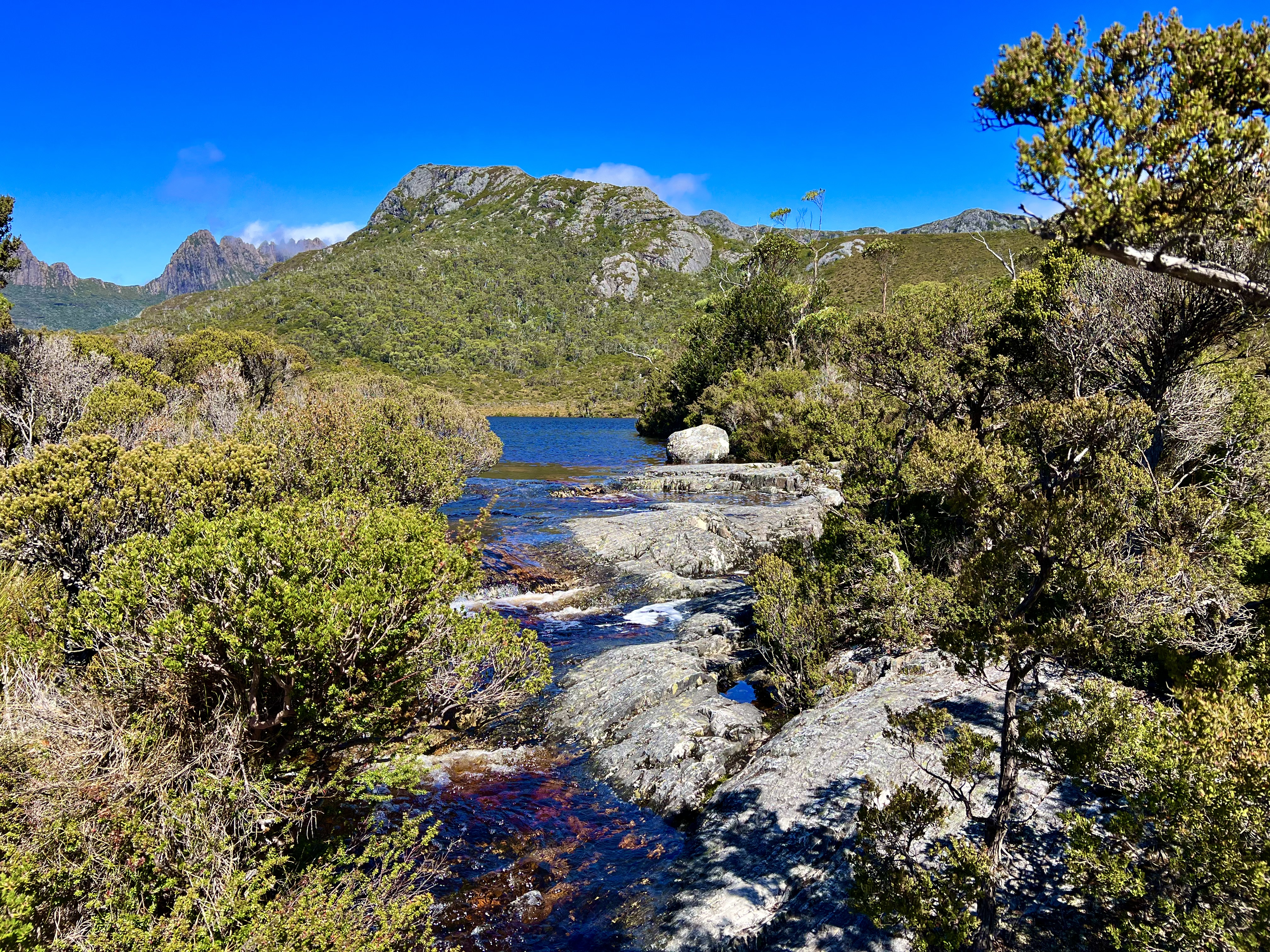
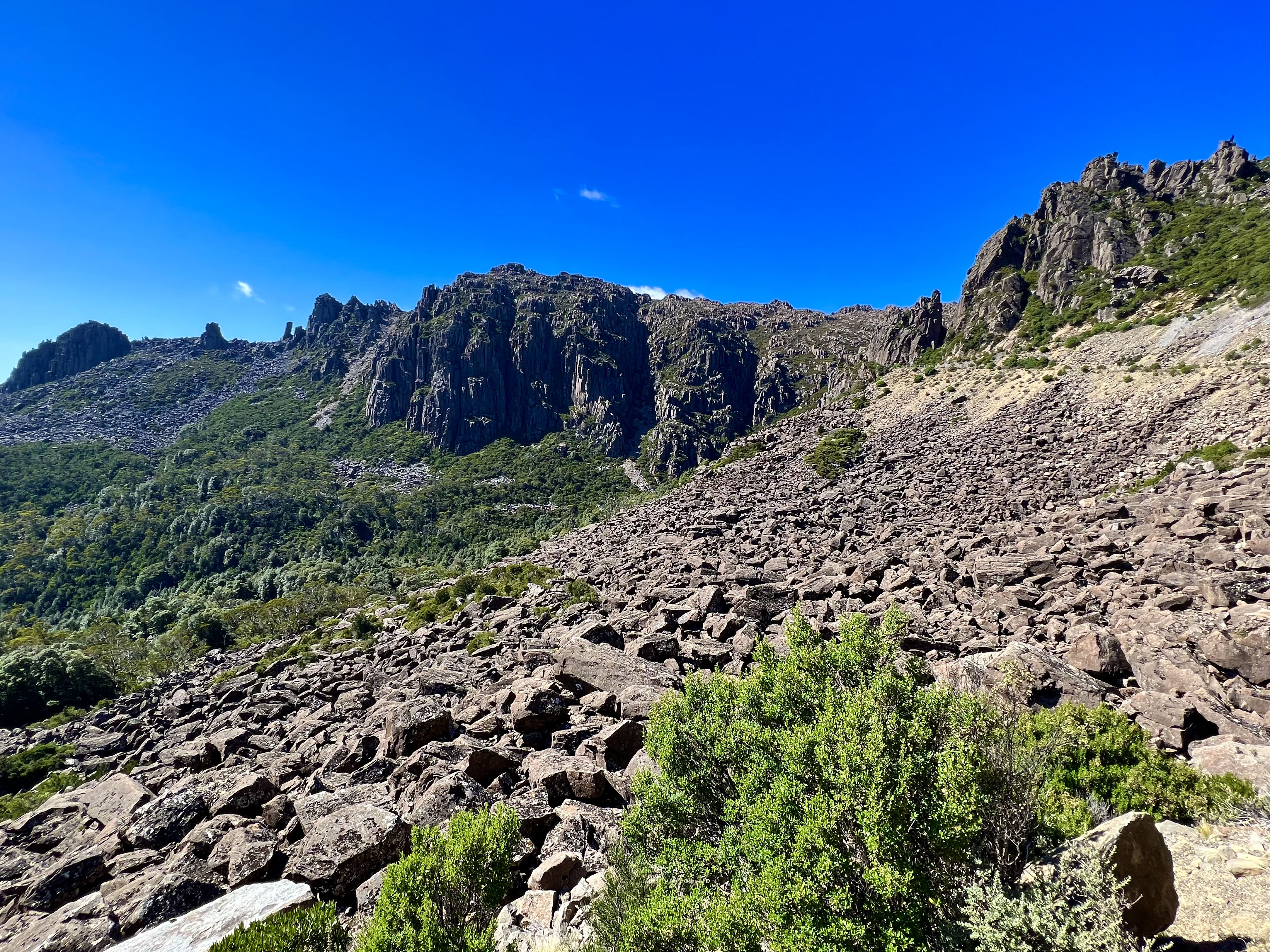
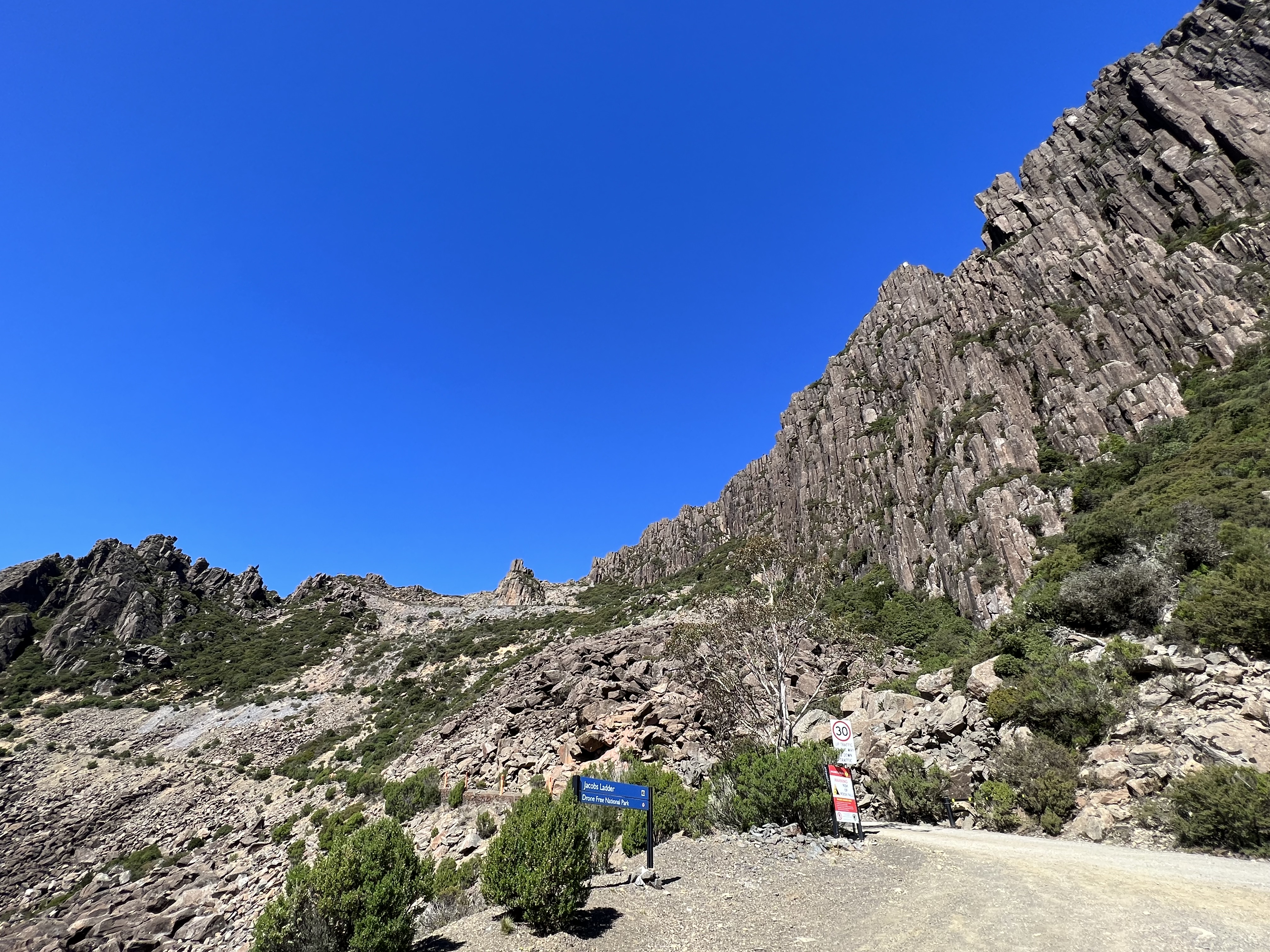
The following day we spent driving to Orford, where we were spending the night so that we could be at the Maria Island Ferry as soon as it opened the next day, i.e., Good Friday. The drive on Maudy Thursday took us first to Ben Lomand National Park, on a road that could be labeled one of the most dangerous in the country. The gravel road ostensibly goes up to an Alpine Village that is the base for skiing in the winter, but the road is under a rock wall that has huge pieces of the sides cascading down, as it winds up the cliffside. We were in a rental car and there was no way we were going to drive the last section without a guardrail. I really do not know how people manage the road in the winter as it was treacherous enough in the summer! The views, however, over the entire northern part of the state with forests extending to the horizon were spectacular.
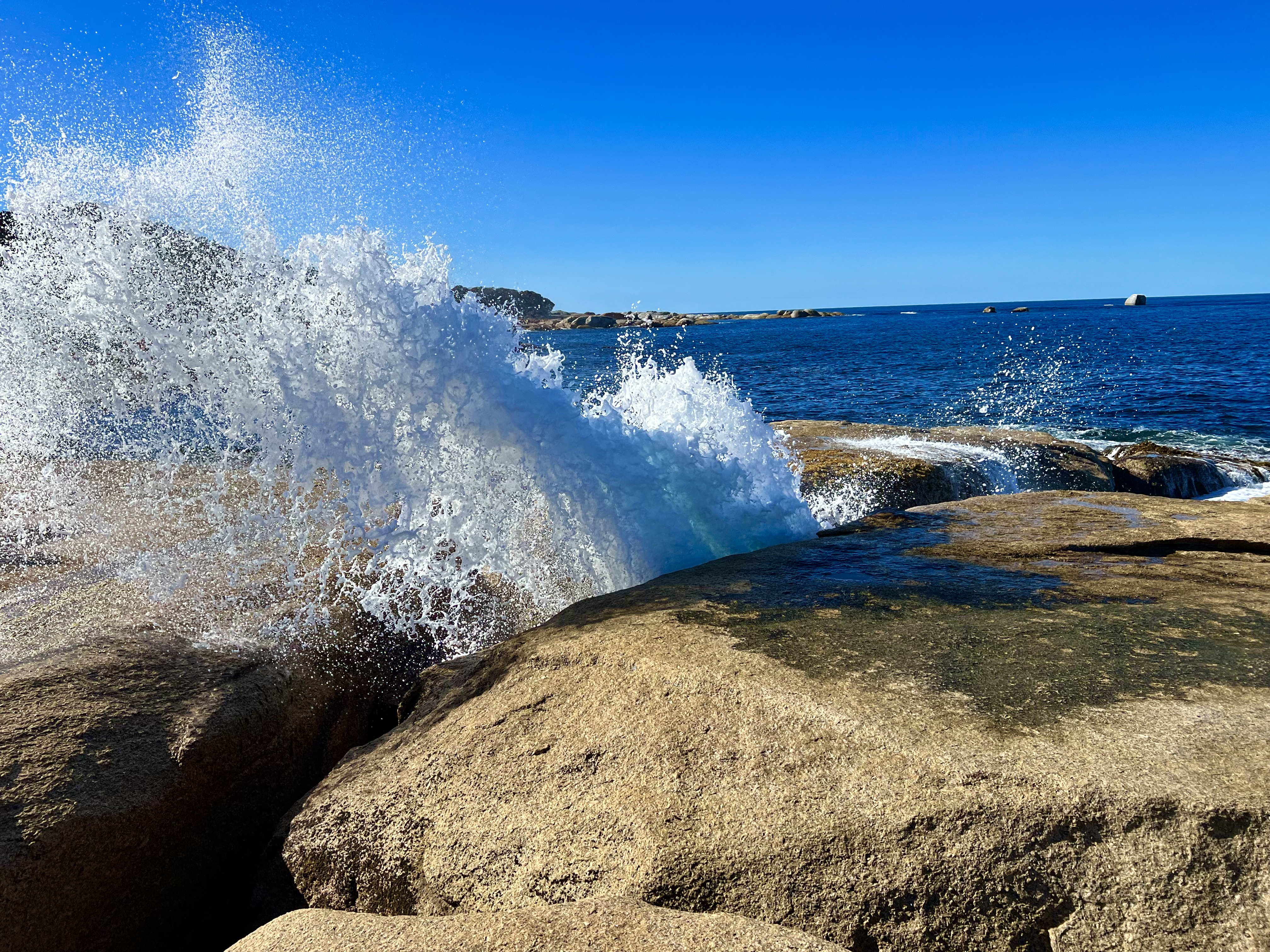
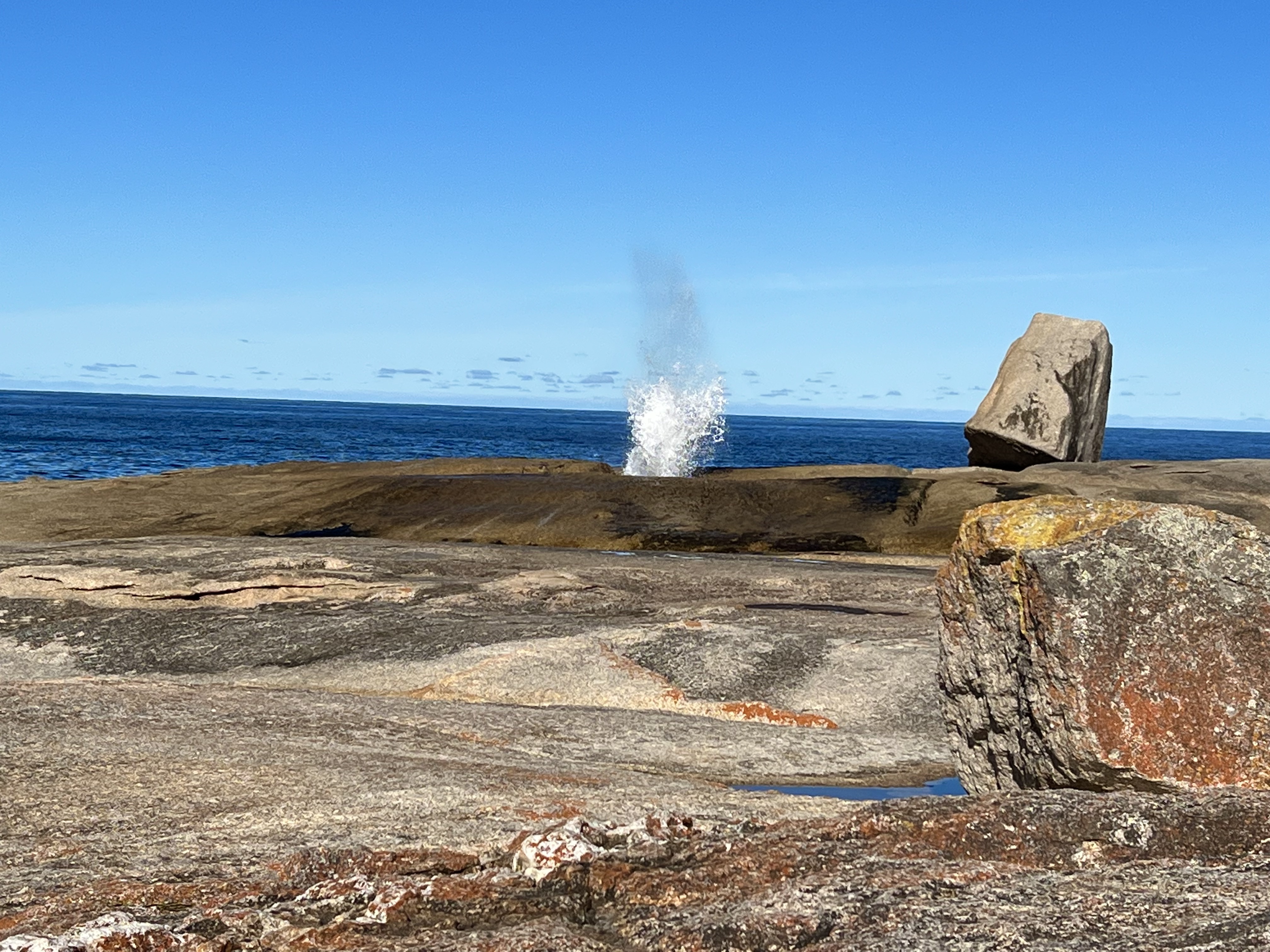
Descending the mountain, we made our way over to the coast and the Bicheno blowhole. There isn’t much to see other than a short walk over the rocks between the Lobster Shack and the Blowhole, but the scenery alone is worth the visit. As in KI, we weren’t there at that right season for the penguins, which are supposed to come out at night. No one I met had seen one, but again, it wasn’t the right season.
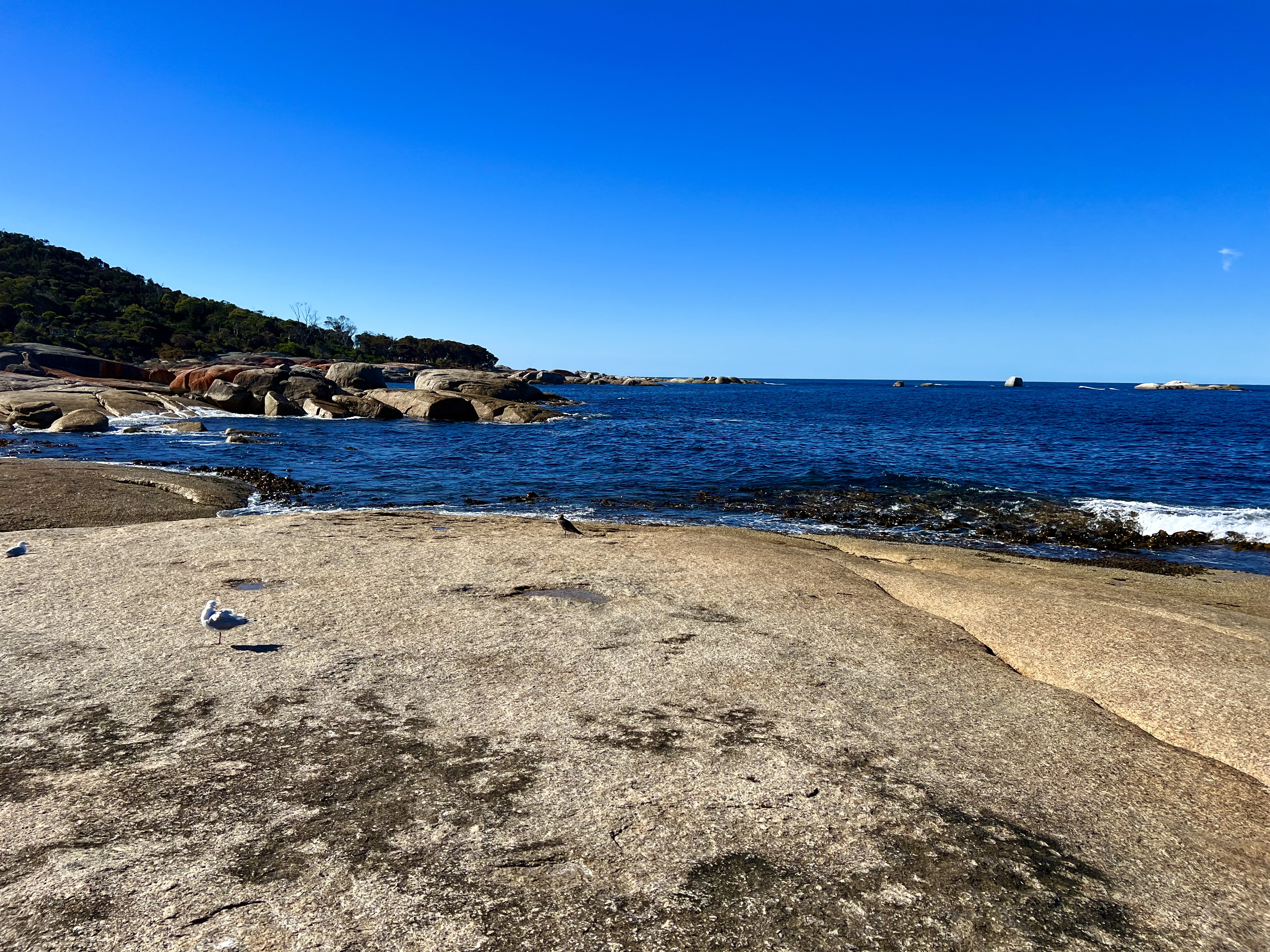
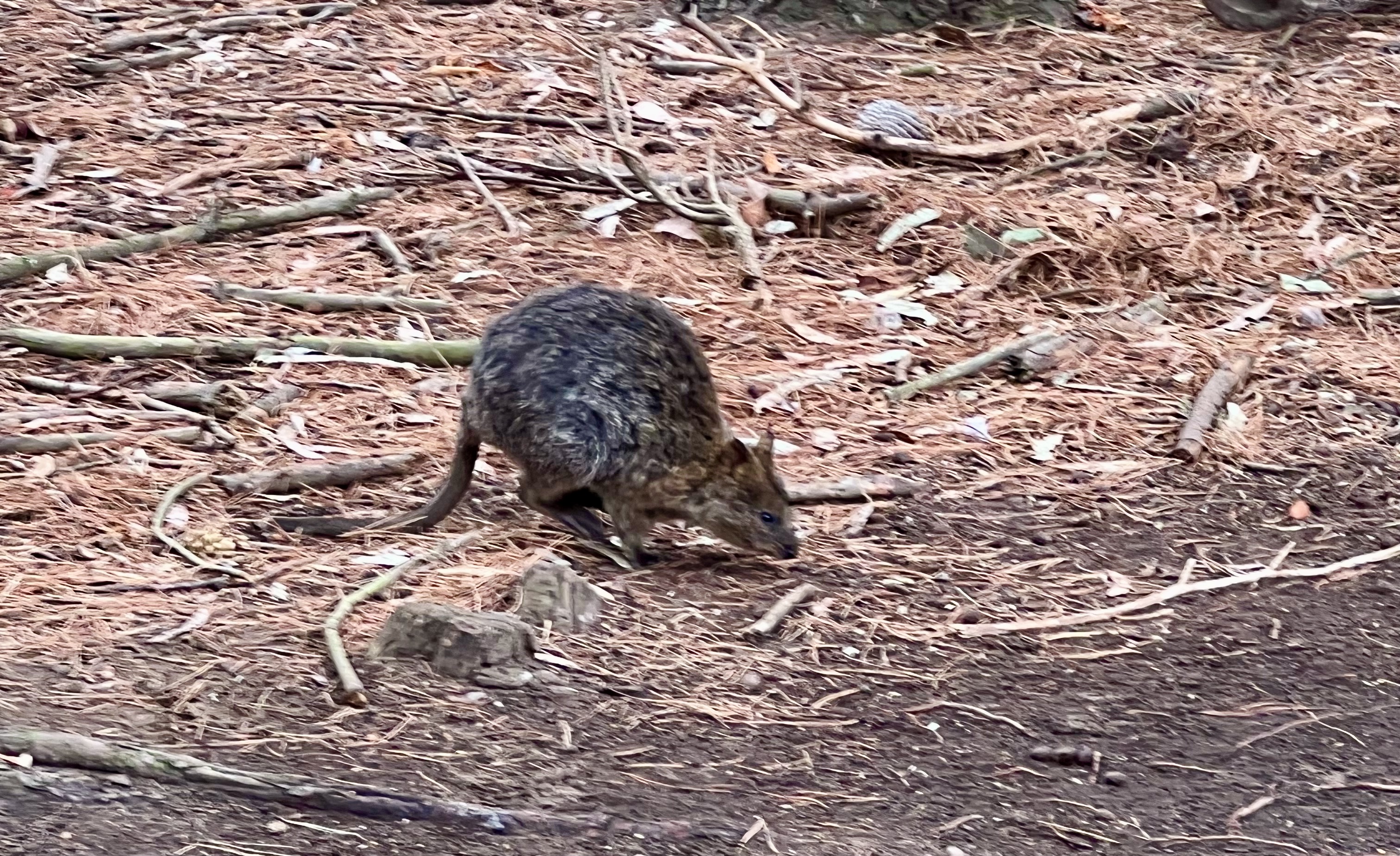
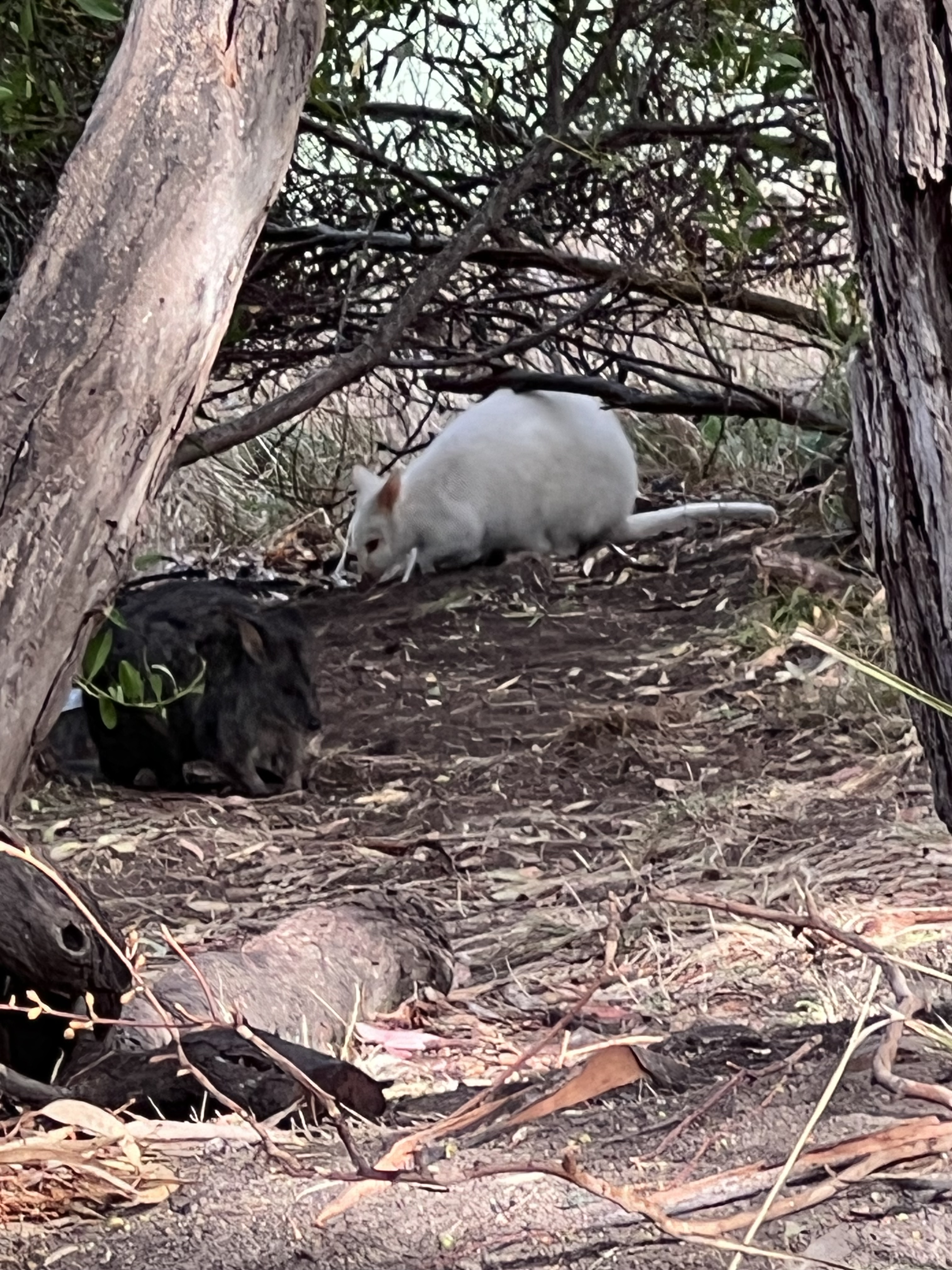
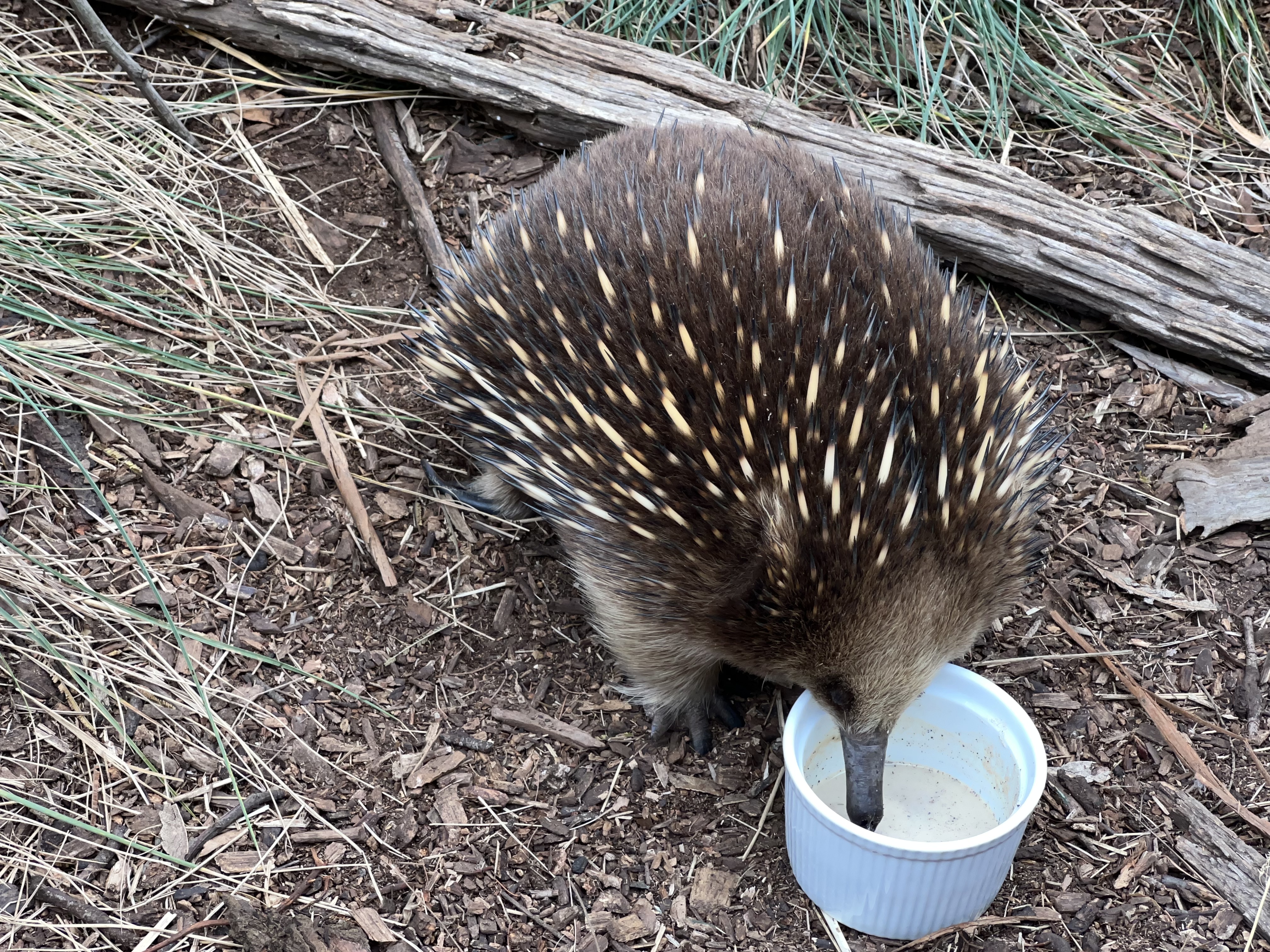
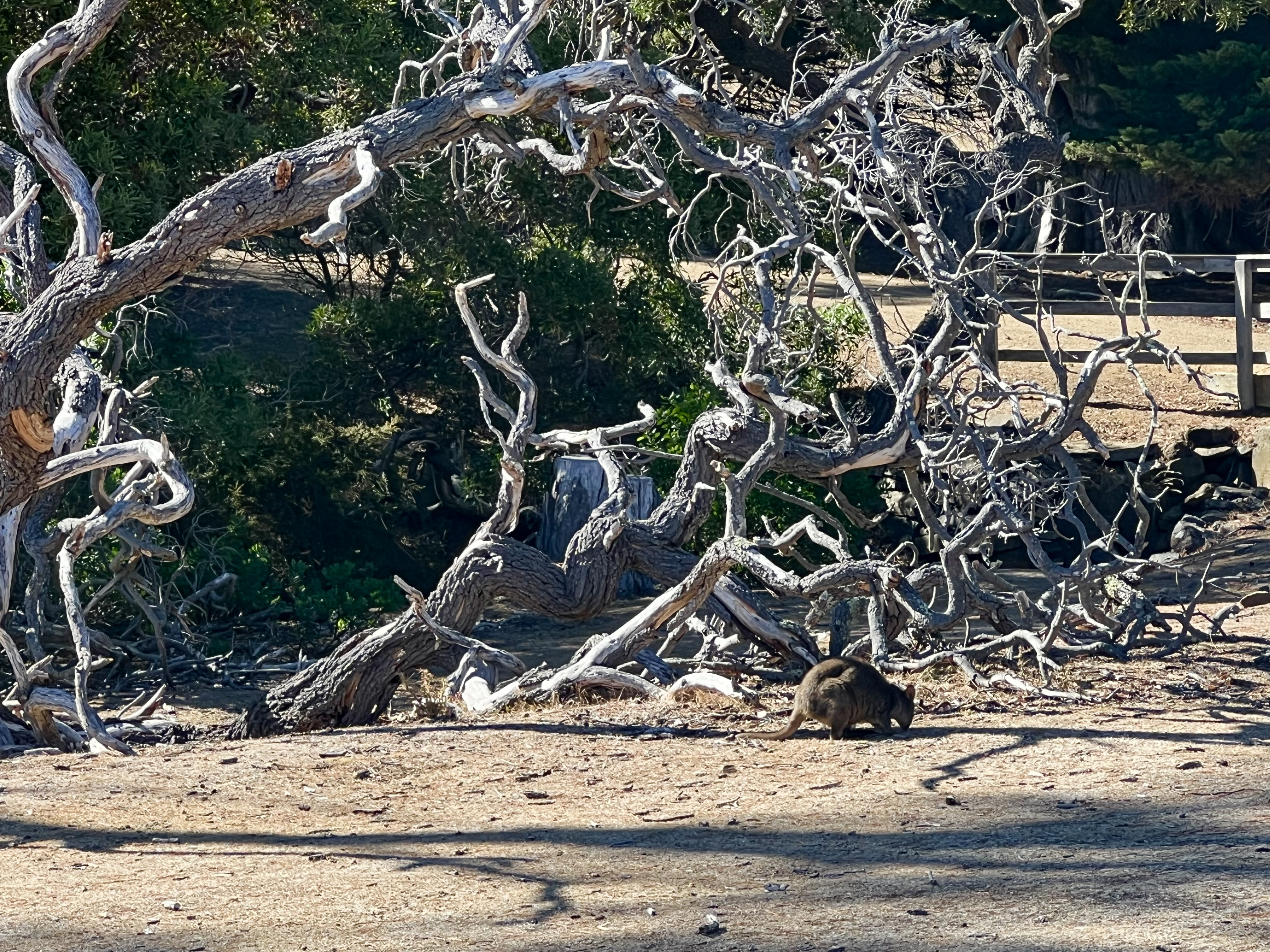
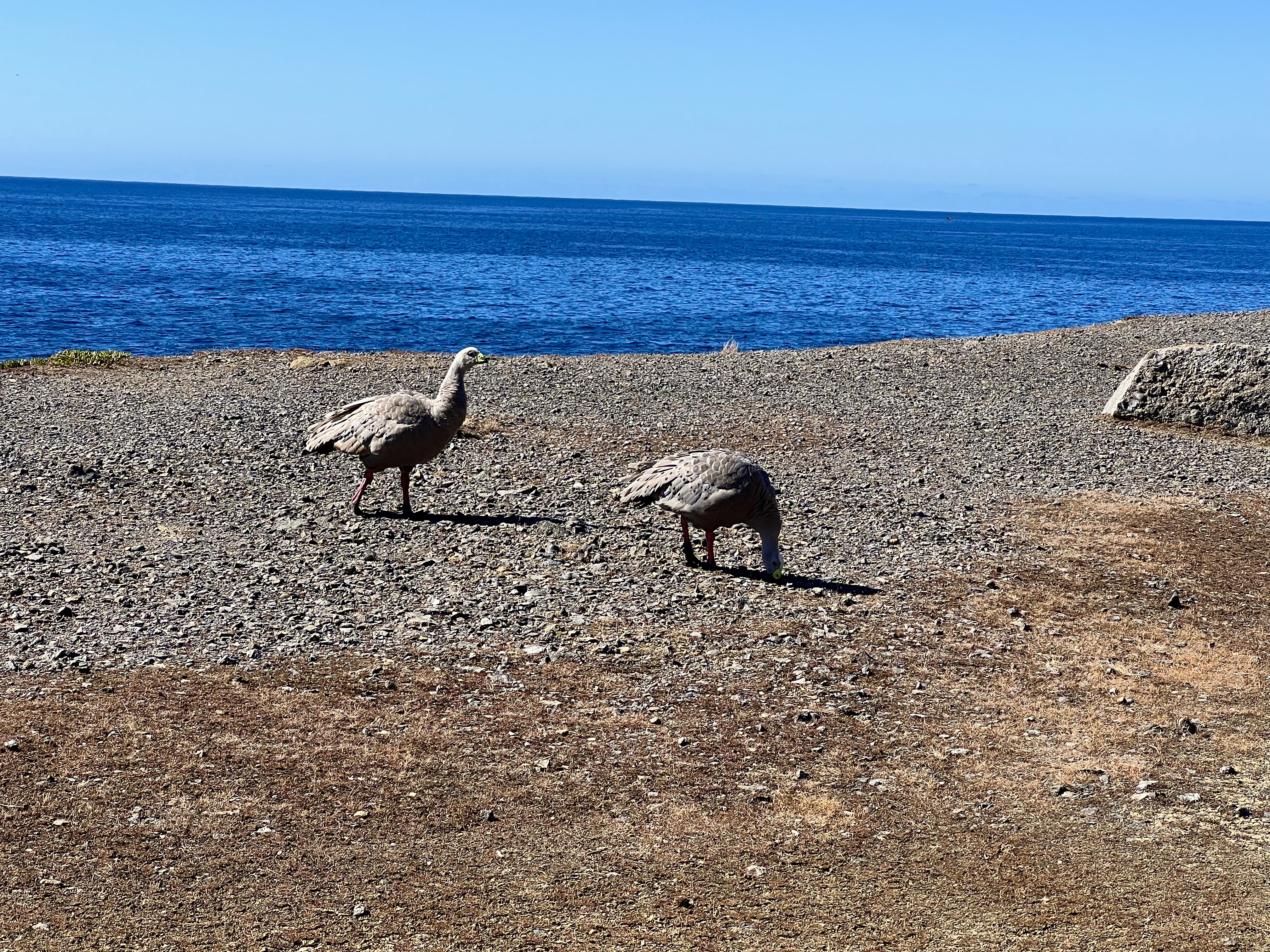
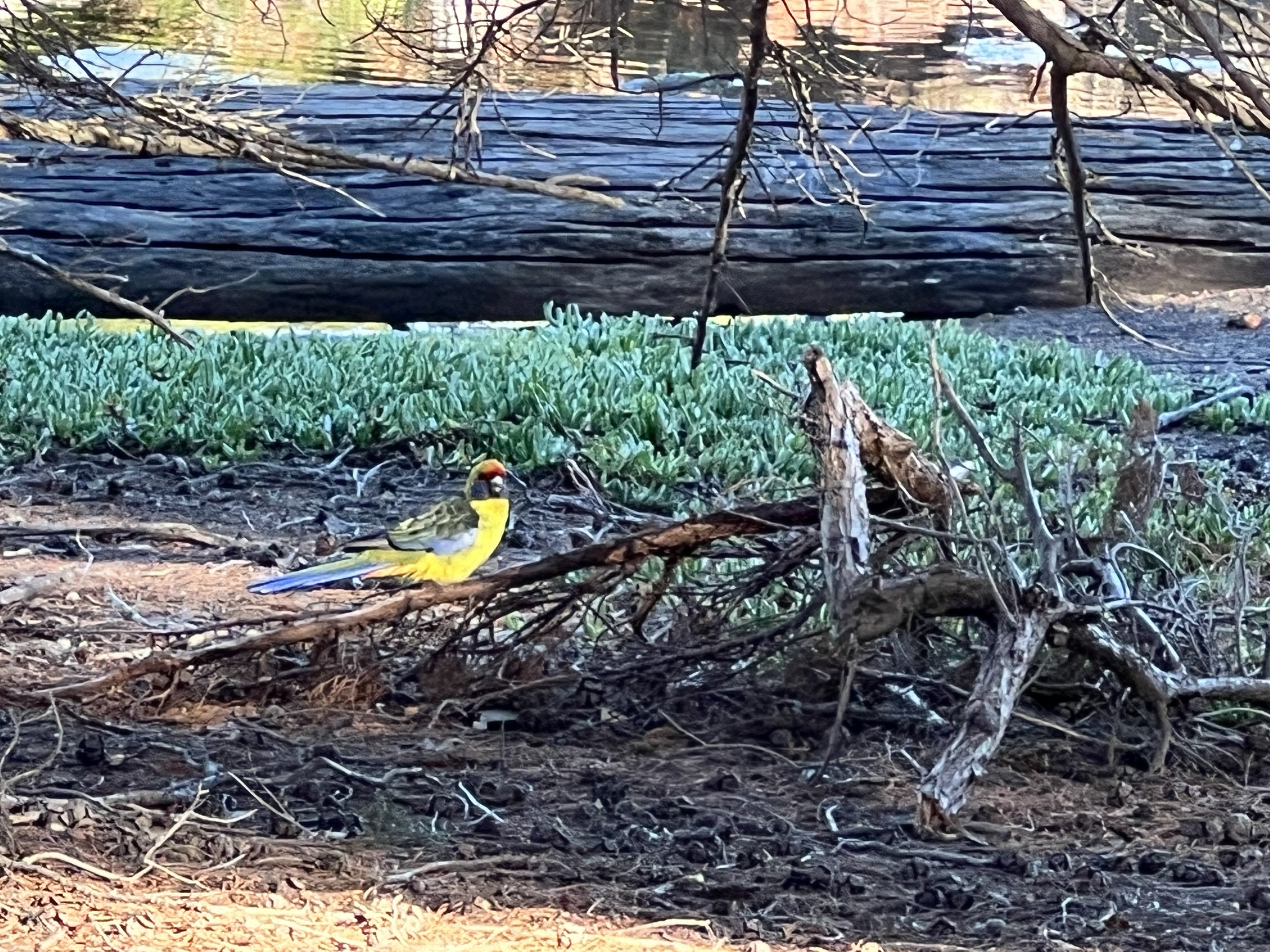
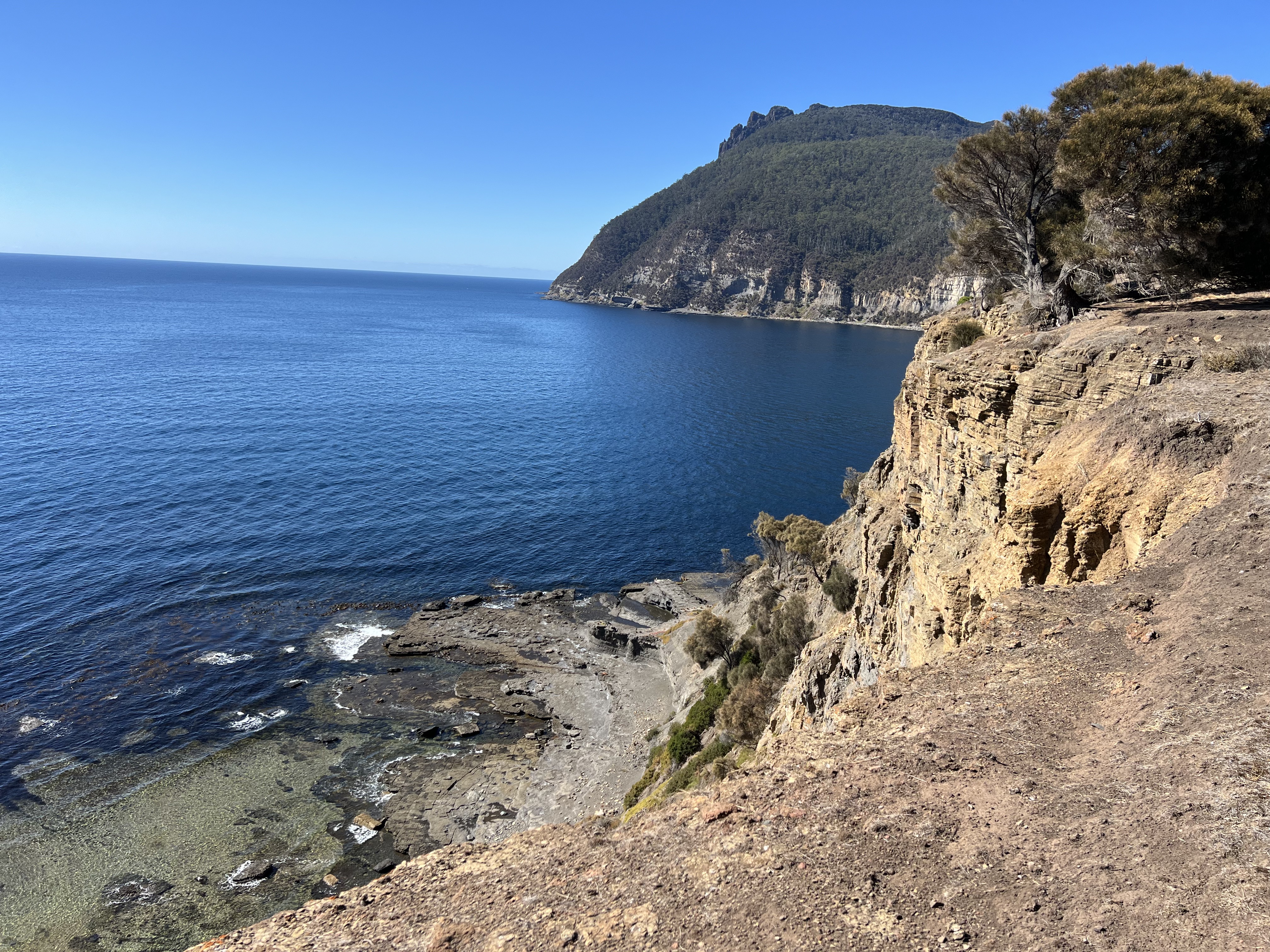
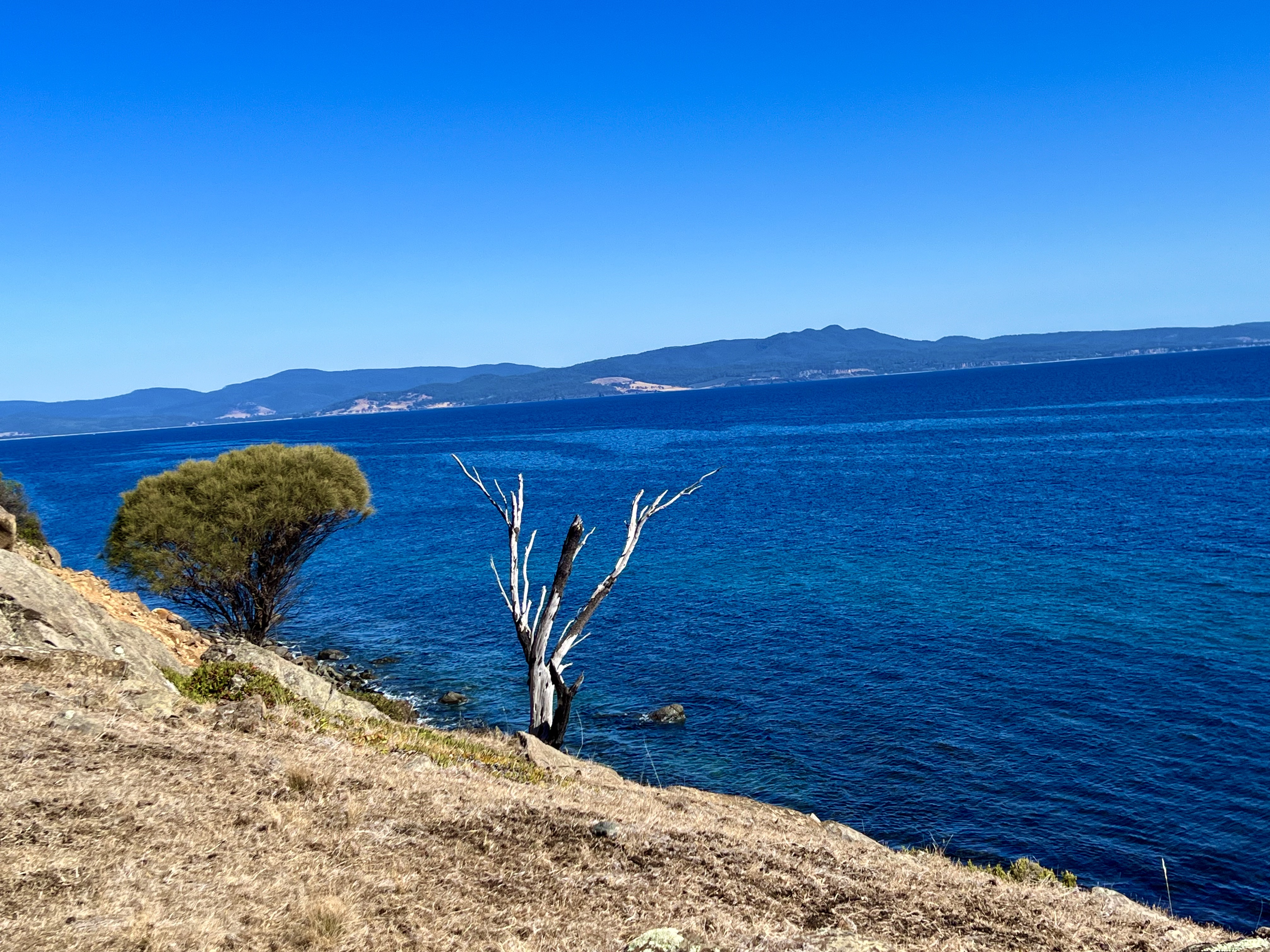
The Tasmanian portion of the trip had been fabulous so far with incredibly diverse landscapes from farmland to mountains to waterfall rainforests to crashing waves along the coast, but nothing prepared me for the serenity and beauty of Maria Island. (Pronounced like the wind in the song Mar-aye-ya.) It is a place beyond time. What was once a penal colony, is now a national park where vehicles, (other than those of the park service) are not allowed. There are no shops of any kind on the island and no trash cans. One takes out what one brings in. This leaves the wildlife free to simply be. Kangaroos, wallabies, wombats, pademelons, echidnas, Tasmanian devils and more birdlife than an ornithologist could log in a month roam and fly freely. (Koalas are not indigenous to the island, so they aren’t there.) Some of the walking paths are shared with cyclists, but others are more for two-legged movement through the forests, up the mountains, and along the coastlines. Wildlife comes shooting out from under the brush or just sits there watching as one passes by. Near the cliffs there are places to simply sit and look out over the ocean. Dolphins occasionally swim by as do whales. I thought I saw something out of the corner of my eye, but when I turned it wasn’t there. A cyclist stopped and said that he had seen a momma whale with a cub where I thought I had seen movement. We waited awhile, simply enjoying the peace of the warm sun on the cliffs above the clear deep blue ocean, but the whales had headed further out to sea. The day on Maria Island was unforgettable. If any place can be considered to be close to primordial paradise, then this island without hordes of people is it. Luckily, the ferry limits the number of daily visitors.
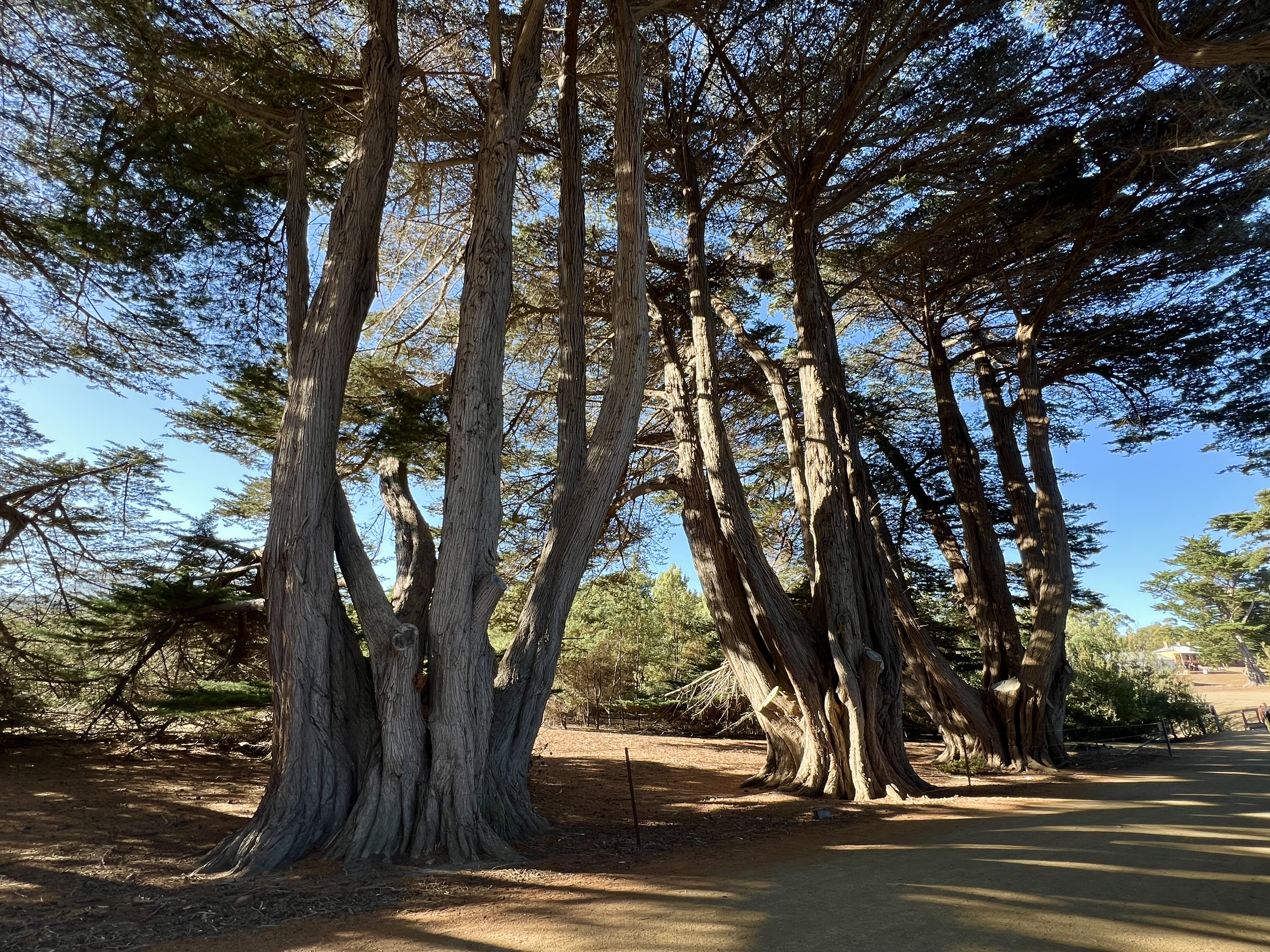

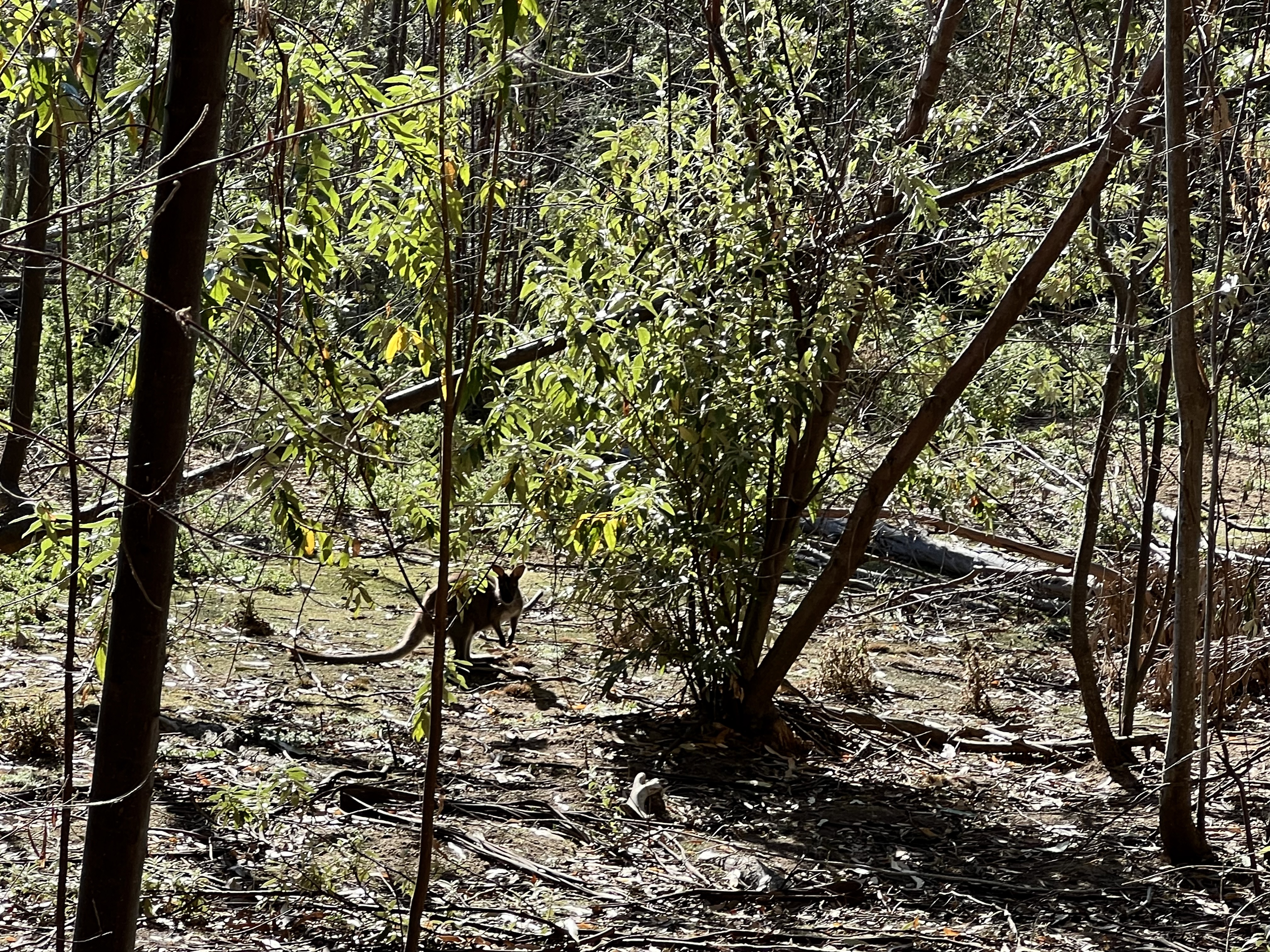
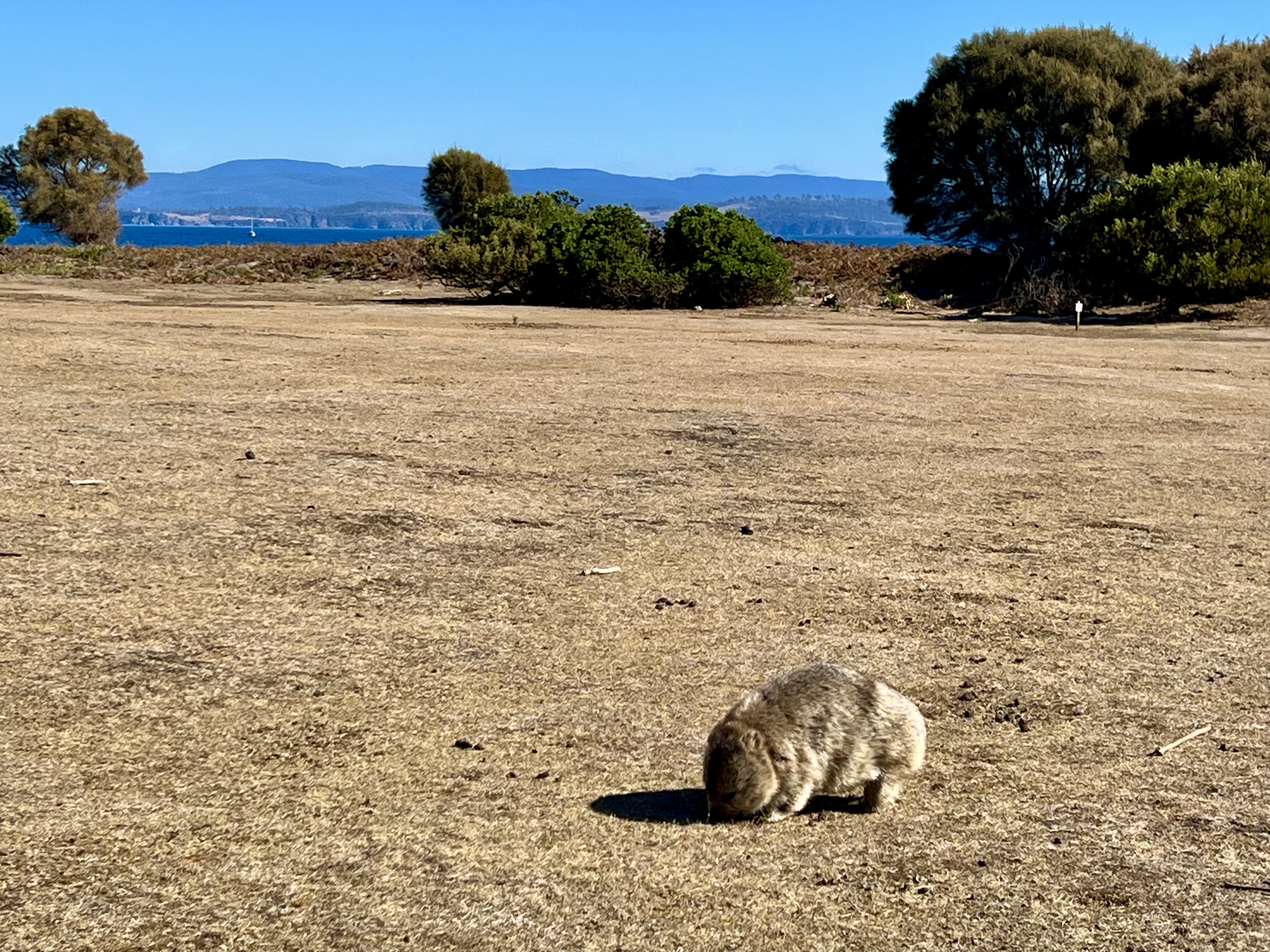
These three islands, Kangaroo, Tasmania, and Maria are all very different and each wonderful in their own way. All three are havens for Australian wildlife, and I am very thankful to have had the opportunity to visit them.
 omegoodyssey