The flight from El Salvador to Managua took about an hour and a half with Avianca Airlines. Everything went well until I got to customs, where they had me stand around for almost 45 minutes before they could examine with my small Bushnell binoculars that I’d bought at Hofer, my local grocery store. I don’t know what gave them such concern, but eventually they let me pass. The driver who was waiting to take me to Granada was kind and didn’t hold the delay against me.
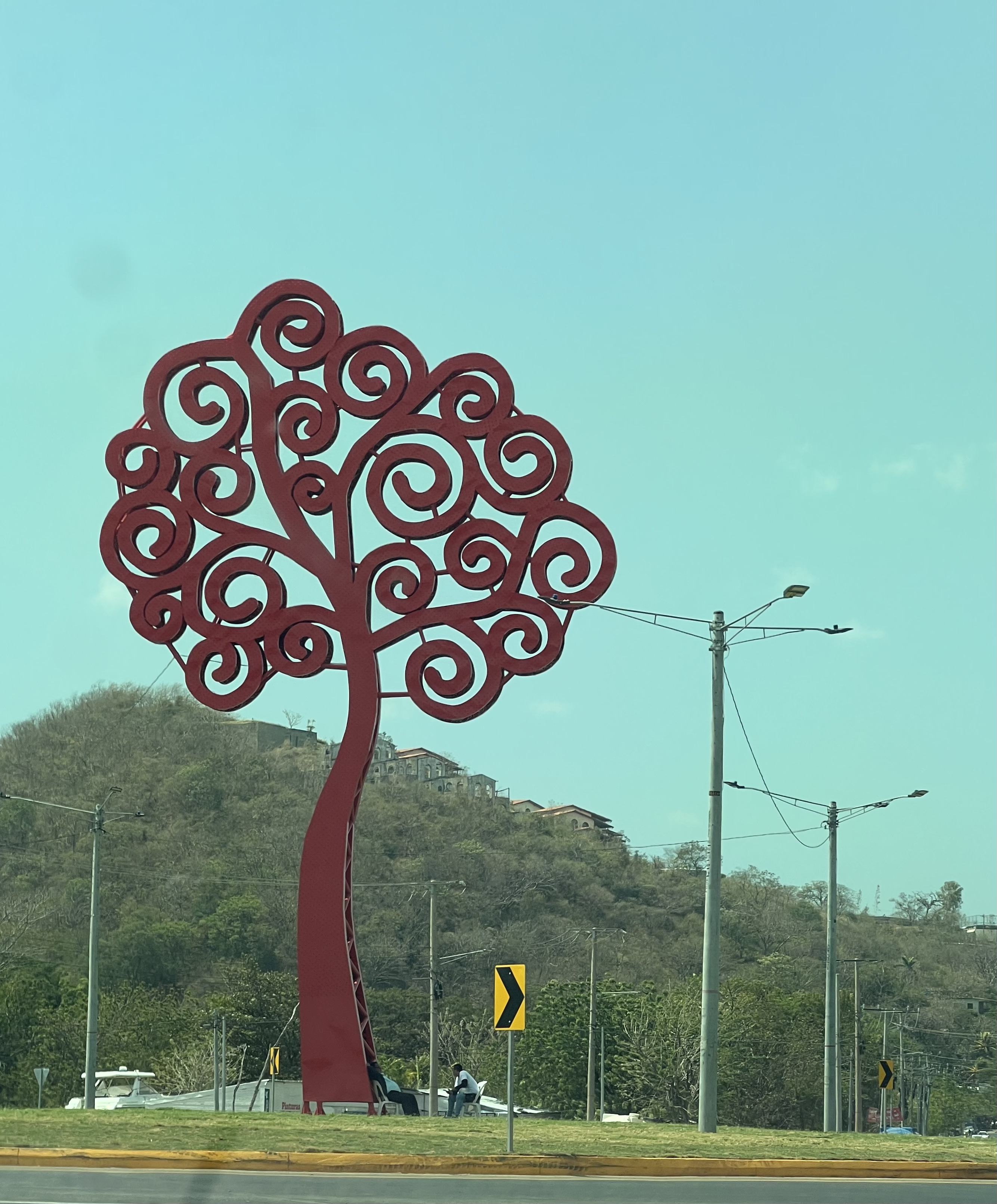
The drive from the international airport to Granada takes about an hour. At first, it passes through urban areas lined with rusted red, blue or green corrugated tin roof shacks and houses. After about twenty minutes, we came to agricultural fields growing plantain, sugar cane, taro, and various kinds of vegetables. Palm trees, many with full coconuts, and mango trees, filled with ripe mangos were plentiful. At most of the major intersections, a colorful steel sculpture of a tree was standing in the middle. I learned that these trees, representing the Tree of Life, were erected at the behest of the Vice President, the President’s wife, as a symbol of the New Nicaragua. Most of the people I spoke with weren’t in favor of these sculptures, which are lit up at night and occasionally have security guards protecting them, because of the expense. The people felt that the funds that went into the steel trees would have been better used for education or social services. Nicaragua is governed by a dictator, and there is only the one official party. One of the drivers we used during our week in the country, had the political party’s flag on the dashboard. When asked him why, he said that this way the police don’t hassle him. I was often reminded that Nicaragua’s system is similar to that in Cuba, and I could see certain resemblances in the general ambiance.
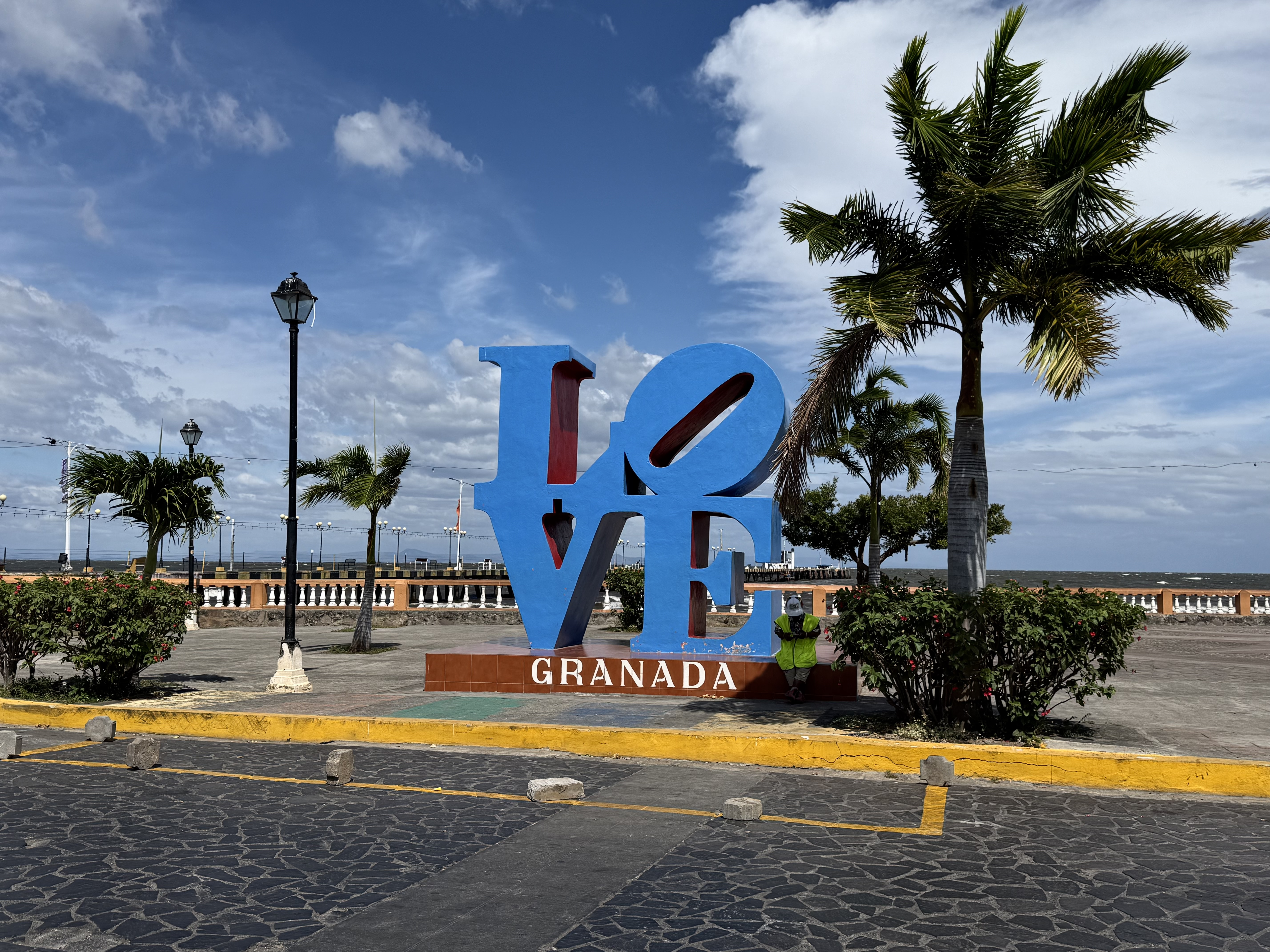
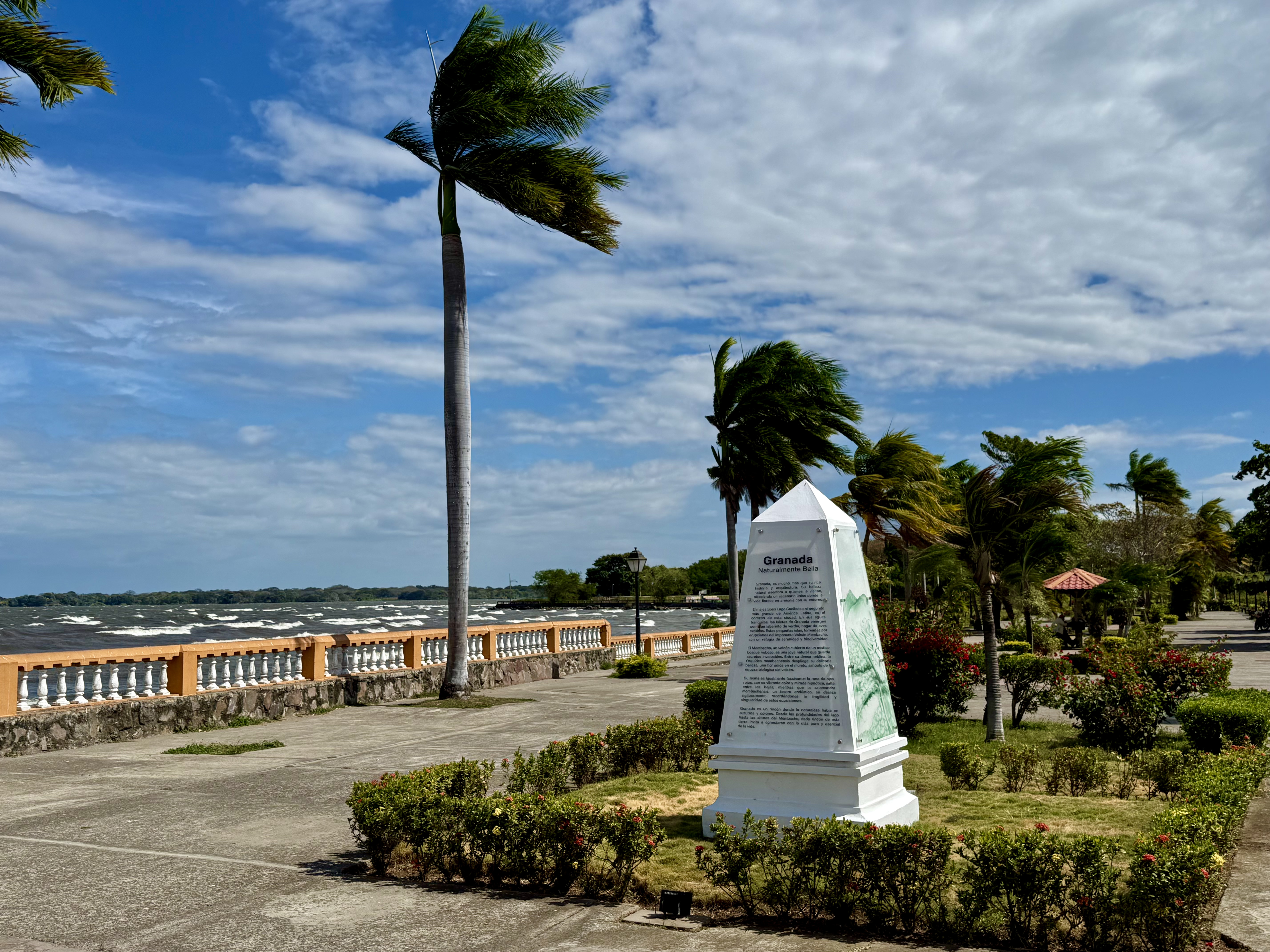
I wasn’t sure what to expect from Granada. I knew it is the oldest city in the mainland Americas, founded in 1524, and that it was destroyed and looted three times by pirates: in 1665 by Morgan, 1685 by Dampier and in 1856 by Wallace Walker – really nasty figure, an American who completely burnt the city in his quest to set up his own private nation. I was also aware that it is the main tourist area in the country. The city sits directly on a lake I knew as Lake Nicaragua but is called Lake Cocibolca locally. A fishing pier sits at the end of the main road leading from the Central Park to the water, and parks lie off to either side of the pier. While I was there, the wind had whipped up white caps and the palm branches were almost horizontal. It was an amazing sight.
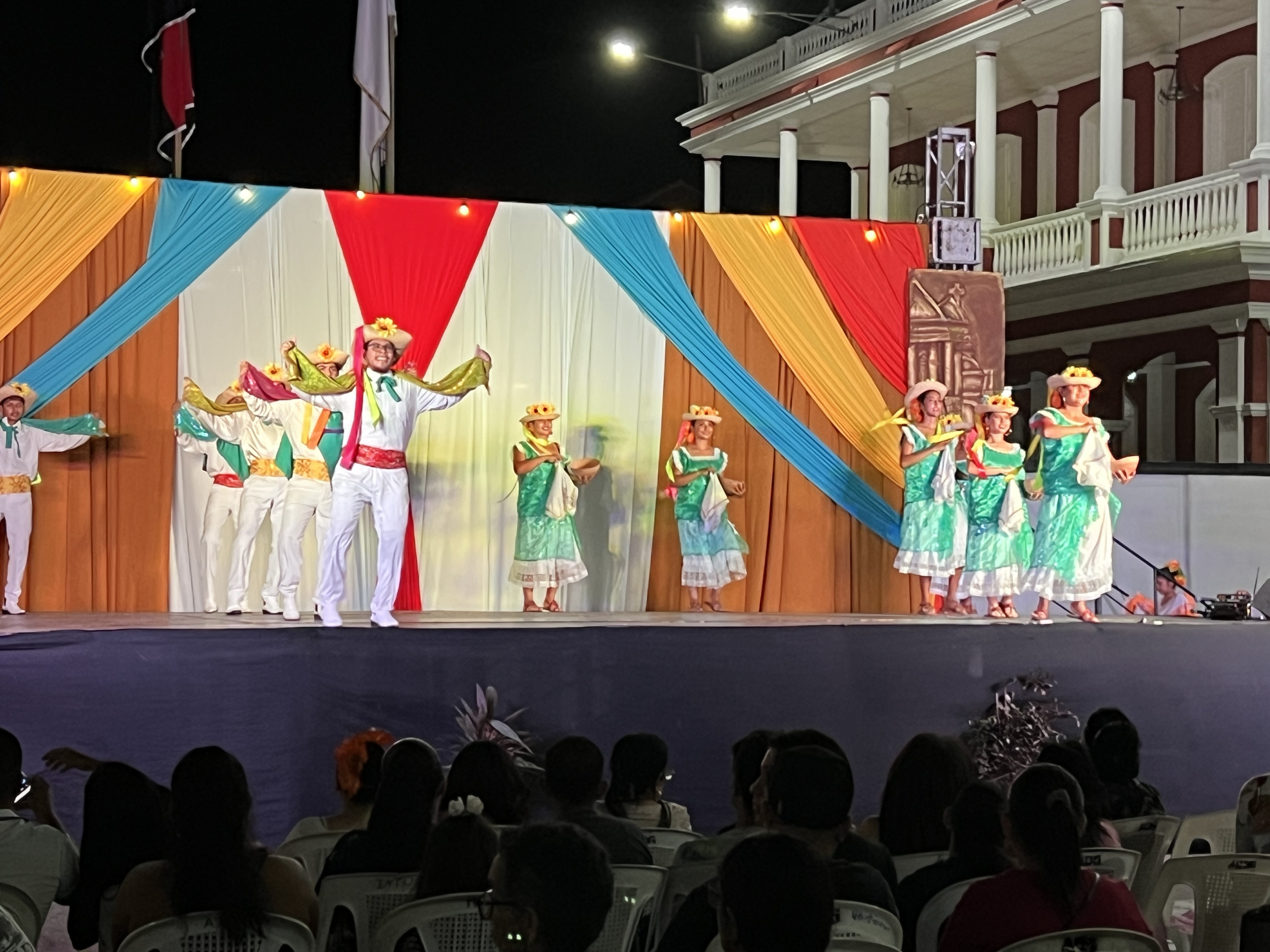
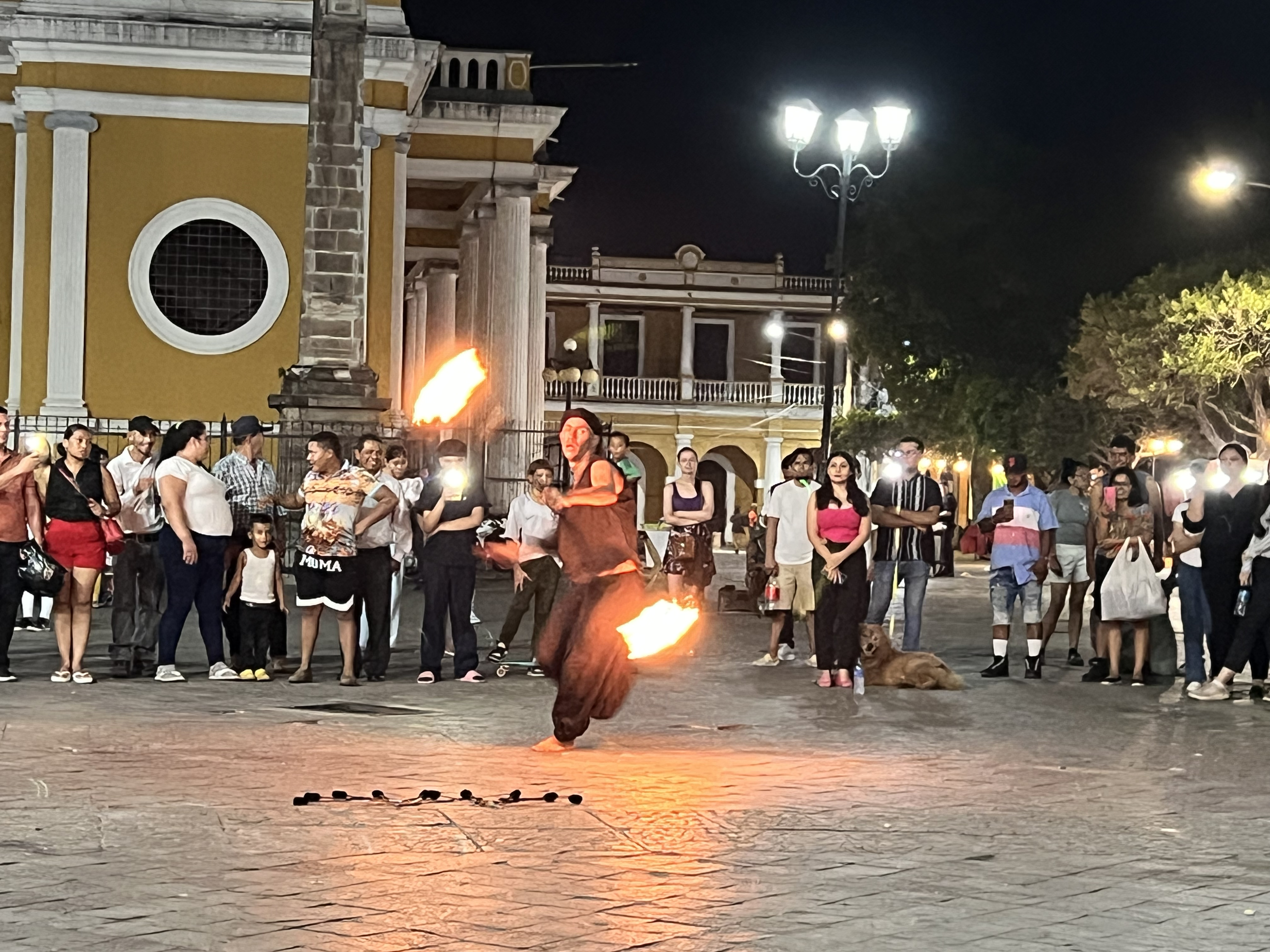
In town, I learned there are five public spaces with trees and places to sit in the shade; perhaps the most active is the Central Park in front of the Cathedral, which has a small music pavilion, a large fountain, and kiosks selling Vigorón, the local specialty consisting of yucca, pork, and spiced cabbage. In front of the Central Park and next to the Cathedral is a pavement lined square where events happen each weekend night. On Friday night, there was a dance contest of local dance schools and on Saturday, a more professional dance show, followed by a touring flame throwing artist. I was pleased to see that the city wasn’t overrun with tourists and that most of the people in the park and at the events in the evening were locals.
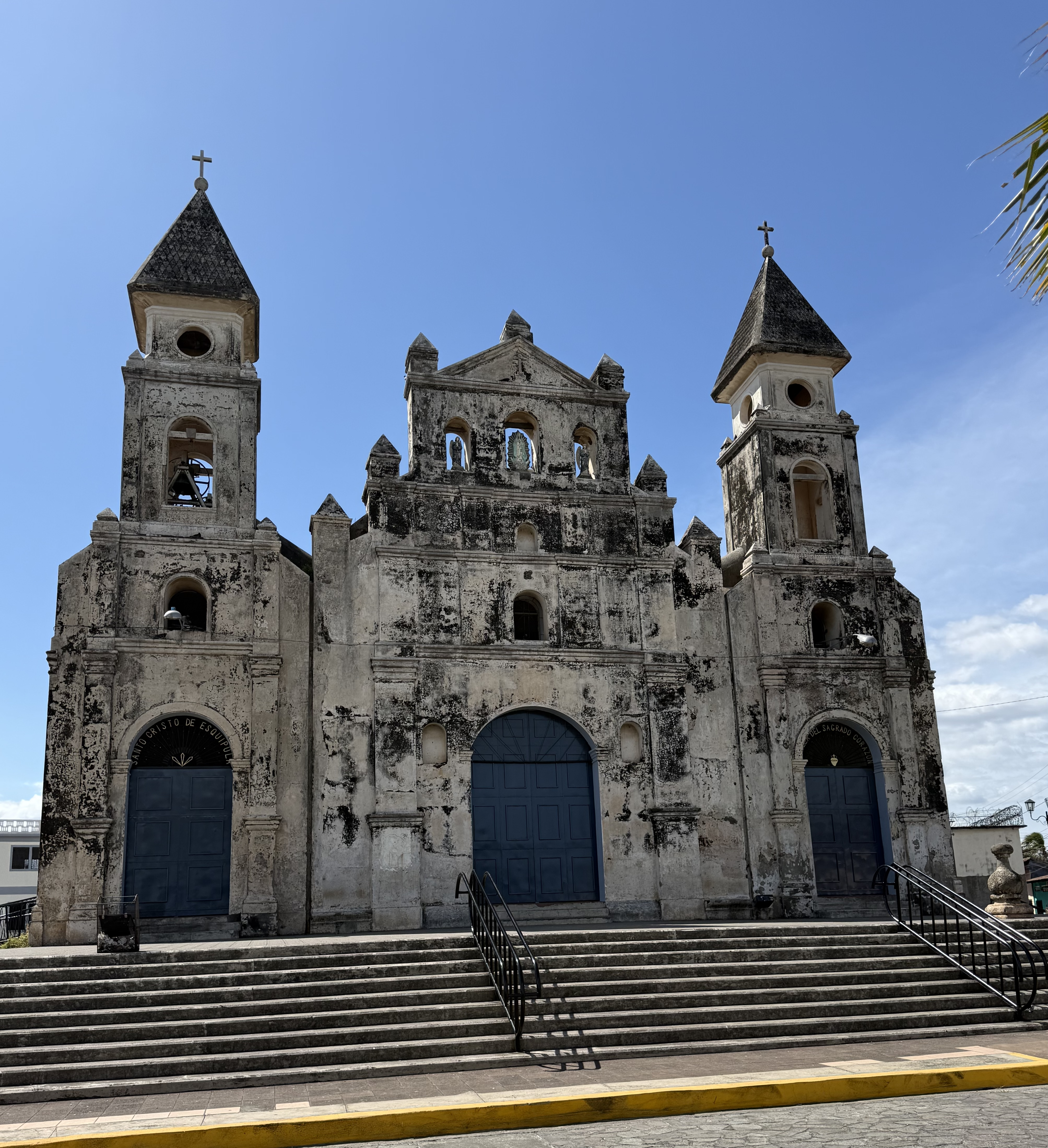
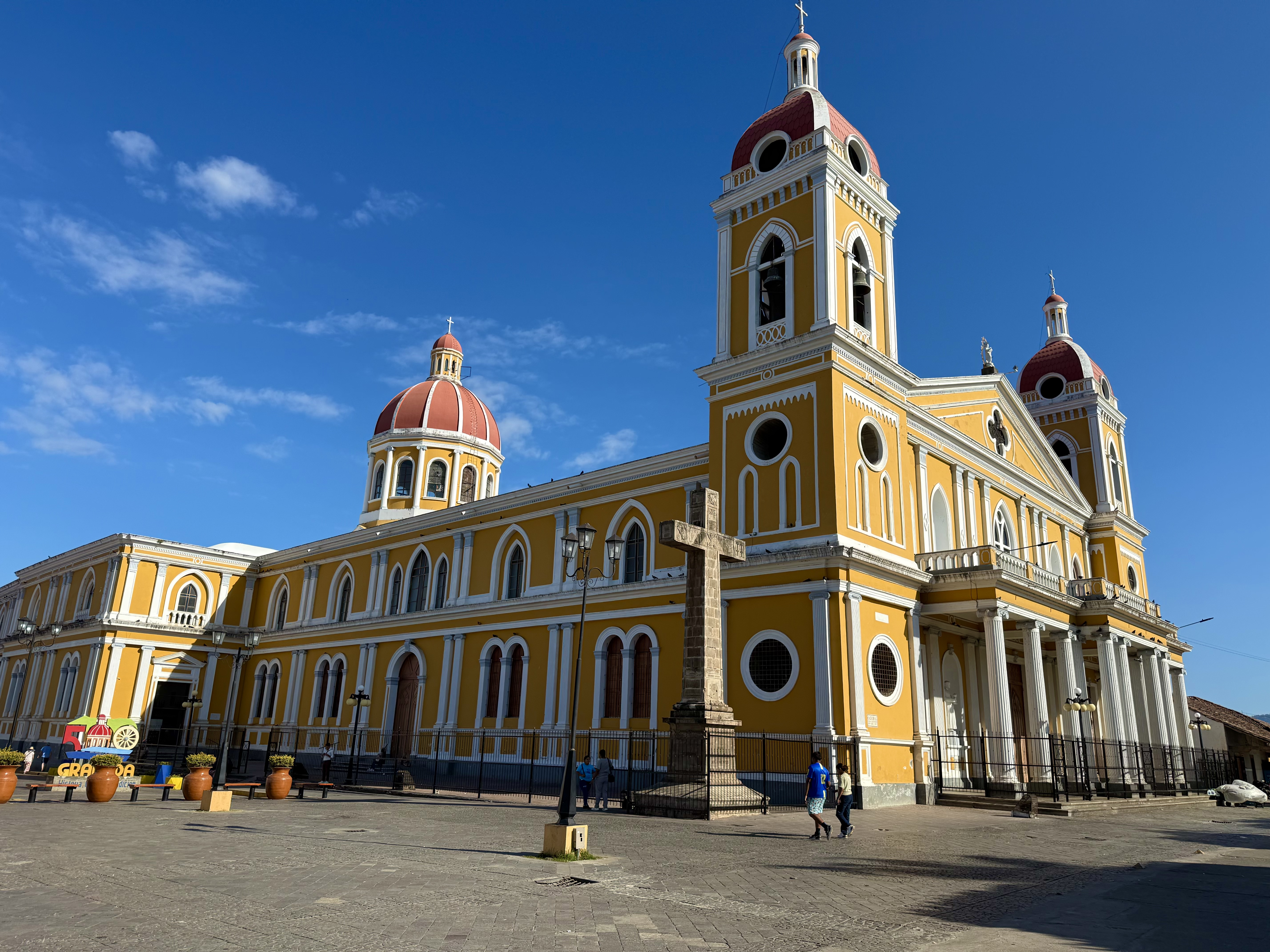
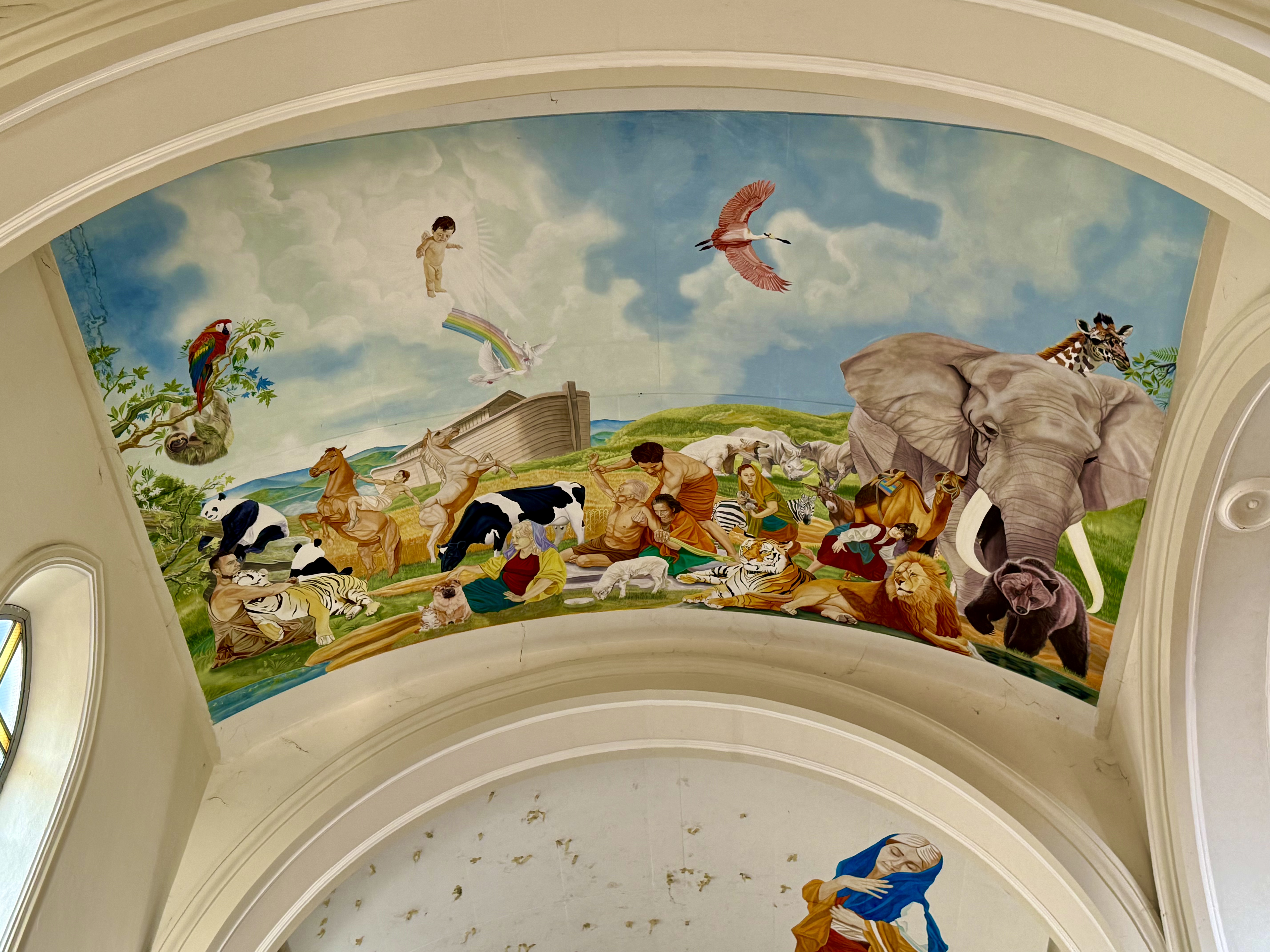
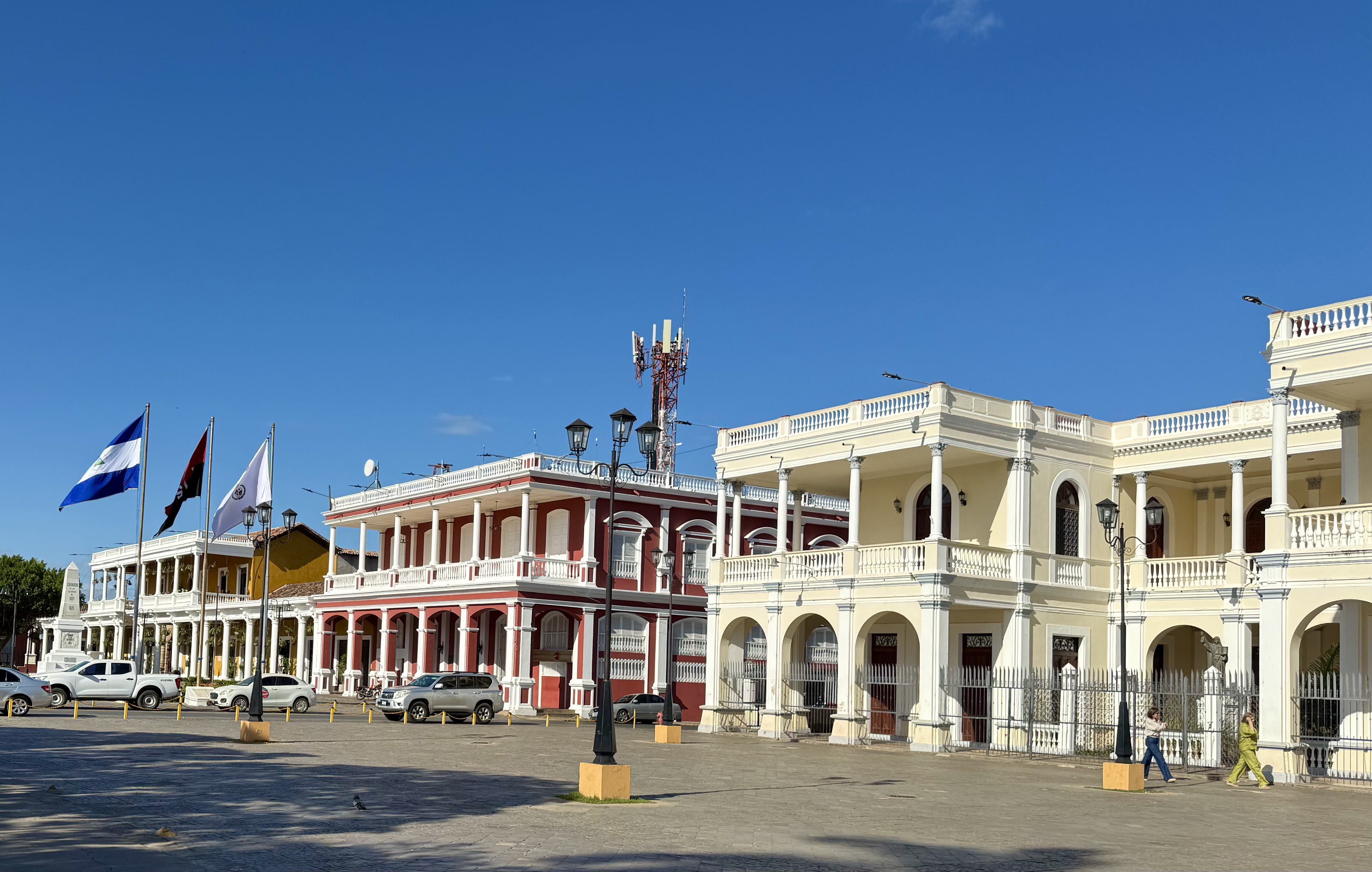
There are six churches in the city, and they are all dedicated to Virgin Mary. Supposedly one can walk up the towers of two of them, but both were closed when I was there. The Cathedral is beautiful, inside and out. Ceiling frescos tell biblical stories including that of Noah’s Ark. The historic center of the city is completely walkable, although the rivets on the side of the street and the traffic make it advisable to transport luggage with a taxi and not try to drag it through the streets. In the middle of my stay, I needed to change hotels as plans had changed and the place I was staying, Hostal Azul (highly recommended!), didn’t have any room for the extended stay. The new place wasn’t far, only about a ten-minute walk, but I decided that even my old beat-up blue Eddie Bauer duffel was too good to drag through the streets, some with urine smell coming from the water on the side. Regardless of the occasional smell, the city is fascinating. The central park area and nearby street with restored colonial buildings were beautiful.
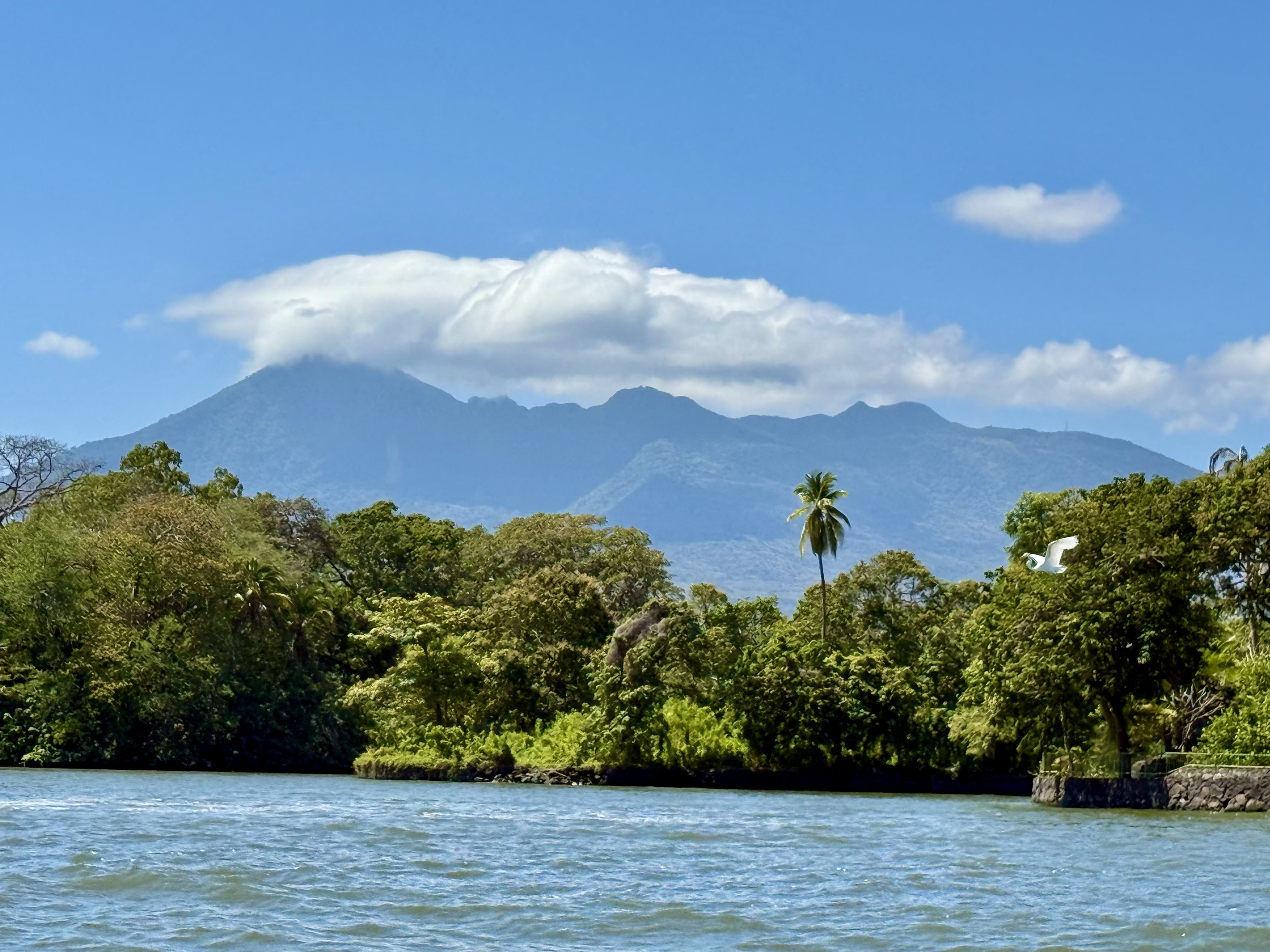
The main museum is in a convent attached to Iglesia San Francisco, which is about a five-minute walk from Central Park. The church and convent were originally constructed in 1529, but the buildings were completely restored in 1988. There are a number of very informative plaques lining the walls of the museum. They explain that the lake was formed from an eruption of the nearby Mombacho Volcano many eons ago. The force of the eruption formed not only the lake, but also the 365 islands and cays, which lie off to the side of the city forming an inhabited non-official nature reserve. The Chorotegas peoples lived on the side of the Volcano and near the site of current day Granada in pre-Hispanic times. Remnants of their sacred sites have been found on the islands of Zepatera and El Muerto. The original stone sculptures from those sites are in a separate room at the back of the museum. Today, there is nothing left other than a few sculptures and pottery chards from the region’s pre-Hispanic heritage. Everything stems from the Colonial and Post-colonial eras.
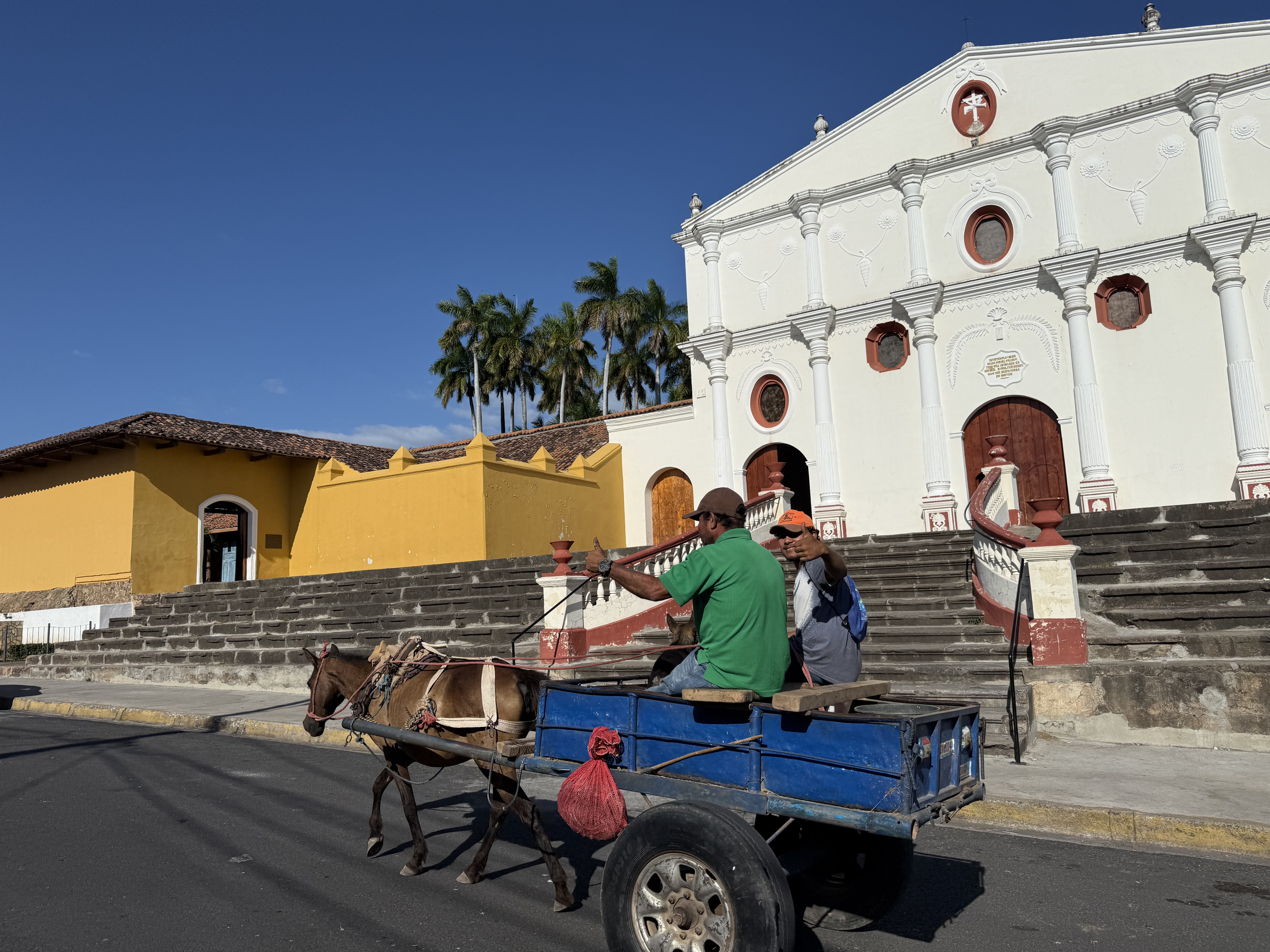
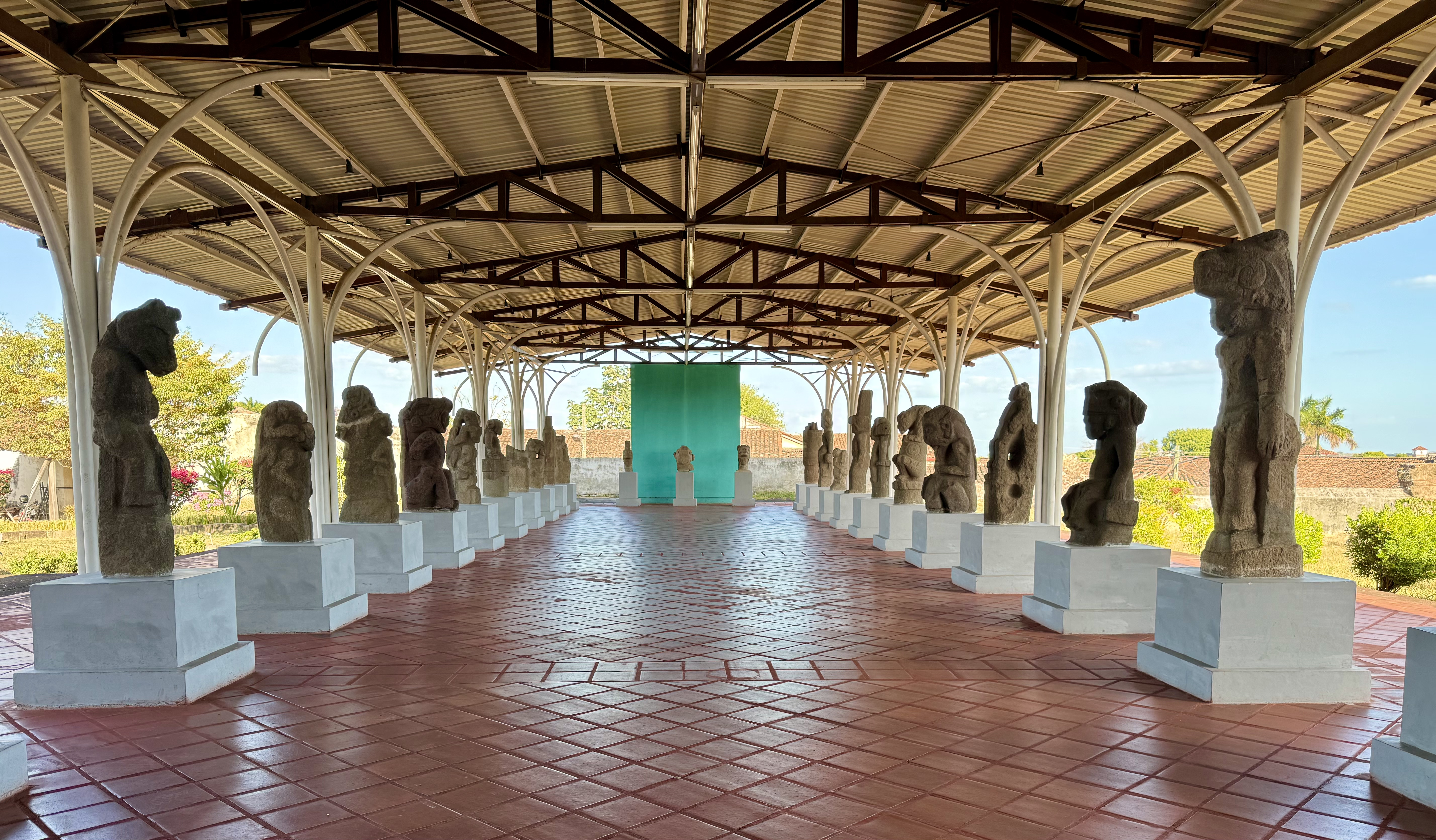
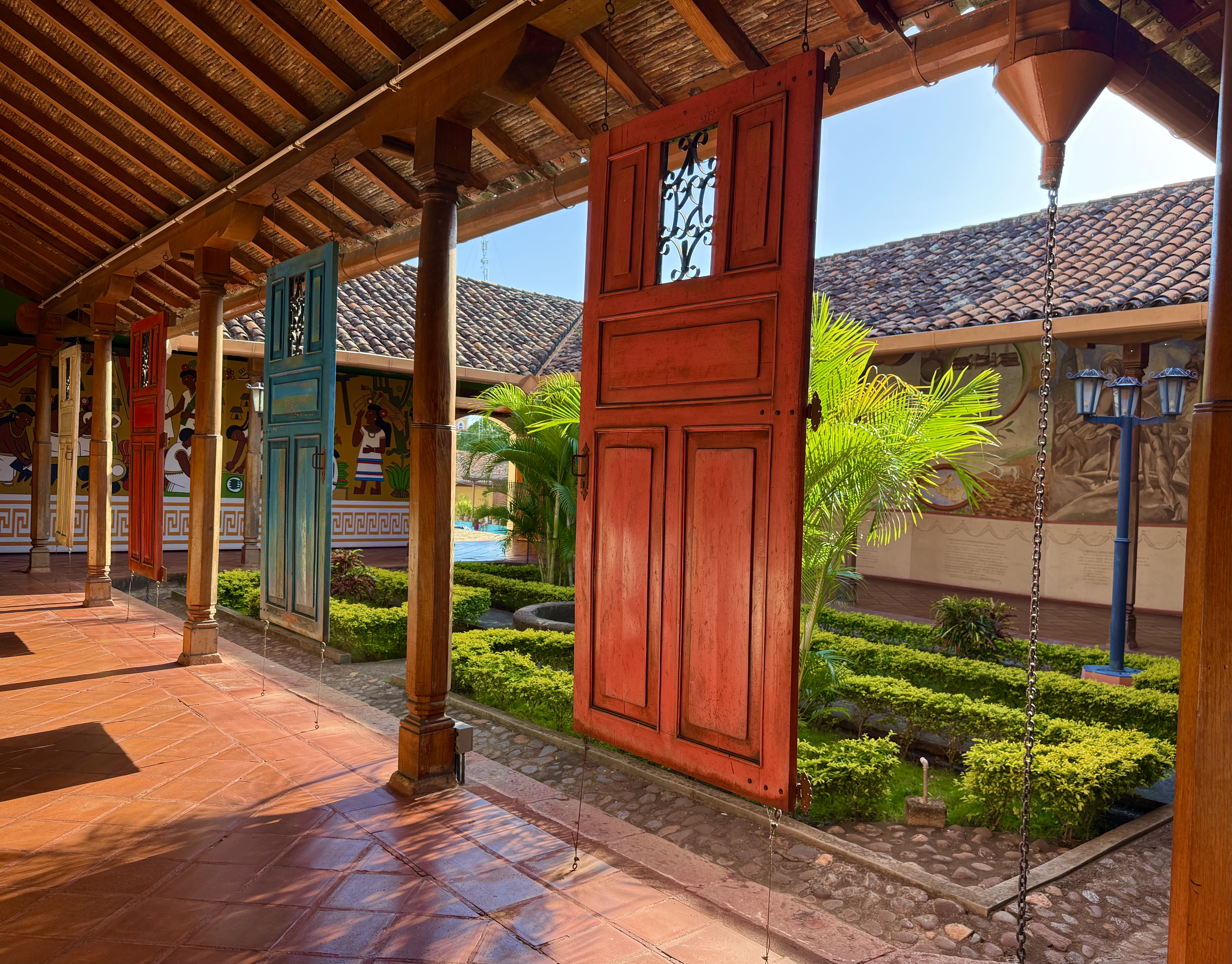
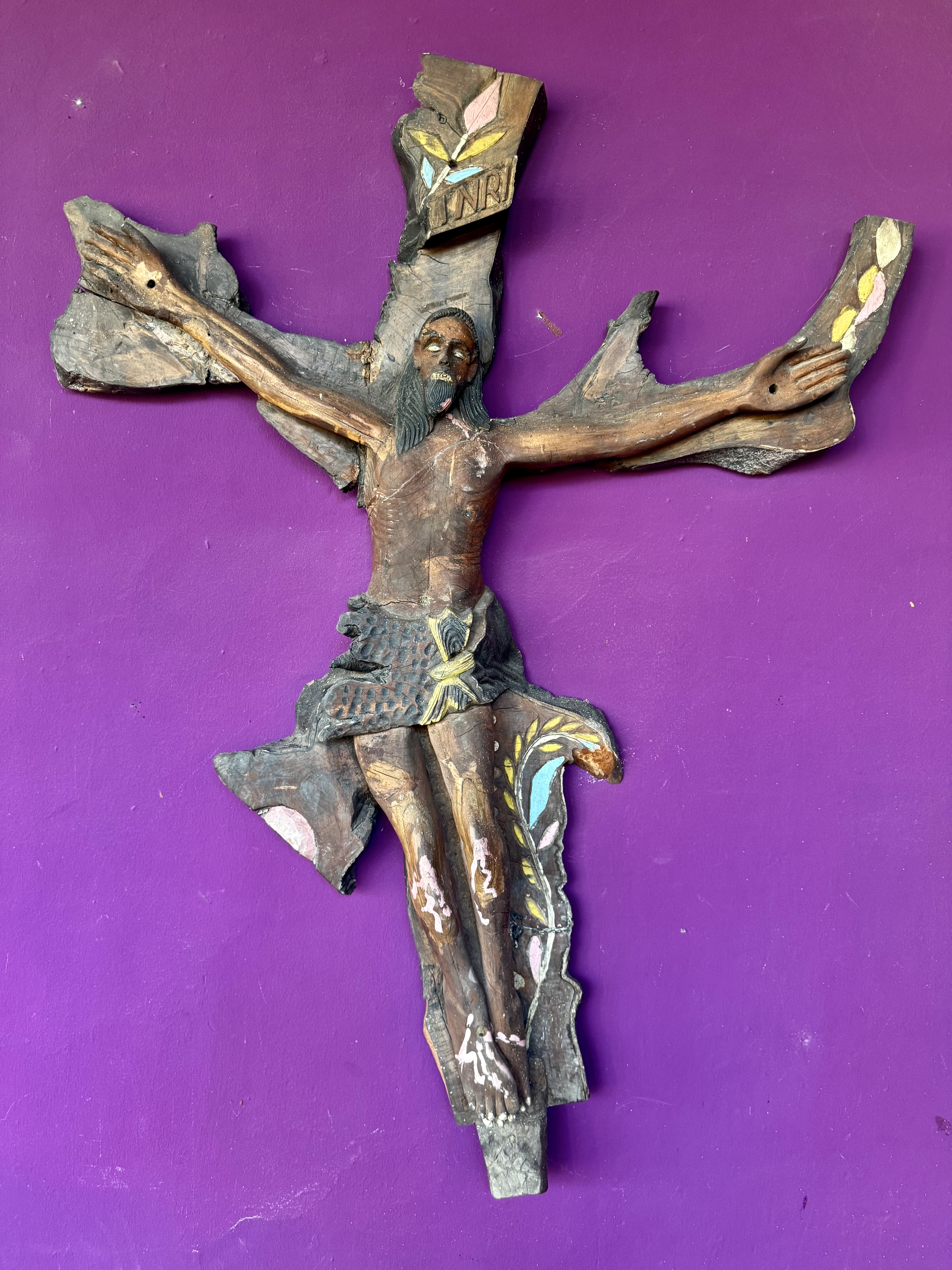
The museum has a few sections: one showcasing Local Popular Religious Art, with separate rooms dedicated to Jesus, Mary and St. Francis, another dedicated to colonial furniture, another with models of some of the festivals and local traditions, and a section concerning local primitive art. The plaque at the entry way explained, “According to a letter from Captain General and Governor of Castilla de Ora, Pedro Arias de Avila, addressed to King Charles V in 1525, he reported the conquest and colonization of the Province of Nicaragua and explained that each church or temple built in Granada and León were adorned with wooded sculptures, especially those of the Virgin Mary.”
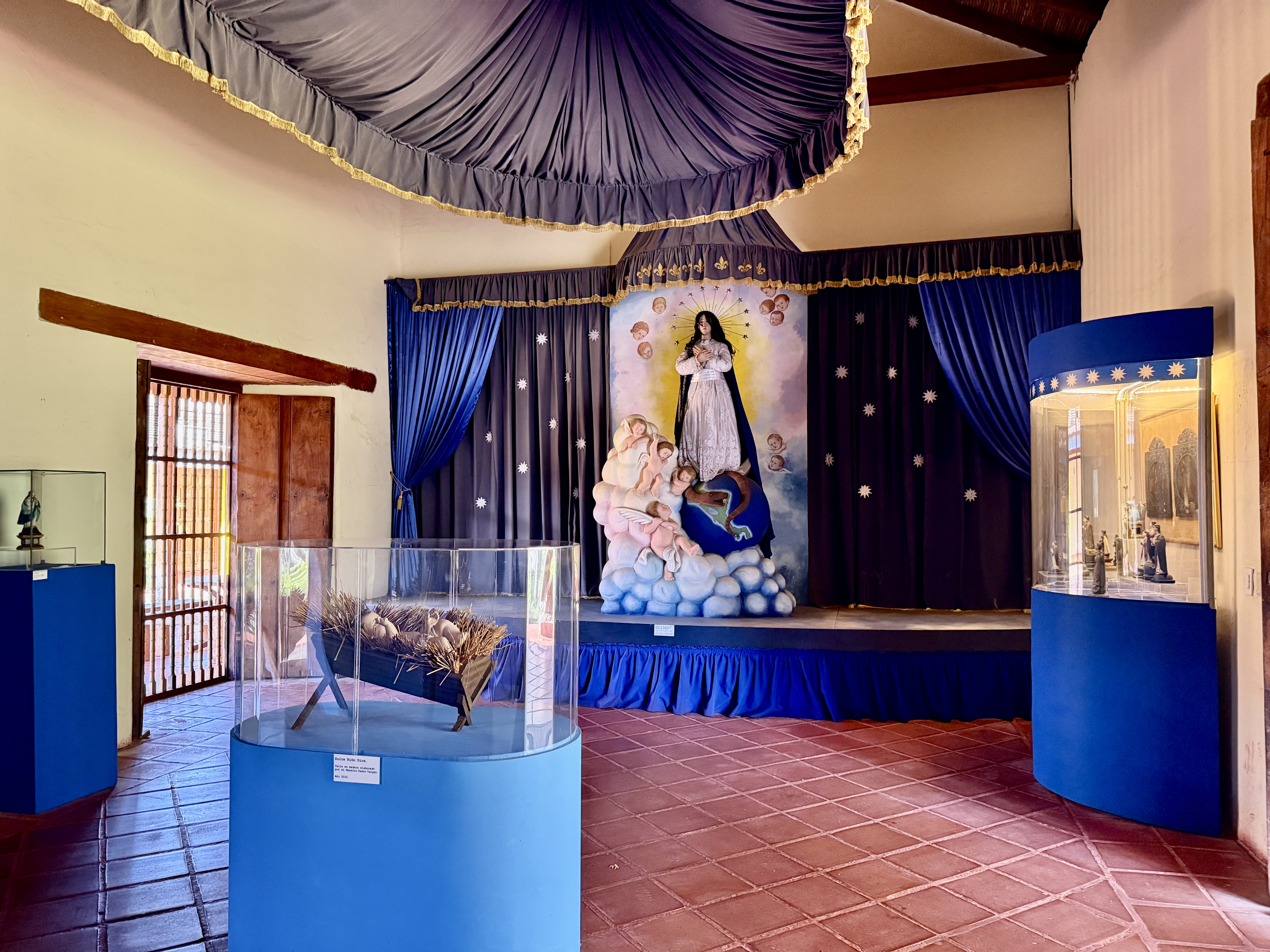
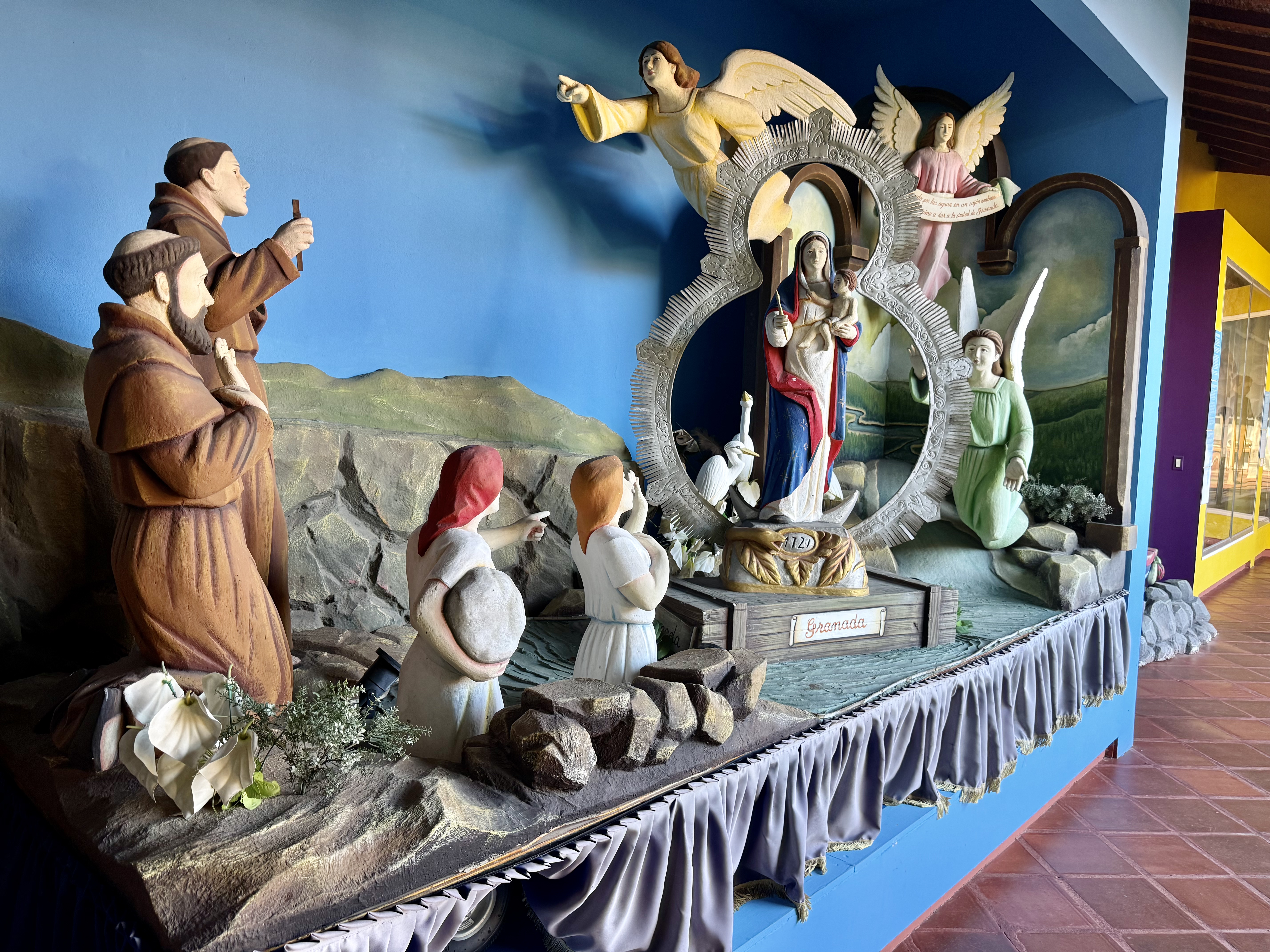
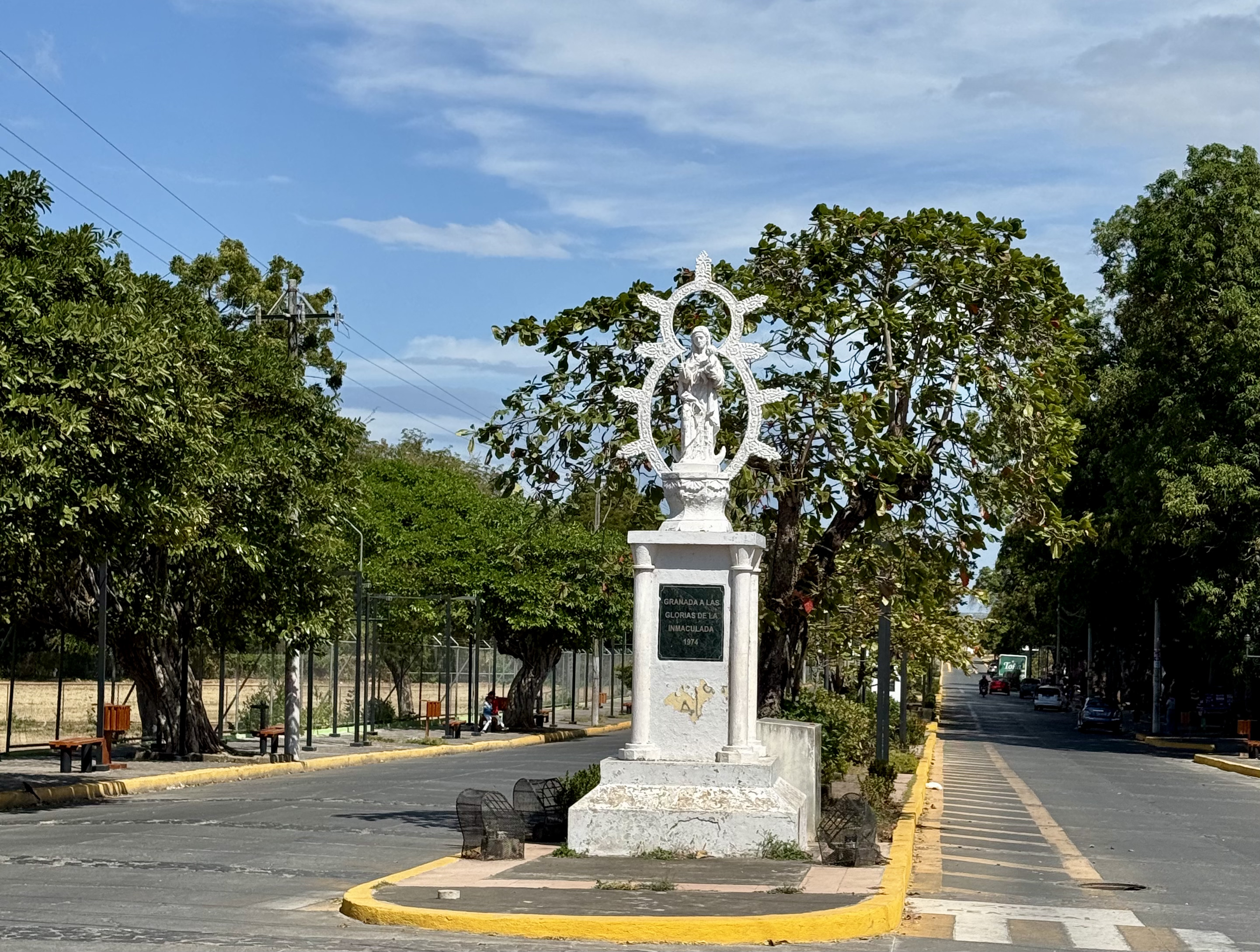
In the room dedicated to the Immaculate Conception of Mary, the plaques explain how she came to be worshipped in Nicaragua and Granada. “The origin of the adoration of the Virgin Mary in Nicaragua dates back to the arrival of the Virgin at the port of La Posesión in 1562. The old statue was given as a relic and protection by Saint Teresa of Avila to her brother, Pedro Zepeda of Ahumada, who made commercial voyages to the Ports of Acapulco, La Posesión and El Callao. History tells that the expeditionary got sick in the port of La Posesión and during his forced stay he gave the statue of the Virgin to be worshiped by the population. When he was cured, he wanted to continue his travels taking the Virgin Mary along with him, and on three occasions, his ships were returned to land because of intense storms. This was interpreted by the people that it was the will of the Virgin to stay in El Viejo, Chinandega, on Nicaraguan soil. In Granada, the tradition dates back to the legend of the box floating on the waters of Lake Cocibolca and found by a washerwoman. This happened at the far end of St. Lucia street, known as La Bomba and, history tells, that the stature of the Virgin is the one that was worshiped in the altar of the Chapel at the Fortress of the Castel of the Immaculate Conception in the San Juan River. When the fortress was attacked by pagan and violent souls, pious hands put the statue of the Virgin in a wooden box, throwing it into the waters of the river and the current brough the box up to Lake Cocibolca, in Granada. Then a Franciscan Friar tied the box with his cord and pulled it out of the waters. Since 1721, the statue of the Immaculate Concepcion, “La Conchita” is worshiped throughout the city. The celebration of “La Conchita” Novena takes place from November 28-December 7th. Each day the Novena is celebrated with a procession where the Virgin is placed in a float corresponding to each neighborhood, adorning the streets with flowers and lights and celebrating the Virgin with music and chants.”
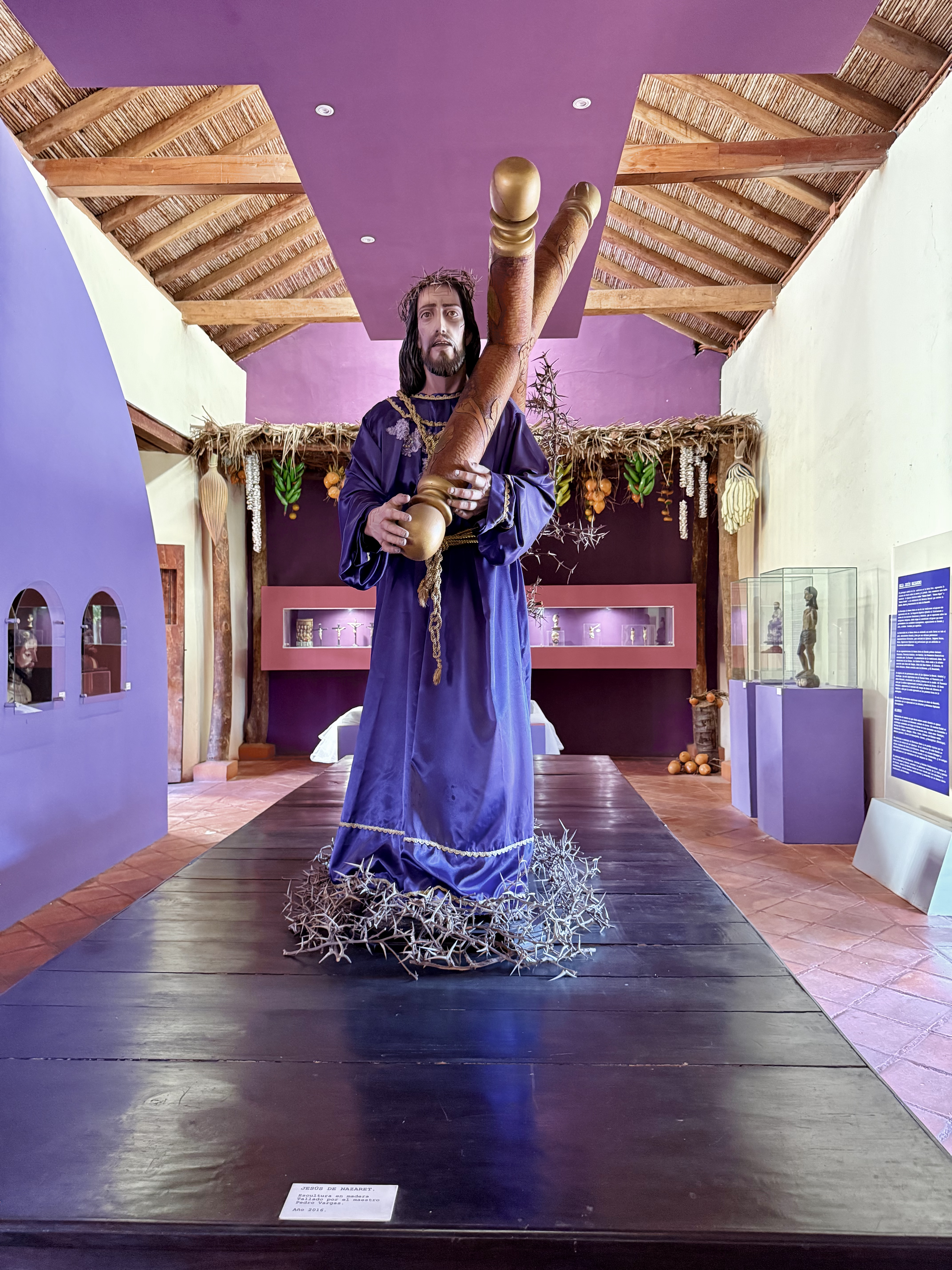
The plaques in the room dedicated to St. Francis mentioned that Dominican Friars had also used the Convent, and that Friar Bartolome de las Casas had preached here. He was the priest who wrote extensively about the conquest of, and often inhumanity towards, the indigenous population of Central America. In Sala de Jesús there is a model of him covered in thorns carrying the cross.
The section dealing with local traditions had two that I found especially interesting. The Tradition of the Aquatic Station of the Cross, which is celebrated during Holy Week to commemorate the Passion, Death and Resurrection of Jesus of Nazareth, is a new event in that it started in the 1980s and commemorates ancient rites in a new form. The second was that of The Horns, which imitate the cry of newborn Baby Jesus. “According to oral sources, during the month of December, between 400-500 children were gathered at 3:30 am in the Church of Xalteva from where they left blowing whistles, “a horn”, imitating the sound of the cry of a newly born child. The intention is to blow the horns at dawn during the Novena to wake up the people with the cry of a baby so that they attend Mass at 5am and to announce the birth of Baby Jesus.”
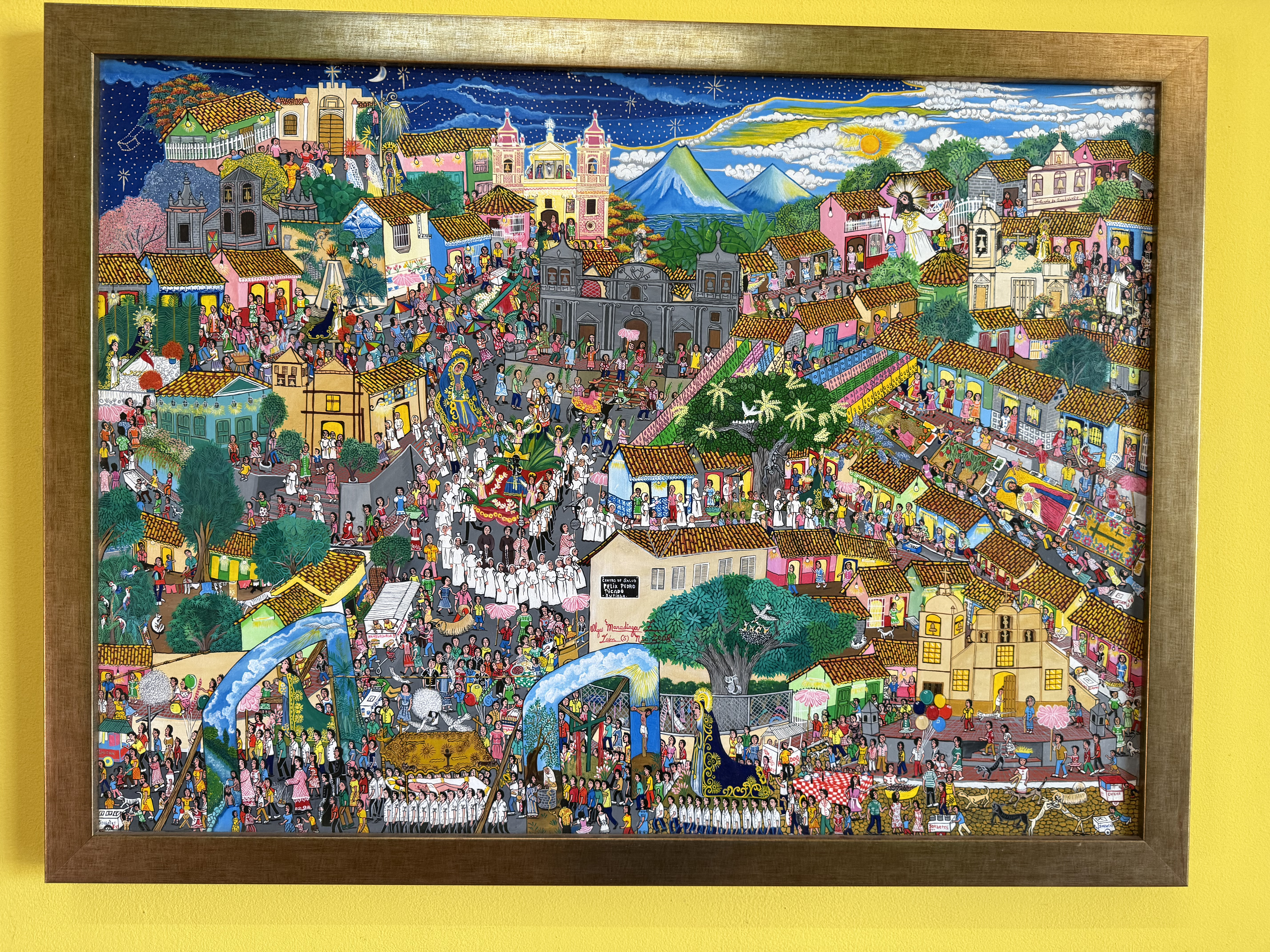
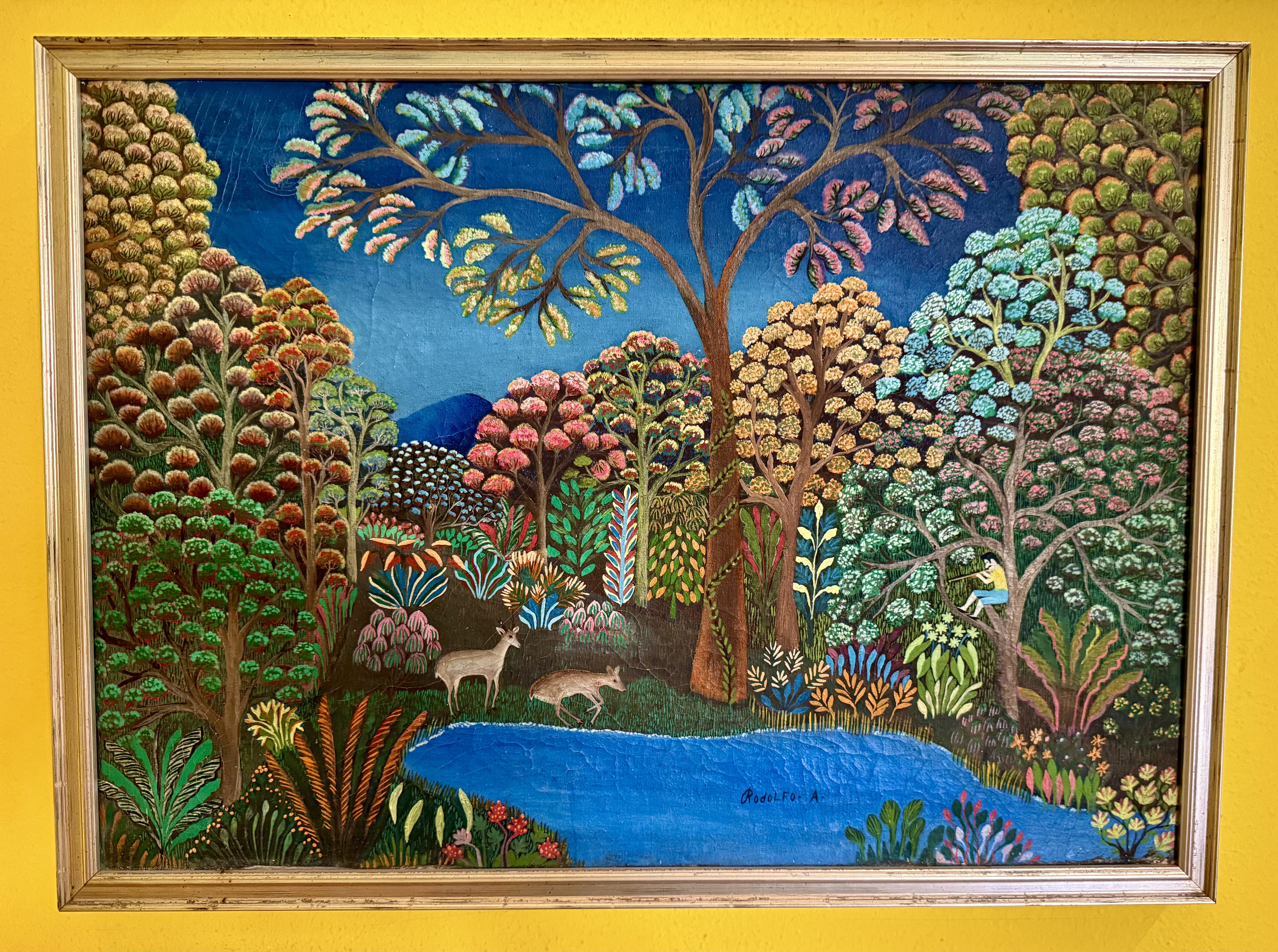
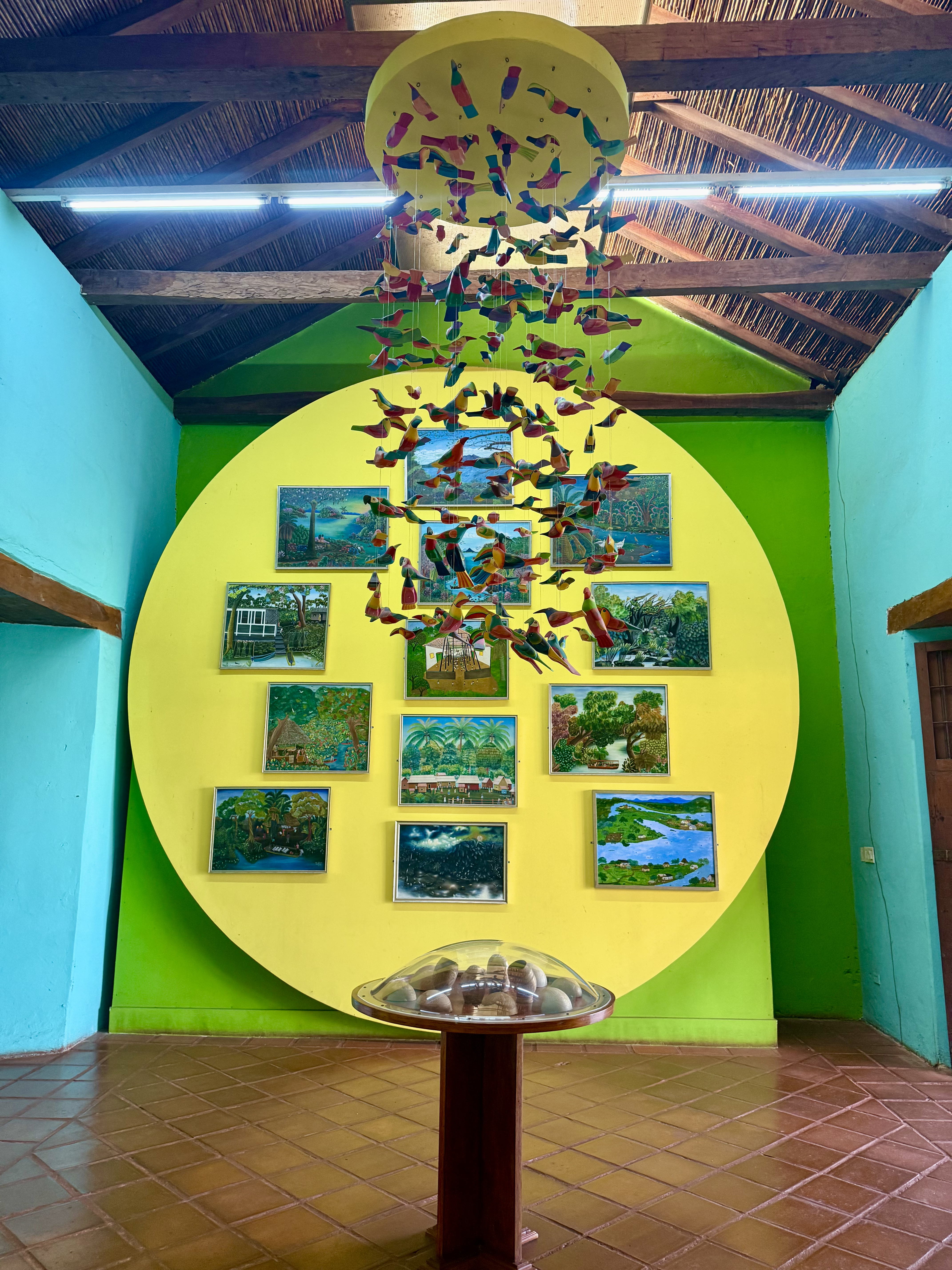
The museum section with Primitive Art discussed the grandmas, the women who started the local style, as well as a room dedicated to primitive painting during the Revolution. Many of the works are stunning.
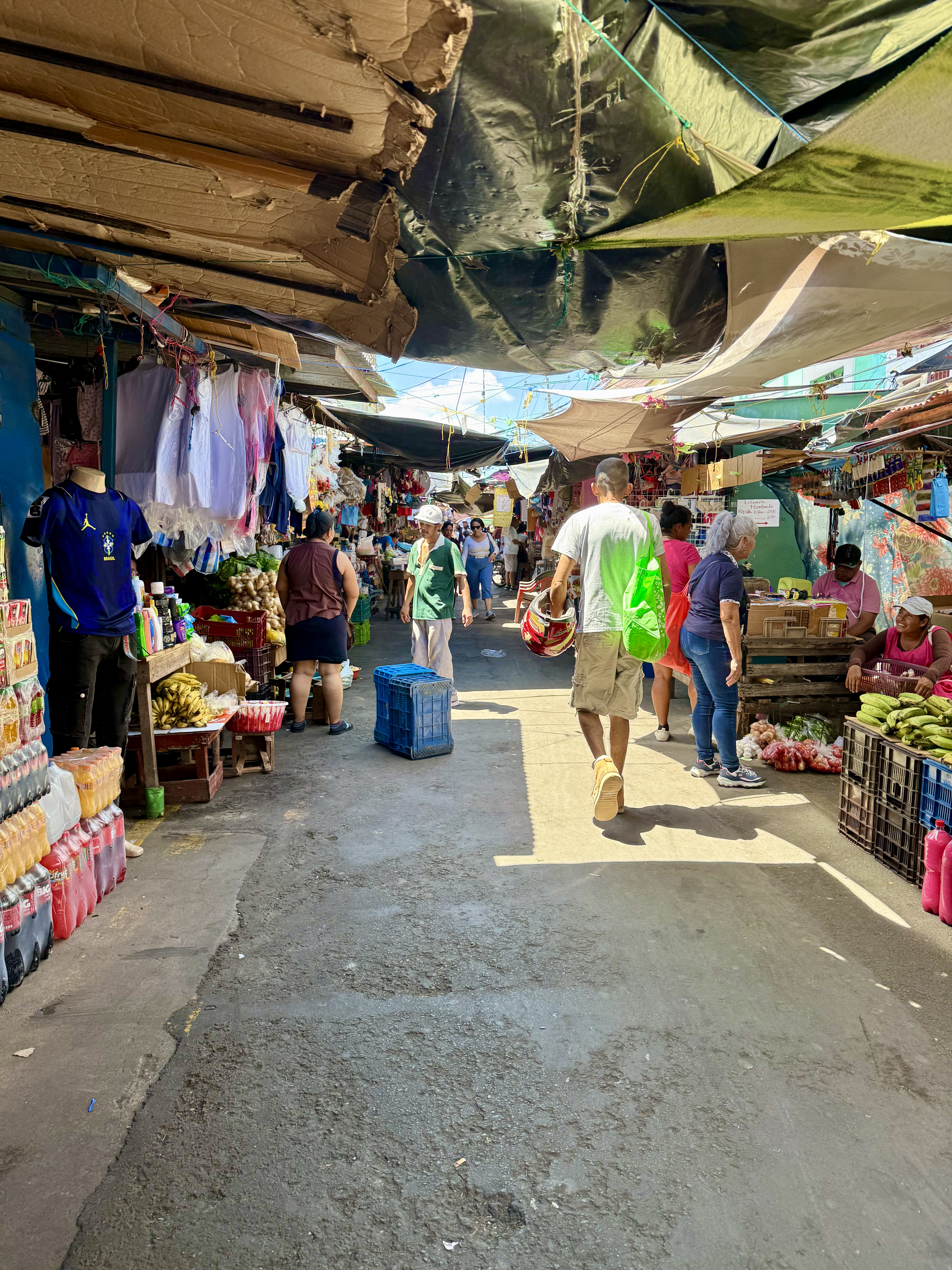
From the museum it is an easy walk back across the Central Park to the main market, which fills a couple of streets with tarp covered stalls selling everything imaginable. This isn’t a tourist market, but one for the local people.
No trip to Granada would be complete without either a kayak or boat trip to the Islas, the islands and cays a ten-minute car ride from the historic center. As the winds were still blowing, my friends and I opted for the boat. The captain informed us that we were smart to do so as many kayakers capsized. The two-and-a-half-hour tour was delightful; the lush islands are filled with bird life.
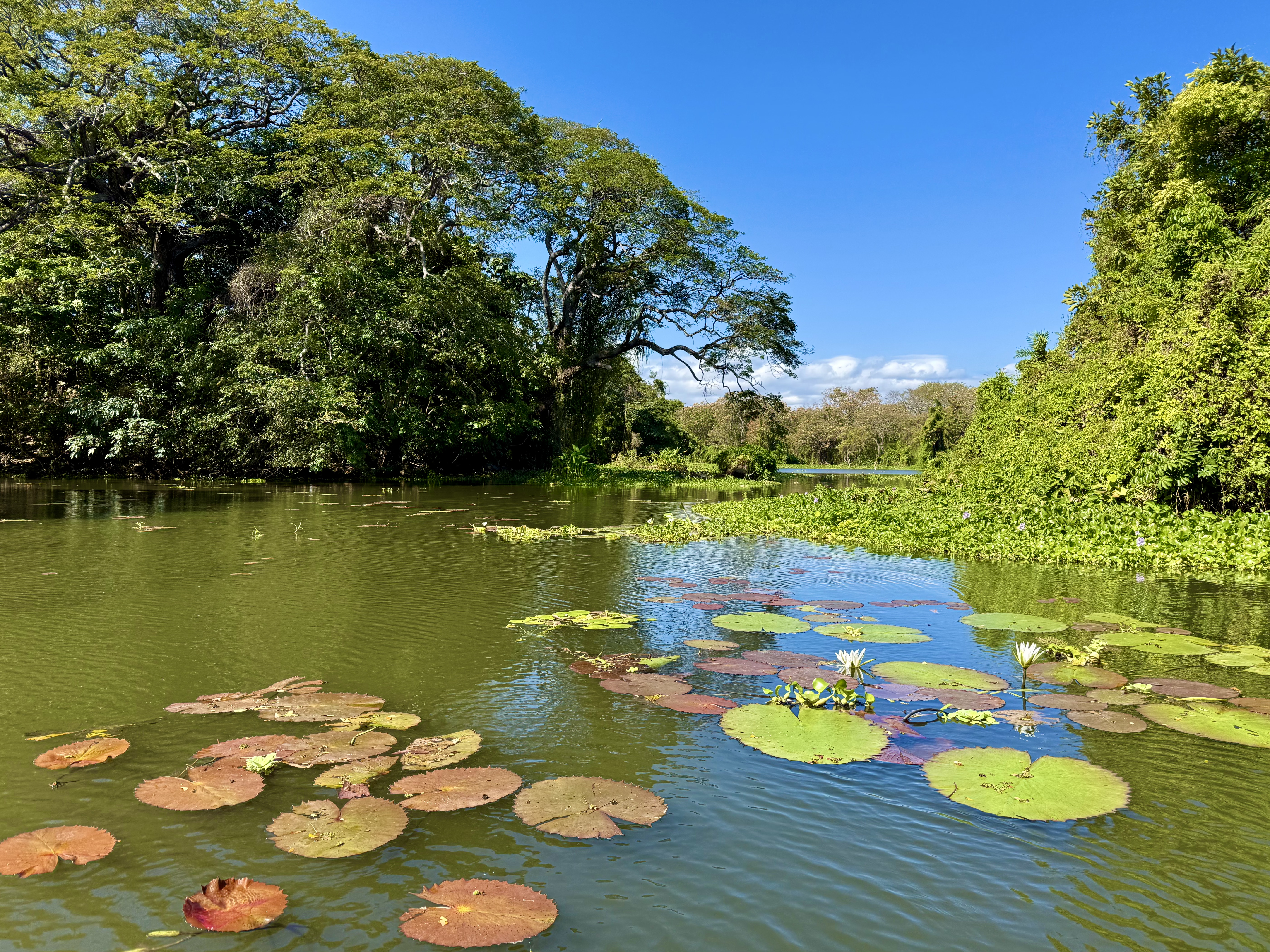
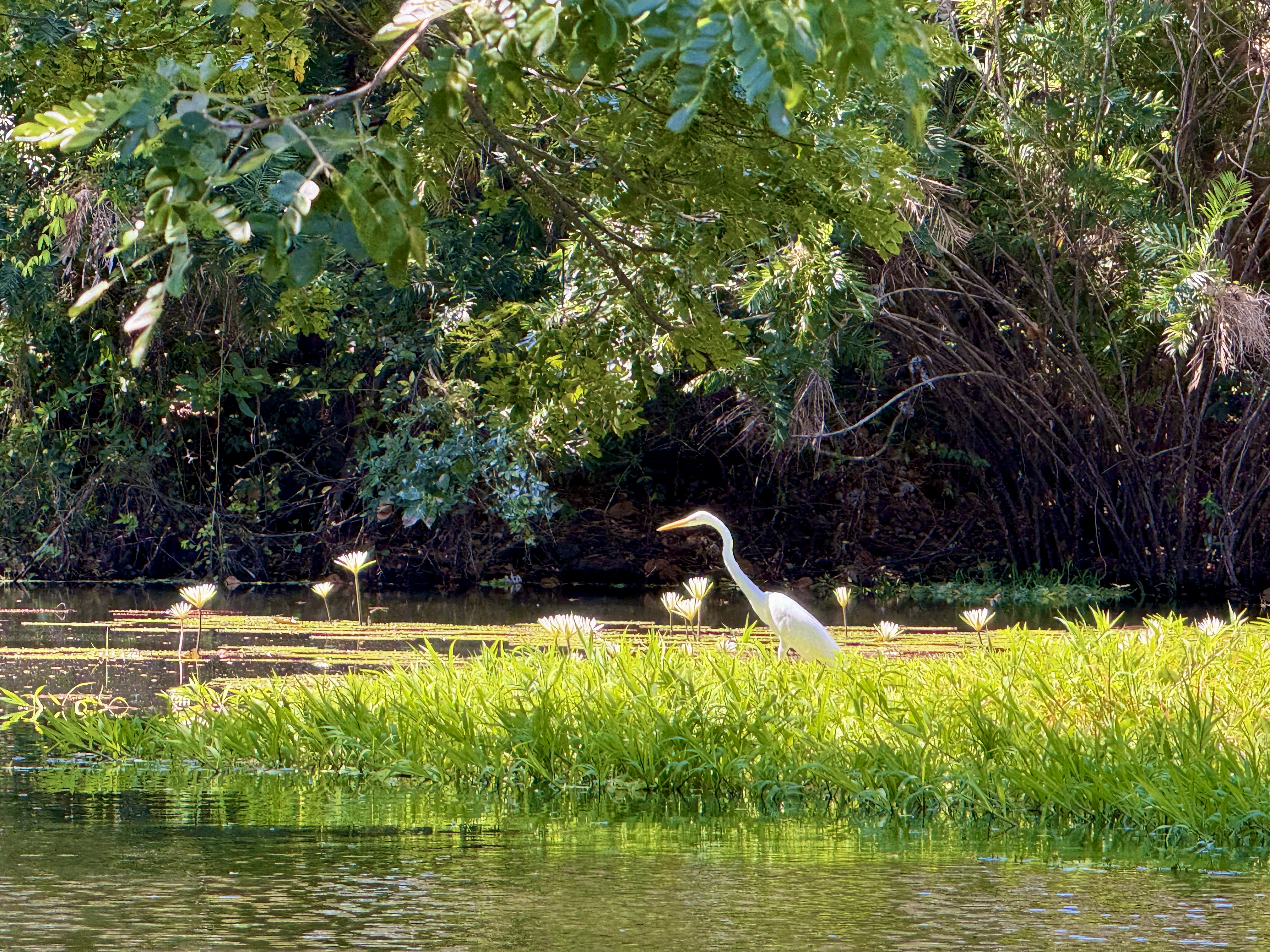
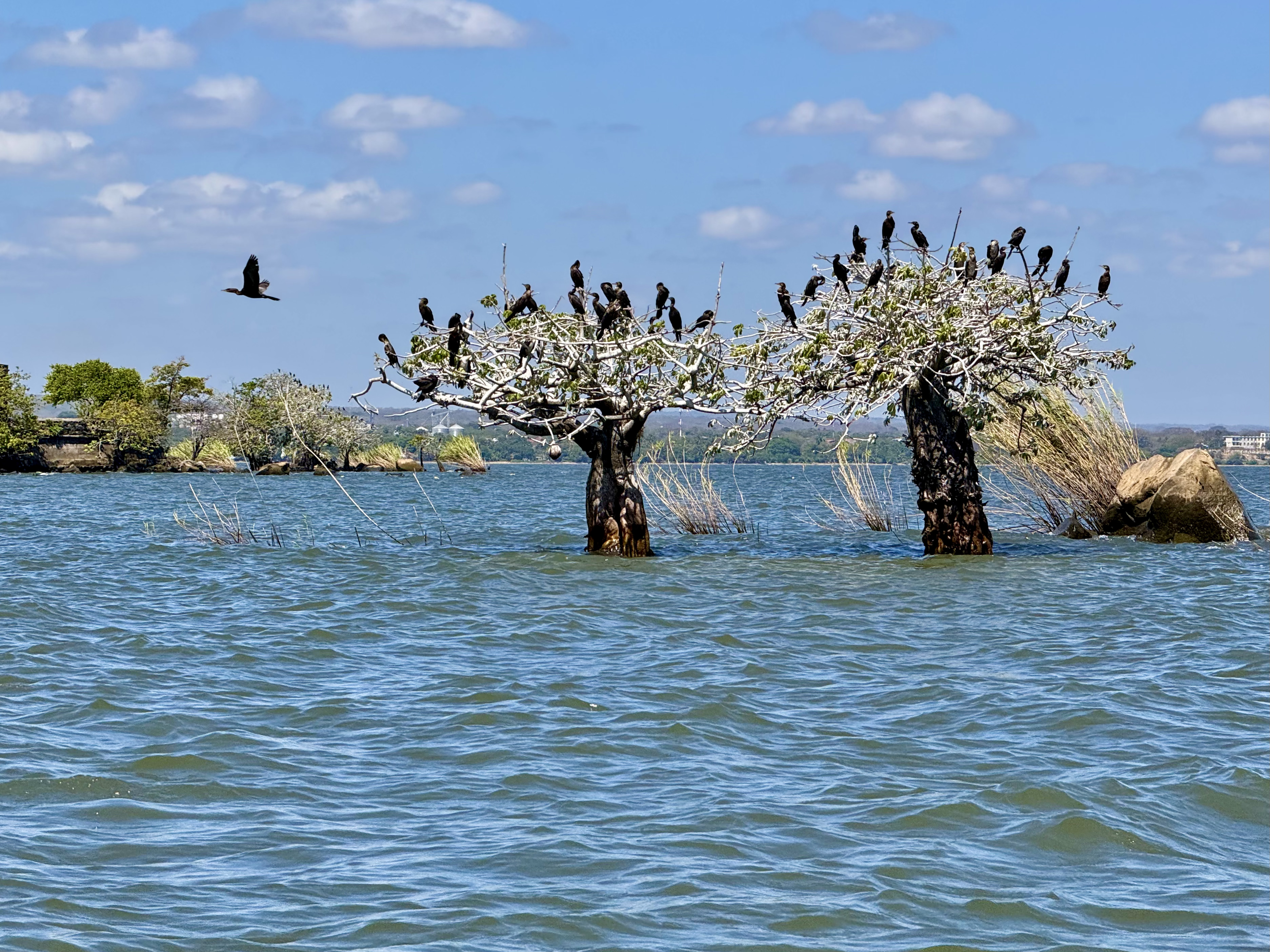
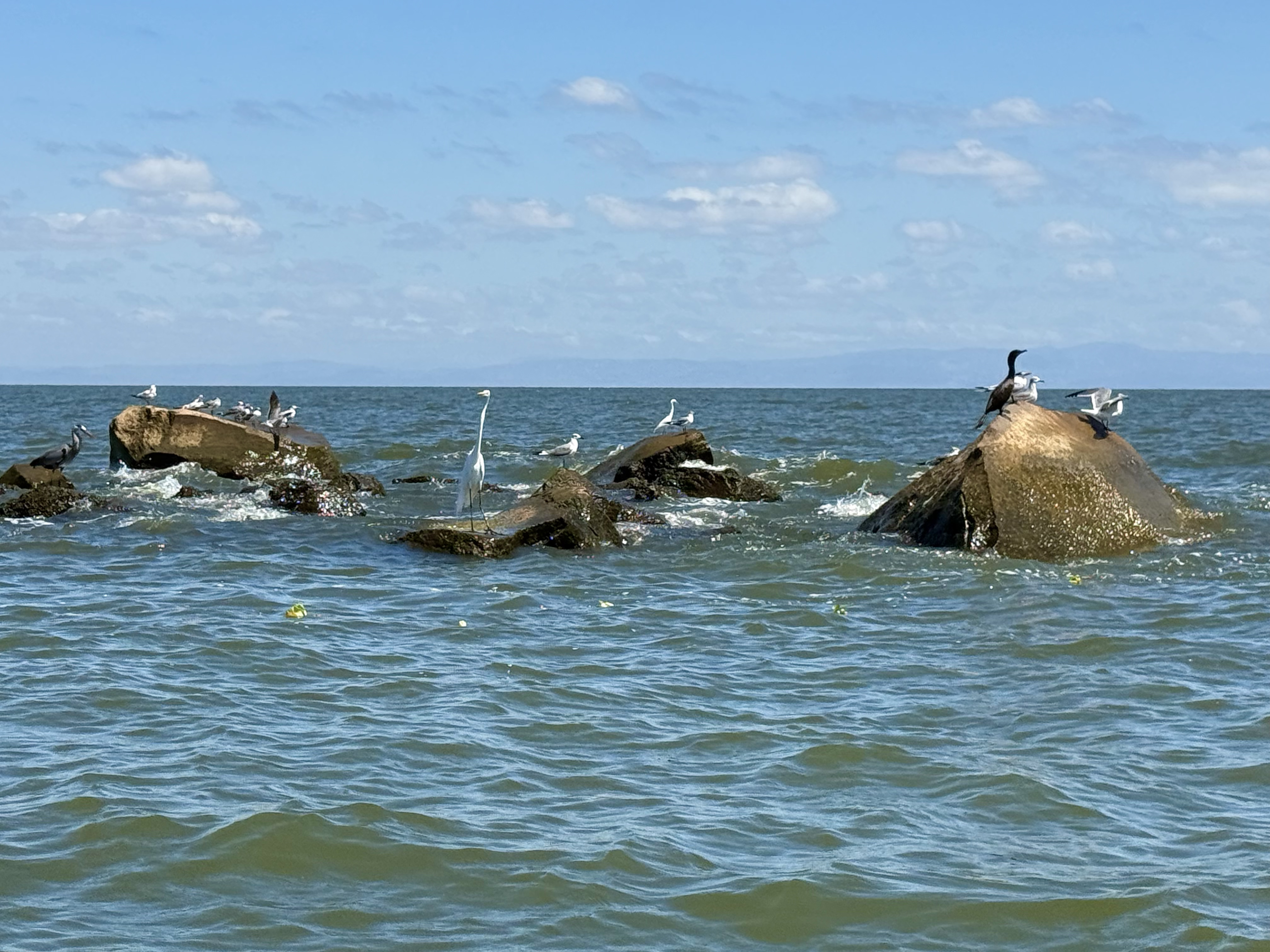
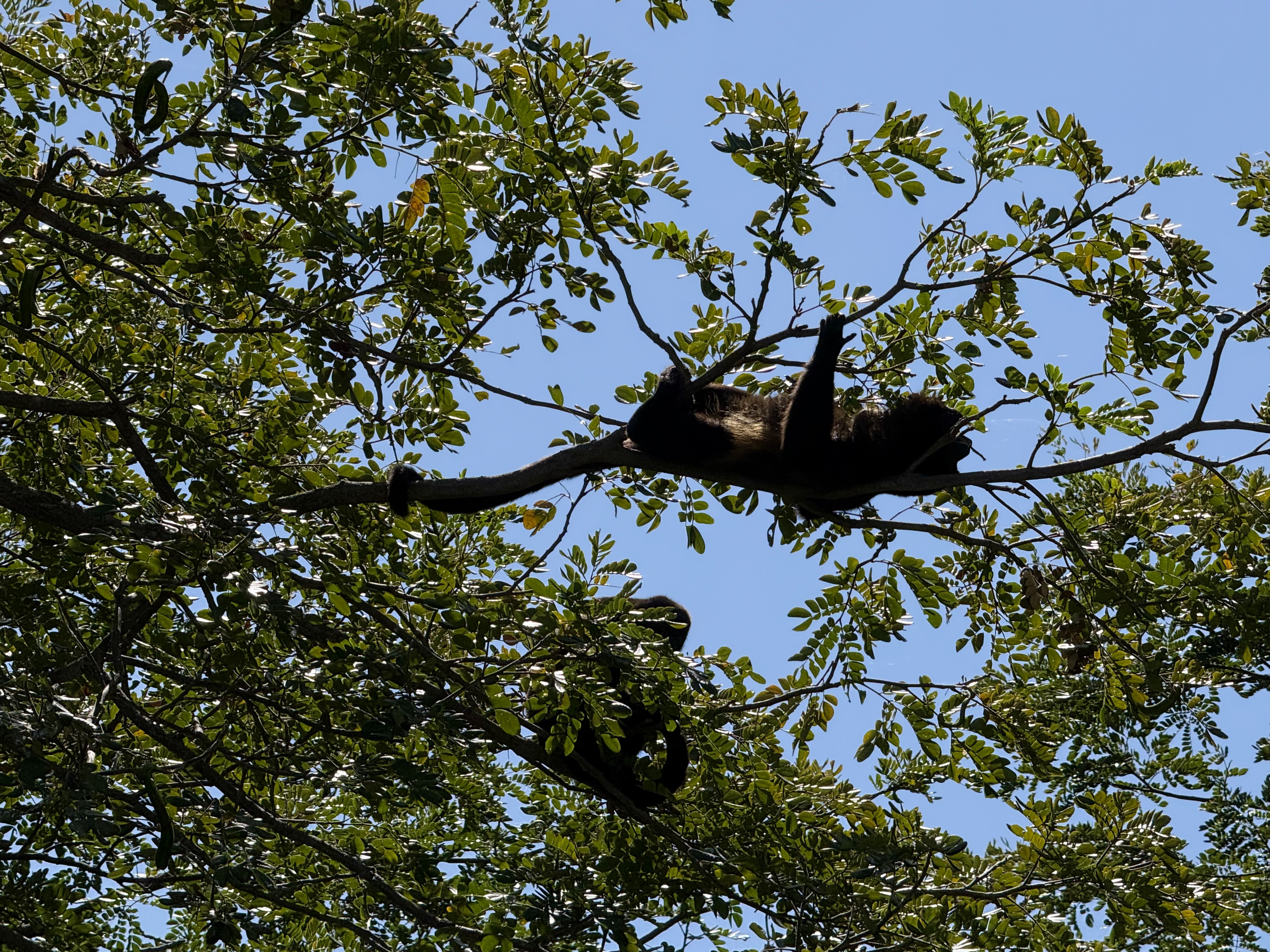
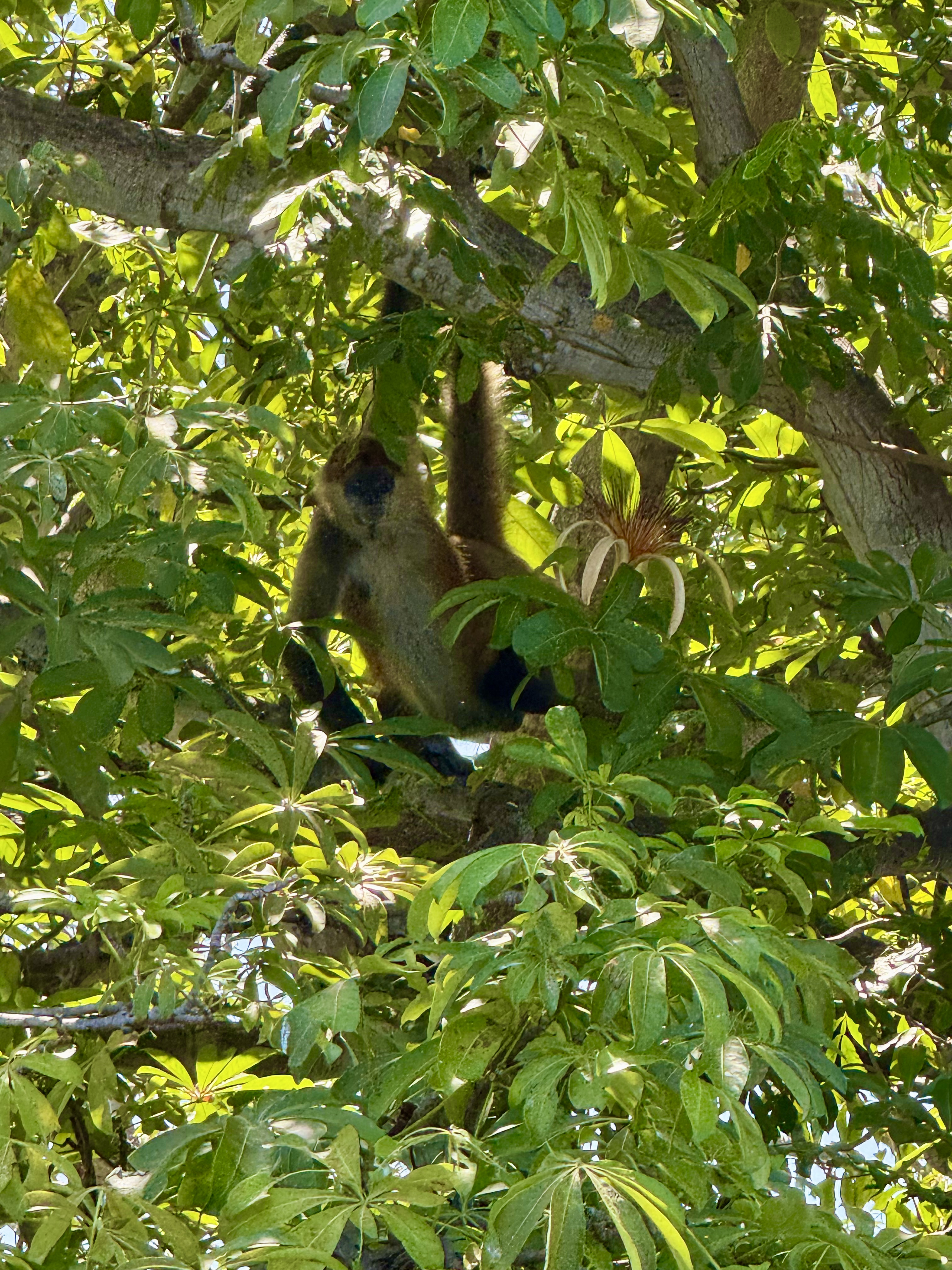
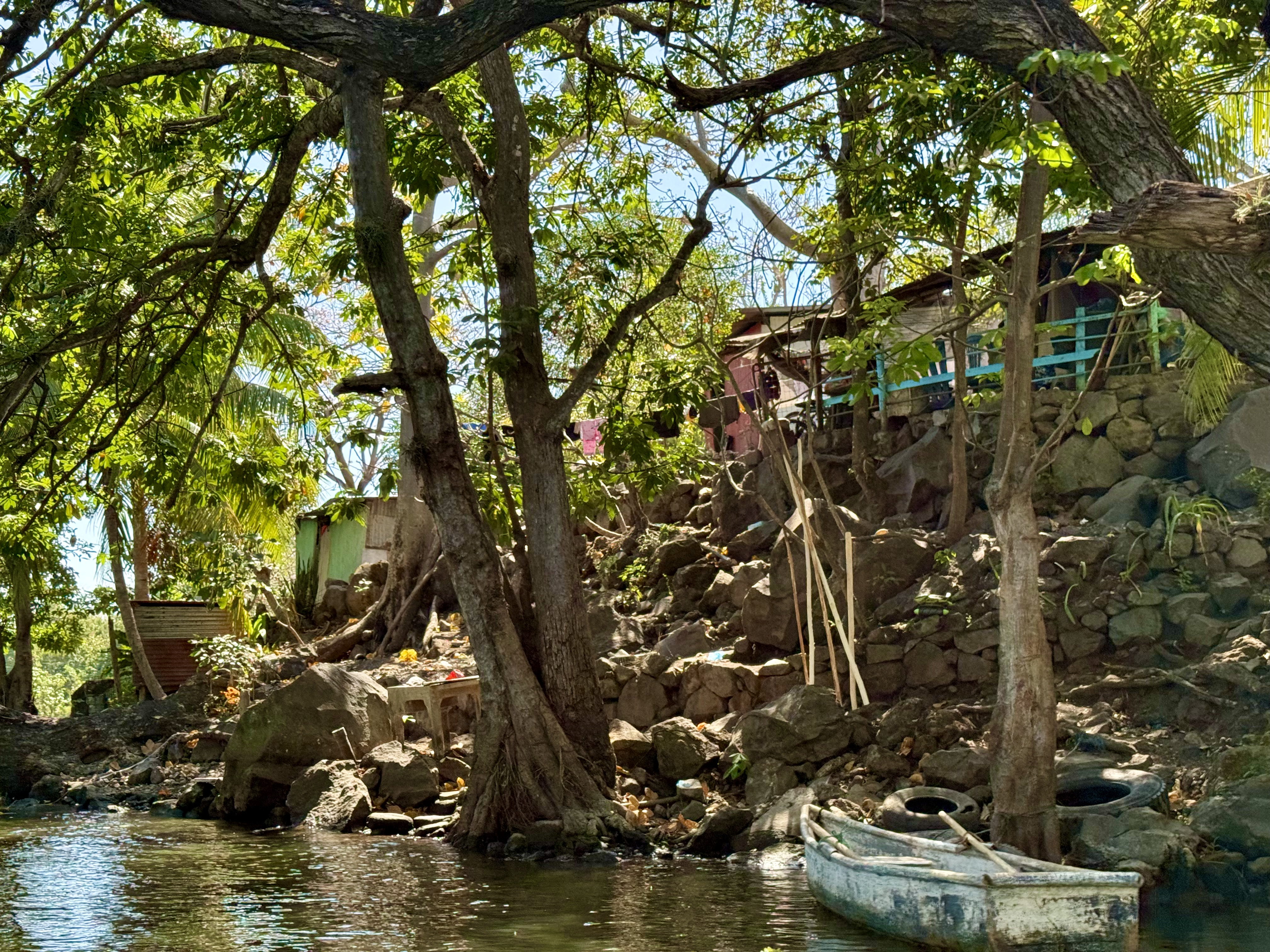
There are howler monkeys throughout the islands, but Monkey island is a bit of a misnomer. It is only about 10 feet across and is home to only two monkeys. Fishermen live on some of the islands, and some are also for sale. A Texan is building a huge palace on one of them. The difference between the palace and other wealthy villas and the fishermen’s abodes is a symbol for the social structure in the country. None the less, the surrounding nature makes everyone equal. There is also the remains of a Fort that was built in 1784 to protect against pirates that one can visit while on the tour.
On our last night in Granada, we went to a restaurant in Casa de León, which was a restored colonial building near the Cathedral. They had a beautiful courtyard and an upstairs museum. The first we thoroughly enjoyed, the second was unfortunately closed as they prepared for a new exhibit.
The historic center of Granada and surrounding nature offer much to the visitor, glimpses into its past, as well as views into modern life. I was very glad to have had the opportunity to visit.
 omegoodyssey