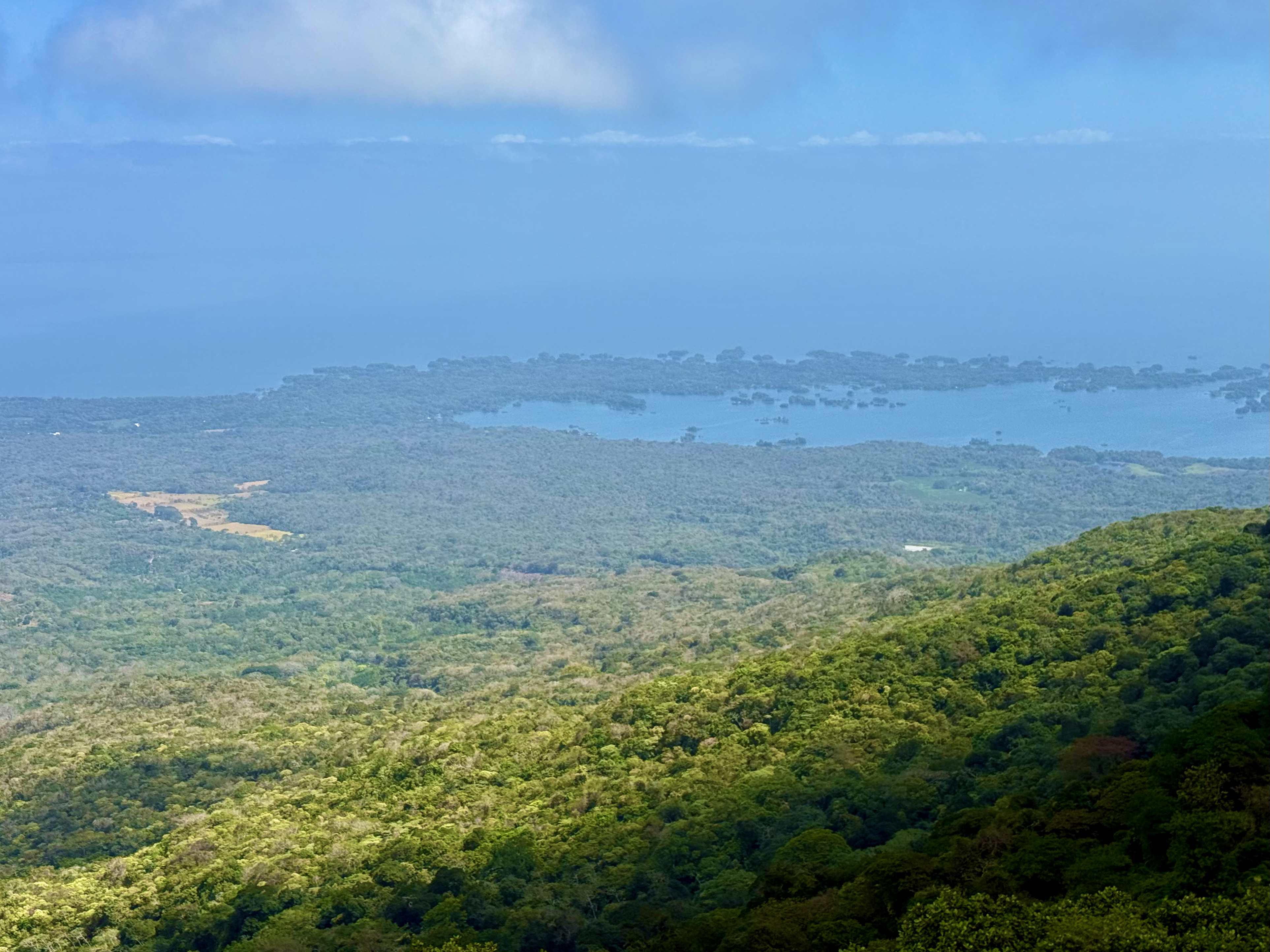
Using Granada as a base, my friends, Paul and Rebecca, and I took a number of excursions to nearby volcanos and lagoons, including Masaya and Mombacho Volcanoes, Ometepe Island and Laguna de Apoyo.
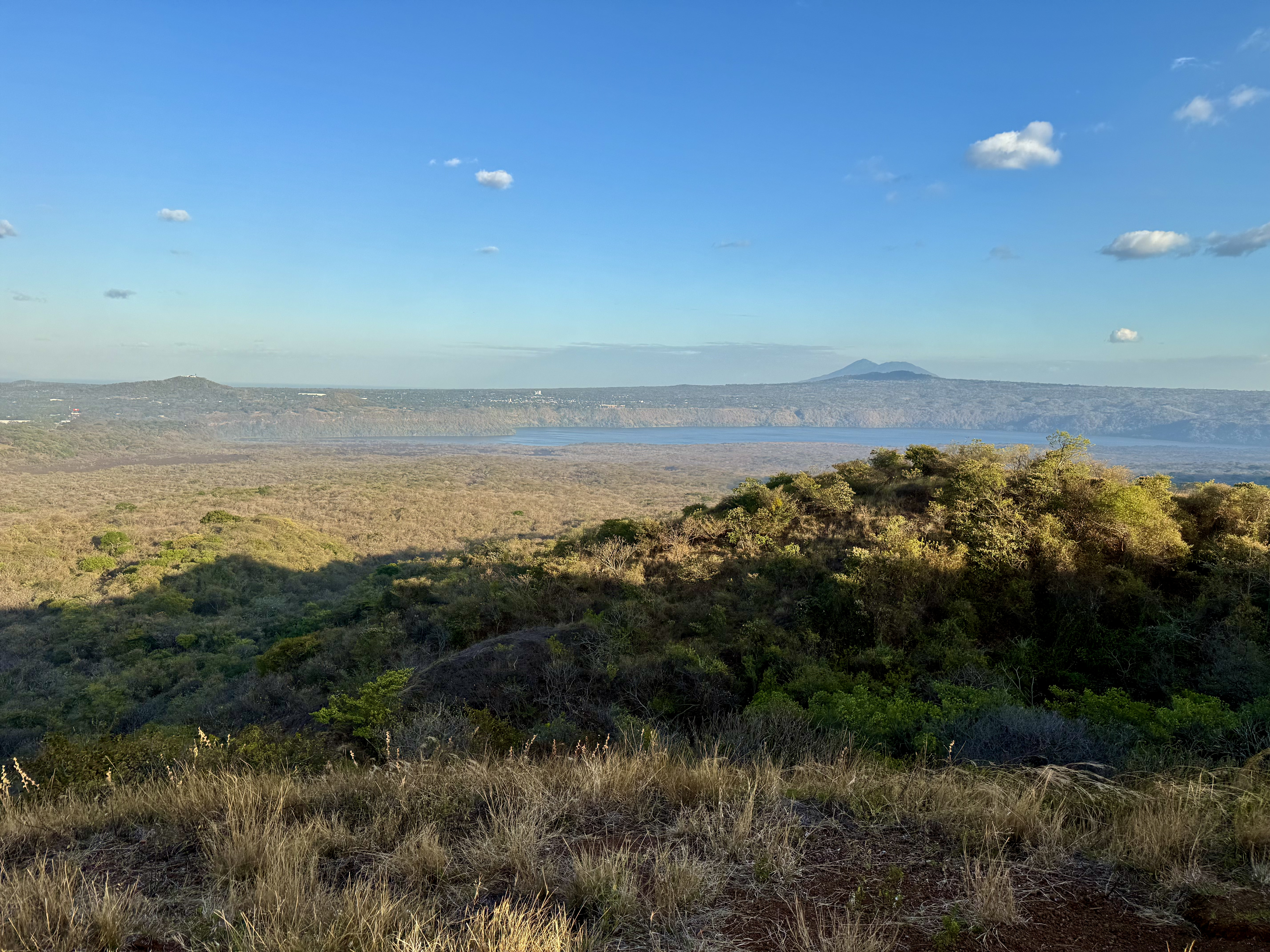
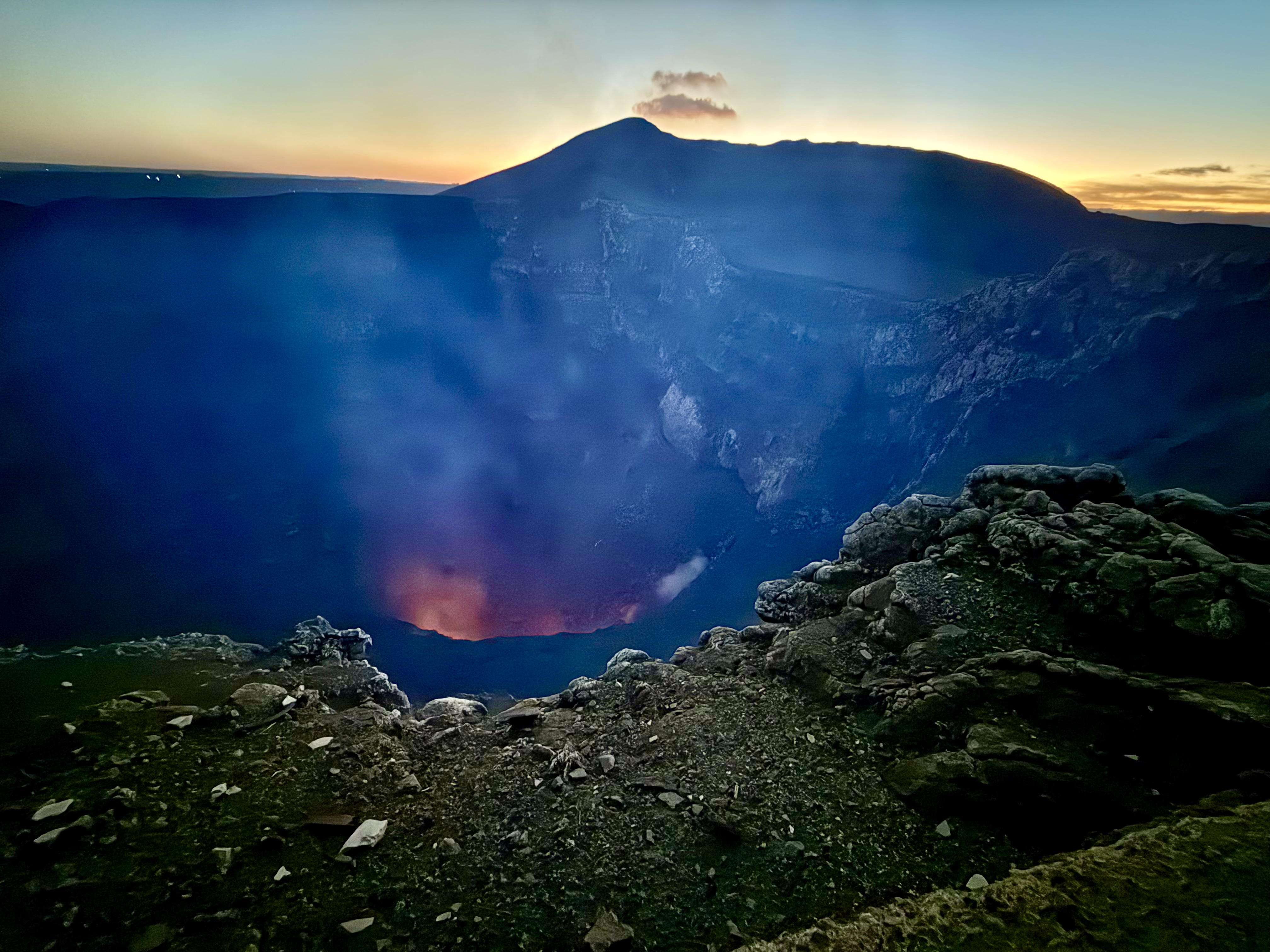
Our first stop was to the Masaya National Park, which is the largest in the country and includes two volcanoes and five craters. We only saw a small section of the Park, starting with an overlook on the way to Masaya Volcano. This volcano is not very tall, only 635 m, but it is nonetheless impressive with steam holes emitting fumes along the trail. At the overlook we could see Laguna de Apoyo, which is also crater lake, and the entire surrounding region. We stayed there until the sun set over the mountains, then at dusk drove all the way up to the viewpoint for the Masaya Volcano crater. Steam rose from the crater’s basin, with a few flames, but the crater lake is no longer visible after a landslide a couple of years ago. We didn’t stay at the crater’s edge too long, because the fumes were unsettling. The view, though, was spectacular.
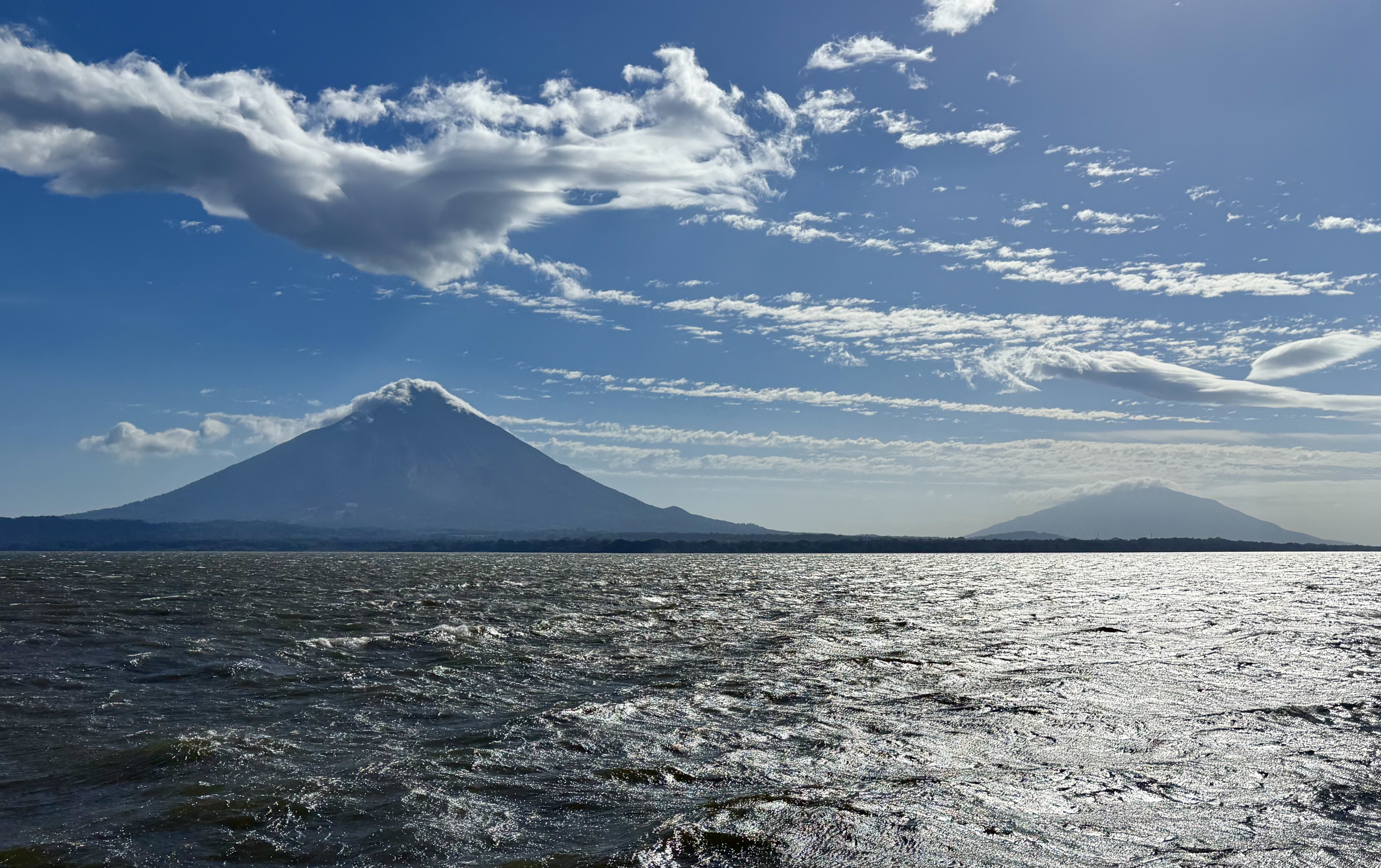
The next day, we took a long one-day excursion to Ometepe Island. It might have been better to have stayed overnight on the island, but that wasn’t possible this trip. The drive from Granada to Rivas, the starting point for the ferry to the island, takes about an hour and a half. The ferry takes another hour before it lands at Moyogalpa. The boat ride was enjoyable as we could see both volcanoes, Concepción at 1610m and Maderas at 1400m, throughout the journey.
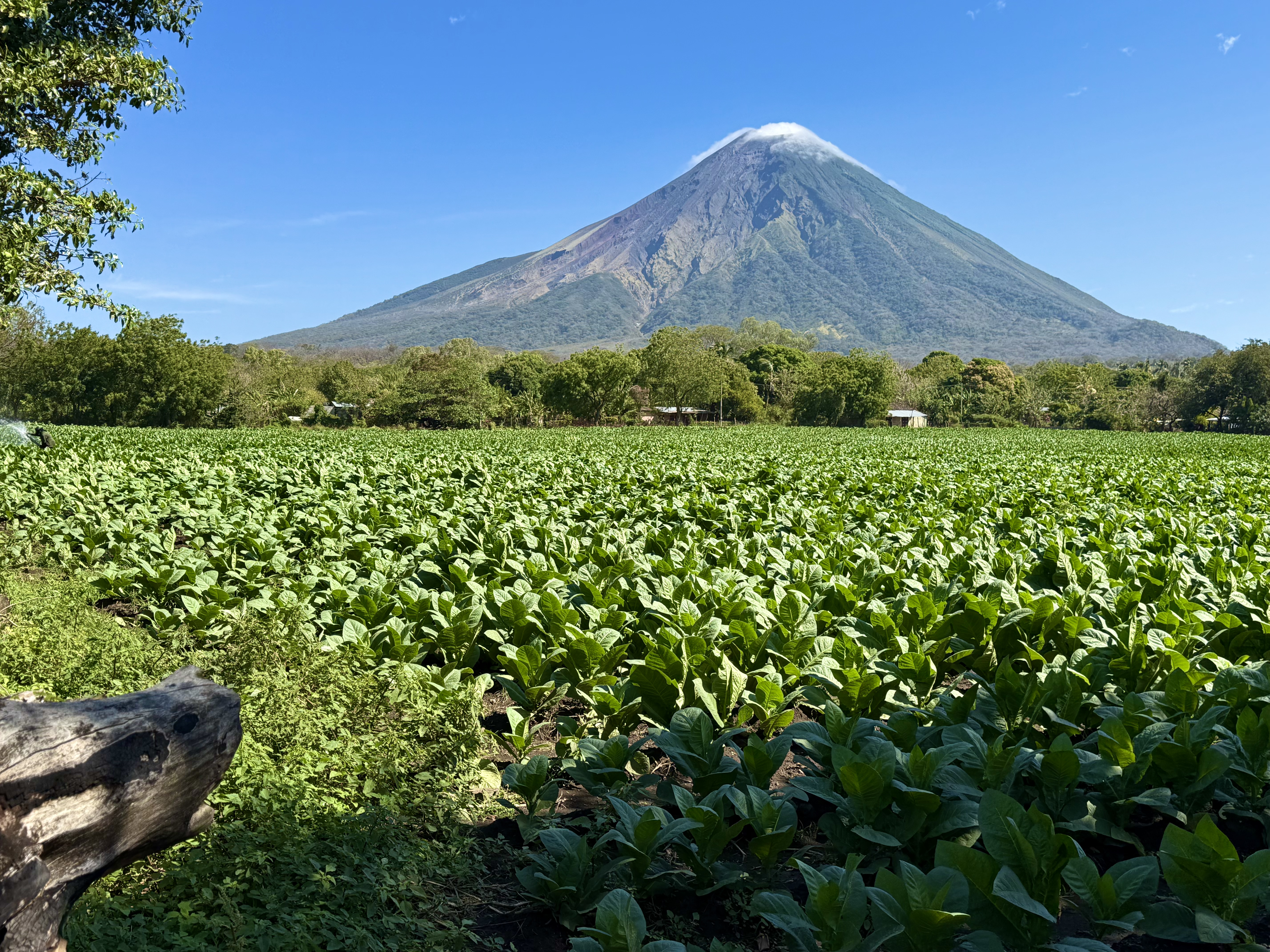
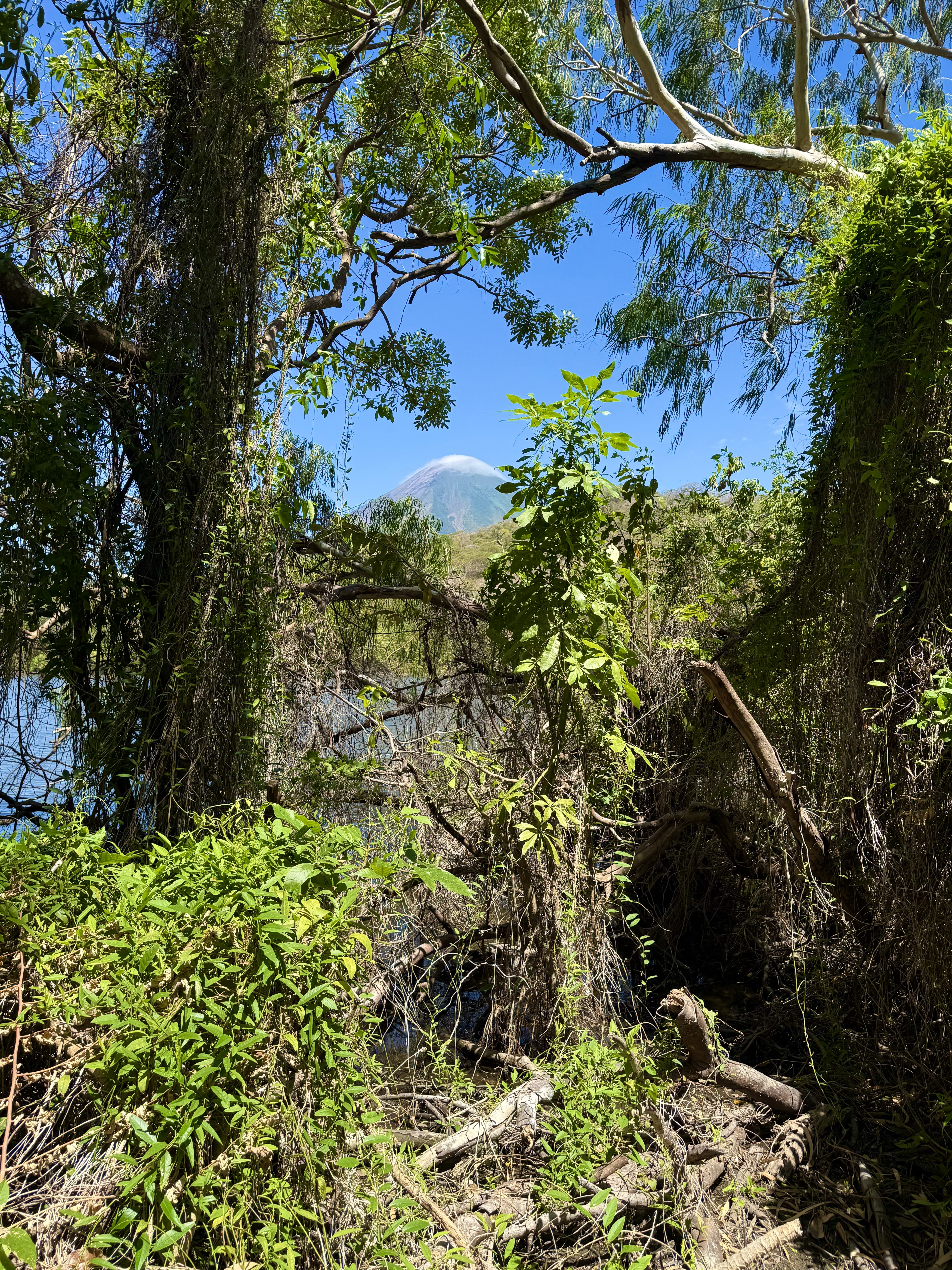
Our driver and guide were waiting for us when we got off the ferry. I was glad we had arranged for the tour as the guide took us to places, we would otherwise have missed and explained the flora and fauna that we would otherwise have ignored through ignorance. Our first stop was at a tobacco field with the tall beautifully formed active Concepción Volcano in the background. A fieldworker was hand watering the field with a large hose.
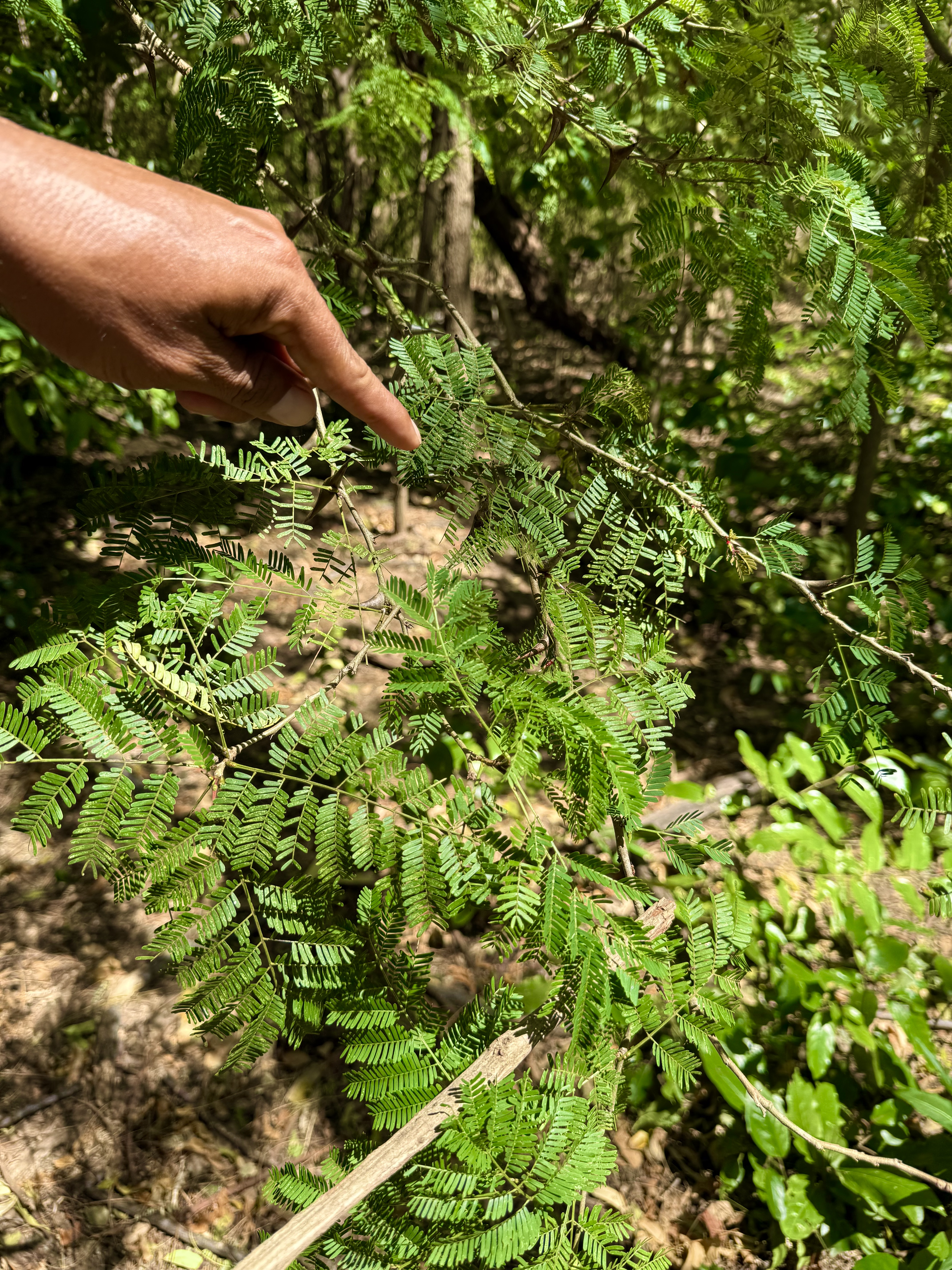
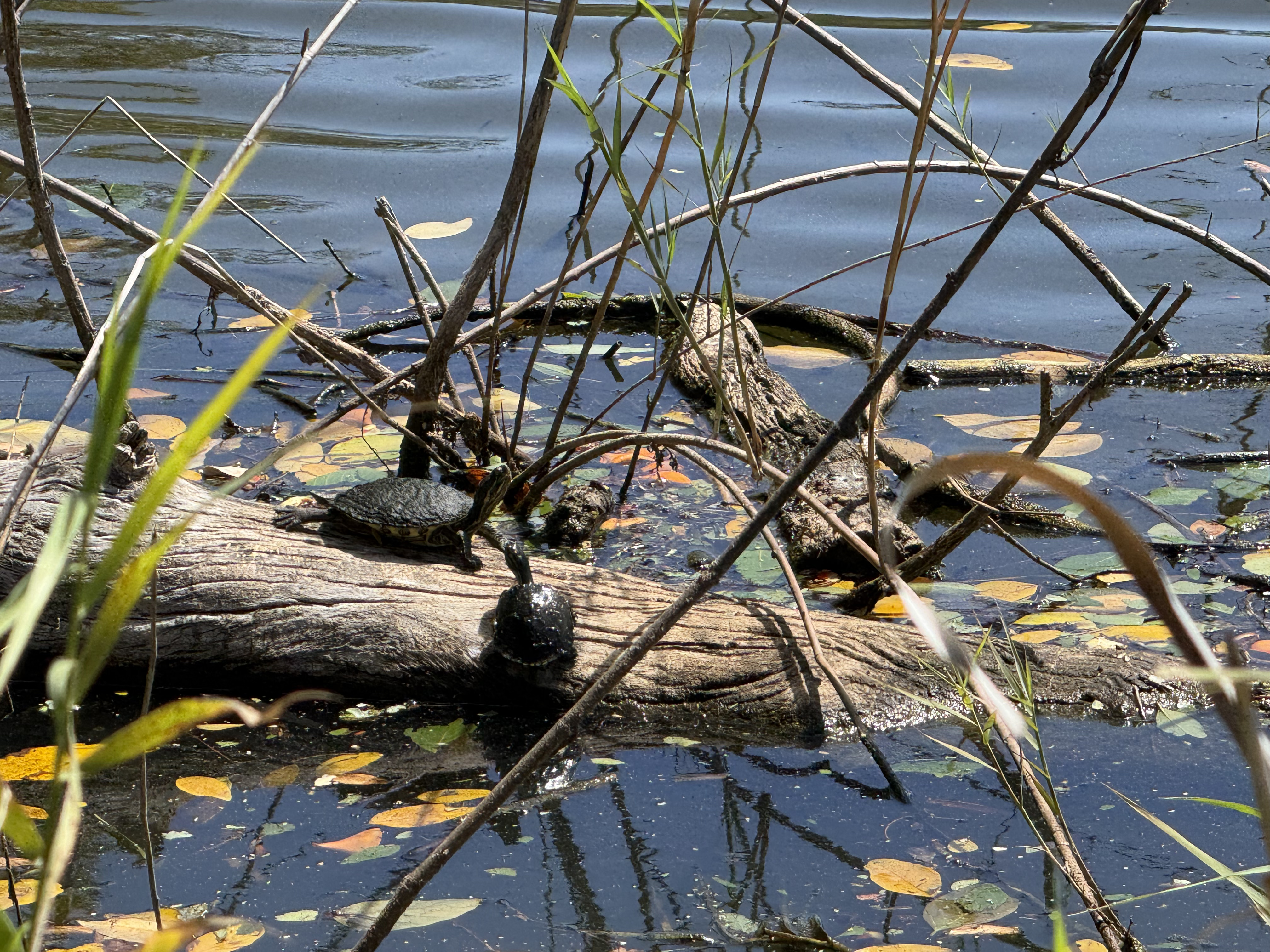
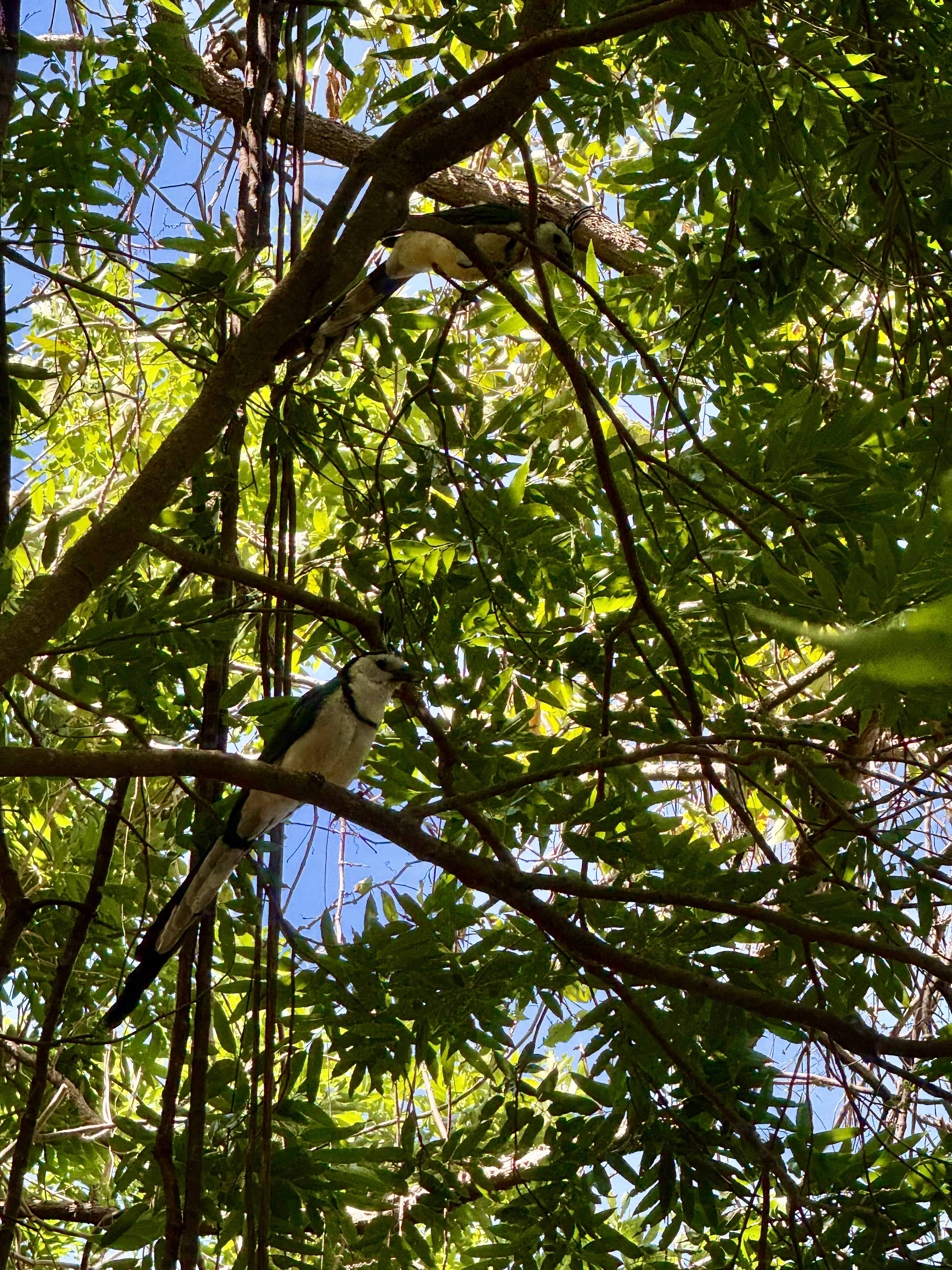
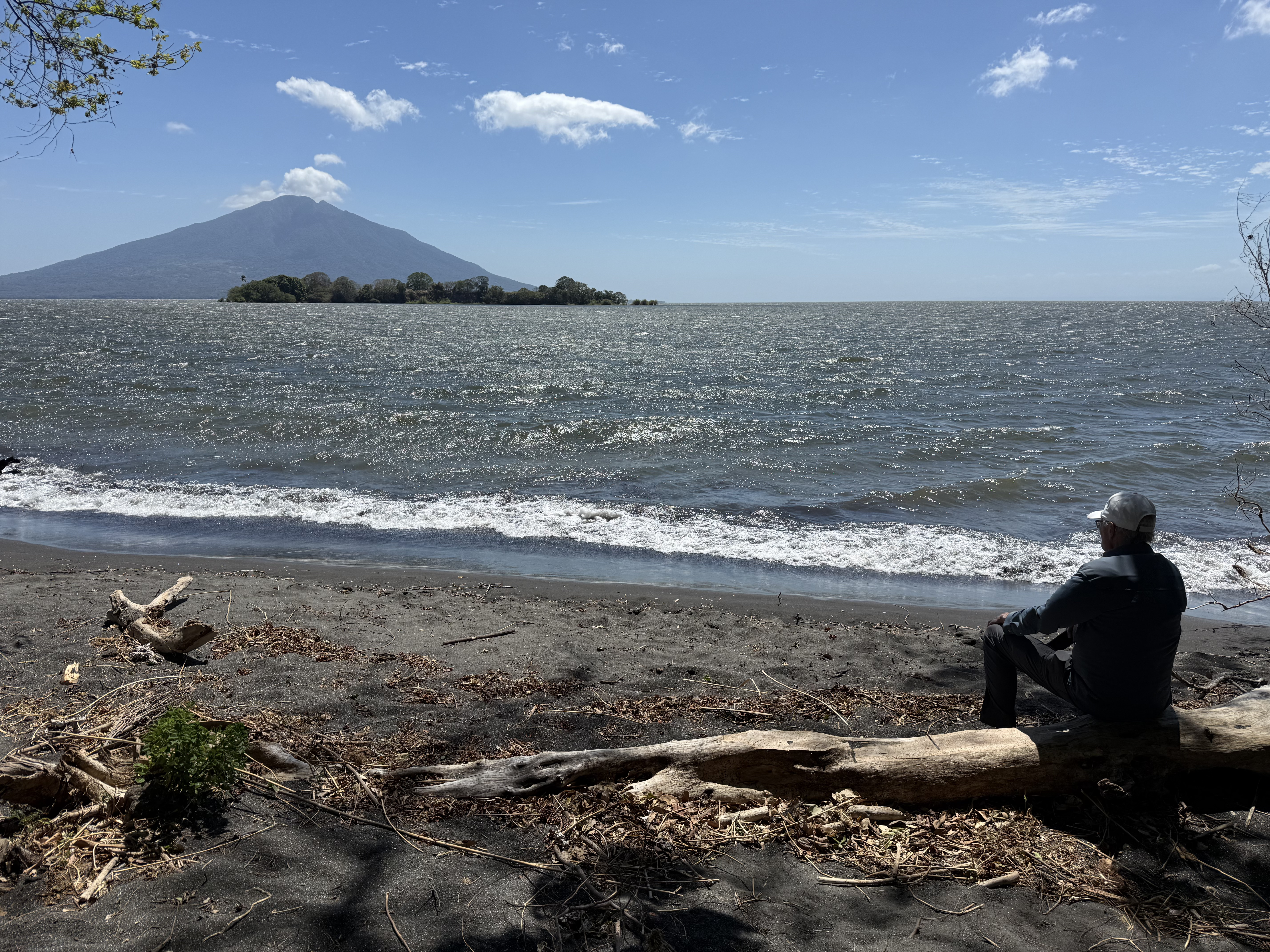
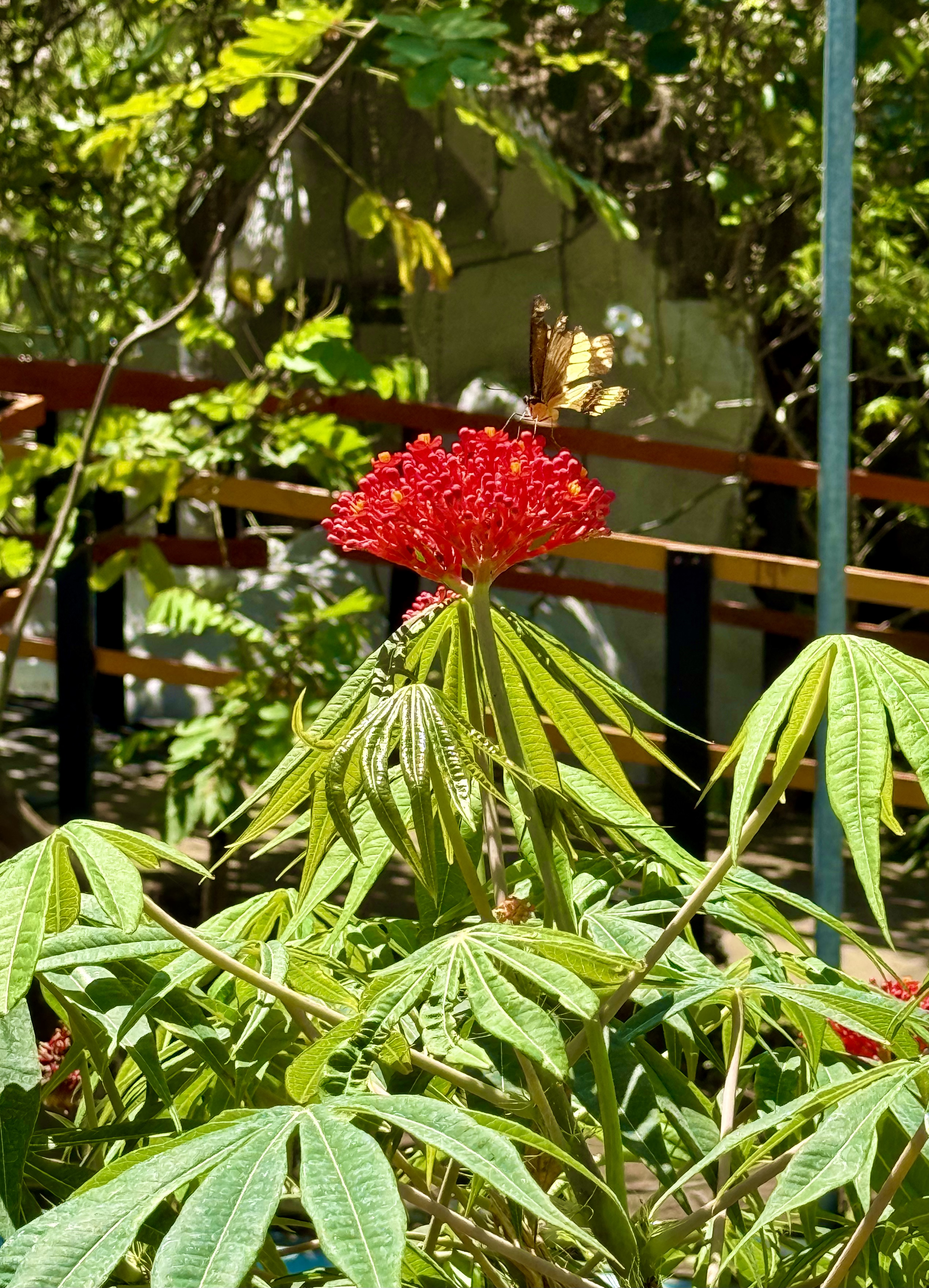
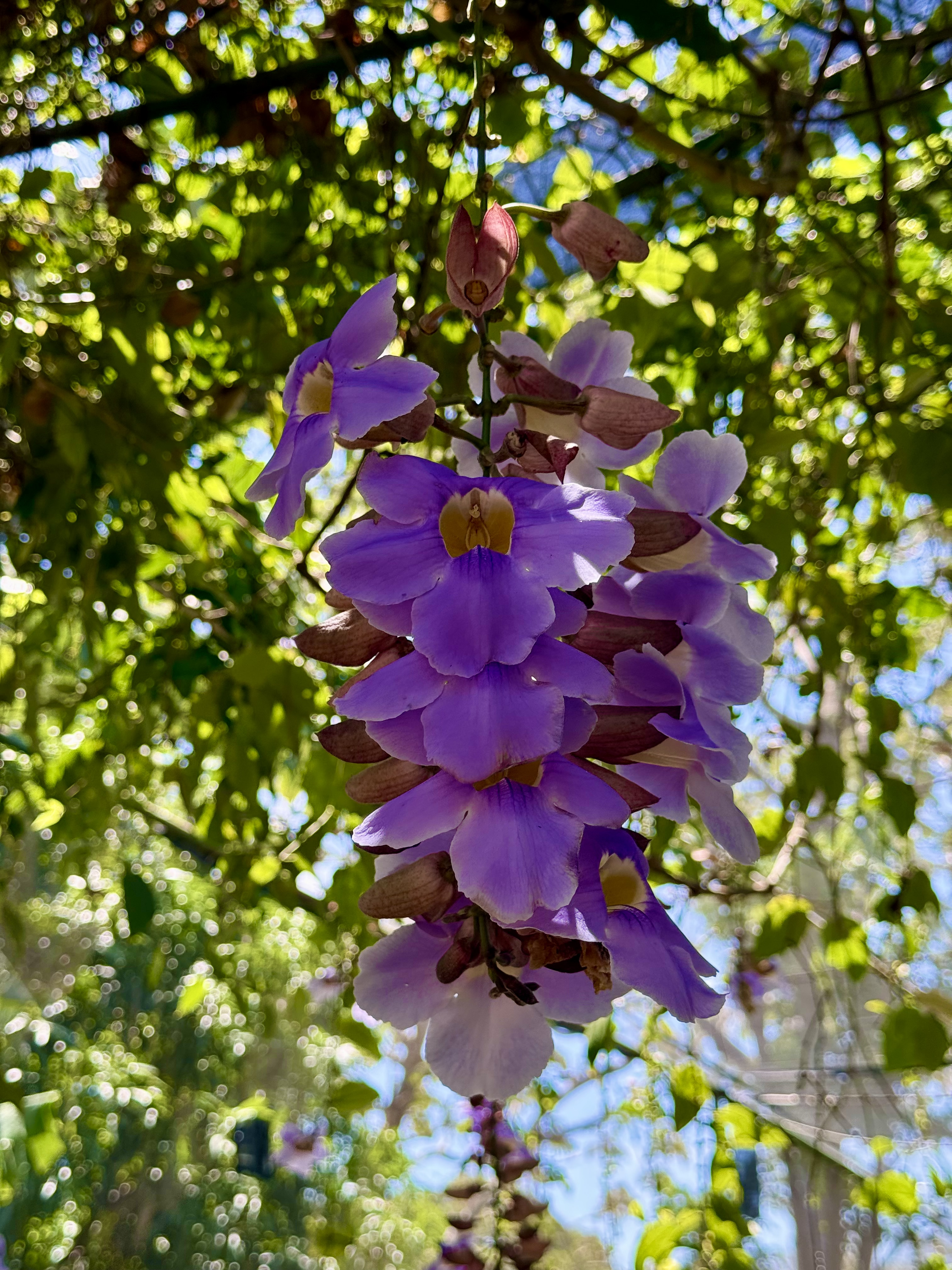
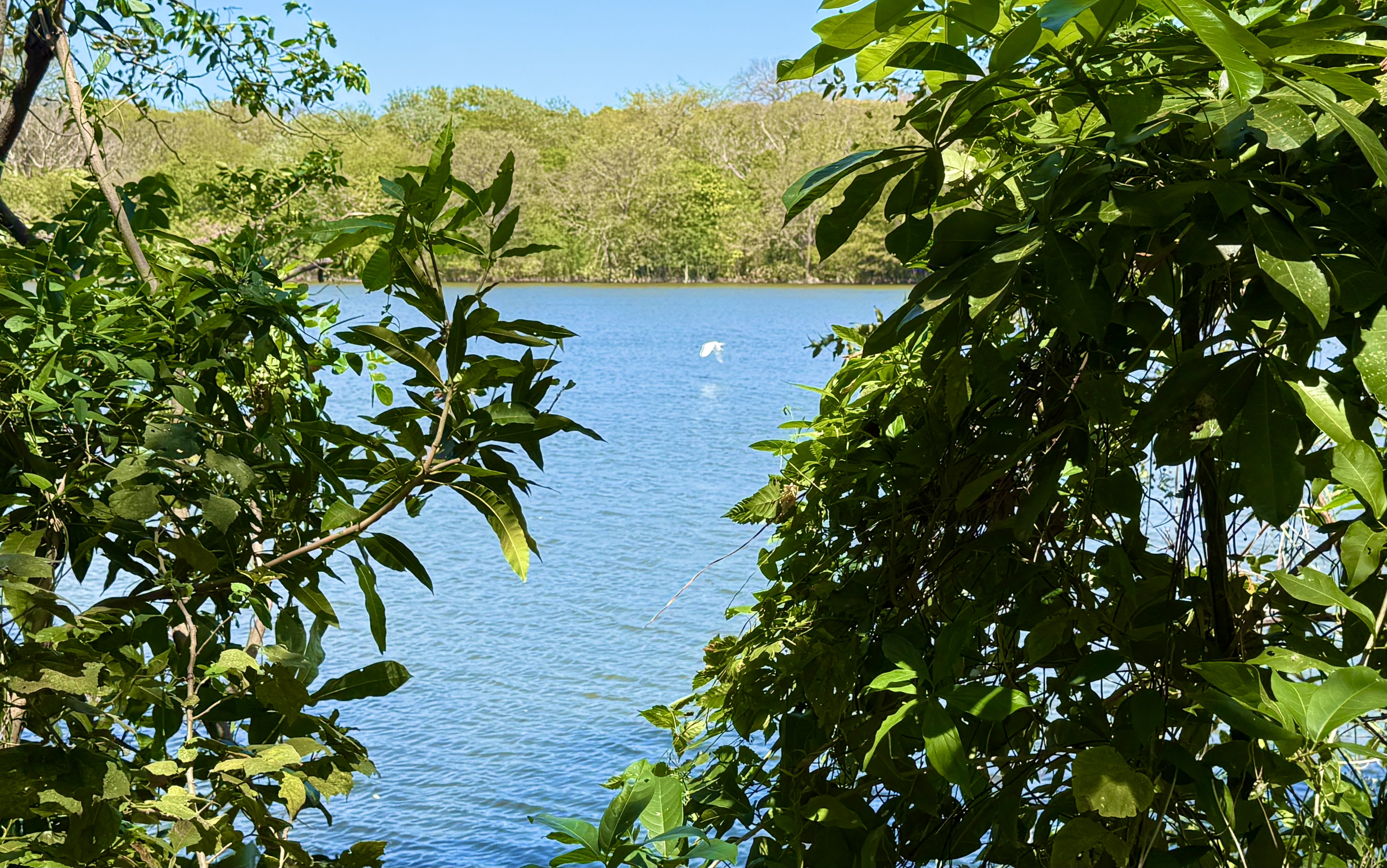
From there, we headed to Charco Verde, a fabulous site filled with wildlife. Our guide warned us about rubbing next to what seemed to be a normal mimosa bush – the kind that the leaves fold when touched -, but this one had somewhat hidden large red thorns that house very nasty red ants. Touching this bush would cause serious pain. There are many names for this plant across Central America, among them is “El cornigera”/ Acacia allenii). I find it fascinating how nature uses one species to protect another. During the relatively short walk around the site, Herberto pointed out innumerable birds, turtles, bats, howler monkeys and lizards. At one point on the walk there was a log we could sit on to look across the lake to the inactive smaller Maderas Volcano on the other side of the island. It was a serene spot listening to the birds and water lapping at the shoreline; we almost didn’t want to leave. At the end of the walk, there is a small Butterfly pen with beautiful flowers hanging from the ceiling tarp. There were just a couple of species of butterflies while we were there, but a number of chrysalises were about to open.
From Charco Verde, we passed by what used to be the main beach, Playa Santo Domingo, but the lake has risen so much that the beach no longer exists. I had especially wanted to get to Ometepe to see the petroglyphs and was happy we went to Alberque Ecológico El Porvenir to see a few en situ. They are supposedly over 3,000 years old. Some articles I read listed them even older. I was surprised to see a couple that looked like humans hunting rather than just the geometric patterns. The largest and best stone was etched with geometric shapes.
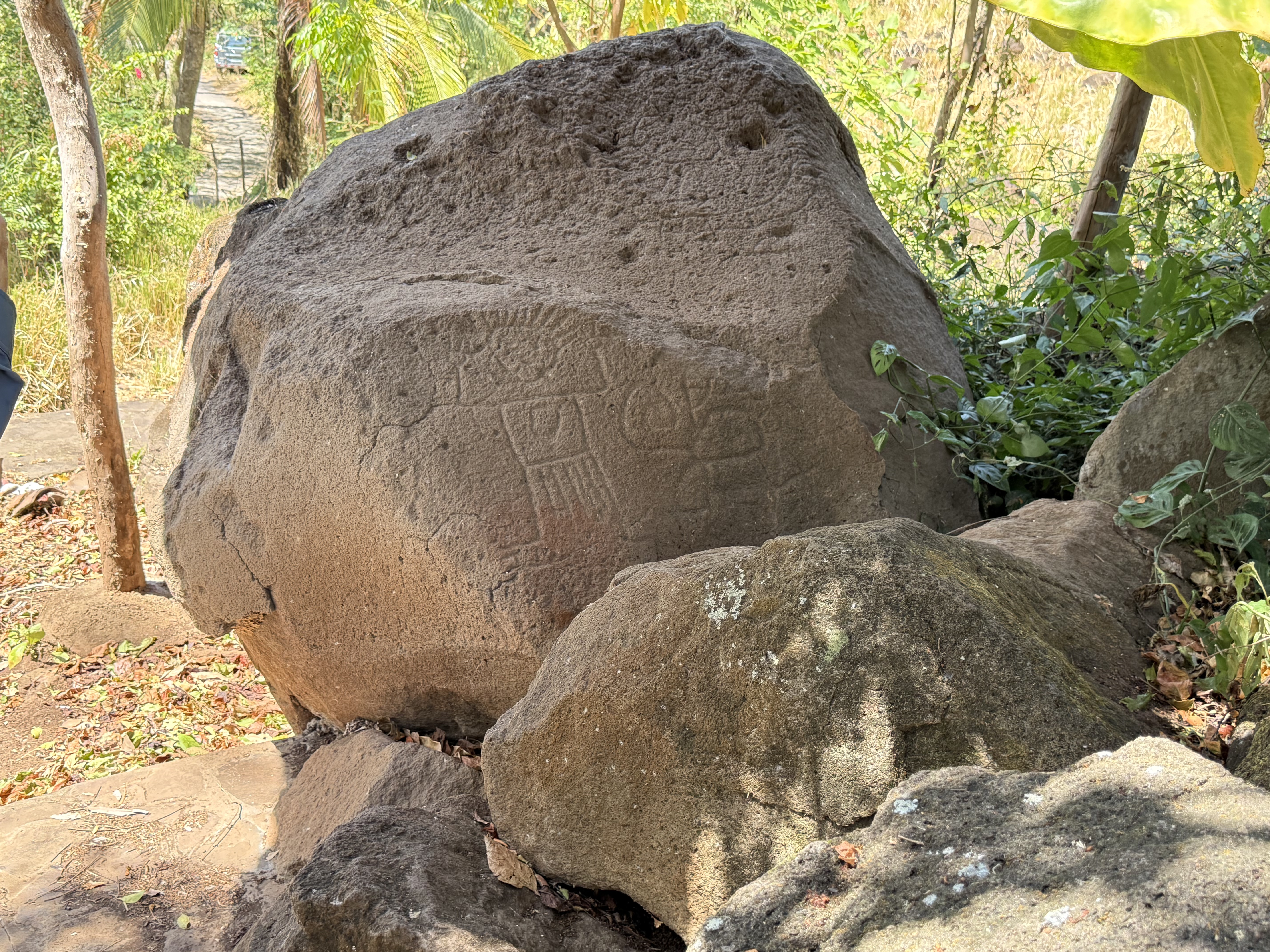
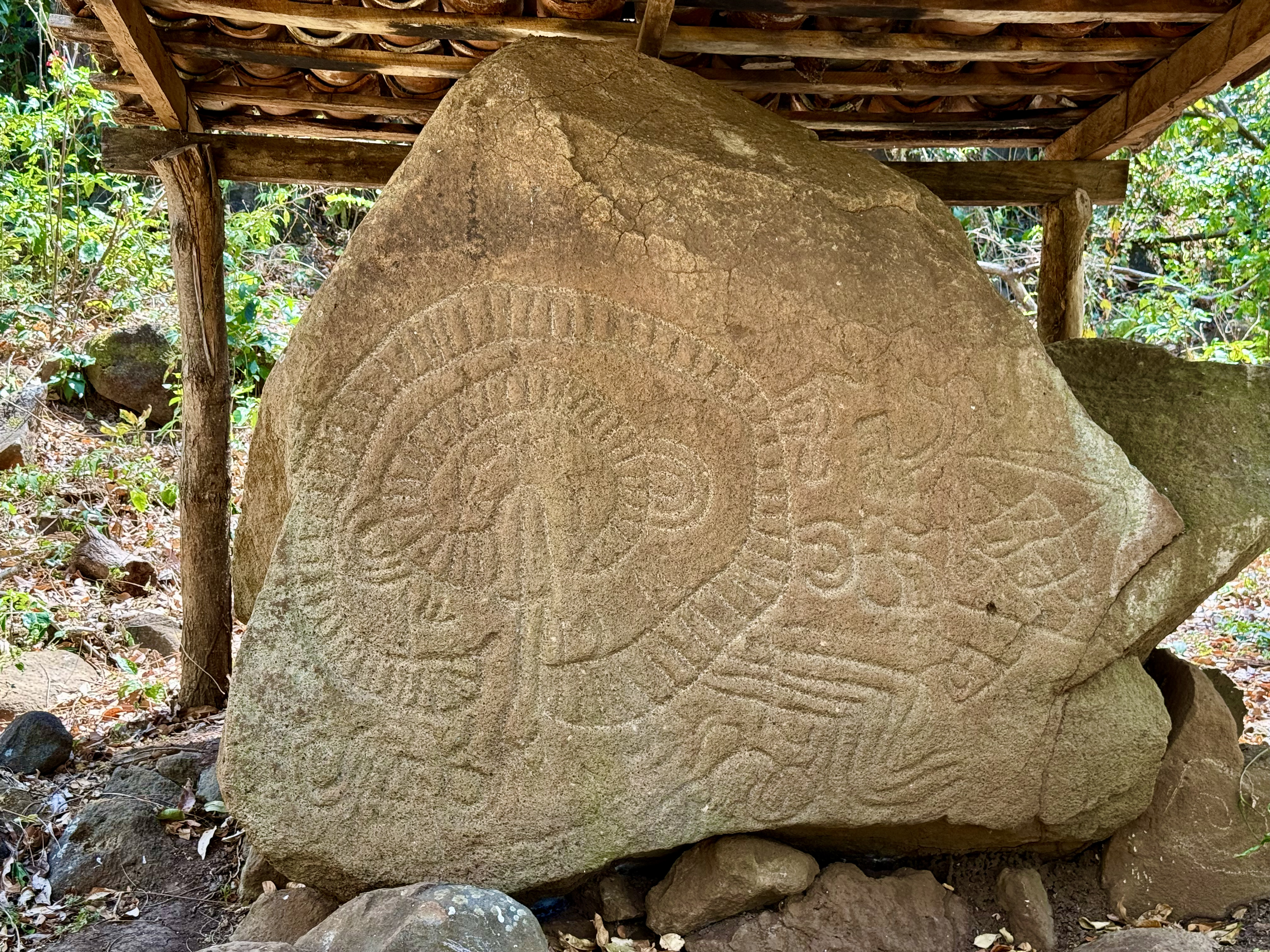
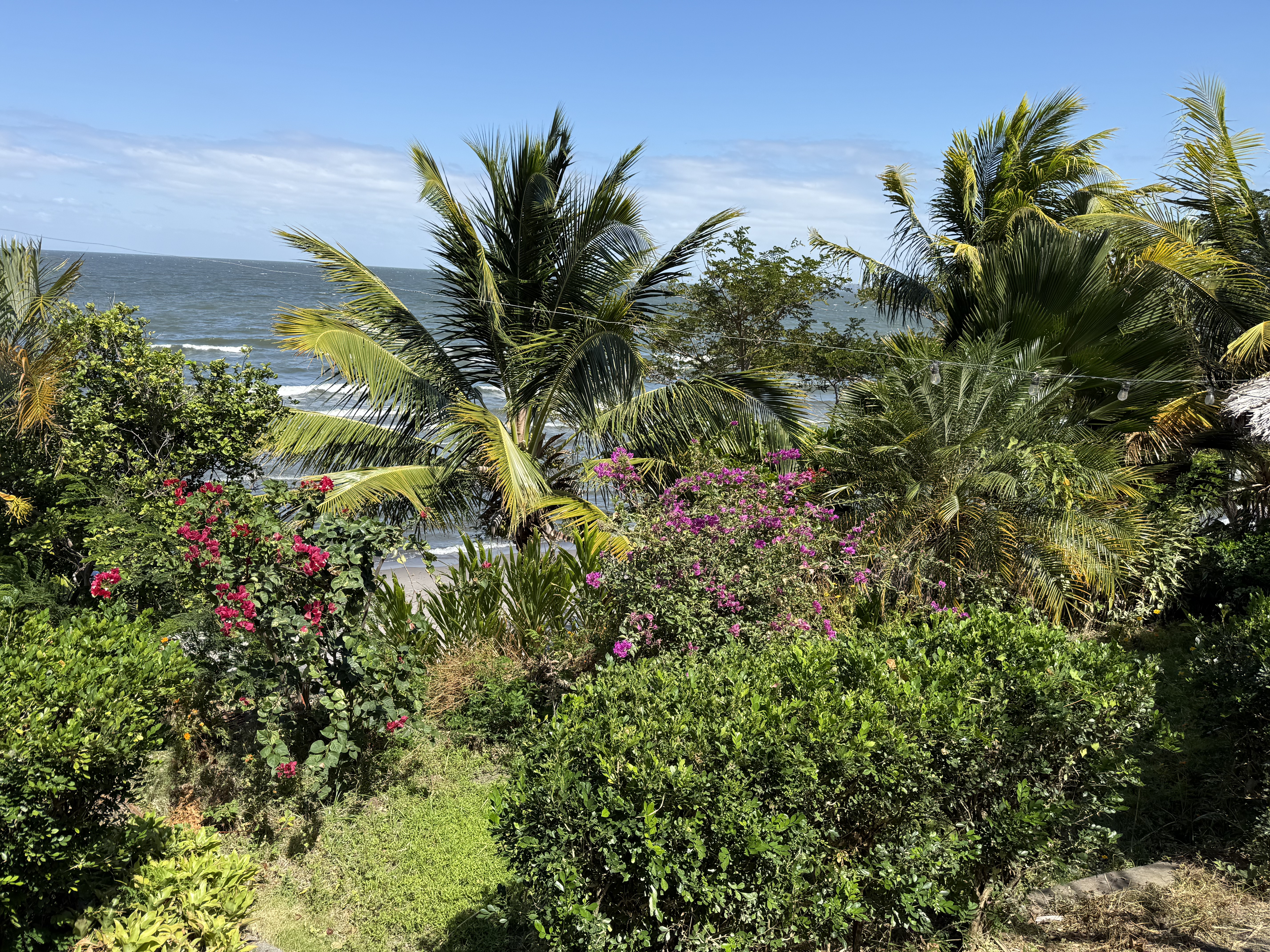
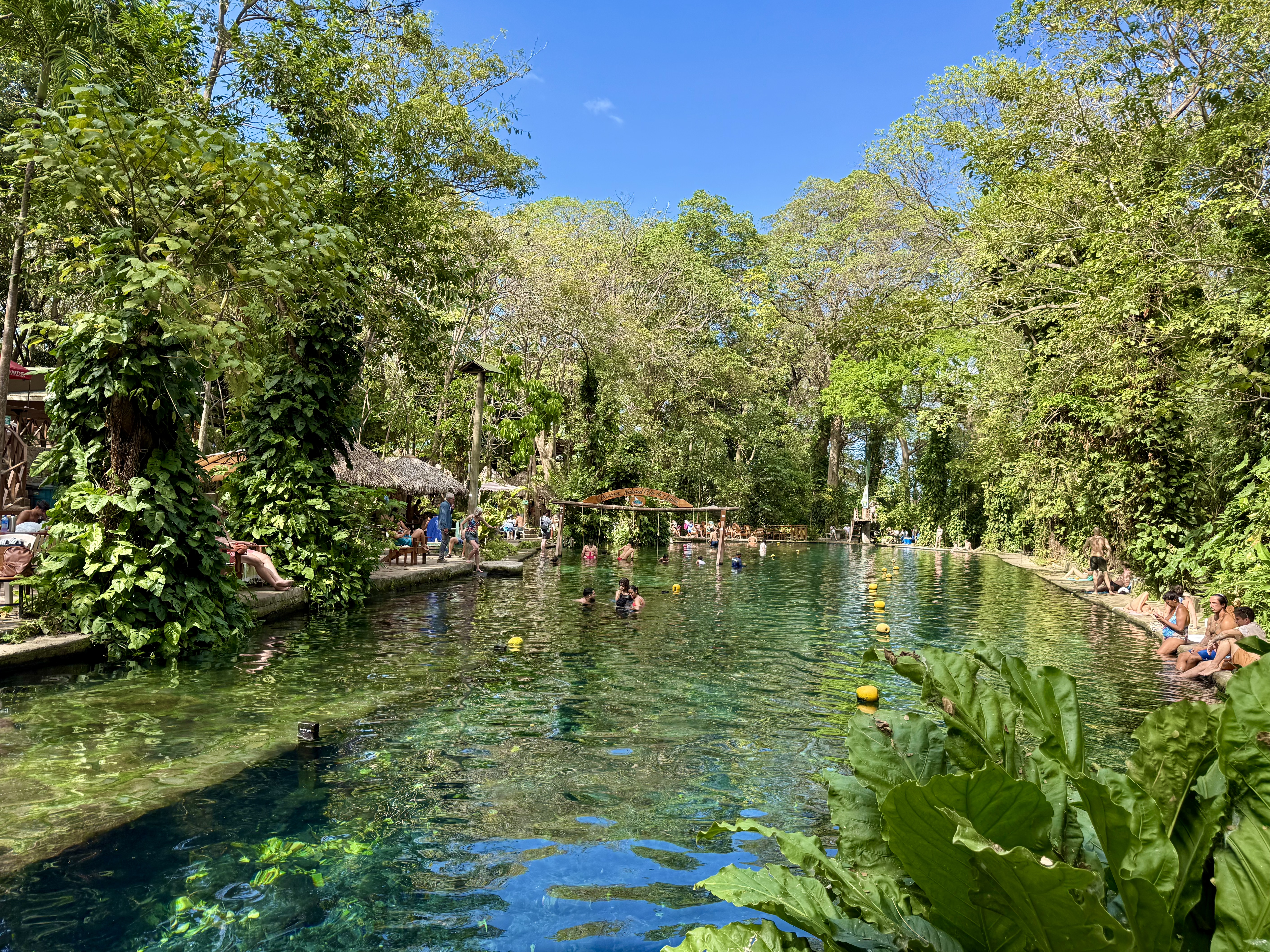
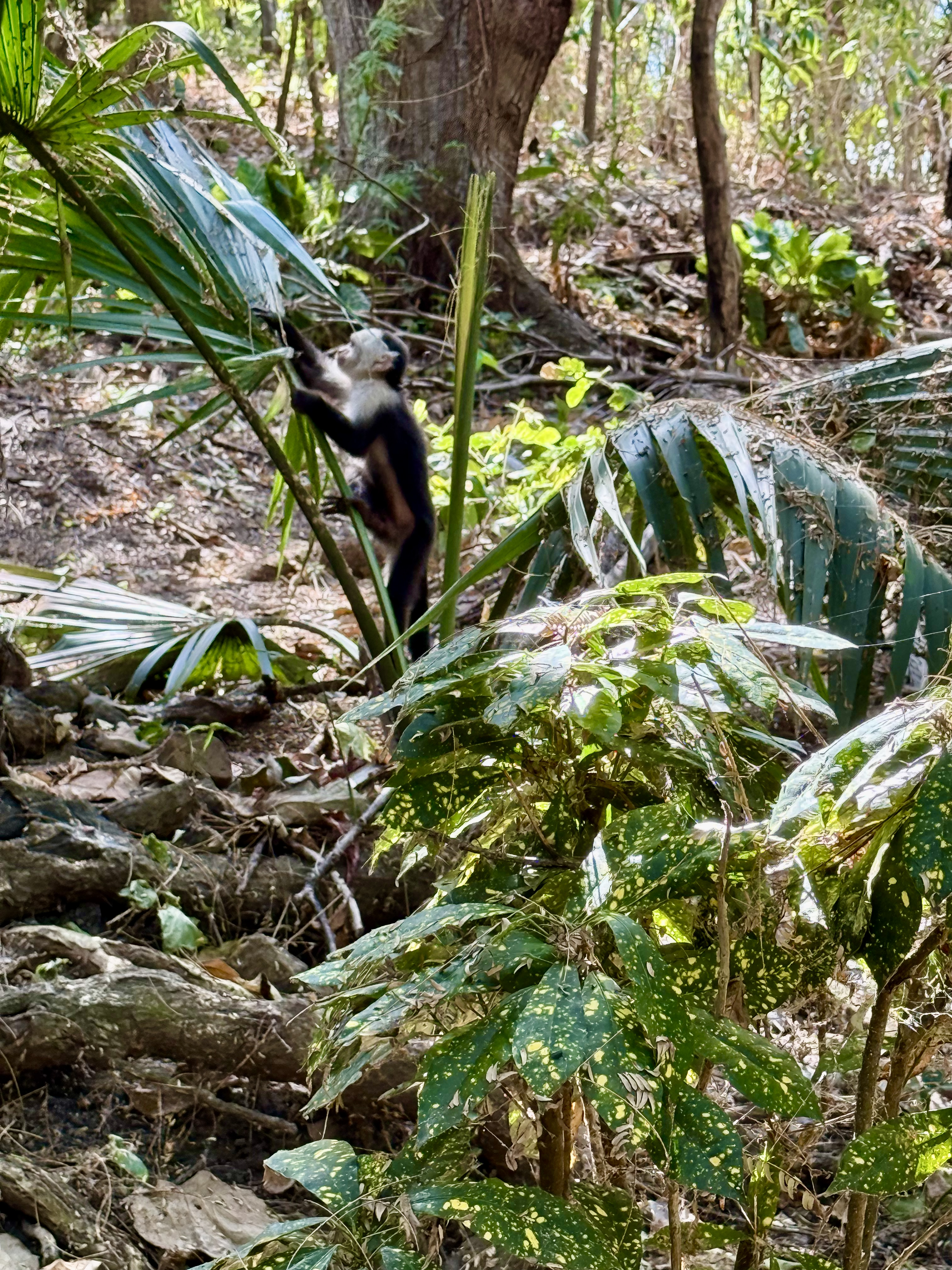
After the petroglyphs, we had lunch at a beautiful place surrounded by flowering bushes. Our final stop on the island was at Ojo de Agua a natural pool that has been made into a delightful swimming area. Camile, the resident white-faced capuchin monkey put on quite a show for us near the entrance. After an experience and fun-filled day on the island, it was time to get the last ferry, at 4pm, back to Rivas and then to Granada.
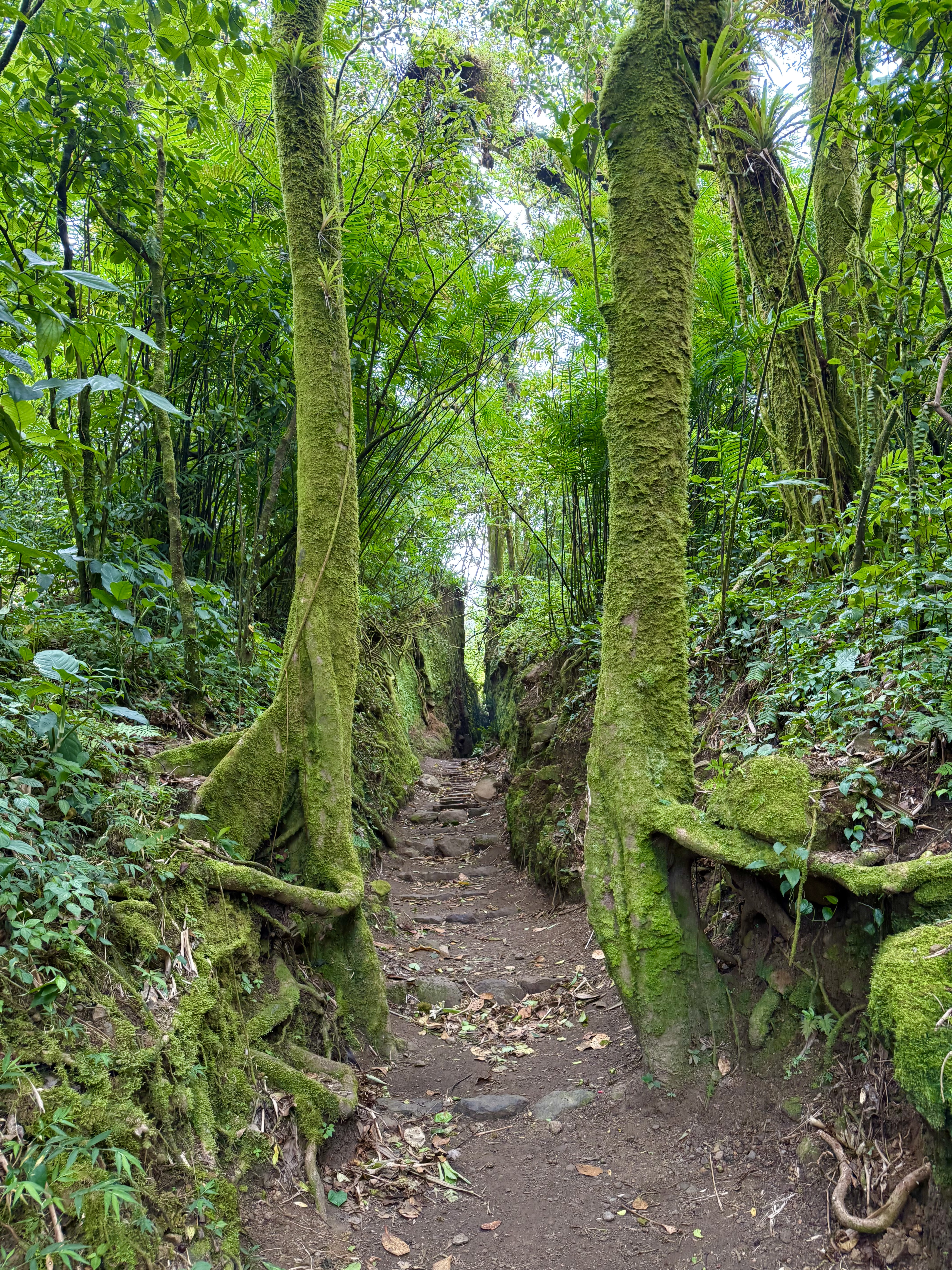
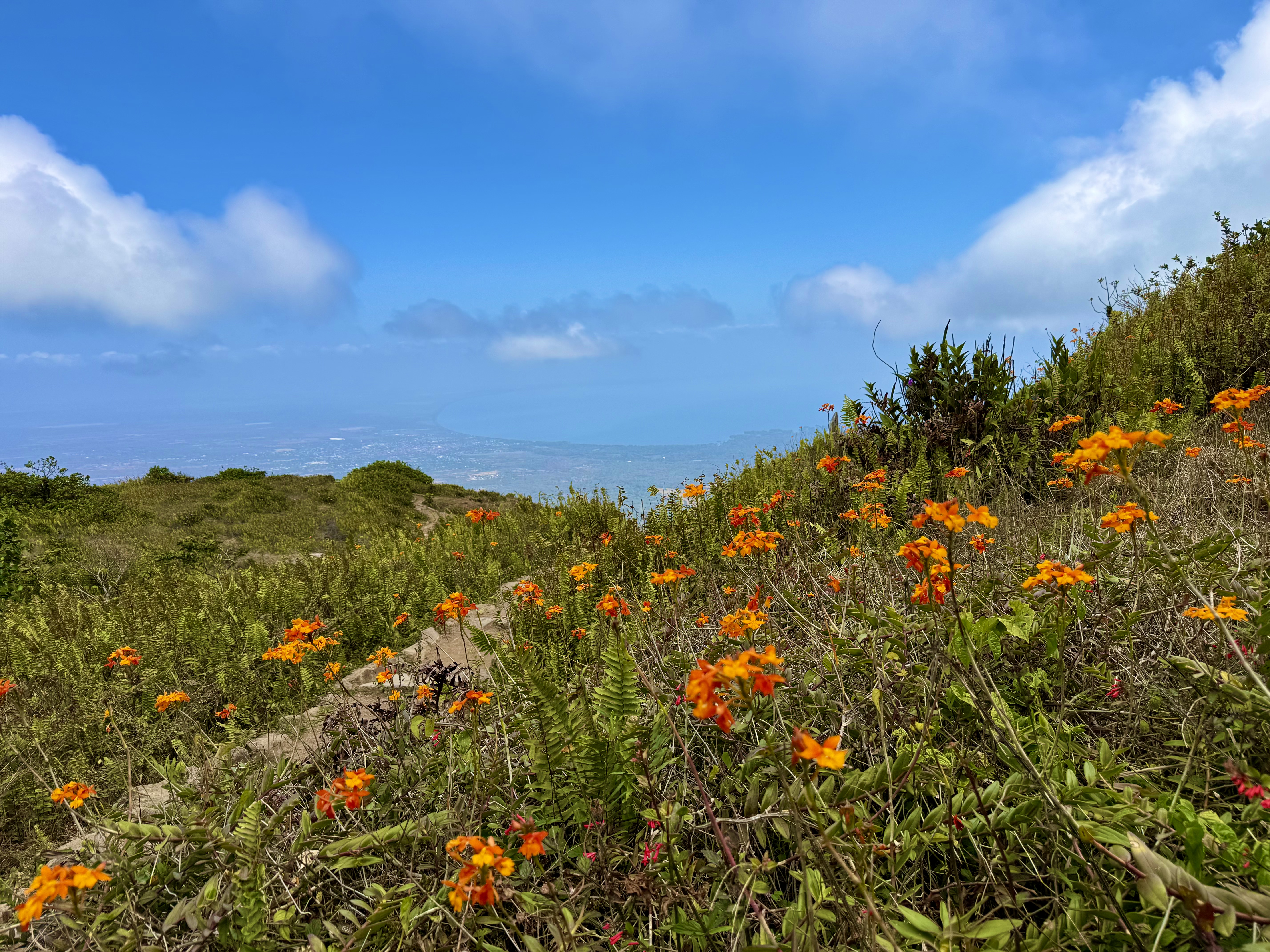
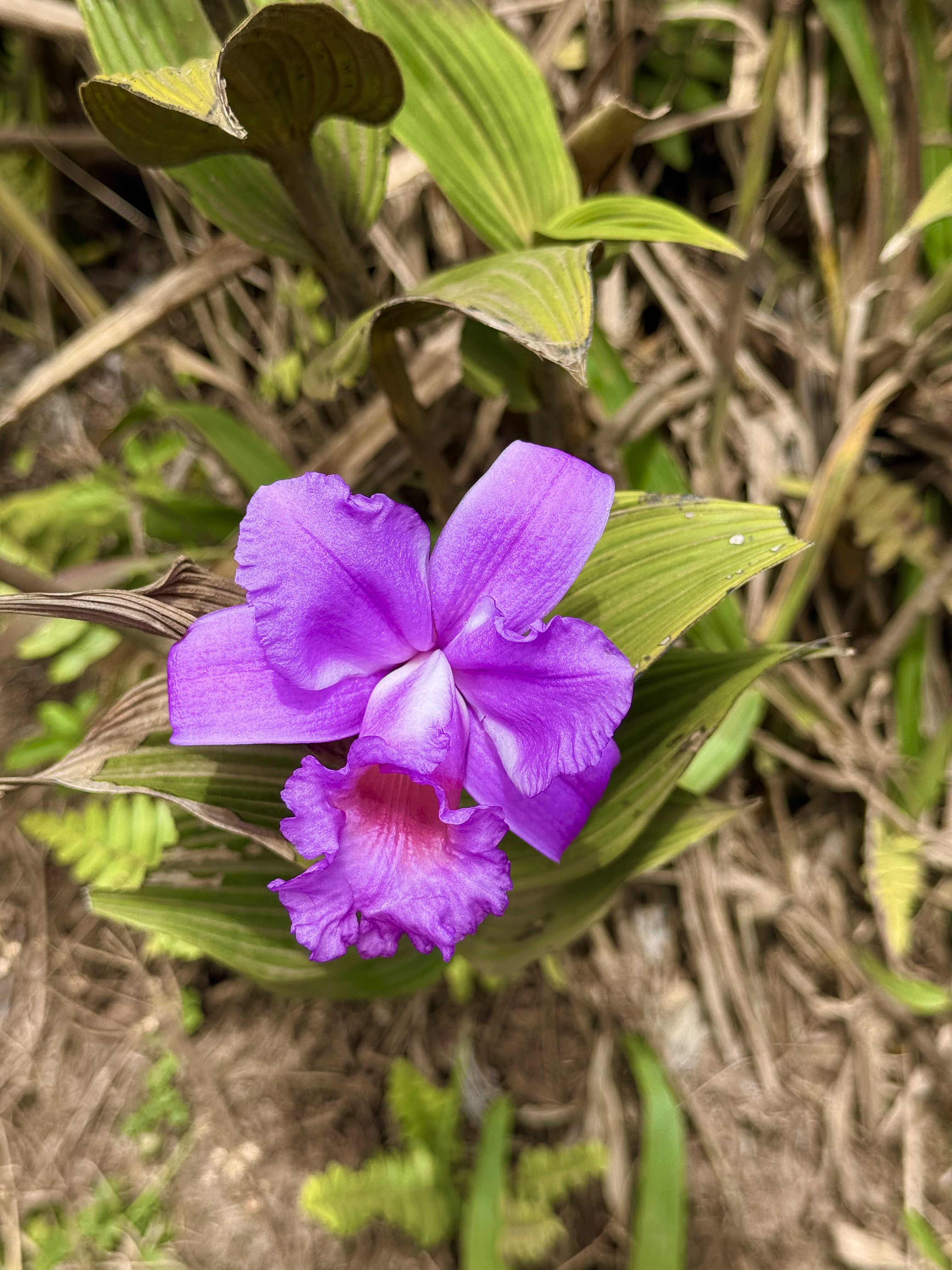
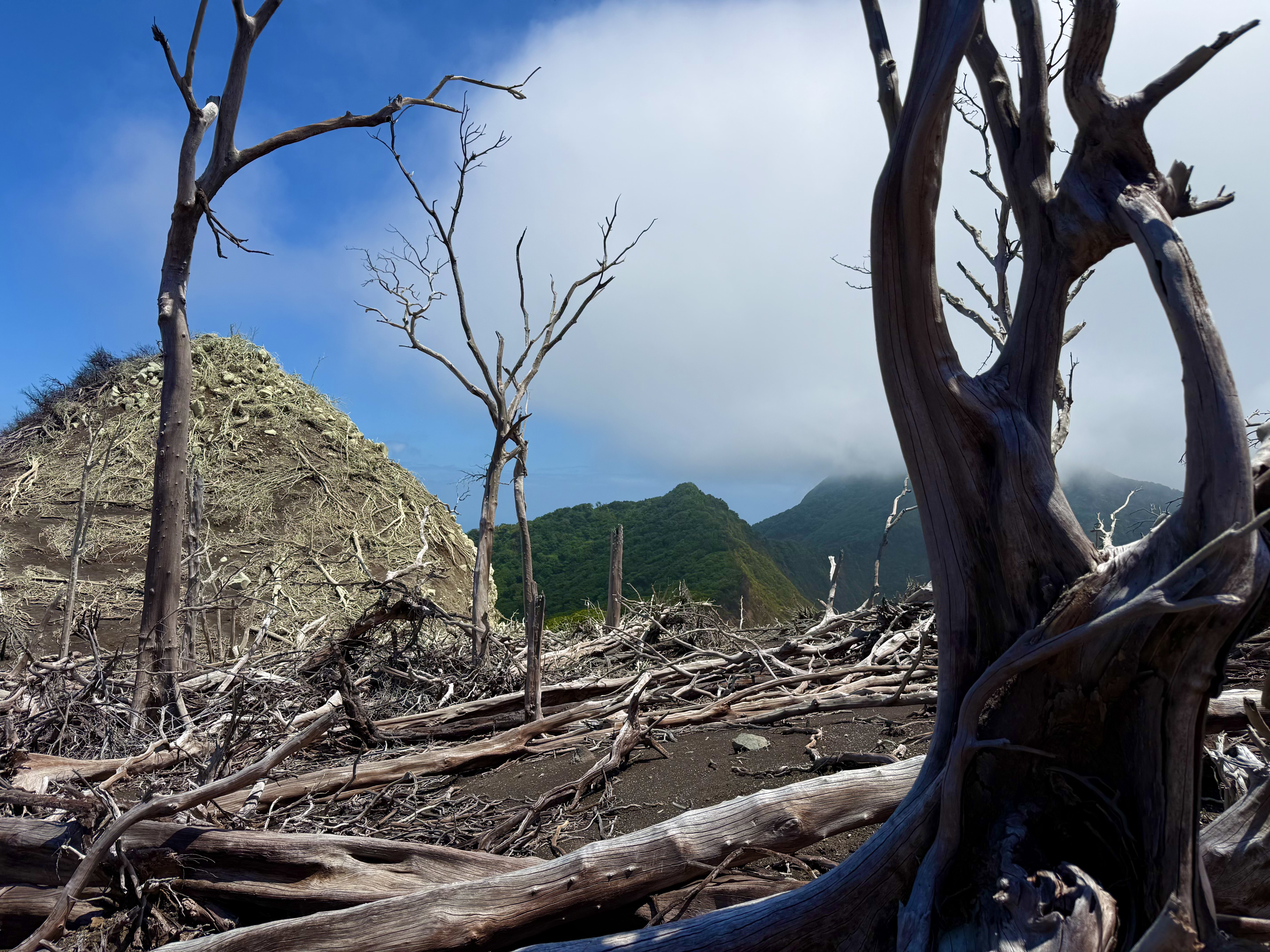
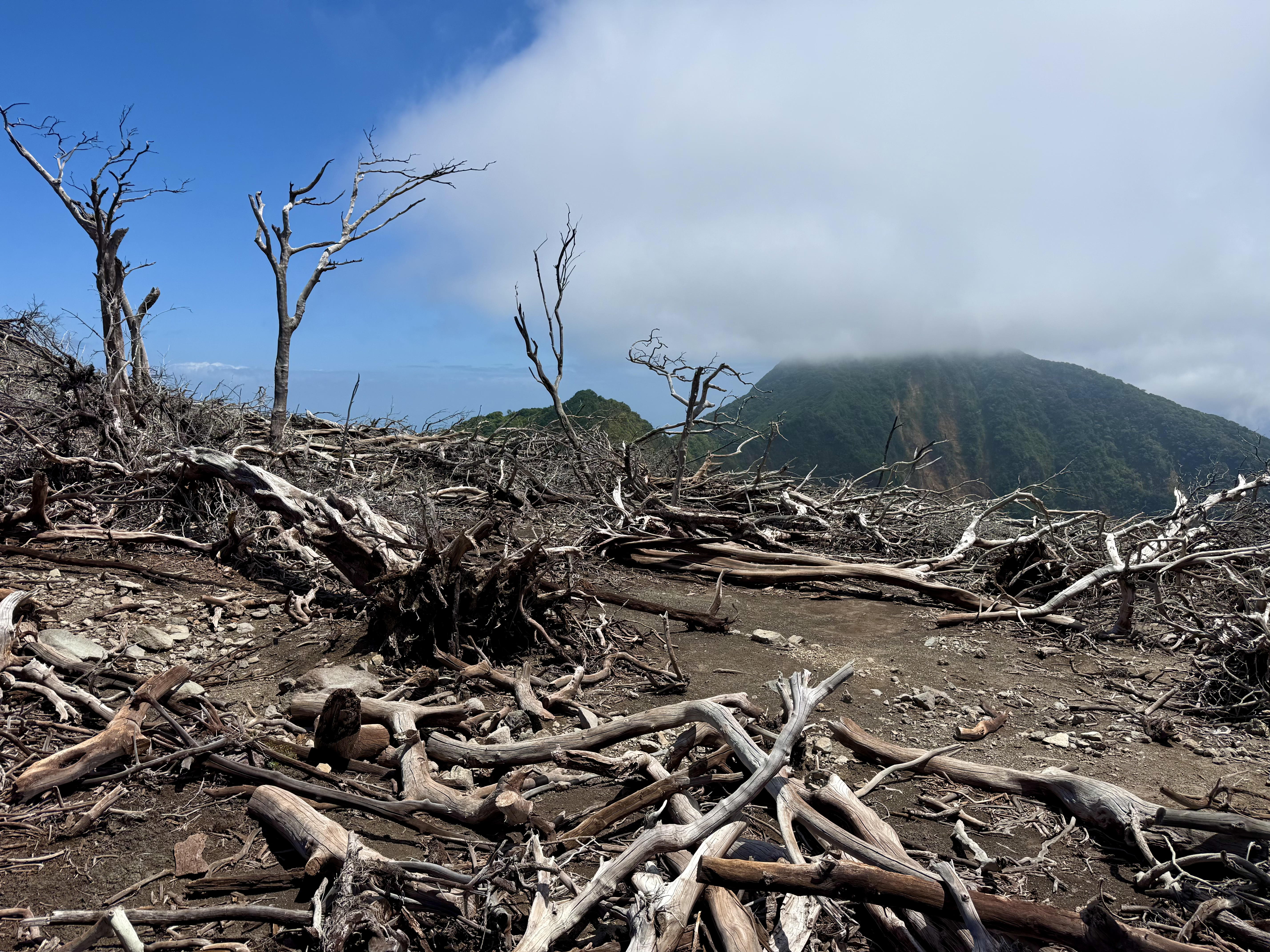
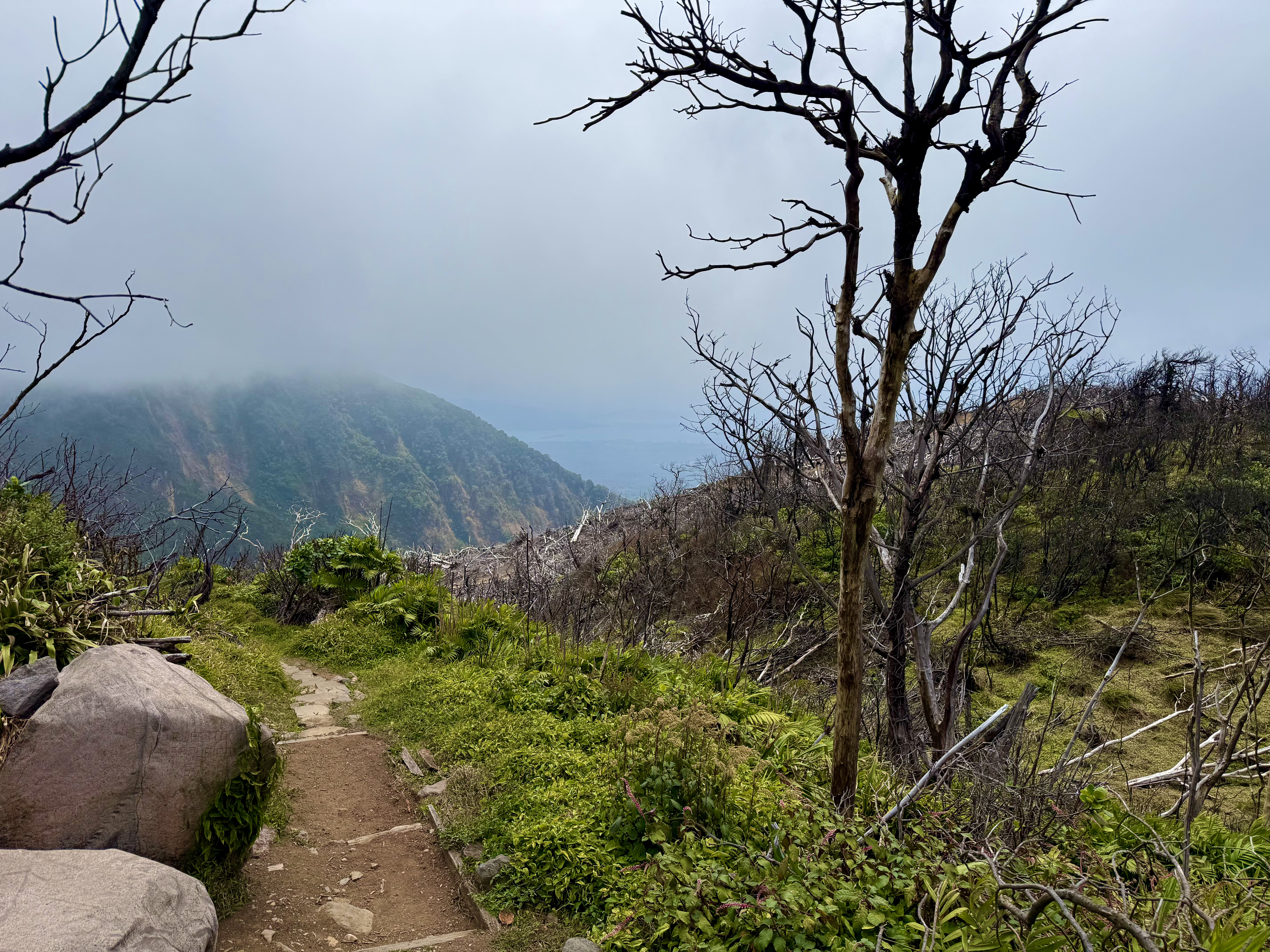
On another day, we decided to do hikes on the dormant nearby Mombacho Volcano (1344m) as we were told that this is where we would see the most wildlife in the area. Paul and Rebecca went on the Puma Trail and I went on the Tigrillo Trail as I didn’t trust my knee on the other. Both involved fabulous viewpoints, steam holes, lots of steep mossy tree stump stairs up and down, and a path through a dead forest. The forest died after a landslide let volcanic gases escape; the toxic fumes destroyed the surrounding vegetation. Other than in this particular area, though, the flora is lush and endemic yellow-orange orchids fill whole sections of the hillsides. While we were there, we were fortunate to also see another species of endemic orchid, this one blueish- purple that only blooms for 24 hours. We all enjoyed our hikes and loved the views even if we didn’t spot any wildlife other than the coatimundis that one of the locals had as wild pets. He saw it as his duty to protect them and didn’t allow them to be photographed.
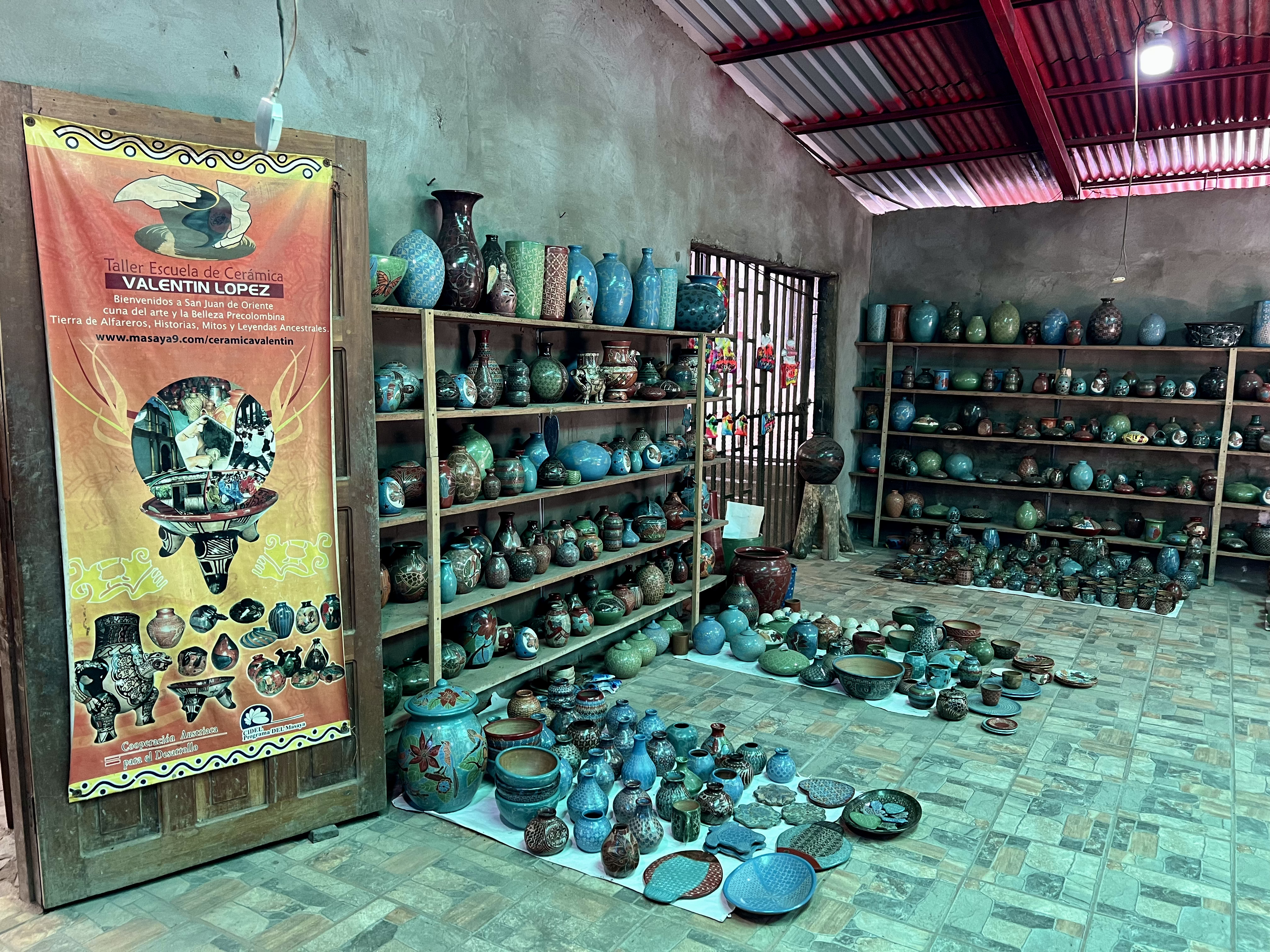
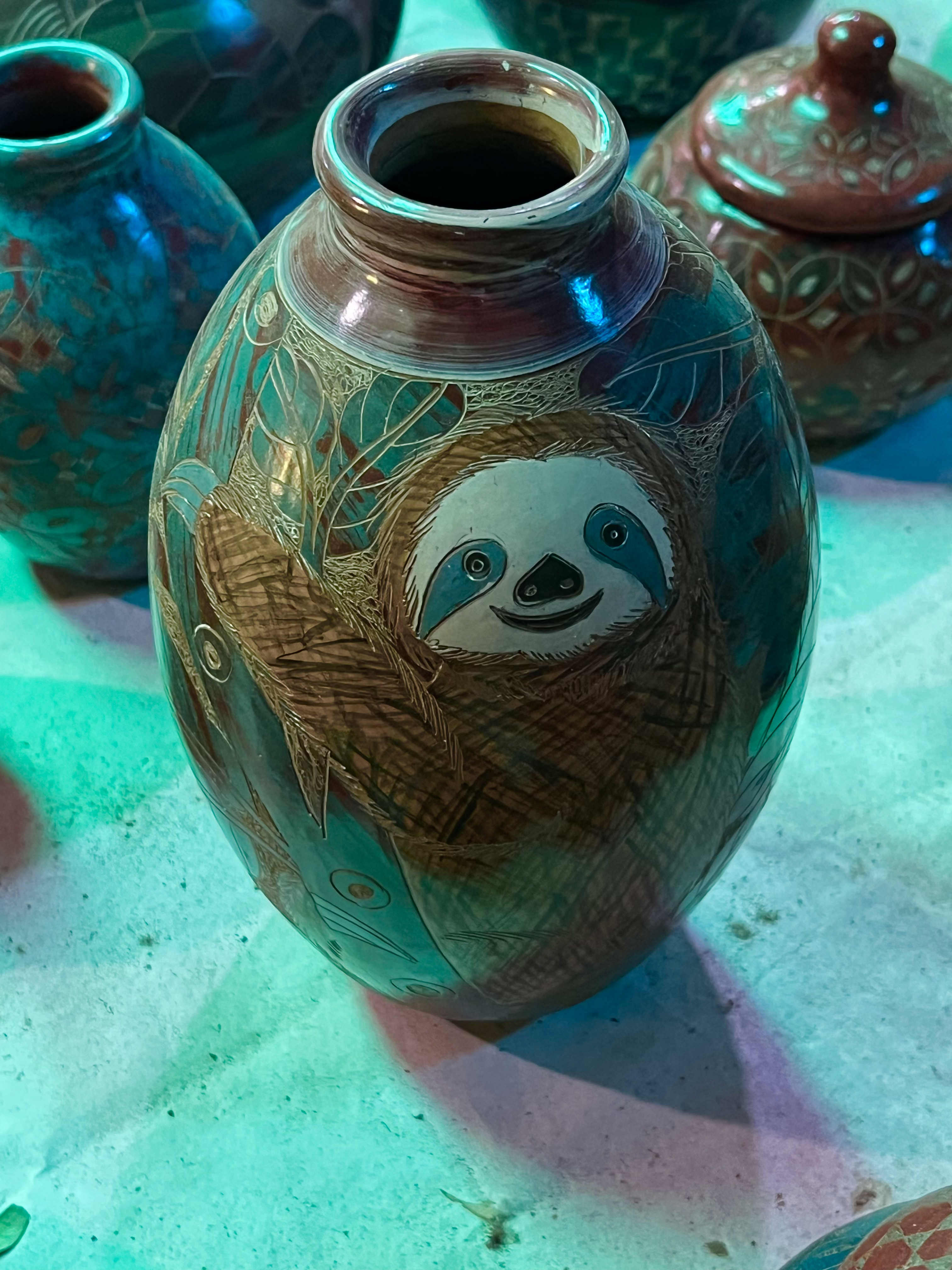
We were hesitant to go to Laguna de Apoyo as we had heard that it was only for swimming, and we wanted to hike and see wildlife. One of the guides and hostal staff we spoke to, however, told us that there were trails there and that monkeys are common in the area. We decided to book a tour for the three of us on our last day. The tour started with a visit to Valentin’s ceramic workshop, where we saw how he makes and fires his pottery. On some of the vases he paints figures from the forest, including toucans and sloths, as well as designs from the flora of the region.
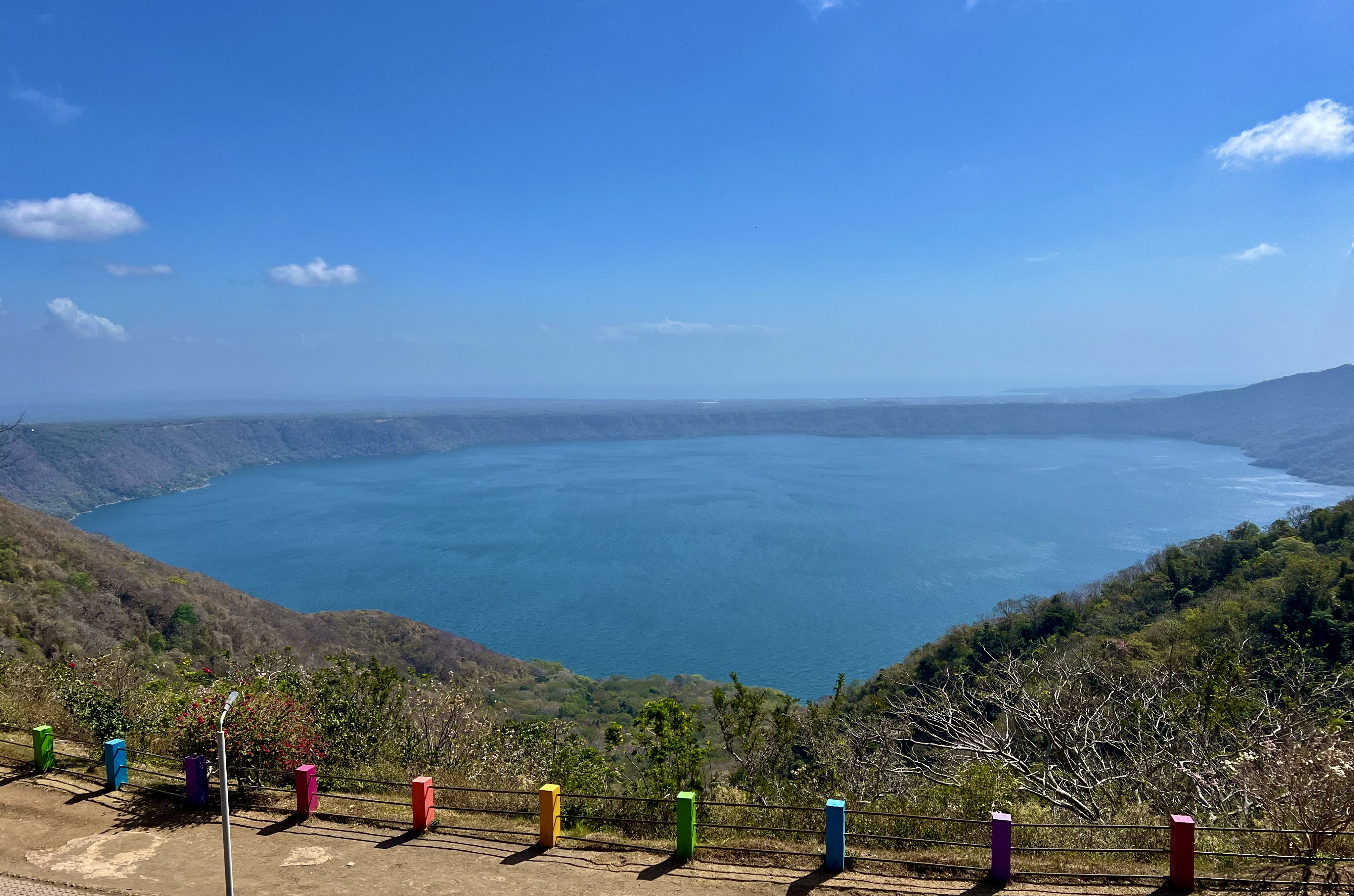
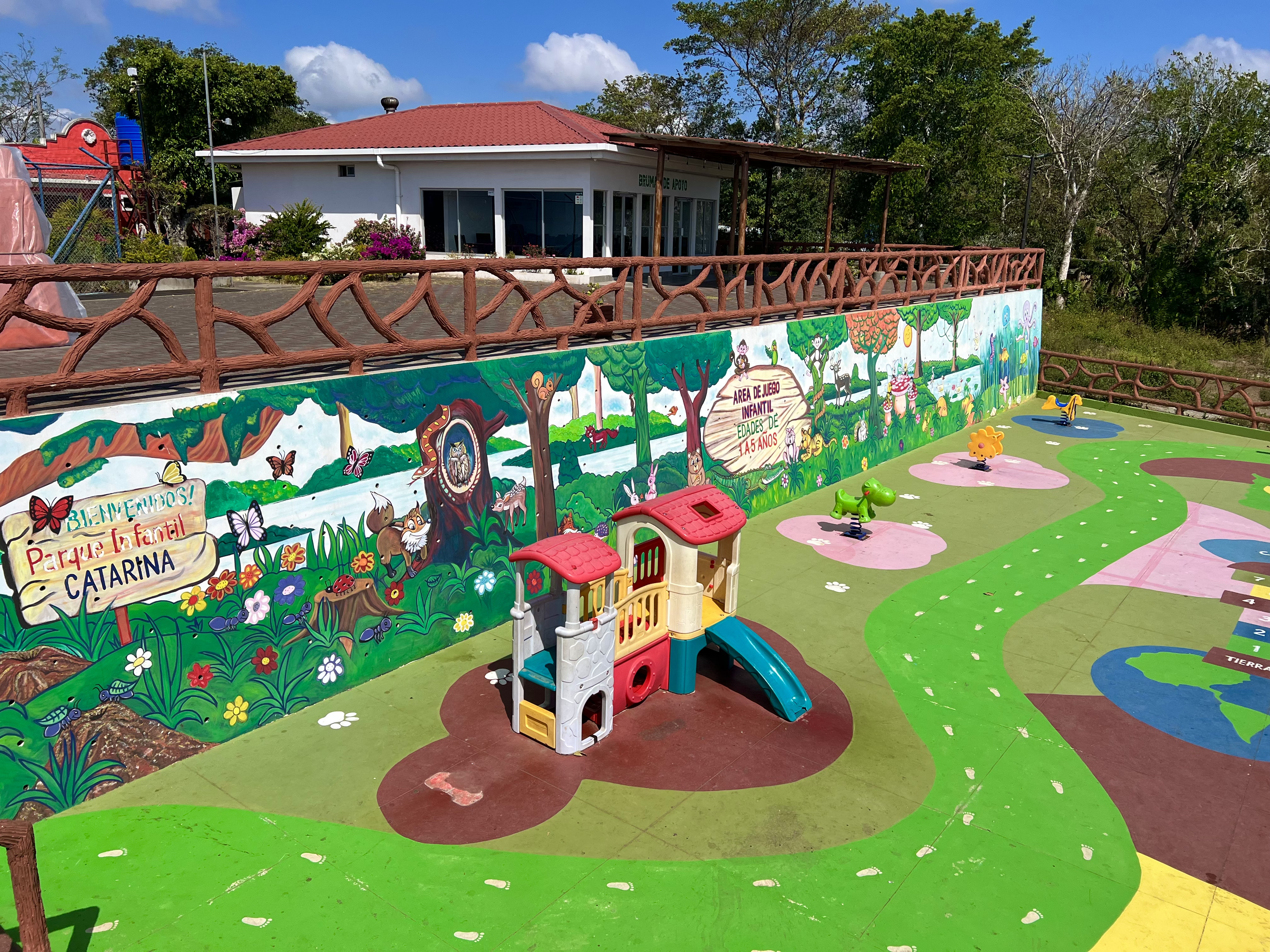
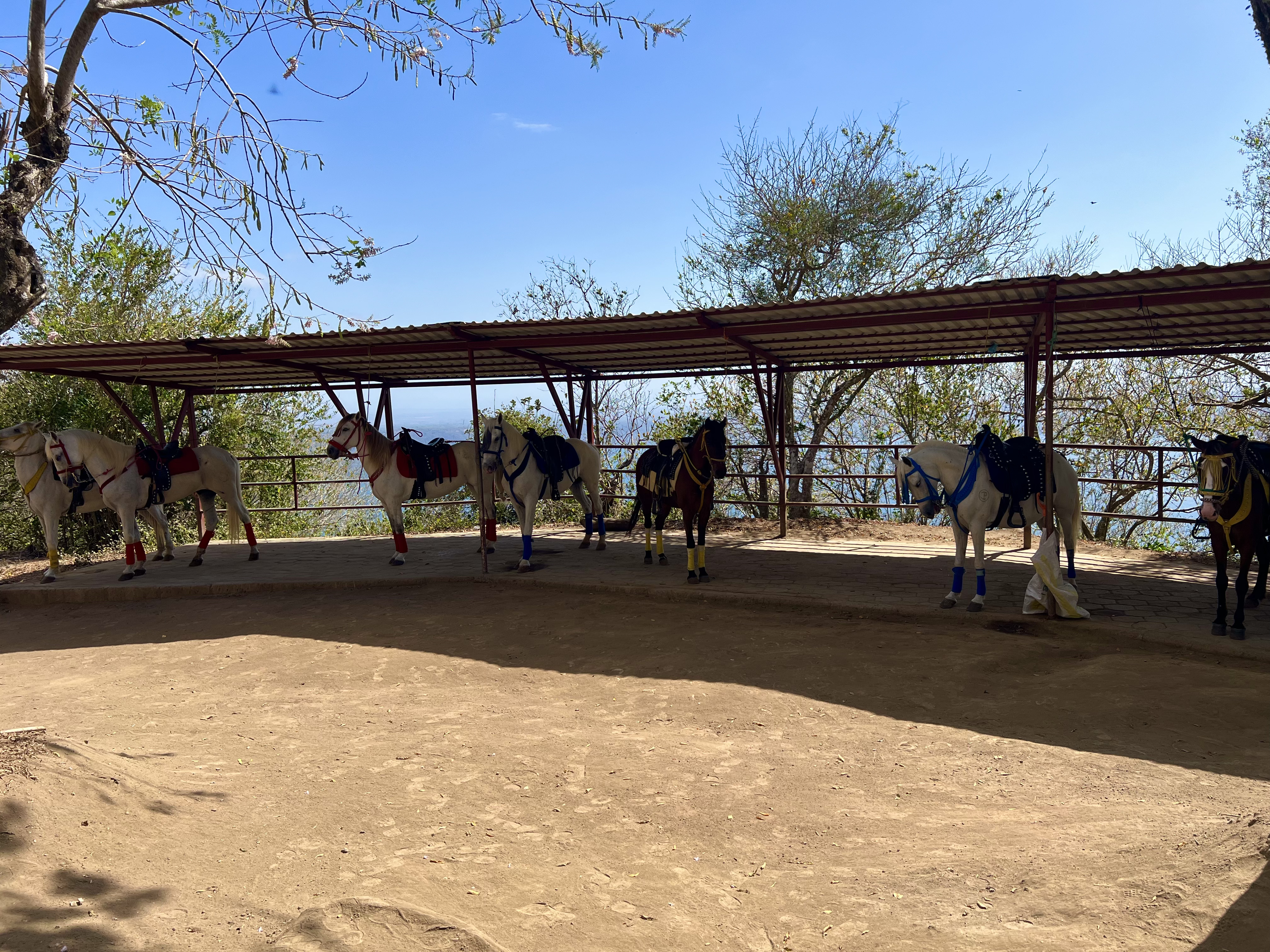
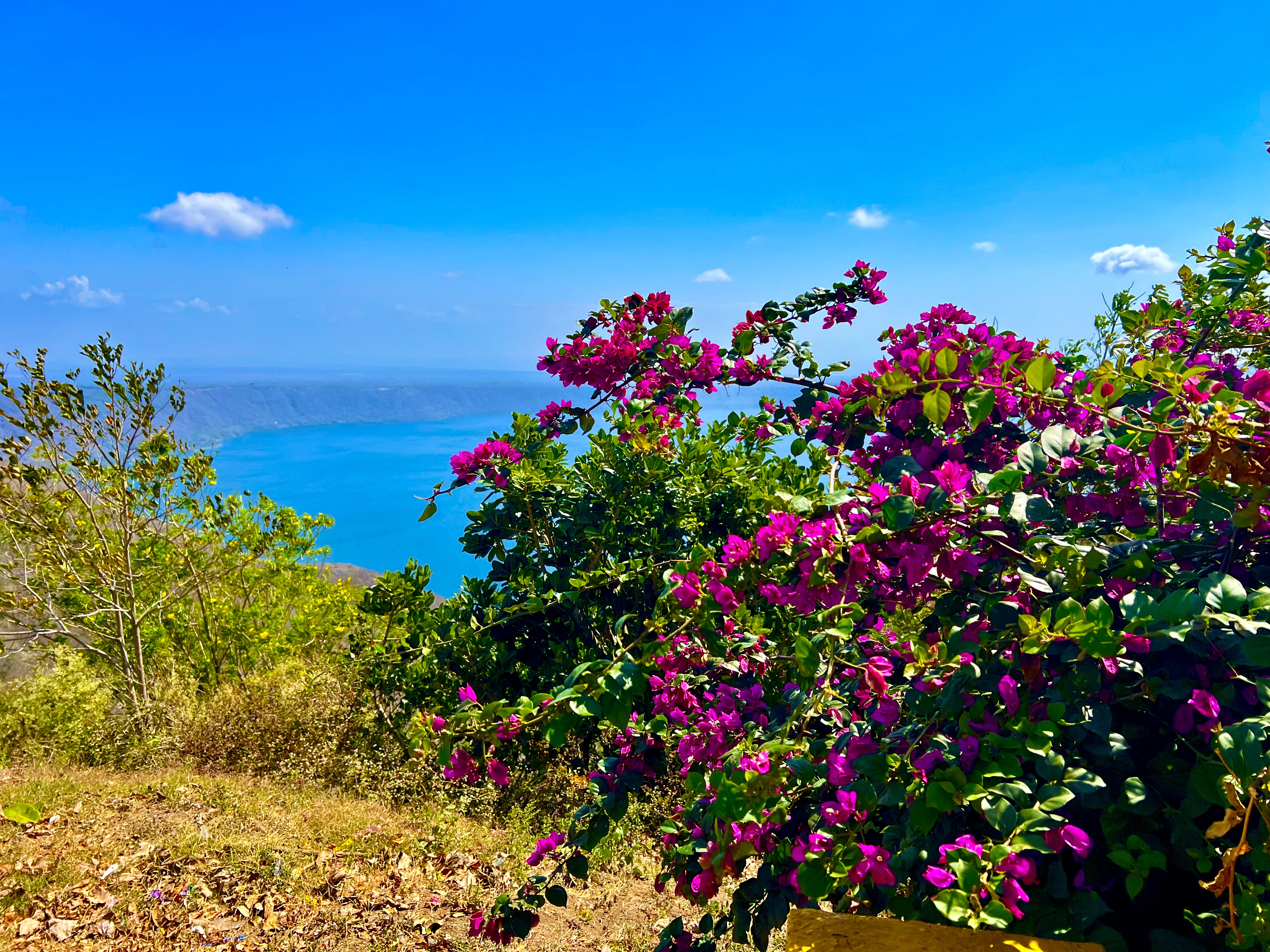
From there, we headed to the Catarina overlook. At Catarina we could see the entire Laguna de Apoyo and Mombacho Volcano. The site has a number of restaurants and a large playground for children. There are also horses to rent from 15 minutes to an hour. There is a trail, but we had spent so much time looking around that we were almost late getting back to the driver, who had us on a schedule. The last stop was the Laguna, which really is just about swimming. Kayaking is also possible, but the day was too windy for taking a boat out. The water in the Laguna was delightful, and there was a raft that one could swim to for sunbathing. Unfortunately, we didn’t spot any monkeys or other wildlife, but it was relaxing last day in the Granada region.
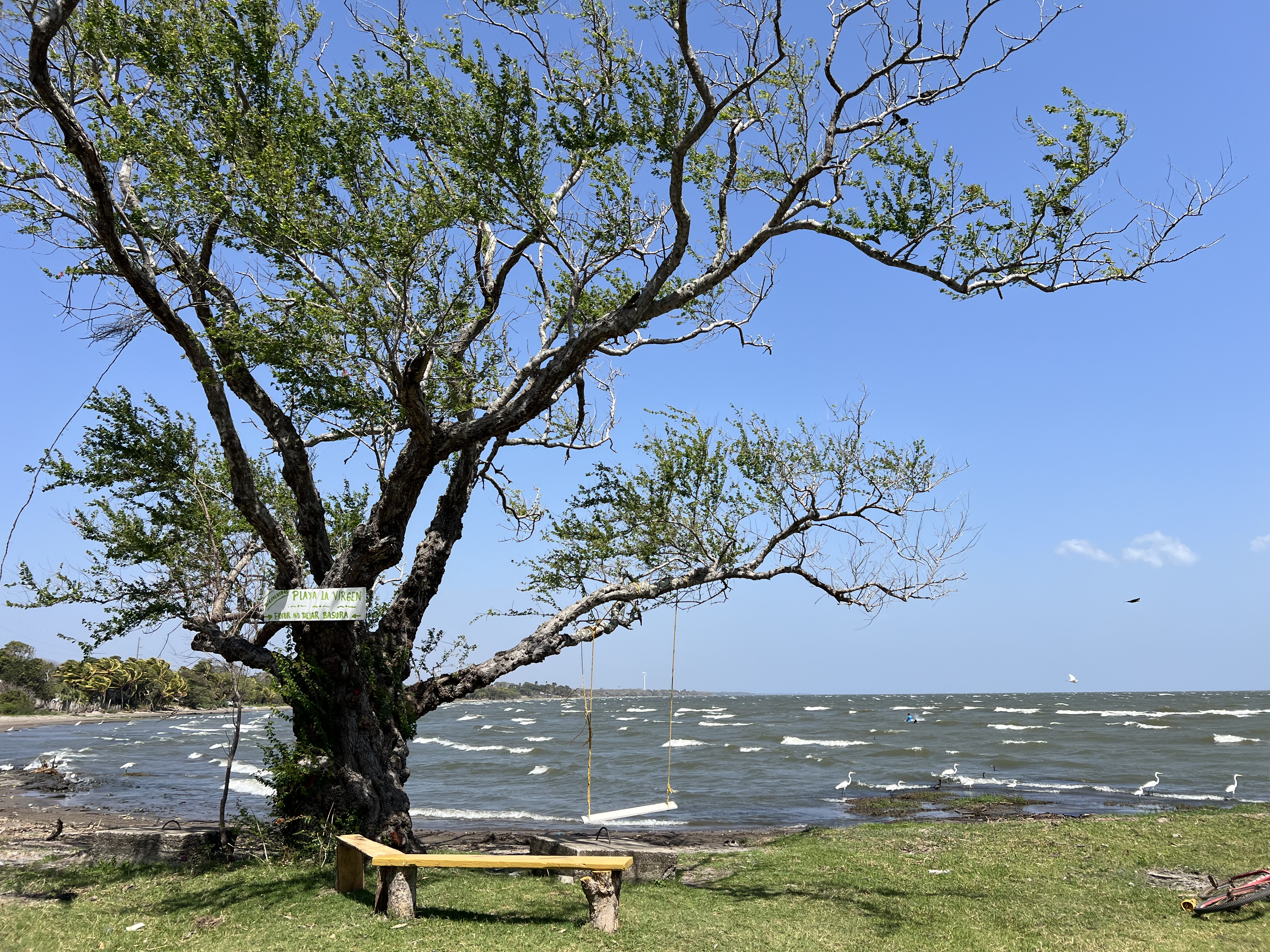
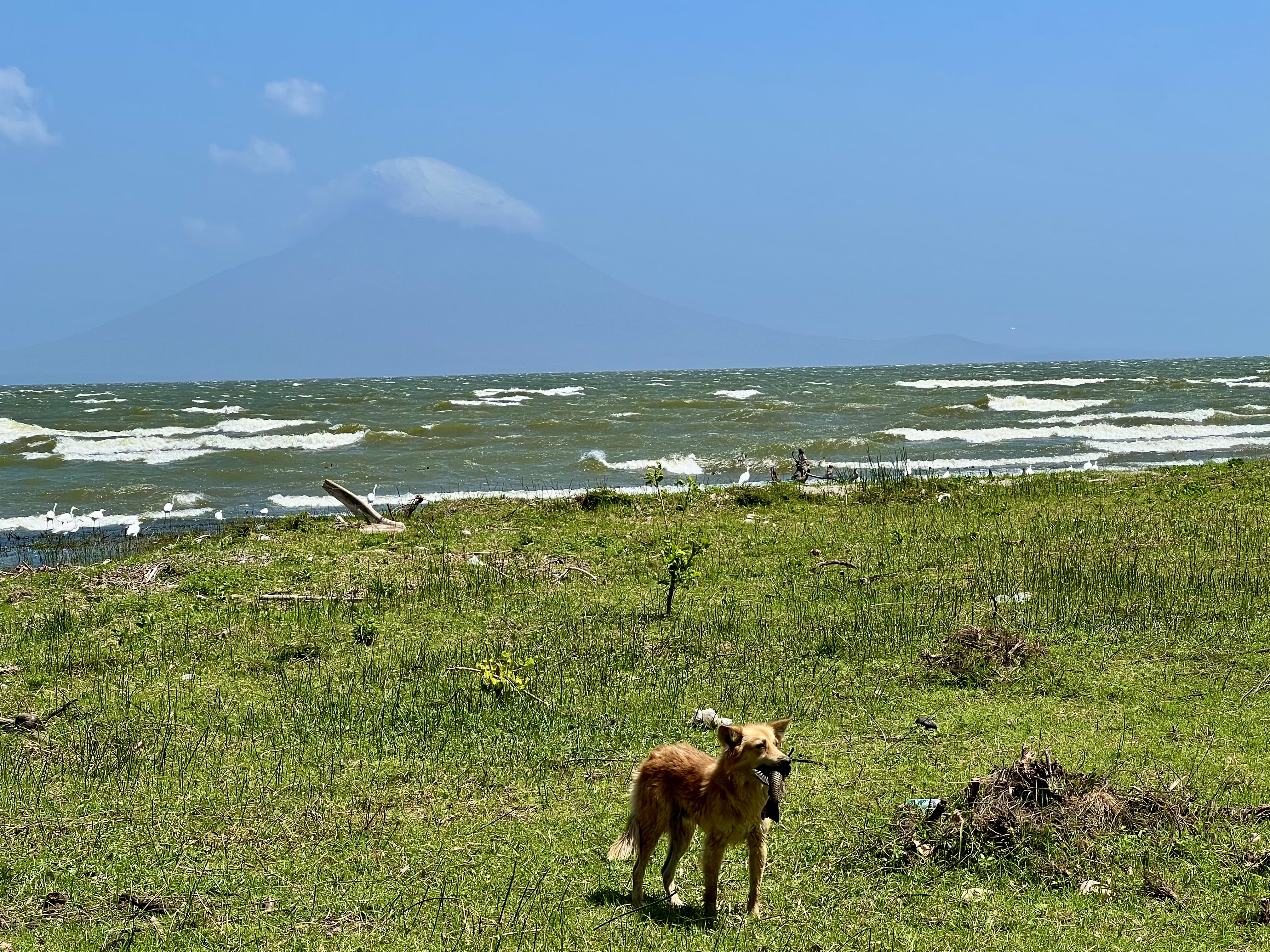
Paul and Rebecca left the next morning to return to the States, while I headed on to San Juan del Sur for the day before spending the night at an airport hotel for the flight to Costa Rica the following morning. Near our destination, we stopped briefly at Playa la Virgin, which is not on the tourist docket. No one was there other than waterfowl and a dog that had just caught a fish, which hung from his mouth. It was a rather unusual sight.
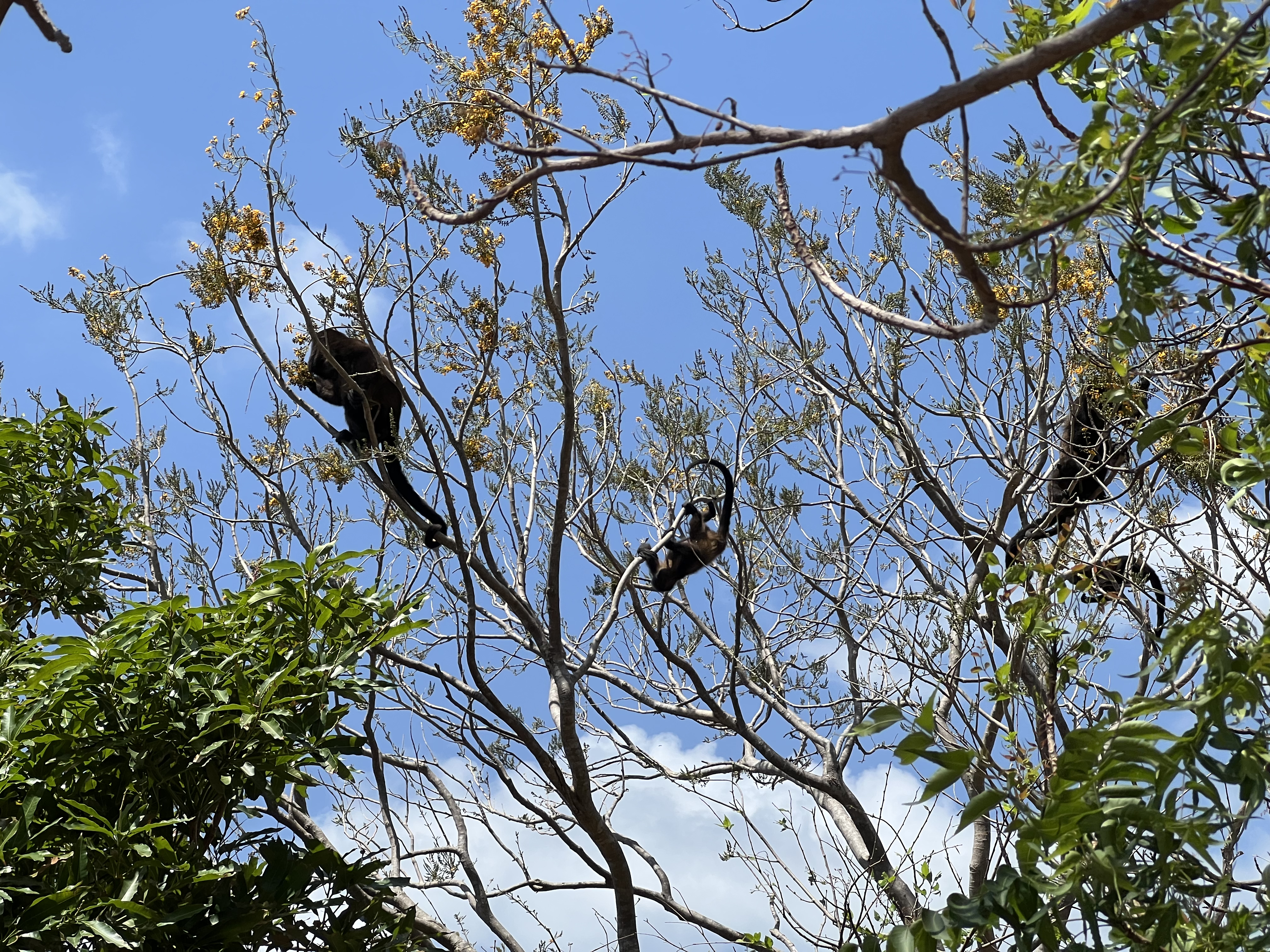
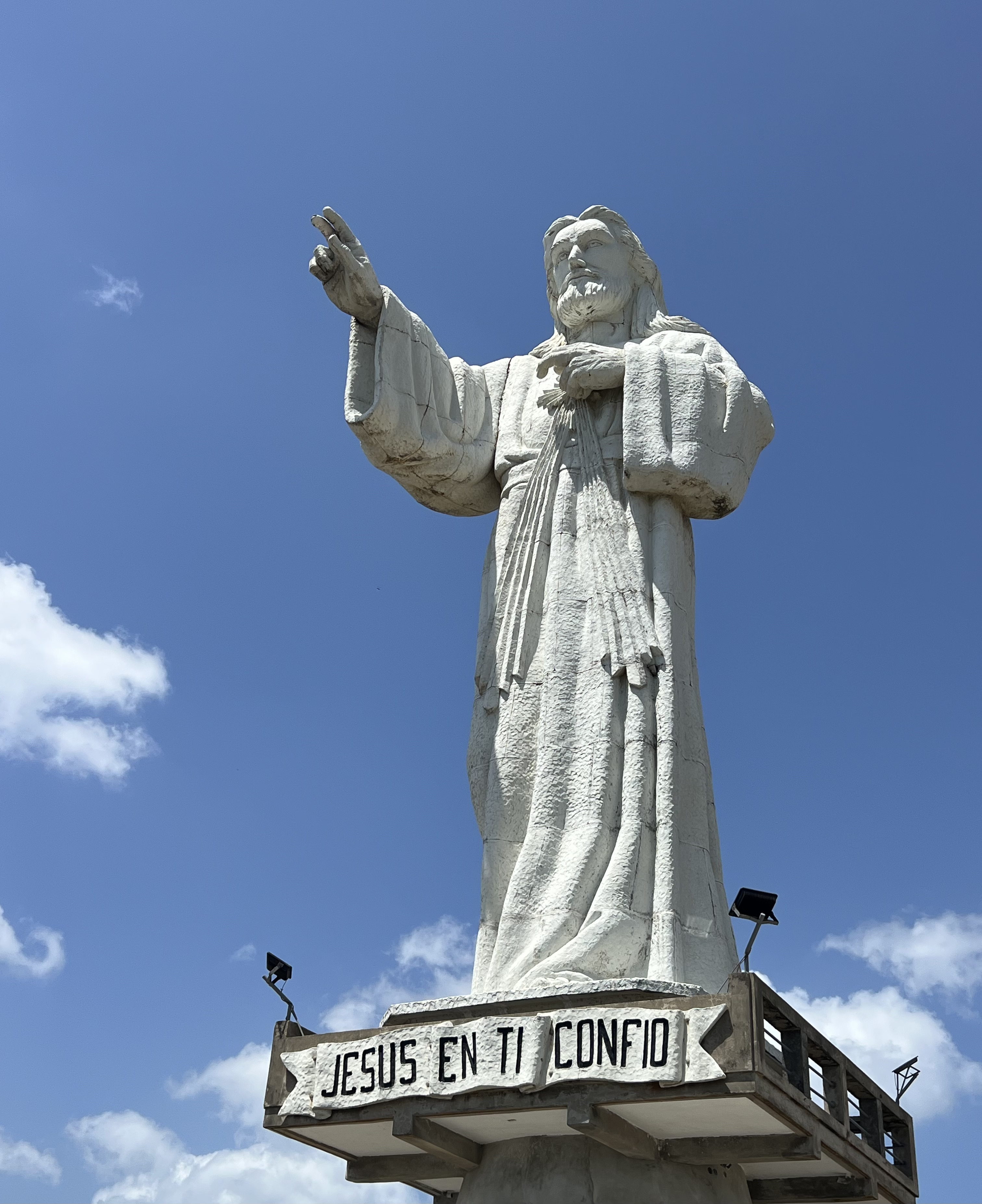
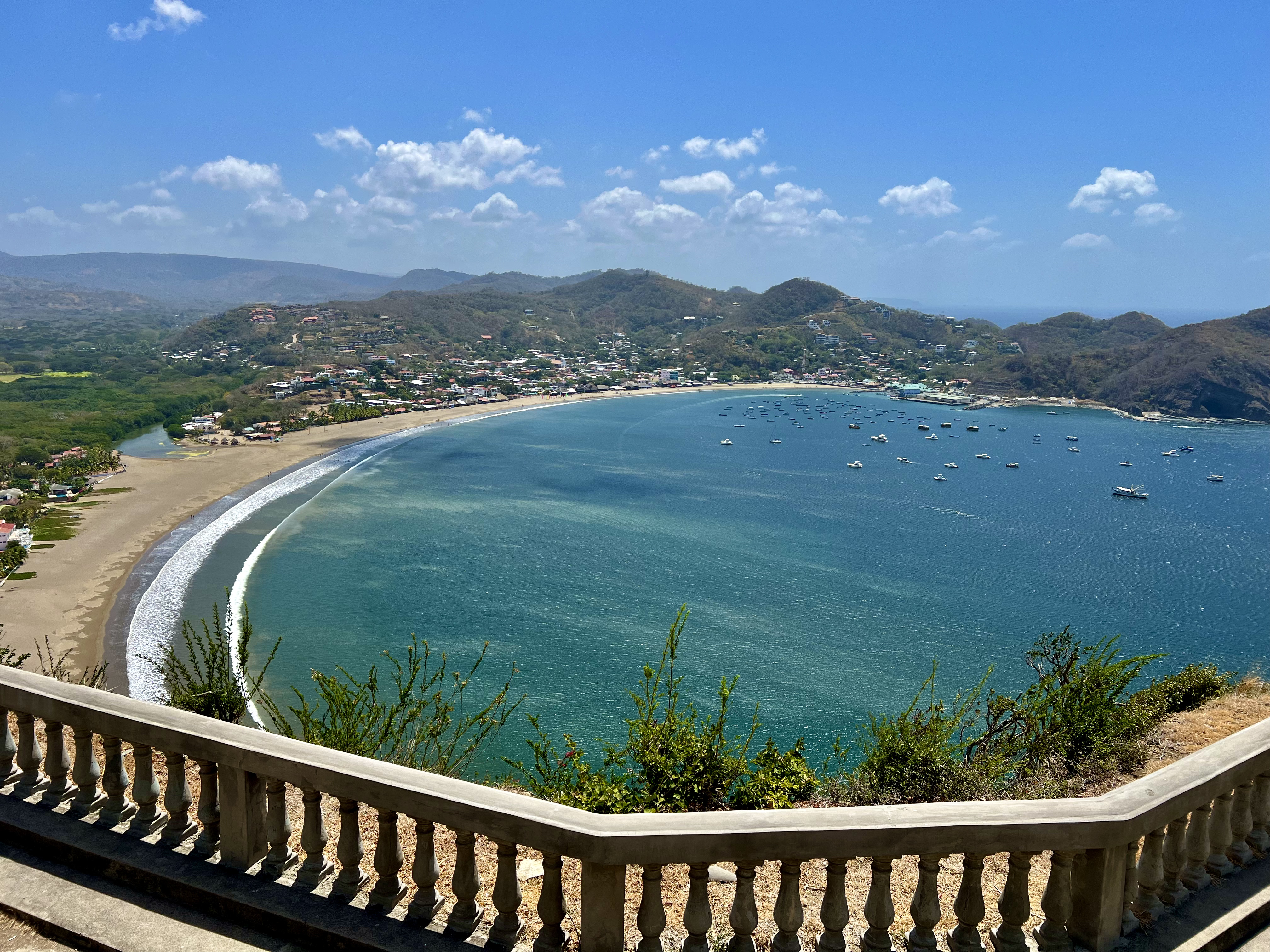
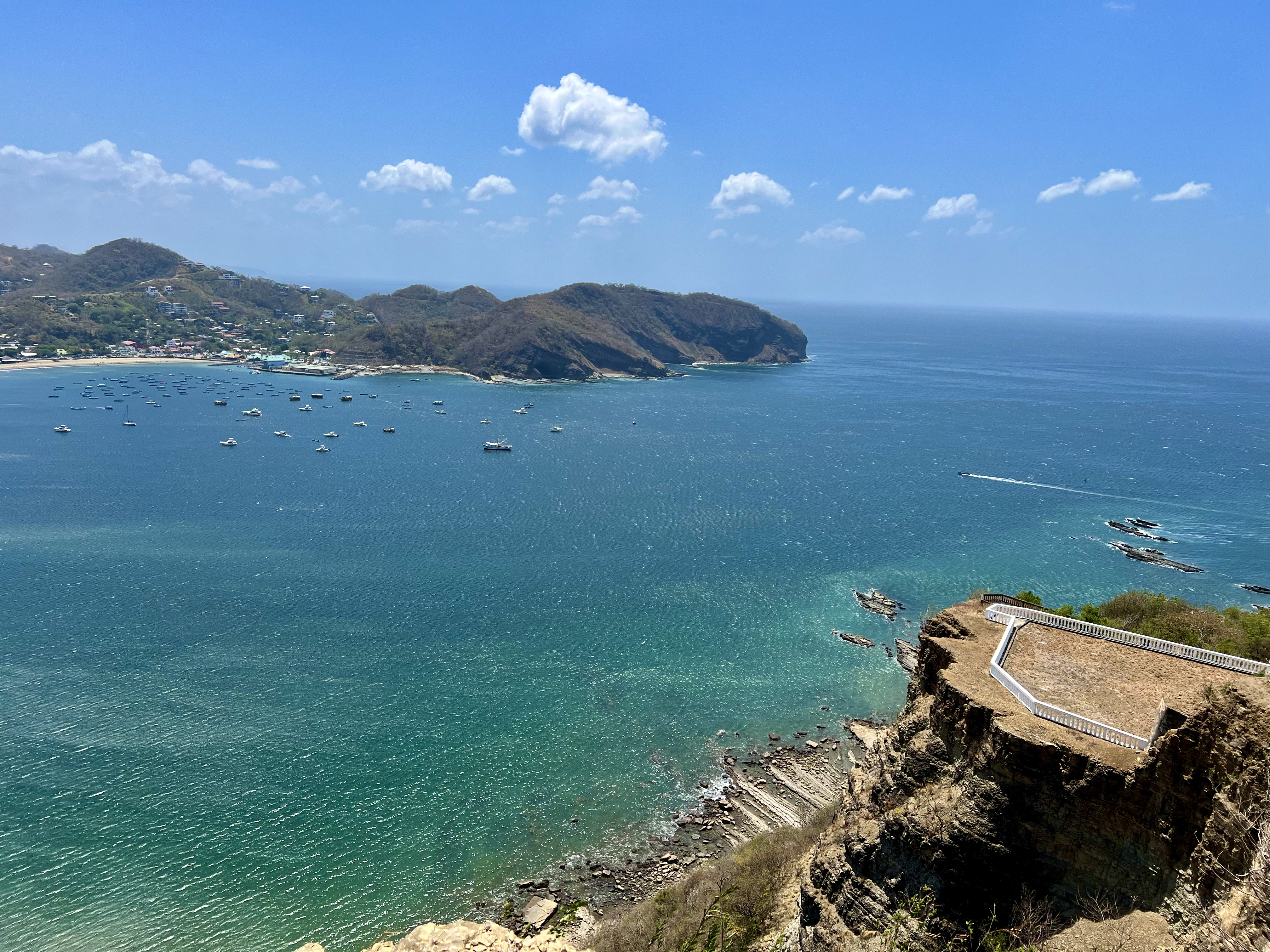
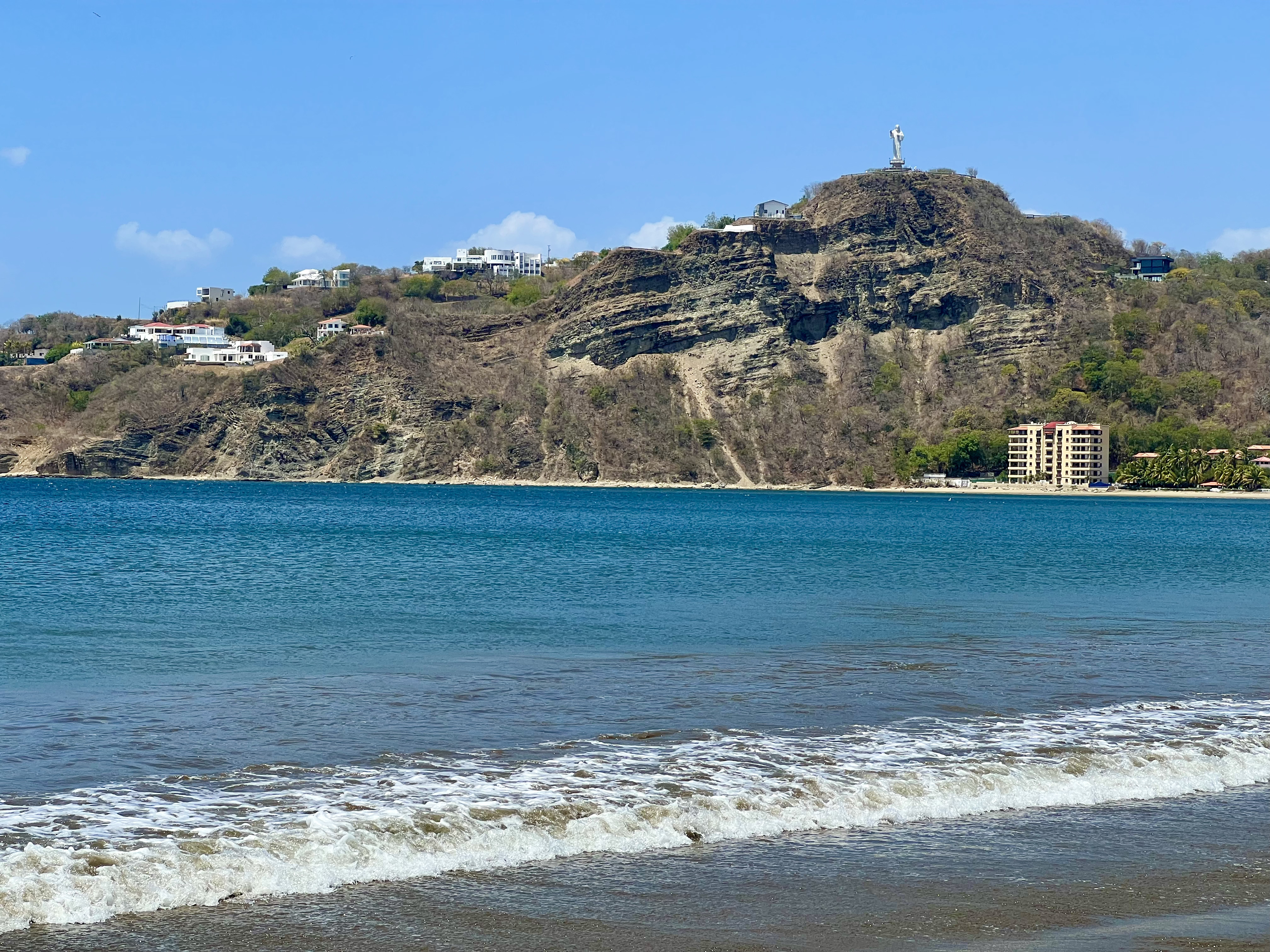
San Juan del Sur is one of the main surfing hotspots of Nicaragua and is a beautiful bay. Overlooking the bay, on a steep cliff stands Jesús de la Divina Misericordia, a large white statue that is reminiscent of Rio’s Cristos Redentor. A howler monkey family lives and plays near the parking area to the Jesus statue. I had expected to see monkeys in the forests around Granada and not in the urban beach area but was thrilled to find them. The surf wasn’t high enough for boarders, and there were only a few people actually in the water; most were wading or walking along the beach, which is also what I did.
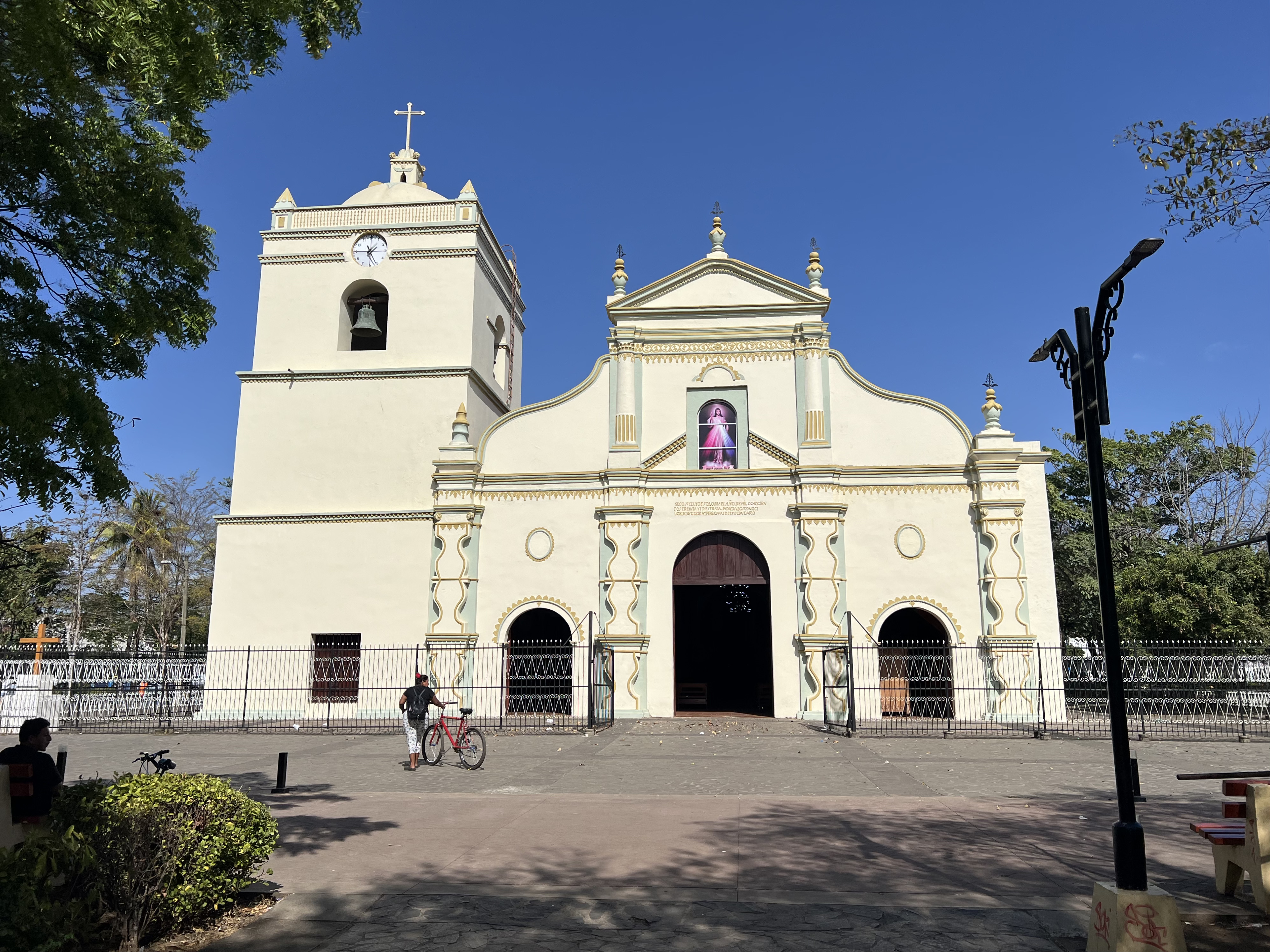
On the way to the airport, a little more than a two-hour drive during which we passed many police checkpoints, we made a detour to Masaya town so that I could see it. Masaya is known for its artisans and colonial architecture. The main church and central square are prime examples of Nicaraguan colonial design.
The short time I spent in Nicaragua was filled with tourist activities involving the flora and fauna of the region, but also with insights into the daily life of the people. The contrast between El Salvador and Nicaragua was striking, though I felt perfectly safe in both countries. While each of them is ruled by an autocrat, the folks I spoke with in the first are very pleased to have someone clean up the previous violent mess, yet in Nicaragua there was a sense that not nearly enough is being done for the general populace. El Salvador has a few Mayan historical sites and some colonial towns, whereas Nicaragua has more colonial and restored colonial architecture and very few ancient sites. Interestingly, I also learned that the two countries have different Spanish names for the same plant, which for a non-native speaker can lead to confusion. Both are blessed with natural beauty coupled with lots of volcanoes. El Salvador has many more active ones than Nicaragua does, yet the ones we visited in the Granada region were impressive. There is something awe inspiring about the power of a volcano to destroy then to create incredibly fertile habitats for all kinds of species, both plant and animal, including humankind. Both countries have seen their cities and countryside destroyed both by man and nature numerous times, and the people have resolutely regrouped and rebuilt. There are lessons to be learned here.
 omegoodyssey