As always, I try to make my first stop in a new country to the National Museum. In addition to the history of the city-state, in Singapore this season there were two special exhibits; one on the Story of the Forest and the other on A World of Plastics. Both showcased Singapore’s commitment to sustainability, which I could witness from the plane coming in with solar panels lining some of the major gardens in the region. The National Museum of Singapore differs from most others in that it concentrates primarily on the last 400 years of conquests and occupations by sultans, the Portuguese, the Dutch, the English and then the brief Malaysian Federation interlude prior to independence in 1965. What was most interesting beyond the pottery from an ancient shipwreck and the two special exhibits, was a video of a press conference the first Prime Minister gave when Singapore was forced to split from Malaysia as the Singaporeans insisted on valuing the multi-cultural heritage of the population, whereas the Malaysian Federation only wanted to promote Malay culture and Islam as the nation’s religion. The video showed how this split was not at all what Prime Minister Lee Kuan Yew wanted for his populace, and he wasn’t at all sure how the small city-state was going to function on its own. The determination of the people and the government demonstrated how far Singapore has come in a relatively short time. The city fathers (I’m not sure how many mothers were involved) set a far-sighted course to promote trade and tourism by making the city attractive to both groups. The multi-cultural heritage is at the heart of the city and is demonstrated in the various ethnic districts which have at least partially retained their 19th and early 20th c architecture.
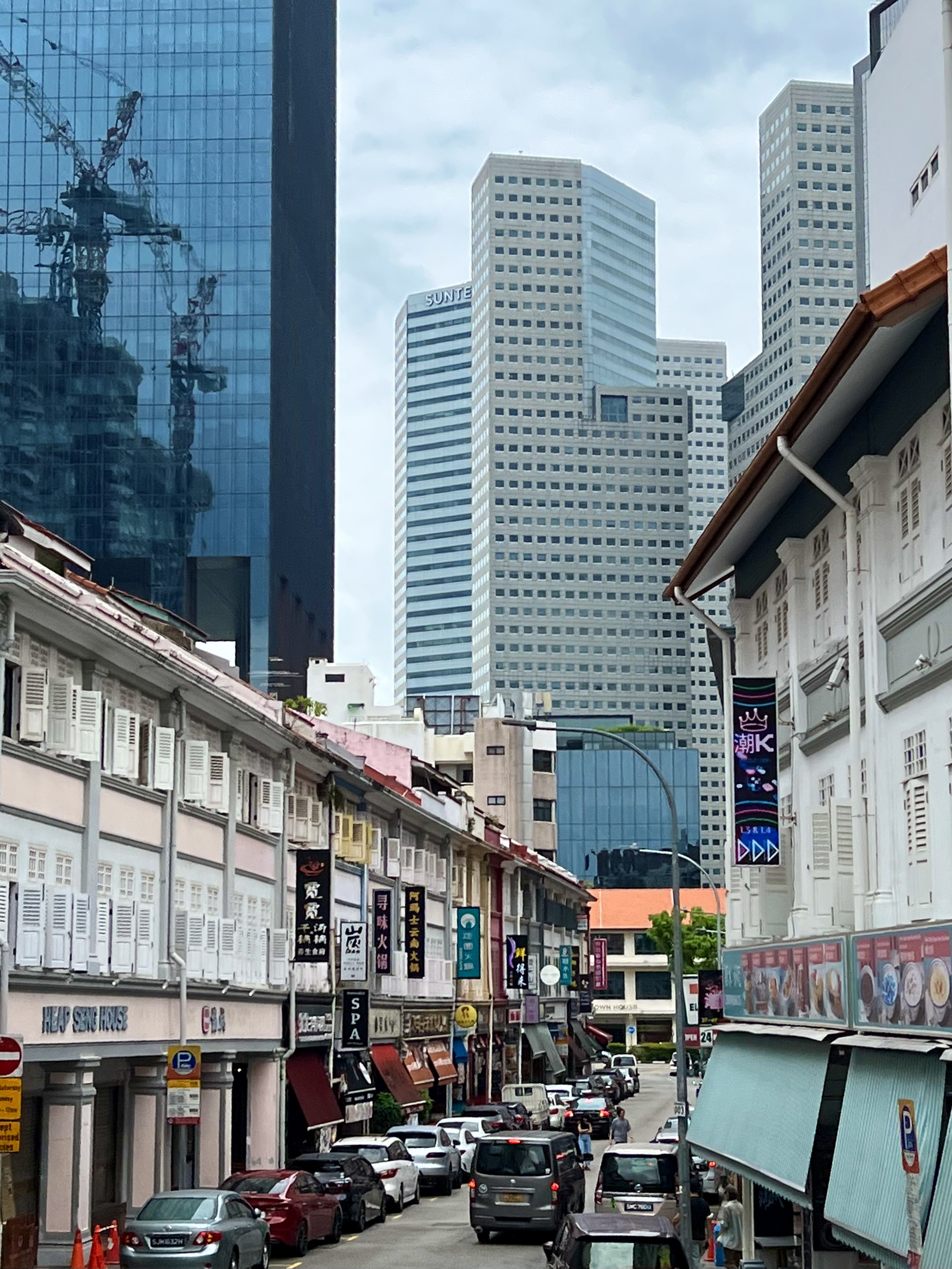
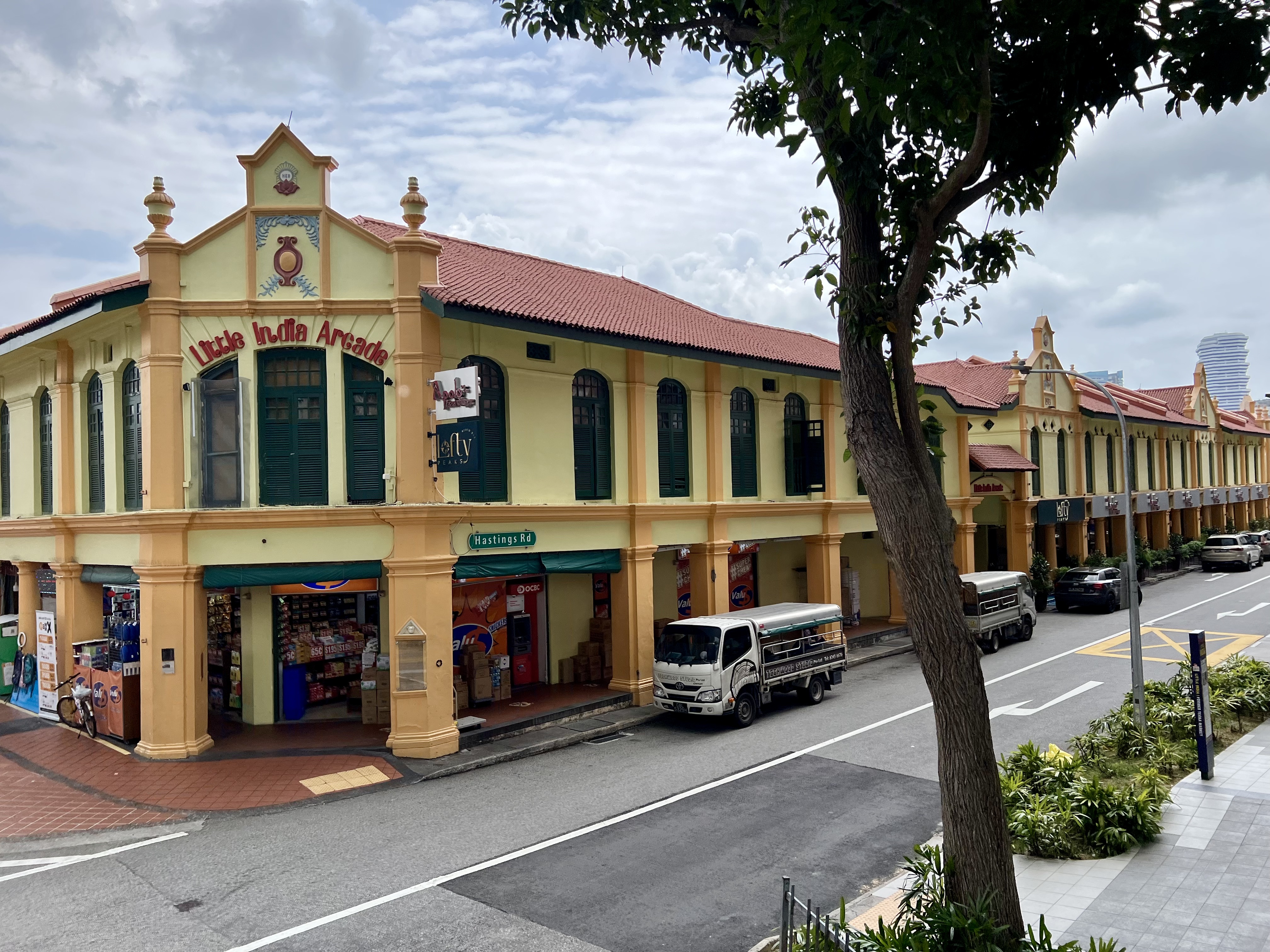
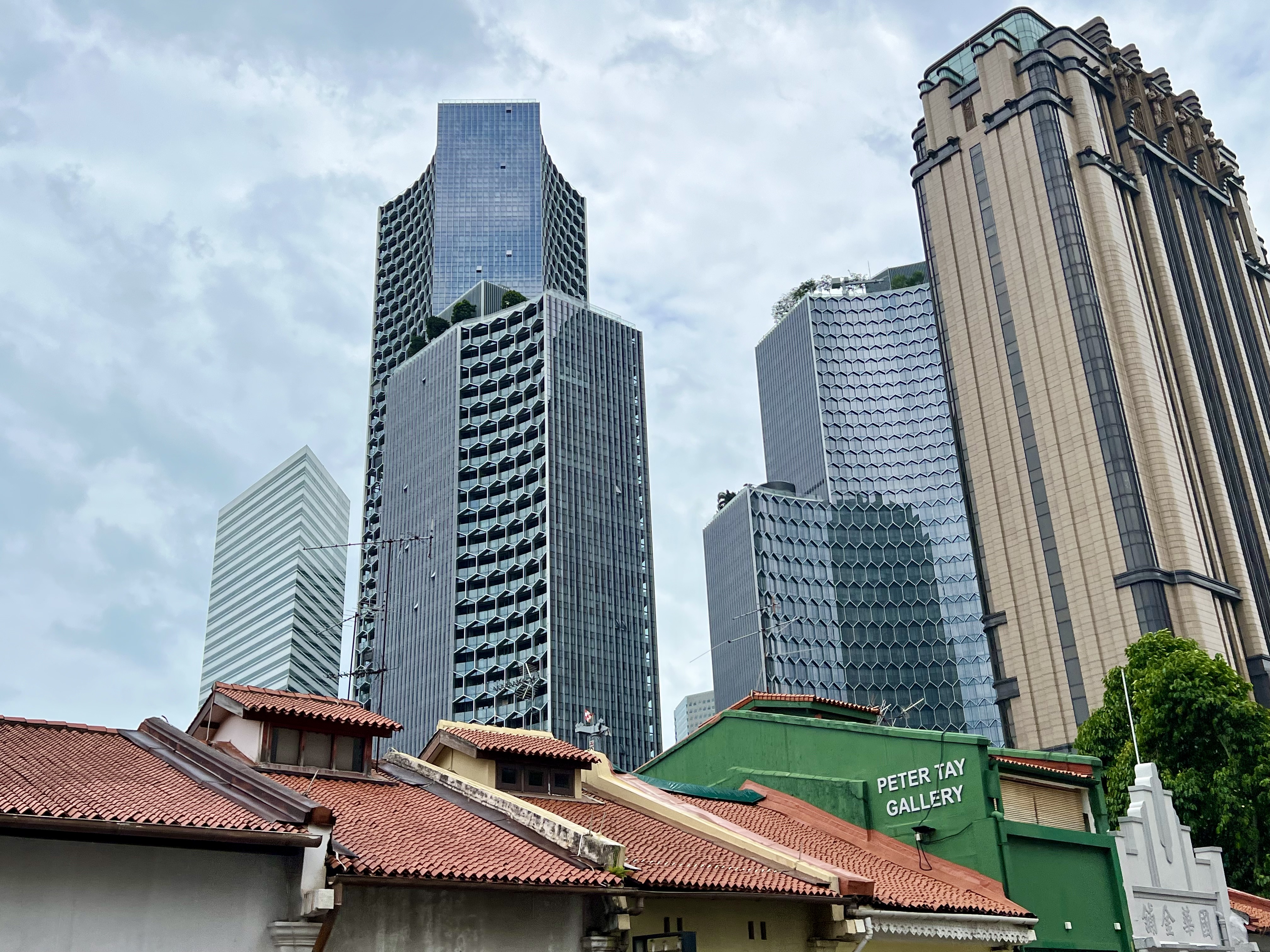
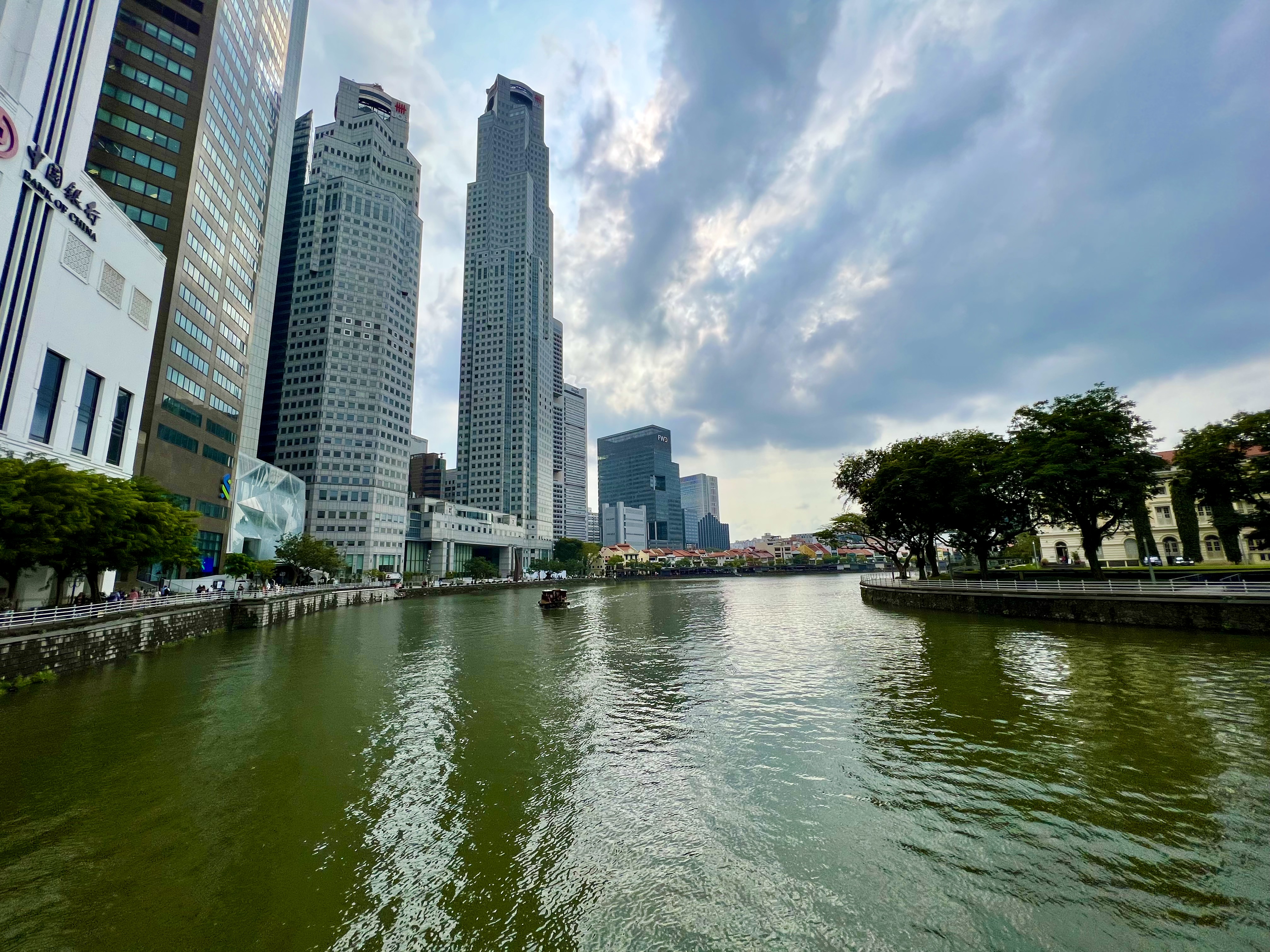
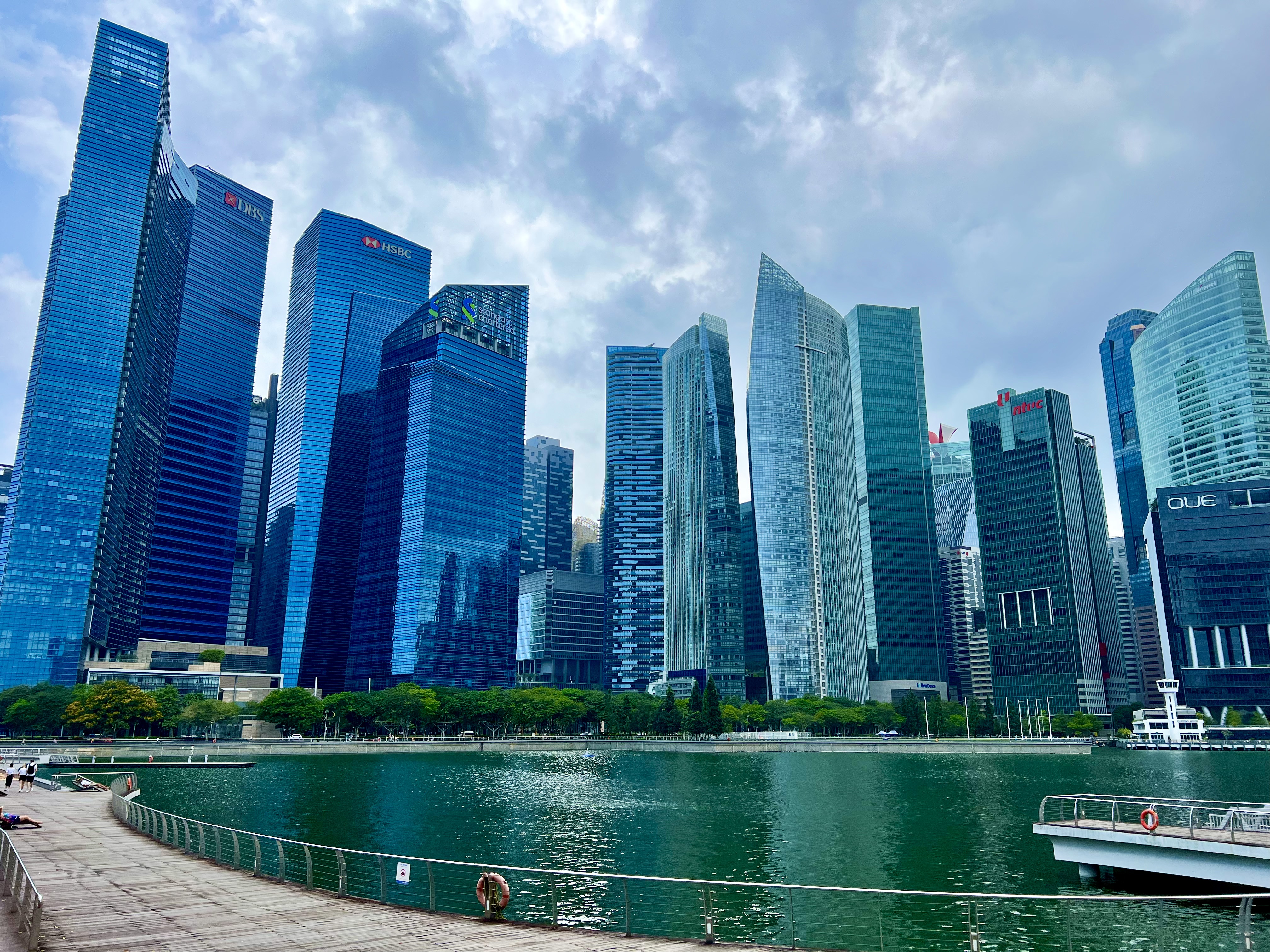
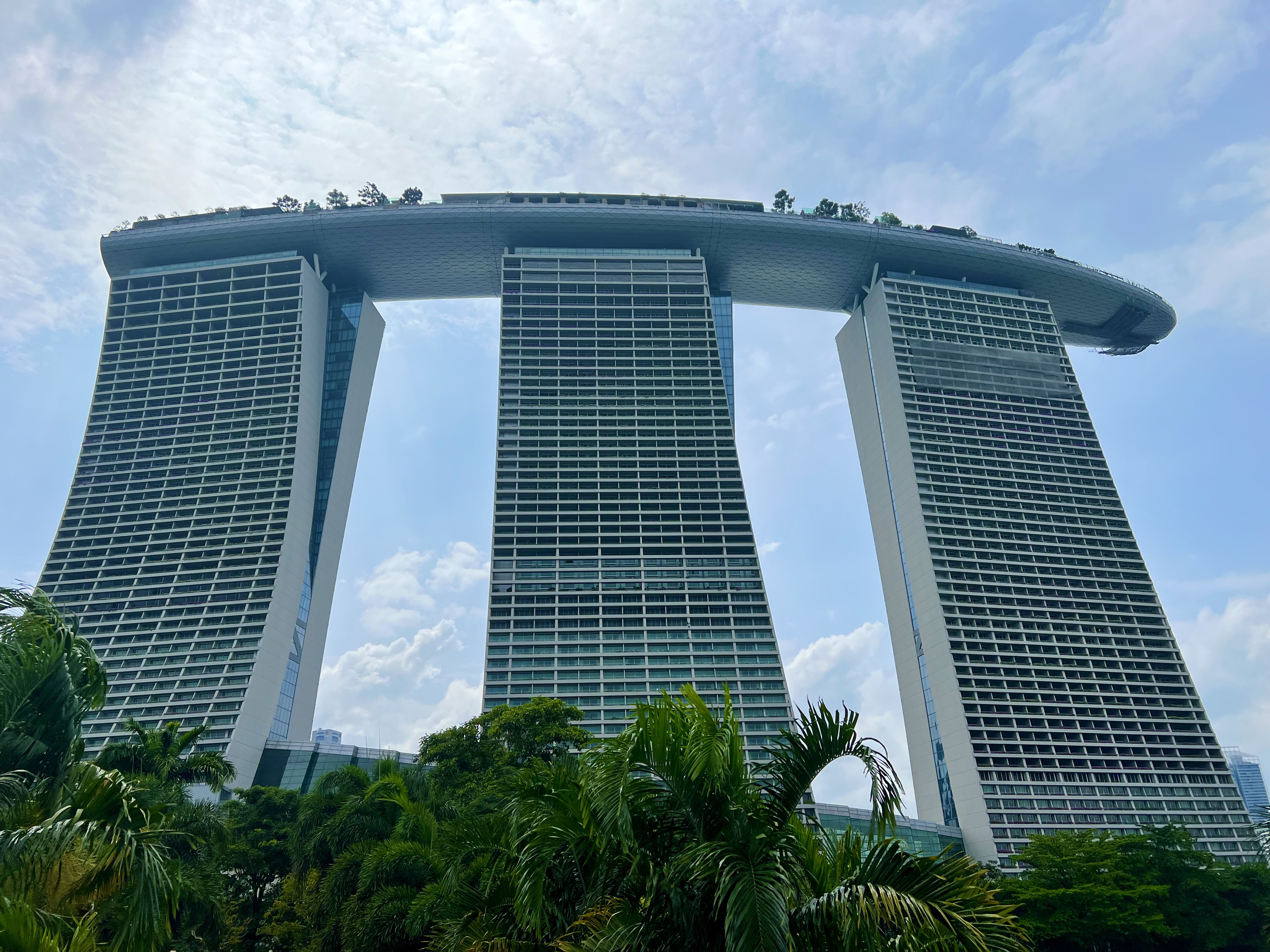
This complements the very modern and futuristic architecture in the center business district.
Each district has their own religious sanctuaries, although Hindu and Buddhist temples as well as churches and mosques are scattered throughout the geographical area. I was surprised to learn that Singapore is mostly Buddhist and Christian with a little over 13% Hindu – primarily Tamil from Southern India, and only a bit over 7% Muslim. This is very different from its neighbor to the north as Malaysia is almost entirely Muslim. Both the Hindu and Chinese Buddhist temples are filled floor to ceiling with beautiful sacred artworks, and I suspect this has had an influence, along with the city’s architecture, in the promotion of fine arts throughout the region. Public art in the form of street sculptures and wall/mural paintings are everywhere. It is a joy to wander aimlessly around and come across them.
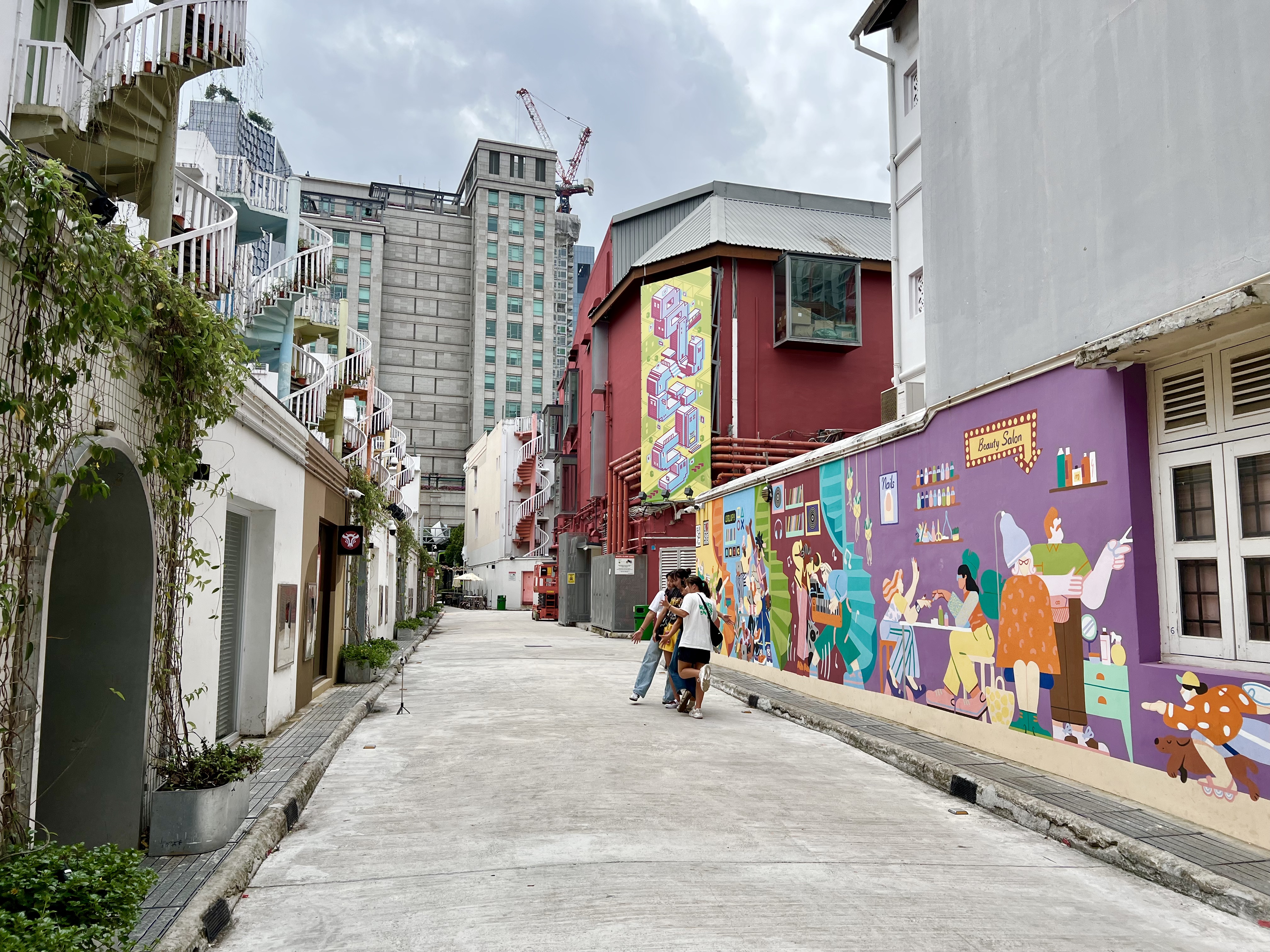
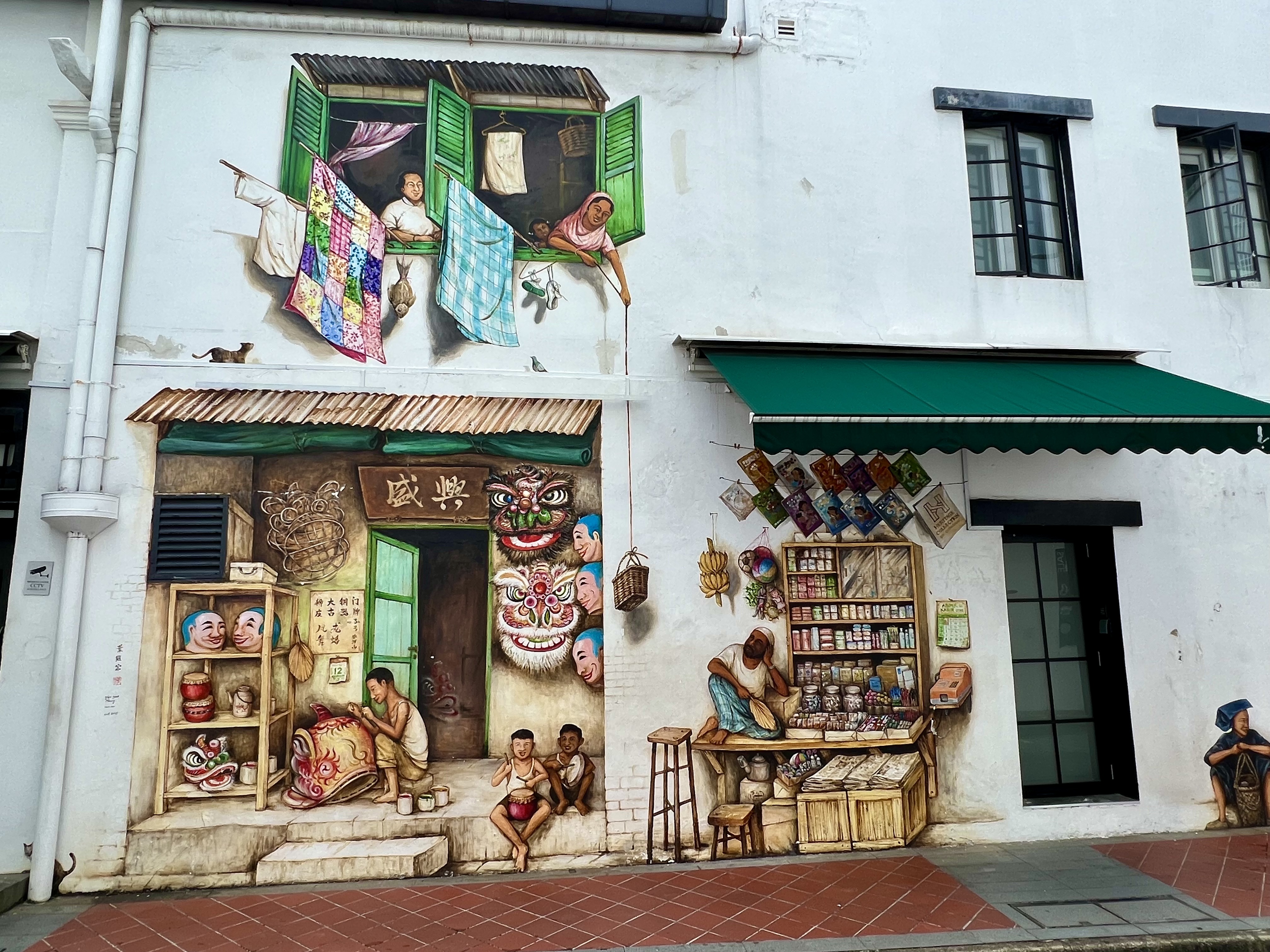
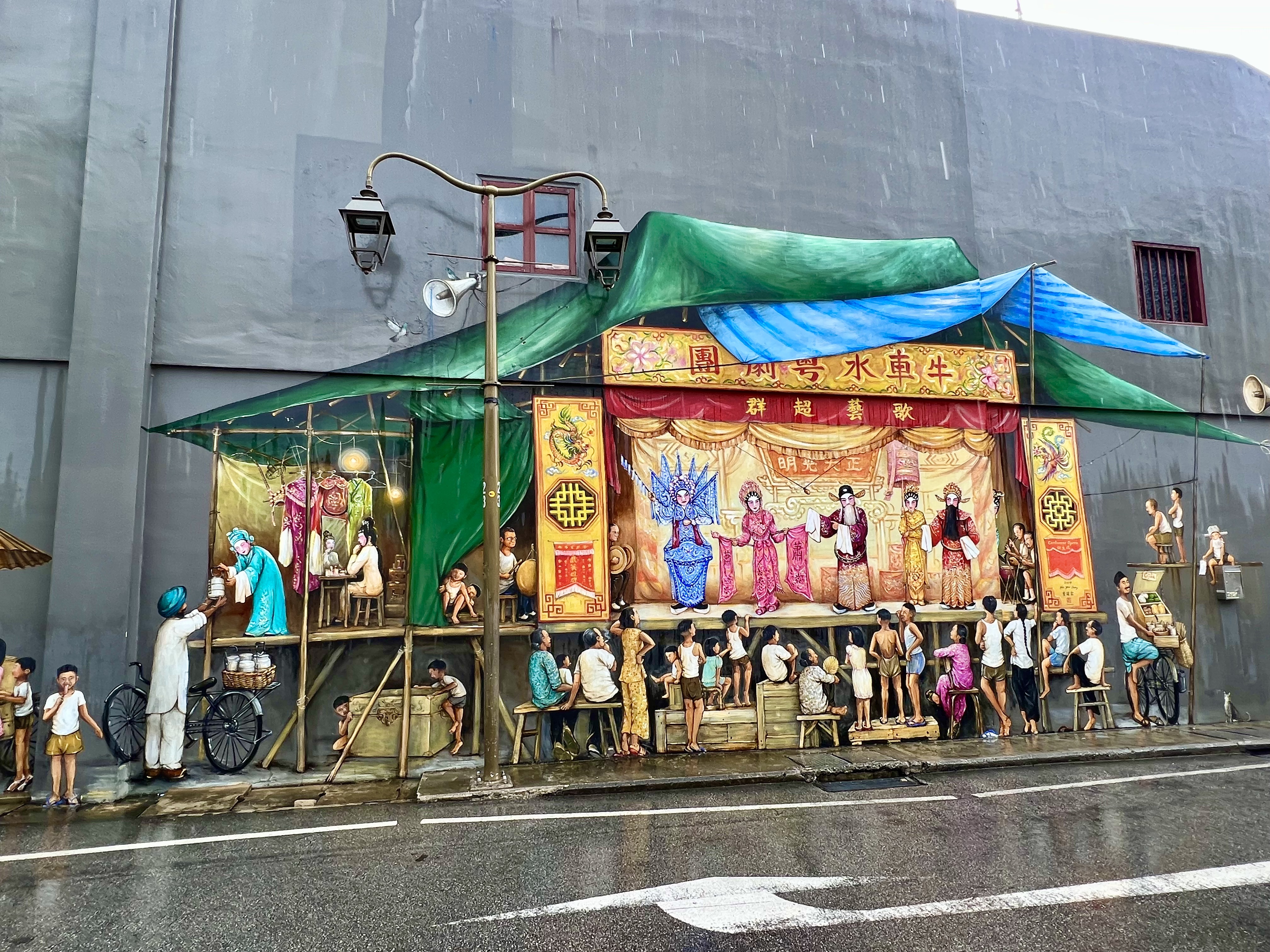
There are also a number of art schools and universities, more than one would normally see in such a small space.I wasn’t expecting to find so many amazing temples and clearly did not see even most of them, but I did get to some of the most popular. I started my temple journey with the main Kali temple in Little India, Sri Veeramakaliamman, which is one of the oldest Hindu temples in the city. It has a prominent gopuram, the heavily ornamented cap above the entrance. It is in a Dravidian style, which is quite different from that of northern India. Tamils make up a large percentage of the Indian-Singaporean population. When I was there, priests were performing pujas and the hall was full of worshippers.
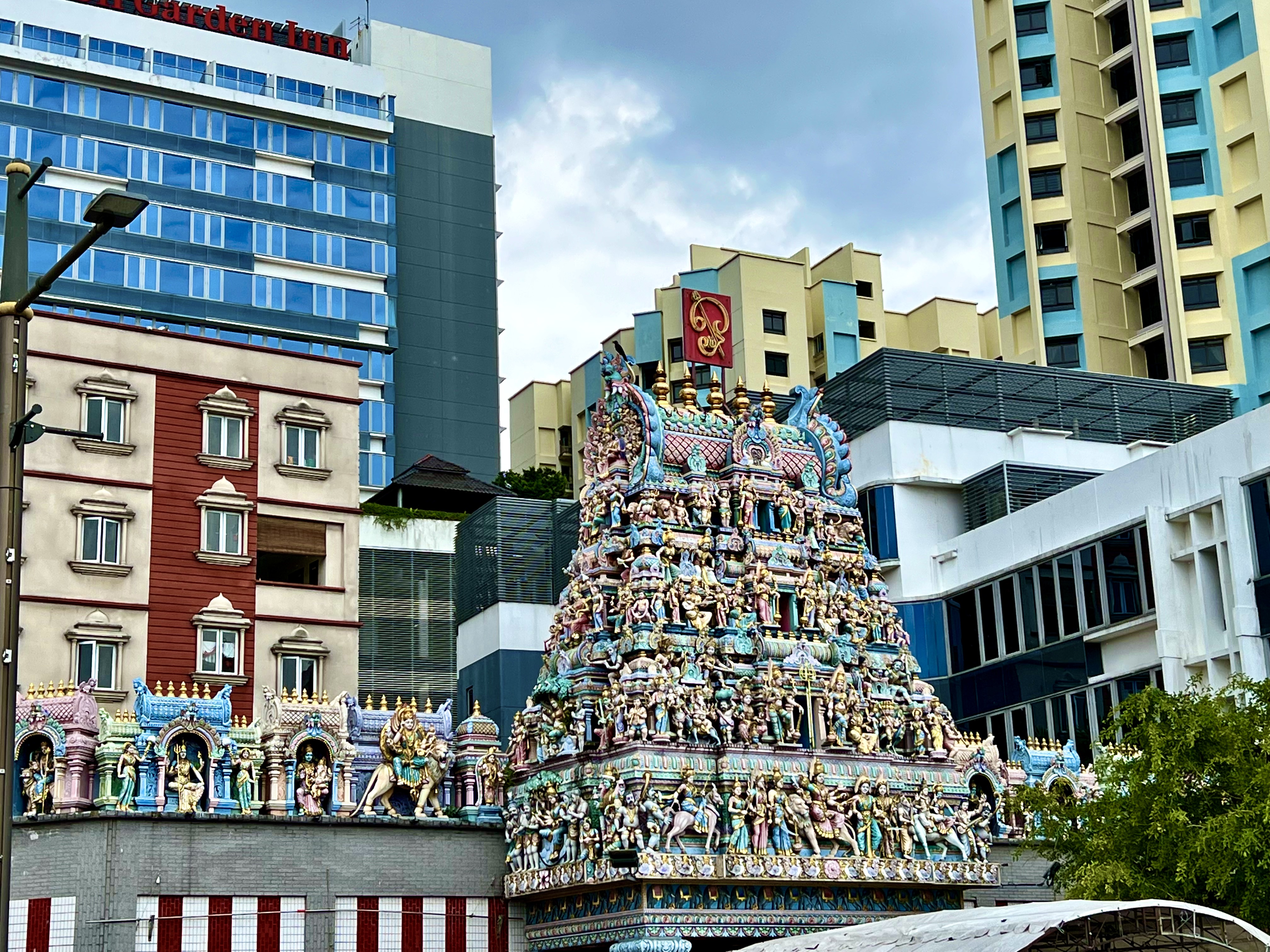
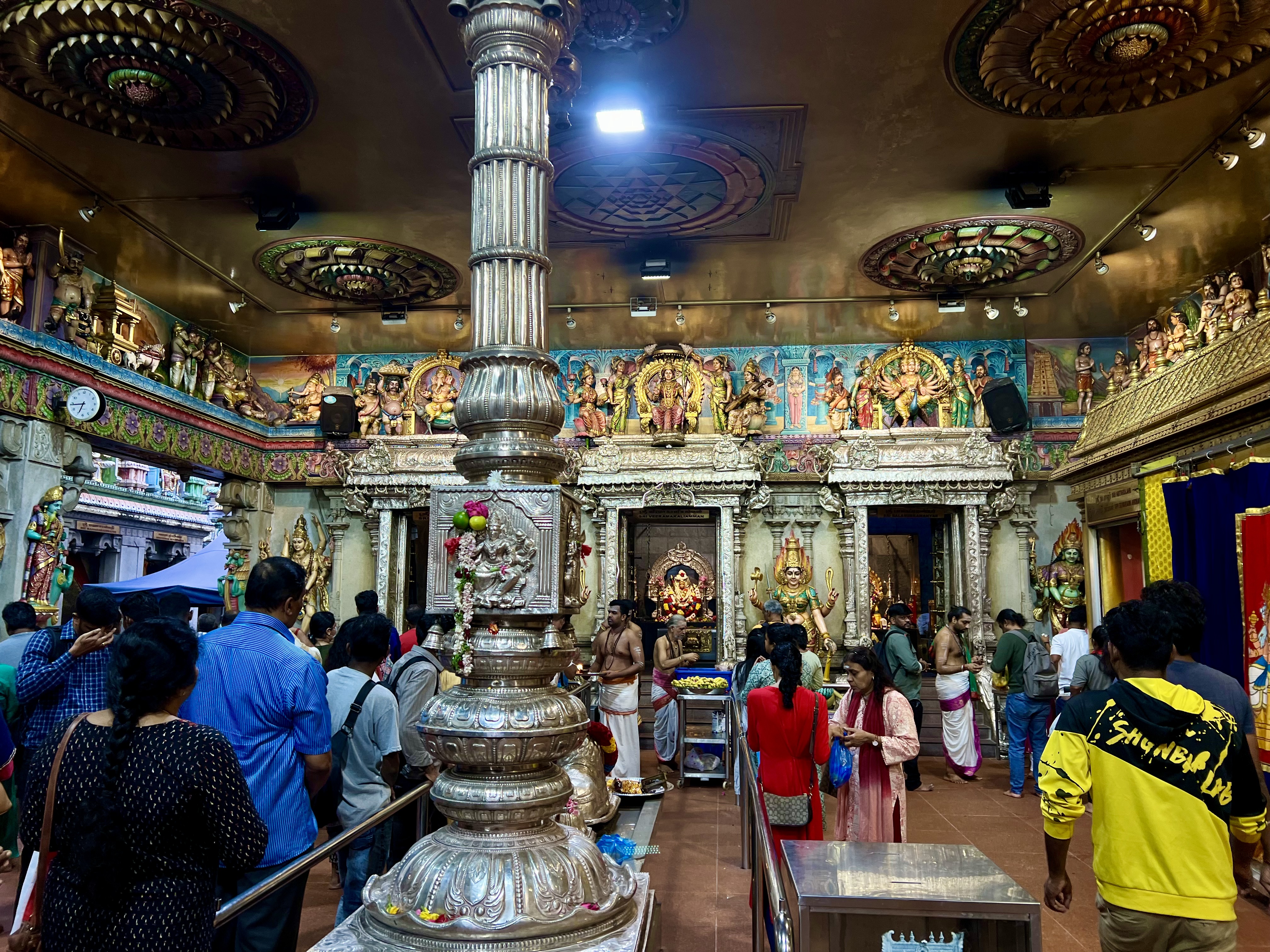
Not too far away is a Lakshmi Temple. On Waterloo St. right near my hotel, was a Sri Krishna/Vishnu Temple.
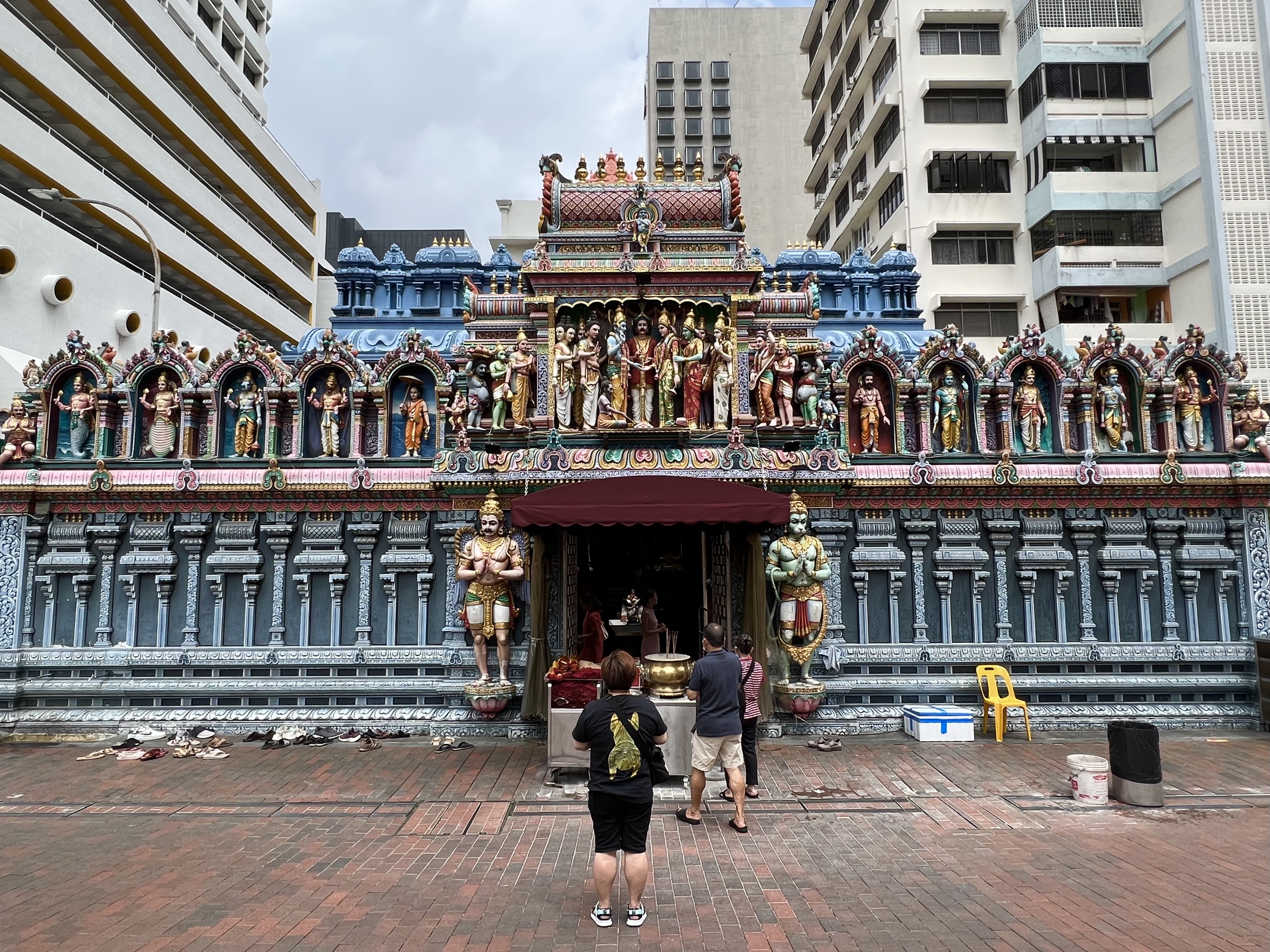
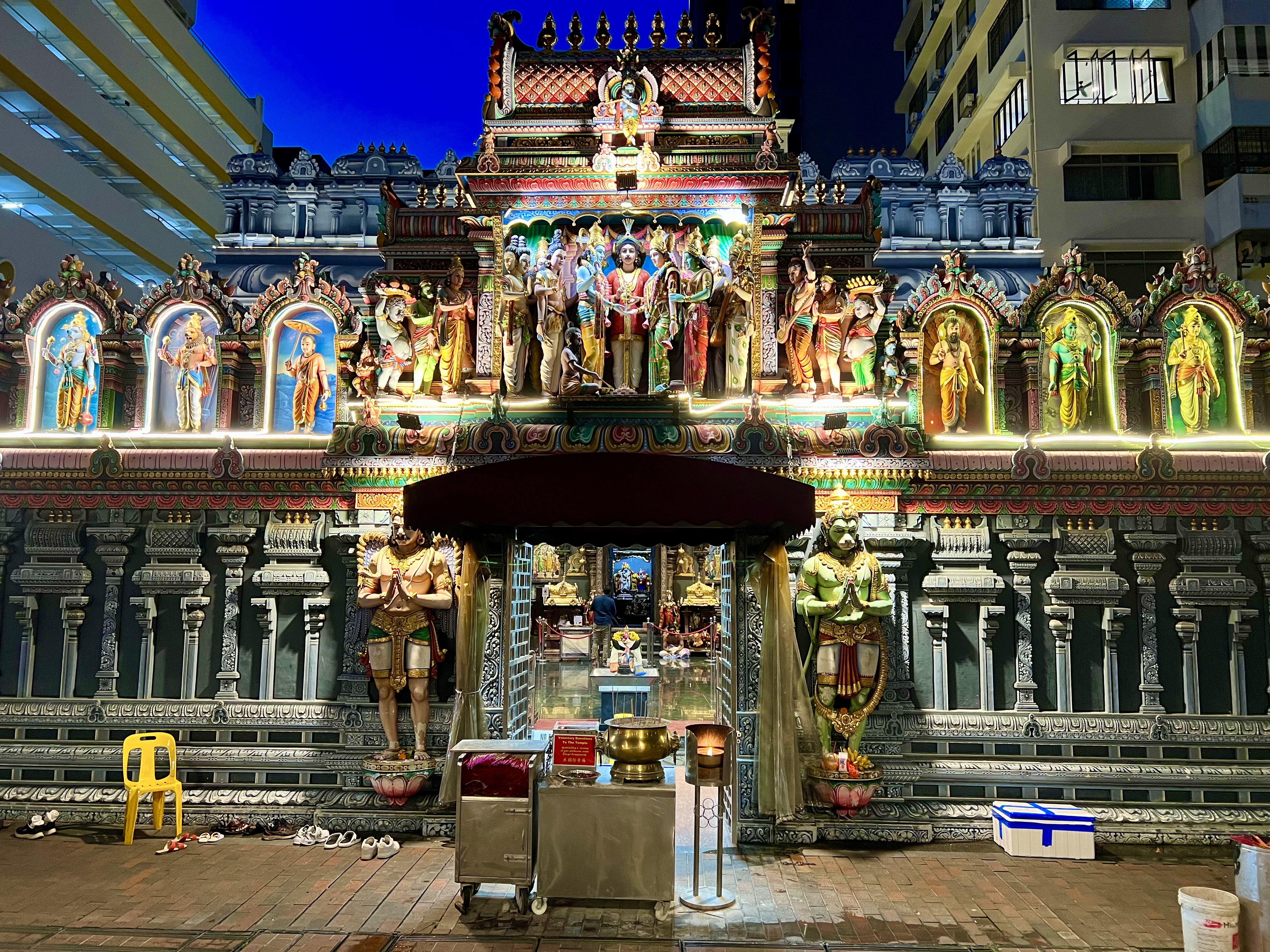
This one was almost adjacent to the Chinese Buddhist Kwan Im Thong Hood Cho Temple near Fu Lu Shou commercial complex that houses stores selling Buddhist trinkets and offering materials. It also has shrines right in the complex and people reading palms, tarot cards and other divination methods. I was tempted to have my astrological chart done, but in the end decided against it.
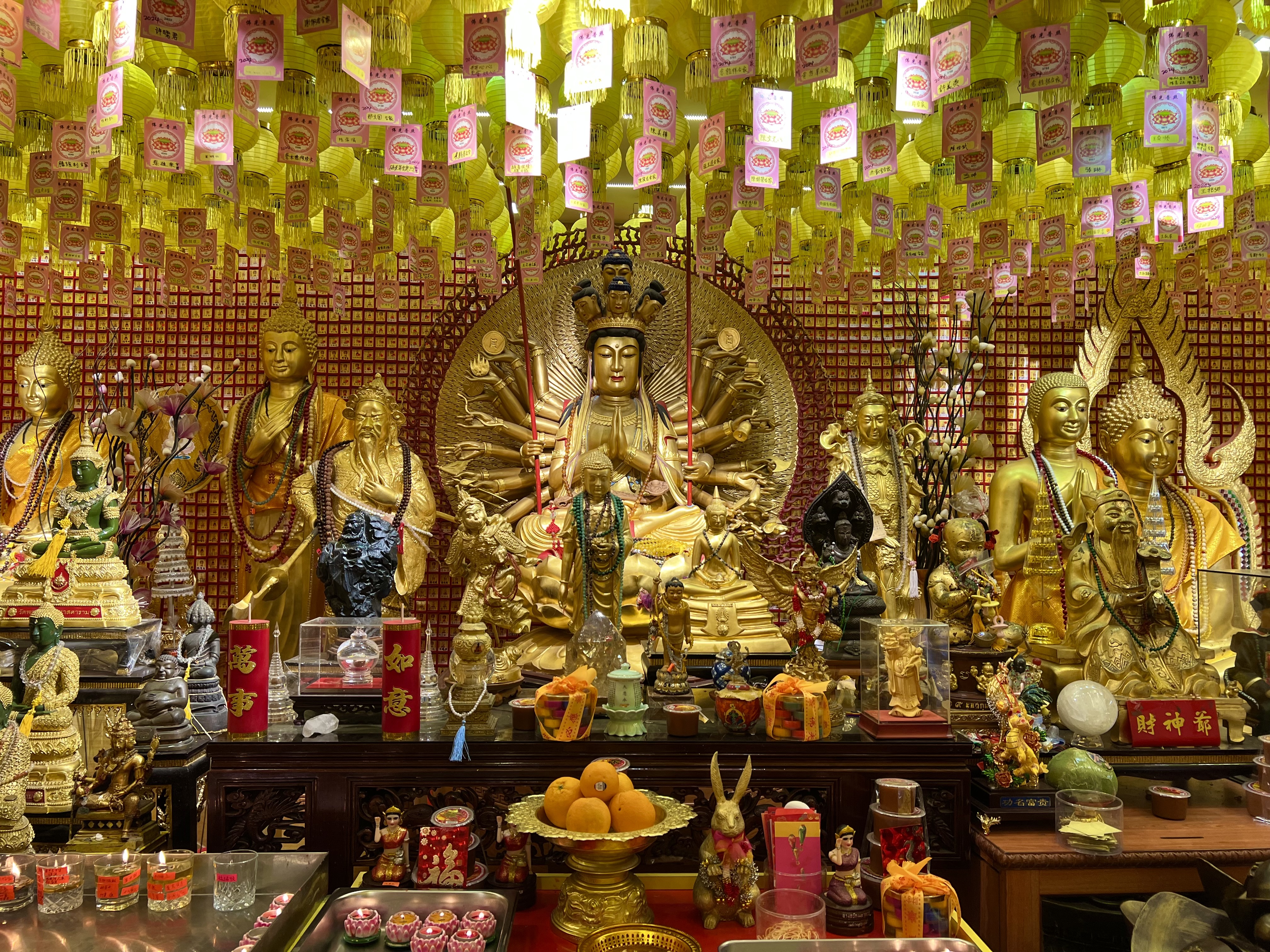
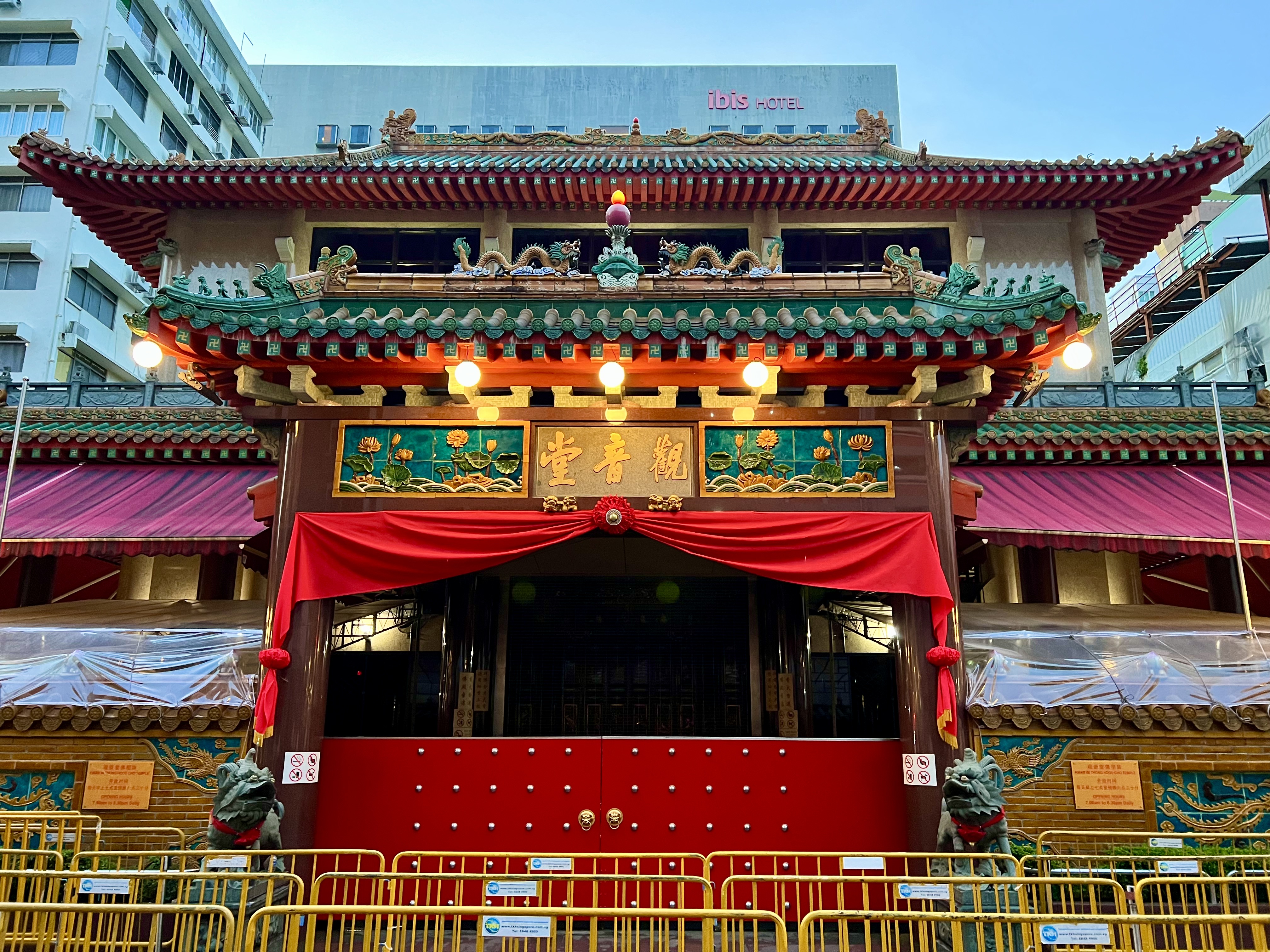
In Little India there is a mosque as well as the Leong San See Temple Chinese temple dedicated to Kwan Yin/Avalokiteshvara, who appears in both his male and female forms, and an altar honoring Confucius. The Vishnu temple has incredibly ornate ceiling carvings.
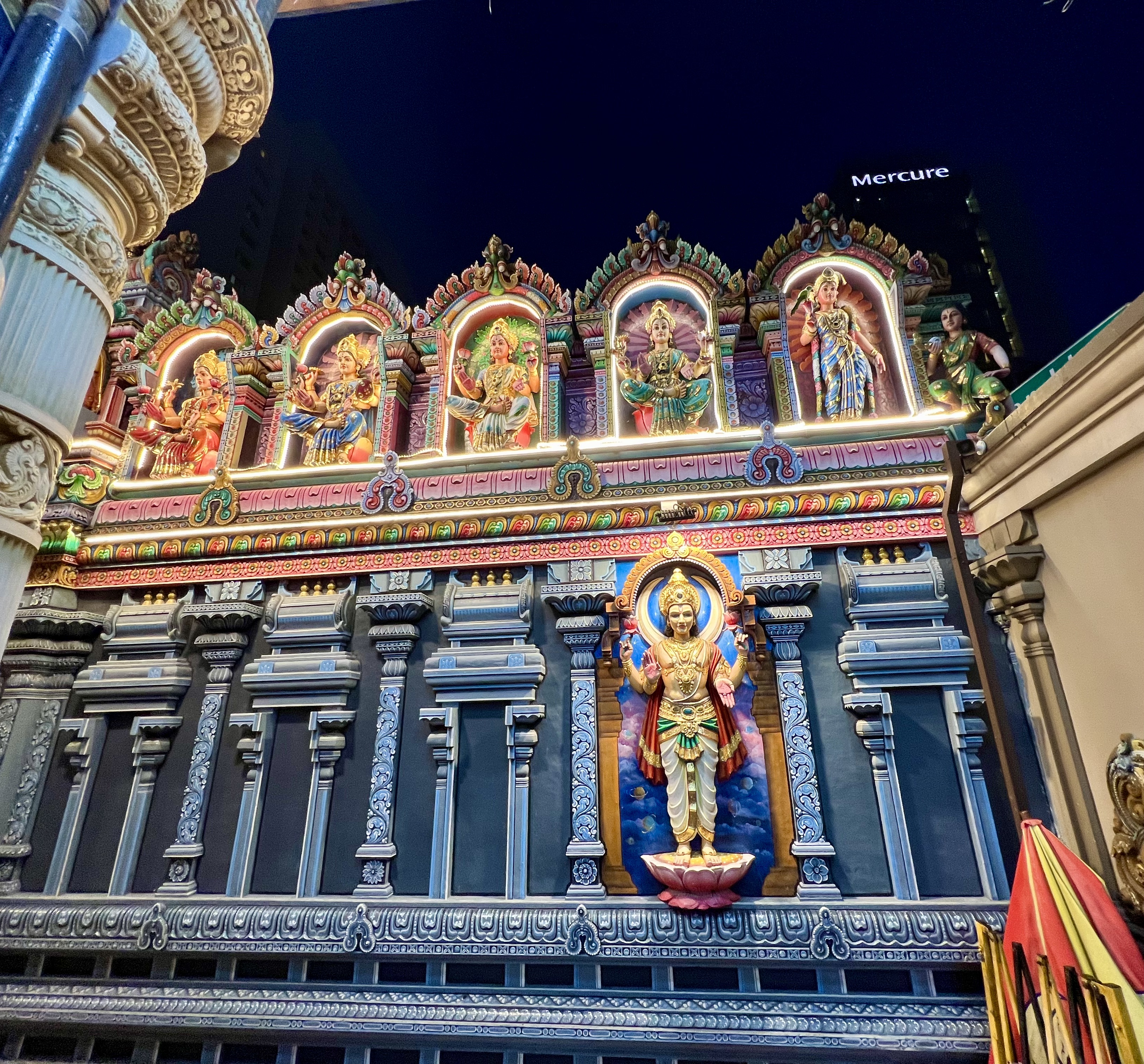
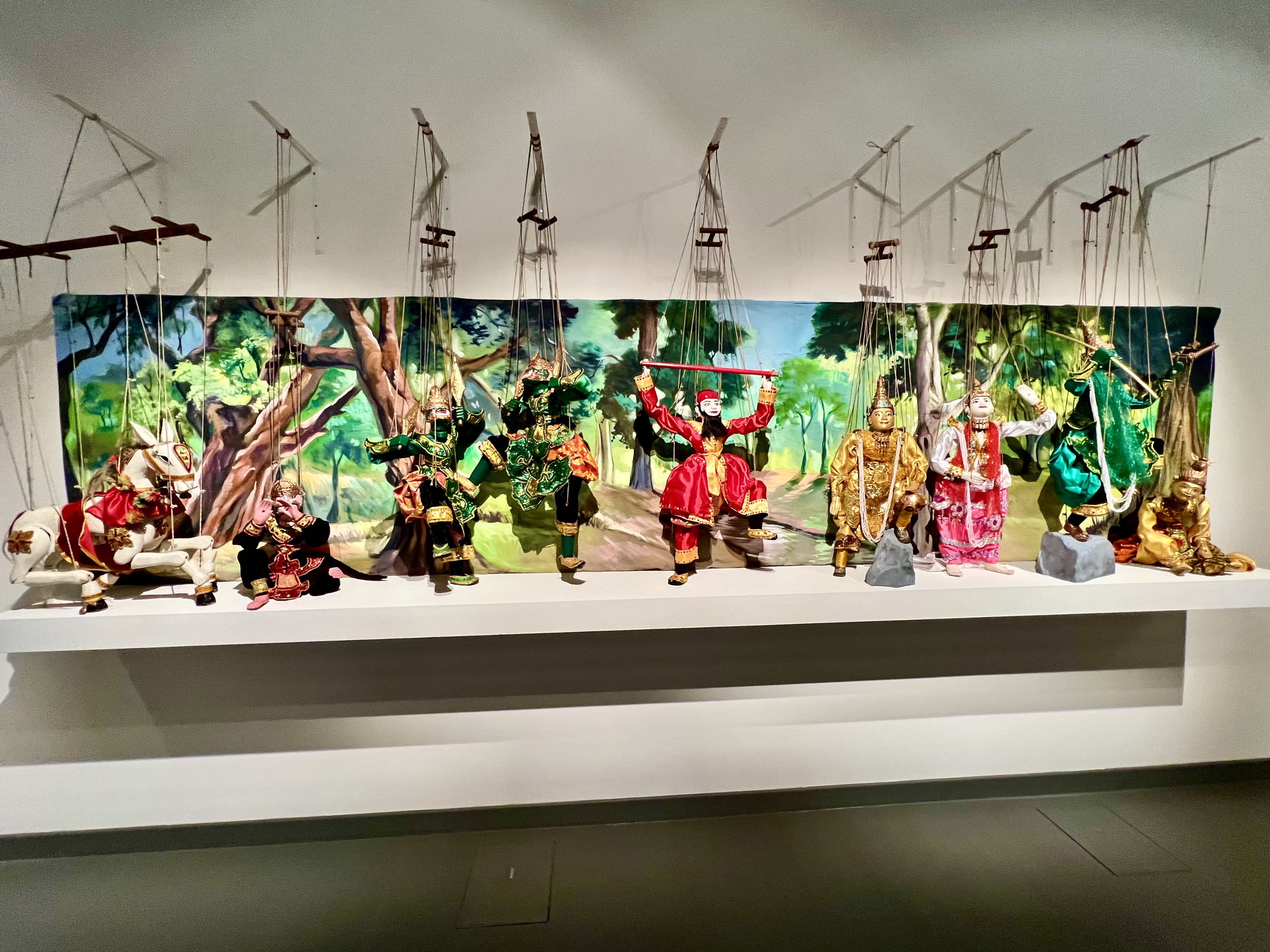
The presence of so many different religious traditions within just a few meters of one another demonstrates the deep-seated multi-cultural aspects of the city.The next day, on my way to Chinatown, I detoured as I saw a poster for “Heroic Tales: Puppetry Across Southeastern Asian” in the Lim Hak Tai Gallery at Nanying Academy of Fine Arts, which is part of the University of the Arts Singapore. Posters with photos explained a few puppetry traditions, including those from Cambodia, Thailand, Sri Lanka and Myanmar. Actual puppets from Myanmar were on display.
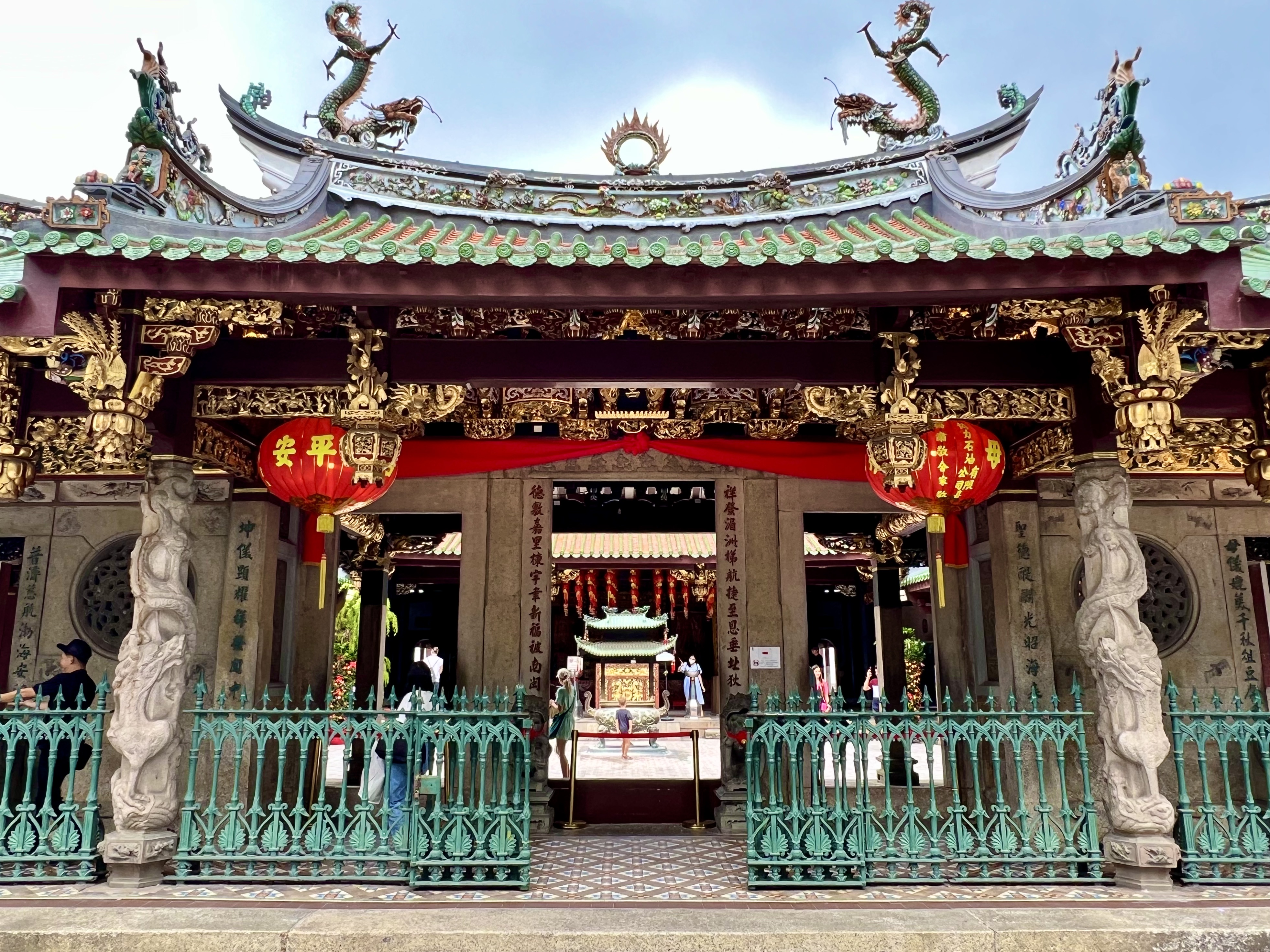
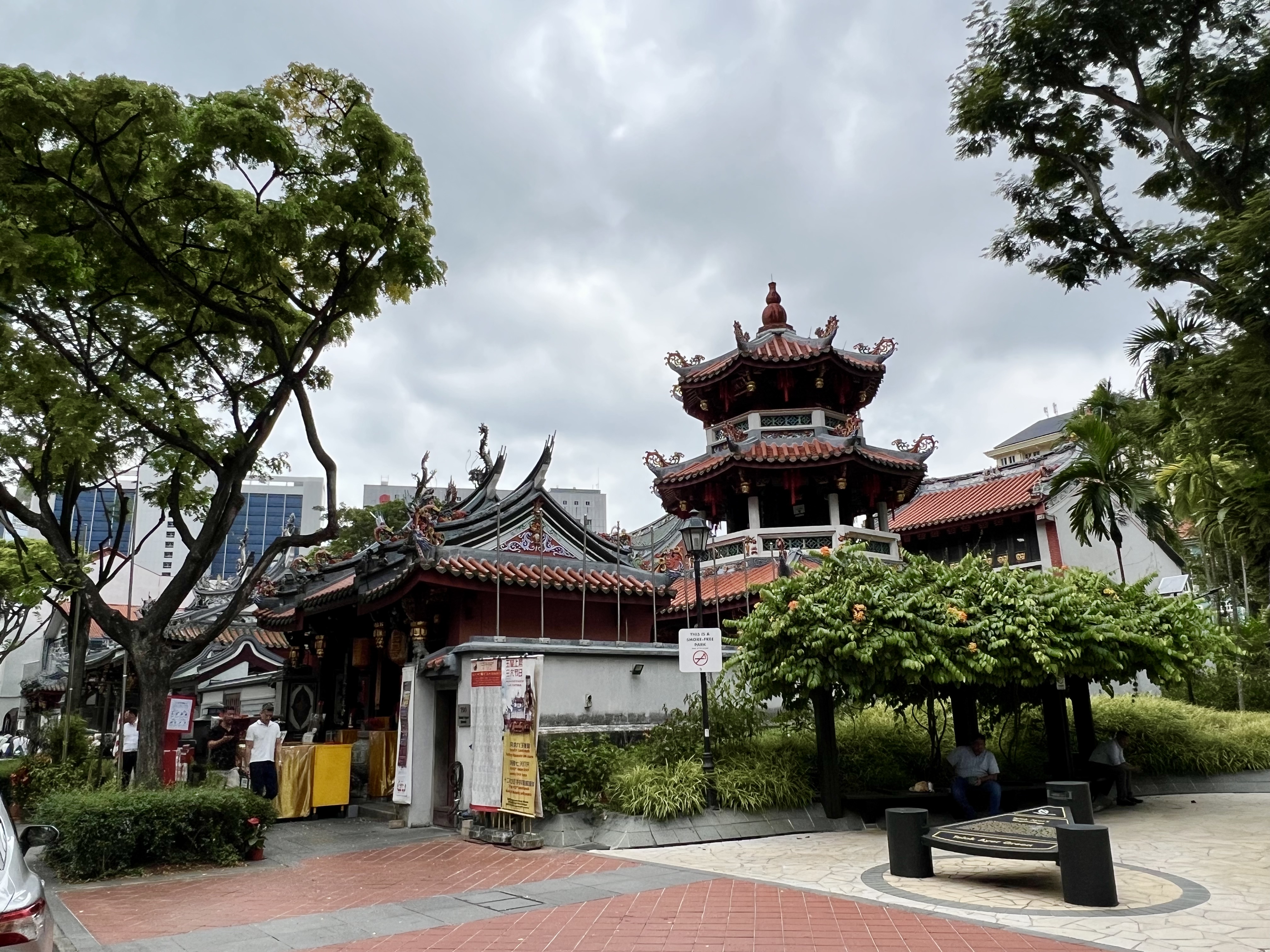
From there I made my way through a variety of street art to the Chinese Thian Hock Kang Temple, which is supposed to be the Palace of Heavenly Happiness, dedicated to the goddess Mazu, the goddess of the Sea.
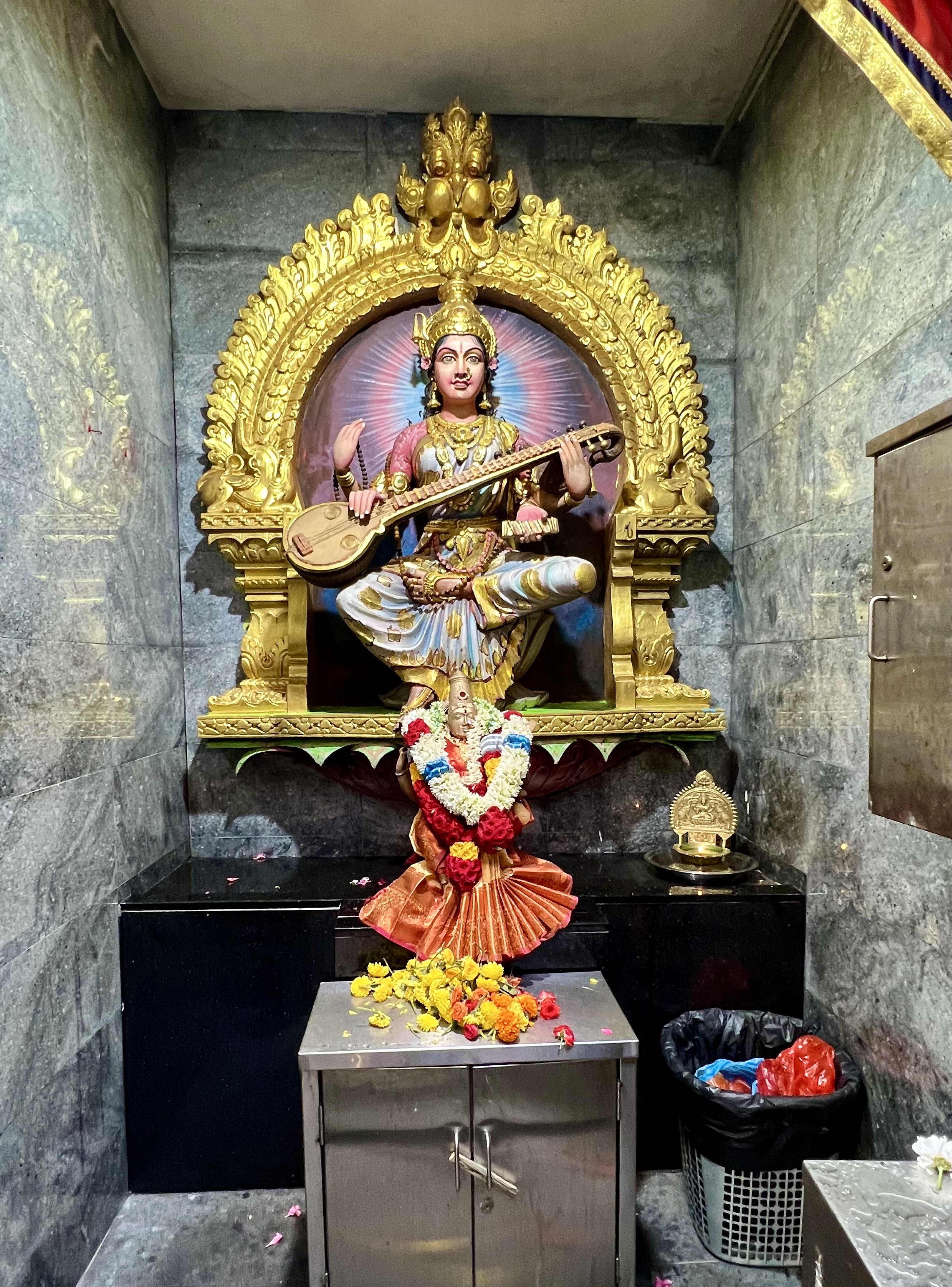
From the Chinese Buddhist site, I walked over to the oldest Hindu temple, Sri Mariamman dedicated the goddess. It was pouring rain, so I couldn’t get a good photo of the outside but am including one from the interior.

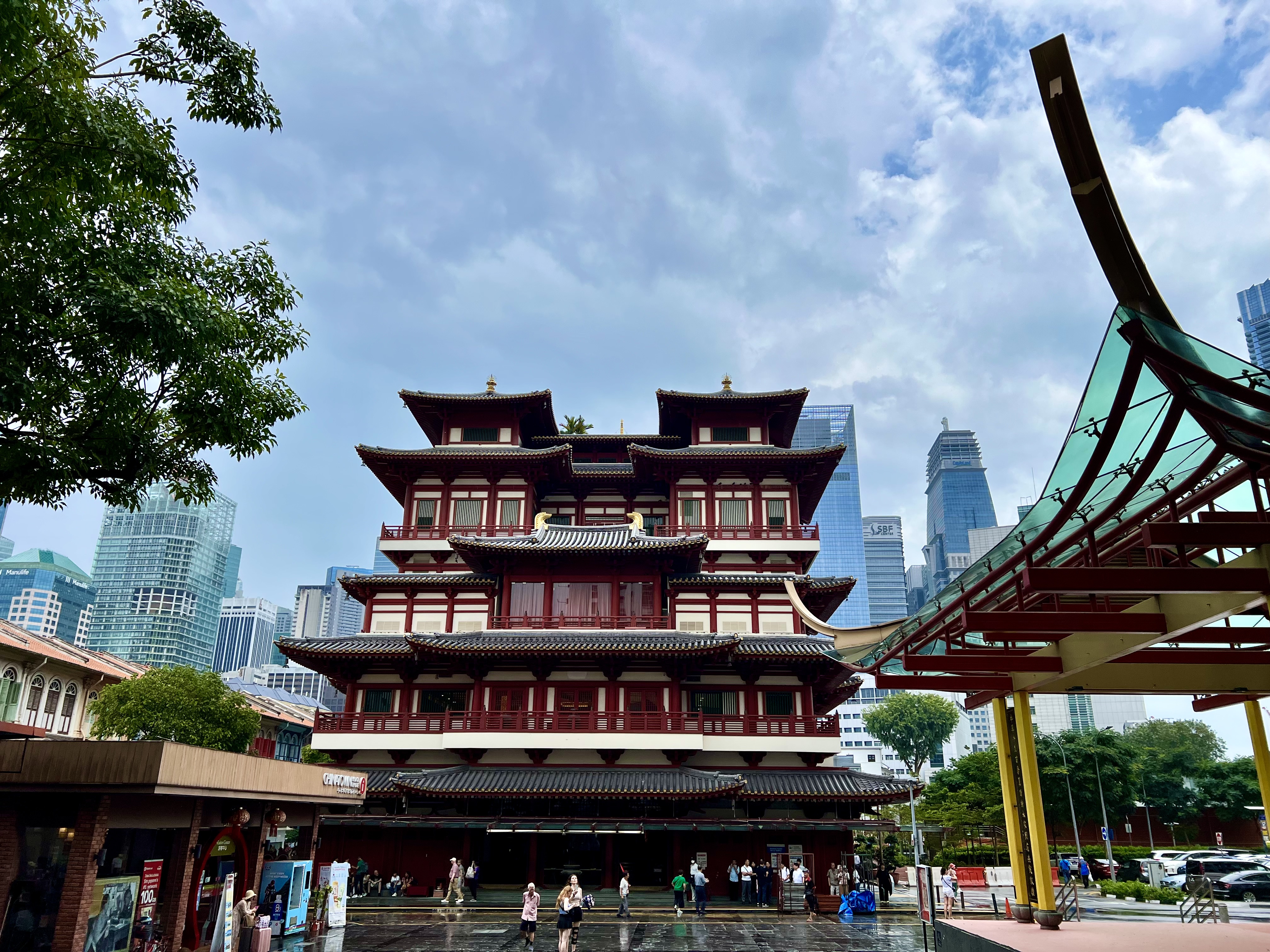
Very near the Hindu temple, is the Buddha Tooth Relic temple. This surprised me as I wasn’t aware that there was a tooth relic in Singapore. It is supposed to house the Buddha’s left canine tooth. The last tooth relic I saw was in Sri Lanka, and it was difficult to get near to the case, which was never opened. Here one just took an elevator to the fourth floor and could view the gold casing without any line or obstacle! While I was there, priests were celebrating a service in the main floor’s central shrine, and Buddhist chants filled the sacred site along with the scent of incense. One thing that I noticed that was different from that which I am used to, is that the circumambulation in the Singaporean Chinese Buddhist temples is counter-clockwise. Elsewhere it is clockwise. The Hindu temples had the clockwise version.

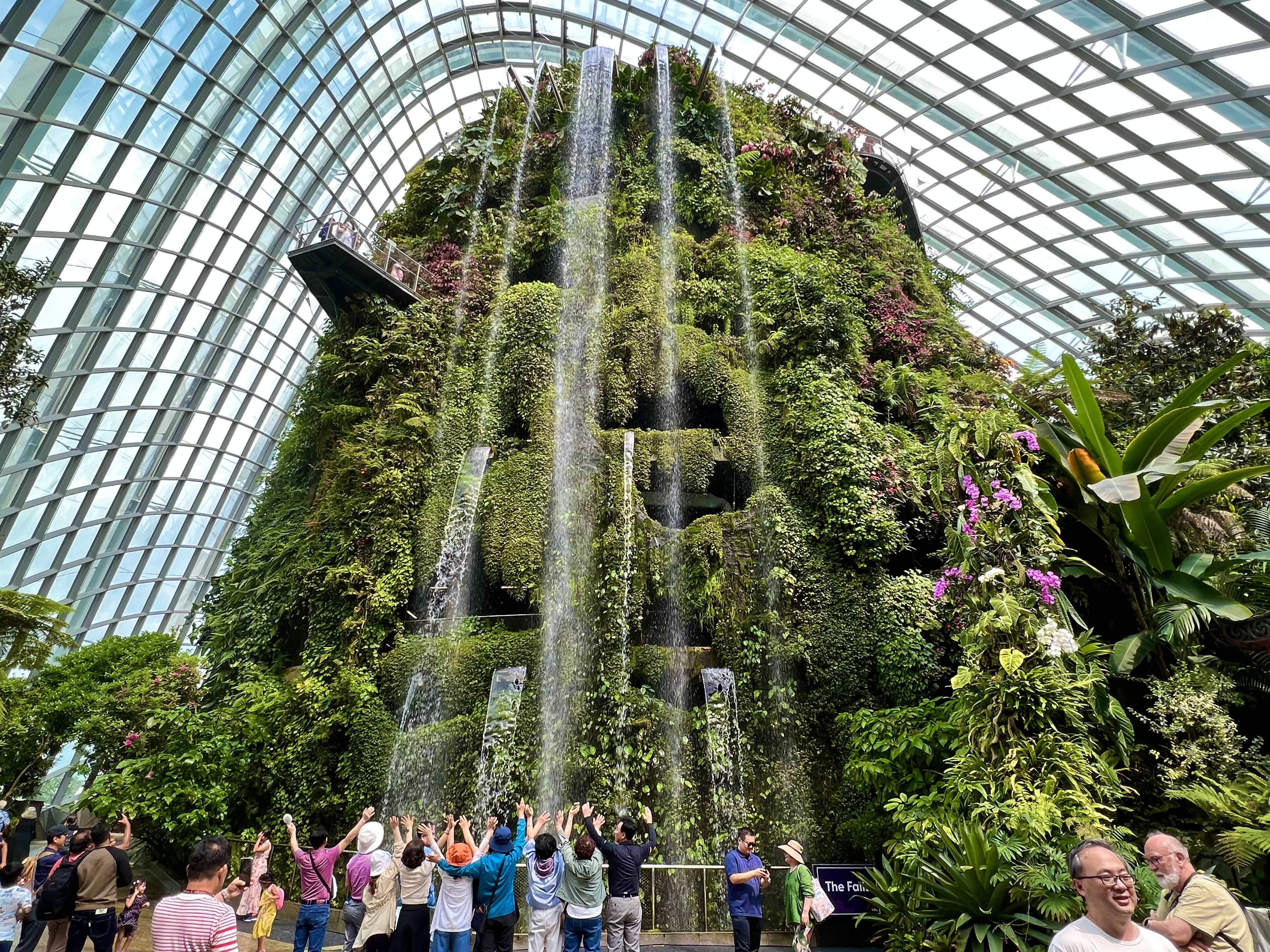
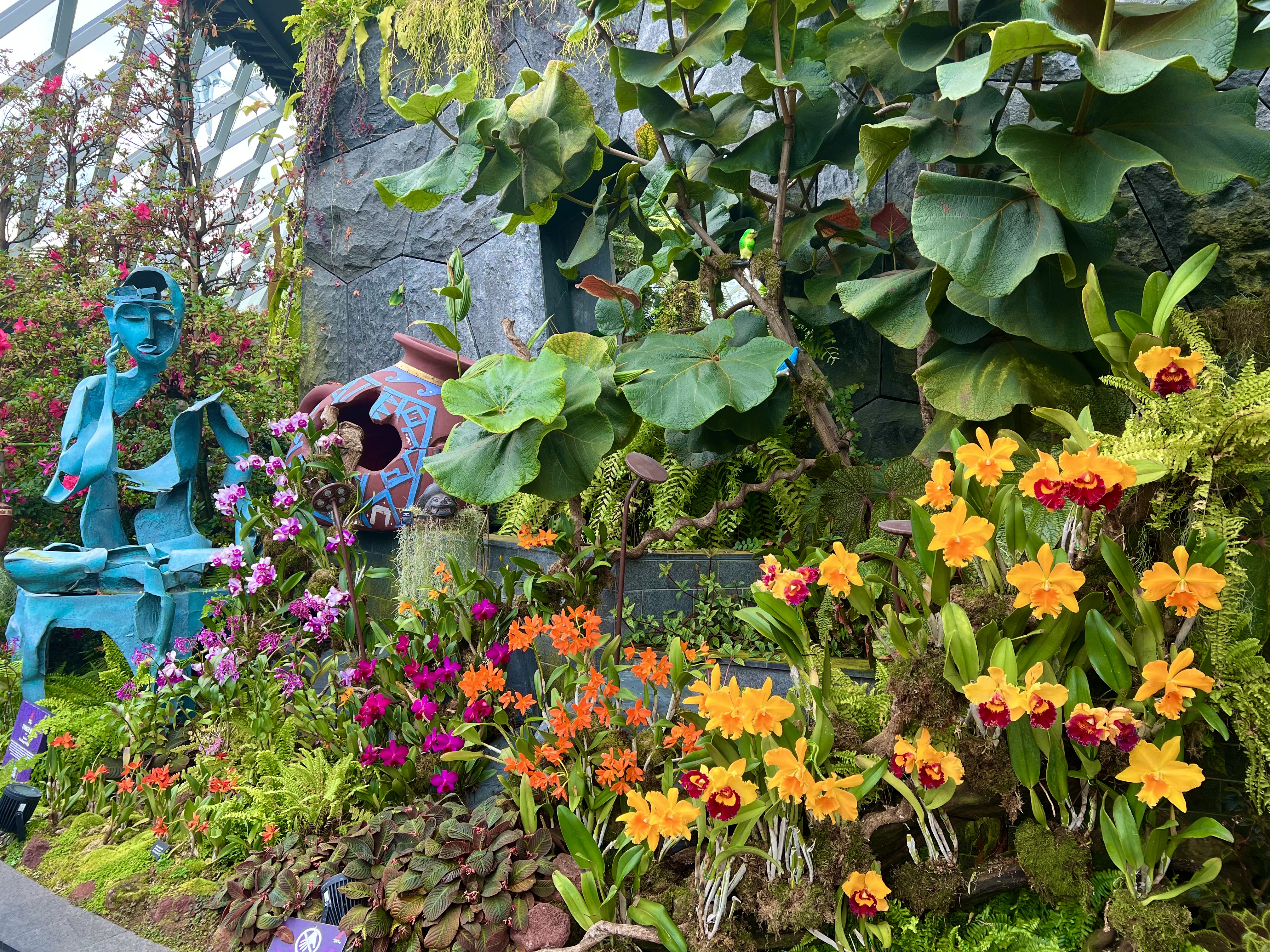
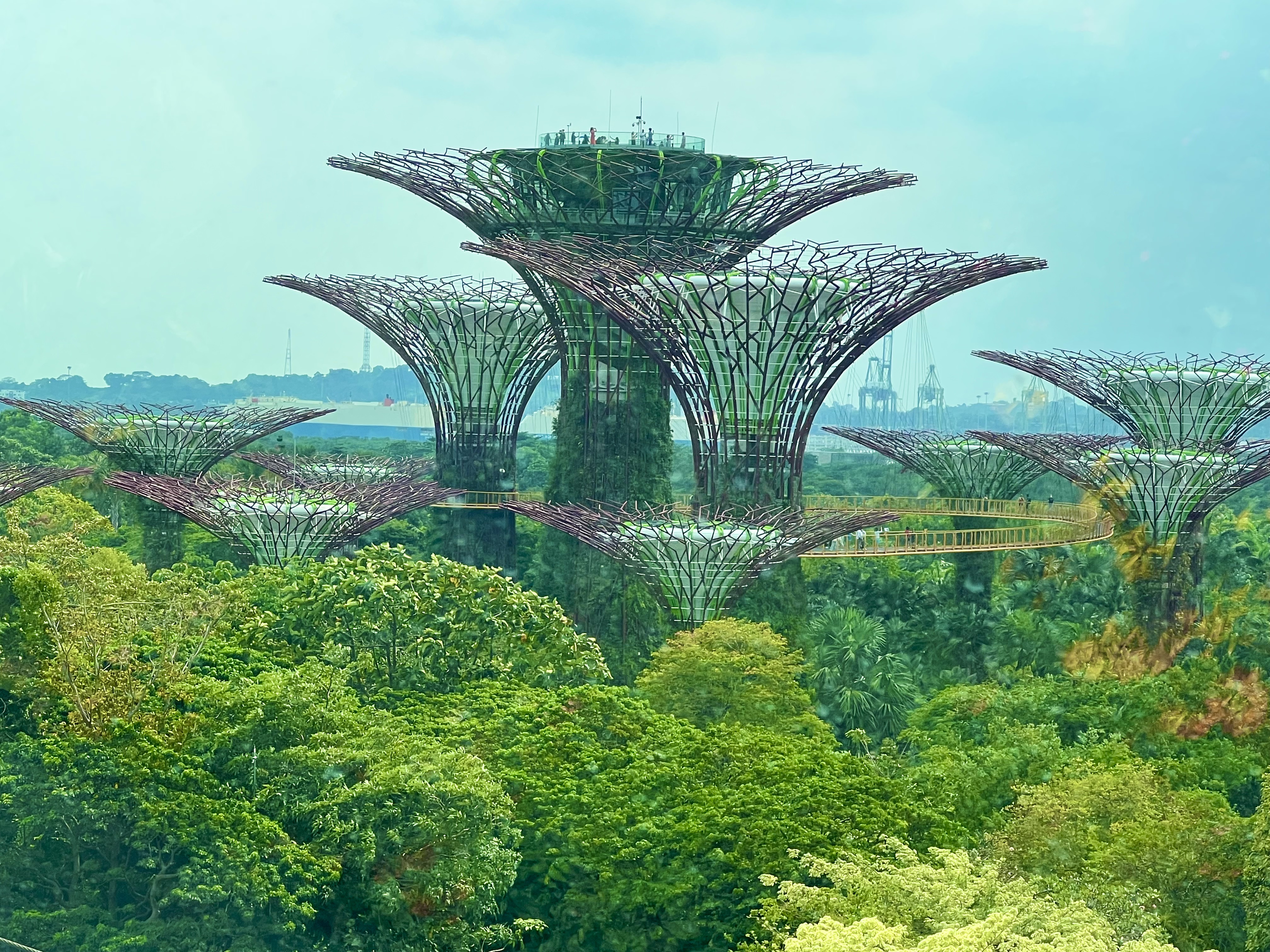
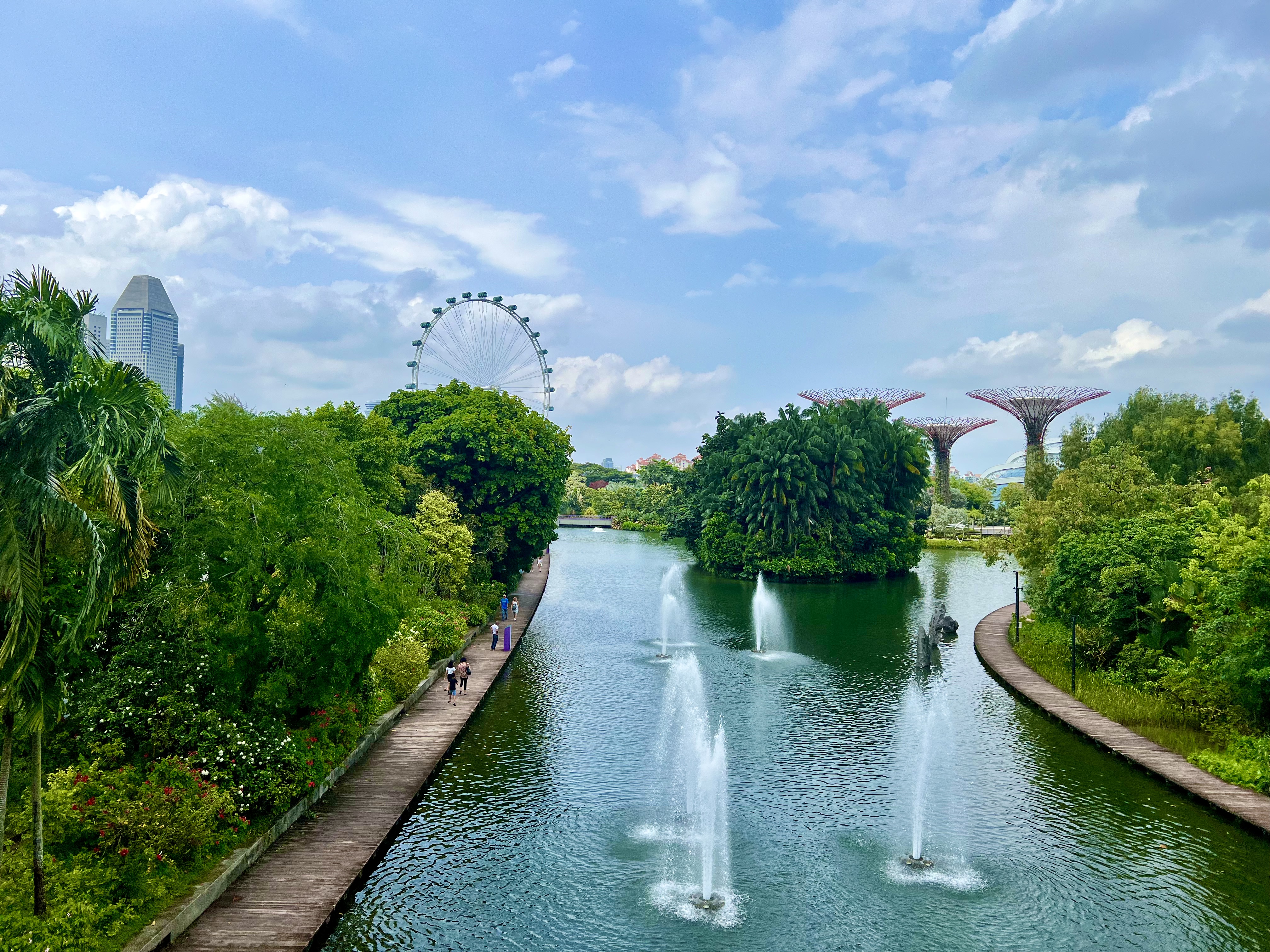
After visiting the temples, and wandering around looking at street art, some of which is truly amazing, I headed over to the Gardens by the Bay which has different sections devoted to various world regions, the famous wire trees, the flower dome, and a separate cloud forest building with interior waterfall. The skywalk and some of the other attractions were closed due to the rain, but the Flower Dome and Cloud Forest were spectacular and a must see for all who like flowers and gardens.
My last stop was at the Asian Civilizations Museum, which had a couple of rooms on ancient religious art. There were Buddhist sculptures across many centuries from 1st C BCE Gandharan art to 19th century Nepal as well as Hindu and Buddhist sculptures from Cambodia, Thailand, Sri Lanka, India, Myanmar, and Bangladesh. One room was dedicated solely to Islamic art and another to Christian art. The museum isn’t particularly large, but it is well laid out and the artifacts presented an historical view of their respective religions sacred art. The museum is located on the river in a parklike setting, which also makes it a good place for a relaxing break.
My time in Singapore came to an end. I went back to the hotel to collect the luggage before heading to the airport and had a delightful surprise. The staff at the Mi Bencoolen Hotel offered me a free room to take a shower and clean up from the rain and humidity before the very long flight to Melbourne and on to Adelaide. I think Lee Kuan Yew would be proud of how his city-state has developed.
As an addendum – on March 19, 2024, the WSJ posted a video on the military capacity of Singapore. It seems that they spend more money per capita on defense than any other nation. All men must do two years of service in the army, and the building codes for residences include that there must be a bomb shelter in the structure. The government walks a tightrope with China in the background and various forces trying to control the Straits of Malacca, which is the lifeblood of Singapore’s trade system. The video was informative, and the information came as a complete surprise to me. I can recommend the video to all who are interested.
 omegoodyssey