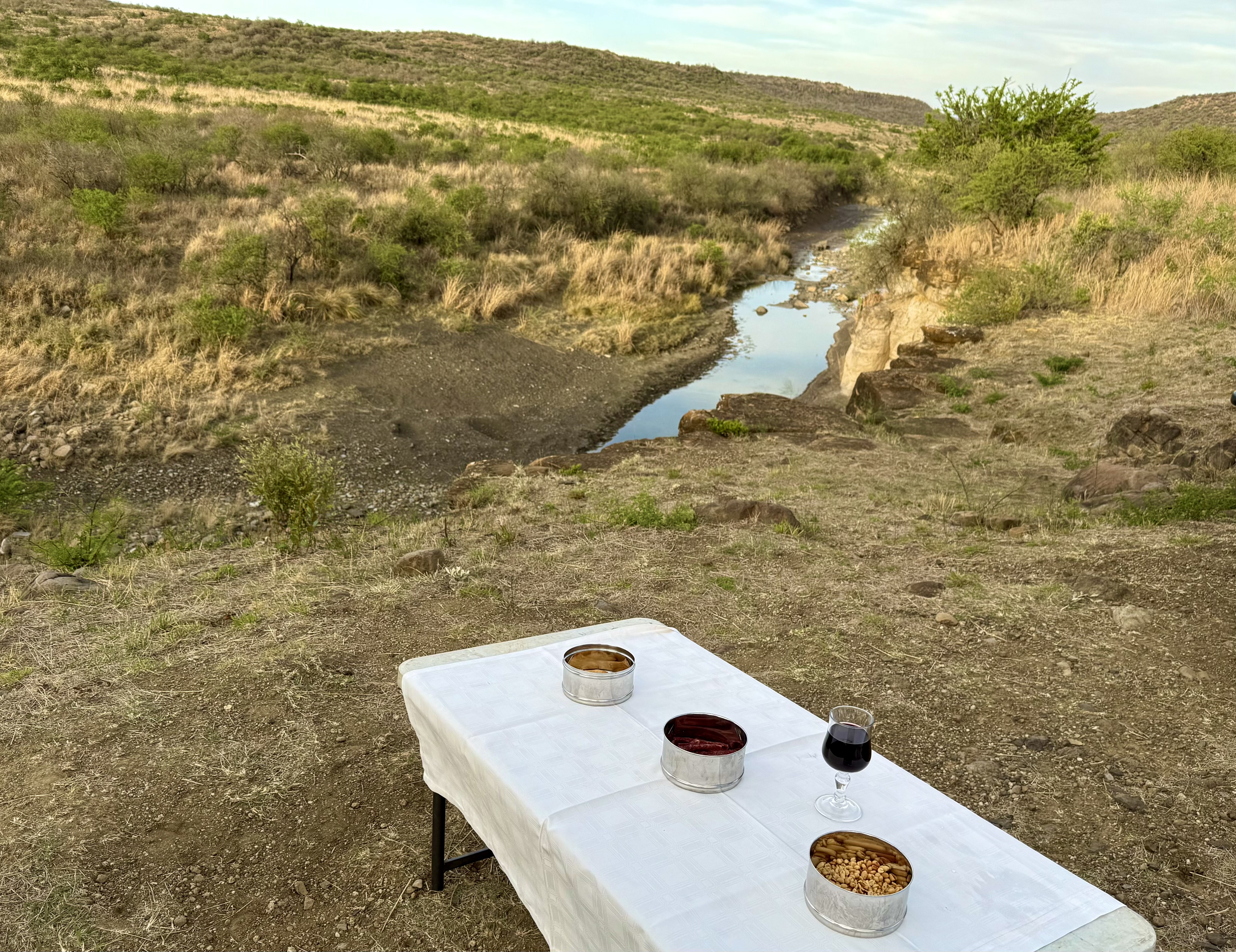
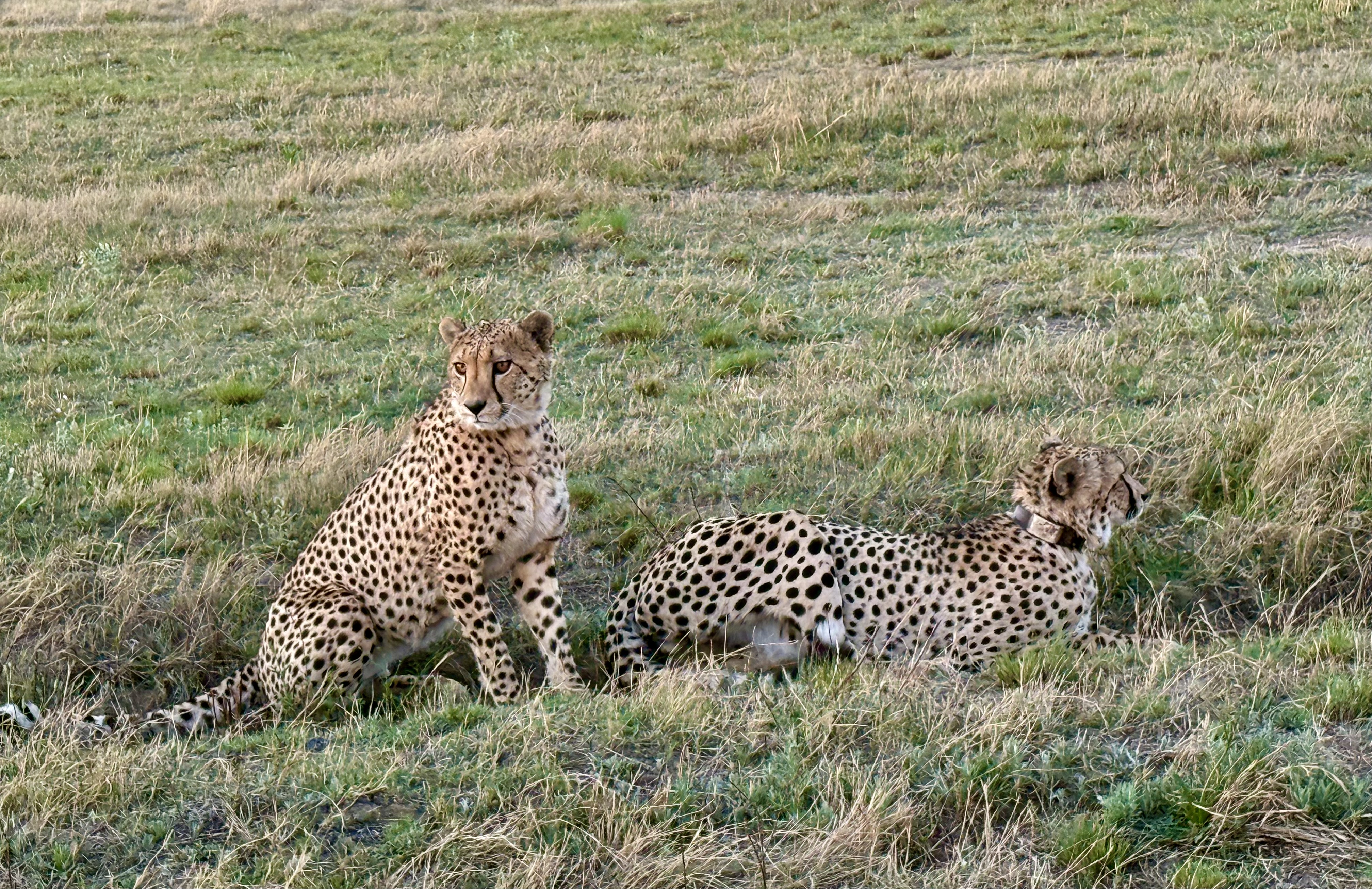
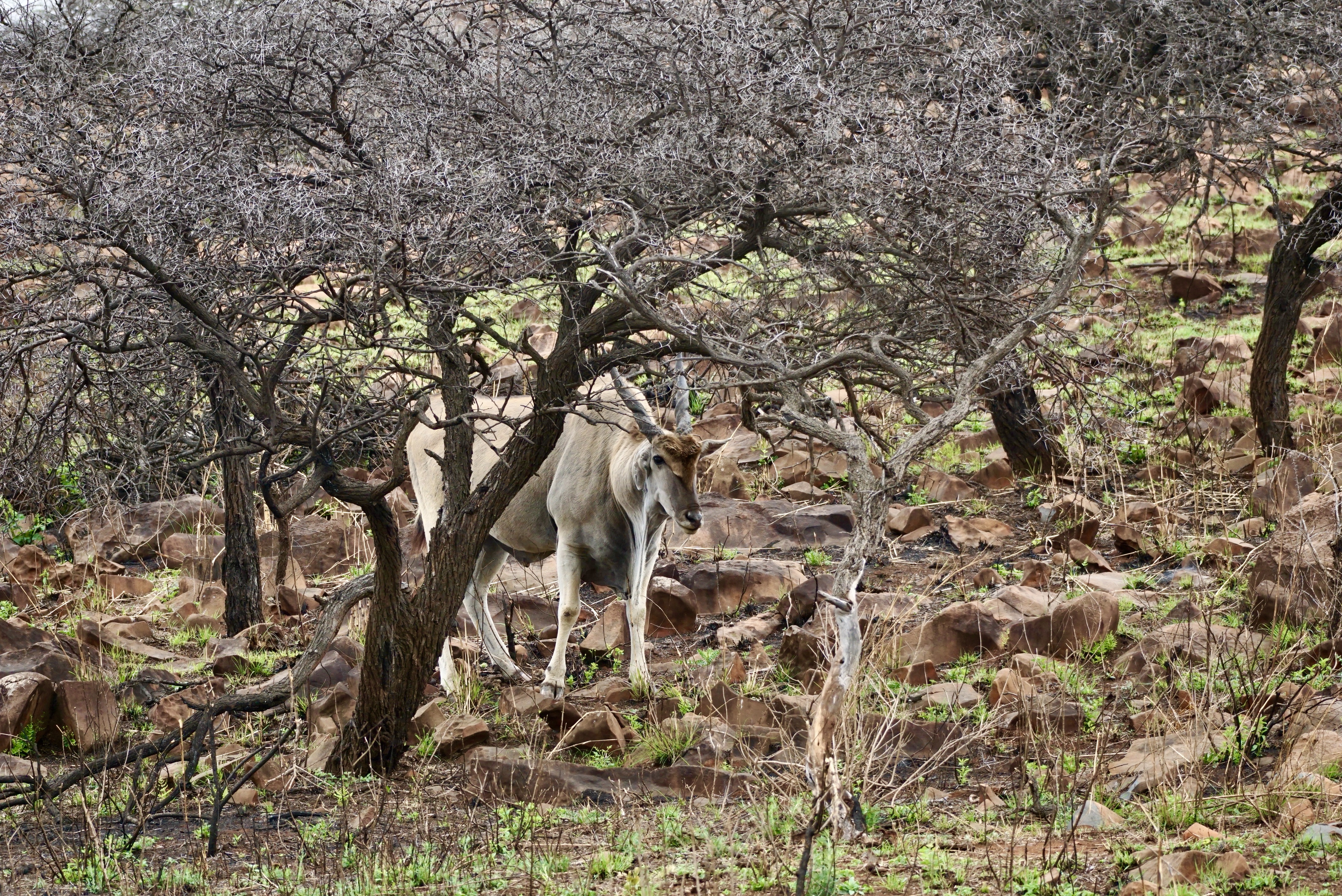
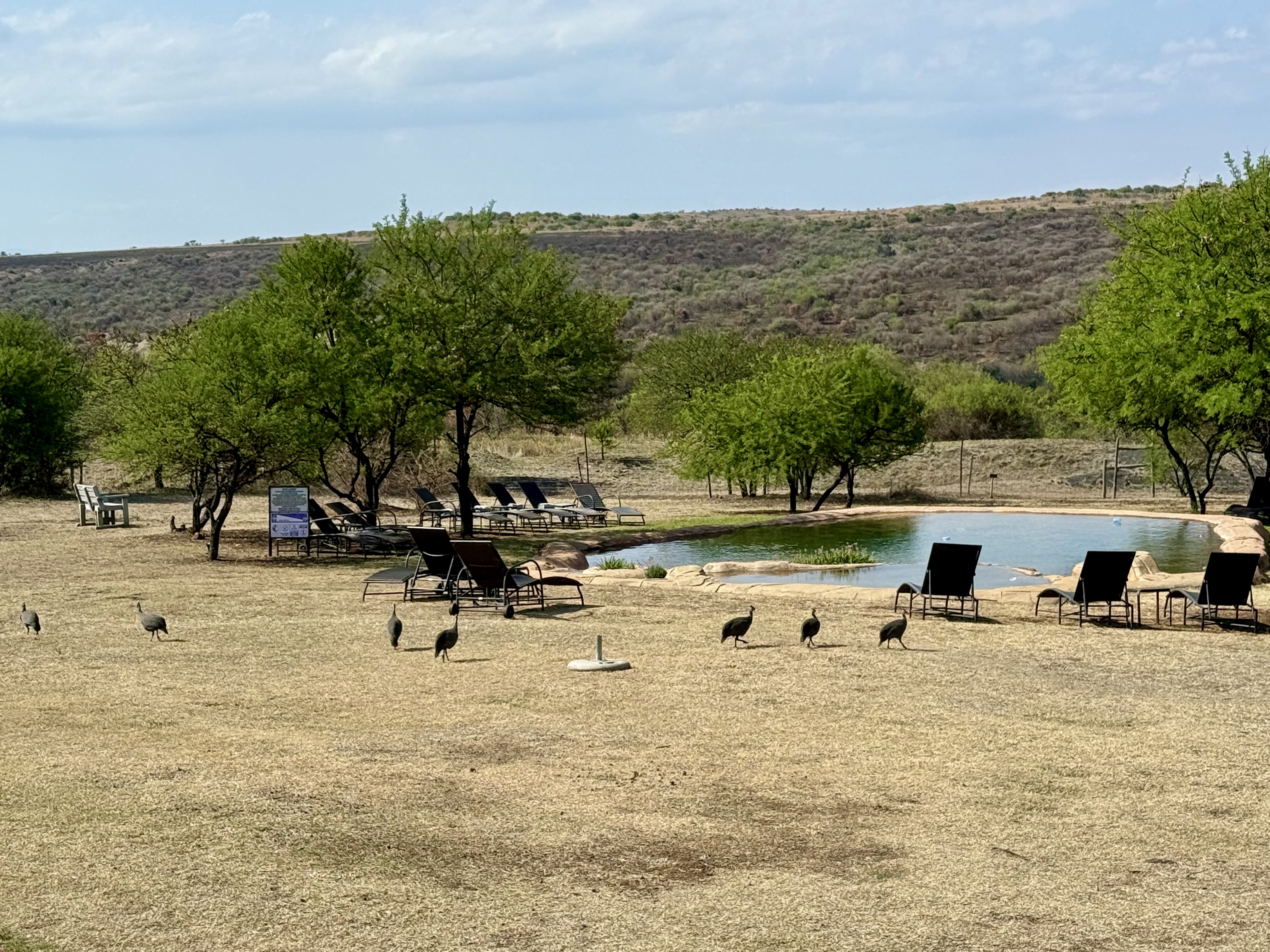
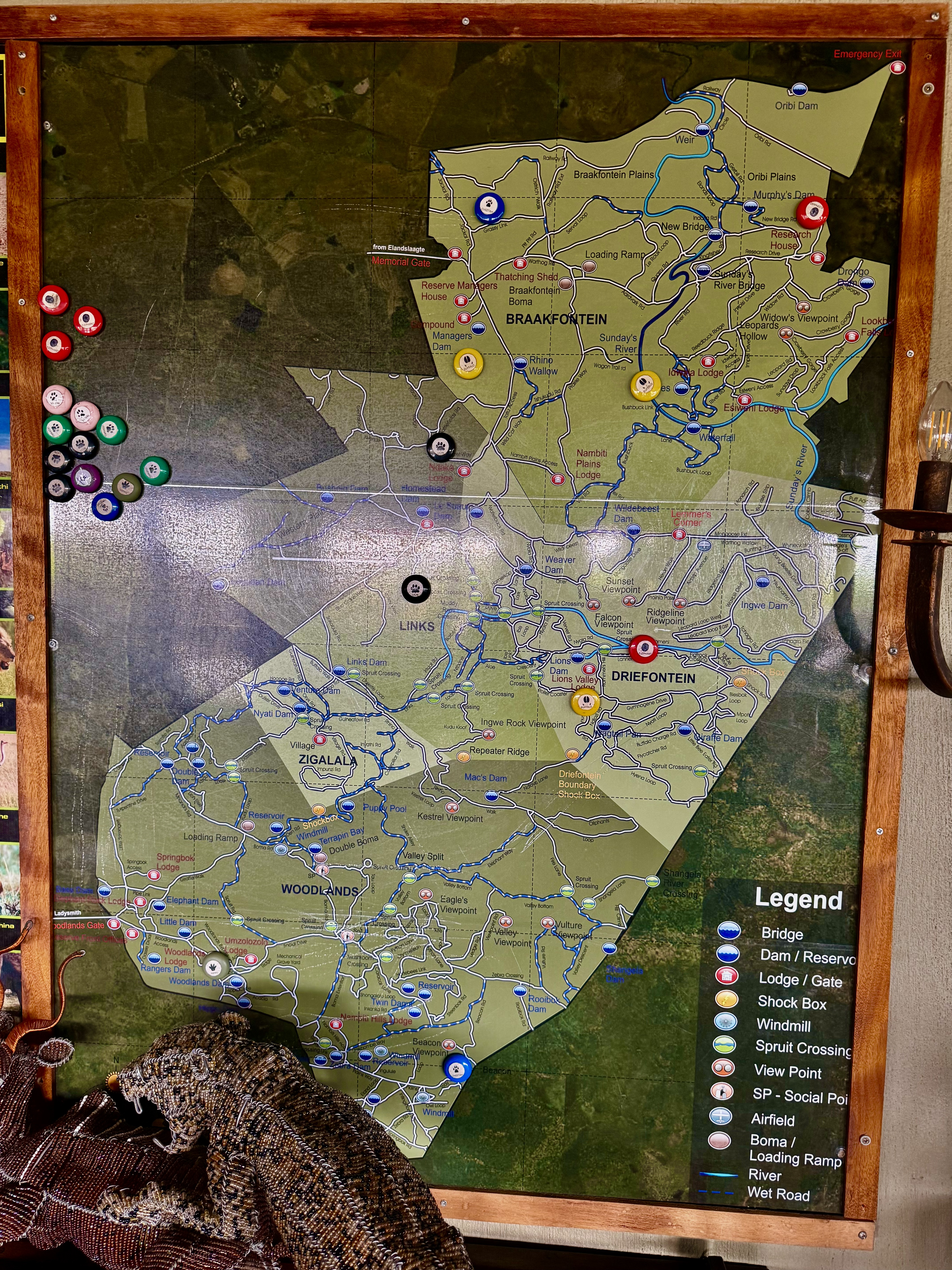
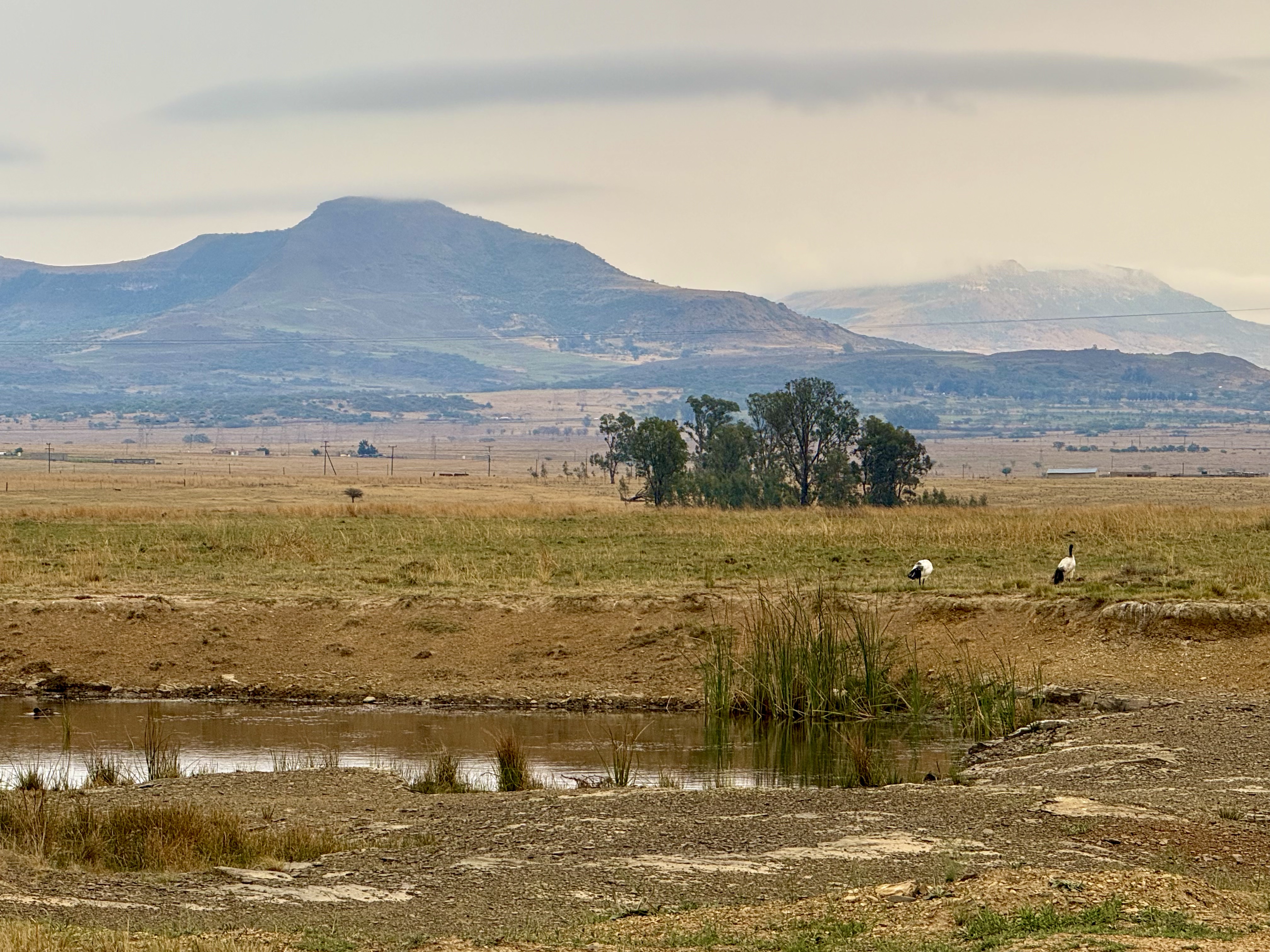
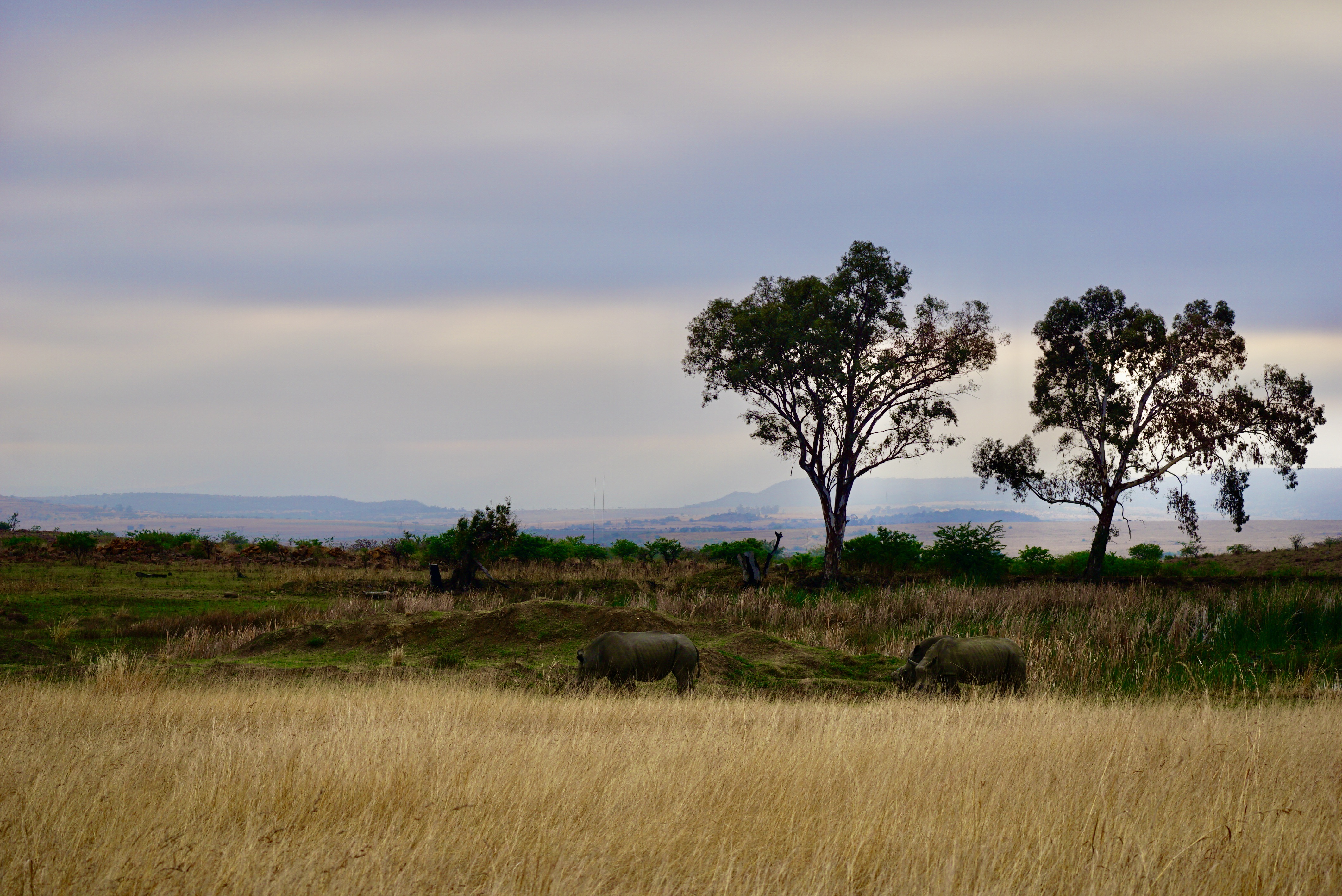
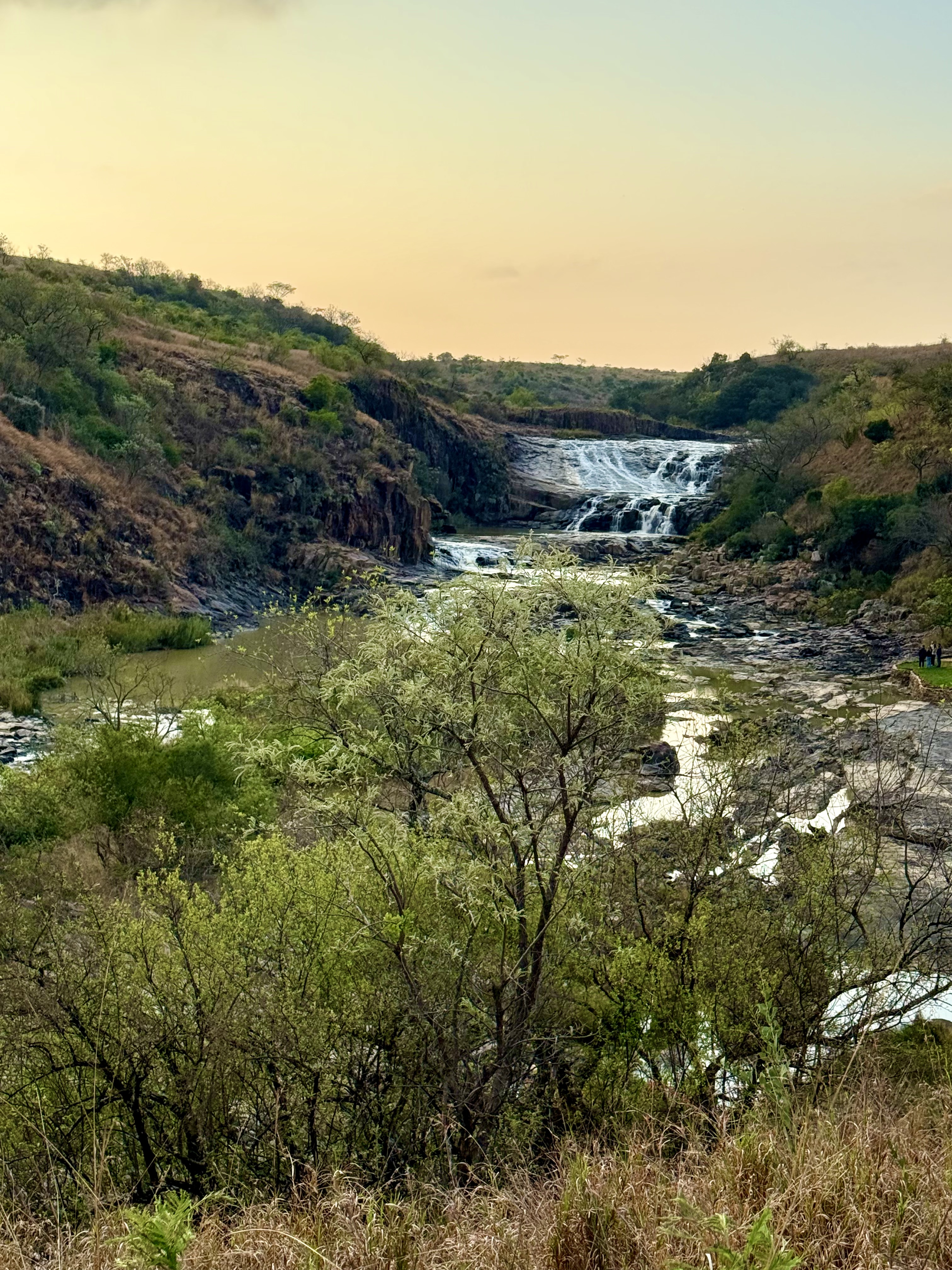
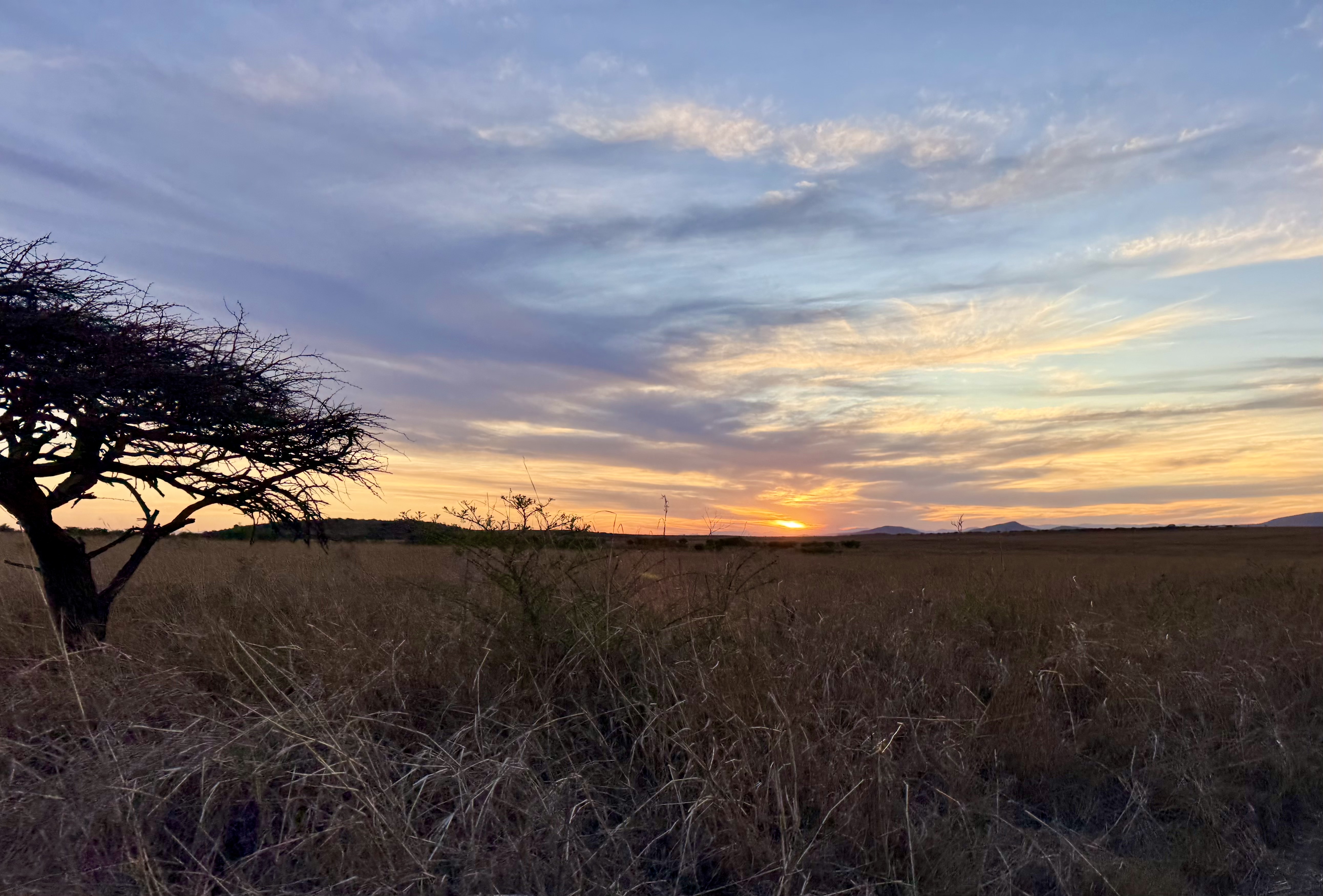
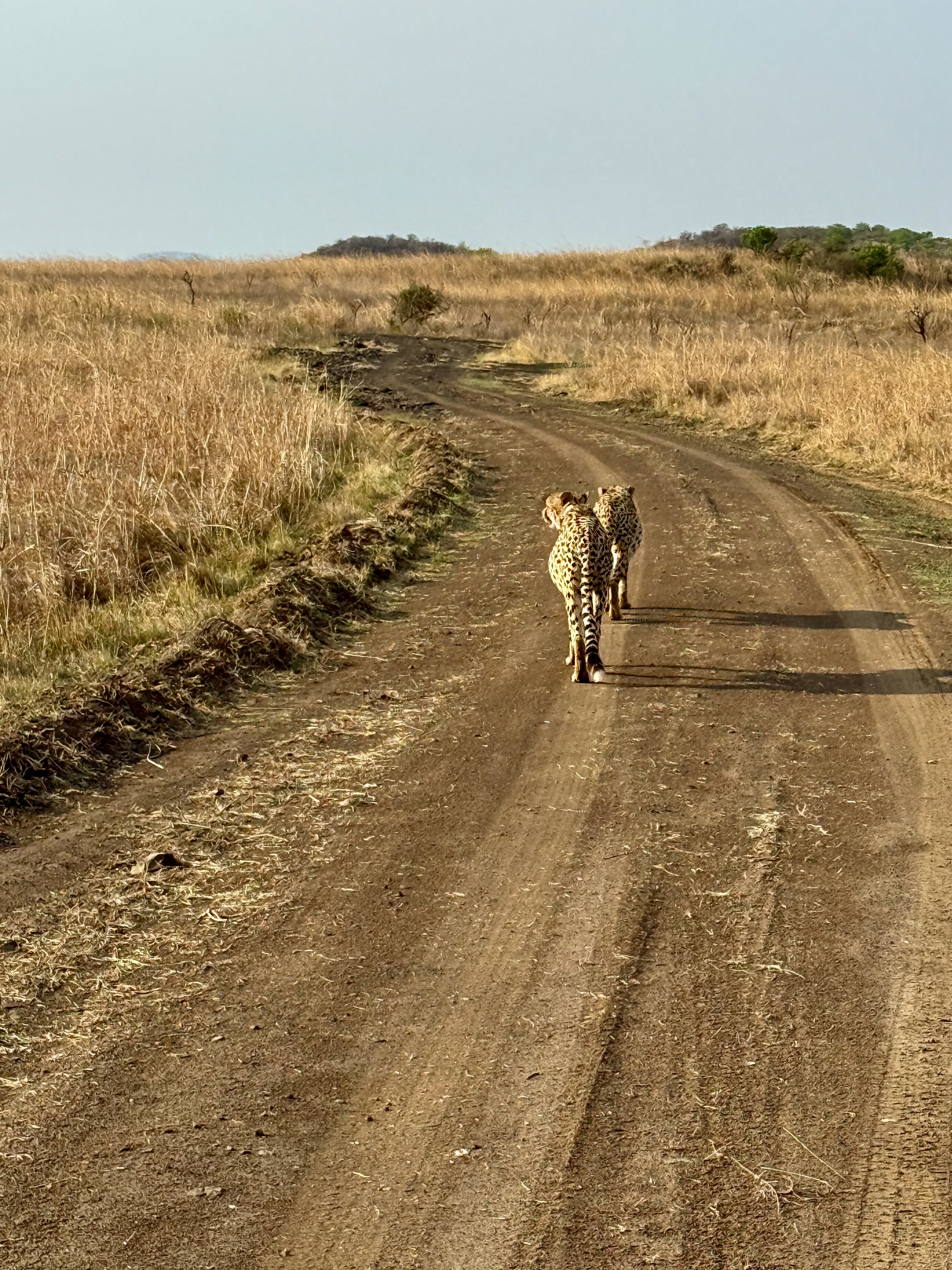
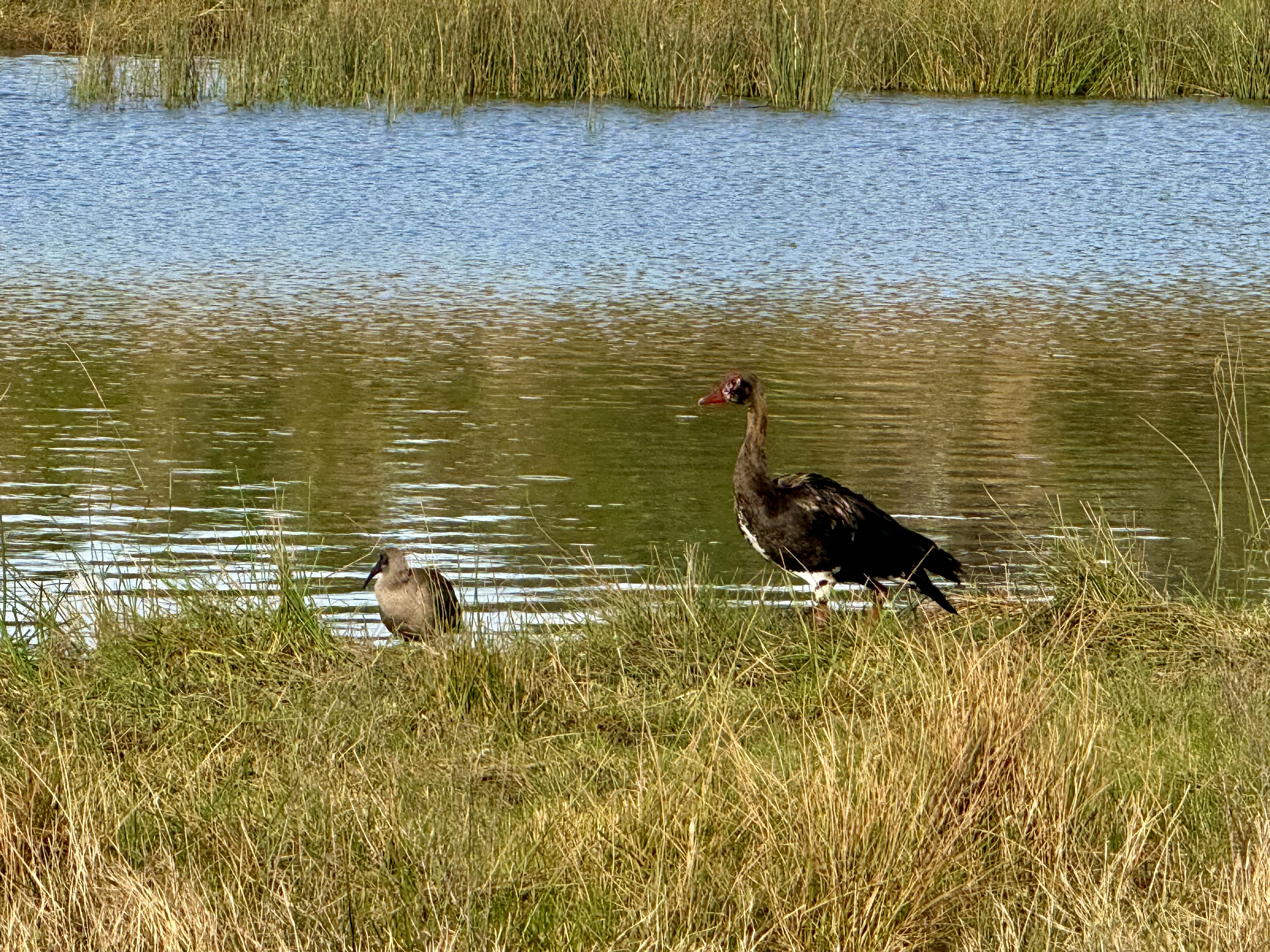
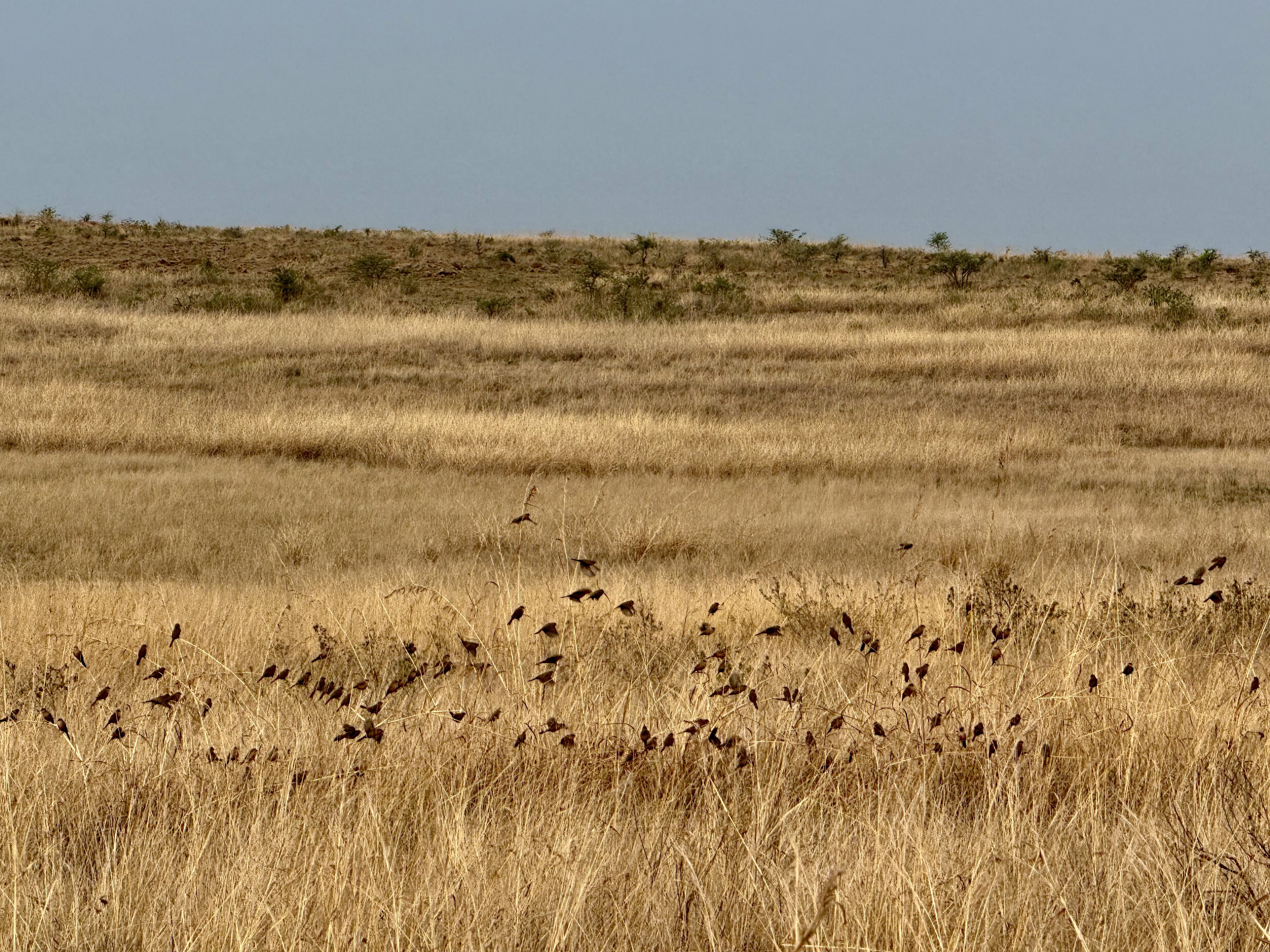
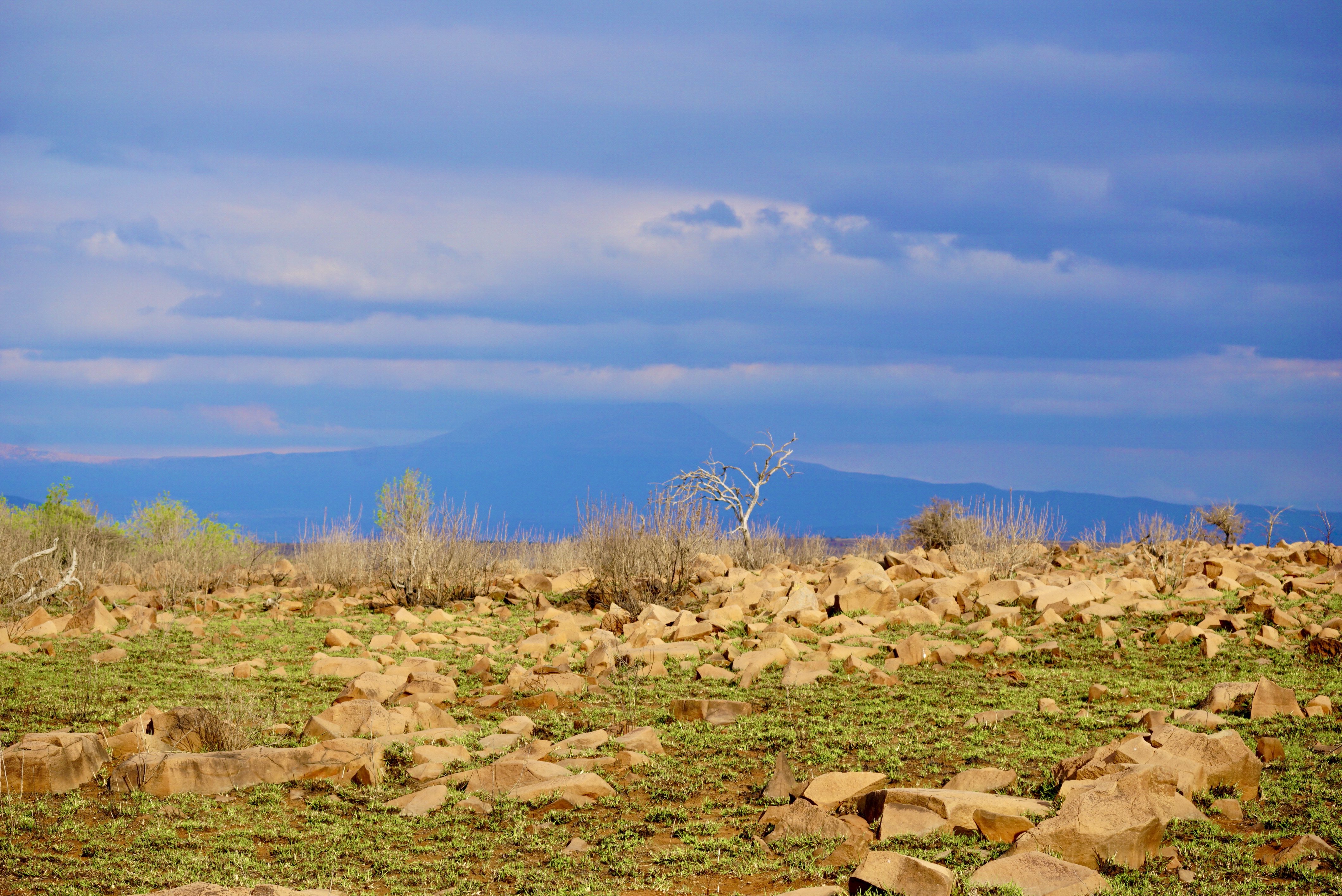
After a coffee break at the Piggly Wiggly, I made my way further north to the Nambiti Private Game Reserve where I was staying for the next three nights. There was a special on accommodations here offered through a South African hospitality website, and I had grabbed it. The Reserve has 10,000 hectares of reclaimed farmland that is now dedicated to the Big 5 plus. There are eleven lodges, each separately managed in the Reserve. It is accessed via a couple of dirt roads and two gates; the landscape reminded me of the golden earth and scrubland in Texas. After the gate, I drove down a slight hill to a car park, from where the van for the Springbok Lodge picked me up. There are no self-drives in the Reserve and after going on a couple of the game drives, understood why. In not a few places, the jeep tracks are in really bad shape and after it rains completely impassable. The main paths through the Reserve are fine, it is just the ones that cut across hillsides and muddy areas that can get tricky even for the experienced jeep drivers. The lodge is wonderful, and the tents complete with outside shower amid thousands of stars, fabulous. Wildlife is plentiful, within the first 24 hours I saw white rhinos, elephants, lions, waterbucks, bushbucks, dukkers, warthogs, nyalas, impalas, red hartebeest, blue wildebeests, kudus, elands, zebra, hippos, black stripped jackal, cheetahs and giraffes in addition to many different bird species. In a fenced off area there is a research section, and in the distance, I could see a herd of sable. The winter game drives are in the morning from 6-9 and in the afternoon from 3:30-6:30 (5-8 & 4-7 respectively in the summer) are included along with three meals in the price of the stay. Here as elsewhere, controlled burns have made their impact on the landscape. Wildebeest were grazing on the young green shoots in the middle of the blackened areas. It doesn’t make any difference how often one sees the animals there is always something new that happens. Here, the elands put on quite a show as they jumped, almost like in a capriole, across the savannah and the hippos were lying down fairly close to the jeep so that one could see their thick pink four toes. Who would have thought hippo toes were pink??? A male nyala and a red hartebeest and I had lengthy inspections of each other, while the cheetahs paid no attention to me whatsoever. An eland peeked out from some brush and was very wary of us humans in the jeep. A special show was when the lions decided to pair in front of us.

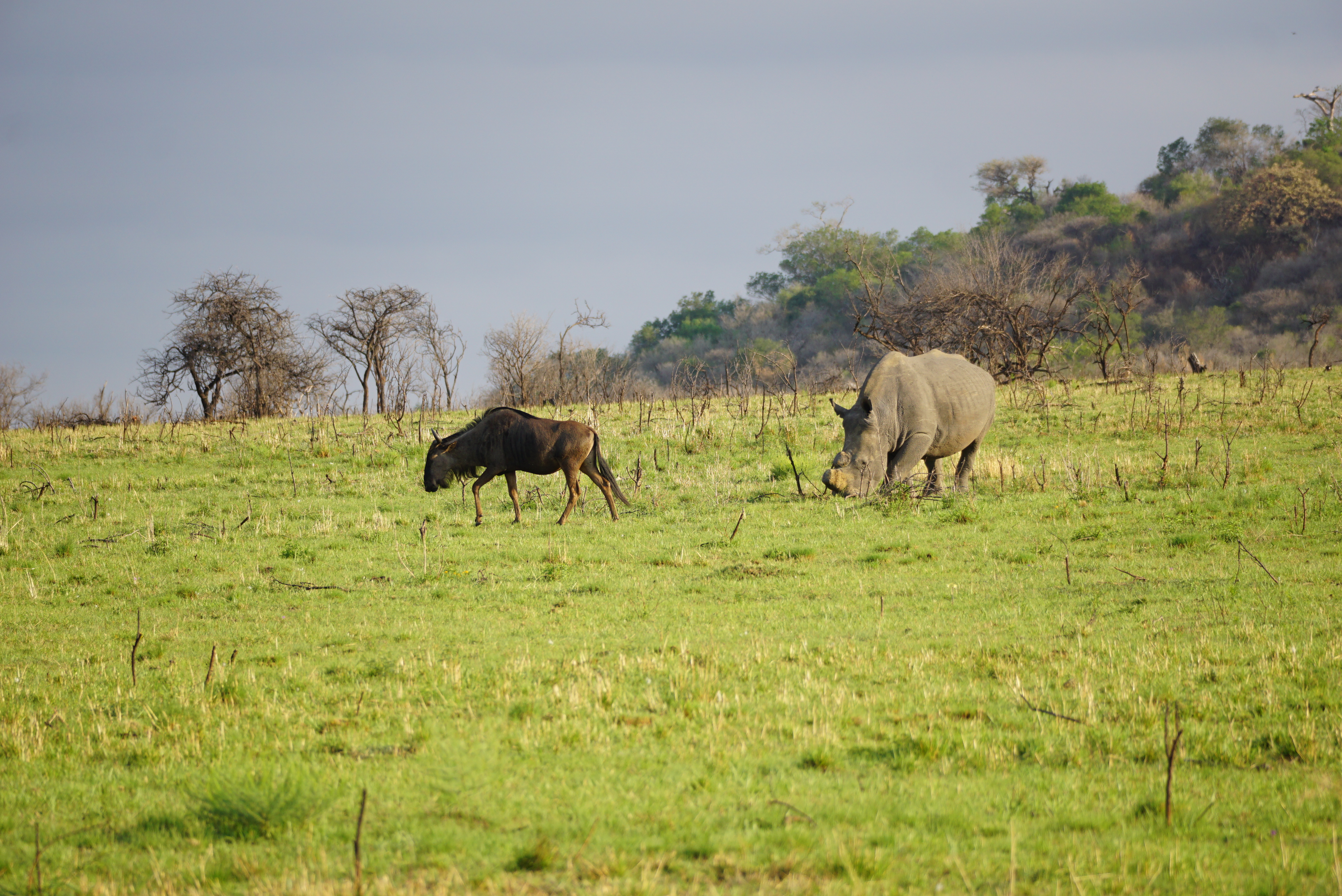
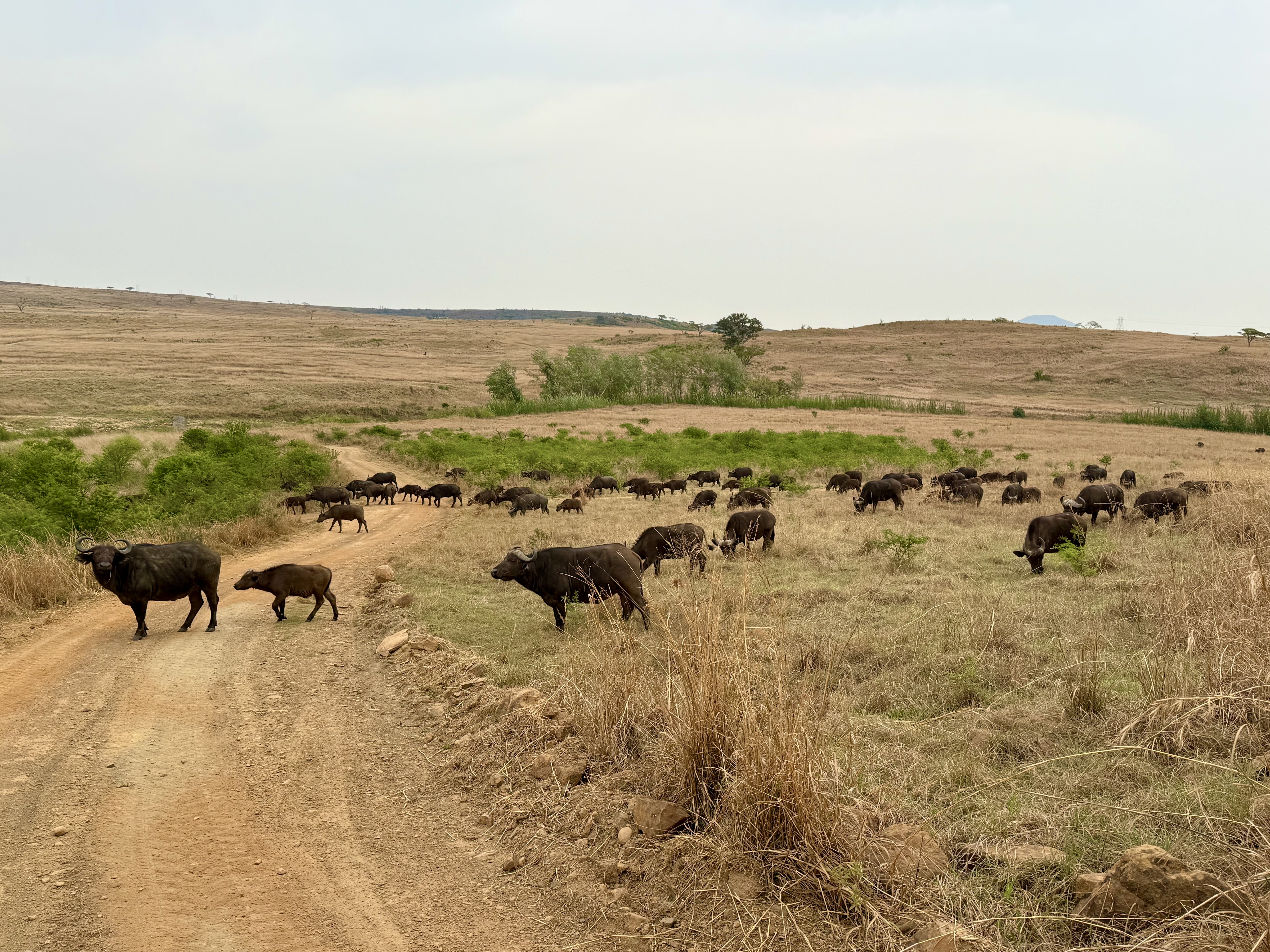

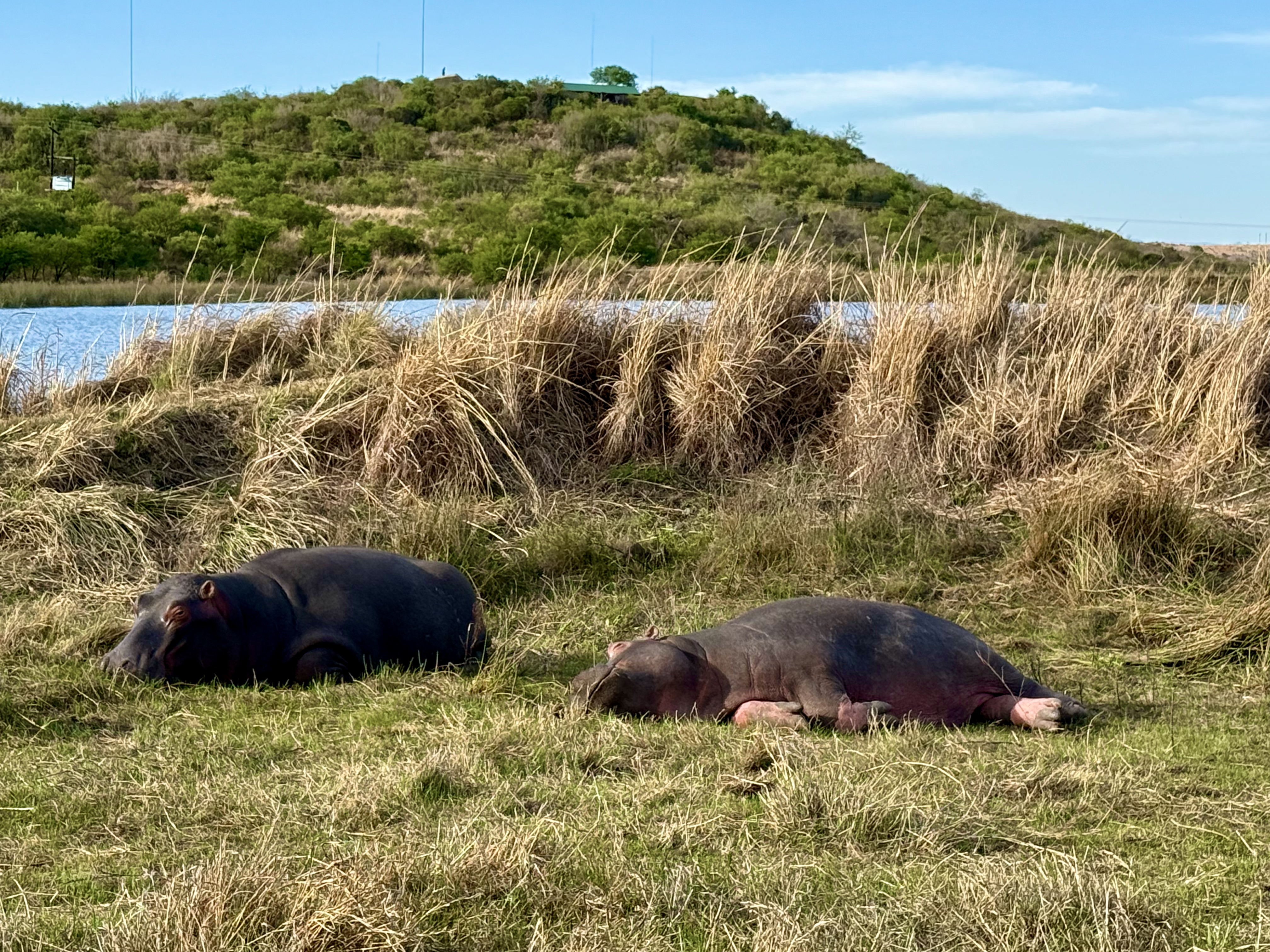
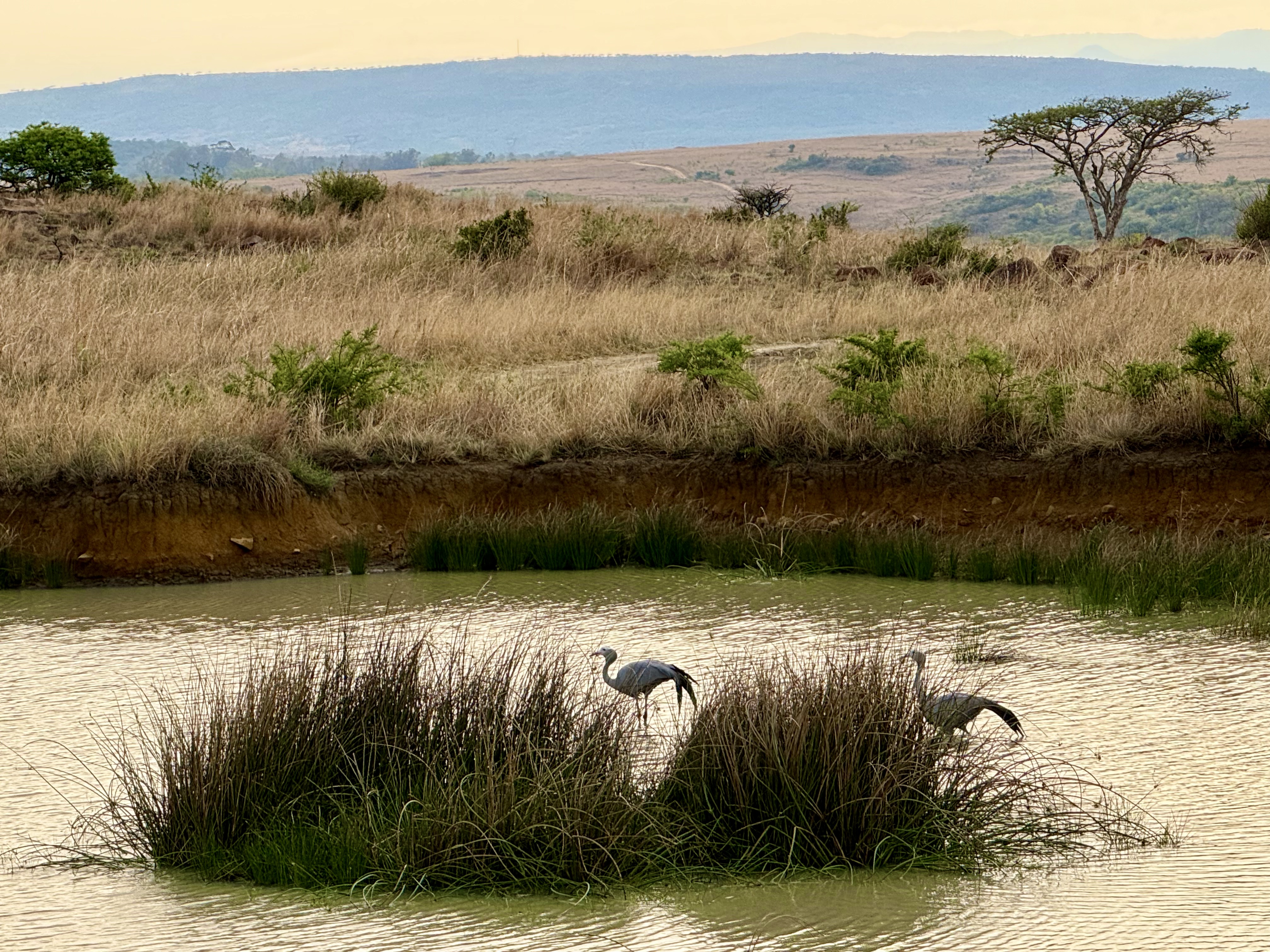
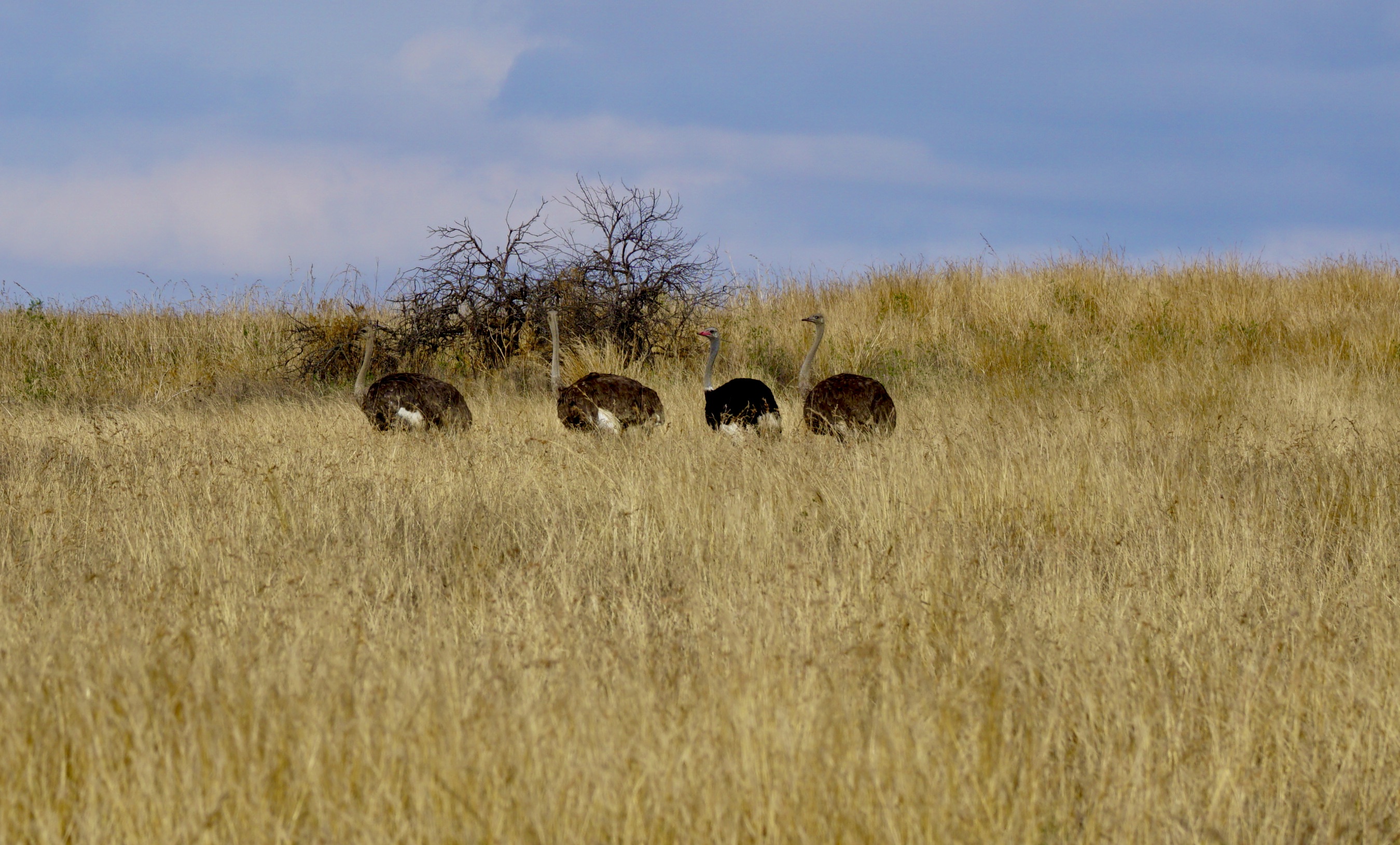
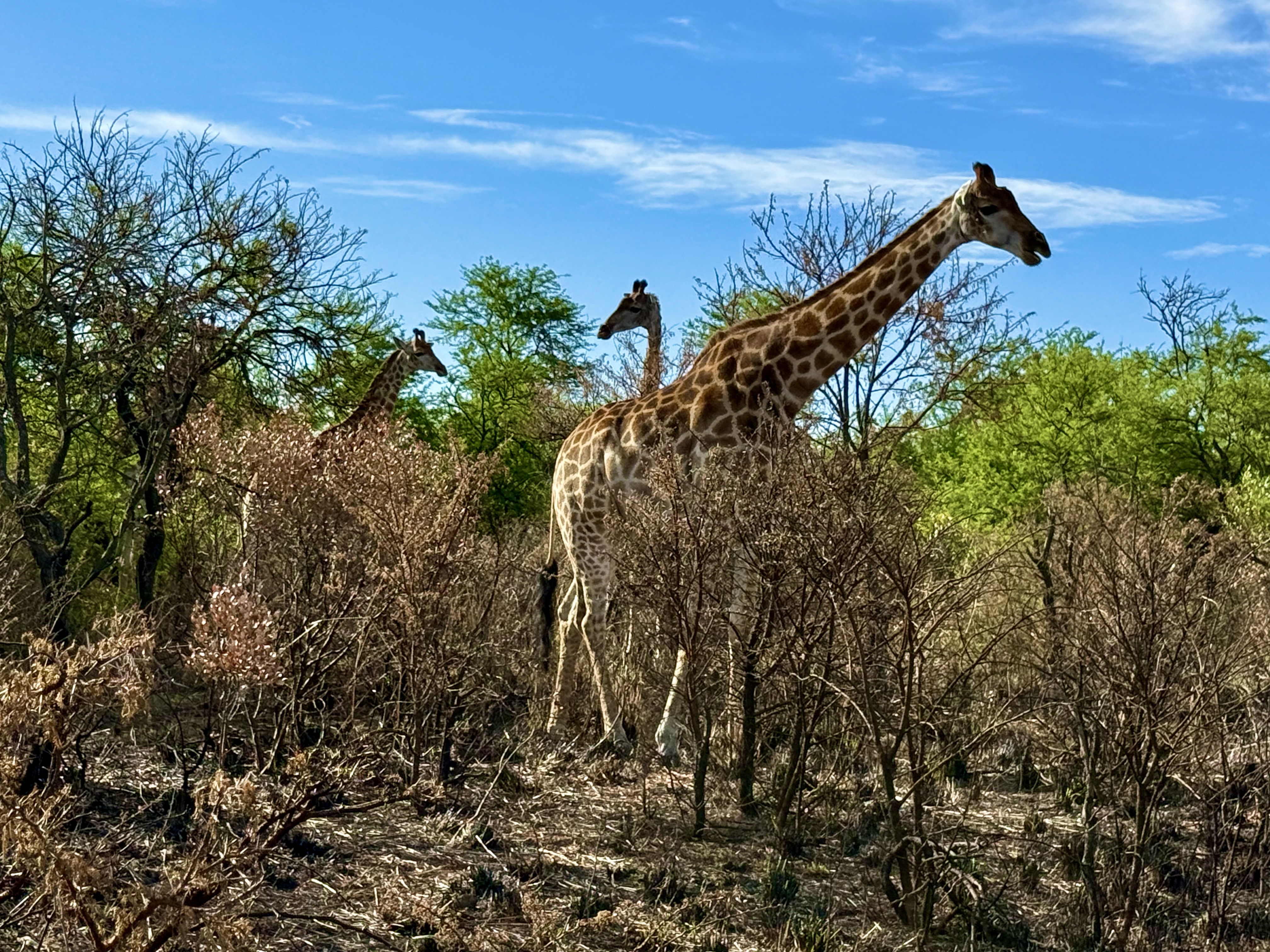
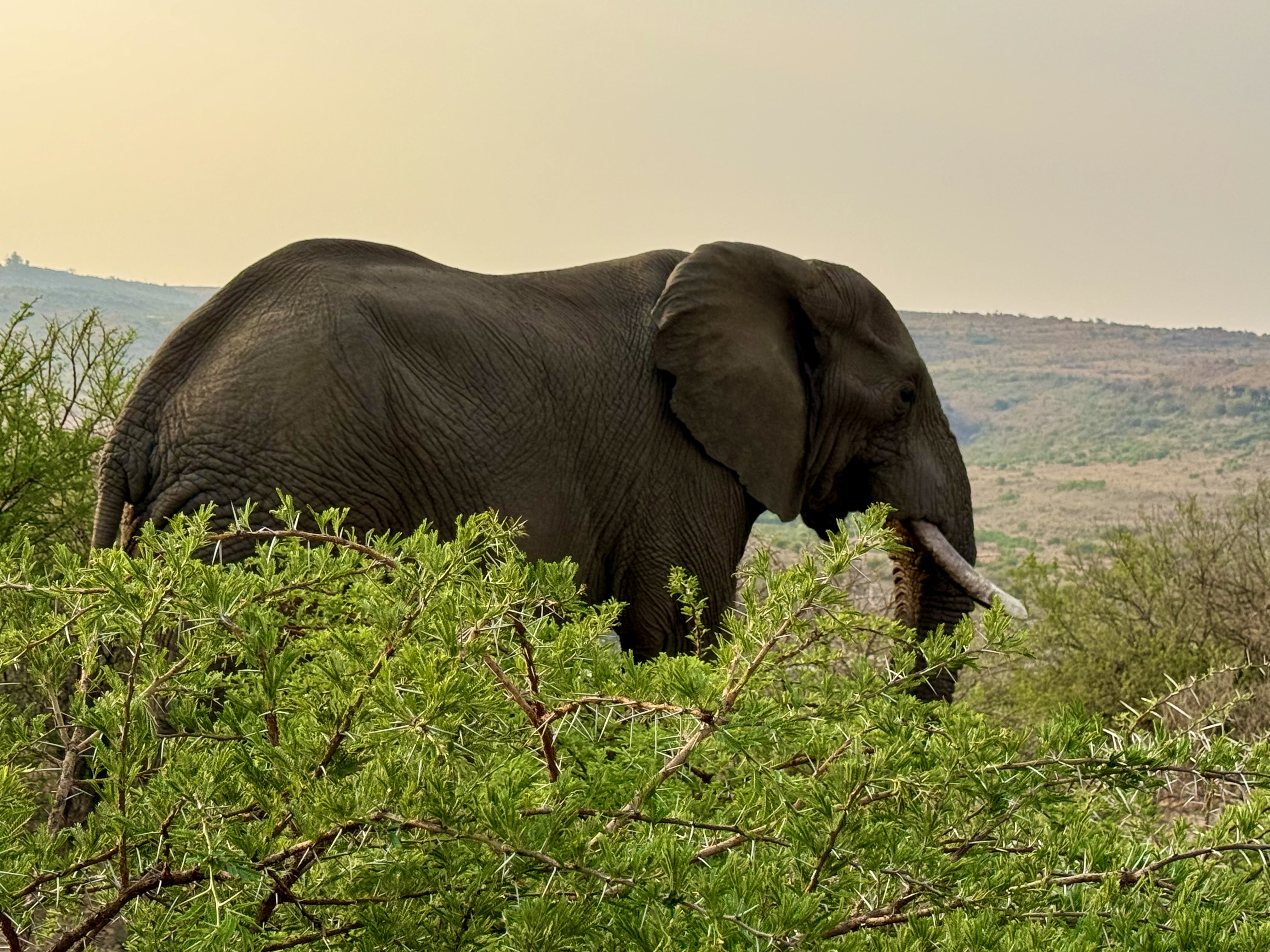
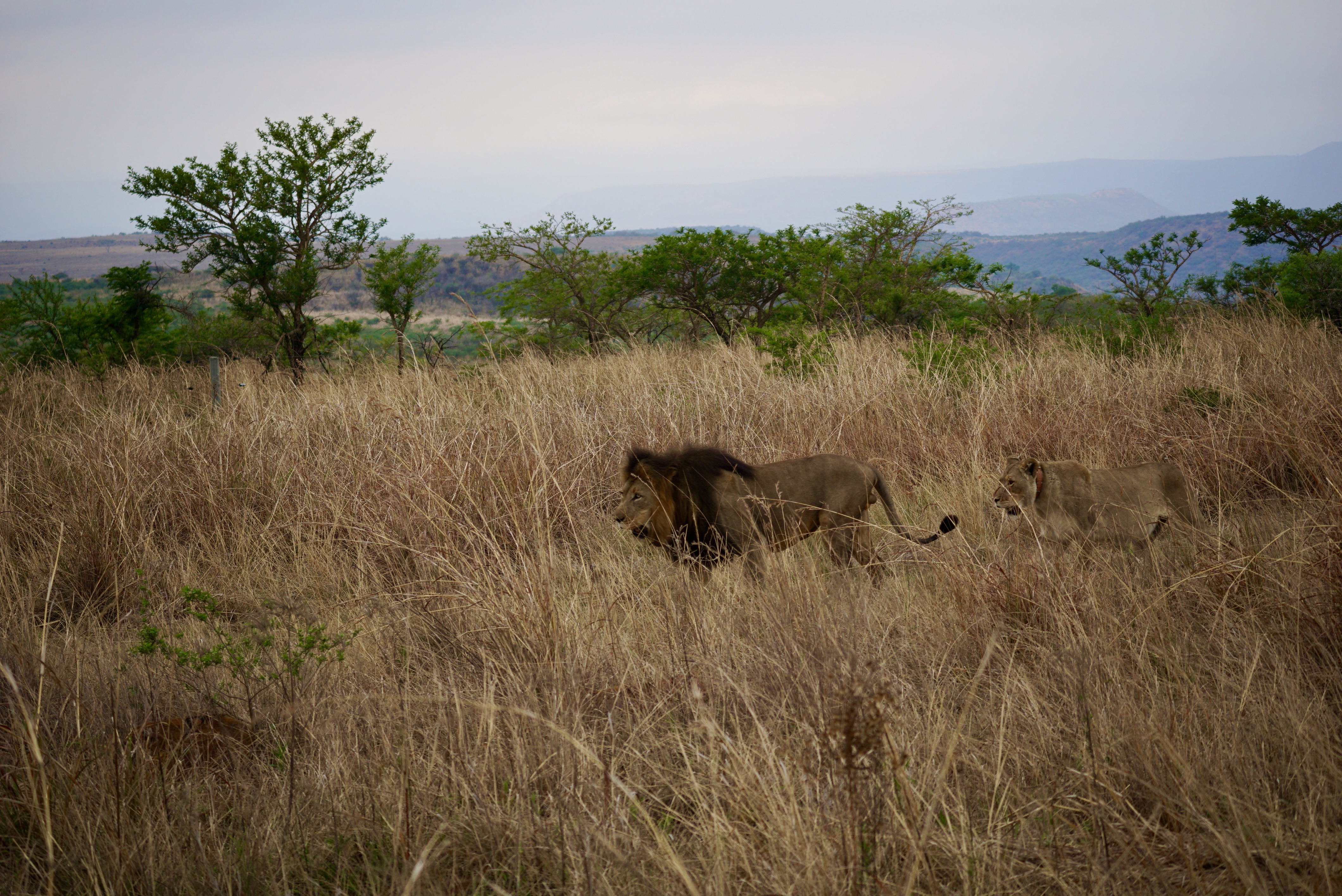
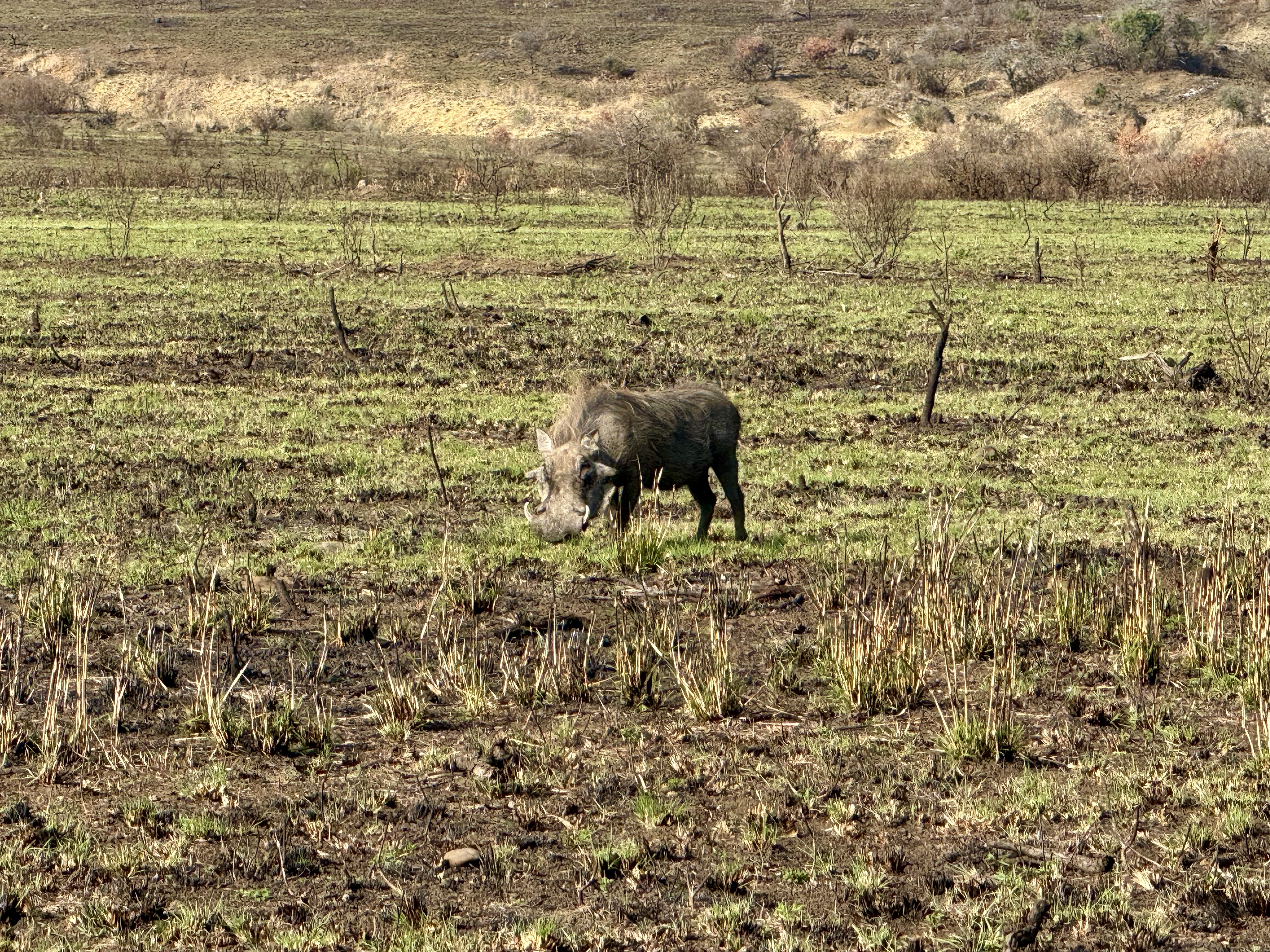
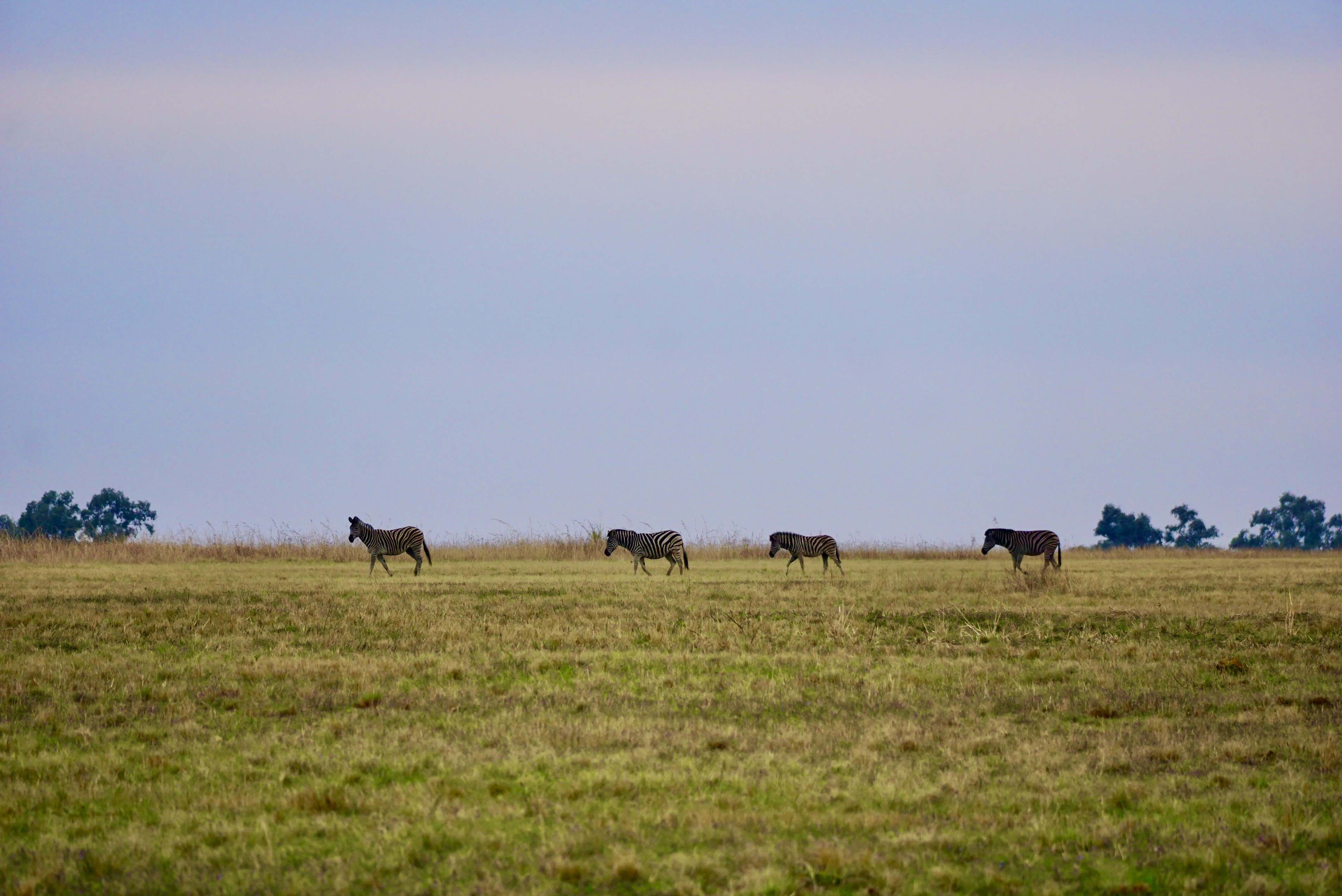
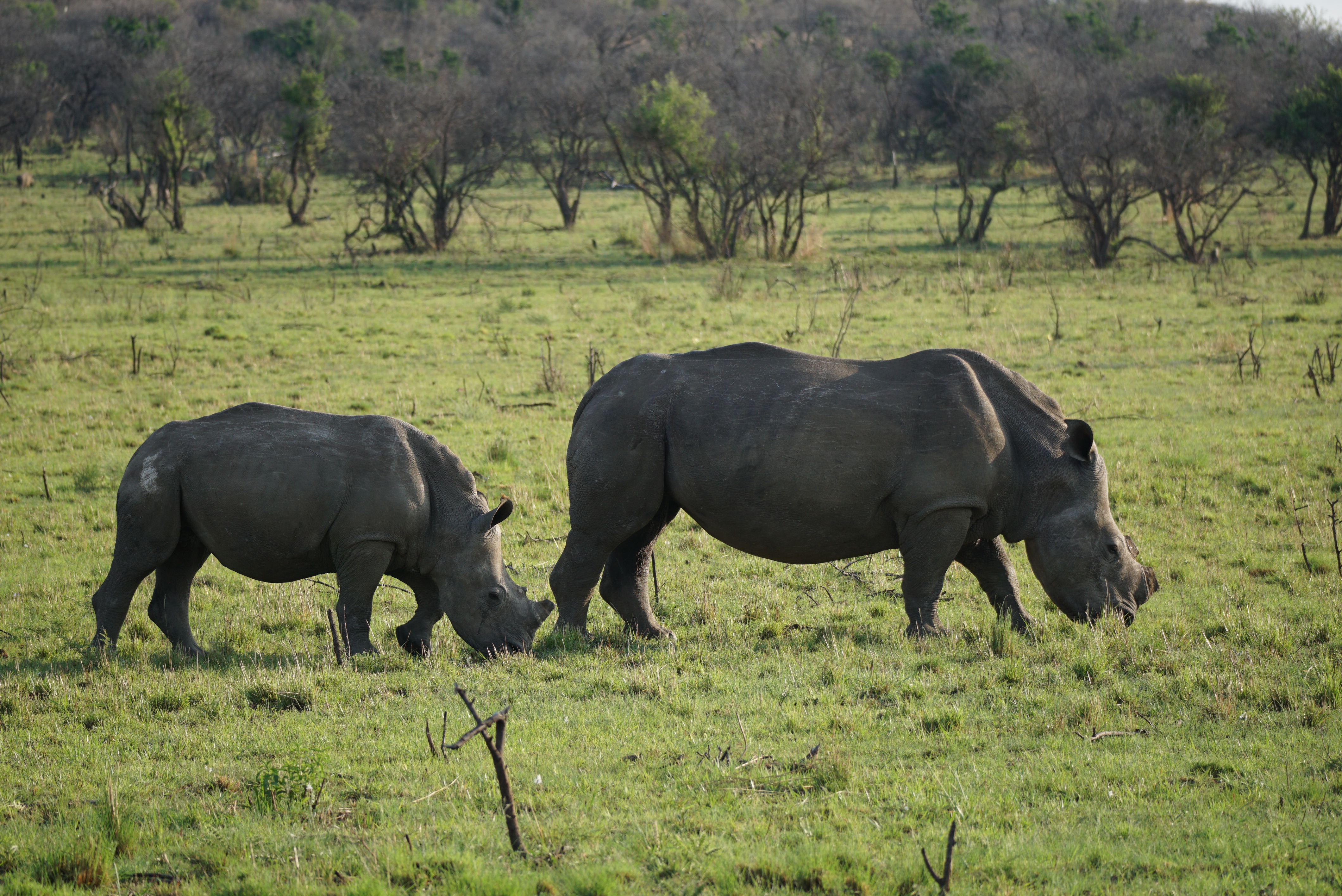


The lodge assigns a naturalist-driver to each group of visitors. I was alone so I was twice during my three day stay I was added to a couple, both of whom were visiting from the Durban area. My/our guide, Siya, was a young man from Zululand with a bachelor’s degree in IT, but when he went looking for a job the internship he found was in a nature conservancy program, which got him interested in the field. His story struck me because in a country where 42% of the youth are unemployed, finding a job even in IT proved difficult. The growth industry in reclaiming land for private game reserves, does seem to be helping both local communities as well as the unemployment ratios. Nambiti, for example, is owned by the local community as are all the buildings on the Reserve. The lodges rent out the businesses, but they do not own the land or property. This helps to stop poaching as it is in the community’s best interest to keep the game safe. Rhinos, both black and white, are in the Reserve, but as in Hluhlewe, the numbers are not counted so that poachers will not be encouraged to kill and maim the animals. Additionally, the horns, which are keratin based like our fingernails, are cut to discourage poaching. The horns need to be trimmed every three years. Different from Hluhlewe-Imfolozi, there is a vet on site who does monitor the wildlife and provides medication when necessary. There are only six lions in the Reserve, five females and one male, so they want to make sure the animals stay healthy. There were two other males, but they had to be moved to another park/reserve as they fought each other and one or the other was going to be killed. This seems to be another aspect of the game reserves that I observed. As almost all of them are re-introducing indigenous wildlife to their areas, they take the initial animals from other places – not from the wild as, especially the larger breeds, were dying out. There is a careful balance maintained within the mix of animals the land can sustain. The naturalists are versed in the intricacies of each species and gladly share their knowledge with the visitors. They also accompany one from the car park, near the entrance to the Reserve, to the lodge and then back to the car park. Siya waited until I had actually left the gate before he returned to the lodge; I took this as a sign the staff has to make sure that the people assigned to them do in fact leave when they are supposed to and don’t hang around to cause problems for themselves or the wildlife.
After a mix up with the reservations at Thendele Camp and a storm, I headed back to the coast for a night near the beach. The following morning, I went to MonkeyLand KZN, otherwise known as The Hidden Forest. This is the fourth and last of the South African Animal Sanctuary Alliance sites I visited. The other three were in Plettenberg Bay. The one in Kwazulu-Natal is a sister site to the MonkeyLand on the Garden Route. That one was the first such primate free-roaming sanctuaries, but this one is almost double in size at 23 hectares. The one in Plett is home to eleven different species, and in KZN eight. During the one and a half hour guided tour I was able to see all eight species and a weeped capuchin was especially entertaining. He was brought to the sanctuary by his former owners who realized that monkeys do not make great house pets. As in the Garden Route sites, all the animals in the SAASA sites are donated; none are purchased and all are neutered – with the exception of the native vervet monkeys. In addition to the lemurs (ring-tailed and black & white ruffed), a male and female howler, a few golden squirrel monkeys, a spider monkey that pulled ticks off the male howler monkey, white faced, tufted and weeper capuchins, I saw a few skittish red dukkers foraging amid the brush.
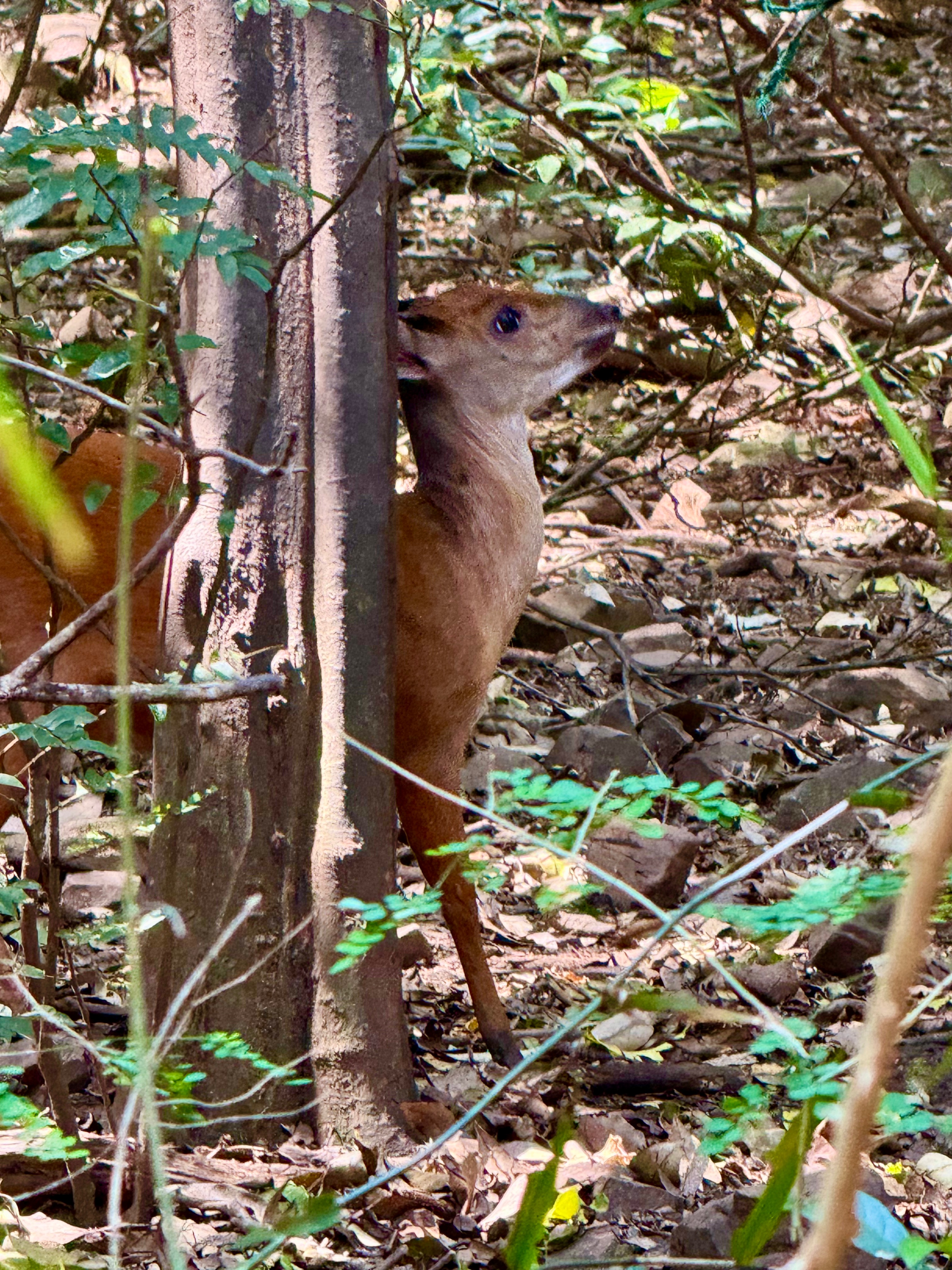
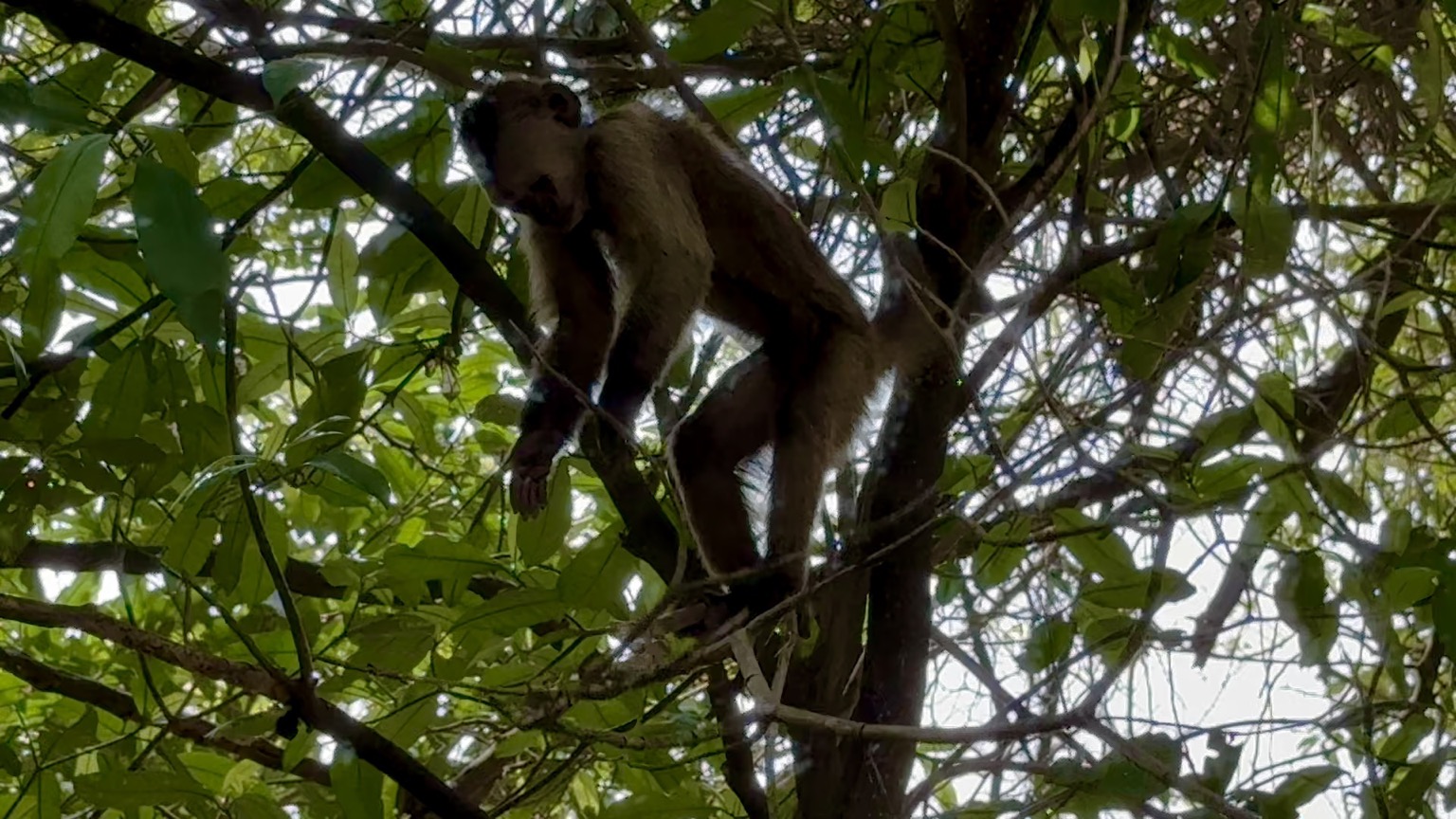
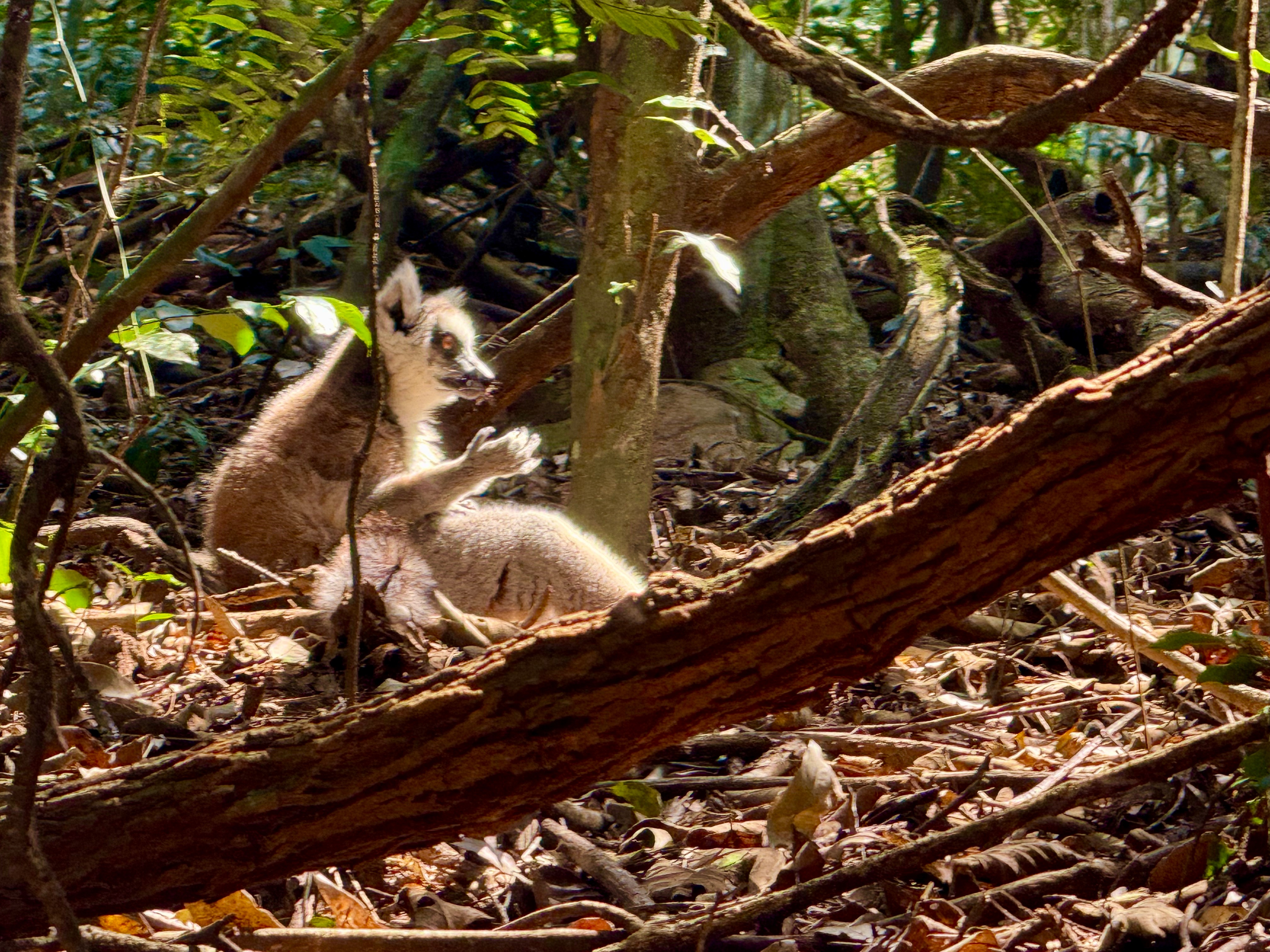
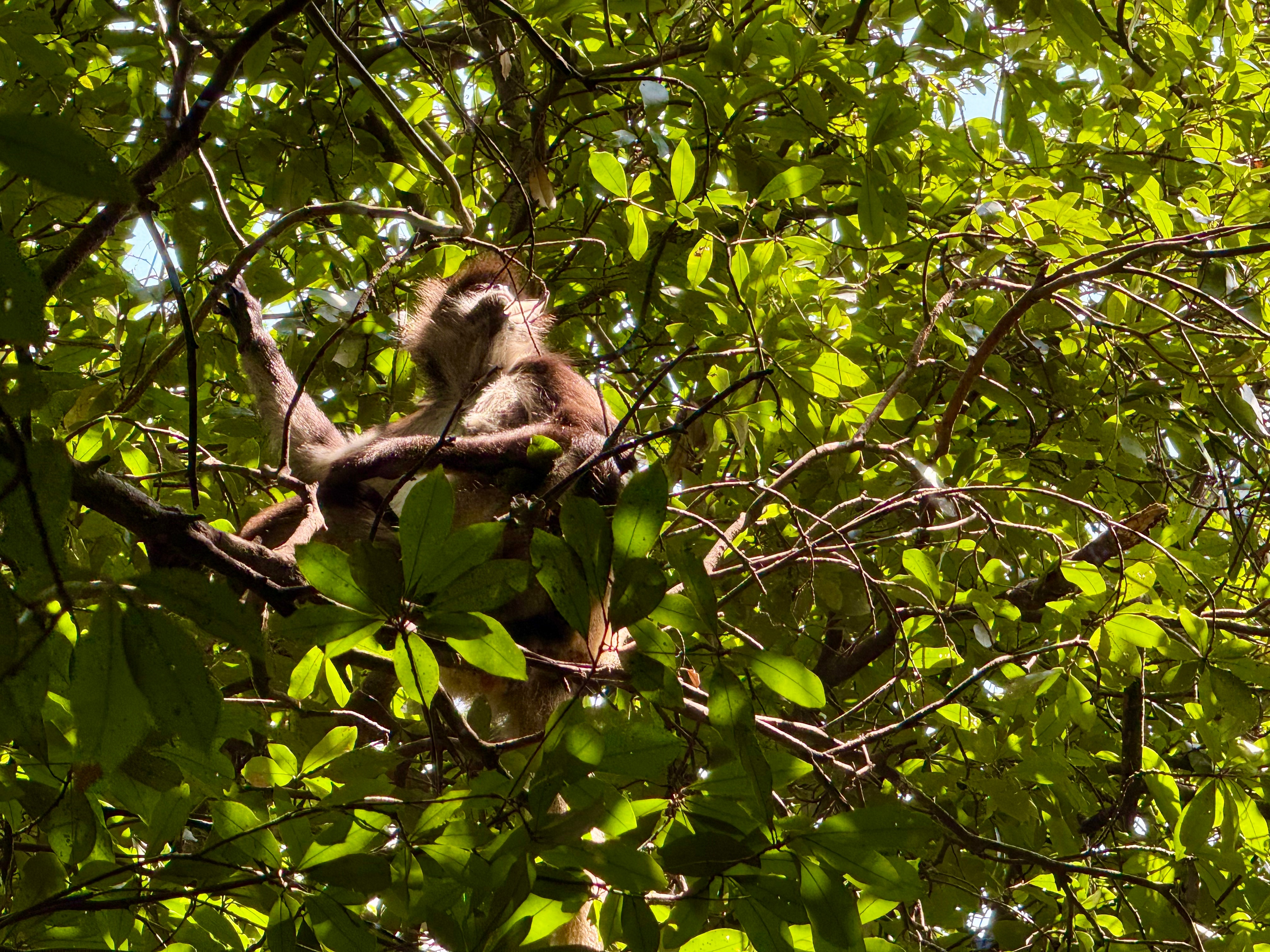
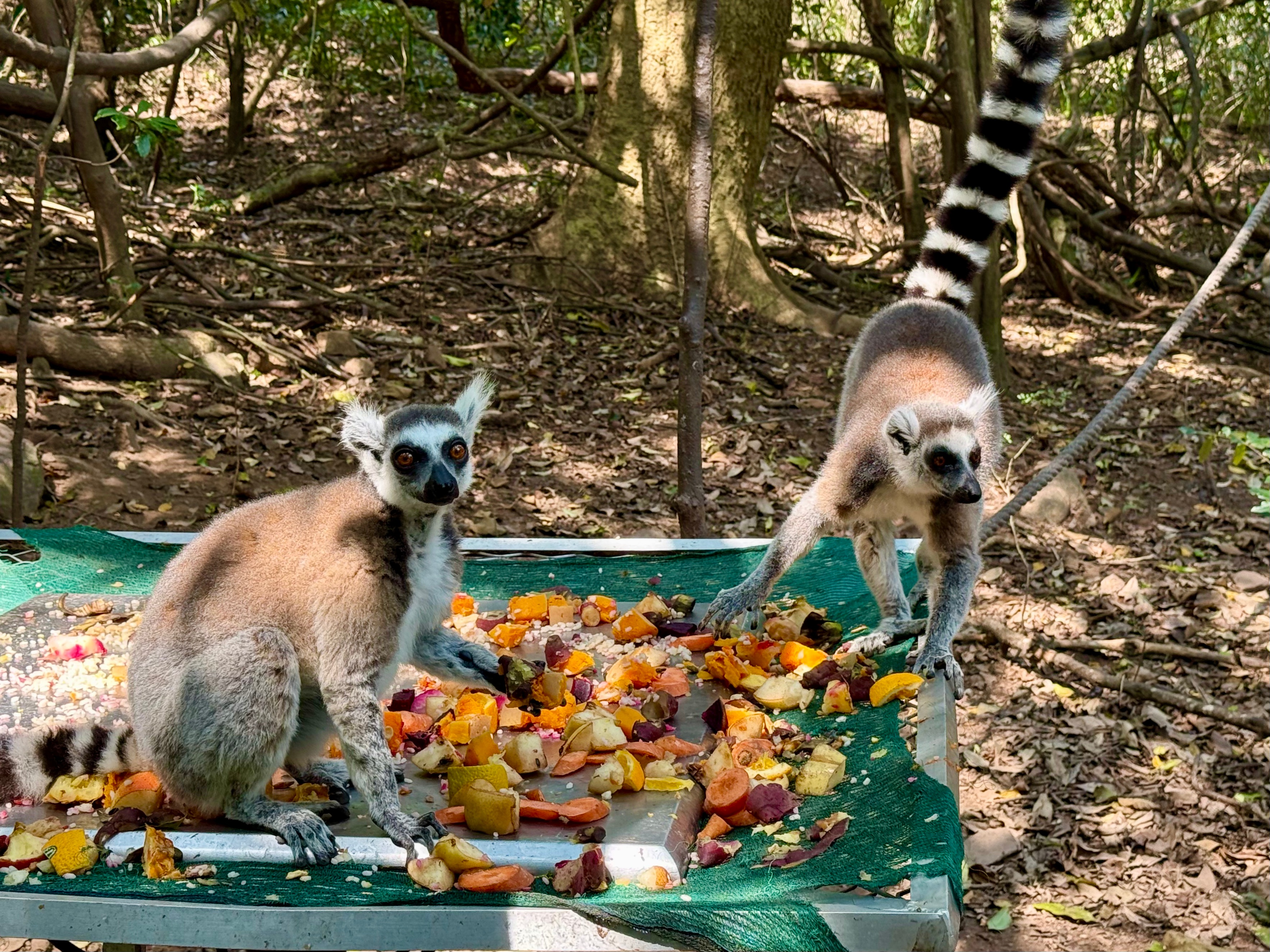

The forest where these animals live is an old forest, i.e., land that had not been cleared for farming. Surrounding the site are sugar cane fields, which, along with macadamia trees are the business produce for the owners of the land. There is a volunteer program at The Hidden Forest and while I was there, I was accompanied by the naturalist as well as two young volunteers, a student from Flensburg, Germany and a kindergarten teacher from Zurich. Both were spending six weeks helping out with slicing and dicing the fruits, vegetables and chicken that are placed on the feeding stations twice a day for the primates. Water bowls are also daily refilled and cleaned out. The feeding stations change location after a few days so that the animals still have to search out their food. The two young Europeans were having a wonderful time learning about the monkeys, the forest and about life in South Africa in general. Anyone interested can look at the website: volunteer@monkeylandkzn.co.za.
The SAASA sites are different different in scope and intent than the private game reserves, but both are helping to sustain wildlife in their natural settings.
From the Hidden Forest, I drove back to Ballito for a day of writing before an early morning flight the following day to Johannesburg.
 omegoodyssey