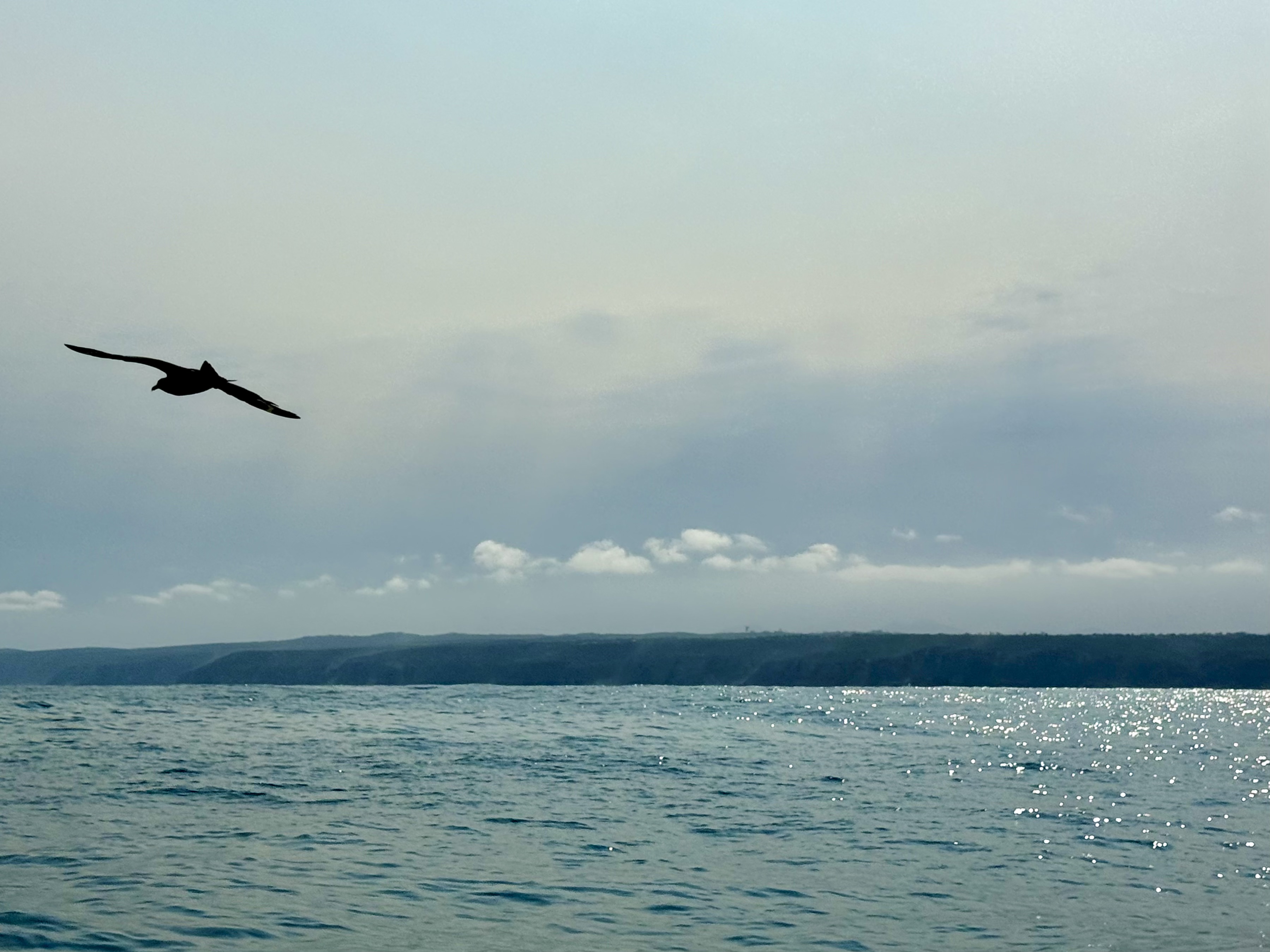
The next after the Cape tour, I took an Uber (I was warned not to take taxis in Capetown) back to the airport to pick up the car I would be using over the next two weeks through the Garden Route. They gave me a Mahindra, an Indian make mini-SUV, which drives well, although the radio can’t seem to pick up a signal. I had originally planned to make a first stop at Betty’s Bay to see more penguins, but the car rental experience took longer than it should have as I had misplaced my driver’s license and there was a tremendous amount of construction on the road, so I skipped the penguins and headed on to Hermanus.

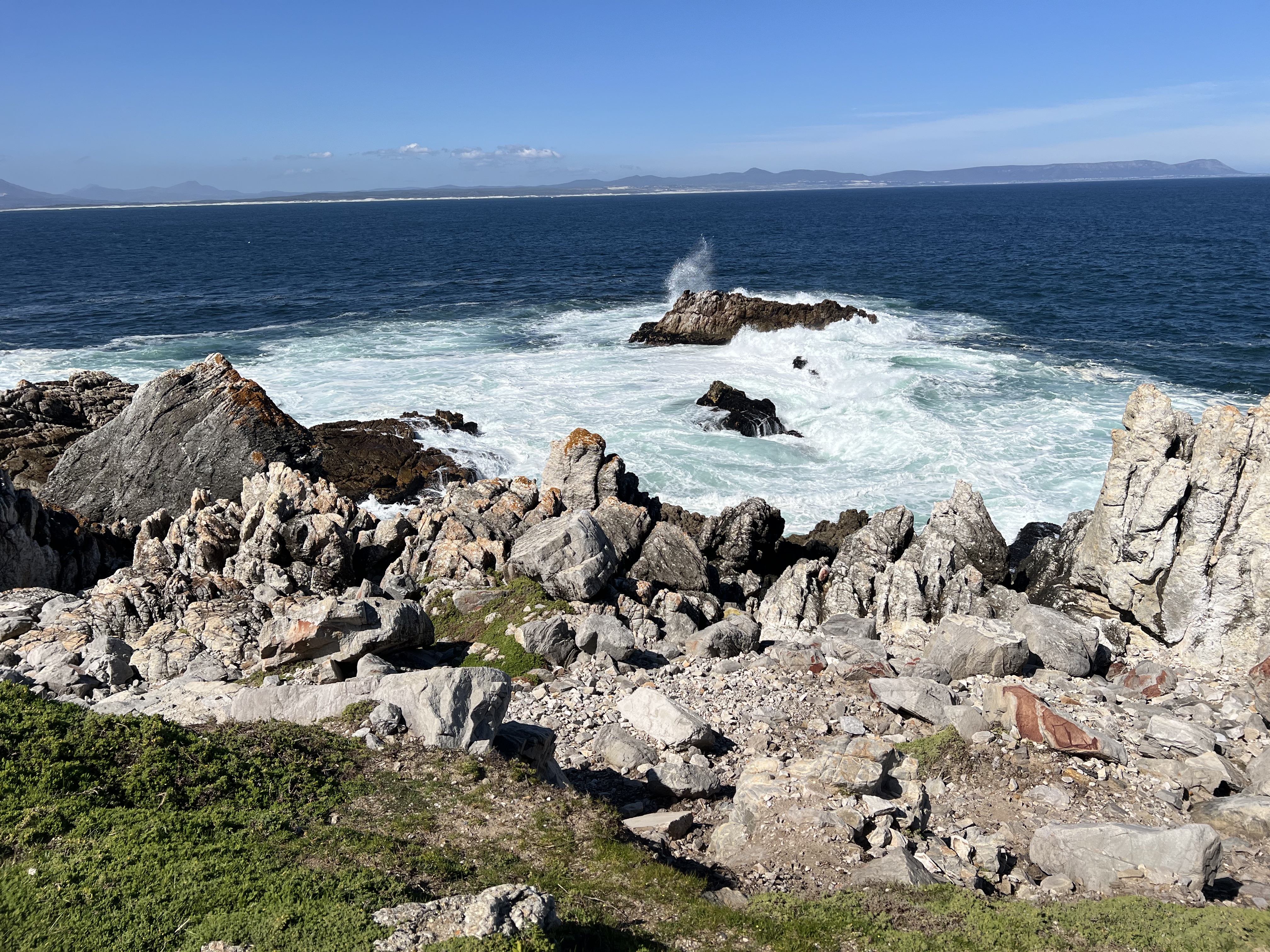
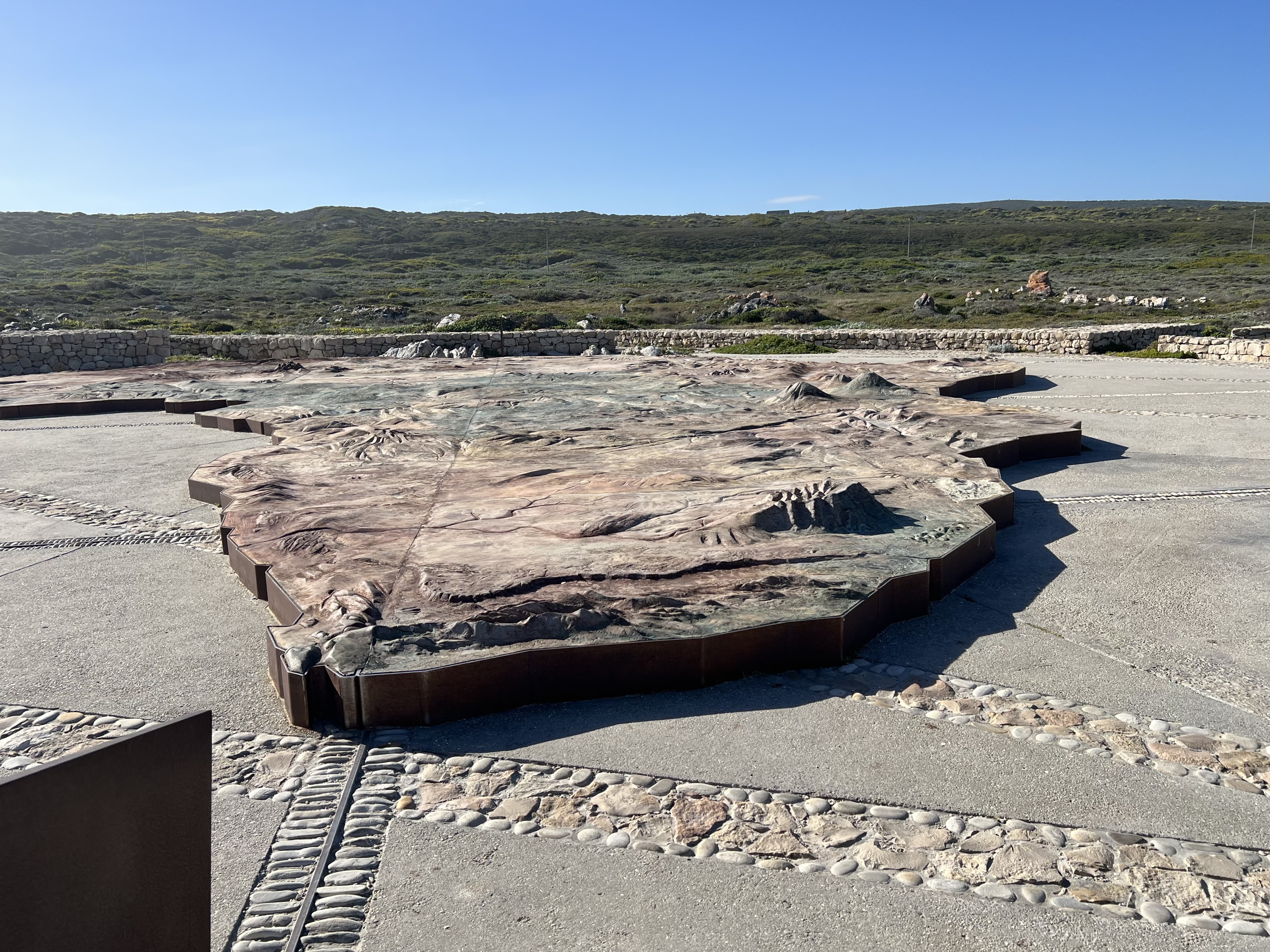
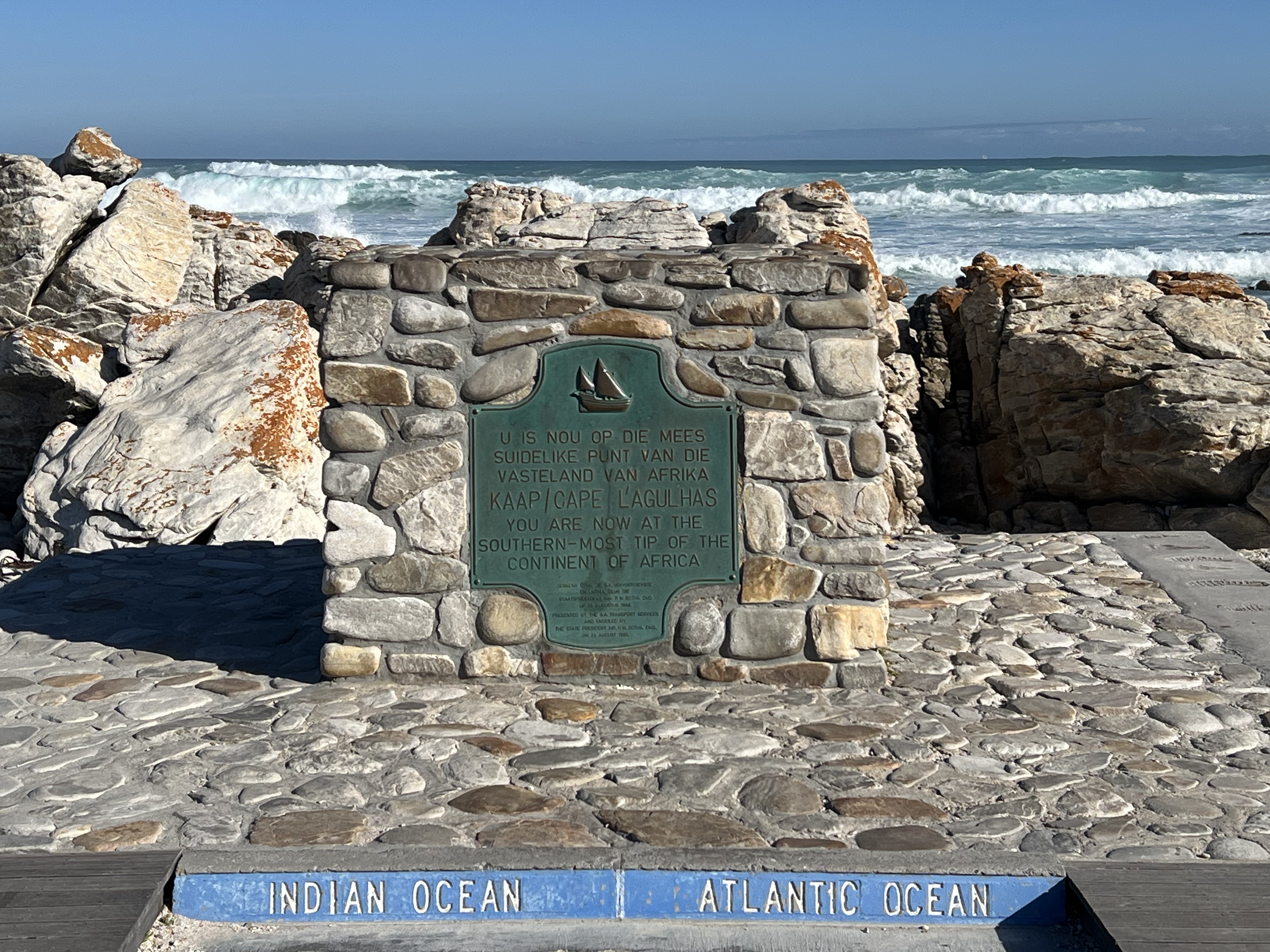
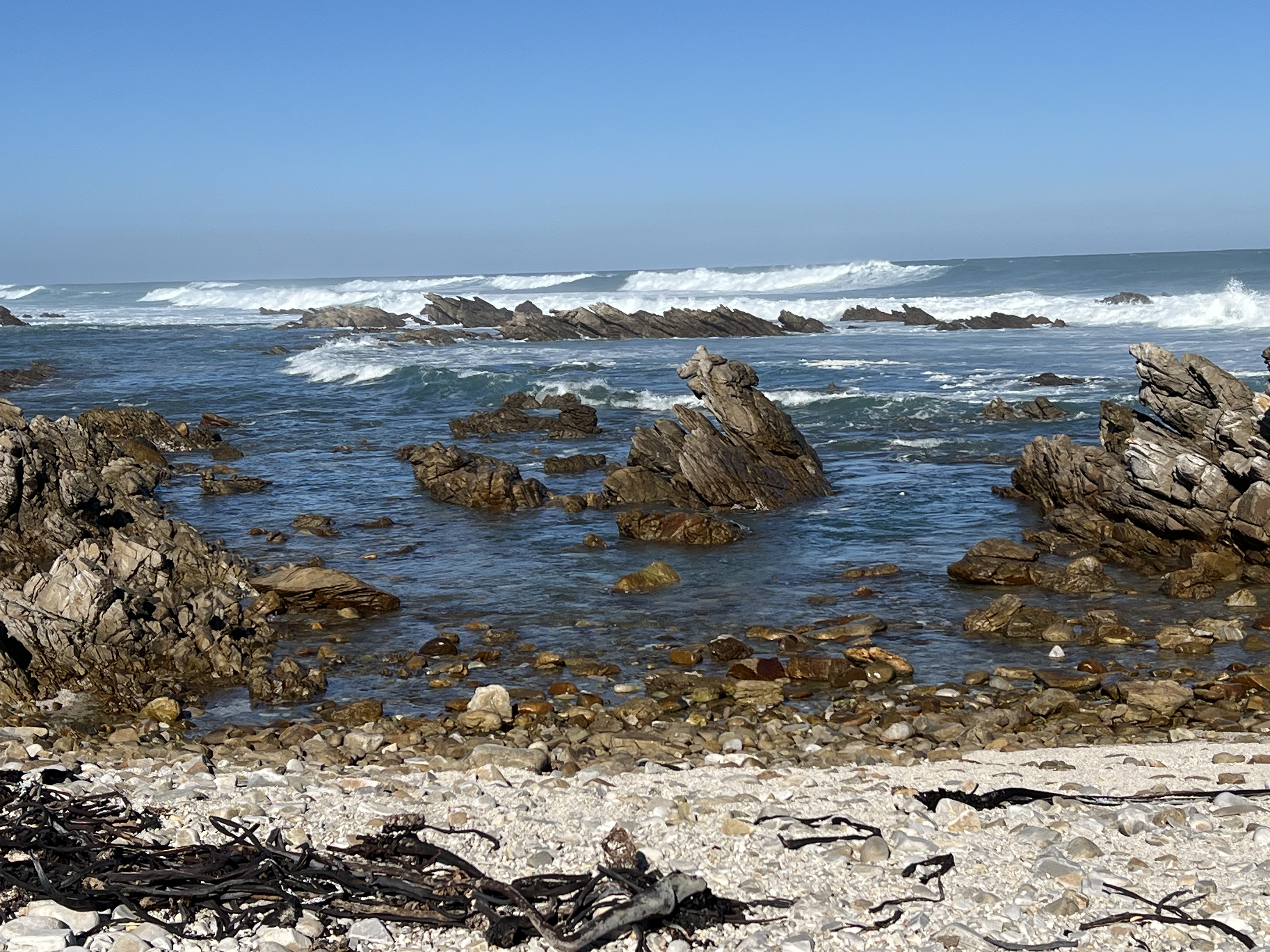
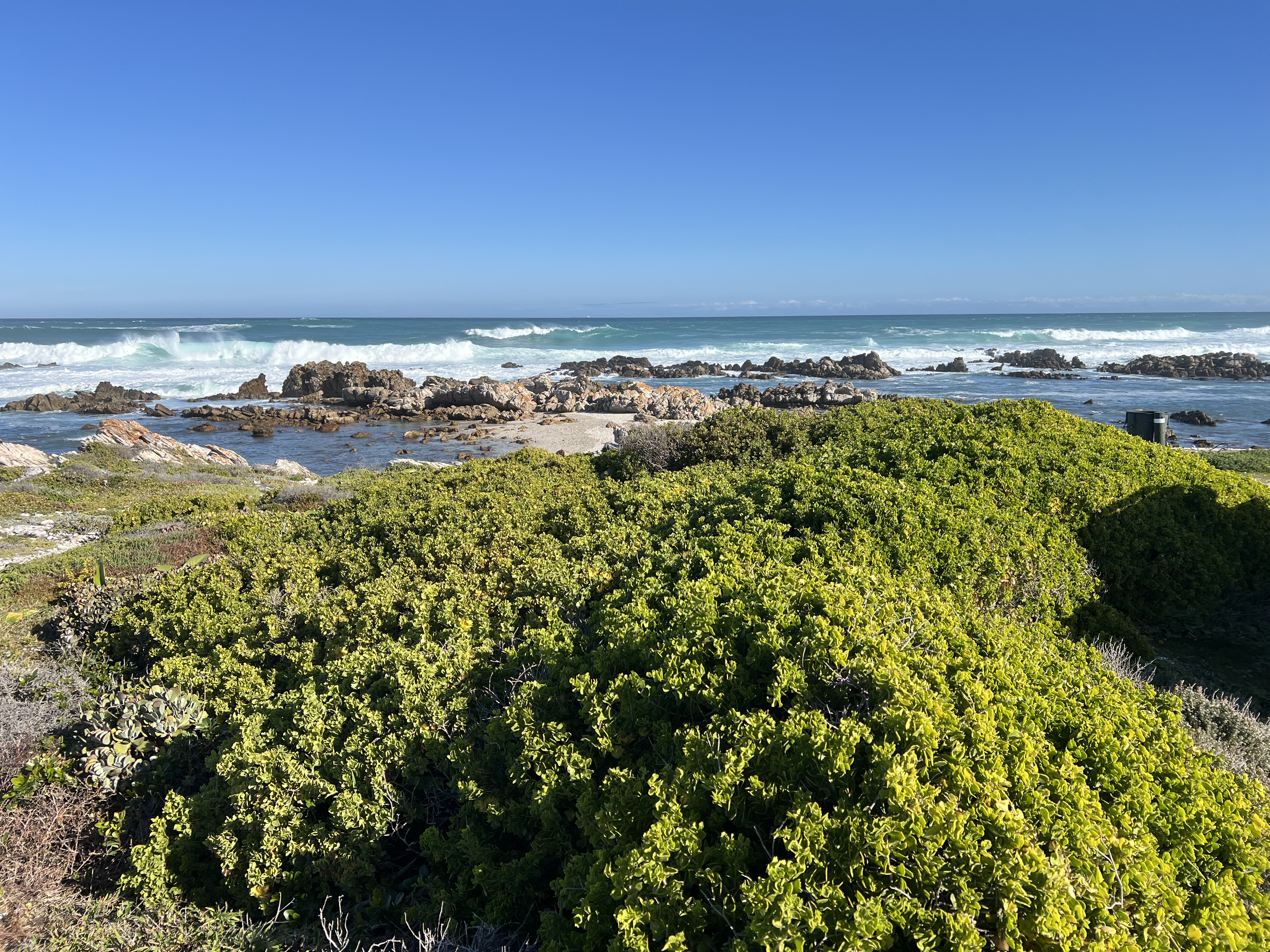
Hermanus is known for whale watching. During the season, from August to December, there are migrating Humpback and Right whales that can be seen directly from the shore. At least, that’s what everyone said. Unfortunately, I didn’t see any, so after a brief lunch overlooking the sea, I headed on to Cape Agulhas, where the Atlantic and Indian Oceans meet. This is the southernmost point in Africa, and the two currents with different temperatures, warm water from the Indian Ocean to the east and cold from the Atlantic in the west, come literally crashing together on the rocks. There is a shortish boardwalk along the coast to an engraved map of the Cape near the meeting point of the oceans. The winds are fierce here, but there is a stark beauty to the area.
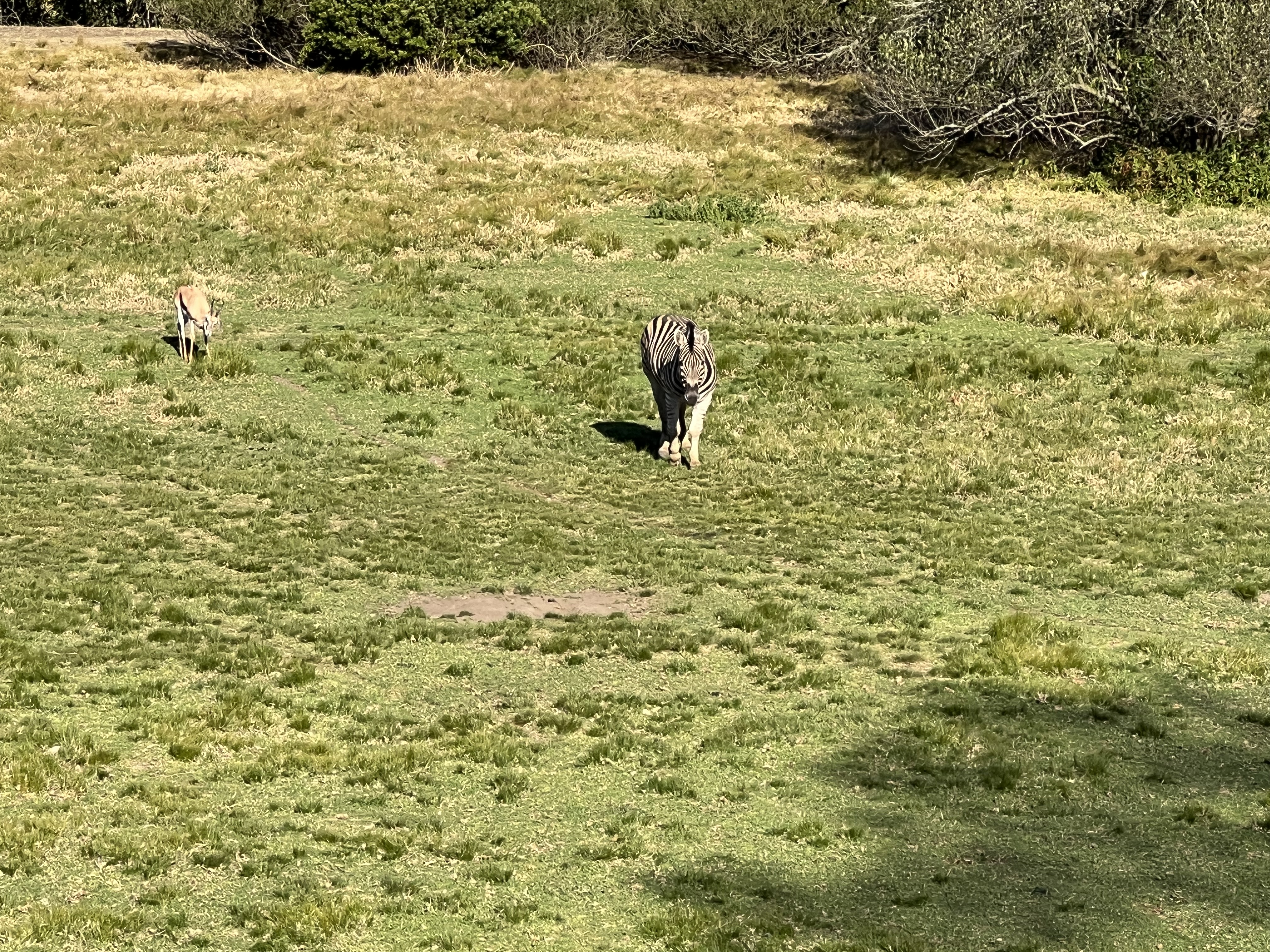
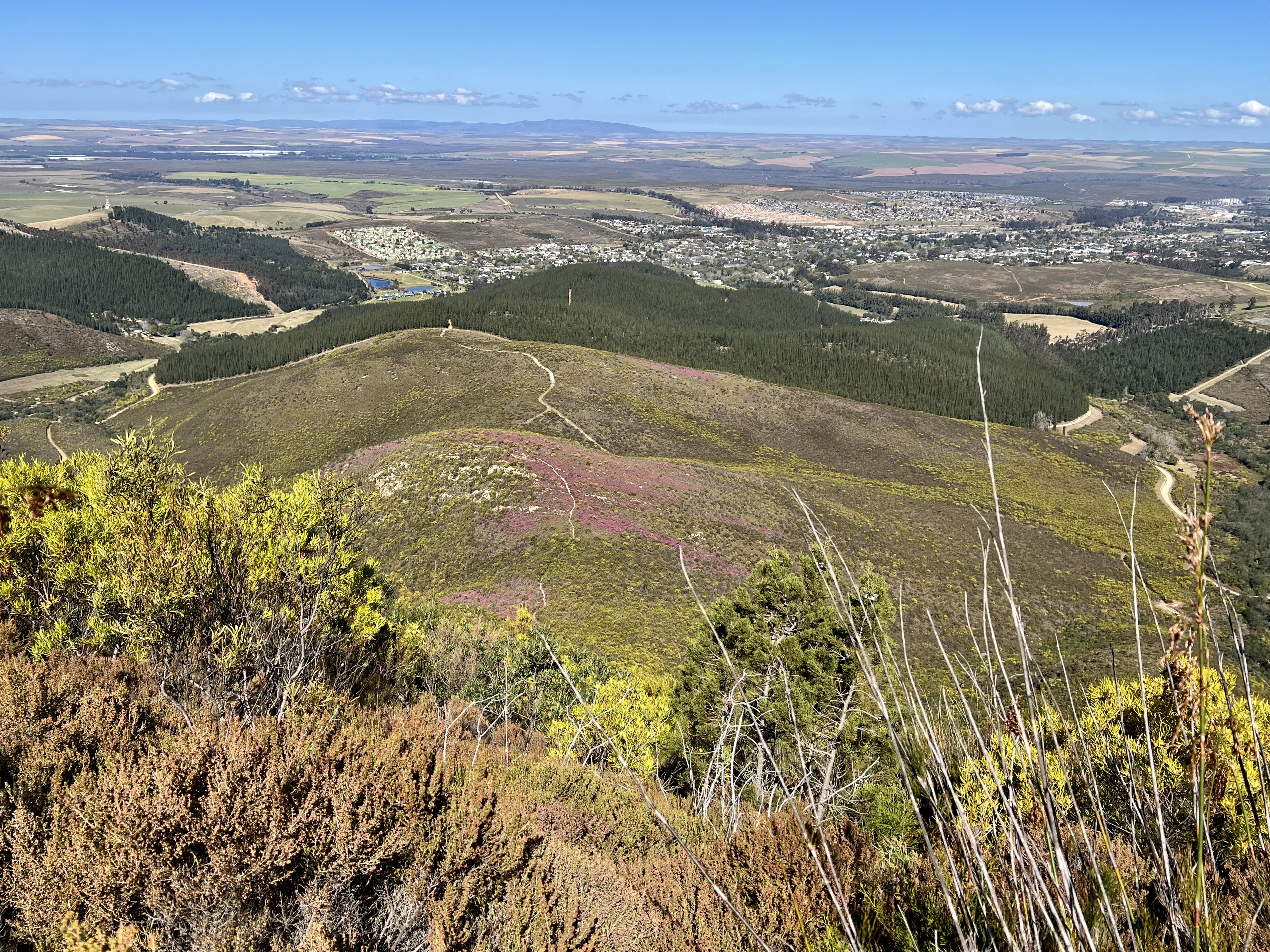
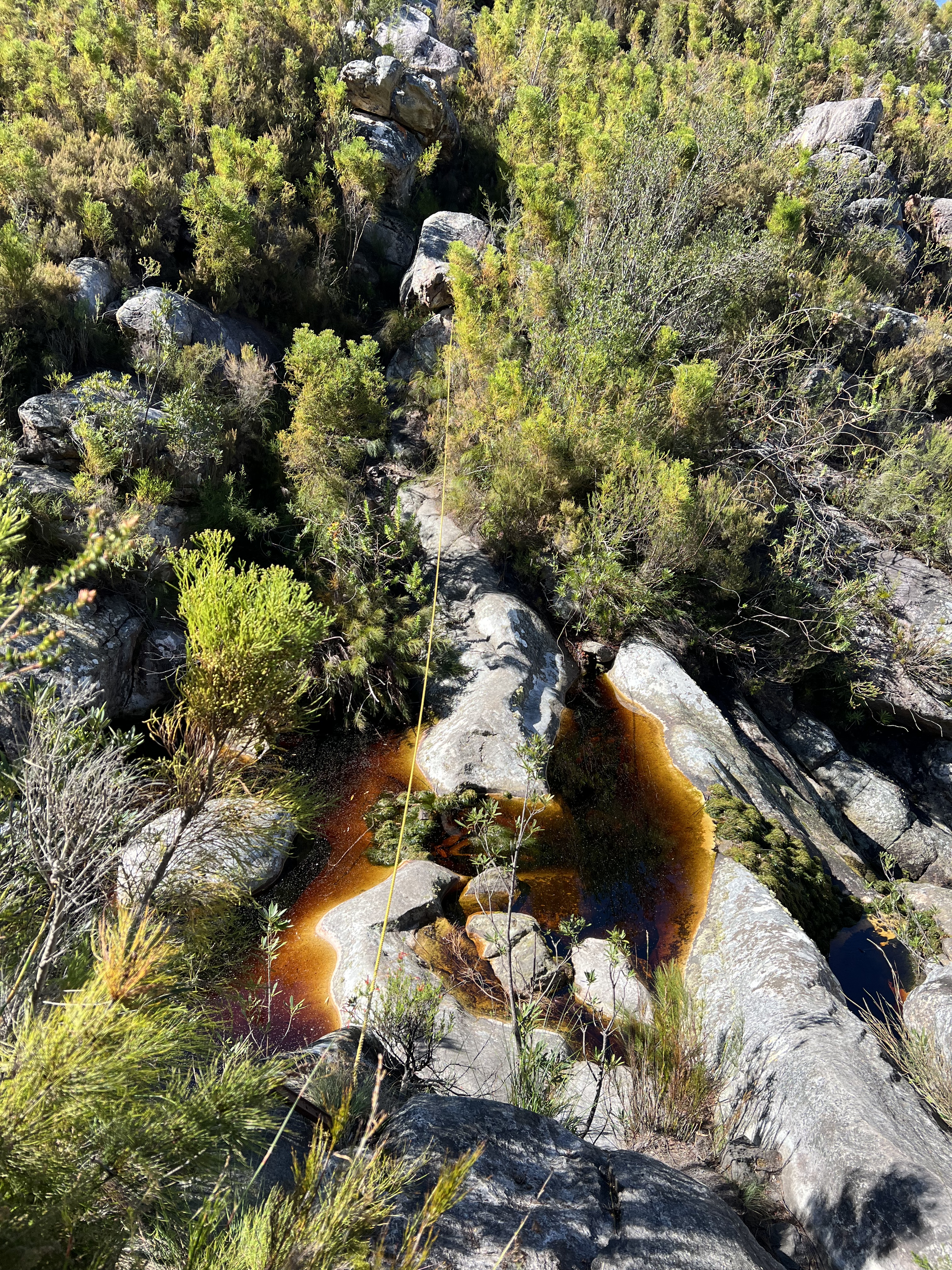
From Cape Agulhas, I headed inland to Swellendam where I was spending two nights. Originally, I thought I would go to Bontebok National Park, but I then heard from others that it was expensive and disappointing. The place I was staying had springbok and zebra in a park behind the gardens, which meant I could see some wildlife, so I chose to go hiking in the Marloth Nature Reserve, which only cost R50 instead (ca. E 2.5). There are a few different paths that go up into the Swellendam Mountains, one to the waterfalls only takes about an hour others can take up to days. I chose to do the Platt Loop, which should have been about three hours, but I came to a stretch where after scrambling down a boulder cliff face there was a waist high stream that I wasn’t going to be able to cross and had to scramble back up the rocks to take the Plaat West route. This meant that the way down was steeper than it would have been on the longer route, but at least it was open. I then tried to take a short cut, that was listed on the map, to the waterfall, but there was a no entry sign at the top of the trail, so I ended up retracing my steps here as well. There is a reason one should hike with a guide in unknown territory even if one does have a map…. I got back to the car after about three and a half hours with enough time to explore Main Street Swellendam.
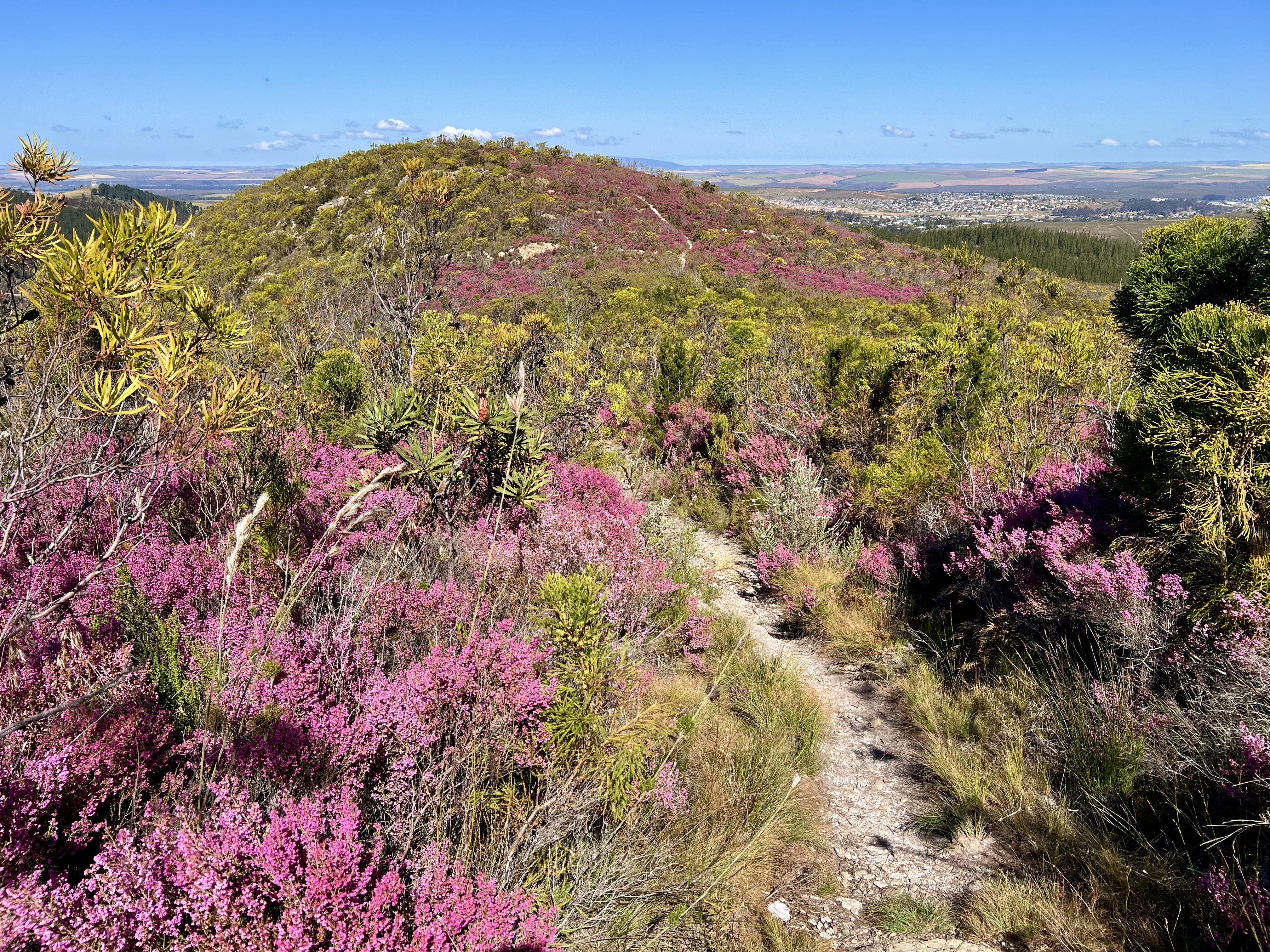
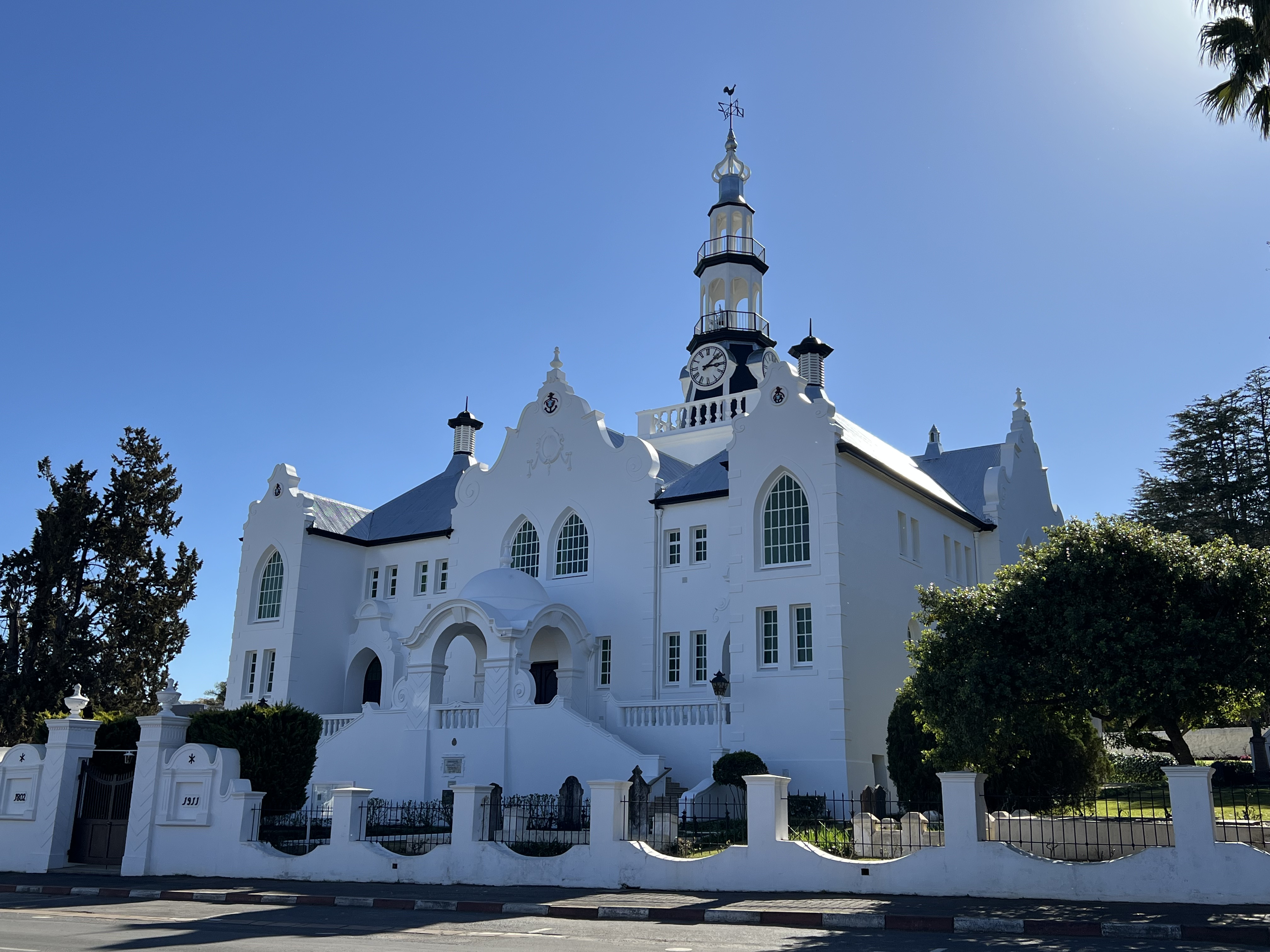
From Swellendam, I headed to Mossel Bay.

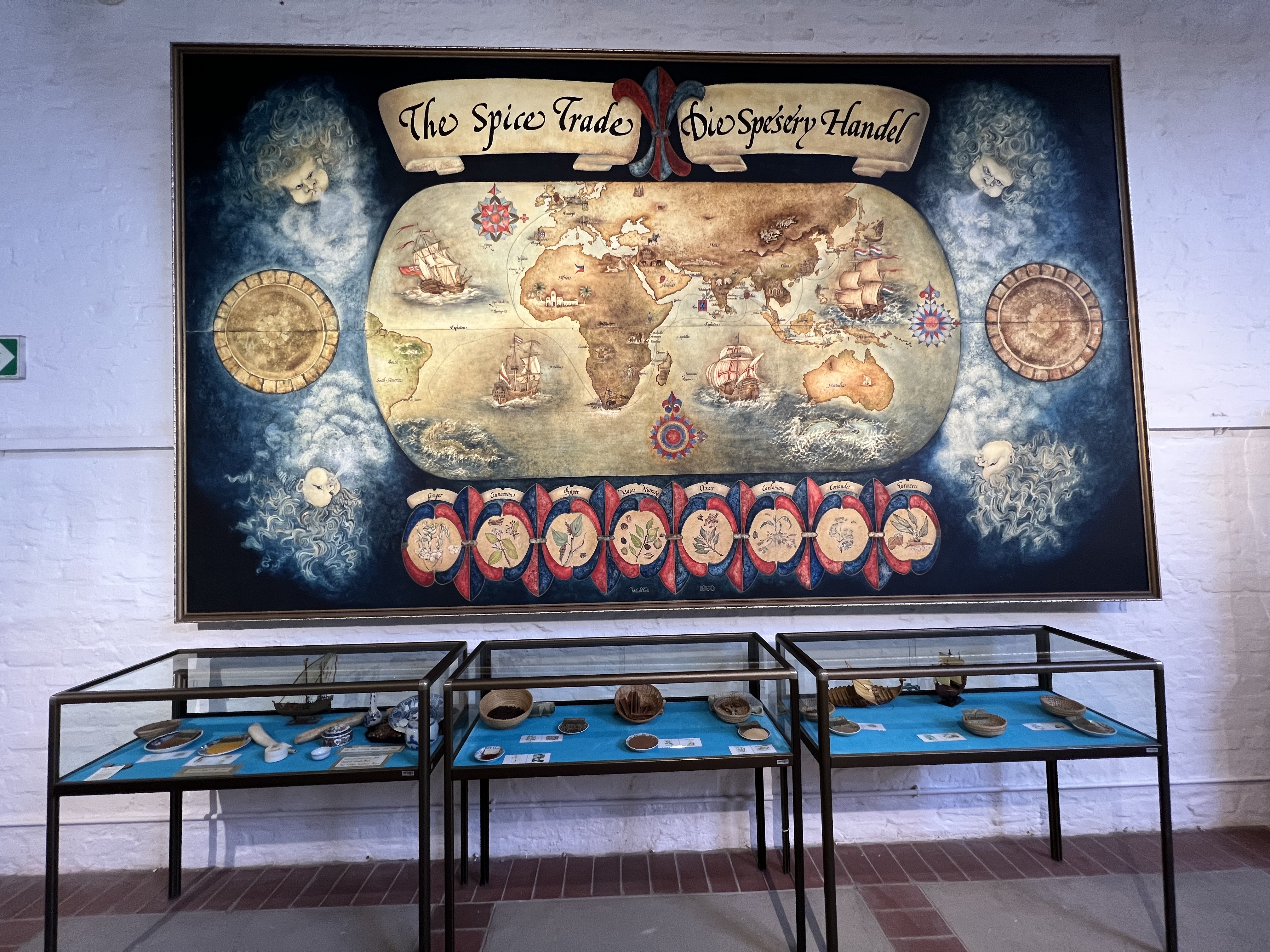
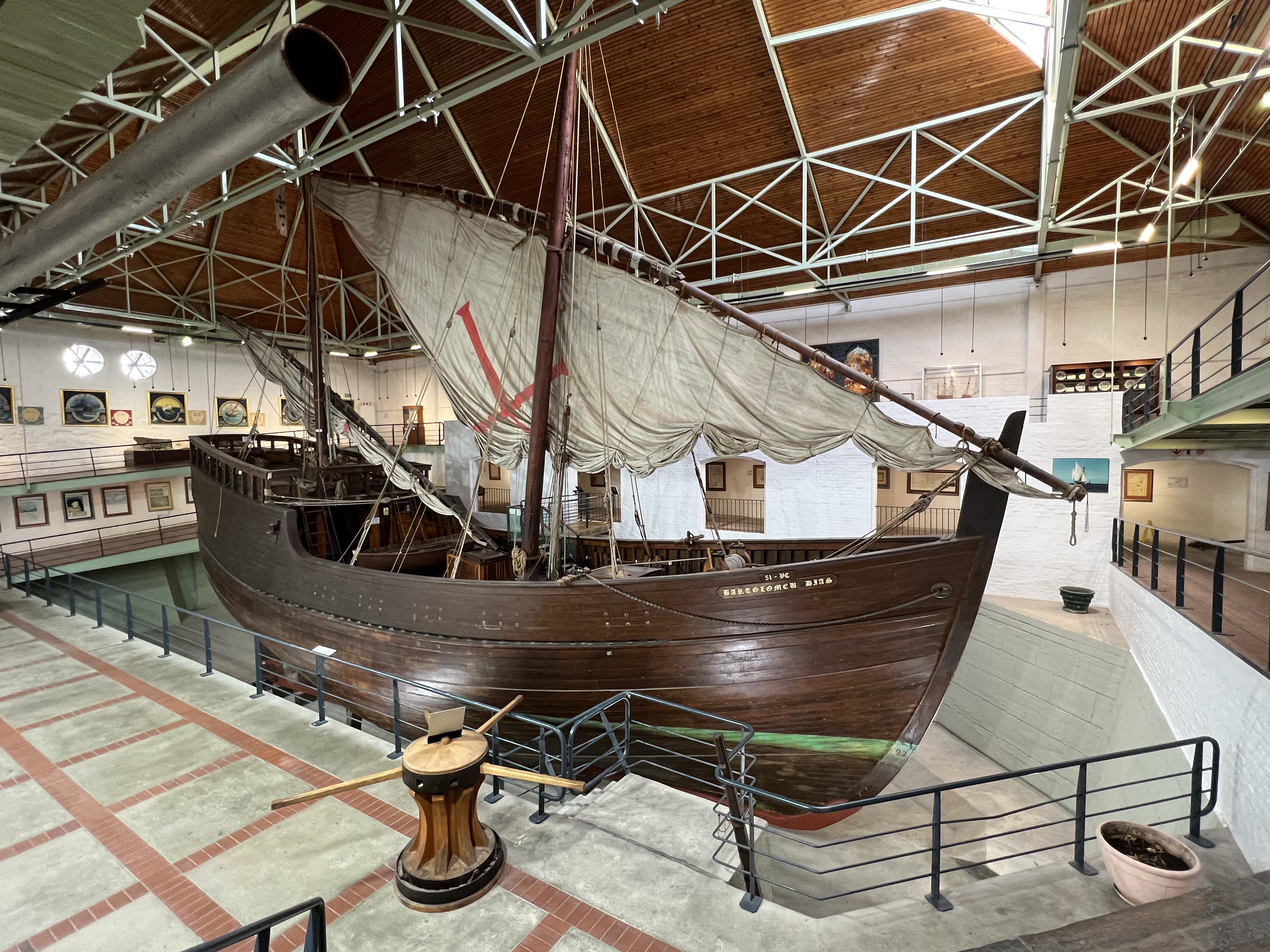
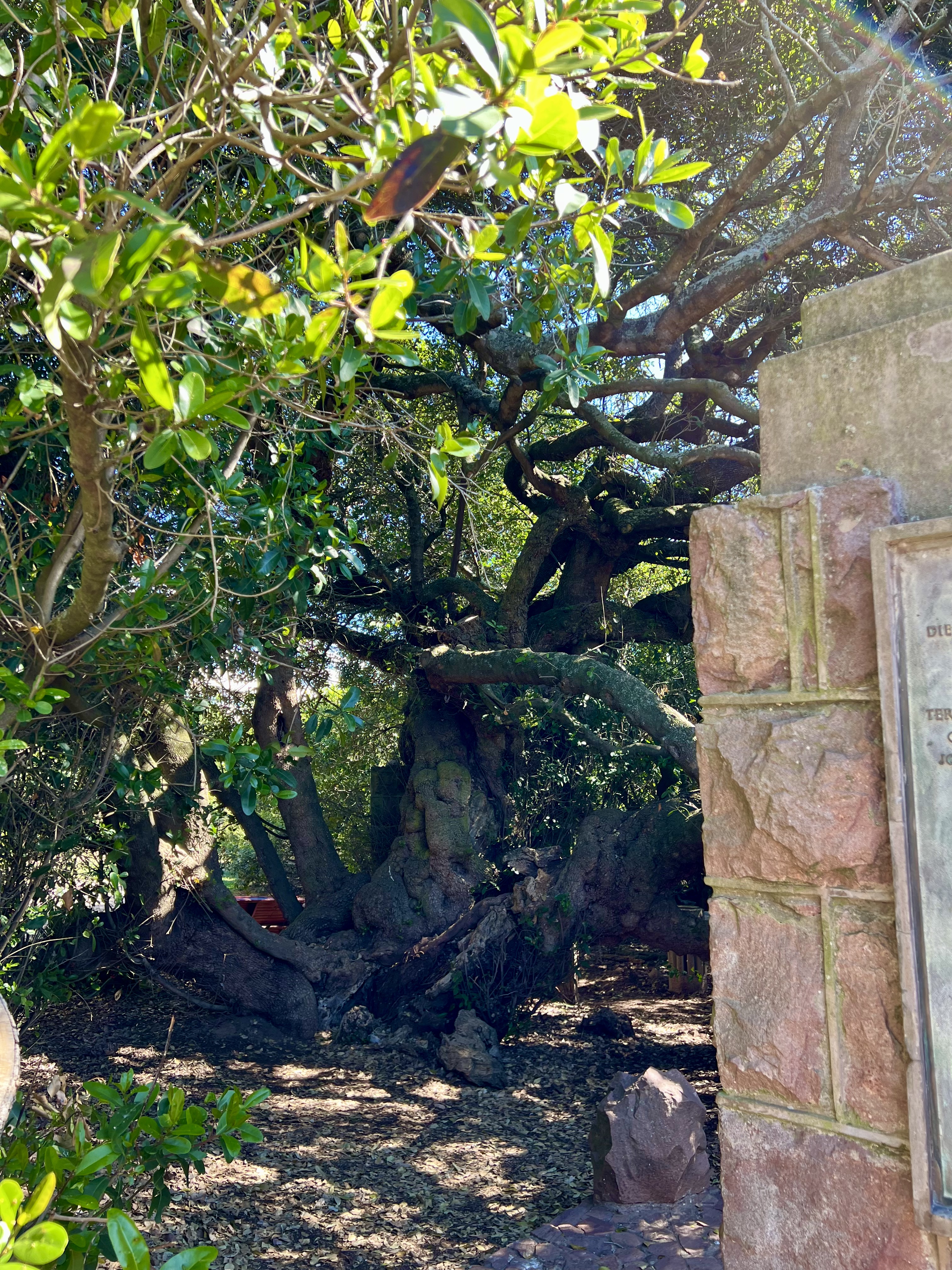
Mossel Bay is famous for its mussels, but I am allergic to all shellfish, so this wasn’t why I was going. It is also home to beautiful beaches and the Bartolomeu Dias Museum. This is an excellent small museum near the shore. There are a few separate buildings within the museum complex, which is situated in a park-like area. The first building where the reception is discusses the mountains behind the bay and the newcomers who first built in the region. The second houses a two-floor shell museum, which has shells from all over the world with descriptions of each. There is also a small octopus in one of the aquariums. In front of the Shell Museum is the Post Office Tree, so named because when Bartolomeu Dias passed away a colleague of his tied a shoe with the message of his death to the tree. When the next passing ship came by, a sailor found the shoe and message and relayed the information back to the King of Portugal. From then on, the site became the unofficial post office for the Portuguese sailors. The next building is the actual Dias Museum with a recreation of the ship he used to first navigate these waters for the Europeans. The walls of the museum are lined with plaques explaining the history of ships from the ancient Egyptians around 1500 BCE to those of European make in the late 19th C. Walking down the slight green grassy slope, one comes to a small freshwater pool, which it turns out was the spring that the early Portuguese explorers used to fill up their water supply. The spring is right by a soft sandy white beach.
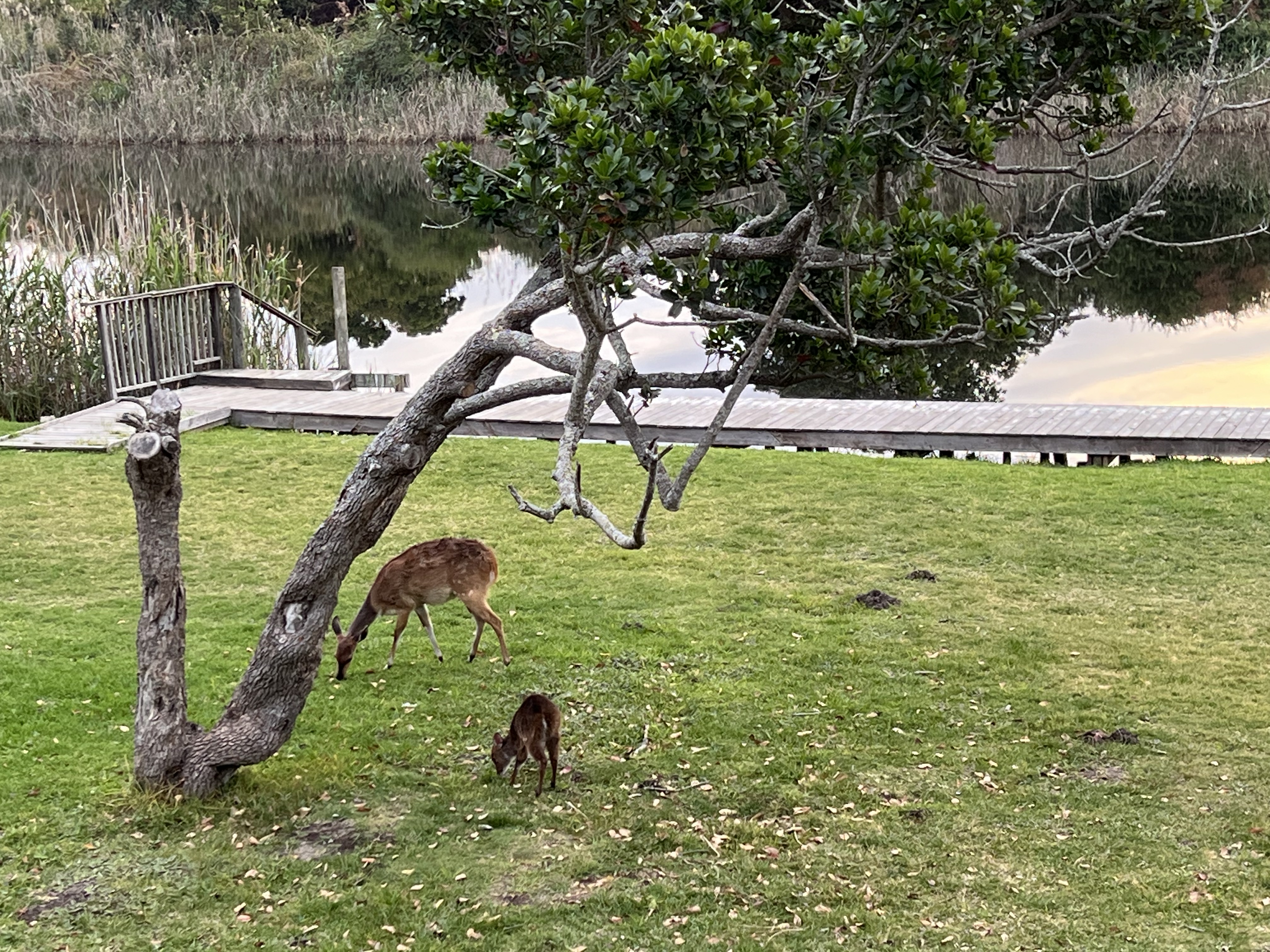
From Mossel Bay, I headed back down the coast a bit to Dana Bay where I was spending the night. The B&B had a stunning view of the Bay to the east and between the beach and house was a long strip of green. It turns out that Dana Bay residents have created a nature corridor between the shoreline and the residential areas for wildlife to roam freely. When I woke up the next morning I was greeted by a male and female bushbuck and a Cape sugarbird. Dana Bay is truly a spectacular place.
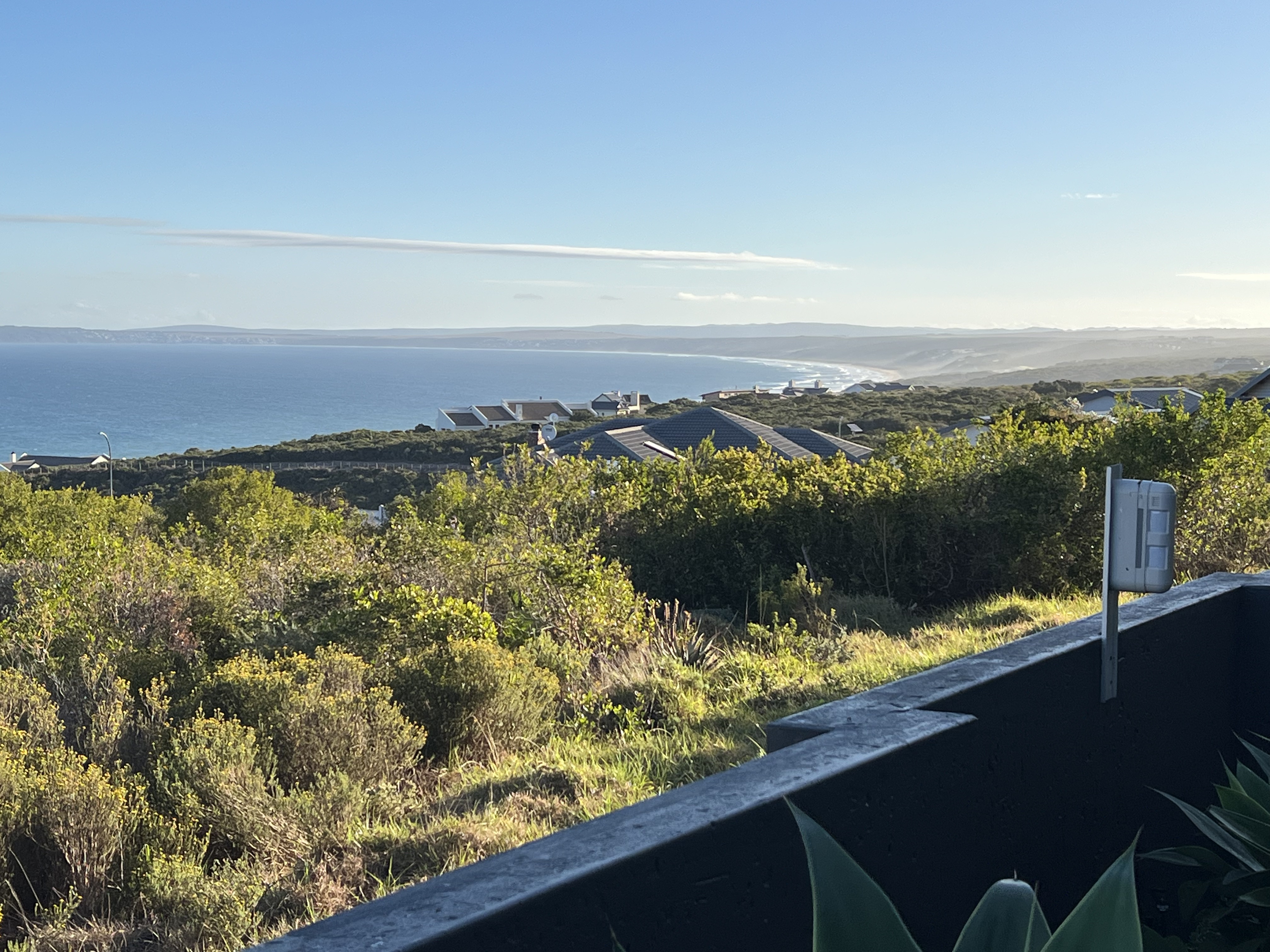
I normally do not recommend or even mention specific B & Bs or guesthouses as this isn’t that kind of blog, but the owners, Anna and Lucas, of Erica27 in Dana Beach were simply so wonderful that they need to be mentioned. Their place is spectacular and they were fabulous hosts who were forthcoming with some very valuable advice. IF you are ever staying in the Mossel Bay area, do yourself a favor and stay with them.
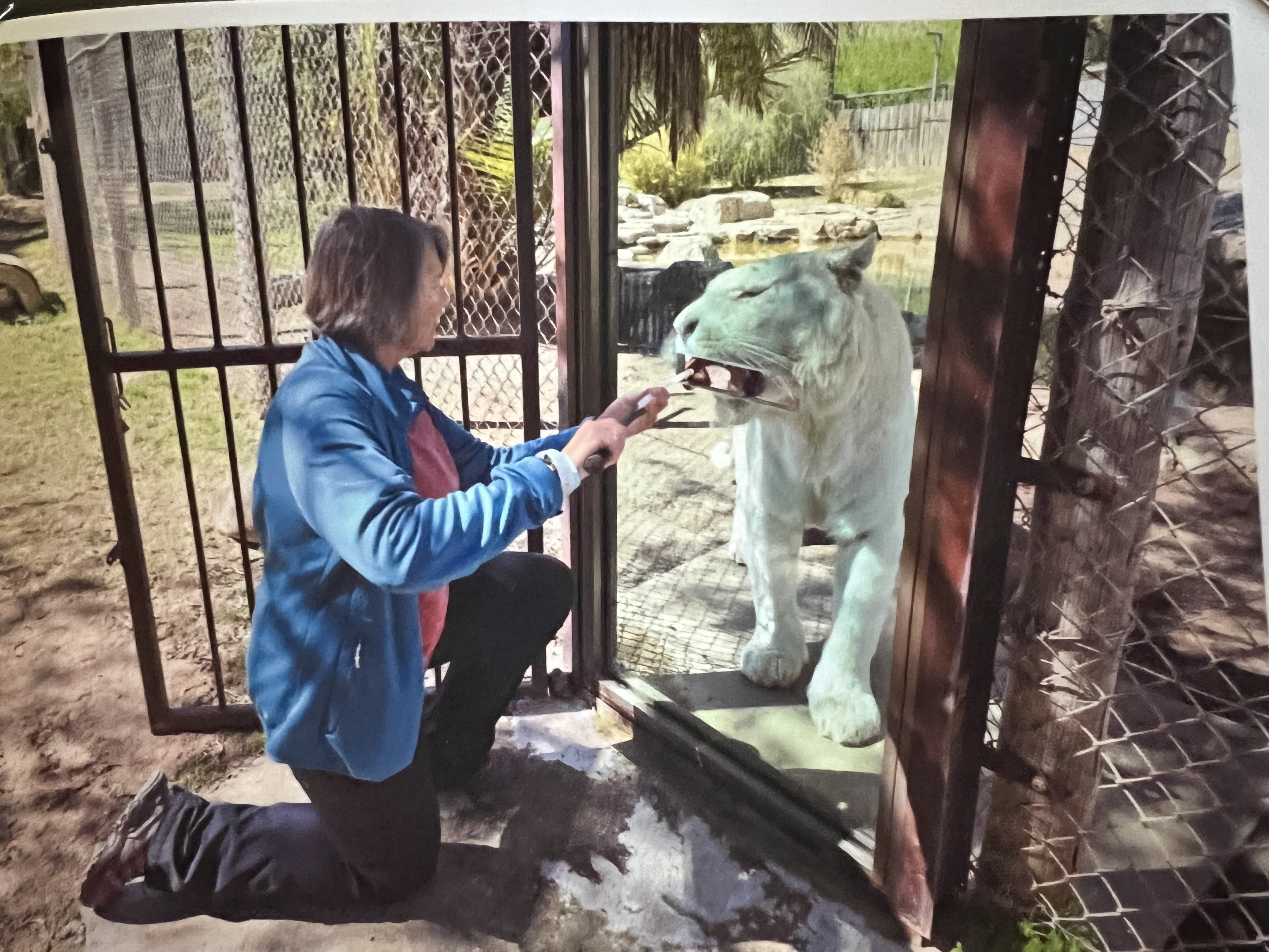
From there I headed north to Oudtshoorn, the Ostrich capital of the world. I wasn’t going there to see the ostriches, but rather the meerkats. As the meerkats are usually only visible at sunrise, they were on the agenda for the following day. On the way, I passed through fynbos covered mountain slopes and the Robinson Pass. Coming down the mountains the vegetation thins to the high veld of the Klein Karoo. Oudtshoorn has a number of attractions, among them the Cango Wildlife Ranch and Cango Caves, both of which I visited. The Cango Wildlife Ranch is a rescue shelter for a variety of animals. There are crocodiles, turtles, tortoises, capybaras, lemurs and some big cats, including a white Bengal tiger, two lions, a cheetah, some cheetah cubs, and a leopard. For an extra fee one can feed the tiger and lions and pet the cheetahs. I realize this is wrong, but nonetheless, did do it. The animals in these enclosures were born in captivity, and the tiger and lions were over 20 years old. The cheetah was only three but had been brought there from a zoo that went out of business. This was a story I heard repeatedly at the game reserves/sanctuaries. Many of the zoos in the country have gone out of business and needed to rehouse their wildlife, additionally, when an animal has been hurt or orphaned in the national parks, they may also relocate the animals to these sanctuaries.
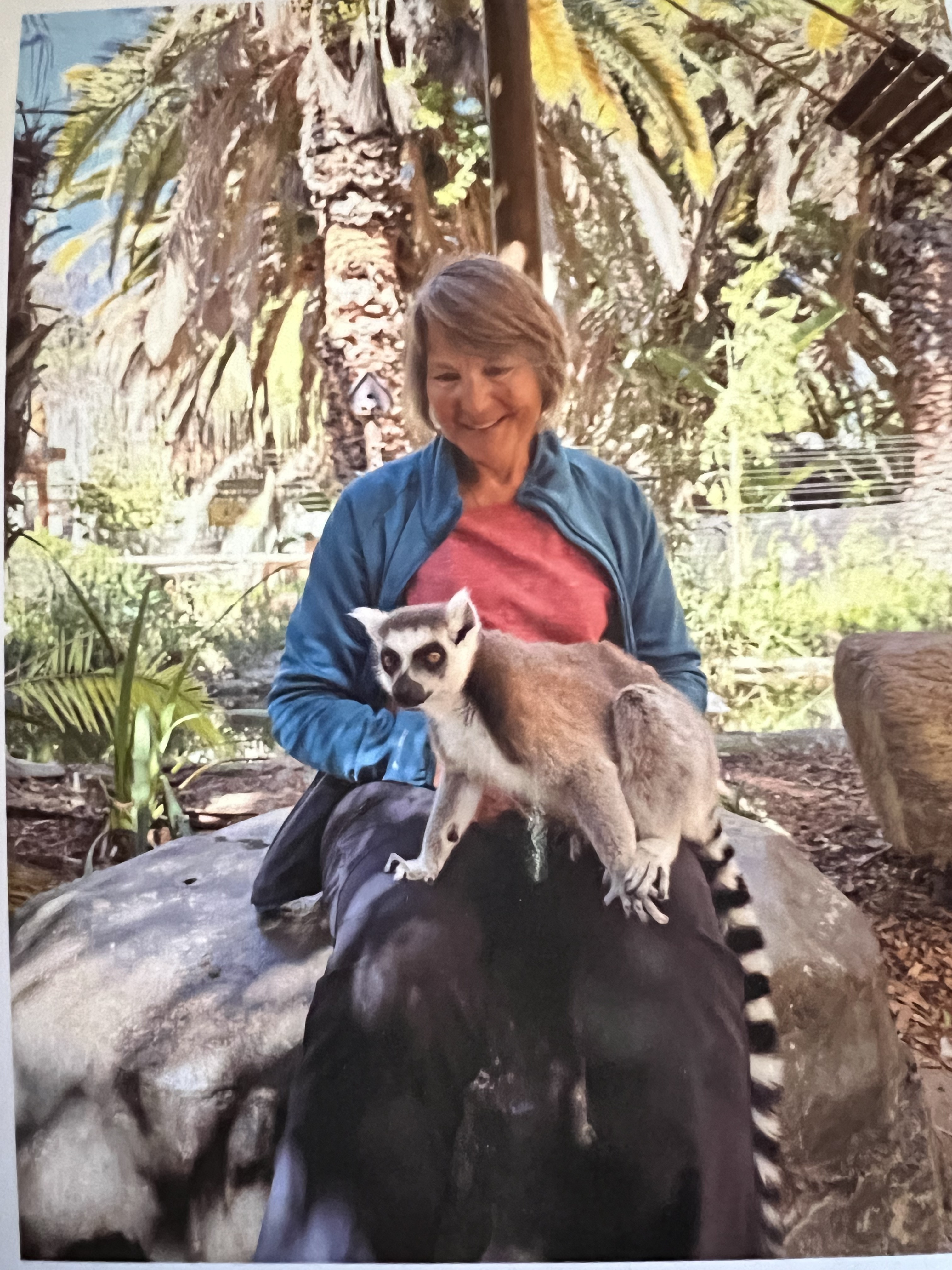
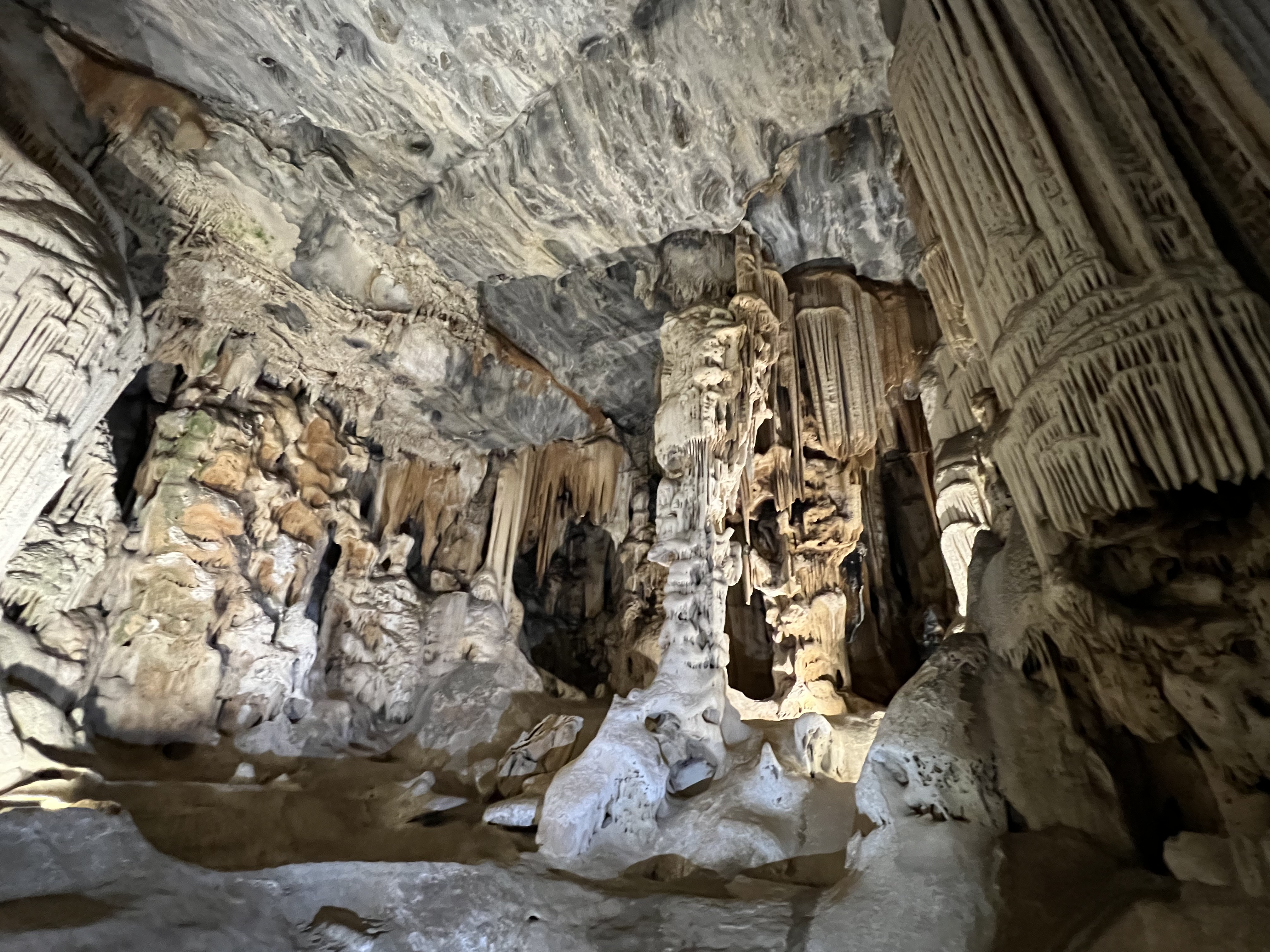
The Cango Wildlife Ranch was interesting, but it in no way makes up for seeing the animals in the wild. Further down the road is Buffelsdrift Game Lodge, which offers game drives and meerkat tours. My meerkat tour was with another company, so I passed by this game lodge and headed to the Cango Caves. This cave system is the largest in South Africa and shows evidence of prehistoric inhabitants through some still barely visible cave paintings. The tour, and one must go on a tour, takes about an hour. It goes through the first two major caverns, and the guide provides detailed information on the formation of the stalagmites and stalactites. The cave extends for kilometers beyond that which tourists are allowed to visit and has not been able to be fully explored even by the experts.
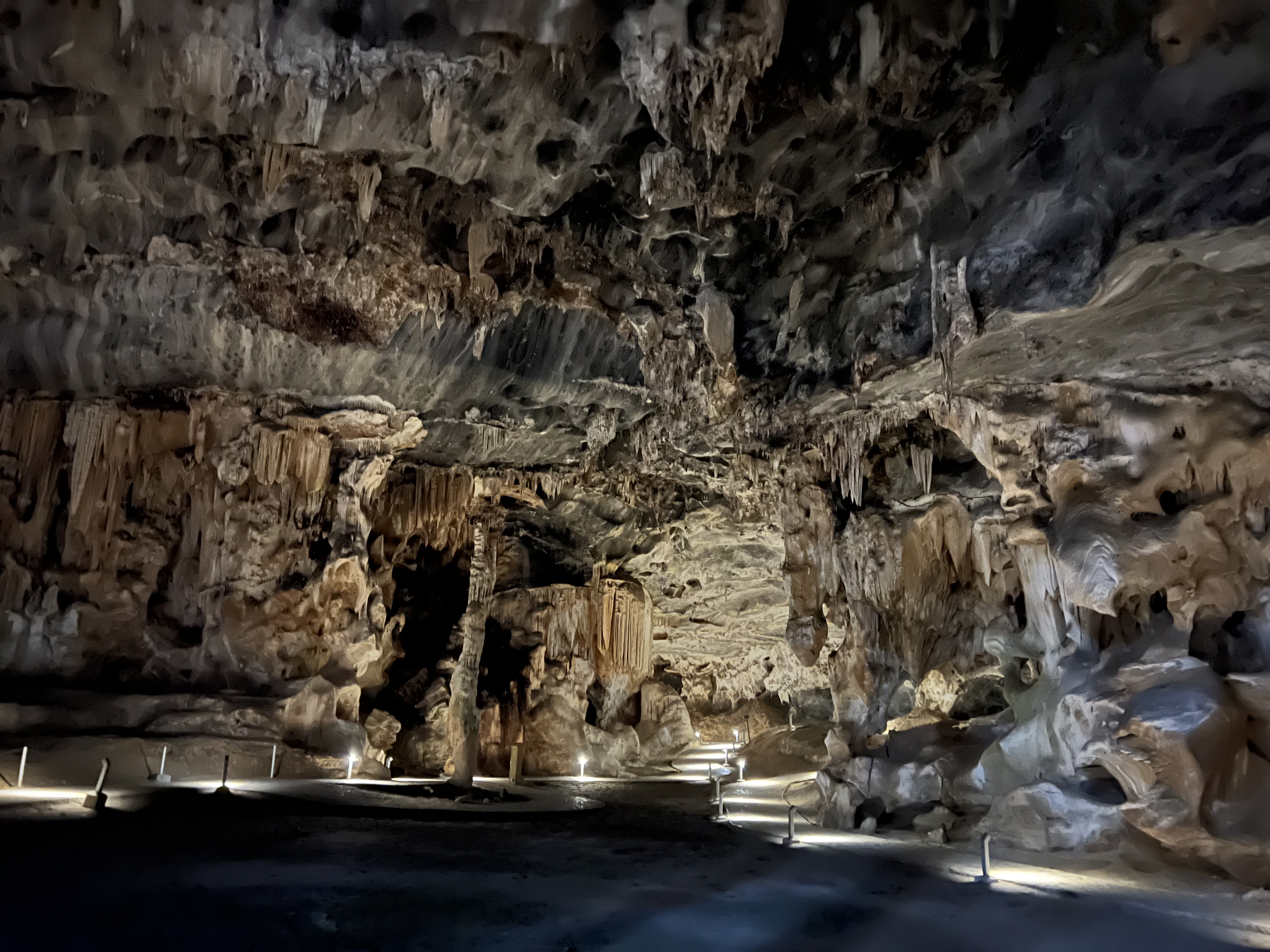
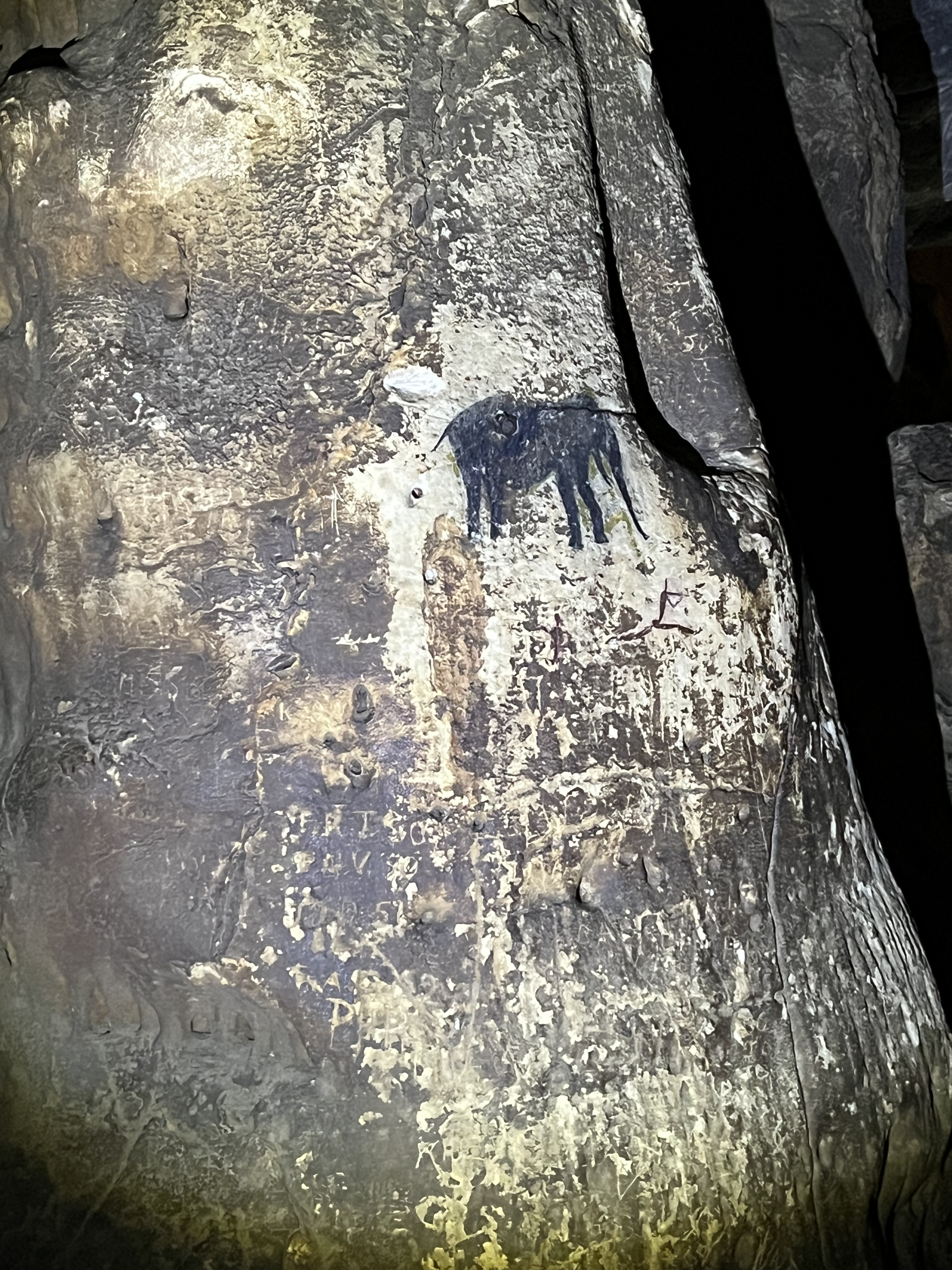
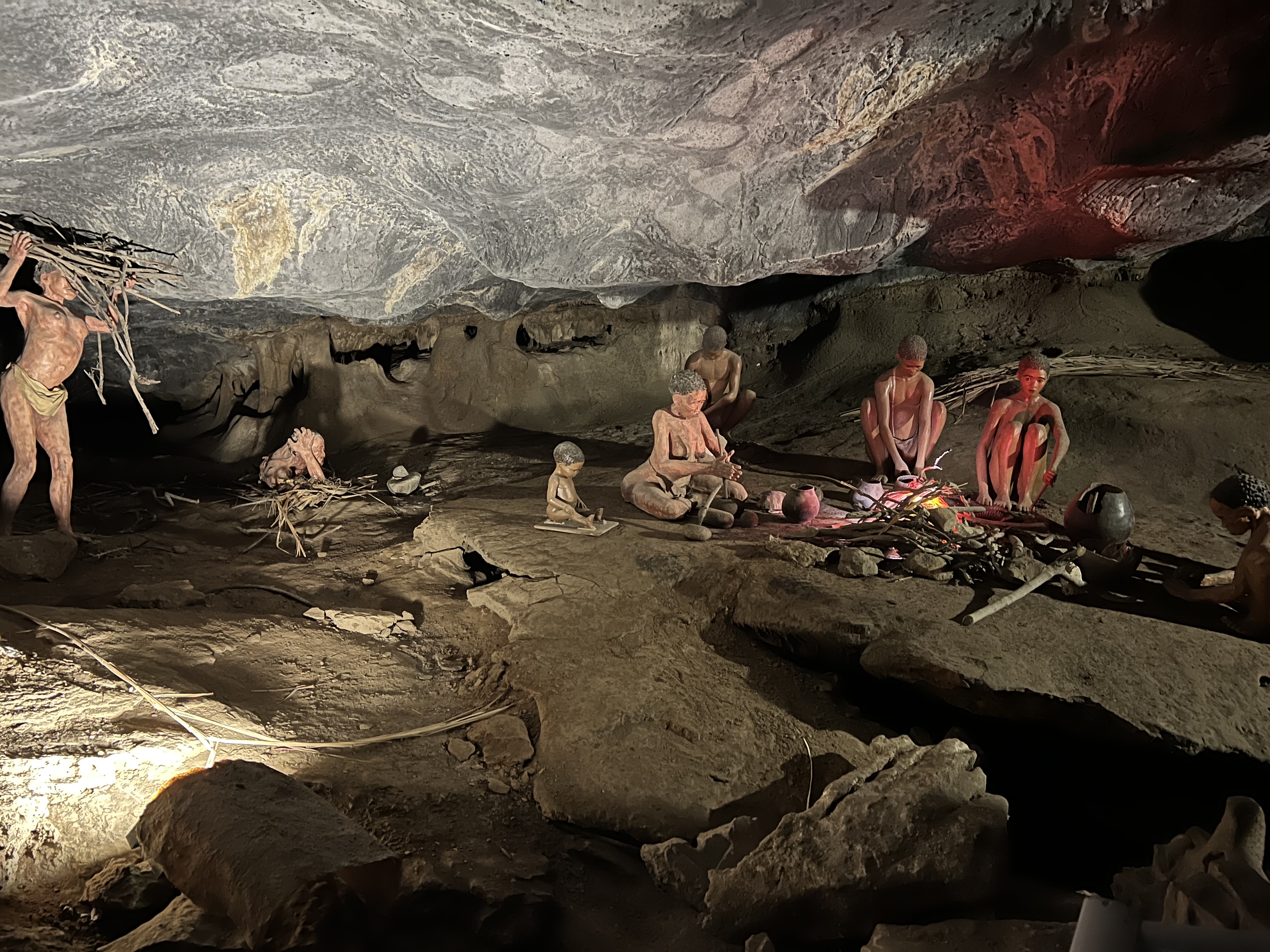
At the end of the tour, I headed back through Oudtshoorn to the farm where I was spending the night. They offered a star-gazing experience that I couldn’t pass up with the clear night sky. Colin, a local engineer, gives the tours to folks staying at the farm. For our tour he had two telescopes set up in the middle of the veld, one with 50mm and the other with 80mm. With the naked eye he showed us the Southern Cross, Scorpio and a number of other stars and constellations; then with the telescope we could see the craters on the moon and the rings around Saturn. Seeing the rings was really an amazing experience. It was a fascinating day, starting with the timeless ocean waves and bushbucks to petting a cheetah and ring-tailed lemur and feeding a lion and tiger to the prehistoric wonders of mother earth to the limitless skies of our universe. South Africa is truly amazing.
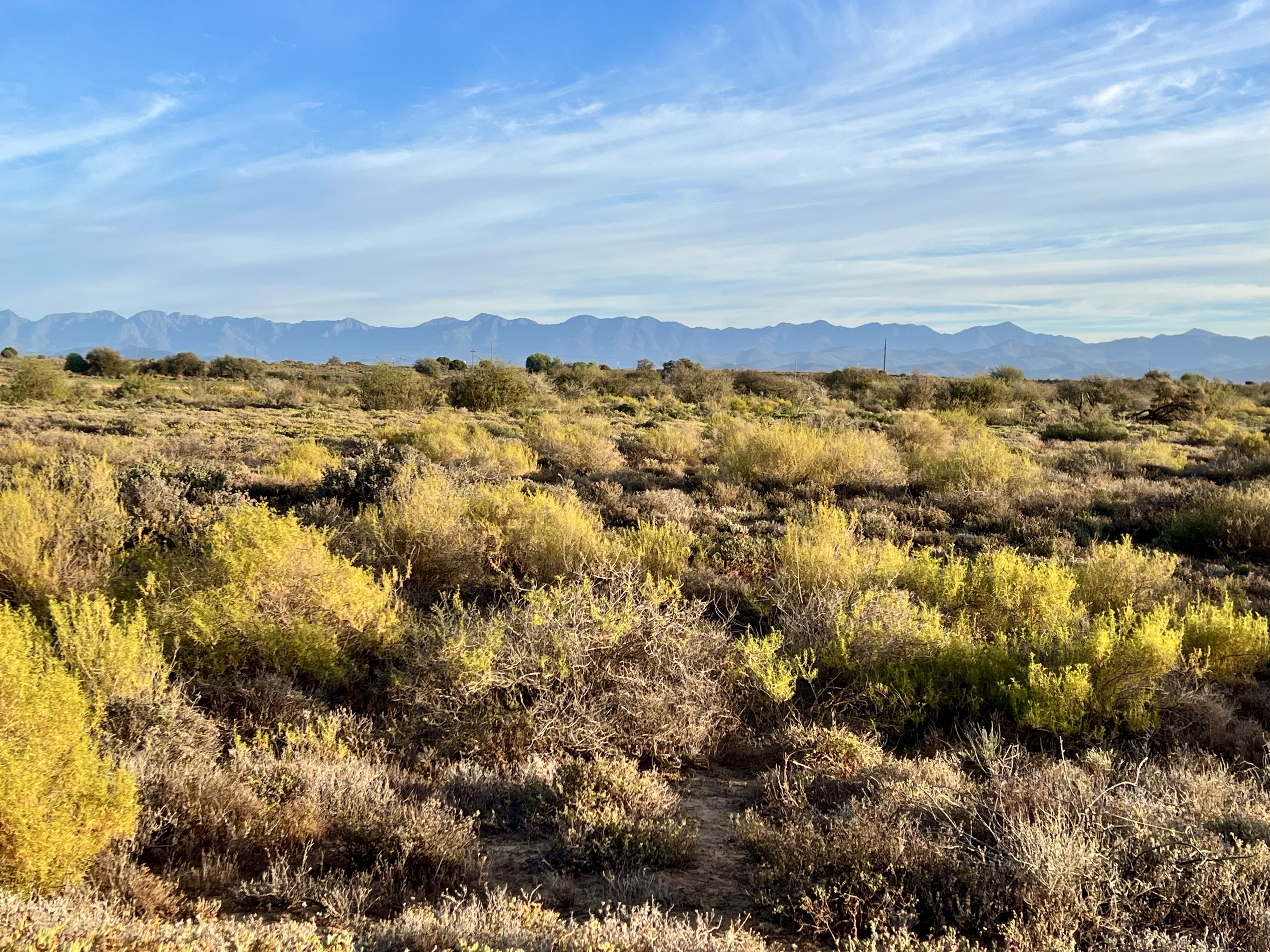
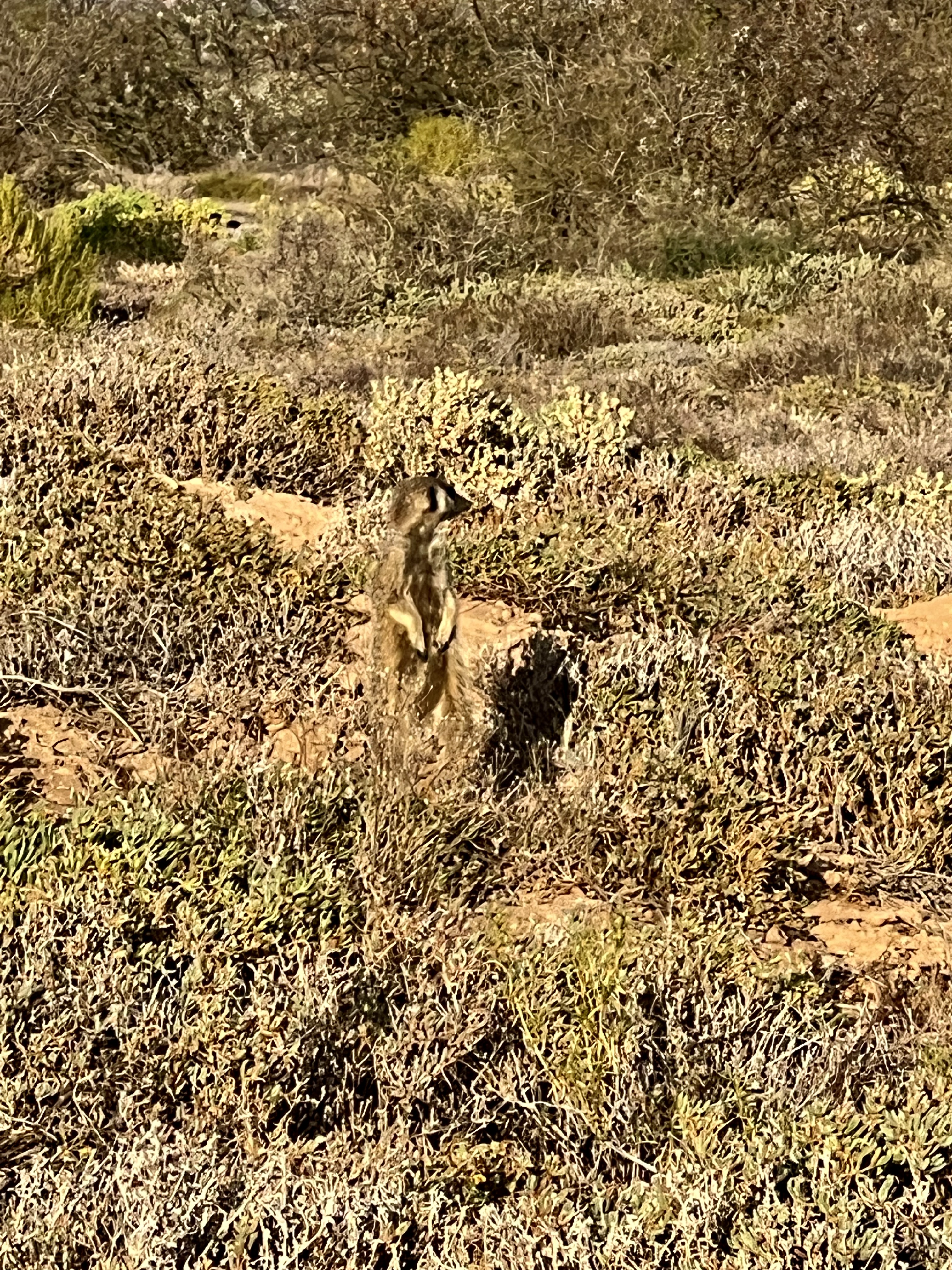
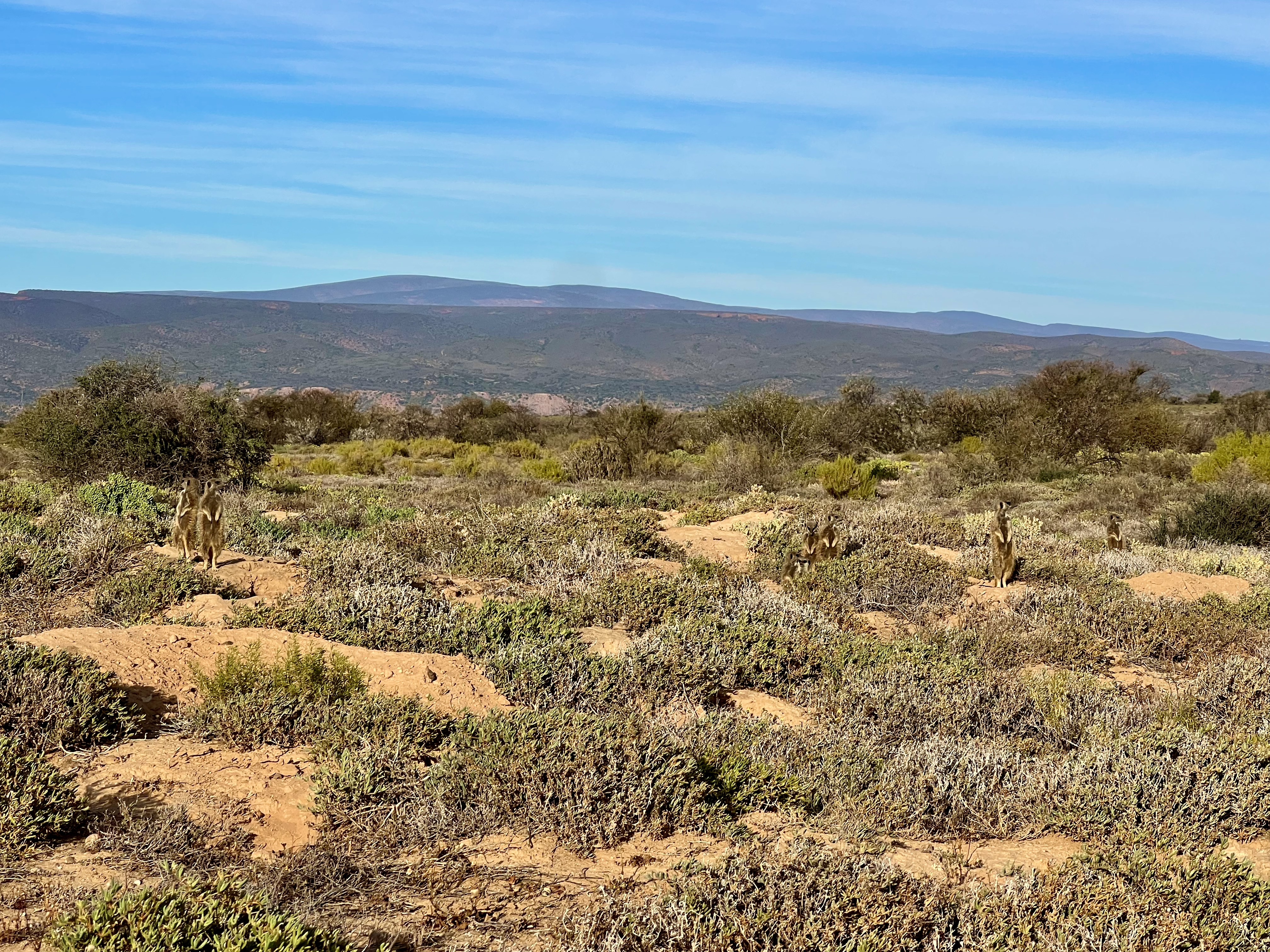
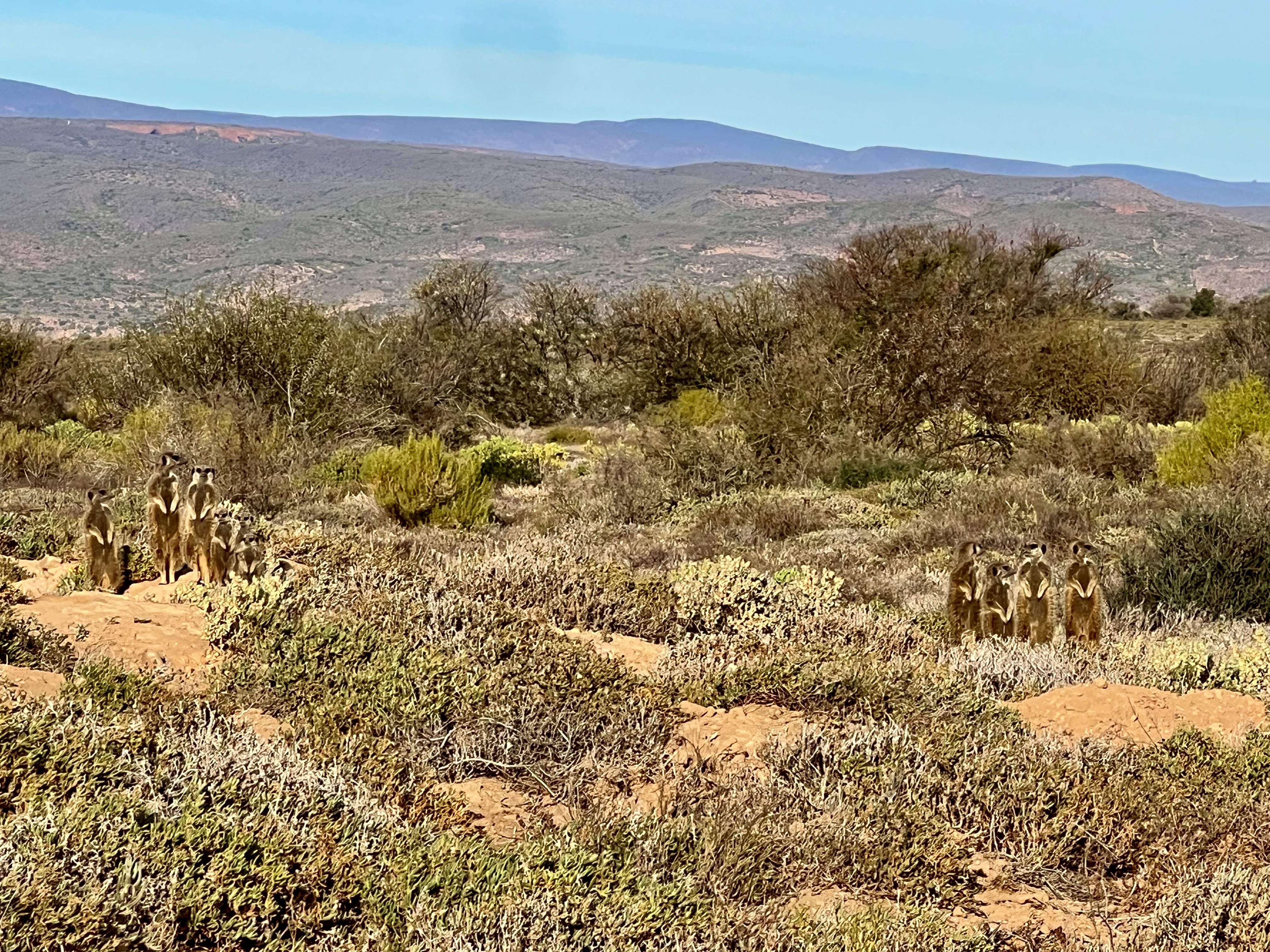
The next morning, I got up early to drive to the Five Meerkats site. It was cold, but it was a clear day. There were 32 people viewing the meerkats that morning and the guides split us into two groups so that each group would visit a different habituated family. We drove a few kilometers to the next site, then walked for about 400m, watching out for ticks on the green ferns and snakes amid the bushes, to where we would sit on folding chairs they had given us. Luckily, they also gave us blankets. While we waited for the meerkats to poke their heads through their broughs in the dusty scantly vegetated tan earth, the guide explained how they spend over a year trying to habituate a meerkat family to viewers and about their behaviors and life cycles. It took a while, but then the first little slender body rose from the hole to check out what was happening. Slowly the others come out all the while continually moving their heads right and left to watch out for predators. When they stood, they had the hands/paws placed downwards on their white stomachs leaning on their tails for support. They are led by a matriarch who occasionally let out a small sound that seemed to order the others around. The meerkats remained with us – or we with them – for about an hour before scampering away.
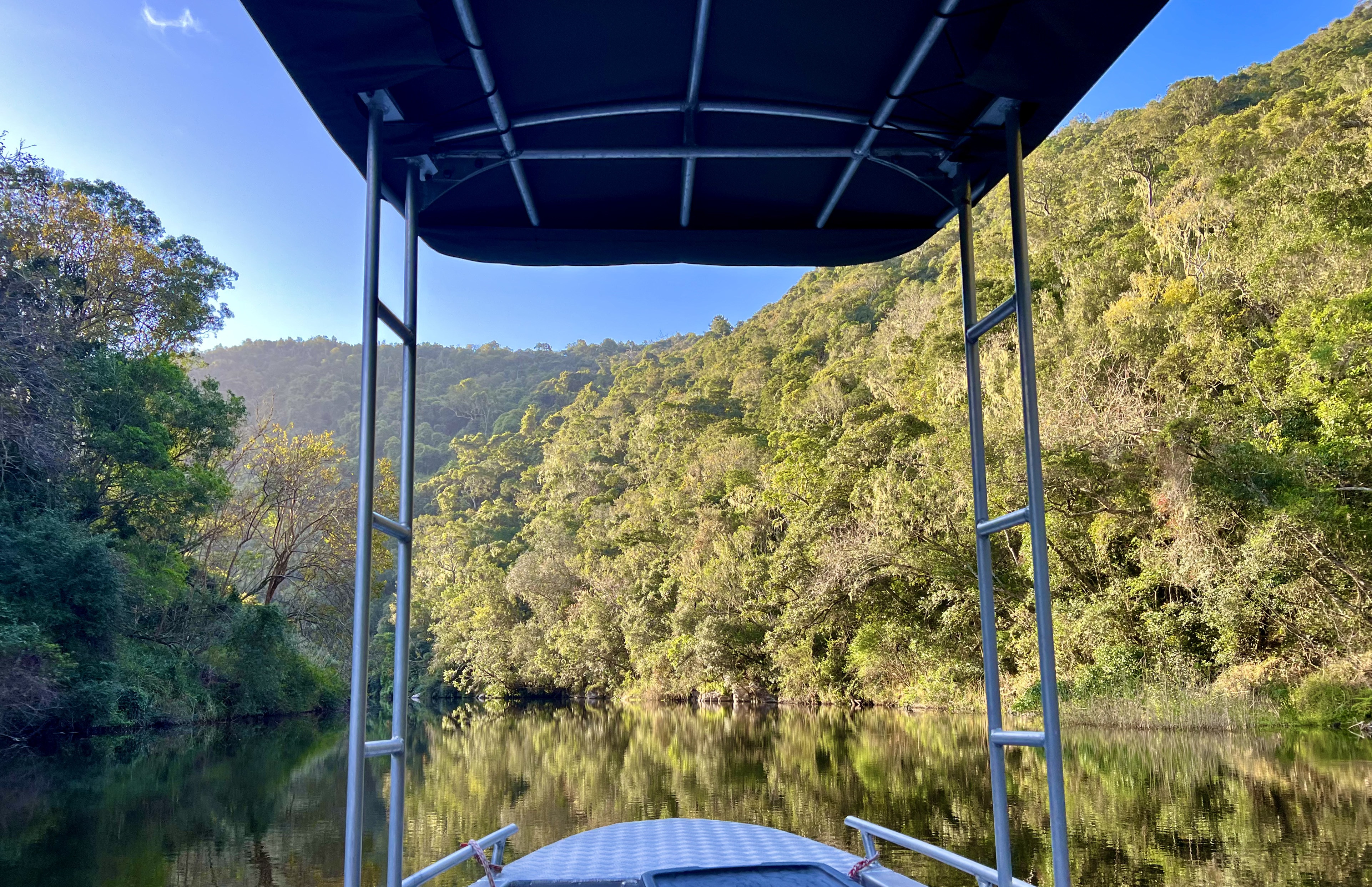
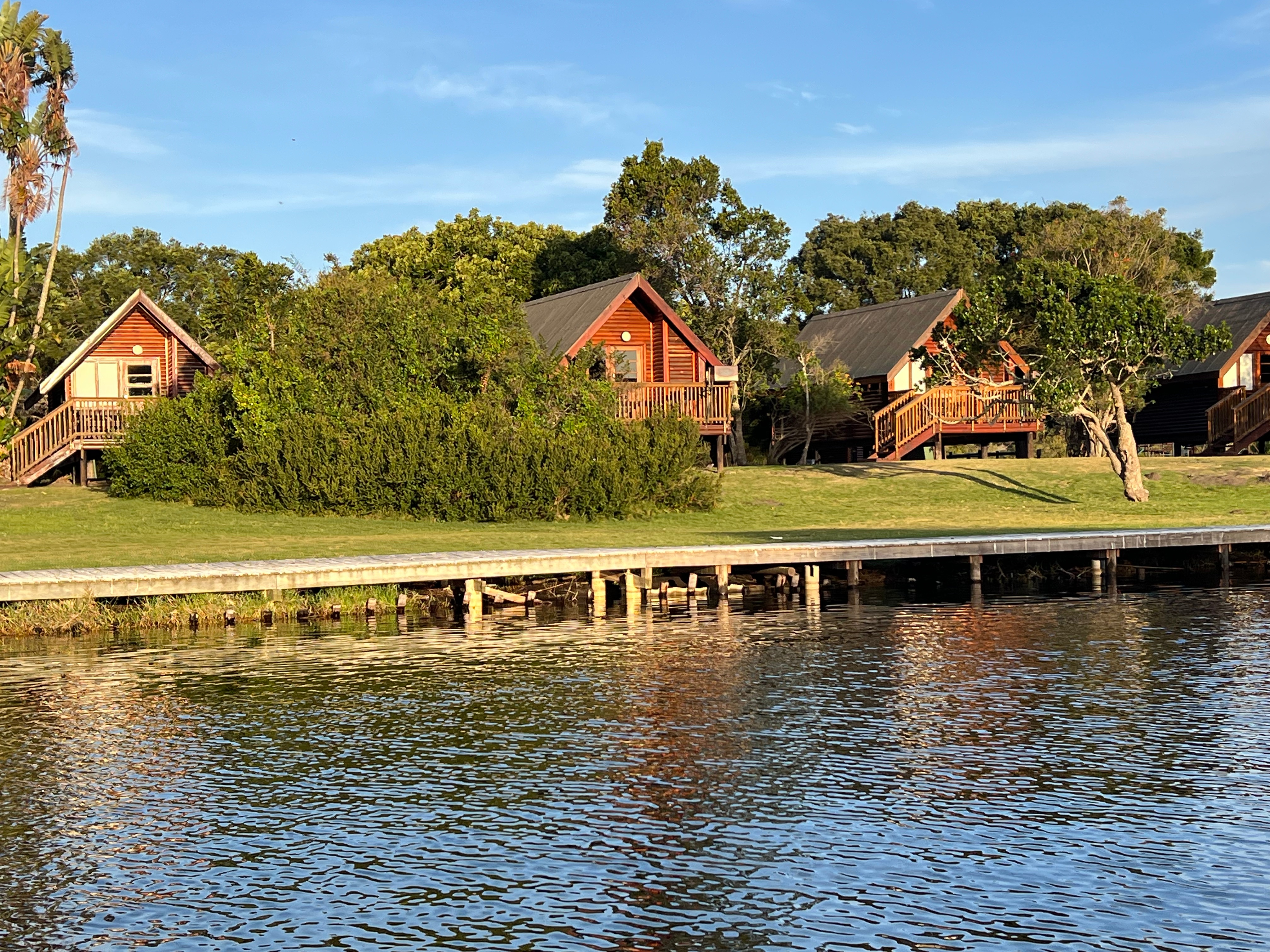
It was now time to leave Oudtshoorn and drive south through the Outeniqua Mountains via a direct route to George and the coast. George is the main commercial city on the Garden Route; it also has a lengthy beach. I headed further on to the Ebb & Flow Rest Camp in Wilderness, which is part of the Garden Route National Park, that was going to be my home for the next two nights. The cabin I rented had a small kitchenette and en-suite bathroom with hot water. There was, unfortunately for me, no WIFI anywhere in the park. It did, however, have a view of the hills beyond the Twow River right in front of the cabin’s deck. I walked around the Rest Camp area and came across the Eco-River tour shack. There was a tour listed for 4pm and I asked if that were going. Mike, the captain, said that four other people had reserved, but they hadn’t shown up yet, and he needed two people to go out. I hurried back to my cabin to get the R250 for the boat in the hopes that they would show up, but when I returned, they were still no shows. They were coming from Plettenberg Bay and had perhaps miscalculated how long it would take them with all the construction on the road. I was ready to turn around again, when Mike said that he would still take me. I had the river trip to myself, which meant that it was quiet enough to hear the sounds of the river and wildlife without the incessant human chatter that we tourists engage in when we are in groups. We followed the river up to where a pontoon raft was strung across the banks. Mike explained that this was how hikers got from one side of the river to the other on the waterfall hike, which I decided to do the following afternoon. When we got back, it was already dusk; Egyptian Geese and Bushbucks welcomed me back to the cabin.
The next morning, I drove back to George as I had heard that the PowerVan was something that one shouldn’t miss. The PowerVan goes up into the Outenique Mountains behind George and the guide explains about the Vortrekkers crossing the mountains with oxen carts on some of the paths that one can see from the van. On our tour, she also identified some of the recently blooming wildflowers. One she called Honey Bee flower, but people in Utah know it as Mormon Tea. The South African name came from the Khoikhoi people who harvested honey from the bees that sucked on the yellow flower. They also gave the name to the mountains, as it supposedly translates to “those who bear honey”. The Powervan ride was actually a bit disappointing. The view from the train/van was really not that different from that of the ride down the mountain in the car. I do have to admit, though, that I am incredibly spoiled by the cable cars and cog railway around the Wolfgangsee. Our cog rail goes up much higher and, even though we don’t have the ocean, we have more mountains and lakes. There is a price difference, though. The PowerVan costs about E10 while the St. Wolfgang cog railway costs E56.50.
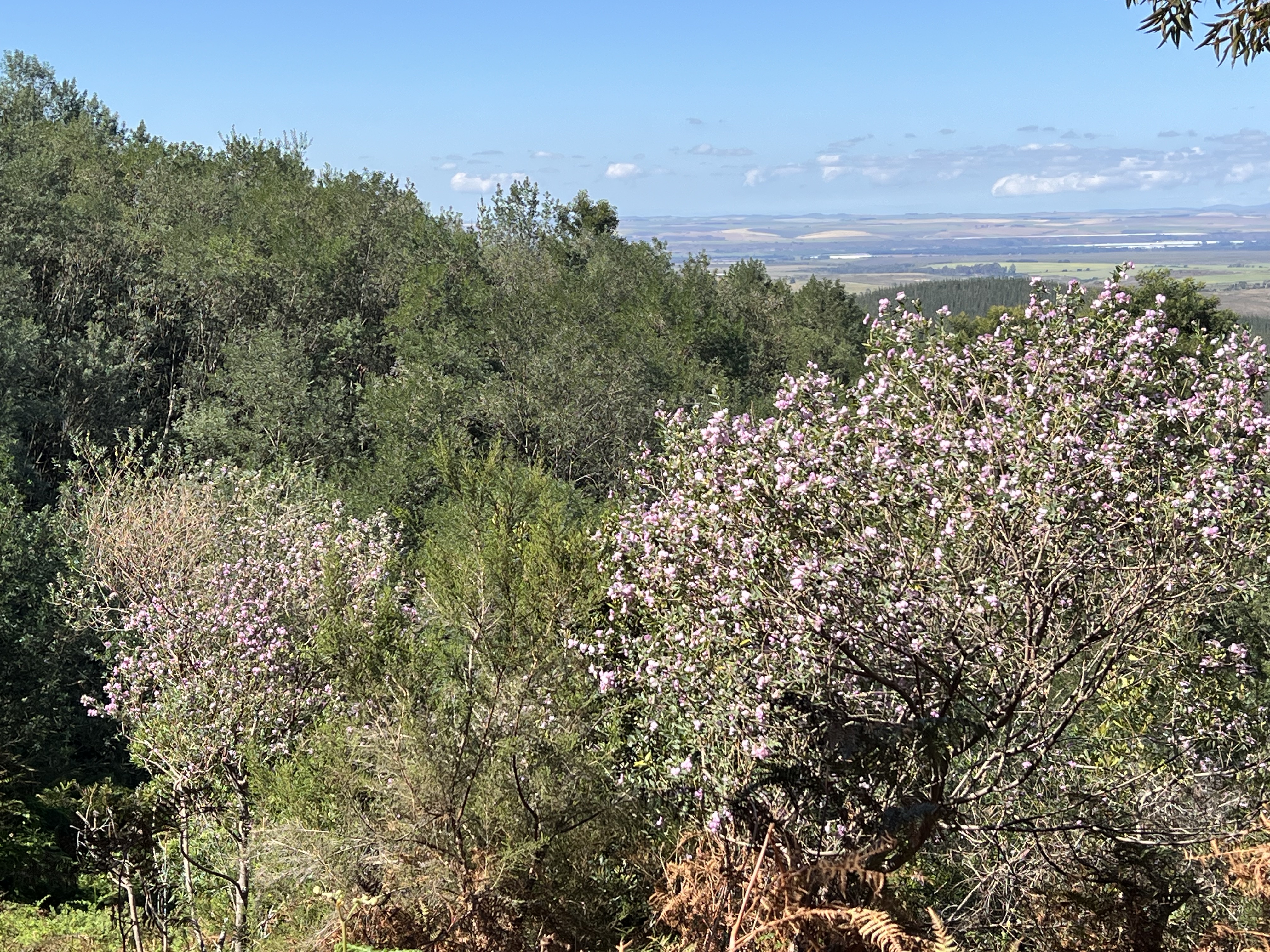
That afternoon I decided to do the waterfall hike from the cabin. The hike was more or less flat with just a few stairs for the uphill portions. The pontoon raft was relatively easy to pull towards me from the other side so that I could cross; it was a new experience. The waterfall was small, but the setting was very peaceful. On the way I saw my first Knysna turaco, a beautiful local bird, and a gang of baboons, that luckily scattered away from the trail as I passed by. Baboons can be nasty critters.

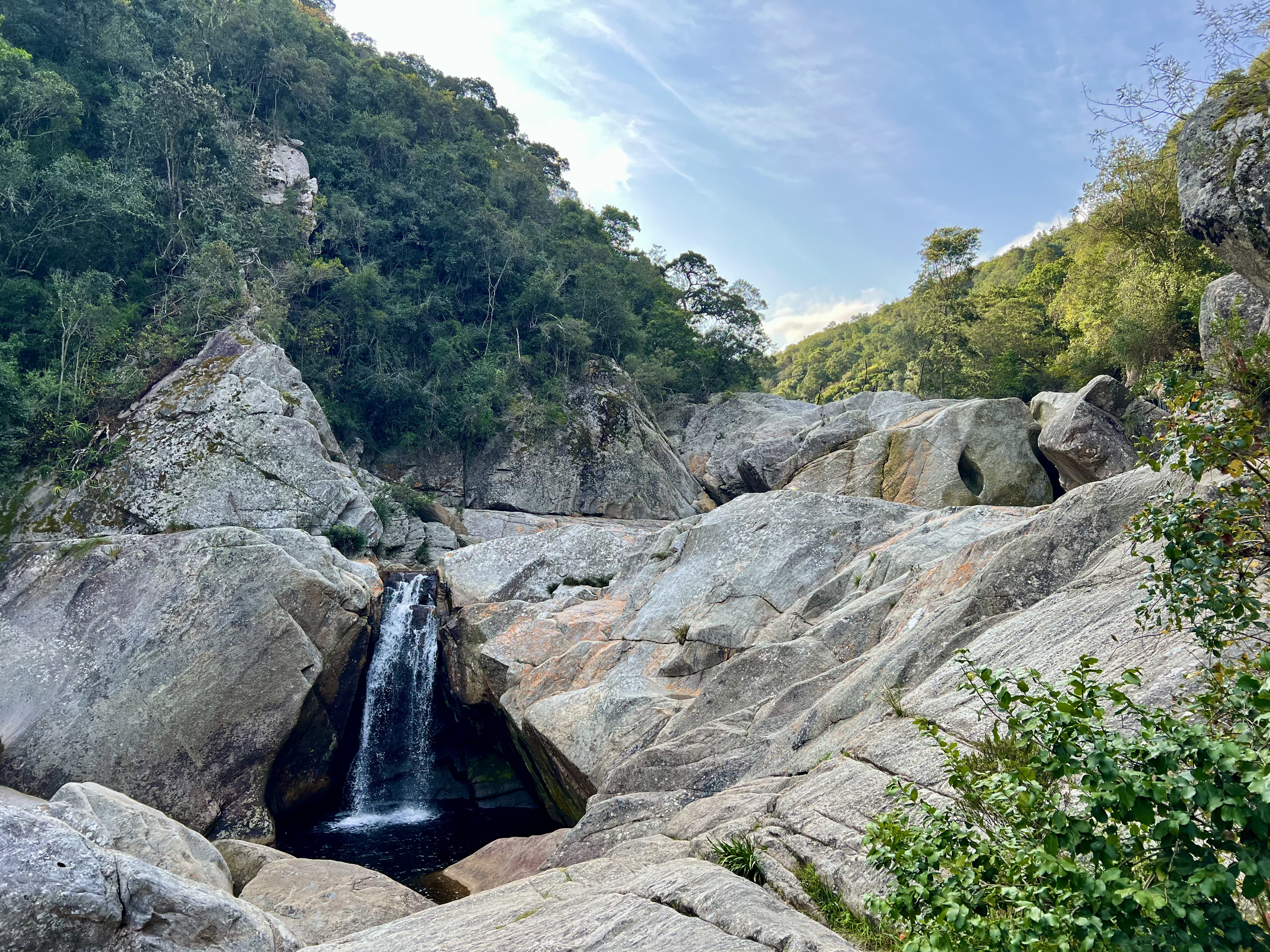
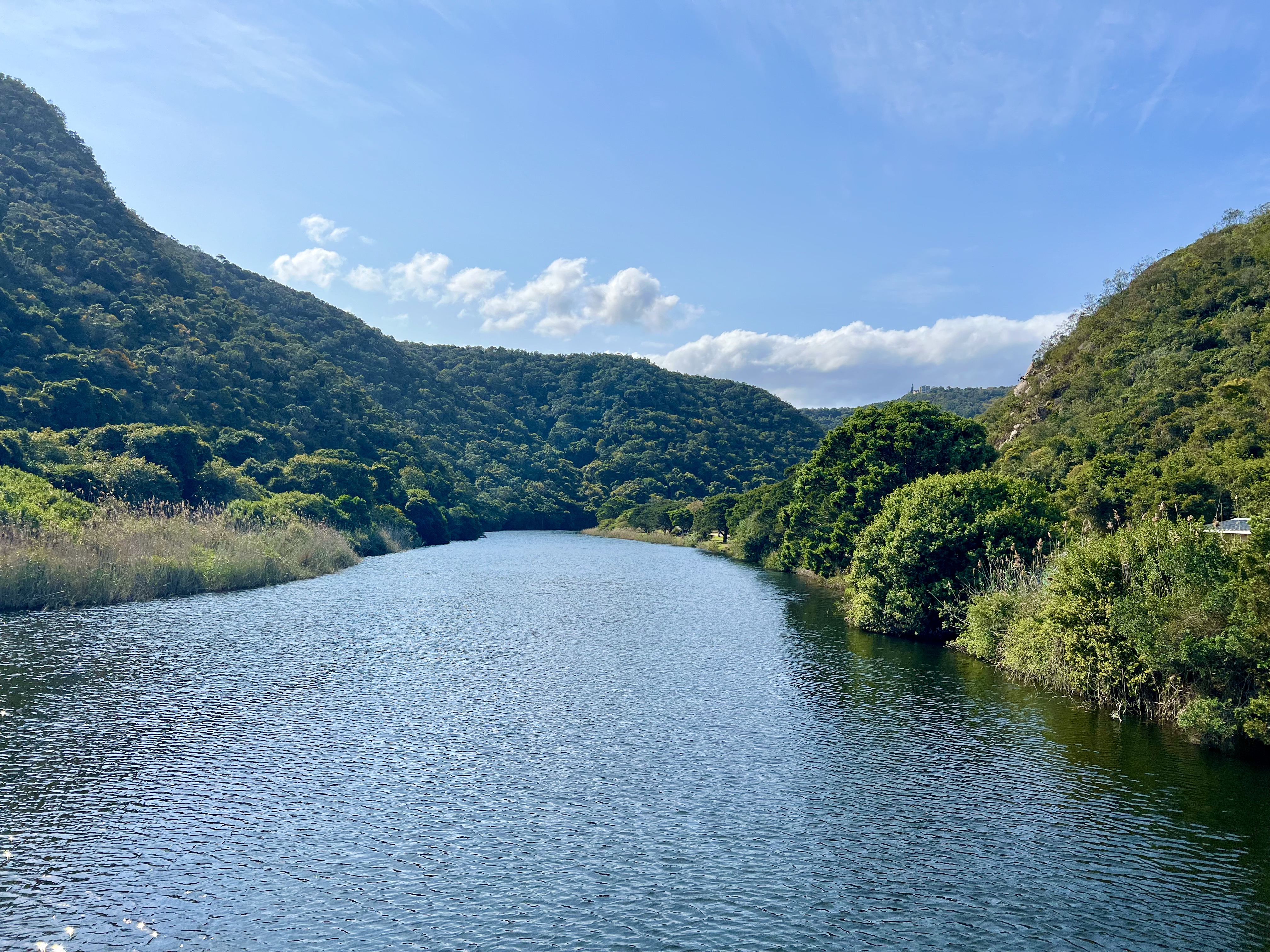
The following morning, I headed on to my next stop on the Garden Route, Kynsna.


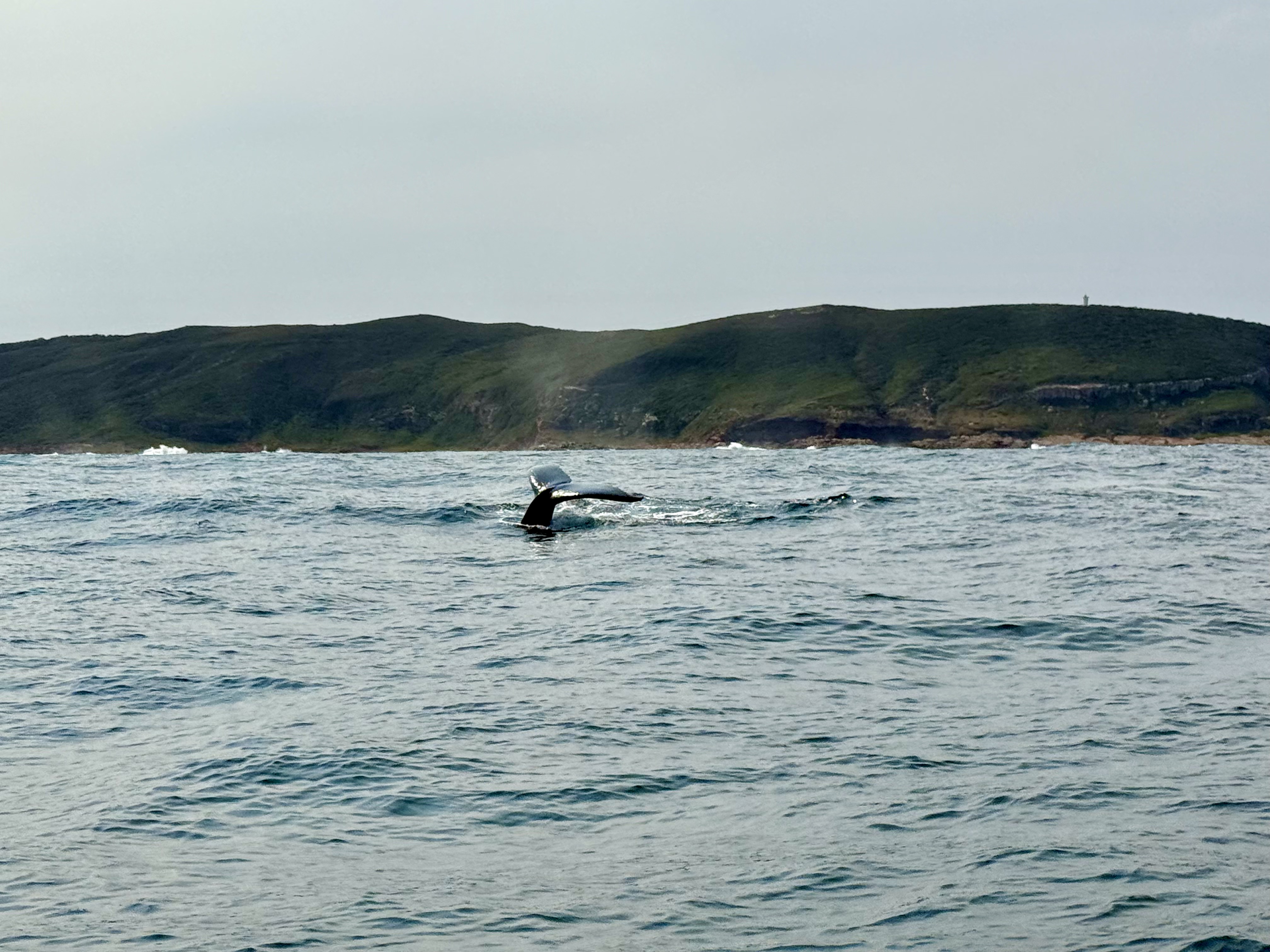
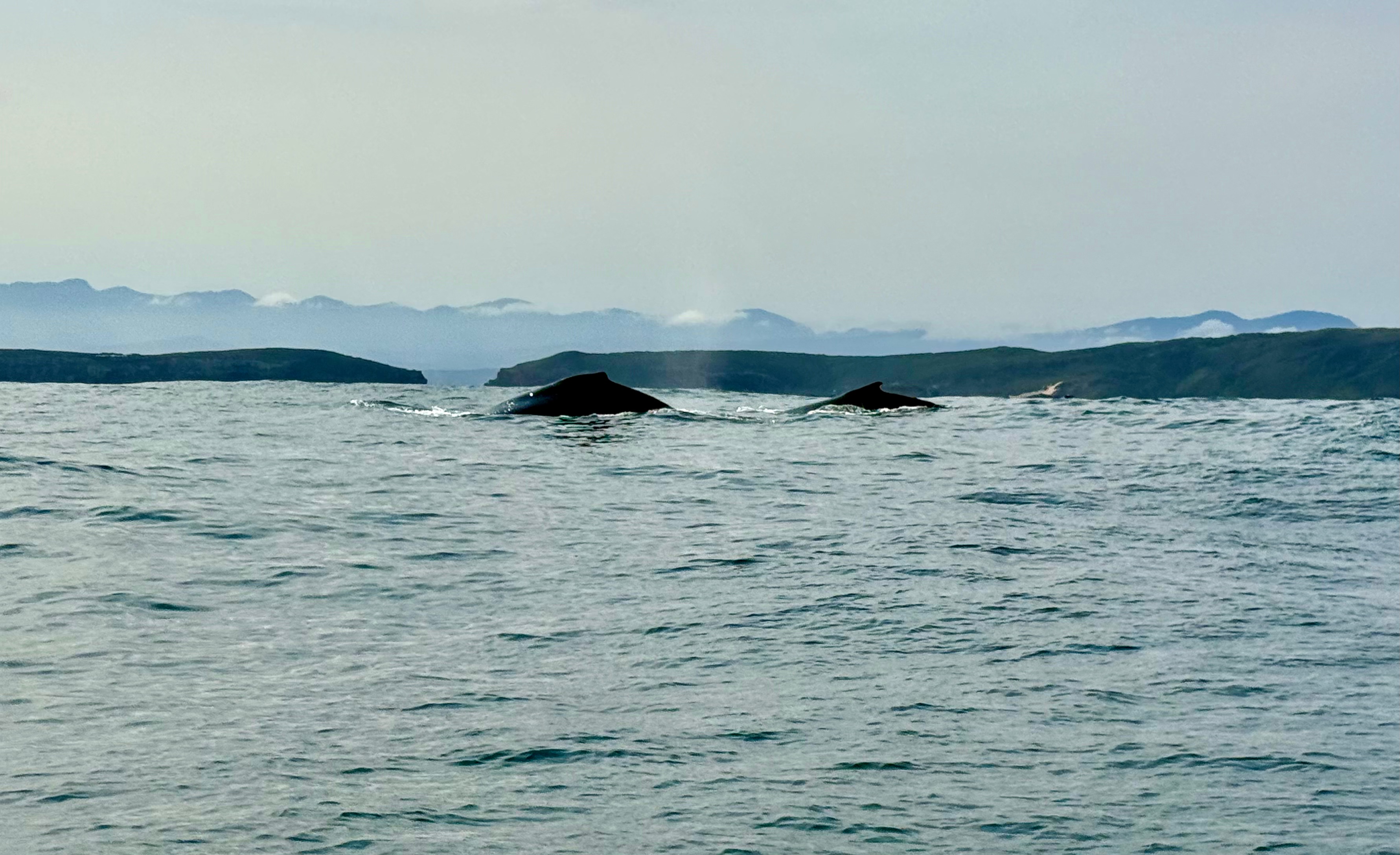
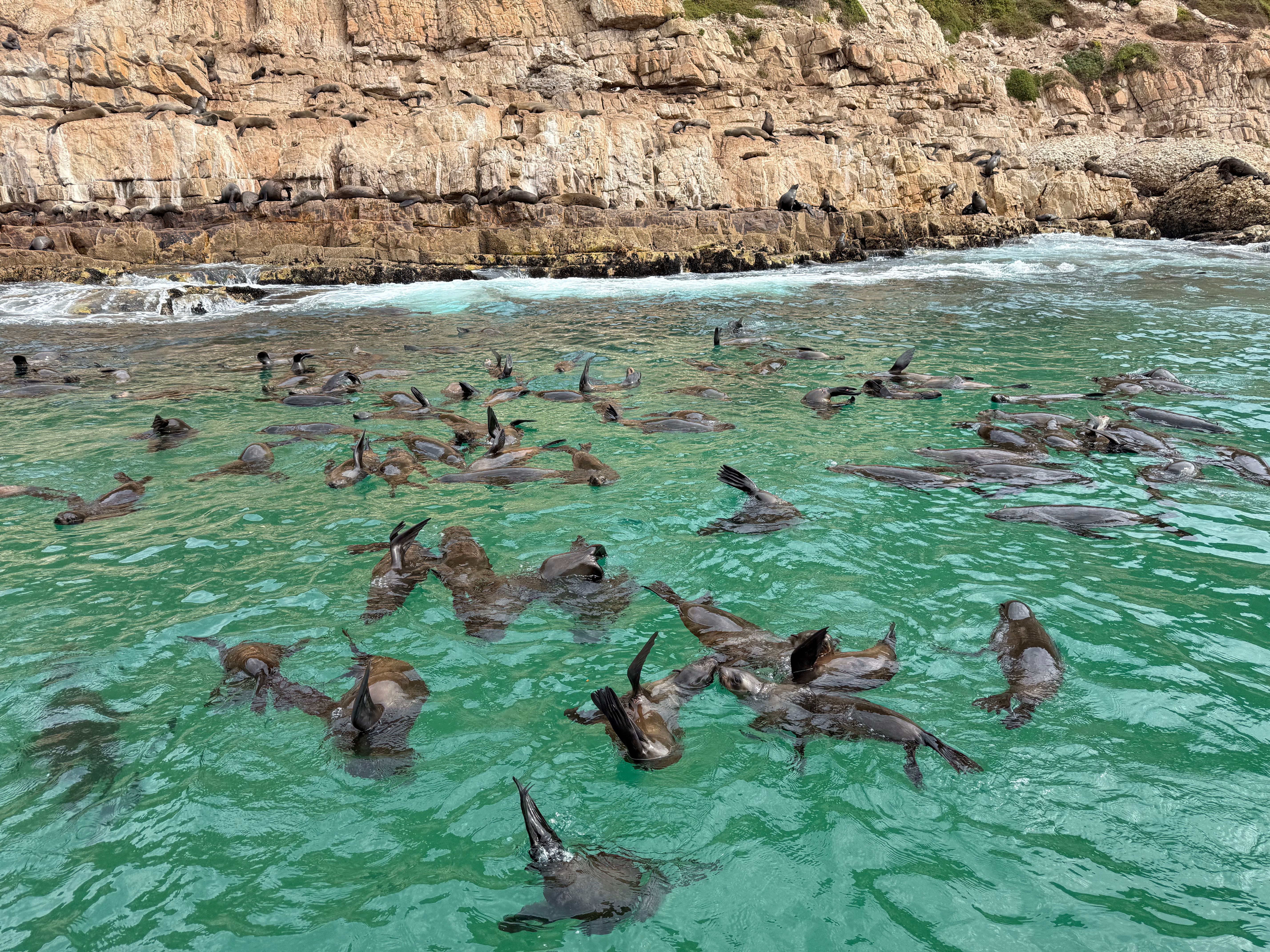
After driving and walking around a bit, I decided to continue on to Plettenberg Bay to check out the beach there and see if I couldn’t get on a whale watching tour. I got lucky. I was able to get on the 1pm tour from Ocean Safaris. There were only eight people on the tour, which meant we could take one of the smaller boats. The sea was fairly calm with just a few gently rolling waves, so we could see when the whales blew. The crew found five Humpback whales, one group of three and another with two, that were swimming about a half kilometer apart. They are such graceful creatures as they glide above and then dip below the waters. We didn’t see any Right Whales, which were supposed to be in the area at this time, but one of the crew explained that they simply hadn’t shown up this year, which was highly unusual. Maybe they know something that we don’t….? After spending about an hour searching for and seeing the whales, we headed back towards Robbeng Island and the fir seal colony that makes its home there. I have never seen so many fur seals! There were thousands of them playing in the water and on the rocky shore. It is no wonder that people swim with the seals when the water is warmer in the summer. The clear blue water was about 17 degrees and clearly no one was swimming other than the seals.
After the whale watching tour, I headed on to Nature’s Valley Rest Camp, and the second of my cabins in the Garden Route National Park. This time my cabin overlooked a lagoon filled with fish and bird life.

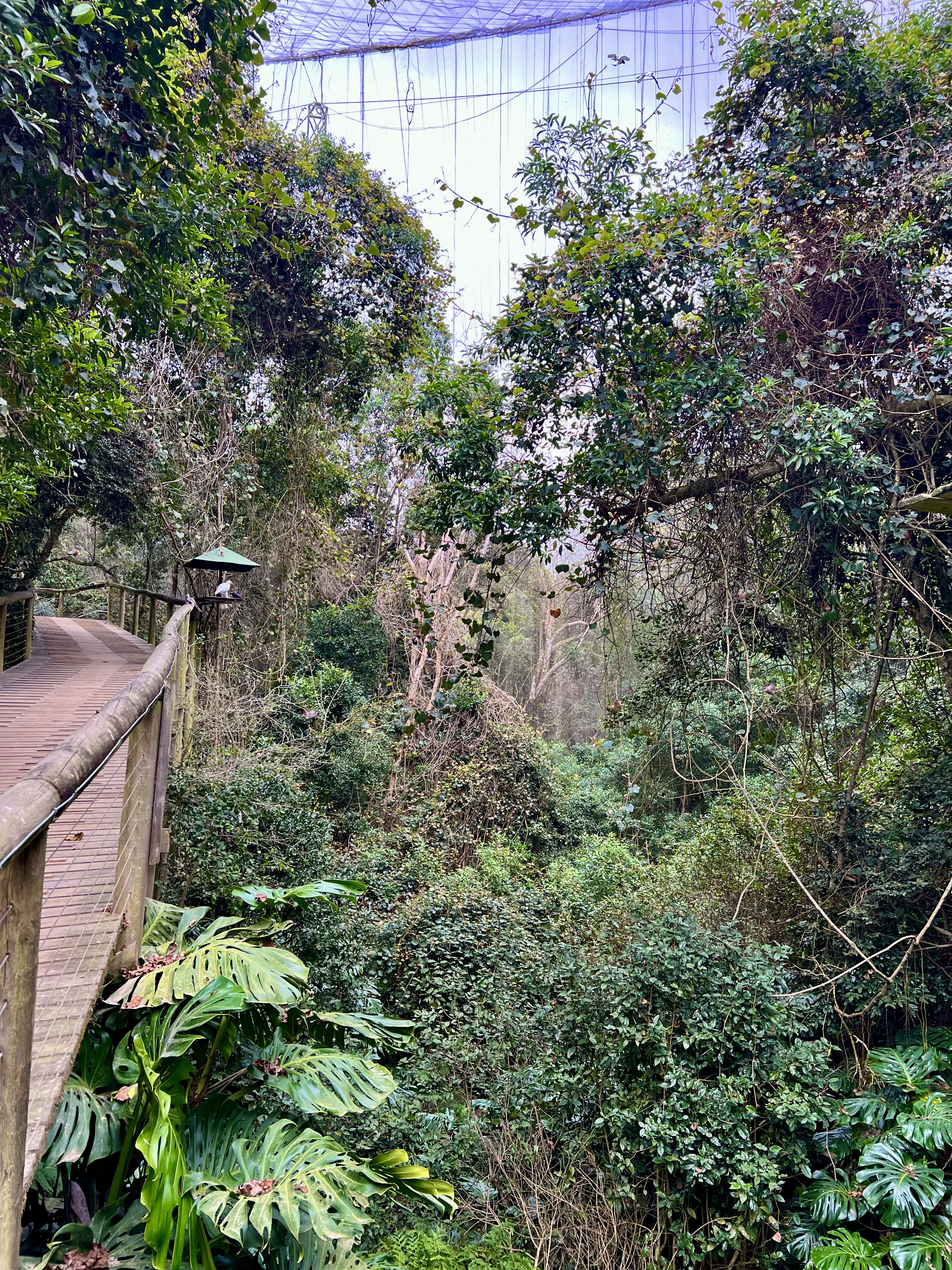
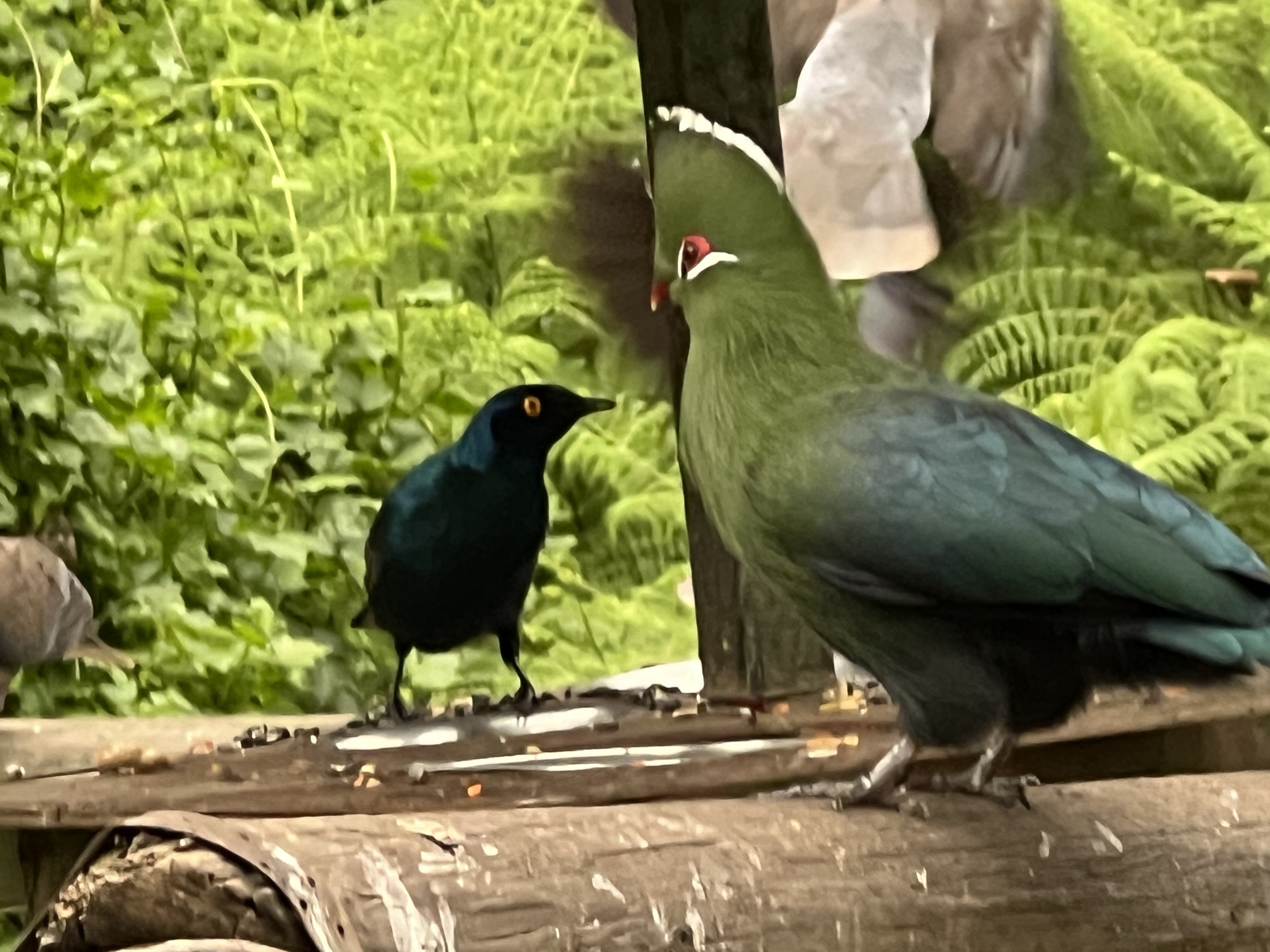
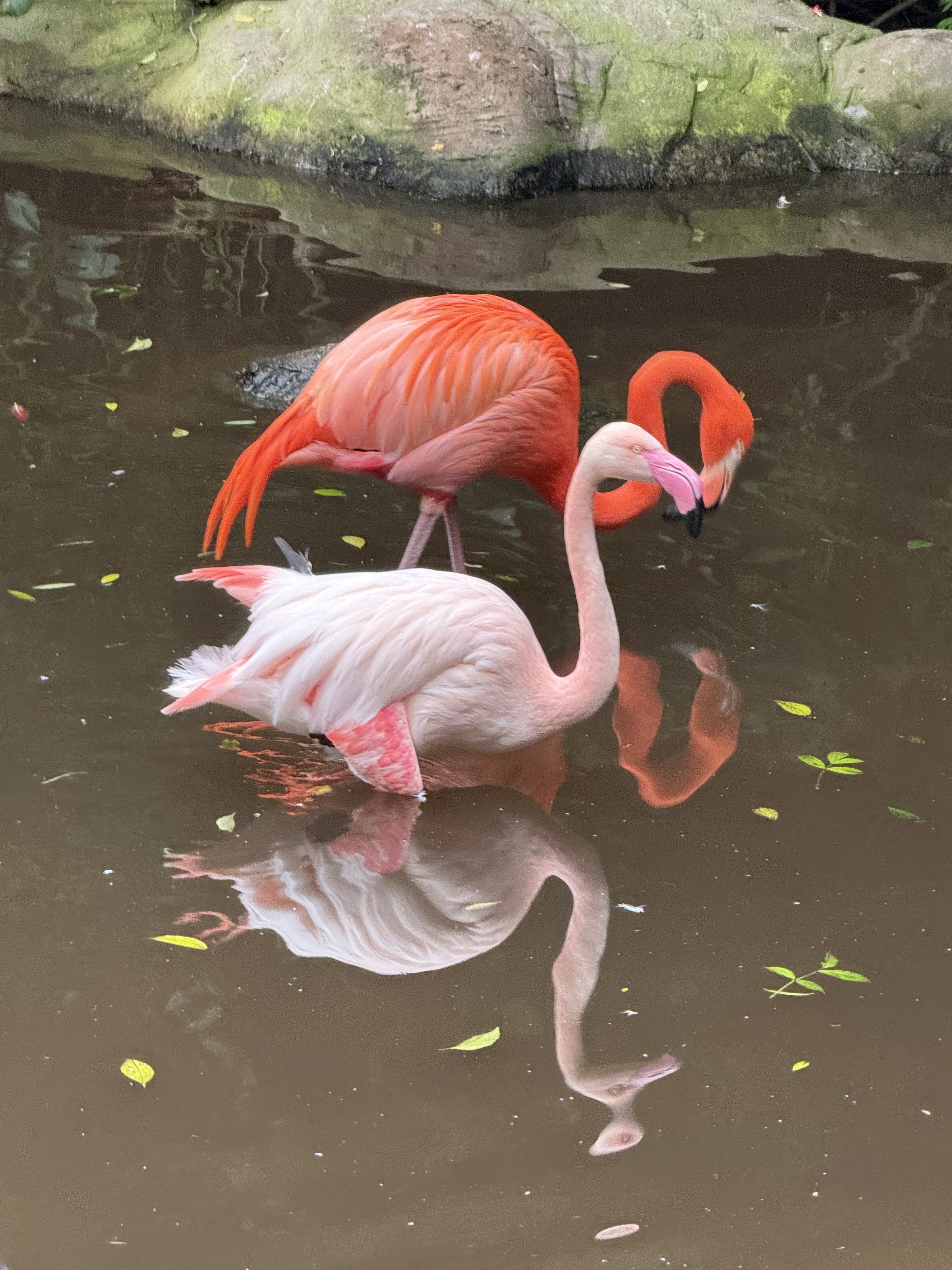
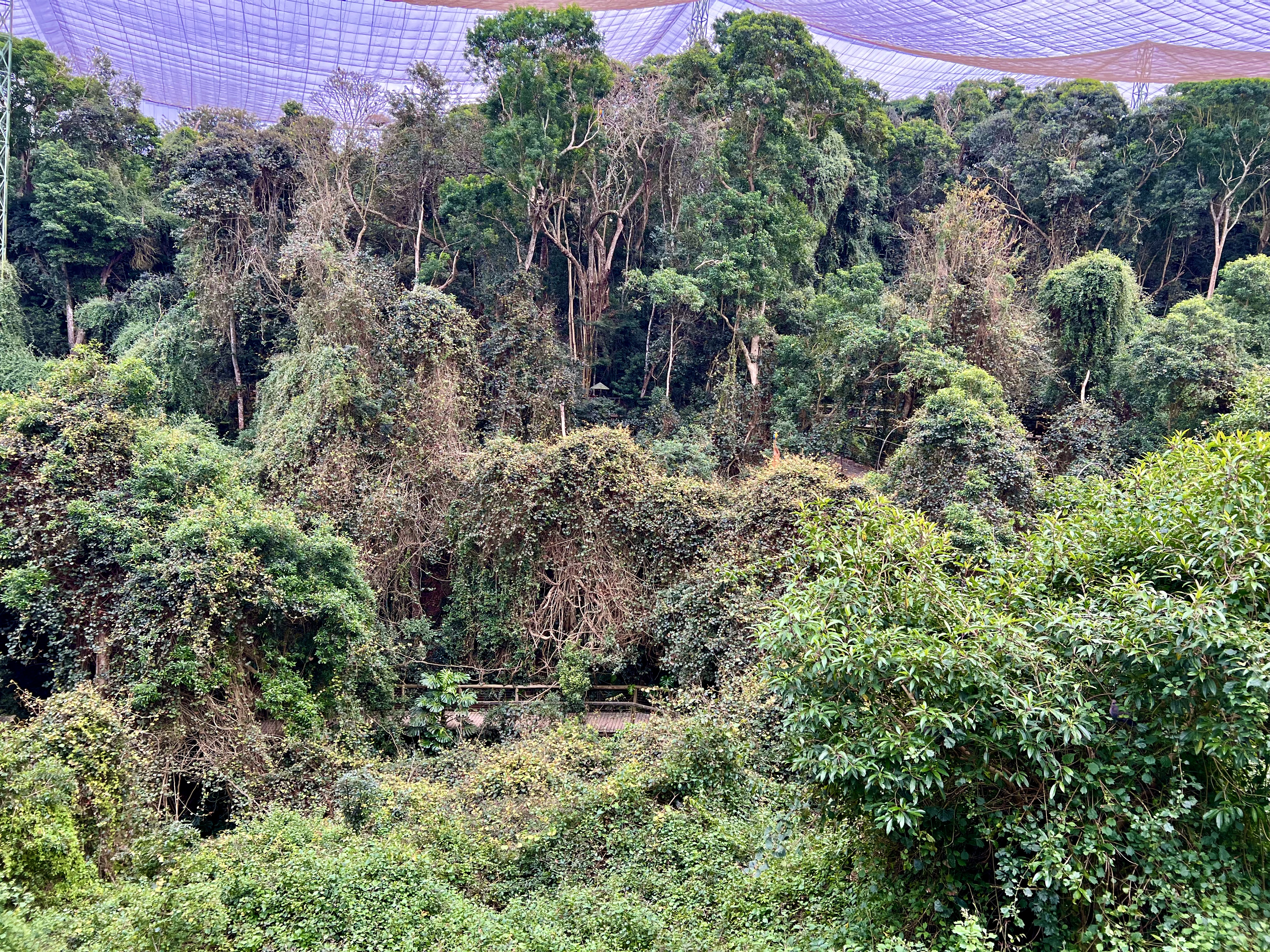
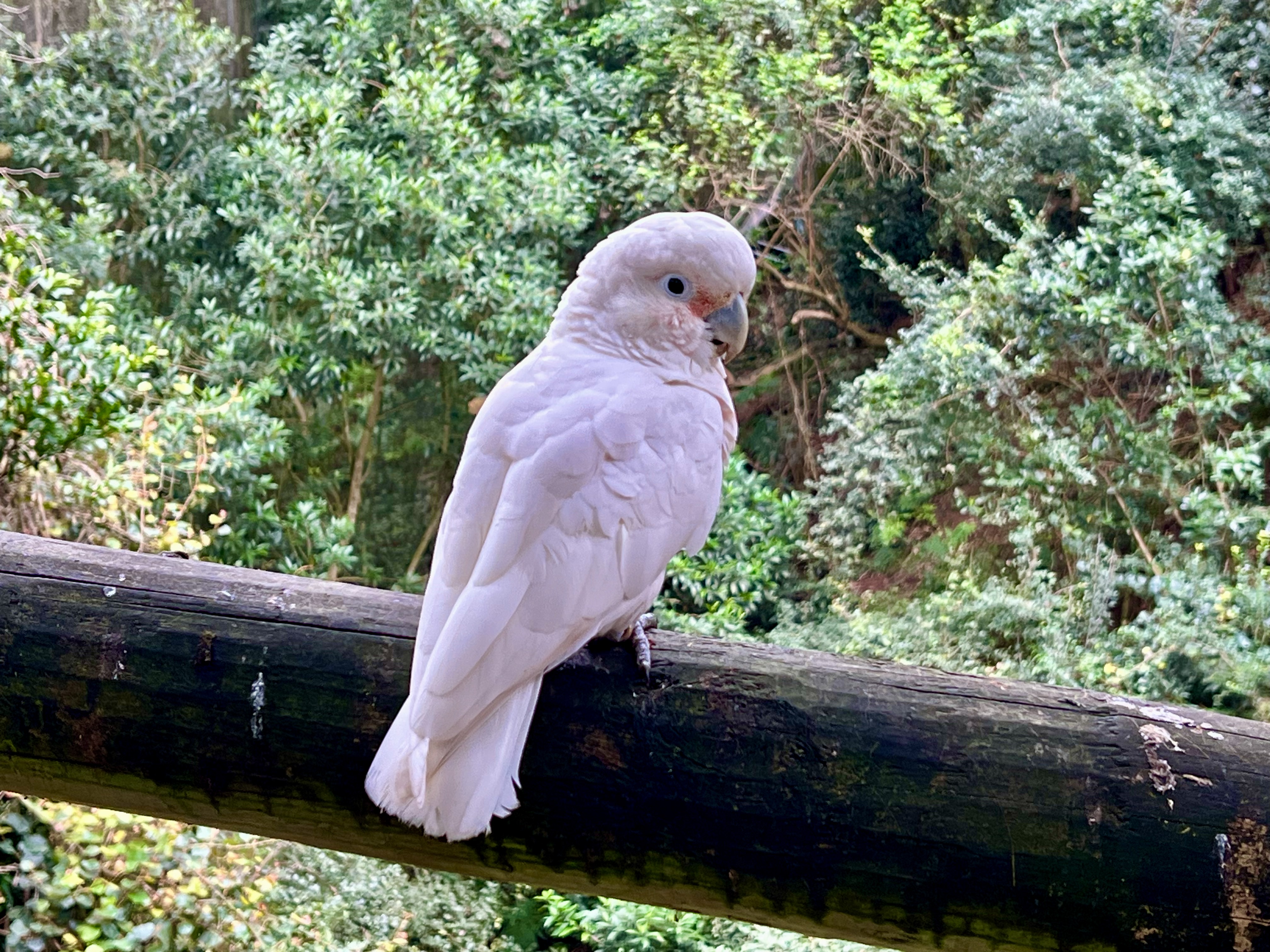
The Tsitsikamma section of the park is quite different from the earlier sections; the forest is much thicker. Near the Rest Camp in The Crags off the main highway are three different wildlife sanctuaries: Birds of Eden, MonkeyLand, and Jukani. These were my outings the next day. I started with Birds of Eden, a large three-hectare aviary in the indigenous forest that, according to the brochure, has more than 200 species from all over the world and 3500 individual birds. Boardwalks traverse the space to showcase those that prefer the lower levels and those that prefer the treetops. As with the fur seals on Robbeng Island, I had never seen so many birds in one place before, and they were not in any way crowded. There was enough space for all of the avians and flying foxes to be quite comfortable. I recognized a few of the birds I saw, the macaws, cockatiels, cockatoos, flamingos, geese etc., but there were many that I was seeing for the first time such as the Western Grey Plantain Eater, the Superb Starling, the Nicobar Pigeon, the Kenya Crested Guinea Fowl or the large Blue Crane. The guidebook had said that one can expect to spend an hour at the site; I spent over two and a half and could have spent longer. Part of that time was interacting with a Goffin’s Cockatoo that had clearly been habituated to humans as he wanted to talk to me. At one point, he jumped on my shoulder and let me walk around with him for a few minutes. There is a large sign stating that one should not touch the birds, but this one came to me. As I was leaving, he was at the gate and came back up to me. I started to pet him the way I did with my cockatiel, Spring, and he seemed to like it. The young man next to me criticized me for petting him and I admitted he was right, but this was a special interaction.
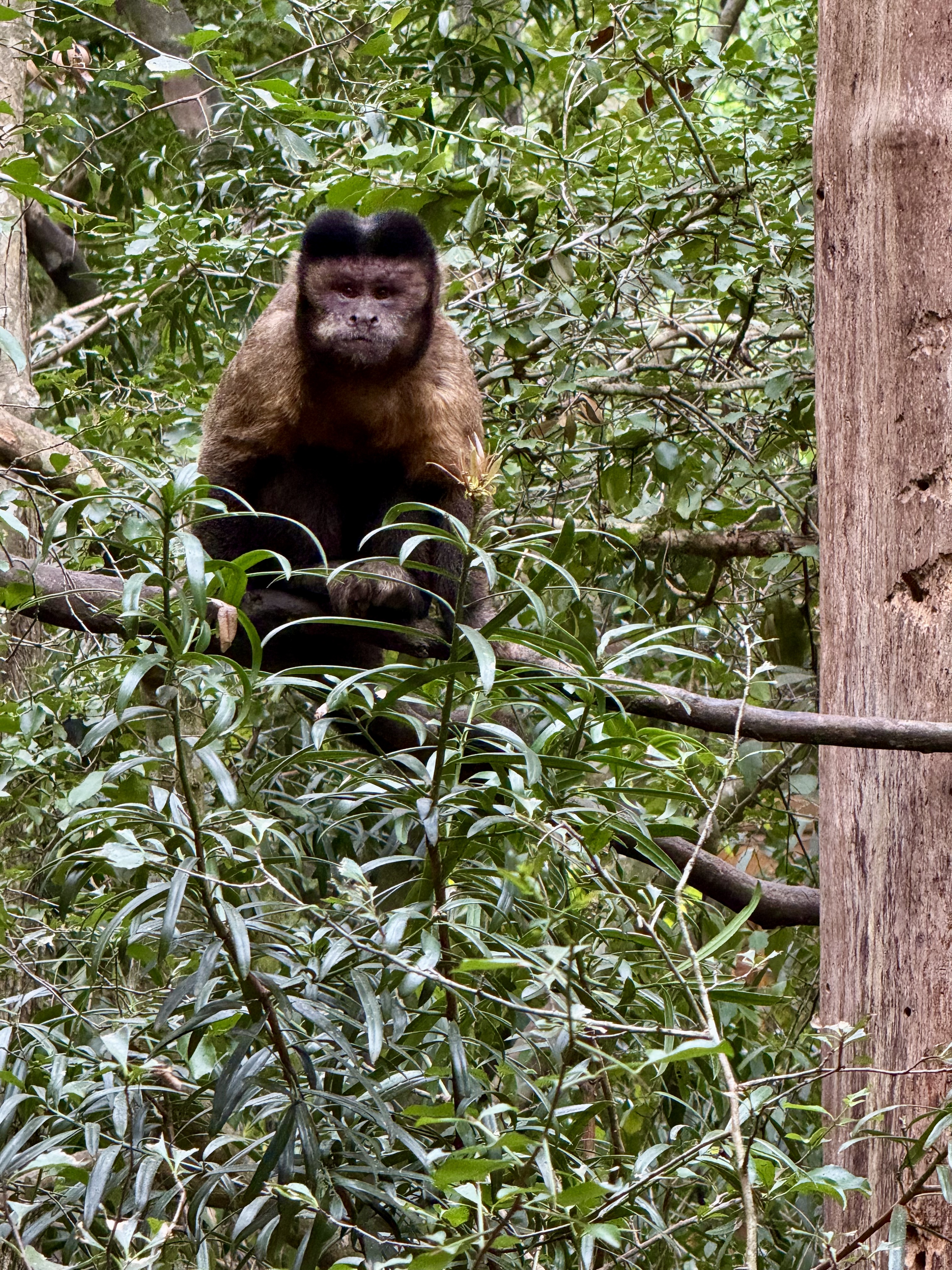
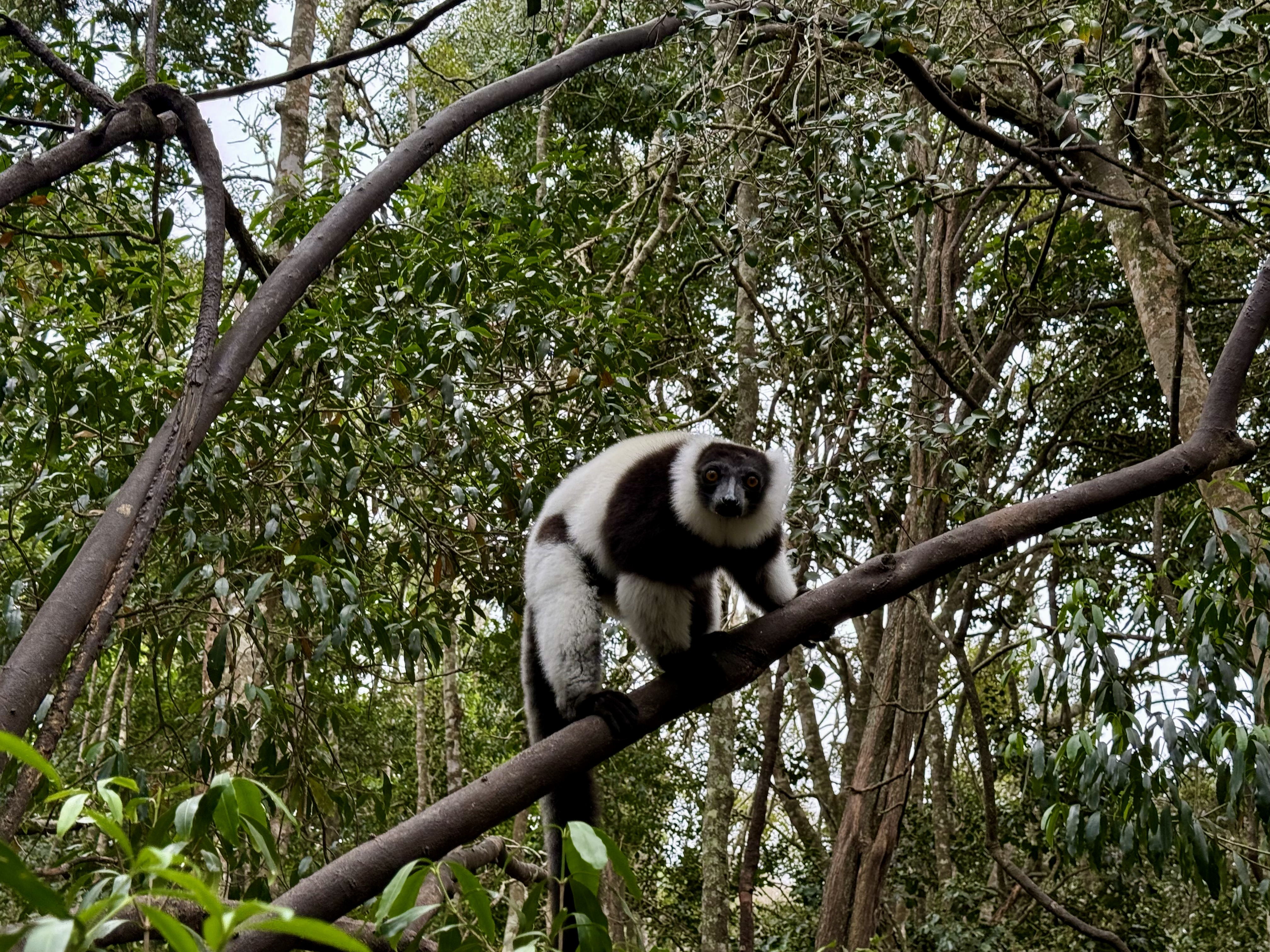
Next door to Birds of Eden is MonkeyLand, which is, according to the brochure, “the world’s first, free-roaming, multi-species primate sanctuary.” It houses ten species from all over the world with approximately 550 primates in the twelve-hectare indigenous forest enclosure. In MonkeyLand, and later in Jukani, one goes on an organized tour through the facilities. In Birds of Eden one can walk through at one’s own pace. The tour lasts about an hour, and the guide explains where the primates come from, whether from zoos, private individuals or other sanctuaries. The monkeys come from all over the world as did the birds in the previous park and the cats in Jukani. Most of the animals have been neutered so that these are not breeding facilities. When new primates arrive, they are kept in a caged area until they are ready to join the forest. While I was there a large spider monkey was still testing out the region via his cage. We didn’t see all ten species, but did see the indigenous Vervet monkeys, the Langurs from India, the Bolivian Squirrel monkeys, lots of Brown Capuchins from South and Central America and both Ring-Tailed and Black and White Ruffed Lemurs from Madagascar. It appears to be a well-run sanctuary, and the rescued primates seem to be in good health. They have a vet in house to care for the animals, and feeding stations throughout the complex that are refilled with fruits, vegetables and nuts three times a day.
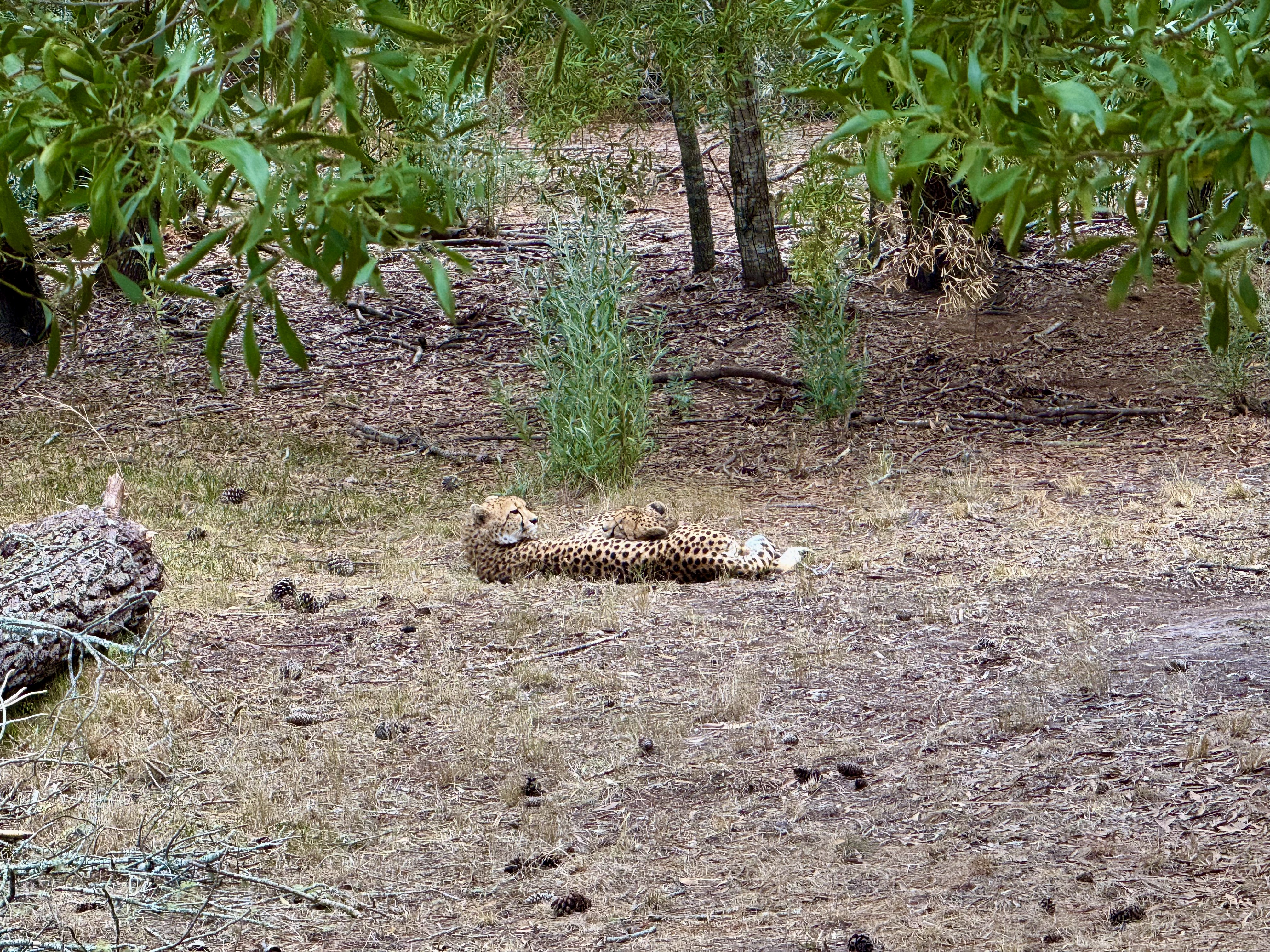
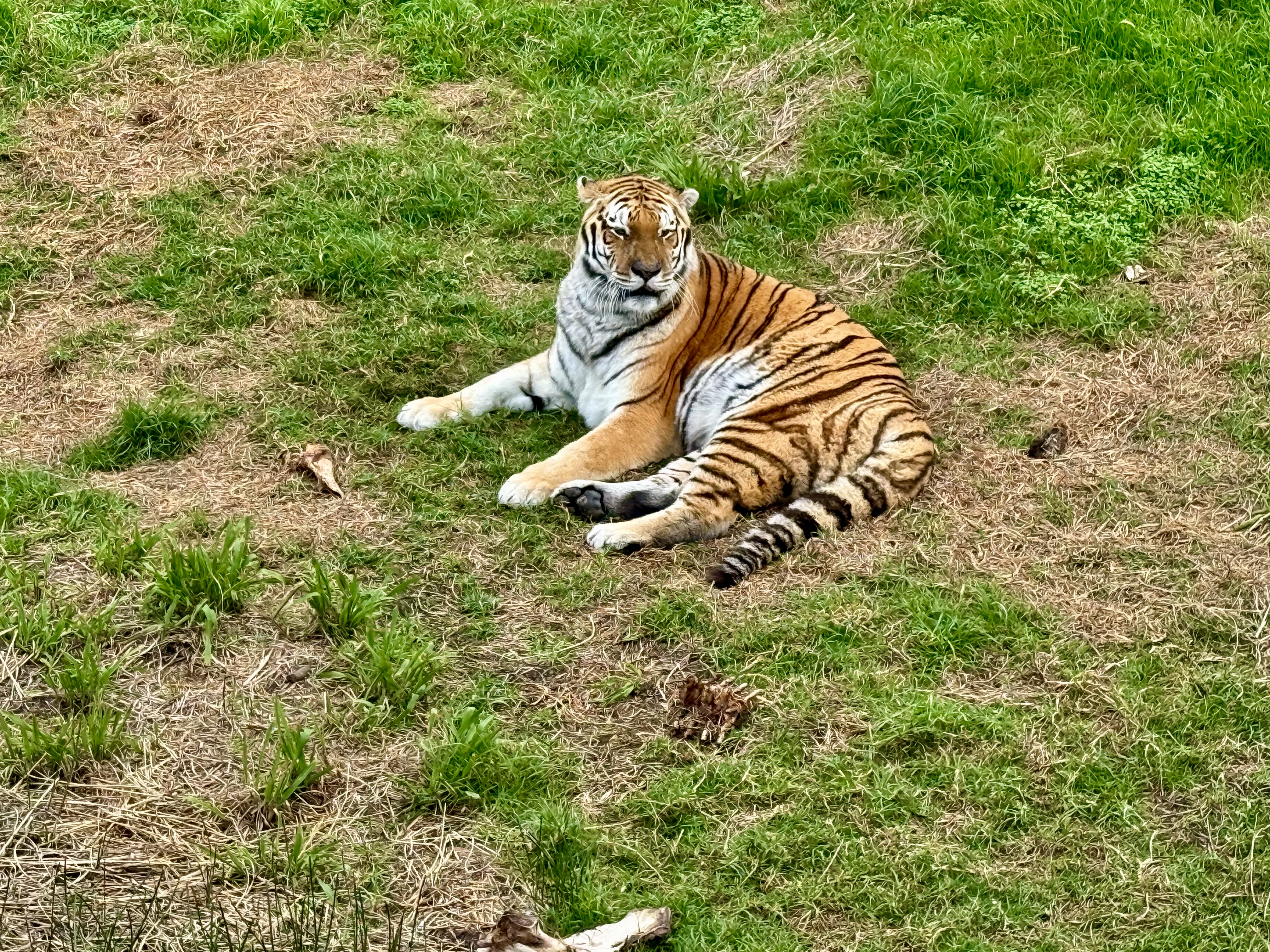
The last stop of the day was at Jukani, the big cat sanctuary. All of the animals here have been born in captivity and come from zoos that closed down or from private individuals who can no longer care for their ‘pets’. This rescue shelter is home to a large male lion that is amazingly 23 years old, and he looks to be in good health. Considering that in the wild, a very old lion is about 12, this is an amazing feat. In addition to the old man, the sanctuary has at least four other female lions, and another gorgeous male. There are two Siberian and one Bengal tiger, two leopards, a spotted and black – both sleeping while I was there, two cheetahs, a magnificent jaguar, two mountain lions/pumas, caracals, servals, a hyena and a lonely wild dog along with a few springboks and two zebras. The sanctuaries’ staff seem to be devoted to their animals and, even if they are in enclosed areas, they are healthy and wouldn’t be able to survive in the wild.
Of the three rescue places, Birds of Eden was by far my favorite. The variety of birdlife was simply amazing to witness.
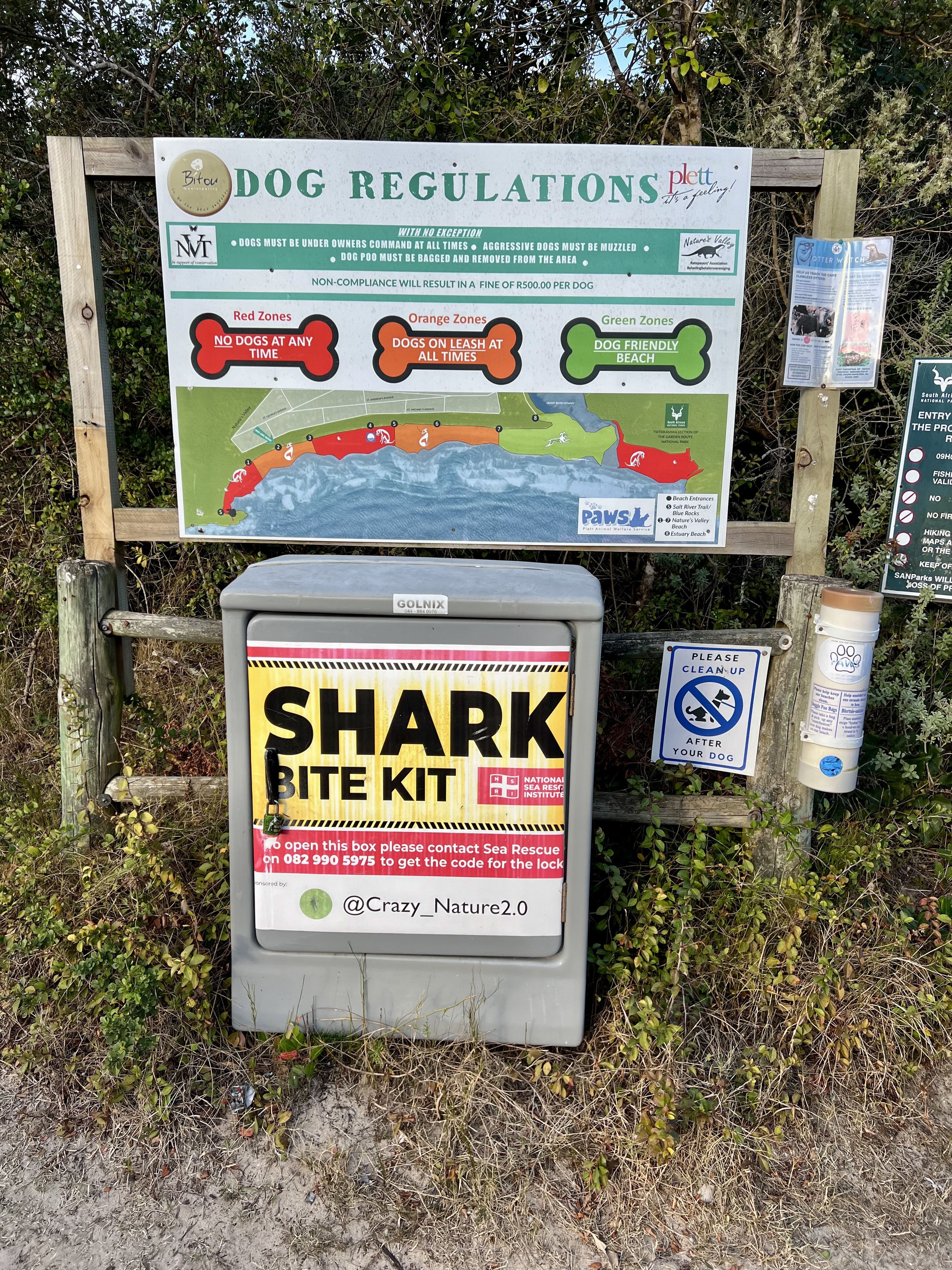
For my final day in Nature’s Valley, I went on a hike through the forest where I was greeted by a few bushbucks and vervet monkeys and onto the beach where the smell of dog poop was almost overwhelming. It appeared that many of the dog owners did not pay attention to the sights telling their owners to clean up after their four-footed companions. I find it wonderful that there are places along the beach where dogs can run free, but it would be good to keep the beaches clean as well.
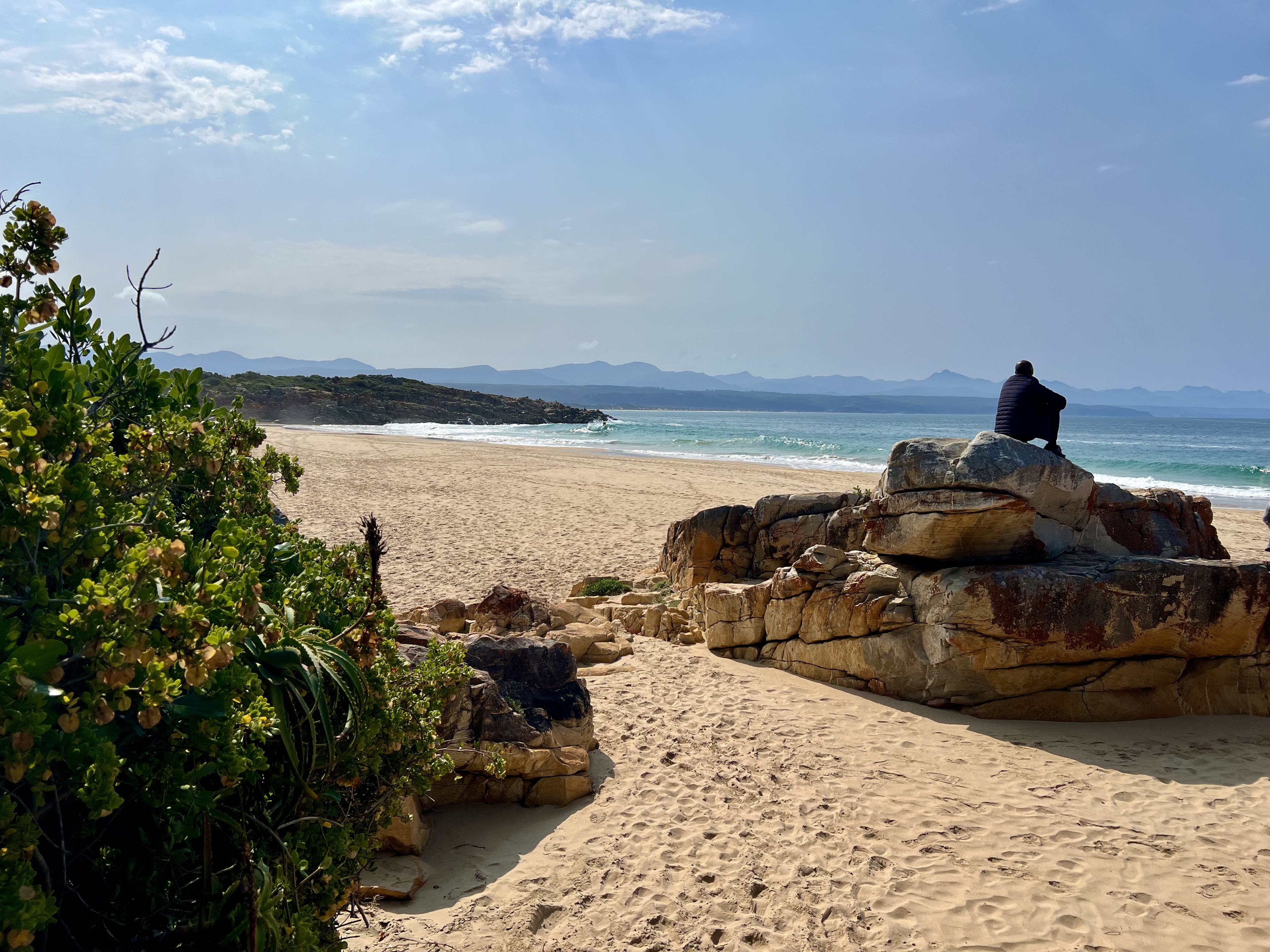
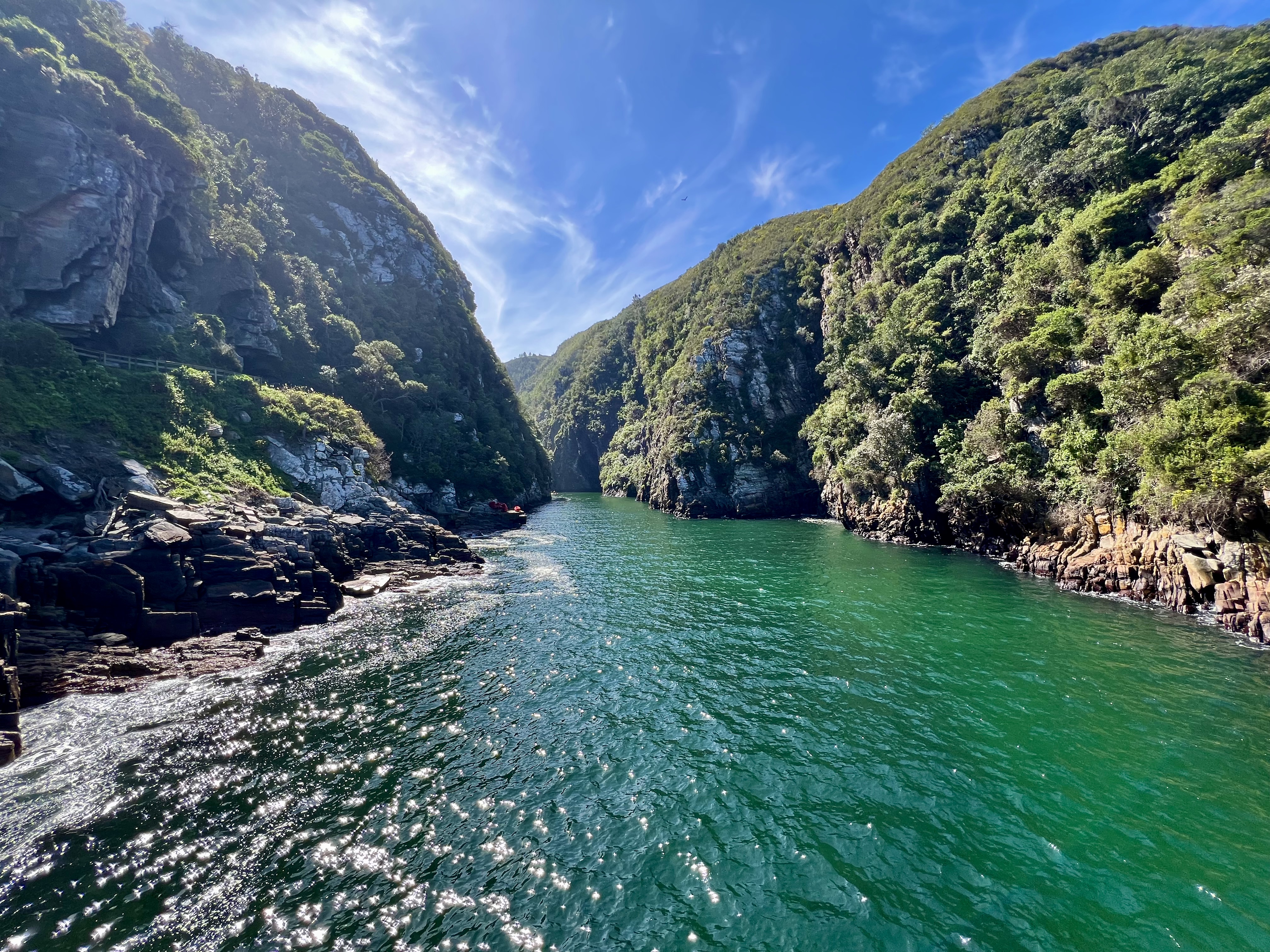
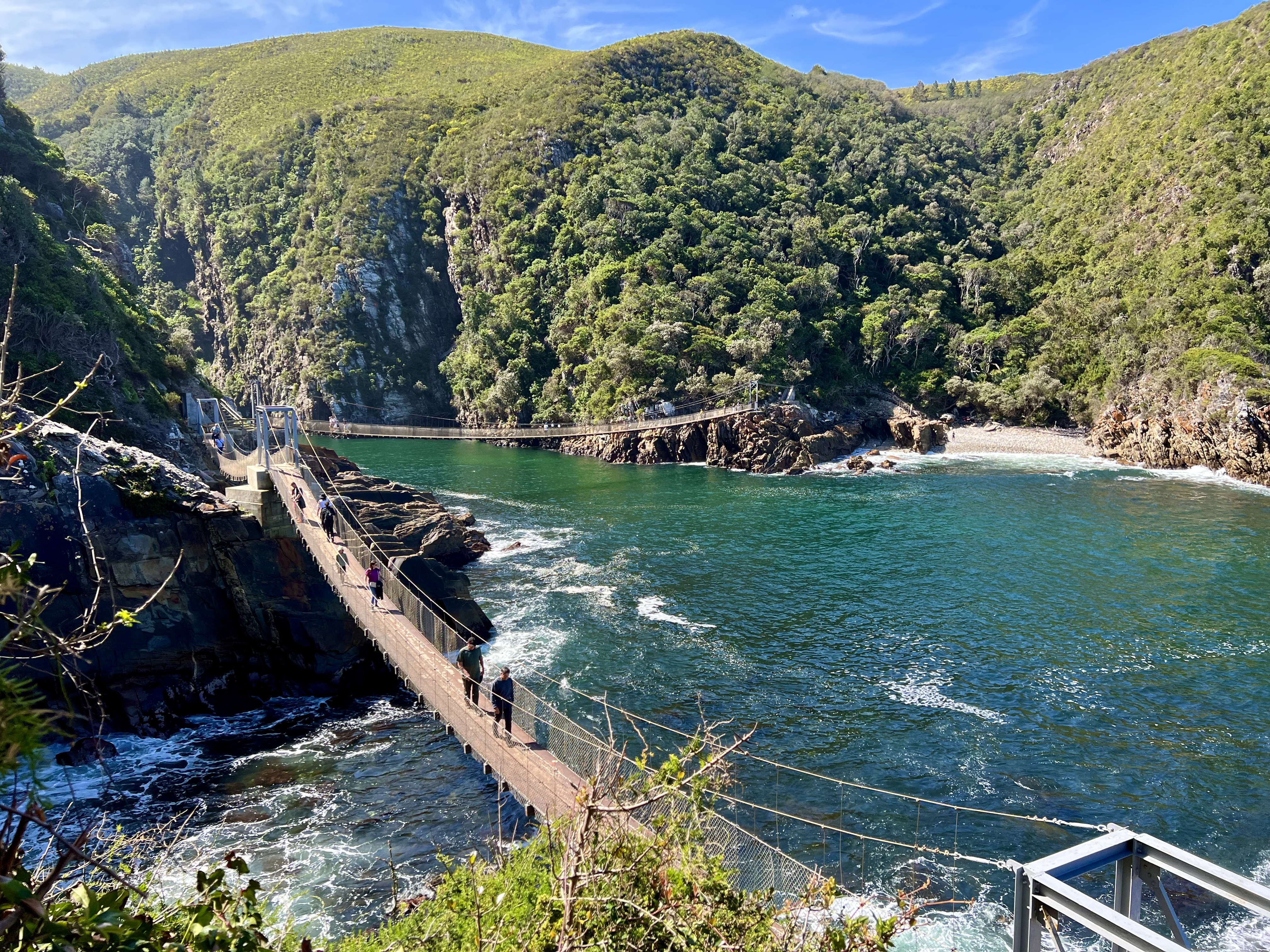
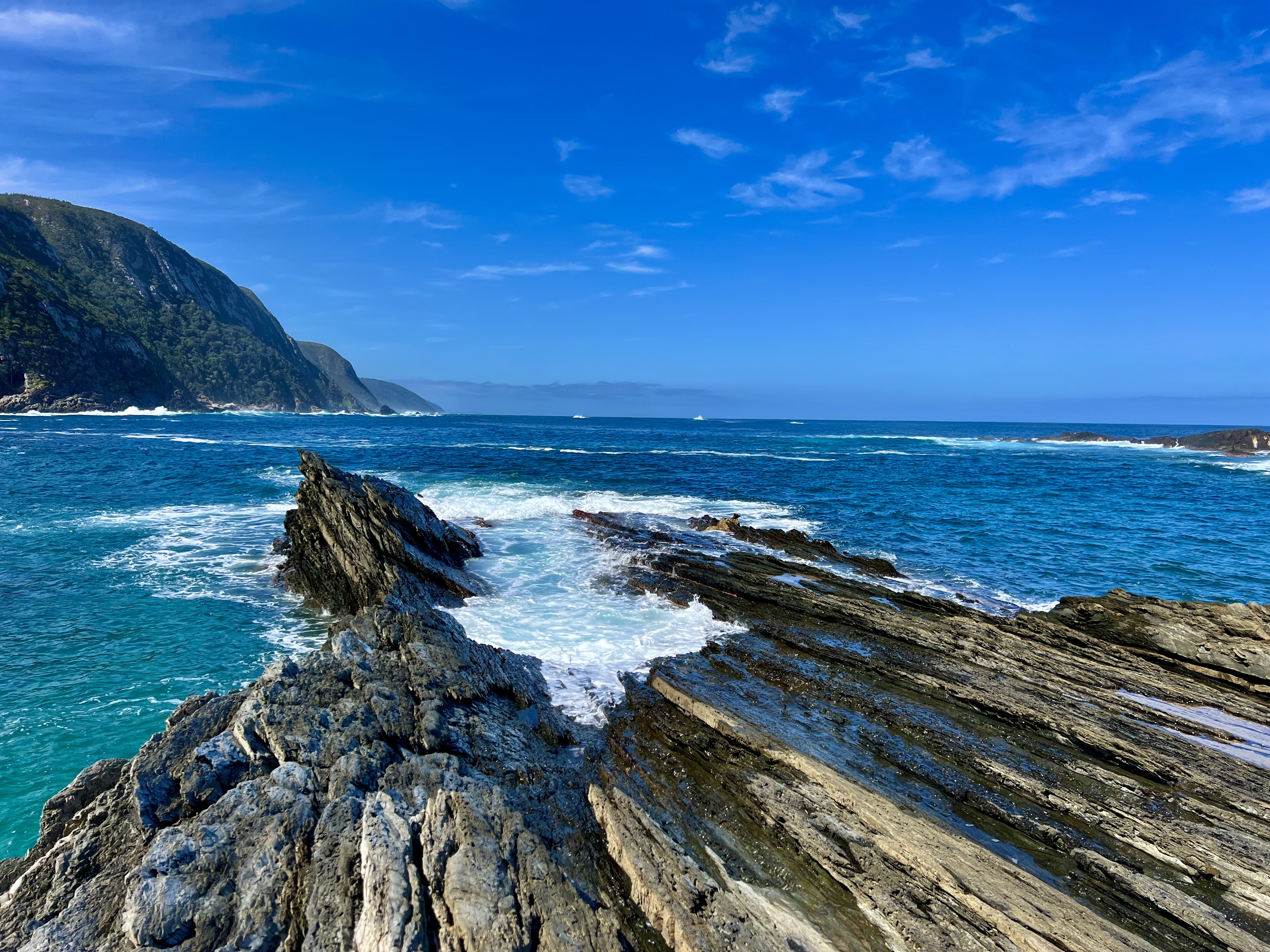
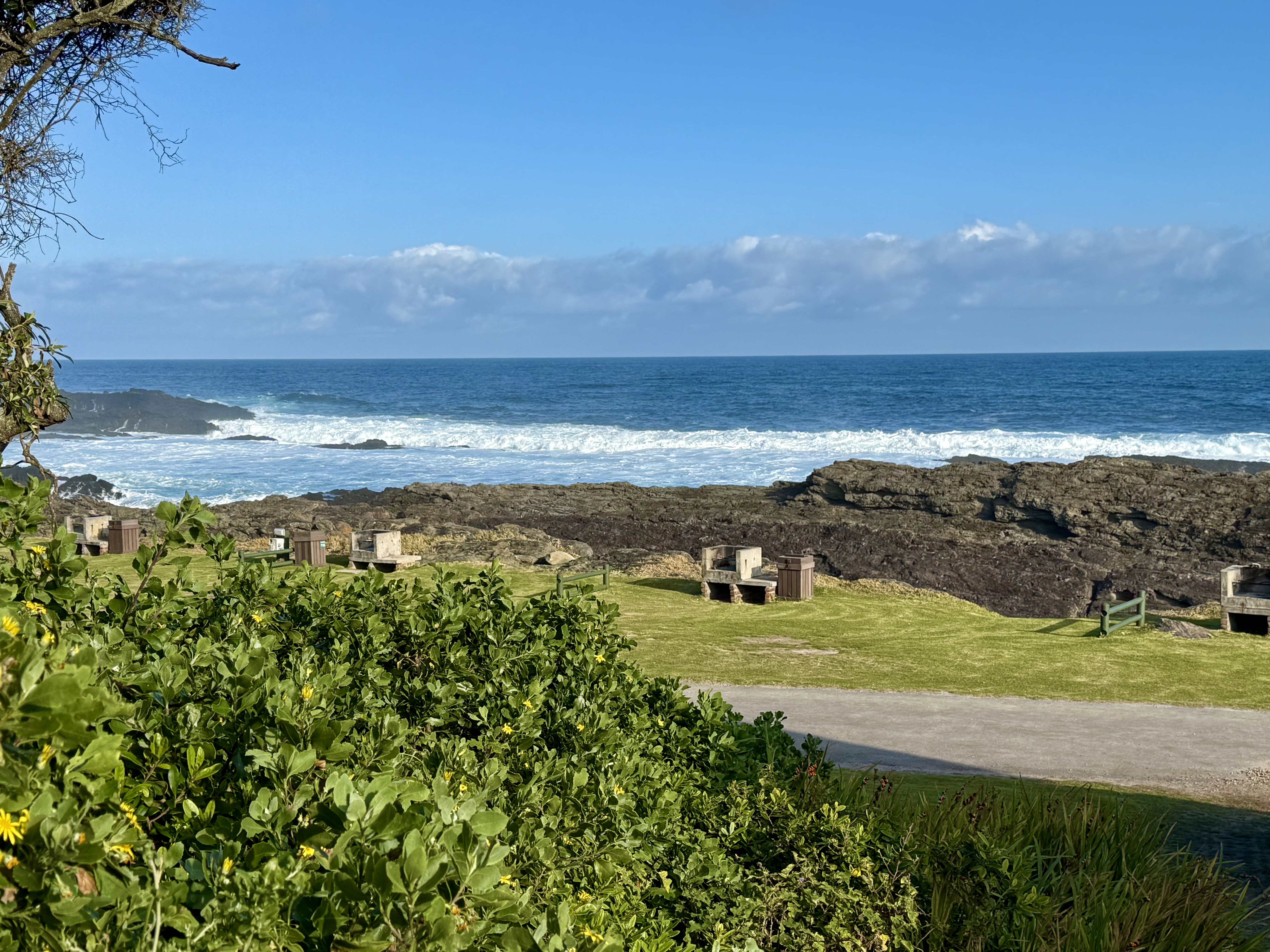
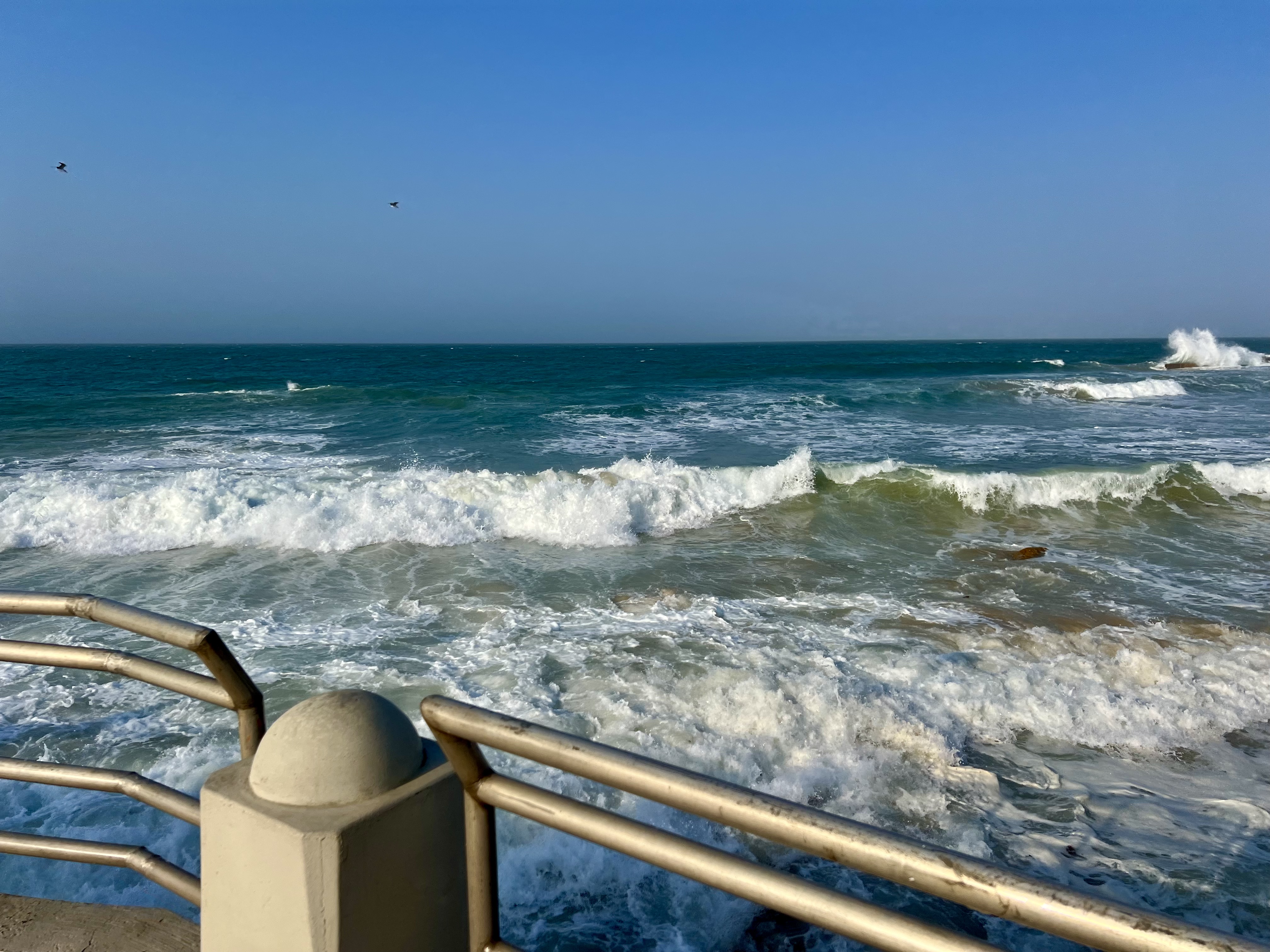
From Nature’s Valley I made my way to the last stop and last cabin in the Western Cape’s southern coastal national park, Storm’s River. From the cabin’s front window I looked out over a small brai area in the grass to the rocks that broke the violent waves breaking from the Indian Ocean. The force of the waters sprayed the rocks 30m away. And this was a relatively calm day. The waters were not flat, but also not white capped beyond the shoreline, but the waves grew about 50m away from the shore and crashed with tremendous pressure. It was a spectacular show. There were shorebirds and dassies (similar to a marmot) on the grasses and rocks by the shore. There are quite a few hikes one can do in Storm’s River as well as kayak trips on the river itself. I chose to do a short hike as I was running out of time. There is a suspension bridge over the river that is broken into three sections. When I was there the bridge was open on the weekends, so I took advantage of the opening time. The walk over a series of boardwalks and staircases to the mouth of the river viewpoint only takes about a half hour and is in a beautiful setting along the lush flowering shrubbery hillside overlooking the pounding surf. The color of the water changes based on depth from green to blue turquoise and deep blue out in the ocean. The white-capped waves thrashing the dark rocks creates an almost spiritually primordial experience.
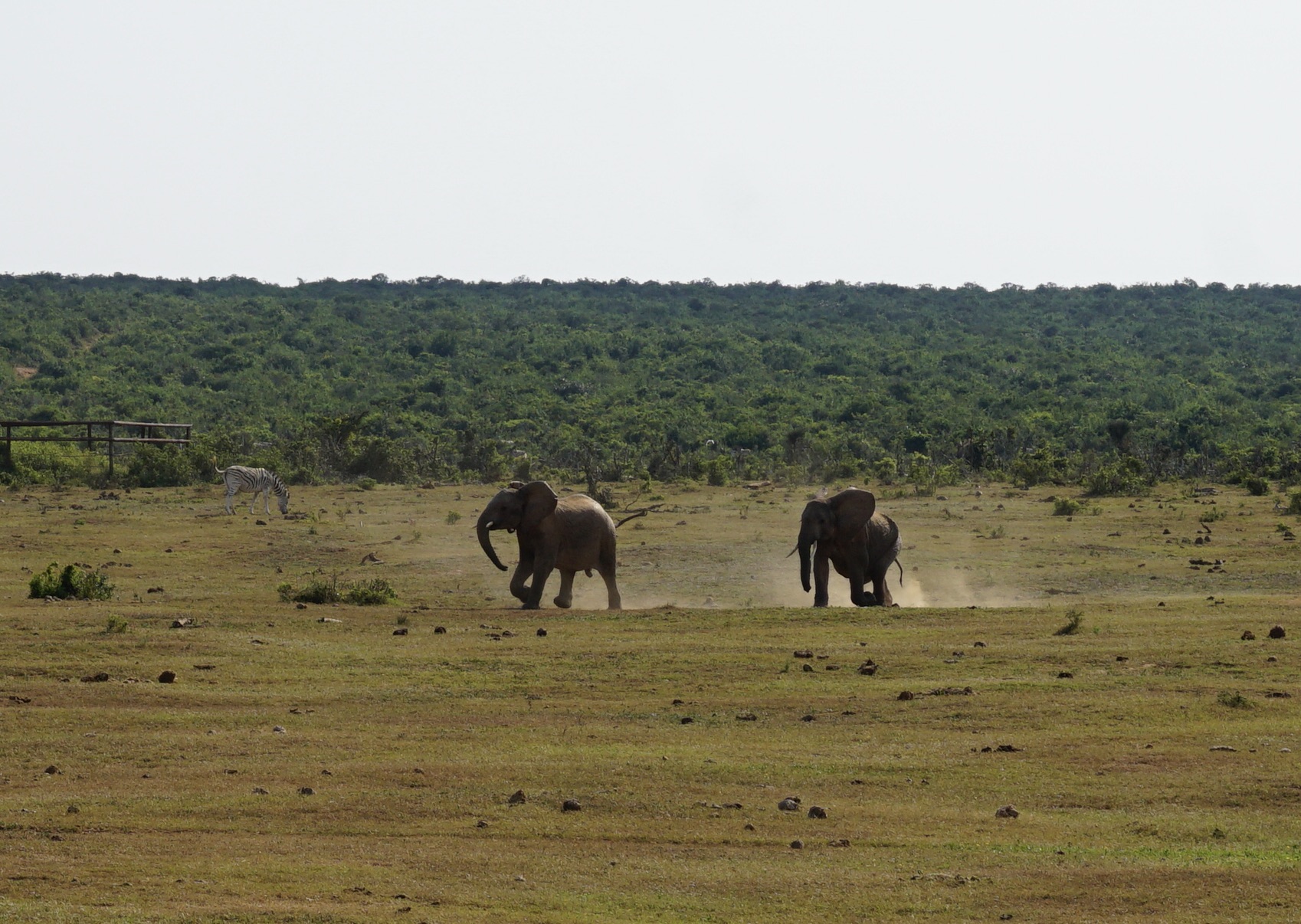
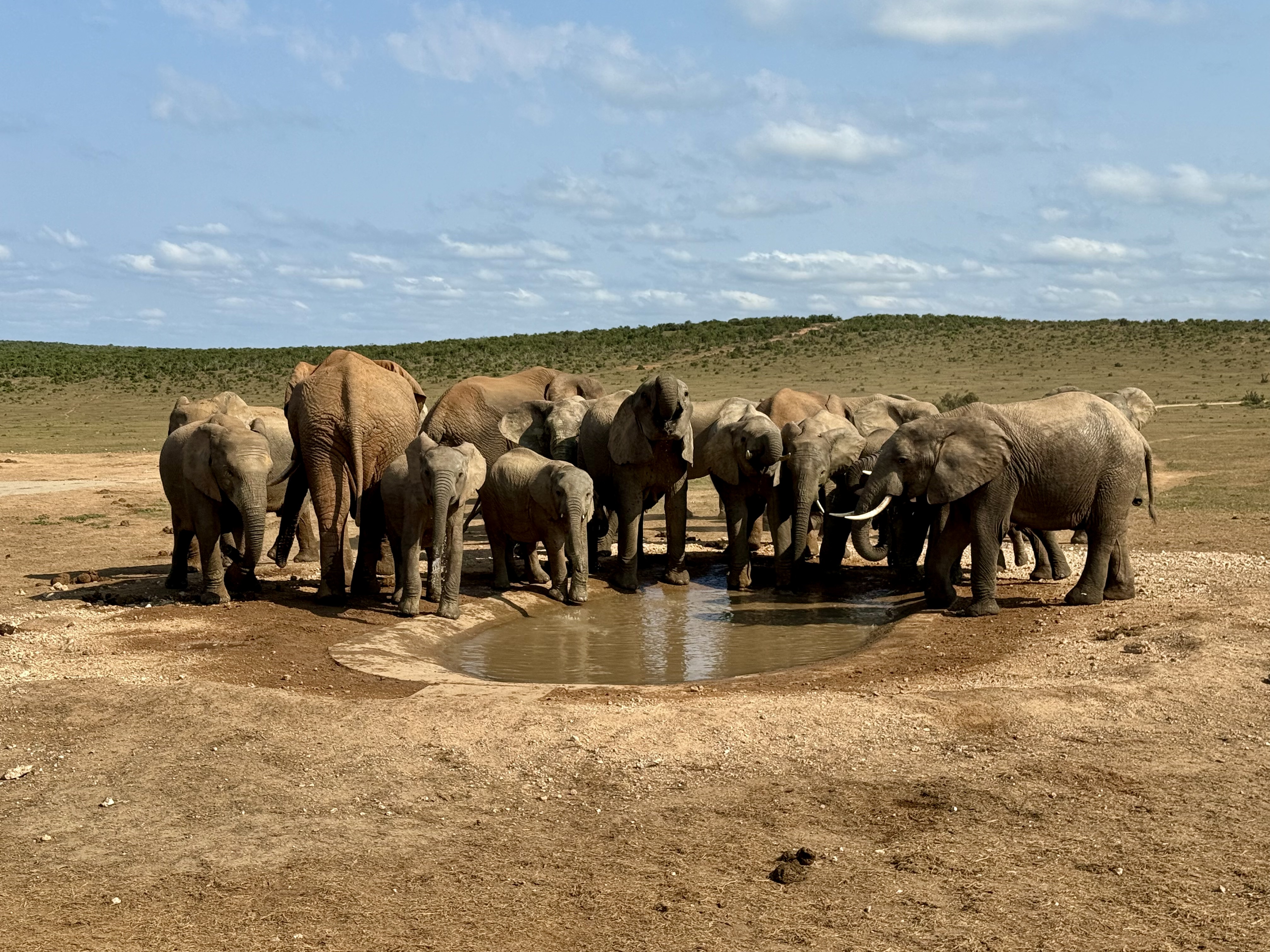
The next morning, I left the coast very early for the drive to Addo Elephant Park. I stopped along the way at Jeffrey’s Bay, which is reputed to be a surfing capital. As the waves had been so spectacular in Storm’s River, I was looking forward to seeing what they were like with surfers. Unfortunately, while I was there the seas were calm, and no one was out on the water. Addo, however, made up for any disappointment. When I entered the park, I was met by warthogs, springbok, zebra, buffalo, a black backed jackal, hyenas and lots of elephants. I drove to the northern section, which is where the main reception area is and from where the game drives leave. I was too late for the game drives that day but scheduled two for the following day before I had to leave to get back to the airport B&B. The drive back to the southern section, where I was staying, took much longer than I had anticipated. There are only 39 km between the two gates but there is so much to look out for on both sides of the road, that it took me almost two and half hours to cover the distance. There was wildlife hidden in the bushes and at a couple of the grassy areas that appeared out of nowhere along the way. On the game drives, I didn’t see any species I hadn’t seen on my own but was able to witness herds of elephants at the small water holes drinking, splashing and playing and then in the mudholes rolling around having a great time. There was one baby who almost got stuck in the mud and his older siblings managed to help him out by pushing and pulling him. It was quite a sight! There are only seven lions in the park and the rhinos and leopards stayed hidden, so while they are there, I didn’t see any of them. There are also no giraffes in Addo as there aren’t any trees for them to feed on. Addo is in a beautiful setting, and the elephants are magnificent.

After the two game drives, I needed to drive to Port Elizabeth to check in at the airport B&B. As my flight was at 8:15am to Durban, I needed to drop the car off by 5:45 and wanted to scout out the area make sure I knew where I was going at that hour of the morning. Luckily, it was an easy drive, so I decided to head down to the coast to say goodbye to the Eastern Cape’s Sunshine Coast. My experience was tainted by very smoggy weather and stormy seas. The waves here would have been more useful in Jeffrey’s Bay rather than here where the beaches below the city’s headwaters were drowned in the sea.
 omegoodyssey