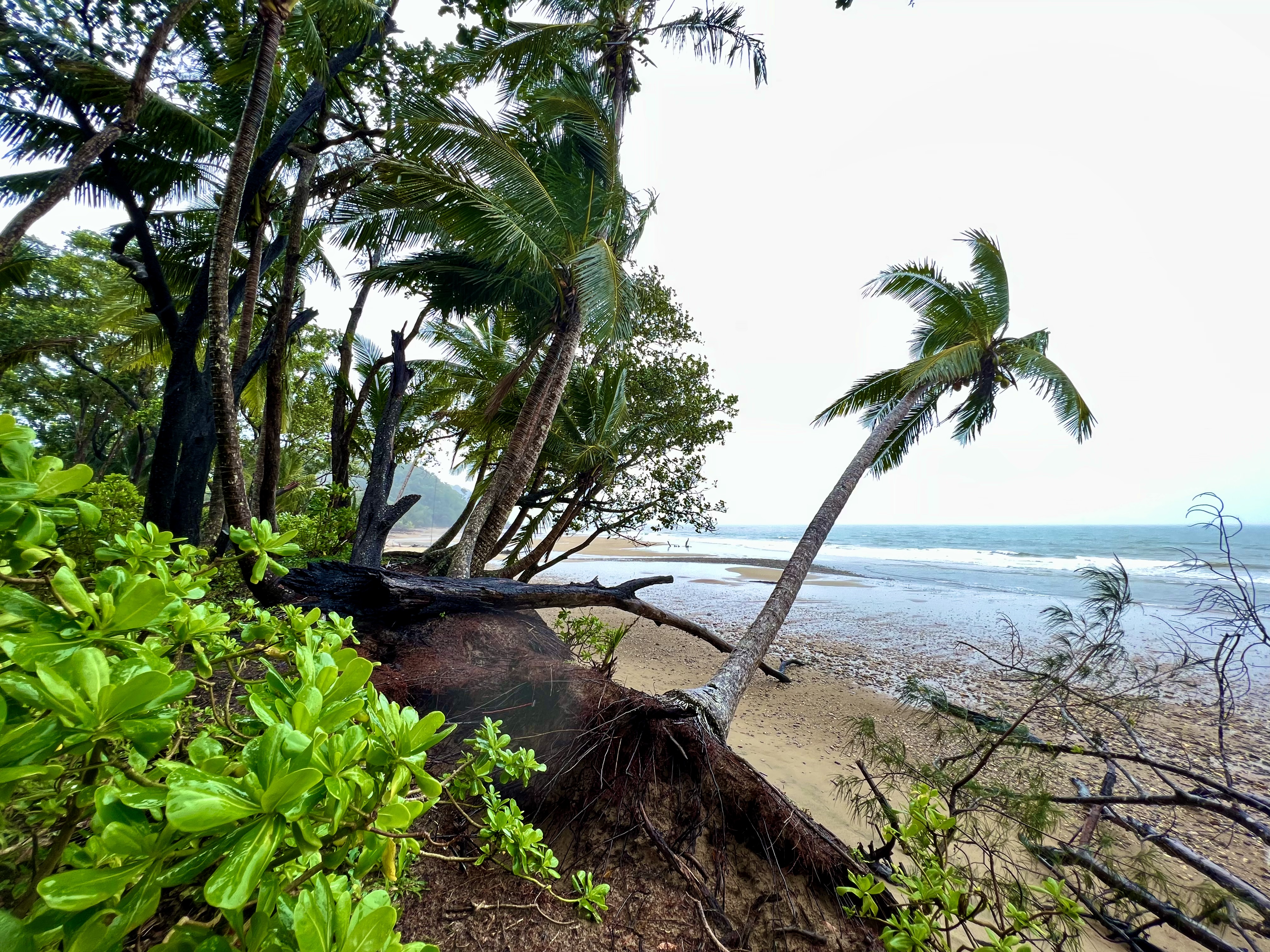
What is it about high mountains, rainforests, and the oceans that captures our imagination and curiosity? Is it that they are unfathomable, unconquerable, or simply unknowable? Most of the planet’s population do not live in these environments, yet for a chosen few the pull to first explore then conquer them is undeniable. And for those who do live there, the explorers inevitably change their worlds. So it is with the Sherpa of Nepal, the Tibetan people in China, the Quechua in Peru, the Shuar in Ecuador, and perhaps the oldest continuous culturally related communities, the Aborigines of Australia. Each of these peoples lived more or less in harmony with their seemingly hostile habitats and their communities sustained themselves, and maintained their environments, for centuries. When the outsiders came, community structures changed to adapt to the new influences and often the indigenous spirits/ancestors of the places were ignored or destroyed by the changes to the local flora and fauna.
Both Buddhism and Hinduism believe in reincarnation. Many indigenous traditions believe that the ancestors live on watching over both individuals and the community at large. With a little imagination, and not at all culturally accurate, one could see how the reincarnated ancestors of the high mountain, rainforest, and oceanic communities watch over their flocks through the spirits of the rock cliffs, trees, and waters. One only needs to look at the figures in sandstone hoodoos or granite cliffs, the knobs on trees, the arms of the sahuaro, and the faces carved in the earth by flowing streams and crashing waves to fantasize what spirits these shapes contain. When the earth changes, as it continuously does, these figures change too, but until recently these changes have been gradual and ancestral flora and fauna spirits have had time to adjust. As have the legends about them. The climate changes the earth is undergoing now are happening at an unprecedented rate, giving little time to adapt. Yet, it is precisely in these spirit-filled unknown habitats where ancient wisdom can offer solutions to today’s human-constructed dilemmas.
According to local tourist literature, the Aboriginal people of North Queensland believe the first people to come to Australia came from a land called “The Dreaming: the land of creation.” Archaeologists believe they came via a land bridge when Asia and Australia were still connected about 60,000 years ago. When they came, they would have found the Daintree not too much unlike it is now. Scientists date the Daintree Rainforest to about 135 million years old. This means it has flora that lived on Gondwana, the mega-continent that contained what is now Australia, Antarctica, South America, Africa, Madagascar, New Zealand, and land masses in Oceania. These ancient plants in the Daintree are colloquially called the ‘Green Dinosaurs’. The Daintree is unique because when the other landmasses split off from Gondwana and the planet cooled during the Ice Ages, Australia moved closer to the equator maintaining the conditions for the tropical forests. As the others cooled and migrated away from the warmer climate, their habitats changed, and even those which moved so that there were large land masses along the equator, the winds and oceanic influences were different from those during the previous era spawning changes in the evolutionary patterns of the plant life. The Daintree in North Queensland, however, maintained much the same environment as it had on the mega-continent in spite of the drying and heating of the rest of the Australian continent.
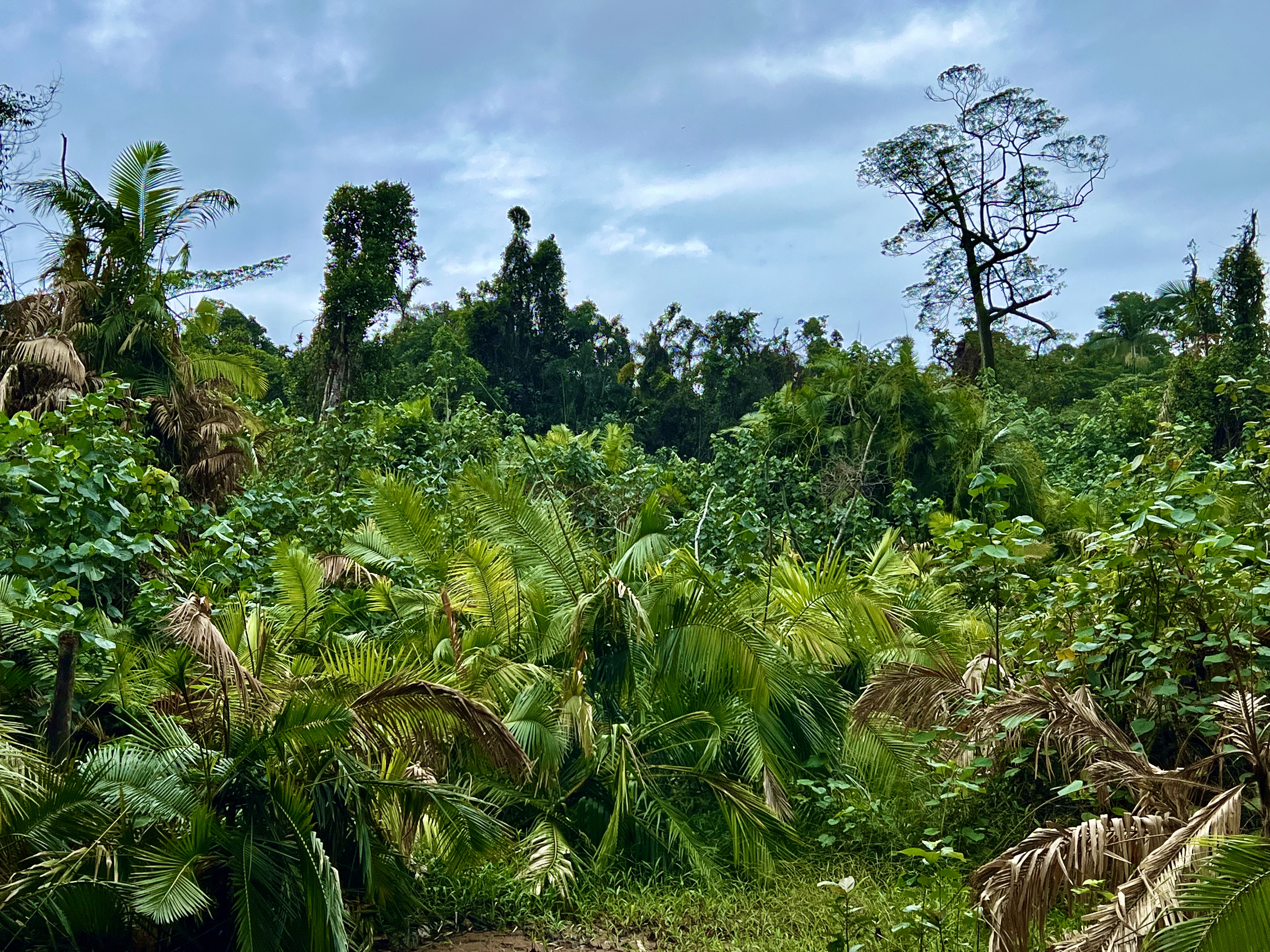
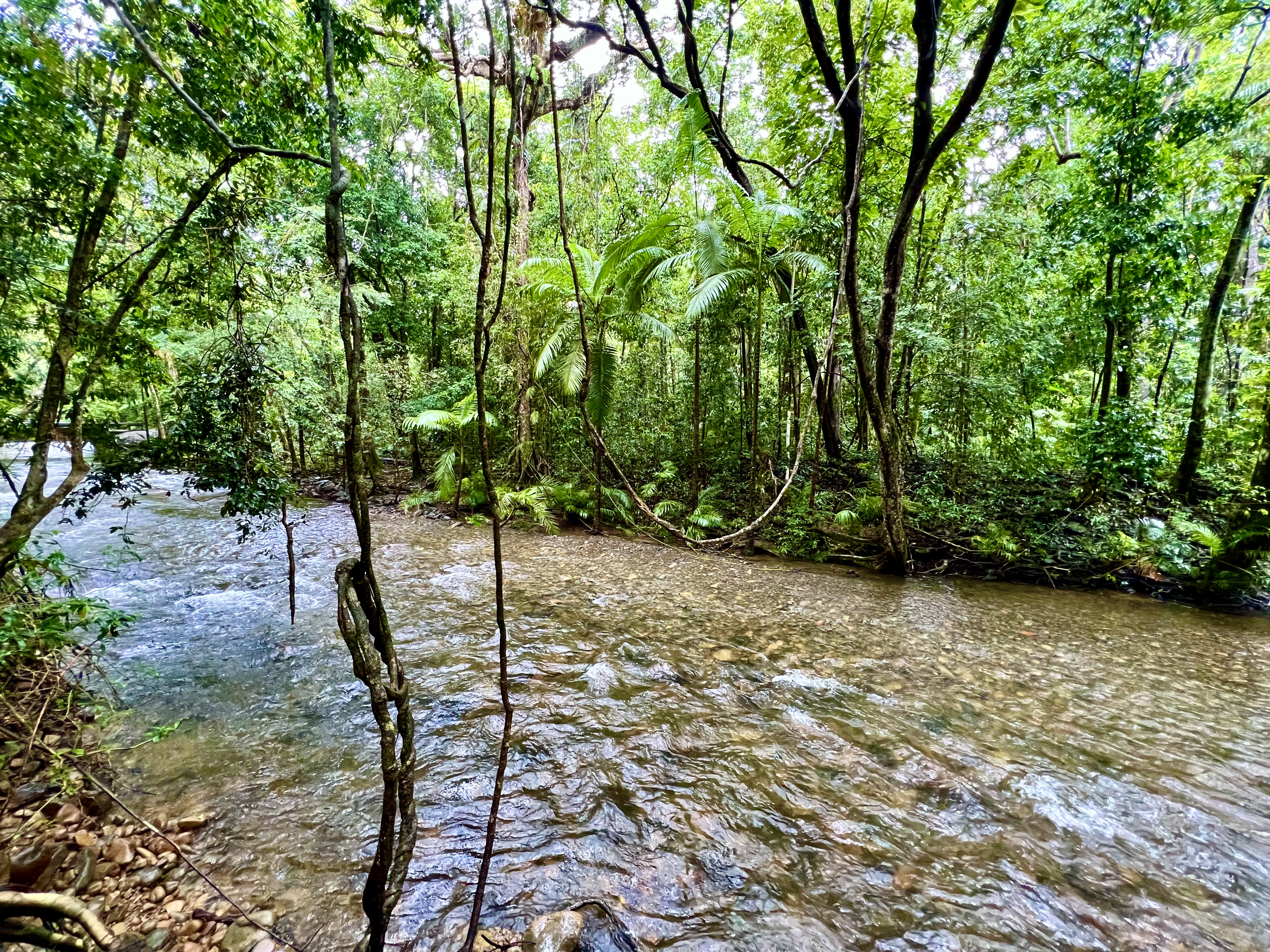
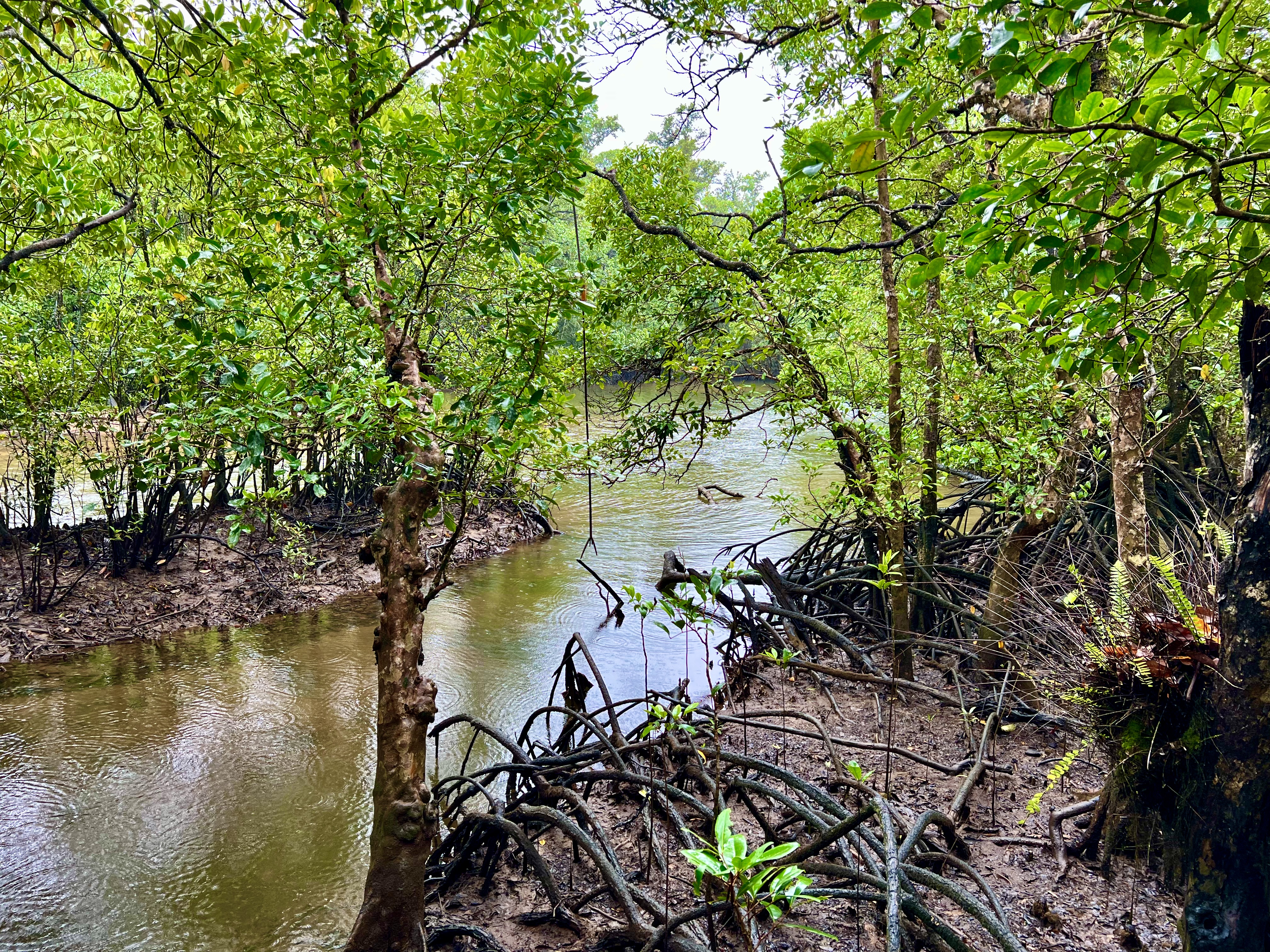
The Daintree covers only about 1,200 square kilometers, or, again according to the local tourist literature, about half the size of Sydney. The dense lush green rainforests are on steep mountains and hills that rise abruptly from the ocean. It is one of the most diverse ecosystems on the planet, with about half of Australia’s plant and animal species. It has 13 of the 19 known ‘Green Dinosaurs’ some of which date back 100 million years. A few plants like the dwarf euodias only grow in a particular spot in the Daintree and nowhere else on earth. The Discovery Center in Cow Bay has a plaque that states: “A hectare of Daintree rainforest can contain more than 228 species of trees – that is more tree species than the entire continent of North America.” This biodiversity is supported by lots of rain, namely ca. four to five meters of annual rainfall. The rain nourishes the soil but also flows via streams, creeks, and rivers into the ocean. Mangrove swamps, which live in salt water and rainforests, which are fed by fresh water, lie side by side in the Daintree.
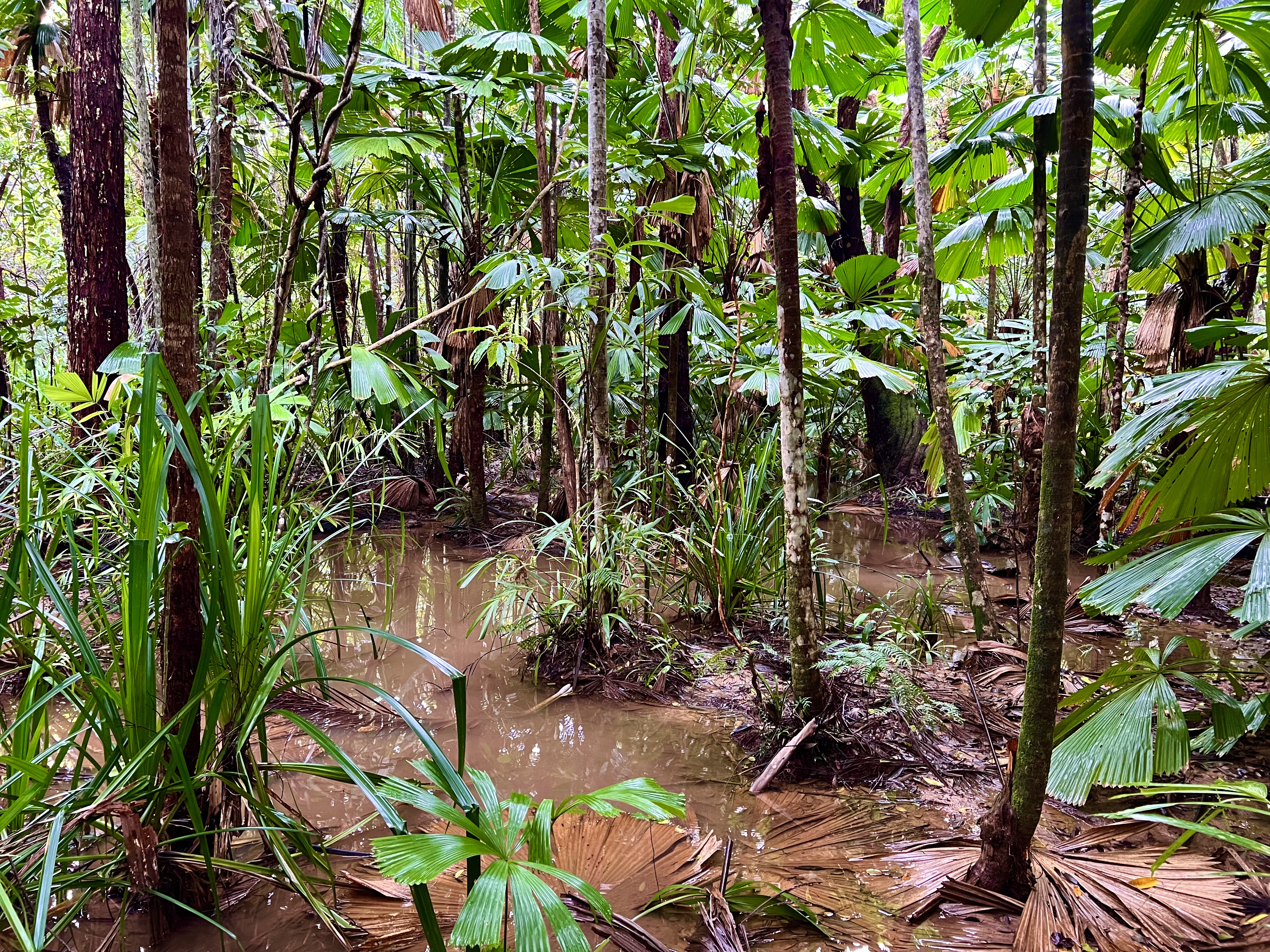
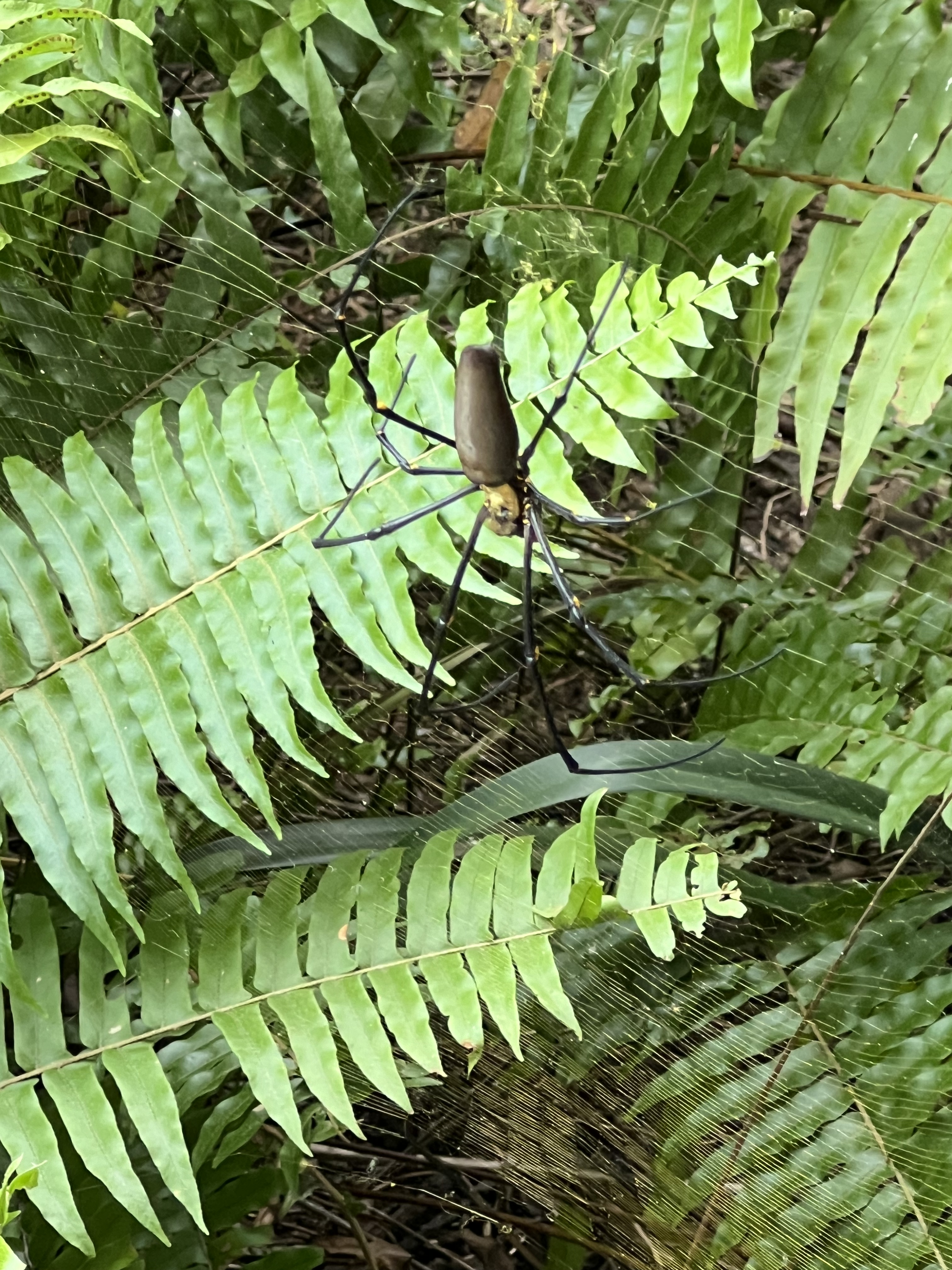
Since 1988, when the Daintree and Great Barrier Reef were awarded World Heritage status, efforts have been made to bring tourists to the region, while sustaining the environment. One place where the evolution of plant life since Gondwana times can be viewed is on the Marrdja Boardwalk by Noah Beach. Another is at the Discovery Center in Cow Bay. A third very interesting walk is at Dubuji at Cape Tribulation. All three of these are north of the Daintree River ferry. South of the river, at Mossman Gorge, are the Ngadiku (stories) Dreamtime Walks from the Kuku Yalanji people and at the Tjapukai Aboriginal Cultural Center north of Cairns. All of these have paths/trails that are clearly laid out. The boardwalk paths are short, under 2 km., but they cover multiple habitats. I found that it was good to have the boardwalks, not just to protect the environment from masses of footprints, but also for the visitor to be able to see what wildlife is on the track. On the forest floor it is difficult to tell a snake from a root or a poisonous spider from a leaf. (Perhaps the spirit of the animal lives in the root or leaf…)

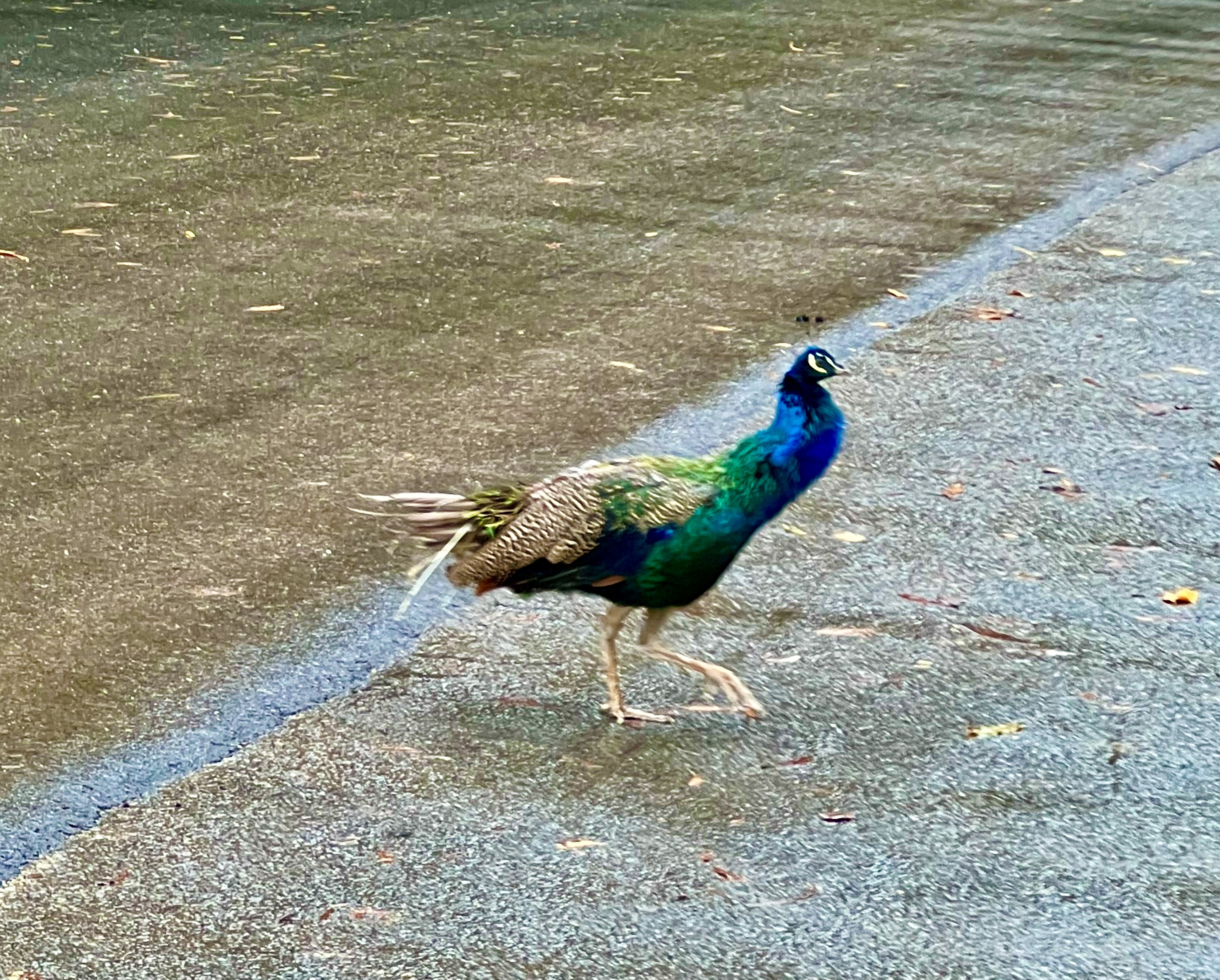
At each of these sites, there are informative signs explaining about the flora directly in front or behind the sign. At the Discovery Center, there is a tower where one can climb through the various stages of the canopy; an audio guide provides explanations along the way. They also have a great deal of information about the cassowary, the large flightless bird that lives in the region. Unfortunately, I didn’t see one, but I did see a couple of brush turkeys and a tailless peacock.

Nor did I see a tree kangaroo, one species of which only lives in the Daintree. I almost didn’t go to the Discovery Center as the marketing for the site was geared towards families with young kids and highlighted the Jurassic Park plastic dinosaurs that are scattered in one section. The owner of the B&B I was staying at mentioned that the marketing misrepresents the Center and that it would be worthwhile to visit. I’m very glad I did, as the information about rainforests in general and the Daintree in particular was interesting and very helpful.

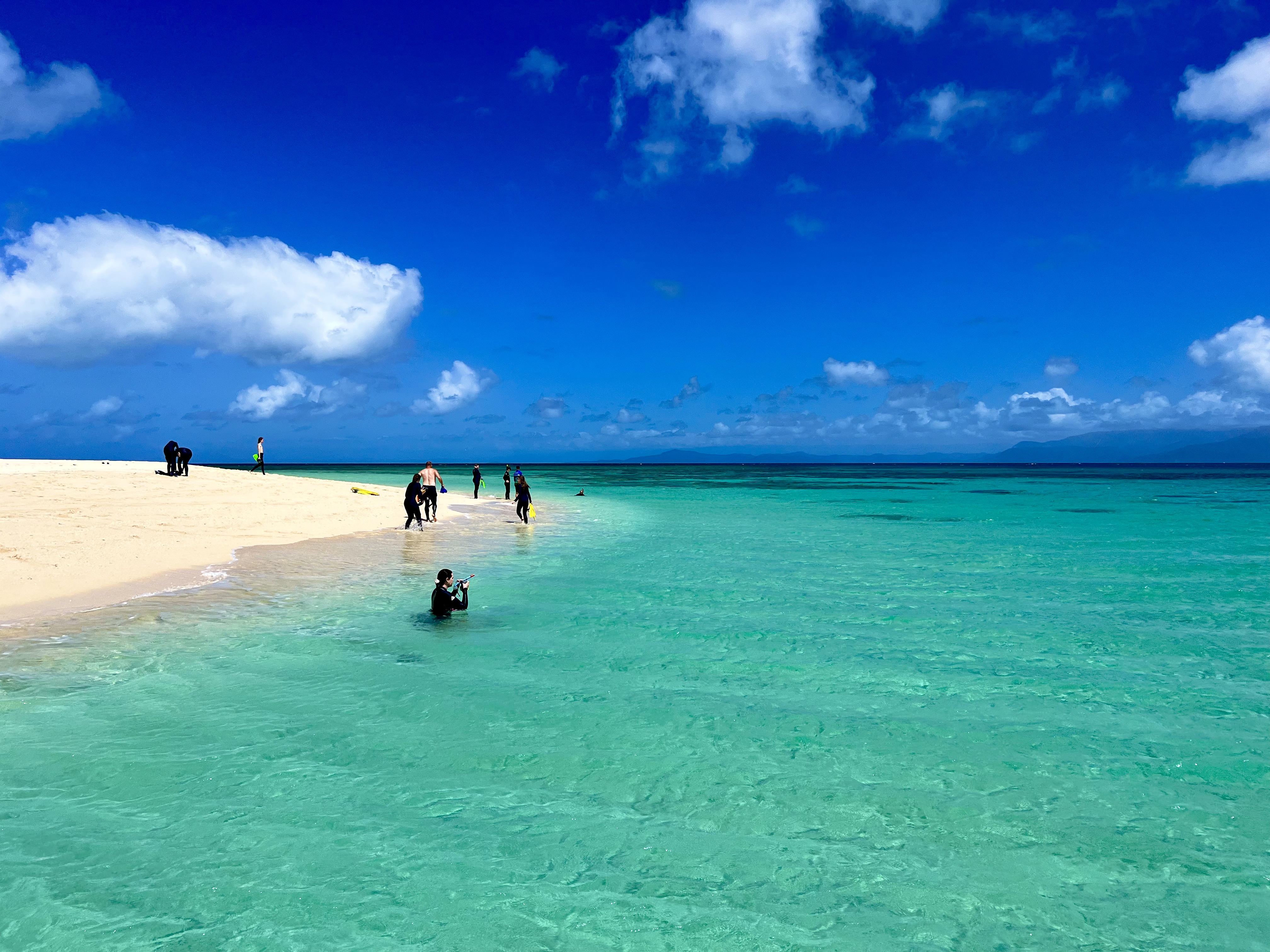
The Daintree borders the Great Barrier Reef and from Cape Tribulation snorkeling tours to Mackay Reef take only about 35 minutes rather than the hour and a half from Cairns. Ocean Safari takes up to 25 people on an inflatable life raft that is ocean-worthy out to the reef and to a small sand mound/island, that is comprised strictly of organic, not volcanic, material.

On the way, the staff provide explanations about the GBR. Before one gets started, though, one has to put on a ‘stinger suit’, a lycra wet suit intended to, if not prevent, at least minimize stings from the Boxer Jellyfish that swarm the region six months of the year. I was lucky that I was there right after they had left and didn’t see one. The Great Barrier Reef is considerably larger than the Daintree and is also much younger. It is only about 10,000 years old and is about the same square kilometer size as Norway. It is comprised of over 3,000 individual reefs, some of which are quite small, while other stretch for 100 km. It has 618 continental islands, over 300 cays (coral islands), and 150 mangrove swamps. The World Heritage site is not just the reefs, but also the islands and mangroves.
Like the Daintree, it has a tremendous diversity of fauna, with over 600 different species of coral (which are animals, not plants), 100 species of jellyfish – which I am glad I did not see, and over 3,000 different mollusks, the largest of which are the giant clams. These are simply amazing on Mackay Reef. There are so many, and each is different. Some have a bright green tinge, others bright blue, others a reddish hue, and all of them well over a meter in length. It was fascinating to watch their mouths open and close to breathe with multicolored fish swimming by. Bright blue starfish and purple tendril corals colored the sandy ocean floor. There are supposedly 1,625 species of fish contained in the GBR waters; I didn’t see that many, but I saw more than I have seen elsewhere, and I saw a couple of green turtles that seemed to wave at us. Members of the tour saw both white and black tipped sharks, two of the 133 species of sharks and rays identified in the World Heritage site.

Coral bleaching was evident as this was an especially hot year both for the air temperature as well as for the oceans. There was also a terrible cyclone last December that destroyed much of the road north of the ferry as well as coral in the reefs. Some of the coral seemed to be recovering, though, and it wasn’t as bad as I saw a couple of years ago in both Thailand and the Philippines. Hopefully, the reefs will be as resilient as the Daintree.
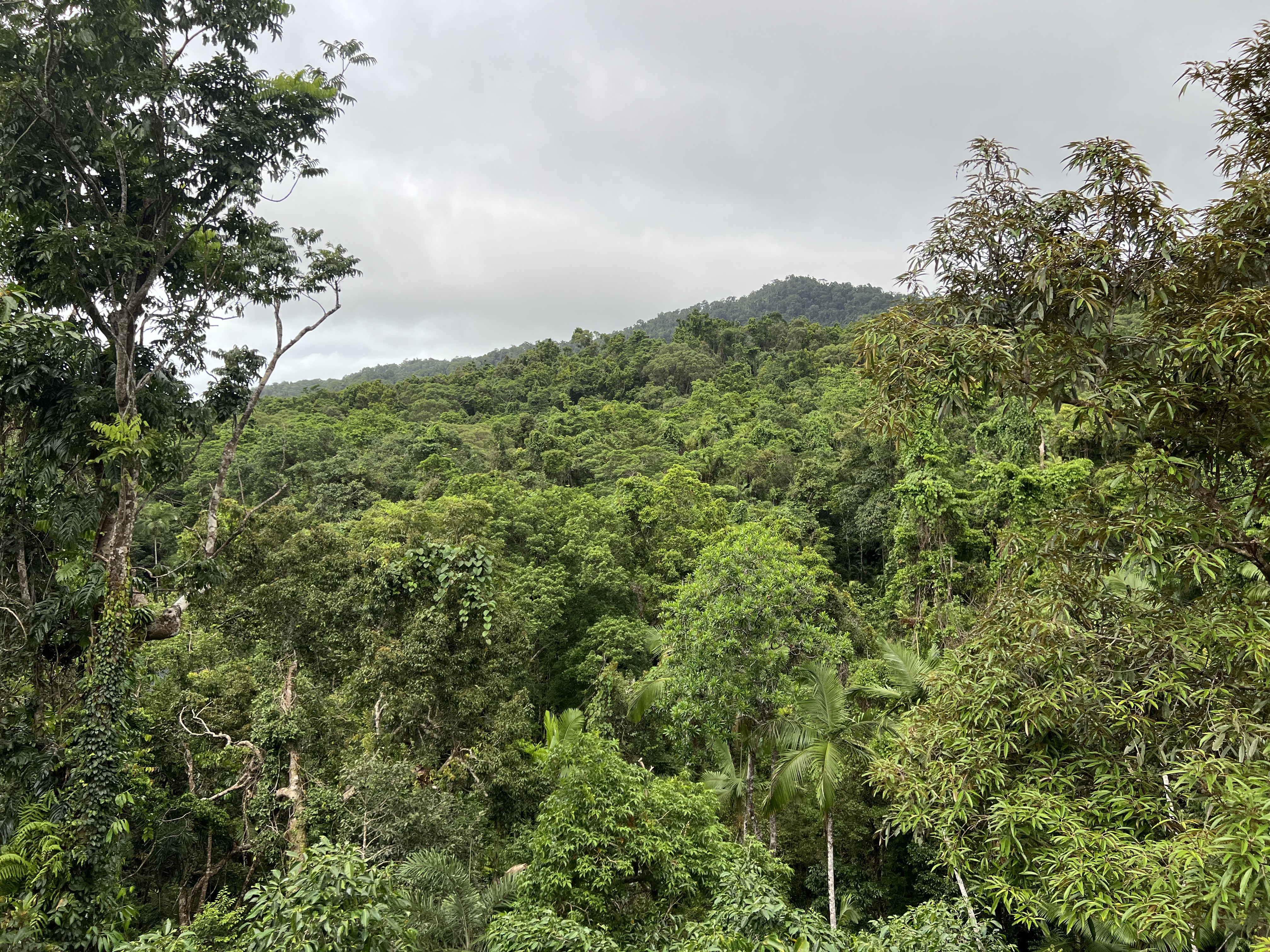
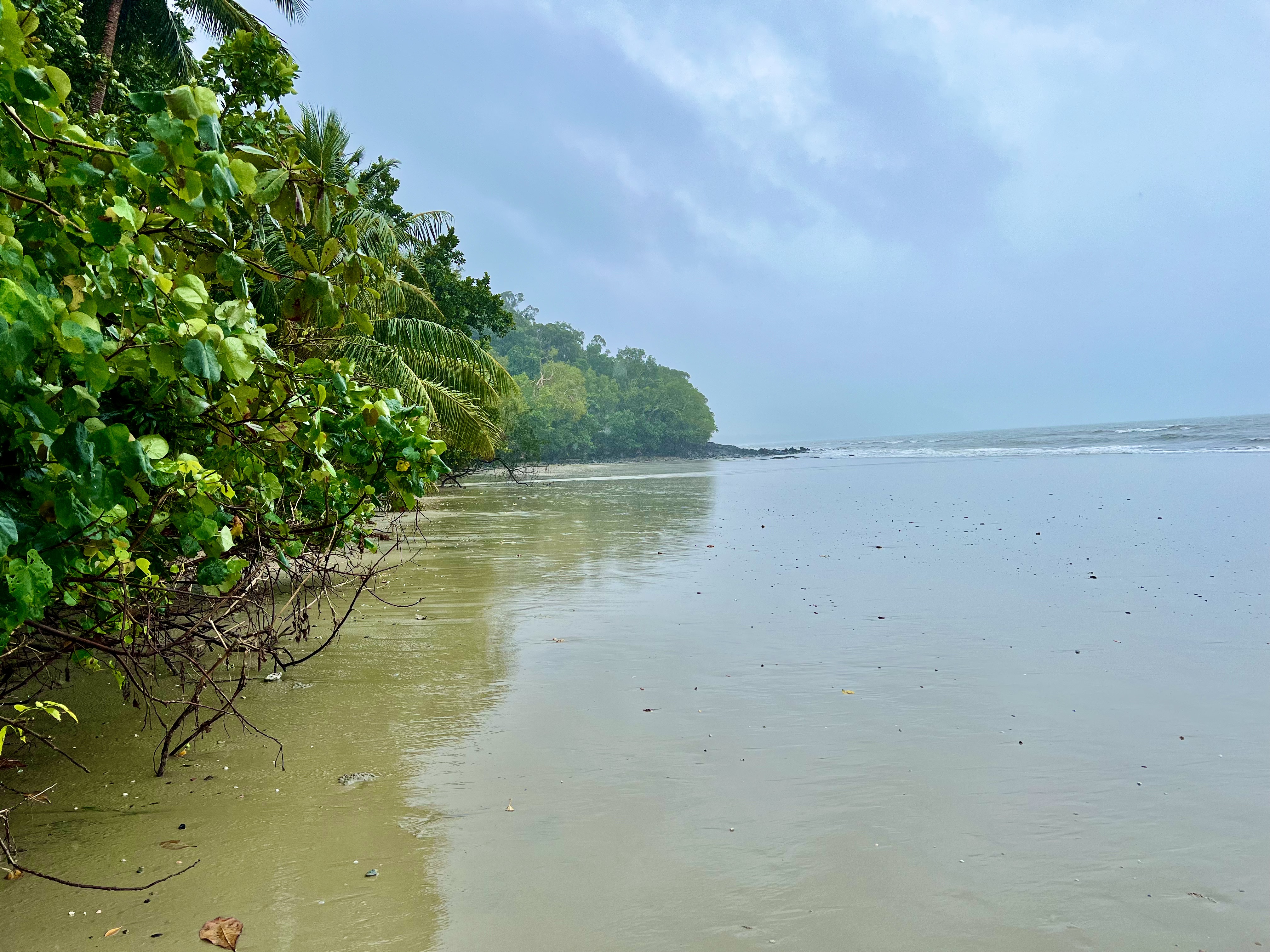
The snorkel tour took off from Kulki, or Cape Tribulation Bay as it was high tide and returned via Myall Beach. The Dubuji Boardwalk starts near Myall Beach. Kulki means meeting place, and Dubuji means place of the spirits. The English names tell a different story, Cape Tribulation was coined by Captain Cook in 1770 when the Endeavor ran aground on a reef, and he couldn’t find a place to repair it. His crew ended up having to go much further up the coastline to what is now Cooktown to get it fixed. Other English place names in the vicinity include Mount Misery, Mount Sorrow, and Weary Bay.
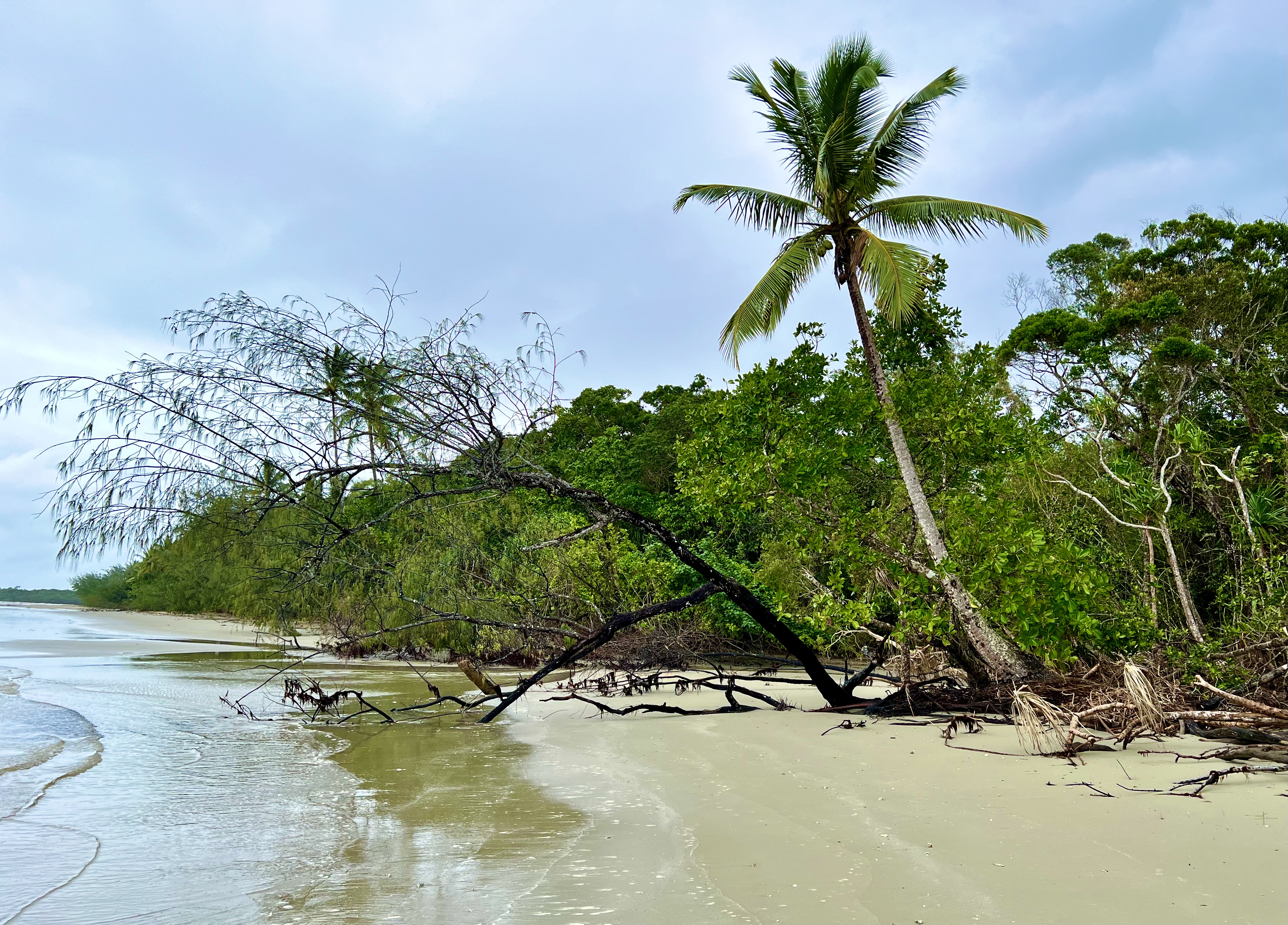
Those names are appropriate for what the people who live north of the Daintree River felt like after the December cyclone. There is no electrical plant above the river, so everyone lives off the grid and even some of the insurance companies don’t consider this section of Australia to be part of the mainland as there is no direct highway to get there. One needs to take a ferry to cross the river. The cyclone destroyed much of the road, which is still being repaired causing long waiting lines and adding considerably to driving times beyond the ferry. The dirt road from Beach House, which is just north of Cape Tribulation, to Cooktown is completely closed. Tourism which stopped during COVID, stopped again for three months of high season due to the storm’s damage. There are some dairy farms and a few orchards, but the region is primarily a national park, and the people live off tourism. When the tourists can’t come, businesses collapse. Change remains constant. This is a magnificent area, and I hope that the well-worn community that lives north of the river will rebound and thrive as the fabulous forest and reef do.

And the ancestors continue to look over the region from the high peaks and boulders in the streams. Lines in the sand dunes could be paths the ancestors have taken, and flowing water can tell their stories to those who know how to listen. While the only constant in life is change, the Daintree is a living testament to sustainability and the Great Barrier Reef is one to resiliency. These living breathing ancient organisms have much to teach us 21st century bipeds.
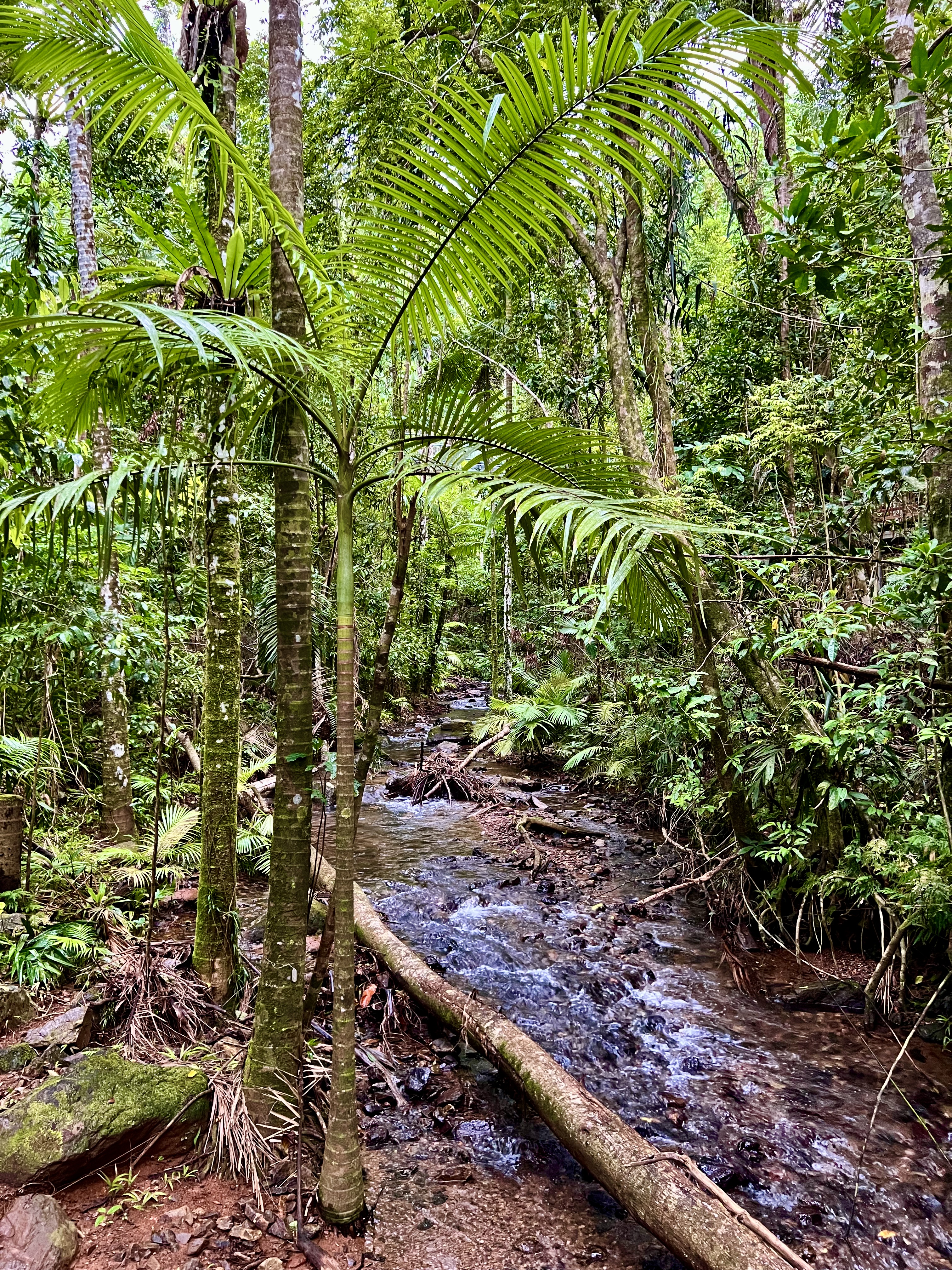
One of the Green Dinosaur Ferns
 omegoodyssey