The end of January, I headed down to Northern Italy for a few days of skiing. On the way, I stopped at two towns I’d not yet been to, Brescia in Alto Adagio and Bergamo in the Lombardy, and another I’d only visited in the summer, Bormio, also in the Lombardy. Each has its own distinct character, although they have a similar history, and living aspects of that history within the center of the towns.
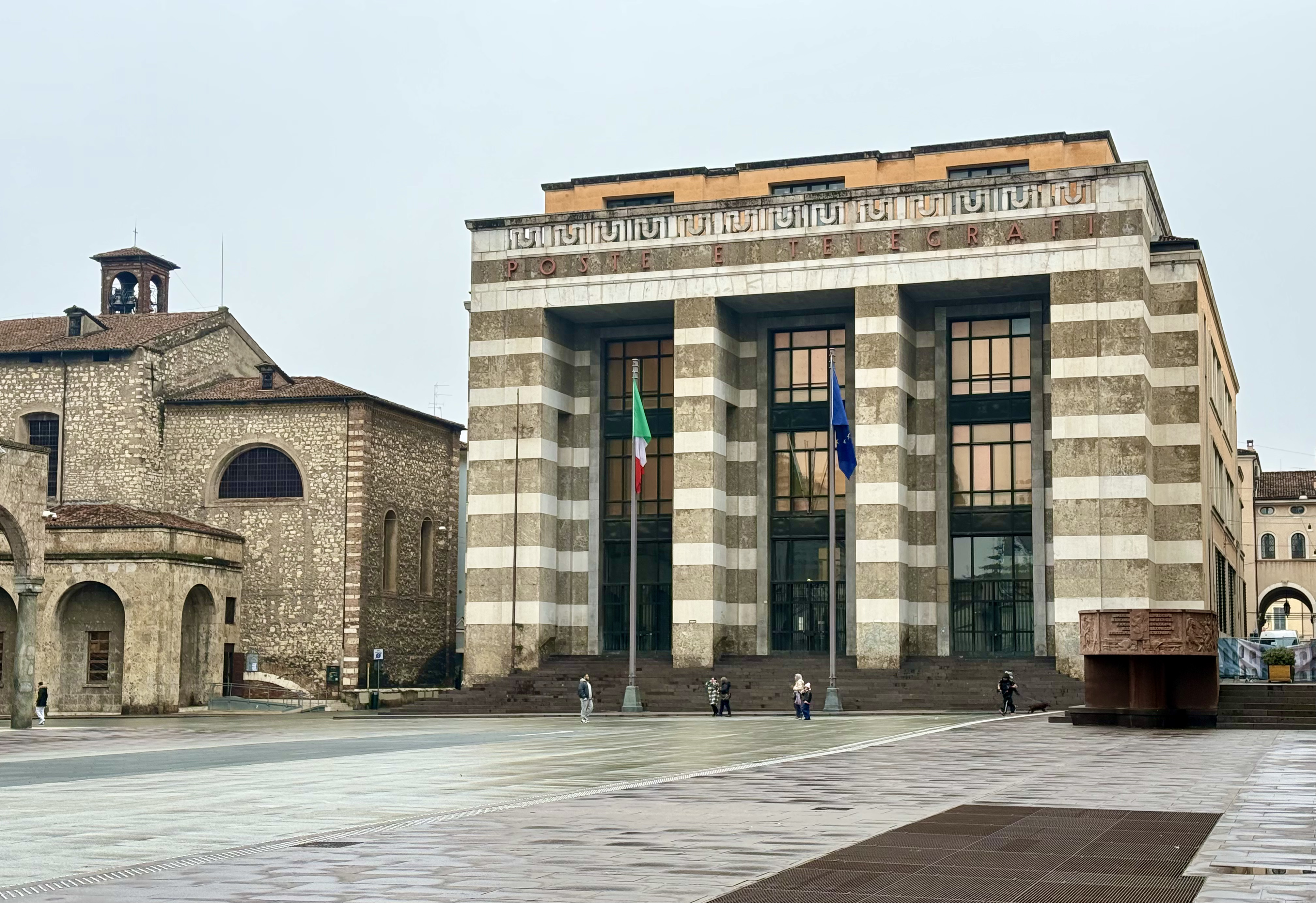
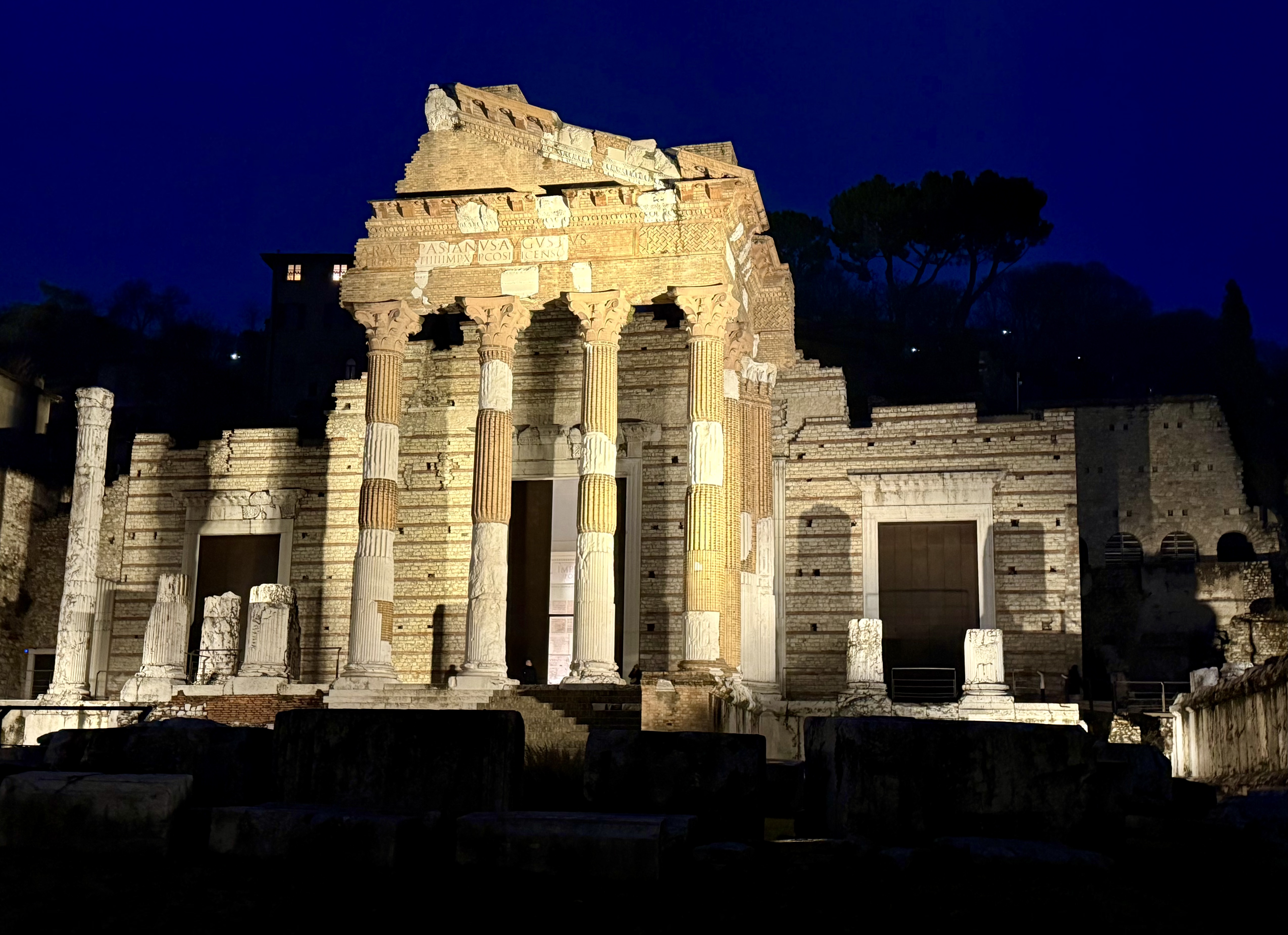
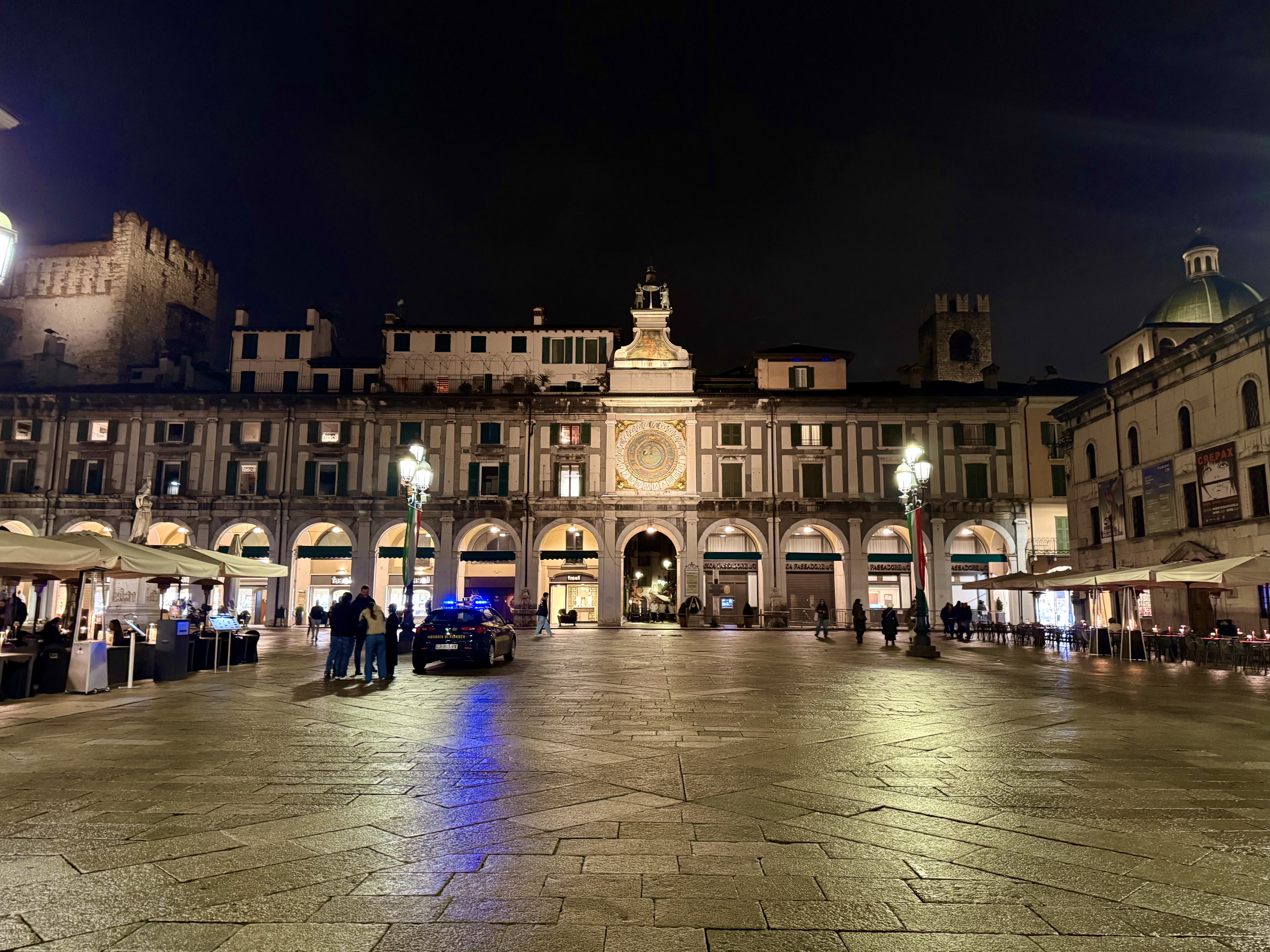
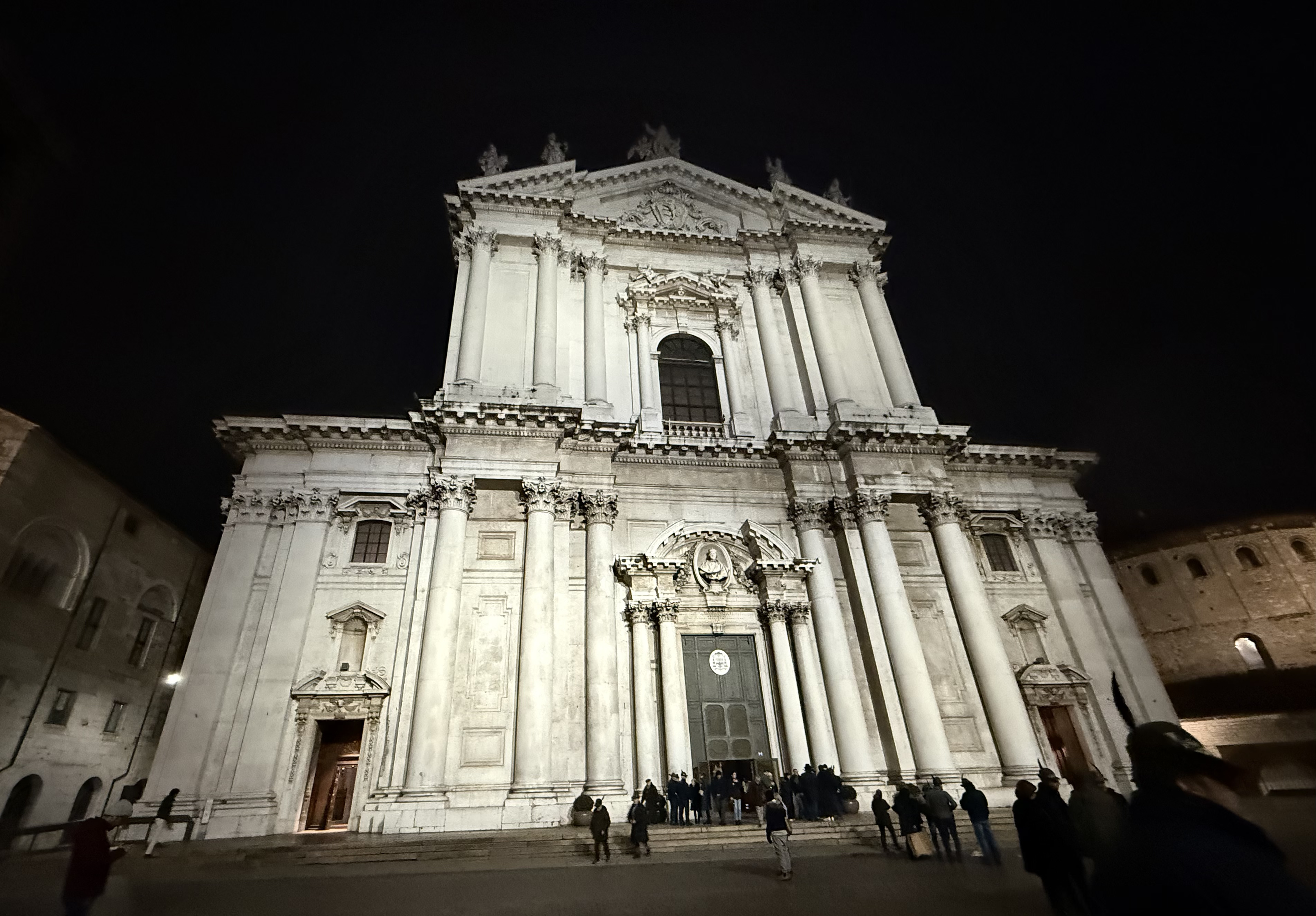
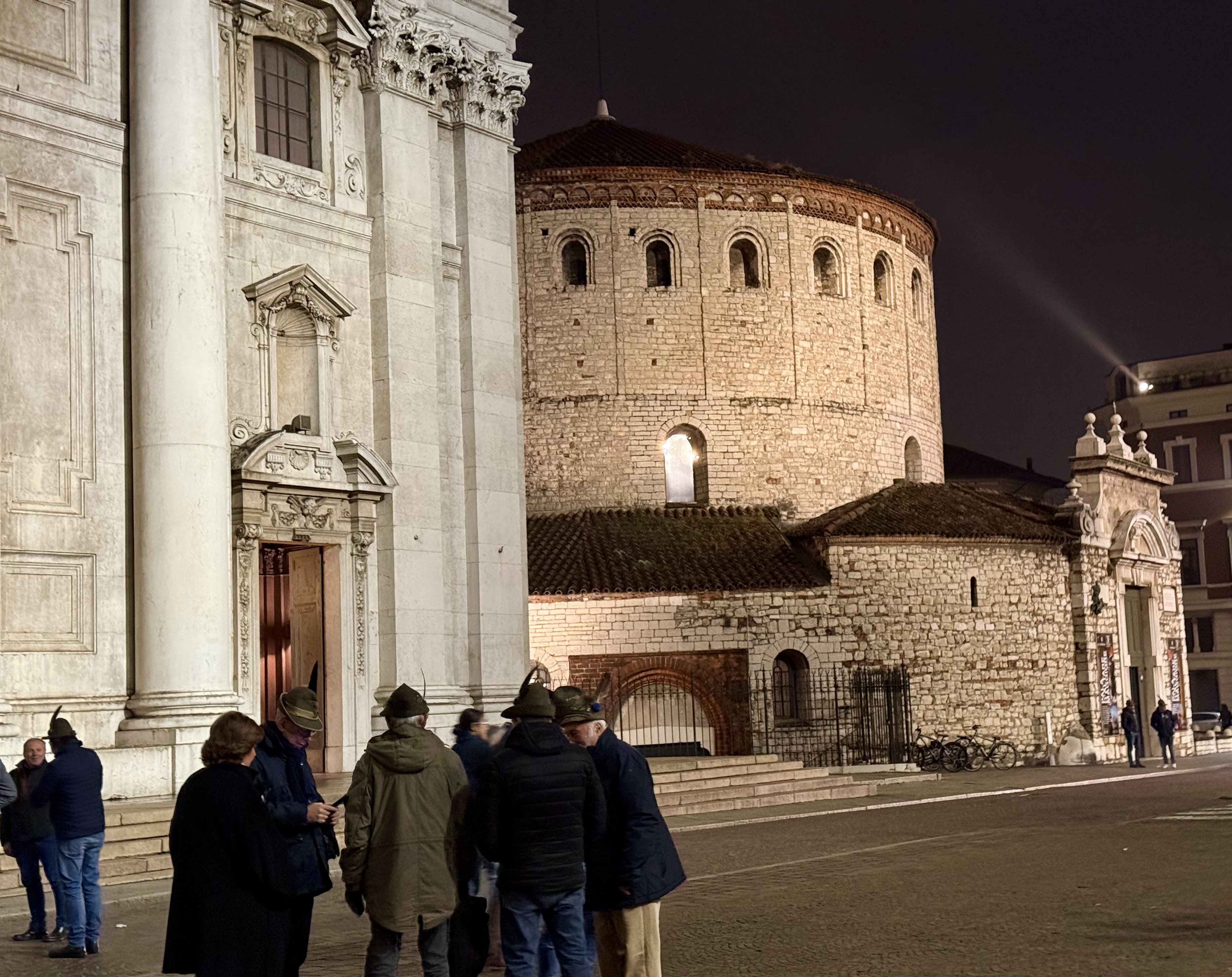
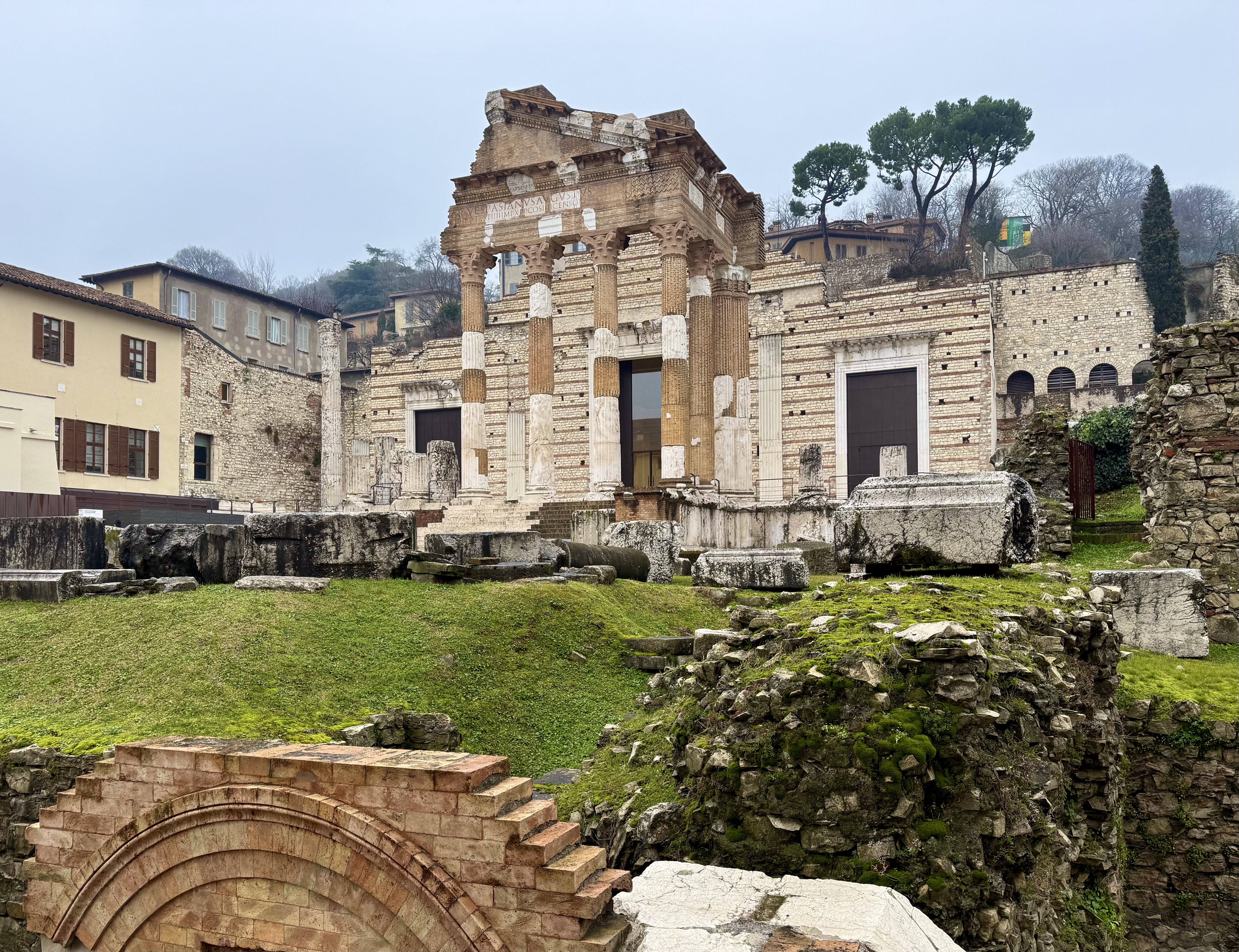
Brescia is just off the main highway between Verona and Milan and easy to get to. The main problem in the city was trying to find a parking place. I finally found one that was only about a kilometer away from where I was staying in the center and considered myself lucky to have located it. The main attractions in the city are all within easy walking distance of each other. I arrived late afternoon and the evening entertainment in the piazzas was just beginning. Strolling through the old town, I came across the Roman ruins of the Capitolium, a temple dedicated to the god Jupiter, that was lit up in the evening, both the old and new cathedrals, and a number of piazzas that were filled with outdoor dining options, even though the temperatures were close to freezing. The old cathedral is a rotunda, that was damaged by an earthquake, but is open to the public. The new one, from the 1600s, is impressive both inside and out.

The next morning, I resumed my walk-about and included a jaunt up to the castle, from where one normally would have a great view of the city, but when I was there clouds and fog covered the city below.
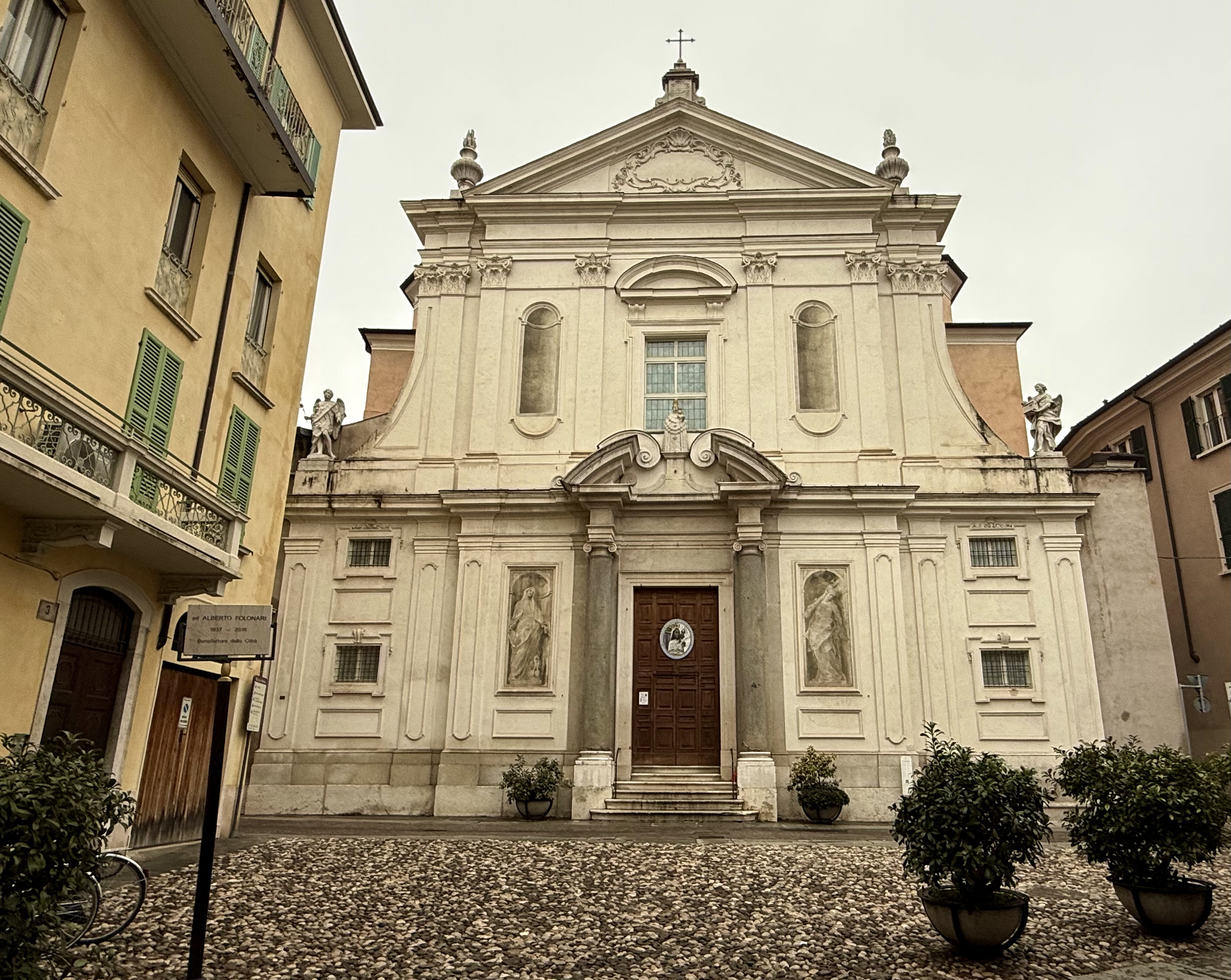
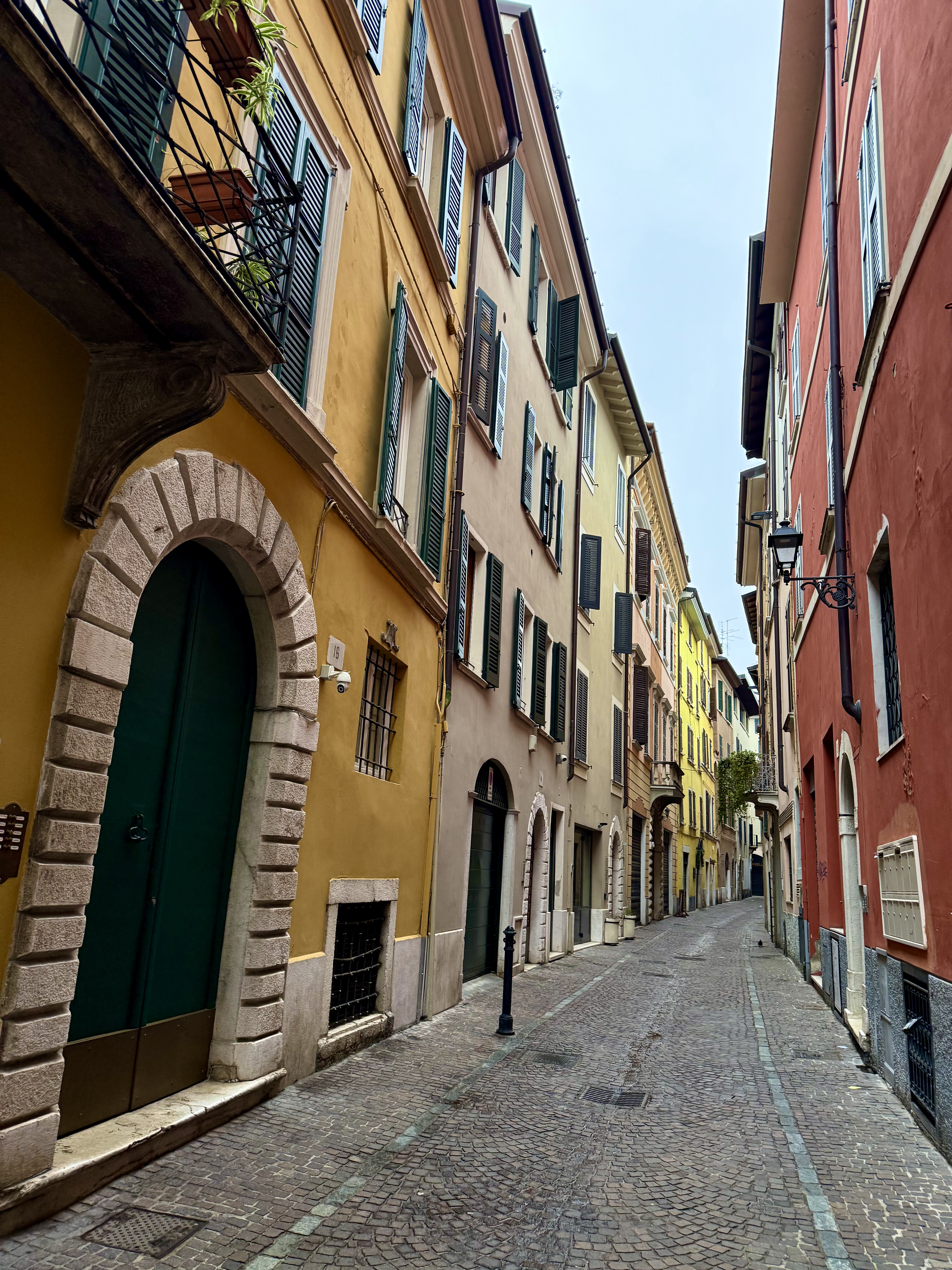
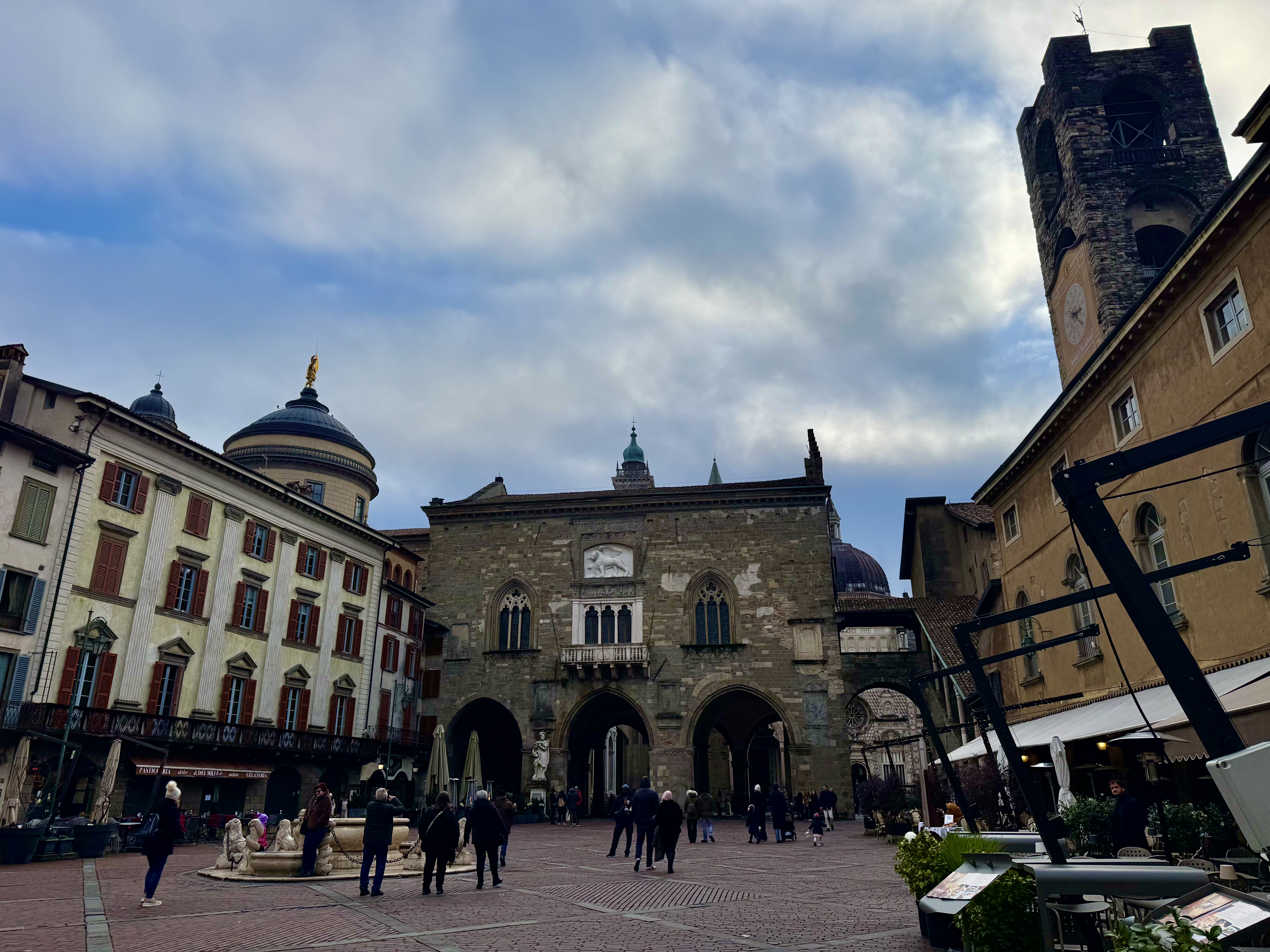
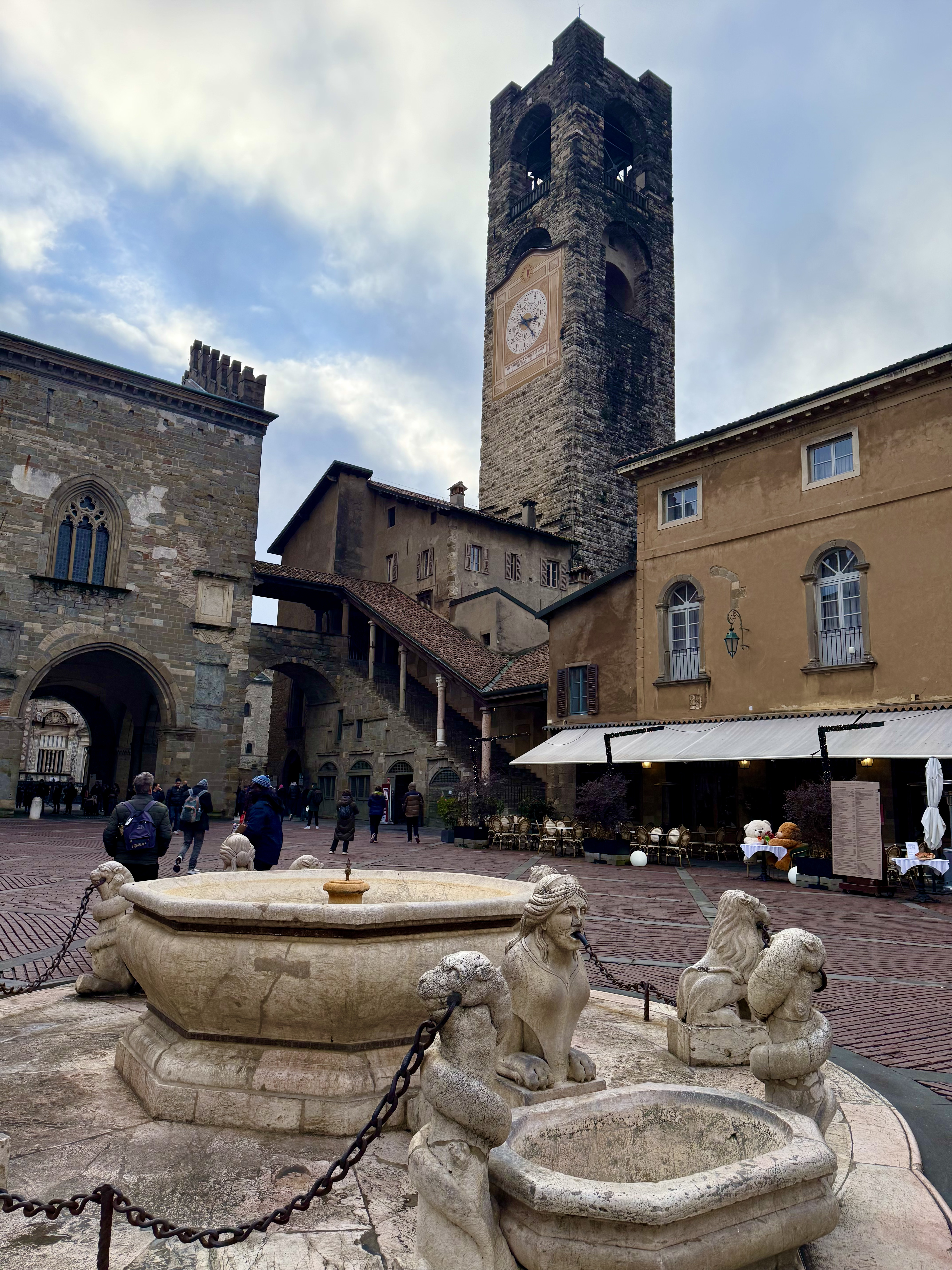
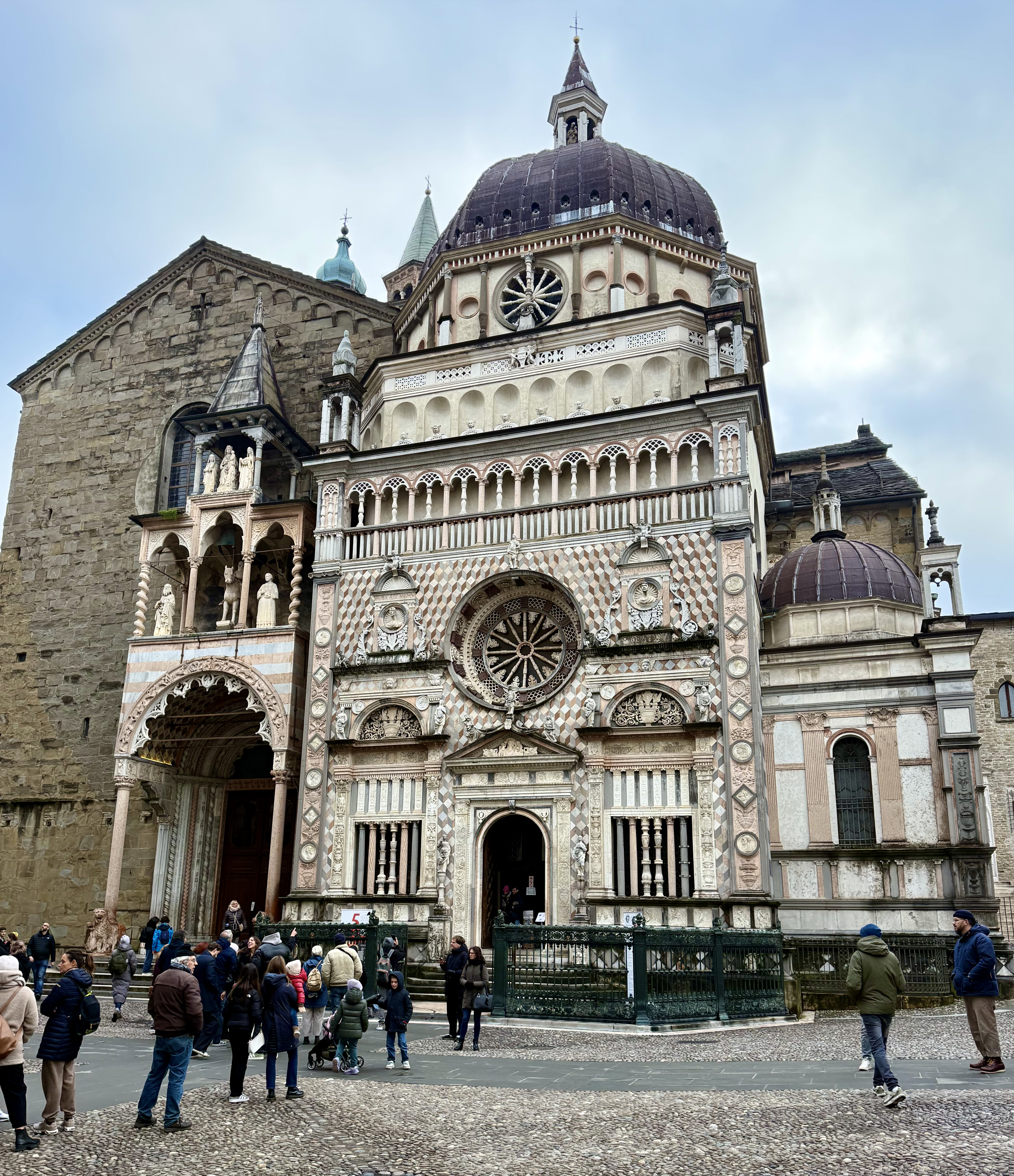
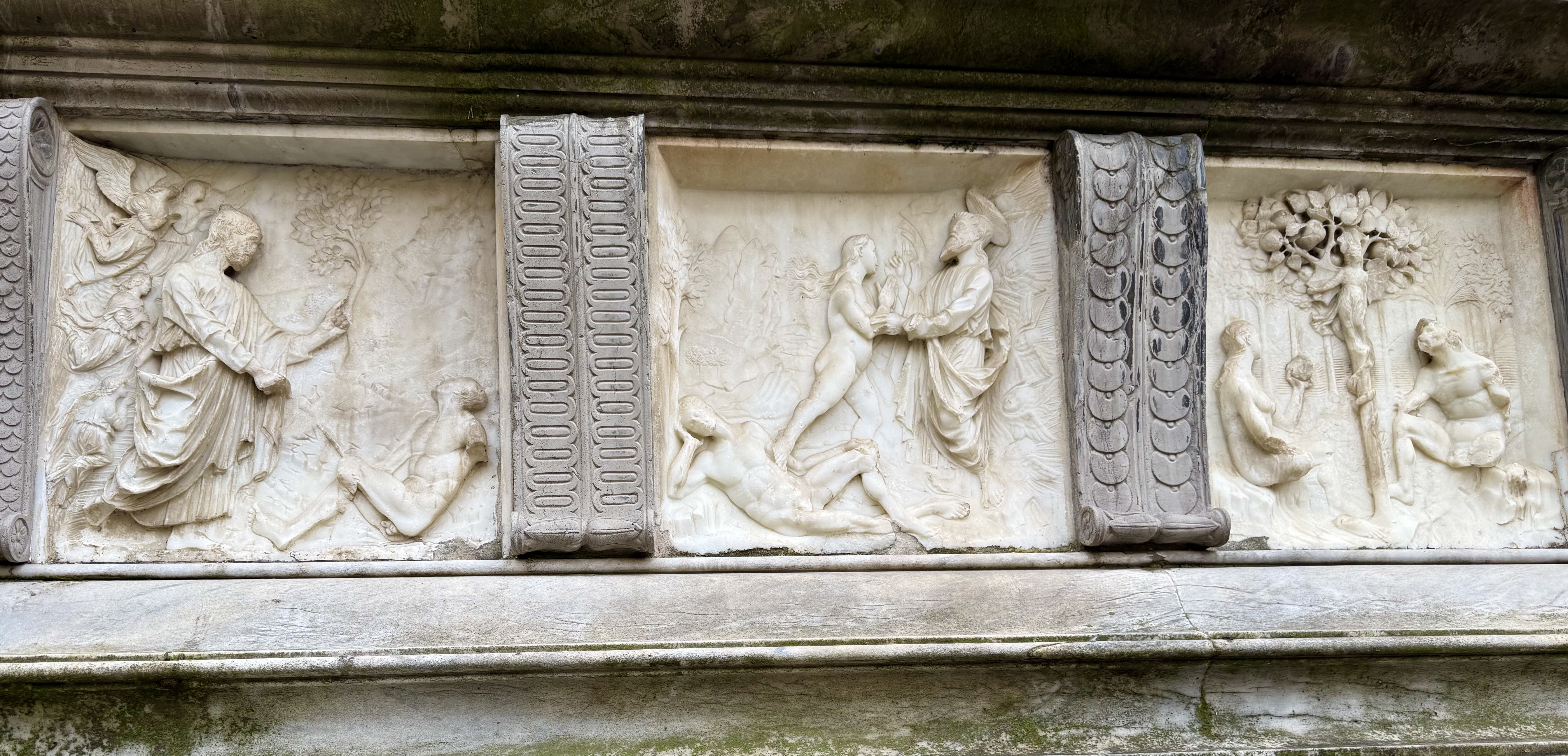
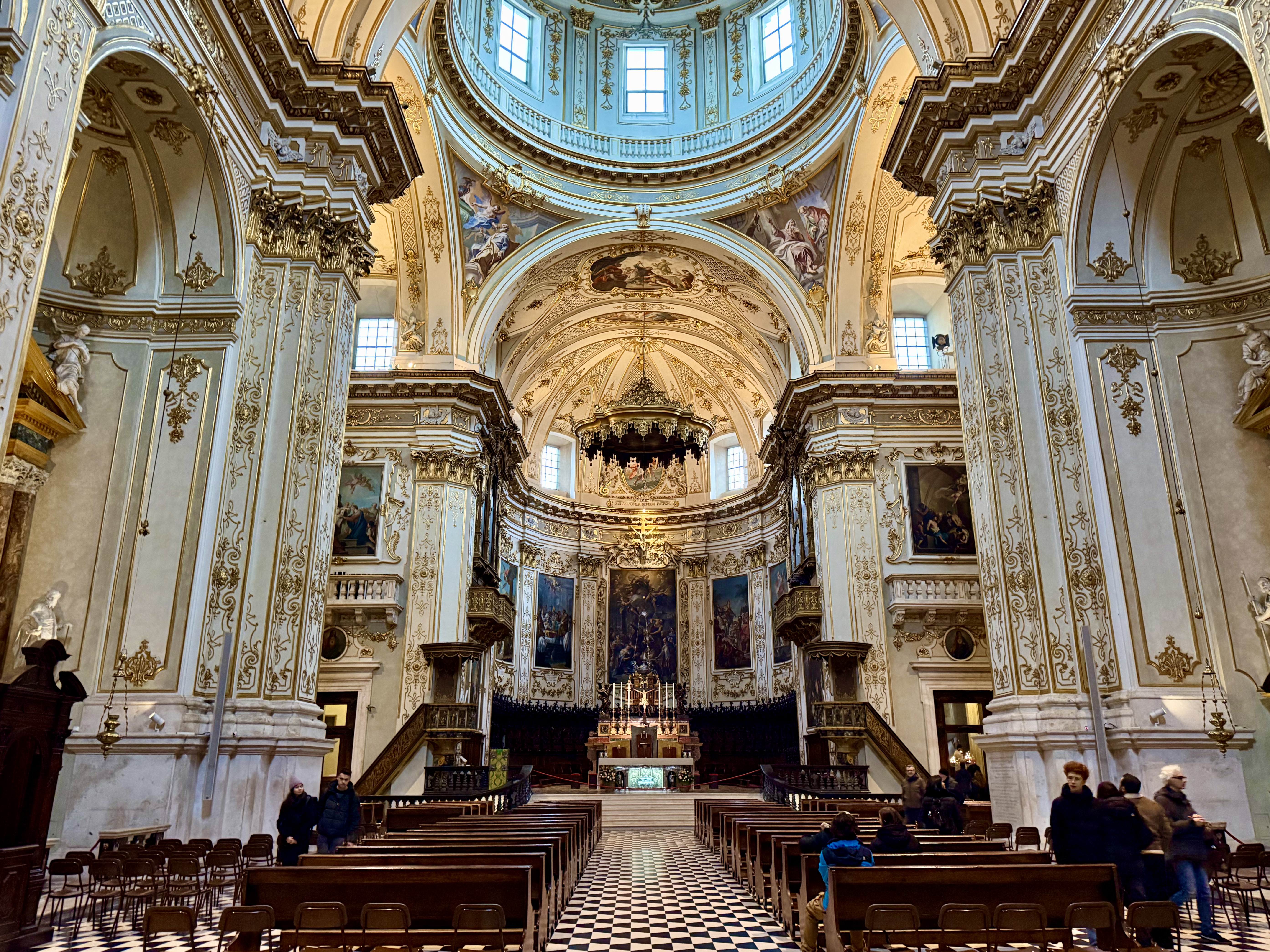
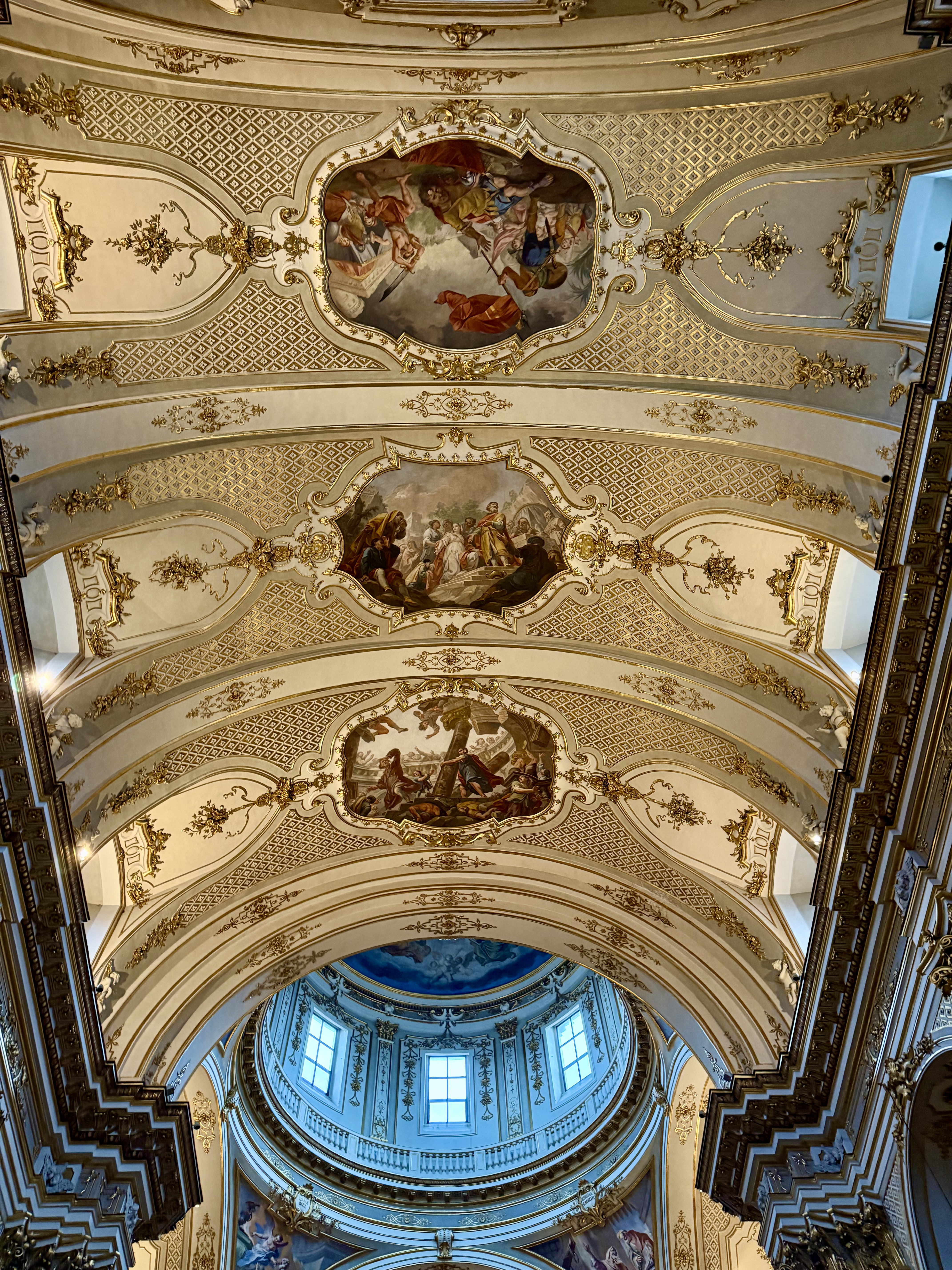
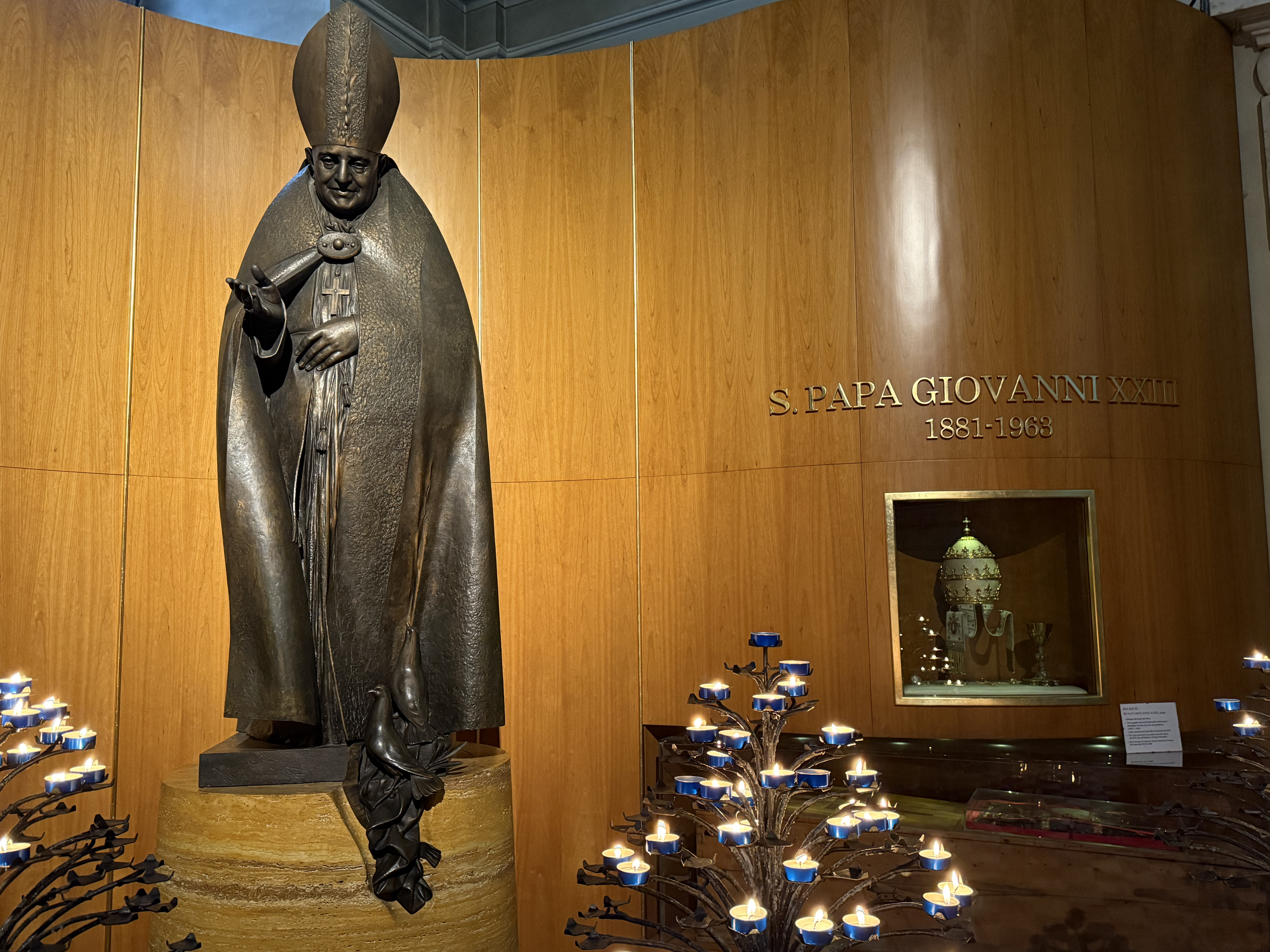
It is only about an hour’s drive between Brescia and Bergamo, but the cities have distinctly different atmospheres. Brescia’s old town is located beneath the castle and is integrated into the center of the city, whereas the old town in Bergamo is on a hill above the new city. The best place to park near the center of the new city is at Piazza Libertá, which charges E15 for 24 hours. From there it is an easy walk to the nearby hotels, B&Bs, guesthouses and all of the places of interest, which is much better than trying to find parking or hotels in the old town. The old town has most of the tourist attractions and a couple of excellent museums, including the archeological museum. I was surprised at how many tourists, mostly Italian, were walking through the main street of the old town, which is primarily a pedestrian zone. Behind the main street, however, there were only a few people. I was glad I was there in the off-season, as in the summer, I imagine the crowds of mass tourism would be as bad as they are in Hallstatt. There is a reason, though, that these places are flooded with tourists; these locations are fascinating. From the funicular, the walk along the main street passes by shops in medieval buildings selling not just tourist items, but clothing and household items at sale prices. The Piazza Vecchia is close to the middle of Alta Bergamo and has two of the most remarkable churches in town. At the end of the main street, further up the hill, are the archeological and natural science museums, and a bit further along the botanical gardens. Nearby is Donizetti’s birthplace, but his museum is on one of the side streets behind the Piazza Vecchia. The two main churches on Piazza Vecchia are drastically different in style. Santa Maria Maggiore is stunning.
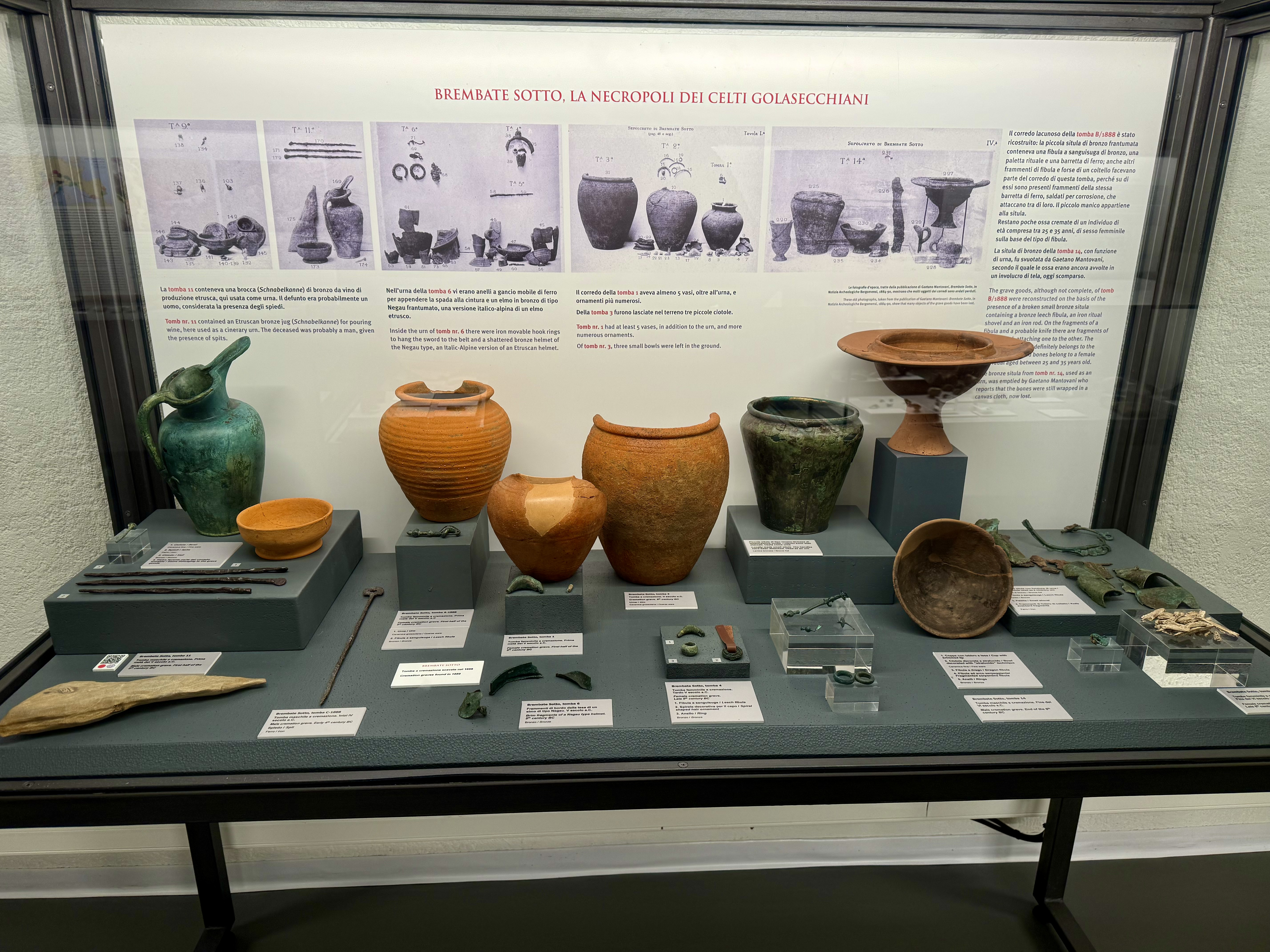
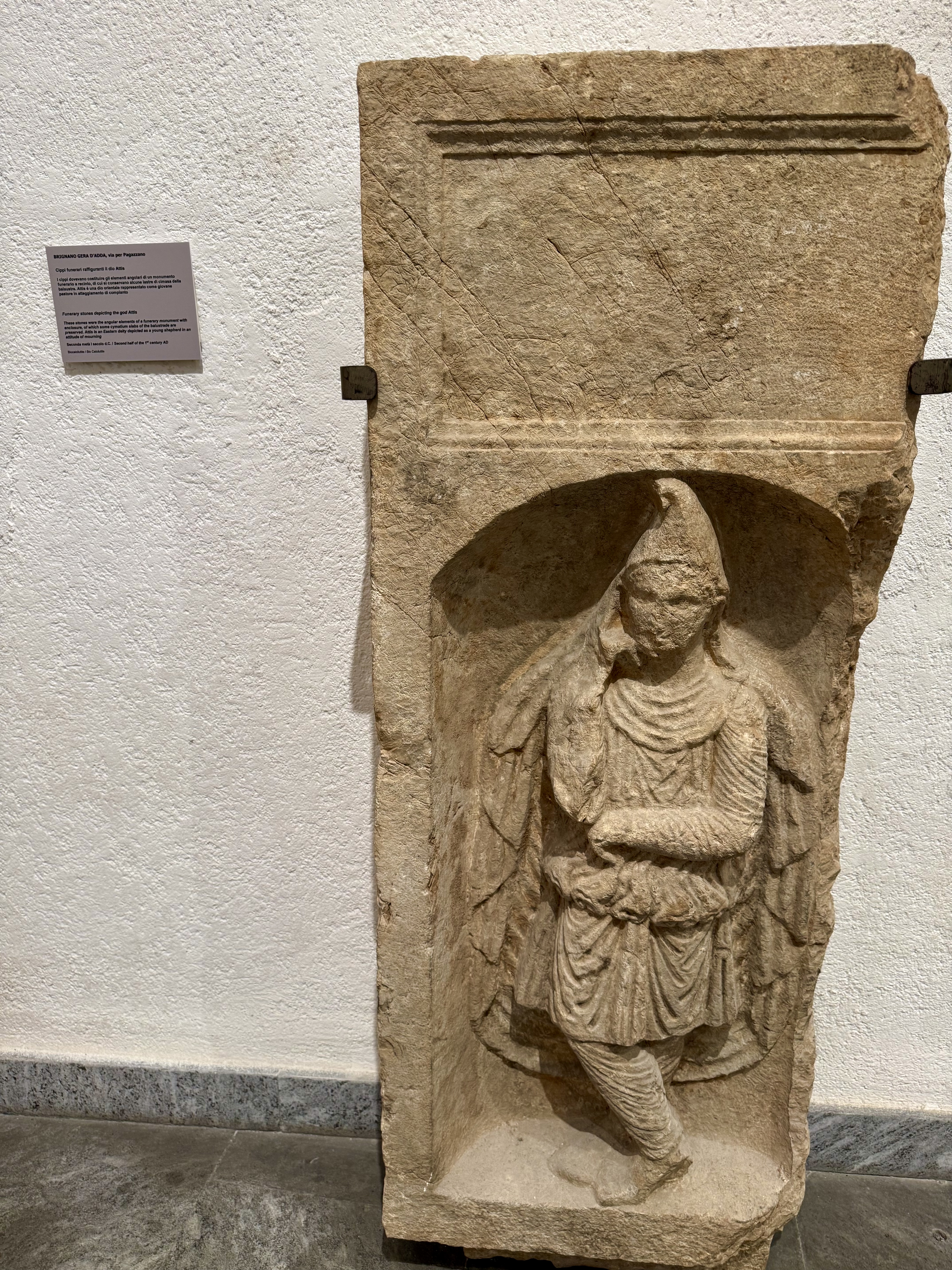
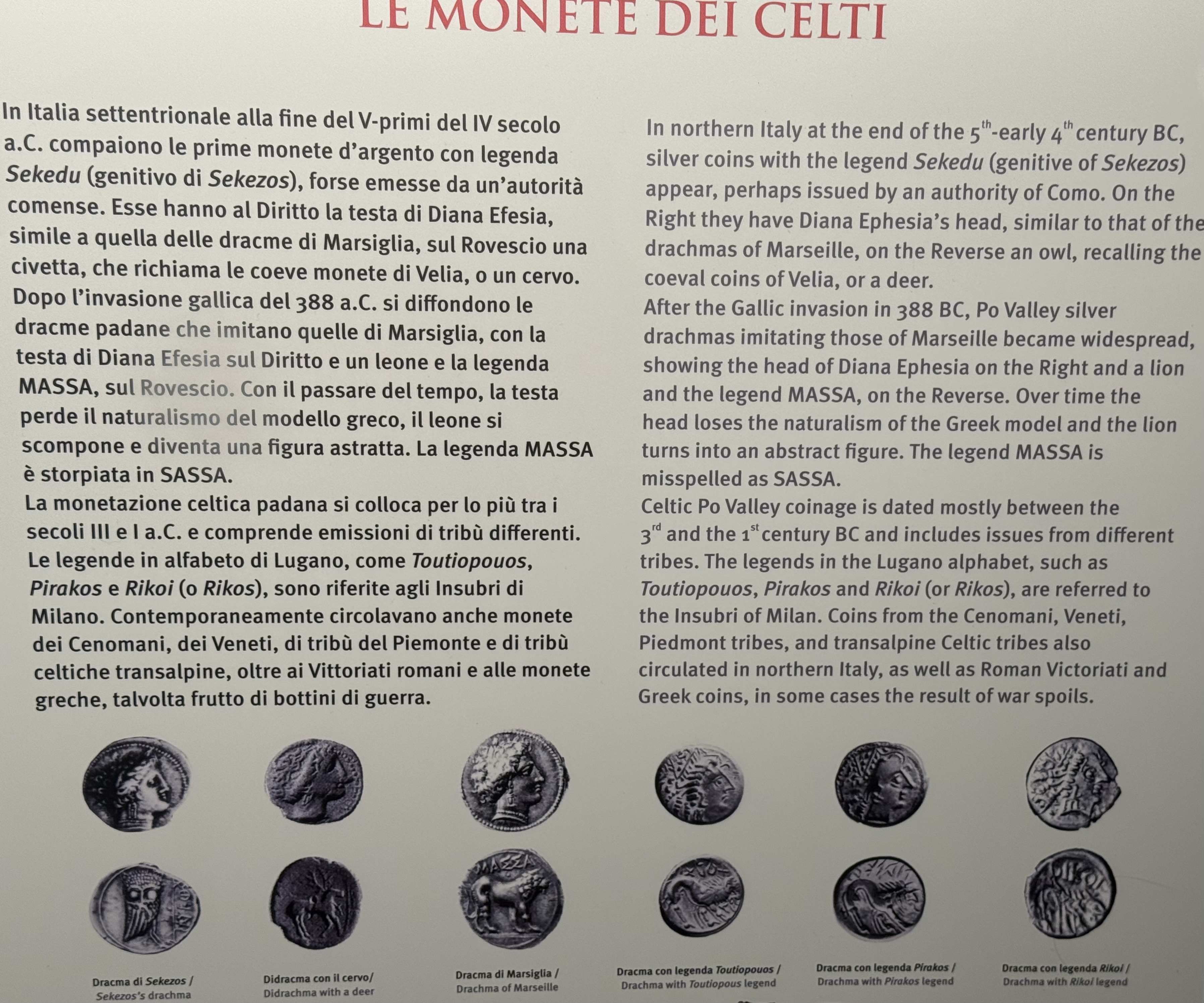
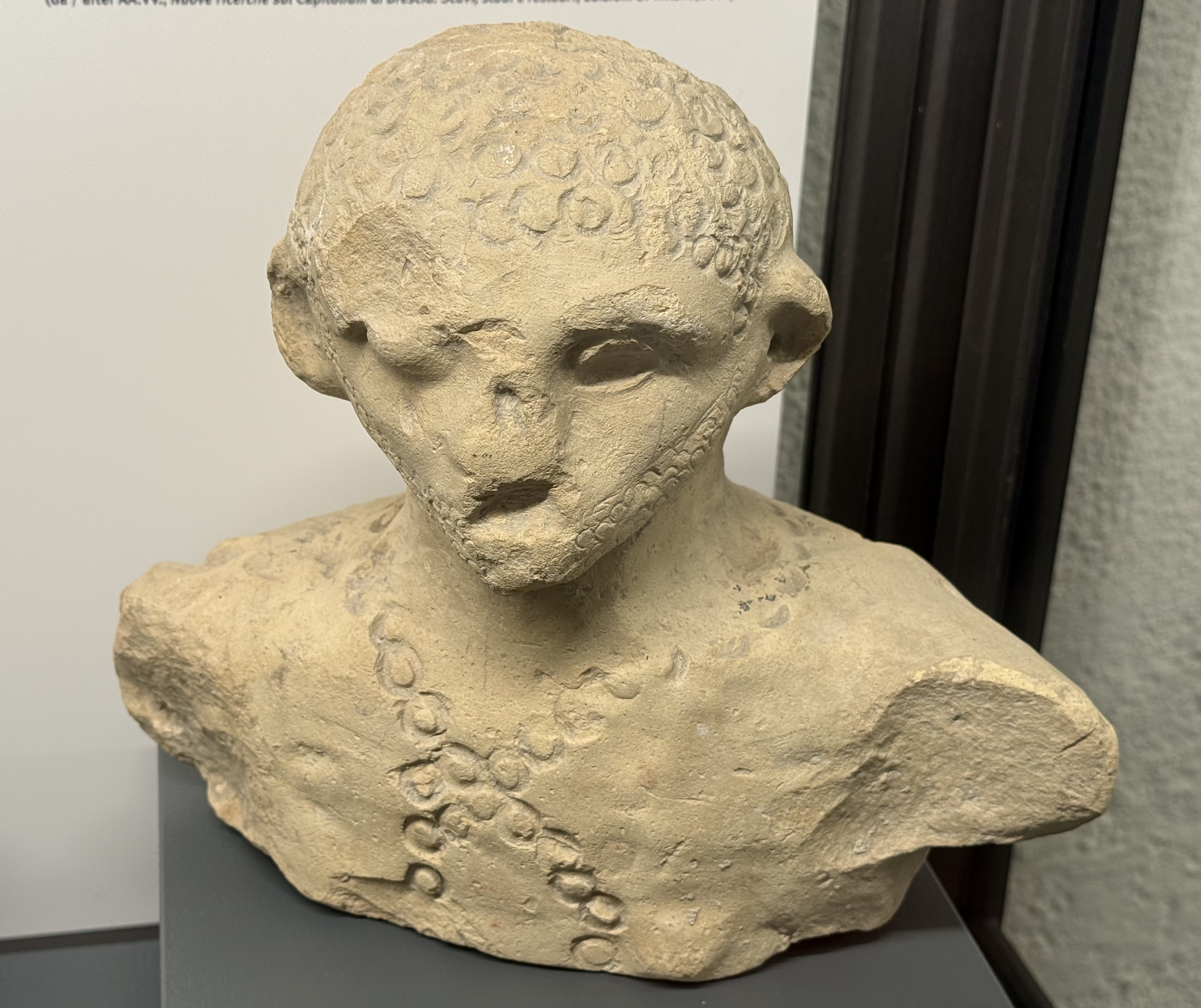
The archeological museum in Bergamo is not particularly large, but it is excellent. The descriptions, in both Italian and English, are clear and concise. I knew that the Celts had settled in the region but did not know the extent of their territory nor how they fit with the later invaders, the Romans and Gauls. I was also surprised to find Attis statues, indicating worship to the goddess Cybele this far north, as well as references to Mithric worship. The museum also has a number of Celtic and Roman coins with images of goddesses from both traditions. One of the statues in the museum was actually found in the Capitolium in Brescia; it was of the Celtic god Bergamus, from which the town of Bergamo derives its name. Clearly, the trade routes between the two cities are ancient.
The other museum, which I found particularly interesting, was the small two room Donizetti Museum. It houses some of his manuscripts and images from original productions as well as paintings of the composer at various points in his life.

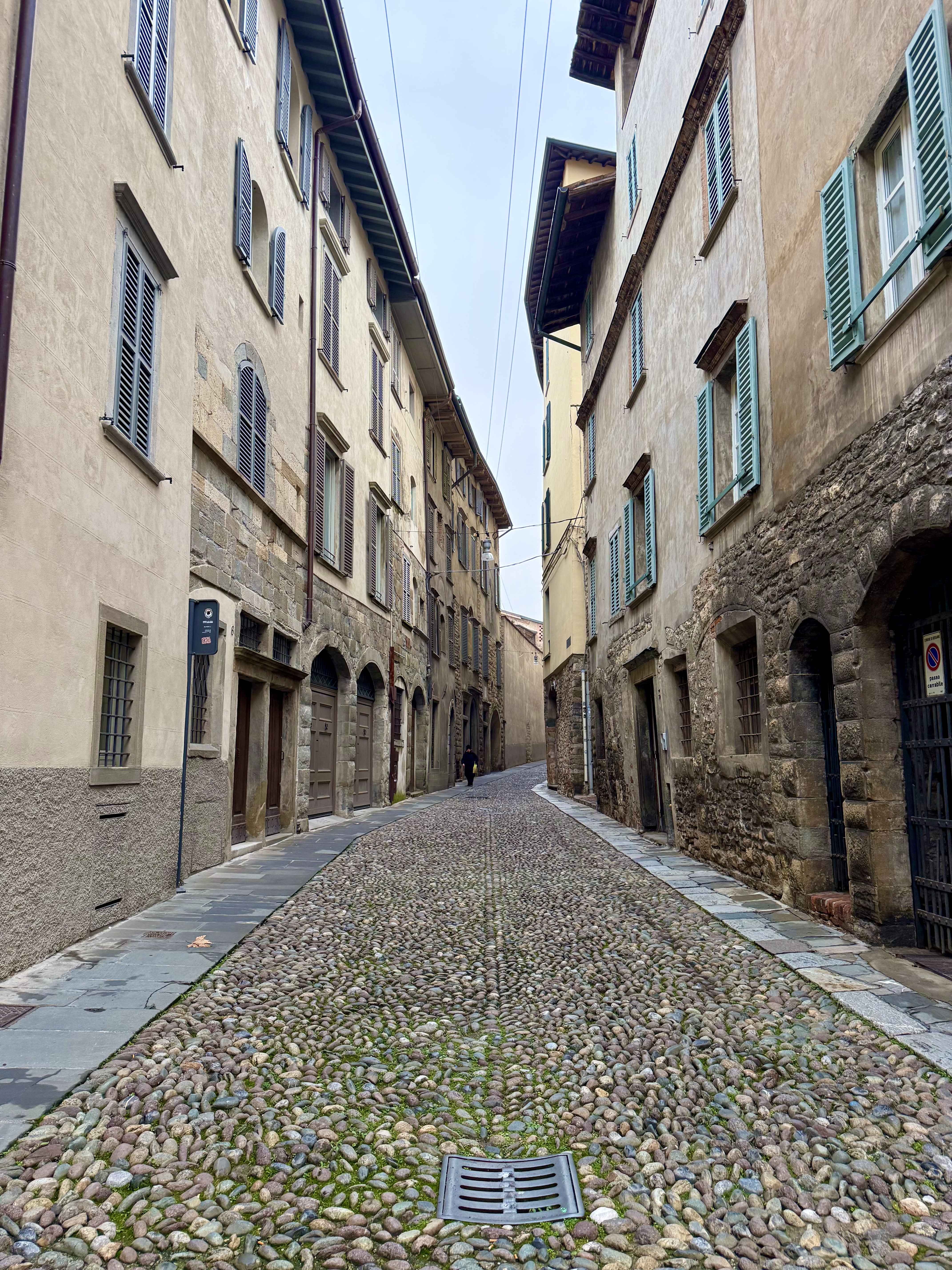
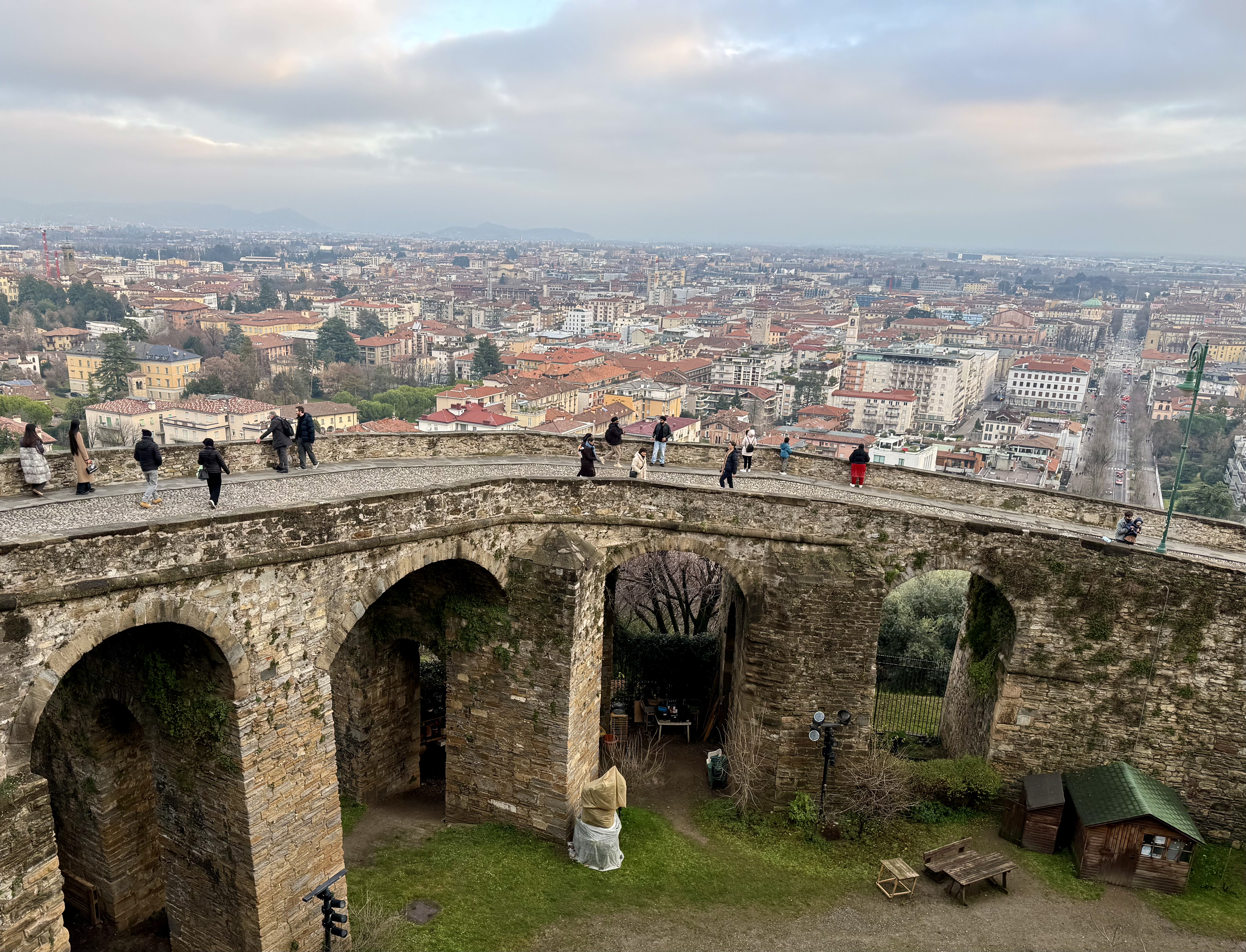
The walk back down to the new town offered a view of the city below as the clouds had parted enough for some visibility. Bergamo is a fascinating city, both with the vibrant new city and impressive Alta Bergamo.
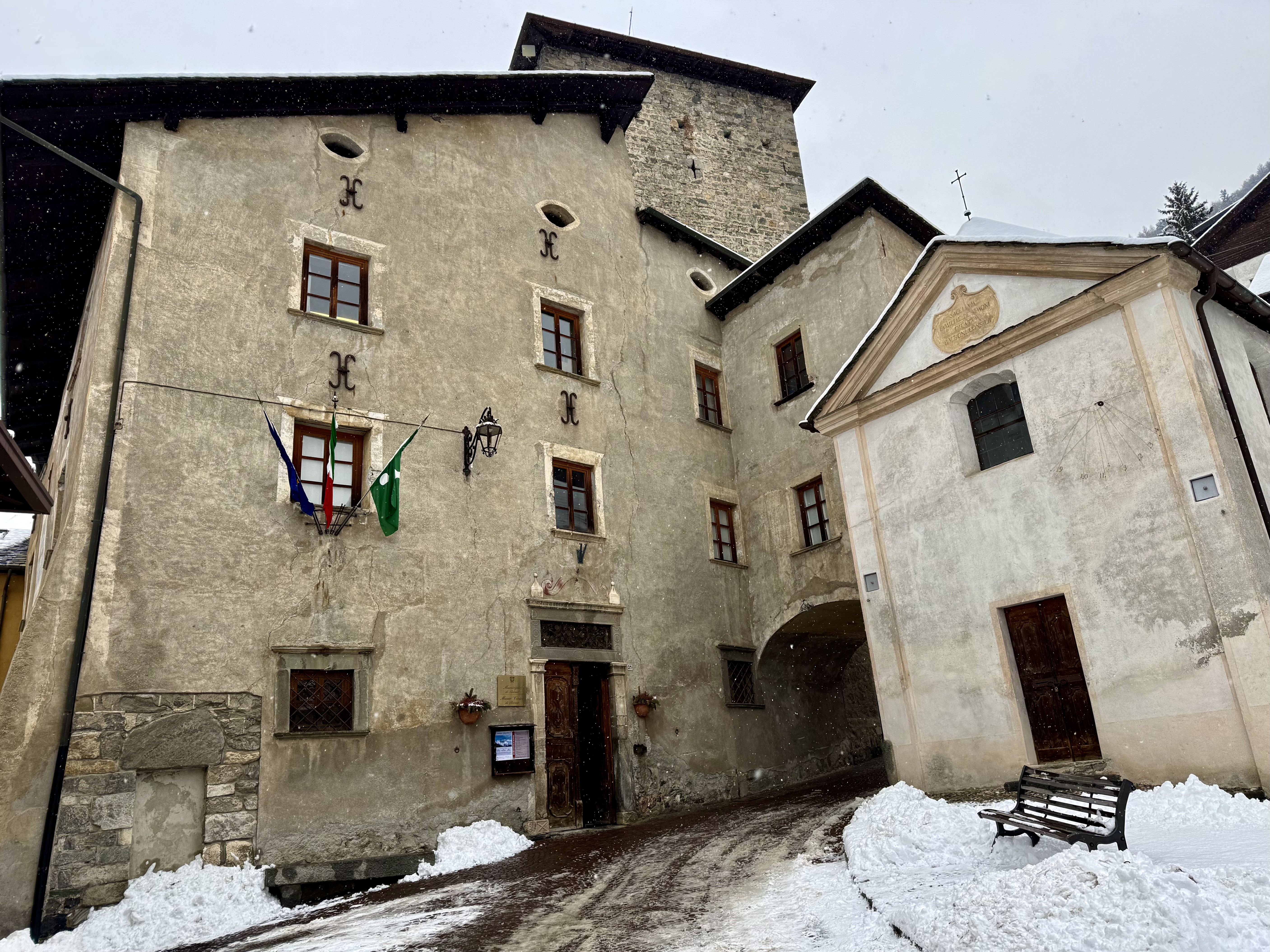
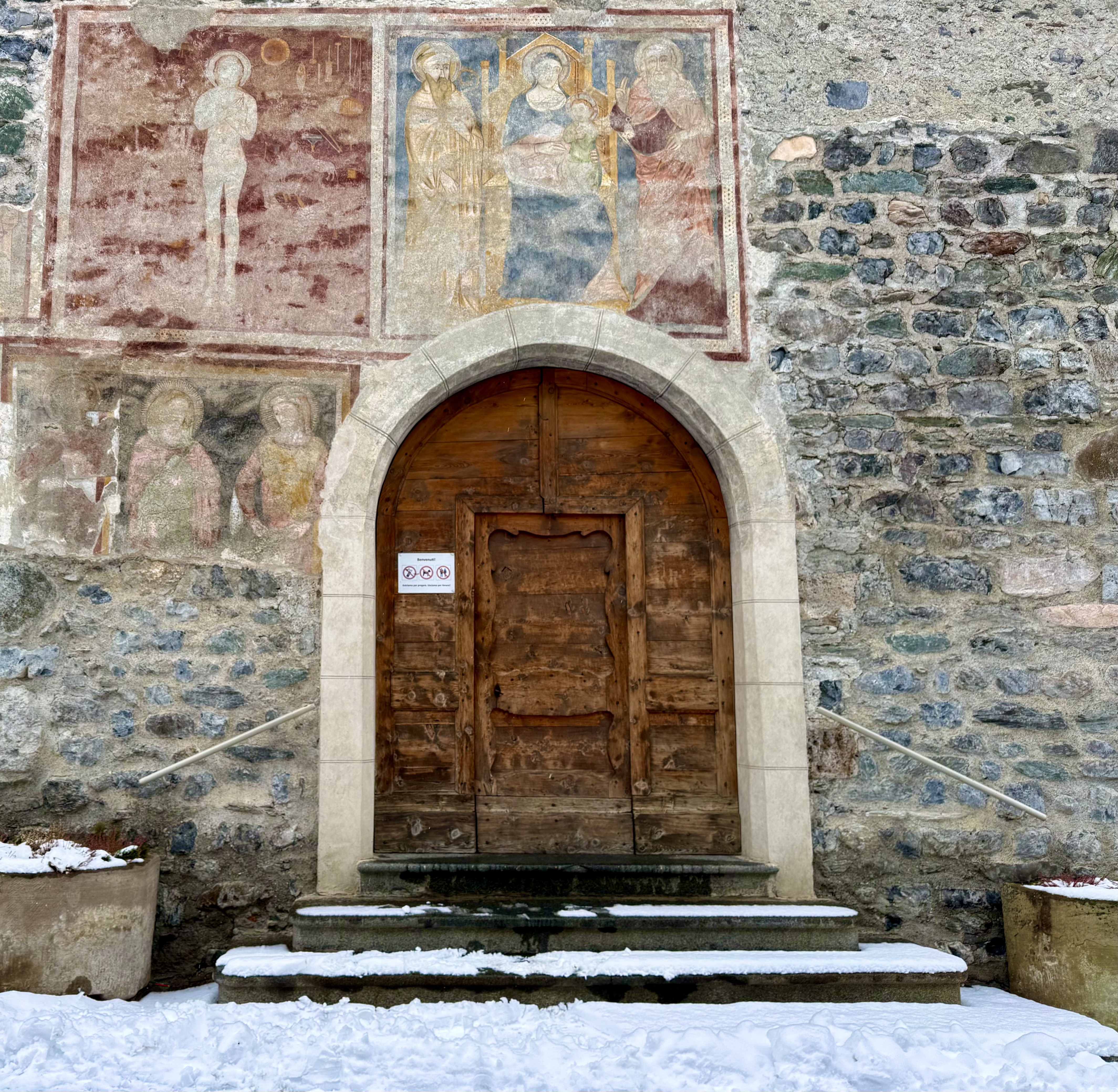
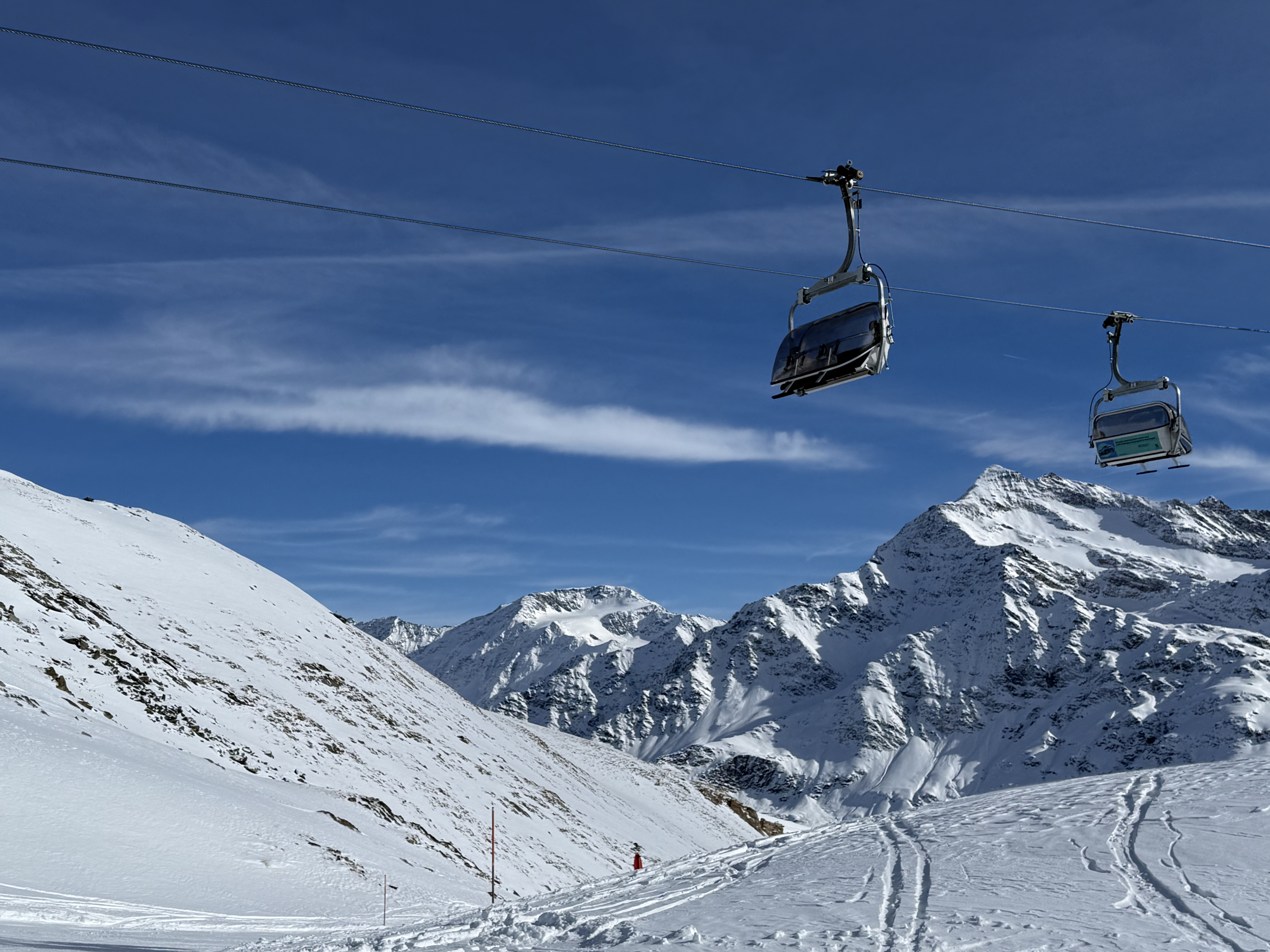
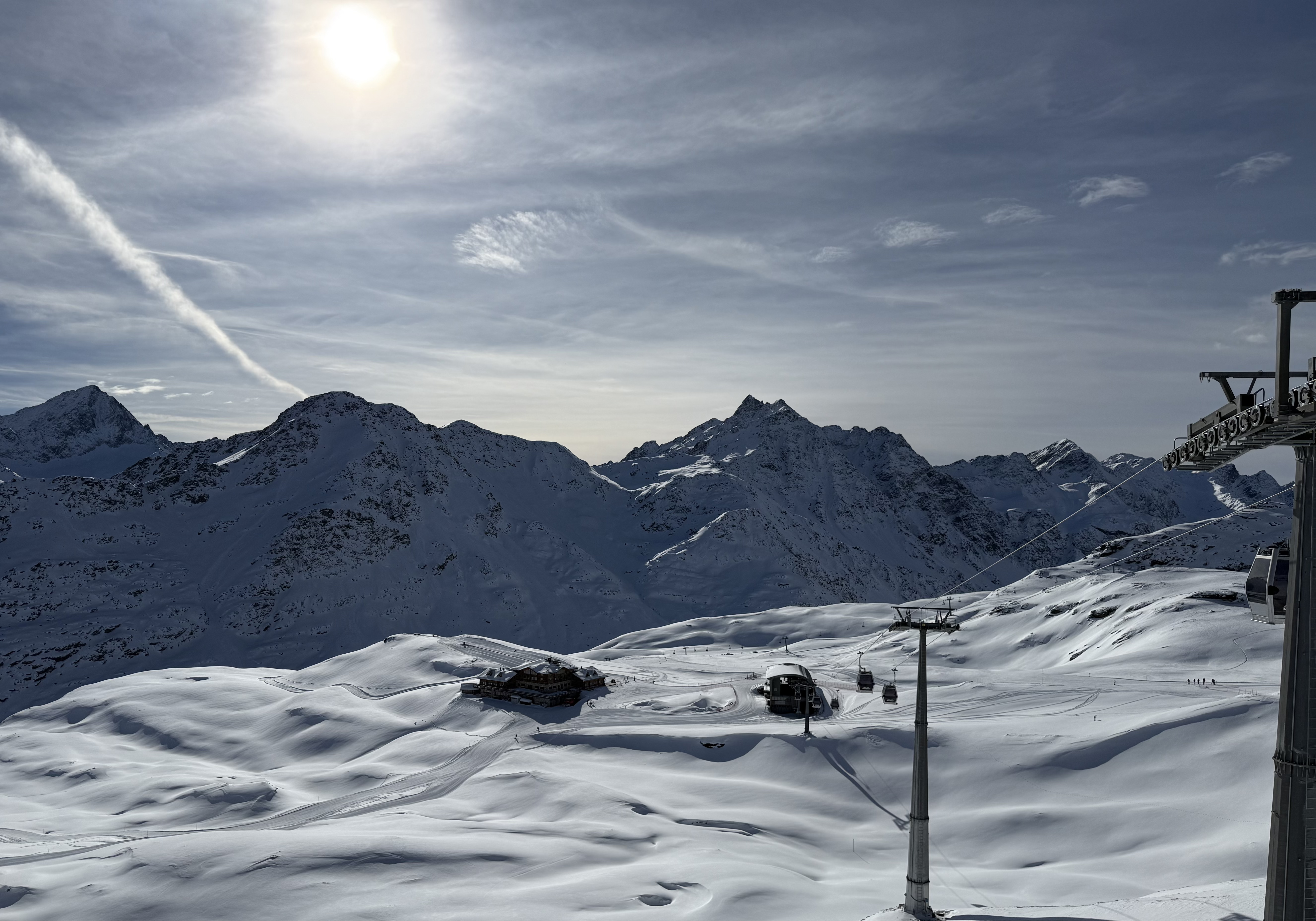
From Bergamo, I headed north to Bormio and Santa Catarina, where I was staying to ski. The drive took about three hours due to detours and construction. Traffic during the Olympics is going to be tricky! I went directly to Santa Catarina and spent the next day on the slopes. The weather turned the following day and as it was snowing, I took the bus into Bormio. I’d been here in the summer many years ago after crossing the Ortler Pass, which luckily is closed in the winter as it would be too dangerous on all the very tight hairpin turns with the ice and snow. From Santa Catarina, it is just downhill to Bormio and the bus made the trip easy. The ca. 20-minute journey cost E3 each way. If one comes with the car, there is parking near the old town as well as across the river near the Olympic venues. There are still remnants of the old Roman baths in the old town, but the majority of the architecture is from about 1100 on, with some from a bit earlier. The town has changed since I was there, not the architecture, but the shops and generally atmosphere, which is now much more geared towards international tourists than it was a few decades ago. A few things haven’t changed, however, and that includes the impressive old towers and churches.
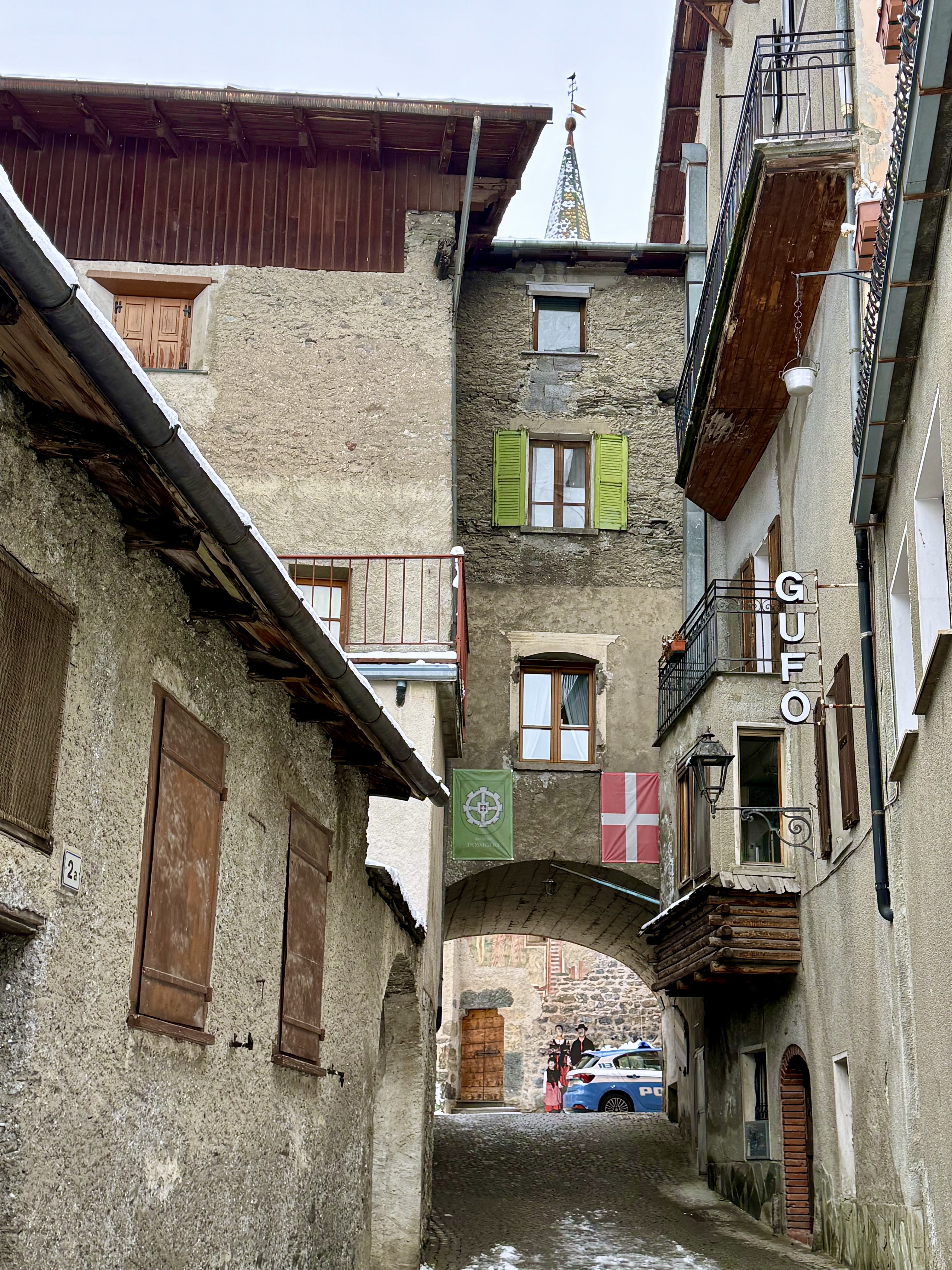
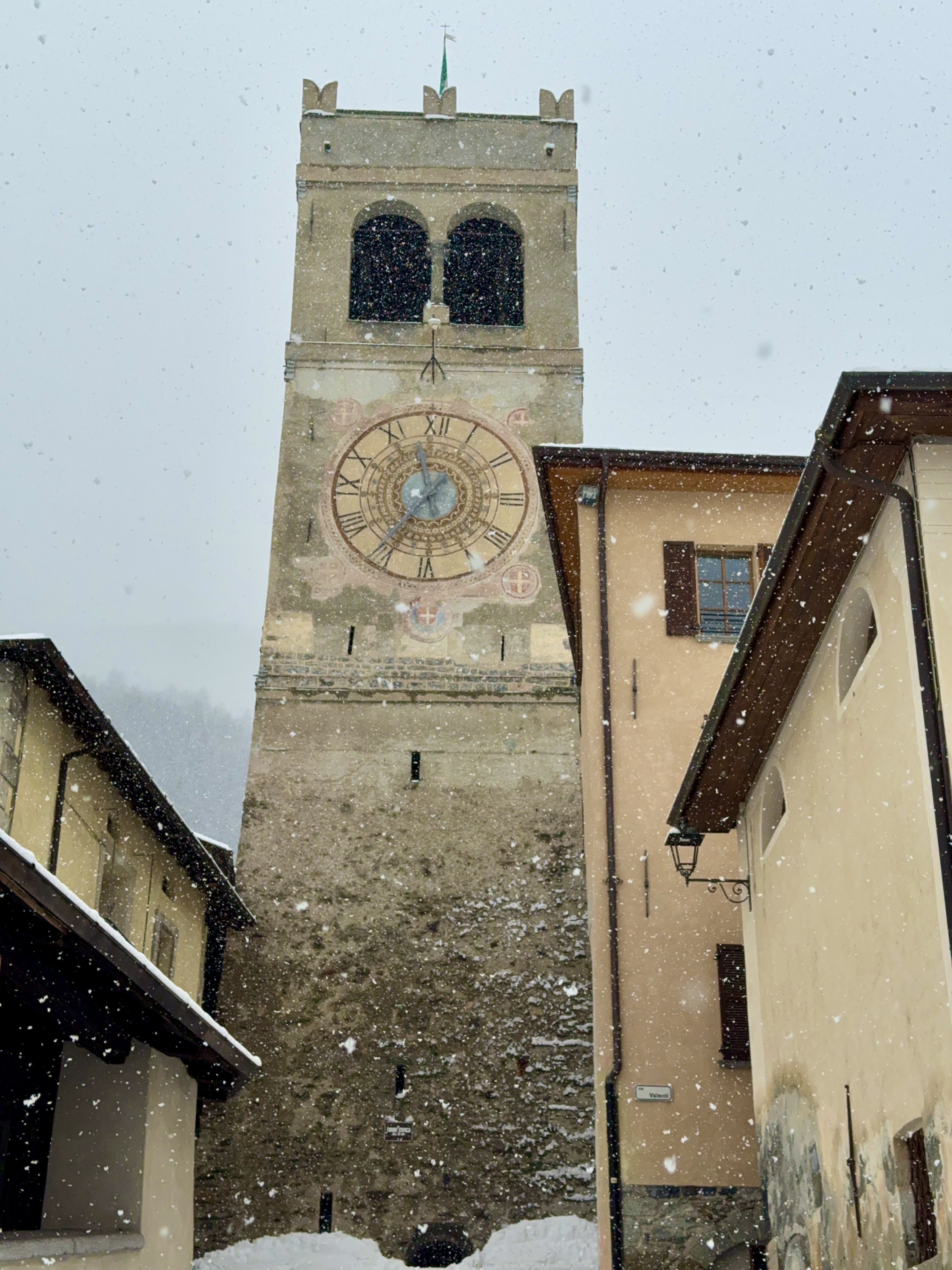
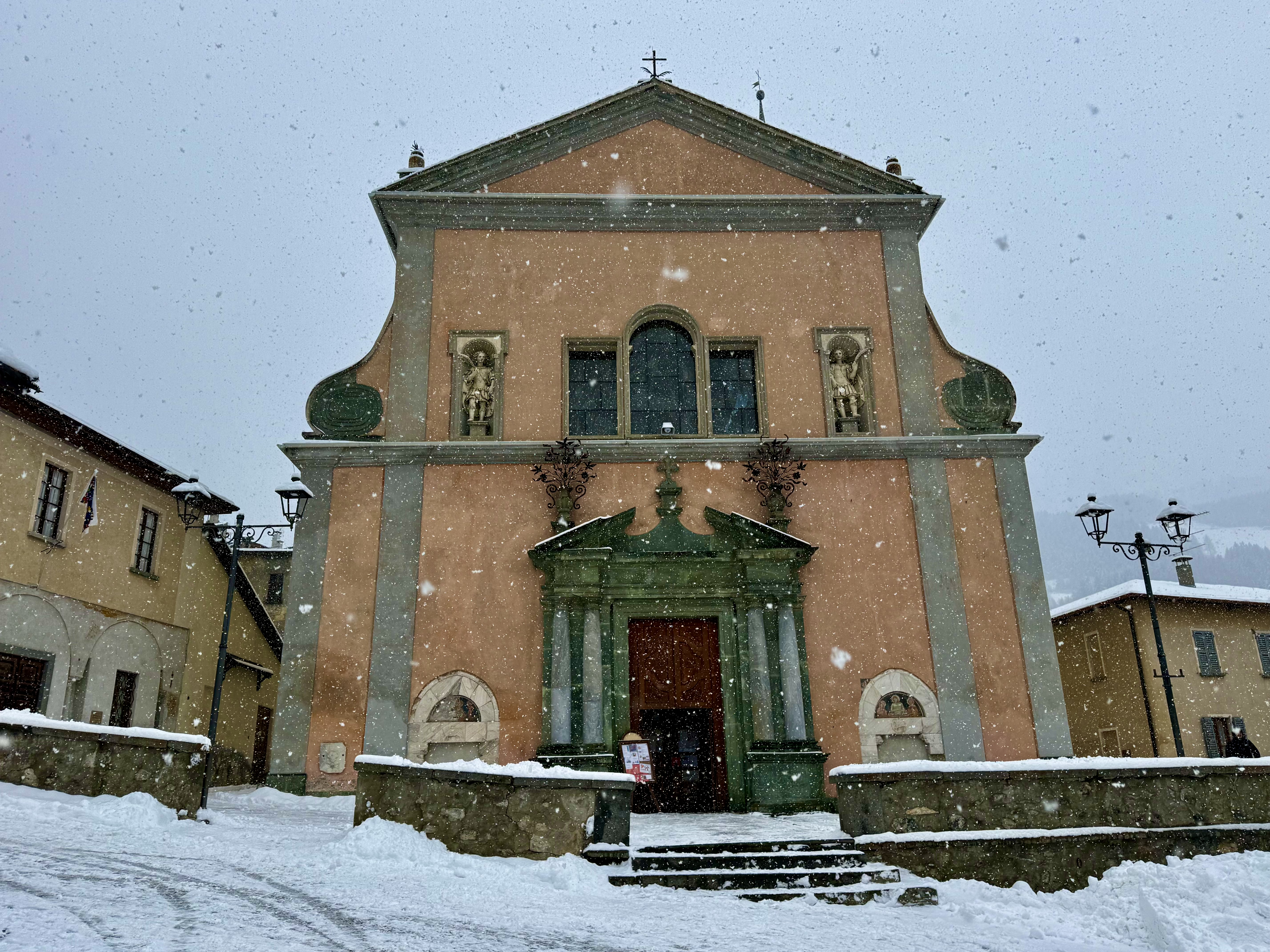
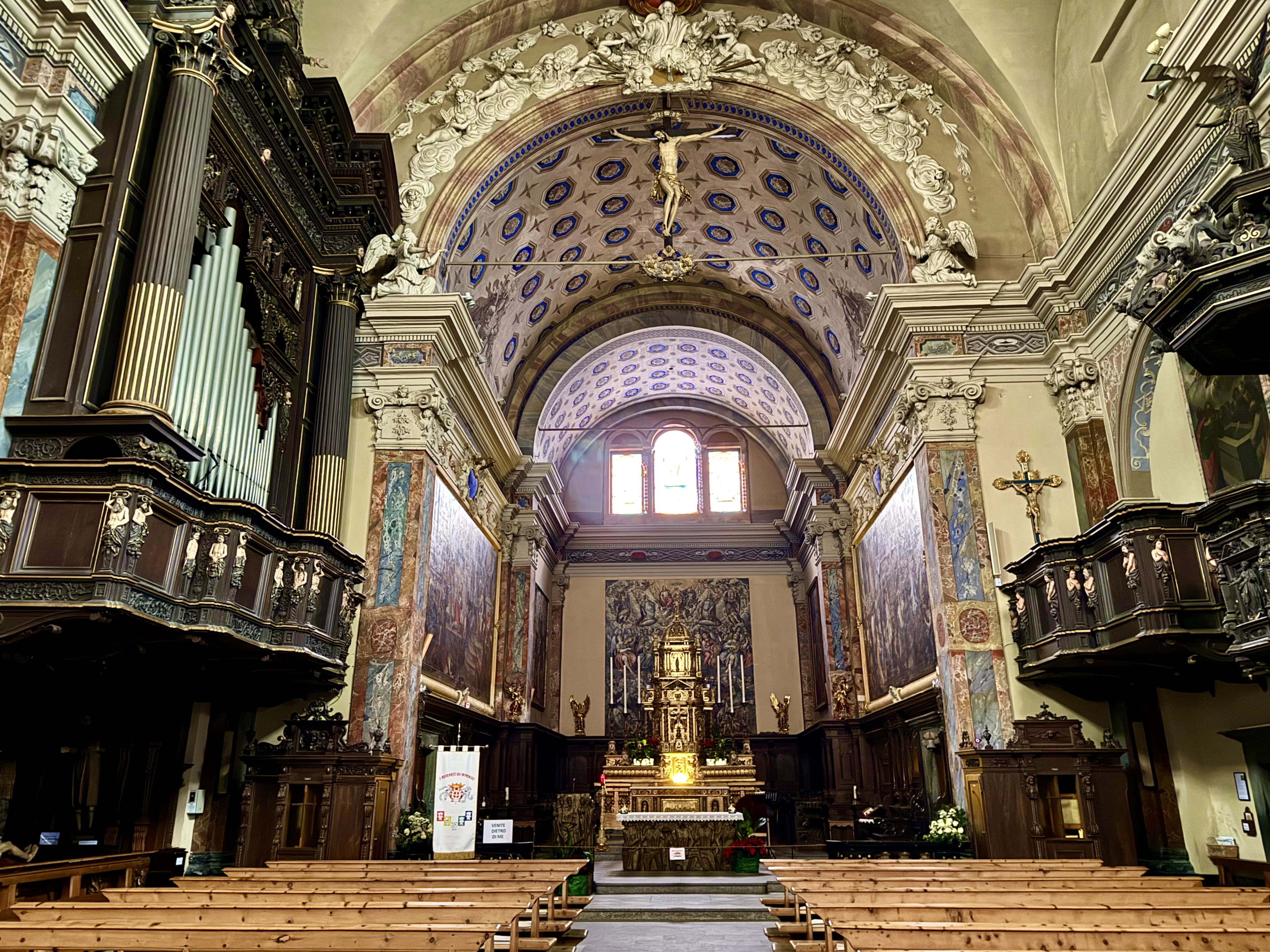
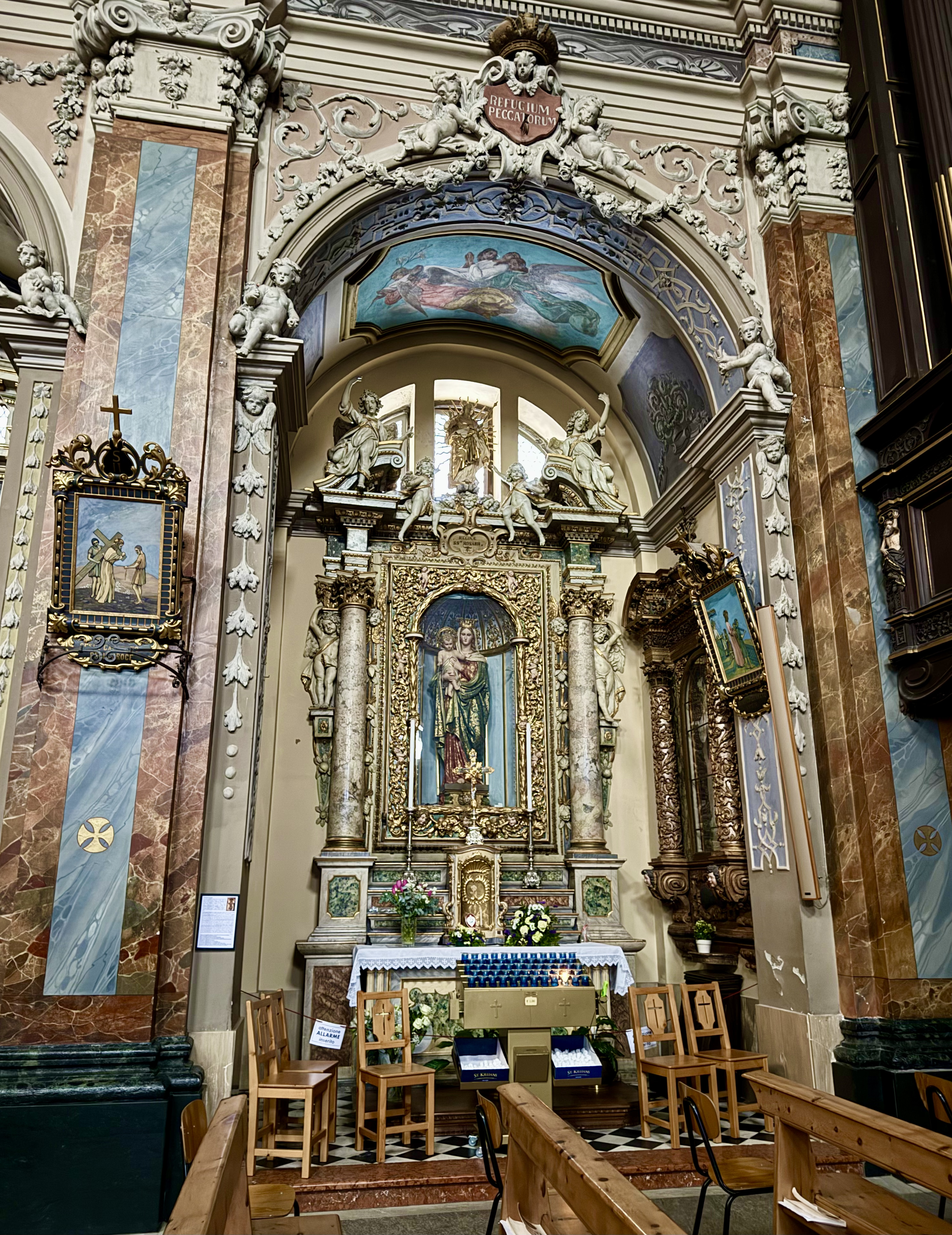
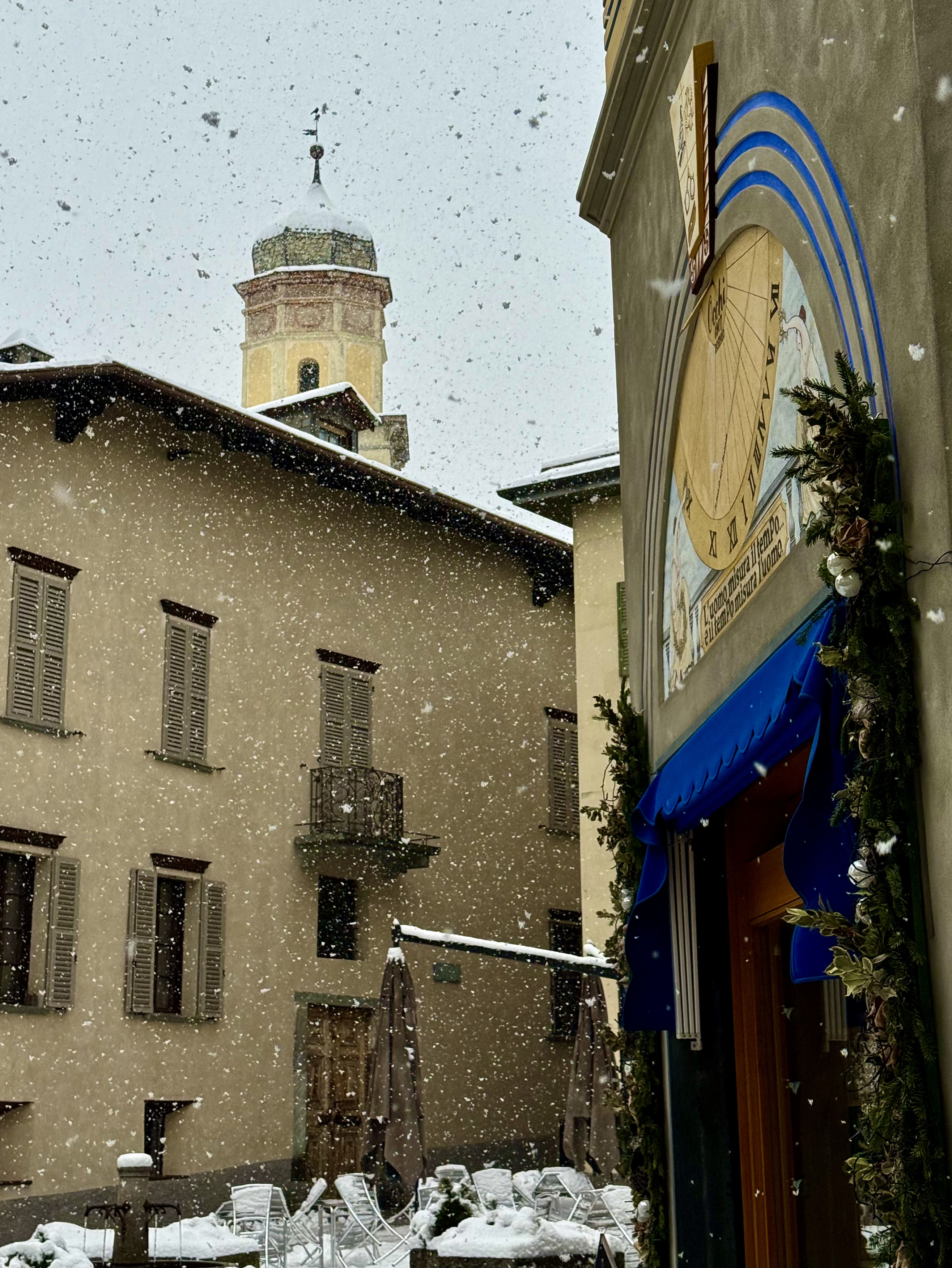
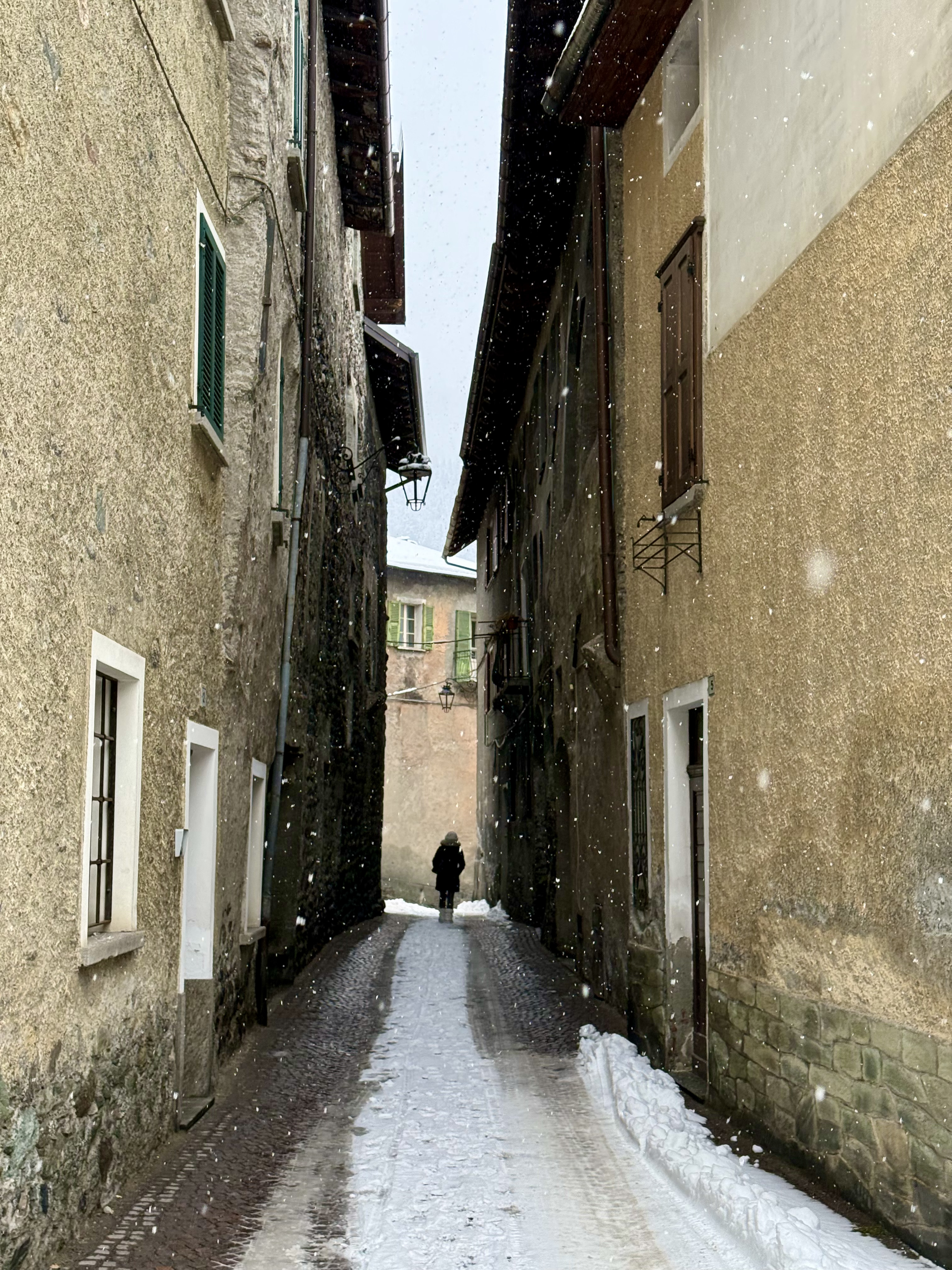
On my way back to Austria, I crossed over the Passo Foscagni to Livigno, which is where the Freestyle and Mogul competitions for the 2026 Olympics will be held. As I crossed the pass, on an excellent road, but one where passing trucks is quite difficult, I couldn’t help but wonder again what the traffic will be like for the Olympics or during the summer. As it was, the snow and ice had been cleared enough by the snowplows that the driving was fine in a Subaru. From Livigno, the drive passes through the Swiss National Park, before arriving at the Austrian border. Unfortunately, I don’t have any photos of the park as it was snowing, and the visibility wasn’t particularly good.
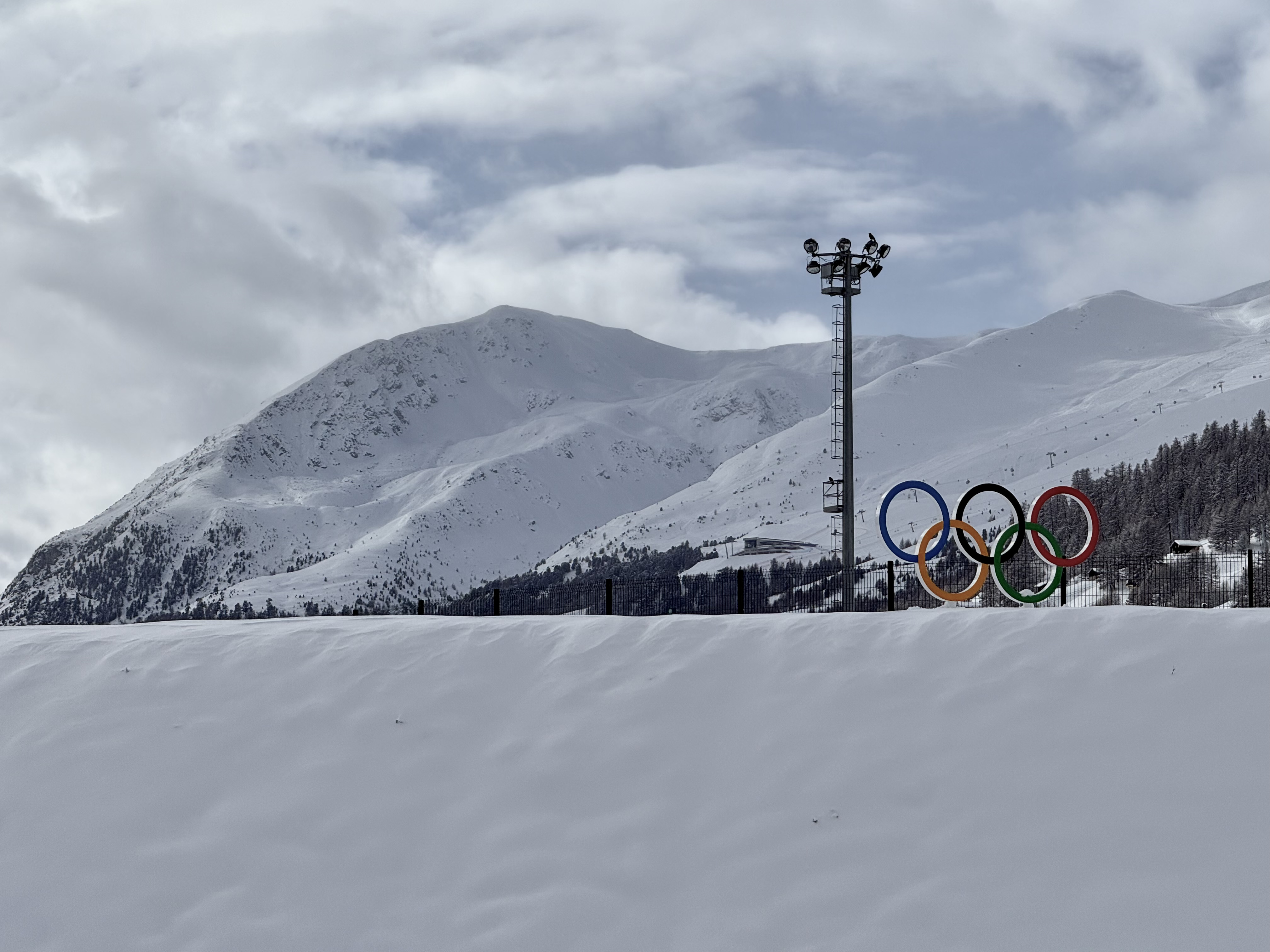
The three Bs in Northern Italy that I visited on this trip, share a Celtic, Roman, Gaulic and very Catholic medieval heritage, but each showcases that heritage in their own way. Brescia integrates the past into the present, Bergamo showcases the past on the hill above the commercial area, and Bormio fuses past and present within the buildings of the old town, while constructing very modern facilities across the river. Brescia and Bergamo are real cities, whereas Bormio remains a relatively small mountain town. Santa Catarina further up the mountain exists primarily for ski and mountain bike holiday tourists – & the mountains of the Lombardy are spectacular.
 omegoodyssey