Murchison Falls to Queen Elizabeth National Park and the Rwenzoris
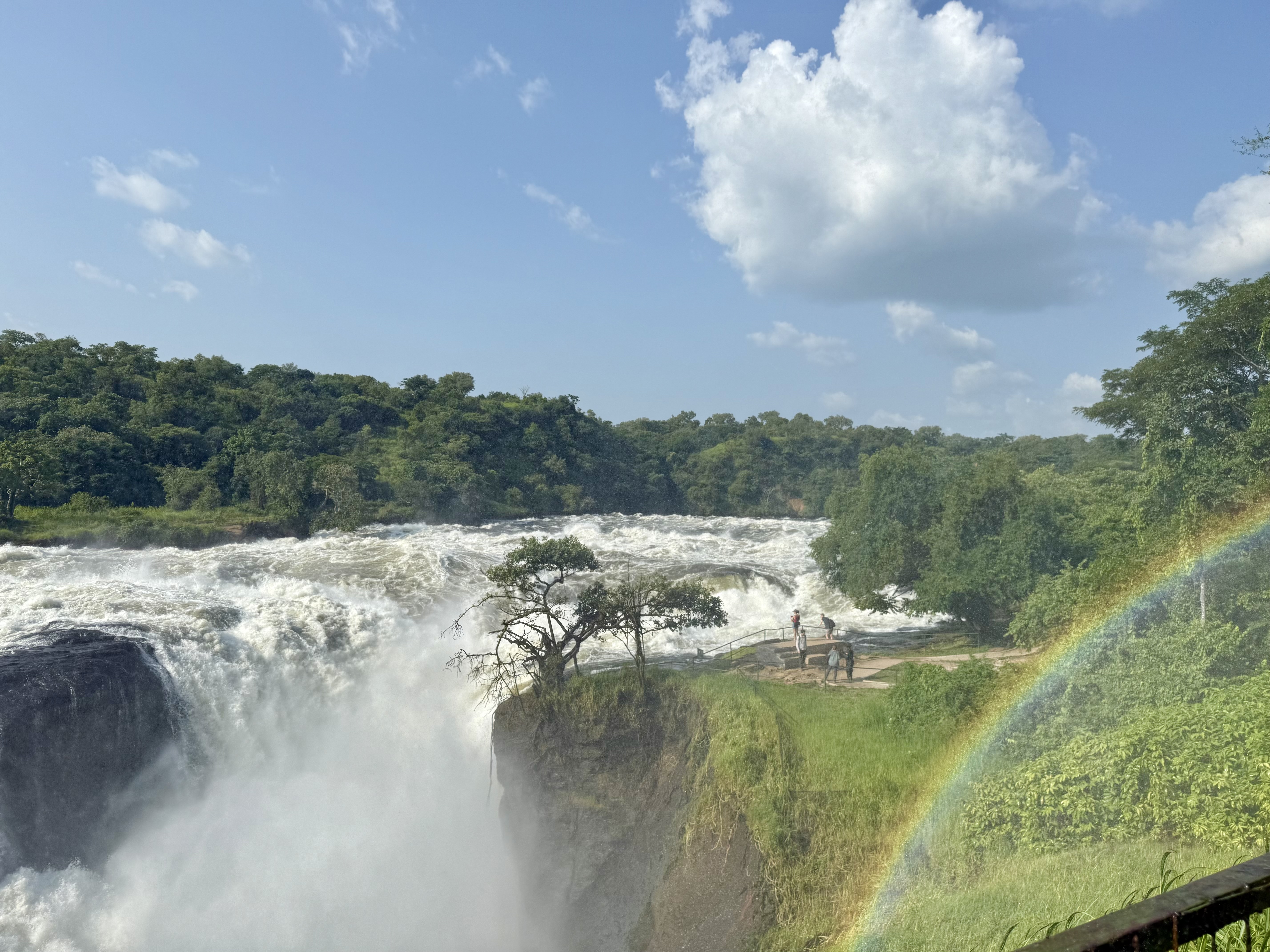
From the Sanctuary it is only about an hour to Murchison Falls National Park. Where we spent the following day. In 1927, the National Park was named after the President of the Royal Geographic Society, Roderick Murchison, even though he never actually visited the place. In the 1970s, Idi Amin changed the name to Kabalega, after King Kabalega of the Bunyoro, the kingdom of this region. After Idi Amin’s reign ended, the name was changed back to Murchison, although both are used. Regardless of name, this National Park is the largest in Uganda covering 3840 km (1483 mi). While the Falls on the Nile River are the main attraction, there are game drives and a river cruise that compete for interest. We had planned on stopping first at the top of the Falls before going on to the hotel, but it was late and raining, so we postponed that until the next day.
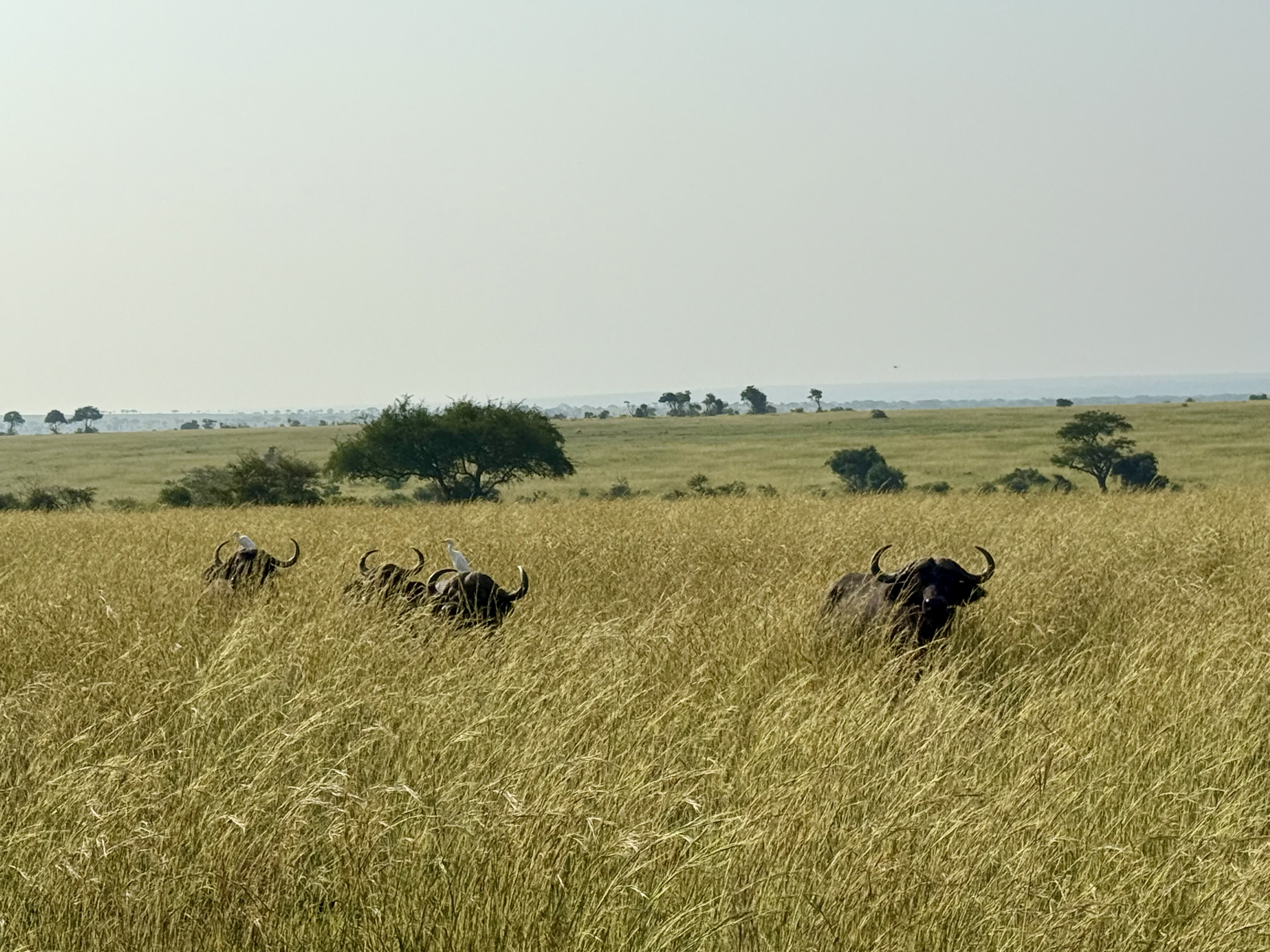
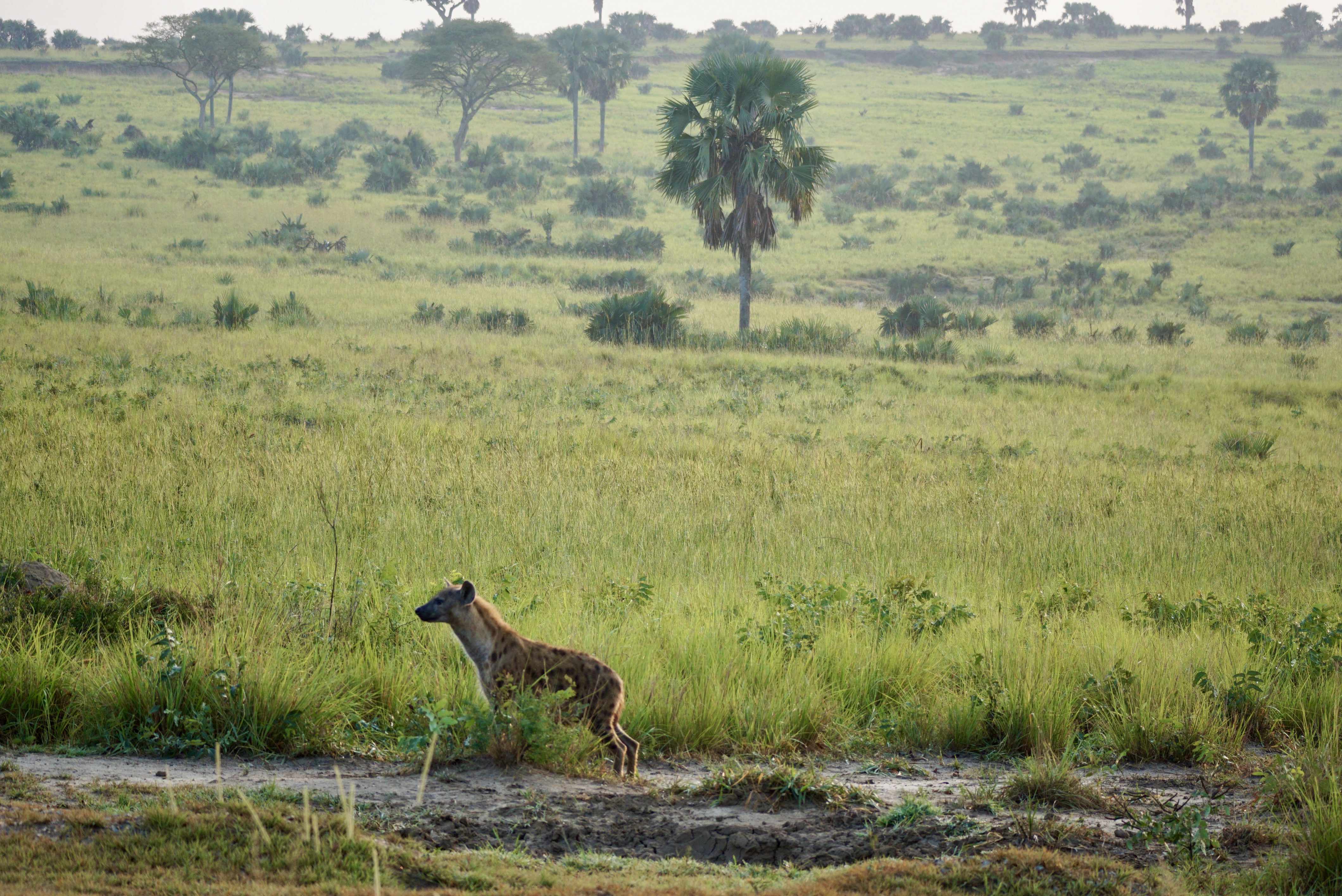
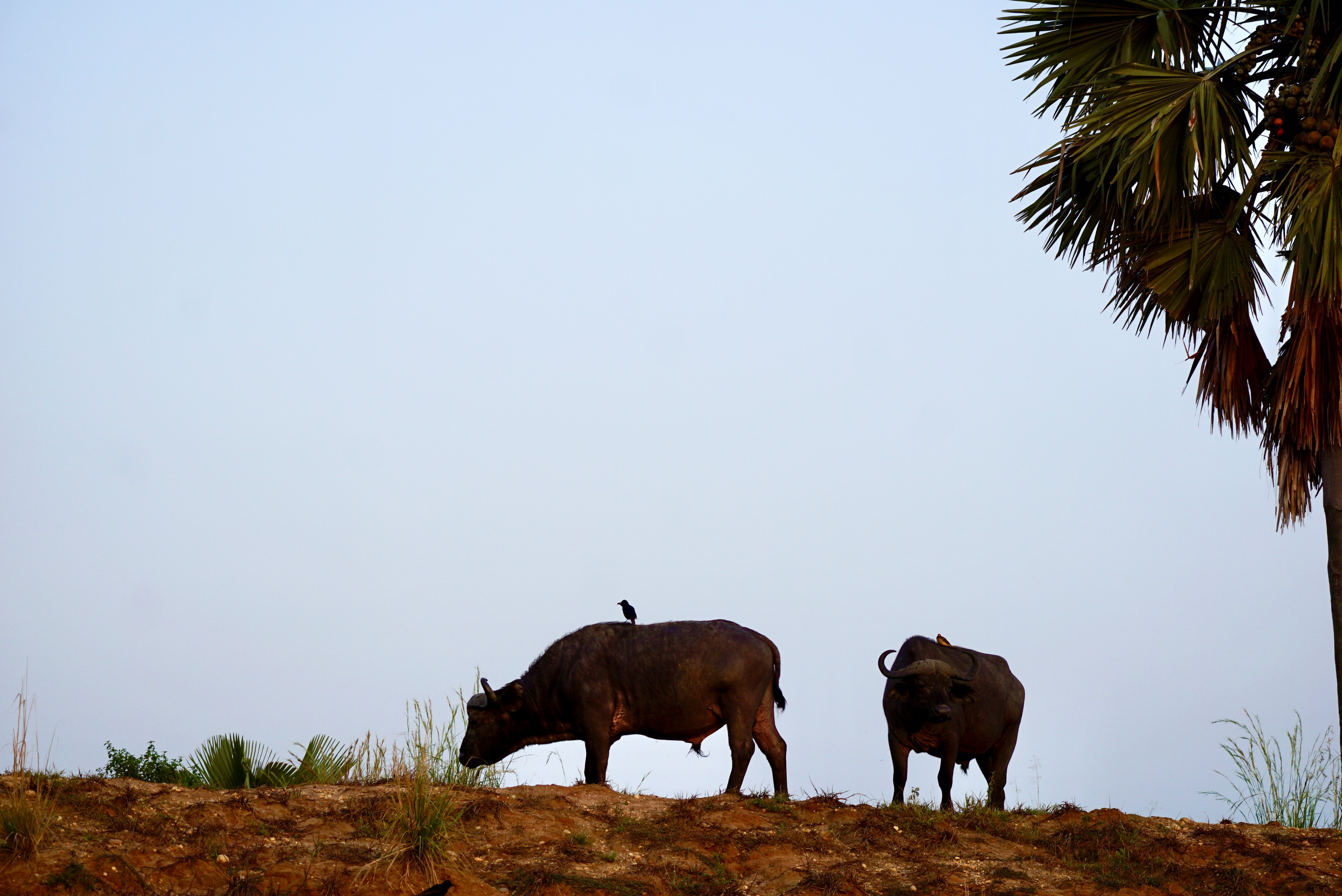
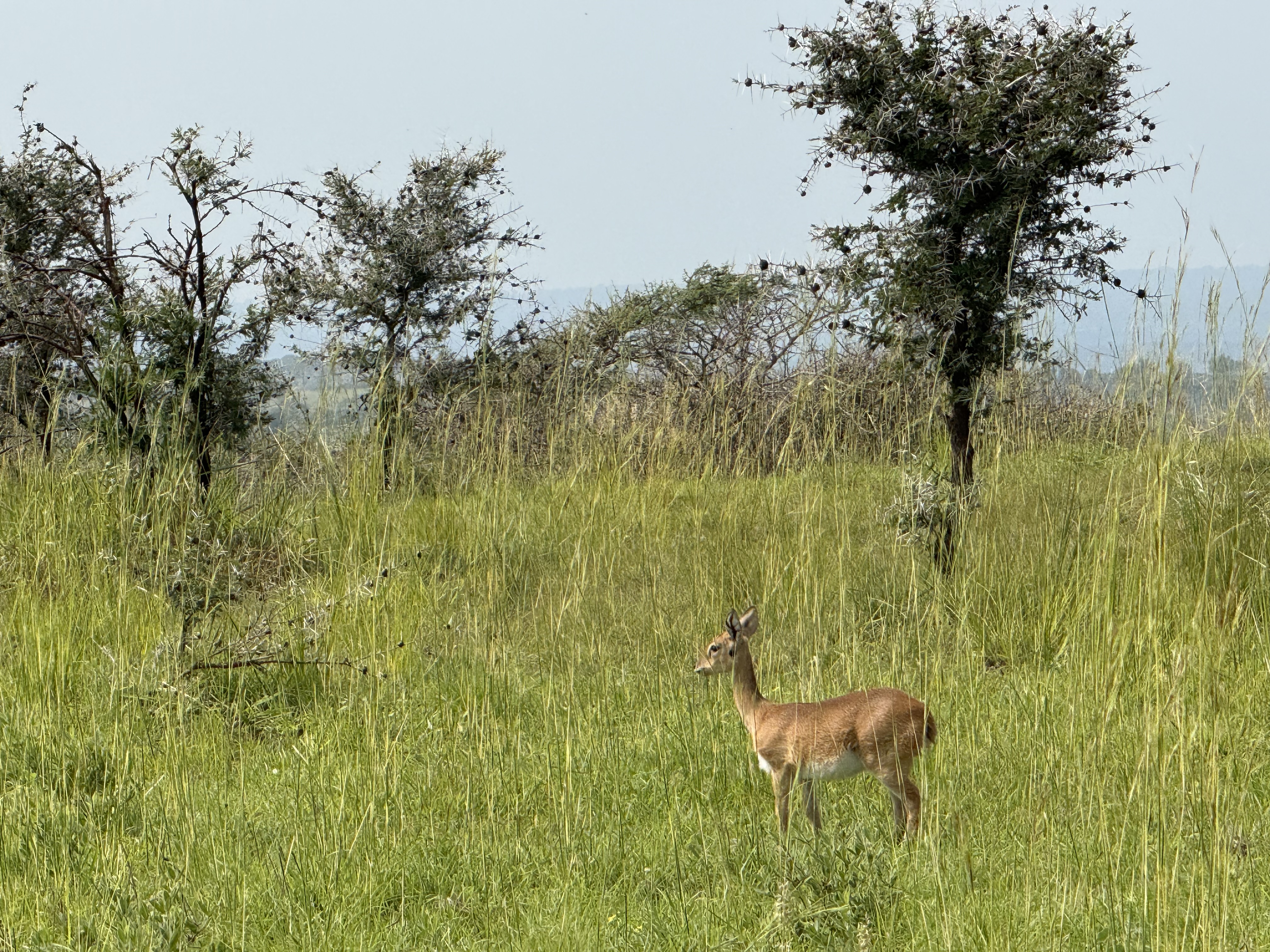
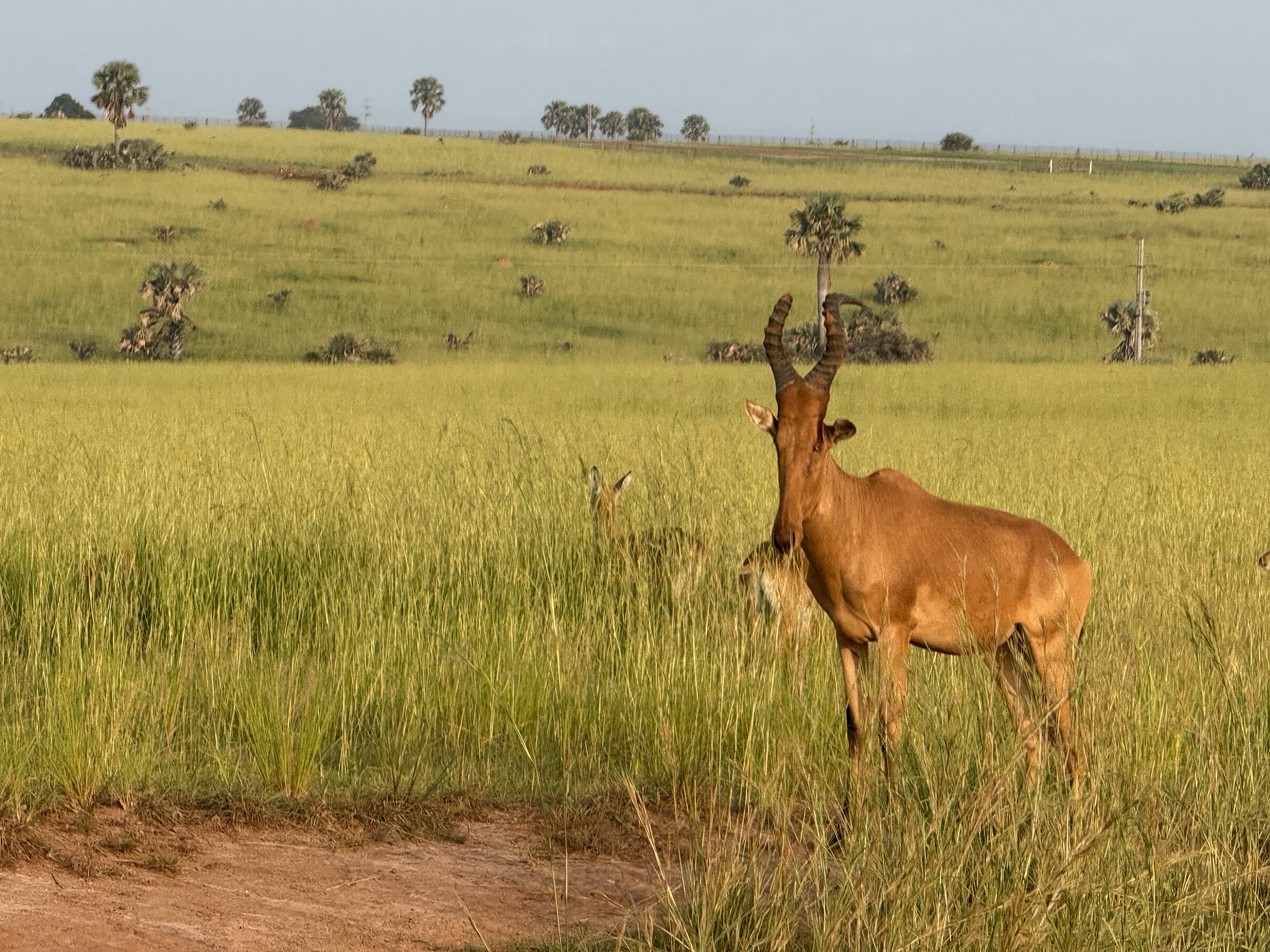
The rain stopped and the day was glorious; we were on the road for a game drive shortly before sunrise. Along the road we saw buffalo carrying their cattle egret friends, two hyenas checking each other out in the fields and then one deciding that he preferred to be alone and crossed the asphalt to the other side, herds of Ugandan kobs (which are similar to Impalas, but are a different species), and large numbers of hartebeests.
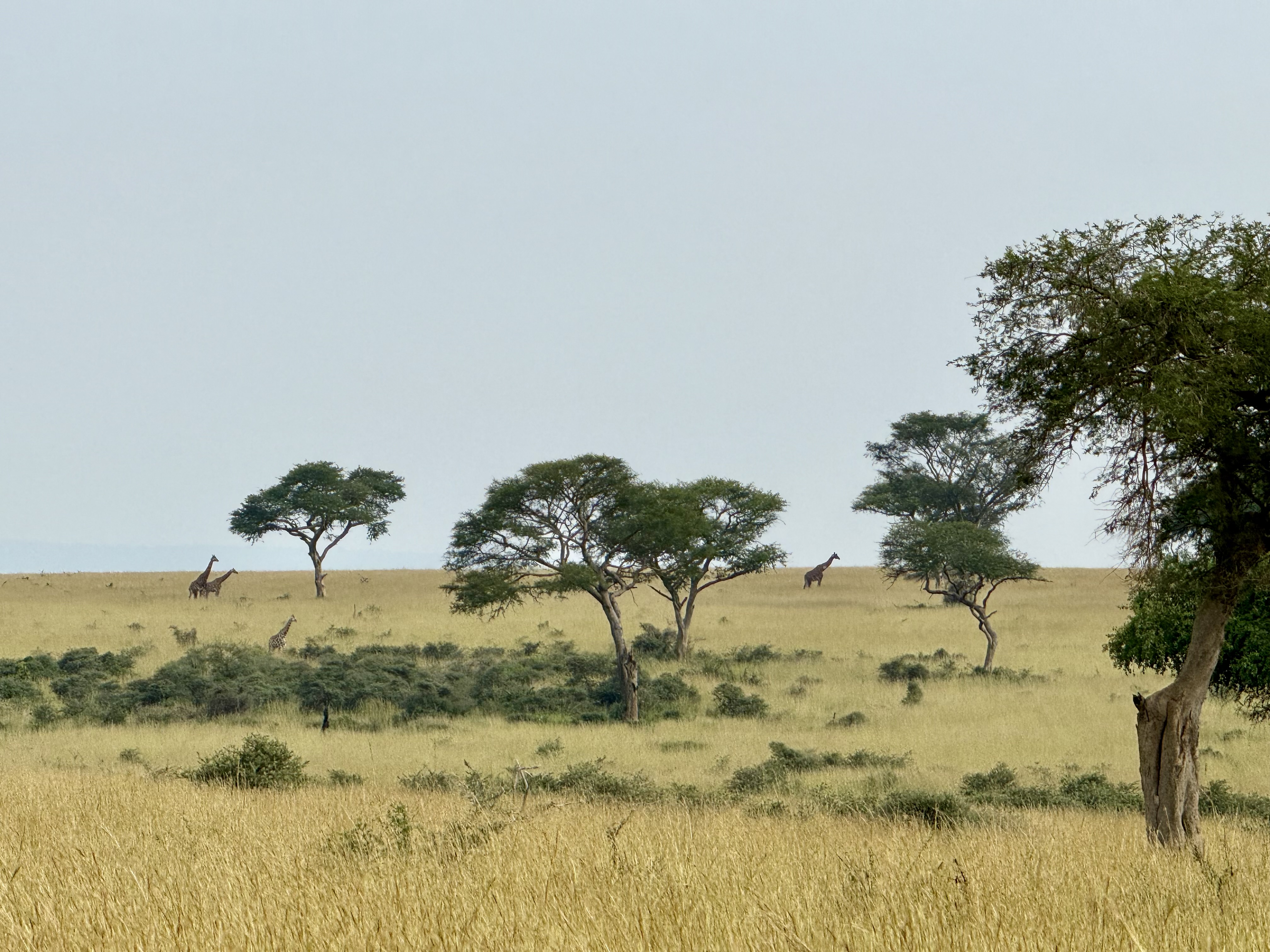
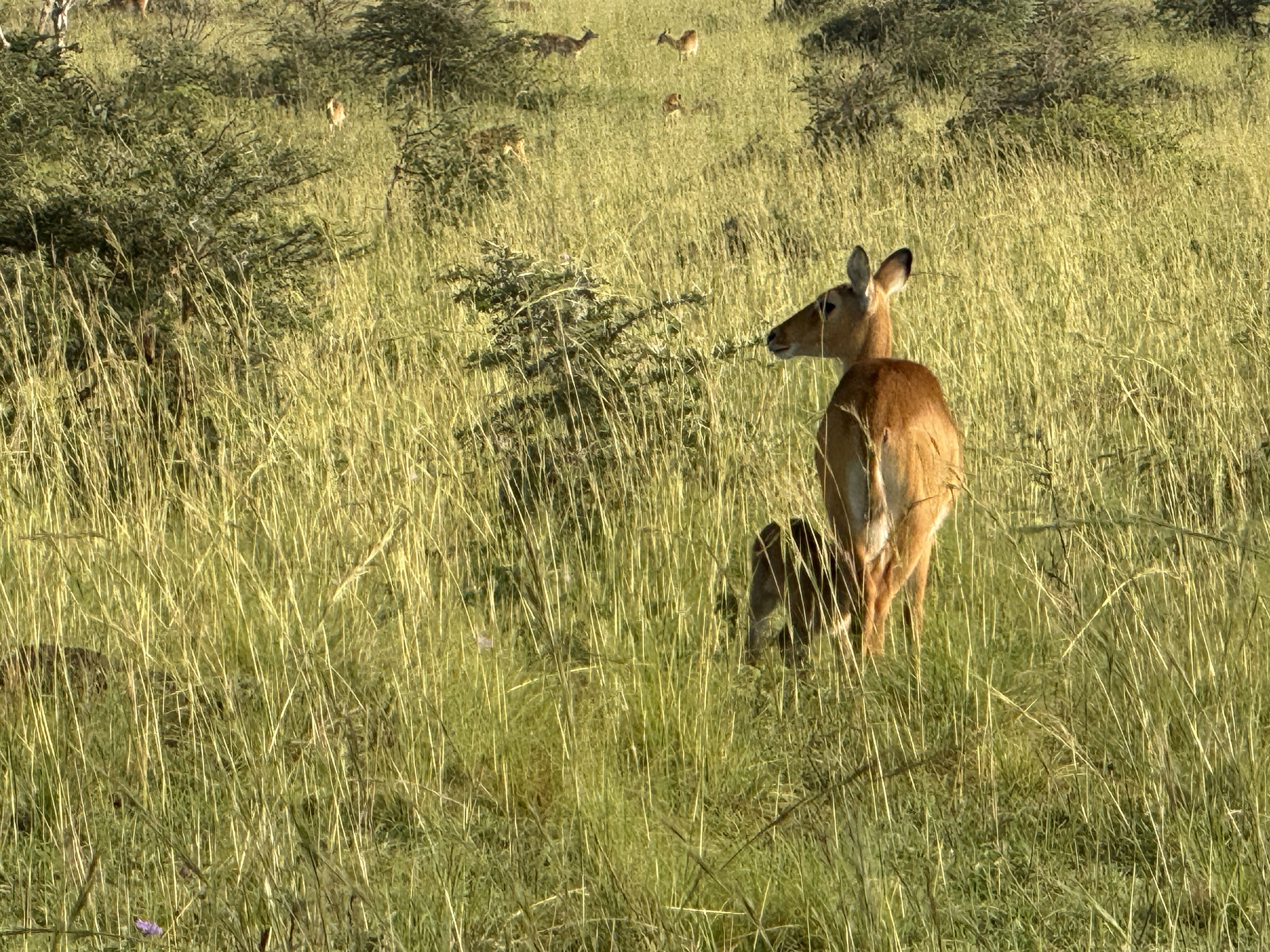
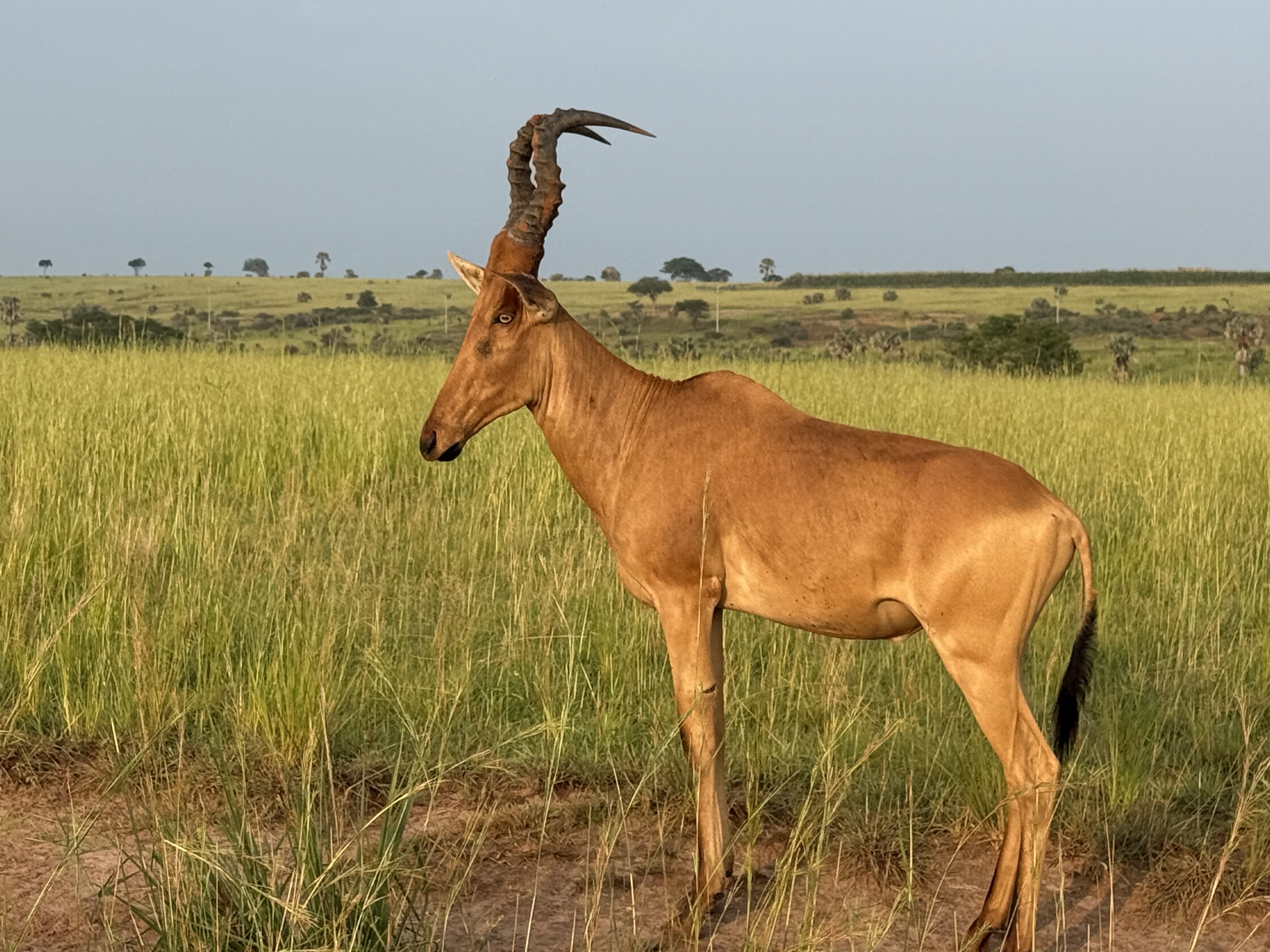
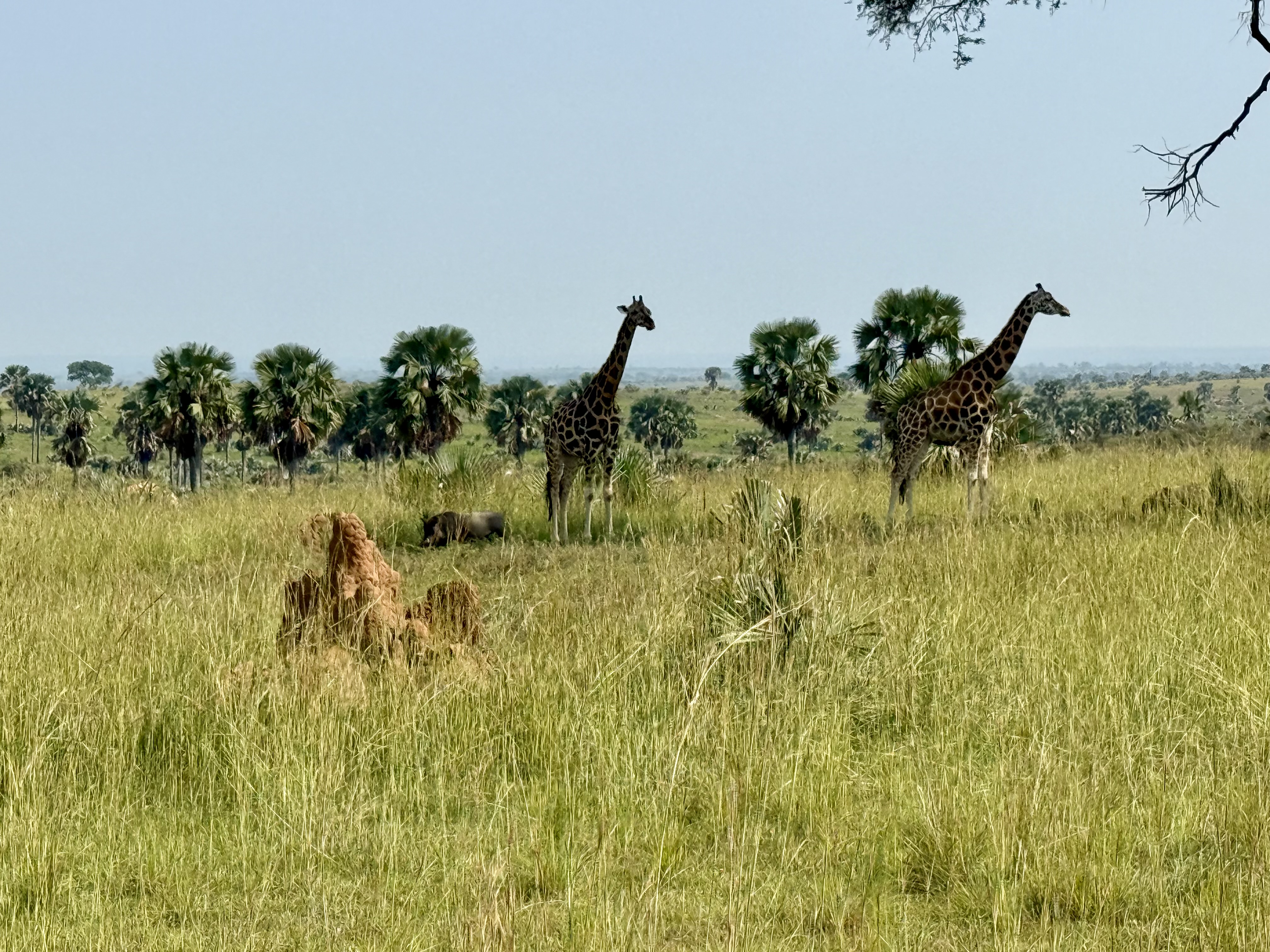
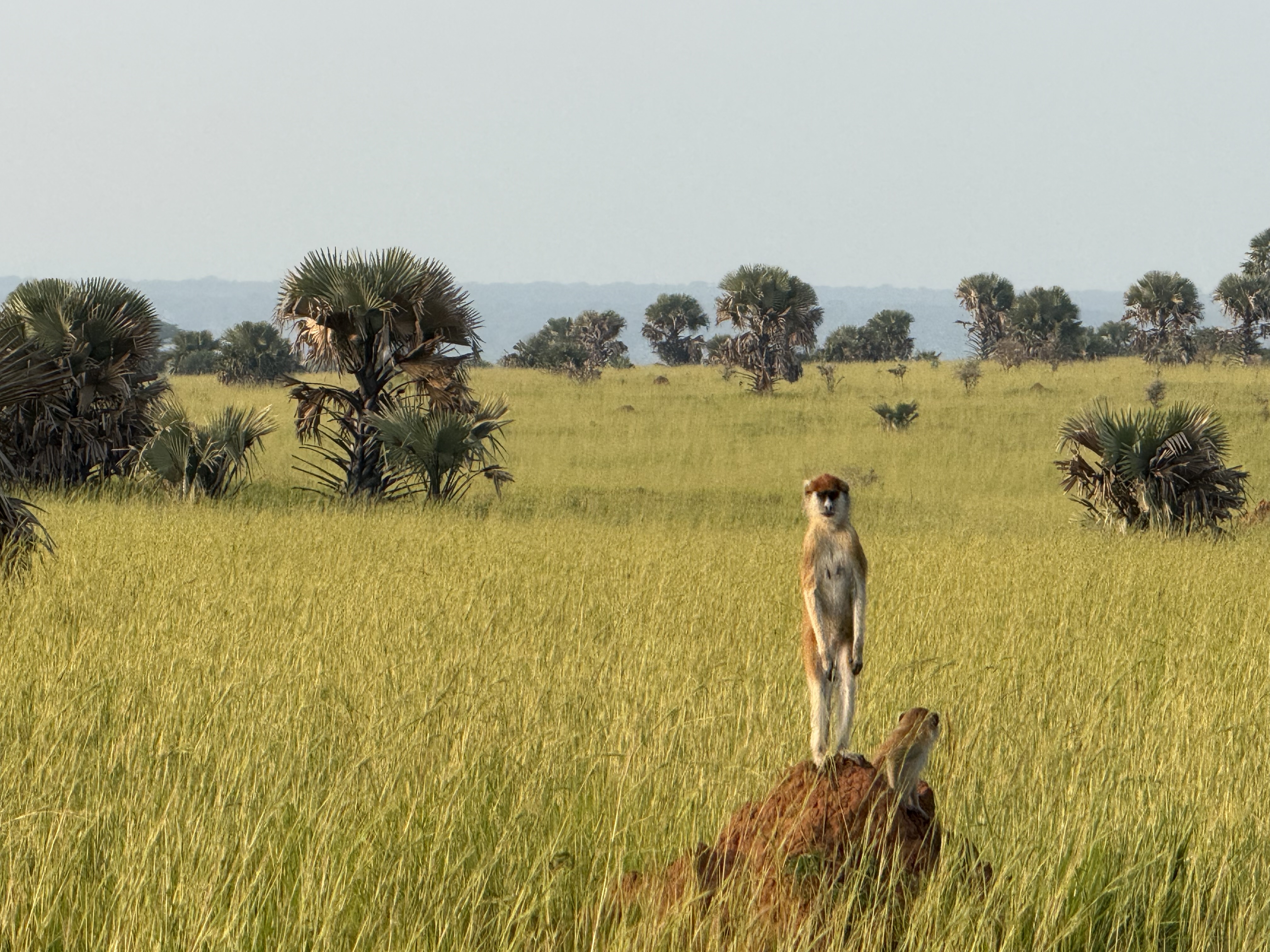
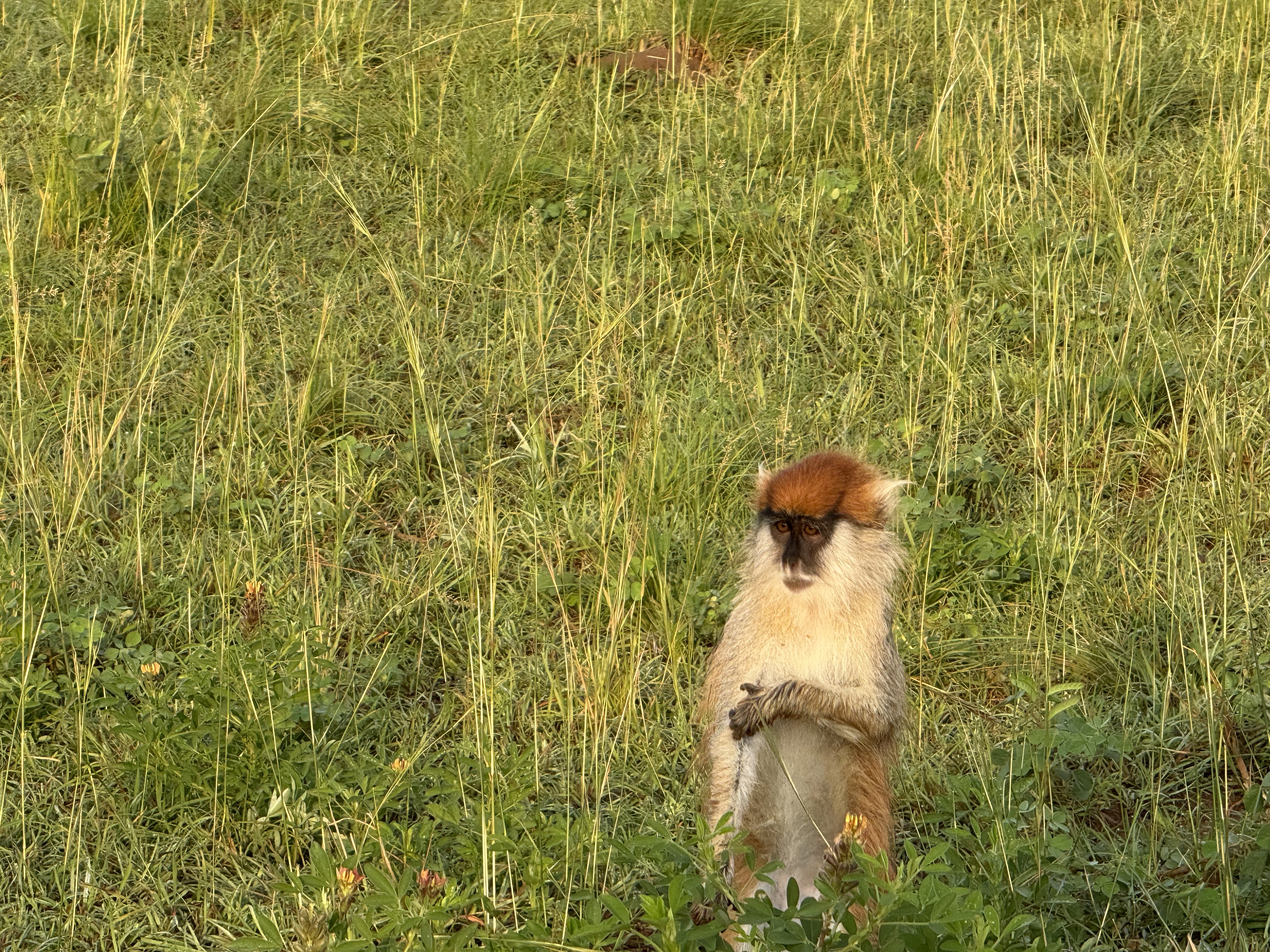
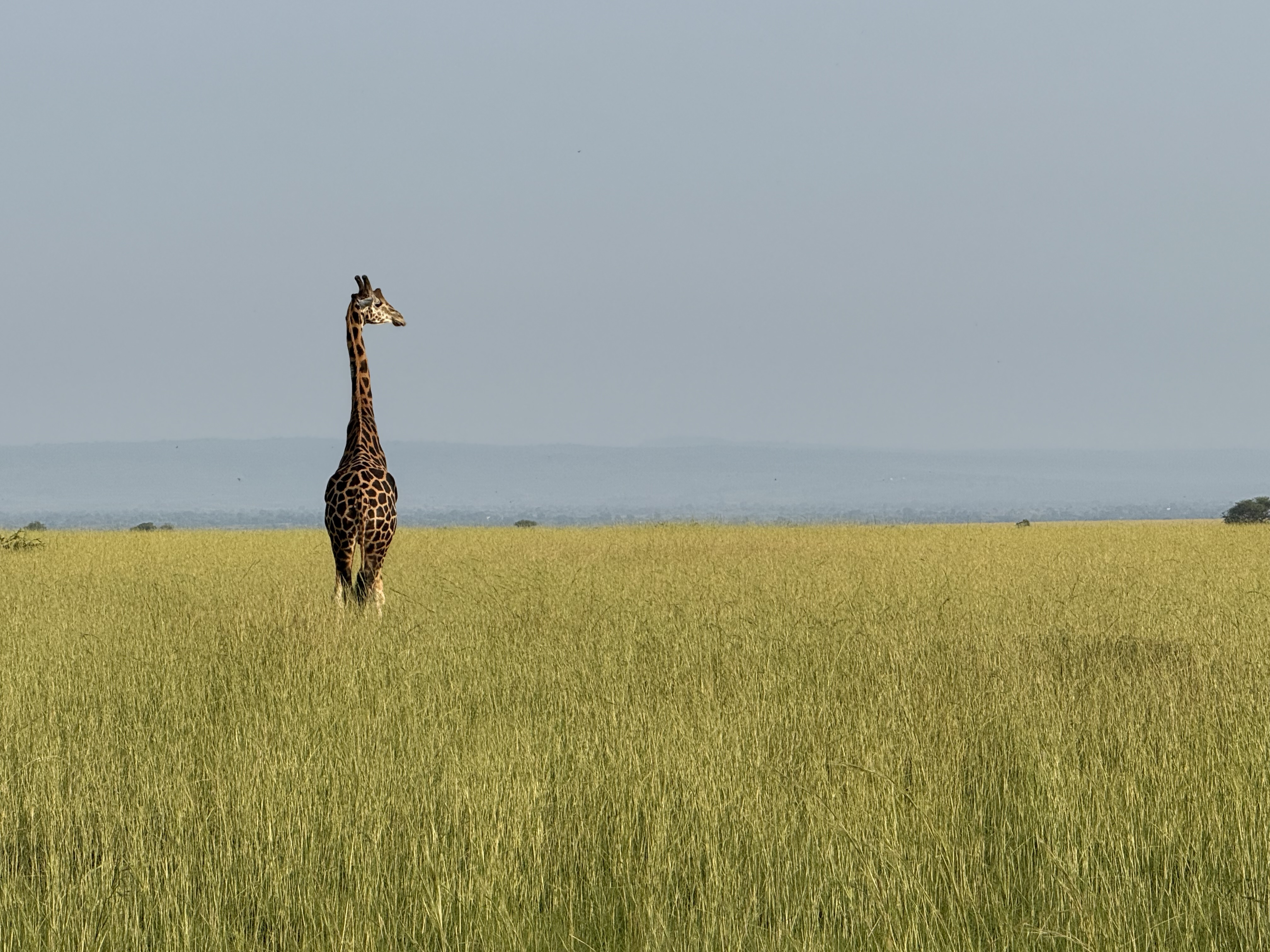
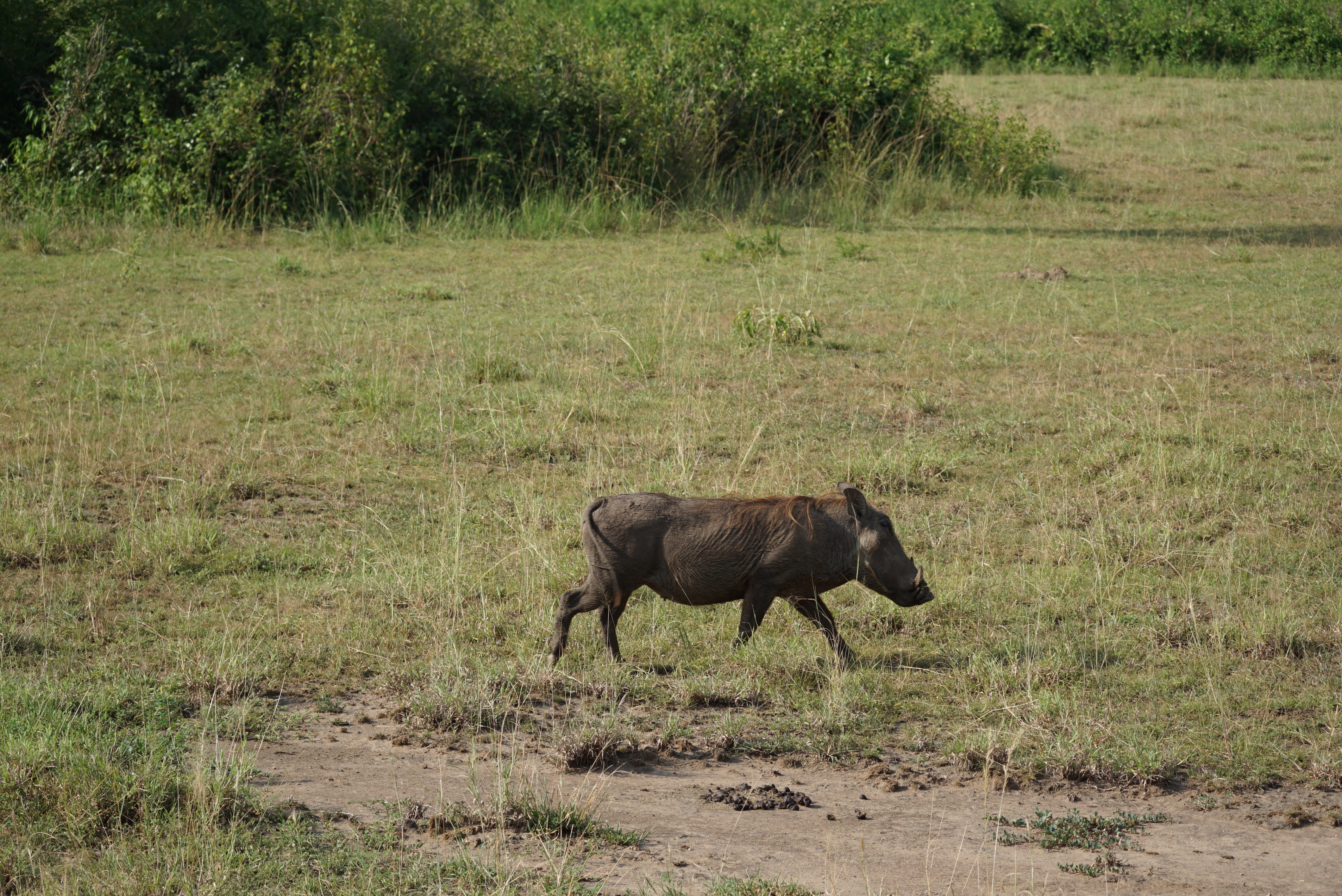
I had especially wanted to see the Hartebeests as this was an animal that I had not yet encountered. They are brownish red with a similar, yet slenderer, body structure to a wildebeest but have very long thin graceful faces, and their horns are curved differently than their cousins. They are impressive. As we drove away from the main road onto the dirt paths throughout the park, we came across many more kobs, hartebeests and warthogs, along with towers of Rothschild giraffes, and very playful Patas monkeys.
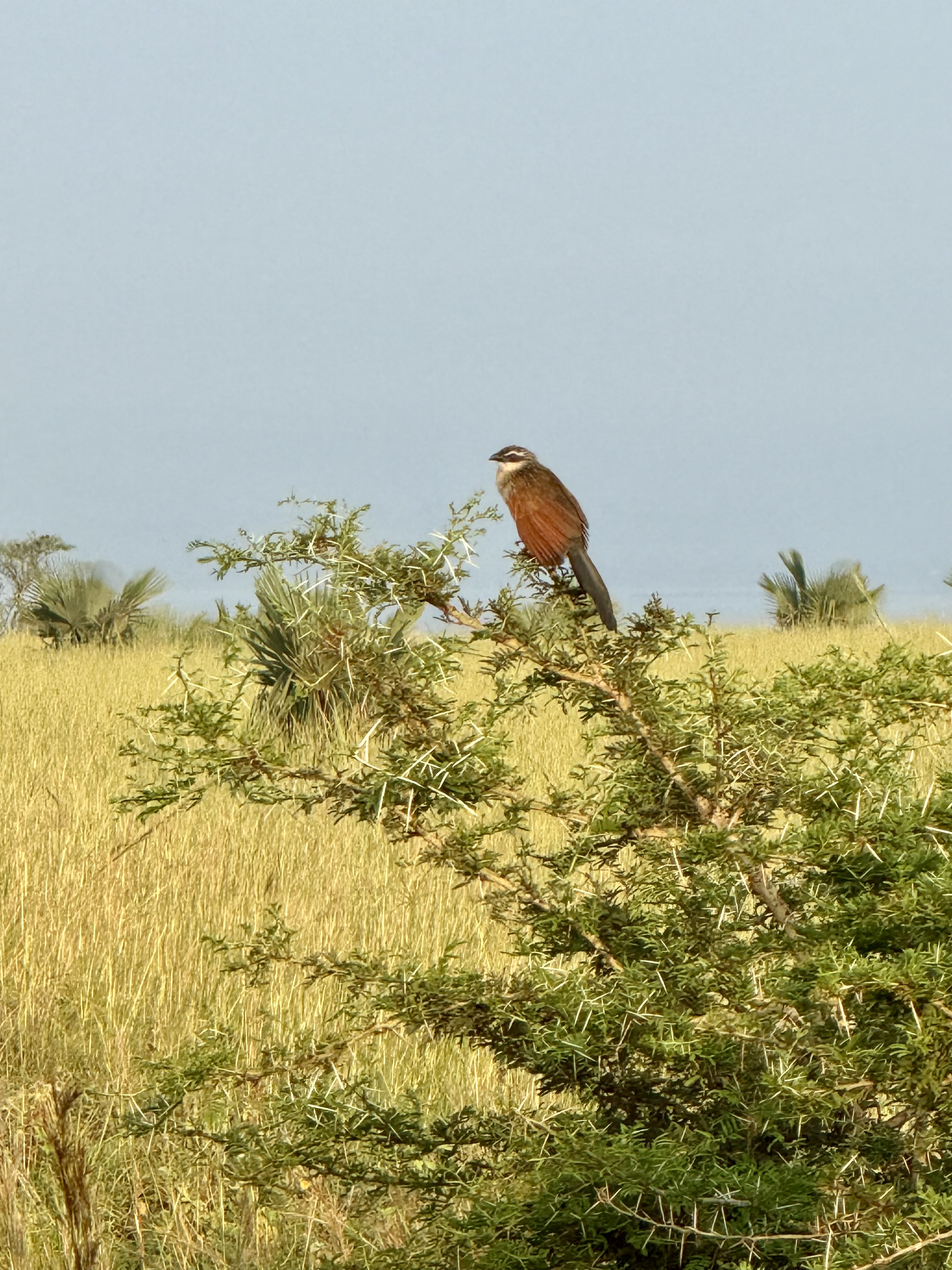
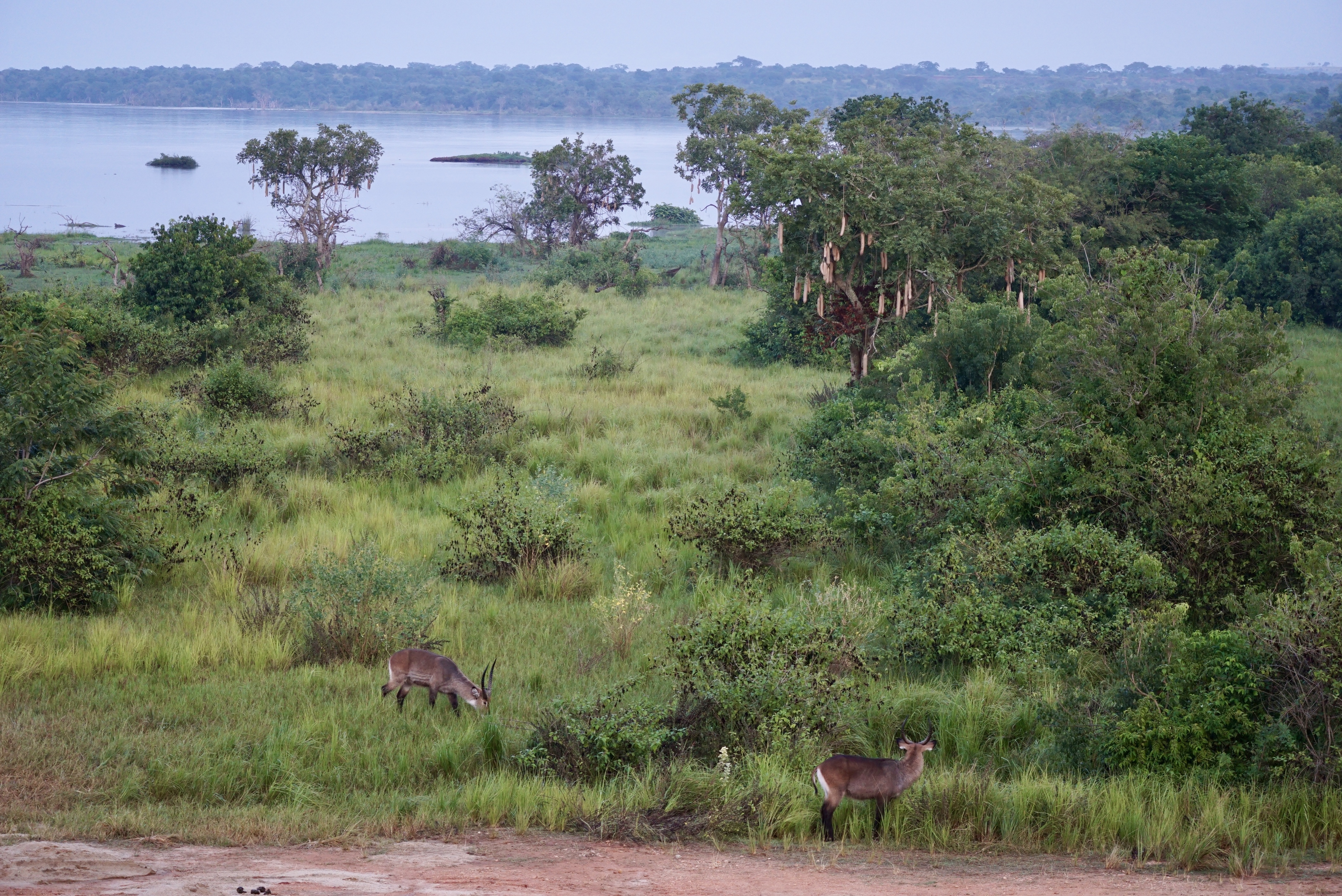
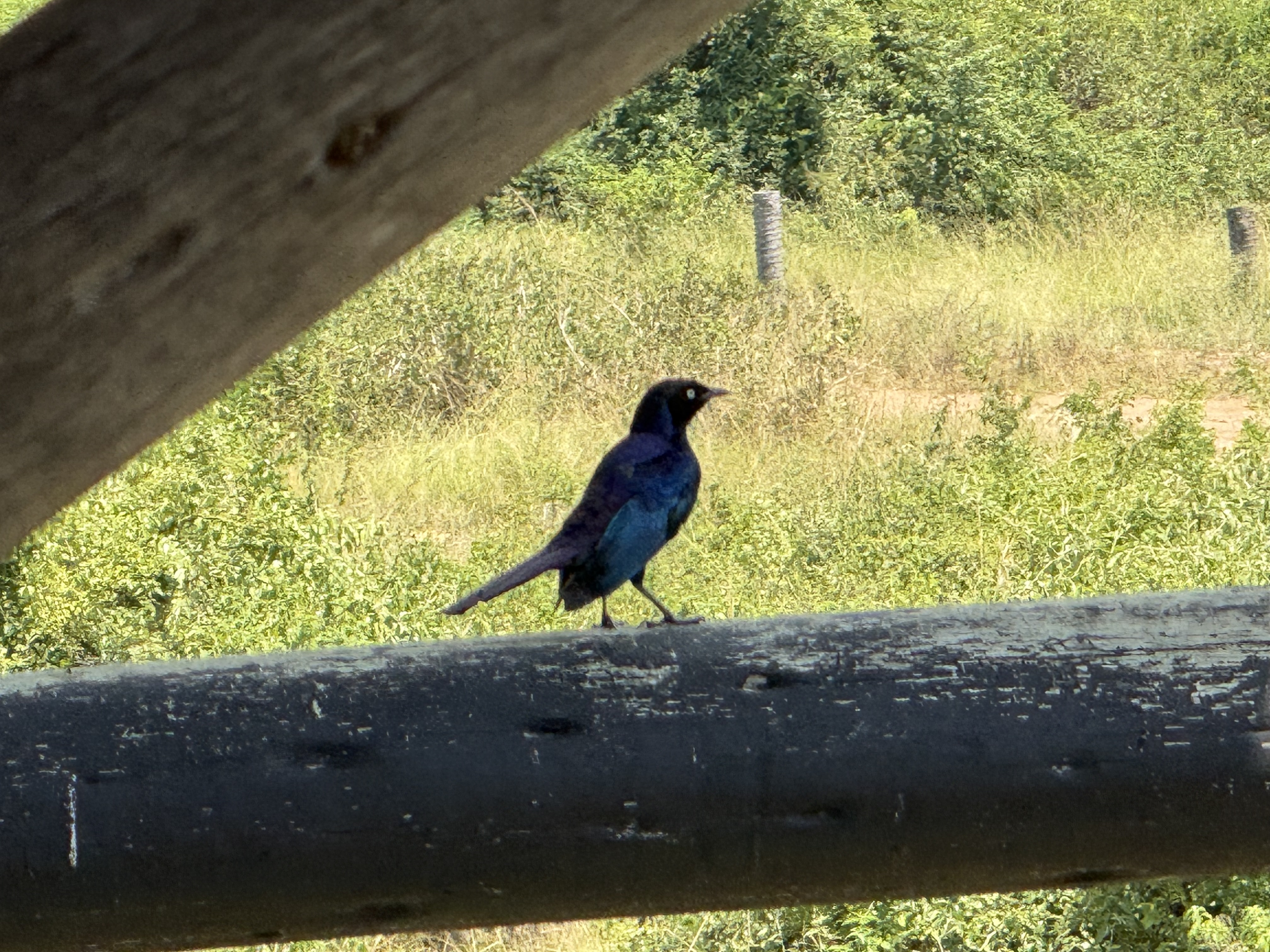
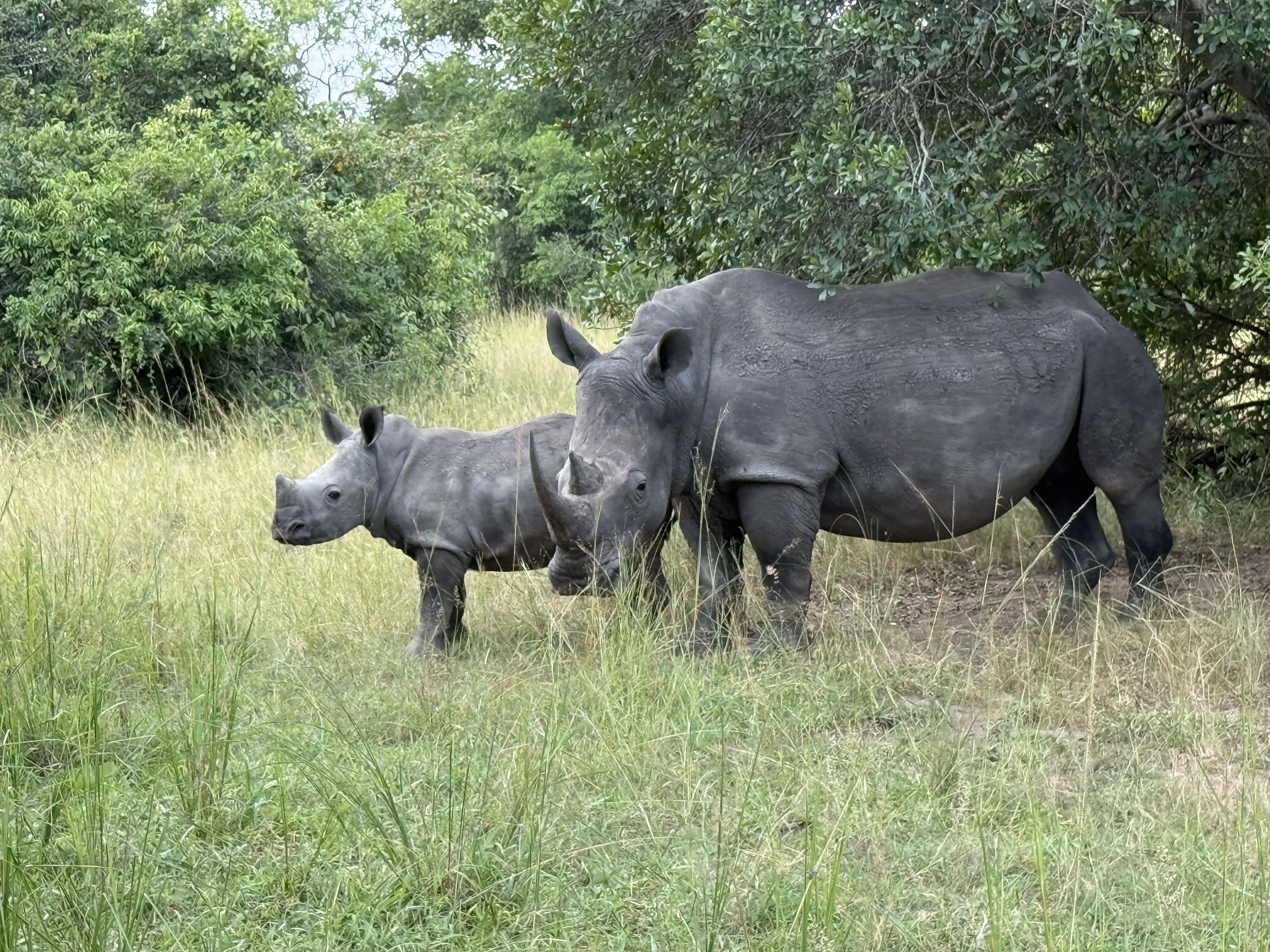
A lone male elephant stood shaded by a tree fairly far from the road, but still visible. As in the parks in Kenya and Tanzania, the birdlife was fabulous. There are apparently 451 avian species within its territory. Murchison Falls also has big cats including lions, leopards and cheetahs, but I didn’t see any of them. The park currently does not have zebras, rhinos or impalas, although the Rhino Sanctuary is planning on introducing the White Rhino back and the herds of Uganda Kob, bushbucks and waterbucks made up for the lack of impalas. I did miss the zebra but loved seeing the hartebeests and Patas monkeys. The morning was full of surprises and beautiful.
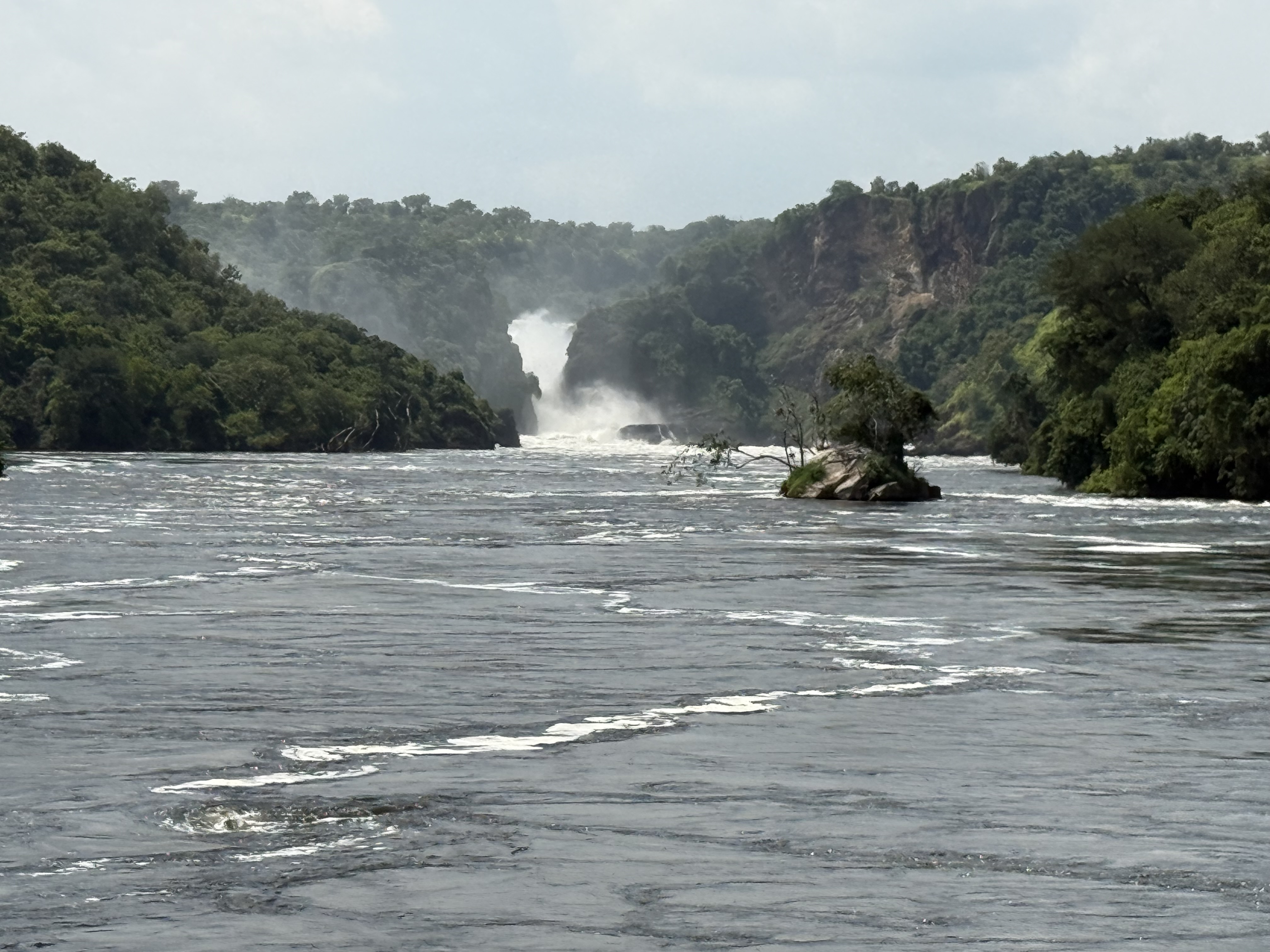
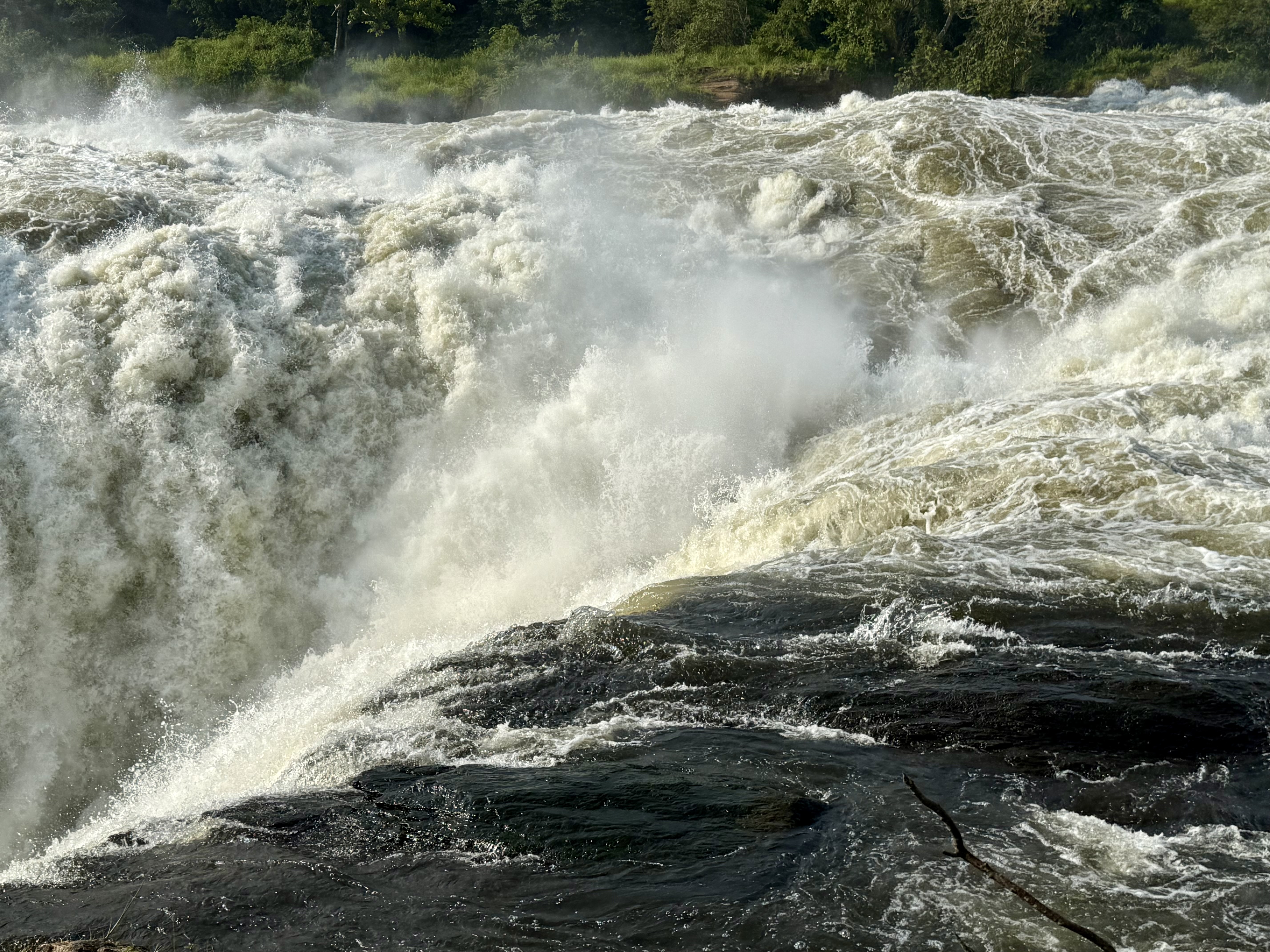
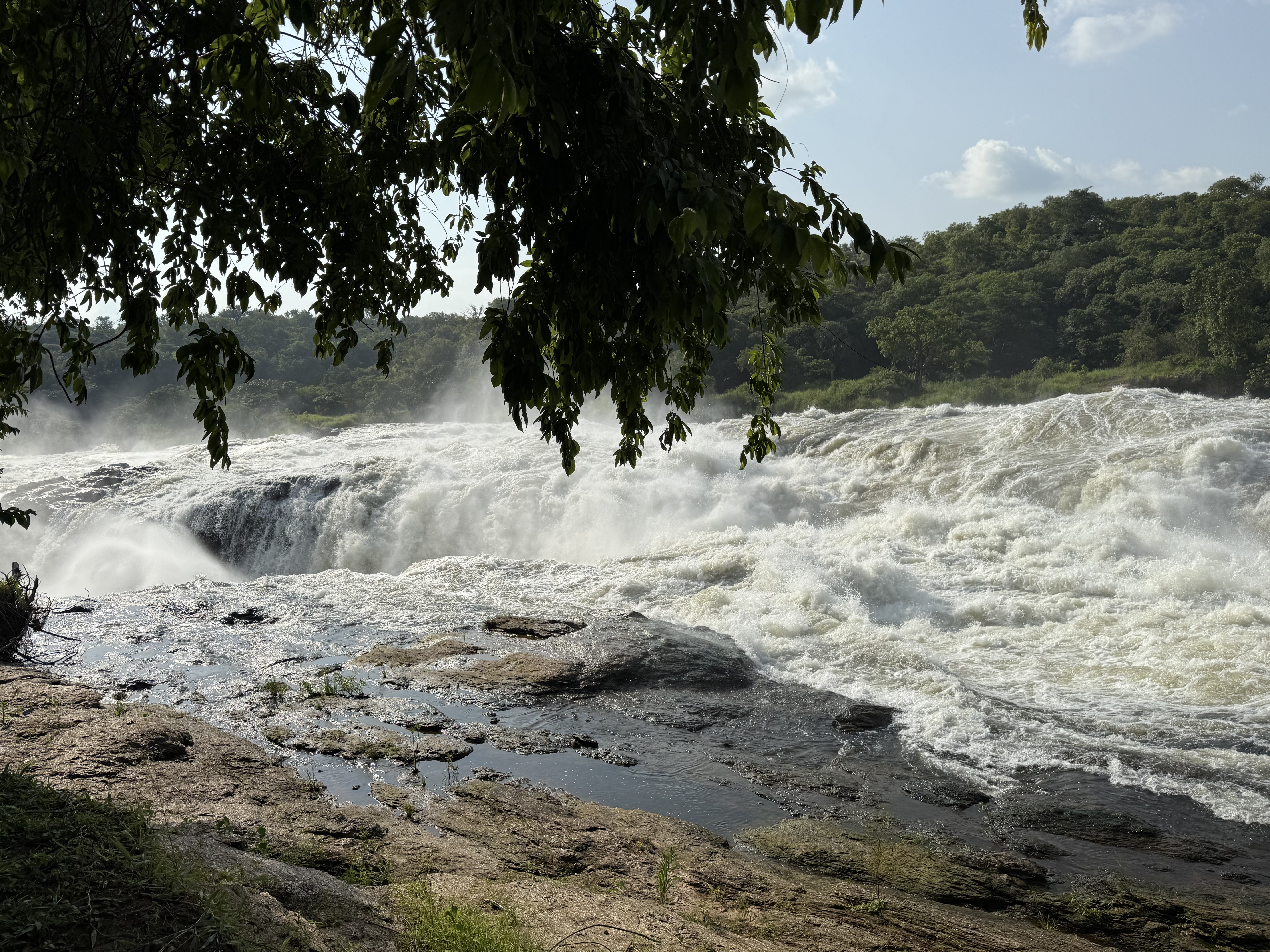
A boat cruise along the river to near the foot of the Falls provided for the afternoon entertainment. We couldn’t get too near the Falls, not nearly as close as the boats in Iguazu, as Murchison Falls are reputed to be the most powerful on earth. The wide Nile narrows to about seven meters where the waters crash down over a forty-three-meter-high cliff. 300 cubic meters of water pound down every second (yes, second!). From the boat the Falls are impressive, but not nearly as much so as from the top of the Falls where we went after the boat.
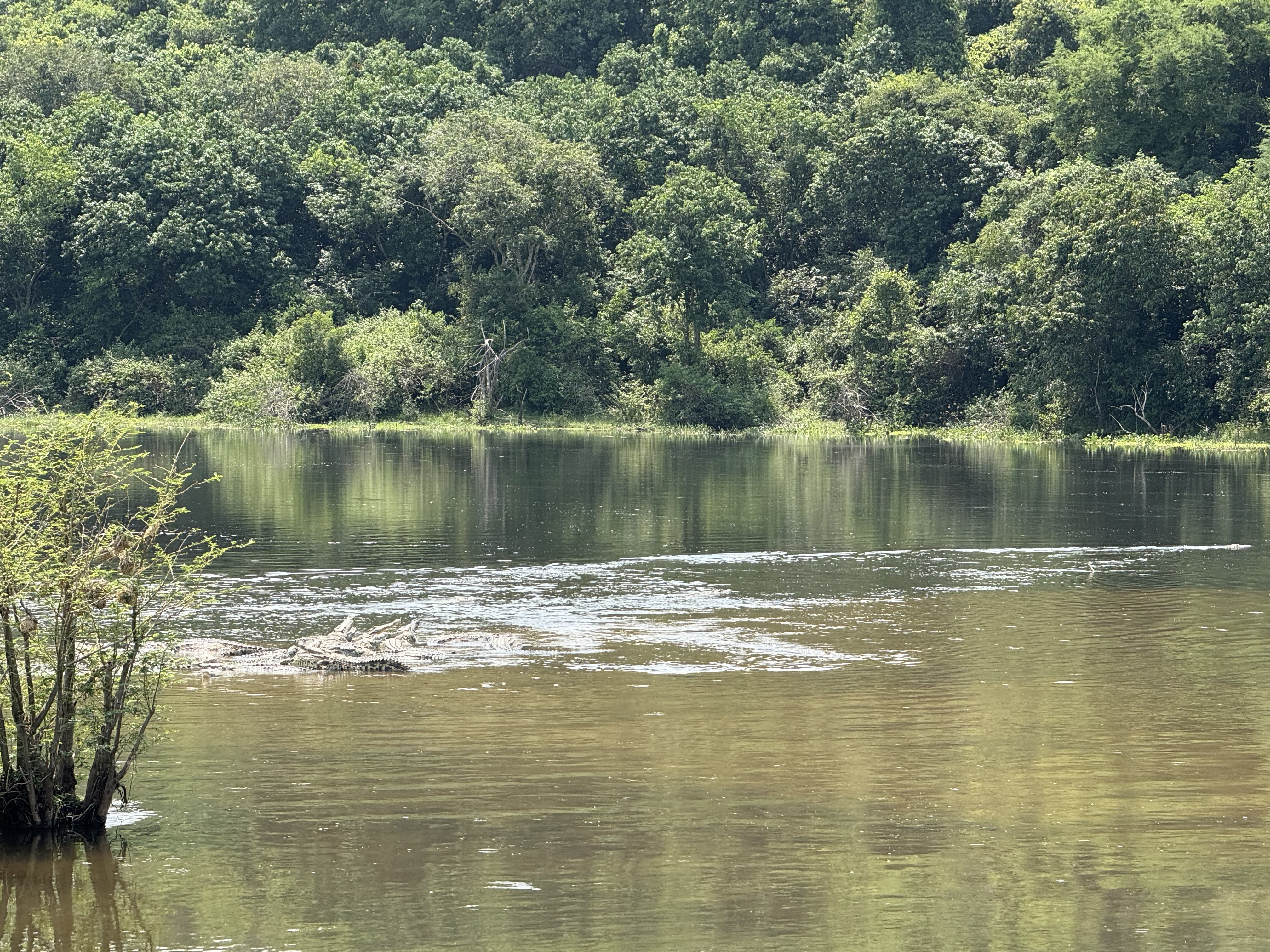
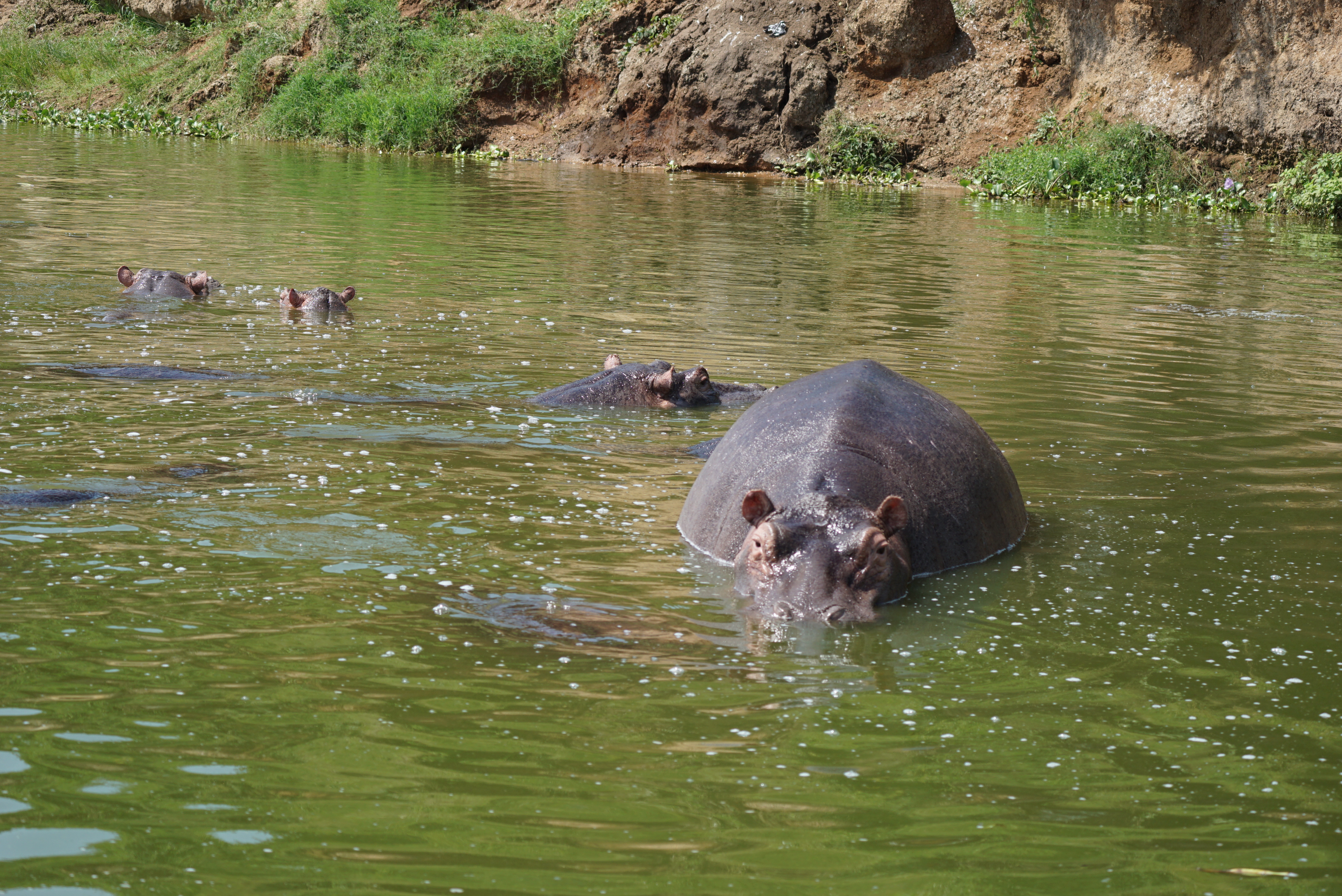
During the boat trip, the guide pointed out hippos, crocodiles and various birds. The hippos gathered in groups as well as presented themselves as individuals. Their eyes are often just above the waterline, and then a huge grey body may pop out or sink below to where the large mass is no longer visible. A group of crocodiles hung out near where the waters calmed after the Falls, waiting for easy to catch fish.
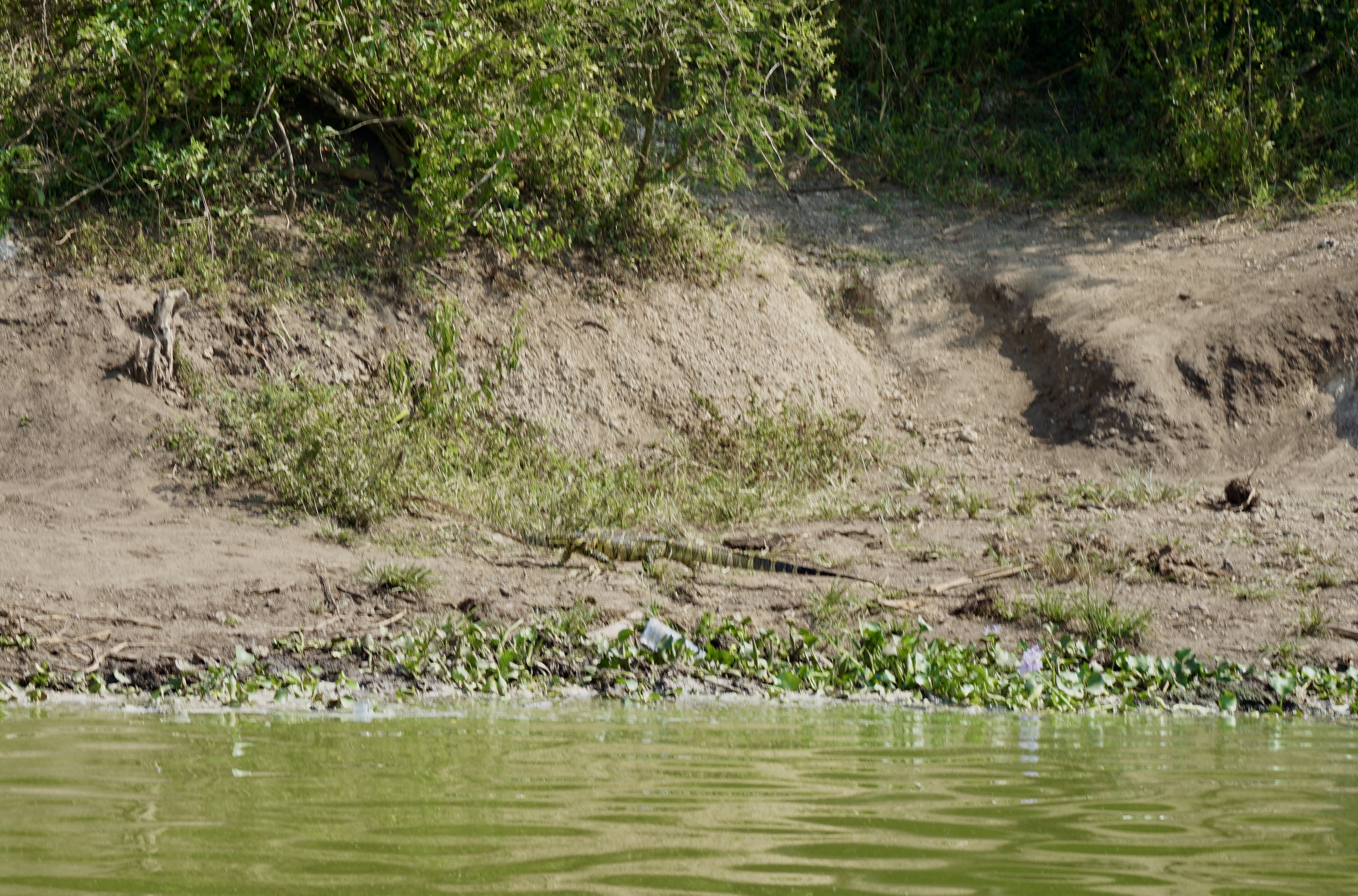
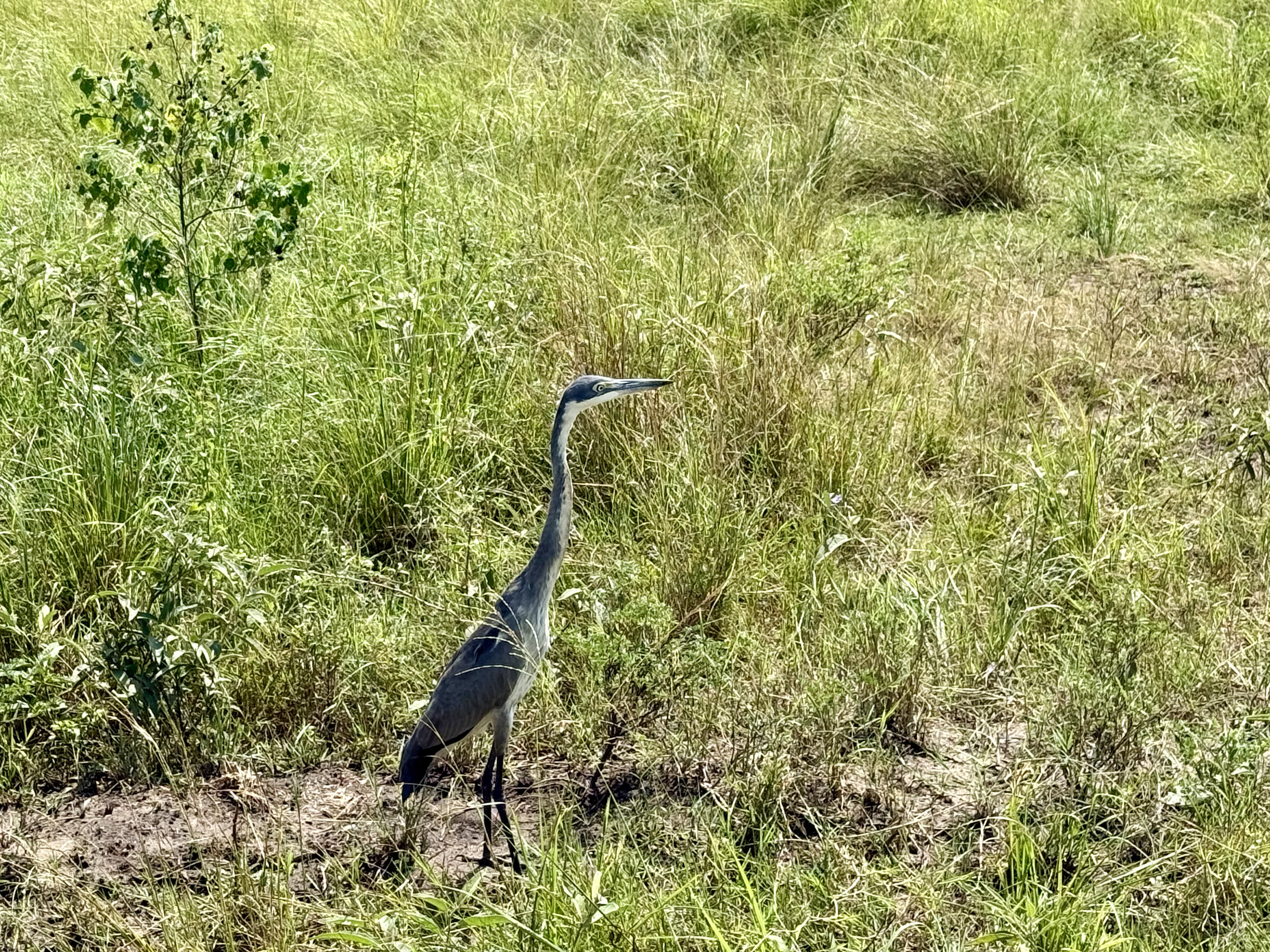
Goliath herons graced the shoreline, while a very large monitor lizard, probably over two meters, crawled down a slope, hid in some vines to get close to a bird dinner, then unsatisfied sauntered back up the slope. The ranger/guide on the boat was informative, and I was amazed at how he could locate small birds and lizards along the shoreline when I couldn’t see them until he pointed to precisely where they were.
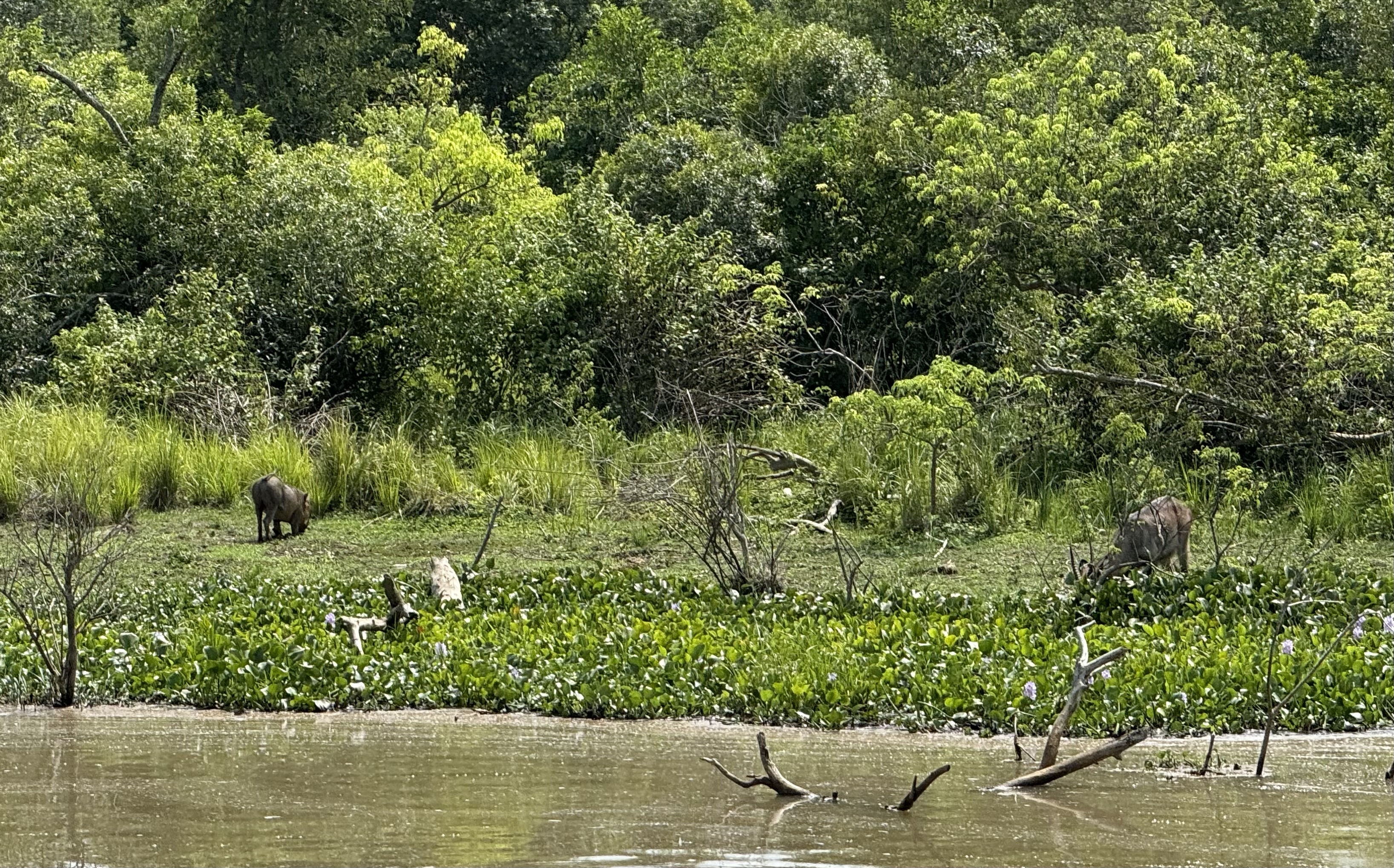
From the boat, it was back to the lodge for a late lunch and then on to the top of the Falls. This was where the power of the river was clearly and forcefully seen.
The next morning, we left Murchison Falls very early for the almost 10-hour drive to Queen Elizabeth National Park. It was raining most of the day, but luckily no major downpours just a steady flow from the heavens. The road was a regular asphalted two lane ‘highway’, so we didn’t have to worry about getting stuck, just about getting jiggled from the unending speedbumps, potholes and washed-out sections. Given the weather, I chose not to stop for the obligatory Equator photo as I figured it wouldn’t come out well. As we made our way south, we passed the very long Lake Albert, which is shared with the Democratic Republic of Congo. On a clear day we should have been able to see over to the DRC but given the clouds we couldn’t.
We entered the Park, in the southern hemisphere, around 5pm and were greeted by a very wet elephant at the side of the road.
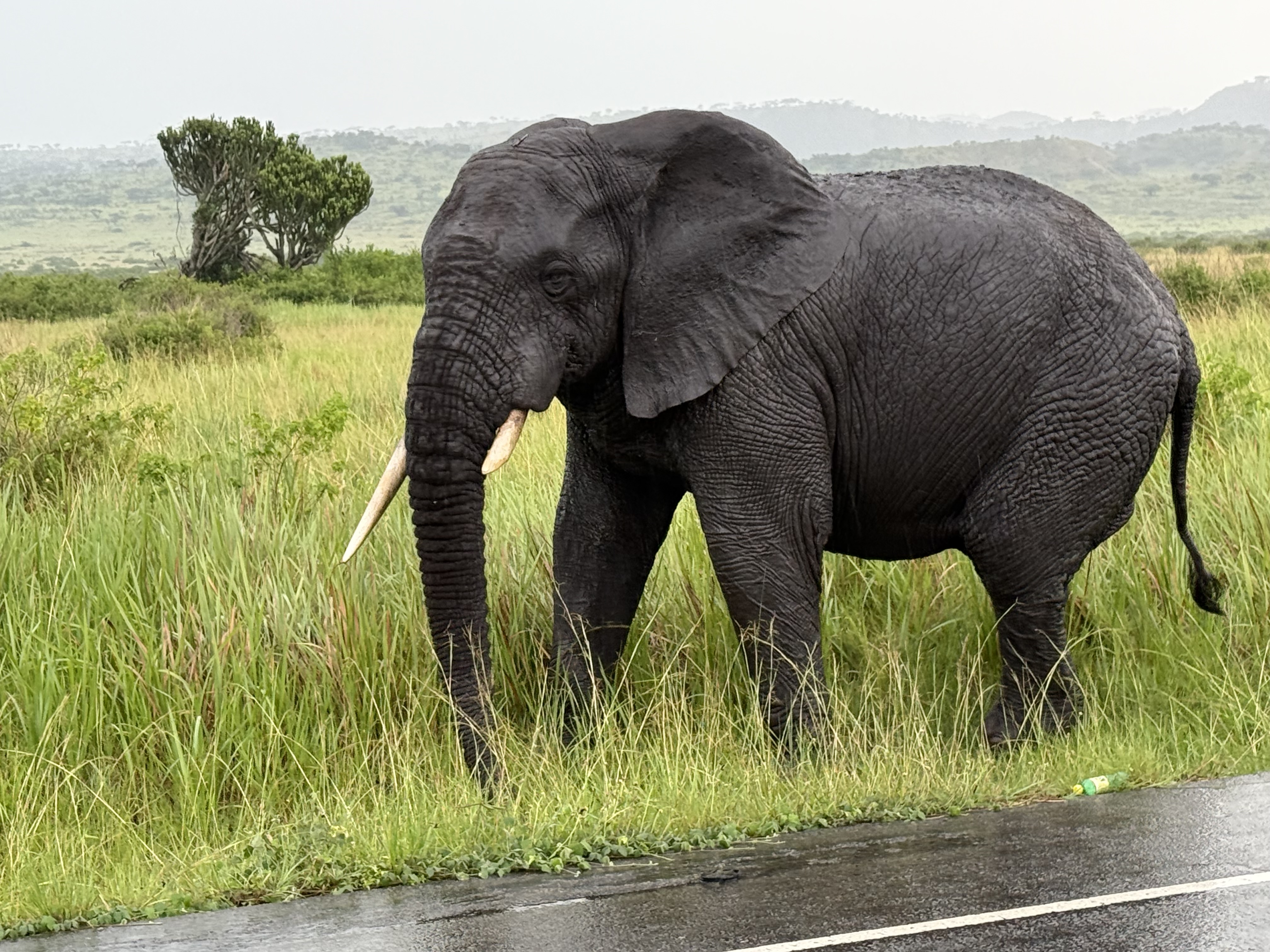
Not too far away were a few others grazing in the grassland. By the time we arrived at the lodge the rains had stopped, and a very large bull elephant was on the front lawn waiting to greet us. His name is John, and they joke that he is a member of the staff.
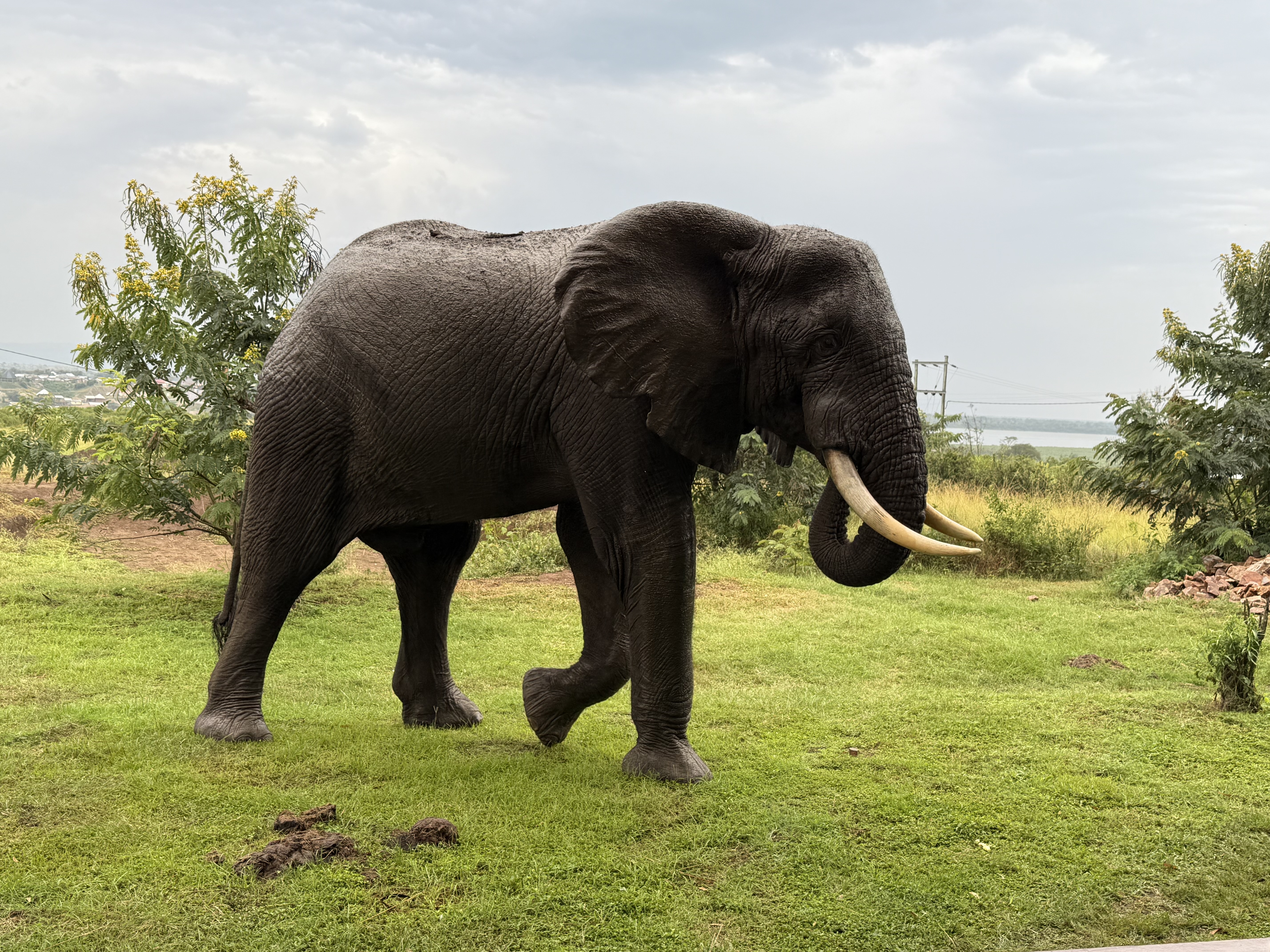
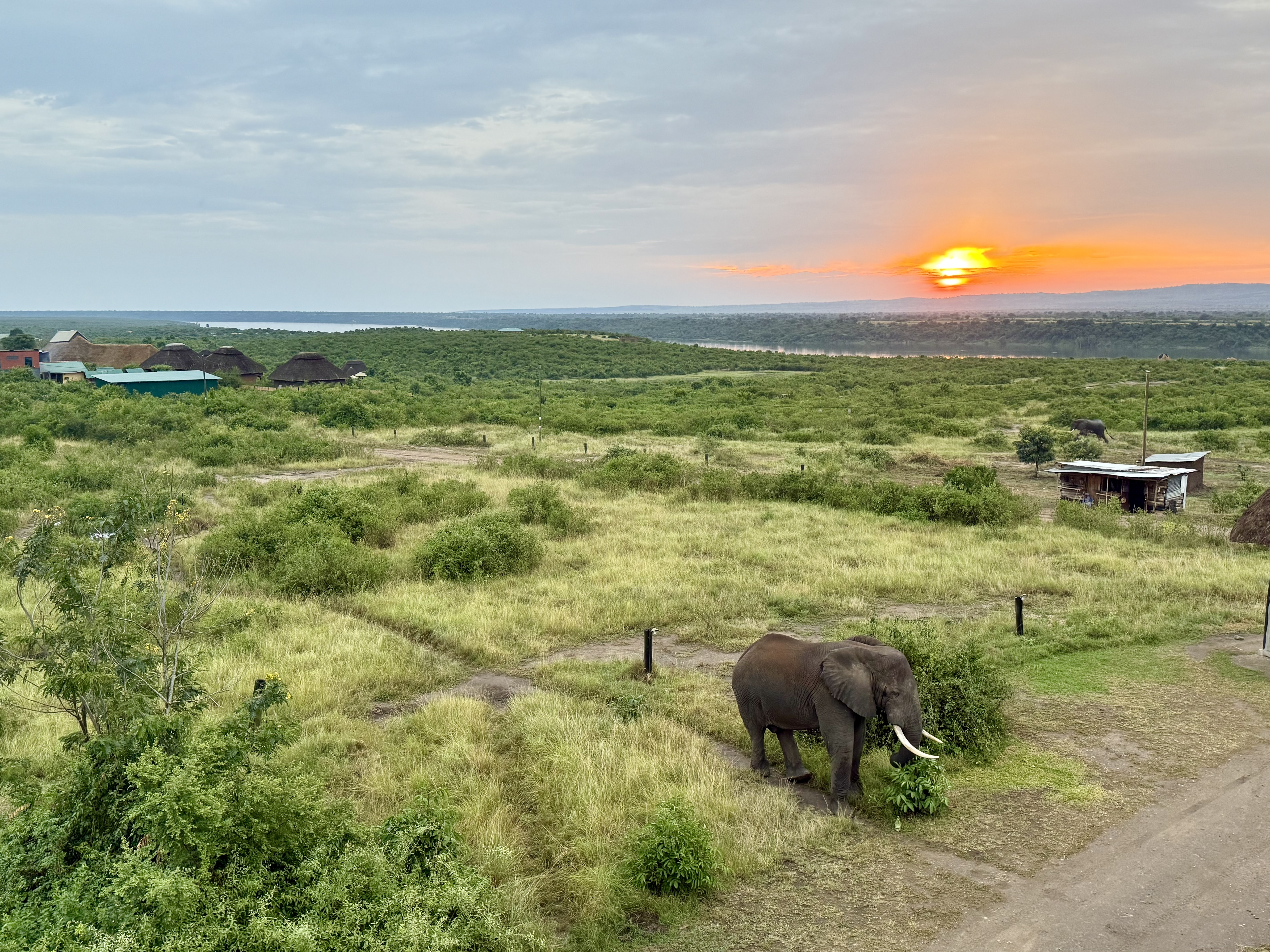
The lodge was within the National Park boundaries as QENP has a number of communities within it. Most national parks relocate former inhabitants of the region, but this one allowed the communities to stay. John has marked his territory by meandering between some closeknit lodges and the shoreline to the Kazinga Channel. Locals know to give him his space; he is still a wild elephant and not a pet. The lodge overlooked the Kazinga Channel which connects Lake George to Lake Edward. Like Lake Albert, Lake George borders the DRC with 70% of its waters belonging to that country. There are over 2,000 hippos in the Channel, and the Nile crocs here grow to 8.5m. Not an animal to mess with. The name of the park used to be Kazinga National Park, but after Queen Elizabeth’s visit it was renamed after her. Kazinga means island in the local Bantu language and the park, which sits at 1300m altitude, was originally put together from two reserves now consisting of 1,978 sq. km. It is home to 95 mammal species, 15 reptile species, 20 species of carnivores and 619 bird species of which only 7 are migrants. It would be impossible to see even a small percentage of what is here in a day or two. Even without the animals, the vista from the top deck of the lodge over the Channel and the Park to the Rwenzori Mountains at sunset was spectacular.
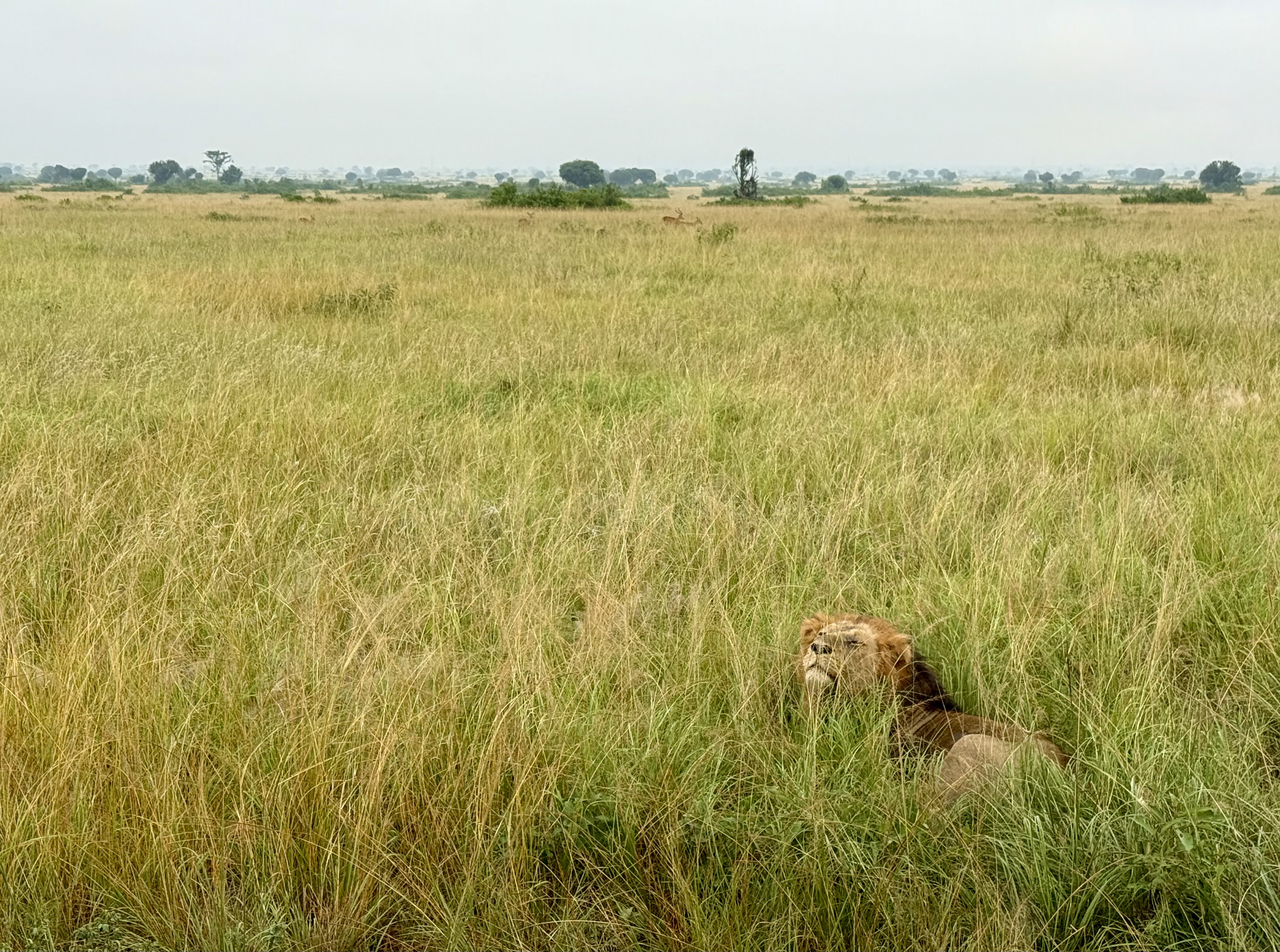
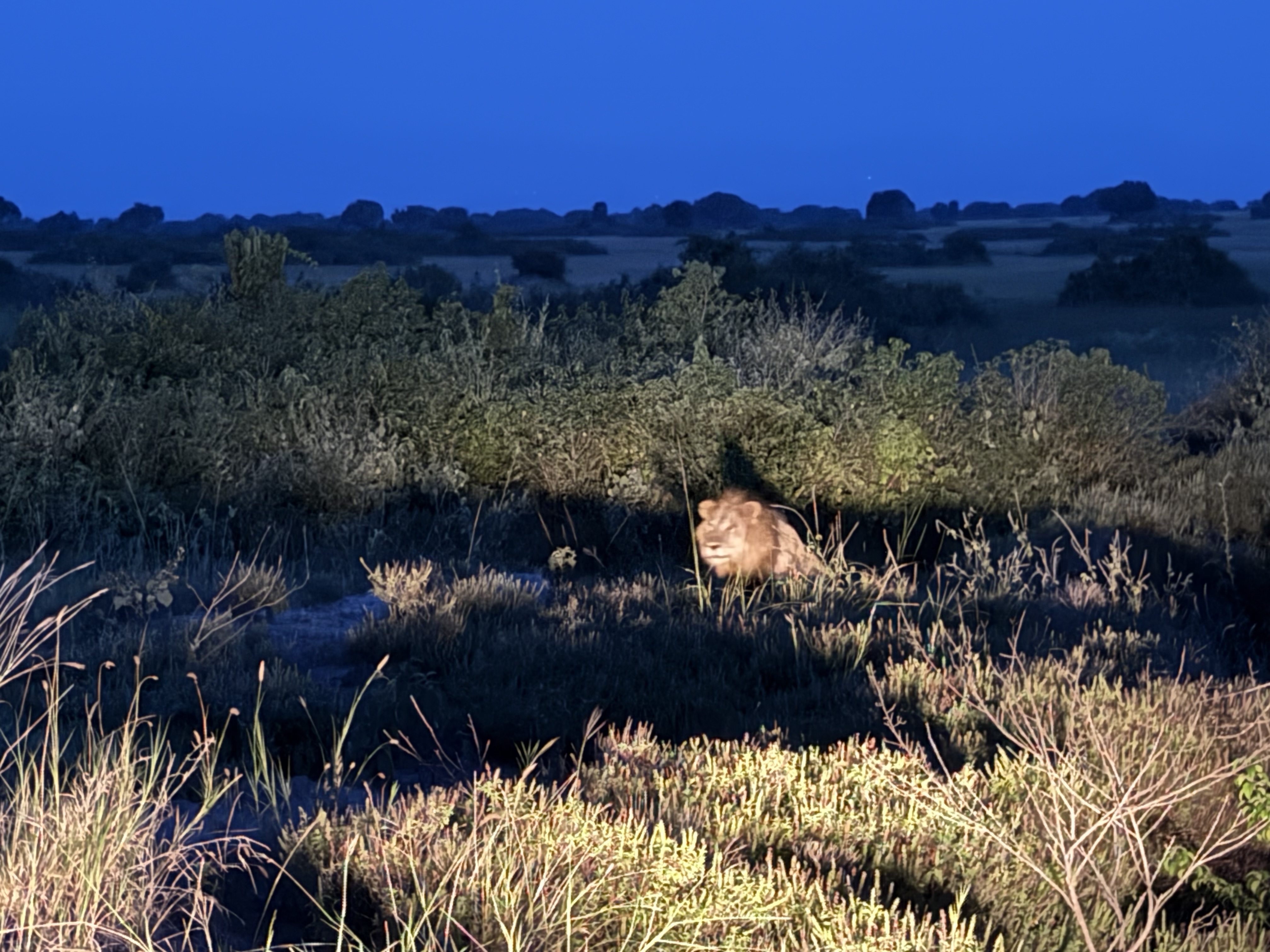
Originally, I had planned to spend the next day in the Rwenzori Mountains, but given the rain and cloud cover the day before, I thought it best to postpone the mountains by a day as the paths would otherwise be too muddy and slippery. Instead, we moved the game drive and Channel cruise up a day. After checking in at the ranger station, we drove until there was a small traffic jam of Jeeps and Landcruisers piled up on one of the back roads. People with long lens cameras were starring out into the golden green grasses. A sleeping male lion was tucked in there. Everyone waited for him to move, but he was unimpressed and wanted to continue his snooze cruise. At one point, he did raise his head, but promptly laid it back down again.
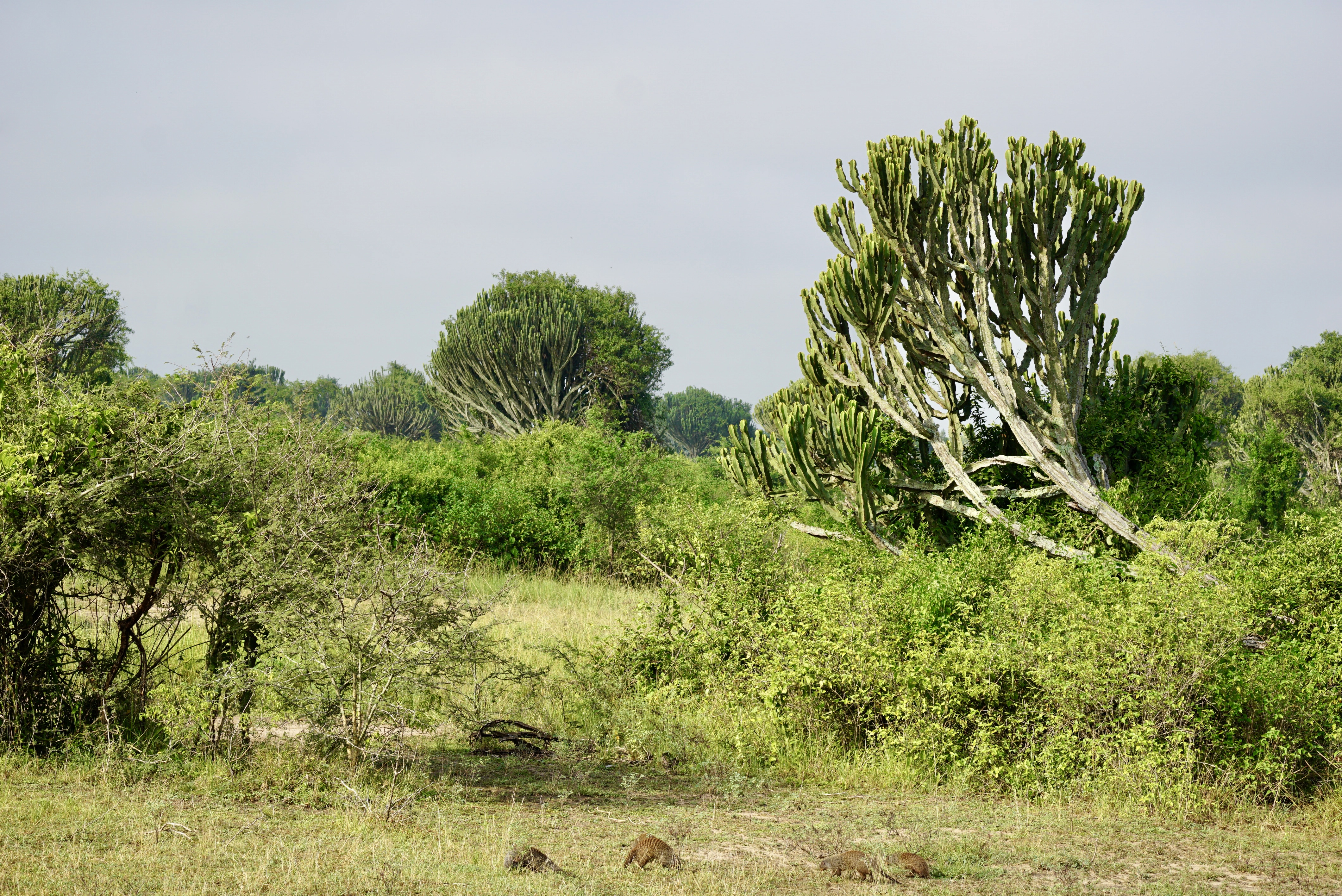
As we continued our journey, we came across banded mongoose, Ugandan kobs, waterbucks, bushbucks, warthogs, and hippos crammed together in mudholes in the savannah.
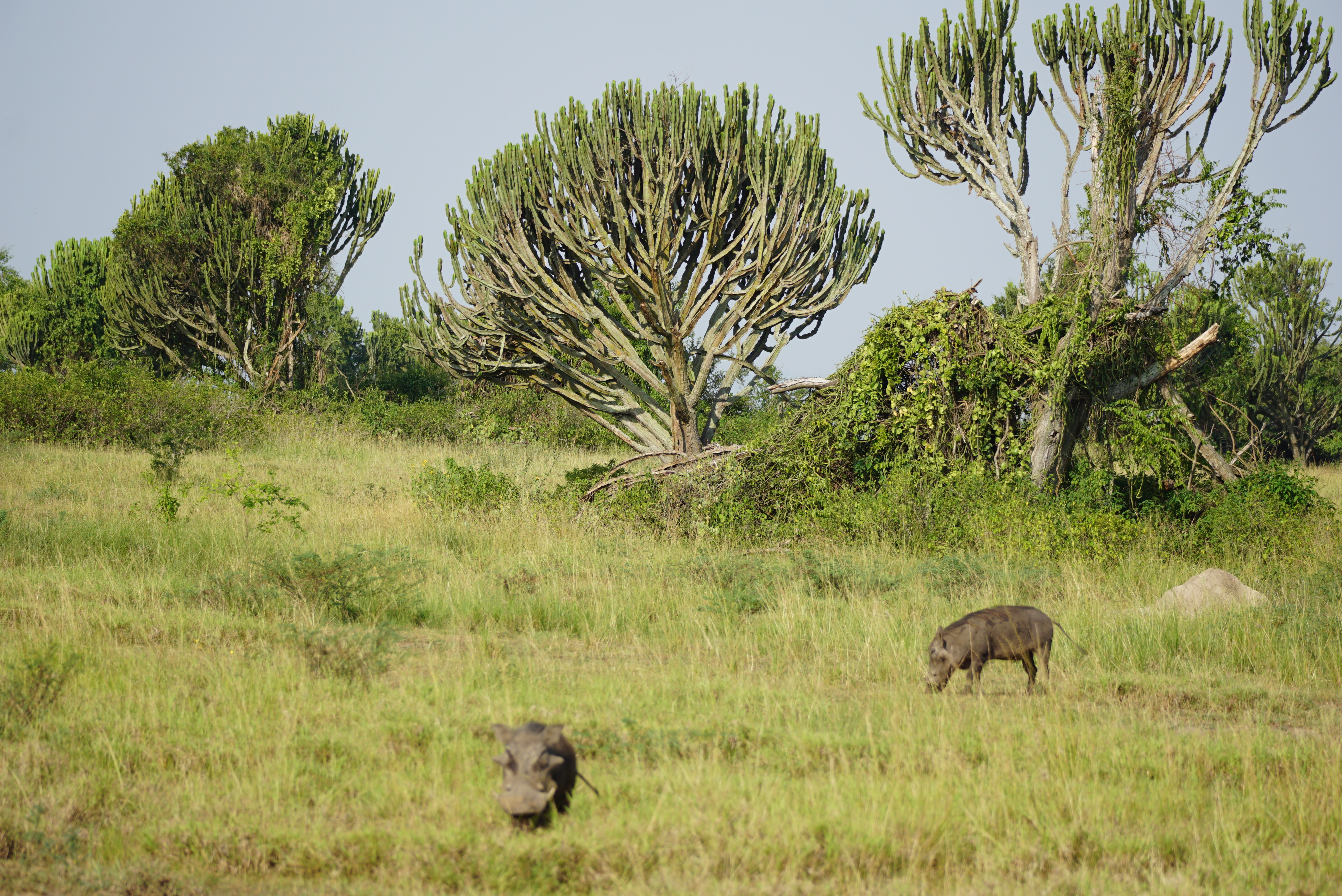
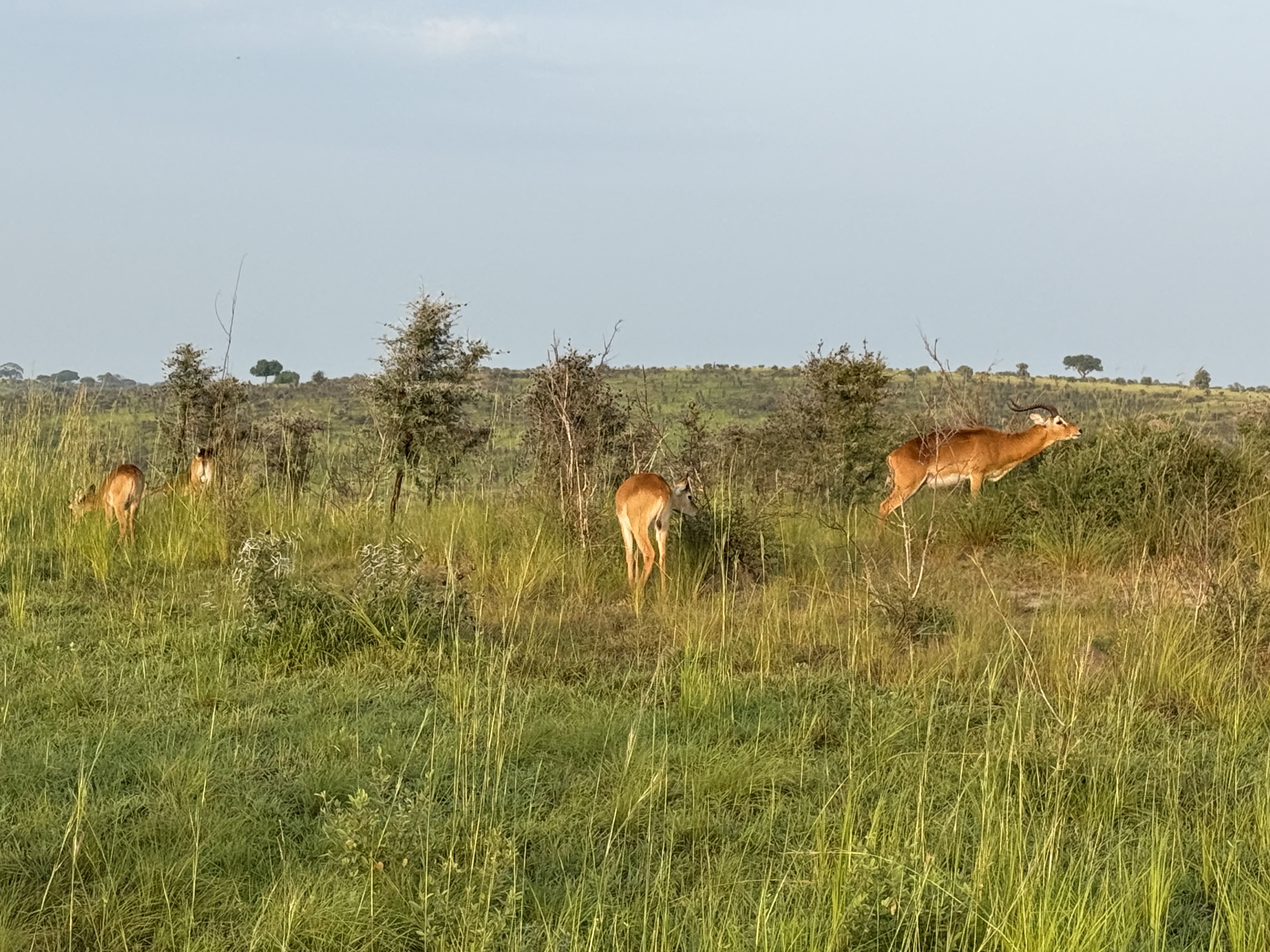
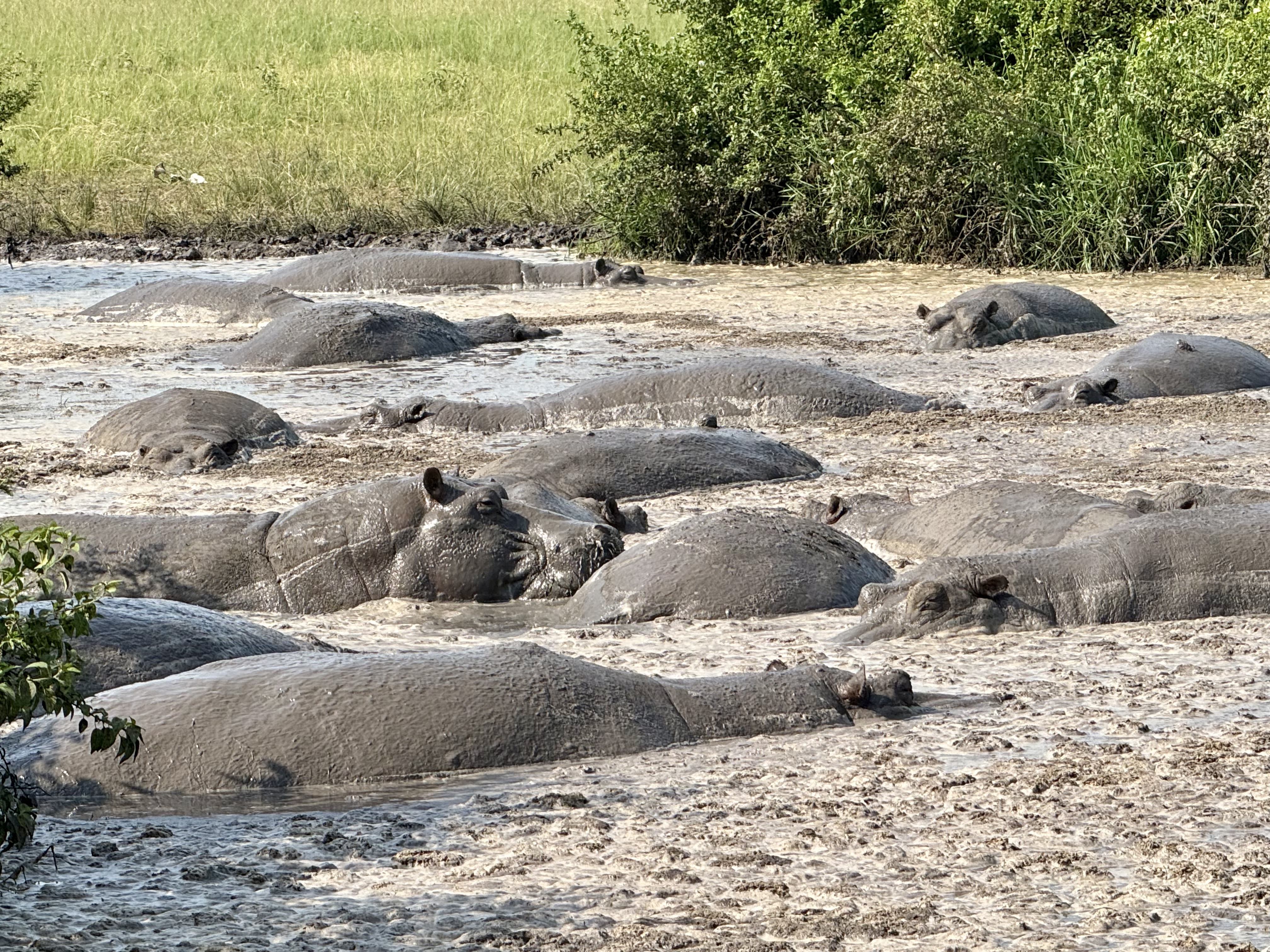
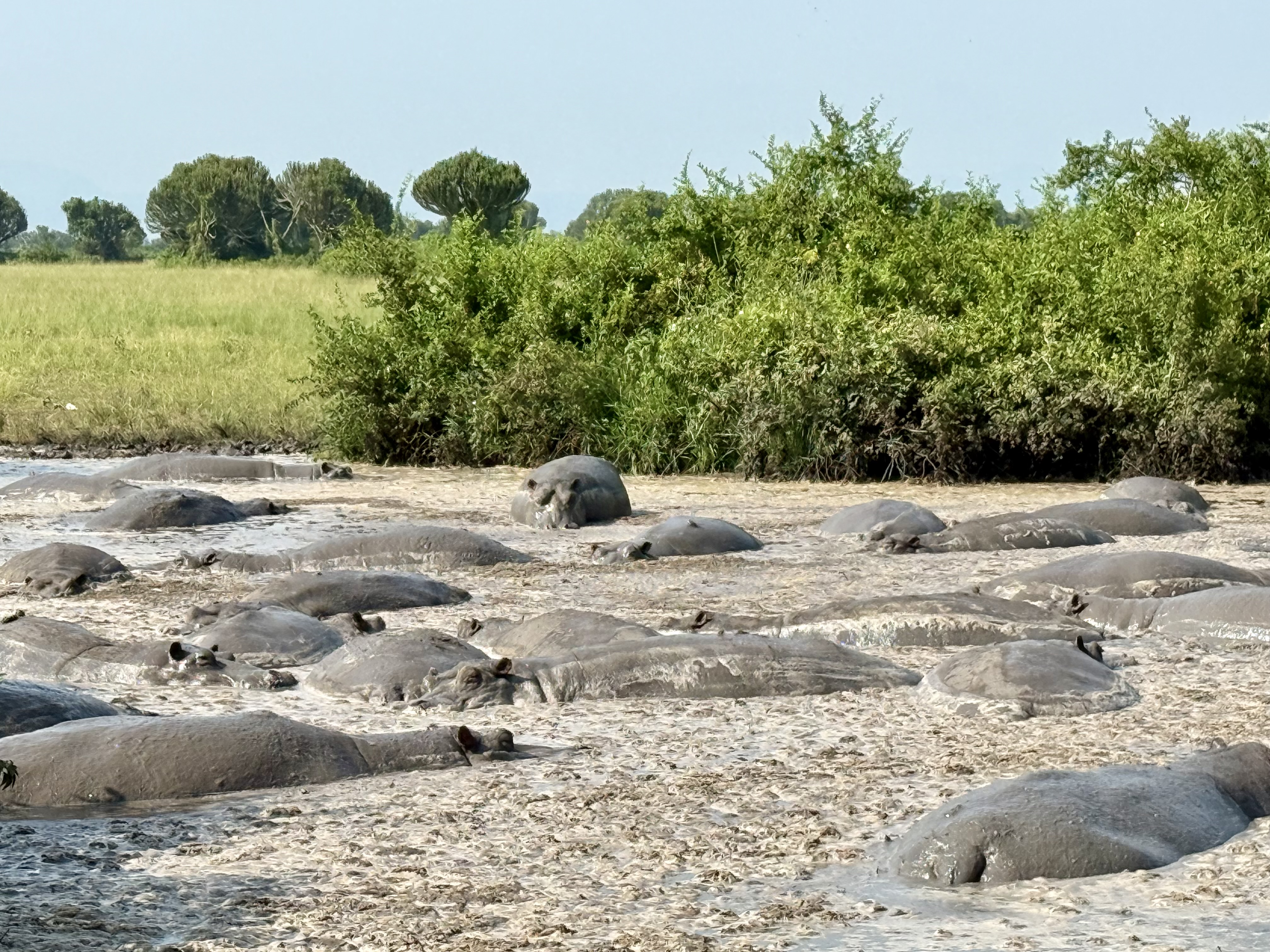
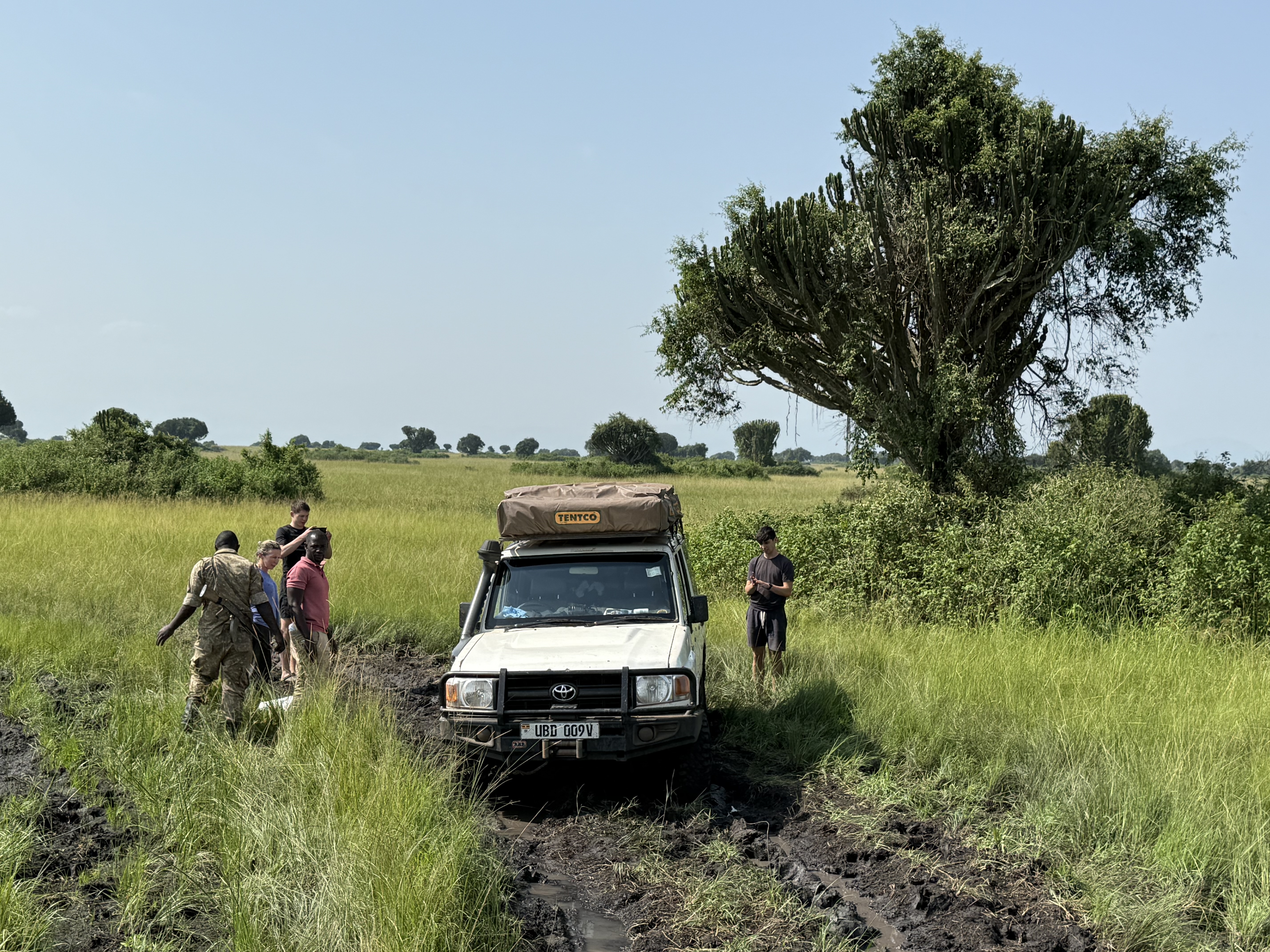
Also stuck in a mudhole was a self-drive jeep. A family of four had rented a jeep and were trying to negotiate driving themselves through the country and parks. It wasn’t working too well. We stopped to help but even with Richard’s expert driving skills the car remained engulfed in black-grey goop. Finally, another Landcruiser with guide arrived and with all the others pushing and Richard driving, the vehicle inched forward onto more stable ground. Richard had locked me in the van as it is officially illegal to get out of the car in the park, and I think he was a bit worried after I had held a long conversation with John at close quarters that I would go tromping around on my own through the savannah. (I wanted to!) As I couldn’t help with the car, I took a video so the family would have a reminder of their adventure.
Up to this point in the morning, I had yet to see an elephant and QENP is known for its elephant herds. (John had been replaced by a waterbuck as the greeting committee at the lodge that morning.) On our way out of the park, we saw a small herd with a few youngsters and three very tiny babies who were almost swallowed up by the tall grasses.

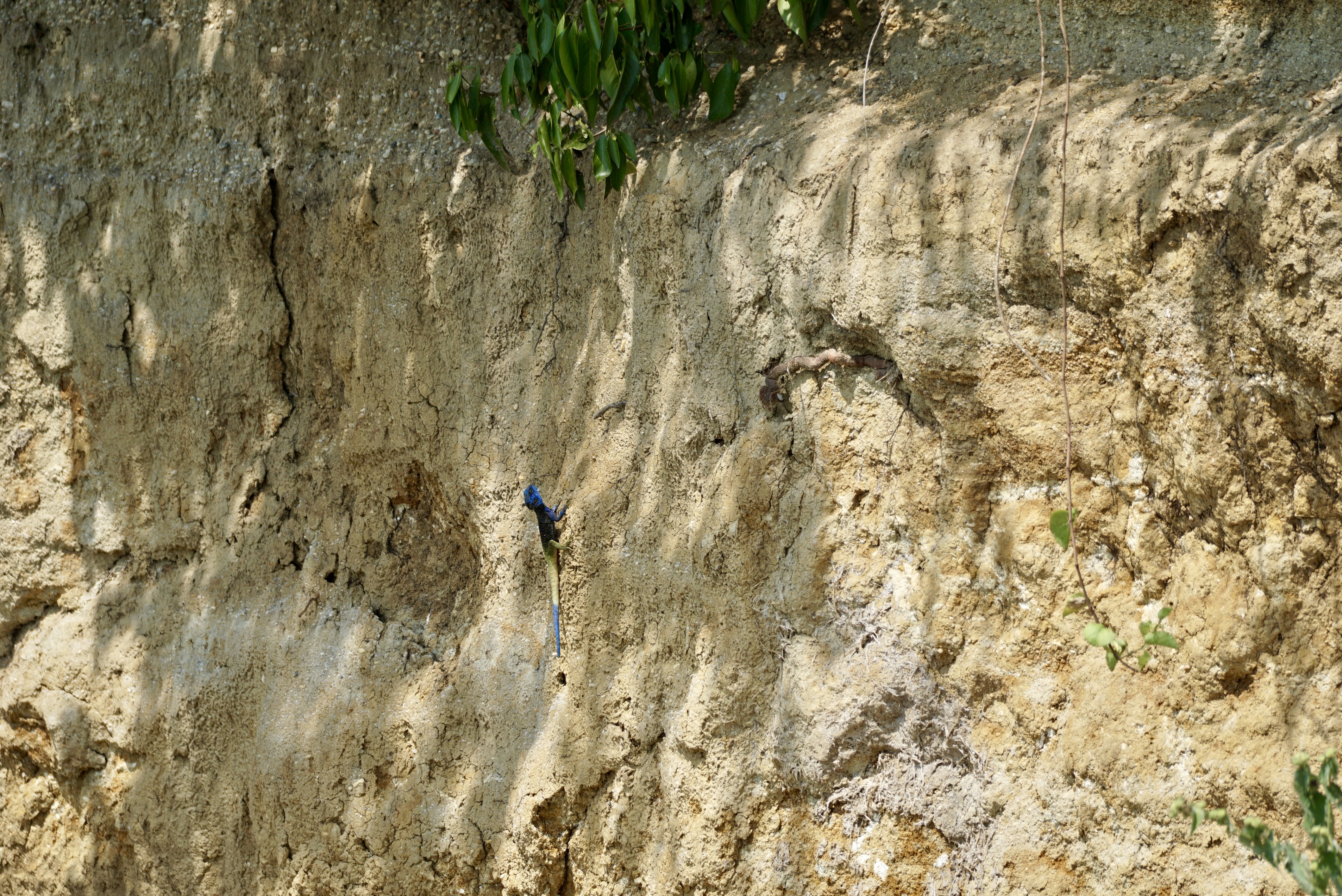
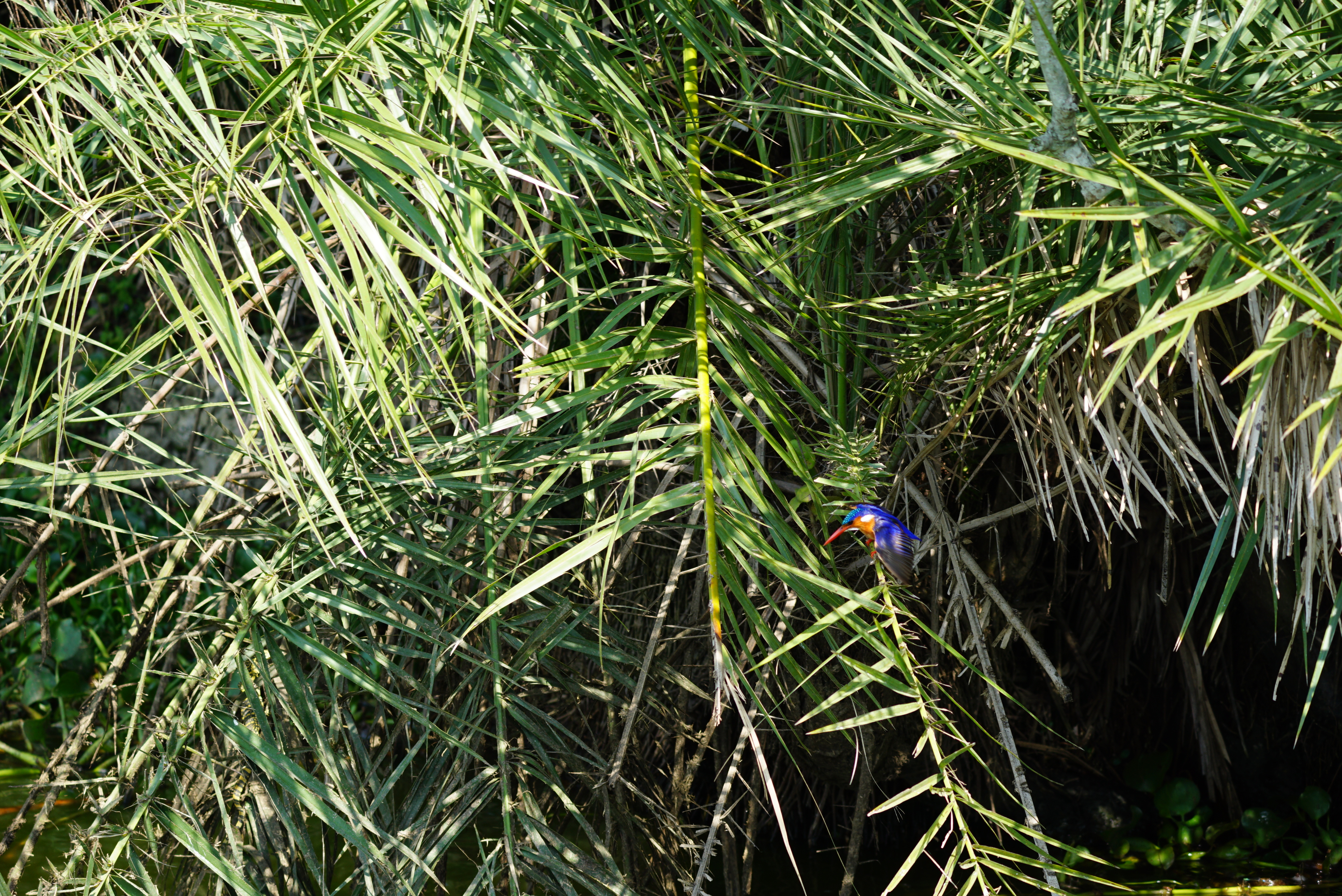
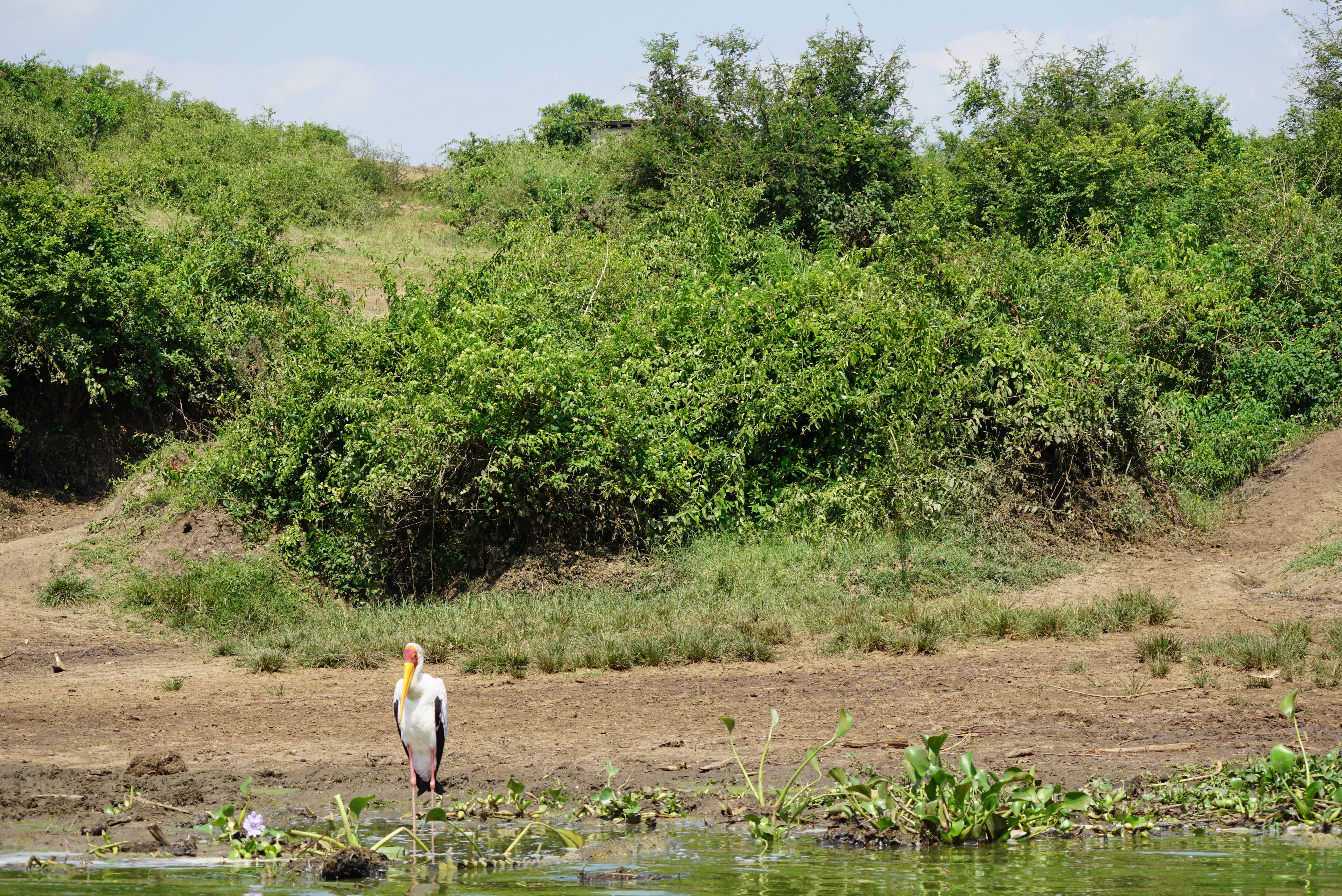
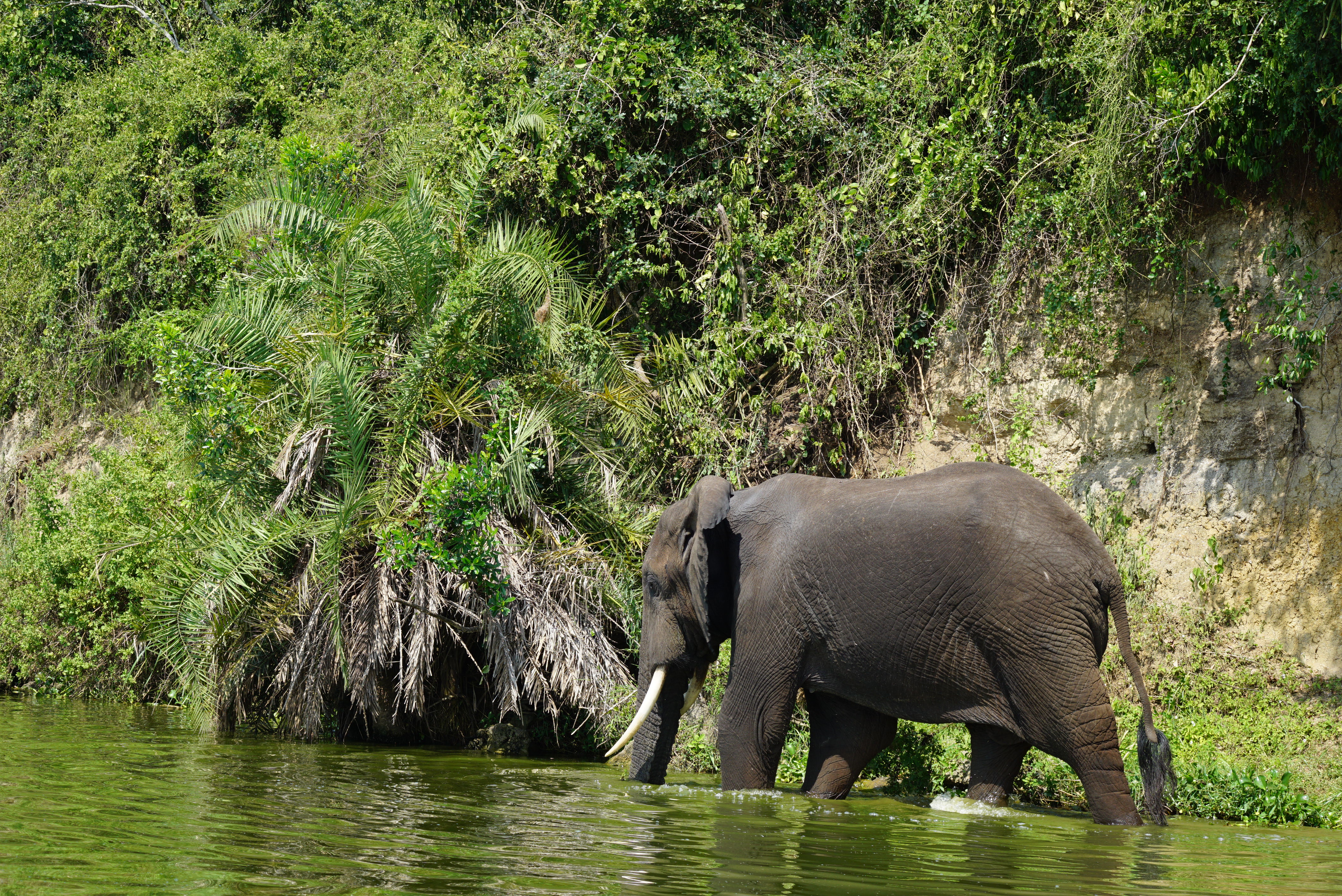
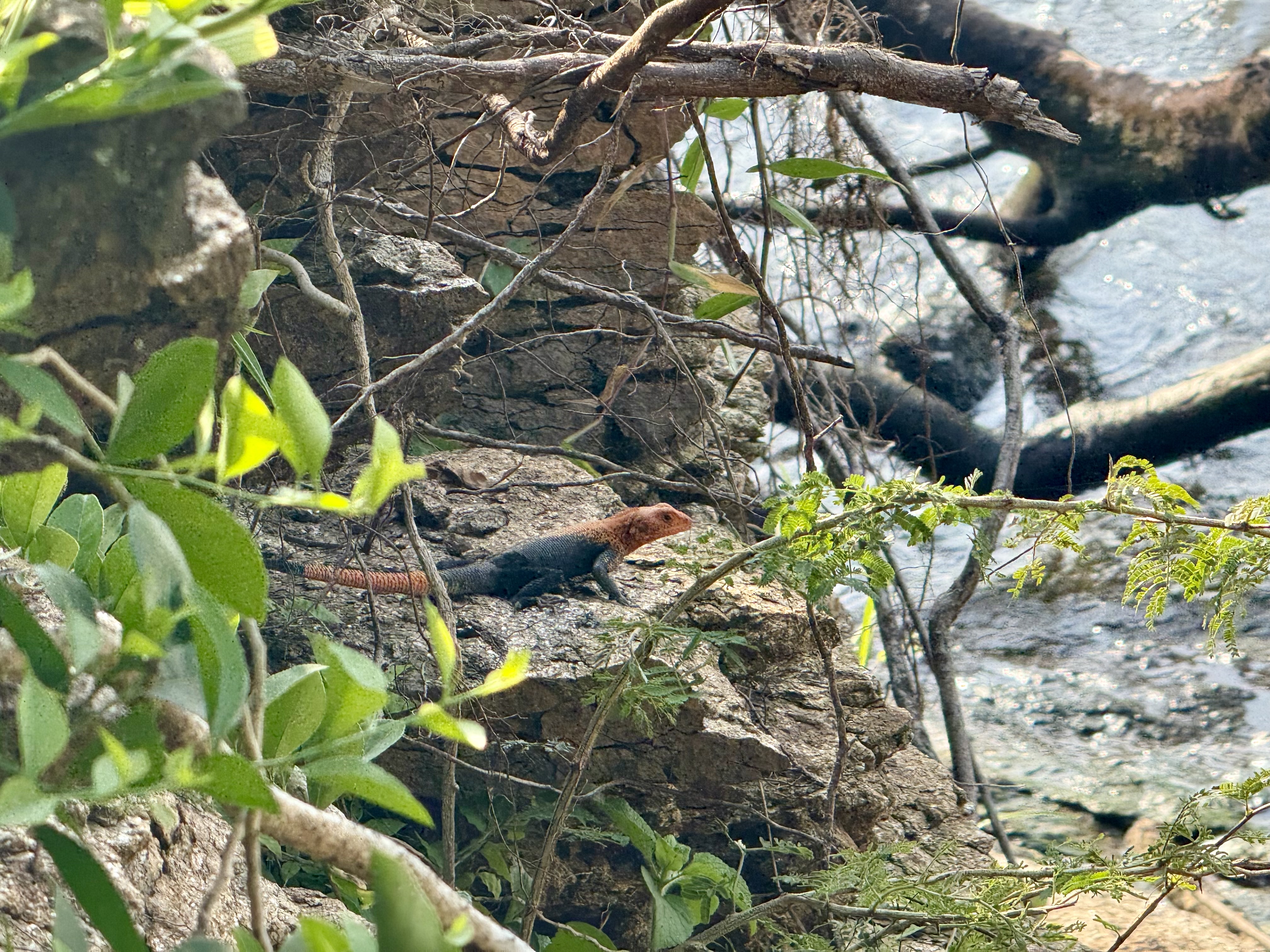
The Channel cruise was a birder’s delight. The ranger on board pointed out Malachite Kingfishers, storks, eagles, and herons. He pointed to a couple of small poisonous lizards on the chalky cliffsides, and explained why a hippo carcass was floating bloated near the shore. We watched some elephants come down to nibble on branches by the shore, one going into the river to migrate from place to place. A mother and calf came down a slope a bit further away, and the baby stopped for a drink of mommy’s milk while mommy went for river water.
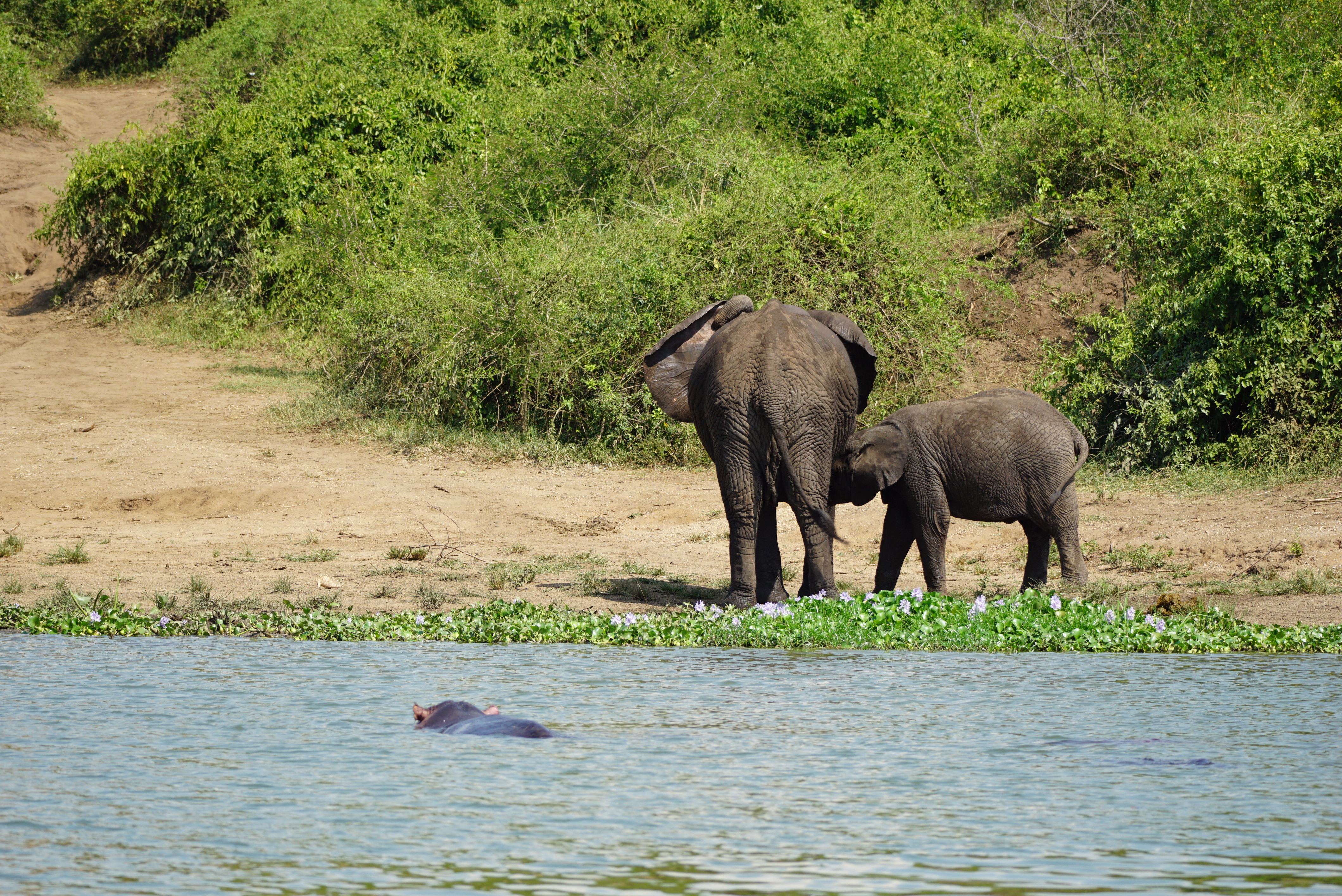
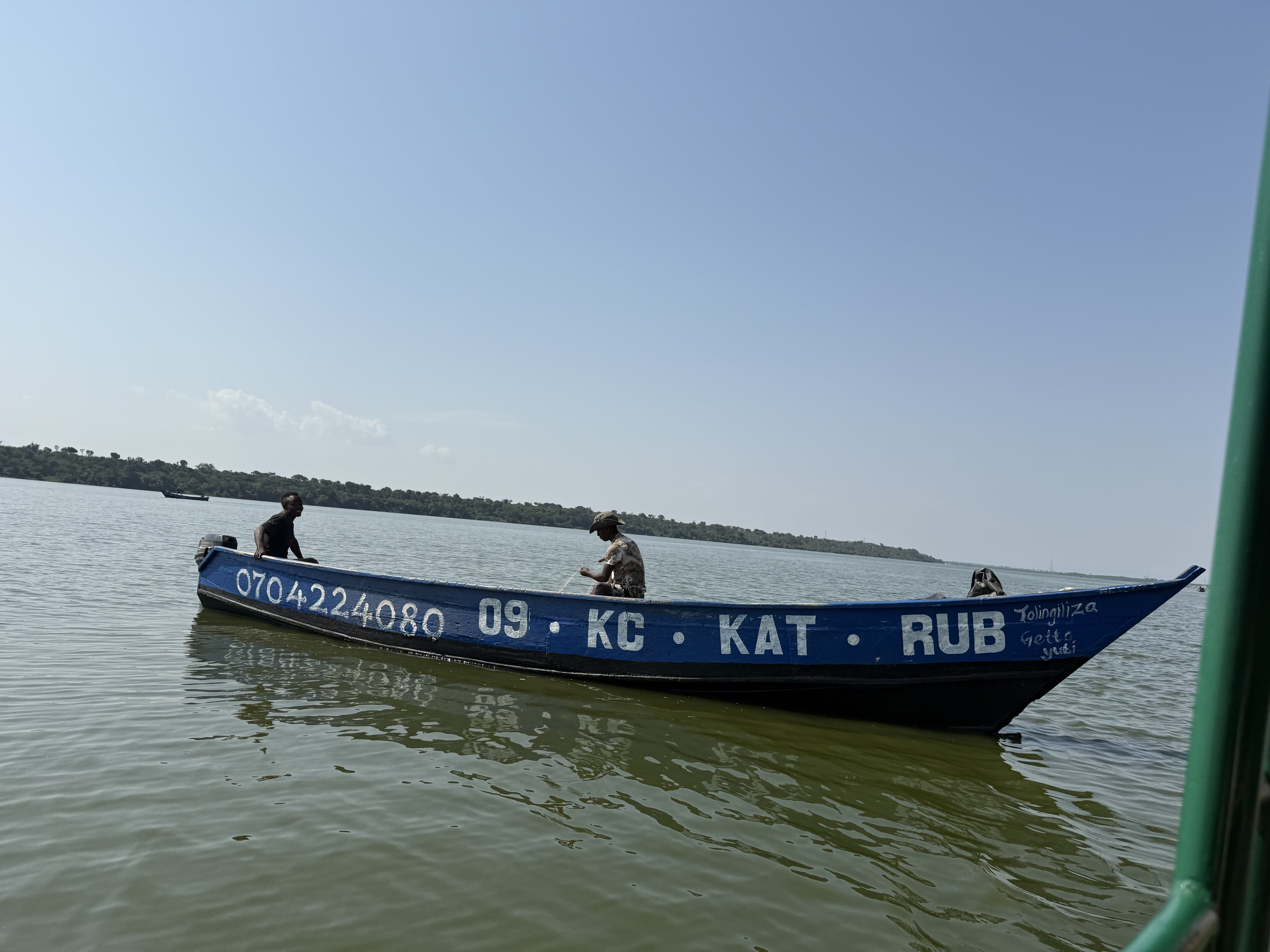
Within the Park, fishing by crocs and hippos is allowed but not by humans. On the community side of the Channel, however, it is for their members, and we saw them with their nets. I was told that they fish from 7am until 6pm rain or shine and that sometimes in storms their boats tip. When they do, the survival rate isn’t very high.
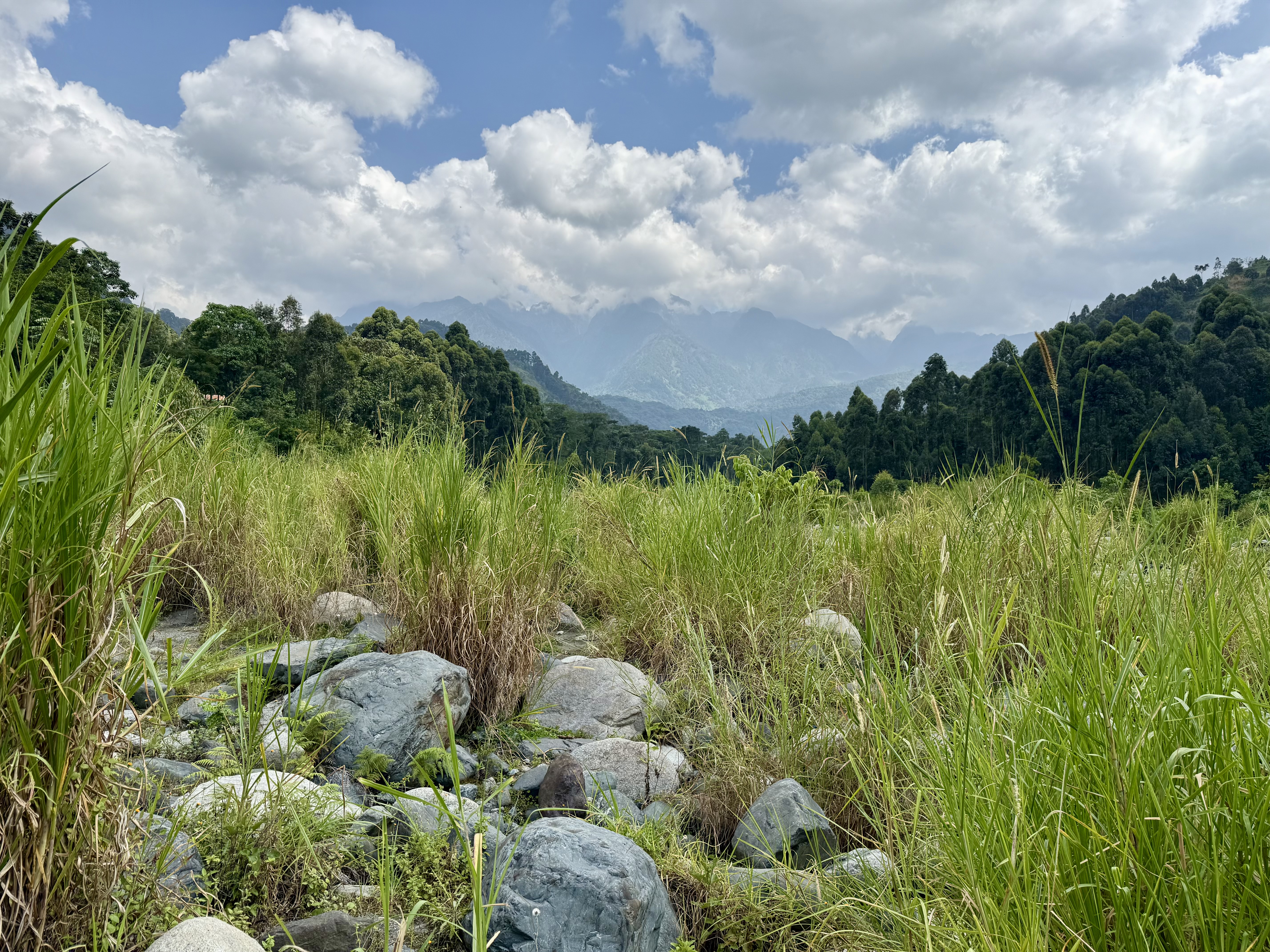
When I planned the trip, I made sure to include a stopover in the Rwenzori Mountains, the Mountains of the Moon. Ever since I saw the movie of that name about the Richard Burton/John Hanning Speke expedition, I have wanted to see these mystical mountains. Ptolemy is regarded as the first person to mention the ‘Mountains of the Moon’, believing them to be the source of the Nile. In 1888, Henry Stanley named the mountains Rwenzori, thereby officially recognizing the local belief that they mean cloud-king or rain-maker. The high peaks are named after British and Italian explorers, including Mt. Speke, Mt. Baker, Mt. Emin, Mt. Gessi and Mt. Luigi di Savoia. The highest is Margarita at 5,109 m (16,762 ft.) Davsafaris was surprised at my request as apparently it isn’t usual to go for just a day. Normally, if one is going to the Rwenzoris it is for the 7-day trek to the summit of Margarita, an equatorial glacier. I knew I wouldn’t have had time for that or even for the 3-day shorter version that only goes to the overlook, but I did want to get into the foothills. The company then arranged for a local Bakonjo guide. The Bakonjo are probably originally from the Congo and speak a Bantu language. When Richard and I arrived at the restaurant/guesthouse to meet our new guide, I saw on the board that they offered three different day excursions. The first was a 1-2 hour village tour including learning about the local Bakonjo people, the second a 3-4 hour forest walk, and the third a 5-6 hour mountain hike. The sky was overcast with dark grey clouds covering the Protopeaks, the four mountains that are in front of the higher range and hide the taller summits, so I decided to go with the Forest Walk. The idea of walking in the higher elevations in the rain wasn’t appealing.
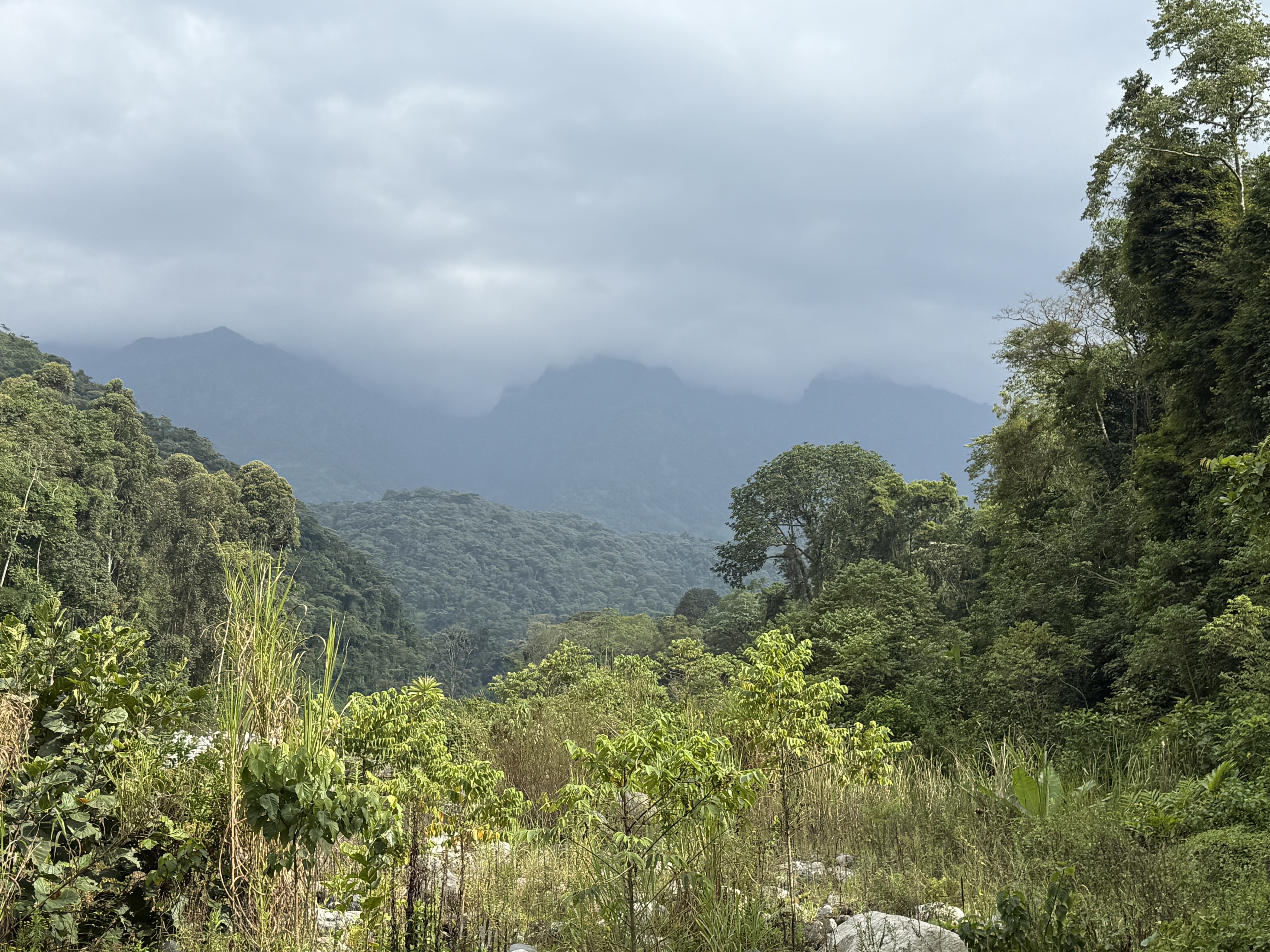
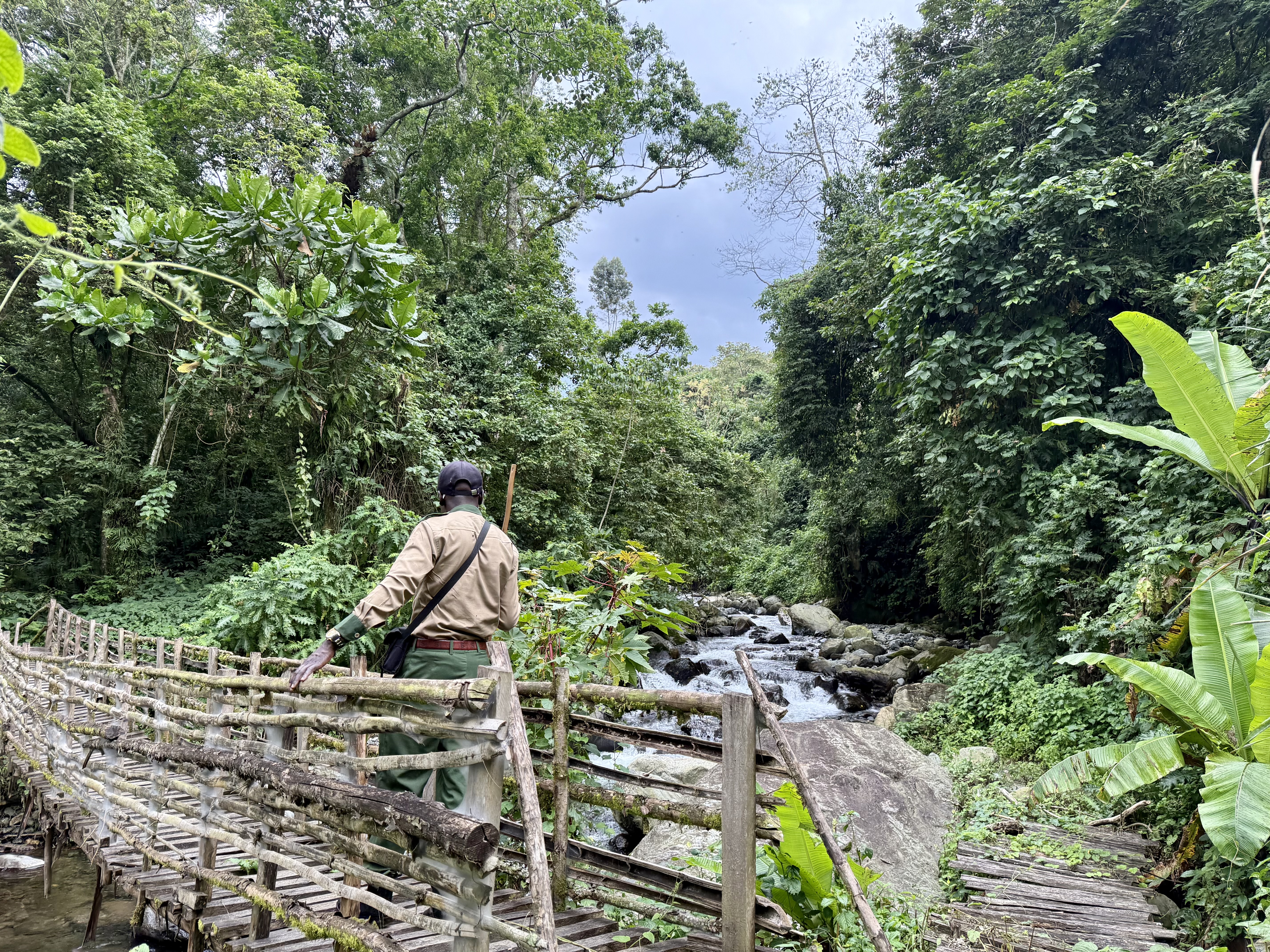
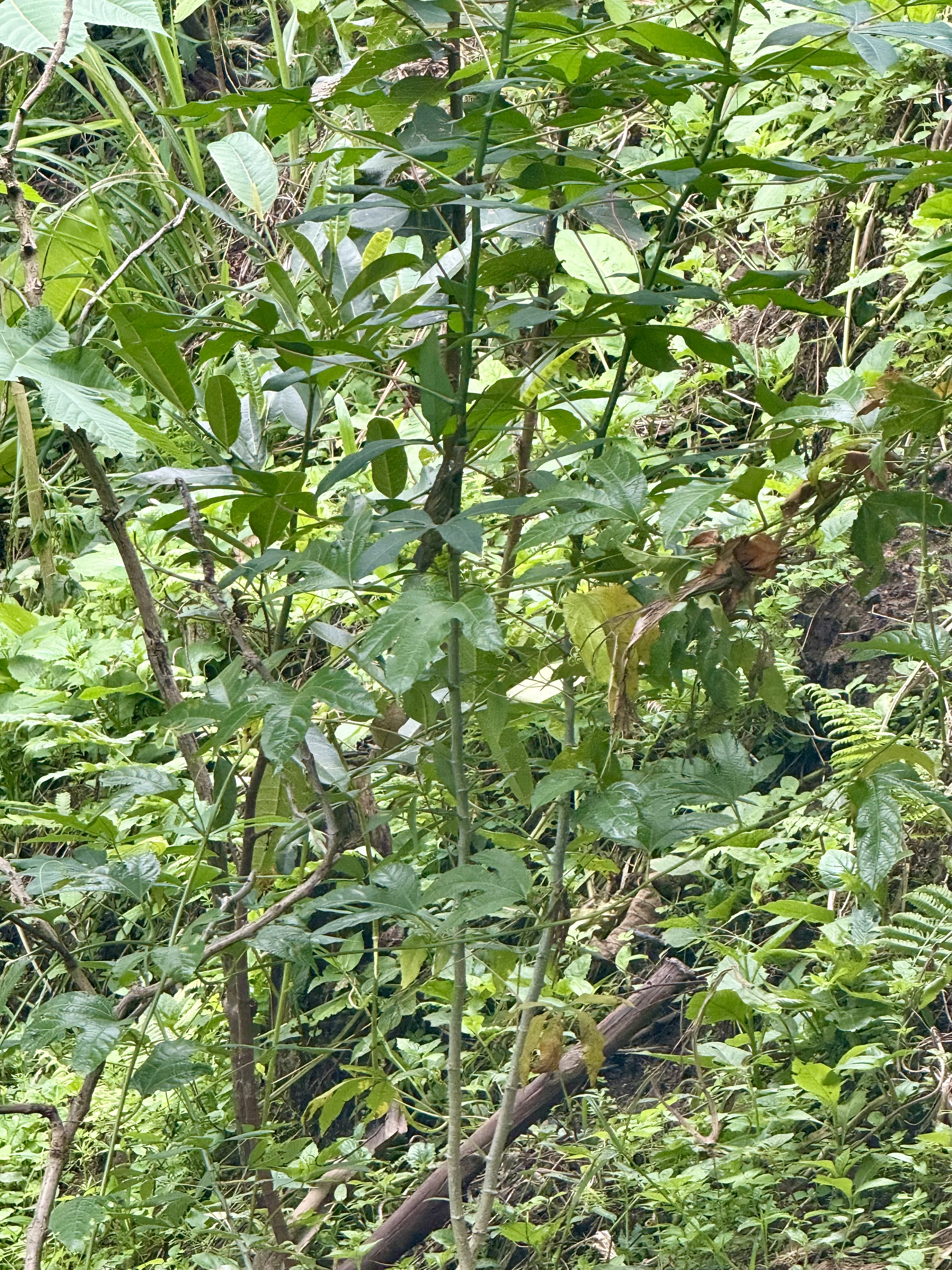
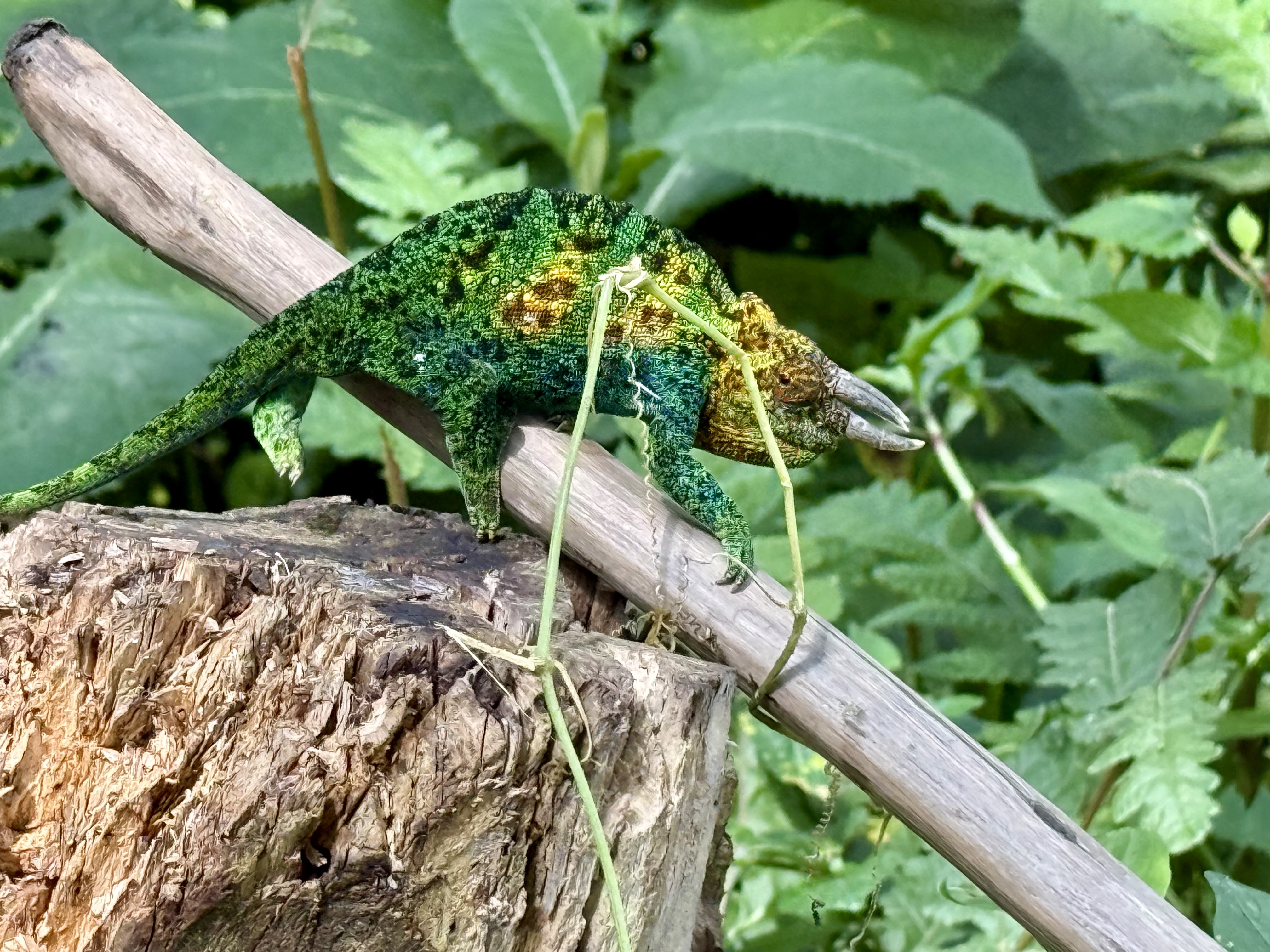
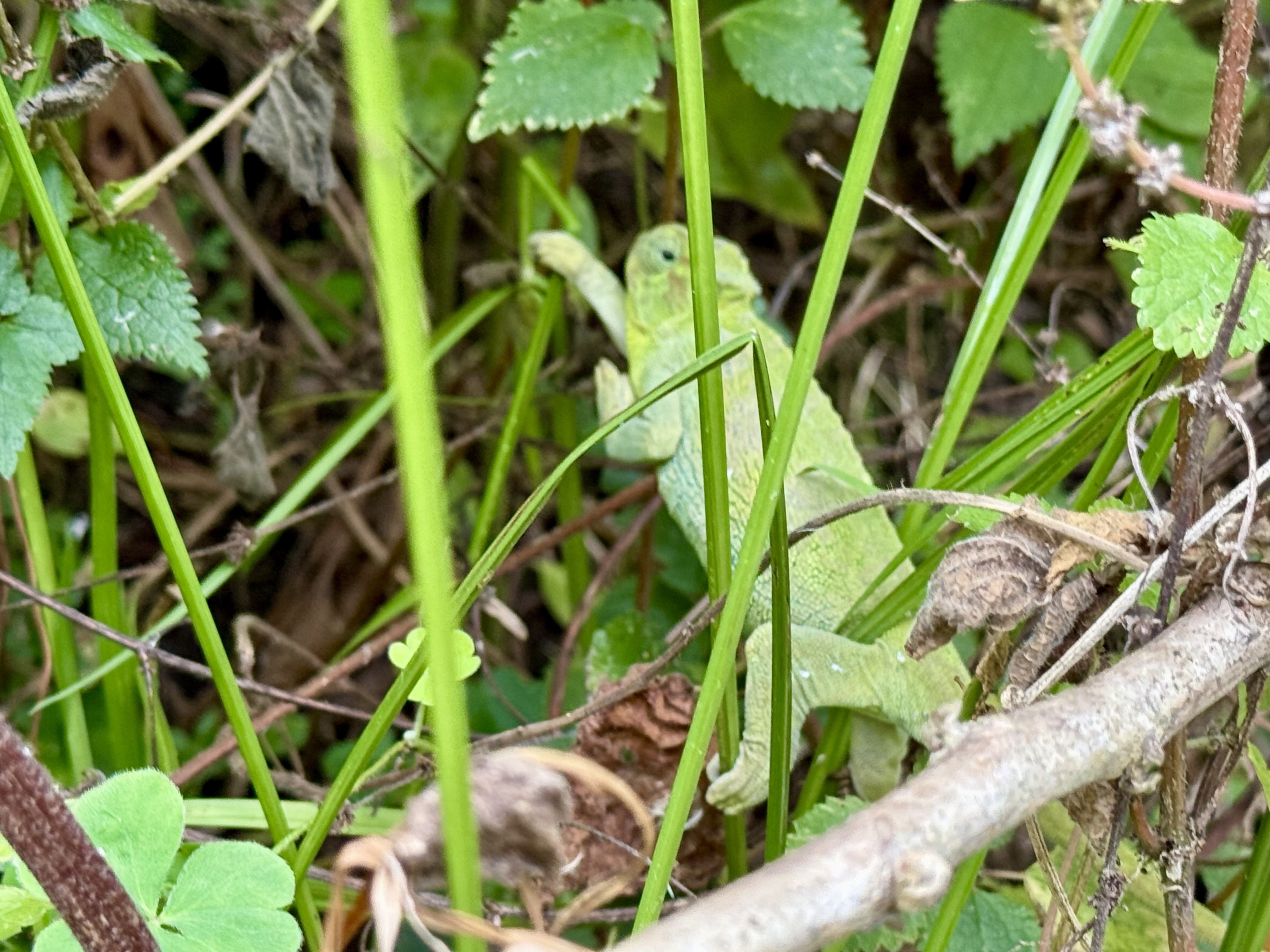
The Forest Walk turned out to be shorter than planned, but it was fascinating. The guide explained about the medicinal uses of various trees as well as how some are used in traditional rituals. One story he told was about how a young man demonstrates he is ready to get married by making fire from the bark of a particular kind of African tree, not by rubbing two sticks together, but by rubbing the bark with a stick. If the young man is not able to make a fire, he is not ready to support a wife and family. When I asked about legends of the mountains themselves, he explained that the highest peaks have a king, Kitasaamba, a queen, Nyabibuya and a grazer/hunter, Kalisa. Kitasaamba lives on the highest peak and according to an article by Danson Sylvester Kahyana in journals.co.za, snow is sometimes described as his sperm. Otherwise, he stays out of people’s affairs. Nyabibuya (sometimes spelled Nyabarika) and Kalisa do interfere and interact with people. Nyabibuya is a goddess who is responsible for the well-being of life; she influences life, death, fertility and harvests. Kalisa is known for his hunting skills and is, according to Kahyana, portrayed as a monster with one arm, leg, ear, half a nose and half a body with the other half appearing human. Both need to be appeased before any undertaking or journey with sacrifices. If someone has done something wrong, one or the other will bring floods to destroy the community. Floods are a constant problem; the glacial melt forms the River Nyamwamba that flows into Lake George (4x4africa.com) and the wooden slat bridges we traversed to cross the rivers that form Nyamwamba are replaced each year as they annually wash away. The spirits of the mountains watch over an area with five eco-zones: Afro-montane from 1,500-2,500m, bamboo 2,500-3,000m, alfroalpine moorland 3,000-4,000m, alpine 4,000-4,500m and snow above 4,500m. I was in the lowest level and the Protopeaks go up to the afroalpine moorland. Within this diverse habitat live 70 mammal species and 217 bird species. The Rwenzoris are now a UNESCO world heritage site. Unfortunately, I didn’t see any of the mammals, even though the park has a few different primate species including chimpanzees, but I did see a couple of chameleons. When they were in the forest, I was unable to recognize them, but the guide climbed up a bamboo tree to bring down a multi-colored horned male. Later he found a green female and I was allowed to hold her. She walked up my arm to my shoulder and then leapt onto a leaf and was gone in the brush. The peaks remained behind the clouds while I was there, but the mountains were nonetheless beautiful.
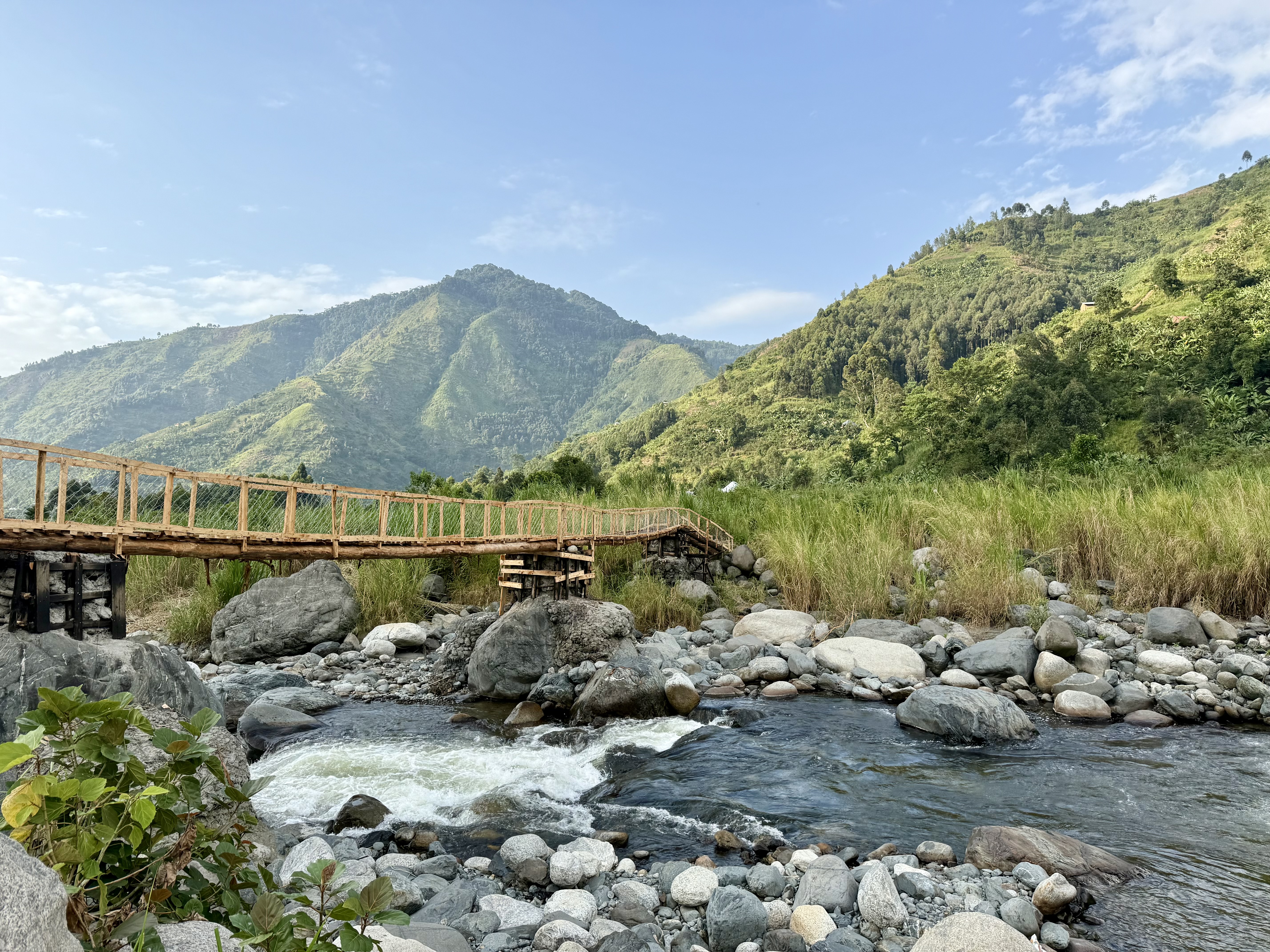
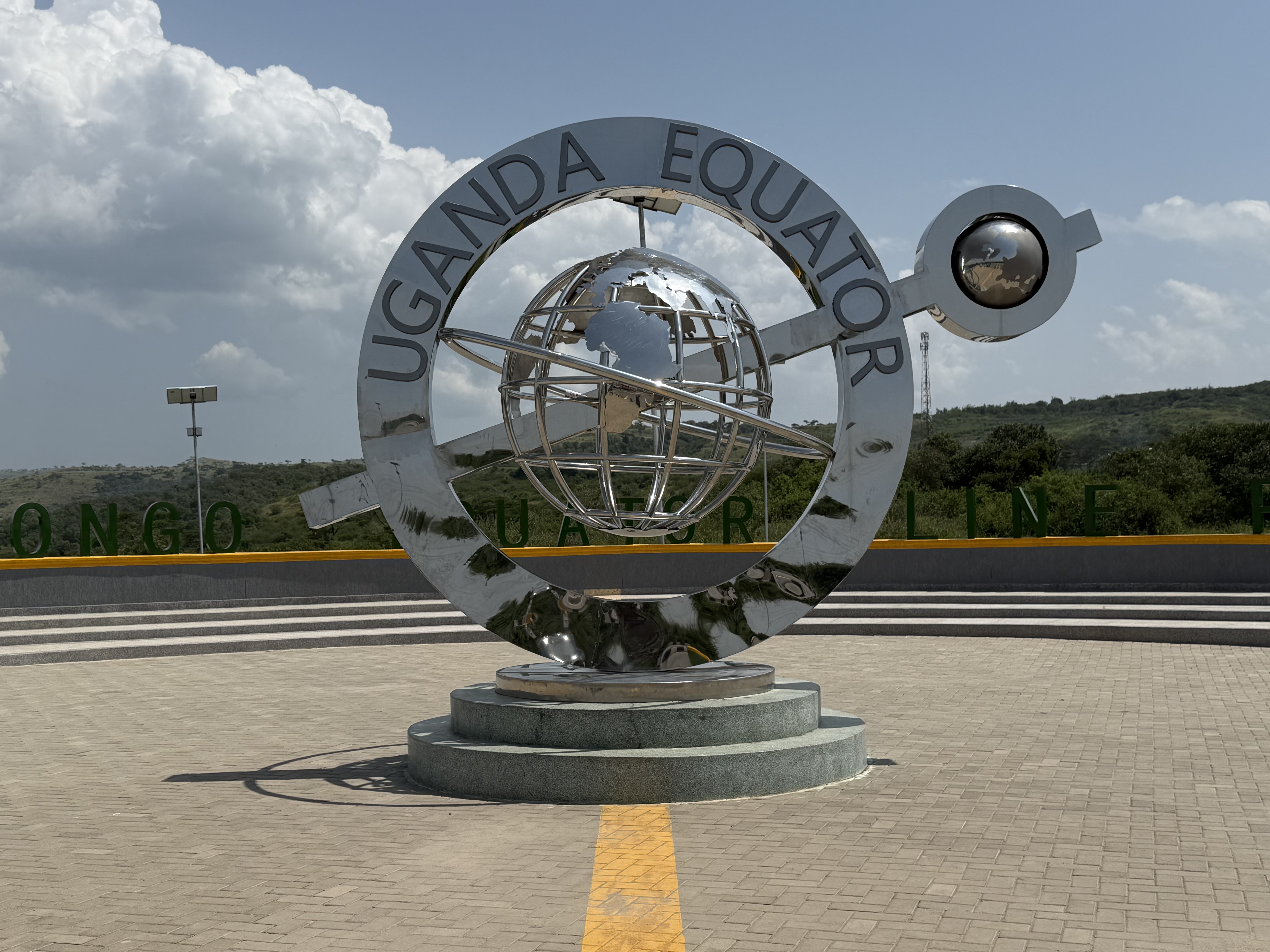
On the way back, we did stop at the equator for the typical photo as we passed by the marker.
The walk was finished by noon, so we had the afternoon free, and I asked that we go back into QENP for a final game drive. As the original plan had been for the visit to be on two earlier consecutive days, which they now weren’t, I needed to pay the $40 entrance fee again. It was worth it for an evening drive. At first it didn’t appear that there was much wildlife out and about. It was fairly hot, and they were probably all sleeping. Warthogs and some kob were around but little else. We came up to a van with guide parked on the side of the road with the inhabitants staring at a cactus tree. The guide said that there was a leopard in the tree. I had not yet seen one this trip and did want to, so we waited. The other van left, and we waited some more. And waited. And waited. There was absolutely no movement in that tree.
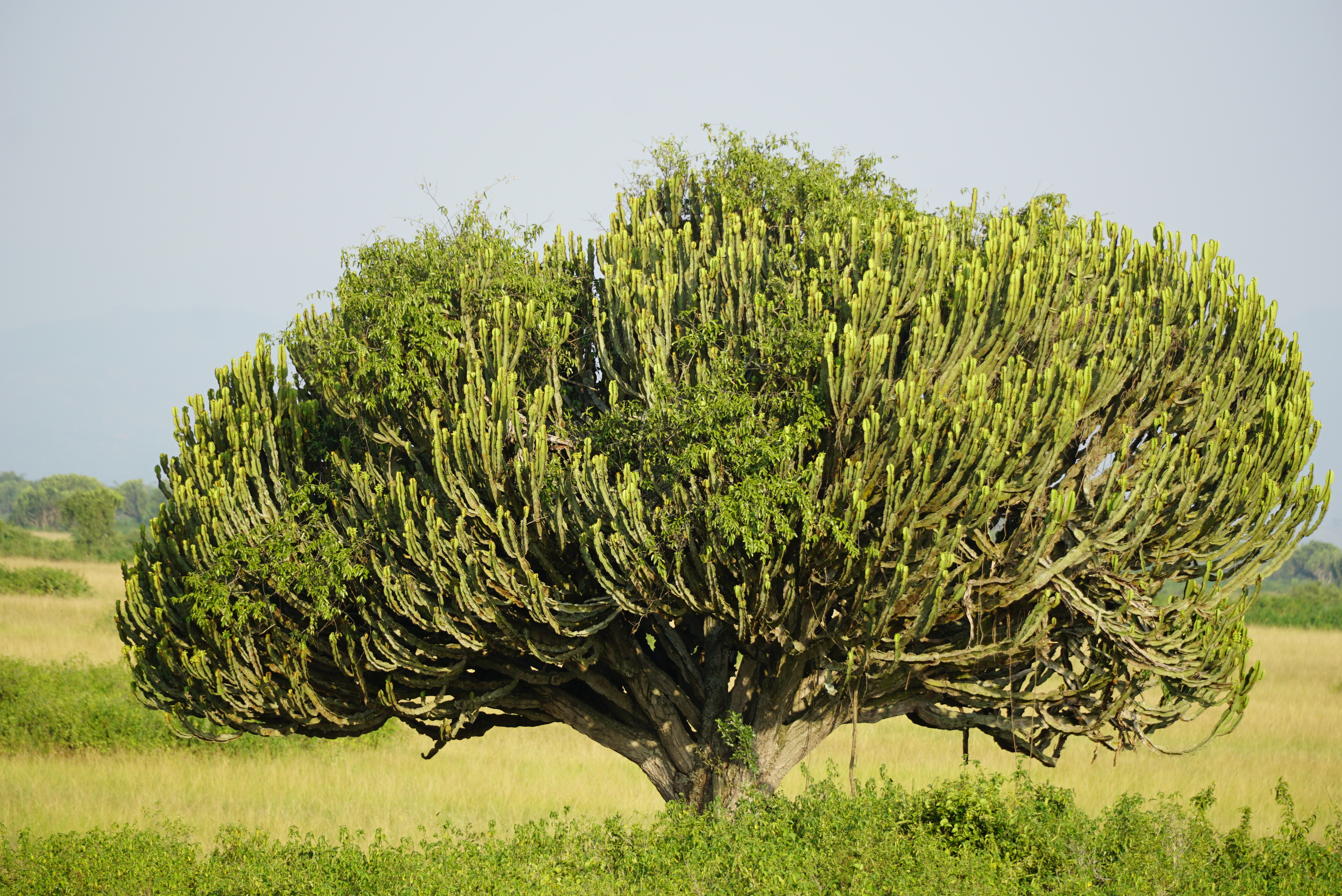
When Richard heard that there were some lions on the other side of the field we drove over to that side and waited with at least 6 other vehicles for some cat movement. Nothing. They were not showing themselves. It was now just about 7pm when the park closes, and I was losing hope. Richard said that he knew of a road out of the park and not to worry about closing time. He drove back to the cactus tree, and we waited some more. Finally, about 20 minutes later a tail switched, then a leg hung down, and a second one. More was not visible with the naked eye, but there really was a leopard in the tree. The Sony camera 350 lens still didn’t seem to show much through the viewfinder, but on the computer a leopard really is visible.
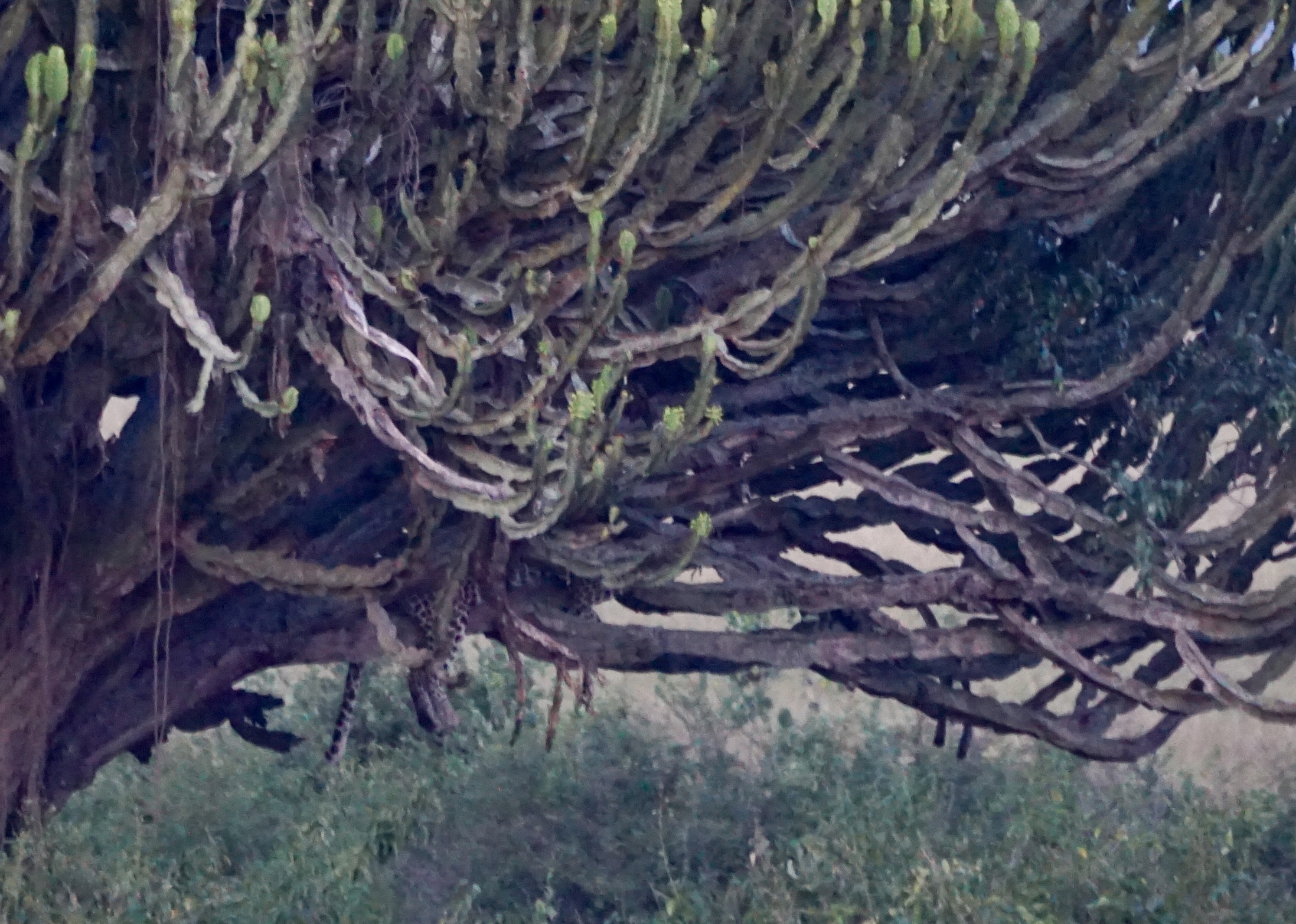
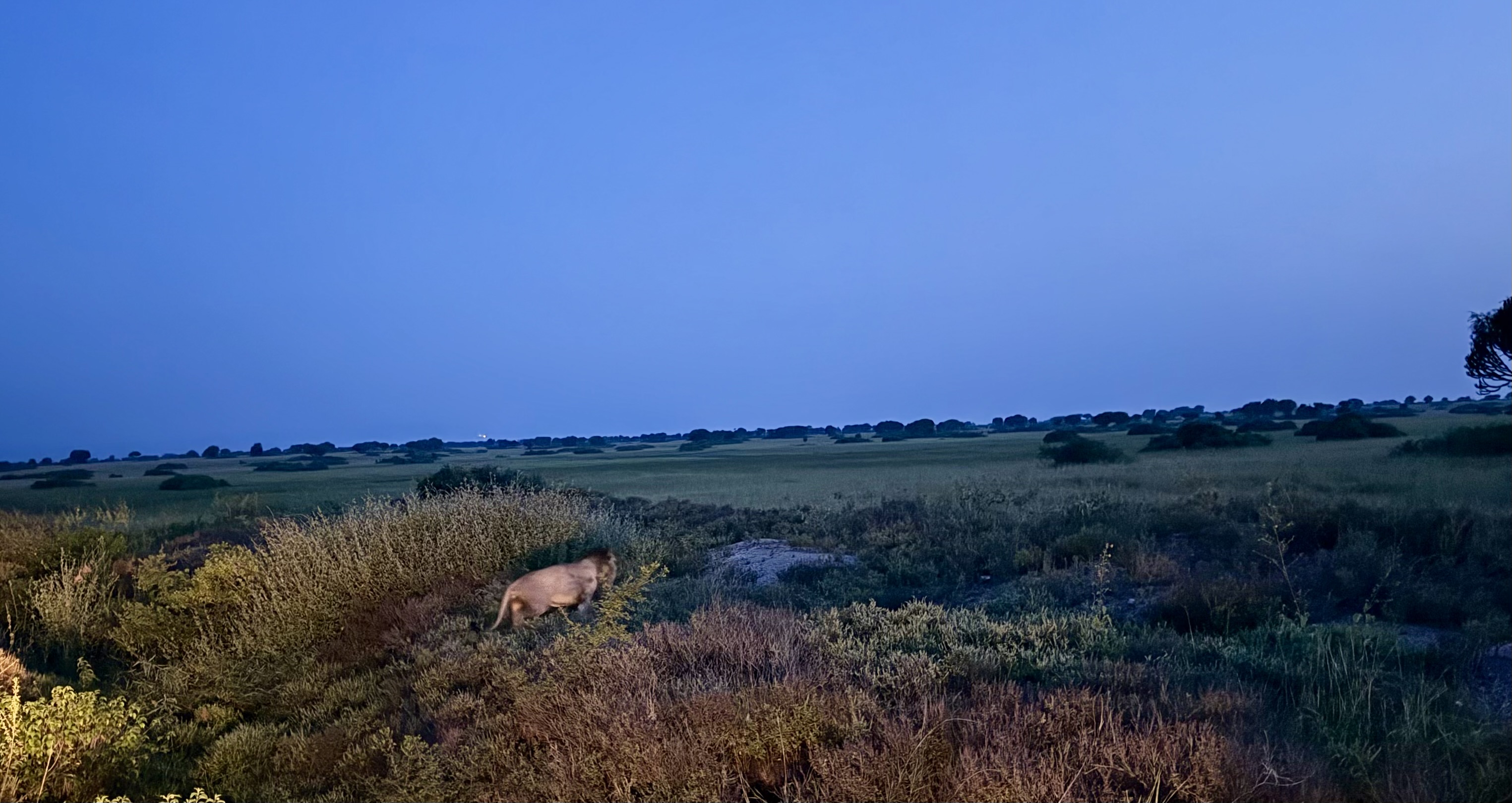
After seeing the tail and legs and realizing that this cat was not going to a come down, we headed back to the lions just in time to watch the male wake up and come out into the cooler evening air. The leopard and lion were the capstones of a wonderful QENP excursion.
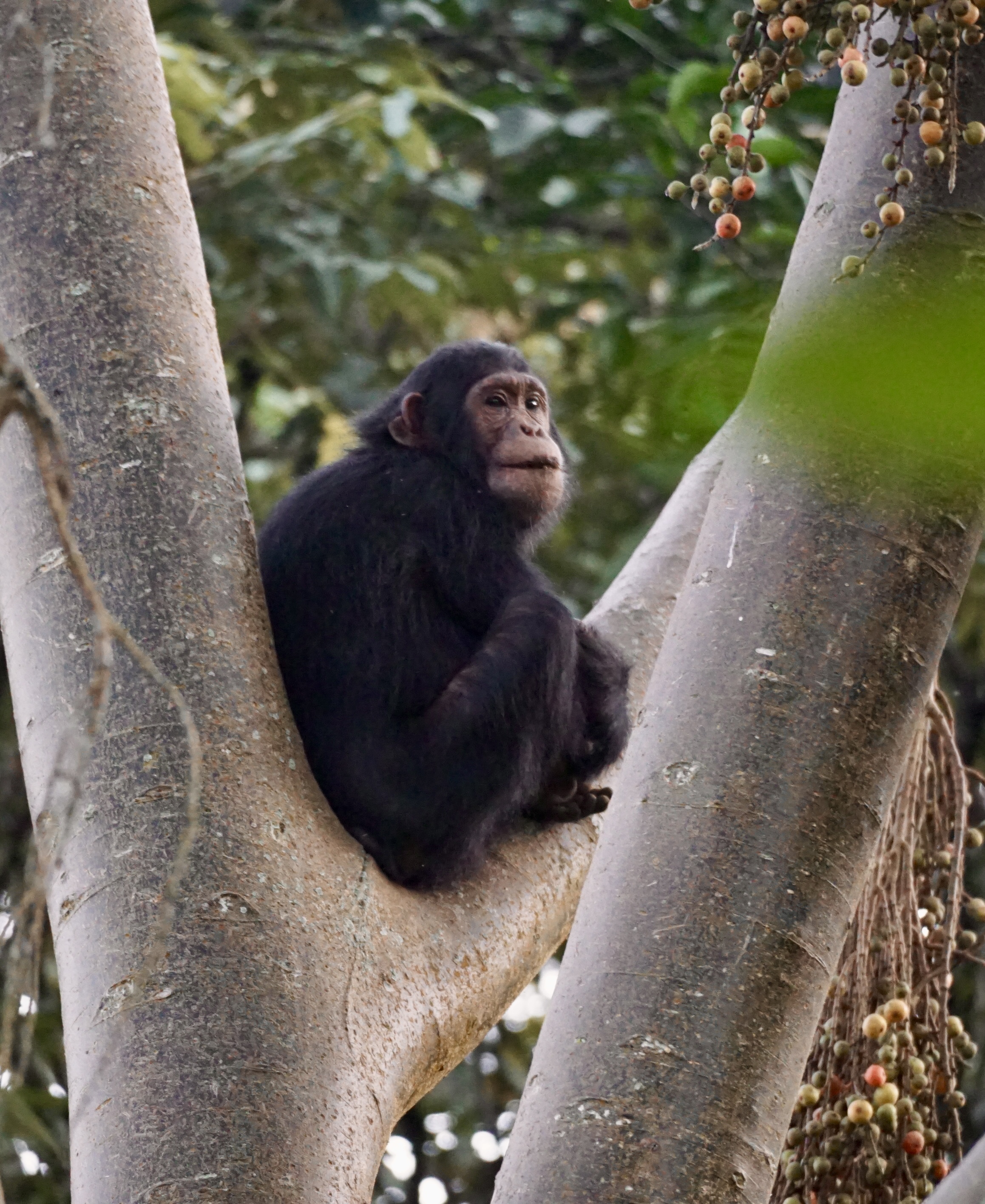
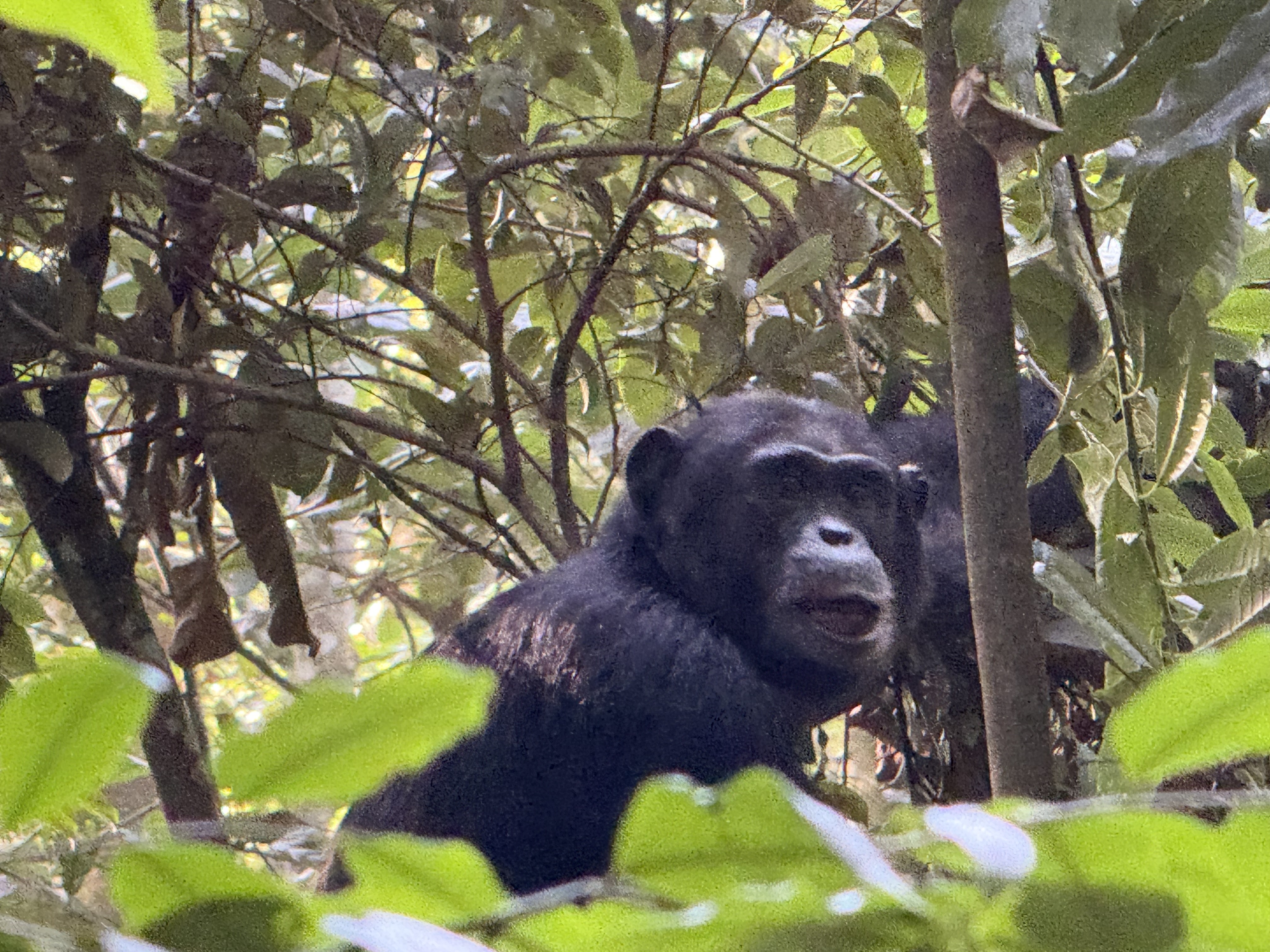
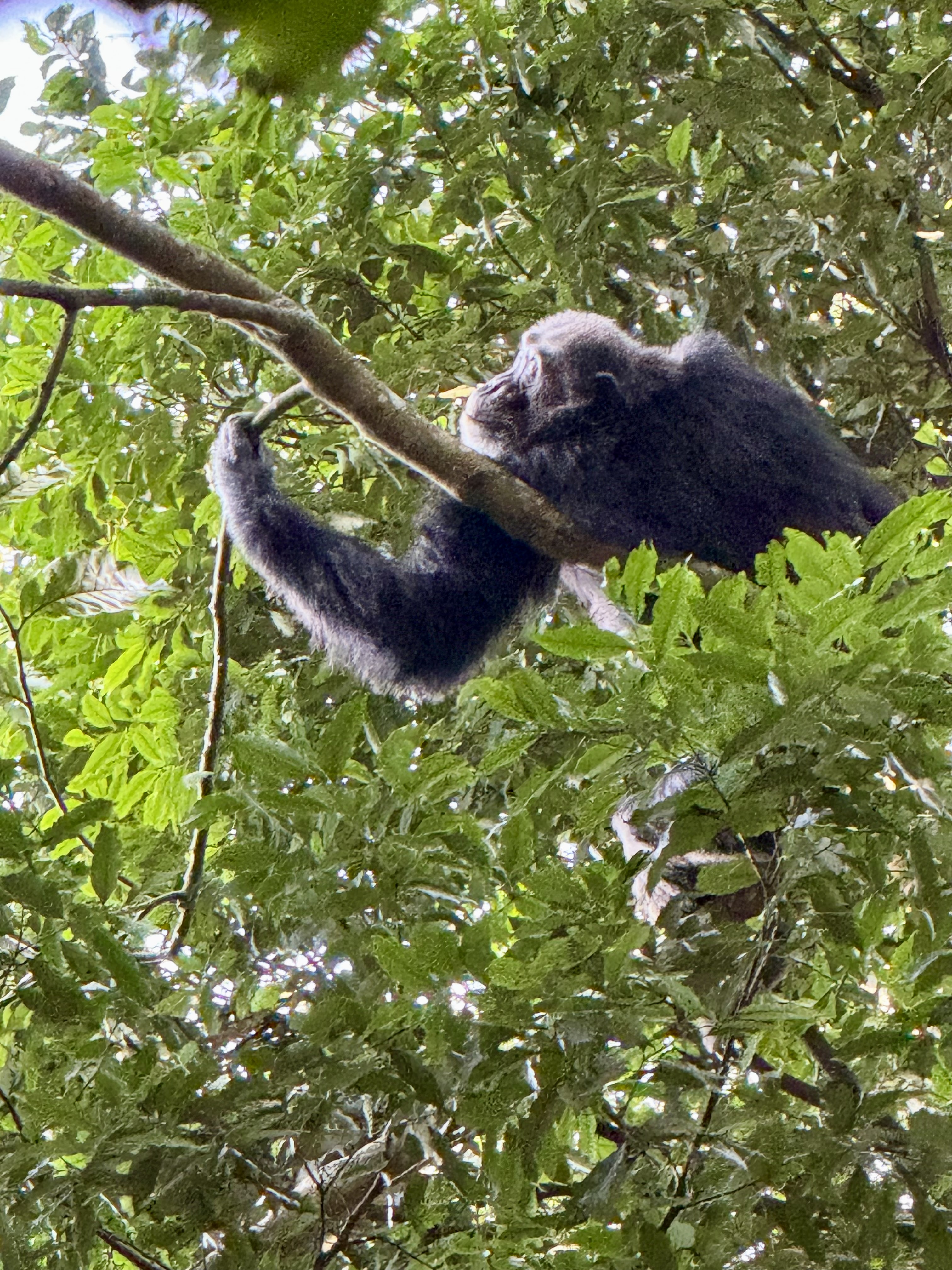
On the last day in Uganda, we started the long journey back to Entebbe and the airport with a stop first at the Kalinzu Forest. The Forest has 414 tree species, 377 bird species, 262 butterfly species and six small to medium sized primates: baboons, blue, black and white monkeys, l’hoest, red tailed colobus and about 300 chimpanzees. Most people go to Uganda to see the gorillas. To do so costs $1000 for the morning, with up to an hour with our closest genetic match. I clearly could not afford this. The Chimp excursion that the company suggested in a larger forest would have cost $250 and again, this was more than my budget could handle. The walk in the Kalinzu Forest was $130, and I decided that this was perhaps my only chance to see a chimp in the wild, so I paid extra for the morning jungle walk. We didn’t walk very far, perhaps only about 15 minutes or so before we came across the first of many chimpanzees. They were screaming loudly before we could see them. The ranger explained that they do this not to frighten people, which would have been logical, but rather to establish where they are located. They want to know who is where. Up in the canopy there was a couple having sex, after he was done, he stretched and came down to grab some food/fruit from a nearby tree. He then pissed on a female on a lower branch. Not exactly very gentlemanly. A silverback swung over to a branch where he laid back as if on a sofa, just hanging out in the tall trees. A young teenager climbed down from his perch to sit on the ground and eat, looking at us while also inspecting his surroundings. Other chimps jumped from branch to branch trying to avoid us humans. It was a fabulous morning and a wonderful finale to my Uganda safari.
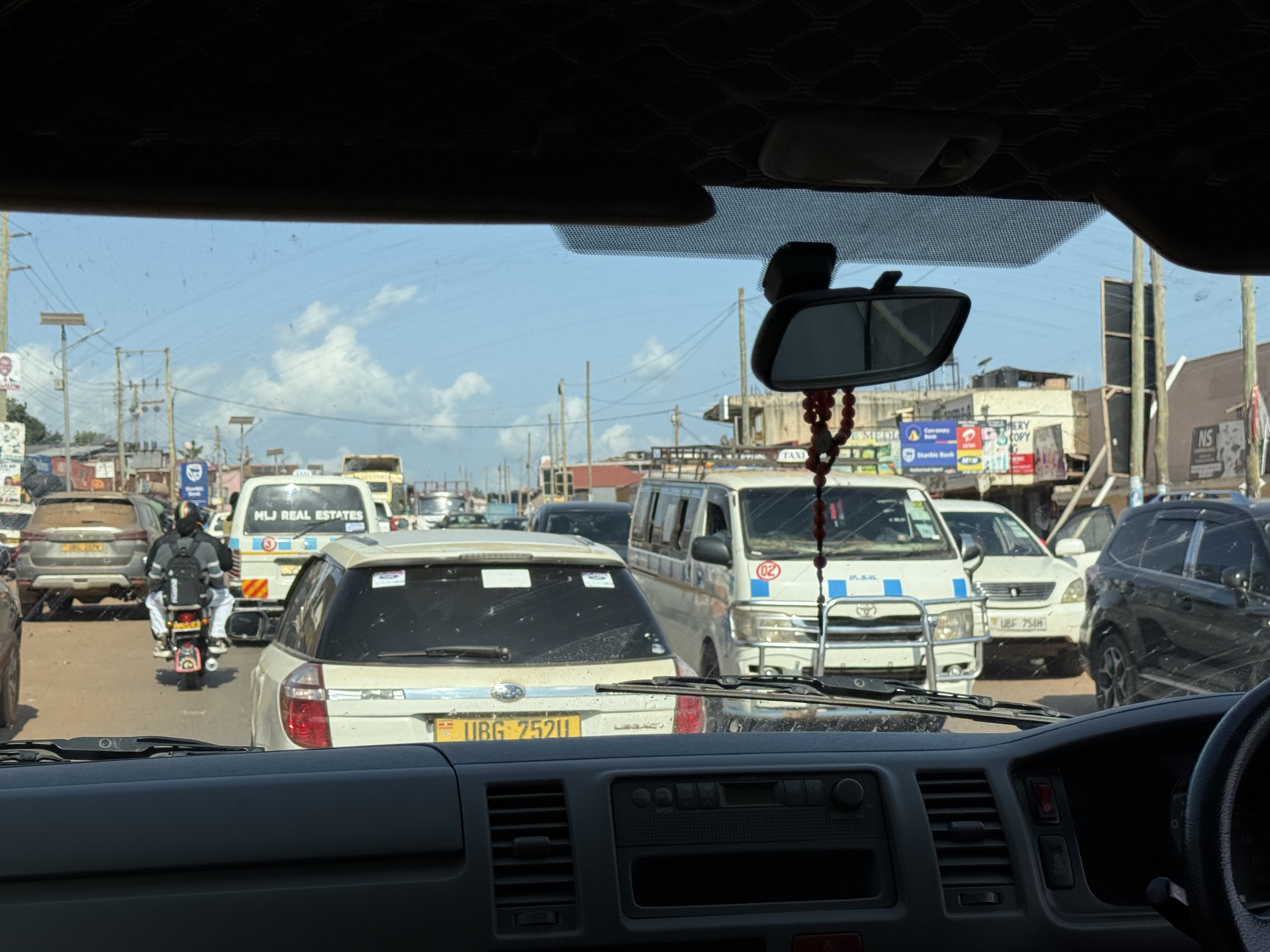
The trip back to the airport was long and congested, but we got there by 6pm in time for my 20:50 Kenya Airlines flight back to Nairobi. I had gotten the ETA the day before.
Richard was a good guide/companion on this trip. Both with him and with Godlisten, I was able to keep up my tradition of bringing local guides to places in their own country they haven’t been. In Tanzania, Godlisten had not been in the church or on a couple of the paths we took and in Uganda, Richard had not been on the back road from Jinja to the main road towards Murchison Falls, nor had he been in the Rwenzoris. I think when his boys are older, they are toddlers, he will bring them. In Kenya, I’m not sure, but I believe that there were some roads in Amboseli and from there to the border that Robert had not yet been on, but this wasn’t a conscious effort on my part. My experience of each of these three safari countries was different. Considering just the safari parks, Kenya’s Tsavo and Amboseli and Tanzania’s Ngorongoro were clearly the most amazing, with Tarangiri coming in a close second with the tree lion and playful giraffes. More time was spent in Uganda, so there were more cultural experiences than in the other two countries, and the Rwenzoris really are spectacular even when the peaks are shrouded with mist and clouds. All in all, the entire trip was amazing. The wildlife in East Africa’s national parks is healthy and growing. It was a blessing to see.

 omegoodyssey