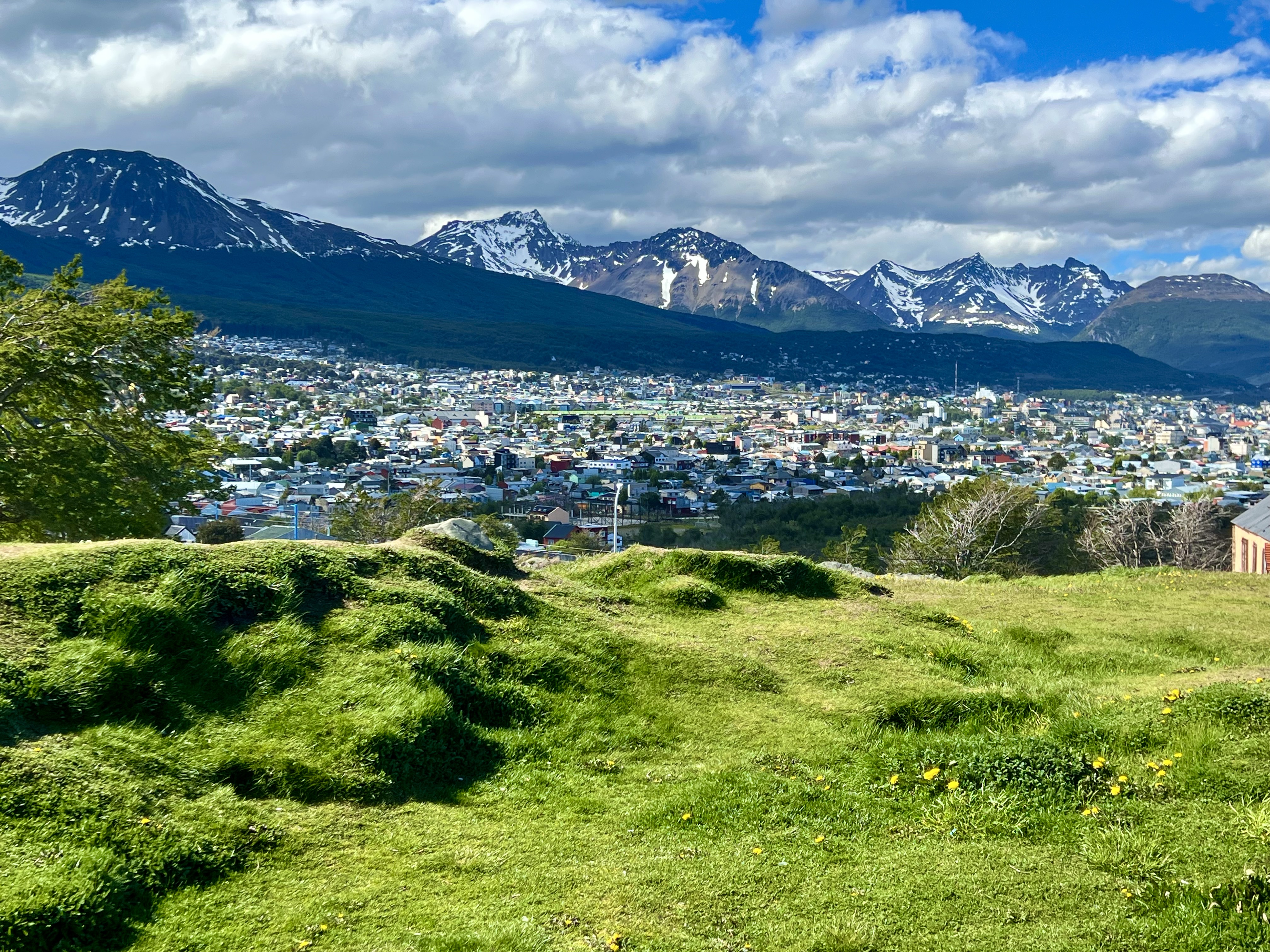
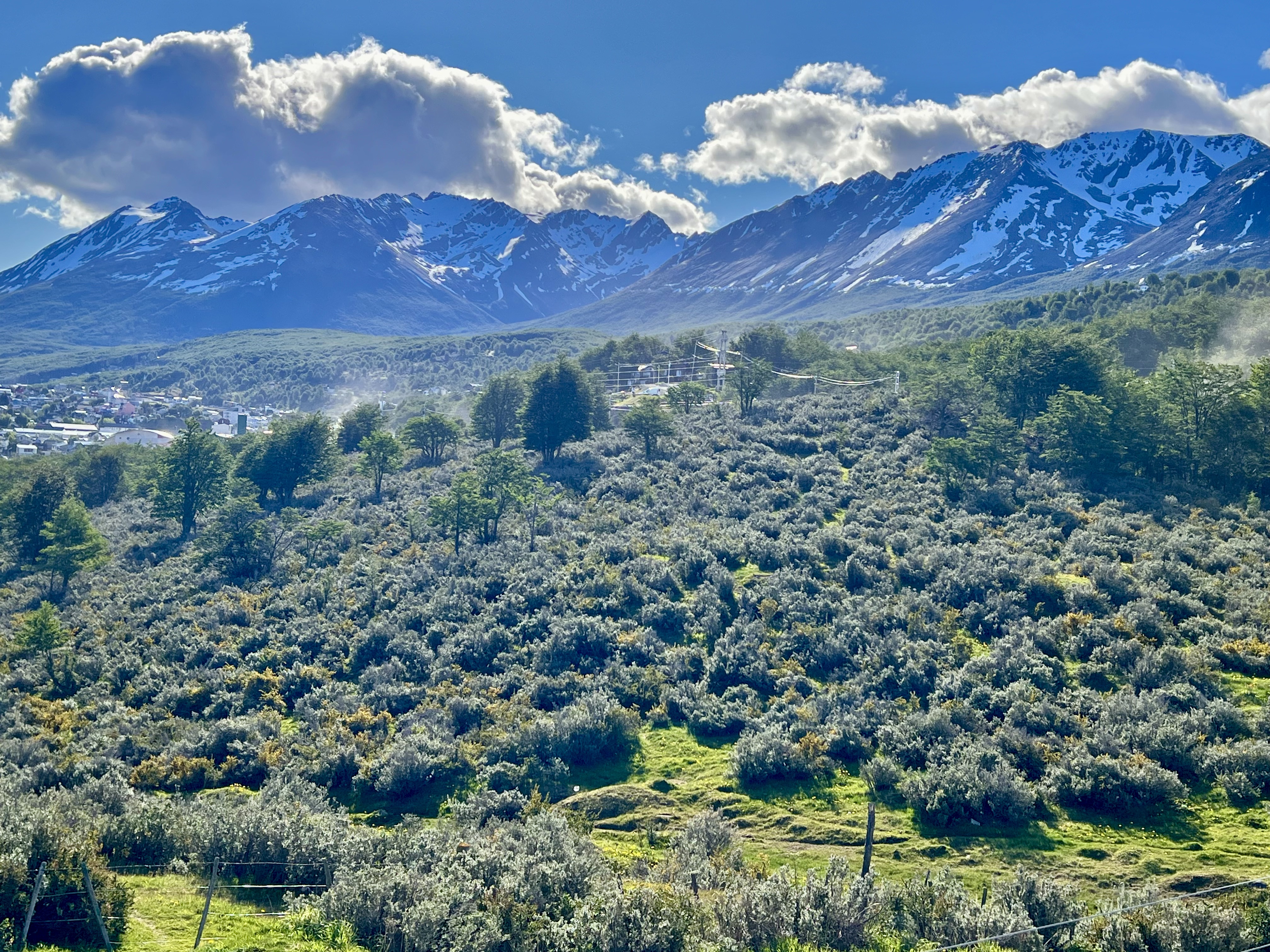
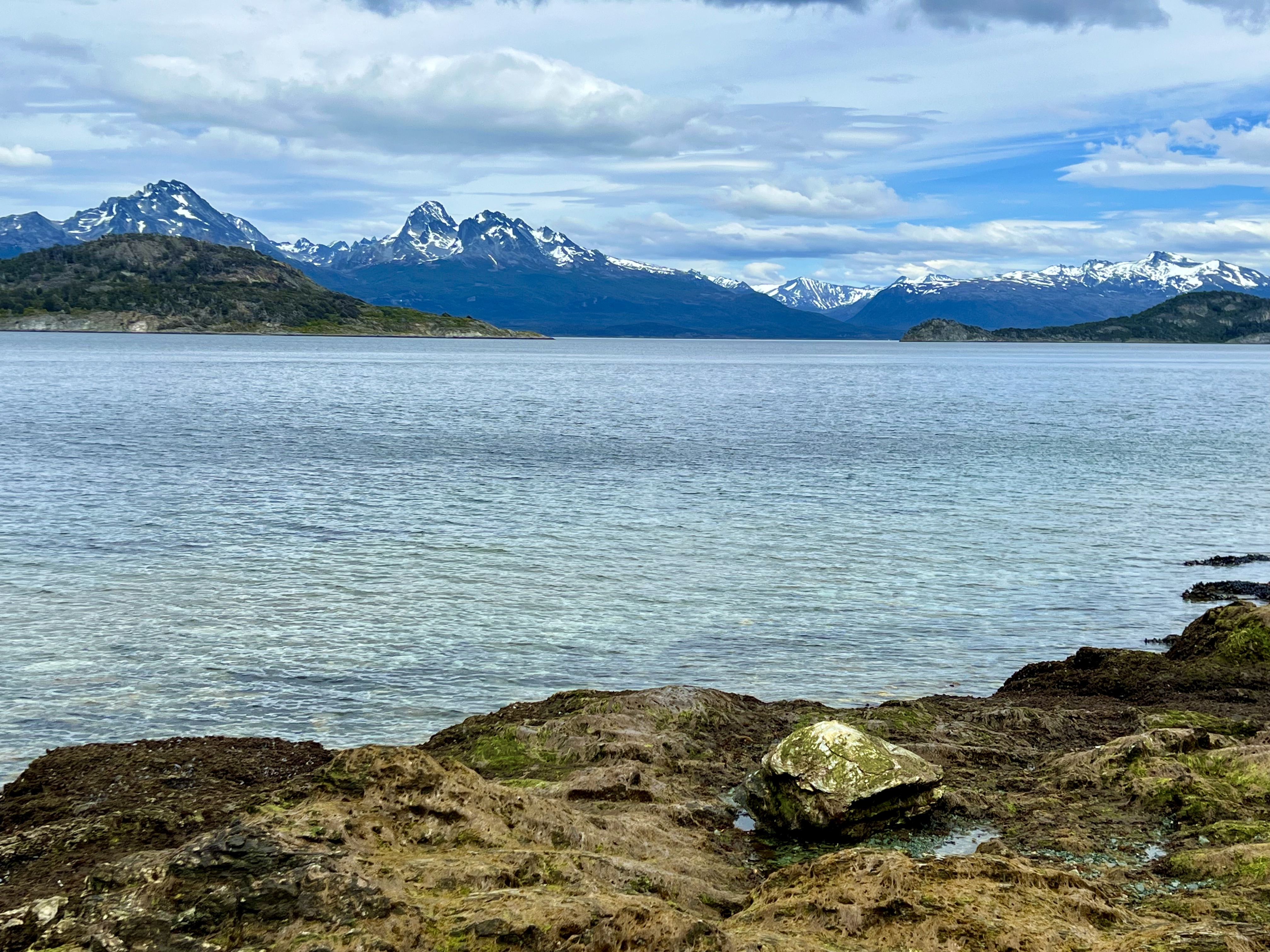
Ushuaia is marketed as the “Fin del Mundo”, the end of the world, and I guess it comes close. The area is magnificently beautiful with snow on the mountains surrounding Beagle Canal with deep green tree-covered slopes up to 600m, and the barren rock and snow-faced slopes above that. The mountains here are relatively low, they only go up to about 1,600 m in the vicinity around town, and only up to 2,500m further afield, but they are steep and impressive as they rise from the oceans’ waters. Ushuaia lies directly on the Beagle Canal connecting the Pacific and Atlantic Oceans; it is 100km from either side. The weather wasn’t quite as cold as I’d imagined, but I got incredibly lucky with some sunshine each of the five days I was here. This apparently was very fortunate according to the people who live here. I did get a taste of their normal wet and windy weather, though, as the weather changes fairly quickly. In Michigan there was a saying that if you didn’t like the weather, wait five minutes, here it’s more like five seconds. It can go from sunny to windy in a heartbeat with thunder and lightning not far behind. And the wind can be brutal.
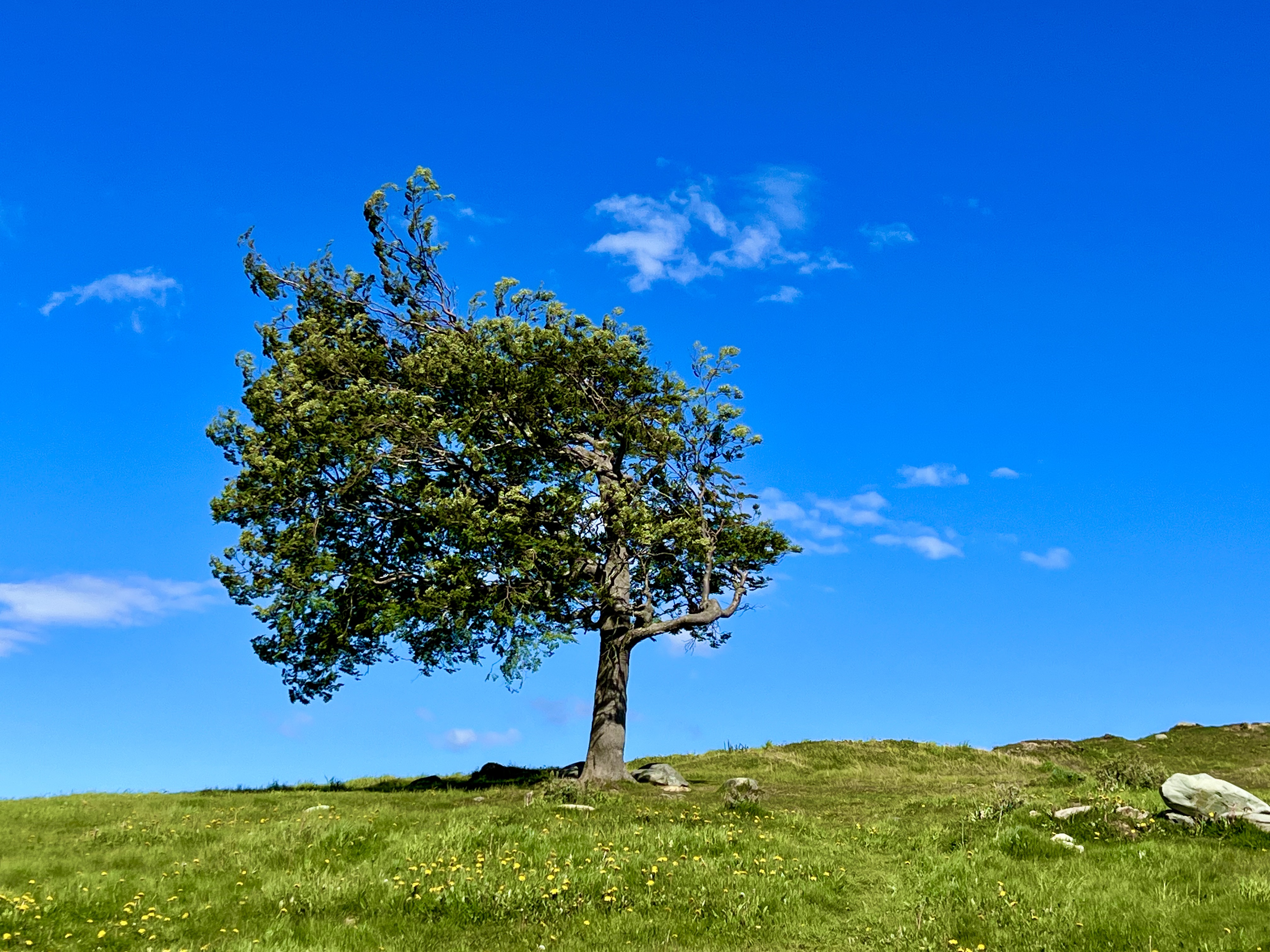
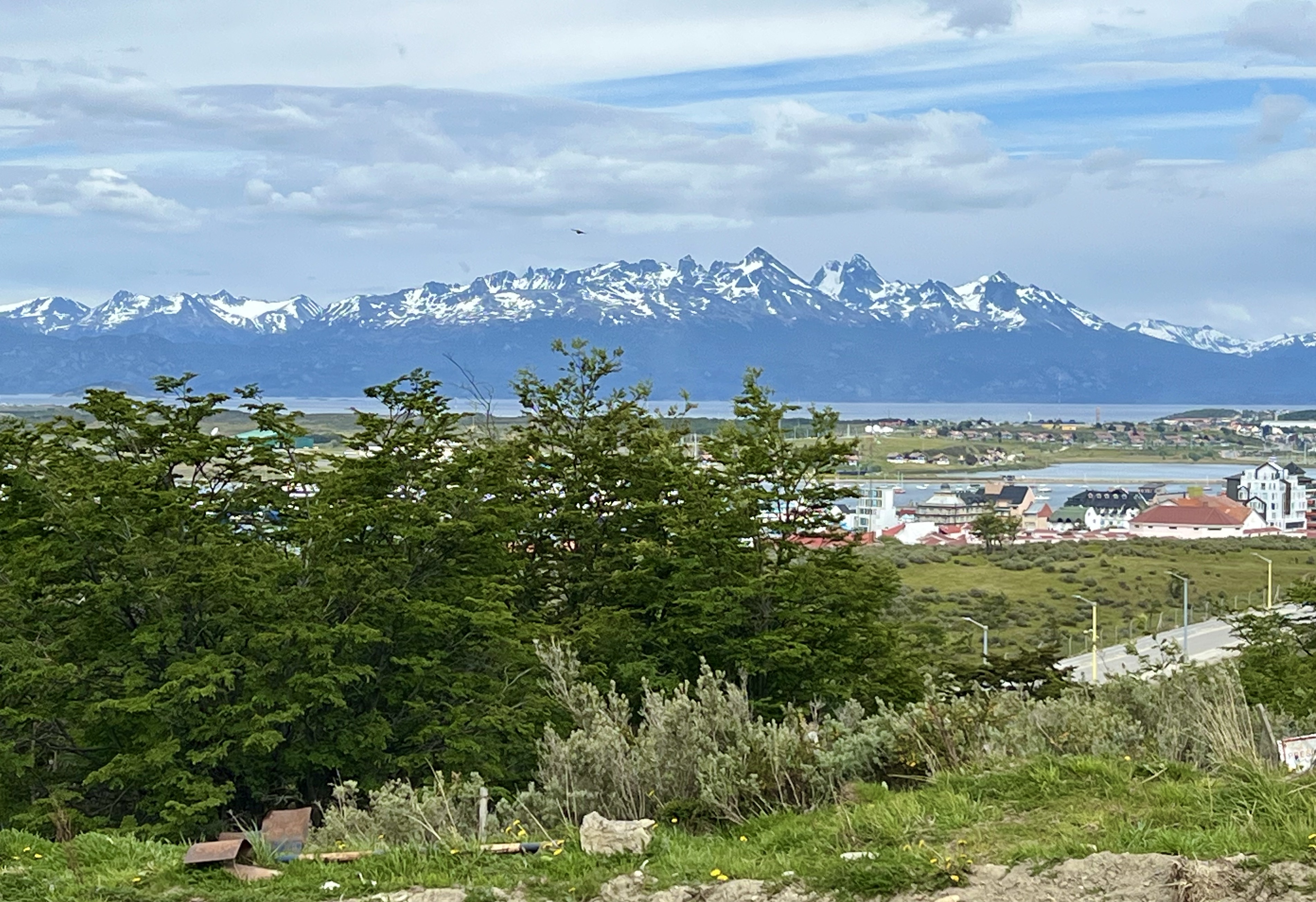
The day I arrived, I spent in town just wandering around to get my bearings. The downtown is large enough to be interesting, yet small enough to comfortably walk around. My room was about a half hour’s walk away up in the hills, from where I had an absolutely incredible view of the town, harbor and mountains all around.
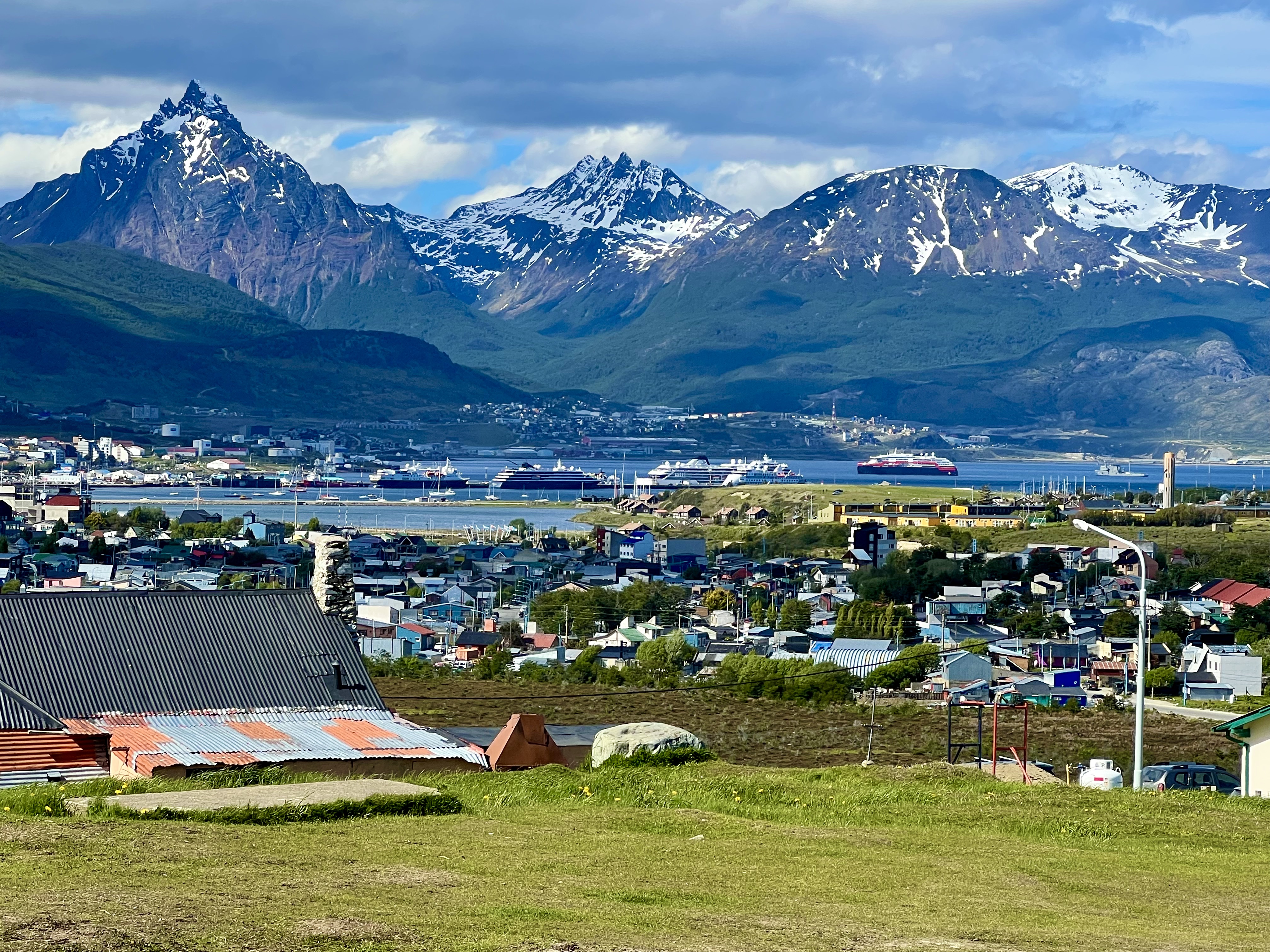
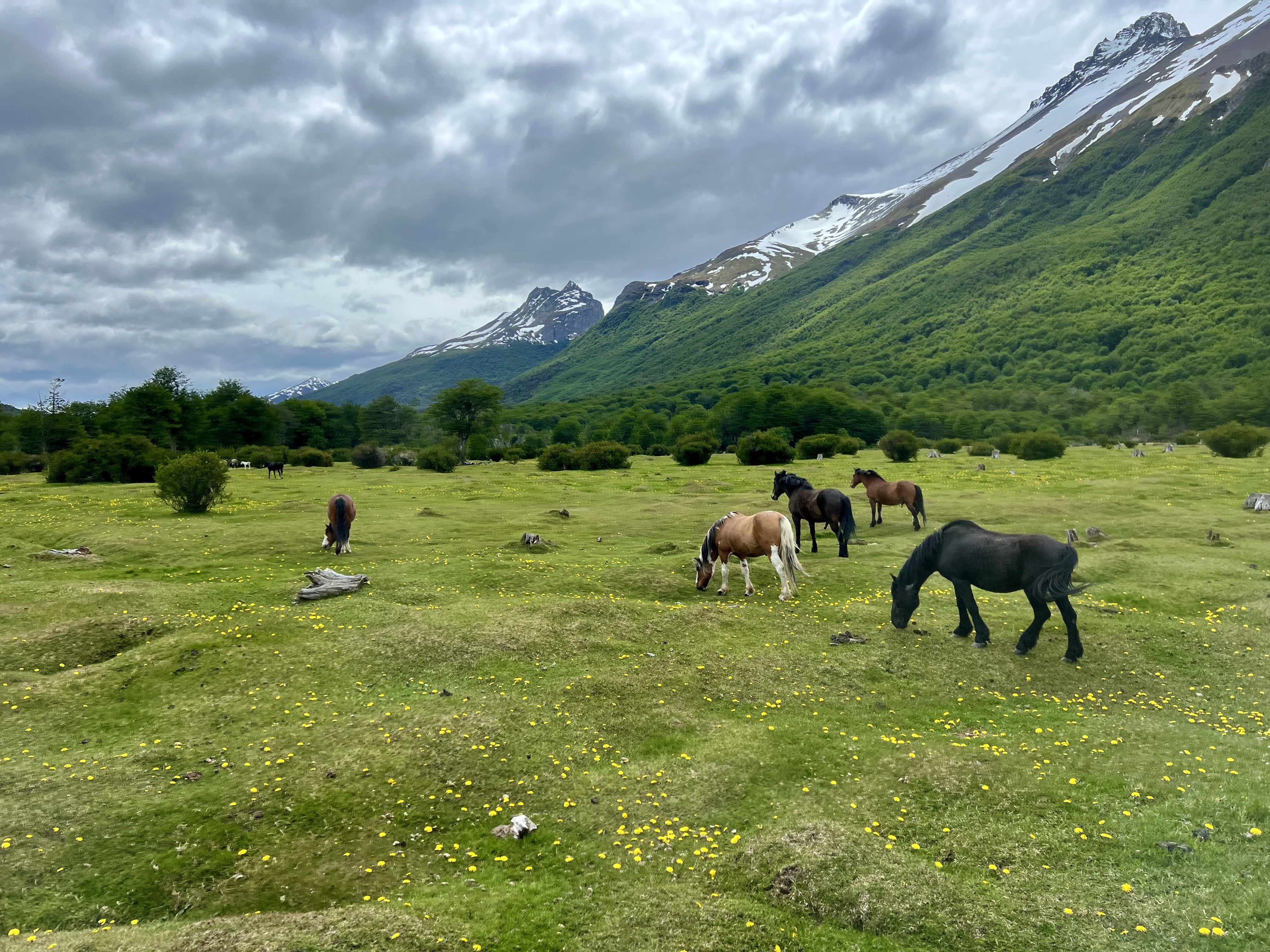
Ushuaia has lots of green spaces and two large tracks were directly in front of the place I was staying. Wild horse herds made these tracks their home, as they did in the Tierra del Fuego National Park, about 10 km from town. It was simply amazing to wake up to horses trotting down the green slopes in front of my window.
The glacier above town, Glaciar Martial, provides the water supply for the area. The River Pipo carries it from the mountain to the sea. The river is named after a former convict who tried to escape from the prison that formed the basis for the town in the late 1880. Pipo managed to get out of the prison, but the weather was too severe, and he was found frozen to death in the river. It was subsequently named after him.
The prison was for all kinds of prisoners, including those with minor offences and those of hardened criminals. According to the narration on the Tren del Fin del Mundo, all the prisoners, regardless of offence were treated equally horribly, but given the location of the prison, no one successfully managed to escape. The former prison is now the Maritime Museum, with five different sections, i.e., mini-museums. One is dedicated to the former prison, while another to Antarctica, and yet another to the history of the region, including the indigenous people who lived here for the last 6,000 years. The Yamana people, who were nomads in the region right around the city and the surrounding islands, wore seal skin capes, but were otherwise naked in this very hostile environment. They covered their bodies with seal oil, which supposedly kept they warm and dry. The men also painted their bodies with various designs, but I wasn’t able to find out what the designs meant, and the last purely Yamana woman died a few years ago and with her the last speaker of the language. There is a dictionary, however, as the son of a former missionary, compiled over 35,000 Yamana words and translated them. All the names in the area that end in ‘ia’ are Yamana names. Ushuaia means the bay in the background and the tallest peak, Mt. Olivia, is an anglicized version of a Yamana word for arrowhead, which is the way the peak looks. The indigenous tradition lives on in spirit.

There is a small indigenous community about 35 km from Ushuaia, but they keep to themselves. The town itself is growing rapidly with new hospitals and a large research center helping economic development along with the tourist industry. Skiing on the nearby Cerro Castro is an important attraction in the winter, and hiking, wildlife viewing and all the ships heading to Antarctica in the summer keep the tourist industry flourishing.
After exploring the town, the next day I headed first to the Tren del Fin del Mundo which takes tourists back and forth on a five km stretch in the Tierra del Fuego National Park. The narration during the journey to the final stop in the Park was on the prison. There was an intermediate stop at a nice waterfall along the way, and train employees dressed in prisoner and guard outfits teased the tourists.
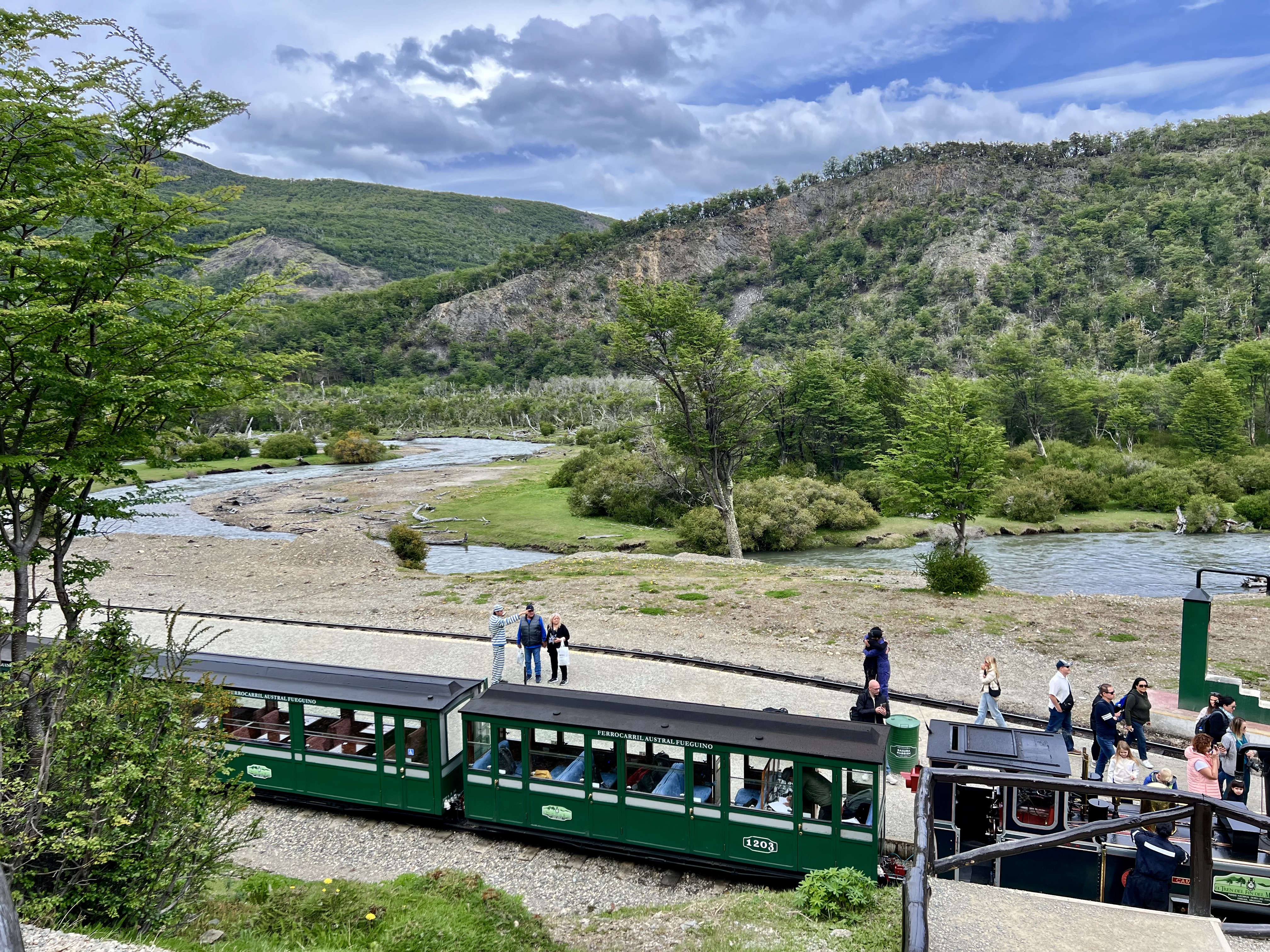
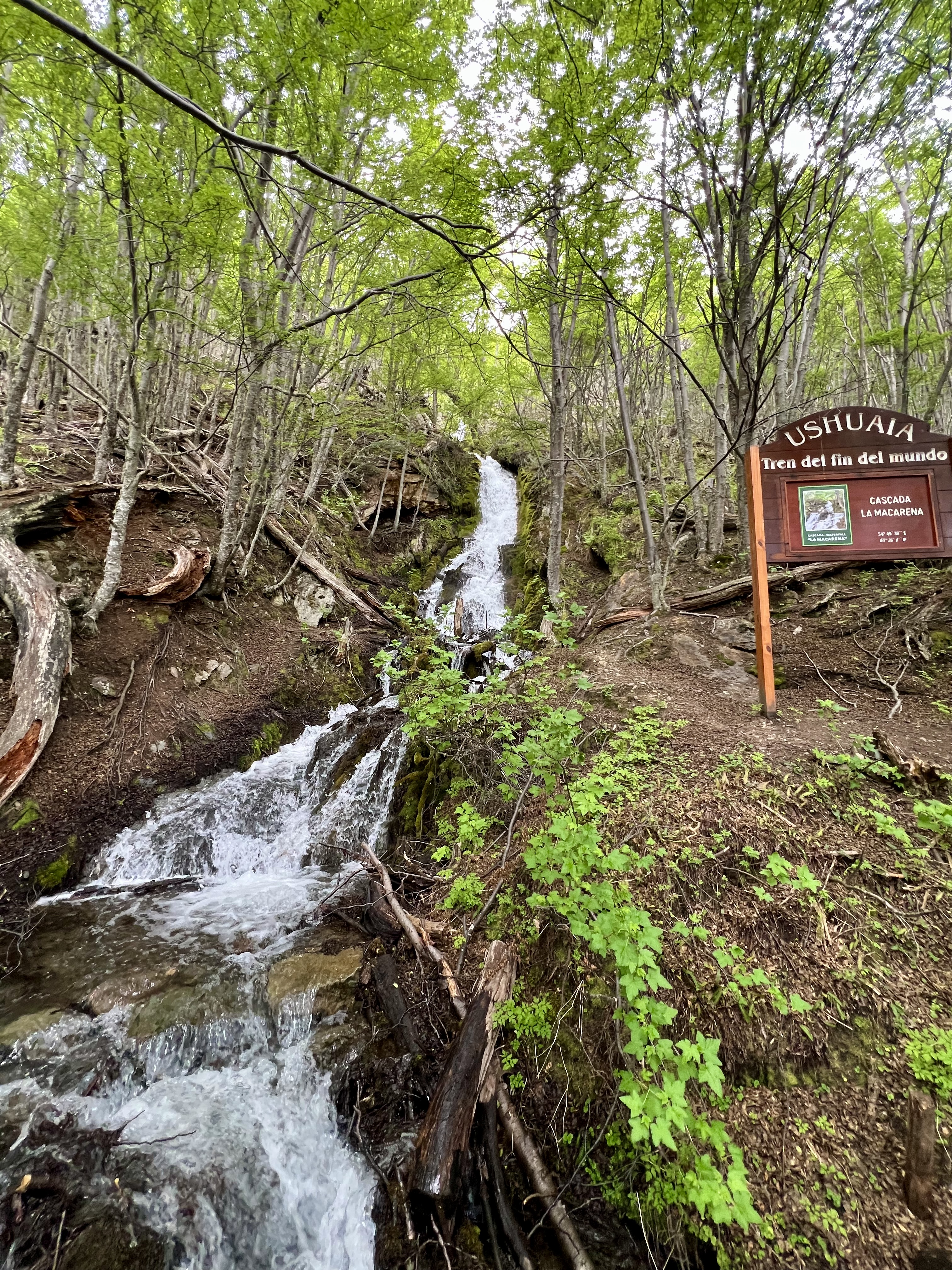
The narration on the way back was about the flora and fauna in the Park. Wild horses grazed on the sides of the tracks as we went by, and while I wouldn’t spend the money to do it again, it was an interesting experience.
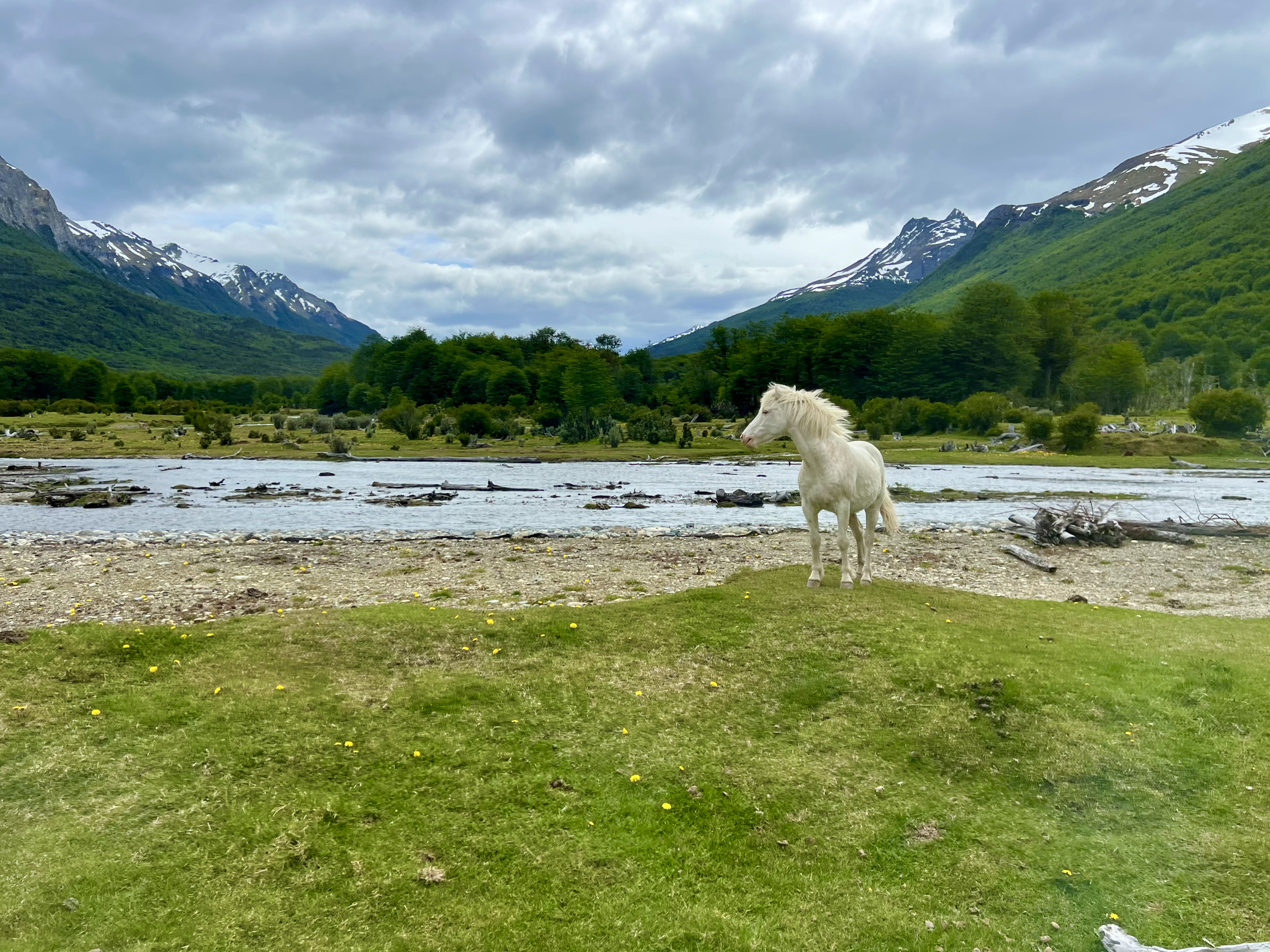
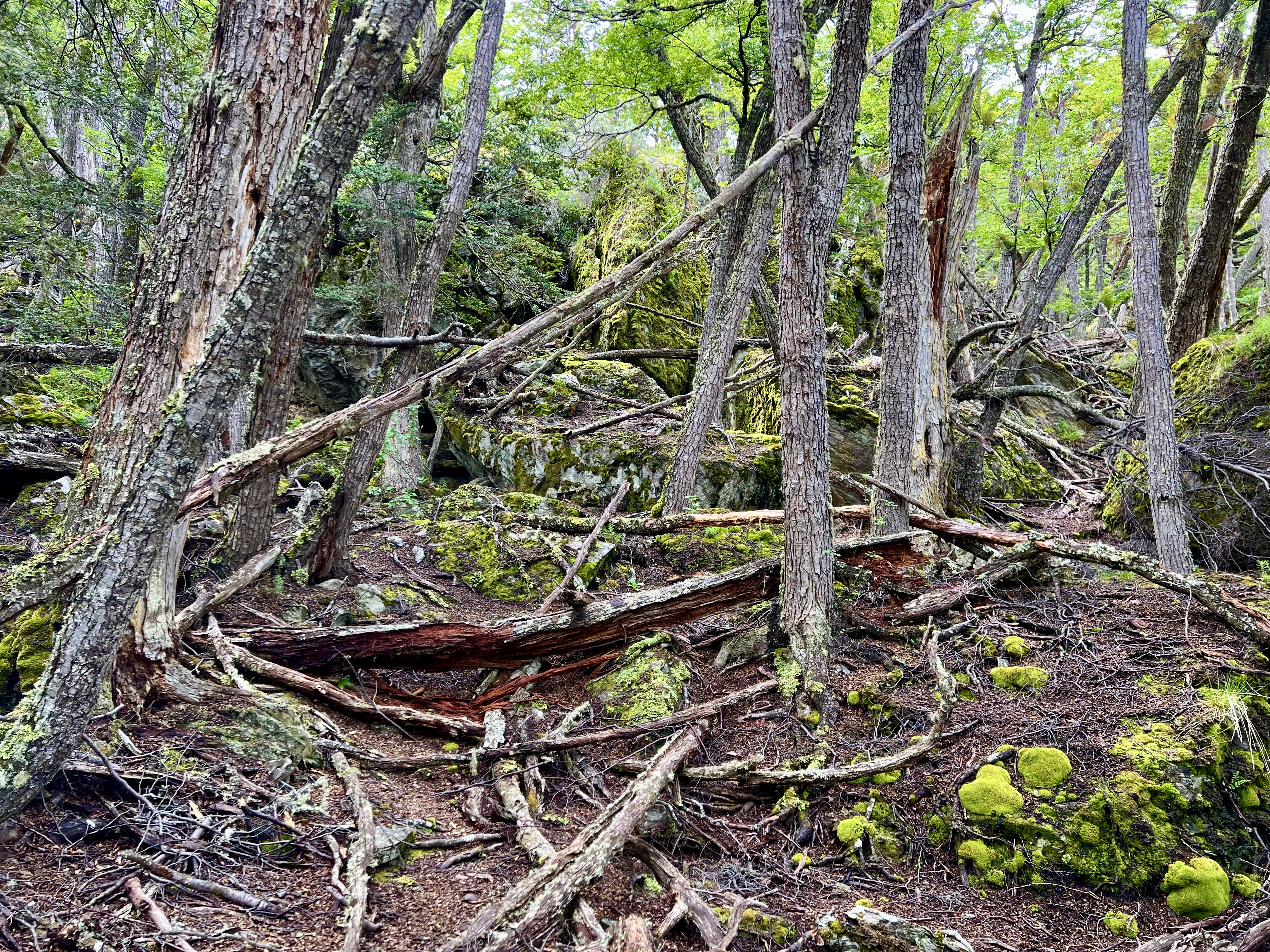
After the two-hour train ride, I had arranged with the taxi driver from the airport to take me around the Park and let me go on all the short walks in the Lapataia Bay region. This proved to be much more interesting as I could see the entire area of the Park that is open to visitors. The majority is closed to tourists to protect the flora and fauna. The forest throughout the Park consists of only six species of trees, the most common being the lenga, which is fairly wind resistant, even though the tops are carved from the blasts. The forest floor is lined with dead trees, apparently the victims of storms.
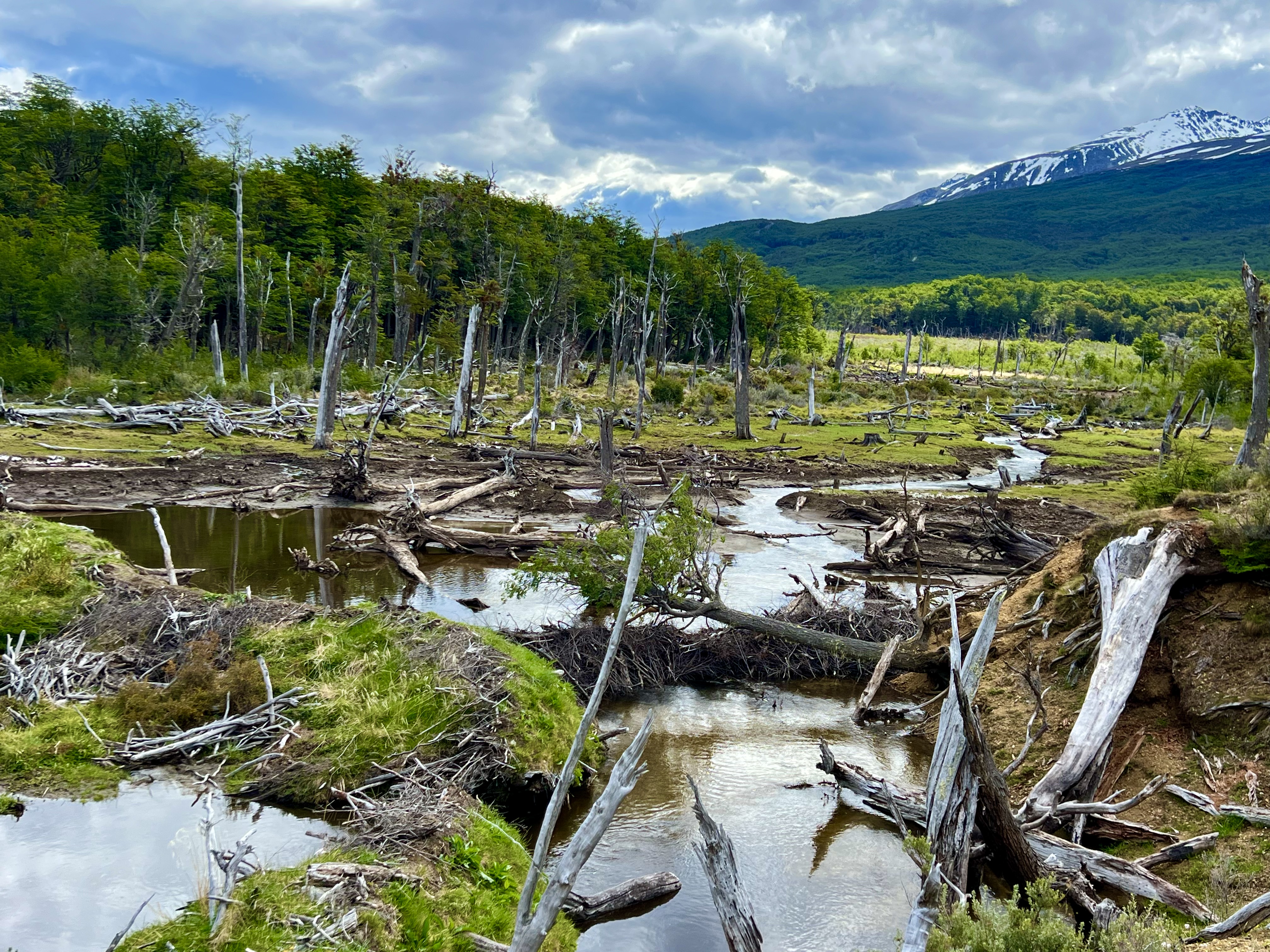
There is also a section of the forest that has been denuded by beavers. Beavers were imported to solve one problem but created another as they have no natural predators here. There are no bear or foxes and so the beaver population has grown out of control.
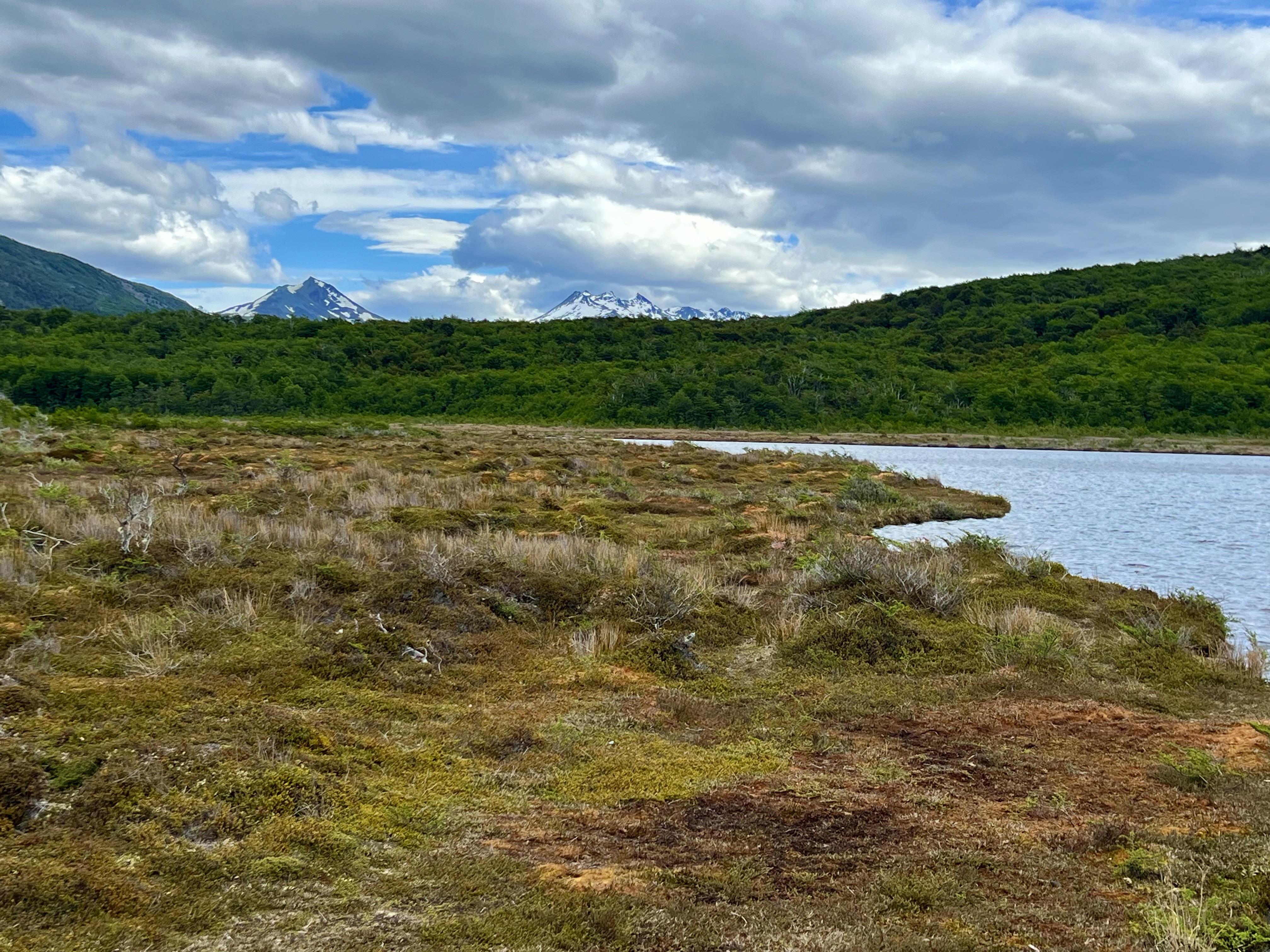
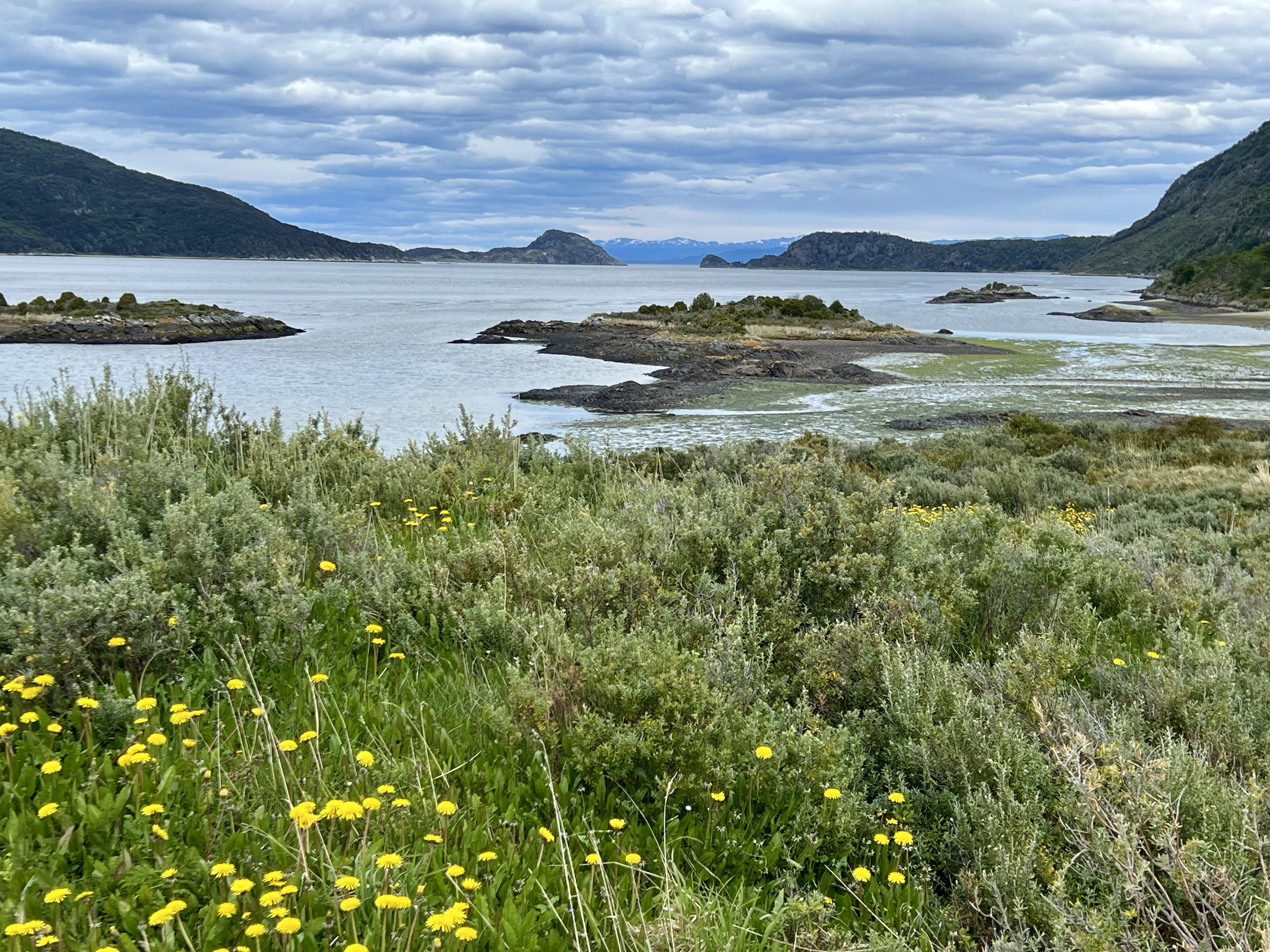
Nonetheless, the Park has some gorgeous areas with the forest touching the sea. It is the only national park in Argentina that has mountains, the sea, and the forest. The trip with the taxi provided me the overview that I needed to decide where to come back to a few days later with the shuttle bus.

The following day was my birthday, and as a present to myself, I booked two zodiac tours in the Beagle Canal, the first in the morning to the Lighthouse and surrounding islands, and in the afternoon to the Penguin colony on Martillo Island. The day started out with sunny skies and calm waters and the trip to out to the Lighthouse was perfect. The Lighthouse, which is sometimes billed as the Lighthouse at the End of the World, is in fact not the one from Jules Verne, that one is further away. This lighthouse, which still functions, is on a rocky outcrop that is home to a number of sea lions and cormorants. We were incredibly lucky to also see a huge elephant seal.
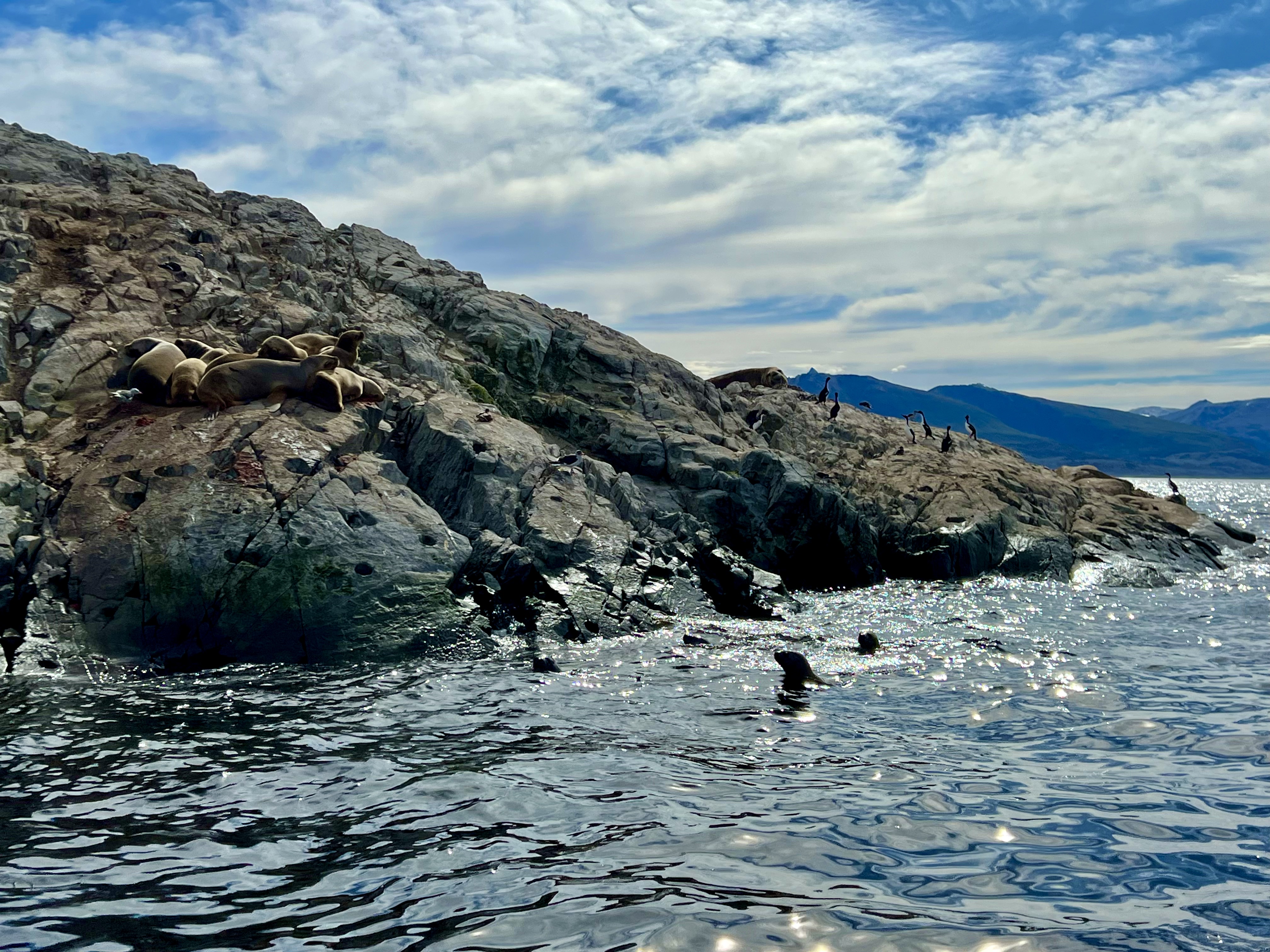
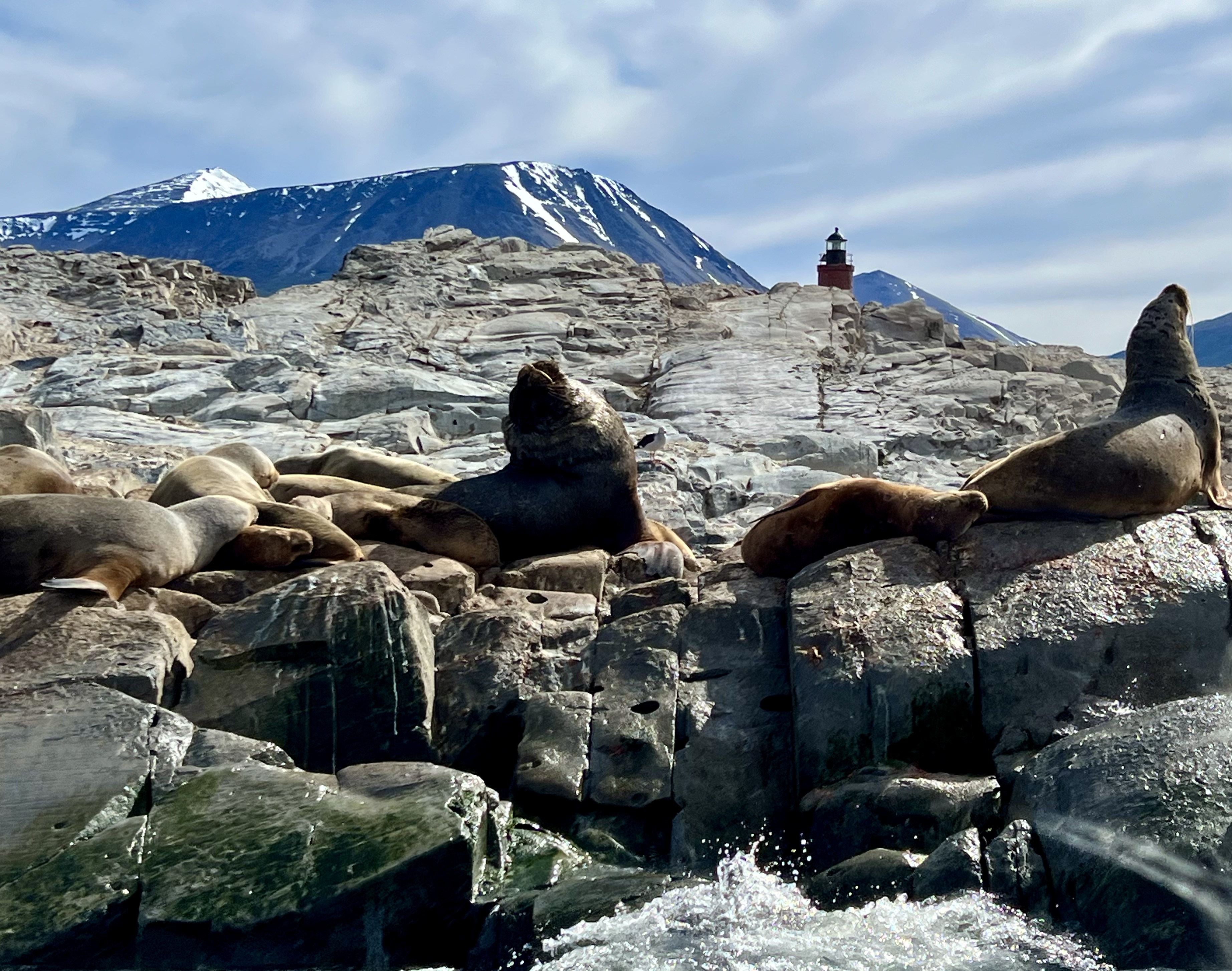
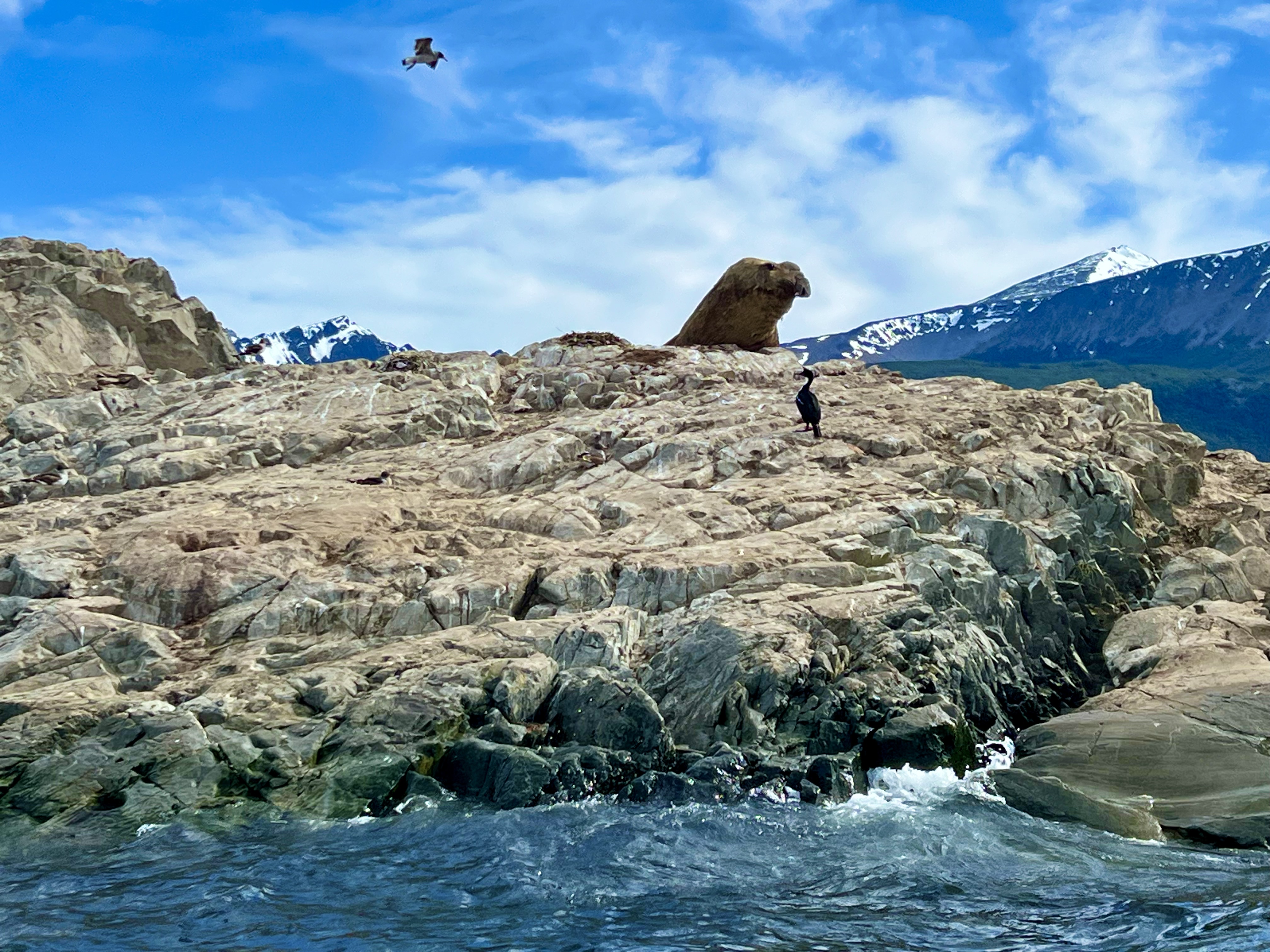
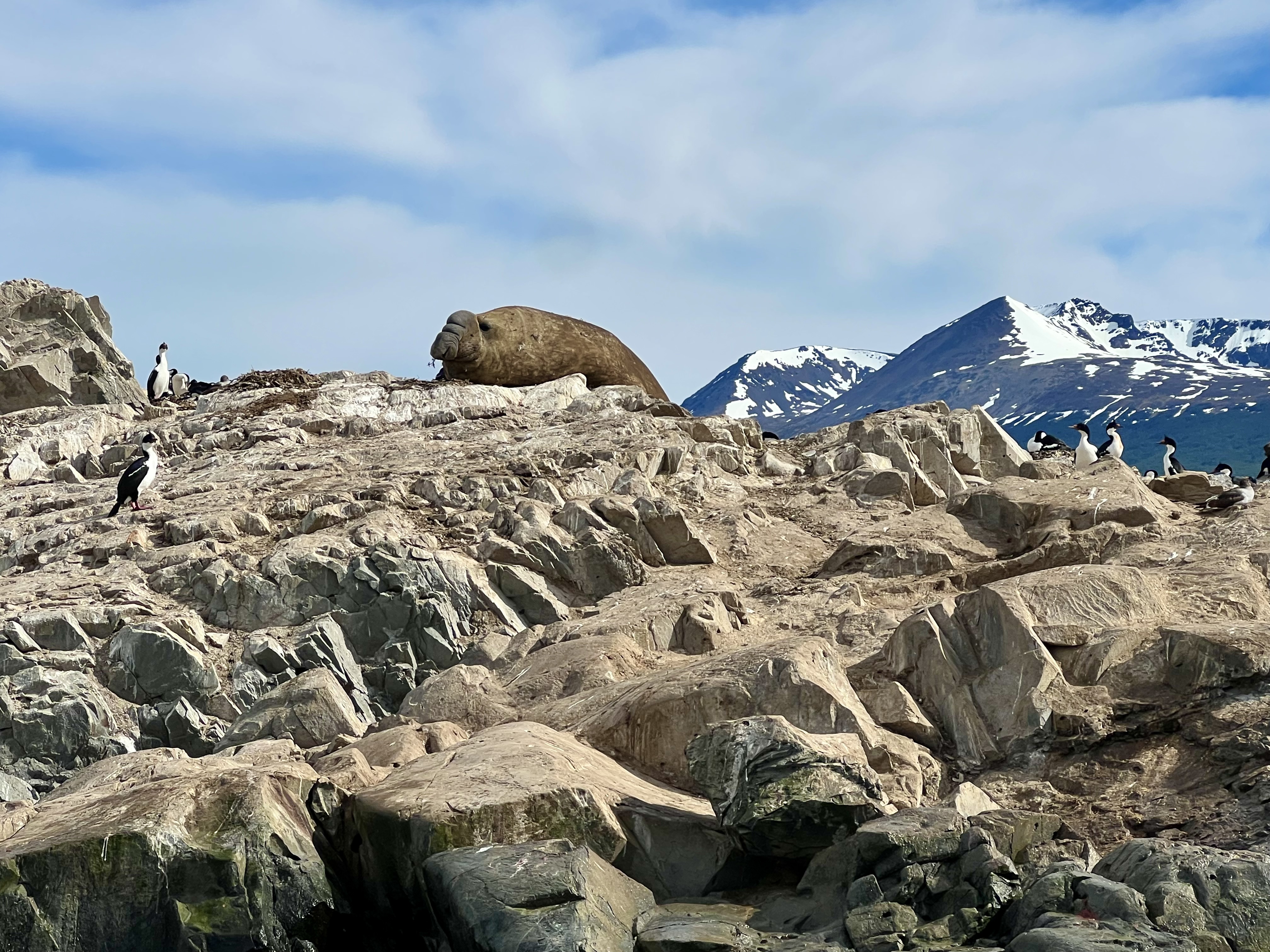
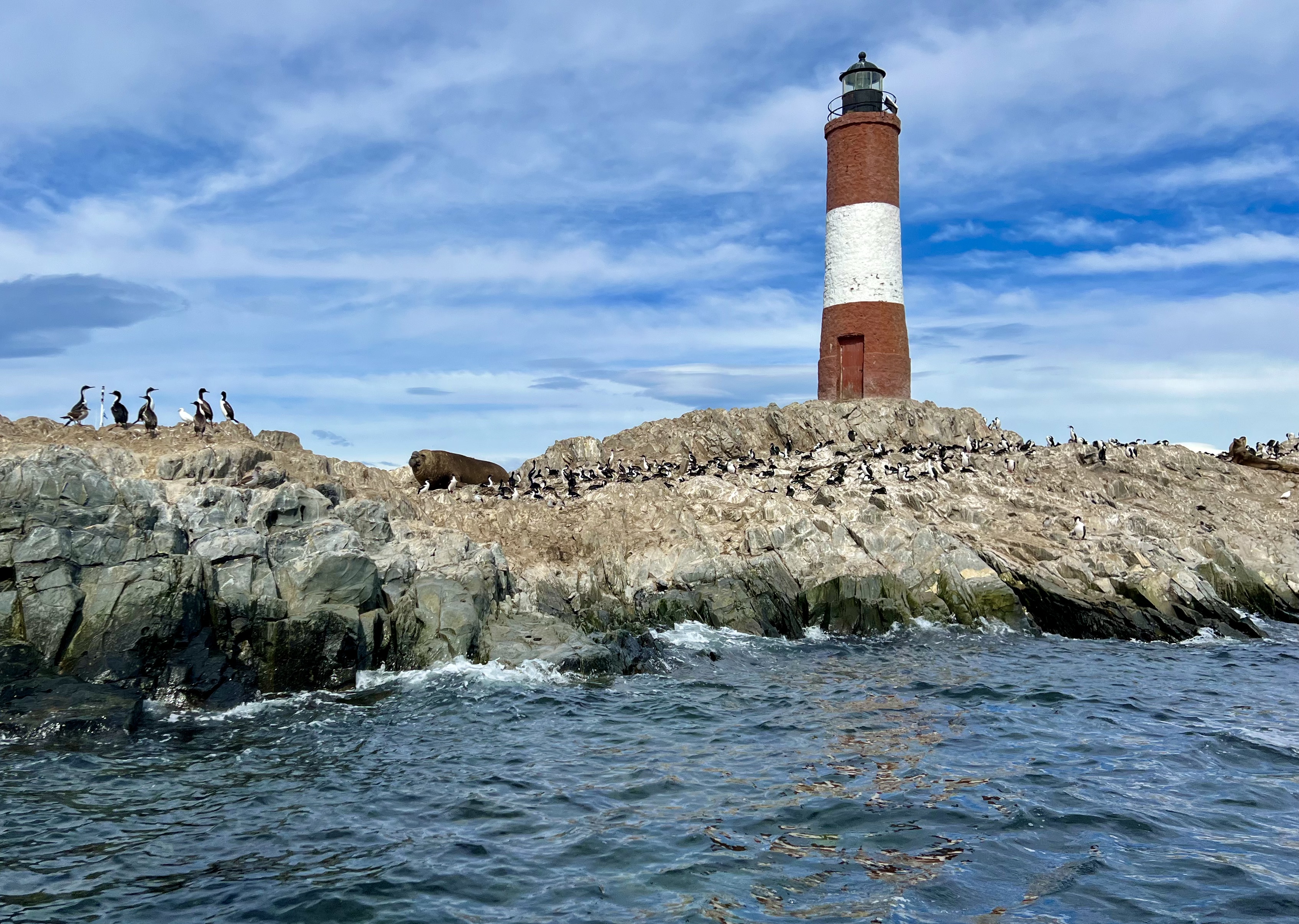
From the lighthouse, we made our way in somewhat more choppy waters to Bridges Island for a short walk ashore to learn about some of the island’s flora, including the Calafate bush and the Yareta, a plant that looks like a rock with green algae. The Calafate bush has a legend, that if one eats one of its red berries, one will return to the place where one ate it. There were no berries on the plant when I was there, but pretty yellow flowers that were also edible.
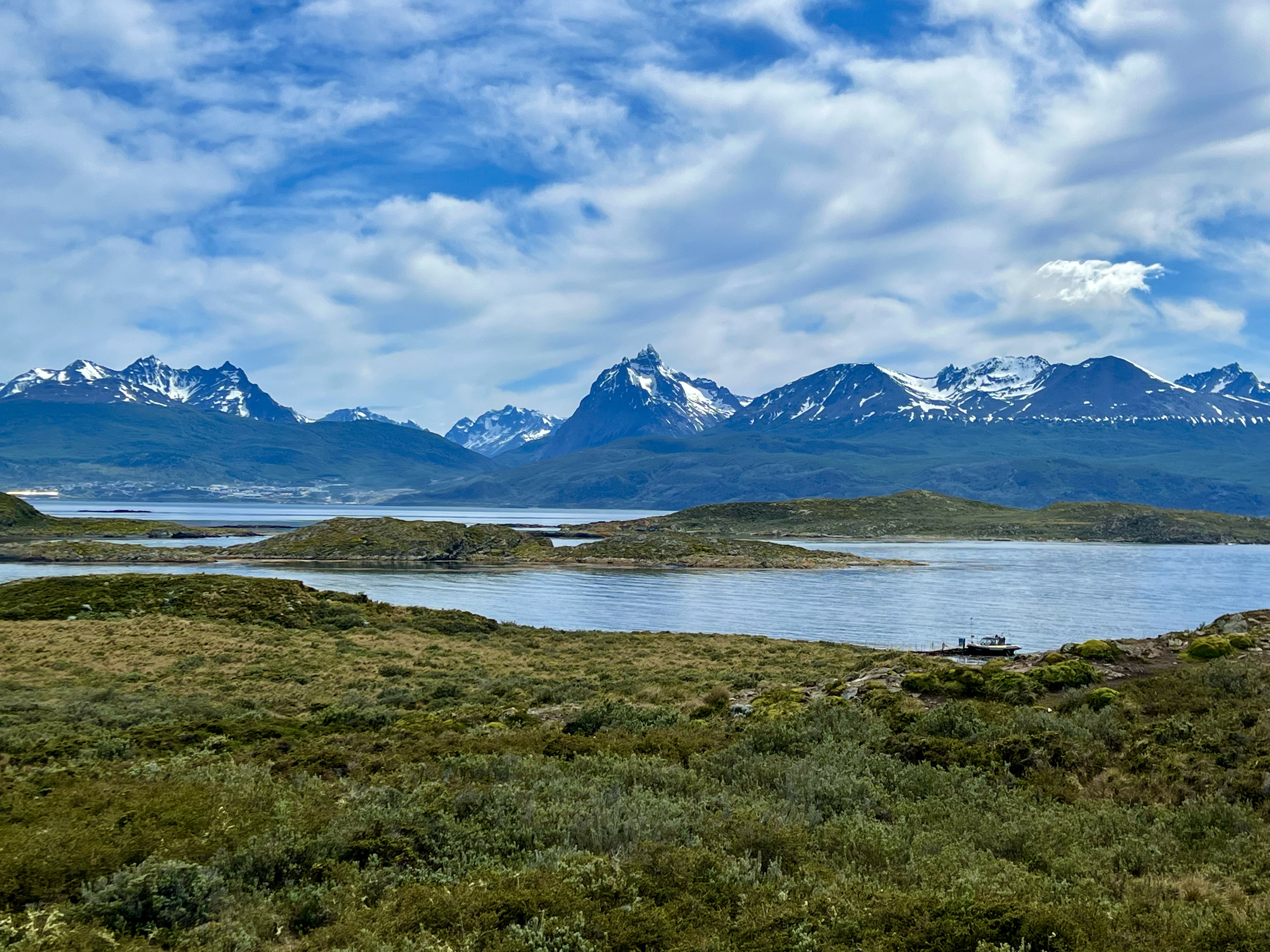
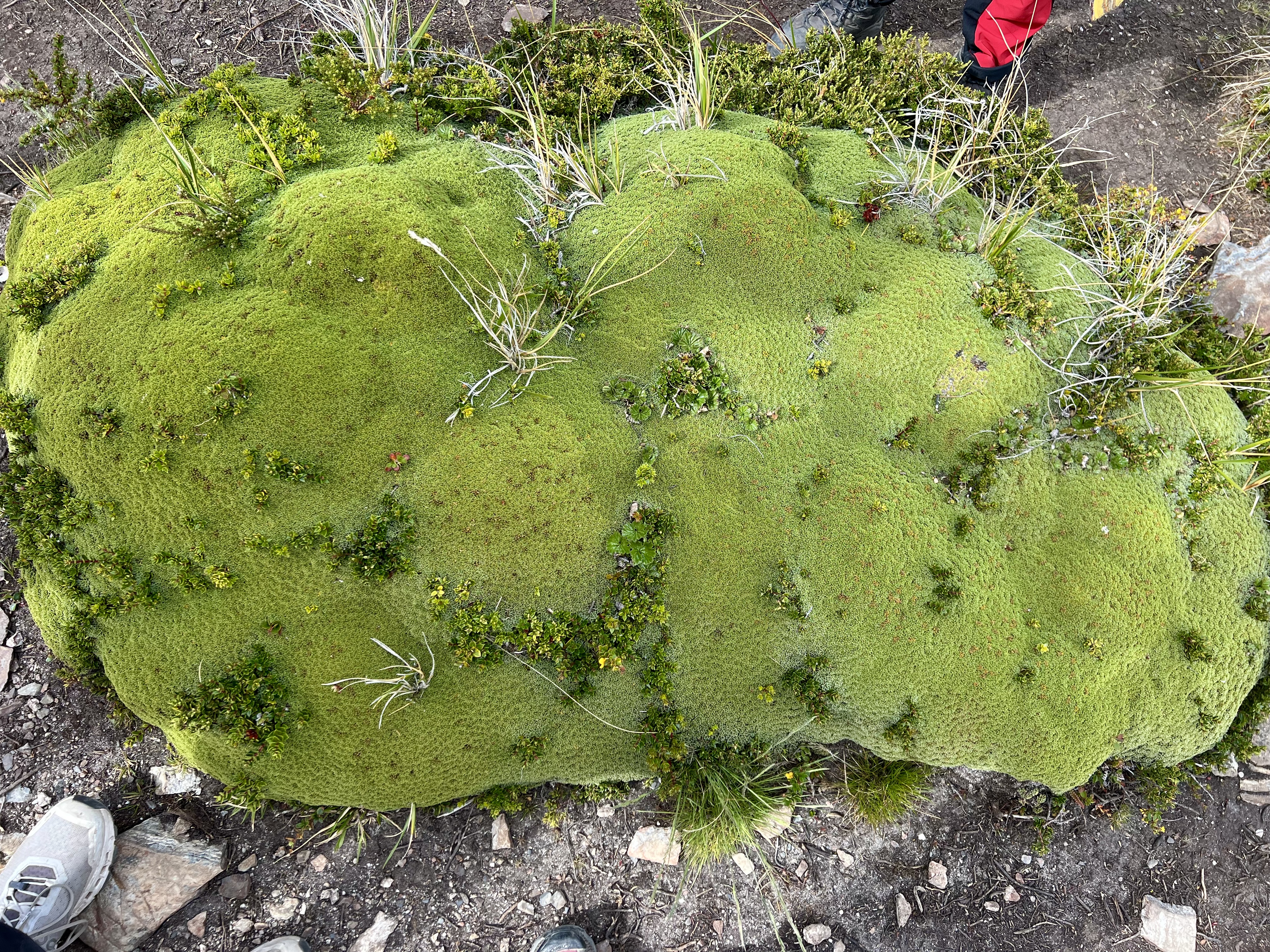
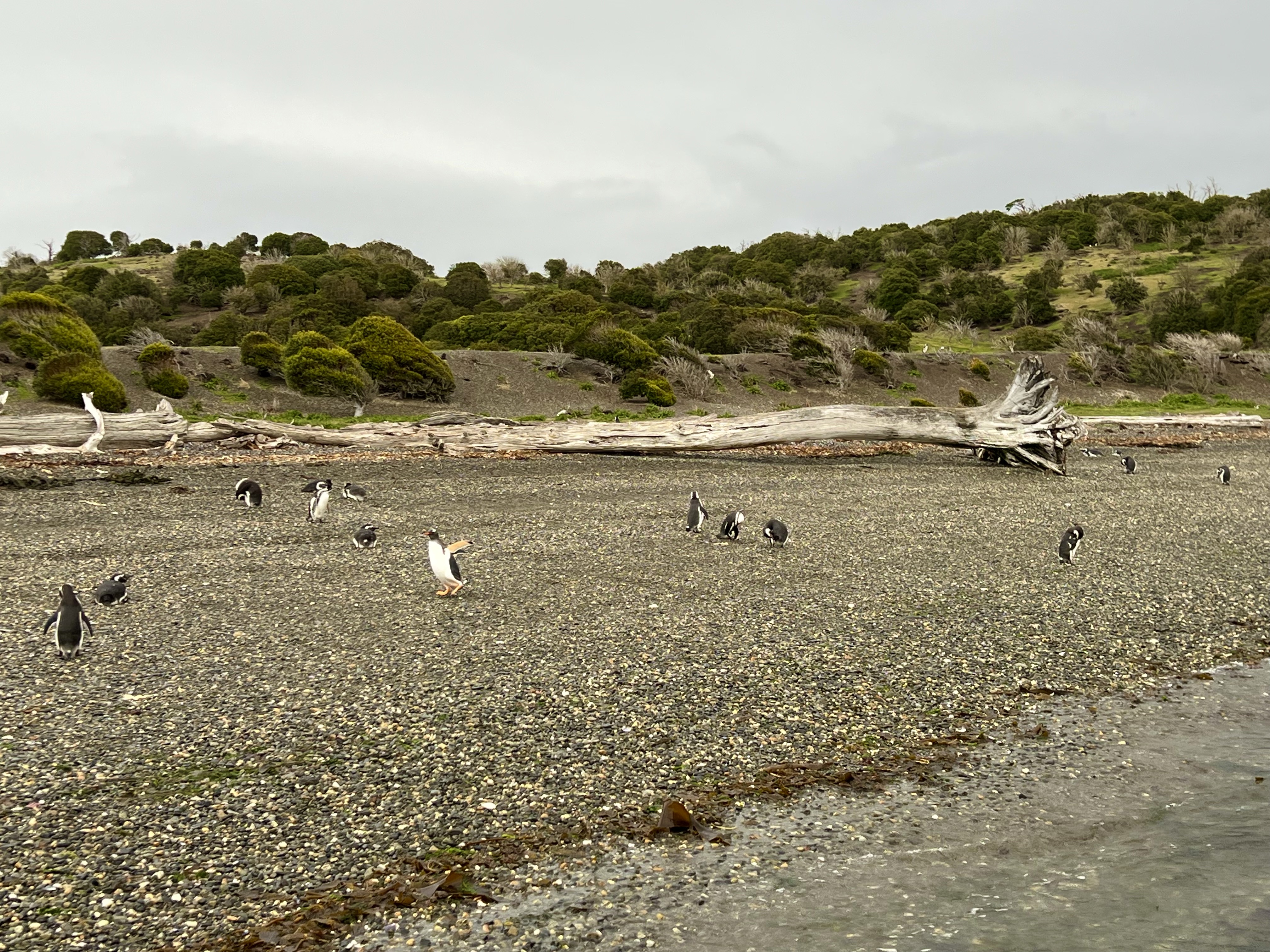
By the time we got back to the harbor the weather was looking pretty iffy, but still okay. My trip to the penguins was scheduled for 14:30 and I was there fifteen minutes ahead of time, but the woman who scheduled the trip had mistakenly put me on the tour at 16:00 instead. By that time, the weather had switched, and I didn’t think we would go, but was told that the tour was still on schedule. This involved about an hour and fifteen minute bus ride to the boat. By the time we got there it was thundering and lightning amid the rain. Again, I didn’t think we’d go, but the young woman tour guide, said that this was normal southern weather and of course we were going. It took a very cold and wet half hour to get to the penguin colony, but by the time we arrived the rain had stopped. The penguins were amazing. There were two kinds on the island that we could see, the Magellan, which migrate from southern Peru down for the summer and the ones from Antarctica; those are the larger ones with the orange feet. We stopped on both sides of the island, and the zodiac pulled right up on the shore. We weren’t allowed to disembark, but could get very close to the wildlife. When we arrived back at the harbor, the guide took the group to a nearby restaurant for some very welcomed hot chocolate.

The following day, I headed back to the National Park with the shuttle bus. I’d decided against doing the southern coastal path as it was a Saturday, and that trail would be filled with people. Instead, I opted to walk to the Chilean border. I had thought that this would be similar to the walk from Canada to the US border in Waterton National Park that leaves from the side of the Prince of Wales Hotel sans the bears. I was somewhat mistaken as the forest is completely different, but the waterfalls on the sides of the mountains are similar as is the marking for the border. Both paths follow along the sides of lakes with forests filled with fairyland habitats, although the habitat in the southern region is far more humid than in the north.
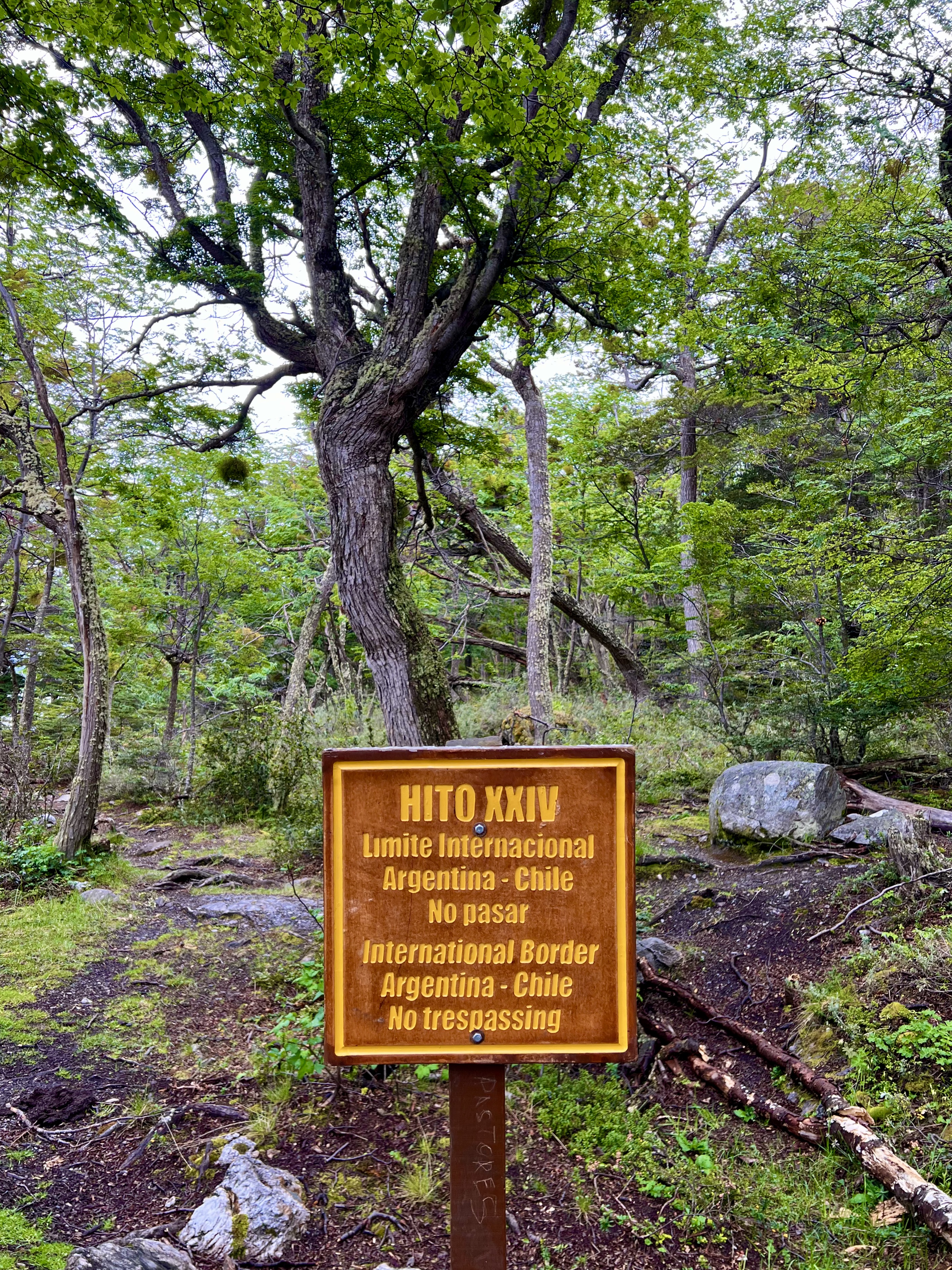
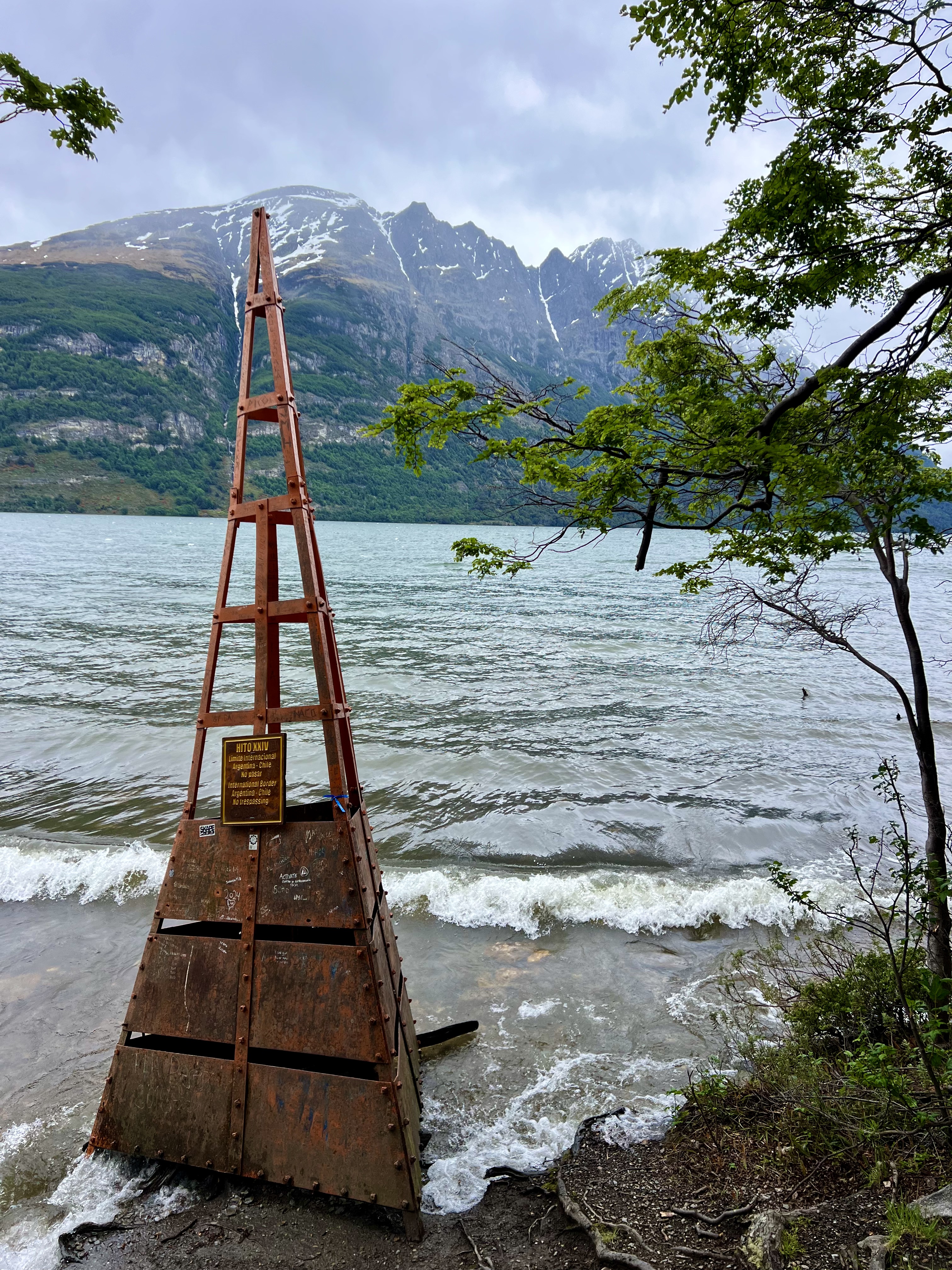
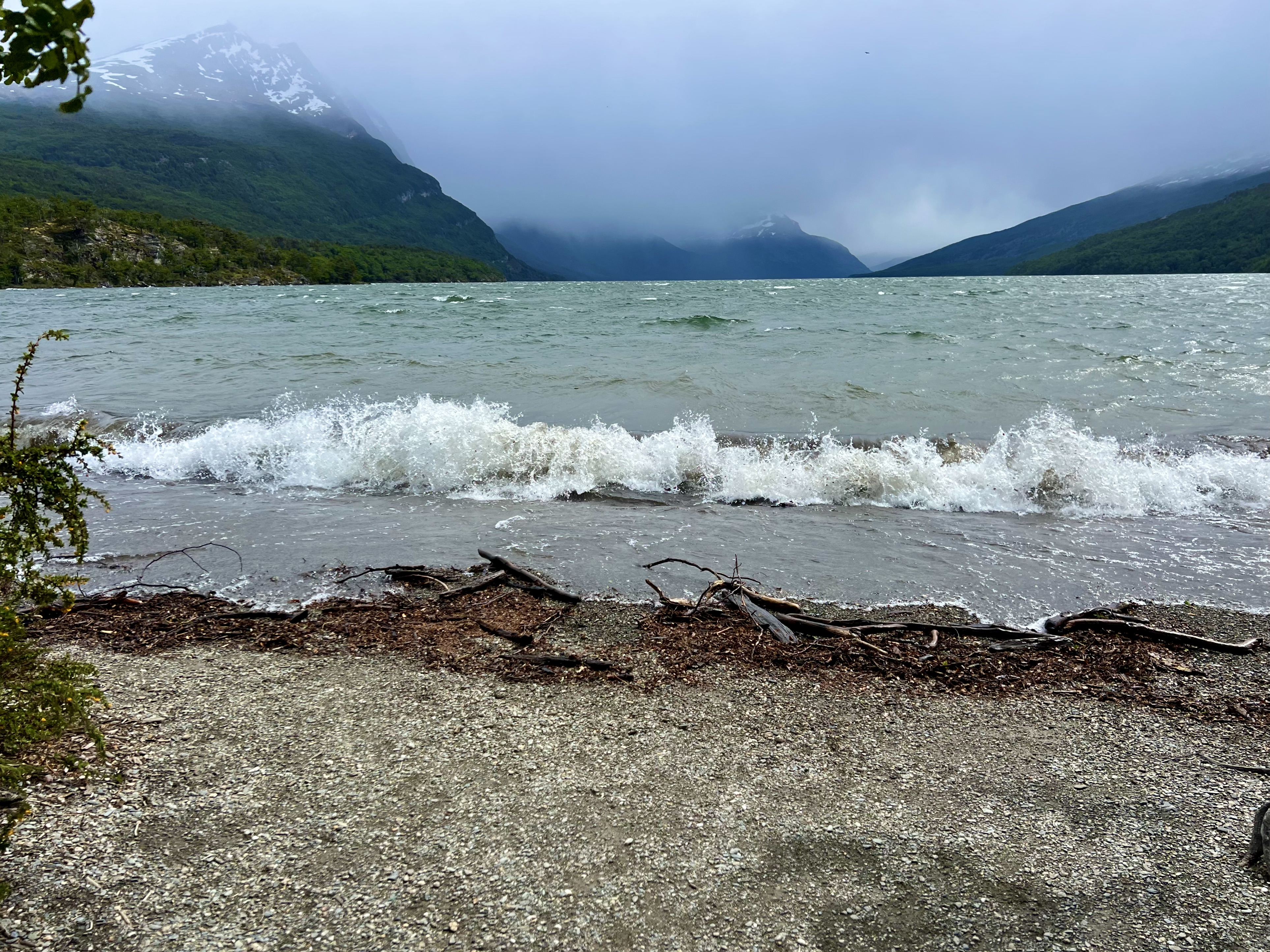
As with the day before, the hike started out in nice weather, but by the time I got back to the starting point at the Visitors’ Center, it was raining and freezing. I ended up getting such a bad cold that I couldn’t get my nose to stop running and landed in bed for the last day in Ushuaia. It was unfortunate, but the wind and rain had gone right through me. Yet the days in Tierra del Fuego National Park and the wildlife in the Beagle Canal made it all worthwhile. Ushuaia is beautiful and contrary to what the cruise ships say, isn’t just a starting point for Antarctica.
 omegoodyssey