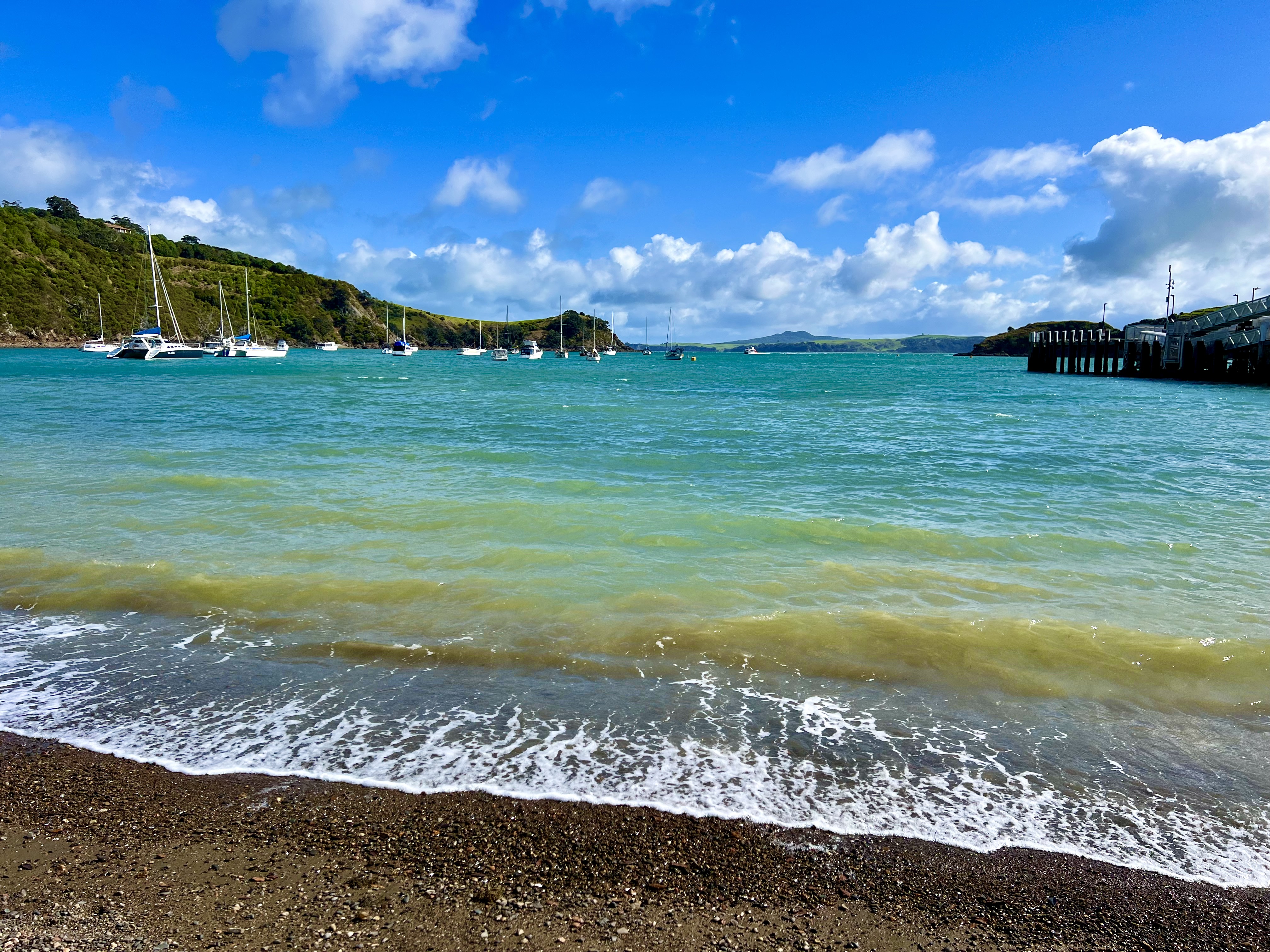
Mataitai Bay
As I only had a little less than a day and a half in Auckland and on the North Island, I decided to spend the afternoon I arrived at the Auckland War Memorial Museum to get a sense of what history is important to the people of the region. To get there from downtown, where I was staying, I needed to take a train then a bus. The connections were seamless, and I was very impressed with the cleanliness of both the train station and the busses. There wasn’t a scrap of litter anywhere. The museum is on a slight hill overlooking the downtown area and the bay. The first floor was devoted to indigenous cultures from the greater Polynesian region, with special emphasis on the Māori tribes in the local vicinity. The upper floor had an interesting section on the geological foundations of New Zealand from its split with Gondwana and how that influenced the development of New Zealand’s unique flora and fauna.

Traditional Polynesian outrigger canoe
I had not been to one of the smaller islands while in New Zealand, and felt that I needed to rectify this situation, so the following day I hopped on a ferry to Waiheke Island. This island was touted in the brochures as paradise and a ‘must see.’ The ferry left from the main wharf near the Britomart train station and took about 45 minutes. The boat picked up speed as soon as we left the harbor. There was seating on the deck as well as in the cabin. It was fairly windy, but I preferred to stay on deck to really experience the ride. Inside the cabin it’s as if one were on a bus and not a boat.
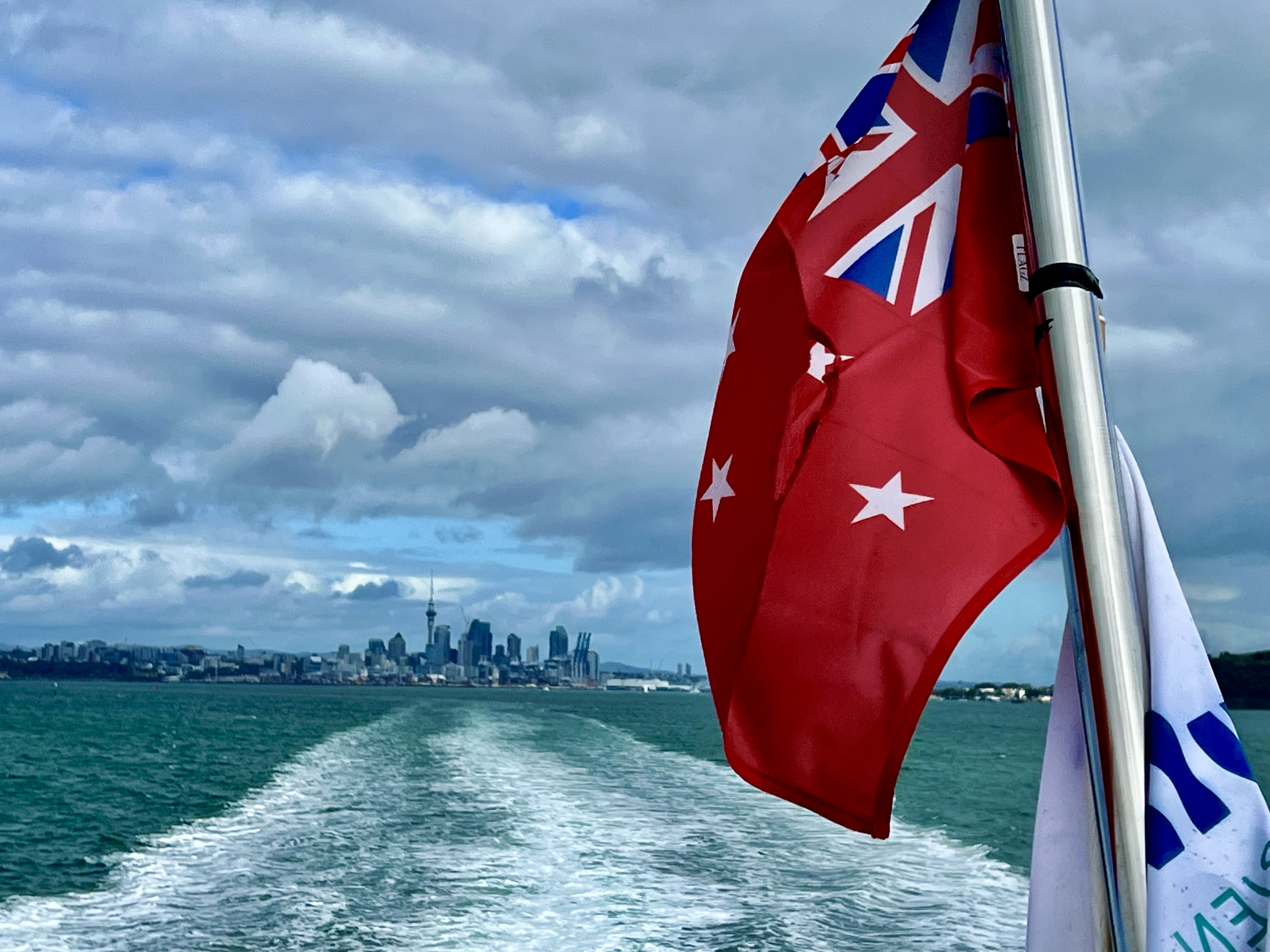
Leaving Auckland behind
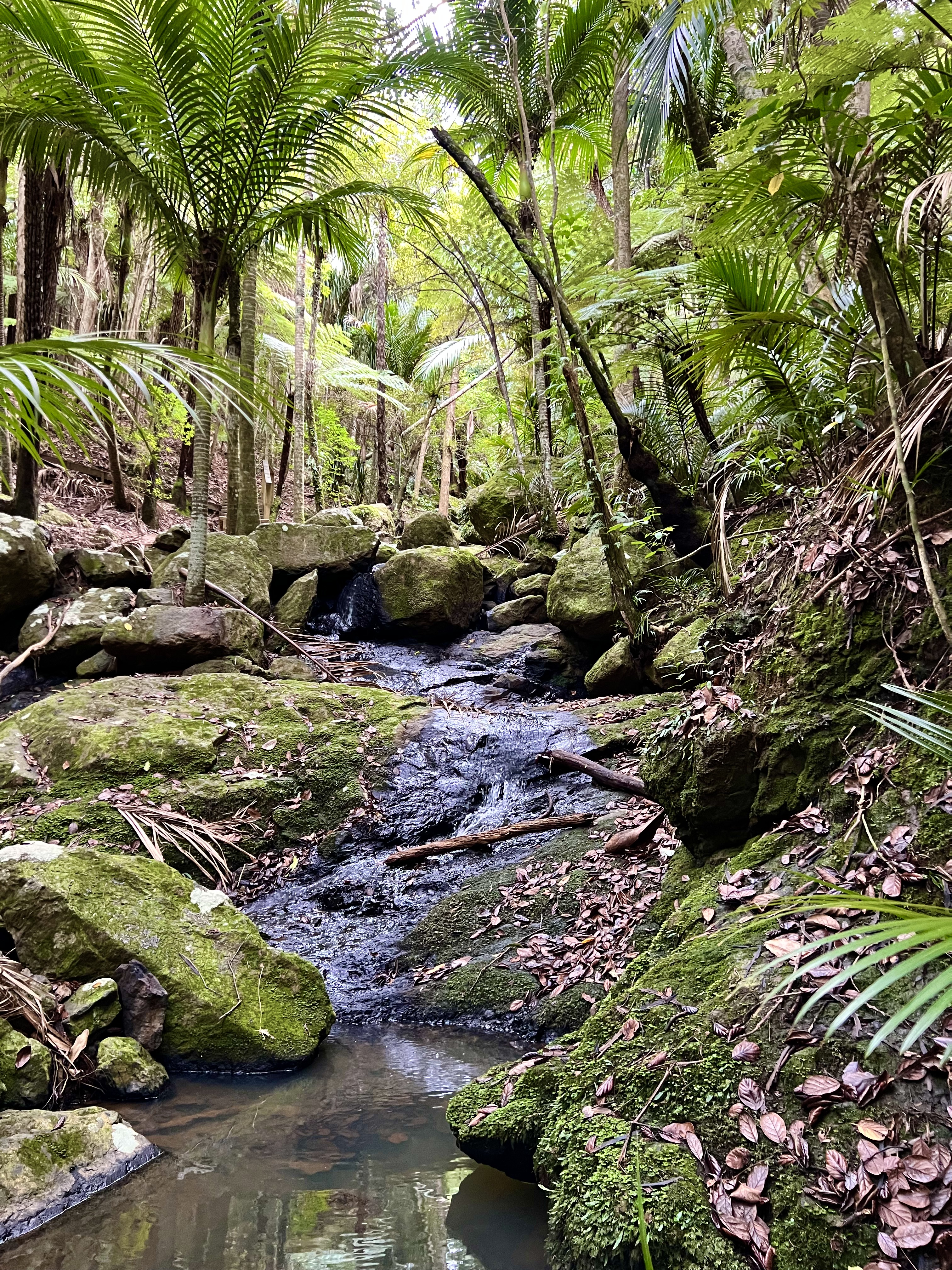
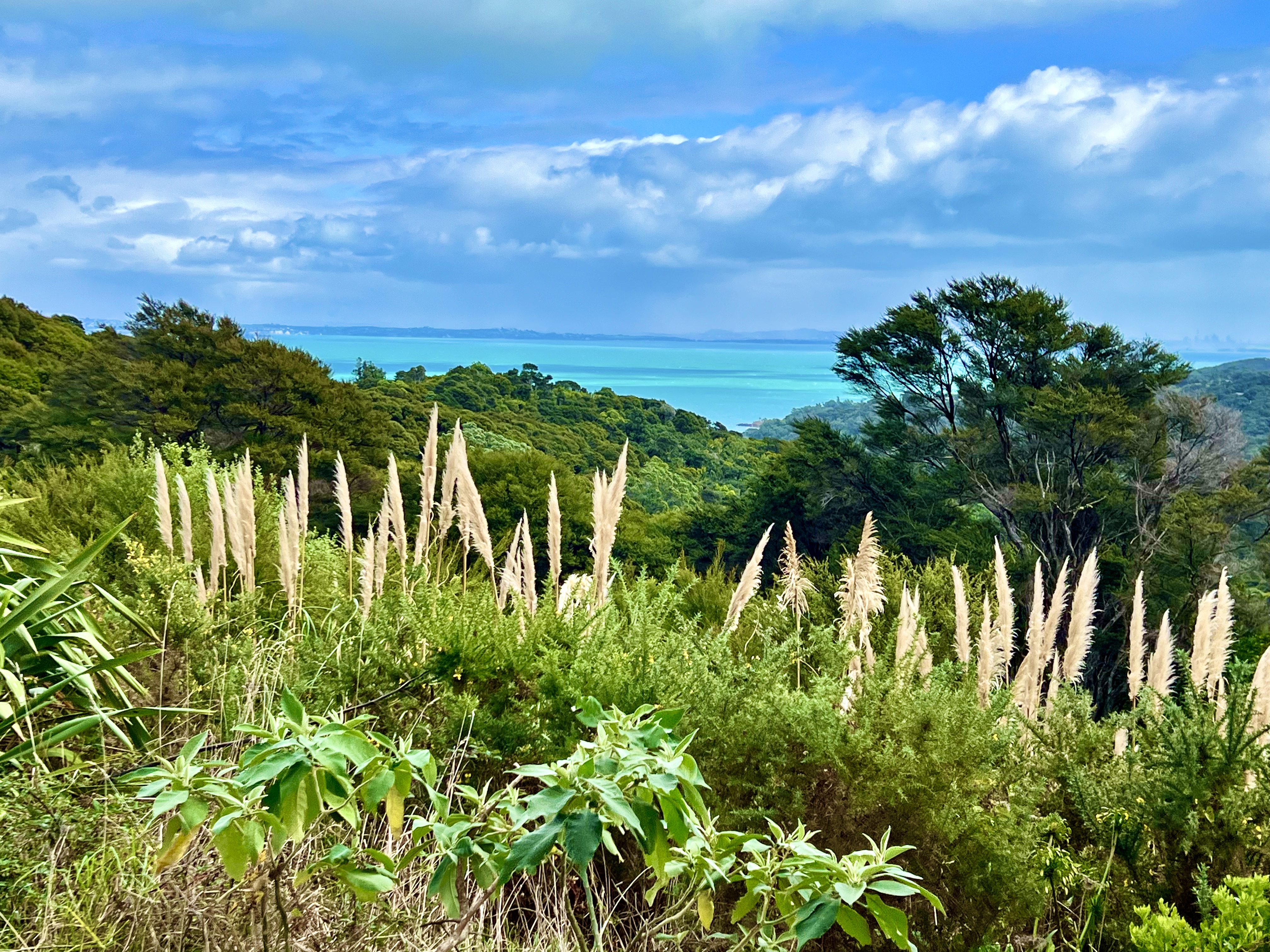
When we docked at Matiatia Ferry Terminal, there were local busses waiting to take passengers to the various towns, beaches, and wineries on the island. I chose to go on a Hop On Hop Off bus that stopped at all the major sites. This was probably a mistake, and it would have been better to stick with the local busses, but I didn’t know that at the time. A number of the wineries were closed as it was a Monday. I wasn’t planning on going to a wine tasting, but I was interested in seeing the various vineyards. In the end, I just went to The Batch Winery in the Whakanewha Regional Park as there were walks and trails leading from the vineyard. The park was designated in 1994 and the name means “to shade the eyes from the setting sun,” which is appropriate given the views from the hilltop ridges. The setting for The Batch is stunning, it overlooks both sides of the island. The Park trails take one from the cultivated vineyards into the rainforest complete with cascading waterfalls, down to coastal beaches.
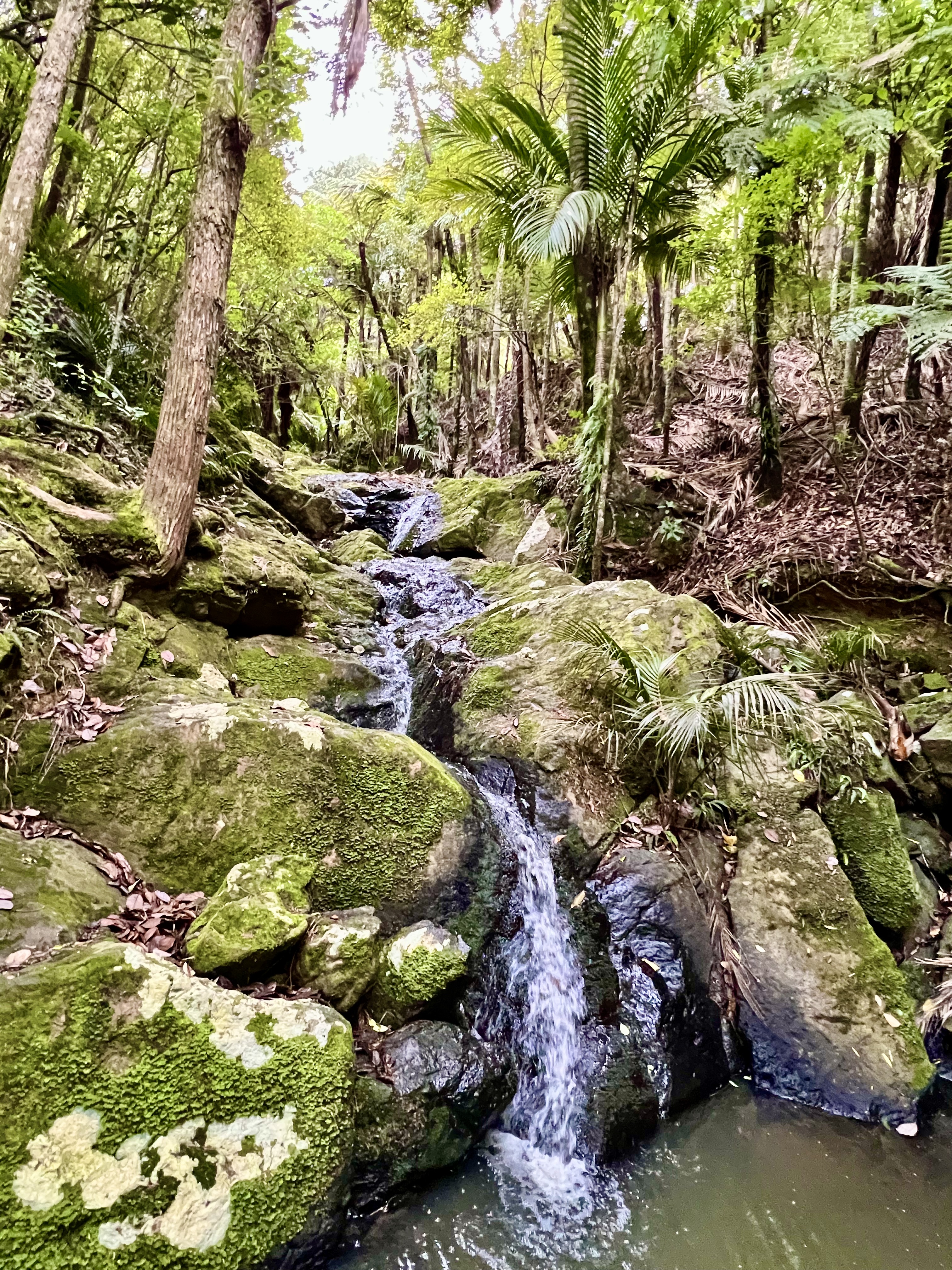
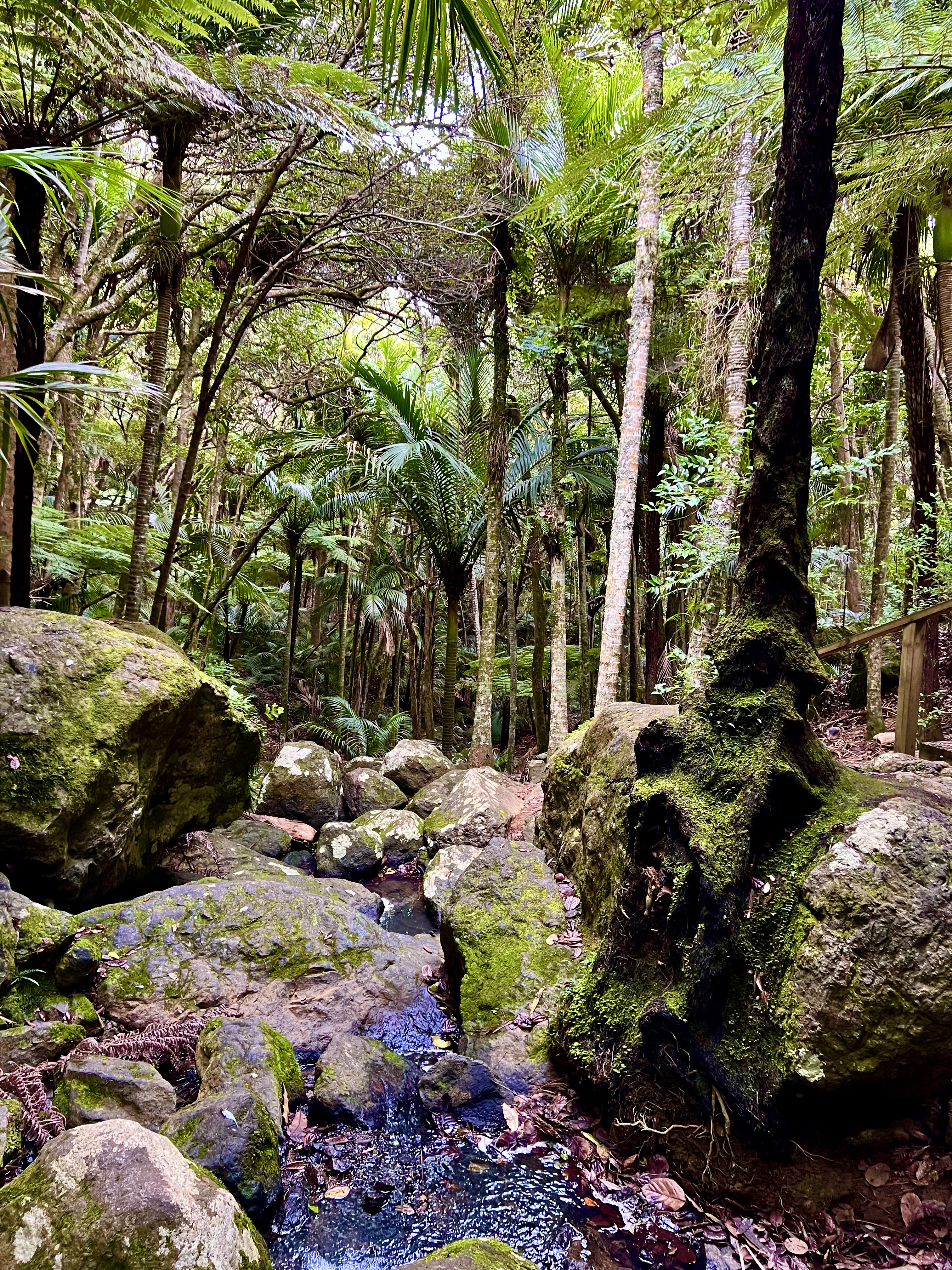
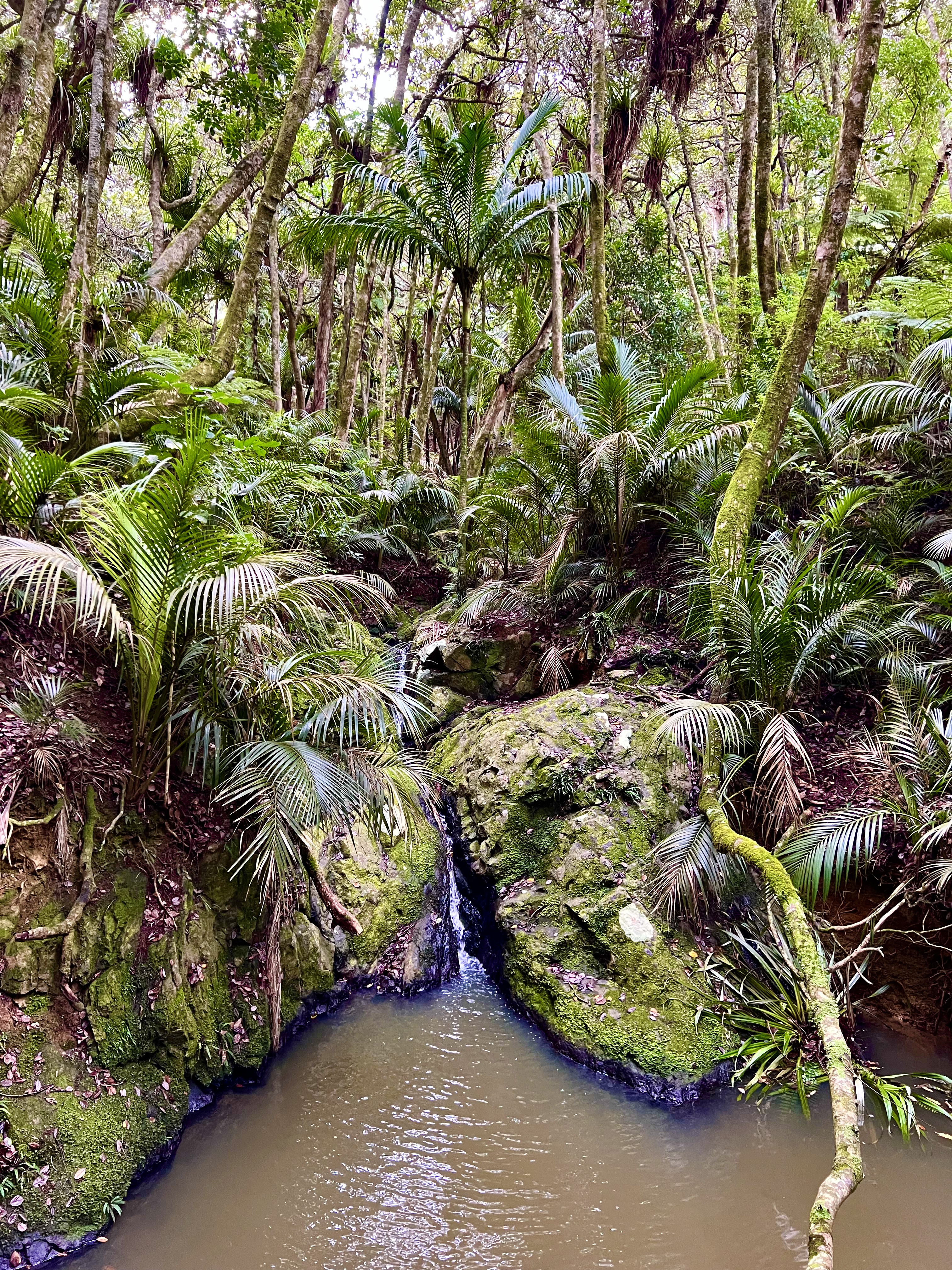
The entire island was once covered with beech trees, but the Māori cut the forest to build their canoes, and when the Europeans came, they destroyed the rest to make way for agriculture and viniculture. About thirty years ago, there was a movement to rewild at least some of the island, hence the Regional Park. They planted mixed forests and then let the fauna develop on its own. Soon thereafter, various bird, insect, reptile, and amphibian species came and settled in the new forests. Now after thirty years, the healthy forests are a vibrant home to a wide array of wild- and plant-life. The forest service is also concerned with eradicating predatory invaders, like rats and possums; traps are set, as they were on the South Island, to catch the invaders and remove them. The plan is to wait another five years to ensure that the predators are gone before reintroducing the native kiwi bird.
The far end of the island, which I didn’t get to, is mostly devoted to cattle and agriculture. The major tourist areas lie on the western side and include the villages of Oneroa, Ostend and Onetangi, which has a mile long sandy beach on the north shore. Ostend on Anzac Bay is right on the tidal flow, so much of that Bay is mud for half the day. It is, nonetheless, the commercial center of the island with its only grocery store. There are no clinics or medical services on the island other than the local ambulance. If there is a medical emergency a helicopter flies the patient to Auckland. Oneroa is the first village one comes to after the ferry and it is a fairly typical tourist beach town, with ice cream shops and restaurants amid quaint souvenir and clothing stores lining the hilly streets. The island is not flat but is made up of rolling hills of various altitudes. None of them is particularly high, but a few are still pretty steep and make for a rather strenuous hike.

The Batch vineyard
As we drove through the island, I noticed that there is a marked difference in the types of residences. There are some very upscale sections, with what look like expensive second homes, and then small bungalows that look well lived in and as if nothing has been done to them in decades. It has to be difficult to earn a living on the island. I heard that about a quarter of the permanent population of about 8,000 goes into Auckland on a daily basis to work. That would be a rough commute! From what I could tell from the road and at the few stops I made, the vineyards looked well kept and although I didn’t partake in a wine tasting; these should be happy grapes making good tasting Bordeaux & Syrah reds and Sauvignon Blanc wines.
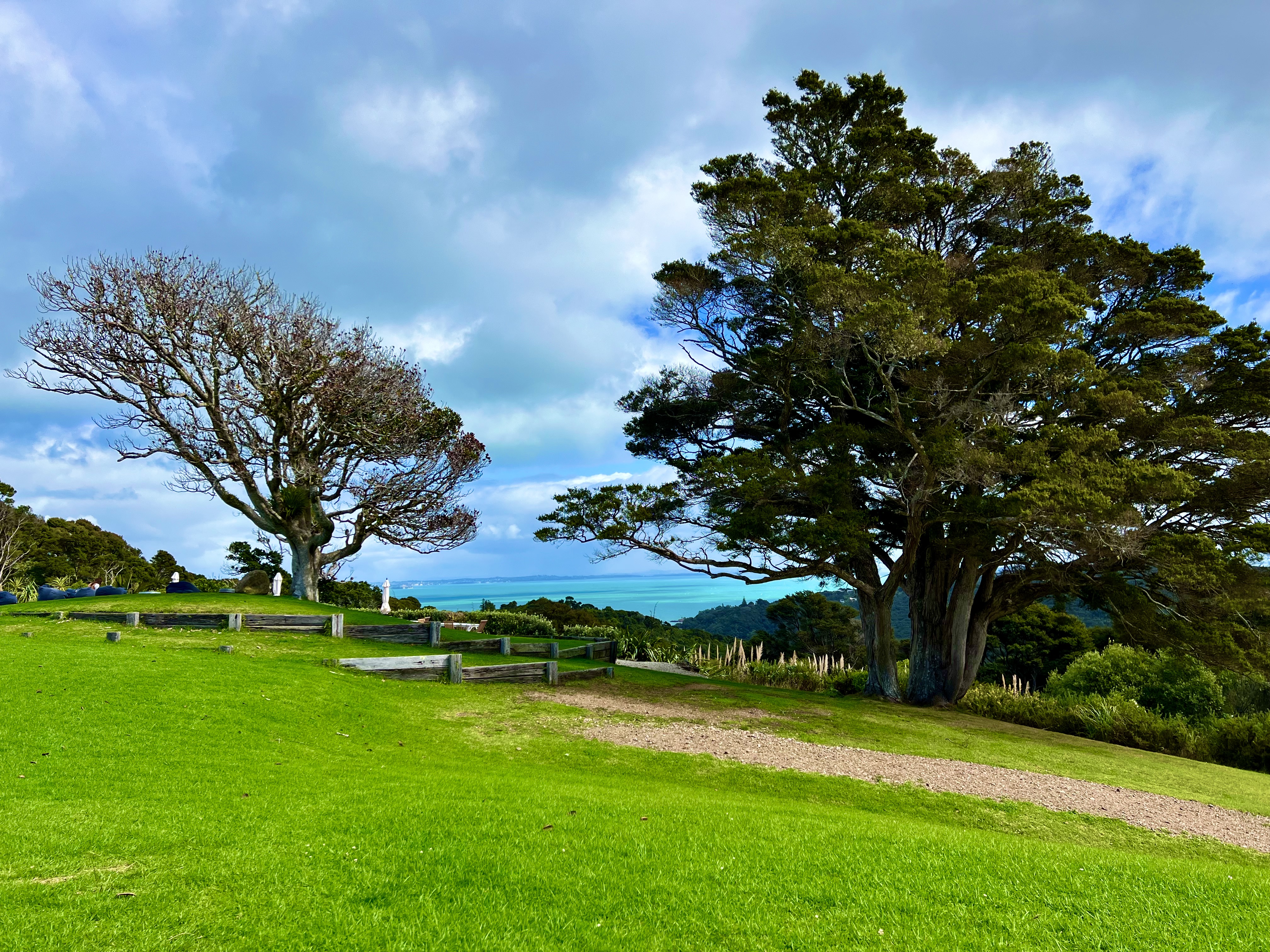
The Batch vineyard
So, is Waiheke Island the paradise it was touted to be? From the scenery alone, it merits the term. For the permanent residents, however, I wonder if it really is. On the other hand, they are leading the way in rewilding the island to make it increasingly more sustainable and their progress to date is impressive.
 omegoodyssey