My flight from Nagpur landed around 21:30 in Bangalore where the driver for the 10-day trip was waiting for me. The drive to the hotel took well over an hour due to traffic that clogged the 8-lane highway even during the night. Once in the center of the city, it was worse with the busses and trucks. It is a good thing that the metro works, otherwise the people here would have major transportation problems.
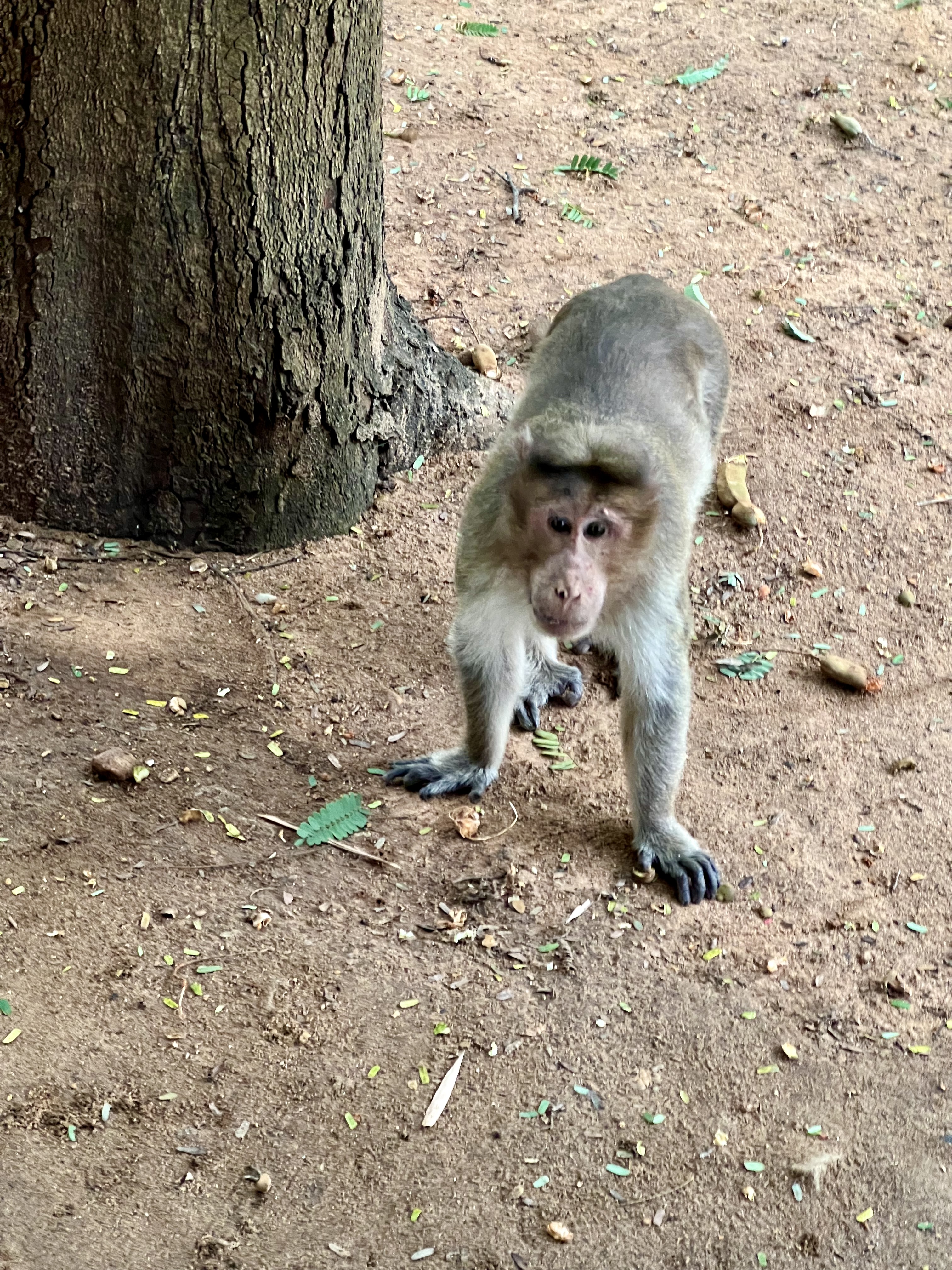
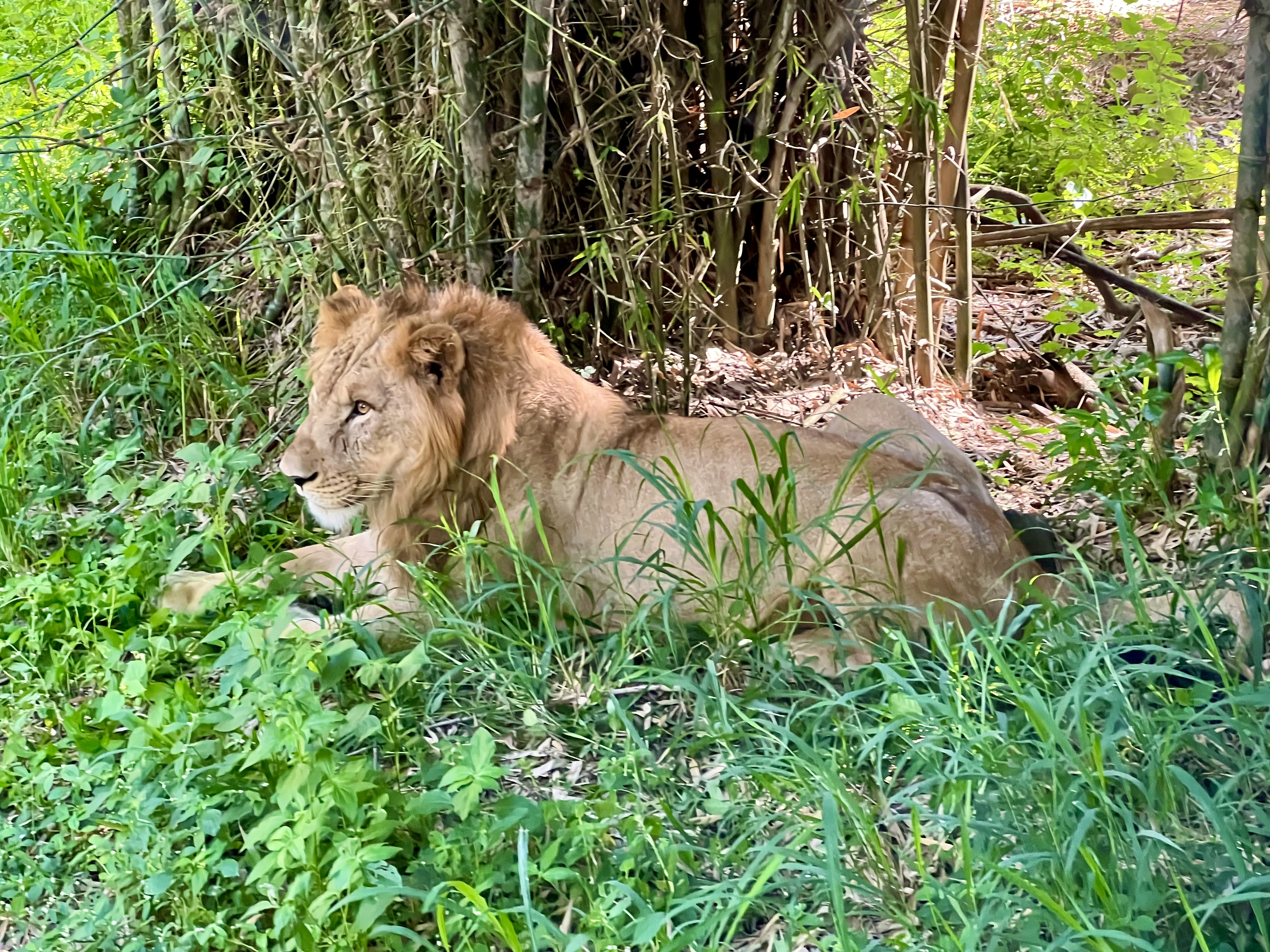
The next morning, I met Paul, who was going to be my travel companion on this part of the trip. His wife, Rebecca, had already headed back to the States after our time in Nepal. Our first stop of the day was at the Lalbagh Park, which is reputed to be so wonderful. It is a large green space in the center of the city, but when we were there the gardens were under renovation and there simply wasn’t much to see. From Lalbagh we headed on to Bannerghatta Nature Reserve, which is about 45 minutes from the center of Bangalore. There is a tent camp just outside the reserve where we spent the night. Monkeys played in the common area, and one wanted to join me in my tent, but I didn’t think that was a good idea, so to his great disappointment I kicked him out. Bannerghatta has an enclosed ‘safari’ area for rescued sloth bears, leopards, lions and tigers and we joined the others staying in the camp for a bus ride through the area. The lions seemed fine, but the others all seemed to have cabin fever as they meandered along the fences, or as with the sloth bears, swayed to either side where they sat. I was told they couldn’t be released back into the wild as every one of them had something that wouldn’t allow them to survive. The animals all looked healthy, and they were obviously well cared for; they just lacked sufficient roaming space. There is also a butterfly dome and interpretation center and a zoo in Bannerghatta; the butterfly complex didn’t have many butterflies, but many interesting posters about the life span of the various local species. We didn’t visit the zoo. The following morning, we went for a walk through the herbivore complex with a local naturalist and his explanations of the vegetation and animals in the sector were excellent.
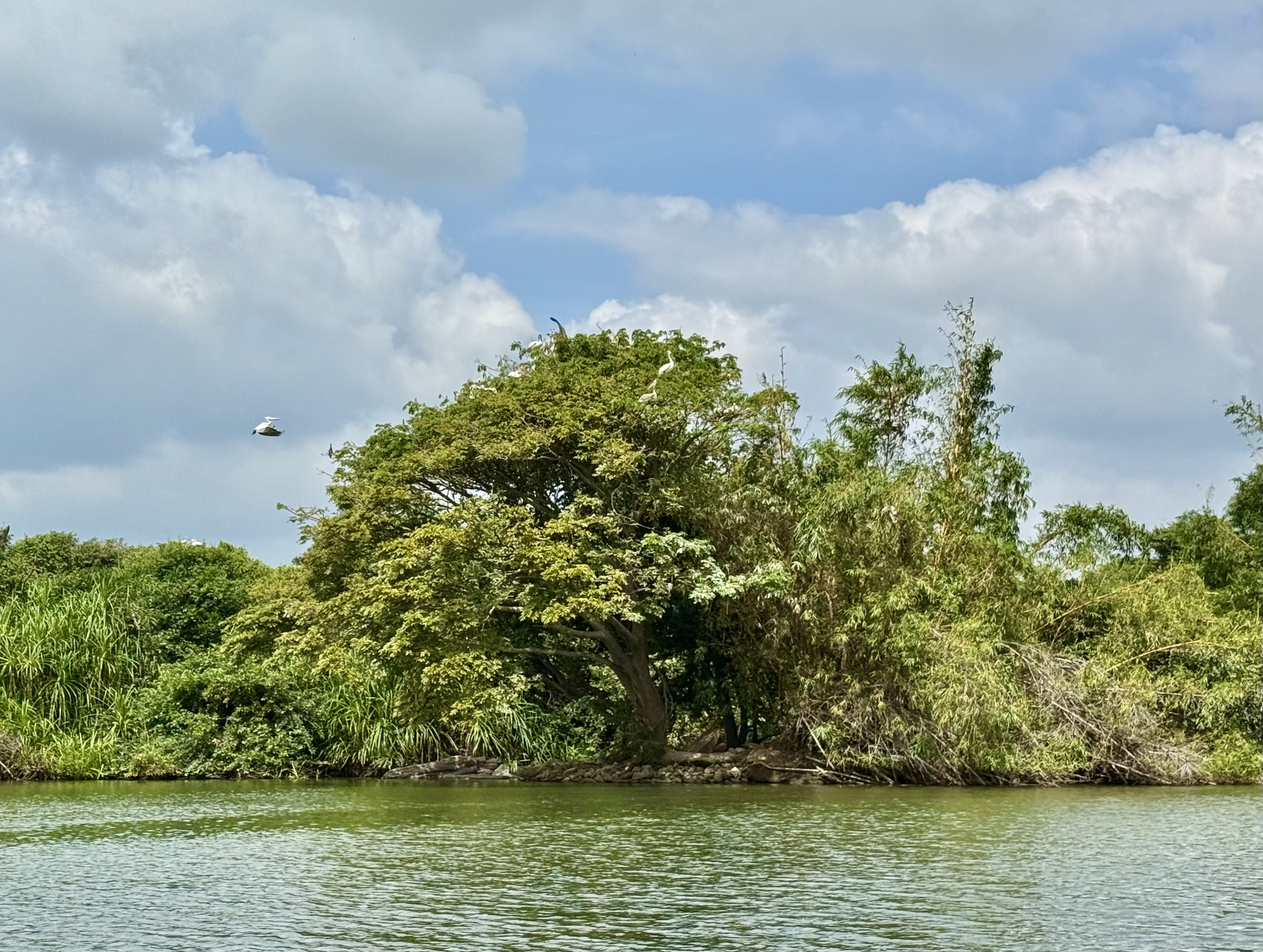
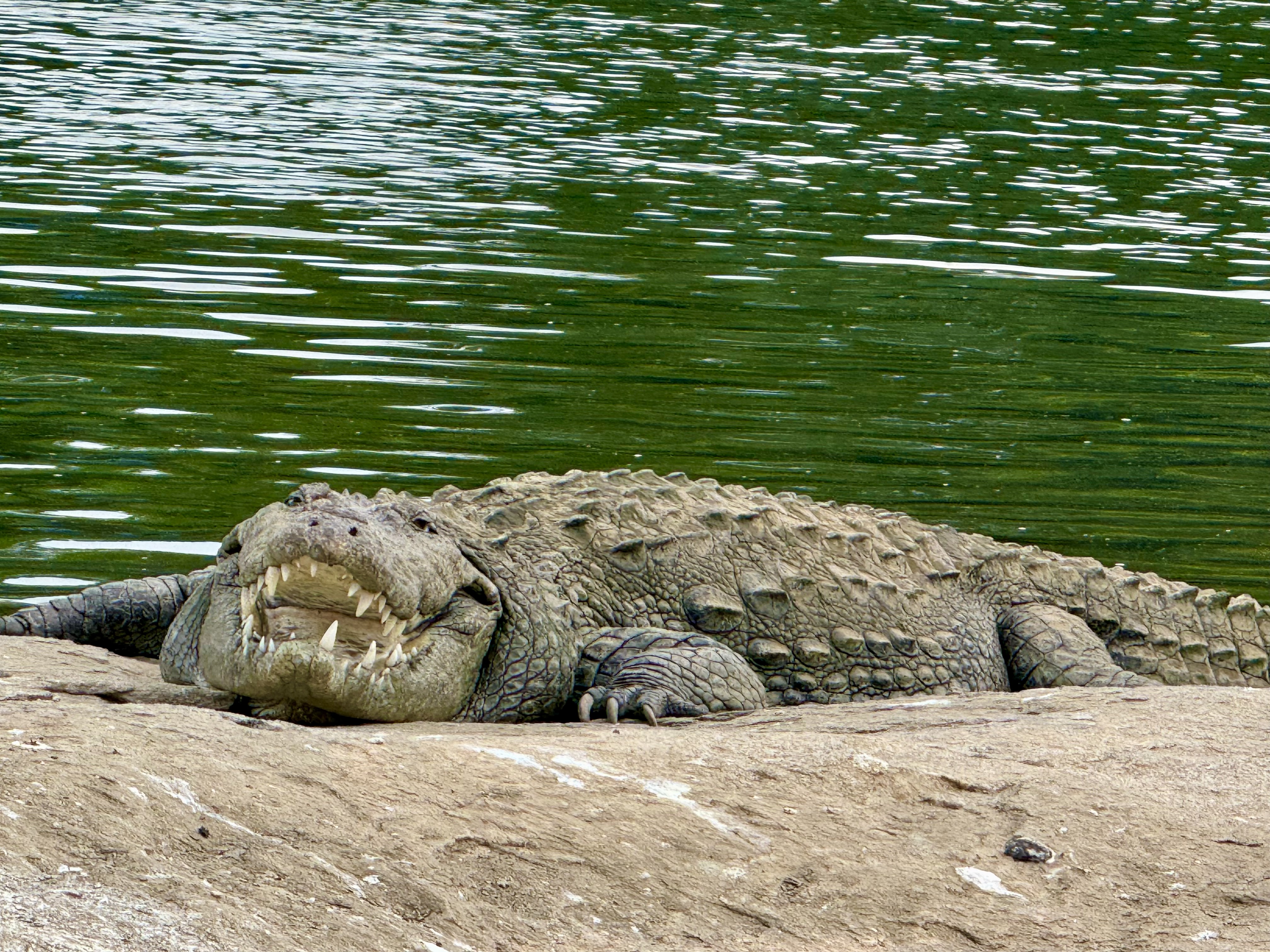
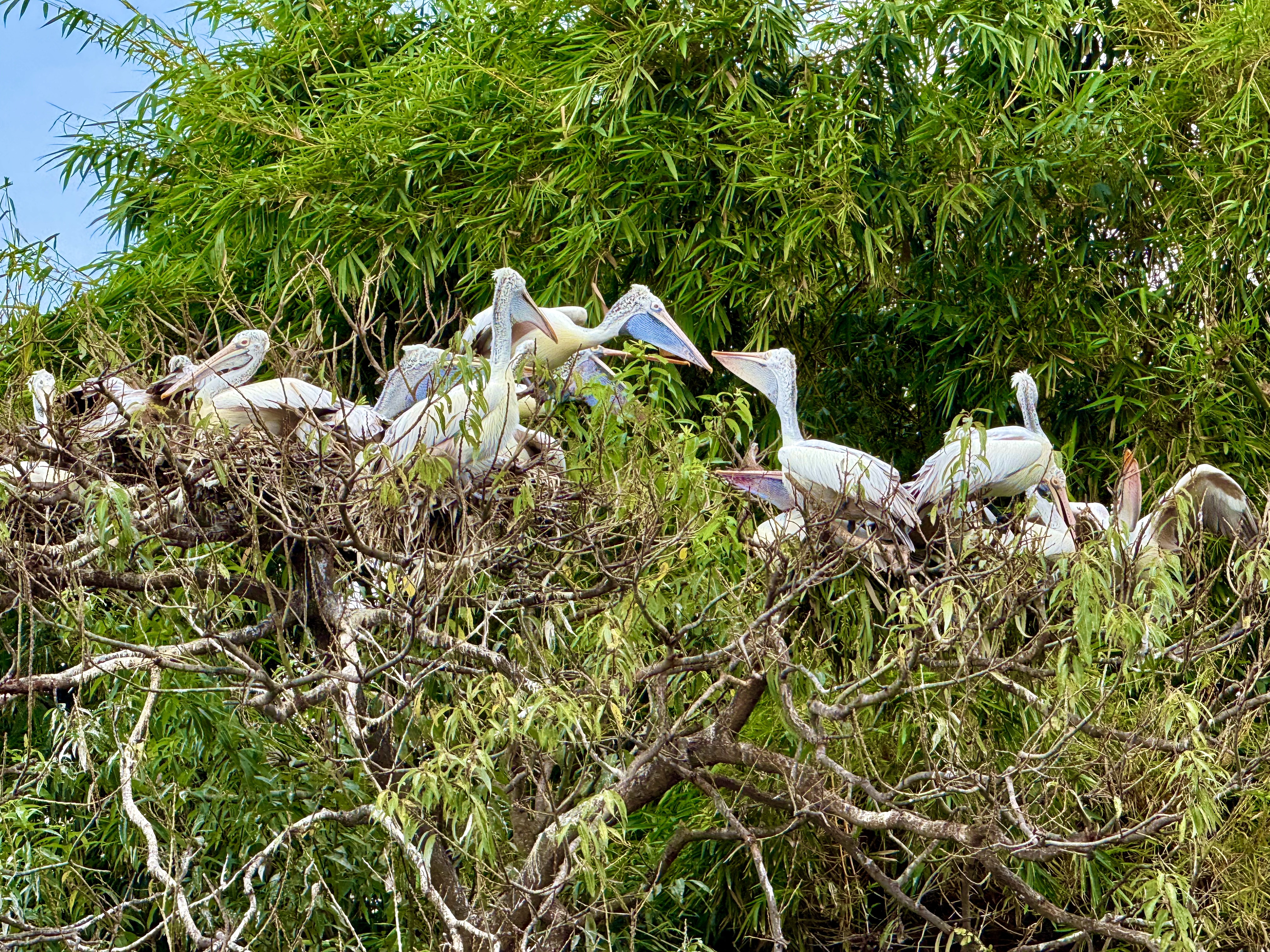
From Bannerghatta we made our way toward Mysore, stopping briefly at the Sultan’s Summer Palace, but choosing not to go in, and then at Ranganthittu Bird Sanctuary. Nithya, who I met in Pench, had suggested this spot, and I was glad she did. The birds migrate from all over to the six small islands in the center of the lake. It’s a relatively small area, and one takes a rowboat – rowed by one of the staff – around the lake. According to the official website, the sanctuary is named after “Sri Ranganatha Swamy, who is an incarnation of Lord Vishnu”. The reservoir was formed when a small dam was constructed in the 1600s in the Cauvery River. Since then, birds have been flocking to the area. In our short time there, we saw more pelicans than I have ever seen in one spot, black headed ibis galore, large numbers of storks, and numerous other avians along with the local crocodiles. Ranganathittu is definitely worth visiting if one is going to Mysore.
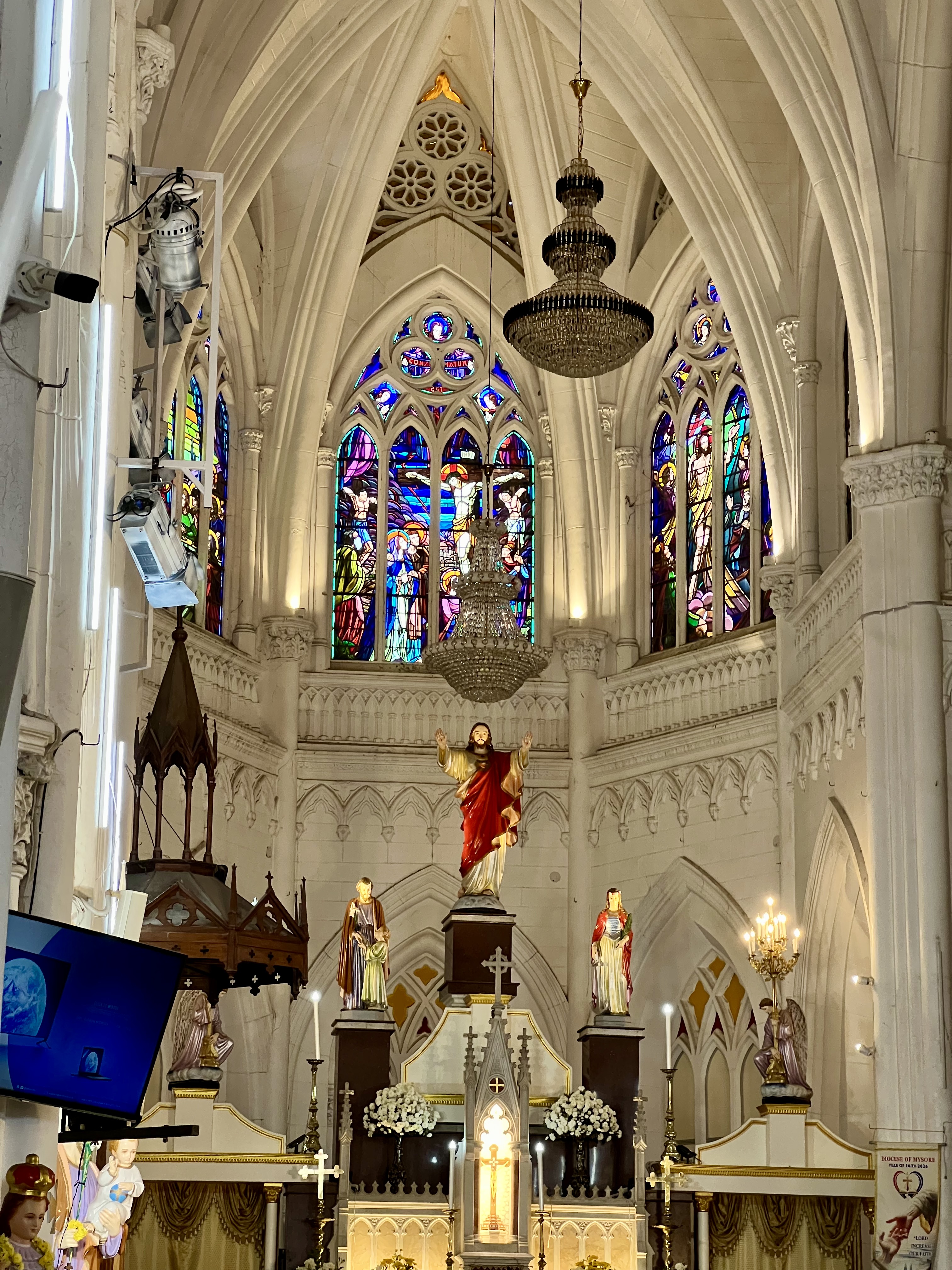
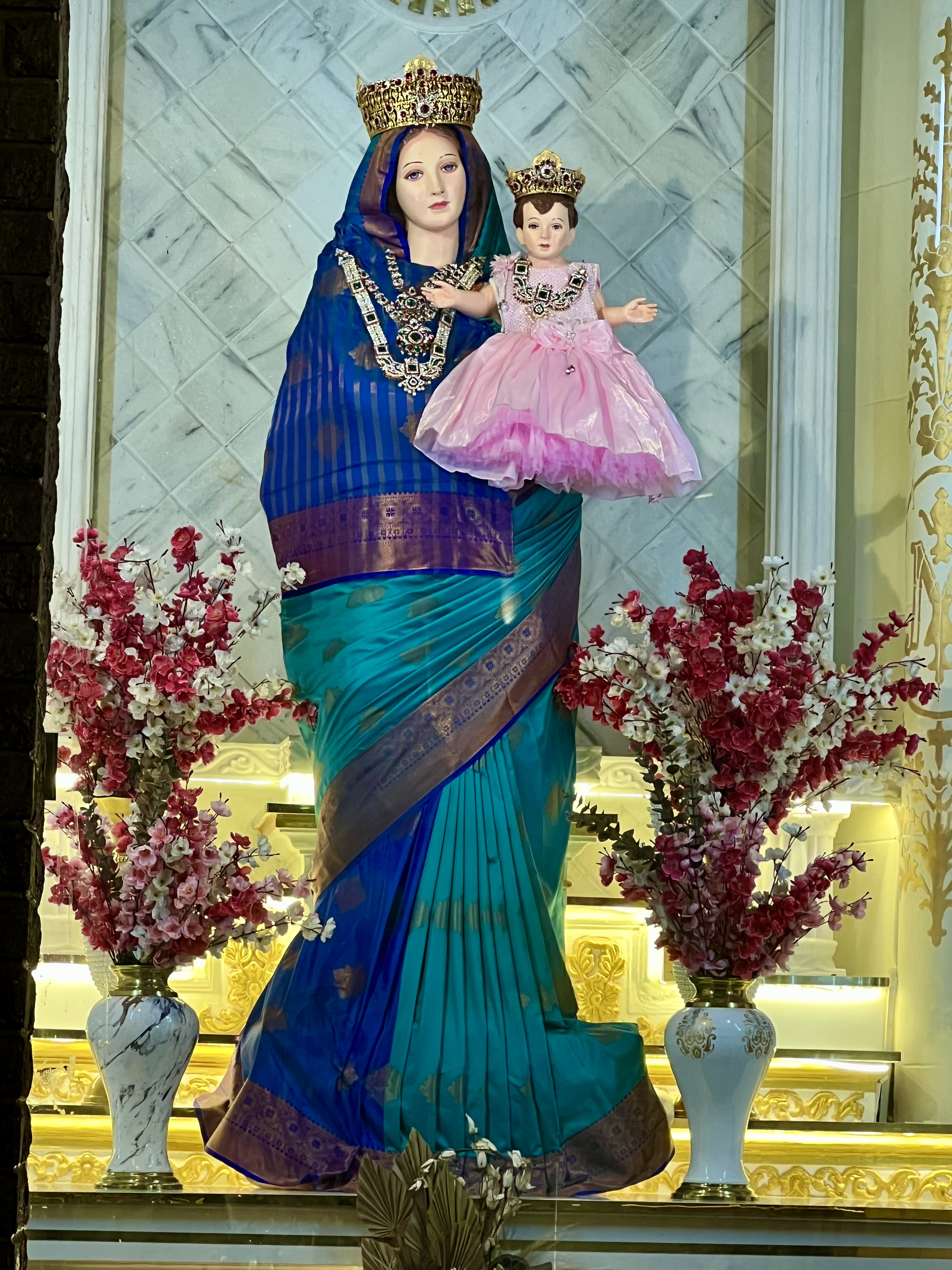
Our first stop in Mysore was to St. Philomena’s Cathedral, which was originally St. Joseph’s Church. The current structure was built on the site of an earlier 1843 church built by the Maharaja of Mysore as a gift to the Europeans living in the city at the time. Over time, that church became too small, so in 1933 the new Maharaja (grandson or great grandson of the former???) had the present day neo-Gothic church constructed. He hired M. Daly, a Frenchman to design it as a slight imitation of the Cathedral in Cologne, Germany. It is the second largest church in Asia and the largest in India. It is dedicated to St. Philomena, who was a martyred Greek princess in the 4th C. A relic of the saint is preserved near her statue in the crypt. While the architecture is European, some of the artifacts and statues have an Indian flair, such as a Madonna draped in a beautiful blue sari.
After church, we went to the highlight of the city, the Mysore Palace. Mysore is called the City of Palaces, and it has seven of them. The only one we visited was the main Mysore Palace.
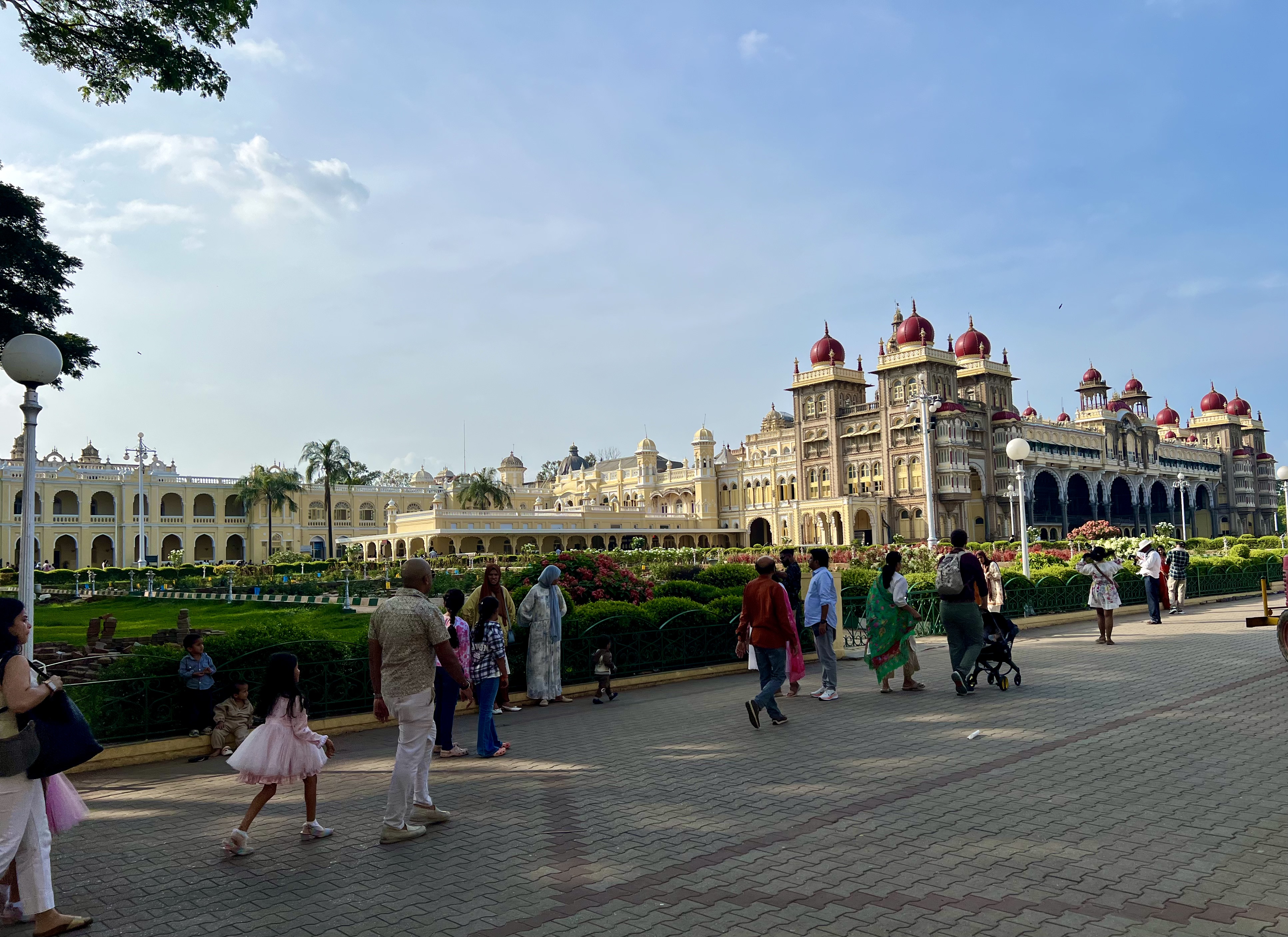
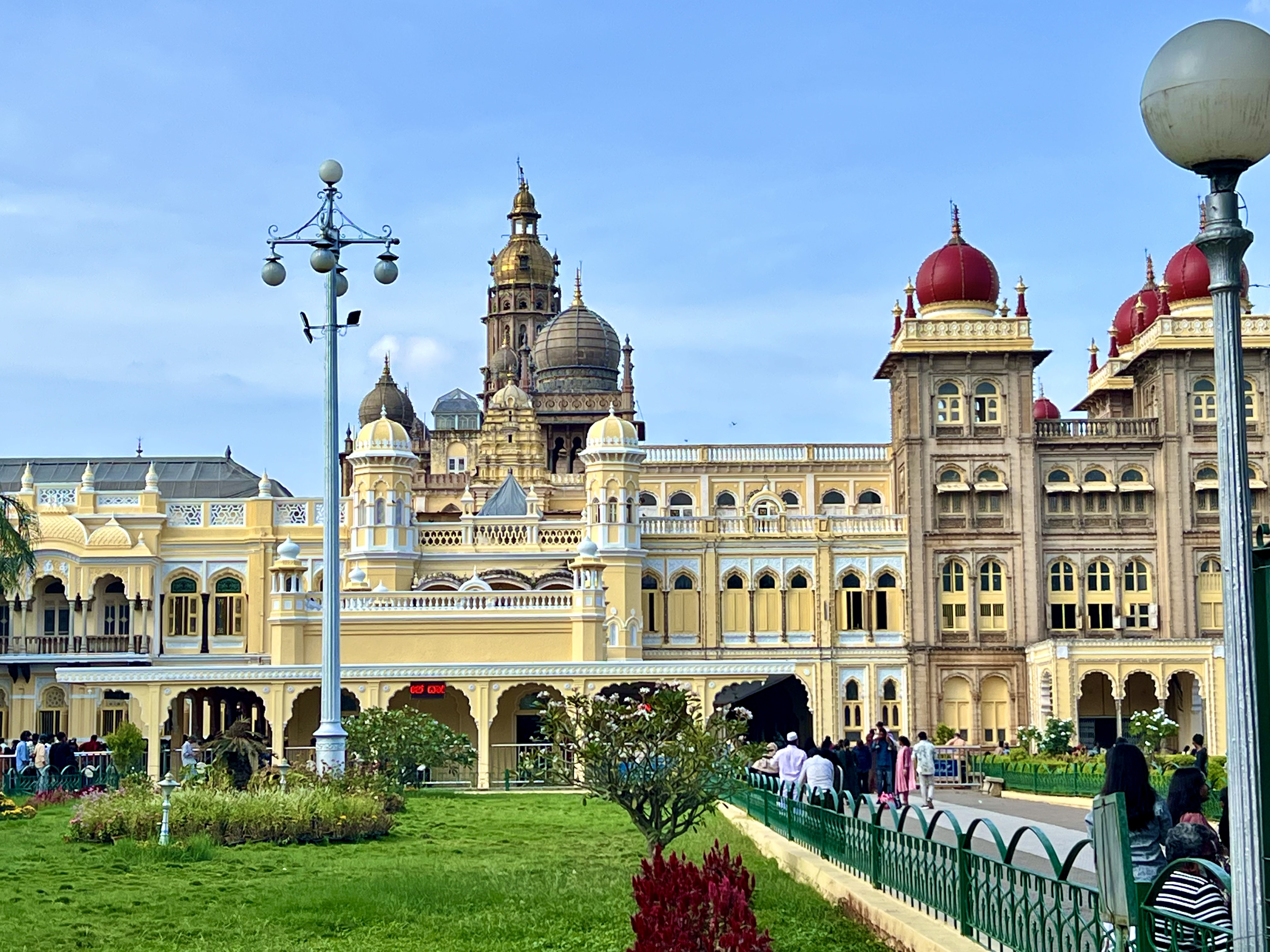
Here again, we saw European influences in the architectural design along with Hindi, Saracen, and Rajput styles. The original palaces from the 14th C onward were destroyed and rebuilt a number of times; the current structure was constructed in 1912, designed by English architect, Henry Irwin. Although it is now property of the Mysore government, it remains the residence of the Maharaja’s family, the Wodiyars. Apparently, there are ongoing disputes as to the real ownership. The palace is officially called Amba Vilas; Amba is a Sanskrit word for mother and in this context means Mother Durga, Vilãsa means pleasure residence, so the pleasure palace dedicated to Goddess Mother Durga.
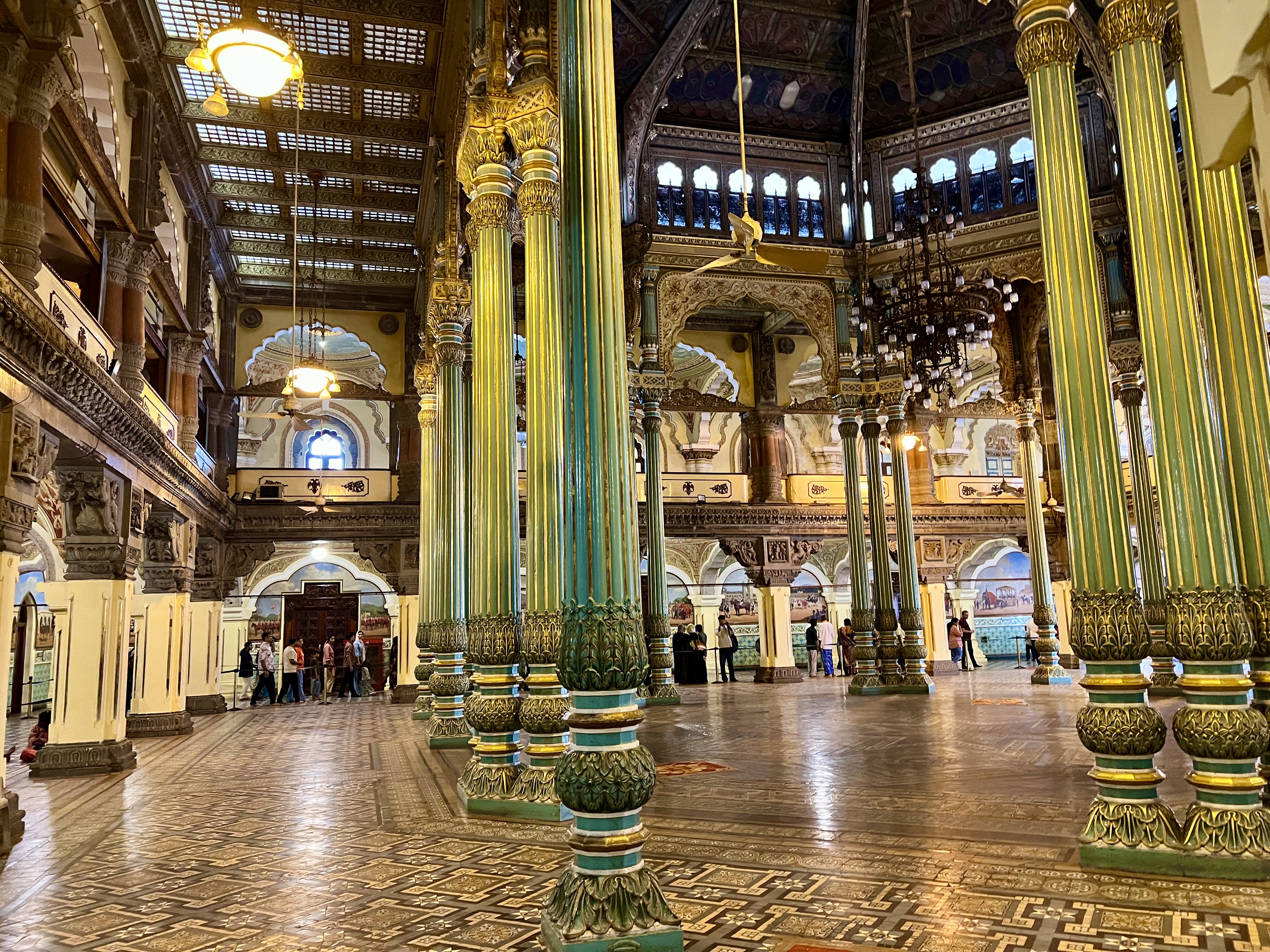
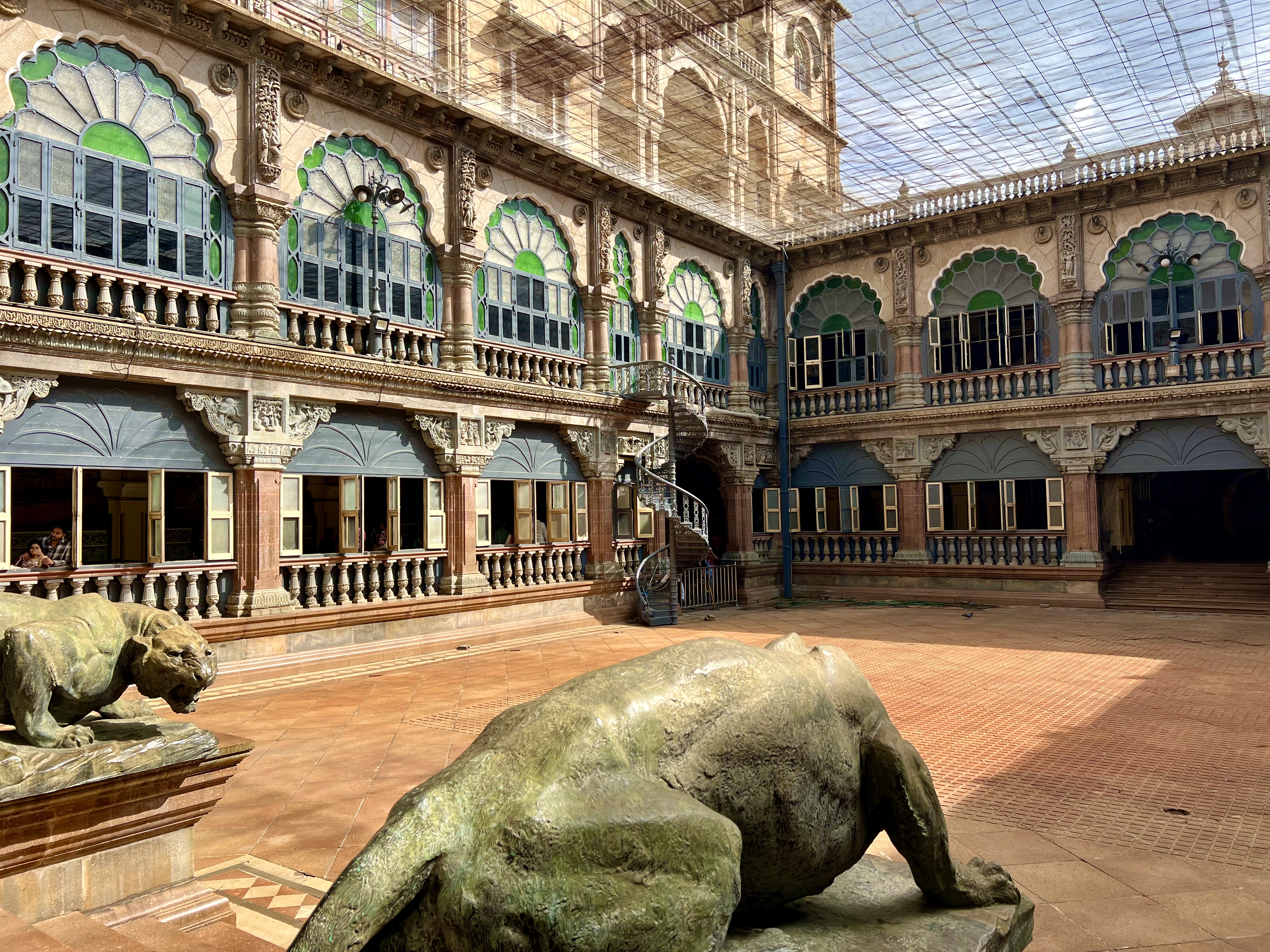

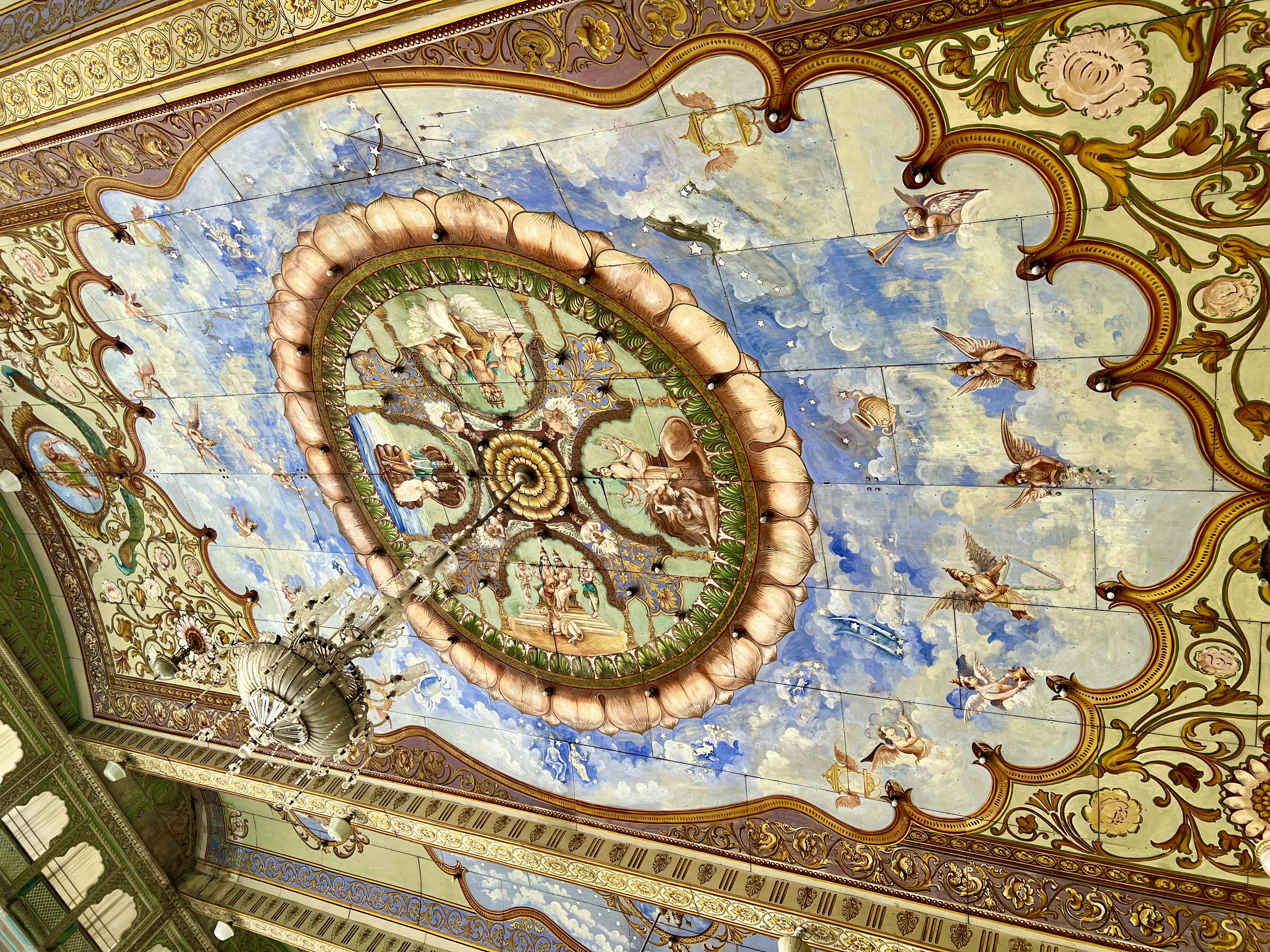
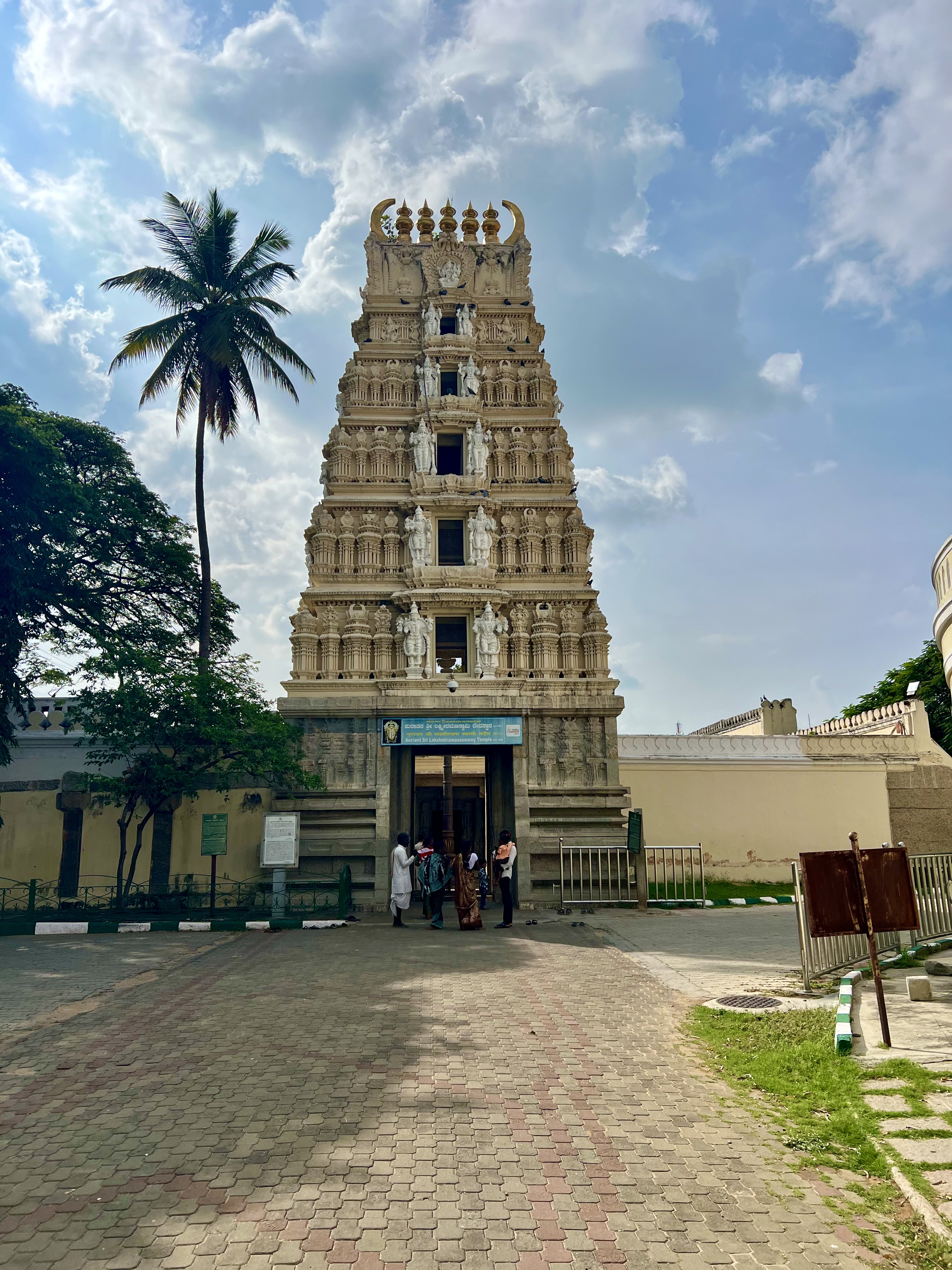
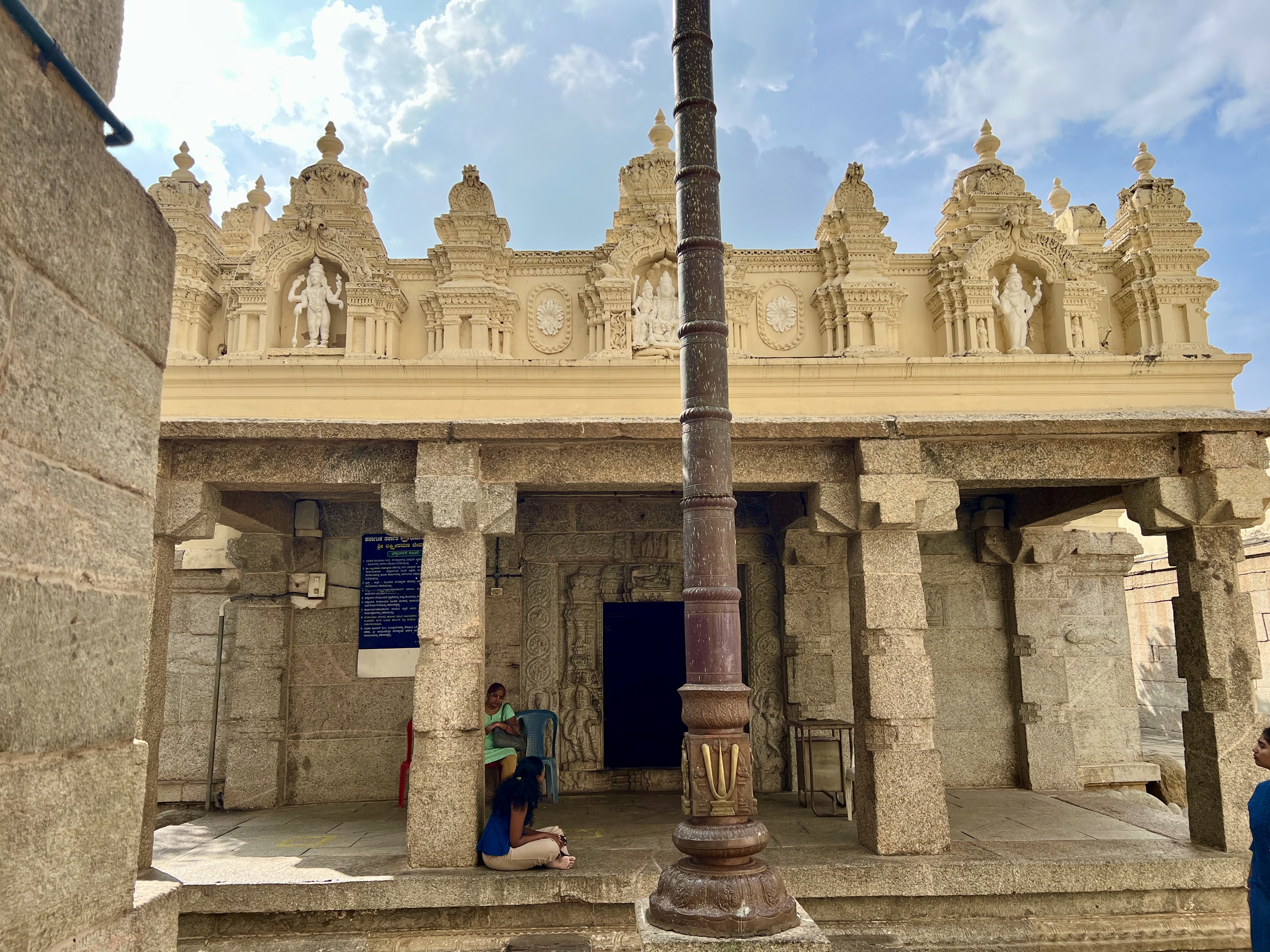
Outside of the private family chambers, the Palace is a large museum surrounded by gardens and temples. One of the temples the Lakshmiramana, dedicated to the goddess Sri Laksmi dates to 1499. Despite the name, the main deity in this temple is Nambi-Narayana, a form of Vishnu accompanied by his consort Lakshmi. The entrance gopuram was built much later in 1851. Many of the newer temples have elaborate gopura in the Dravidian style. Interestingly, shoes are not allowed inside the palace itself. This is normally reserved for temples, but I assume that they want to preserve the stone floors by not allowing footwear inside. There is a set path through the museum and the crowds were massive. It was sometimes difficult to see the halls and paintings because of all the people. The interior decoration is similar to the outside in that it is a mix of styles. I was especially intrigued with the ceiling paintings of Hindu gods and goddesses as a replacement for Greek and Roman mythological figures done in the same manner in European palaces. The exterior three-story building is capped with a five-story central tower. The top has a real gold-plated onion shaped dome with a flag.
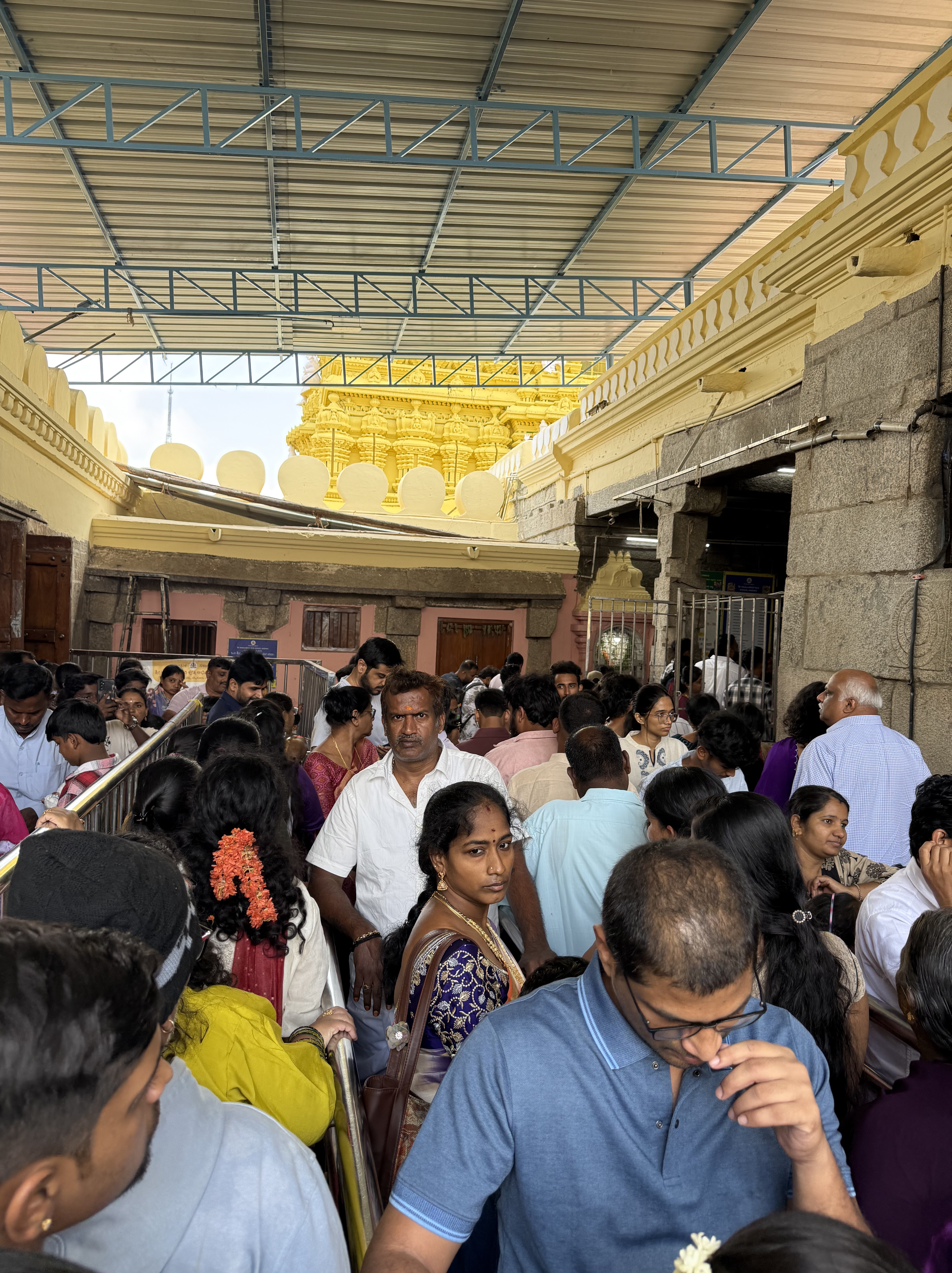
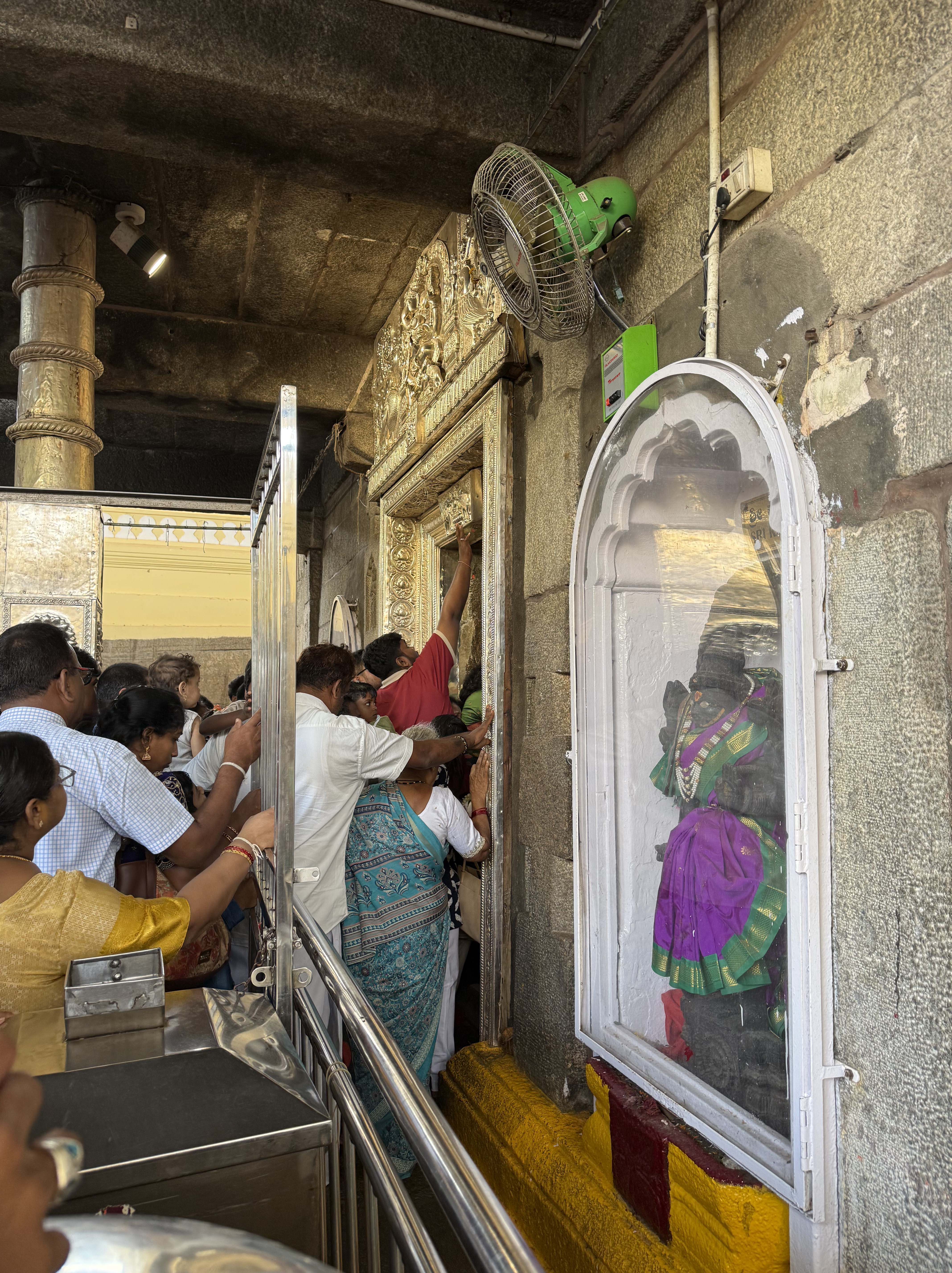
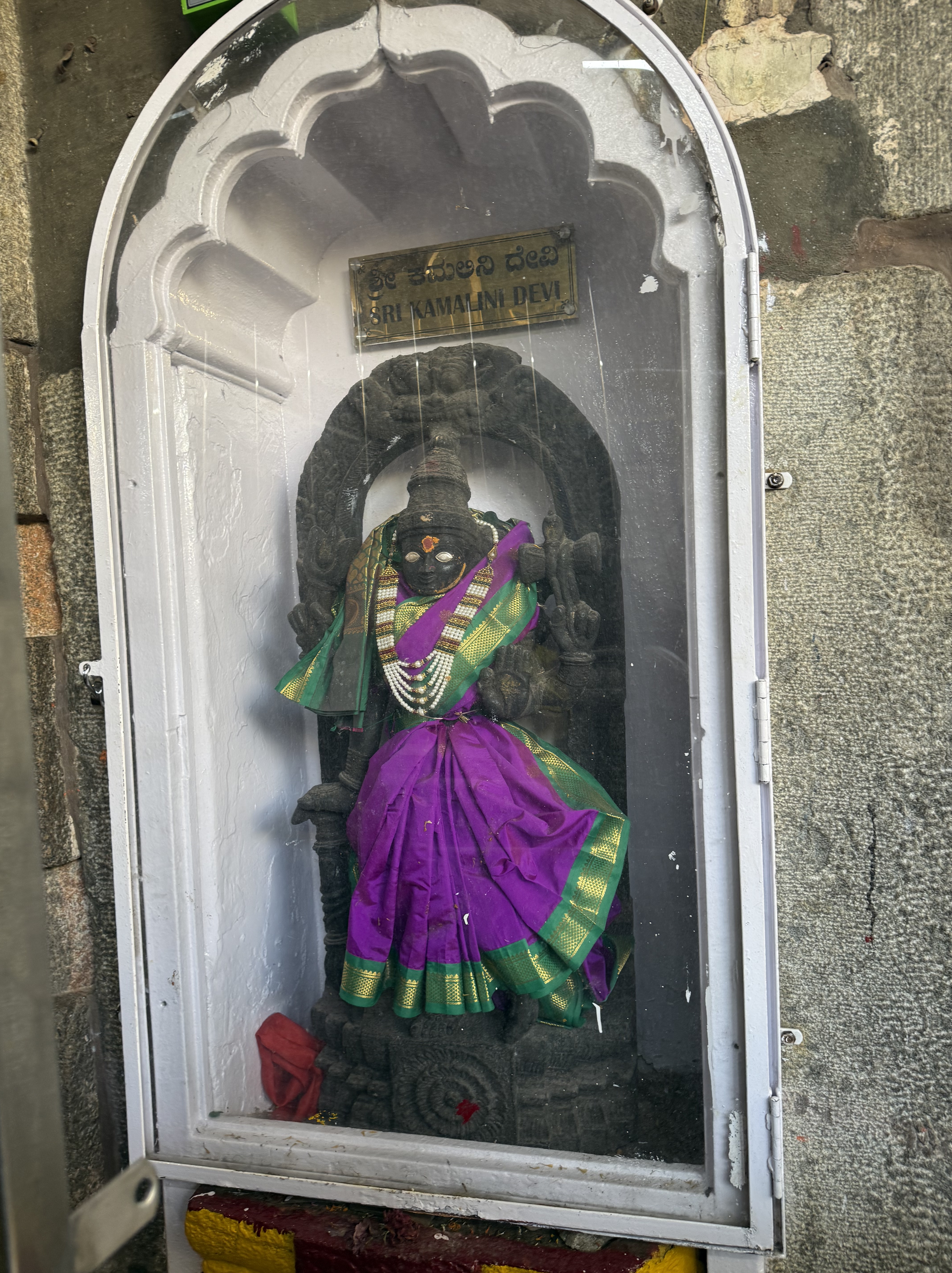
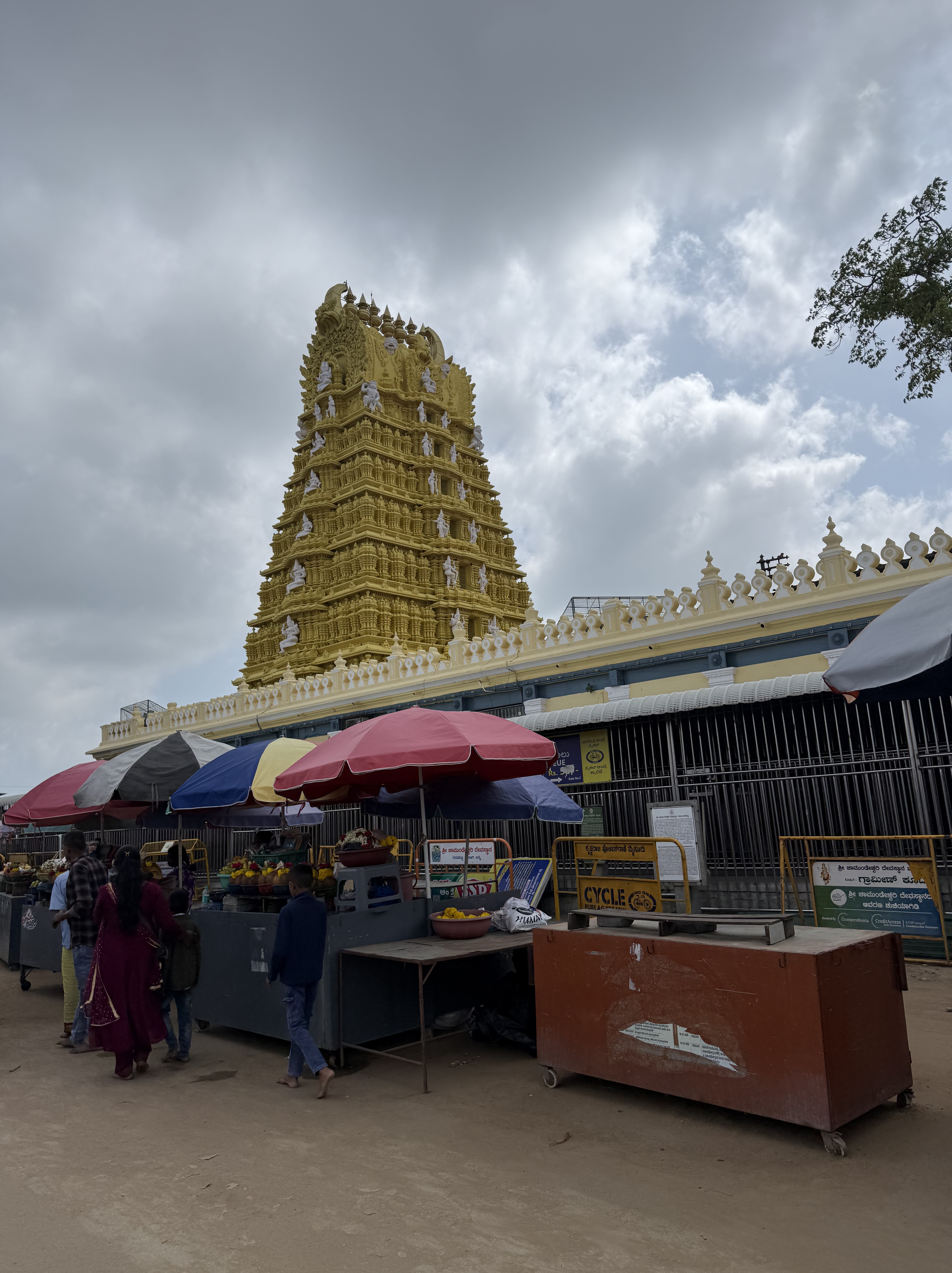
The next morning, we visited the Sri Chamundeshwari temple on the Chamundi Hill above the city. The Goddess Chamundi, a manifestation of Sri Durga, fought and defeated a demon who was terrorizing the people of Mysore, saving them. In her honor, the Royal Family built a temple on the hill in the 1700s from where she watches over her followers. There were supposedly older temples in the area going back to the 10th C. dedicated to the Goddess Durga. Near the entrance is a statue of Mahishsura, the demon the Goddess defeated. His image is placed on houses and businesses throughout the area, which I didn’t understand. Apparently, the belief is that by placing his image in front of a store, house or temple, it wards off evil and those with jealous intents. Another image that I saw in fields later in Kabini was that of a woman’s face with huge wide opened eyes. Again, this was to ward off evil. The site on the Chamundi Hill is considered one of the main 18 Shakti Pithas; this one is where the Goddess’ hair fell to earth. Nearby the Chamundi temple is an ancient temple dedicated to Lord Shiva, but we didn’t have the chance to visit it. The walk up to the pilgrimage site is, as usual in India, lined with vending stalls selling everything from trinkets to handicrafts to flowers and coconut offerings for the Goddess. After passing through the 1830s constructed gopuram, there is a gated zigzag passageway to control traffic. Once through that section though, the mass of people jostles to get into see the Goddess. (Photography, is naturally not permitted.) I have never experienced such a stampede before. If one fell, (which is basically impossible as the crowd pushes one along) there would be no way to get up, one would simply be trampled. In this mass, it is very difficult to have darshan (visual communication) with the Goddess. Once pushed back outside the crowd immediately dispersed. It was a new cultural experience to say the least, and I have been on many pilgrimages throughout India. The crowd robbed the individuals within of a sacred encounter. I was sorry that we were so rushed as the site in different circumstances would have been much more pleasant.
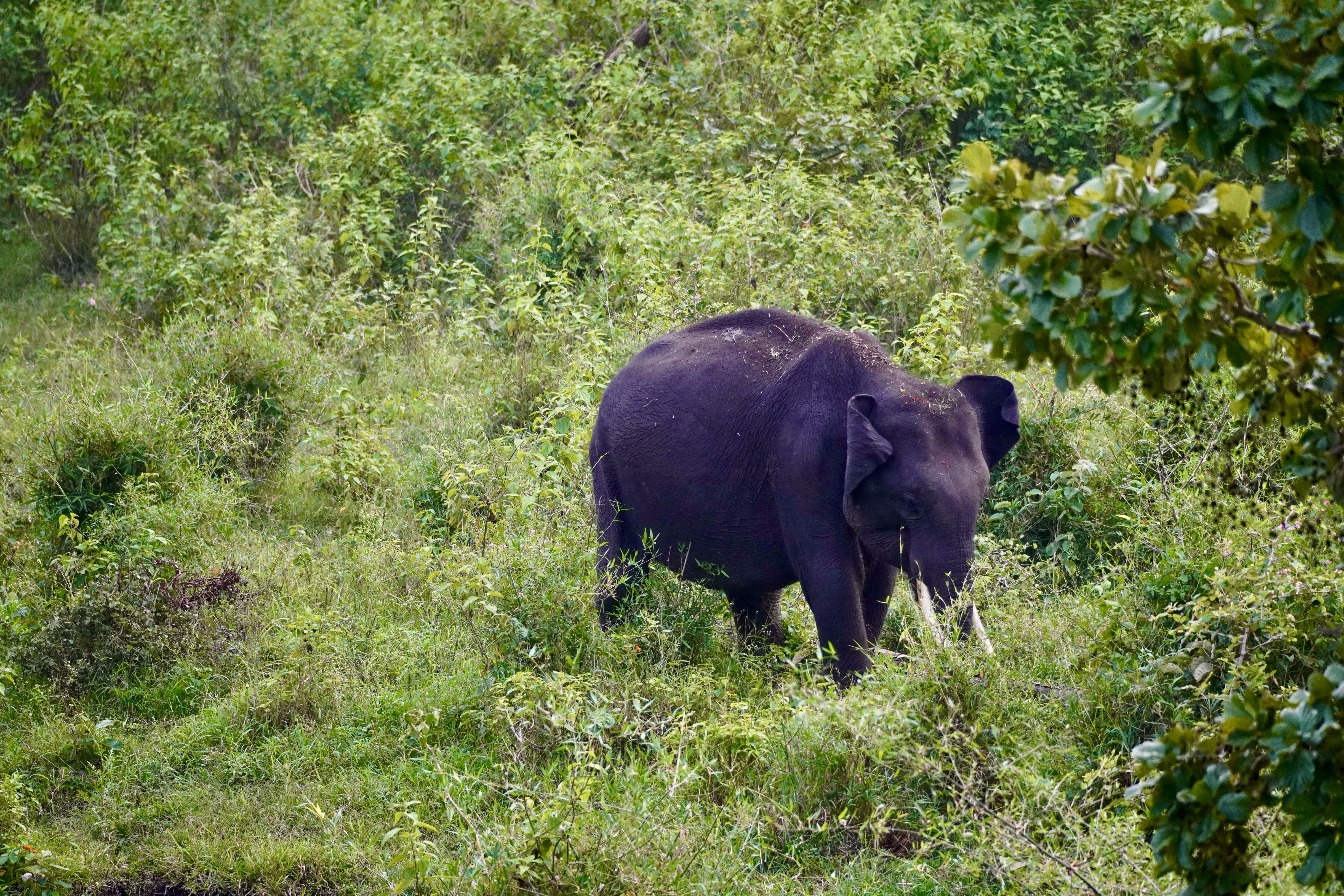
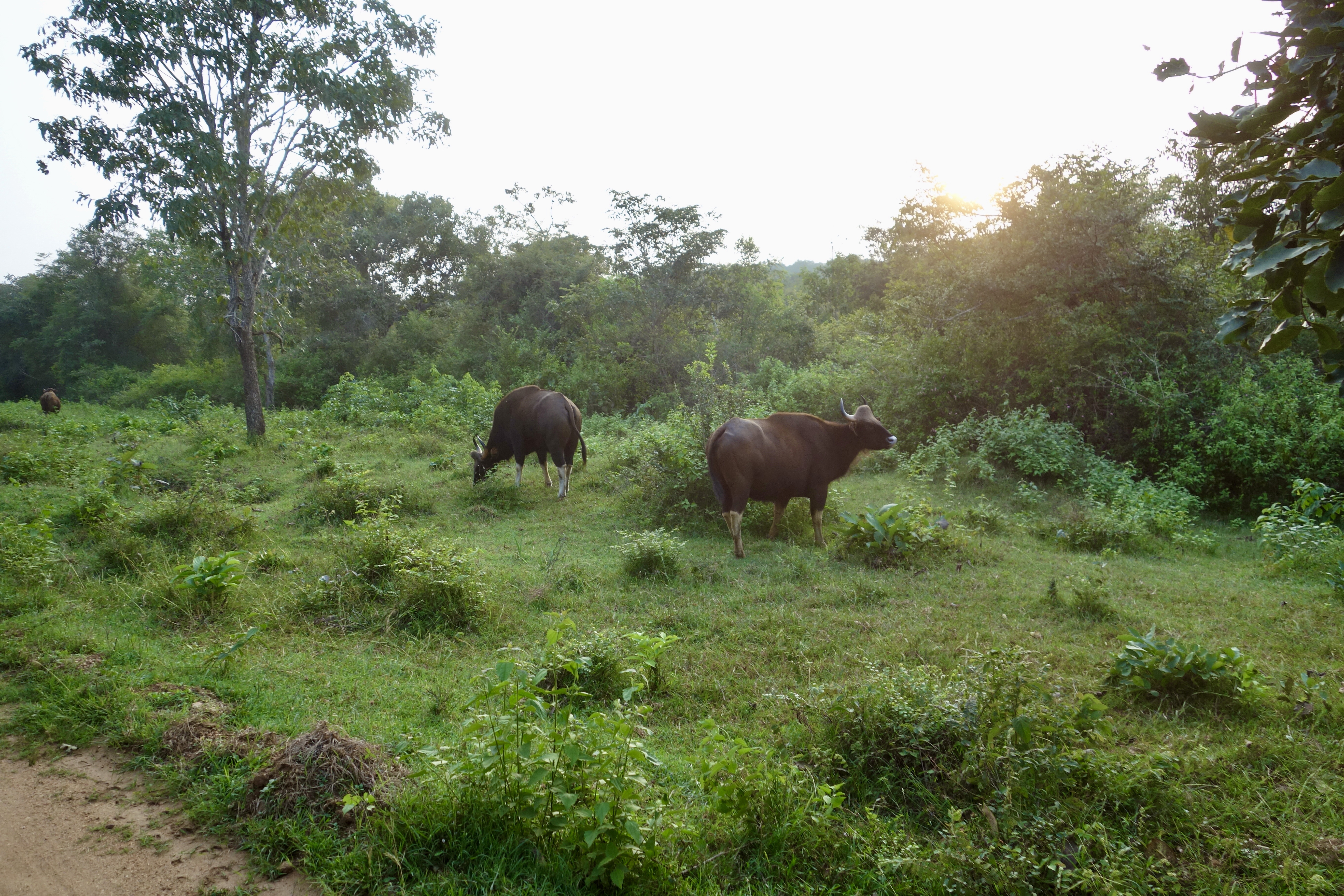
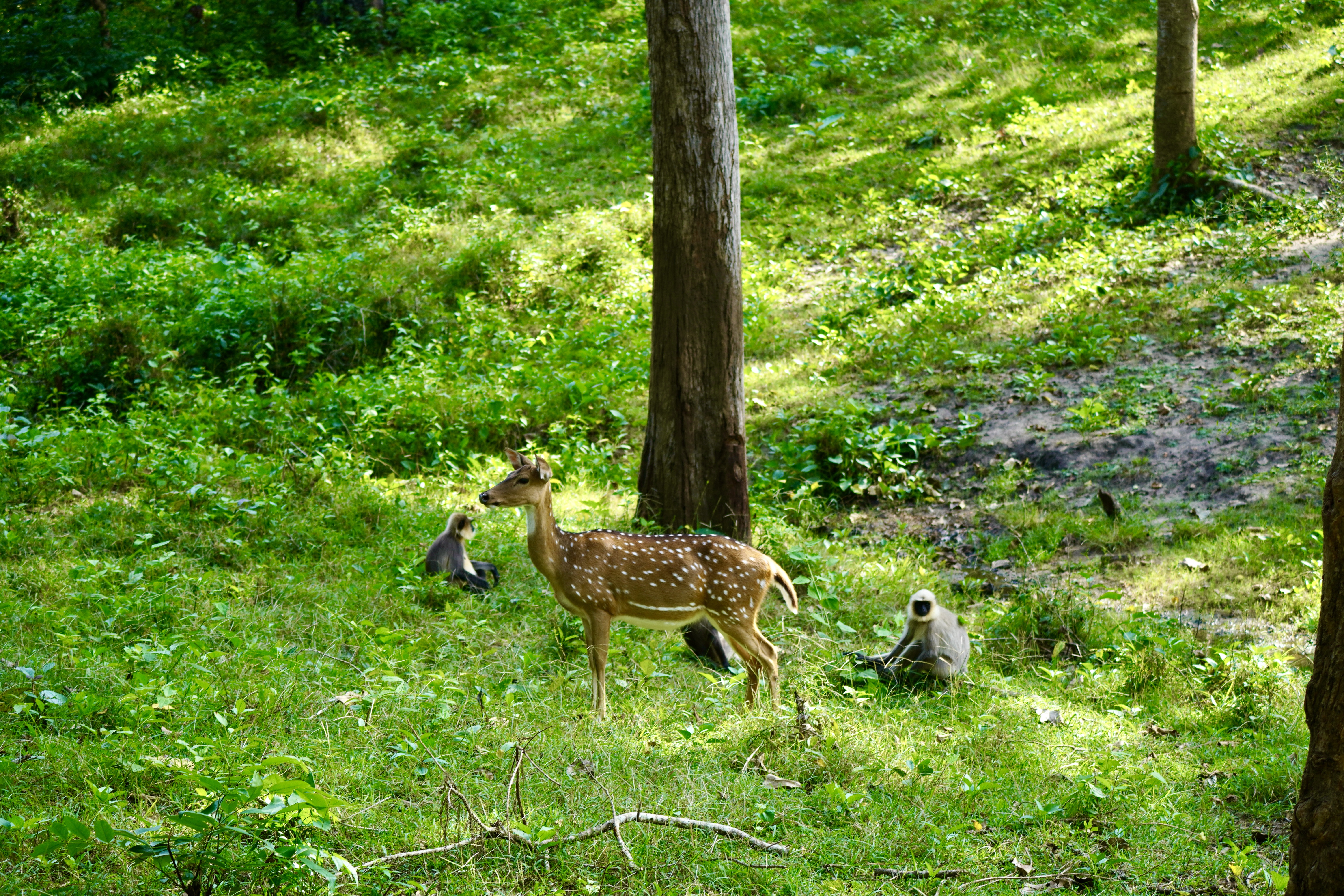
Our next stop was Kabini Wildlife Reserve, which is in the southern part of Nagarahole National Park. We spent two nights in the jungle lodge on the Kabini River. The lodge arranges for safaris into the park as well as a boat tour on the river. We ended up doing three safaris, where we unfortunately did not see any tigers or leopards, but did see wild dogs, wild boar, mongoose, spotted and sambar deer, langur monkeys, Indian gaur, and elephants. The jeep rides were bumpy, but not nearly as bad as they had been in Pench and Tadoba.
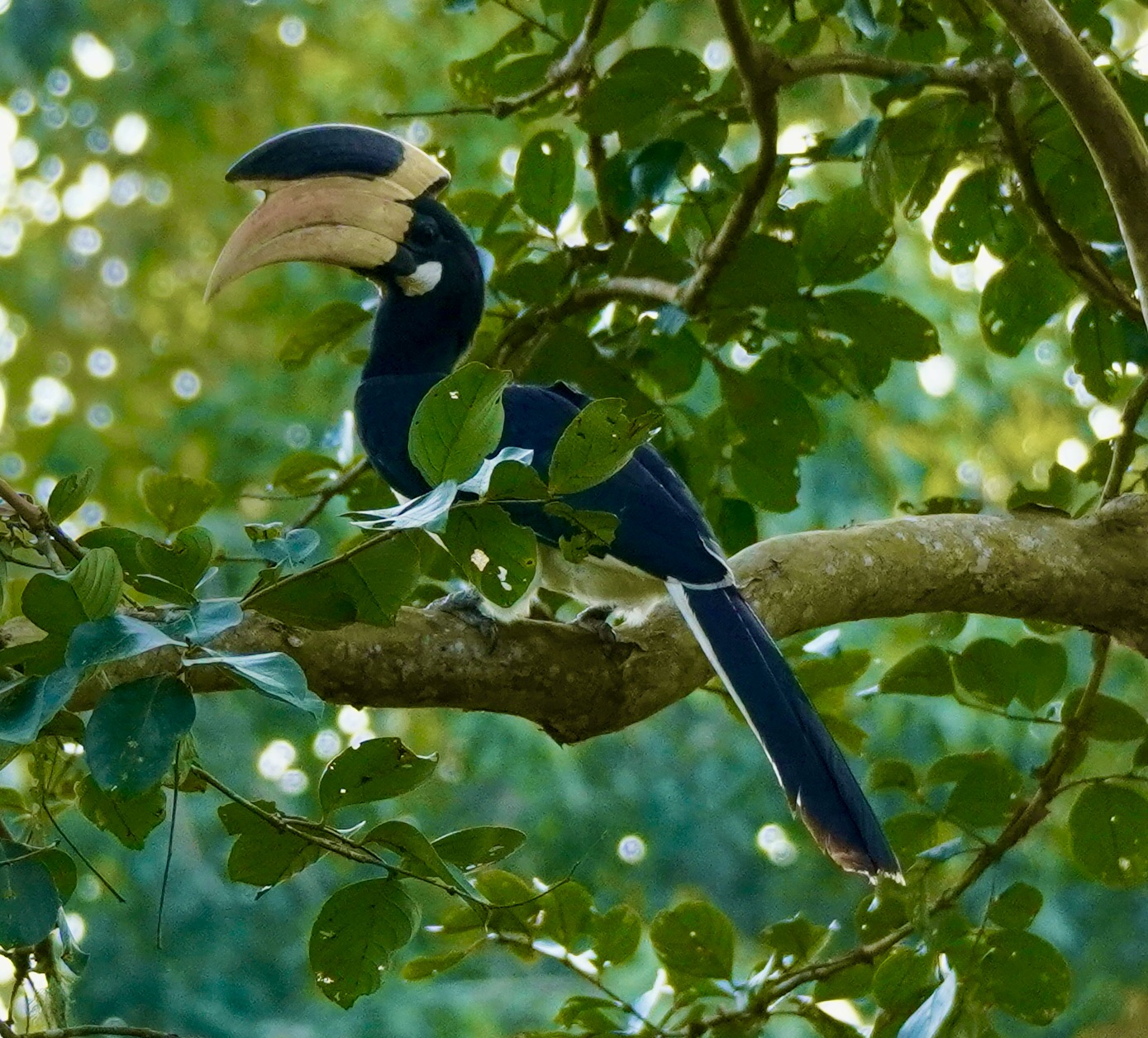
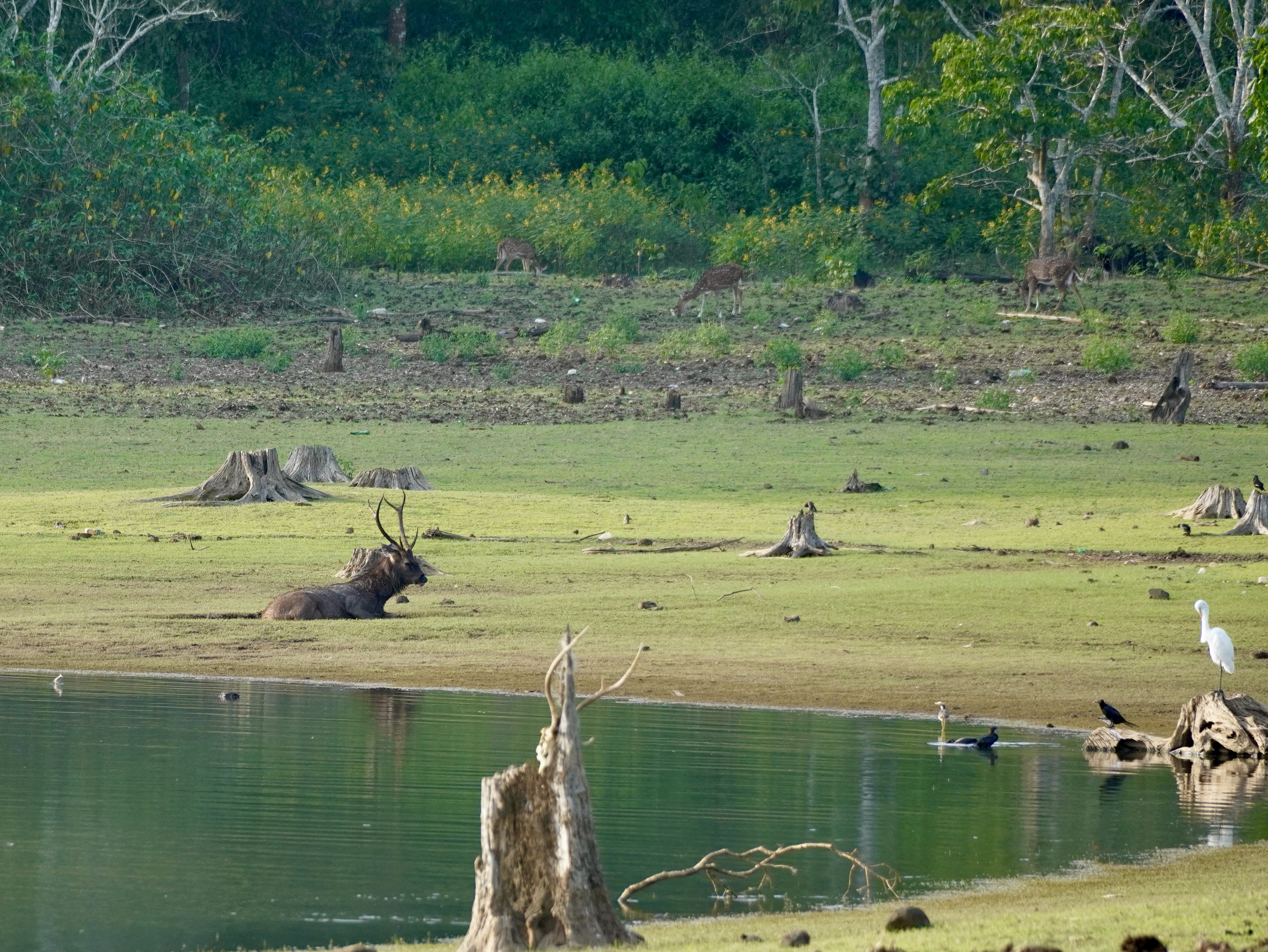
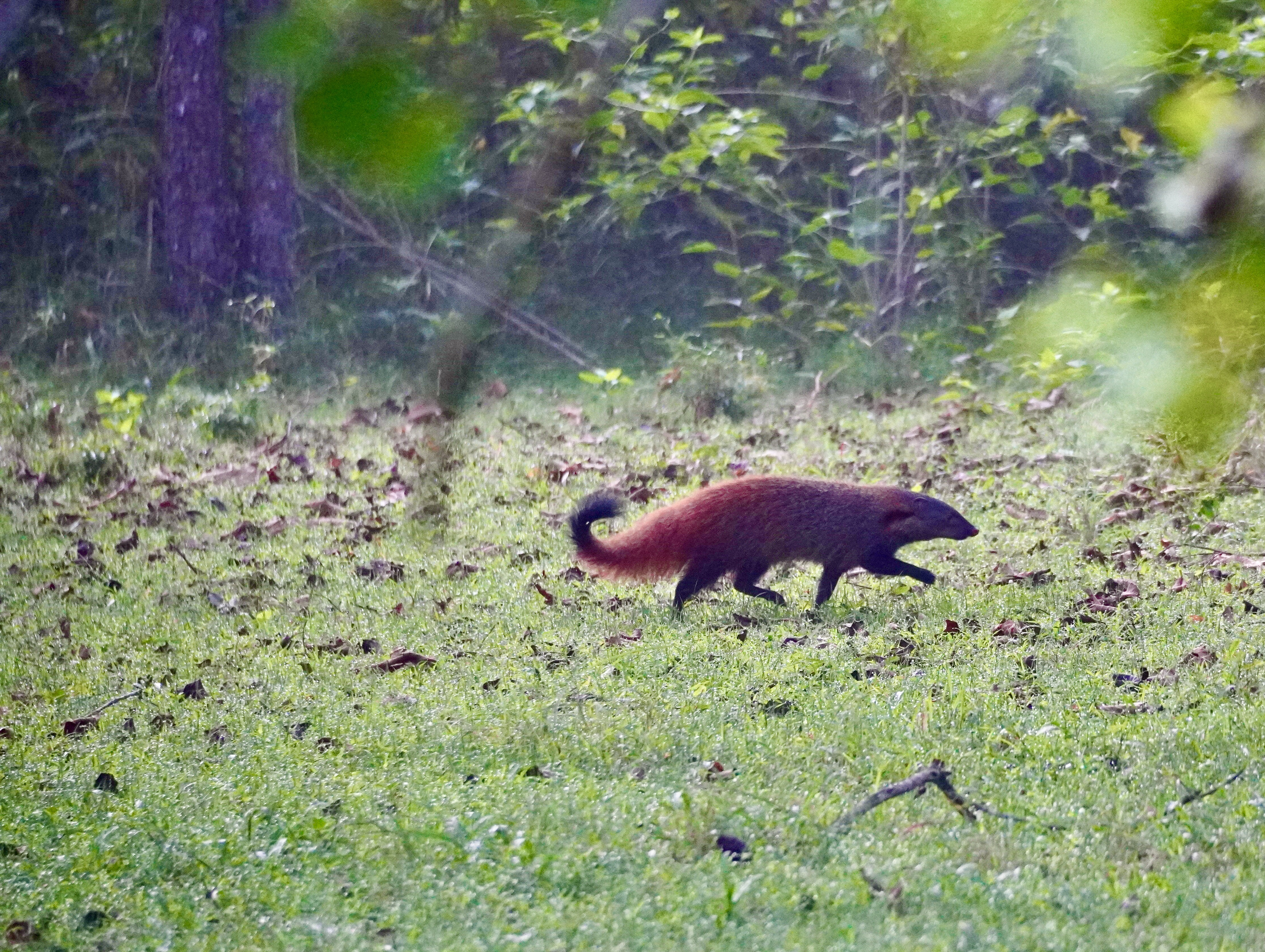
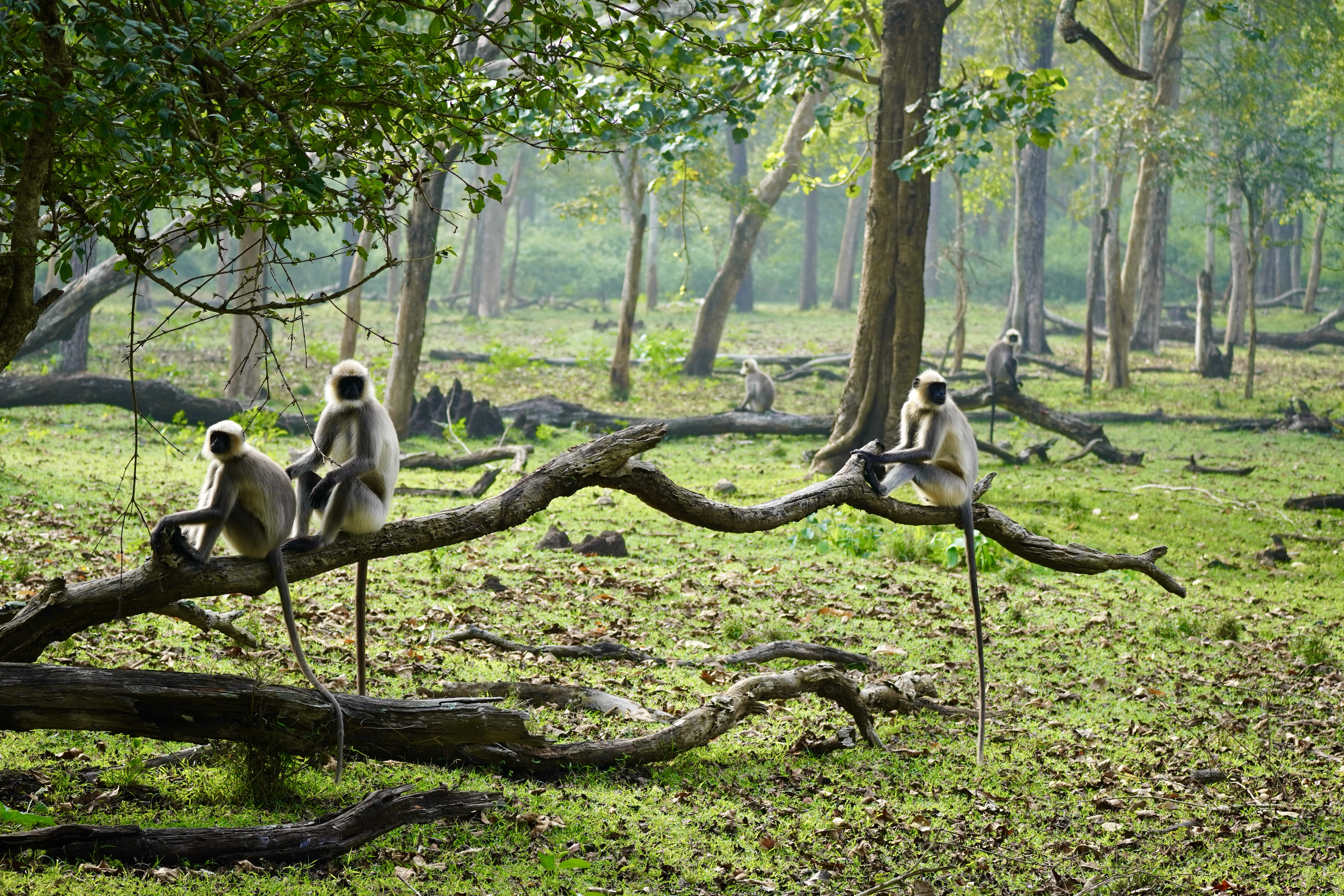
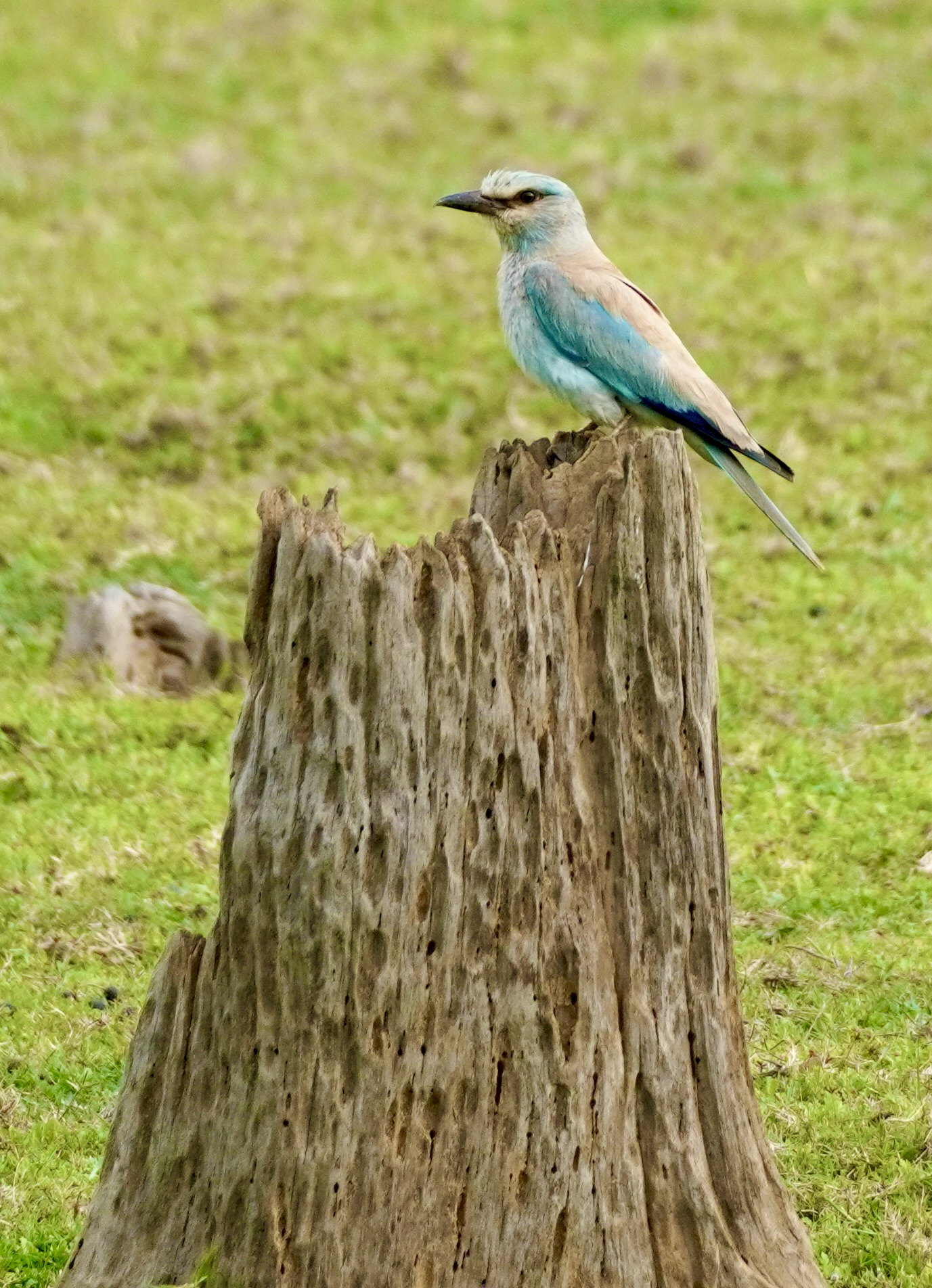
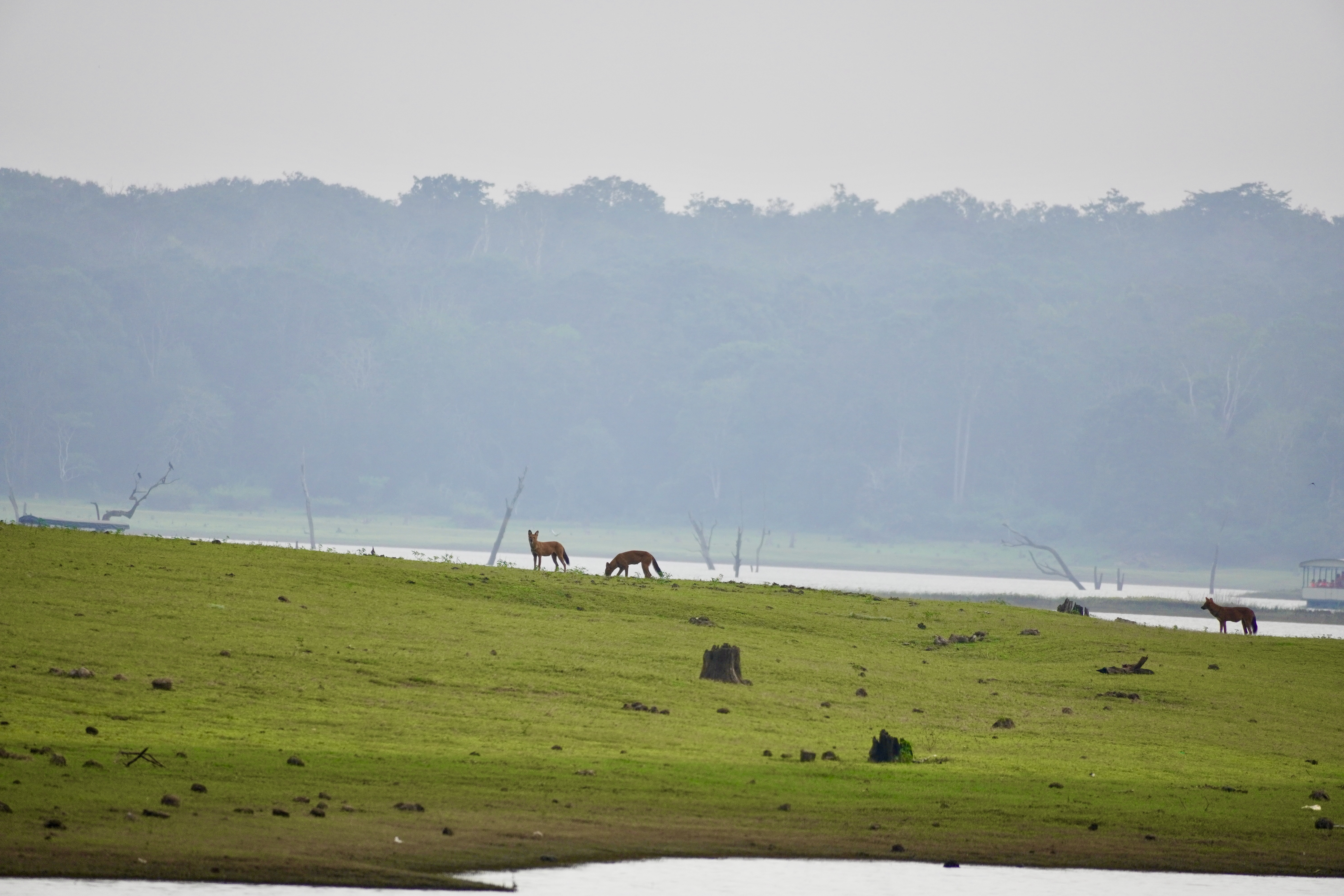
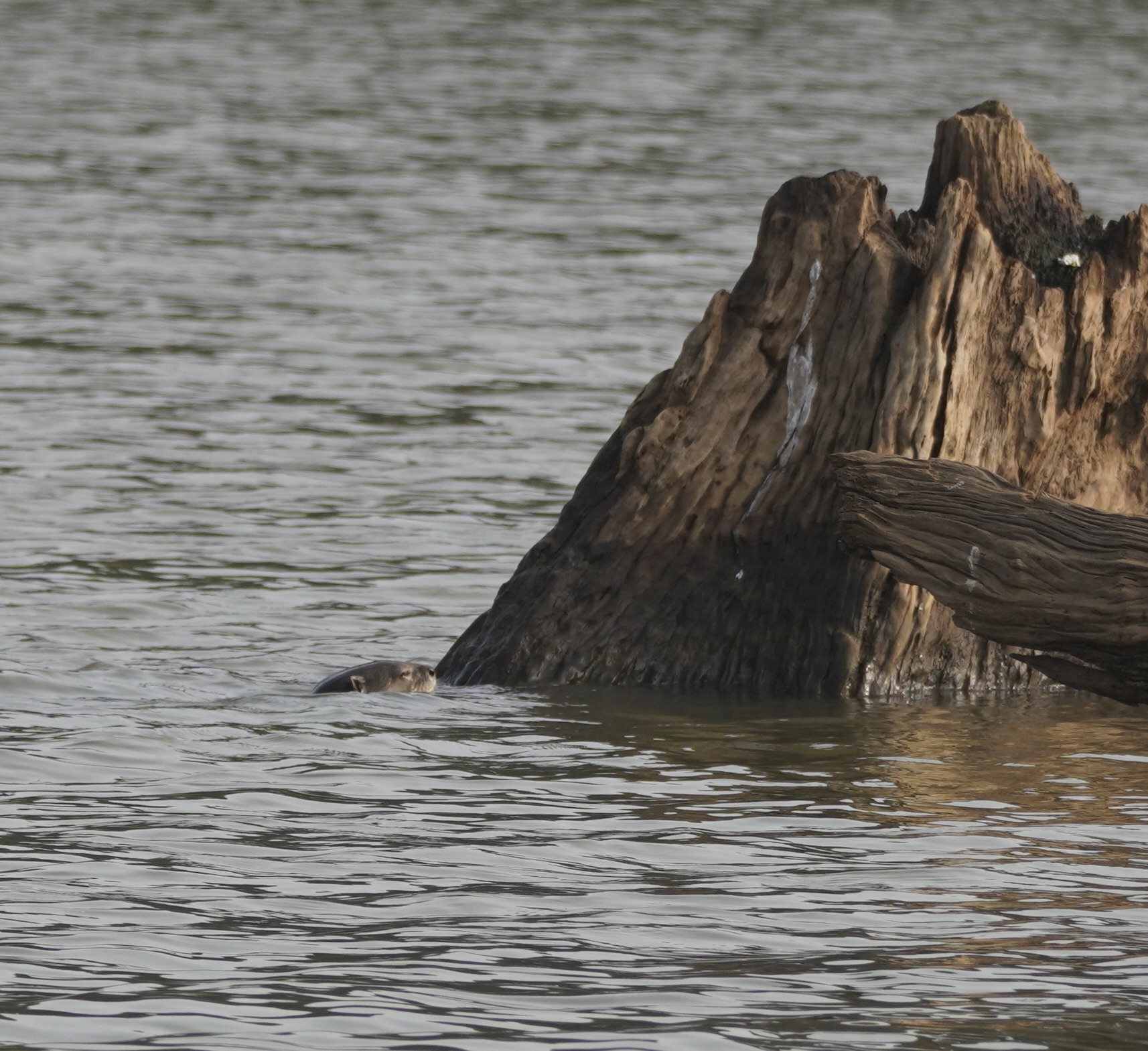
On the last morning, we took the boat ride and were put in a boat with a group of birders from the U.S. and Australia. This turned out to be a stroke of good luck, as they were able to point out and name more birds than either Paul or I could identify. And there were lots and lots of birds to see. Towards the end of the boat trip, we saw more wild dogs and finally a river otter. The otter was very difficult to photograph as it kept bobbing up and down in the water, but I did get a brief glimpse of his face once.
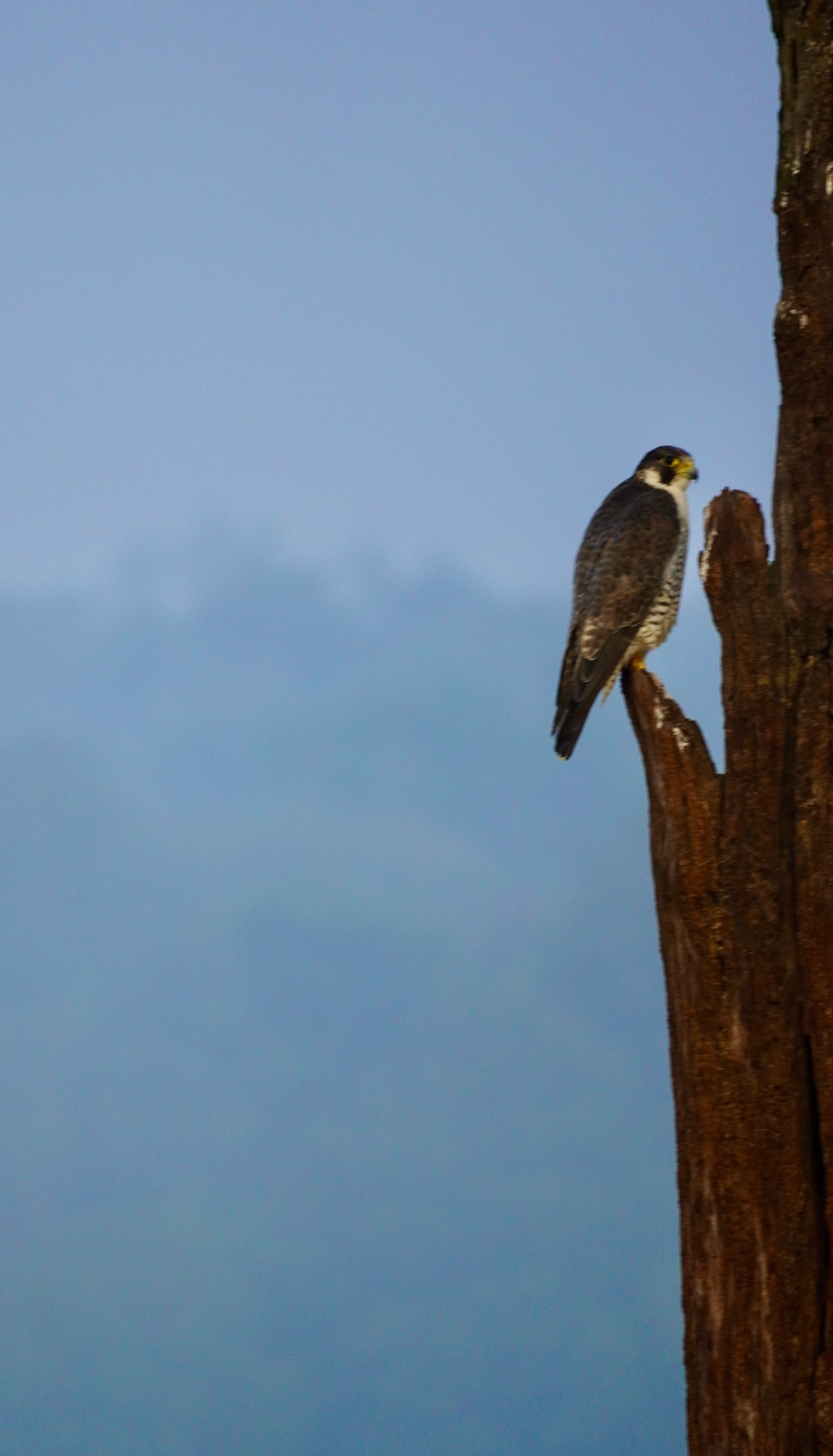
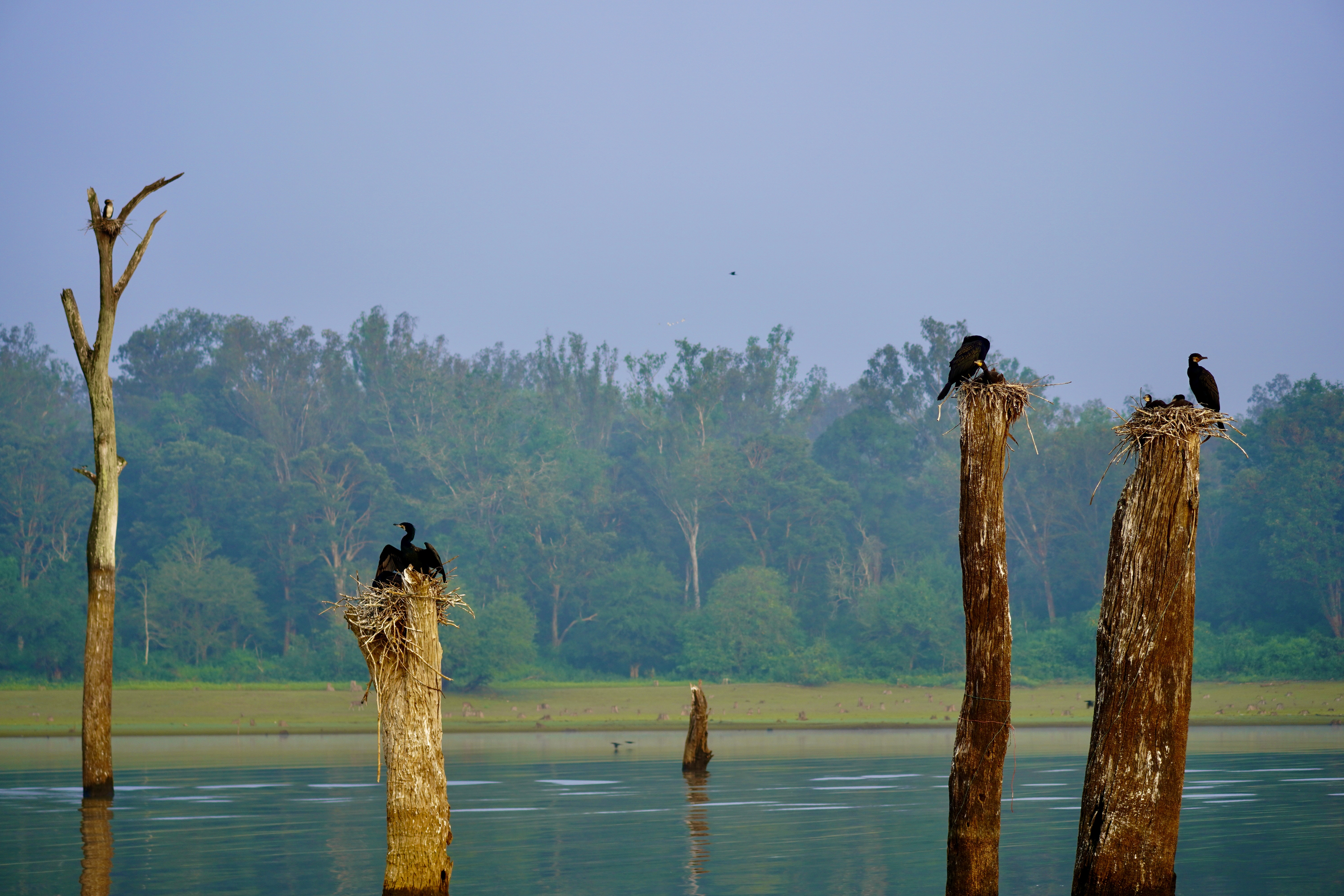
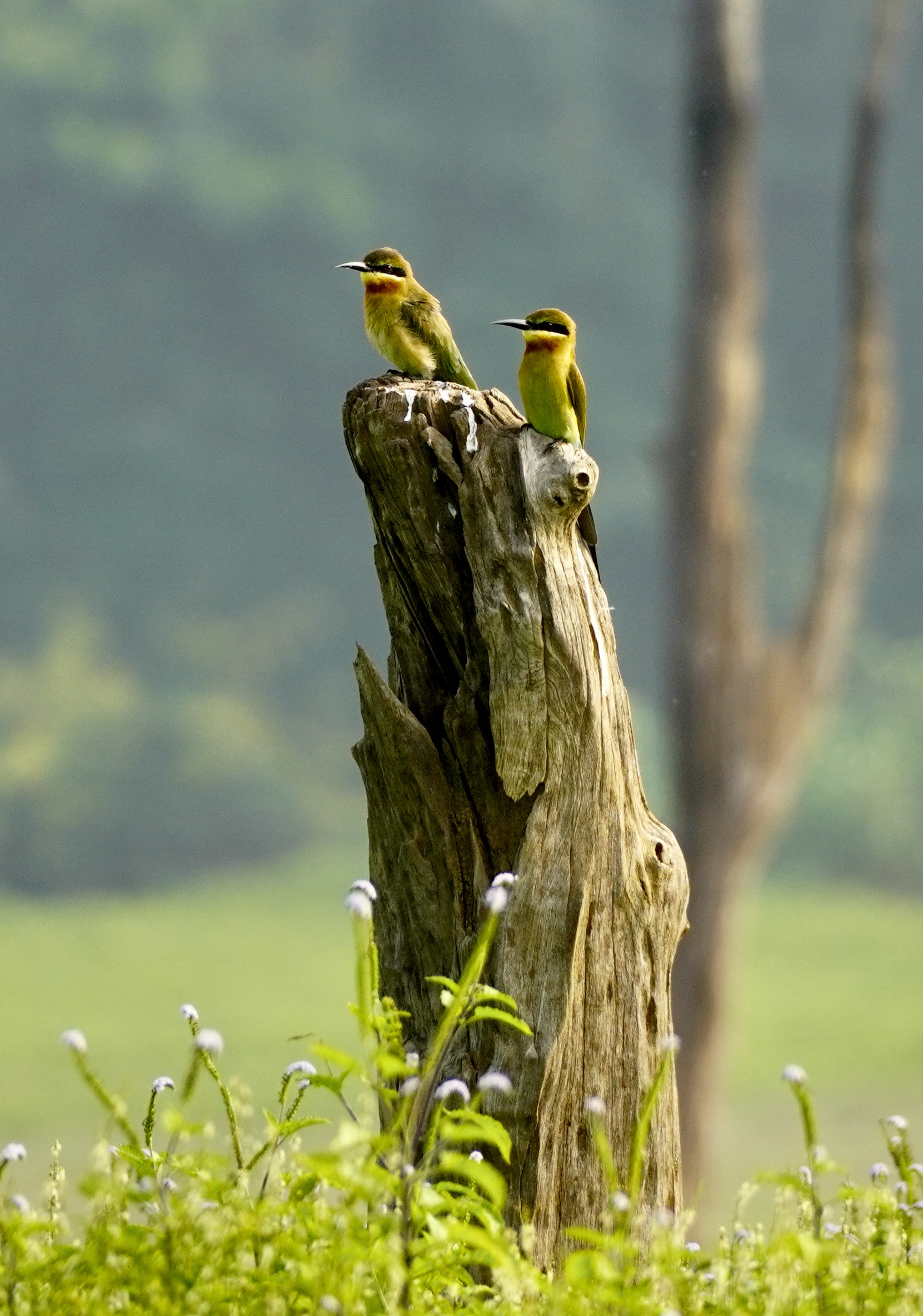
Kabini’s vegetation is different from that in the Maharashtra parks I visited. There are different types of trees along with the bamboo, teak and banyan trees in the Central Indian sites. We went with a naturalist for about an hour just looking at the trees at the resort property, but I couldn’t follow his accent very well, so missed out on much of what he was saying. I was hoping to find another naturalist who could help me identify the photos I took, but so far haven’t been lucky. Kabini was interesting and for ornithologists it would be a dream location. For tigers and leopards, though, Tadoba is hard to beat.
In order to break up the long drive to Hampi from Kabini, we spent the night in Chandradurga, which is famous for its Fort. The first phase of the Fort’s construction was during the 11th-13th C, but the majority of the remaining structures are from the 16th-17th C. The Fort is built around seven concentric fortification walls and is more spread out than what one would expect from the name. It has buildings and fortifications on a number of the rocky hills overlooking the town. Today, most of the remaining structures are temples, some of which are still in use. The oldest is the Hidimbeshwara temple near the top of one of the hills. The palace complex was also spread out across a couple of hills in the back, with the residential area separate from the storage and workspaces. The stone work and reliefs are impressive.
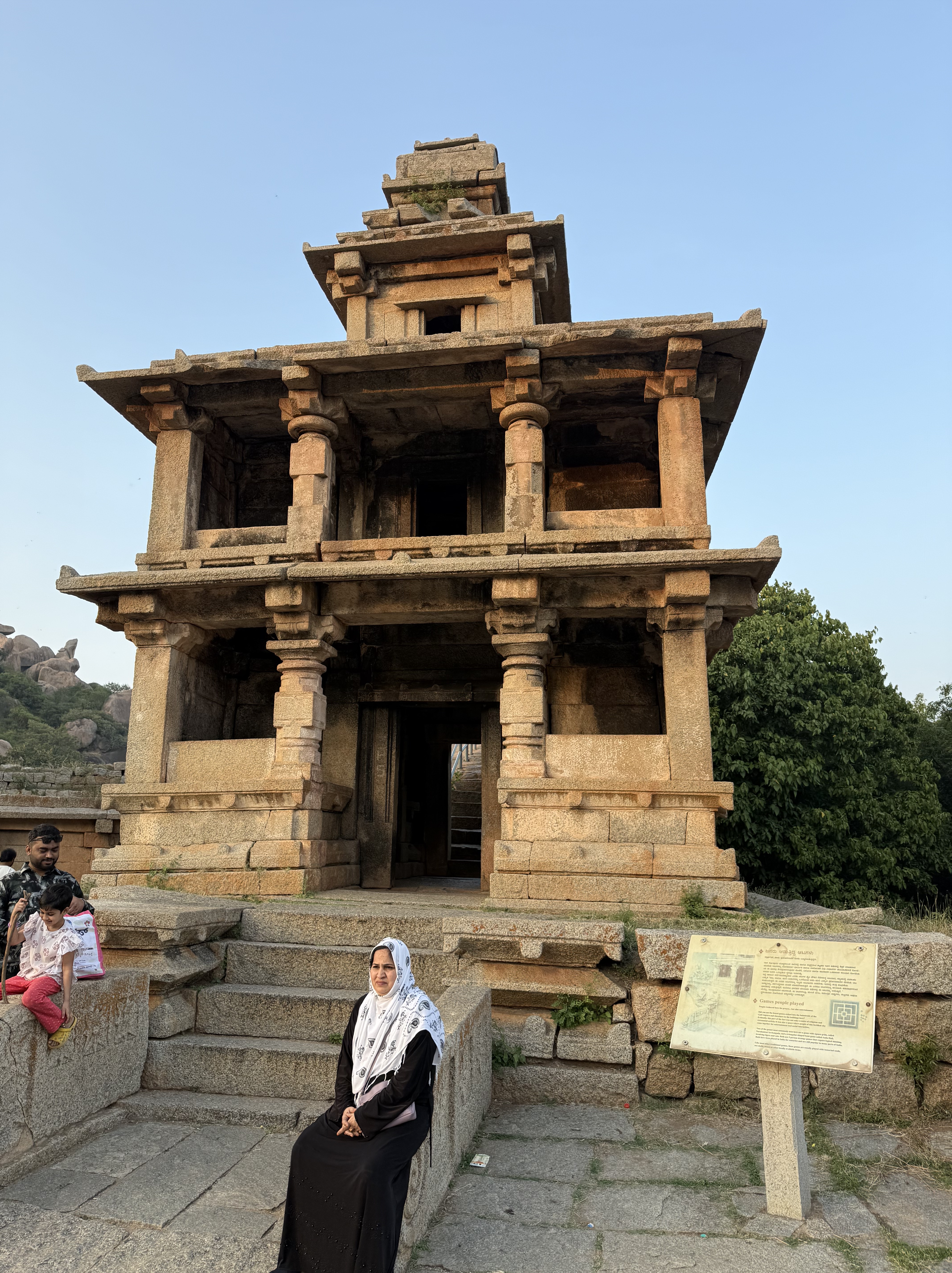
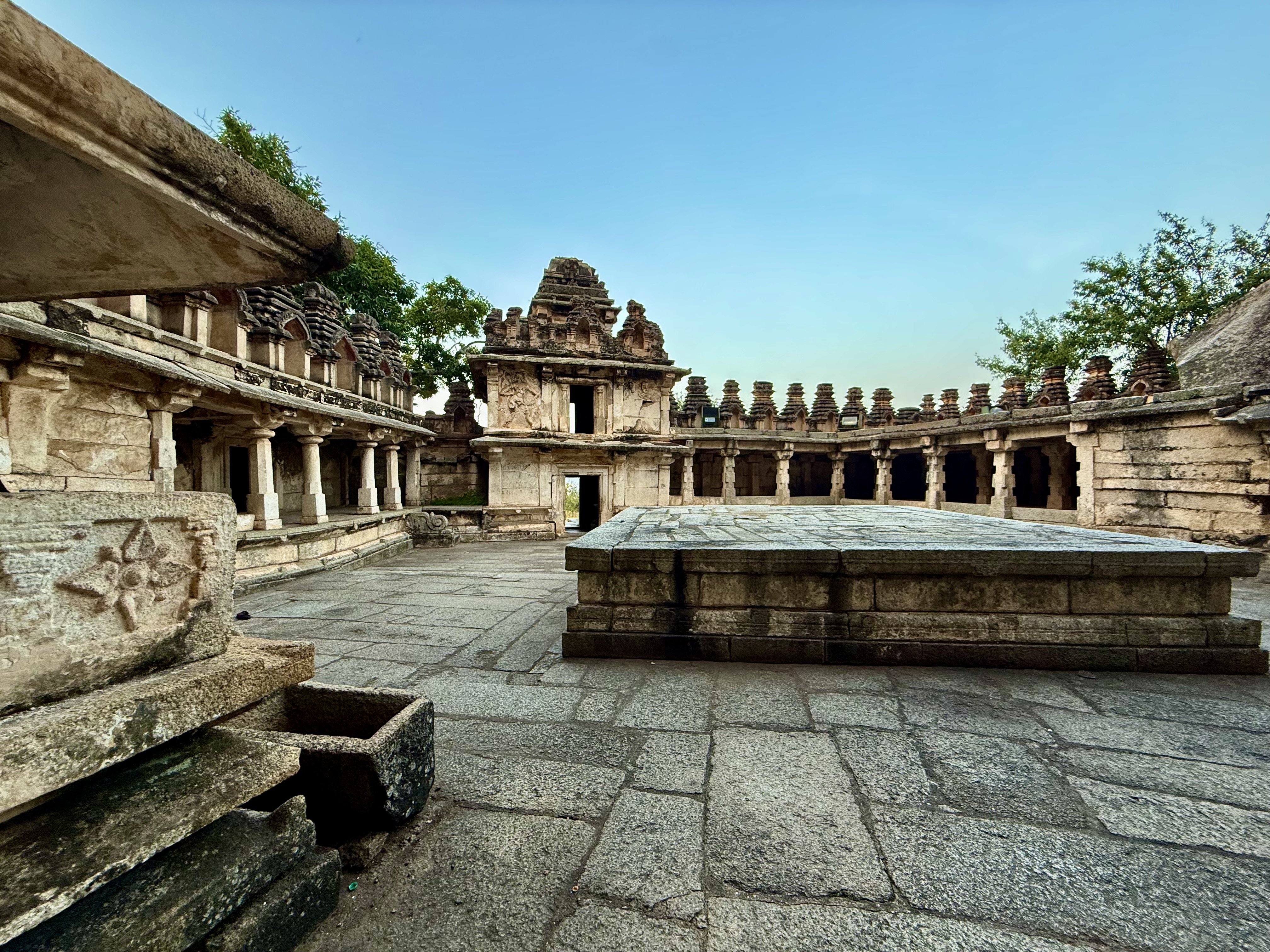
On our way out of town the following morning, we saw and heard a procession for a local goddess. Our driver didn’t know who she was, so unfortunately, I never found out anything more about the ceremony.
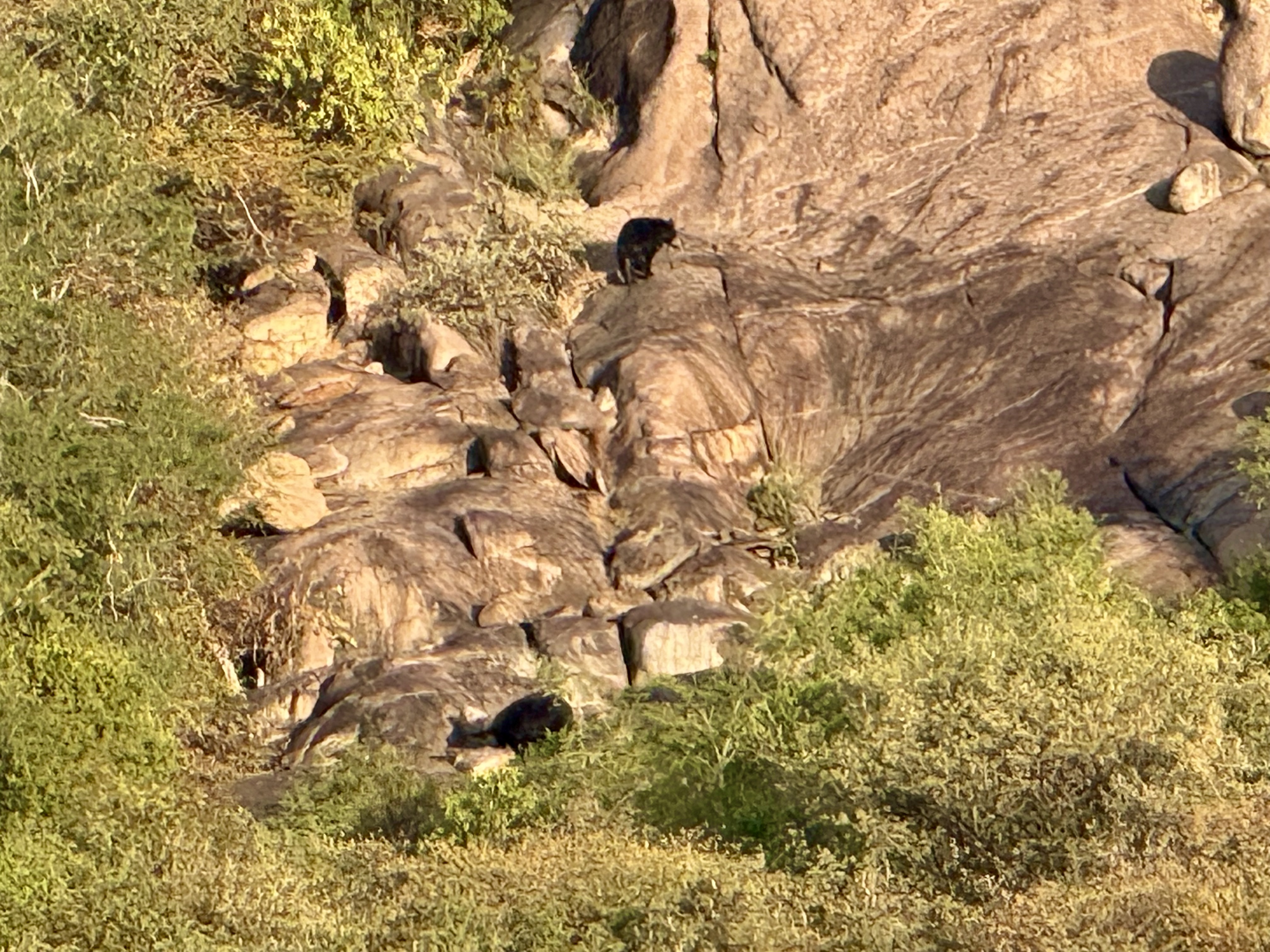
In Hampi, we were staying at the Heritage Wilderness Resort, which is owned and run by the Karnataka government as was the one in Bannerghatta and in Kabini. The staff at these resorts arrange for all the activities, including the safaris. In Hampi, our safari included a visit to the Darojo Sloth Bear Sanctuary. I was really looking forward to this excursion as the one time I had come close to seeing a sloth bear in the wild was in Maharashtra, and he was completely hidden in the bushes. At the sanctuary there is a watchtower from where one can see across the valley to the far hills where the bears are. We saw them, but as black dots against the rocks, and the iphone couldn’t zoom in enough to get a good photo of them. The sanctuary does appear to be large enough for the bears to feel like it is a real home, not like the rescue center in Bannerghatta. Those bears seemed to be going stir crazy.
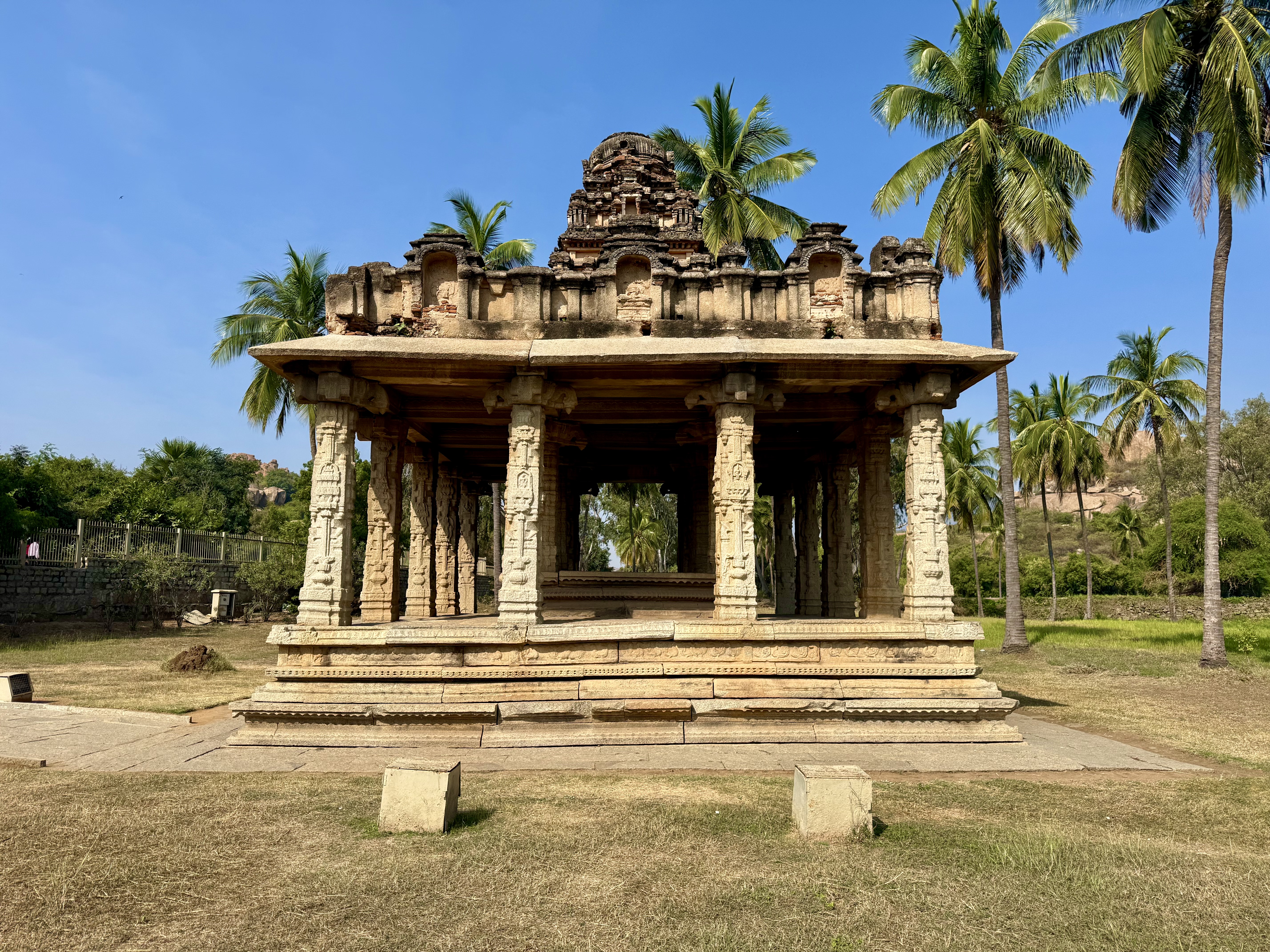
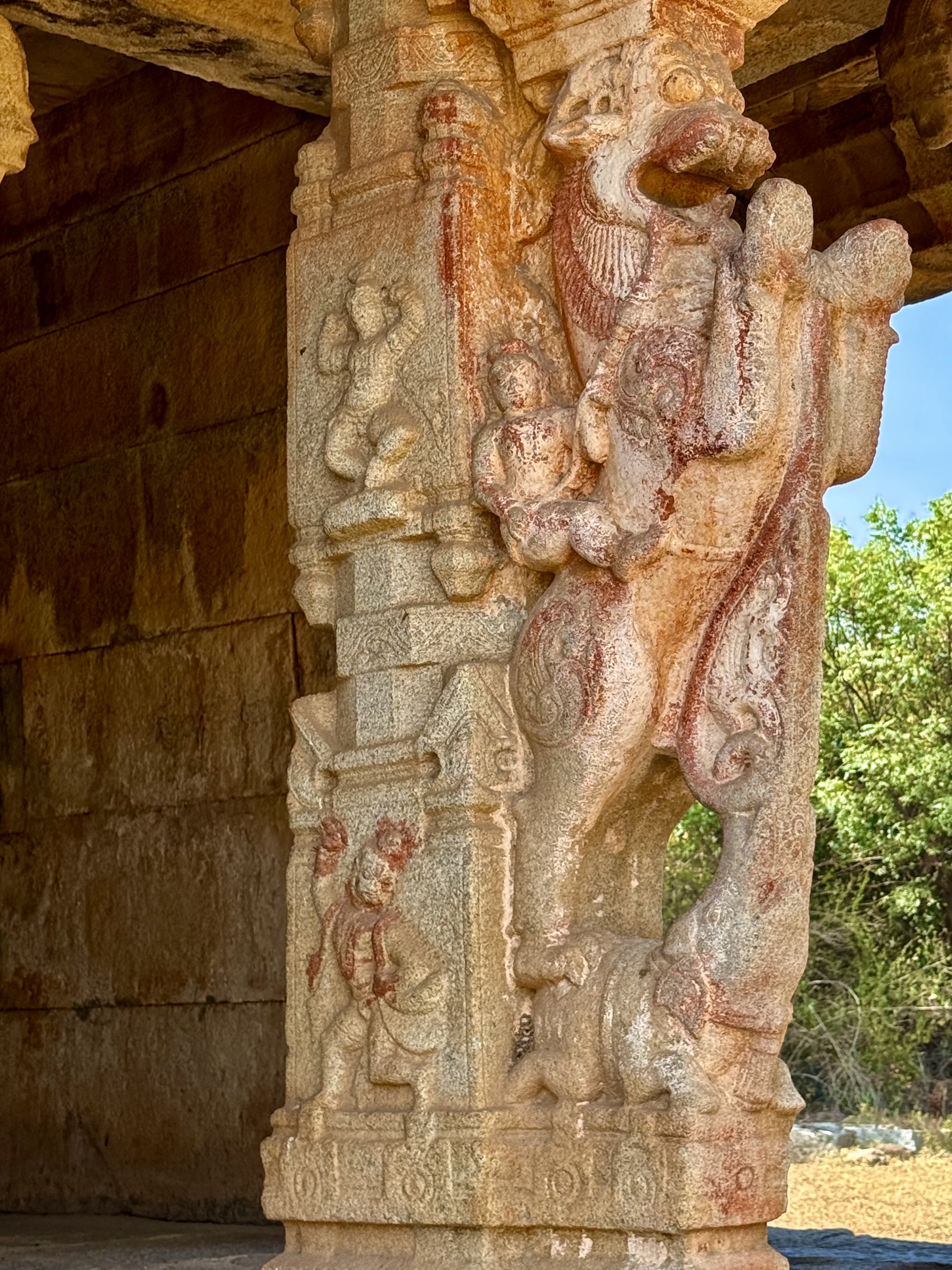
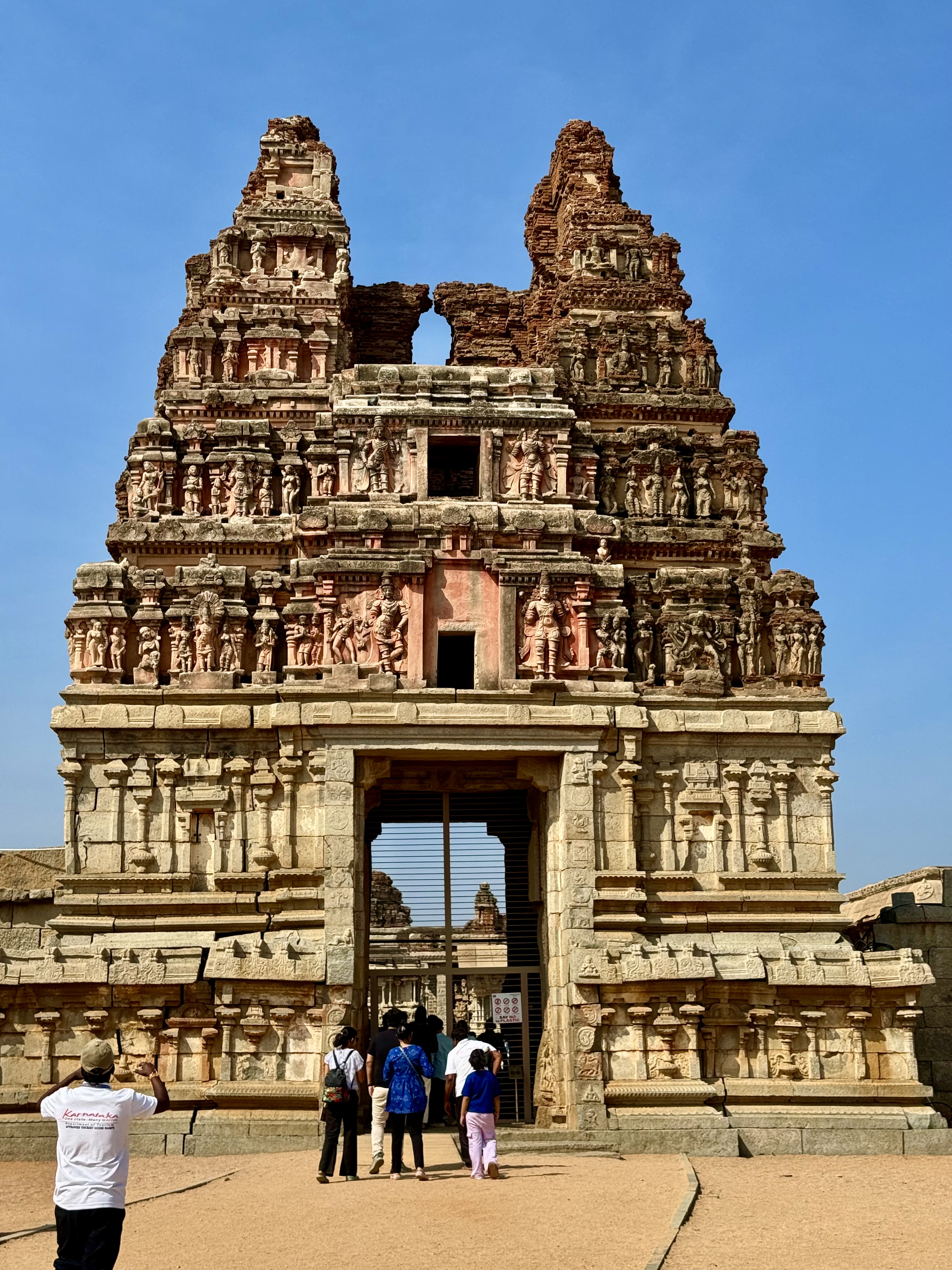
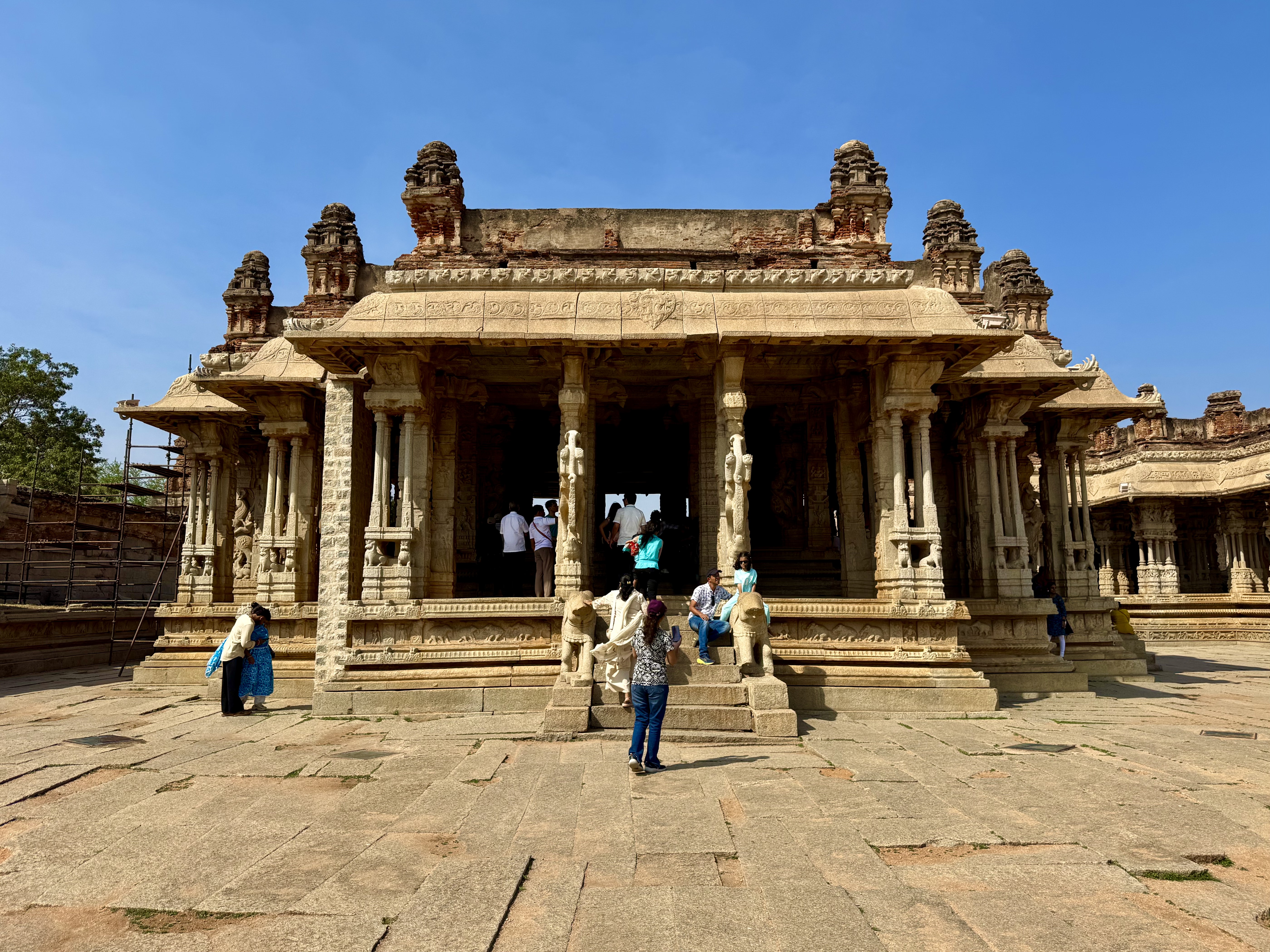
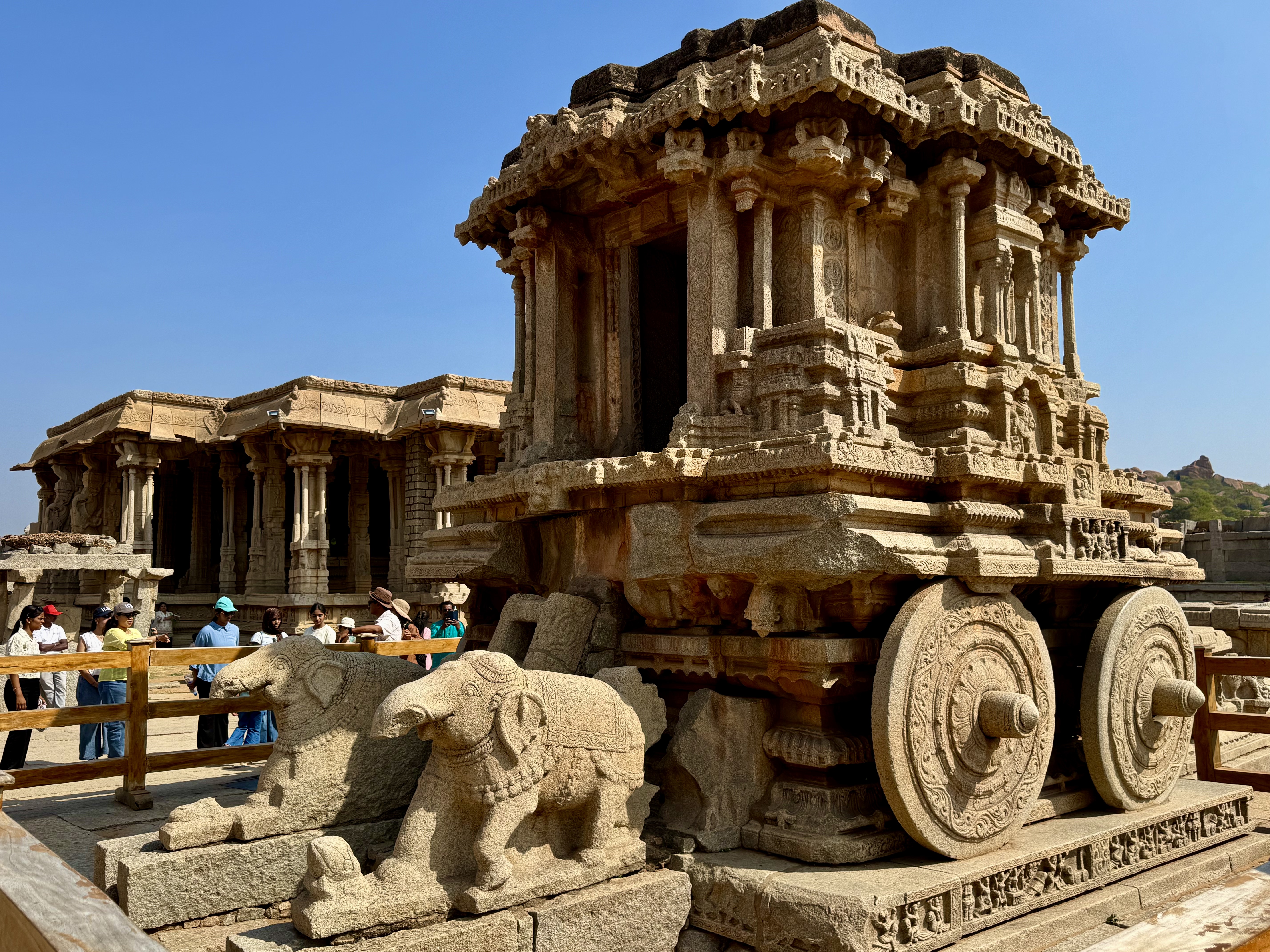
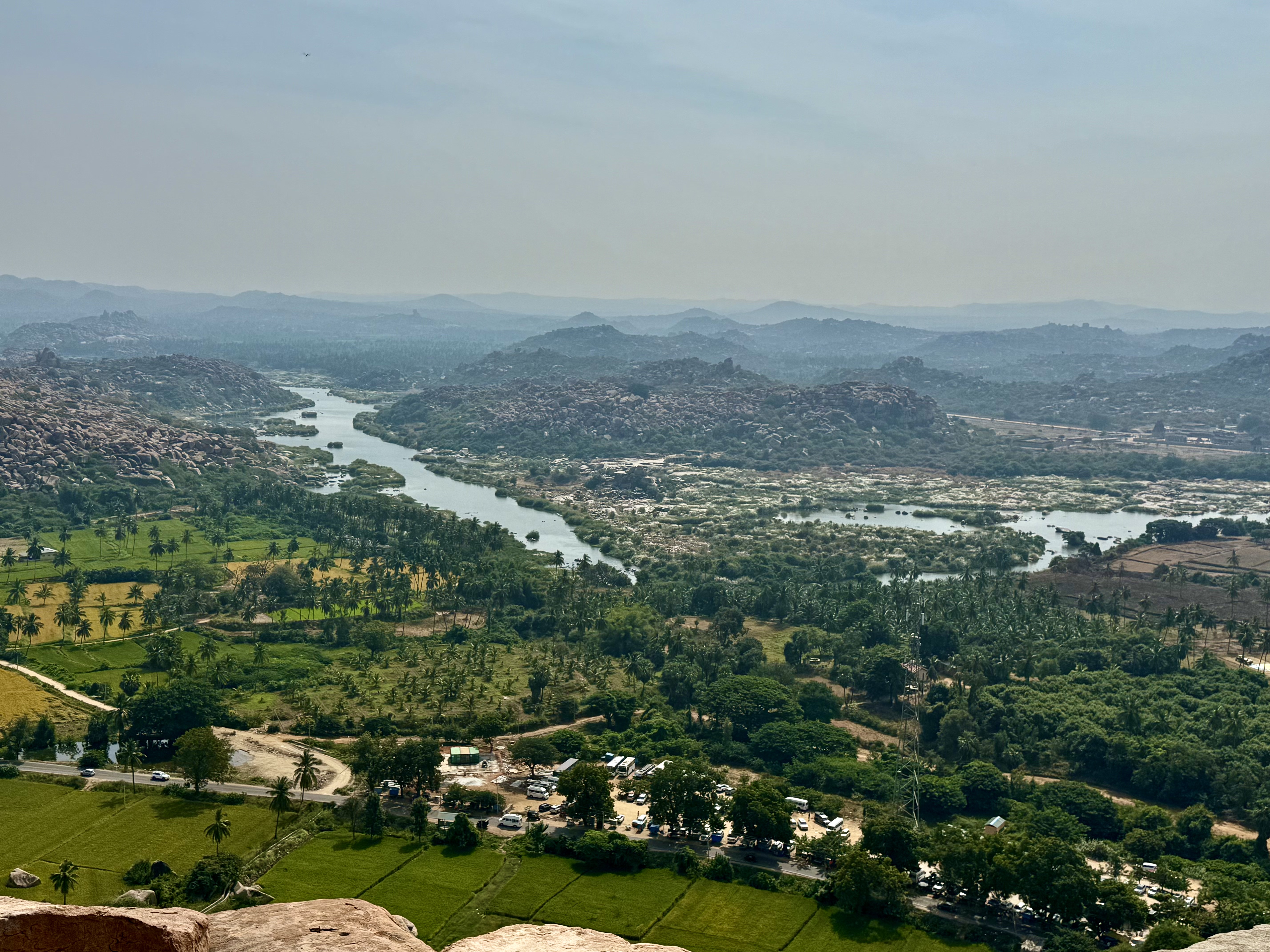
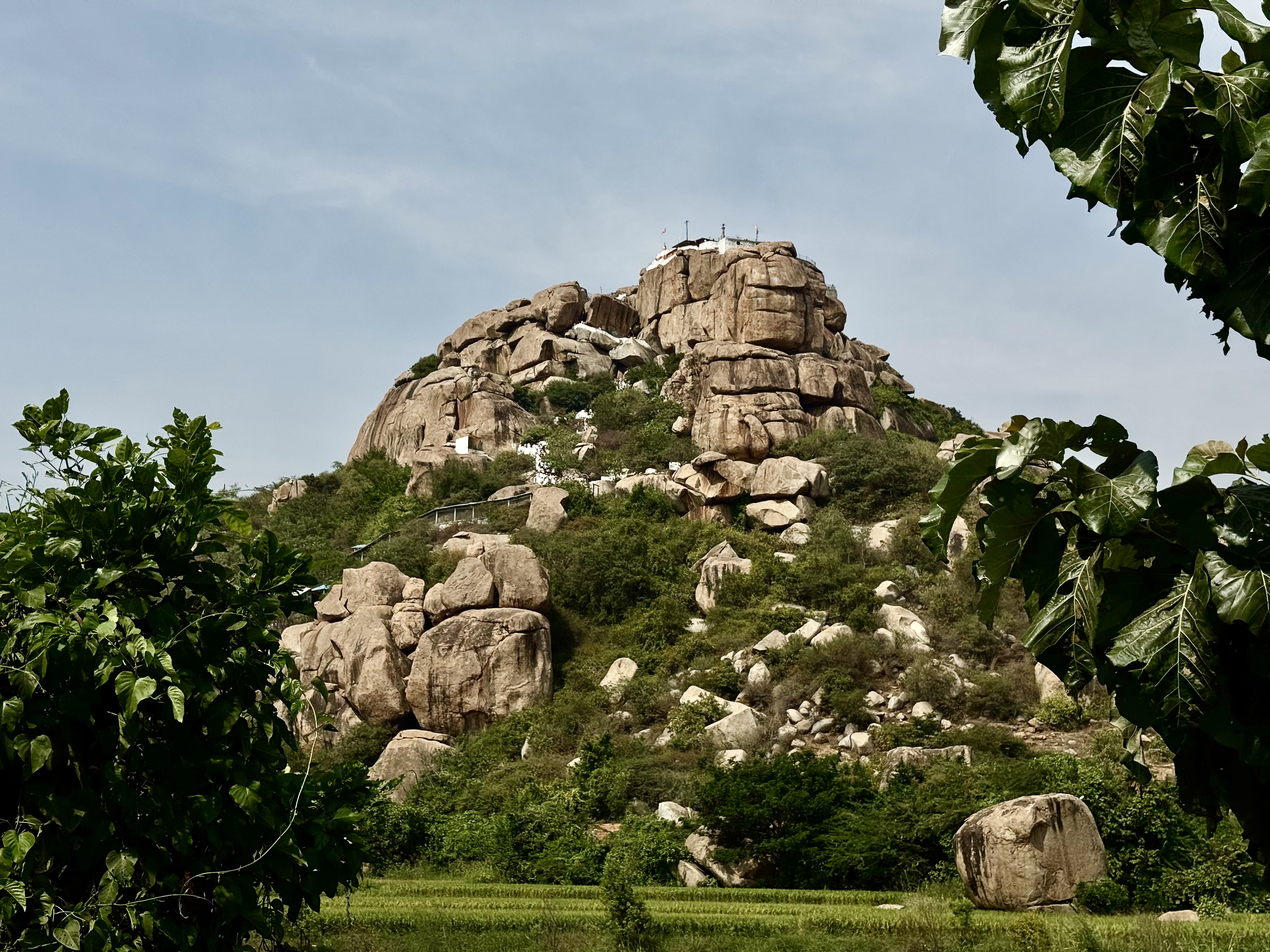
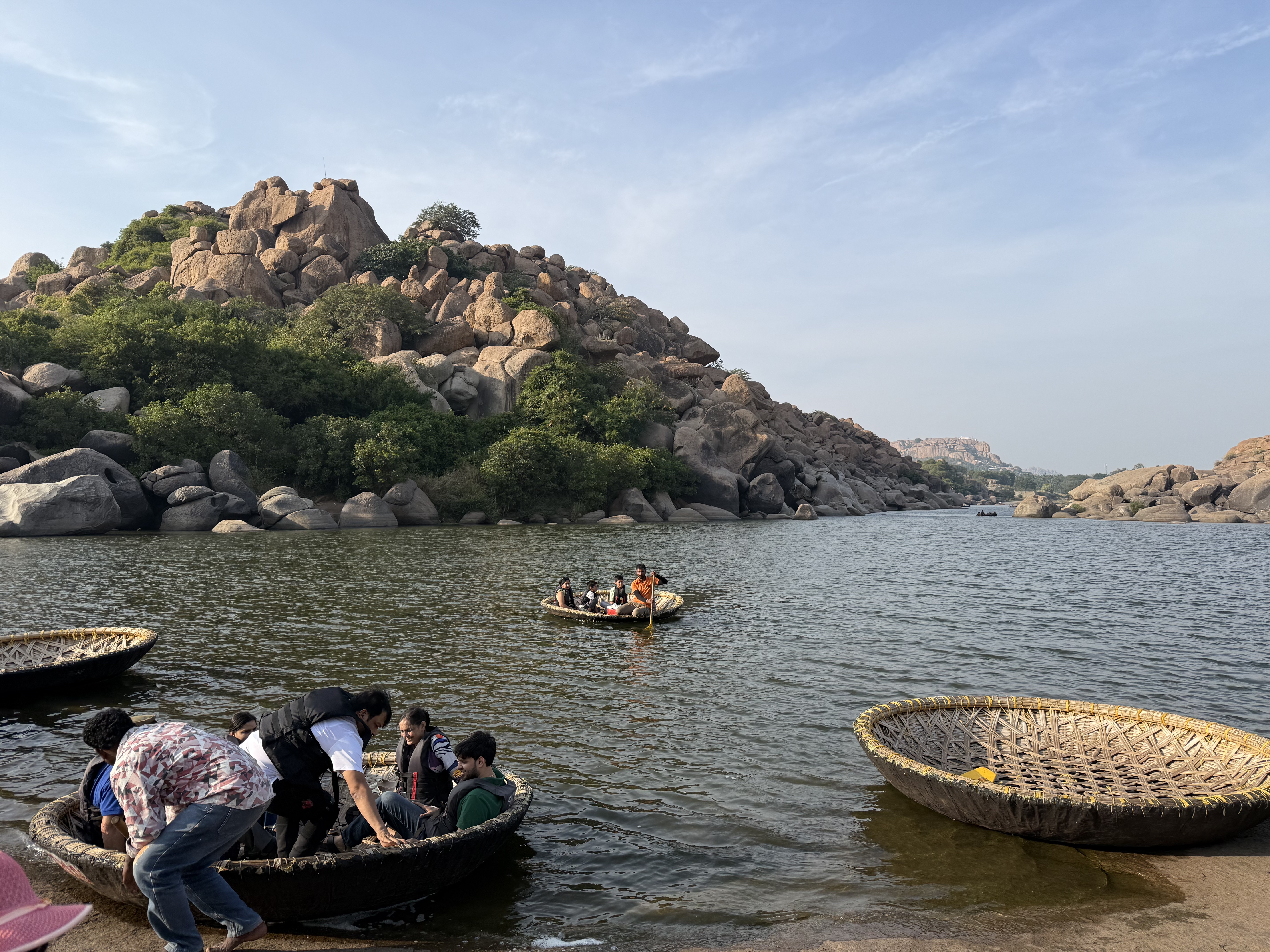
The next two days we had four tours in the Hampi archeological area. The first morning we visited two large temple complexes, while that afternoon was dedicated to the palace complex. The following morning, we walked up the 500+ steps amidst a pilgrimage crowd to Hanuman’s birthplace, then went to another temple dedicated to Vishnu. That afternoon, we went to the Tungabhadra River, where Paul took a short ride in a coracle boat, a round flat paddle vessel, while I went to explore more of the temples and archeological sites along the riverbank. Hampi is a UNESCO World Heritage site; it is one of the most famous and most popular of India’s archeological treasures. Hampi was the capital of the Vijayanagar Empire that flourished between the 14- 16th C. It was overthrown by the Deccan Muslims in 1565, who destroyed the city and many of the surrounding temples. During their reign the Vijayanagars were instrumental in creating and spreading Dravidian architecture throughout the region, including the Raya Gopura, which subsequently became a major feature in South Indian architecture and despite the destruction, there are numerous buildings that are still more or less intact. We were able to visit just a few of the most famous, including the Vitthala complex, the Hemakuta group, the Achytaraya, the Lotus Mahal, the Elephant Stables and the Treasury, Narasimha, Ganesha and the previously mentioned Hanuman Temple. What impressed me the most about all of these was the stonework. The fortification walls are reminiscent of those of the Inca in Peru. They are made from granite blocks, or wedges, that are put together without any binding material. The facades and pillars in the temples and palaces have intricately carved reliefs relating to the purpose of that edifice. Yalis, imaginary creatures that have the face of a lion, ears of a deer, teeth of a crocodile, trunk of an elephant, the body of a horse and the tail of a snake, and others that simply combine dragons and lions or horses, grace the sides of many of the temples and palace buildings. Dancers and goddesses circumambulate the sides of shikharas and gopura, and in a few of the palace structures the walls are covered with rows of camels, elephants, horses and warriors, portraying the power of the Empire’s rulers. The reliefs are truly outstanding and a major reason for visiting Hampi.
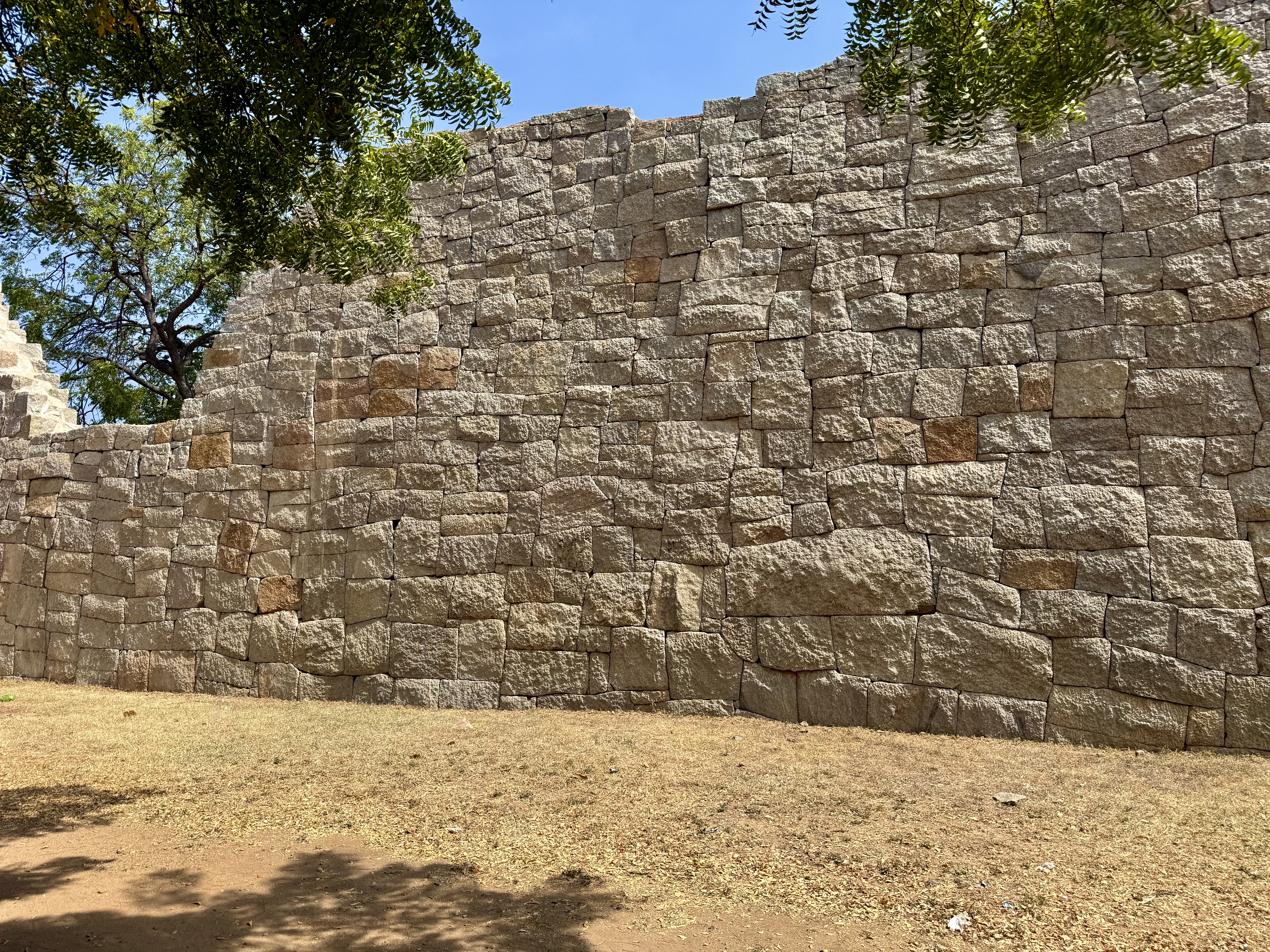
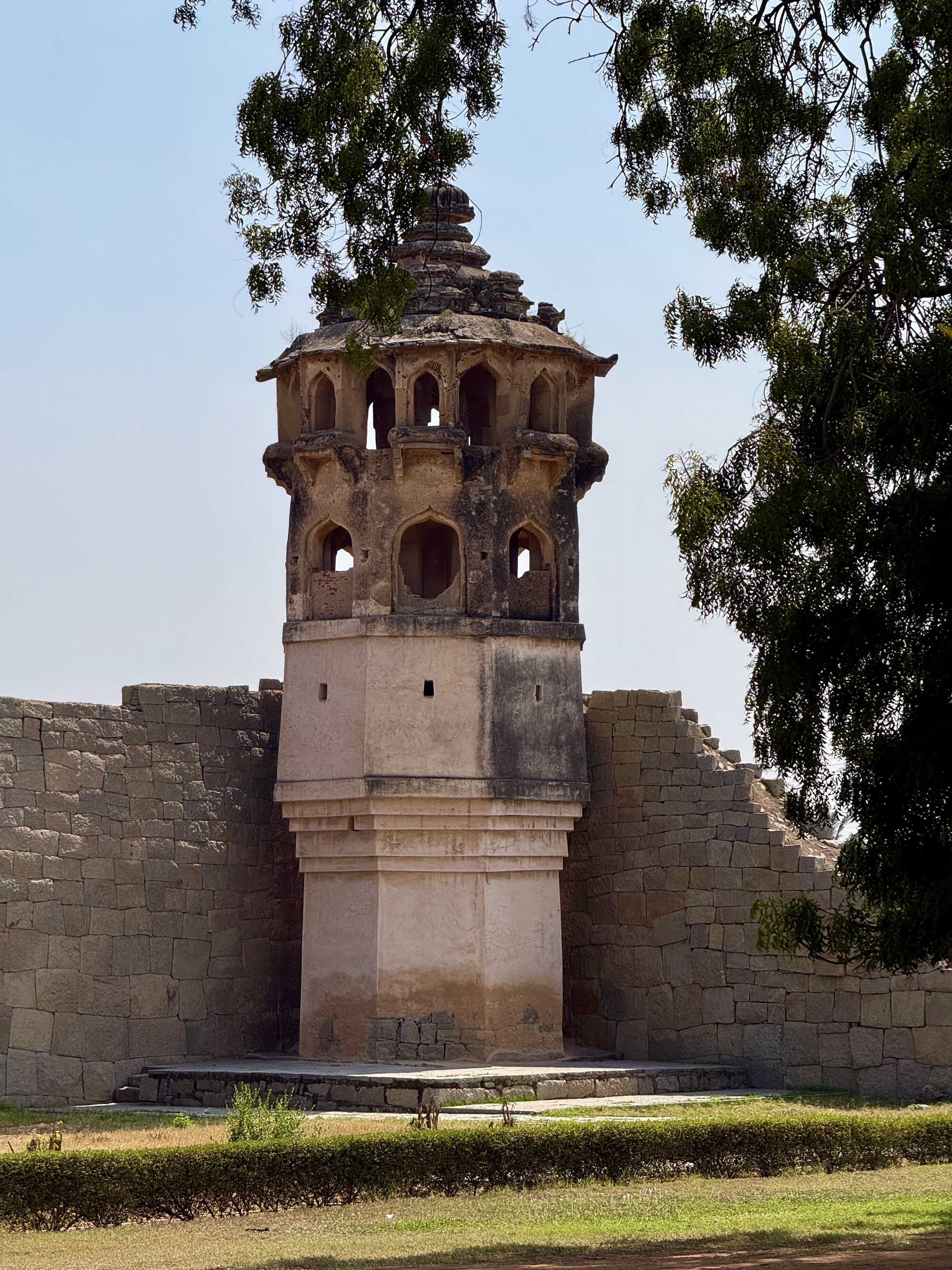
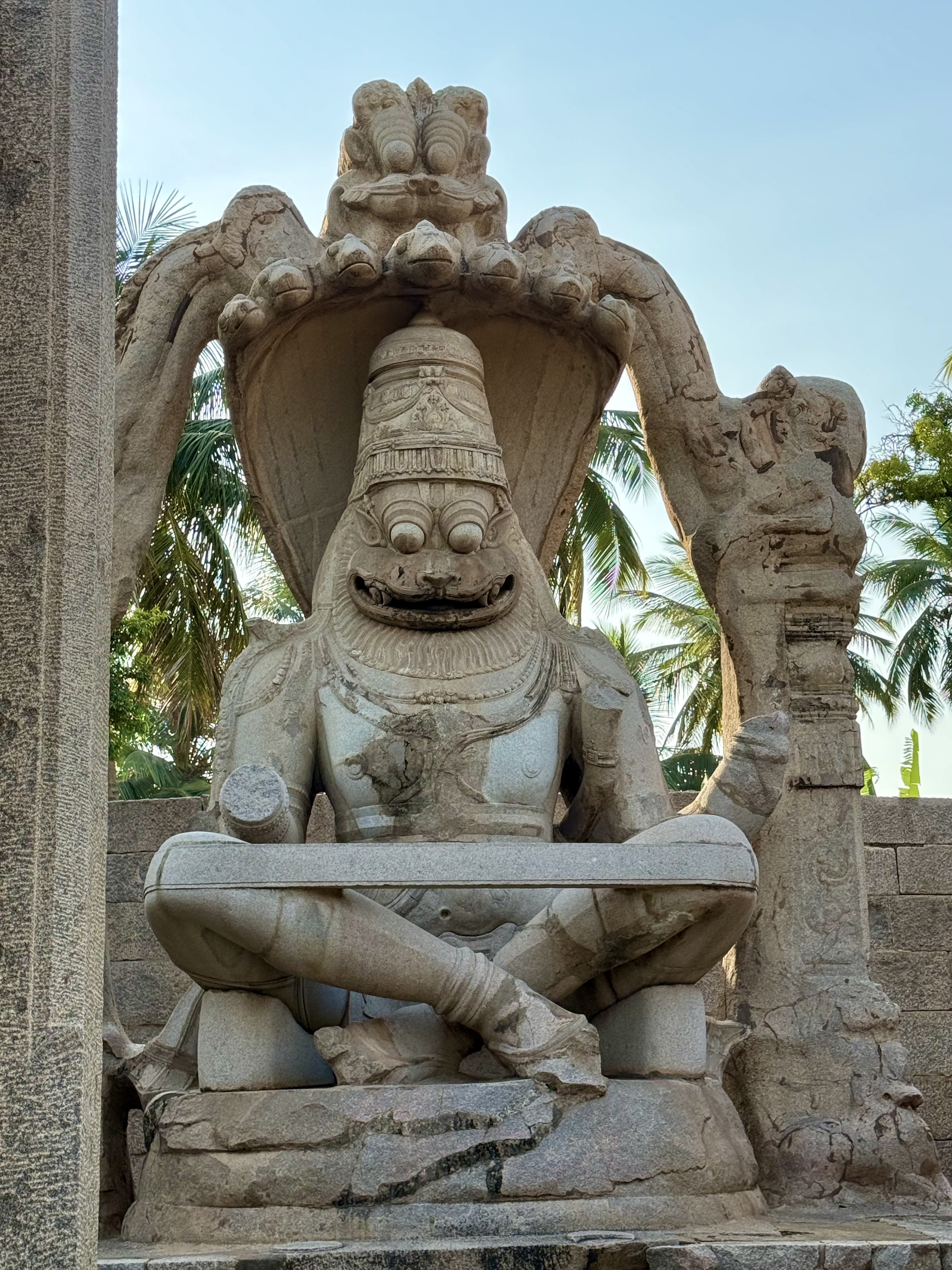
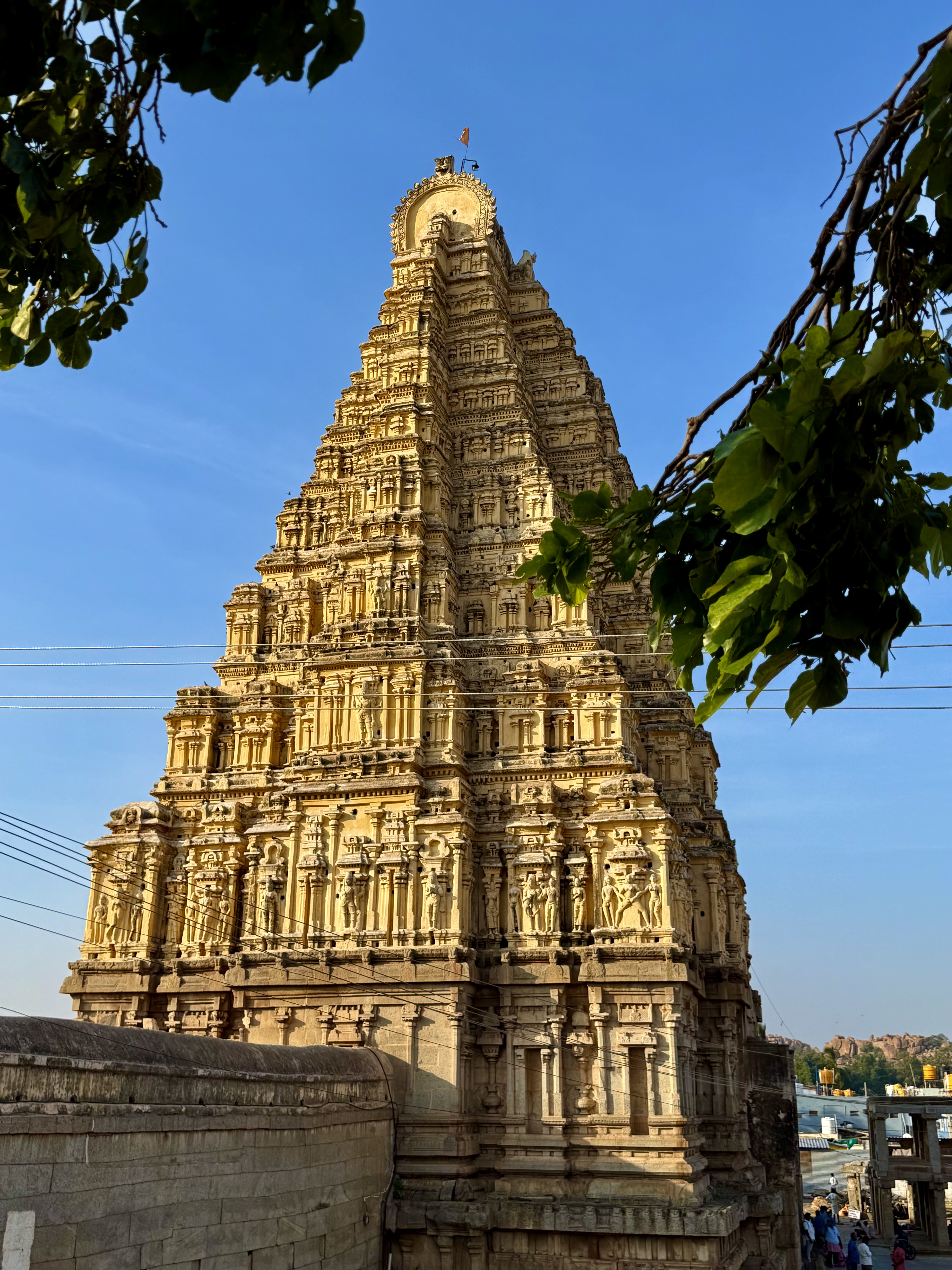
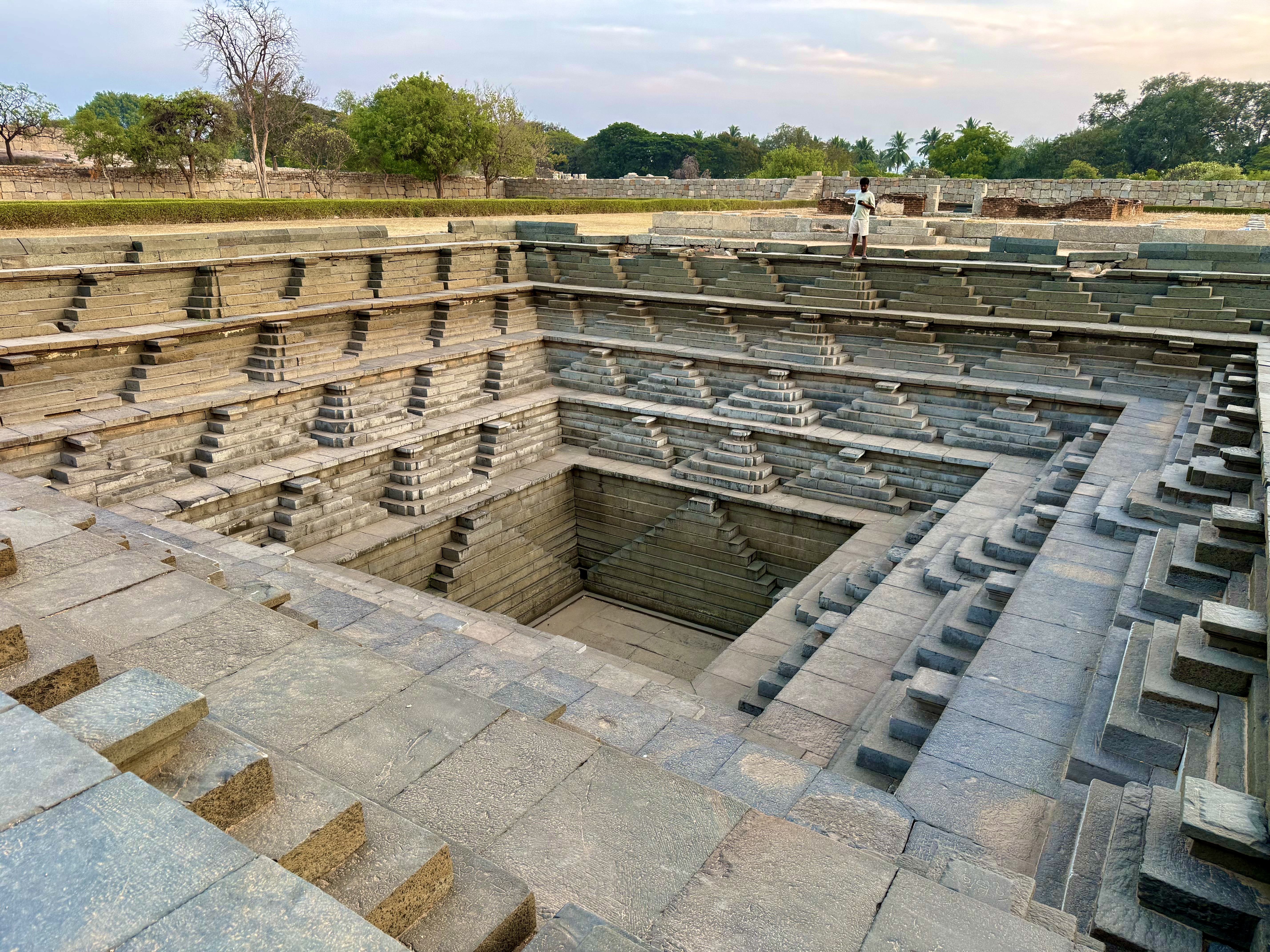
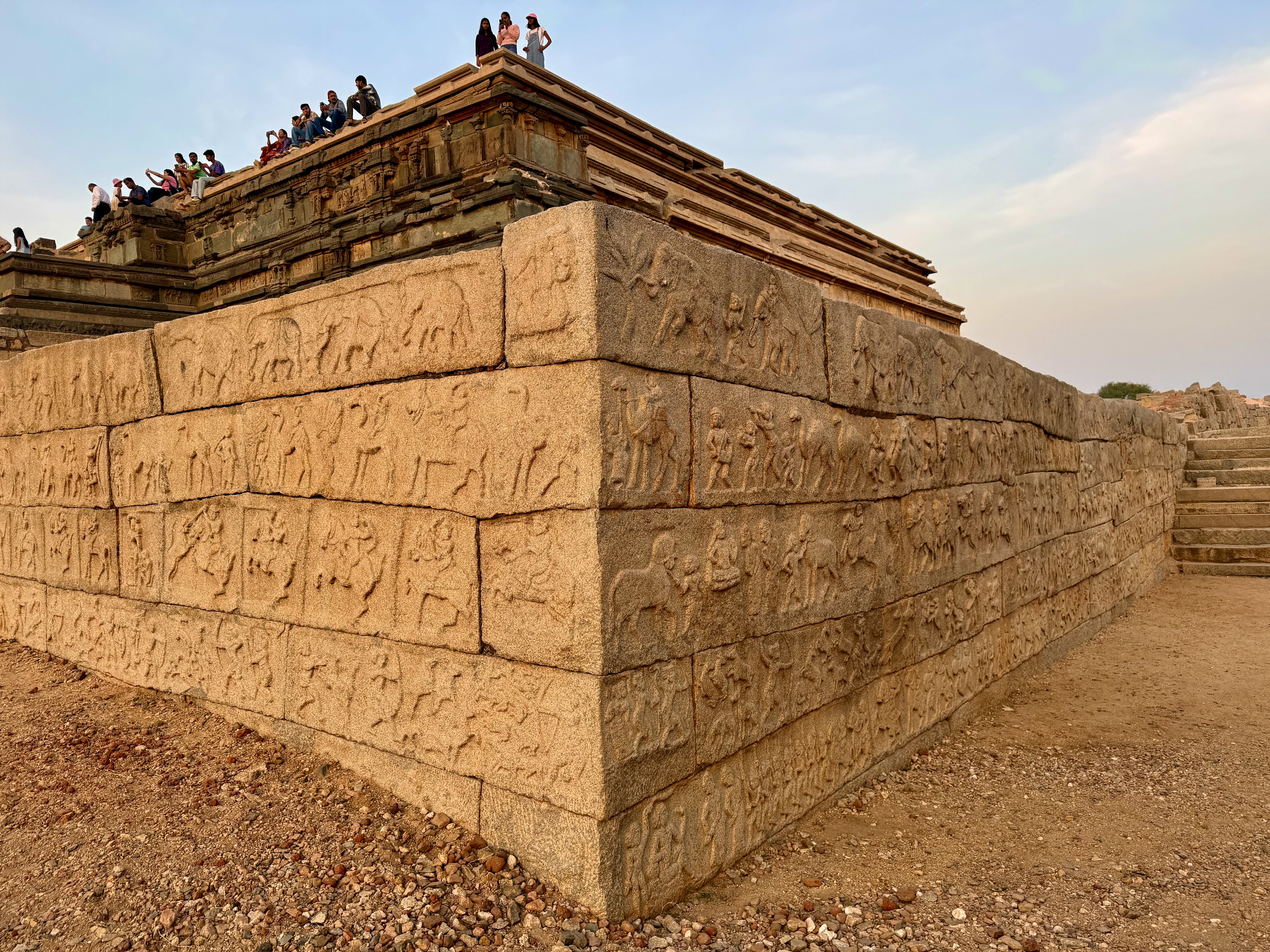
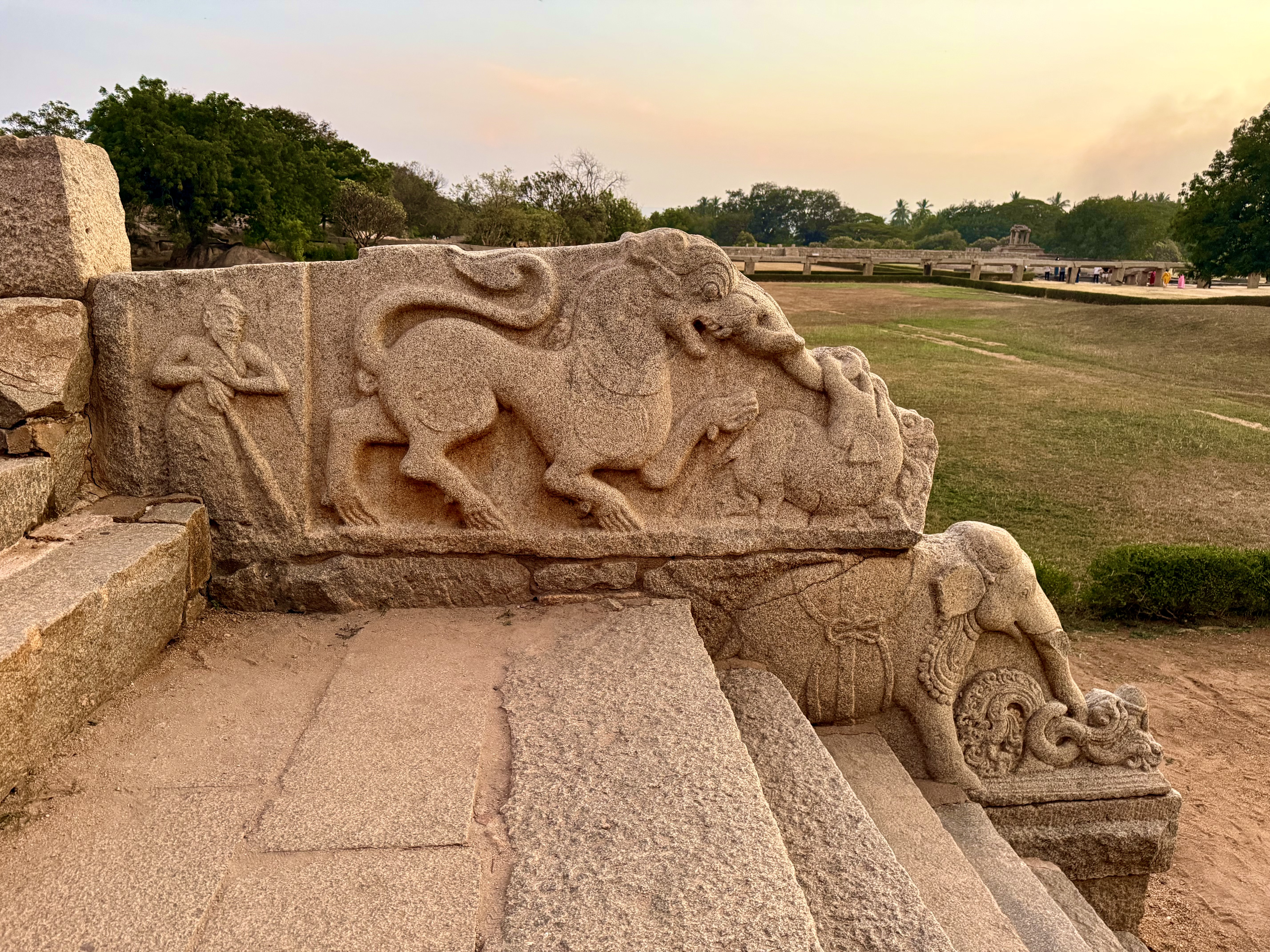
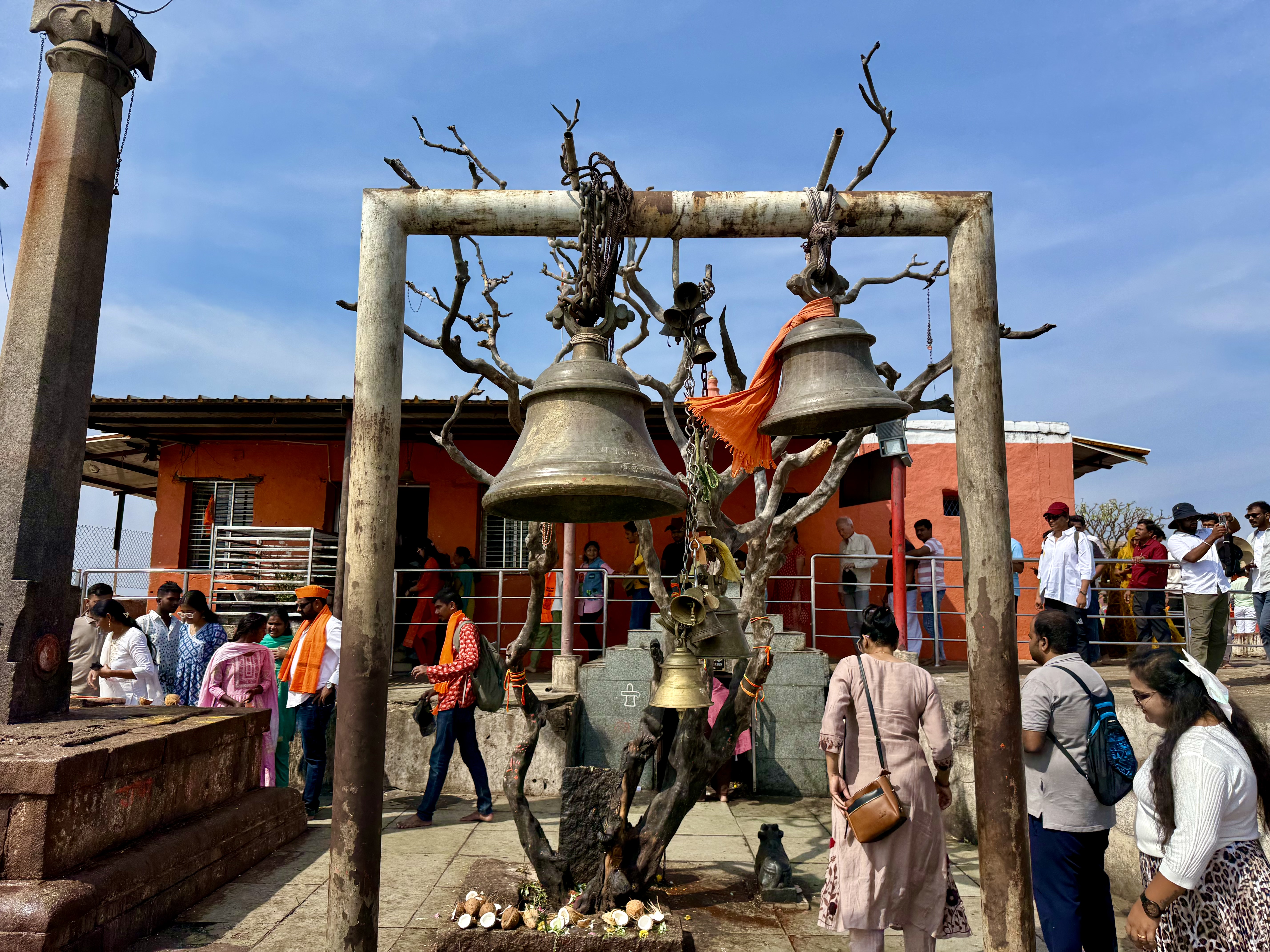
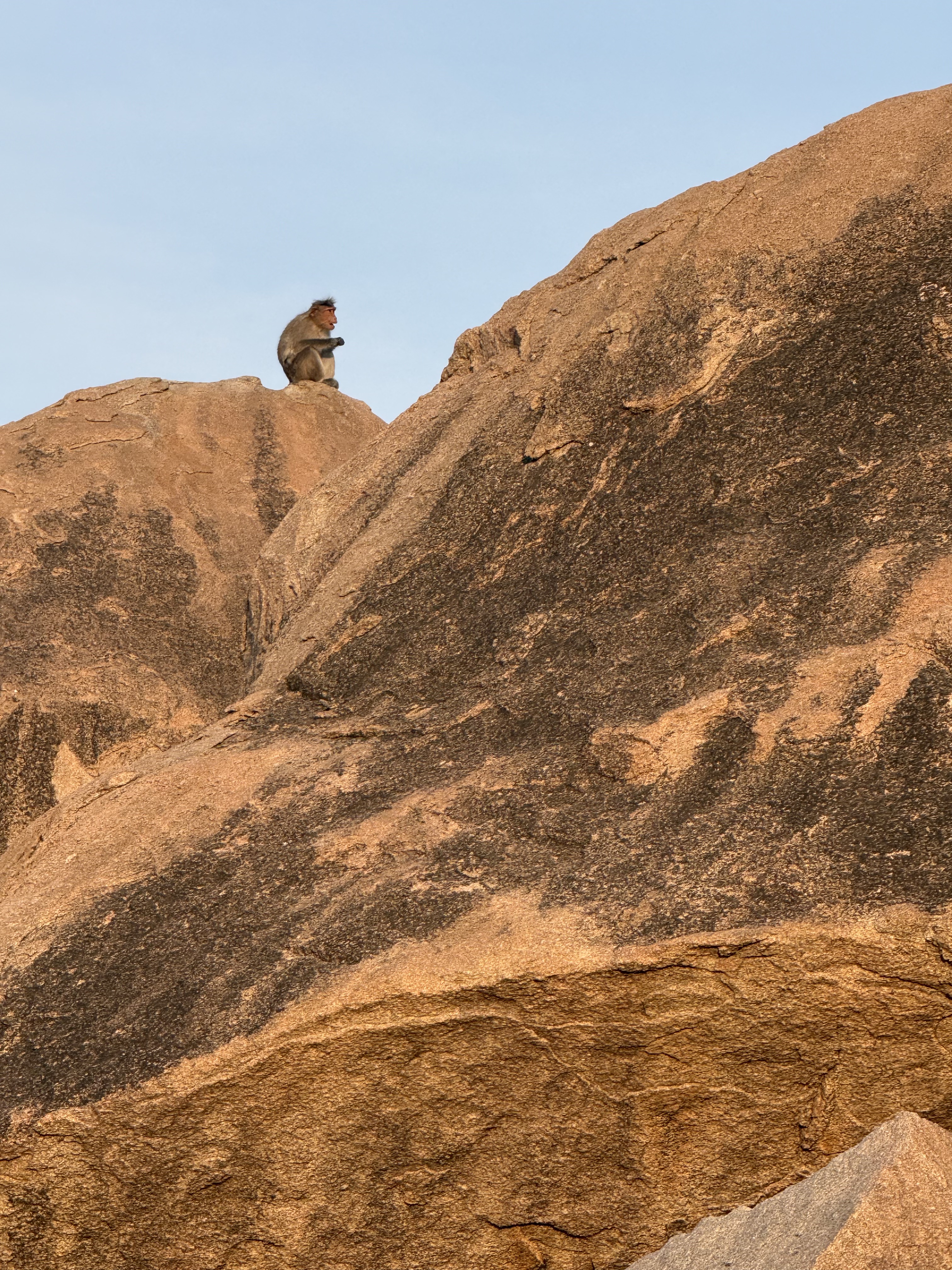
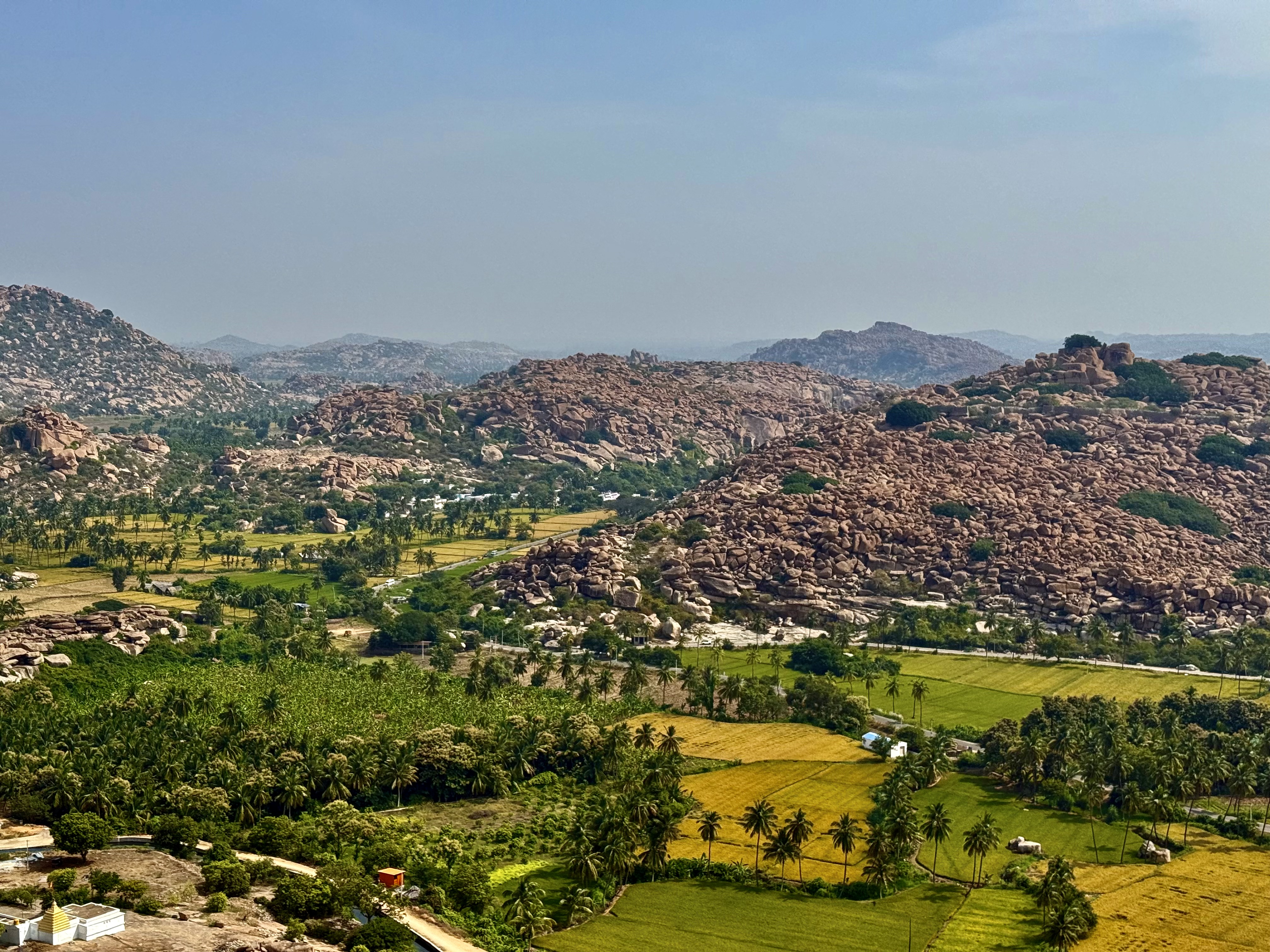
Another reason for visiting the former capital of this region is for the scenery. The contrast between the flat green rice paddies with date palms scattered throughout and the huge boulder filled hills surrounding the fields is striking. The rocks/boulders are a sight to behold; they almost look like some supernatural being placed them on top of one another.
Hampi was the last place we were visiting on our road trip in Karnataka. The following morning, we left the dry rocky northern city to head back south to the megacity, Bangalore, from where we were catching our flights. Paul to the U.S. and me to Florence, Italy where I’m doing a month-long Italian language refresher course.
Over the past six weeks, I’ve been fortunate to have traveled north to south in India. From Himachal Pradesh’s Himalayas filled with stunning landscapes and magnificent Buddhist temples to dry desert Gujarat with Gir’s Asiatic lions to lush wildlife filled national parks and forests in Madhya Pradesh and Maharashtra and finally green southern and very dry northern Karnataka. Each region has their own language(s) and culture(s). India is truly a fascinating country.